




Abstract
Ethnoracial minorities are often racialized and consequently excluded from various consumption contexts. Racialized market actors strive to overcome exclusion and gain participation in markets; however, these efforts are often insufficient because they cannot create equitable access to market resources, fair opportunities for voice, and empowerment to shape market practices. This research identifies digital enclave movements as a unique means by which racialized market actors redirect their resources and mobilize digital network tools to participate in markets. Using a qualitative study of the digital enclave #MyBlackReceipt, the authors explore tactics supporting the formation and sustenance of digital enclaves and how they support participation in markets. The authors identify five tactics that racialized market actors employ to foster digital enclaves and enhance market participation: legitimizing, delimiting, vitalizing, manifesting, and bridging. Last, the authors provide recommendations for policy makers on how to support and foster more equitable participation of ethnic minority groups in markets while addressing the risks of radicalization and the backlash related to enclaves.
This is Black Wall Street reborn using technology.
—Kezia Williams, cofounder of #MyBlackReceipt
Contradicting historical conceptions of markets as “free” or even “fair” spaces (Johnson et al. 2019), marketing research indicates that markets are racialized at their core (e.g., Grier, Thomas, and Johnson 2019; Henderson, Hakstian, and Williams 2016; Poole et al. 2021). Ethnoracial minorities are excluded from various consumption contexts, contributing to racial disparities and consumer disempowerment (Bone, Christensen, and Williams 2014; Brumbaugh and Rosa 2009; Crockett, Grier, and Williams 2003; Saren, Parsons, and Goulding 2019). Altogether, the marketing literature points to the importance of enhancing our understanding of how to counter exclusion and foster racialized actors’ participation in markets. Our study contributes to this goal by examining whether and how digital enclaves can support racialized actors’ participation in markets.
We define market participation as entailing equitable access to market resources, fair opportunities for voice, and the power to shape market practices. Our study examines digital enclaving as a form of activism through which racialized consumers pursue participation in markets by redirecting consumer economic resources and mobilizing digital network tools in favor of a specific market unit.
Traditionally, racial activism has pursued market participation through clusters of activist market actors forming a market unit enclosed within the mainstream market (Portes and Manning 2019). These so-called enclaves are established as a temporary solution for racialized market actors to regain standing while continuing to pursue mainstream participation (Regev 2020). However, although enclaves can achieve gains (Branchik and Davis 2009), they usually fail to succeed in lifting barriers to participation, partly because of their geographical limitations but also because of radical responses from mainstream markets.
Yet, following the brutal murder of George Floyd and related radicalization (e.g., protests, riots) in 2020, enclaving has resurged among digital activist movements. Activists have mobilized digital network tools to redirect consumer economic resources in favor of Black market actors, with #BuyBlack and #MyBlackReceipt (hereinafter #MBR) being well-known examples of contemporary digital enclaving. These movements encourage Black consumers to buy products and services from Black-owned businesses to counteract the racialized economic inequalities of mainstream markets. It remains unclear, nonetheless, whether digital enclaving can facilitate participation in racialized markets, and/or if policies can be developed to (1) support digital enclaving initiatives and (2) prevent radicalization in response to them (Glickman 2020; Silva 2018).
In seeking to address this gap, we conduct a qualitative study of #MBR, a digital enclaving movement launched in 2020 that is part of the broader #BuyBlack movement. #MBR invites consumers to upload their receipts from purchases at Black-owned businesses to evidence the money retained in the Black community if consumers deliberately choose to spend on Black-owned businesses. We examine how tactics in the #MBR movement support the creation or flourishing of a digital enclave by establishing boundaries within which consumers can more completely participate, aiming to equip racialized market actors to eventually achieve participation in mainstream markets. In particular, we ask: Which tactics enable the formation and sustenance of digital enclaves? How do digital enclaves support racialized actors’ participation in markets?
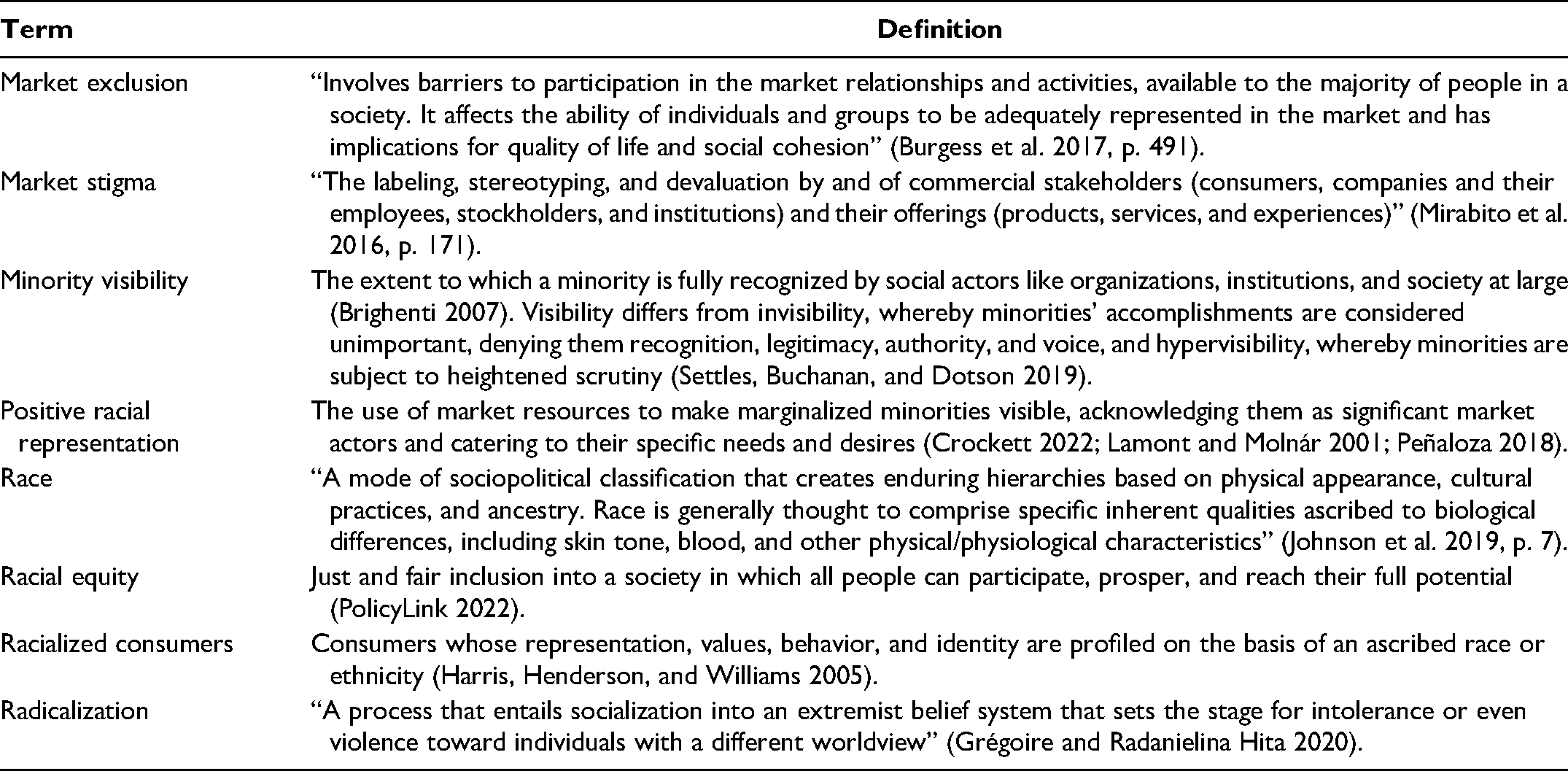
Through our study of #MBR, we identify five tactics and specific subtactics that support racialized market actors’ participation in flourishing digital enclaves. These tactics shape and support enclave boundaries, vitalize behaviors and emotions in the enclave, and manifest economic exchanges among participants. The tactics also legitimize and connect digital enclaves in networks of meanings and resources that extend beyond these bound market spaces. In discussing our findings, we argue that a thriving digital enclave, through its mobilization of digital tools, enhances the voice and power of racialized market actors to shape practices in mainstream markets by redirecting economic resources. Moreover, we argue that digital enclaves have the potential to prevent more extreme and radicalized responses that have undermined offline enclaves in the past. We also show how digital enclaves can inform research in marketing and public policy agendas. A glossary of the working definitions of the key terms used in this article is provided in Table 1.
Glossary of Key Conceptual Terms.
Racialized Actors’ Pursuit of Market Participation
Symbolic Work: Stigma and Representation Management
Racialized actors can strive to participate in markets through symbolic work. Through stigma management, individual consumers mobilize their own resources to escape and weaken the stigmas that limit their market participation (Mirabito et al. 2016; Pittman 2017). In doing so, consumers may dissimulate their racial identity through the assimilation and appropriation of White actors’ consumption codes (Bone, Christensen, and Williams 2014). They may also attempt to achieve “respectability” in certain market spheres or adopt a racial uplift ideology (Crockett 2017). They do this by engaging in forms of microresistance to prevent stigmatization and the associated negative outcomes.
Racialized actors can also embrace cultural counternarratives that fragment widely accepted truths about themselves, thus aiming to change perceptions, beliefs, and actions toward them (Milner and Howard 2013). By embracing counternarratives, racialized actors contribute to decentering the dominant narrative and raising the consciousness of racialized consumers’ rights, equity, and protection (Motley, Henderson, and Baker 2003). These efforts provide racialized actors with partial participation in the form of consumers’ increased access to products, services, and venues. However, they do not provide racialized actors with equitable access to market resources (Crockett 2017).
Beyond stigma, markets also exclude racialized actors symbolically by rendering their ethnoracial identity invisible (McDonald and Wingfield 2008). Social “invisibility” denies marginalized minority groups “recognition, legitimacy, authority, and voice” (Settles, Buchanan, and Dotson 2019, p. 63) and provokes feelings of isolation and inadequacy in relation to the dominant culture (McDonald and Wingfield 2008). Racial minority consumers and activists have long fought for space, visibility, and representation in markets (Branchik and Davis 2009). To achieve this, they advocate for marketers’ engagement in efforts to ensure representation in management, portraying minority consumers as significant market actors who should have their needs and desires catered to by marketers (Peñaloza 2018).
When mainstream marketers respond by developing and promoting products for ethnoracial minorities (Davis 2018), the meanings associated with racialized consumers are transformed (Lamont and Molnár 2001). Ethnoracially balanced communications (Crockett 2022) and products and services tailored to the specific needs of Black consumers (Chui et al. 2021) increase the representation and visibility of these racialized consumers in markets. Marketers may also create narratives that portray ethnoracial minorities as having dignified or fashionable social identities, thus fostering positive stereotypes (Crockett 2008; Lamont and Molnár 2001). Brands increasingly acknowledge societal racial exclusion and stand up for racial justice by taking on the role of “advocate” for systemic change (Menon and Kiesler 2020; Sibai, Mimoun, and Boukis 2021). Strategies such as promoting markets as multicultural spaces and selling diversity amplify ethnoracial consumers’ recognition in the market (Harrison, Thomas, and Cross 2017). However, while such recognition increases representation and visibility, it does not ensure the development of tools for consumers to expand and control their participation in the market, therefore circumscribing long-term benefits (Seamster and Charron-Chénier 2017). Thus, these efforts result in token forms of participation, meaning that while racialized market actors may gain perfunctory representation and/or a subordinate level of market access, this is often without remediation of resource redistribution inequalities.
Resource Redistribution: Selective Patronage
Beyond symbolic work, racialized market actors also bolster their participation in markets by redirecting the flow of economic resources to the ethnoracial community (Glickman 2009; McNay 2010). Here, racialized actors engage in selective patronage, which means voluntarily excluding themselves from portions of the market (e.g., boycotting) and redirecting their resources to other market actors more aligned with their values and goals (Hinrichs and Allen 2008).
Selective patronage has a long history in the African American community. The term was coined in the 1950s in civil rights leader Leon Sullivan's call for the creation of job training opportunities for Black Americans in Philadelphia, and it represents a powerful attempt to effect social justice through resource redistribution. Sullivan's message was “Don’t buy where you can’t work,” encouraging Black consumers to patronize only businesses that did not discriminate in hiring (Sewell 2004). The tradition has continued, with Buy Black campaigns representing a notable contemporary example (Gammage 2017; Hinrichs and Allen 2008).
As an approach to achieving participation in markets, selective patronage underscores consumers’ agency to make reflexive consumption choices that promote the interests of the African American community (Gammage 2017). It specifically emphasizes the notion of “double-duty dollars,” in which Black consumers’ economic resources simultaneously purchase a commodity and advance the group by nurturing its economic development and fostering self-reliance for their ethnoracial community to counteract racism within society (Regev 2020). Selective patronage is closely associated with the notion of enclave, as patronizing racialized businesses tends to cluster racialized actors (Weems 1998; Regev 2020).
Ethnoracial enclaves
Enclaves are distinct units enclosed within, or as if within, a larger dominant unit. Traditionally, enclaves are geographic units with market actors clustering in a distinct territorial space (Nielsen, Sumich, and Bertelsen 2021), yet often they can also be ethnoracial, meaning that market actors cluster on the basis of a common identity and culture derived from their ethnicity or race (Castile and Kushner 2017). Racialized minority groups, in particular, tend to cluster in enclaves to reaffirm their identity and interests in the face of shared political, economic, and social restrictions (Portes and Manning 2019).
Ethnoracial enclaves facilitate the development of a strong sense of collective solidarity that transcends the purely contractual character of business transactions (Wilson and Portes 1980). By providing a space for people who share the same ethnicity to create potentially beneficial relations, ethnic enclaves carve a socially respectable and economically viable space for small businesses in the midst of the mainstream economy, which assists members in achieving economic mobility. For example, Wilson and Portes's (1980) foundational study of Cuban immigrants describes how the concentration of businesses (distinct geographic unit) run by Latino immigrants employing people from the same ethnic group has generated a shared view among members (collective solidarity) and granted them resilience to deal with disadvantageous economic positions. Similarly, Black enclaves are a powerful example of enclaves unifying market actors on the basis of their ethnoracial identity (Regev 2020).
Black enclaves
One of the most recognized Black enclaves, “Black Wall Street” was a geographically based African American community of over 10,000 residents in the Greenwood district of Tulsa, Oklahoma, in the early 1900s, under laws of mandated segregation. It was a prosperous and affluent enclave, populated by a multitude of African American–owned businesses, numerous professionals, and Black consumers (Messer, Shriver, and Adams 2018). However, the prosperity of Black Wall Street was perceived as an economic threat by White citizens, generating tensions that culminated in a terrible attack that destroyed the Greenwood district and killed more than 300 people. Reflecting on the tensions that led to the race riot, Messer, Shriver, and Adams (2018, p. 790) note that “the very structural conditions that benefited African Americans prompted envy and anger among many whites.”
Despite the radical response that led to its tragic destruction, the Greenwood district inspired many local movements to redirect Black consumers to shop exclusively in Black-owned businesses and reproduce its successful economy, in which Black consumers and business owners enjoyed enhanced participation. For example, Regev (2020) covers multiple instantiations of “Black buying power” movements led by the Black elite through the decades that followed the end of segregation.
As Black Wall Street was built and prospered during segregation, attempts at market inclusion based on enclaving have been criticized for the separatist thinking underlying them (Weems 1998). Despite the critiques, these movements advanced their cause by publishing lists of Black-owned businesses and “how-to-buy” guides. They also issued calls for Black people to boycott certain products and companies, avoid patronizing discriminatory businesses, and selectively shop at Black-owned businesses, emphasizing the various duties of the Black dollar (Branchik and Davis 2009). By the 1940s, enclaving movements were further advanced with the support of statistics, market research data, and formal guidelines for Black business owners (Regev 2020). Movement leaders often issued specific instructions to Black entrepreneurs that focused on how to develop customer relationships, as Black consumers are the center of much attention by White-owned businesses aiming to profit from their buying potential (Davis 2013; Weems 1998). Indeed, the interest of White corporations in pursuing and capturing the Black market has increased and represents a major obstacle to present-day economic enclave initiatives (Marable 2005).
Digital enclaves
Black and other activist movements have mobilized digital networking tools to form online social spaces promoting the participation of racialized actors in markets. These social spaces, which we call “digital enclaves,” are multiplatform networks distributed across diverse online spaces, such as social media platforms, blogs, websites, and other digital interfaces (e.g., Graham 2014; McIlwain 2015; Steele 2018). Interactions between participants in digital enclaves are organized around technoculture resources, most commonly hashtags, connecting people into networks that advocate for social change, identity redefinition, and political inclusion (Jackson, Bailey, and Welles 2020). Black Twitter, for instance, is a particular type of digital enclave built around hashtags on Twitter (Kuo 2018).
Through the use of hashtags, digital enclaves form a networked public sphere allowing people to debate, unite, and magnify their messages well beyond their immediate social circle (Kuo 2018). Hashtags in digital enclaves bring diverse groups together around discourses in support of prominent social causes, such as #BlackLivesMatter. Yet hashtags also generate new arguments not addressed by the cause. For example, #YouOkSis and #SolidarityIsForWhiteWomen are hashtags created to promote feminist rights within the racial justice activism movement (Steele 2021). Through the introduction and aggregation of discourses, digital enclaves thus help racialized groups develop collective definitions of their political interests and add new resources and meanings (Harris-Lacewell 2004).
To avoid the backlash that may occur if their ideas become openly manifest (Brock 2012), digital enclave members must employ various tactics to maintain the enclave's safety and ensure its perpetuation. For example, members of digital Black enclaves were shown to engage in camouflage, creating “hidden communication networks, and [developing] group memory to guard against unwanted publicity of the group's true opinions, ideas, and tactics for survival” (Squires 2002, p. 458). Tactics—actions through which actors pursue a goal—are considered the essence of social action; they involve innovation and adaptation in social action “to create opportunities for one another through effective collective actions” (Smithey 2009, p. 661).
In contrasting #MBR with other digital enclaves discussed in the literature, such as Black Twitter or “The Root” (Graham 2014; Graham and Smith 2016), we observe some distinctions. First, #MBR has a clear focus on achieving market participation by increasing the volume of exchanges between consumers and Black-owned businesses. Second, it seems to have a coherent and unified discourse for consumption by both its internal members and the external public.
Research Context and Methodology
Individual and contextual factors combine in online environments to produce creative collective acts (Kozinets, Hemetsberger, and Schau 2008), resulting in cultural networks that become the locus of interaction and practices (Ferreira and Scaraboto 2016). These concepts can be particularly useful for investigating emergent phenomena such as digital enclaves. To empirically investigate enclaving practices and how they can support consumer participation in markets, we conducted a qualitative study of the #MBR movement. We adopted a nonparticipant approach and collected archival data publicly available on traditional and social media (Fischer and Parmentier 2010), choosing thematic analysis (Gibbs 2018; Miles, Huberman, and Saldaña 2014) as the specific procedure to navigate the data analysis process.
Research Context
To explore how digital enclaves are formed and sustained to support racialized actors’ participation in the market, we empirically investigated a recent example enacted in the United States, the #MBR movement, which is similar to many others aligned with the broader #BuyBlack movement. The #MBR movement was launched in June 2020 by Kezia Williams, founder of The Black upStart, an educational program focused on training Black entrepreneurs. Through her social media platforms, Williams advocates for financial literacy in Black communities, including building wealth, creating businesses, and providing jobs. The #MBR movement started when Williams reached out to Torrence Reed, a technology executive. Together, they set up a website where consumers, businesses, and investors can upload receipts that serve as proof of purchase from or investment in Black businesses. Their goal was to reach $5 million in receipts in 17 days.
The fundamental logic of #MBR is to retain money within the Black community. Williams envisioned a thriving Black economy that would liberate Black businesses and consumers from the exclusionary racial dynamics that prevail in markets. As an ethnic enclave, #MBR attempts to create an economically viable space for Black businesses within the mainstream economy, thus leveraging economic resource redistribution in the market as a political tool (Nielsen, Sumich, and Bertelsen 2021). Furthermore, #MBR embraces the Black enclave features associated with confronting discriminatory and racialized business practices and supporting Black-owned businesses (Regev 2020). It also connects people in a multiplatform network in which digital and communication tools are used to sustain the market enclave (Steele 2018). As such, #MBR supports consumers’ and companies’ performance of economic exchange (buying, selling) through online activities (i.e., uploading the receipt or reproducing #MBR on social media). The aims of #MBR are inspired by prior Black market activist enclaving movements; in particular, Williams often connects #MBR to Black Wall Street. Thus, #MBR is not a completely new movement but is part of a revival of enclaving—and Black activist—movements (Branchik and Davis 2009) in digital form. The combination of digital activism with economic resource redistribution makes #MBR a compelling case of online Black enclaving.
Data Collection
To collect a manageable data set, we focused solely on #MBR but pursued the threads between this movement and several others that align with the broader #BuyBlack cause. Multiple hashtags are employed on social media alongside #MBR, as is common given the porous boundaries of digital enclaves (Graham 2014). Although we read through posts using other hashtags, such as #BuyBlack, we did not collect data on them.
We collected media articles (from mainstream media outlets, blogs, and independent publishers) and archival data published on social media platforms and searched for the hashtag #MyBlackReceipt on Factiva for media articles. We complemented this collection with a Google search for news features using the same keyword. For social media, we used the applications 4K Stogram (Instagram) and TweetDeck (Twitter). The 4K Stogram app functions as a data aggregation tool that allows people to browse and download Instagram pictures, videos, and stories by user, location, and hashtag. Similarly, TweetDeck enables the search and collection of Twitter posts based on hashtag, date, and engagement level. Both tools were used for data condensation (Miles, Huberman, and Saldaña 2014) in line with their capacity to display the totality of posts from selected hashtags. We also used the embedded search mechanisms on Facebook and YouTube, searching only for the hashtags #MyBlackReceipt and #MBR on these platforms. In addition, we collected information from the official website of the movement (MyBlackReceipt.com). Data were collected between August and November 2020 and covered the period from the first announcement of the initiative, June 1, to October 31, 2020. Table 2 describes the resulting data set. Four of the authors were directly responsible for data collection and management.
Research Data Set.

Data Analysis
A subset of authors conducted a thematic analysis (Gibbs 2018; Miles, Huberman, and Saldaña 2014) of the entire data set. Our analysis focused on textual data content (i.e., YouTube videos transcripts, messages within illustrative posts, and comments on Facebook, Twitter, and Instagram), which required interpreting the speech, conversation, and narrative in the posts rather than the visual representations within them. Although we did not code for visual aspects of image-only messages, we retained those in our data set, as the captions and comments for each image offered textual data for analysis.
Thematic analysis is an analytical process that researchers can use to develop an empirically based understanding of a cultural phenomenon through the identification of patterns (coding), themes, and categories (Ferreira and Scaraboto 2022; Gibbs 2018). To support the process, we followed Miles, Huberman, and Saldaña’s (2014) general procedure, which encompasses three activities: data condensation, data display, and conclusion drawing/verification. Data condensation is the practice of selecting, focusing, simplifying, and/or transforming the data across the data set (Miles, Huberman, and Saldaña 2014). In this practice, we used Gibbs's (2018) coding procedure, which encompasses scrutinizing the collected data, identifying segments, and assigning labels that represent these segments in a theoretical and analytical, rather than merely descriptive, manner.
We started by reading through a subset of the data to identify the main patterns related to how the movement was fighting market exclusion. In this first cycle of coding, we identified four general themes: the movement's goals, strategies, tactics, and outcomes. We then coded the data to identify the different types of each. Finally, through iteration between the extant literature and the data set, we refined the analysis to focus on the tactics employed in #MBR as a digital enclave. At this stage, we looked at enclaving as a “sensitizing concept” to interrogate the data and identify theoretically meaningful patterns, which were reciprocally adjusted to the literature (Locke, Feldman, and Golden-Biddle 2020). We then conducted a second cycle of coding, which focused on identifying ways in which the tactics employed in #MBR could be increasing consumer participation and reducing market exclusion. Last, we purposefully searched for negative cases, discussed discrepancies, and used several descriptors until we settled on those that more clearly delineated the patterns seen in the data. In doing so, we identified a final set of five enclaving tactics that support the flourishing of a digital enclave and participation in the market. They also support a theoretical understanding of the phenomenon in a manner consistent with the data. Overall, this research involved an iterative analytical process in which different subsets of authors independently and manually coded the data set at different points, identifying excerpts and discussing data exemplars. These subsets of authors also used different forms of data as triangulation tools and adjusted their interpretations to the literature (Spiggle 1994). The remaining authors were involved in the analytical process through regular meetings with the data analysis teams, in which the findings were presented and discussed and a joint interpretation was built.
Findings
Our findings define and explain the tactics that support the formation and sustenance of digital enclaves. We identify five tactics that support #MBR as a digital enclave: (1) legitimizing, which justifies the purpose of the digital enclave; (2) delimiting, which establishes the symbolic boundaries of the digital enclave; (3) vitalizing, which habituates behavior and infuses emotion into the digital enclave; (4) manifesting, which materializes the digital enclave; and (5) bridging, which connects digital enclaves to sets of people, resources, and discourses outside the enclave, helping to increase its porosity. These tactics support each other, mutually reinforcing the digital enclave. For example, materializing can illustrate the benefits of connecting with the collective, thus enabling further bridging work. Meanwhile, legitimizing can build the enclave's credibility, thus encouraging further materializing behaviors. In this article, we unpack and provide evidence of the five enclaving tactics as well as the subtactics that animate them. We explain their importance for enclave formation and sustenance and situate them in the goal of promoting racialized actors’ participation in markets (see Figure 1).

Digital Enclaving Framework (Visual Representation Created by the Authors).
Legitimizing
As a tactic, legitimizing involves reinforcing the purpose or value of a digital enclave. Observed in other aspects of market practice (e.g., Humphreys 2010; Scaraboto and Fischer 2013), the legitimizing tactic endorses the participation of Black actors in the market, supporting the continuity of the enclave and explaining the actions of its members. Legitimizing has been important in nondigital Black enclaves (Branchik and Davis 2009) but has often been constrained to the creation of promotional material, marches, and localized public debates in those contexts. However, in digital enclaves such as the one #MBR advances, legitimizing tends to take the form of social media posts, emojis, and “likes” that support posts from key members or help justify the actions and events that animate the enclaves. In #MBR, we observed two subtactics that legitimize the enclave: justifying and reframing.
Justifying involves offering reasons that explain the existence of the enclave. This subtactic motivates participation in the enclave, reinforcing its goal to achieve market participation. Williams, the #MBR cofounder, justifies the enclave by explaining how enclaving represents an investment in the Black community: Black entrepreneurs should make more of the products that Black people buy disproportionately. The Nielsen Consumer Index Report noted that we over-index in spending on ethnic hair care & beauty products, women's fragrances, feminine hygiene products, refrigerated juices and drinks, gum, detergents. This is why the incredible success of J.I.V.E. Juice Company, and the Honey Pot and also True Laundry Detergent are nearly guaranteed. They capitalize on the Black dollar and also provide a service that others want too. We need more Black-owned companies making products in these categories and more. When we make the products and provide the services that we buy, our $1.3 trillion becomes an investment and not a blank check for every other company to endorse but our own. OneUnited [Black-owned bank], with five total branches in California, Florida and Massachusetts, received 40,000 new accounts over the past month. The first boost came from the pandemic with more people shifting to mobile banking, said Kevin Cohee, C.E.O. of OneUnited. A second wave came from people thinking about how spending can influence the race-related changes they want to see in America, he added. “The awareness around racism caused people to rethink where they’re doing business and how they participate in the social well-being of their community,” Cohee said.
Seeing examples of the positive impact of choosing to bank with institutions within the Black community, Black consumers and business owners become more conscious of the purpose of the movement and its potential impact (Grier, Thomas, and Johnson 2019). The logic of justification here is that, if Black entrepreneurs and business owners receive a better financial and business education, they will thrive, employ more Black people, and serve Black (and other) customers better. Thus, in justifying their existence, they are further supporting the movement. In many ways, the justifications of #MBR are similar to those of the Black Wall Street enclave and other territorial enclaves (Branchik and Davis 2009), which help legitimize them. The digital medium, however, allows for a more diverse set of justifications to be offered and increases the level of participation of market actors in providing, endorsing, and circulating them. This is because justifications can be articulated by anyone in the enclave, and they are seen and supported (through likes, shares, and emojis) by other members of the group. This support leads to more equitable opportunities for voice and confers more agency on the participants of these movements.
Whereas justifying legitimizes the enclave by helping explain its raison d’être, reframing (Benford and Snow 2000) works by helping members deal with threats to its legitimacy. It reframes racism and anti-enclave comments in a way that reinforces the need for the enclave. For example, a participant received racist comments about her work as a Black entrepreneur. She turned to the #MBR Facebook community to share what had happened. Other participants were supportive in their comments, reframing the racist event as validating the need for her work with #MBR and emphasizing the importance of her involvement with the group and her role in shaping market practices: “Don’t acknowledge this ignorance. Fires need oxygen to burn. You’re doing amazing work!!” (J.K., Facebook, July 10, 2020), “If they took that much time … it means you’re doing it sis. Keep up the good work” (D.S., Facebook, July 10, 2020), and “Demons come out mad when they see God's vision coming through!” (M.S., Facebook, July 10, 2020). Reframing works well to support the enclave because it provides discursive tools for enclave members facing adversity in a way that repurposes the adversity and makes it a strength. Although reframing might have occurred in physical enclaves (Branchik and Davis 2009), the territorial nature of those enclaves made it more difficult for reframing to happen, as the disclaiming of racist comments could not happen as visibly for fear of retaliation. In #MBR, the online medium protects members from physical retaliation by allowing for more open engagement in reframing. Together, justifying and reframing show how market actors legitimize the enclave.
Delimiting
Delimiting involves establishing or negotiating the symbolic limits of a digital enclave. It allows community actors to determine which businesses are to be sought out and supported by establishing what it means to be a Black-owned business. Once a business is considered part of the enclave, patronizing that business becomes an act of community buttressing. This tactic is a formative part of the enclaving process; it allows the enclave to exist and is continually negotiated over time to ensure that the enclave is perpetuated. Although use of this tactic by enclaves has a long history (Branchik and Davis 2009), the context of #MBR as a digital enclave introduces new mechanisms and amplifies existing mechanisms at play: “It is to this underrepresentation and misrepresentation, along with efforts toward solidarity and community building, that contemporary counterpublics respond, using media technologies available to them” (Jackson, Bailey, and Welles 2020, p. xxvii). Within the limits of the enclave, the community has the opportunity to choose and reclaim the ways they interact with and participate in the market.
We identified two subtactics through which delimiting is enacted in the #MBR movement. The first is boundary articulation, wherein actors in the enclave clearly articulate and police what is (or is not) a Black-owned business. The second is emboldening of identity expressions in the market, in which consumers and businesses are encouraged to identify as unapologetically Black and as belonging to the digital enclave.
Boundary articulation is enacted by identifying, circulating, and policing what it means to be a Black-owned business. In #MBR, to be recognized as an enclave member, businesses need to go beyond catering to the needs of Black consumers; they need to prove that their ownership is either partly or fully Black. This requirement is because of the enclave's purpose of helping build intergenerational Black wealth. However, the standards used to evaluate whether ownership is, in fact, Black are variable: some members will only accept a business as Black owned if 100% of the ownership is in the hands of the Black community, whereas others will accept the business as part of the enclave if it is majority Black owned. This distinction is continually negotiated by the community. For example, the concepts of Black-owned and Black-founded businesses have been debated: Sometimes, companies blur the line between Black-owned and Black-founded, but they’re not the same, [fashion designer Aurora James] says. For example, we’ve seen Target tout that they uplift Black-owned and Black-founded brands, and both of those are great to support, but only one of those, Black-owned brands, will actually help our community.

Images From an Instagram Post Denouncing Non-Black-Owned Companies.
Second, emboldening of identity expressions in the market is enacted by encouraging Black consumers and Black-owned businesses to identify as unapologetically Black. This expression of identity signals their belonging to the digital enclave and their desire to participate in this more inclusive market. Beyond that, it also signals the wish to be genuine to themselves and to their culture. This is achieved by, for example, promoting the use of natural hairstyles in the workplace, normalizing Ebonics,
1
and signaling Black worth. This self-expression is contrary to the mainstream market orientation, which, on the whole, does not celebrate Blackness and Black identity. This tactic strengthens the boundaries set by members of the enclave and uses them to identify who is inside and outside the enclave. In the following quote, we can see the desire for Black market actors to be who they are, loudly and without pretense: Happy Rising Queens!
You have to not only talk the talk but you must walk the walk regarding representation and equality for our beautiful Black community. Last Saturday, our Founder @lashawn_daily did just that as she protest in our Leena face mask and Camara yellow sundress. Your outfit is your daily armor. It's a mouthpiece for how you want to express yourself on any given day and this day she wanted her creations and who she was to speak louder than ever. She simply just wanted to BE. How often as a Black woman do you feel you have to morph into being someone else… to appease them or make someone feel “comfortable”. No more! Today and everyday moving forward we just want you to BE. Enjoy diving all the way into the freedom of that! Wearing your hair your way, dressing how you feel best and doing whatever your body feels is most natural. The days of policing the Black woman are officially over!!
As described in this post, the founder’s desire to be her authentic self includes wearing her hair in a natural style and sporting a face mask and a sundress from her Black-owned business. In doing so, her Black identity is strengthened not only by her natural hairstyle but also by her decision to consume from within the enclave. Such choices feed and sustain the enclave, and that, in turn, uplifts the entire community.
Vitalizing
Vitalizing is the tactic of habituating behavior and infusing emotion into the operation of a digital enclave. It supports the flourishing of an enclave by encouraging involvement and exchange by participants in the market space; in short, it fosters a functioning, inclusive market environment where participants, both buyers and sellers, can access a market space in which their needs can be satisfied. Prior work on market enclaves suggests varying levels of animation and functionality (Wilson and Martin 1982) and indicates that actors play a role in shaping these qualities. The tactics actors engage in to bring an enclave to life are especially important when enclaves are digital and thus more imagined than traditional geographically rooted Black enclaves (Branchik and Davis 2009). Vitalizing is manifested through three subtactics: enticing, mapping, and enlisting.
Enticing involves individuals enthusiastically promoting market offerings in an enclave. It serves to vitalize a digital enclave by communicating to others that there are appealing products and services on offer, thus encouraging them to engage with other market actors who have intersecting values or tastes. To entice consumers, many Black business owners post about their businesses on social media platforms using the hashtag #MyBlackReceipt. The following Facebook post, from an emerging restaurateur, eagerly introduces the launch of a new restaurant in the Atlanta area: So my siblings and I did a thing. We pooled our resources and talent and are opening a restaurant. Yep, in the middle of a pandemic. Allow me to introduce you to the Peach Magnolia: A Louisiana Bistro. We are bringing the bayou to you with Creole and Cajun favorites like PoBoys, Seafood Nachos, Boudin, Beignets and more! We’ll be located in the West End and look forward to sharing our delicious eats with you Mid-August 2020! Follow us on FB & IG for Opening details @PeachMagnoliaATL The Peach Magnolia – ATL #atl #food #restaurants #Blackowned #familyowned #westend #atlanta #foodies #buyBlack #webuyBlack #comingsoon #louisiana #peachmagnoliaatl #soulfood #comfortfood #atleats #thepeachmagnolia #foodnetwork #cook #smallbusiness #myBlackreceipt

Collection of Instagram Posts Promoting Black-Owned Businesses with #MyBlackReceipt, Compiled by the Authors.
In addition to connecting to #MBR through the hashtag, these posts link to business web pages and employ several other hashtags to extend their reach (e.g., #BuyBlack, #BuyBlackChallenge, #SupportBlackOwnedBusinesses, #BlackWallstreet, #KeziaWilliams, #AmplifyMelanatedVoices, #AmplifyBlackVoices). Similar to social movements that use hashtags to frame political issues and mobilize individuals online around a specific topic (Xiong, Cho, and Boatwright 2019), #MBR makes it easier for potential supporters to find Black-owned businesses and increase consumer choice regarding where to spend their money upon deciding to patronize Black-owned businesses. This availability of information spurs the investment of energy and increases involvement in the digital enclave.
Yet, in isolation, individual promotional posts from business owners do little to convey the vitality of the digital enclave as a whole or help consumers find and access a broader range of businesses that may address their needs and wants. To help communicate that the digital enclave is a flourishing market space beyond the scope of the few businesses consumers may see in their social media feed, actors also engage in the subtactic of enclave mapping: creating directories and search capacities that enable consumers to better see and access the breadth of businesses involved in the digital enclave. In the past, access to Black-owned businesses was mainly through their geographical locations, as they were situated in predominantly Black neighborhoods (Branchik and Davis 2009; Crockett and Wallendorf 2004). However, Black businesses have proliferated online and outside of Black neighborhoods, in search of a wider target market (Crockett 2017), making it more difficult for consumers to identify them. Consumer posts on social media highlight that it can be a struggle to find local shops and identify branches of large businesses (e.g., McDonald's or 7-Eleven) that are Black owned. Using maps created by members of the enclave, consumers can better see the participants in an enclave and increase their access to relevant consumption-related information. The My Black Receipt website lists more than 5,000 U.S. businesses in a searchable directory, creating a resource that facilitates exchanges within the enclave. Our media data highlight the creation of several similar directories and lists that map the enclave and facilitate the identification of Black-owned businesses: Mandy Bowman knew that buying Black was important before it was the trend that it is today. Bowman is the founder and CEO of Official Black Wall Street, a platform that connects consumers with thousands of Black-owned businesses in 10 countries worldwide. The directory, which launched in 2015, has been particularly useful recently, at a time of heightened momentum around the #BuyBlack movement.
Whereas enticing and mapping vitalize an enclave by providing useful information and consummating market exchange, enlisting does so by bringing new participants into the fold, thus creating opportunities for more exchanges. As a leader in the digital enclave, Kezia Williams actively engages in this subtactic online and through media appearances; other organizers, business owners, and consumers follow her lead, as exemplified in the following two Facebook posts: My org is a founding partner of National Buy Black Movement: #MyBlackReceipt, we need 15 friends to RSVP today! This effort asks all to buy from a Black-owned business and upload the receipt until we reach the goal of spending $5 million with them. Are you in? RSVP: myBlackreceipt.com @theBlackupstart #TheBlackupStart — with The Black Upstart.
Tag A Black Owned Business Below! Let's spend some Black #MyBlackReceipt
In the first post, a business owner follows a commonly observed script and asks consumers to join the enclave by “RSVPing,” an interesting turn of phrase that implies exclusivity and belonging. In the second post, a consumer prompts others to identify Black-owned businesses, nominally bringing them into the enclave to increase consumer awareness of and spending at their establishment. These posts, and the broader data set, demonstrate that enlisting is widely practiced by many members of the enclave who aim to increase its scope and presence, thus creating a more vital, collectively resourced market space.
Vitalizing is essential to digital enclaves because it helps support their core function of facilitating exchanges between actors who seek to further the same collective aims. If fundamental aspects of an enclave are not facilitated because too few businesses enlist or consumers are unaware of where they can purchase goods, the enclave will falter and fail to achieve its purpose, forcing people to leave or to look elsewhere in the market.
Manifesting
Manifesting is the enclaving tactic of evidencing the exchanges that occur within a digital enclave, demonstrating its existence in a virtual world. Manifesting supports the enclave by signaling its presence and impact on those in the enclave and encouraging actors to get or remain involved. Traditional enclaves are visible to market actors, who can see the stores in a neighborhood and the patrons coming and going, but this is less true for digital enclaves, which are stitched together through virtual means. This virtual nature increases the need to evidence a thriving enclave to market actors. Manifesting affords this possibility through two subtactics: claiming and substantiating.
Claiming occurs when consumers publicly assert their purchase in the digital enclave. This individual act, facilitated through social media, serves as evidence of their market behavior and, more fundamentally, of their commitment to the enclave and its affiliated businesses. It also represents an act of virtue signaling (Wallace, Buil, and De Chernatony 2020). Our data set includes hundreds of social media posts in which consumers claim to support Black-owned businesses with their recent purchases. Examples include “ Yes Queen!!!! Bought this beautiful dress!!! #BuyBlack” (V.T., Facebook, July 19, 2020), “I just bought this book for my granddaughter. Now I will buy the products to go with it! Awesome!” (S.P., Facebook, December 18, 2021), “Yayyy!! I am a total journal girl. Will be purchasing one very soon! CONGRATULATIONS on this amazing addition to your bawse [sic] Babe portfolio! Love you!
  ” (M.D., Facebook, June 20, 2020), and “Just purchased 2 books from black authors” (V.K., Facebook, June 27, 2020). Although consumers regularly share word of mouth for a variety of reasons, these examples reflect their active support of Black proprietors. The posts assert that consumer demand in the enclave is strong, thus signaling to business owners that it is profitable to participate in the market space. Individual assertions of demand may also be substantiated through the aggregation of more objective evidence of purchase. Market research companies do this, for example, when they release sales data for particular categories or segments. Substantiation in a digital enclave provides authoritative evidence that the enclave is facilitating market exchanges. In the context of #MBR, this occurs via the enclave's central website, which affords consumers the opportunity to upload receipts from purchases they have made at Black-owned businesses. The dollar value associated with these receipts is tallied, displayed prominently on the site's home page, and shared throughout social media using the enclave's hashtag. The subtactic of substantiation, which represents a new type of enclave-driven market activity, provides confirmation of aggregate consumer demand in the enclave, a value that would otherwise be hard to ascertain. This value serves as a point of celebration; it is proof of the enclave's existence and effectiveness, a symbol of its impact in the market, and something that can be shared with the media in support of the same claim and to raise awareness of the enclave's purpose and effect. Taken together, these subtactics of manifesting demonstrate to audiences both inside and outside the enclave that the market space is vital and a site of active participation in a market that allocates resources to support wealth accumulation in the Black community.
Bridging
Bridging is the enclaving tactic of connecting digital enclaves to wider sets of people, resources, and discourses. It situates enclaves in more extensive market networks and cultural meaning structures, providing greater opportunities to acquire valuable resources to help them flourish. It also facilitates participation in the mainstream market. The tactic of bridging links to prior research on enclaves (e.g., Ndofor and Priem 2011), thus pointing out that, in addition to providing a safer space for particular types of market actors, enclaves have supplier and demand linkages to the larger market in which they are embedded. Bridging emerges through the exercise of two subtactics: partnership development and cultural connection.
Partnership development entails forming relationships with allied people or organizations who are nonmarginalized market actors (e.g., celebrities, brands, sponsors) and aligned with an enclave's goals. Market actors in an enclave can then access the symbolic resources owned by these mainstream market actors to challenge ethnic and racial inequality (Crockett 2022) and enhance market participation for the Black community. This subtactic holds appeal because of mainstream market practices, such as corporate social responsibility (Luo and Bhattacharya 2006), and the increased expectation that companies take a stance on societal matters (Green and Peloza 2011). Thus, mainstream market actors find value in partnering with digital enclaves.
One such partner is Yelp, a business directory and review site that has created a filter option to feature Black-owned businesses: “This year, Darryl agreed to join the #MyBlackReceipt team and negotiated our partnership with #Yelp yielding over $100,000 in free national advertising and assisting our goal of $7+ million receipts” (Kezia Williams, Facebook, August 13, 2020). This partnership increases the exposure and the voice of the enclave within the larger market. Another example is Pepsi, which has committed “$50 million over five years to help set Black restaurateurs up for success” and is hoping to “drive at least $100 million in sales for Black-owned restaurants over the next five years. We’ve partnered with MyBlackReceipt to help us track our progress” (PepsiCo 2022). When those partnerships support Black-owned businesses without detracting from their potential, they provide market actors with access to resources previously denied through market exclusion.
Bridging is also implemented through the subtactic of cultural connection, in which the digital enclave is related to a broader set of movements or discourses that intersect with the enclave through a similar set of ideas. This approach helps people to better understand the motivations behind the digital enclave, imbuing it with additional meaning that can make the act of buying Black even more symbolically potent. Bridging can also introduce new actors to the enclave through their previous interest in or involvement with related cultural ideas and spaces. The following Facebook post from the owner of a Black-owned bookstore exemplifies this tactic by relating the digital enclave to the historically significant day of Juneteenth, as well as other discourses, such as Black pride and building Black wealth: Lincoln's freeing of the enslaved was largely only on paper, and the ongoing Civil War prevented freedom from becoming a reality as many plantation owners withheld the news. They didn’t care about what humanitarians thought about them suppressing the news of freedom, because in their minds the negro people were a lesser people in comparison to themselves. Juneteenth marked a turning point in the fight to free African-Americans from bonds of slavery, and African-Americans in Texas (one of the last hold outs) and nationwide celebrated it as a day of freedom.
Actions that celebrate Juneteenth in deeds, not just words.
Shop/Order from a Black-owned business and upload your receipt at #myBlackreceipt by our sis @keziamw ceo of @theBlackupstart Read/share a book written by a Black author. Even host a cuddle storytime with your little one featuring beautiful Black characters. Register your own LLC business and create economic freedom for yourself and your legacy. If you’ve been dreaming of a business, developing plans and strategies, building relationships, go for it! It doesn’t have to be perfect to be real and make a difference. Visit local business resources in your community for all the steps. It's about intentional execution not perfection.
#mahoganybooks #Blackbooksmatter #juneteenth #emancipationday #freedomaintfree #shopBlackowned #economicfreedom #Blackandproud #createalegacy #executionnotperfection
In this elaborate post, the business owner explains the meaning behind Juneteenth and blends it with ideas of buying Black and other Black empowerment discourses. In the logic of this post, buying Black, and playing a role in the digital enclave, is one way consumers can celebrate the holiday. Other posts in the data set similarly commingle buying Black with the hope for a reemergent Black Wall Street or the potential for reparations. In weaving these cultural connections, market actors make the enclave a site for deeper conversations and, perhaps, a more meaningful place to convene, converse, and act in the hopes of achieving more complete market participation or ever-broader racial equity.
Discussion
Can digital enclaves support racialized actors’ participation in markets, and if so, how? Prior research shows that market enclaves usually fail to support racialized actors’ participation in markets because of their inability to survive (Branchik and Davis 2009; Messer, Shriver, and Adams 2018; Regev 2020). In our qualitative study of #MBR, we identified five tactics and specific subtactics that racialized actors in digital enclaves perform to help address this challenge. These tactics promote the formation and sustenance of digital enclaves: they legitimize their purpose, vitalize behaviors and emotions within them, shape and enforce their boundaries, and materialize and connect the digital enclaves in external networks of meanings and resources. By promoting the persistence of digital enclaves, these tactics foster participation in markets by redirecting economic resources in ways that enhance the voice and power of racialized market actors in mainstream markets. In the following sections, we discuss how our findings contribute to the literature on theorizing racialized market actors’ work to achieve market participation.
First, we show how enclaves complement racialized market actors’ symbolic work to achieve enhanced participation. Like stigma and representation management, enclaving promotes access to the consumption of products and services and gives visibility to racialized consumers (Bone, Christensen, and Williams 2014; Branchik and Davis 2009; Crockett 2022; Harrison, Thomas, and Cross 2017). Yet, enclaving also allows the creation and sustenance of a market resource, controlled by racialized market actors, that they can leverage for market resource redistribution. While enclaving constrains activists’ efforts to the boundaries of an enclave, in digital enclaves those boundaries are porous. This porosity allows racialized actors to “catch their breath” (Regev 2020) and acquire resources, while connecting to mainstream actors in ways that will enable racialized actors to pursue enhanced participation in the mainstream market if they so wish. Legitimizing the digital enclave helps circulate a range of justifications that endorse actor participation to a variety of stakeholders, and its practice in a digital space affords more equitable opportunities for consumers to successfully voice their legitimacy. Further, bridging helps digital enclaves acquire resources and link them more broadly to mainstream markets. As a result, it provides conduits for greater participation in those spaces. Bridging also provides digital enclave members with access to broadly circulating discourses, linking the digital enclave to larger movements in the market and society more generally.
Second, our research informs the understanding of how digital enclaves differ from the traditional enclaves pursued by Black activists in geographically circumscribed physical environments. As prior research shows, geographically rooted Black enclaves thrived and became economically strong and socially dense, but they were almost entirely segregated from the mainstream market (Regev 2020; Weems 1998). Although relationships with the mainstream market existed (e.g., with suppliers and occasional consumers), these were few in number and were not encouraged. Furthermore, the success of these closed enclaves felt threatening to White majorities, who responded with a violent backlash, the intensive co-optation of Black consumers, and radicalization (Messer, Shriver, and Adams 2018). Contemporary digital enclaving is not geographically bound and thus feels less limiting to participants. While tactics such as delimiting create boundaries for the enclave, these boundaries are tentative and porous. Other tactics work to connect the enclave to the mainstream market. For example, legitimizing works with external and internal publics, and bridging positions the enclave in more extensive market networks with shared cultural meaning structures, thus affording enclave participants opportunities to acquire valuable resources that can help them achieve participation in markets beyond the enclave. The porous boundaries of a digital enclave make its relationships with the mainstream more frequent and more visible. Arguably, when allies are welcomed and partnerships developed, radical backlash from majorities can be minimized or prevented.
Overall, this study reorients the discussion on market racism to focus on the tactics employed by racialized market actors to achieve market participation by mobilizing economic resource redistribution and digital network tools. This focus is important because it aligns knowledge of market activism with more transformative agendas that aim to create social inclusion through the empowerment of market actors (Crockett et al. 2013) in addition to efforts for token participation. This observation has important implications for policy makers, which we discuss in the following section.
Policy Implications
A variety of policies, such as antidiscrimination measures, were developed in previous decades to enhance the participation of racialized actors in markets (Johnson et al. 2019; Tangri and Southall 2008). Historically, public policies have tended to promote the development of “color-blind” behaviors in markets, whereby market actors’ treatment of other market participants is not supposed to be influenced by race or ethnicity (Wise 2010). For example, antidiscriminatory advertisement guidelines and regulations, such as the Fair Housing Act in the United States, require promotional communications to provide similar representations for people of all races (Petty et al. 2003). Similarly, antidiscriminatory sales laws promote equal treatment during the sales process; the Civil Rights Act of 1964, in particular, forbids service denial on the basis of customers’ ethnoracial identity across a wide range of product categories. Addressing the specificities of sales discrimination in the banking sector, the Equal Credit Opportunity Act and the Community Reinvestment Act of 1977 force banks to open credit to citizens of all socioeconomic statuses and races and to ensure that citizens of all races have access to promotional communications (Petty et al. 2003). Consumers confronted with racial bias when shopping can further leverage complaint procedures protected by corporate policies and national laws (Kennedy 2001).
Our study of the #MBR digital enclave sheds light on an opportunity to complement extant color-blind policies (Wise 2010) with color-conscious policies fostering market contexts, such as digital racial enclaves, where market actors’ ethnoracial identities are emphasized and socioeconomic structures are created to respond to those specific identities’ needs and challenges. In doing so, color-conscious policies can help enhance the level of participation of ethnoracial minorities in markets, from limited (e.g., consumption of dedicated products and offerings) to more comprehensive, fostering more equitable access to market resources, fair opportunities for voice, and the power to shape market practices. From our study of a digital enclave, we identify two normative principles that can guide “sources of public policy (e.g., federal, state, and international agencies; self-regulation; the courts; nonprofits; society; industry standards; company policies; personal ethics)” (Andrews et al. 2022, p. 11) when developing and implementing color-conscious market policies.
First, color-conscious policies focus on supporting the participation of ethnic minorities in markets. As racial market enclaves are led by ethnoracial minority business owners and cater to the needs of ethnoracial minority consumers, public policies should focus on enabling the legitimizing, delimiting, vitalizing, manifesting, and bridging tactics that create and sustain racial market enclaves.
As allies, policy makers and businesses can aim to support racialized market actors’ efforts to engage with digital enclaves and participate more equitably in markets without taking control or removing their decision-making power. For example, to develop color-conscious initiatives that support enclave manifestation, businesses could develop programs that more directly focus on evidencing the digital enclave. Torrence Reed’s technology company, for instance, partnered with #MBR to provide a platform that enables the enclave to manifest its Black receipts. In another example of a business initiative, Zoom Video Communications supports the vitalizing and legitimizing tactics through Zoom Soul, an employee resource group that works year-round to bring insightful and educational experiences that empower, engage, and strengthen Black enclaves (Gray 2022). If we recognize that such enclaves serve the public interest, public policy can bolster them by including financial incentives for business initiatives such as Zoom Soul.
Public policy could also provide frameworks that guide organizations interested in supporting Black enclaves to better understand the potential consequences of each enclaving tactic as well as steps for implementing these tactics. Policies seeking to increase the market participation of ethnic minorities via enclaving tactics could also support the construction of bridges connecting Black enclaves to wider sets of people, resources, and discourses. Regarding partnership developments, local and state governments could, for example, organize networking events that enable entrepreneurs to find partners and help consumers learn about the benefits and operations of enclaves. They could also invite representatives of enclaves to public celebrations of ethnoracial histories and commemorations of significant past events that have contributed to racialized markets and societies today. Such participation helps legitimize Black enclaves and solidify their existence.
Second, racially conscious policies should address the risks of polarization related to the development of racial market enclaves. Some ethnic majority members can misconstrue enclaves as a segregational initiative rather than a means to empower ethnic minorities, especially when enclaves appear to be a threat to the ethnoracial status quo. Black Wall Street is one famous illustration of this phenomenon in the context of a physical enclave (Messer, Shriver, and Adams 2018), in which radicalized individuals attacked the enclave, destroying Black lives, homes, and businesses. In our study of a digital enclave, we found comments devaluing #MBR as a form of inverted segregation. Further, although #MBR is a fundamentally inclusive and peaceful movement, it has the potential to become insular in response to negative responses from radical White consumers, effectively leading Black consumers to transform their discourses and practices of differentiation into discourses and practices of segregation.
These risks call for the development of programs supporting the legitimization of digital enclaves. Such programs would justify the raison d’être of digital enclaves by promoting their benefits to the wider population and rendering them desirable to all. These efforts could involve, for example, potentiating public campaigns that educate the general public on the economic and social benefits of developing strong Black communities and reducing racial inequalities. Such campaigns could leverage, for instance, statistics that indicate that closing the racial wealth gap in the United States would represent an increase of 4%–6% in the country's gross domestic product by 2028 (Noel et al. 2019). Local governments could also offer public support to enclaves by relaying their messages and thus helping normalize support for Black business.
Programs supporting the legitimization of digital enclaves may also contribute to reframing false portrayals of enclaves as being segregational. This reframing could involve developing campaigns sensitizing White actors to the nature of White privilege in markets where White culture and needs are systemically prioritized as well as generating sympathy for ethnoracial minorities’ experiences of market exclusion. Such campaigns could include, for example, the development and dissemination of videos showcasing testimonies of market exclusion and the transformative experiences resulting from participation in an enclave, as well as the organization of roundtables on the topic. Reframing erroneous depictions of enclaves would also involve developing public campaigns to educate relevant White and racialized consumers about the boundaries between empowering separation, which promotes the acceptation of difference, and discriminatory separation, which devalorizes difference. This education includes but is not limited to the “cultural awareness and belonging” and “addressing microaggression” modules that are often part of diversity, equity, and inclusion (DEI) educational programs offered by organizations committed to diversity and inclusion. Our findings, however, caution against tokenistic DEI approaches run for compliance reasons, and highlight the need for DEI modules created and facilitated by those in the enclave, adopting a strengths-based approach (Fogarty et al. 2018), and culturally responsive practices to support digital enclaving practices. For a summary of the policies discussed in this section, please see Table 3.
Guidelines for Color-Conscious Policies Fostering the Creation and Sustenance of Digital Ethnoracial Enclaves in the Market.

Limitations and Further Research
The #MBR movement represents an ideal context to elucidate how digital enclaves can support racialized consumers in pursuing participation in markets. However, achieving market participation is a long-term process, and #MBR, like other hashtag movements, is recent. Our study therefore lacks the historical hindsight to demonstrate the effects of the enclaving tactics identified. We suggest future research to develop longitudinal studies tracing whether and how racialized actors and the market systems they operate in change in response to the enactment of digital enclave movements.
Supplemental Material
sj-pdf-1-ppo-10.1177_07439156221130960 - Supplemental material for “Upload Your Impact”: Can Digital Enclaves Enable Participation in Racialized Markets?
Supplemental material, sj-pdf-1-ppo-10.1177_07439156221130960 for “Upload Your Impact”: Can Digital Enclaves Enable Participation in Racialized Markets? by Myriam Brouard, Katja H. Brunk, Mario Campana, Marlon Dalmoro, Marcia Christina Ferreira, Bernardo Figueiredo, Daiane Scaraboto, Olivier Sibai, Andrew N. Smith and Meriam Belkhir in Journal of Public Policy & Marketing
Footnotes
Joint Editors in Chief
Kelly D. Martin and Maura L. Scott
Special Issue Editors
Yany Grégoire and Marie Louise Radanielina Hita
Declaration of Conflicting Interests
The author(s) declared no potential conflicts of interest with respect to the research, authorship, and/or publication of this article.
Funding
The author(s) received no financial support for the research, authorship, and/or publication of this article.

Notes
References
Supplementary Material
Please find the following supplemental material available below.
For Open Access articles published under a Creative Commons License, all supplemental material carries the same license as the article it is associated with.
For non-Open Access articles published, all supplemental material carries a non-exclusive license, and permission requests for re-use of supplemental material or any part of supplemental material shall be sent directly to the copyright owner as specified in the copyright notice associated with the article.
