




Abstract
This study builds on a growing body of research exploring how Australian transgender and gender-expansive (TGE) adolescents navigate structural adversity. Sixteen participants aged 14 to 17 took part in in-depth semi-structured interviews, analyzed through Interpretative Phenomenological Analysis (IPA). Two superordinate themes emerged: (1) adaptive strategies of resistance and (2) resilience in the face of oppression. These findings reveal how TGE adolescents employ self-advocacy, community-building, and expressive practices to challenge normative structures. The study calls for more developmentally-informed, affirming practices and highlights the need for supportive environments that foster adolescent identity development and empowerment.
Transgender and gender-expansive (TGE) adolescents experience a critical developmental period characterized by heightened identity exploration, introspection, and experimentation with different aspects of self (Chen et al., 2020; Ferrer-Wreder & Kroger, 2020). Identity formation is a central developmental task during adolescence, characterized by significant introspection, experimentation, and consolidation of self-concept (Chen et al., 2020; Ferrer-Wreder & Kroger, 2020). For TGE adolescents, this process can be particularly complex, as they navigate the typical developmental challenges alongside societal stigma, discrimination, and limited representation of diverse gender identities. Recent research highlights the multidimensional nature of gender identity development, noting that affirming social contexts and supportive relationships significantly contribute to positive identity integration and wellbeing among TGE adolescents (Ahuwalia et al., 2024; Bettergarcia et al., 2024). Moreover, culturally situated frameworks underscore the importance of recognizing subgroup differences and intersectional experiences in identity formation (Hässler et al., 2024). Understanding these nuanced developmental processes is vital, as identity formation directly influences resilience strategies and shapes how adolescents actively resist structural oppression. Understanding identity formation during adolescence is central to our study, as it provides context for how TGE adolescents navigate developmental challenges through resistance and resilience strategies. The United Nations defines adolescence as ages 10 to 19 years, and “youth” as ages 15 to 24 years for statistical purposes (United Nations Youth, 2013). Our study specifically focuses on mid-to-late adolescents within this range; TGE adolescents aged 15 to 17, to examine how identity formation, resistance strategies, and resilience processes uniquely unfold during this pivotal developmental window. Given the added layer of minority stress, stigma, and discrimination that TGE adolescents often face (Fish & Russell, 2022; Mayer et al., 2014), understanding their experiences during this sensitive developmental stage is especially important. This research directly addresses these vulnerabilities by exploring the ways TGE adolescents actively resist oppression and cultivate resilience, informing supportive interventions and policies tailored to their specific developmental needs.
During this vulnerable developmental period, protective factors become imperative for safeguarding TGE adolescents’ mental health and well-being (Eisenberg et al., 2017; Strauss et al., 2020; Wilson et al., 2016). For example, TGE adolescents report significantly poorer mental health outcomes and higher incidences of suicidality compared to their lesbian, gay, bisexual, and queer (LGBQ) counterparts, underscoring the need for a differentiated approach in addressing TGE peoples unique challenges (Becerra-Culqui et al., 2018; National LGBTI Health Alliance, 2020). These disparities are further exacerbated by a disproportionally higher level of adverse outcomes, such as depression, self-harm, suicidal ideation, and anxiety, when compared to age-matched peers, highlighting the critical need for focused research and interventions (Becerra-Culqui et al., 2018; Reisner et al., 2015).
Experiences of Oppression
The lived experiences of TGE adolescents are often marked by systemic and interpersonal challenges, including discrimination, stigma, and exclusion (Chong et al., 2021; McCann et al., 2021; Puckett et al., 2022; Rees et al., 2021; Spencer et al., 2021). These adversities are not just confined to social ostracization but extend to educational, healthcare, and legal systems, creating multifaceted barriers to well-being and equity (Dey et al., 2024; Hamilton, 2021; Suleman et al., 2023). Despite the increasing visibility of TGE individuals in media and society, the pervasive nature of transphobia and gender-based oppression significantly impacts their mental and physical health, social connectivity, and overall quality of life (Cabral & Pinto, 2023; Hermaszewska et al., 2022; Klemmer et al., 2021; Wittlin et al., 2023).
For example, TGE adolescents have been found to feel more than twice as likely to feel unsafe at school compared to cisgender peers (Kosciw et al., 2016), a sentiment that is closely linked with increased experiences of gender-based discrimination and bullying (Day et al., 2018; Witcomb et al., 2019). This unsafe environment not only affects TGE adolescents’ mental health but also their educational attainment and prospects (R. C. H. Chan & Suen, 2023; Paceley, Ananda, et al., 2021). Moreover, this heightened vulnerability in educational settings highlights the necessity of understanding how TGE adolescents proactively resist and navigate adversity at school, a central objective of our research. Accessing and navigating the healthcare system presents another layer of hardship for TGE adolescents. Discriminatory or non-affirming policies in hospitals, such as the default use of birth names and pronouns, and a lack of training among healthcare providers to meet the needs of TGE populations, contribute to medical mistrust (Strauss et al., 2022). This, in turn, decreases the usage of preventative healthcare, delays healthcare utilization, and results in poorer overall health outcomes compared to cisgender peers (Call et al., 2021; Goulding et al., 2025). These documented experiences of stigma and minority stress among TGE adolescents underscore the importance of examining the specific resilience and resistance strategies adolescents employ to mitigate these harmful impacts, which is the focus of the current study.
Resilience and Resistance
Resilience, often explored in LGBTIQA+ research, involves adapting to challenges via positive adjustment, necessitating a move beyond risk-focused frameworks toward understanding minoritized groups’ assimilation into dominant societal norms (Colpitts & Gahagan, 2016; Liu et al., 2019). Moreover, resilience is defined by the American Psychological Association (2017) as “how well people adapt” from hardship, trauma, adversity, threats, or considerable stress factors. Importantly, Meyer (2003) warned against interpreting the challenges faced by minority groups merely as subjective stressors that need to be endured and surmounted. This perspective can inadvertently perpetuate established dichotomies and neglect the crucial role of combating oppressive frameworks to foster significant societal transformation (Robinson & Schmitz, 2021).
Turning to the power of resistance as proactive opposition to oppression offers a path to societal transformation and greater equity, emphasizing the need to challenge and change oppressive structures rather than merely assimilating (Robinson & Schmitz, 2021; Rosales & Langhout, 2020; Vollhardt et al., 2020). Resistance focuses on how TGE people aim to change, challenge, and dismantle oppressive structures. Therefore, in the context of oppression, resistance is an individual acting and engaging in a way (even at the risk of personal harm or mortality) to subvert oppressors (Robinson & Schmitz, 2021; Rosales & Langhout, 2020). For example, resistance can include self-advocacy (e.g., vocal resistance; McGlashan & Fitzpatrick, 2018) or by LGBTQ adolescents resisting heteronormativity through their body language and gender performance (Cumming et al., 2018; L. Jones, 2023) or by TGE people creating queer autonomous zones (i.e., safe public places for queer participation; Schreuder, 2021; Todd, 2023). Therefore, exploring TGE people’s resistance can highlight what must be done to dismantle oppressive systems and obstacles that develop adverse outcomes. Ultimately, everyday acts of resistance can serve as valuable tools for discerning individuals’ desires, shedding light on TGE adolescents’ preferences and areas of discontent within the prevailing social milieu (Brice, 2020; Rosales & Langhout, 2020; Todd, 2023).
TGE adolescents display resistance against widespread systemic discrimination, employing an array of self-advocacy and collective activism tactics (Haffejee & Wiebesiek, 2021; McBride & Neary, 2021; Puckett et al., 2024). These young individuals embrace intrapersonal resilience through self-affirmation, harnessing a deep sense of identity and hope to combat oppressive narratives (Paceley, Goffnett, et al., 2021; Wagner et al., 2019). Interpersonally, they engage in educational outreach, seeking to highlight and dismantle prejudices, while standing in solidarity with peers facing similar struggles. (Harper et al., 2019; Meyer, 2015; Paceley, Goffnett, et al., 2021) At the community level, their activism transcends to a broader scale, enhancing visibility and striving for societal change that reflects and upholds TGE rights and dignities (Bockting et al., 2020; Sostre et al., 2024).
The active resistance of TGE adolescents is a testament to their agency, advancing their rights and contributing significantly to the shift toward a more inclusive society. The roles of educators, policymakers, healthcare providers, and allies in recognizing and bolstering these efforts are crucial, as they can provide the necessary support structures and policies that affirm TGE identities and facilitate equitable treatment (Case & Amand, 2014; Coleman et al., 2022; Domínguez-Martínez & Robles, 2019; Kuper et al., 2018; Martino et al., 2019; Paceley et al., 2023; Ullman, 2018; Woolley, 2019). This collaborative support is essential in transforming passive resilience into active resistance, thereby reducing the systemic barriers that TGE adolescents continuously navigate (Hillier et al., 2020; McBride & Neary, 2021).
By fostering environments that celebrate TGE adolescents’ identities and rights, stakeholders can contribute to the development of resistance strategies that are not born solely out of necessity but are empowered choices leading to genuine societal progress. This nuanced support for TGE adolescents’ resistance is an investment in a future where equity and acceptance are not the exception but the norm and where the burden of combatting discrimination does not rest on the shoulders of the marginalized alone.
The distinction between resilience and resistance outlined above is fundamental to this study’s investigation into the specific strategies TGE adolescents use not only to cope with, but actively challenge, structural oppression. Building on this distinction, recent scholarship emphasizes a shift toward collective forms of resilience and resistance, highlighting the importance of intersectionality, community, and structural contexts in supporting transgender and gender-expansive (TGE) adolescents. Bettergarcia et al. (2024) argue that traditional approaches focusing solely on individual resilience neglect broader systemic factors, and they advocate for culturally and contextually grounded frameworks that address both proximal and distal stressors. Other scholars further underscore the necessity of understanding variations in social acceptance and stigma across different contexts, advocating for resilience models that explicitly acknowledge subgroup differences within LGBTIQ+ communities (Hässler et al., 2024; Sweigart et al., 2024). Moreover, Ahuwalia et al. (2024) stress the value of affirming environments and supportive community structures in promoting wellbeing and identity formation for marginalized youth. These perspectives align with our study’s use of the Phenomenological Variant of Ecological Systems Theory (PVEST; Spencer, 2007), guiding our exploration into how Australian TGE adolescents actively resist oppression and cultivate resilience within their unique developmental contexts.
Focusing specifically on TGE adolescents is crucial, as this developmental period involves intense identity exploration and significant social transitions, intersecting uniquely with experiences of stigma and marginalization (Chen et al., 2020; Ferrer-Wreder & Kroger, 2020). Adolescents may face distinct challenges related to educational settings, peer relationships, and family dynamics, influencing their resilience processes and resistance strategies (Fish & Russell, 2022; Mayer et al., 2014). The Australian context adds a valuable dimension, as its distinct social, cultural, and political landscape uniquely shapes experiences of TGE adolescents, offering specific insights into how resilience and resistance processes unfold (Hill et al., 2021; Ullman, 2018). Understanding these processes within this specific context is essential for developing culturally responsive interventions and policies tailored explicitly to Australian TGE adolescents.
Current Study and Aims
This study acknowledges the prevailing focus on adversities within TGE research. Thus, the current study aims to examine how TGE adolescents navigate societal oppression through resistance strategies and resilience-building practices. Specifically, we explore the ways in which these strategies support identity development and psychological well-being among adolescents experiencing marginalization. Utilizing an intersectional framework alongside Interpretative Phenomenological Analysis (IPA; Smith & Fieldsend, 2021), we endeavored to comprehensively understand the nuanced experiences of oppression, identity navigation, and resilience among TGE adolescents. By examining the oppressive encounters and the dynamic responses of this demographic within the Australian sociocultural landscape, this study aims to provide critical insights into the complex realities TGE adolescents navigate, thereby filling a significant gap in the literature.
To better contextualize these experiences, we draw on the Phenomenological Variant of Ecological Systems Theory (PVEST; Spencer, 2007), which situates adolescent identity development within the broader context of structural oppression and available coping resources. This lens acknowledges the compounded vulnerabilities faced by TGE adolescents and informs how resistance and resilience emerge.
Despite growing work on minority stress and mental-health outcomes, few studies have examined how Australian TGE adolescents actively resist oppression while simultaneously cultivating resilience, and none have done so using an interpretative phenomenological approach focused on their own narrated strategies. Addressing this gap, the present study investigates the ways TGE adolescents (15–17 years) understand and enact resistance and resilience within their everyday contexts.
Guided by this aim, we posed the following research questions:
How do TGE adolescents describe the specific strategies they use to resist interpersonal and structural oppression?
In what ways do these resistance strategies intersect with adolescents’ ongoing processes of gender-identity exploration and formation?
How do TGE adolescents construct and sustain resilience in response to the challenges they encounter across family, school, and community settings?
By addressing these questions, the study seeks to advance theory on adolescent identity development and inform culturally responsive supports for TGE adolescents in Australia.
Method
Study Design
This study employed semi-structured interviews to explore the dimensions of oppression experienced by individuals. The interviews were methodically structured into categories to facilitate a comprehensive investigation into how oppression impacts mental health and self-perception among participants.
The interview protocol was intentionally designed to create an affirming environment for participants. First, all questions employed inclusive language and asked respondents to self-define their name, pronouns, and gender identity at the outset, ensuring linguistic validation of each adolescent’s sense of self (Fish & Russell, 2022). Second, questions were piloted with two TGE adolescents and reviewed by two TGE researchers to confirm age-appropriateness, cultural relevance, and non-pathologizing wording; feedback from this process led to minor rephrasing to remove deficit-based language (Chen et al., 2020). Third, the protocol incorporated trauma-informed safeguards: participants were reminded that they could skip any question, take breaks, or discontinue the interview at any time without penalty (Mayer et al., 2014). Finally, at the end of each interview, participants were invited to reflect on whether the questions felt respectful and affirming and to suggest improvements. In addition to being provided with information regarding accessible support services.
Interpretative Phenomenological Analysis
Adopting IPA, based on the principles outlined by Smith and Fieldsend (2021), allowed for a detailed examination of participants’ experiences. This qualitative approach emphasizes understanding personal and shared experiences within TGE adolescents’ specific cultural, economic, social, and educational contexts (Eatough & Smith, 2017; Willig, 2013). IPA’s idiographic focus and double-hermeneutic process enable a deep exploration of individual perceptions and meanings derived from oppression experiences (C. D. Chan & Farmer, 2017), highlighting the methodology’s capability to capture the complexities of these narratives. Using IPA, this study aims to provide a deep, empathetic understanding of participants’ lived experiences, contributing to a nuanced and comprehensive view of oppression and resilience (C. D. Chan & Farmer, 2017).
An intersectional lens was used throughout data analysis by attending to how overlapping identity markers (e.g., gender, neurodivergence, race, and age) shaped each participant’s experiences of marginalization and resistance. During coding, we actively noted how multiple social positions converged in shaping both risks and responses. This informed our interpretive decisions and theme development. The meanings derived from each narrative were grounded in participants’ unique social locations and lived contexts.
Participants
The study focused on individuals aged 14 to 17 years in Australia who have faced oppression and identify as transgender or gender-expansive. Participants were required to be willing to engage in interviews lasting between 55 and 123 min and consent to de-identifying TGE adolescents’ responses for research purposes. Sixteen TGE adolescents aged 14 to 17 years participated in this study (M = 16.1, SD = 0.89). In Table 1, the descriptor “transgender
Participant Information.
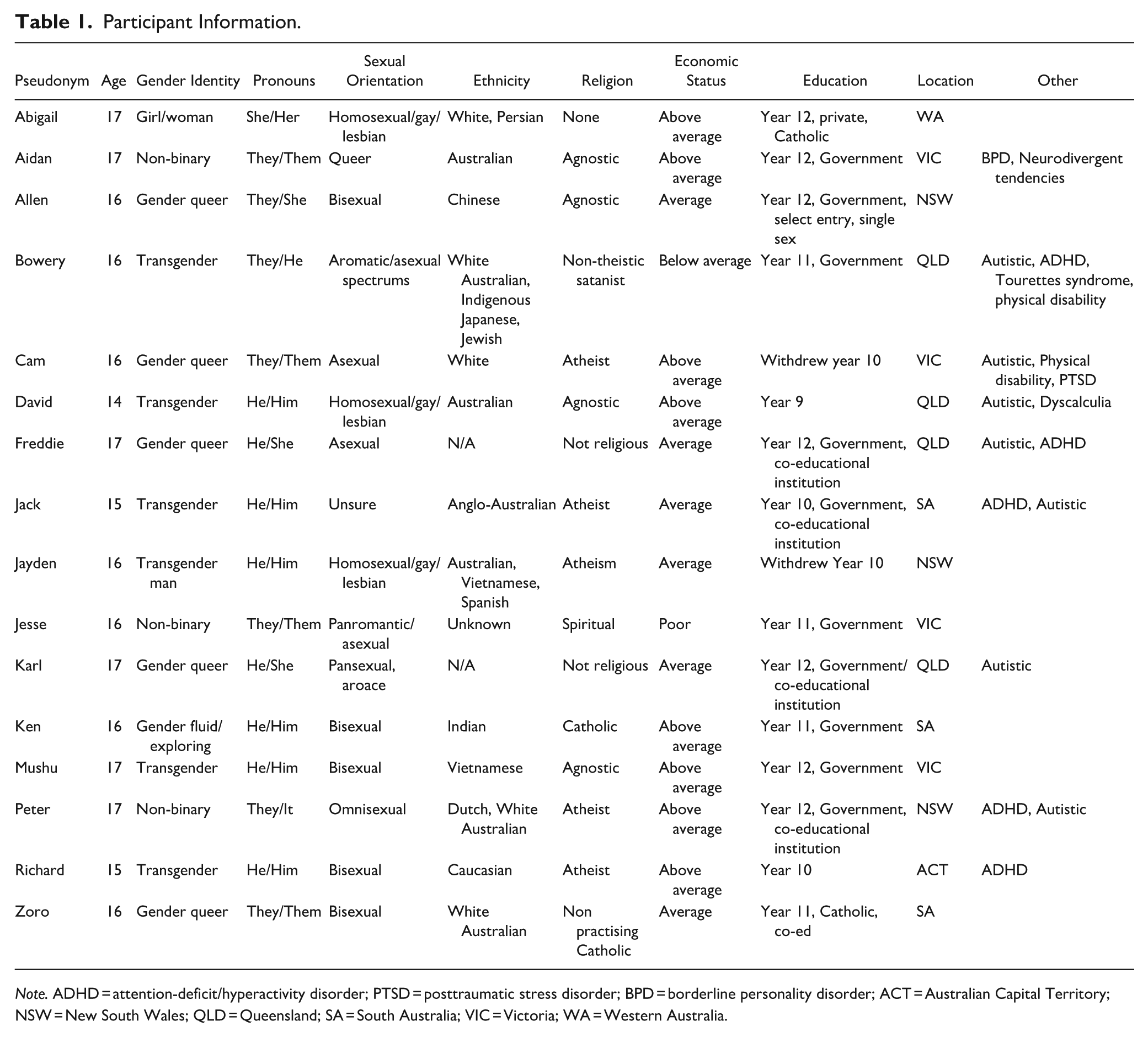
Note. ADHD = attention-deficit/hyperactivity disorder; PTSD = posttraumatic stress disorder; BPD = borderline personality disorder; ACT = Australian Capital Territory; NSW = New South Wales; QLD = Queensland; SA = South Australia; VIC = Victoria; WA = Western Australia.
Interpretative Phenomenological Analysis and Reflexivity
Analytic Procedure. We followed the six-stage IPA process outlined by Smith and Fieldsend (2021). Stage 1: Immersion. Author 1 conducted and transcribed every interview, then read each transcript twice while listening to the audio to capture tone and emphasis. Stage 2: Initial noting. Descriptive, linguistic, and conceptual comments were entered in the margins. Stage 3: Developing emergent themes. Author 1 clustered margin notes into succinct, data-anchored phrases that captured participants’ lived experience. Stage 4: Searching for connections across themes. Authors 2 and 3 joined Author 1 in reflexive meetings to compare emergent themes, grouping them into provisional superordinate and subordinate structures. Stage 5: Moving to the next case. This analytic cycle was repeated for every transcript, consciously bracketing earlier themes to preserve idiographic focus. Stage 6: Looking for patterns across cases. A master table of themes was generated, noting convergence and divergence. Triangulation and consensus coding ensured a trustworthy interpretation of experiences that Author 1 might have overlooked in the initial analysis (Natow, 2020).
Reflexivity and Positionality. IPA acknowledges that researchers are inherently involved in meaning-making (Cuthbertson et al., 2020). To maintain reflexive vigilance, each author completed a memo outlining personal assumptions about TGE adolescents and resilience (Olmos-Vega et al., 2023). The primary investigator is a heterosexual, non-binary, white, able-bodied, autistic individual with ADHD from an upper-middle-class background; Author 2 is a cisgender gay man and immigrant; Author 3 is a cisgender heterosexual woman, dyslexic, and first-generation tertiary graduate. Our diverse perspectives enriched analytic depth but also necessitated continuous critique of potential bias. Reflexive discussions were held after each stage of coding, and portions of transcripts were independently double-coded before consensus was reached. This iterative reflexivity—combined with member-checking and expert feedback, enhanced the credibility and transparency of our findings while honoring participants’ voices.
Methodological Approach
We employed purposive sampling, defined as the deliberate recruitment of participants who possess first-hand experience of the phenomenon under study (Natow, 2020). After institutional ethical approval, recruitment flyers were circulated through three LGBTQIA+ youth organizations, one gender-affirming clinic, and closed social-media groups (e.g., Instagram) for queer adolescents across Australia. Interested young people completed an online eligibility form; inclusion criteria were (a) aged 14 to 17 years, (b) self-identified as TGE, (c) residing in Australia, and (d) English-speaking. Parental consent was required for participants under 16, a criterion that may bias the sample toward adolescents with at least moderately supportive caregivers (see Limitations). Sixteen TGE adolescents met these criteria (M = 16.1, SD = 0.89).
In line with IPA guidelines favoring small, information-rich samples (Smith & Fieldsend, 2021), we aimed for up to 16 cases. Semi-structured interviews were conducted online via Zoom (Version 5.17.0) between June and July 2023, providing a comfortable and safe space for participants to discuss oppression and resistance. Each interview followed a guide organized around three themes (identity, intersectionality, and experiences/perceptions of oppression), with representative prompts such as: “How do you feel about your gender identity?,” “What other aspects form your identity besides gender?,” and “What were your thoughts when you experienced oppression?.” With participants’ permission, sessions were audio-recorded and transcribed using Otter.ai, then manually checked for accuracy. The full interview protocol appears in Appendix A.
Throughout data collection, Author 1 (who identifies as a heterosexual, non-binary, autistic individual) conducted all interviews and initial analyses; Authors 2 and 3 joined reflexive meetings to discuss emergent codes and minimize bias. This iterative, reflexive approach fostered a nuanced understanding of how Australian TGE adolescents resist oppression and cultivate resilience.
Data Analysis
Our data analysis adhered to the Interpretative Phenomenological Analysis (IPA) framework as detailed by Smith and Fieldsend (2021), an approach specifically chosen for its effectiveness in examining the intricate lived experiences of TGE adolescents confronting oppression. The analysis began with a thorough engagement with the transcripts to build a foundational comprehension of the participants’ stories, a vital step for identifying emergent themes that accurately reflected the depth of the data. Following this, we refined and systematically organized these themes into clusters, uncovering patterns and offering insights into the experiences of TGE adolescents. This structured methodology allowed us to develop a narrative that accurately portrayed individual experiences while highlighting common themes and divergences. The final stage of our analysis involved interpreting these findings within the broader scholarly context and theoretical discussions relevant to TGE adolescents’ experiences. This analytical approach supported our conclusions that remained firmly rooted in the participants’ perspectives, providing valuable contributions to understanding TGE adolescents’ experiences of oppression.
Researcher Roles and Methodological Rigor
The primary investigator (Author 1) led the interviews, transcription, and analysis processes. Authors 2 and 3 enhanced the study’s methodological integrity through training and reflexive discussions aimed at minimizing biases. Reflexivity is crucial for remaining aware of potential biases (Olmos-Vega et al., 2023). However, IPA recognizes that researchers are inherently involved in the process, as it is based on subjectivist epistemological assumptions (Cuthbertson et al., 2020). We applied triangulation to confirm themes and facilitate a reliable portrayal of TGE adolescents’ experiences, mindful of potential biases (Natow, 2020; Olmos-Vega et al., 2023). This approach underscores our commitment to rigorous, bias-aware research, embracing IPA’s recognition of the researchers’ role in analysis (Cuthbertson et al., 2020).
To foster transparency and aid in the evaluation of this study, it is essential to disclose the researchers’ backgrounds and consider how these may have impacted the research process. The principal investigator is a heterosexual, non-binary, white individual who is able-bodied, autistic, and has ADHD. They are non-religious, come from an upper-middle-class background, and are highly educated. The second author is a cisgender gay man who is non-religious and an immigrant. The third author is a cisgender, heterosexual woman who is non-religious, dyslexic, and the first in her family to attain tertiary education.
Ethical considerations were paramount, with all participants providing informed consent, and the research design aiming to protect anonymity and confidentiality through pseudonyms and careful handling of sensitive information. This approach aimed to foster an environment where participants’ voices were heard and valued throughout the research process. By prioritizing TGE adolescents’ privacy and well-being, we created a supportive environment for sharing their experiences.
Results
Two superordinate themes emerged from the analysis: (1) Adaptive Strategies of Resistance, comprising three subordinate themes; and (2) Resilience in the Face of Oppression, comprising three subordinate themes. These themes are explored in this section of the article and displayed in Table 2, accompanied by representative interview excerpts. This study primarily delves into the multifaceted impact of oppression on participants, uncovering a spectrum of experiences shaped by the TGE adolescents’ environments. Participants’ key shared experiences include misgendering, transphobia, and a pervasive lack of support, which notably influence participants’ mental health, sense of safety, and identity development. Following this section, we discuss the study’s limitations and the broader implications for future research and practice.
Summary of Superordinate and Subordinate Themes.
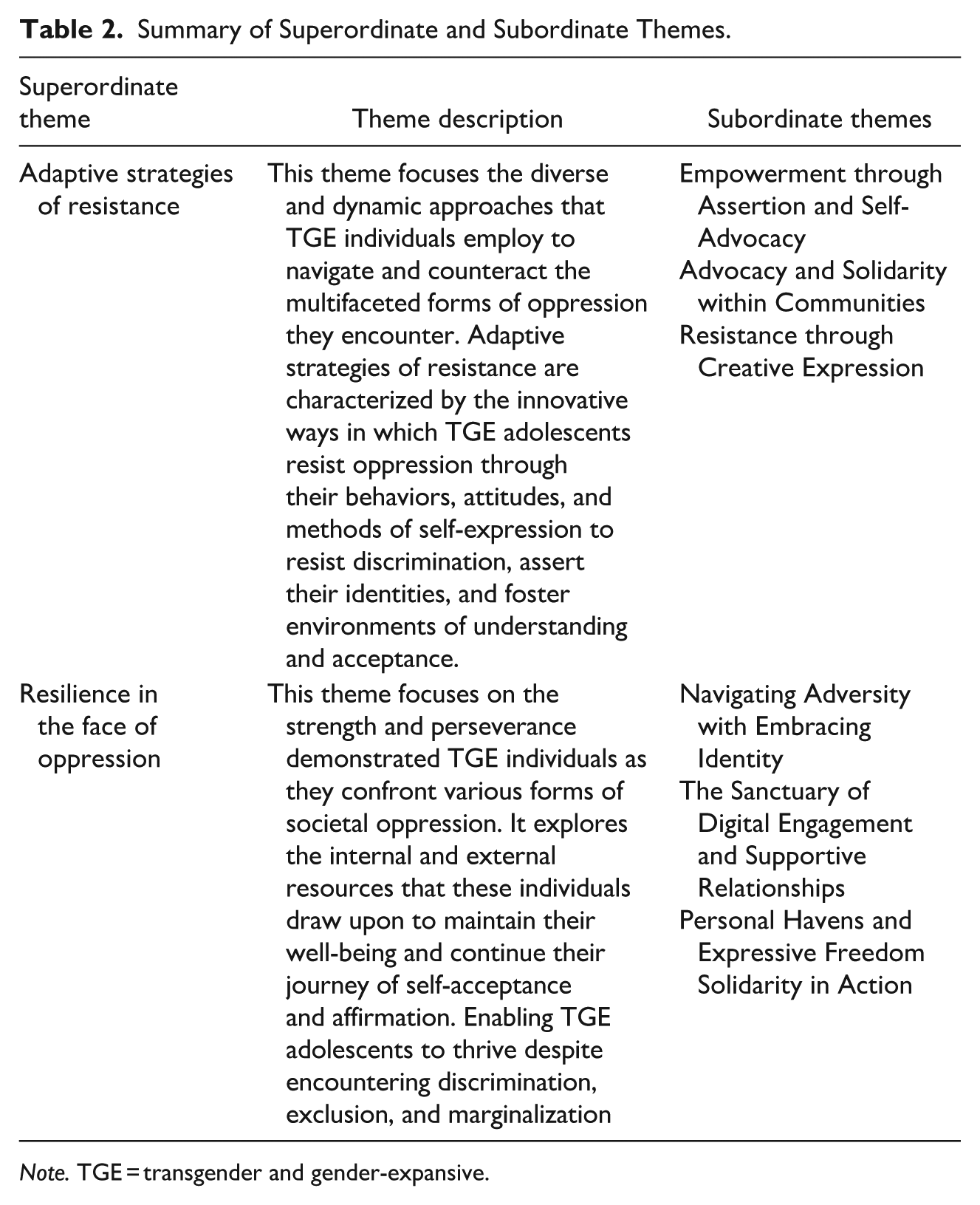
Note. TGE = transgender and gender-expansive.
The following section explores how participants used adaptive strategies to assert themselves, seek justice, and build peer support.
Theme 1: Adaptive Strategies of Resistance
Empowerment Through Assertion and Self-Advocacy
While the following quotes illustrate strong forms of advocacy and personal boundary-setting, we interpreted these acts as empowering based on how participants described feeling more in control, respected, or emotionally safe in these moments.
Through TGE adolescents’ personal narratives, participants detail the complexity of self-advocacy, employing a range of strategies from assertive communication to strategic engagement with digital platforms, each illustrating the profound impact of their actions in various spheres of life. Bowery’s account exemplifies the courage inherent in self-advocacy amidst adversity. They recount a harrowing experience of potential assault, tied to their gender identity, showcasing the immediate recourse to seeking justice and protection: “And he, I think, he somehow assaulted me. . .And I told, I told the teacher.” Jayden extends the narrative of self-advocacy in educational settings, correcting teachers on pronouns and advocating for fair treatment in shared spaces: You know, there’s obviously like, sometimes I had to correct the teachers with my pronouns. . . it’s just unfair. But they were, just like, not much we can do. You have to do this. It’s the rules. It’s for your safety.
Mushu’s experiences reflect a strategic approach to confronting discrimination and communicating needs to parents, leading to meaningful changes in their support system: “So, one night, I sat my parents down. . .And I told them, it was affecting my studies. . .Get testosterone in here right now. Right now.” This proactive step, coupled with Bowery’s insistence on the recognition of their chosen name within social and familial circles, underscores a powerful form of self-assertion: “And she [Bowery’s mother] was like, ‘don’t call it a dead name.’. . .And it’s like, cool. I’m gonna change it. . .Can you shut the fuck up and leave? I really don’t like it.”
Allen articulates the challenges of asserting their preferred pronouns and name, facing repeated disregard from others: “But I had asked them multiple times. . .if they could please stop using she/her for me. They were like, oh, yeah, and then they would use it for like half a day, and then forgot about it.” Bowery confidently communicates boundaries and challenges societal norms, particularly around family and biological ties: “I told her, I don’t care about my eggs. I don’t want to freeze them or whatever. and she, she’s a nurse, can you believe that? And she says, she says, you might regret it. Like, you might want kids and, I told her if I wanted a kid I would adopt because in no way in hell am I getting a biological kid. There are so many kids in foster care who need love and who need support, so no. So yeah, like, things do clash with each other.”
This persistence in self-advocacy, despite ongoing struggles, highlights the complexities of gaining respect and recognition in various social interactions.
Cam, David, and Jack each demonstrate unique facets of self-advocacy, from declaring identity openly and advocating for comfort and dignity in performance spaces to employing strategic discomfort to challenge discriminatory behaviors in educational contexts. For example, David commented, I’ve stood up for myself in theatre a couple times, actually, when I’ve been given, like hyper-feminine roles, and I’m like, ‘Hey, I don’t feel comfortable playing this role’. Because I think one time, it involved me being a cheerleader. . .. I stood up to my director. I was like, ‘Hey, actually, no, I’m really not comfortable playing this role. I don’t feel comfortable doing this project, you can’t make me do this project. If you’re gonna give me a role like this, can I just switch to another role? . . .. or just cut me out?
These narratives highlight the strategies TGE individuals employ to resist oppression. Through assertive communication and strategic navigation of personal and educational spaces, they highlight TGE individuals’ resistance and strategic approaches to advocating for themselves.
Advocacy and Solidarity Within Communities
Participants explored how they engaged in advocacy on behalf of themselves and others, emphasizing the interconnectedness of their efforts within educational settings, broader community actions, personal interventions, and collective support. A commitment to advocating for the rights, safety, and acceptance of TGE individuals and the broader LGBTQIA+ community. This advocacy manifests in various impactful ways, from educational initiatives and community engagements to personal interventions and fostering supportive environments. For example, Mushu and Ken exemplify the proactive role individuals play within educational settings, with Mushu organizing pride activities and creating informational programs for teachers to enhance understanding of TGE identities: “I’m still involved in pride activities. . .I made an educational slideshow presentation filled with information on gender identity. . .for teachers.” Ken’s establishment of a pride club aims to offer a safe haven for LGBTQIA+ students, emphasizing the need for protective and accepting spaces. Expanding their efforts beyond school boundaries, Abigail and Cam engaged in broader advocacy and community support. Abigail’s involvement in protests against harmful practices showcases a commitment to combatting societal challenges facing the queer community: “I actively participate in protesting against events that aim to convert queer individuals.” Cam’s work with the local council and the formation of a Rainbow Alliance highlights the significance of community-level initiatives in advocating for LGBTQIA+ rights and support.
Participants more readily protected and supported friends facing harassment or discrimination than advocated for themselves. Whether through confronting derogatory remarks, offering silent support, or engaging in protective behaviors, these actions underscore the collective commitment to fostering a safe and supportive environment. Jack’s confrontational stance against jokes targeting friends’ identities, “If someone was making a joke about my friend. . .I would turn around and say, ‘What did you say?’” and Jesse’s silent support strategy highlighted the diverse approaches to advocacy. Moreover, Zoro’s readiness to engage with school leadership in defense of mistreated peers, “I will stand up, I will go to leadership, and I will fight it,” showcases the breadth of advocacy strategies individuals employ. In addition, participants’ narratives collectively conveyed a strong sense of responsibility and commitment to supporting peers and fostering environments where TGE individuals and their allies can thrive. Mushu’s direct support for a younger TGE peer, offering guidance and assurance, “I knew I had to do everything to ensure they have someone to talk to,” reflects the deeply personal aspect of advocacy that extends beyond public actions to include individual support and mentorship.
Participants’ narratives highlight the multifaceted and interconnected efforts to advocate for TGE rights, safety, and acceptance. Underscoring the collective endeavor to foster dignity, respect, and support for all individuals, reflecting the core values of solidarity and empowerment in the face of adversity.
Resistance Through Creative Expression
TGE adolescents leverage personal expression as a form of resistance against societal oppression. Importantly, self-expression serves as a personal outlet and a powerful act of defiance and advocacy. For TGE adolescents, self-expression transcends mere personal identity affirmation, evolving into a potent tool of resistance against societal norms and oppressive structures. Through the TGE adolescents’ narratives, the participants reveal the depth of the impact of self-expression.
Freddie’s experience in LARPing (Live Action Role-Playing, where people physically act out their characters in a fictional setting) captures the essence of self-expression as a multifaceted form of resistance: In a weird way, the kind of validation I get from like, if I pass as a male, like that gender euphoria, would be about the same kind of validation I just feel internally when I’m holding a sword. Yeah.
This unique intersection of role-play and gender expression highlights how alternative spaces can offer liberation and validation away from the constraints of cisnormative society. Freddie further explains the strategic use of self-naming as a tool of self-affirmation and resistance, “So I started introducing myself as Nat because, I had that backup option of just pretending it was a shortened version of the character name.” Naming oneself becomes an act of self-determination and resistance, challenging societal norms around gender and identity.
This section highlights the resilience processes used by participants to navigate adversity, affirm their TGE adolescent identity, and develop a sense of belonging.
Peter discusses the importance of the internet as a space for exploration and expression, emphasizing its role in understanding and articulating gender identity: “The internet. Simple the internet. I feel like there’s a lot of things I just like, as time went on, I spent more time on the internet and just in rabbit holes. . .” The digital realm offers a vast landscape for TGE individuals to explore identities, connect with communities, and find languages that resonate with their experiences. It acts as a crucial counterpoint to often oppressive offline environments. Participants highlight the complexity and significance of self-expression in their lives. It’s not merely about the freedom to be oneself but also about challenging and reshaping the narratives and structures that seek to confine and silence TGE voices. Whether through the arts, social engagement, or everyday acts of defiance like naming oneself, these acts of self-expression challenge societal norms, contribute to the visibility of TGE identities, and foster spaces of empowerment and solidarity. Showcasing TGE individuals’ resistance, creativity, and courage as they navigate and resist the oppressive structures surrounding them, affirming the transformative power of self-expression as both a personal and political act.
Theme 2: Resilience in the Face of Oppression
Identity and Community Solidarity
Participants’ narratives explore the intricate journey of embracing their TGE identities amidst societal challenges. Exploring how individuals find empowerment, navigate identity uncertainties, and cultivate supportive communities that foster acceptance and understanding.
Participants shared compelling stories of empowerment, emphasizing the importance of resilience and identity affirmation amidst societal adversity. Bowery captures the essence of finding empowerment in one’s identity: “The best thing about being trans is that I’m super cool. And everyone should be jealous of me.” This statement highlights the positive self-perception and confidence that form the core of Bowery’s resilience strategy.
Allen reflects on the discovery of a broader community and the complexities of identity: “There was like a whole other part. A group of people that I didn’t realize that I was connected to.” Allen’s journey underscores the significance of community support in navigating identity uncertainties, stating, “Although my friends are aware that I’m not cis. . .I know that I have been accepted by my friends.” Jayden discusses the foundational role of emotional support and mutual care: “No matter what, or who, we are, we all will like, accept each other. . .they didn’t like abuse me or anything when I came out as trans.” Jayden’s narrative emphasizes the importance of a supportive community in building resilience. Mushu highlights the value of safe spaces and self-expression: “I feel safe and definitely, or belonging, when I’m kind of just able to. . .pick out what clothes I want to wear, what things I want to do.” Mushu’s account reveals how personal freedom and supportive environments contribute to their sense of security and identity affirmation.
The participants’ stories collectively reveal a journey marked by the pursuit of authenticity, the challenge of identity uncertainties, and the critical role of supportive networks. Through resilience, self-advocacy, and community engagement, they navigate the complexities of their experiences, demonstrating the power of identity affirmation and the significance of resilience in the face of oppression.
The Sanctuary of Digital Engagement and Supportive Relationships
Participants emphasized the critical role of digital platforms, social support, personal spaces, and gender expression in their resilience. They identified digital platforms as crucial safe havens. For instance, Bowery stated, “I went online. You know, I looked on YouTube, and they’re out there so many trans YouTubers, you know, and that I was grateful for that.” Allen described their experience similarly, “It was TikTok, but then I deleted that after a while. So, it’s mostly been Twitter and right now Tumblr.” These reflections underscore the importance of selective engagement with digital environments that affirm one’s identity.
Social support from friends, family, and therapeutic assistance were significant social supports in fostering resilience. Jayden highlighted the power of unconditional love, saying, “I believe in that wholeheartedly. Like, um just being there for each other.” Mushu’s narrative also emphasized community, “I guess that’s when I really just found my kind of people.” The role of therapists and mental health professionals was crucial, serving as allies in participants’ journeys toward acceptance and understanding.
Personal Havens and Expressive Freedom
Creating and maintaining personal safe spaces emerged as a vital coping mechanism. “I feel like I belong very much in my room. That’s, I’d classify any place that’s my own as my safe space,” Aidan reflected, illustrating the importance of a physical space where one can freely explore one’s identity without judgment. Likewise, while navigating gender expression within school environments had challenges, it also presented opportunities. For example, Allen struggle with the school uniform policy highlights systemic barriers, “It’s just that I can’t get my hands on these pants because they’re not at the uniform shop.” Meanwhile, Jack’s experience reflects a positive shift, “They changed my name on the roll. And, and an app, which is like what we use to organize everything. So, the teachers all use Jack.”
Mushu speaks to the importance of acceptance, “Finding a space where I could be myself was life-changing. . .it was about empowerment,” emphasizing the transformative impact of supportive environments. This sentiment is echoed by Jayden, who values unconditional support, “No matter what or who we are, we accept each other. . .it’s transformative,” Similar to Allen’s realization, “There was a whole other part. . .a group of people that I was connected to,” highlights the discovery of belonging and shared identity within the broader TGE community. Showcasing the power of community in fostering self-acceptance and resilience alongside the importance of supportive communities for self-expression and mutual support.
Solidarity in Action
This subtheme specifically captures actions like peer mentoring, collective advocacy, and active community support, distinguishing them from general emotional solidarity or friendship. Participants like Cam and Karl highlighted used external resources to affirm their TGE adolescent gender identity. Cam shared, “And it was, for anyone who was under that there was a lot, of a lot of trans kids particularly.” Karl’s experience with medical transition speaks to the importance of accessible gender-affirming care, “And I’ve had like, the means to like, medically transition all that I’ve wanted.” Richard shares his healthcare journey, “Starting testosterone was daunting but.. . .It’s about taking control of my journey,” illustrating the significance of autonomy in healthcare decisions.
Participants took control of their TGE adolescent identity through online platforms to obtain information, resources, and support. Online resources, particularly social media platforms and video-sharing websites, are primary sources of information and inspiration. Bowery’s experience highlights the impact of discovering transgender narratives online: I went online. . . there were so many trans YouTubers, you know, and that I was grateful for that. And I remember, in grade seven, I was like, watching these videos where like, people started testosterone, and I was like, crying. And I was like, I want that, Because, you know, all the guys at my school were like, their voices were dropping, and I was like, Why isn’t that fucking happening to me, bro?
Underscoring the value of online visibility and representation for transgender adolescents, providing both a sense of community and a roadmap for their own transitions. Online information played a critical role in participants’ self-discovery processes. Richard articulated this journey, stating, "I knew about it online. When I started questioning, I did start to research. . . probably just Google and YouTube, TikTok.” Turning to digital platforms for guidance reflects the broader trend of adolescents using online spaces to navigate complex questions about identity and belonging. Moreover, online spaces are important for facilitating participants’ social transitions. Aidan’s narrative illustrates the empowering effect of digital circles: “I was in an online circle. . .going as [birth name] and then, I was like, this is who I want to be, and, so I started asking people at school to call me [chosen name], and they went, ‘yep, let’s do it.’” This transition from online affirmation to real-world acceptance captures the unique role that digital spaces play in fostering environments where TGE adolescents can safely explore and assert their identities.
Digital platforms, social support, personal safe spaces, and navigation of gender expression within institutional settings emerge as critical elements in their coping strategies. These mechanisms not only facilitate personal resilience but also underscore the need for systemic changes to fully support TGE individuals.
Discussion
Our findings illustrate how resistance strategies directly supported adolescents’ resilience, by providing tangible resources such as community affirmation, supportive relationships, and opportunities for identity validation. This study uniquely contributes to developmental and resistance literature by explicitly connecting TGE adolescents’ strategies of resistance with the developmental outcomes of resilience and identity consolidation, offering direct implications for developmental theory and adolescent support practices. The participants’ stories highlight the varied yet interconnected tactics they employ to counteract oppression, highlighting a complex relationship between acts of resistance and the development of resilience. Participants provided insightful perspectives on their engagements with environmental challenges, societal norms, and the cultivation of personal agency. These narratives reveal a fight against external pressures and a journey toward self-empowerment and community solidarity. These findings present unique perspectives on how TGE adolescents navigate societal oppression through acts of resistance.
Our findings refine current models of TGE identity formation by showing how acts of resistance (e.g., pronoun correction, peer advocacy) double as developmental tasks: they externalize one’s affirmed gender and invite social recognition, thereby accelerating identity consolidation (Fish & Russell, 2022). This aligns with PVEST’s emphasis on coping responses shaping self-concept and supports recent calls for community-embedded approaches to identity development (Bettergarcia et al., 2024). In practice, even small assertion skills can be taught and reinforced in supportive school settings, positioning resistance as an integral part of healthy identity work.
Interconnected Strategies of Resistance and Empowerment
The narratives of TGE adolescents unveil a multifaceted landscape of resistance against societal oppression. Central to TGE adolescents’ resilience, is the dynamic interplay of assertion, self-advocacy, community support, and personal expression. These strategies are not isolated but deeply interconnected, each reinforcing and being reinforced by the others, likewise to previous findings on the interplay of personal and social identity strategies in resistance movements (Ayanian et al., 2021; Vollhardt et al., 2020 This dynamic mirrors the complex relationship between adversity and resilience documented in prior TGE samples (Hillier et al., 2020; Price et al., 2023; Tankersley et al., 2021).
Assertion and Self-Advocacy as Cornerstones of Resistance
Participants’ experiences underscore the critical role of assertion and self-advocacy in challenging oppressive structures. The participant’s courage to speak out against discrimination exemplifies a profound form of personal and collective empowerment. This aligns with Butler’s (1990) theory of performativity, suggesting that asserting one’s identity can be a powerful act of defiance against normative gender expectations. Additionally, Stryker (2008) further champions the notion that transgender existence itself defies societal expectations, promoting a broader acceptance. Her work underlines the transgender community’s enduring resilience and the transformative power of living authentically as a form of resistance. Moreover, the strategic use of digital platforms for advocacy and support highlights the importance of technology in contemporary resistance movements, echoing the work of previous research (Erlick, 2018; Fileborn & Loney-Howes, 2018; Lopez-Leon & Casanova, 2025). Therefore, digital self-advocacy among TGE adolescents demonstrates how social media is a critical platform for visibility and support (Buss et al., 2022; Selkie et al., 2020). Ultimately, the current studies participants suggest that brief, concrete pronoun-assertion scripts or online role-plays could be integrated into school programs to normalize identity-affirming dialog.
This further aligns with the broader literature on the importance of assertive identity expression and the strategic use of digital platforms for advocacy, as seen in studies examining the protective roles of social media in visibility and support for TGE adolescents (Greenfield et al., 2021; Ramos & Marr, 2023). Furthermore, the significance of gender-affirmative care in supporting TGE adolescents’ mental and physical health underscores the necessity of advocacy and self-advocacy in accessing appropriate and affirming healthcare services (Call et al., 2021).
The Transformative Power of Supportive Communities
The significance of community in fostering resilience and empowerment is highlighted by participants’ reflections on the role of acceptance and support in their journeys, highlighting the transformative impact of finding “one’s people.” This echoes previous research indicating the importance of community in buffering against the psychological impact of stigma and discrimination (Goldenberg et al., 2020; Lefevor et al., 2019; Veale et al., 2017). The establishment of pride clubs and educational initiatives by participants signifies a proactive approach to advocacy, emphasizing the role of education in changing societal perceptions of TGE identities, supported by the findings on educational advocacy for TGE adolescents (Goldberg et al., 2020; Lewis & Sembiante, 2019; Stark et al., 2022). Providing funding for youth-moderated peer spaces could offer a scalable path to resilience, since these grassroots networks already function as mutual-aid micro-structures. Moreover, this is supported by research emphasizing the resilience of TGE adolescents when they have access to affirming trauma-informed services and supportive networks (Andrzejewski et al., 2021; Ramos & Marr, 2023). Funding youth-moderated peer spaces may therefore offer a scalable route to resilience, as these grassroots networks mirror mutual-aid micro-structures documented elsewhere (Ahuwalia et al., 2024).
Self-Expression as an Act of Defiance and Affirmation
Participants’ self-expression through mediums such as LARPing and digital exploration is a personal outlet and a form of resistance. Using self-expression transcends their personal identity affirmation to challenge societal norms. This resonates with the concept of “aesthetic resistance” proposed by Rancière (2013), where art and expression disrupt the sensibilities of the social order. The act of participants naming themselves embodies the notion of self-creation as an ethical practice (Hofmeyr, 2006), highlighting the power of self-determination in the face of oppressive structures (Givens & Kimble, 2023). The importance of self-expression in affirming identity and challenging oppressive structures is further highlighted in studies on the roles of gender affirmation and discrimination in the resilience of transgender individuals (Lelutiu-Weinberger et al., 2020). The role of creative expression in TGE adolescents’ resilience is further emphasized in the work of Wagaman (2016), who explores how art serves as a vehicle for self-definition and resistance. Art-based school clubs or online interest led projects could harness this drive for creative expression in safer environments.
Navigating Adversity With Resilience
The participants described diverse and adaptive resilience processes. Ranging from internal psychological reframing to external actions like peer advocacy and online community engagement. Adversity was common, yet adolescents leveraged private peer group chats to debrief after hostile incidents, illustrating a collective resilience mechanism. Further highlighting a multidimensional relationship between adversity, resistance, and identity growth. This reflects the understanding of resilience as a process of negotiating for resources that sustain well-being (Harris et al., 2017). The narratives demonstrate that resilience in TGE adolescents is not merely about surviving adversity but actively shaping one’s environment to affirm identity and foster a sense of belonging. Recent research on the resilience strategies of TGE adolescents further supports this view, highlighting the importance of agency and community in overcoming challenges (Goffnett & Paceley, 2020; Hillier et al., 2020). Moreover, the perspectives of transgender adolescents on parental support underscore the critical role of acceptance and support in fostering resilience (Andrzejewski et al., 2021).
Implications for Practice and Policy
The findings of this study offer several key implications for educators, healthcare providers, and policymakers seeking to support TGE young people in developmentally informed and affirming ways. By centering the lived experiences of TGE adolescents, the study highlights actionable strategies that can foster environments of inclusion, safety, and empowerment (Case & Amand, 2014; Coleman et al., 2022; Ullman, 2018).
Based on participants’ experiences, educational and healthcare systems should embed resistance-affirming strategies such as pronoun affirmation, safe spaces, peer leadership opportunities, and validation of lived experience. These strategies mirror those used by adolescents in the study, who frequently described finding strength through peer advocacy, digital connection, and mutual aid (Martino et al., 2019; Paceley, Goffnett, et al., 2021).
Participants’ frequent use of advocacy, digital engagement, and community-building underscores the importance of structural supports that amplify adolescents voice and agency. For instance, school-based pride initiatives, educational interventions, and adolescent-led organizations provide vital affirmation and reduce isolation (Bockting et al., 2020; Mushu, interview excerpt; Cam, interview excerpt). Educational institutions should therefore incorporate student-led platforms and queer-inclusive curricula to support TGE adolescents in navigating school environments (Lewis & Sembiante, 2019; Stark et al., 2022). Additionally, because most participants relied on online peer servers for affirmation, schools and health services could partner with youth-run digital groups to extend support beyond physical settings. Embedding brief assertion-skill modules (e.g., pronoun-correction scripts) in classrooms may simultaneously bolster resistance and identity clarity.
Educator training in gender diversity, including how to support students through social transition and how to respond to discrimination or misgendering, is urgently needed (Domínguez-Martínez & Robles, 2019; Woolley, 2019). Furthermore, healthcare systems should strengthen access to affirming, trauma-informed care and challenge non-affirming practices such as misnaming or default pronoun use (Call et al., 2021; Lovejoy et al., 2023; Strauss et al., 2022). Participants’ narratives revealed that inclusive healthcare environments contributed meaningfully to resilience and identity formation.
Finally, policy frameworks must shift responsibility away from individual TGE adolescents to system-level protections. When adolescents must continuously self-advocate within unsupportive systems, it compounds emotional and cognitive burdens and risks undermining well-being (McBride & Neary, 2021; Rosenthal, 2021). Instead, policies should embed protective infrastructure that ensures safety and affirmation are not conditional on a young person’s ability to resist oppression, but are built into the foundation of schools, healthcare systems, and community services (Andrzejewski et al., 2021; Brown et al., 2020; Hillier et al., 2020).
Limitations and Implications for Future Research
Given the qualitative and idiographic nature of this study, the findings are not intended to be generalizable to all TGE adolescents. Instead, our focus is on the transferability of insights to similar contexts. While the purposive sample allowed for rich, in-depth accounts, it may not capture the full diversity of experiences across the broader TGE adolescent population. Additionally, because participants under the age of 16 required parental consent, the study may underrepresent TGE adolescents who are not supported or are not out to their guardians, groups for whom resilience and resistance strategies may differ significantly. Given the study’s explicit focus on resistance and resilience, this framing may have unintentionally shaped the way participants expressed their experiences, potentially emphasizing certain narratives over others.
The diversity and size of the sample may not fully capture the wide range of experiences within the TGE community, limiting the generalizability of the findings. The emphasis on resistance and resilience could also overshadow other important aspects of TGE adolescents’ lives, such as joy and community belonging. Moreover, the complexity and variability of support systems significantly impacting TGE adolescents’ experiences were not exhaustively explored. The study did not extensively explore variability in participants’ support systems, primarily because the interview protocol focused explicitly on experiences of resistance and resilience rather than support availability. Future research could further investigate how diverse support systems specifically influence these processes.”
IPA provides deep insights into individual experiences but may restrict broader applicability due to its qualitative nature and the influence of researcher interpretation. Additionally, the study’s temporal and contextual scope may not account for evolving societal attitudes or the dynamic nature of TGE adolescents’ experiences over time.
The insights gained from this study underscore the need for supportive interventions that acknowledge and bolster the resistance strategies of TGE adolescents. Educators, policymakers, and mental health professionals must create inclusive environments that empower TGE adolescents to express themselves, advocate for their rights, and engage with supportive communities. Future research should continue to explore the evolving landscape of resistance and resilience among TGE adolescents, focusing on identifying and amplifying the resources that facilitate their empowerment and well-being. Investigating the impact of digital literacy on self-advocacy among TGE adolescents might display how digital skills influence their ability to navigate and resist oppressive environments. Furthermore, conducting longitudinal studies on the psychological well-being of TGE individuals actively involved in advocacy and community support roles could offer valuable insights into the long-term effects of such engagement on mental health. This, longitudinal research should explore whether early assertion predicts later psychological well-being, and cross-cultural studies could compare how different policy climates shape adolescent resistance strategies. Lastly, a comparative analysis of resilience strategies across different cultural contexts within the TGE community could reveal how TGE individuals maintain resilience in the face of varying societal norms and challenges. Cross-cultural analysis is a meaningful future direction because cultural contexts likely shape the forms of oppression encountered, the strategies available and effective for resistance, and the developmental implications of resilience for TGE adolescents.
Conclusion
Through this research, we illustrated how TGE adolescents actively navigate structural oppression through adaptive resistance strategies, significantly contributing to their resilience and identity development. Educational and healthcare systems must therefore adopt proactive, inclusive measures to structurally affirm and support adolescents’ agency and well-being.
Footnotes
Appendix A: Interview Protocol
Declaration of Conflicting Interests
The authors declared no potential conflicts of interest with respect to the research, authorship, and/or publication of this article.
Funding
The authors received no financial support for the research, authorship, and/or publication of this article.
Informed Consent
Informed consent was obtained from all individual participants included in the study.
Statement of Human Rights
The project was considered by the Monash University Human Research Ethics Committee. The Committee was satisfied that the proposal meets the requirements of the National Statement on Ethical Conduct in Human Research and has granted approval.
