




Abstract
This study aimed to investigate if and how the Five Cs were related to the perception of program outcomes in different PYD programs in Aotearoa/New Zealand. A qualitative, exploratory methodology was employed within a critical realist epistemology, including semi-structured interviews and focus groups with 110 youth, aged 12 – 25 years, and 17 staff in 14 different local PYD programs. Data were analyzed using framework analysis. Inductive analysis identified nine key program outcomes which were then assessed against the Five Cs, plus Contribution and Creativity, noting areas of similarity and local difference. The study concludes that although youth and staff perception of program outcomes broadly align with the Five Cs, belonging and positive identity, key themes in the data, are not well captured in current Five Cs definitions. Local definitions which highlight these contextual and cultural nuances are proposed. The findings provide a basis to further understand localized PYD in a global field and may be a valuable comparison point for others to explore the Five Cs in their contexts.
Introduction
The Five Cs is a well-known model of Positive Youth Development comprising Confidence, Competence, Connection, Caring, and Character, leading to a sixth C of Contribution (Lerner et al., 2005). The Five Cs describe youth who are developing positively, are used as evidence that positive development is occurring, and as measures of PYD program outcomes (Geldhof et al., 2015).
Positive Youth Development (PYD) is a tripartite concept: the natural developmental processes of youth; approaches and philosophies that support positive development; and interventions taking this approach (Hamilton et al., 2004). Positive development occurs in the interaction of youth and their contexts; thus, youth and the physical, familial, social, cultural, and historical resources around them influence their development (Eichas et al., 2015). In recognizing the interaction of youth and context, PYD sits in tension between the specific and the general. Development is specific to individuals; however, we attempt to describe and measure this in more universal ways (Johnson & Ettekal, 2023).
The original Five Cs study in the United States validated long and short versions of the Five Cs, demonstrated that these Cs comprise PYD, and that the Five Cs lead to Contribution (Bowers et al., 2010; Geldhof et al., 2014, 2015; Lerner et al., 2005; Phelps et al., 2009). The applicability of the model in diverse settings has been investigated, including Europe (Conway et al., 2015; Dimitrova, Buzea, Wiium, et al., 2021; Holsen et al., 2017); Canada (Strachan et al., 2018); Mexico (Dominguez Espinosa et al., 2021); South America (Manrique-Millones et al., 2021; Tirrell et al., 2019); Ghana (Kabir & Wiium, 2021); and parts of Asia (Abdul Kadir et al., 2021; Li et al., 2021).
Some studies have concluded that the Five Cs and measures are translatable to their settings, such as in Ireland (Conway et al., 2015); Norway (Holsen et al., 2017); Mexico (Dominguez Espinosa et al., 2021); and a comparative study in Bulgaria, Italy, Norway and Romania (Dimitrova, Buzea, Wiium, et al., 2021). However, there is also interest in understanding cultural and contextual variation in how the Five Cs are expressed and inter-related (Johnson & Ettekal, 2023; Lerner et al., 2019). Several studies highlight these variations; a study in El-Salvador, showed higher Character scores for program youth compared to non-program youth (Tirrell et al., 2019). In Hong Kong and China (Li et al., 2021) differences were seen in the elements comprising the Cs; social competence sat in Character rather than Competence, posited to reflect the importance of maintaining social harmony within a collective culture. A Canadian study of First Nations youth identified that Connection included connection to land, an aspect not identified elsewhere (Strachan et al., 2018). Johnson and Ettekal (2023) found that sub-group differences between the Five Cs in four different US samples were such that data could not be aggregated, suggesting diversity in how the Five Cs occur and are experienced.
Recent studies have suggested a 7th C of Creativity defined as “novel-original and useful-adaptive problem-solving ability, meaningful within a social and cultural context” (Dimitrova, Fernandes, Malik, et al., 2021, p. 20). Creativity is seen as important for youth from disadvantaged environments because of its role in successfully navigating challenges (Manrique-Millones et al., 2021), whilst problem solving provides opportunities for enjoyment, connection, and developing confidence (Dimitrova, Fernandes, Malik, et al., 2021). Studies in Indonesia, Pakistan and India (Dmitrova, Fernandes, Malik, et al., 2021); Colombia and Peru (Manrique-Millones et al., 2021); and Malaysia (Abdul Kadir et al., 2021) measured Creativity with nine items from the Reisman Diagnostic Creativity Assessment (Reisman et al., 2016) covering solution finding and brainstorming skills. The studies all used the Five Cs Short Form Measure (Geldhof et al., 2014) and found the 7 Cs related to PYD, and that the Five Cs plus Creativity related to Contribution.
It is not yet clear whether the Five Cs are perceived and experienced similarly in different settings or whether there may be more or different Cs, such as Creativity in some contexts. Qualitative Five Cs studies are limited but could help to explore variation (Lerner et al., 2018). A small number of studies outside of the original Five Cs study have been conducted in program contexts (see for example, Li et al., 2021; Strachan et al., 2018; Tirrell et al., 2019) and so the Five Cs role as program outcomes is not well known. Further investigation is required to better understand the Five Cs and PYD in different contexts (Johnson & Ettekal, 2023).
The study in this article is based on the lead author’s PhD research and sought to respond to these gaps by qualitatively investigating if and how the Five Cs were related to the perception of program outcomes in 14 different PYD programs in Aotearoa/New Zealand 1 . It found broad alignment between the Five Cs and program outcomes and highlighted areas of local difference. Elucidation of these differences helps to identify both general and specific conditions of PYD, whilst a qualitative approach provides culturally richer descriptions of the Five Cs. These descriptions also reflect the positioning of the authors as Pākehā (New Zealand European) cis-gendered females, with backgrounds in social services, youth, and disability fields.
Defining the Five Cs
The Five Cs evolved from a Carnegie Council on Adolescent Development (1989) report, describing the positive characteristics of a youth who was well prepared for adulthood. These included: a healthy person with a positive self-image and sense of efficacy who was intellectually reflective, caring and ethical, had developed a range of skills, and the capacity to navigate to meaningful work. These ideas developed into the Five Cs, the definitions of which have changed over time (see Table 1). For example, early definitions of Character included values, responsibility, and spirituality (Little, cited in Blum, 1998; Pittman et al., 2003), whilst later definitions refer to societal norms, correct behavior, and knowing right from wrong (Geldhof et al., 2015; Lerner et al., 2005; Roth & Brooks-Gunn, 2003).
Five Cs Definitions.
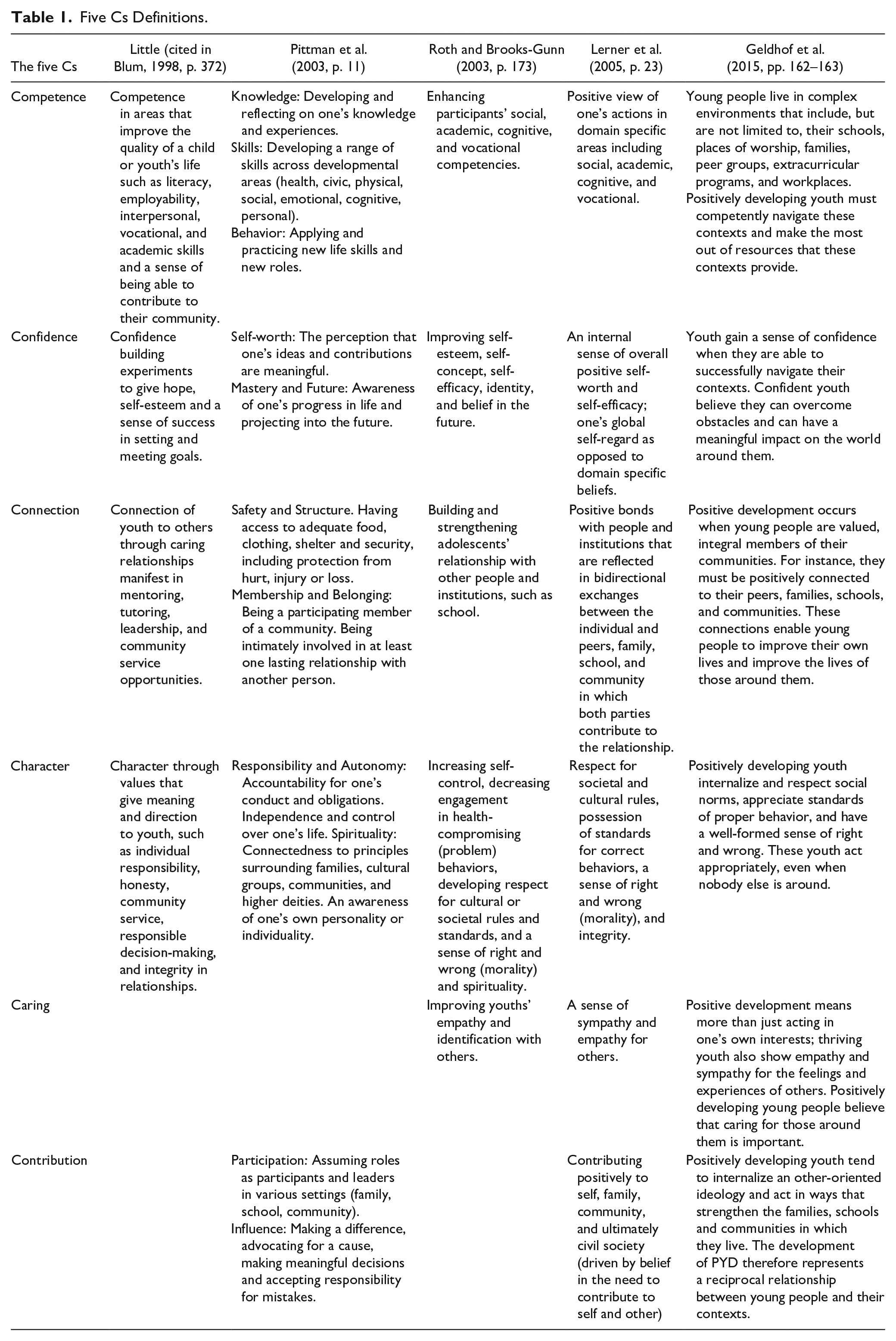
The emphasis that different definitions place on the concept of identity illustrates the need to better understand the impact of contextual and cultural matters on the Five Cs. For example, Pittman et al. (2003) link identity to Character through awareness of self and personality. Roth and Brooks-Gunn (2003) instead link it to Confidence in line with the definition contained in the Five Cs measure (Lerner et al., 2005). Lerner et al. (2005) also link identity to Contribution, through being the type of person who wishes to contribute. Identity may be related to individual self-concept when linked to Confidence, or more contextually aligned, when linked to Character and Contribution, through the awareness of self and one’s relationships to community, culture, and spirituality. Such distinctions may become very important in different cultural settings depending on the emphasis placed on individualistic or collectivistic value systems (Scales et al., 2017).
Definitions of Connection also highlight different facets. For example, Pittman et al. (2003) identify membership and belonging, while Geldhof et al. (2015) describe youth being valued and recognized for their role in relationships. Both suggest a sense of fit and esteem within various contexts as important to Connection. Geldhof et al. (2015) further state that community membership supports positive development, suggesting a central role for Connection. The Lerner definition (Lerner et al., 2005) describes bi-directional exchanges, acknowledging young people’s role in their development and their contribution to relationships, but implies a more transactional nature.
These variations highlight potential differences in orientation toward the Cs and how much they are recognized as contextually bound. Understanding how the Cs are perceived and expressed in different settings may be important for understanding PYD in different contexts, such as which competencies are viewed as valuable, the role of Connection in development, and whether identity is perceived as an individual or collective construct.
The Aotearoa Context
Aotearoa is a bicultural nation with a culturally diverse population. Te Tiriti o Waitangi/The Treaty of Waitangi, signed in 1840 between the British Crown and some Māori chiefs, is the foundation of contemporary Aotearoa (Orange, 2013). Like other colonized nations, the indigenous Māori people have suffered loss of land, language, and cultural and social practices. The accumulating impact of these losses are seen in persistent wellbeing disparities for Māori (Moewaka Barnes & McCreanor, 2019), including youth who generally experience poorer outcomes than their non-Māori peers (Clark et al., 2018). Western views of PYD have been critiqued as insensitive to different cultural contexts in Aotearoa (Keelan, 2014; Ware & Walsh-Tapiata, 2010) and must be locally assessed.
In Aotearoa, PYD is considered in relation to te ao Māori (the Māori world) where all things are interconnected; the living, the dead, past and present, physical and spiritual. Development is embedded within these relationships (Macfarlane, 2004). Thus, PYD for Māori youth needs to consider relationships with ancestors, land, traditions, values, the environment, whānau (family), community and spirituality, and occurs within a wider network of reciprocal relationships (Ware & Walsh-Tapiata, 2010).
Aotearoa is home to many Pacific peoples from Samoa, Tonga, Cook Islands, Niue, Tokelau, and Fiji among others (Boon Nanai et al., 2022). Whilst each Pacific culture is unique, here too, development occurs in the context of family, land, spirituality, ancestors, language, and interconnectedness with others and the environment (Mila-Schaaf, 2006; Tamasese, 2002). Core values of love, service, and humility guide interactions in many Pacific cultures (Mafile’o, 2019).
There is also a growing and diverse population from East and South Asia. Asian youth comprise nearly 14% of the total population of those aged 10 to 24 (Stats NZ, n.d.), however, local literature regarding the experiences, health and wellbeing of these youth is scarce (Peiris-John et al., 2021). Asian youth may be adapting to cultural differences in Aotearoa, and many come from collective cultures (Mortensen & Lim, 2017).
The Five Cs in Aotearoa
Some local studies link program outcomes with some or all of the Five Cs (Arahanga-Doyle et al., 2019; Mercier et al., 2019). The Very Short Measure of the Five Cs (Geldhof et al., 2014) has been used in one local study with emerging adults (Fernandes et al., 2021). While results showed fit between the Five Cs model and the data, the authors suggested further validation of the questionnaire and model given the age and predominantly European ethnicity (76%) of the sample (Fernandes et al., 2021).
The holistic approach of the Five Cs may fit locally, however, individually focused interpretations, such as situating identity within Confidence do not fit with Māori views of identity as collective and relational (Arahanga-Doyle et al., 2019). Given growing evidence and interest, further local investigation of the Five Cs is necessary to assess their relevance.
About the Study
This qualitative, exploratory study investigated outcome perceptions in 14 different PYD programs in Aotearoa using interviews and focus groups with youth and staff. Its purpose was to understand how program outcomes were perceived in different programs and whether the Five Cs model could function as a relevant descriptor of outcomes in these settings. It examined how outcomes were defined, understood, and experienced by youth; how they were operationalized, and prioritized in programs, and similarities and differences in outcome perception. The study then assessed these perceptions against the Five Cs framework to determine its suitability to the local setting.
The study sat within a critical realist epistemology, which recognizes that reality and our perception of reality may differ (DeForge & Shaw, 2012). Critical realism is also interested in the interaction and mutual influence of social structures and human agency, (Longhofer & Floersch, 2012). Critical realism enables research to actively engage with differing world views; recognizing them all as real, valid, and able to shape people and systems (Martel et al., 2021). Thus, it is an ideal philosophical framework for exploring perception of the Five Cs, given the significant presence different cultural groupings in Aotearoa. A tripartite view of PYD (Hamilton et al., 2024), as described above, and the tensions therein between specificity and universality formed a theoretical lens through which to understand the applicability of a globally recognized model within a specific context. An exploratory methodology was used, supporting a flexible research design that fit different program settings. Ethics approval was granted for the study and participants provided written consent, with parental consent given for those aged under sixteen.
Methods
Sampling and Recruitment
A maximum variation approach generated a diverse sample (Daniel, 2012). A range of potential program types were purposively identified, such as mentoring, outdoor activity, arts, community events, volunteering, young parents, one working with diverse sexualities and genders, and one based on indigenous values. Additional programs were identified via snowball sampling. Because there are no agreed definitions of PYD programs (Roth & Brooks-Gunn, 2016), programs that self-identified as meeting Lerner’s (2004) Big Three; skills development, sustained youth/adult relationships, and leadership opportunities were included. Other inclusion criteria were: meeting locally defined program types (mentoring, leadership, volunteering, and skills); broad or open entry criteria, even if working with a specific population for example, young parents; and youth choosing to engage. Exclusion criteria were programs: with a treatment focus; provided by a government department; and where attendance was mandated, as these were less likely to take a PYD approach. Included programs targeted those aged 13 to 18 years, 13 to 25 years or 18 to 25 years, whilst two also offered children’s programs.
Procedures
Youth and staff participants were identified by organizations and invited by either the lead researcher, or the organization. The mix of interviews and focus groups was determined by program structure. For example, where all youth in an existing group consented, focus groups occurred during a usual group time. Individual interviews occurred where consenting youth were in different groups, such as participants from various art and dance groups in an arts program. Focus groups lasted two hours and interviews up to one hour at program locations. Schedules were structured around the broad question of what participants thought youth gained from programs, with additional questions and probes exploring how these identified gains or outcomes were perceived and experienced. For example, questions such as what does (identified outcome) mean? How would someone think, feel or behave if they had (identified outcome)? Staff were interviewed separately to youth.
Participants
Interviews and focus groups included 110 youth and 17 staff in 14 different programs. Figure 1 shows 70% of youth participants were aged 13 to 17 years, with a mean age of 16.1 years. Figure 2 shows youth ethnicity. Youth could choose ethnicities they identified with. New Zealand European was the largest single ethnic group (39%); however, just over half of participants (52%) identified with a Pacific ethnicity (Samoan, Tongan, Cook Island Māori, Niuean). Eighteen percent identified as Māori, and 11% identified as Indian or Chinese. The category of Other (20% of participants) was developed by the lead author to capture smaller ethnic groups in Aotearoa. Some participants who chose Other identified their ethnicity, including Filipino, Indonesian, Afghan, Sudanese, South African, and Scottish. Most participants chose one ethnicity, 23.9% identified with two, 5.9% with three, and 1.7% with four or more. Figure 3 shows youth gender. Ninety eight percent of participants chose male or female, with two percent identifying with other genders. Given small numbers of staff participants (n = 17), their demographic data were not collected.
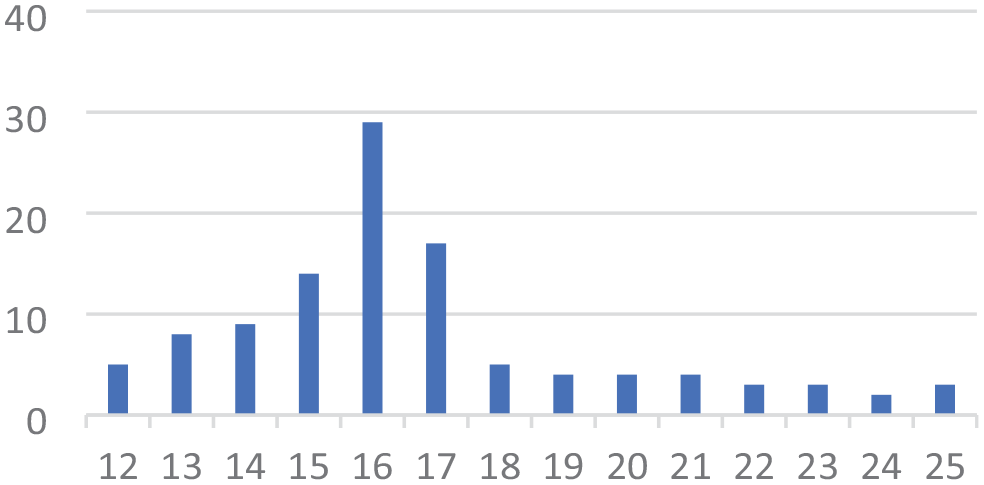
Age of youth participants.
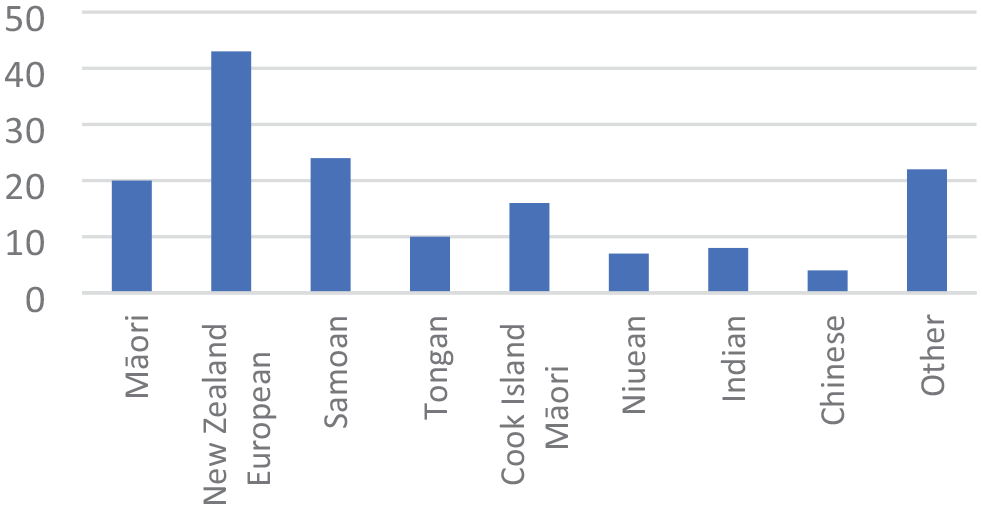
Ethnicity of youth participants.
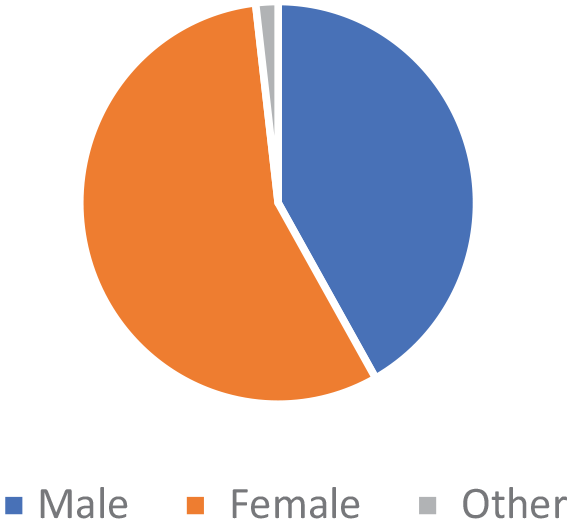
Youth participant gender.
Data Analysis
Analysis involved two steps, reflecting the two aims of the study; to understand how outcomes were perceived in a range of programs, and to assess the Five Cs’ relevance. The analysis of outcome perception was inductive, and data driven, using framework analysis, a structured sequential process that supports comparison within the dataset and ensures all data are included throughout (Ritchie & Spencer, 1994). This approach was chosen to capture both the similarity and diversity of participant outcome perception and included youth and staff data. Analysis was undertaken by the lead researcher, supported by the other authors who were PhD supervisors, and key themes discussed with cultural advisors (respected Māori and Pacific academic and practice colleagues). The steps of framework analysis, used to understand outcome perception are illustrated below in Figure 4.
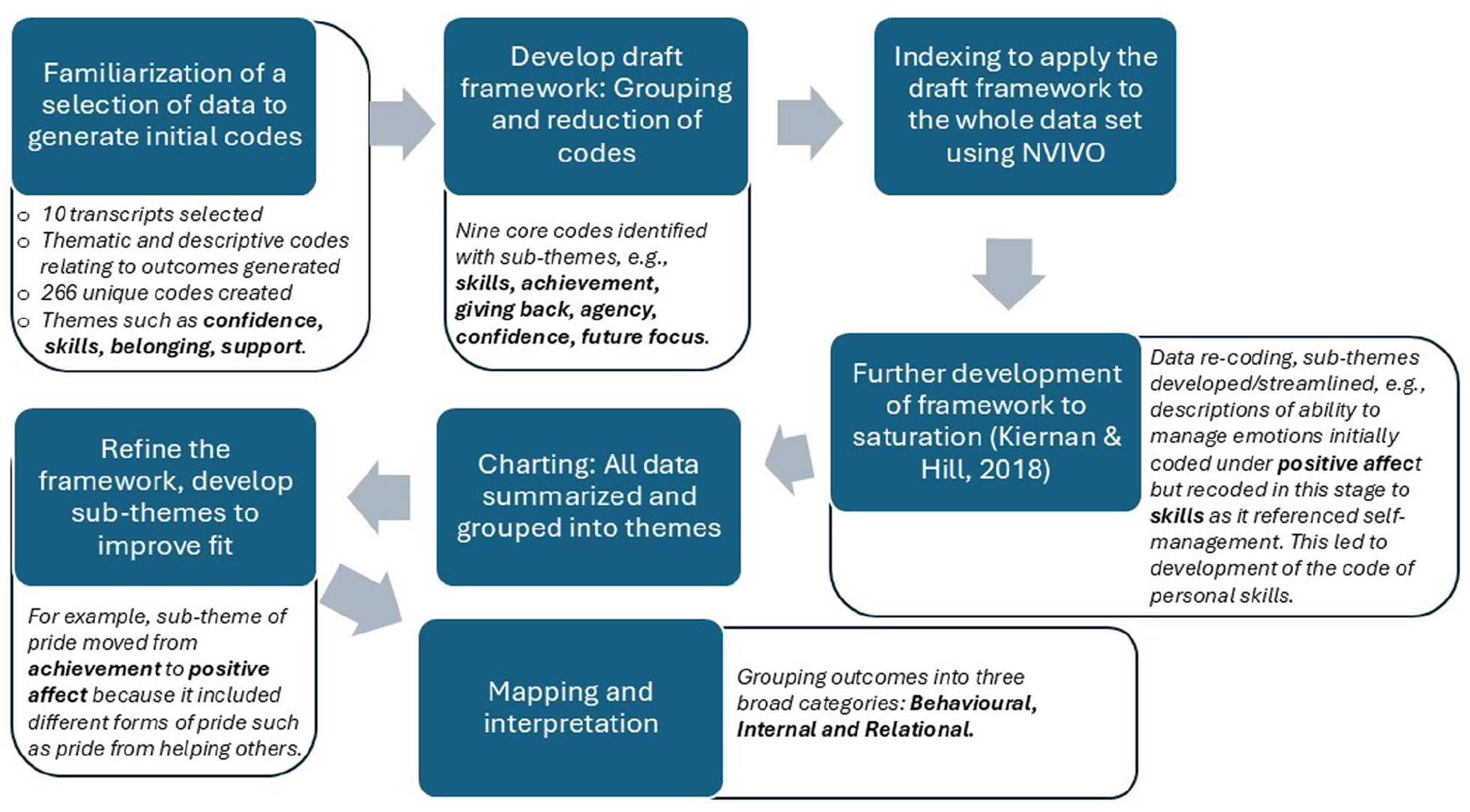
Framework analysis process (Ritchie & Spencer, 1994).
Nine key outcomes were identified in most programs and were grouped into three different categories: Behavioral Outcomes (observable behaviors resulting from programs); Internal Outcomes (thoughts and feelings as a result of programs); and Relational Outcomes (linked to relationships in programs). The nine outcomes and their sub-themes are shown in Table 2.
Program Outcomes and Links to the Five Cs.
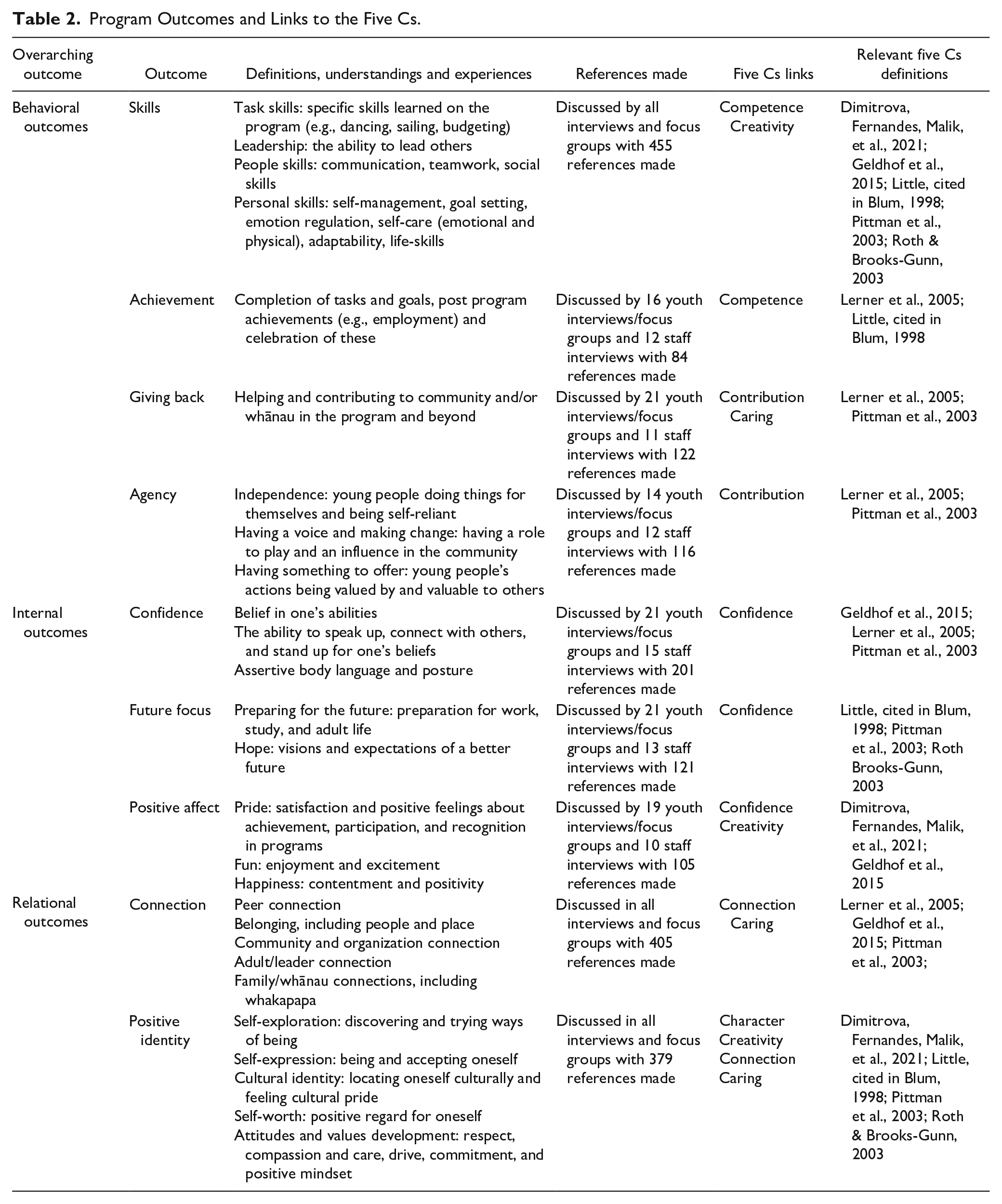
Next, the outcomes identified from data and participant descriptions of these were assessed in relation to Five Cs definitions in Table 1. Some outcomes and Cs appeared to easily link, such as confidence, which was both an outcome and a C, and skills appeared similar to Competence. Careful review of sub-themes and participant quotes highlighted areas of local importance and difference, such as participants’ focus on social confidence as opposed to global confidence. Evidence of these sub-themes was sought in Five Cs definitions and noted when they were not present, nor sufficiently described. Other outcomes proved more difficult to map, for example, identity was not well captured in any existing definitions. Links between identified outcomes, the Five Cs and definitions are also shown in Table 2. These links were used to develop localized definitions of the Five Cs.
Findings: Local Definitions of the Five Cs
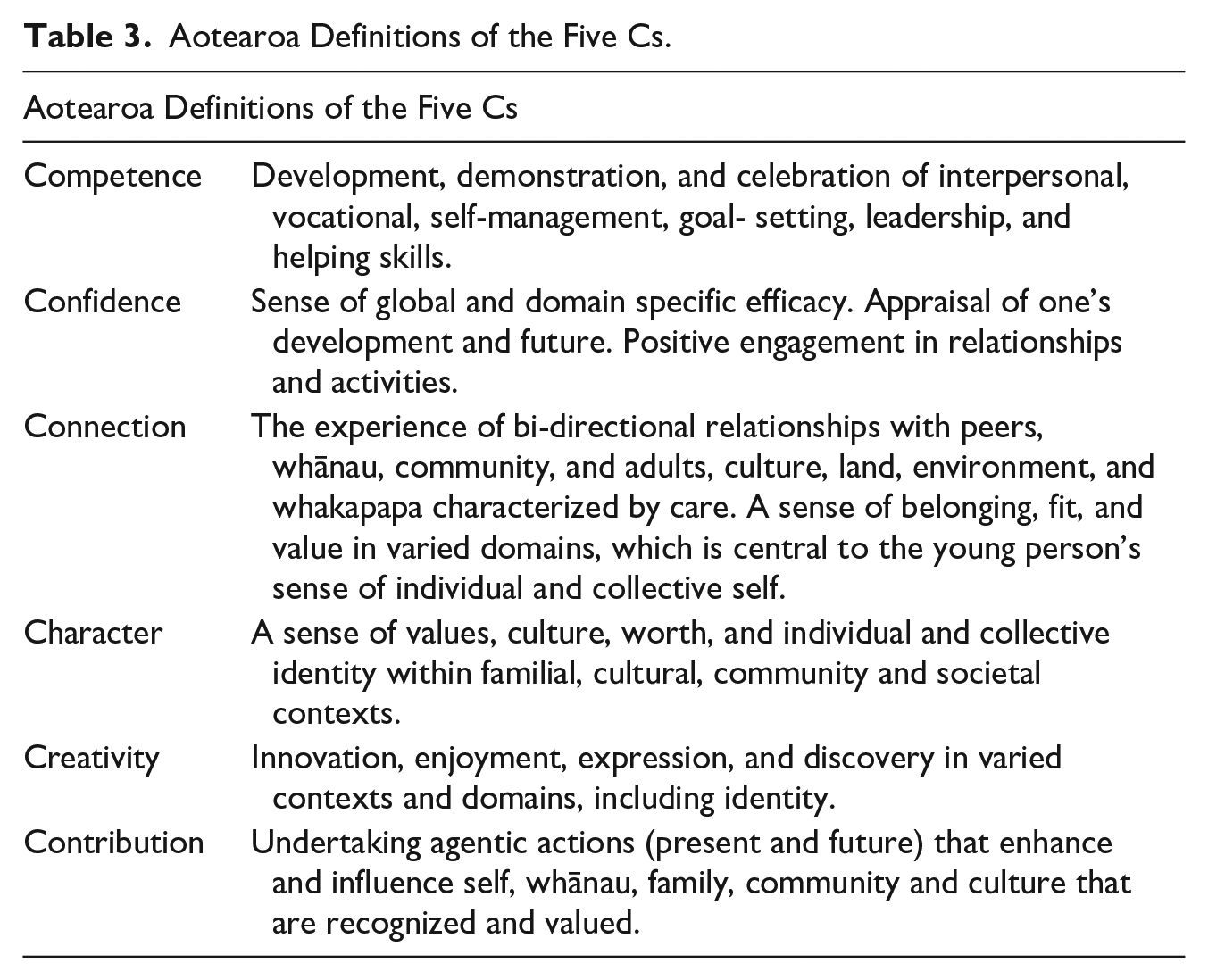
The following section outlines matches and differences found between the outcomes of the study and the Five Cs and how proposed local definitions (Table 3) were developed. It is organized by the Cs to highlight variation and includes youth and staff data.
Aotearoa Definitions of the Five Cs.
Competence
The outcomes of skills and achievement linked to Competence. Skills included task-based skills, such as learning photography, leadership skills, people skills for example, communicating with different types of people, and personal skills, such as managing emotions. Through these skills youth were able to help others and contribute to their communities. These findings aligned with earlier Competence definitions which refer to academic, social, cognitive, vocational, literacy skills, and contribution (Little, cited in Blum, 1998; Roth & Brooks-Gunn, 2003), knowledge and reflection of skills in health, civics, physical, social, emotional, cognitive, and personal domains, and trying and practicing new things (Pittman et al., 2003). Skills were seen as valuable for future work and social roles, as demonstrated in the quote below from a young person from a volunteer led youth development program who reflected how the program had helped prepare them for study: I think the soft skills are really relevant, like now-days a lot of the time when you are at university, like for jobs where you have to be sociable all the time, they really enforce that you have to teach those, have the soft skills at university, but if you do like [program], you’ve probably got that foundation already.
Whilst future preparation is not linked to Competence definitions, Geldhof et al. (2015) do refer to the navigation of contexts and use of resources to develop skills.
An important aspect of Competence development was recognition and celebration of achievement. Being celebrated or acknowledged was an outcome in and of itself but also helped youth identify their skills, suggesting the importance of external recognition in Competency. Contrastingly, the Lerner (Lerner et al., 2005) definition prefaces Competence with “positive view of,” linking Competence with self-efficacy. This difference may reflect the cultural phenomenon of “tall poppy syndrome” in Aotearoa, which encourages modesty of one’s achievements (Kirkwood, 2007). Further, in Pacific cultures, humility is important for harmonious relationships (Mafile’o, 2019), and this was present in some participant discussions. For example, young people from a youth voice program discussed the value of collective achievement as they reflected on running community events: Like when we’re planning events, we’re all working together to do it, and then the actual day when the event happens, and you get to kind of see what the work has done, and that’s probably the best, like being around people that have worked just as hard as you to create an event that is important, and that is for our community.
Based on these findings, a local definition of Competence was developed: Development, demonstration, and celebration of interpersonal, vocational, self-management, goal- setting, leadership, and helping skills.
Confidence
In the findings, Confidence related to self-belief, which for some was global, however social confidence was frequently discussed, including confidence to speak to new people and participate more fully in social experiences. Discussions of social confidence highlighted the interaction of Confidence and Competence: youth felt confident when they had developed skills, as demonstrated by a young person from an indigenous values-based program who considered their growing social openness as resulting from program interactions: I realized like in my local shop, I’ll have like random conversations, and later on I walk outside, and I think why did I start this conversation? But like someone will talk to me, usually like, someone random will be like, ‘That’s a good day today’ and yeah, I just walk off, but then I stop and have a little conversation, and just talk about how their day’s going, or the rugby matches coming up. . .Oh, it’s the whole opening up I reckon, getting more confident, speaking to people.
The focus on social confidence suggests a strong relational component to Confidence, where self-perception is mediated by relational experience. Thus, Confidence was strongly linked to Connection because positive interactions with others developed skills, encouraged self-belief and a sense of value. When both positive interactions and self-belief were present, youth felt more confident. Others also see this relational aspect by linking Confidence with a sense that one’s actions are meaningful, generating a sense of value in context (Geldhof et al., 2015; Pittman et al., 2003).
Earlier definitions also link Confidence to future beliefs and hope (Little, cited in Blum, 1998; Pittman et al., 2003; Roth Brooks-Gunn, 2003), reflected in the outcome of future focus in this study. By providing valued and useful experiences, programs helped youth to feel confident about the future and able to imagine different possibilities, as demonstrated by a young person from a mentoring program for youth with disabilities who reflected on the value of having new opportunities and support: You’re able to actually talk with other people who have like mindedness about, not necessarily what you want to do as a professional, but just the fact that I have a dream and it’s cool that you guys aren’t going to bag on me for my dream.
Confidence in Aotearoa, therefore, could be defined as: A sense of global and domain specific efficacy. Appraisal of one’s development and future. Positive engagement in relationships and activities.
Connection
In this study developing and strengthening connections with peers, leaders, whānau (family), community and organizations was a key outcome. The Lerner (Lerner et al., 2005, p. 23) definition of Connection describes “Positive bonds with people and institutions that are reflected in bi-directional exchanges between the individual, peers, family, school and community” and all of these elements of were present in the study.
Connection also appeared to be a central component of other outcomes, reflecting the Geldhof et al. (2015) definition which highlights Connection’s role in positive development. Connection acted as a vehicle through which to learn skills, give back, be recognized, feel confident and happy, and explore identity. A young person in a creative arts program described how the experience of positive connections in the program supported confidence, happiness, and identity: When I was younger and I had, like a lot of issues at school, and a lot of issues with myself, and I came here and I found a version of myself that I liked, that thrived here, that was a lot more confident, was a lot more happy, and had all these different people that were super amazing, and were amazing role models for me, and so, then I could feel confident becoming that person because I found that person here.
Belonging was also discussed by participants. Two Connection definitions (Pittman et al., 2003; Geldhof et al., 2015) refer to belonging, however the findings of this study emphasize its importance. Belonging was a multi-faceted concept, which included being accepted, a sense of fit socially, and to place. Sense of fit resulted in feeling valuable, at peace, and able to put oneself forward, linking to outcomes of positive identity, confidence, and future focus, as exemplified by another young person in this creative arts program, who discussed the centrality of belonging to thriving as they reflected on program gains: “And these places (programs) are a big part of their life, because that’s where they actually felt like they belonged. And from there they went on to become something big.”
Belonging may represent important aspects of Connection in Aotearoa, including connection to people, land, sea, environment, spirituality and whakapapa (genealogy). These connections guide all aspects of life and are important for individual and collective identities within Māori and Pacific world views (Arahanga-Doyle et al., 2019; Macfarlane, 2004; Tamasese, 2002). A staff member from the creative arts program, reflected on the cultural significance of belonging for youth in their program: I think for me belonging is a very massive word, I don’t know if it’s a cultural thing but to be able to say, ‘This is my space. That is my friend. This is my family’. That’s huge, that’s an end goal for me. The majority of the young people that come through here are Pacific and Māori, without that connection back to their homeland we need a place as Pacific people.
In this study, belonging appeared as connection to people and place, being accepted and valued within those connections, resulting in a positive sense of self in context. One participant from an indigenous values-based program echoed this when describing how sharing pepeha (an introduction of ancestry and place) created a sense of cultural identity and pride: “I could see that when people were, especially with the pepeha, saying where they were from, they were really proud about where they come from and their different cultural backgrounds.” These links provide empirical evidence for assertions that identity is linked with Connection (Arahanga-Doyle et al. 2019) and local Five Cs use would need to explicitly highlight this. Connection plays a central role in the local setting, as an outcome and integral to other outcomes, and belonging is a culturally significant feature of Connection. A local definition emphasizing these features is: The experience of bi-directional relationships with peers, whānau, community, and adults, culture, land, environment, and whakapapa characterized by care. A sense of belonging, fit, and value in varied domains, which is central to the young person’s sense of individual and collective self.
Character
Participants discussed developing values of compassion, care, drive/commitment, and a positive mindset from programs, as exemplified by this quote from a youth leadership and events program, where participants reflected on developing community mindedness: I think, after people like do something in the community or get involved in the community they feel good about it, and they kind of like the feeling of doing something kind and being nice to the community, so then they wanna do more.
These descriptions align with the Little (cited in Blum, 1998) definition of Character, which focuses on values; individual responsibility, honesty, community service, responsible decision-making, and integrity. Participants spoke of Pacific cultural values, such as service, where youth actively sought out experiences that could enhance these; consider a youth from a youth voice program who reflected on what made the program work well: “All of us, we’re all here, we just want to be part of the community, we want to help the community, and it’s always about having that same goal.” Character linked to developing and expressing values and attitudes, more than knowing right from wrong, as per the Lerner definitions (Lerner et al., 2005). Instead, values were part of the outcome of positive identity, along with identity exploration and expression, cultural identity, and self-worth.
The Pittman et al. (2003) definition of Character also links to awareness of identity and personality, reflecting aspects of identity exploration and expression, which was frequently discussed by participants. Descriptions of testing out likes, dislikes and ways to be were common, highlighted by a young person from a camp and leadership program for youth from refugee backgrounds, who described being free to find their own identity at camp: Because the world has many, many things. There are gangsters, drug dealers, rich people, poor people, so you wouldn’t know where to put yourself, so the [program] says that you don’t have to put yourself anywhere. You could think high as you want or low as you want, but it’s up to you, it’s your story and you can write it yourself, so you don’t have to worry about it.
Character is also understood as socially and culturally bound (Pittman et al., 2003; Roth & Brooks-Gunn, 2003). Therefore, when positive identity is considered as developing in relational, social, environmental, and cultural contexts, it fits better with Character definitions than Confidence. However, as described in the previous section, identity, was inseparable from connections to people, place, and ancestors indicating that positive identity may sit in the interaction between Connection and Character.
This diverges from commonly held views of identity as located within Confidence. It shows a locally unique aspect of PYD, in an internationally understood framework. It draws attention to the varied ways in which the Five Cs interact with and add to each other. Thus, a local definition of Character is proposed: A sense of values, culture, worth, and individual and collective identity within familial, cultural, community and societal contexts.
Caring
In the study, Caring was reflected in values of compassion and care for others and described the nature of relationships youth built in programs. Compassion and care were often linked with recognition of the need to help others. Showing care helped youth to feel valuable, linking to self-worth and positive identity, again illustrating interactions between the Cs, as highlighted by a group of youth from a volunteer led youth organization who discussed the value of the skills they were learning to help others: There’s a wider world that we’re a part of and that we have to take care of. . . . It makes you feel good. . . . It really does. It makes you feel better that you’re helping someone else, that you’re doing something for someone else.
This is similar to another local study which linked Caring to Contribution and helping (Mercier et al., 2019). In this way, Caring was embedded in Connection and Contribution; it occurred through relationships and helping others. Little’s (cited in Blum, 1993) definition of Connection, which describes relationships as caring, reflects this finding.
The fact that Caring did not feature as a stand-alone outcome may further reflect cultural values of participants. In Pacific cultures, the value of love is linked to care, compassion and service (Mafile’o, 2019); in te ao Māori the concept of manaakitanga relates to kindness, hospitality, respect, support and care (Thompson et al., 2017); whilst care for the family unit and caring responsibilities may also be valued in many Asian cultures (Mortensen & Lim, 2017). For some youth, care may be naturally embedded in interactions, and part of values expression, thus also linking to the C of Character. This was demonstrated by a youth from a peer mentoring program who described their motivation as wanting others to have positive experiences: “I guess I didn’t have a very easy transition into high school and got really overwhelmed with that and wanted to help people, so they didn’t feel the same.”
Statistical links between Caring and Character have been identified in other studies (Lerner et al., 2005; Tirrell et al., 2019); further suggesting that care may be part of broader value systems. The findings of this study provide a qualitative description of linkages between Caring with Character, Connection and Contribution and highlight differences in how the Five Cs manifest in a local setting. Due to these differences and the role of care as a function of other Cs, we do not propose a definition of Caring in the local context.
Creativity
A C of Creativity, related to culturally and contextually relevant problem solving has been proposed (Dimitrova, Fernandes, Malik, et al., 2021). This definition most closely relates to the outcome of skills, where youth talked of adapting and identifying solutions to task-based, relational, or personal challenges. A youth from a program working with diverse sexualities and genders providing peer support discussed how finding solutions to practical issues, such as preparing food, could help prepare for future tasks: “But if you do things like that (supporting others with life tasks) and slowly get that exposure and learn these responsibilities through these experiences, and everything, it slowly helps you to learn to become a functioning adult.”
Creativity as problem solving may also be culturally relevant. In a study of Māori youth perceptions of PYD, the ability to be innovative, find solutions and learn from experience were key themes (Ware & Walsh-Tapiata, 2010), whilst traditional tales of Māui (a revered ancestor in Māori mythology) explore many of his innovative solutions to challenges (Keelan, 2014). These are sites of learning for Māori youth that may well shape how the Five Cs overall, and Creativity in particular find local expression.
Creativity is also linked to enjoyment (Dimitrova, Fernandes, Malik, et al., 2021), and youth participants identified fun as an outcome. Fun made things feel worthwhile and novel, but also helped youth to have positive expectations, as highlighted by a young person in an outdoor education program who described fun program activities: “It (fun) can affect your life in other ways as well. If you have a really good weekend you sort of can have a different sort of perspective on other things, I guess.” Fun is not well captured under other Five Cs definitions, and so creativity would seem a valuable addition.
Whilst definitions of creativity as problem solving and enjoyment were not strong themes in the data, broader views of creativity may be further relevant to the findings. Outside of Five Cs research, creativity is related to discovery, including the discovery of self (Martin & Wilson, 2017). Defining Creativity in this way links with ideas of identity exploration and expression that were seen in this study, and these aspects of positive identity may find a better home in Creativity than Character. The ability to discover and create the self in programs is reflected in the youth quote above on pp. 20-21, “It’s your story and you can write it yourself.” A proposed local definition of Creativity reflects these features: Innovation, enjoyment, expression, and discovery in varied contexts and domains, including identity.
Contribution
Contribution was seen in outcomes of agency and giving back. Agency captured youth’s influence in their own lives and in others, whilst giving back provided opportunities to help others and contribute to communities. These findings fit with both the Lerner (Lerner et al., 2005) definition of Contribution as positive contribution to self, family, community and civil society, and the Pittman et al. (2003) definition which refers to participation and leadership, decision making, influence and accepting responsibility.
Contribution is proposed as an overarching C that occurs when PYD is present. However, the findings did not show this, as Contribution appeared to occur concurrently with other outcomes and was inter-related with these. For example, giving back could support community connection and increase confidence, whilst having skills helped youth feel capable of helping. A staff member from a youth leadership and events program described how leading community projects increased young people’s community understanding and confidence to use their voice in a way that was culturally respectful of elders and authority.
They get a greater picture; a clearer picture of why certain things happen in their community, and why certain decisions are made that way. And more importantly, I think, how important their voices are to be heard. . . . We’ve come to learn that there is a way that you can speak without disrespect. There is a way you can bring your idea without disrespecting people in high places.
This highlights two important local nuances; that Contribution needs to be culturally meaningful, and that it may function at the same level as other Cs. However, given that most youth were still in programs, they may not yet have evidence of overarching Contribution.
Youth participants reflected on the benefits of contributing, such as being a valued part of the community and identified contribution as part of a social contract to belong and receive support. This was described by a youth from a program working with diverse sexualities and genders providing peer support, who reflected on the importance of their role as a volunteer: “Community is a two-way street, if it gives to you, you have to give back, otherwise what happens to it?” Again, this may reflect collective values and suggests that Contribution, like other outcomes, is part of a relational process. Viewing Contribution as relational is reflected elsewhere as reciprocal relationships (Geldhof et al., 2015). Acknowledging this relational nature, the following Contribution definition is proposed: Undertaking agentic actions (present and future) that enhance and influence self, whānau, family, community and culture that are recognized and valued.
Discussion: The Relevance of the Five Cs
The Five Cs, plus Creativity and Contribution can be linked with study outcomes as shown below in Figure 5. However, the findings highlight several contextual nuances to the Five Cs in Aotearoa. The first is the relational nature of the Cs, especially Connection. Connection is not just the state of being connected to others, but the process of belonging and feeling valued and accepted. This is critical to supporting other outcomes, particularly identity development in Aotearoa, and Figure 5 shows this by placing belonging between connection and identity. Other Cs are also relationally oriented and contextually nuanced, for example, the importance of recognition for Competence and Contribution, the emphasis on the social components of Confidence, and the links to cultural values in Caring, Character, and Contribution.
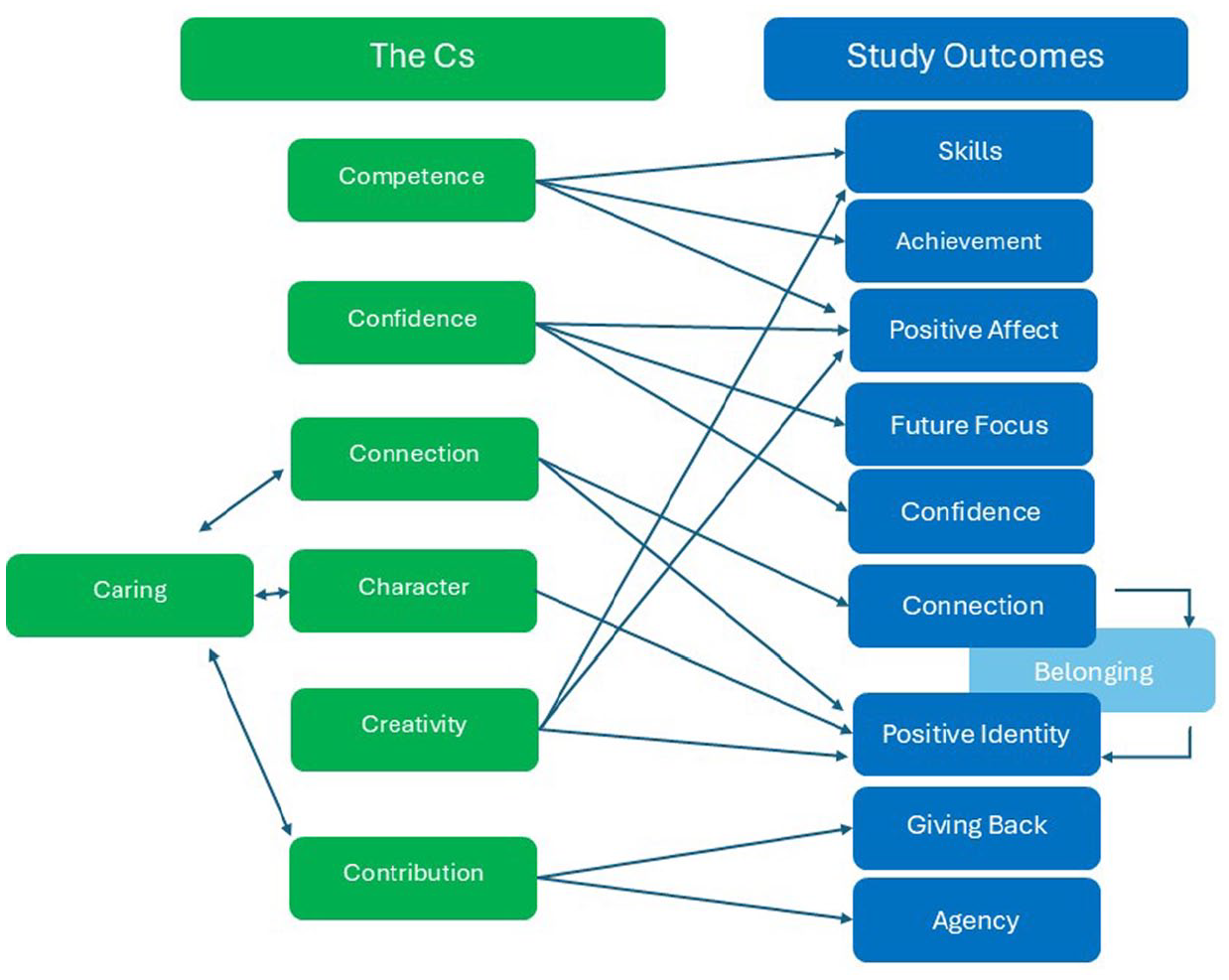
The Five Cs and study outcomes.
Viewing the Five Cs as relational recognizes the functioning of youth in their context, highlighting the dynamic nature of PYD as a developmental process (Eichas et al., 2015). Theokas et al. (2005) note that many PYD outcomes reflect states and traits—behavioral markers and individual elements, which do not capture the relational nature of outcomes and the Five Cs in this study. However, Five Cs definitions from Geldhof et al. (2015) acknowledge some interactional processes, whilst the 7th C of Creativity recognizes the need for actions to be culturally meaningful. These recent iterations of the Five Cs better align with study findings and signal the value of relational and contextual dimensions.
The second significant difference in the local context relates to the placement and understanding of identity. Study findings suggest that identity straddles Character and Connection, and links with Creativity, reflecting identity as a relational, individual, cultural, and collective construct. Identity’s role in these three Cs highlights the centrality of its importance to youth and its multi-faceted nature in Aotearoa.
The third key difference is the inclusion of additional elements in Connection, including whakapapa (genealogical connections) and links across time and place, as well as commonly understood links to people and community. The concept of belonging helps to articulate these connections because belonging captures a sense of fit and acceptance, which in turn supports youth to be and accept themselves.
Thus, belonging may describe one way in which Connection impacts identity development in Aotearoa. Eichas et al. (2015) highlight links between PYD as the interaction of person and context, and identity development as a relational process, describing identity as ‘the embodied person in context’ (p. 341). The concept of belonging offers an empirical description of relational identity development, where positive connections with others help young people to feel a sense of place and security from which to explore and express values, culture, interests and ways to be in the world. These descriptions link with te ao Māori and Pacific world views where both individual and collective identity are understood vis-a-vis a network of reciprocal relationships between people, place, time, and spirituality (Tamasese, 2002; Ware & Walsh-Tapiata, 2010).
Fourthly, the findings highlight overlap and interaction of the Cs in the local context. Caring occurs as a feature of relationships and helping others. It is also a values-based construct that may be related to cultural values and norms that youth already possess. Thus, Caring linked to Connection, Contribution and Character (see Figure 5) and as such was not seen as a standalone construct in this study. Contribution can occur concurrently with other Cs and may not necessarily be an overarching outcome once others are achieved.
The findings of this study suggest that the widely recognized Lerner definitions of the Five Cs (Lerner et al., 2005) do not fully align with the outcomes of skills, achievement, giving back, agency, confidence, future focus, positive affect, connection, and positive identity identified here. It has been suggested that the Five Cs may be too broad to capture program outcomes (Arnold & Gagnon, 2019); a valid critique in Aotearoa. Further, the Five Cs framework does not capture the importance of identity in this setting. Whilst identity can be aligned with Connection, Character, and Creativity, its significance may be lost when split across these areas. Finally, the Five Cs framework does not highlight the central role that Connection appears to play in supporting other outcomes, nor the significance of belonging. The outcomes identified in the study more accurately describe local outcome perception.
Whilst the Five Cs may not adequately describe local program outcomes, the study advances our understanding of adolescent development by offering an example of the interaction of youth and context in a specific setting and of the operationalization of the Five Cs in a unique context (Lerner et al., 2019), particularly the interactions of Connection, belonging and identity. The proposed definitions provide a way to anchor the Five Cs in Aotearoa and address critiques that identity is overly individualized (Arahanga-Doyle et al., 2019) by more clearly identifying contextual and collective aspects and acknowledging connections to land, culture, and whakapapa. These definitions exclude Caring as a stand-alone construct and include the recently proposed C of Creativity (Dimitrova, Fernandes, Malik, et al., 2021) to further highlight the importance of identity development in the local setting.
As the Five Cs is a well-known model, locally nuanced definitions can be used by programs to support program design and measurement, improving alignment between theory, practice and evaluation as Eichas et al. (2019) recommend. The findings highlight unique interactions of youth in context in Aotearoa, especially the role of Connection in supporting other outcomes. Programs can leverage connections to people, place, culture, and whakapapa to grow skills, offer recognition, and enhance self-worth. In particular, programs can actively foster a sense of belonging to enhance positive identity.
Limitations and Future Research
The role of exploratory studies is to generate theories and ideas which can be further tested (Stebbins, 2001), and this may be especially important in diverse cultural contexts. The findings of this study present ideas about the Five Cs in Aotearoa which could be further investigated. Because the Five Cs were assessed as program outcomes, rather than as population indicators of PYD, the proposed definitions reflect these settings. Participants were not asked about the Five Cs, and they were not used as deductive codes, thus, the proposed definitions reflect researcher positionality and analysis. Question and coding decisions were intentional to reduce bias toward fitting outcomes to the Five Cs, or limiting the outcomes discussed by participants. Study limitations could be addressed through investigating the proposed definitions in different contexts, including other programs, within a broader youth population, and from different cultural perspectives, to assess their applicability outside of the study. Future research could use the Five Cs measure to: assess whether the measurement model adequately fits local definitions; understand local links and overlaps between Cs; and refine local definitions.
Conclusion
The goal of the study was to understand if and how the Five Cs aligned with perceived outcomes in 14 different PYD programs in Aotearoa. Nine different outcomes were identified which linked with the Five Cs, however the concepts of identity and belonging in the findings were not well captured in existing Five Cs definitions. PYD is predicated on the interaction of youth and context and in Aotearoa links between self, other, land, ancestors, and spiritualty are culturally significant to identity development and need to be highlighted. The concept of belonging may capture some of these interactions. The study proposed local definitions of the Five Cs to explicate some of these differences.
Whilst the Five Cs may be broadly applicable in different contexts, in Aotearoa, there are important cultural and contextual nuances. These findings expand our understanding of the Five Cs framework, how they are expressed in different contexts, and offer insight into the processes of adolescent development in Aotearoa. They further define local PYD in a global field and may be a valuable comparison point to explore the Five Cs in other contexts.
Footnotes
Acknowledgements
The authors would like to gratefully acknowledge the time and expertise of youth and staff who took part in the study.
Declaration of Conflicting Interests
The author(s) declared no potential conflicts of interest with respect to the research, authorship, and/or publication of this article.
Funding
The author(s) disclosed receipt of the following financial support for the research, authorship, and/or publication of this article: PhD Leaders Program, Unitec Institute of Technology, New Zealand; Massey University, Graduate Research Fund.
