




Abstract
Although trajectories of youth volunteering were disrupted by the COVID-19 pandemic, nevertheless some youth persisted in volunteering, and others emerged as volunteers. To understand volunteering trajectories, the present mixed method study proposed a model adapted from prior literature and examined volunteer trajectories during the pandemic. Youths’ volunteer trajectories were categorized (as persistent, emergent, or former volunteer, or persistent non-volunteer), and their justifications for their volunteer decisions were classified using social domain theory (personal, social, moral, and prudential). A sample of 461 youth (Mage = 19.26; 68.8% female; 41.6% European or North American) from a large Canadian university completed a retrospective survey on pandemic volunteering and volunteer decisions. Volunteer decisions were coded using conventional and directed qualitative content analysis. Although the pandemic disrupted the volunteering trajectories of former volunteers, overall, more youth persisted or emerged as volunteers during the pandemic, a finding framed in both the trajectory and emergency and disaster literature. Volunteers were more likely to use moral justifications, whereas prudential justifications were more frequent among non-volunteers. The present study offers insight into the impact of the pandemic on youth volunteering and is one of the first studies to find a substantive role for prudential reasoning in youth decision making.
Developmental models of volunteering have examined trajectories wherein an individual may start, stop, and restart volunteering over time. Previous research has examined patterns of volunteering in older adults (e.g., Hogg, 2016; Metcalfe et al., 2018), and more recent research has examined volunteering trajectories in adolescence and young adulthood (e.g., Hill & Hammond, 2023; Ramey et al., 2022). Although trajectory research suggests that volunteer behaviors shift throughout the life course, less is known about changes to volunteering in relation to specific events. Through the lens of a novel trajectory model (see Figure 1), the present study examined trajectories of youth volunteering during the height of the global COVID-19 pandemic (before the widespread availability of vaccines). In addition to understanding how the pandemic impacted youth volunteering, the present study used social domain theory (Turiel, 1983) to examine why youth made these decisions about volunteering to offer further insight into the impact of the pandemic on youth volunteering.
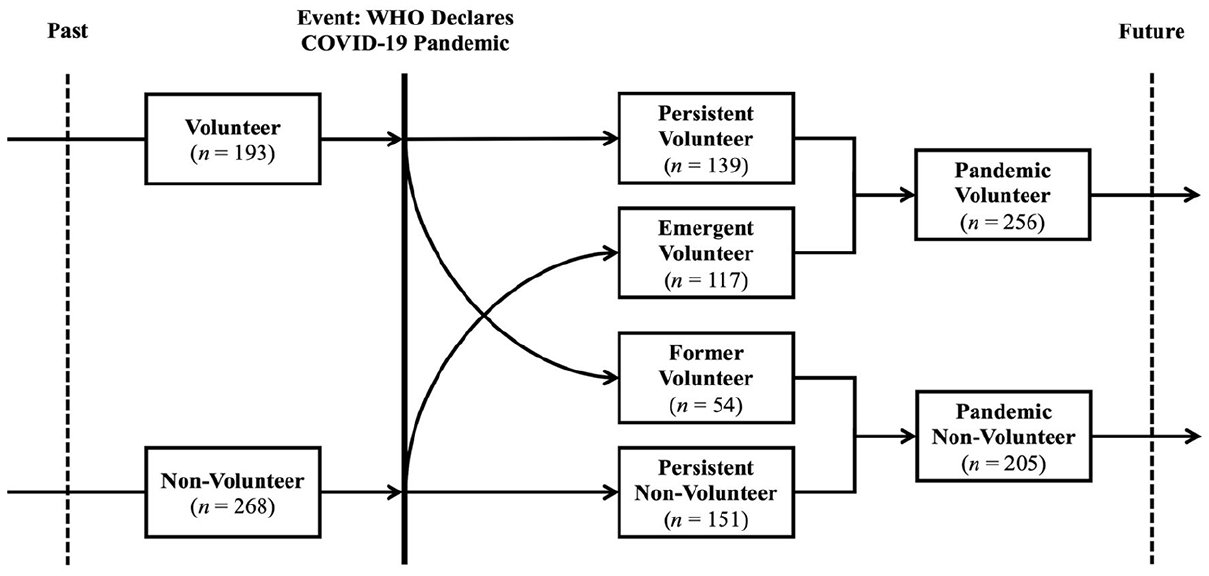
Volunteer trajectory model specified to the COVID-19 pandemic.
Defining Volunteering
Volunteering is defined as an activity that benefits others without direct financial compensation to the volunteer (Musick & Wilson, 2007). In some research literature, volunteering is characterized as a prosocial behavior (e.g., caring for others; Stukas et al., 2015) or as a form of civic engagement (e.g., voting; Hart et al., 2007), which signals the larger importance of volunteering to research on altruism and the flourishing of democratic societies. Although beyond the scope of the present study, volunteering also has cultural dimensions that apply to industrialized societies (see Lancy, 2018 and limitations). Volunteering can occur in formal (e.g., volunteering for an organization) and informal (e.g., shopping for an elderly neighbor) contexts (Smith et al., 2016). Informal volunteering is often overlooked in the larger literature on volunteering (Einolf et al., 2016), and became more prevalent as a form of volunteering during the pandemic (Alvis et al., 2023).
Youth Volunteering: Benefits, Motives, and Barriers
Volunteering is defined by its other-oriented aspects; however, research has long examined the benefits of volunteering for the volunteer, particularly in youth. Developmentally, youth volunteering contributes to personal growth and improved well-being, social responsibility and community engagement, and moral identity development during the transition from adolescence to young adulthood (Arnett, 2014; Bowman et al., 2010; MacNeela & Gannon, 2014; Padilla-Walker, 2014). Given these benefits, research has examined the motives and barriers associated with youth volunteering. Motives for youth volunteering reflect both self- (e.g., enhancing one’s CV) and other-oriented (e.g., helping others) motives (Ballard, 2014; Moore et al., 2014). In fact, Walker (2014) argues that committed prosocial behaviors, like volunteering, are unlikely without both self- and other-oriented motives. However, youth also face barriers to volunteering, which may impact their decisions. Ballard (2014) found that personal (i.e., lack of interest) and systemic (i.e., lack of opportunities) barriers prevent volunteering for some youth. Many secondary and post-secondary institutions have developed initiatives designed to facilitate youth volunteering (e.g., Henderson et al., 2014).
Pandemics, Emergencies, and Opportunities to Help Others
Pandemics are defined as a form of emergency or disaster that involve the spread of an infectious disease over a large area of the globe (Snowden, 2019). Disasters foster opportunities for volunteering (Rodríguez et al., 2006; Whittaker et al., 2015), and volunteering, whether through formal (e.g., Rotolo & Berg, 2011) or informal channels (e.g., Whittaker et al., 2015), plays a critical role in disaster management (Twigg & Mosel, 2017). Most research on volunteering in the context of disasters has examined short-term or sudden disasters (e.g., the aftermath of Hurricane Katrina; Rodríguez et al., 2006). However, pandemics differ in that their threat to life can continue for years, and their impact is geographically widespread (Snowden, 2019). Historically, the COVID-19 pandemic occurred in a period when virtual (i.e., online) volunteering afforded possibilities that made volunteering safer and more accessible (Lachance, 2021). Virtual volunteering is more common among youth than older adults (Liu et al., 2016). Since the beginning of the pandemic, youth have been turning to online platforms to share information and help their peers (Armstrong-Carter & Telzer, 2021).
Pandemic Disruptions to Volunteering
The onset of the COVID-19 pandemic brought disruptions to youths’ lives, including education, paid employment, and social gatherings (Aucejo et al., 2020). Youths’ volunteering may have also been disrupted due to closures or restrictions on the activities of organizations (e.g., volunteering at hospitals; Pickell et al., 2020) and increased risks to personal health or the health of other individuals in one’s household (AlOmar et al., 2021; Seah et al., 2021). These disruptions and the uncertainties surrounding the pandemic produced challenges and consequences for youths’ health and well-being, including stress, anxiety, and social isolation (Alvis et al., 2023; Son et al., 2020), and may have prevented volunteering for some. Although, as noted above, virtual volunteering afforded other possibilities for volunteering (Lachance, 2021).
The Trajectory Model: Persistent, Emergent, and Former Volunteers
Trajectories of volunteering (see Hill & Hammond, 2023; Hogg, 2016; Metcalfe et al., 2018; Ramey et al., 2022) have examined the persistence, emergence, and submergence of volunteering in relation to normative transitions (e.g., adolescence to adulthood in Ramey et al., 2022; retirement in Hogg, 2016; Metcalfe et al., 2018). However, a trajectory perspective could also examine patterns of volunteering associated with widespread events (e.g., disease outbreak) or individual circumstances (e.g., an injury). Building on previous trajectory research, the present study introduces a novel trajectory model to examine changes and continuity to volunteering after a disruptive event (i.e., the COVID-19 pandemic). The proposed trajectory model begins with researchers specifying a period of time, bounded between a past and a future, which could be done for a general population or a particular individual. The model includes the possibility of events that could be associated with changes to volunteering. When an event occurs, volunteers and non-volunteers make decisions to continue, start, or stop volunteering, resulting in four volunteer possibilities. Volunteers will either continue to volunteer despite the event (a persistent volunteer) or stop volunteering (i.e., the submergence of volunteering, becoming a former volunteer). Non-volunteers will either remain a non-volunteer (a persistent non-volunteer) or begin to volunteer following the event (i.e., the emergence of volunteering, becoming an emergent volunteer). Inclusion in a category could be altered again by a future event (e.g., a persistent volunteer could become a former volunteer) or have been previously altered by a past event.
Specifying Trajectories of Volunteering in the COVID-19 Pandemic
The present study specified the trajectory model to the COVID-19 pandemic (see Figure 1), where the event line represents the World Health Organization’s (2020) declaration of the COVID-19 pandemic on March 11, 2020. In this context, a persistent volunteer was volunteering before and after the pandemic onset, an emergent volunteer was not volunteering prior to the pandemic but began volunteering after the pandemic onset, a former volunteer was volunteering prior to the pandemic but stopped volunteering after the pandemic onset, and a persistent non-volunteer was not volunteering before or after the pandemic onset.
Using Social Domain Theory to Understand Trajectories of Volunteering
A trajectory perspective suggests that some individuals may start or stop volunteering. However, it does not reveal why these individuals made these decisions. The present study used social domain theory to examine youths’ decisions about volunteering. Social domain theory posits that people interpret their experiences through four domains of social knowledge and draw on these domains to make decisions (Smetana, 2006; Turiel, 1983, 2006). The personal domain refers to personal choice and preference, including agency and individual freedom. The social domain considers social conventions, regulations, and norms. The moral domain refers to other-oriented welfare, harm, justice, and fairness. And finally, the prudential domain considers personal (self-oriented) welfare, including health and safety.
Previous research has examined youths’ judgments about volunteering using social domain theory (e.g., Alvis & Metzger, 2020; Metzger & Ferris, 2013; Metzger et al., 2019; Metzger & Smetana, 2009; Oosterhoff et al., 2015). These studies found that volunteering is more likely to be viewed as personal (or discretionary) for older adolescents and more likely to be viewed as moral (or obligatory) for females (Metzger & Ferris, 2013; Metzger & Smetana, 2009). There is also evidence that as the cost of volunteering (e.g., time commitment) increases, volunteering is more likely to be viewed as a personal choice than a moral obligation (e.g., Metzger & Ferris, 2013). Most social domain theory research, like most research on moral reasoning more generally, has focused on evaluating judgments about hypothetical scenarios (Turiel, 2008; Walker, 2004). The present study aims to expand on this literature by using social domain theory to examine how youth justify their real-life decisions about volunteering.
To our knowledge, the present study will be the first to examine prudential reasoning in the context of volunteering. Yang (2021) found that volunteers reported moral and personal reasons for volunteering during the pandemic but did not specifically examine the prudential domain. Recent research examining barriers to pandemic volunteering found that those at a higher risk of health complications due to the virus were less likely to volunteer (AlOmar et al., 2021), and this consideration could extend to the health of family members (Seah et al., 2021). Zhu et al. (2021) examined the acceptance of COVID-19 public health measures using social domain theory, and findings demonstrated that all four domains were used to evaluate these restrictions, with the prudential domain related to measures designed to prevent infection. Personal health concerns may have played a role in decisions about volunteering during the pandemic as youth coordinated prudential reasons with personal, social, and moral reasons.
Present Study
The primary objective of the present study was to examine trajectories of youth volunteering during the early period of the COVID-19 pandemic before vaccination was widely available. A secondary objective was to examine volunteer decisions using social domain theory. Finally, the trajectory and domain perspectives were integrated to better understand youths’ volunteer experiences during the pandemic. The present study thus examined three questions:
What were youths’ volunteer trajectories during the pandemic?
How did youth justify their decisions about volunteering?
How does framing trajectories of volunteering in social domain theory further our understanding of the impact of the pandemic on youth volunteering?
Method
Participants
A total of 578 students at a large Canadian urban university participated in the study. Participants were recruited through a participant recruitment system in which students receive course credit for research participation. From the total, participants were excluded from the final sample due to incomplete or inattentive responding (n = 93), short response time (one minute or less; n = 16), and graduate or mature student status (n = 8). The final sample consisted of 461 undergraduate students (Mage = 19.26, SD = 1.80) who were predominantly female (n = 317; 68.8%) first year undergraduate students (n = 308; 66.8%) enrolled in the faculties of social science and arts (n = 218; 47.3%), science and engineering (n = 133; 28.9%), and health science (n = 110; 23.9%). Participants self-reported ethnicities (coded based on Statistics Canada (2021) census classification) included a plurality of European or North American (n = 192; 41.6%) or Asian origins (n = 145; 31.5%), with the remaining participants distributed across different ethnic origins (African [n = 67; 14.5%]; Mixed Origins [n = 28; 6.1%]; Caribbean [n = 5; 1.1%]; Other Origin/Decline to Answer [n = 24; 5.2%]).
Timeline of Data Collection
Data collection took place between October 2020 and April 2021. During data collection, all university courses were delivered online, and COVID-19 vaccines were unavailable for the general population of youth (Public Health Agency of Canada, 2023). However, volunteers in healthcare settings or those with severe health issues may have had earlier access to vaccines. Data collection included a retrospective question about volunteering in the academic year prior to the COVID-19 pandemic (beginning in September 2019). During that period, most participants (n = 308; 66.8%) were not yet enrolled in university.
Procedure
Participants were recruited from undergraduate courses in psychology, linguistics, and communication. Students were given a brief description of the study and provided written informed consent before participating. Participation in the study consisted of completing a retrospective online survey of multiple choice and open-ended questions. Most participants (n = 440; 95.4%) completed the survey within 15 minutes. Participants received a half point of their course grade from four points allotted for research participation. This study was approved by the University of Ottawa Research Ethics Board.
Measures
Volunteer Trajectories
Participants reported their volunteer status prior to and after the pandemic onset. Participants who were volunteering prior to the pandemic also responded to an open-ended question assessing the impact of the pandemic on their volunteering. We used this information to determine a volunteer trajectory for each participant based on the trajectories described above (persistent, emergent, or former volunteer, and persistent non-volunteer).
Volunteering Characteristics
We collected information about the characteristics of participants’ volunteering, including volunteer organizations, informal volunteer activities, hours of volunteering per week, and volunteer settings. For the present study, we only analyzed information about volunteer settings (virtual and in-person) and volunteer status (formal and informal) during the pandemic.
Reasoning About Volunteer Decisions
Participants responded to two open-ended questions assessing their decisions about formal and informal volunteering after the pandemic was declared: (a) Why did you choose (or not choose) to engage in formal volunteering (e.g., with an organization) during COVID-19? and (b) Why did you choose (or not choose) to engage in informal volunteering (e.g., helping an elderly neighbor with shopping) during COVID-19?
Analytic Approach
Qualitative Content Analysis
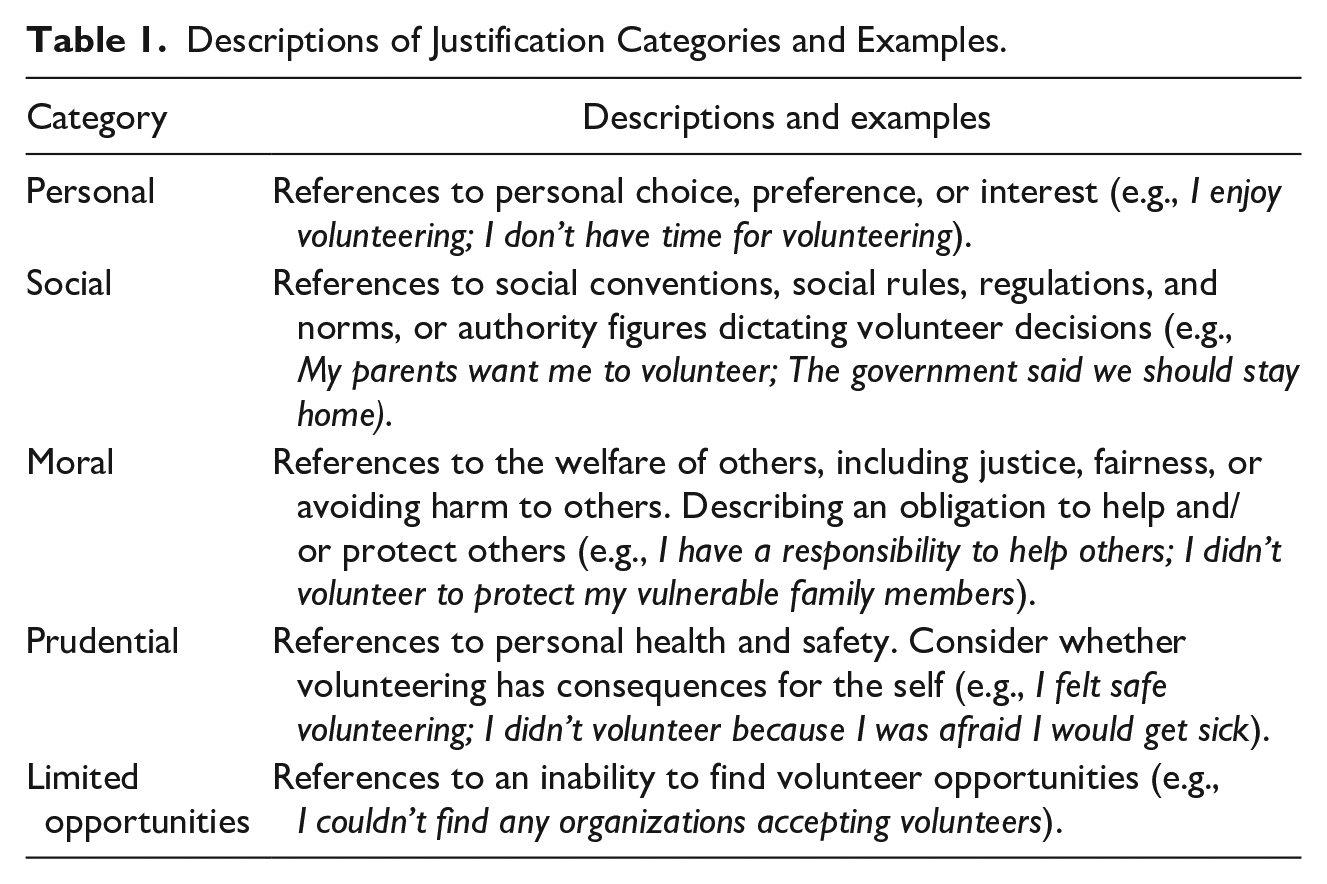
Participants’ responses to the open-ended questions about volunteer decisions were analyzed using conventional and directed qualitative content analysis (Hsieh & Shannon, 2005). This approach allowed us to examine participants’ justifications for their volunteer decisions using social domain theory alongside other reasons not reflected by the domains. The first author developed a coding scheme that defined the criteria for each category, based on social domain theory (Turiel, 2006) and previous social domain research on volunteering (e.g., Alvis & Metzger, 2020; McNeil & Helwig, 2015). The first author and a second reliability coder coded a randomly selected sample of responses (n = 100). Responses were coded for the presence (1) or absence (0) of each of the four domains (a response could contain references to more than one domain). Following the first round of coding, adjustments were made to the coding criteria, discrepancies were discussed, and an additional reasoning category was identified (defined as Limited Opportunities; see Table 1 for the final coding scheme). The remaining responses were coded by both coders, and a Krippendorf’s alpha (Hayes & Krippendorf, 2007) was calculated for each domain (personal = 0.82; social = 0.87; moral = 0.89; prudential = 0.83). Coding discrepancies were discussed and resolved prior to the analyses.
Descriptions of Justification Categories and Examples.
Findings
The qualitative findings and quantitative results are presented below. First, we specified the trajectory model to the COVID-19 pandemic and categorized participants as persistent, emergent, or former volunteers, or persistent non-volunteers. We then examined participants’ use of personal, social, moral, and prudential domains to justify decisions about volunteering. Finally, we integrated the trajectory and domain perspectives to examine domain justifications in the context of demographic characteristics and volunteer trajectories.
Trajectories of Volunteering
Participants were first categorized as volunteers or non-volunteers prior to the pandemic. The majority (n = 268; 58.1%) reported they were not volunteering prior to the pandemic, while the remaining participants (n = 193; 41.9%) reported they were volunteering. Participants were then grouped into volunteer trajectory groups based on their volunteer status after the pandemic was declared (depicted in Figure 1). Of the 193 who reported volunteering prior to the pandemic, subsequent trajectories were 139 (72.0%) persistent volunteers (i.e., continued to volunteer) and 54 (28.0%) former volunteers (i.e., no longer volunteering). Of the 268 who reported not volunteering prior to the pandemic, subsequent trajectories were 151 (56.3%) persistent non-volunteers (i.e., did not volunteer) and 117 (43.7%) emergent volunteers (i.e., began to volunteer after the pandemic onset). Together, over half of the participants reported volunteering after the pandemic was declared (pandemic volunteers; n = 256; 55.5%), while the remaining participants (n = 205; 44.5%) reported they were not volunteering (pandemic non-volunteers). Of note, persistent volunteers included participants who continued the volunteering they began before the pandemic (n = 38), participants who continued their previous volunteering and began new volunteer activities (n = 43), and participants who were unable to continue their past volunteering but began new volunteer activities after the pandemic was declared (n = 58).
Qualitative Findings
Domain Justifications About Volunteer Decisions
Participants were asked to explain their decisions about volunteering after the pandemic was declared. A total of 423 participants provided justifications that could be coded (n = 38 persistent volunteers reported they continued their previous volunteering but did not provide a justification for this decision and were excluded from subsequent analyses; see limitations). Although participants provided reasons for decisions about formal and informal volunteering, for the present study, reasoning about formal volunteering was retained for most participants (n = 293; 69.3%). Reasoning about informal volunteering was retained for participants who reported only informal volunteering after the pandemic onset (n = 130; 30.7%).
Among the coded responses, we identified 460 references to the domains. The majority (n = 313; 74.0%) mentioned one domain in their response, whereas 69 participants (16.3%) cited two domains, and three participants (0.7%) cited three domains. Personal, social, moral, and prudential justifications were used to justify decisions to volunteer and not volunteer. Overall, 42.6% (n = 180) provided moral justifications, 38.8% (n = 164) provided personal justifications, 23.6% (n = 100) provided prudential justifications, and 3.8% (n = 16) provided social justifications. Representative quotes are presented below to illustrate how youth used the domains to justify their volunteer decisions.
Personal Justifications
Pandemic volunteers (n = 89) cited personal reasons for their decision to volunteer. These responses highlighted personal interests (e.g., hobbies), goals (e.g., acquiring career-related experience), or circumstances that encouraged their volunteering (e.g., more time for volunteering, prior experience with the volunteer organization). For example, a persistent volunteer wrote, “This is a project I had going on before COVID-19. I was quite happy to continue volunteering in the same domain as before as I enjoy performing music.” Similarly, an emergent volunteer stated, “I wanted to make use of my free time, and gain experience in the research field early on as it is something that I am very passionate about.”
Personal considerations were also cited by non-volunteers (n = 75). These statements included references to prioritizing other activities (e.g., paid employment), limited time for volunteering, or personal preferences. For example, a persistent non-volunteer said, “Honestly, I don’t have time. I’m a full-time student and I work 16 hours a week, so it was difficult for me to make time to volunteer.” A former volunteer expressed a preference for in-person volunteering: “I don’t want to spend more time online than is necessary. I think that the experience of volunteering wouldn’t be the same with it being online, rather than in person.”
Social Justifications
Social considerations were rare. Pandemic volunteers (n = 3) mentioned their volunteering felt required (e.g., “I felt obligated as they were family friends and my parents were helping as well”), whereas pandemic non-volunteers (n = 13) highlighted that lockdowns, government-imposed restrictions, and physical distancing measures prevented their volunteering. For example, one persistent non-volunteer wrote, “Even though I wanted to start volunteering this year, the COVID-19 pandemic didn’t let me volunteer. This is the result of quarantine and health guidelines that forced organizations to not accept any more volunteers.”
Moral Justifications
Pandemic volunteers (n = 135) cited moral reasons for volunteering that highlighted a responsibility to help others in need and protect vulnerable populations (e.g., older adults, immunocompromised individuals). For example, a persistent volunteer said, “I wanted to help them because the elderly population is extremely susceptible to this virus, by purchasing and delivering groceries to them they avoid the risk of being infected.” Another participant, an emergent volunteer, explained why they started to volunteer: “I realized that my participation in my community can have a greater impact. That is why I started to help.”
Pandemic non-volunteers (n = 45) cited moral reasons for not volunteering that reflect a desire to protect the health and safety of others, including vulnerable family members. For example, a former volunteer stated, “I chose to stay home and social distance as someone in my household is immuno-compromised.” Another persistent non-volunteer described the risks of volunteering: “My mother has cancer, and her immune system is not strong at all. Me and my family couldn’t risk getting infected. If not, I’m sure I would have helped my community out.”
Prudential Justifications
Some pandemic volunteers (n = 18) cited prudential considerations that referenced the safety of their volunteer placements, volunteering outdoors to facilitate physical distancing, and virtual volunteering to avoid in-person contact with others. For example, a persistent volunteer stated, “The activities that I was doing did not involve getting too close to other people. Therefore, I can help the community and stay safe.” Similarly, an emergent volunteer expressed, “It [the volunteering] was outside on a farm. All socially distanced, so I felt safe and happy that I could make a positive contribution to the community.”
Prudential considerations cited by non-volunteers (n = 82) referenced concerns related to contracting COVID-19 for their own health and safety, including feelings of fear associated with the pandemic. For example, a former volunteer wrote, “I was watching how fast COVID-19 was spreading and became afraid that I would contract it if I really went anywhere during the outbreak.” Another participant, a persistent non-volunteer, described how their vulnerable health status contributed to their decision: “I am immunocompromised, so my family and I are being extra careful during these times. Volunteering would not be favourable in my situation.”
Additional Findings
While many participants justified their decisions using the domains, an additional category, Limited Opportunities, was identified among pandemic non-volunteers (n = 26). Participants described that a lack of available volunteer opportunities contributed to their decision to not volunteer. For example, a former volunteer said, “I did try applying for volunteer positions . . . but I never received any information after I applied.”
Quantitative Results
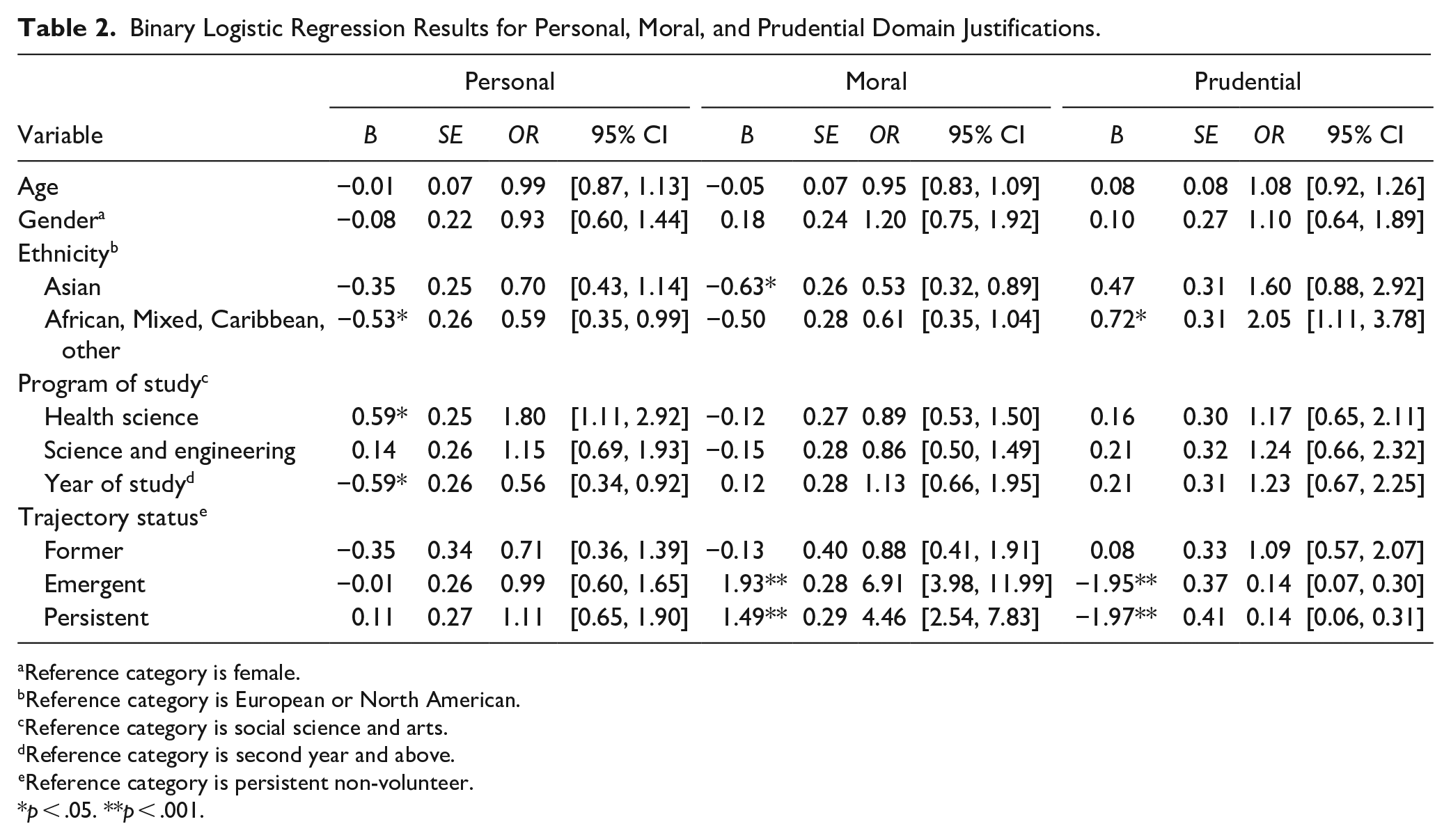
Figure 2 presents the proportion of participants using personal, moral, and prudential domain justifications by volunteer trajectory. Three binary logistic regression analyses were performed using SPSS 28 to assess the effects of demographic variables (age, gender, ethnicity, year of study, and program of study) and volunteer trajectory status (persistent, emergent, and former volunteer, and persistent non-volunteer) on the likelihood of using personal, moral, and prudential justifications for volunteer decisions (see Table 2). Reflecting sample characteristics, self-reported ethnicities were grouped into three categories: (a) European or North American origins, (b) Asian origins, and (c) African, Mixed, Caribbean, or other ethnic origins. Due to the infrequent use of the social domain, this domain has been excluded from the analyses below.
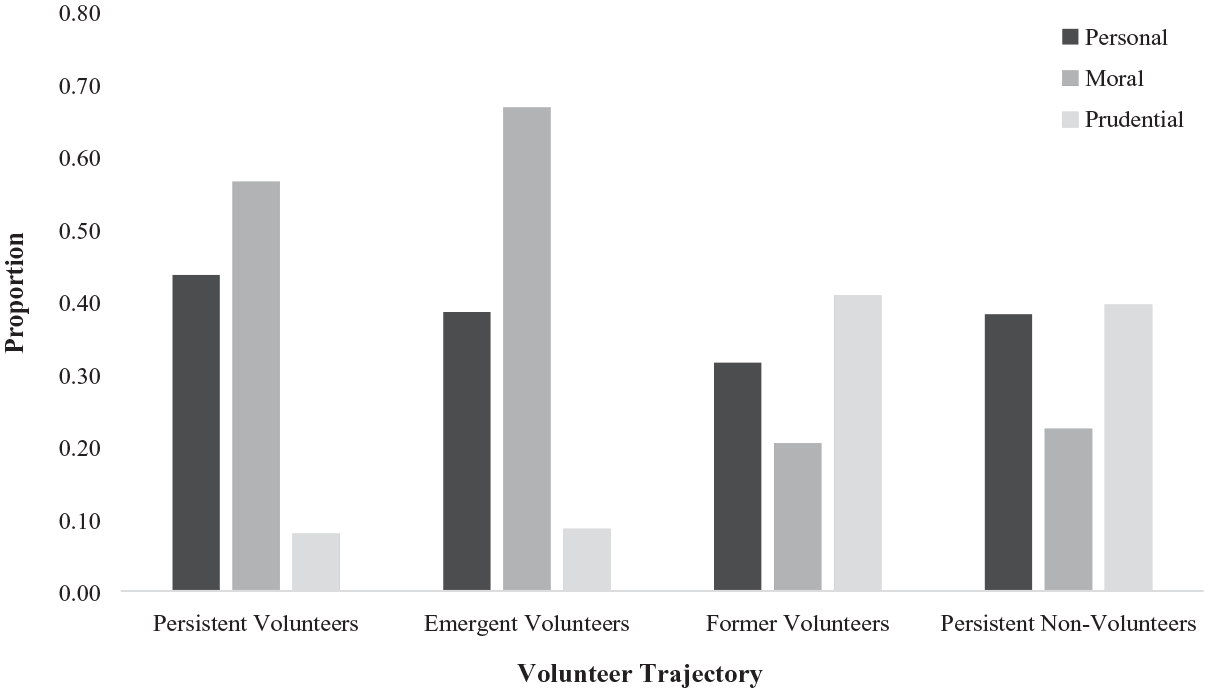
Proportion of participants using personal, moral, and prudential domain justifications by volunteer trajectory.
Binary Logistic Regression Results for Personal, Moral, and Prudential Domain Justifications.
Reference category is female.
Reference category is European or North American.
Reference category is social science and arts.
Reference category is second year and above.
Reference category is persistent non-volunteer.
p < .05. **p < .001.
Personal Justifications
The personal domain model was significant, χ2 (10, N = 423) = 19.40, p = .035. The model explained 6.1% (Nagelkerke R2) of the variance in the use of personal justifications and correctly classified 61.5% of cases. Trajectory status, age, and gender were not associated with the use of personal justifications. Participants who reported African, Mixed, Caribbean, or other ethnic origins were about one and a half times less likely to provide personal justifications than those who identified as European or North American (B = –0.53, SE = 0.26, OR = 0.59, 95% CI [0.35, 0.99], p = .044). Participants enrolled in health science were about two times more likely to provide personal justifications than those enrolled in social sciences and arts (B = 0.59, SE = 0.25, OR = 1.80, 95% CI [1.11, 2.92], p = .017). First year undergraduate students were about half as likely to provide personal justifications compared to those in second year and above (B = –0.59, SE = 0.26, OR = 0.56, 95% CI [0.34, 0.92], p = .022).
Moral Justifications
The moral domain model was significant χ2 (10, N = 423) = 83.09, p < .001. The model explained 24.0% (Nagelkerke R2) of the variance in the use of moral justifications and correctly classified 70.7% of cases. Emergent volunteers were almost seven times more likely to provide moral justifications than persistent non-volunteers (B = 1.93, SE = 0.28, OR = 6.91, 95% CI [3.98, 11.99], p < .001), and persistent volunteers were almost four and a half times more likely to provide moral justifications than persistent non-volunteers (B = 1.49, SE = 0.29, OR = 4.46, 95% CI [2.54, 7.83], p < .001). Former volunteers were no more or less likely to provide moral justifications than persistent non-volunteers (B = –0.13, SE = 0.40, OR = 0.88, 95% CI [0.41, 1.91], p = .750). Age, gender, year of study, and program of study were not associated with the moral domain. Participants who identified as Asian were about half as likely to use moral justifications compared to those who identified as European or North American (B = –0.63, SE = 0.26, OR = 0.53, 95% CI [0.32, 0.89], p = .017).
Prudential Justifications
The prudential domain model was significant χ2 (10, N = 423) = 69.31, p < .001. The model explained 22.7% (Nagelkerke R2) of the variance in the use of prudential justifications and correctly classified 77.3% of cases. Both emergent volunteers (B = –1.95, SE = 0.37, OR = 0.14, 95% CI [0.07, 0.30], p < .001) and persistent volunteers (B = –1.97, SE = 0.41, OR = 0.14, 95% CI [0.06, 0.31], p < .001) were about seven times less likely to provide prudential justifications than persistent non-volunteers. Former volunteers were no more or less likely to provide prudential justifications than persistent non-volunteers (B = 0.08, SE = 0.33, OR = 1.09, 95% CI [0.57, 2.07], p = .804). Age, gender, year of study, and program of study were not associated with the prudential domain. Participants who reported African, Mixed, Caribbean, or other ethnic origins were twice as likely to use prudential justifications compared to those who identified as European or North American (B = 0.72, SE = 0.31, OR = 2.05, 95% CI [1.11, 3.78], p = .022).
Additional Results
Among pandemic volunteers, 88 (40.4%) were volunteering with formal organizations and 130 (59.6%) reported informal volunteer activities. Chi-square tests indicated formal volunteers were more likely to engage in virtual volunteering (χ2 (1, n = 218) = 44.32, OR = 0.14, 95% CI [0.07, 0.25], p < .001) and informal volunteers were more likely to volunteer in-person (χ2 (1, n = 218) = 62.12, OR = 17.48, 95% CI [7.63, 40.05], p < .001). Emergent volunteers were more likely to report informal volunteering than persistent volunteers (χ2 (1, n = 218) = 4.01, OR = 0.57, 95% CI [0.33, 0.99], p = .045). For volunteer justifications, formal volunteers were more likely to use personal justifications (χ2 (1, n = 218) = 31.78, OR = 0.19, 95% CI [0.11, 0.35], p < .001), whereas informal volunteers were more likely to use moral justifications (χ2 (1, n = 218) = 19.41, OR = 3.55, 95% CI [2.00, 6.30], p < .001).
Discussion
Volunteer behaviors change throughout the life course and may be altered by life events (Hill & Hammond, 2023; Hogg, 2016; Metcalfe et al., 2018; Ramey et al., 2022). The trajectory model presented in the present study specified four trajectories of volunteering (persistent, emergent, or former volunteer, and persistent non-volunteer) and applied the model to examine how the emergence of the COVID-19 pandemic impacted trajectories of youth volunteering. Although, during the time period examined, some youth had their volunteering disrupted and became former volunteers, others emerged as volunteers, and many persisted as volunteers or non-volunteers. To better understand why some youth continued to volunteer and others started or stopped, we examined decisions about volunteering using social domain theory. Consistent with prior social domain research on youth volunteering (e.g., Alvis & Metzger, 2020; McNeil & Helwig, 2015; Metzger et al., 2019), youth from the present study reported personal and moral justifications for decisions about volunteering. Unlike past research, the present study also found prudential justifications for decisions about volunteering, particularly (though not uniquely) among non-volunteers. These findings are discussed further below.
Trajectories of Volunteering and the COVID-19 Pandemic
Consistent with past research on emergency volunteering (e.g., Twigg & Mosel, 2017; Whittaker et al., 2015), the present study found that the COVID-19 pandemic contributed to increased volunteering. In the present study, more youth emerged or continued volunteering than ceased to volunteer or remained non-volunteers. Research examining predictors of volunteering during a hypothetical pandemic reported that those with past volunteer experience were more willing to volunteer (Rosychuk et al., 2008). The present study, in the context of a real-life pandemic, found that many youth persisted as volunteers. Emergent volunteers in the present study were often engaged in informal volunteering, and informal volunteer opportunities may be less salient or necessary outside of emergency contexts (Whittaker et al., 2015).
As a pandemic, COVID-19 also brought barriers and risks to volunteering (i.e., because the virus was not geographically isolated). Many volunteer settings became unsafe or inaccessible to volunteers (Lebenbaum et al., 2024). Consistent with research on barriers to youth volunteering (Ballard, 2014), some non-volunteers in the present study reported they could not find volunteer opportunities. The pandemic also brought direct risks to health, which may have contributed to reduced volunteering (AlOmar et al., 2021). As noted below, concerns about personal health and the health of vulnerable family members were cited as reasons for not volunteering. However, the present study also found that virtual volunteering offered opportunities for volunteering during the pandemic, particularly among formal volunteers.
Social Domain Theory and Volunteer Decisions
Similar to past social domain theory research, some decisions about volunteering (i.e., whether a person volunteered or not) were framed as a matter of personal discretion (Metzger & Ferris, 2013; Metzger & Smetana, 2009). In the present study, volunteer trajectory status was not associated with the personal domain, and personal justifications were cited frequently by both volunteers and non-volunteers. Prior research demonstrates the prevalence of personal motives for volunteering (e.g., Ballard, 2014; McNeil & Helwig, 2015; Moore et al., 2014). Volunteers from the present study cited personal interests and goals (e.g., career development) as reasons for their volunteer involvement. Personal reasons for formal volunteering may also reflect the commitment (e.g., time and effort) associated with volunteering for an organization (Smith et al., 2016). However, non-volunteers in the present study also justified volunteer decisions in terms of personal interests and described prioritizing other activities (e.g., formal education), which likewise contributes to personal development (Arnett, 2014). In the present study, students later in their university careers were more likely to consider personal reasons than first year students. This finding extends previous research on older adolescents’ personal judgments about volunteering (see Metzger & Ferris, 2013) and offers some insight into how reasoning about volunteering shifts as youth advance through their undergraduate studies.
Previous research suggests that youth perceive volunteering as activity with some moral (and obligatory) aspects (e.g., Alvis & Metzger, 2020; Oosterhoff et al., 2015), and morality can motivate volunteer involvement (Moore et al., 2014), particularly during emergencies (Twigg & Mosel, 2017). In the present study, persistent and emergent volunteers were more likely to give moral reasons for their decision to volunteer. Non-volunteers also used moral reasons (e.g., protecting the welfare others) to justify their decision to not volunteer, although they were less likely to do so than volunteers. To our knowledge, moral reasons for not volunteering have not been prominent in previous literature. This finding may reflect that the present study examined real-life decision making, where individuals are more likely to consider the impact of actions on their real lives (Walker, 2014). Tavassoli et al. (2020) examined real-life prosocial behavior and found that refusals (i.e., deciding to not help) and regret (i.e., regretting helping) emerged in real-life contexts, whereas these themes were largely absent in studies of hypothetical prosocial behaviors. The findings from the present study, though occurring in the unique context of the COVID-19 pandemic, may likewise reflect the complexities of real-life moral reasoning.
In addition to personal and moral justifications, many youth justified their decisions using the prudential domain. Past research on the prudential domain is largely restricted to research on peer pressure and risk taking (e.g., Daddis, 2011; Shaw et al., 2011). In the present study, prudential justifications were the most frequently reported justifications among former volunteers and persistent non-volunteers and reflected concerns related to personal health and safety (AlOmar et al., 2021). Interestingly, however, some volunteers cited prudential considerations to justify decisions to volunteer (e.g., volunteering was deemed safe). To our knowledge, this is the first study to find prudential justifications used in this way.
The present study reflected how real-life reasoning is multifaceted and may involve coordination between two or more domains (Turiel, 2006). The findings also provide insight into multifaceted domain reasoning between individuals, such that it is possible to find people justifying the same decision using different domains. For example, all persistent volunteers chose to continue volunteering during the pandemic; however, some youth justified this decision using moral reasons, and others cited personal reasons. Only a small number of participants justified their volunteer decisions using more than one domain (i.e., mixed-domain reasoning, e.g., personal and moral), which may reflect the limitations of open-ended online survey measures (see limitations). Non-volunteers, however, often justified their decisions by citing the health of their families. In a strict reading of social domain theory, these family-oriented justifications are moral as they pertain to the welfare of others. However, these findings also extend research on the prudential domain. Past research has examined how parents respond to toddlers’ risky behaviors (i.e., judging another’s behavior using prudential concerns) (e.g., Dahl, 2016). Making decisions to protect the safety of one’s loved ones could be classified as moral-prudential.
Implications and Future Directions
Building on previous volunteer trajectory research (Hill & Hammond, 2023; Hogg, 2016; Metcalfe et al., 2018; Ramey et al., 2022), the present study further developed a trajectory model to understand patterns of volunteering during the height of the pandemic. Consistent with emergency volunteering research (e.g., Whittaker et al., 2015), the trajectory model illustrated the emergence of volunteering during the pandemic. However, the trajectory model also addressed the persistence and submergence of volunteering, which have received little attention in the literature. The proposed trajectory model applied at a tighter timeframe (e.g., immediately after the onset of widespread lockdowns) or extended to a later timeframe (e.g., the widespread availability of vaccines and the removal of restrictions) would likely present different findings.
Prior social domain research has focused on examining judgments about volunteering in hypothetical scenarios (e.g., Alvis & Metzger, 2020). To our knowledge, the present study is the first to apply social domain theory to examine real-life decisions about volunteering. Consistent with prior research (e.g., Metzger & Ferris, 2013), personal and moral justifications were associated with decisions to volunteer. Unlike past studies, the moral domain was referenced as a reason to not volunteer, and the prudential domain was frequently cited to justify not volunteering. These findings may reflect the timeframe examined (i.e., shortly after the pandemic onset and before vaccination) and the complexities of real-life reasoning. Future studies could examine the role of moral and prudential concerns in real-life decisions about volunteering beyond the context of COVID-19 (see Walker, 2004; Tavassoli et al., 2020). We also examined domain justifications in the context of other characteristics such as ethnicity and program of study. Although beyond the scope of the present study, the findings point to some domain reasoning differences in real-life contexts and represent an avenue for future research.
Findings from the present study demonstrate that, together, the trajectory and domain perspectives offer insight into the impact of the pandemic on youth volunteering. The present study found that more youth emerged or persisted as volunteers during the pandemic. This finding differs from previous trajectory research suggesting that helping decreases during the transition from adolescence to adulthood (Ramey et al., 2022). However, drawing on social domain theory, the moral imperative to help in the unique context of the pandemic may have contributed to this finding. Future studies could integrate the trajectory and domain perspectives to examine the impact of other events on youth volunteering. For example, the transition to university may impact volunteering (e.g., Hill & Hammond, 2023), and the trajectory and domain perspectives could offer insight into how and why volunteering changes in this context.
The findings have practical implications for initiatives designed to facilitate youth volunteering during emergencies or disasters. Despite disruptions, more youth in the present study were volunteering during the pandemic, which signals the importance of developing strategies to support volunteering in emergency contexts. Many youth in the present study did not volunteer due to concerns about their own health or the health of others. We recommend that emergency volunteering initiatives anticipate these barriers to volunteering and increase the availability and accessibility of safe volunteer opportunities. For example, more virtual volunteering opportunities may have contributed to increased volunteering during the pandemic.
Limitations
The present study had several limitations. Data collection began 8 months after the pandemic was declared and thus relied on participants’ self-reported recollections of their volunteering, which could also be influenced by social desirability biases (Metzger & Ferris, 2013). The data was collected using an online survey and did not allow for follow-up questions. For example, we do not know why some youth continued their past volunteering into the pandemic. Future research should consider using an interview approach to allow for more detailed descriptions of volunteer decisions. The survey provided examples of volunteering but did not include a definition, therefore some youth may have been engaging in behaviors that they do not consider as volunteering. We also did not examine the specific characteristics of youths’ volunteering (e.g., where they volunteered). Future studies should provide a definition of volunteering and examine whether the characteristics of volunteer work impact decisions.
The present study is based on a sample of predominately female first year undergraduate students from one Canadian university, which limits the generalizability of the findings to other populations. Public health measures in response to the pandemic (e.g., lockdowns) also varied between cities, provinces, and countries (e.g., Hale et al., 2021), thus findings from this study may not reflect the volunteer experiences of youth from other regions during the pandemic. Finally, the present study did not consider prior trajectory periods (e.g., whether non-volunteers had a history of volunteering at an earlier time point). Past research found that future volunteering is more likely when past volunteer experiences are positive (e.g., Henderson et al., 2014), and those with past volunteer experience are more likely to volunteer during emergencies (Rosychuk et al., 2008). Future research employing a trajectory model could examine a longer timeframe to better understand youths’ volunteer decisions in response to events.
Conclusion
The present study contributed to the literature on youth volunteering by examining trajectories of volunteering during the COVID-19 pandemic and exploring how youth justified their real-life decisions about volunteering. Despite disruptions to volunteering, more youth persisted or emerged as volunteers during the pandemic. To understand why some youth chose to emerge or persist as volunteers while others chose to stop volunteering, the present study demonstrated how youth used personal, social, moral, and prudential reasons to justify their decisions about volunteering. Although the findings are bound to a particular point of the pandemic, in a particular region, before the arrival of vaccination, the proposed trajectory model could be extended to later periods of the pandemic to examine the trajectories of emergent volunteers, and the role of prudential reasoning in volunteer decision making.
Footnotes
Acknowledgements
Emma Grant would like to thank Dr. John Sylvestre at the University of Ottawa for his qualitative research methods course.
Declaration of Conflicting Interests
The author(s) declared no potential conflicts of interest with respect to the research, authorship, and/or publication of this article.
Funding
The author(s) received no financial support for the research, authorship, and/or publication of this article.
