




Abstract
Afterschool staff are critical to youth’s experiences in activities and shape what youth garner from activities. This study focuses on undergraduate students’ experiences working with adolescents in an afterschool activity through a community-university partnership in an effort to understand the challenges afterschool staff face and the strategies that helped them address those challenges. Undergraduate students, who are referred to as mentors in the activity (n = 15; 11 female; 8 Latine, 7 non-Latine), are the staff for a math enrichment afterschool activity serving largely Latine youth. The undergraduate students were interviewed to understand (a) the challenges they encountered when working with adolescents, (b) the strategies they leveraged to respond to these challenges, and (c) the extent to which the themes varied by racial/ethnic cultural backgrounds. Undergraduate students felt they experienced challenges with promoting motivation, teaching math content, navigating group instruction, building connections with adolescents, and establishing authority or respect. To respond to these challenges, they sought help from experienced undergraduate students, attended trainings, facilitated collaborative learning, integrated real-world examples, engaged in structured non-math related conversations, and leveraged students’ sociocultural assets. Results provide key stakeholders with insights on how to design trainings to better support undergraduate students who work with diverse youth.
According to the National Afterschool Association (2017), staff in afterschool settings vary in education, experience levels, and their ability to work effectively with youth. Afterschool activities are also becoming increasingly diverse, where staff and youth may experience sociocultural differences (e.g., Hirsch, 2005). Perhaps not surprisingly, scholars argue that it is essential to provide afterschool staff, who are adults that work with youth, with the tools and resources necessary to help prepare them for the challenges they might encounter while working with youth from diverse backgrounds (Larson et al., 2015; Larson & Walker, 2010; Walker & Larson, 2012). Community-university partnerships provide one avenue to better prepare future afterschool staff. Through these pre-service opportunities outside of the traditional classroom, undergraduate students receive evidence-based education, hands-on training, professional development, and credentials to work in afterschool settings (Mahoney et al., 2010; Underwood et al., 2021; Vandell & Lao, 2016). Students’ experiences in these settings also provide insight into the challenges afterschool staff experience and potential ways to address those challenges.
This study focuses on the perspectives of undergraduate students who work with adolescents in a high-quality math enrichment afterschool activity created through a community-university partnership, as an exemplar to learn more about how to strengthen professional development for afterschool staff. The undergraduate students in the activity serve as the afterschool staff who work with the youth in a group setting on the daily programming, foster positive relationships with youth, and serve as mentors to youth about college and broader life issues. Though the undergraduate students’ role in the activity is more aligned with the literature on paid afterschool staff of enrichment activities compared to the role of tutors or that of mentors in Big Brothers/Big Sisters, the undergraduate students are referred to as mentors in the program to signal the broad scope of their work with adolescents in the activity. Knowing what challenges staff face and the strategies they currently leverage to address those challenges can help the field design effective trainings for community-university partnerships and more broadly in the afterschool field. Staff’s preparedness to handle challenges should enrich youth’s experiences and promote positive youth development (Gutierrez et al., 2017; Hirsch et al., 2011). Therefore, this paper draws on the literature on afterschool staff and youth workers to better understand challenges and strategies that adults working with adolescents may encounter in afterschool settings.
Afterschool Activity Quality and Afterschool Staff
Community-university partnerships can serve as platforms for community members and universities to collaborate in designing, planning, and implementing best practices in afterschool activities focused on offering additional support and resources to marginalized populations (Mahoney et al., 2010; Underwood et al., 2021; Yu et al., 2021, 2022). These partnerships also serve as an avenue for training afterschool educators and promoting staff development through workshops, classes, meetings, and fieldwork experiences (Celio, 2011; Mahoney et al., 2010; Vandell & Lao, 2016). Through community-university partnerships, undergraduate students have the opportunity to interact with diverse individuals who may be ethnically and culturally different from them. Such opportunities can help undergraduate students gain knowledge and skills on how to be culturally responsive when working with youth (Flannery & Ward, 1999; Lee & Espino, 2010; Mahoney et al., 2010; Worrell-Carlisle, 2005; Yu et al., 2022). Several afterschool scholars have underscored the importance of staff training and development to ensure high quality and positive impacts on youth development (Hirsch et al., 2011; Sheldon et al., 2010; Vandell & Lao, 2016).
Afterschool staff are key to ensuring activity quality and shaping adolescents’ experiences in afterschool activities (Eccles & Gootman, 2002; Jones & Deutsch, 2011; Kataoka & Vandell, 2013; Larson et al., 2005; Smith et al., 2010). Hirsch et al.’s (2011) Program-Activities-Relationships-Culture (PARC) model, for instance, suggests that staff play an important role in all three broad aspects of activity quality, including youth-staff relationships, the daily activities or programming, and center culture. In fact, youth often report that the main reason for participating and remaining in an afterschool activity is because of their relationships with the staff (Akiva & Horner, 2016). Scholars also suggest staff are key in how activities are facilitated and executed (Hirsch, 2005; Smith et al., 2010; Vandell & Lao, 2016), which may influence the benefits adolescents derive from activities.
Recently, scholars have begun to argue that staff’s culturally responsive practices are central to supporting positive development for adolescents from diverse sociocultural backgrounds (McGovern et al., 2020; Ngo, 2017; Soto-Lara et al., 2022; Yu et al., 2021). Simpkins et al.’s (2017) framework of culturally responsive practices describes ways in which culture can impact afterschool staff’s interactions with adolescents. Though Simpkins et al. (2017) framework provides a general overview, more research is needed on this topic because implementing culturally responsive practices that center adolescents’ sociocultural backgrounds and perspectives is complex (Ettekal et al., 2020; Gutierrez et al., 2017). Afterschool staff likely encounter challenges when implementing culturally responsive practices and leverage different strategies to help them respond to the specific challenges (Gutierrez et al., 2017). Understanding these challenges is important to help support adolescents’ interactions with both co-ethnic and cross-ethnic staff because it is not guaranteed that adolescents will bond with co-ethnic staff (who may vary on other aspects of their background) or that cross-ethnic staff will be responsive to adolescents’ diverse backgrounds (e.g., Hirsch, 2005).
Afterschool Staff Challenges
According to the PARC model (Hirsch et al., 2011), afterschool staff may experience challenges in three central ways: facilitating the daily activities or programming, establishing youth-staff relationships, and being responsive to adolescents’ sociocultural backgrounds. These three areas of challenges overlap with core areas of culturally responsive practices (Gay, 2018) and cover staff concerns raised in the current literature (Larson et al., 2015; Larson & Walker, 2010).
In terms of facilitating the daily programming, many afterschool activities use hands-on, inquiry-based activities that require afterschool staff to use a wide range of teaching skills (e.g., scaffolding, facilitating, role modeling) (Hirsch, 2005; Larson et al., 2015; Morales et al., 2011; Yu et al., 2022). For example, Hirsch (2005) documented how afterschool staff at the SMART Girls, an afterschool program, felt unprepared or lacked confidence in facilitating the sessions; and, they reported having difficulties facilitating lessons on life skills involving role-playing. Similarly, in a math afterschool activity, adult mentors reported having difficulties keeping adolescents engaged and teaching the math activities when they did not know the content (Yu et al., 2022). Utilizing multiple teaching skills may help facilitate adolescents’ development, but can be challenging to execute successfully.
Afterschool staff also report challenges with establishing relationships with adolescents, building trust, and managing behavior (Hirsch, 2005; Hirsch et al., 2011; Larson & Walker, 2010; Rhodes, 2004). For example, scholars have noted that staff find it difficult to form connections with youth who are more timid or reserved (Hirsch, 2005; Hirsch et al., 2011). Scholars also suggest that critical ingredients in establishing youth-staff relationships are trust, rapport, and respect (Deutsch & Jones, 2008; Ettekal et al., 2015; Jones & Deutsch, 2011; Rhodes, 2004). However, some afterschool staff find it challenging to make such connections, particularly in a short amount of time (Hirsch et al., 2011). In an evaluation of an afterschool program, researchers found that some staff were unable to manage youth’s behavior or enforce rules while also struggling to make their voices heard when they felt youth did not respect them (Hirsch et al., 2011).
Lastly, effective afterschool staff are responsive to youth’s sociocultural backgrounds; however, prior research suggests some staff encounter challenges in understanding and utilizing culturally responsive practices (Gast et al., 2017; Gutierrez et al., 2017; Hirsch et al., 2011). For example, even though some afterschool staff may be well-intentioned in supporting youth’s sociocultural backgrounds, some have narrow views of culture and have facilitated learning activities based on inaccurate representations of youth’s culture (Ettekal et al., 2020; Herrera, 2016; Spencer, 2007). Staff also have reported feeling unprepared to connect with youth from different sociocultural backgrounds and responding to cultural incidents (e.g., discrimination) (Gutierrez et al., 2017; Hirsch et al., 2011; Spencer, 2007). This is particularly important as cross-ethnic youth-staff relationships might experience different challenges than co-ethnic youth-staff relationships (Hirsch et al., 2011). For example, White staff working with Latine adolescents reported feeling unqualified to engage in a dialogue with youth about negative stereotypes of Middle Eastern individuals when showing a video on the September 11th attacks (Gutierrez et al., 2017). Not responding to cultural incidents or not being responsive to youth’s sociocultural backgrounds may lead to cultural divides and make cultural differences between the staff and youth apparent, where youth feel misunderstood (Ettekal et al., 2020; Gutierrez et al., 2017; Spencer, 2007).
Afterschool Staff Responses to Challenges
Currently, the literature on best practices or high-quality activities is separate from the literature on the challenges afterschool staff face, which creates gaps in the field’s understanding and, ultimately, the field’s ability to support staff in doing their best work (Larson & Walker, 2010). Even when staff are trained on best practices (but not on how to respond to common challenges), they still often feel unprepared to address challenges that occur when working with youth. For instance, studies suggest the importance of bridging cultural divides or engaging in culturally responsive practices (Gutierrez et al., 2017; McGovern et al., 2020; Ngo, 2017; Simpkins et al., 2017); however, there is little guidance on what these practices look like and the complexities that can arise when engaging in this demanding but valuable work. More work is needed that uses strength-based perspectives to examine how afterschool staff already handle challenges they experience when working with adolescents that does not place blame on staff and instead considers the strengths and skills that staff can draw upon to overcome these challenges (e.g., Larson et al., 2015; Larson & Walker, 2010). To address this goal, research needs to connect staff challenges to best practices or the strategies they leverage.
Another important element missing in the literature is that of culture and addressing how culture shapes staff’s daily experiences and interactions in afterschool activities (Simpkins et al., 2017; Williams & Deutsch, 2016). It is important to note that adolescents in afterschool activities will most likely work with staff from diverse sociocultural backgrounds and form co- and cross-ethnic relationships with staff. Even when youth and staff might share the same race or ethnicity, they still might differ in other aspects of their sociocultural backgrounds, such as family income, gender, other aspects of their identities, and their cultural values (Hirsch et al., 2011; Simpkins & Riggs, 2014; Spencer, 2007). Not being responsive to youth’s sociocultural backgrounds may lead to cultural divides or negative youth experiences in activities (e.g., microaggressions) (Ettekal et al., 2020; Spencer, 2007). Afterschool activities that are not responsive to youth’s sociocultural backgrounds run the risk of being ineffective in providing positive youth experiences, and may have challenges in recruiting and retaining youth (e.g., Cole & Distributive Literacy Consortium, 2006).
Current Study
Aligned with research suggesting that afterschool staff matter in designing high-quality afterschool activities that are responsive to adolescents’ needs and sociocultural assets (Eccles & Gootman, 2002; Simpkins et al., 2017), this study focuses on qualitatively exploring and identifying strategies undergraduate students, who serve as staff and are referred to as mentors by adolescents, utilize when addressing everyday challenges. We utilized qualitative interviews from undergraduate students to provide more insights into (a) the challenges they encounter when working with adolescents, (b) the strategies they leveraged to respond to these challenges, and (c) the extent to which their responses varied by their racial/ethnic cultural backgrounds. Exploring these topics qualitatively allows undergraduate students who work with adolescents to describe their experiences that can shed light on how to better support undergraduate volunteers who serve as staff in community-university partnerships, as well as paid afterschool staff who may have similar experiences when working with youth.
Study Context
This study focuses on a math enrichment afterschool activity created by mathematics faculty at a Hispanic-serving university through a community-university partnership. The mission of the math afterschool activity was to serve students marginalized in STEM from under-resourced schools and provide hands-on math enrichment activities that promote various math outcomes and knowledge about college and STEM pathways. Each week, middle school students work with undergraduate students at the university campus on group-based math activities. Though the undergraduate students are not paid like many afterschool staff in the field, they are the staff of the activity, and as such, have the same role and duties as paid afterschool staff. During each session, undergraduate students work with multiple adolescents in a group and help facilitate and guide math activities. The undergraduate students attend weekly training sessions that focus both on the math content and building meaningful connections with the adolescents.
Adolescents were recruited from two local middle schools, referred by their math teachers, and selected through an application process. A large proportion of participants who attended the afterschool activity were adolescents who were preforming below their grade level in math. Once a week, middle school adolescents took a school bus to the university campus after school and attended a 2 hour session. During the sessions, 2 to 3 undergraduate students worked in groups with 6 to 10 adolescents. Undergraduate students engaged with adolescents in various fun and hands-on math enrichment activities to introduce different math concepts (e.g., numerical sense, proportionality, geometry, and statistics). The math enrichment sessions were designed to introduce adolescents to new mathematical concepts as well as to promote learning skills, critical thinking skills, and collaboration.
Undergraduate students interviewed for this study participated in a larger mixed-methods study examining high-quality culturally responsive practices in a math afterschool activity. During the 2018 to 2019 school year, approximately 80 undergraduate students (69% female, 37% first generation undergraduate students) served as staff working with middle schoolers who self-identified as Latine (90%). Undergraduate students participated in the afterschool activity either as volunteers or for course credit and came from various majors: math (40%), science (33%), education (30%), engineering (15%), and others (20%). Each quarter, undergraduate students attended optional weekly training sessions that lasted approximately 60 to 90 min. The math afterschool activity was designed using evidence-based best practices in order to create a high-quality activity where structures and practices are implemented that can be improved over time that address the needs of the population served (e.g., Eccles & Gootman, 2002; Hirsch et al., 2011). For example, one of the best practices was having training sessions once a week. In the weekly training sessions, undergraduate students received instruction on the math content materials that would be used during the afterschool sessions, learning about the math activities they would introduce to adolescents, learning more about teaching skills (e.g., collaborative learning), and receiving support on how to work with adolescents. Additionally, all undergraduate students received various learning tools, such as videos and detailed manuals to better prepare them to engage with the adolescents in the math activities (e.g., Vandell & Lao, 2016). The activity also provided several supports to form positive youth-staff relationships, such as providing undergraduate students with ideas on how to bond with youth. Additionally, the activity purposely integrated staff check-ins with the adolescents during snack time before they began working together. During this time, undergraduate students talked with adolescents about their life, which helped build trust and a positive relationship (e.g., Rhodes, 2004d). Another way the activity incorporated culturally responsive practices was by giving undergraduate students the flexibility to tailor the content to be more relevant to the adolescents they worked with, which includes using different teaching strategies or styles that were fun and engaging for adolescents (e.g., Simpkins et al., 2017).
Method
Research Design and Participants
The present study used a consensual qualitative method rooted in constructivist and some elements of postpositivist paradigms (Hill et al., 2005). Following IRB protocols, 12 mentors and the three session leaders who had previously been mentors (11 female; 4 math or science majors and 11 social sciences majors; 8 Latine, 6 Asian, and 1 White mentors) were purposively selected because they had been mentors in the activity for at least two quarters and covered the range of relational self-efficacy (n’s = 4 high, 5 moderate, and 3 low), which measures staff’s perceptions on how well they work with youth (Akiva et al., 2017). All 12 undergraduate students except for two participated in the training sessions. The two undergraduate students who could not attend the training sessions used the learning tools (e.g., videos, manuals, debriefing meetings) to help them build strong relationships and work effectively with adolescents on the math activities.
Interview Procedures
The semi-structured interview script contained multiple open-ended questions that were developed based on existing literature (e.g., Larson et al., 2015) and conversations with the research team. The interview protocol contained sections on undergraduate students’ background, mindsets on students’ math abilities, experiences in the math afterschool activity, experiences in their relationships with youth, and perspectives on their and their mentees’ social identities and culture. The interviews lasted an average of 50 minutes and were conducted in English, according to participants’ preferred language. For participating in the interviews, each participant received a $10 honorarium. Interviews were audiotaped and transcribed verbatim.
All interviews were read and coded in their entirety. However, particular attention was placed on the section about undergraduate students’ experiences in their relationships with youth as it elicited more information about their challenges and the strategies they used to respond to those challenges. For the first research question, particular attention was placed on the following two interview questions: “What was the most challenging part in showing your mentee(s) that you cared about them?” and “What was the most challenging part in providing your mentee(s) with math-related support?” For the second research question, particular attention was placed on two interview questions that followed after each interview question mentioned above: “How did you respond to the challenges?” and “How did other mentors respond to these challenges?” The interview questions focused on undergraduate students’ perceptions on what their challenges and strategies were, which provide valuable insights to better support afterschool staff. A complete list of the interview questions can be found in Appendix A.
To ensure trustworthiness, four main steps were taken (Morrow, 2005). First, all interviewers attended training sessions to help them become familiar with the interview script, practice interview skills, have questions answered, and receive feedback. All interviewers observed an interview before they did one on their own and received feedback on their first interview. Second, the data collection team attended meetings to provide opportunities to debrief and talk about any issues or concerns. Third, analytical memos (i.e., a collection of the first author’s notes, queries, interpretations, perspectives) were written and reviewed frequently during coding and analysis (Morrow, 2005; Saldaña, 2016). Lastly, the larger research team was consulted during coding and analysis in addition to discussions between the co-authors. Therefore, to balance our perspectives and avoid bias during our analytical process, we presented our codebook and preliminary analyses during several group meetings that included researchers who were familiar with the larger study but not directly involved with the current study. This paper was also part of a dissertation that was critically reviewed by an interdisciplinary committee.
Researchers Positionality and Reflexivity
To control for potential biases influencing data analysis, it is important to discuss our experiences, perspectives, and biases and how they may operate in the research process (Hill et al., 2005; Morrow, 2005). The lead author is a bilingual, second-generation Latina who has worked in afterschool settings. She used her experiences and cultural knowledge to examine interviews and to interpret participants’ responses to gain insights from the interviews. The second author is an Asian and Pacific Islander male who has had several years of professional experience supporting diverse youth and community members, and who has research interests related to identifying and understanding culturally responsive STEM afterschool activities through research-practice partnerships. His prior experience working with and for youth served as a lens through which he considered study findings related to mentoring challenges. The third co-author is a White, female raised in Italy with several years of experience designing and running math community enrichment activities. Her research expertise is in mathematics and mathematics education, which provided an important perspective on the math education context of the study. Finally, the last co-author is a White, female raised in California whose family has been in the United States for more than three generations; her expertise is in developmental psychology and focuses on youth’s organized afterschool activities, including the predictors of participation, developmental processes, the outcomes associated with participation, and examining diversity in activities. Her perspective helped to foreground the study findings within the broader literature on STEM afterschool activities. The data collection team consisted of bilingual, doctoral students from different racial and ethnic backgrounds. The rest of the research team involved with coding and analysis consisted of the authors of this study.
Coding and Analyses
Coding the interviews occurred in multiple iterative stages where both inductive and deductive approaches were utilized to identify patterns in the data (Saldaña, 2016). To assist in data analysis, Microsoft Excel spreadsheets were utilized (Meyer & Avery, 2009). Codes and categories were developed by considering each line of text, as well as the words or phrases. Coding and analyzing the interviews occurred in four stages, described below.
In the first stage of coding, the first author read the interviews in their entirety and placed particular attention on the youth-staff relationship section. Inductive and deductive approaches were used where the codes were based on the data using in-vivo (i.e., verbatim words or phrases from participants) and descriptive (i.e., words or phrases that summarize a topic based on prior literature) coding techniques (Saldaña, 2016). Codes, categories, and themes were developed for each research question, such that there were specific codes for the different challenges and for how undergraduate students responded. This yielded two different preliminary coding frameworks, one focusing on the challenges and the other focusing on the strategies undergraduate students employed to address the challenges. The preliminary coding frameworks were developed and refined by returning to the data, reviewing memos, receiving feedback from the research team, and using codes that reoccurred in the data (Saldaña, 2016). Consensus with the research team was reached on issues, such as whether codes fell under multiple categories.
In the second stage of coding, we were interested in finding patterns or connections between the specific challenges undergraduate students encountered and the specific strategies they employed. The connections were first recorded for each participant. These connections were then examined across all the interviews to document if undergraduate students were utilizing similar strategies to address similar challenges. Examining the linkages within and across participants helped identify which linkages reoccurred in the data. These linkages were further refined by returning to the data, reviewing memos, and receiving feedback from the research team. A diagram of the linkages was created to show the ones that reoccurred in the data (Saldaña, 2016).
The third stage in analyzing the data was to create themes for the challenges encountered by undergraduate students (research question 1) and themes for the strategies they used to address the challenges (research question 2). Themes were developed using the coded interviews, the coding framework, and existing literature. The final themes discussed in this paper are common themes across the interviews (Ryan & Bernard, 2003).
In the final stage, we were interested in understanding the similarities and differences between Latine and non-Latine undergraduate students’ interview responses. To capture whether Latine and non-Latine undergraduate students mentioned similar or different challenges and strategies, their interviews were examined separately. The similarities and differences are further highlighted in Figure 2, which was created after examining their interviews separately.
Results
The Challenges Undergraduate Students Encountered
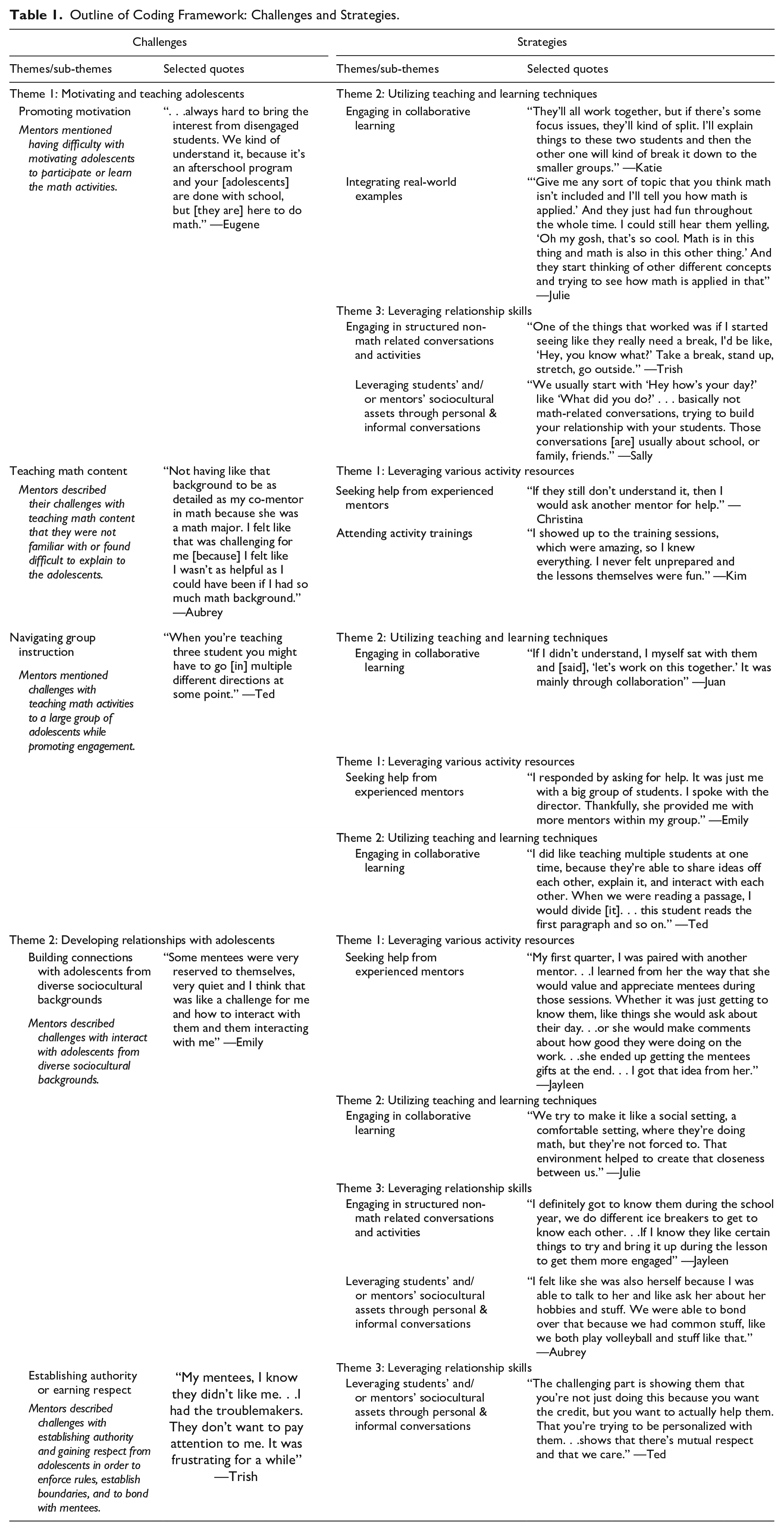
To address our first research question, we identified two overarching themes for challenges: (a) motivating and teaching adolescents, and (b) developing relationships with adolescents. Within these overarching themes, there were five sub-themes or challenges that are described below using interview excerpts (Table 1). Similarities and differences between Latine and non-Latine undergraduate students’ responses are described as well.
Outline of Coding Framework: Challenges and Strategies.
Theme 1: Motivating and Teaching Adolescents
Promoting Motivation
Both Latine and non-Latine undergraduate students mentioned that sometimes it felt to them like the adolescents were less motivated to work on the math activities. Undergraduate students perceived their low motivation to several factors, such as having a long day at school and family obligations: I know when somebody’s frustrated with doing certain activities or sometimes they’re just too tired to do anything. . .I understand that they have other things that could be weighing them down from school or from home. —Julie, Latine, Education major
Undergraduate students understood that adolescents were embedded in other social contexts and seemed aware of adolescents’ reasons for their low motivation and disengagement. Undergraduate students thought adolescents were most likely to seem a little disengaged when the math activities were not fun or were too challenging. For example, Angel (Latine and education major) described how it was difficult to motivate adolescents, especially “if they felt like the lessons were too long, too boring for them.” Undergraduate students expressed that it was challenging to promote motivation when it seemed like students came to the activity feeling less motivated or when the activities were less engaging and did not spark adolescents’ interests.
Teaching Math Content
Undergraduate students described challenges with teaching new math content, especially if they felt they did not have a “math background.” As described by the undergraduate student below, Not having that background to be as detailed as my co-mentor in math because she was a math major. I felt that was challenging for me because I felt I wasn’t as helpful as I could have been if I had a math background. —Aubrey, non-Latine, Education major
Interviews with the session leaders revealed that some mentors felt unprepared or not knowledgeable in math to help students learn, but some mentors did not attend the training sessions that provided coaching on how to teach the content material. Though this challenge was mentioned more by undergraduate students with education majors, we found that STEM majors experienced challenges in teaching math in a different way. For example, Sometimes when it comes to trying to explain a concept to them, I find it really hard to explain it or ask questions in a way that would help them understand it. I don’t want to make it seem like I don’t care about teaching, but I do. I just can’t do it well. —Christina, non-Latine, STEM major
Even though undergraduate students in STEM majors understood how to do the math problem themselves, it was difficult for them to explain it in terms that adolescents could understand and to find more than one strategy to explain the math content. Although both education and STEM majors described difficulties teaching math, there were different nuances to their challenges.
Navigating Group Instruction
Most of the concerns about working with multiple adolescents in a group setting were related to tailoring the activities and assessing when adolescents might benefit from additional support. Undergraduate students mentioned that it was difficult to discern if everyone was understanding the concept the same way and simultaneously determine if someone might benefit from additional help. For example, The most difficult part was when the groups had a variety of students, like students in different grade levels. In one of my groups there are two sixth-graders and then I have two eighth-graders and then a seventh-grader, so it’s mixed. It can be difficult if the math activity has concepts or procedures that eighth-graders know well and that sixth-graders know nothing of. —Julie, Latine, education major
For this category, both Latine and non-Latine undergraduate students alluded to the challenges that were present when working with mixed-age or –ability groups. Some said they felt difficulties managing group dynamics and perceived this when noticing that adolescents were seated next to their friends.
Theme 2: Developing Relationships with Adolescents
Building Connections with Adolescents from Diverse Sociocultural Backgrounds
Many mentioned how they sometimes struggled to form connections with adolescents and gain their trust. Undergraduate students got the impression that adolescents were hesitant to share things about themselves or to see them as friends. Others perceived that some adolescents were more shy and reserved than others. For example, I think there was a line of, “Oh, she’s a mentor.” I felt like it was more of like, “Okay, she teaches us,” not like a friendship kind of thing. I don’t think they were very comfortable enough to open up in the beginning especially. —Sally, non-Latine, education major
Though the adolescents Sally worked with had different perceptions of what her role was, Sally had the impression that some of the adolescents did not feel comfortable with her and expected more of a teacher-student type of relationship. In some ways, she alluded to the power dynamics that may exist in teacher-student relationships and how that might be different in an afterschool activity.
More non-Latine undergraduate students than Latine undergraduate students mentioned challenges connecting with adolescents from diverse backgrounds. Some non-Latine undergraduate students found it difficult to connect with those adolescents who spoke Spanish as their primary language and Latine adolescents whose racial and ethnic cultural backgrounds were different from theirs. As described by an undergraduate student, I couldn’t get close to one student because we didn’t speak the same language. —Aubrey, non-Latine, education major
Some Latine undergraduate students mentioned that although they had different ethnic cultural backgrounds or grew up in different communities than the adolescents, they still had some similarities in terms of the language they spoke and other traditions.
Establishing Authority or Gaining Respect
Having difficulties with establishing authority was something that non-Latine undergraduate students mentioned more compared with Latine undergraduate students. Undergraduate students perceived that they experienced challenges when trying to have adolescents follow rules and or stay focused on the math activities. They sometimes felt that some adolescents were more engaged in other fun pursuits (e.g., catching up with their friends) rather than on the math activities. As one undergraduate student clearly stated, When you start to lose that patience and that control, that’s when it starts to slip. You’re older, but you’re still not acting like an adult. You’re acting like a middle school kid and it’s not working very well. It’s not helping anyone. —Katie, non-Latine, STEM major
Oftentimes, the difference between a friendship and a youth-staff relationship was blurred to the extent that undergraduate students felt like adolescents did not listen to them.
Undergraduate students also mentioned difficulties with earning respect from adolescents. Undergraduate students felt some adolescents challenged them to see if they could gain their respect. As one undergraduate student stated below, I remember clearly getting to that table that first time I got there and I remember one of them telling me like, “Oh, You’re like the new mentor, right?” And they’re like, “We’ll see how long you’ll last.”—Juan, Latine, education major
Session leaders suggested that some mentors found it difficult to earn adolescents’ respect because adolescents wanted to understand if the mentors’ intentions were good. For example, adolescents wanted mentors who were there because they were interested in working with adolescents and not for a grade or fieldwork hours for an undergraduate course.
Undergraduate students also struggled with how to best establish boundaries in terms of not invading adolescents’ privacy and maintaining staff-youth relationships. For example, I think the hardest part was not crossing the line. Because at the end of the day, they are students and so you want to be respectful. —Kim, Latine, education major
Kim describes how she was careful with how she interacted with adolescents. In the interview, she talked about how she would give youth high fives and was cautious when she hugged them to make sure they were comfortable with that type of affection. Other undergraduate students talked about making sure that the students felt comfortable and did not feel forced or pushed to share information about themselves. Undergraduate students tried to be mindful that they did not cross any boundaries, but also found ways to earn adolescents’ respect and trust.
Strategies Undergraduate Students Leveraged to Respond to Challenges
To address our second research question, we identified three overarching themes for strategies undergraduate students used: Leveraging various activity resources, utilizing teaching and learning techniques, and leveraging relationship skills. Within the overarching themes, six sub-themes or strategies were identified. Table 1 and Figure 1 describe these strategies. Figure 1 displays the challenges that were mentioned by the undergraduate students (left side) and the strategies they leveraged (right side). When connecting the challenges with the strategies, we see that undergraduate students used an array of strategies for each challenge (shown through the different lines) and there are specific challenges where many undergraduate students used the same strategies (shown by the thickness of the lines). Figure 2 highlights the differences between Latine and non-Latine undergraduate students’ utilization of these strategies. When connecting the challenges with the strategies based on the racial/ethnic background of the undergraduate students, we see that both Latine and non-Latine undergraduate students use similar strategies to address specific challenges (black solid line), some strategies were only mentioned by Latine undergraduate students (gray solid line), and one strategy was mentioned by non-Latine undergraduate students (black dotted line).
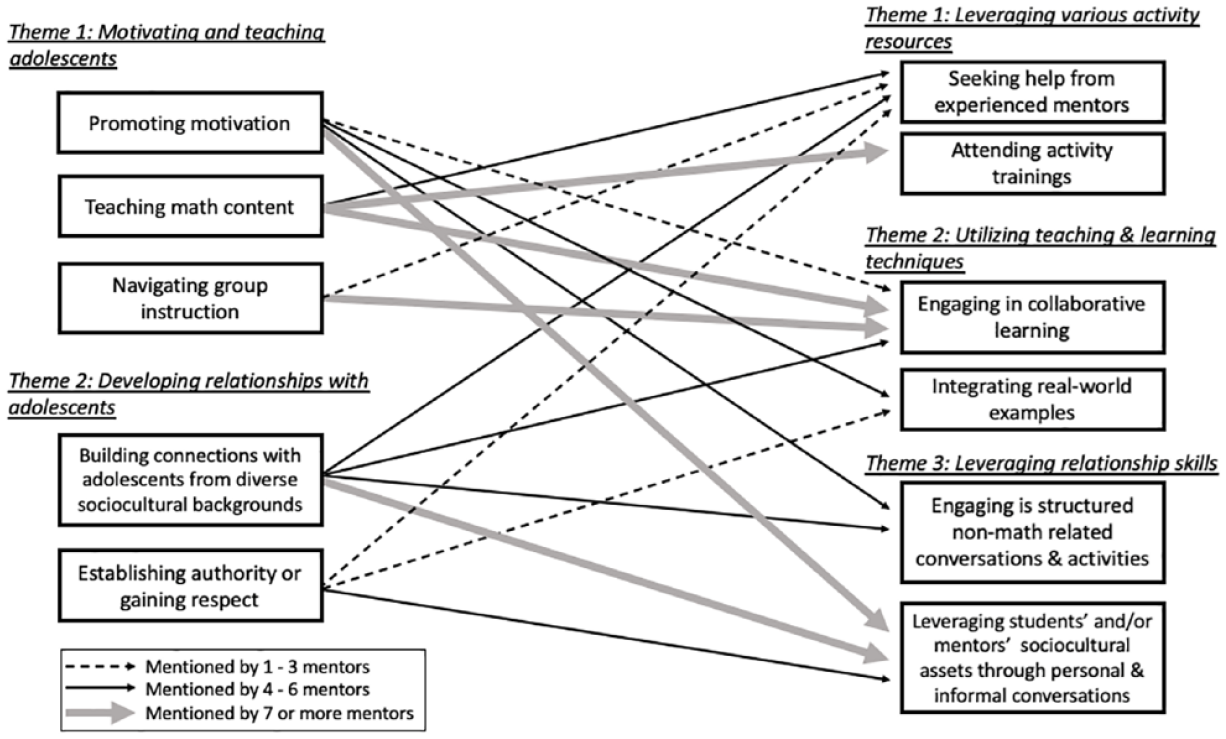
Conceptual model of mentors’ challenges and the strategies they leveraged.
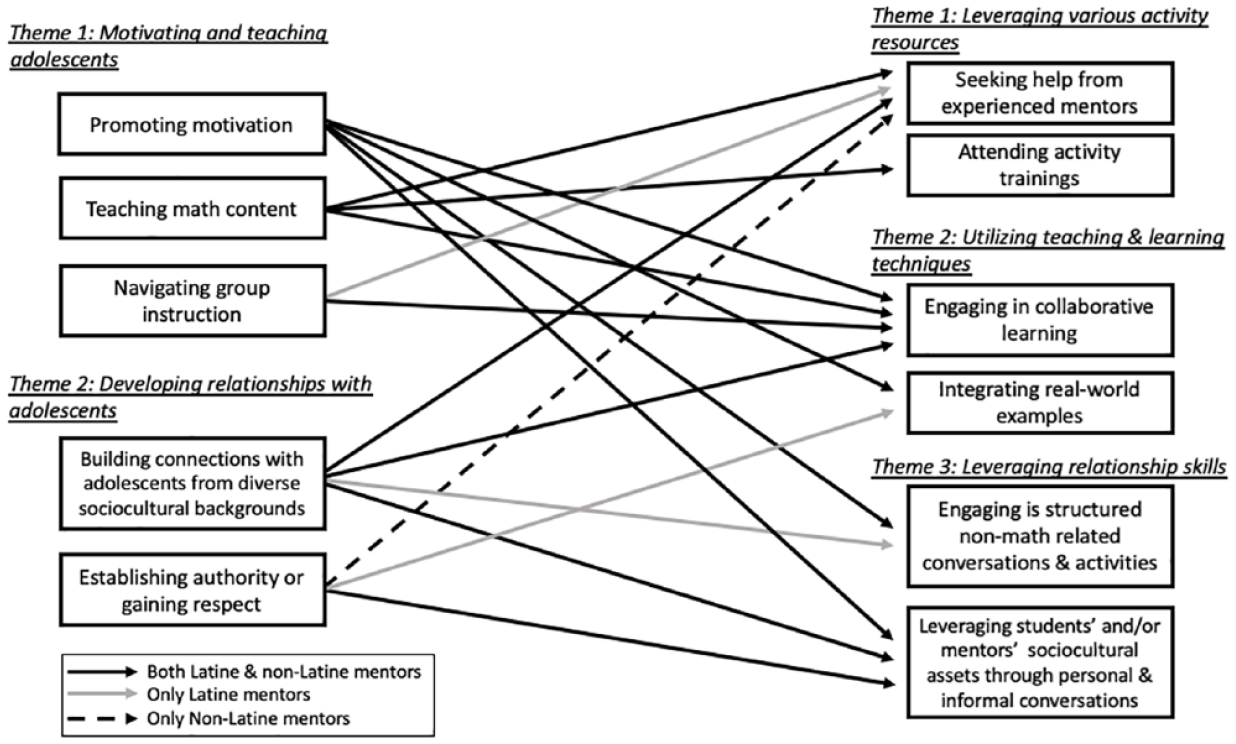
Conceptual model of latine and non-latine mentors’ challenges and the strategies they leveraged.
Theme 1: Leveraging Various Activity Resources
Seeking Help from Experienced Undergraduate Students
Overall, undergraduate students mentioned that seeking help from experienced undergraduate students was very beneficial. Oftentimes, newer mentors were seated at a table with a more experienced mentor, which nurtured networks among the undergraduate students. Undergraduate students referred to this as co-mentoring and another undergraduate student could step in for help. One undergraduate student described, There was a student who was struggling, so if I couldn’t do the one-on-one with the student, then the other mentor would do it. —Ana, Latine, STEM major
As shown in Table 1 and Figure 1, undergraduate students sought help from experienced undergraduate students when they faced challenges with teaching math content, navigating group instruction, building connections with Latine adolescents, and establishing authority or gaining respect. The thickness of the lines indicate how many undergraduate students mentioned the strategy in their interviews. Figure 2, suggests that both Latine and non-Latine used this strategy when faced with challenges in teaching math content and building connections, though Latine and non-Latine used this strategy differently when building connections.
Only Latine undergraduate students used this strategy when facing difficulties navigating group instruction, and only non-Latine undergraduate students mentioned this strategy when facing difficulties establishing authority or gaining respect. Non-Latine undergraduate students had the impression that mentees were willing to share more things about their backgrounds with Latine undergraduate students. Thus, non-Latine undergraduate students often called on Latine undergraduate students for help when interacting with adolescents because they shared similarities with mentees based on their ethnic cultural backgrounds.
Attending Activity Trainings
Undergraduate students mentioned that activity trainings helped with teaching the math content. Specifically, the trainings provided undergraduate students with opportunities to speak with other mentors, session leaders, and activity staff to learn about how to best teach a math concept. Undergraduate students found the manuals, videos, and other resources given to all undergraduate students to be helpful. As mentioned by an undergraduate student, The manuals are very detailed. Being able to study on the day before the actual meeting helped a lot. Even though I wasn’t able to go to the trainings personally, I can see the impact that it made for the mentors and mentees. [The session leader] has circle time. We all collectively met after our mentor-mentee time and talked about, what was good today, what was bad, what needs to be fixed?. —Aubrey, non-Latine, education major
Some undergraduate students also mentioned the importance of the debriefing meetings that occurred after the activity sessions. These meetings helped support undergraduate students’ teaching skills as well. These debriefing meetings, or circle time as described by the undergraduate student above, were led by a few of the session leaders in the activity.
Theme 2: Utilizing Teaching and Learning Techniques
Engaging in Collaborative Learning
Engaging in collaborative learning was a strategy that was mentioned in regard to nearly every challenge (Figure 1) and by both Latine and non-Latine undergraduate students (Figure 2). Below are two examples of how this strategy was used to promote motivation and navigate group instruction, Considering it’s a collaborative thing where we [are] vulnerable to each other. It’s a very comfortable setting. So, [mentees] feel it’s a lot easier to ask for help if they don’t know anything. And since they’re all in it together, they help one another out. I like how they’re able to ask me for help. —Julie, Latine, education major They would ask me, “Does this work?” I would say, “Let’s try it and we’ll see.” If it didn’t work then I was like “Okay, so instead of doing this part right here, let’s try this instead.” I try to get some feedback. . .I would try to direct them towards teaching their friend and showing them how to do it. . .They try to work for each other and try to help each other. —Ted, non-Latine, education major
Collaborative learning allowed undergraduate students and adolescents to have fun learning together to promote motivation. Collaborative learning helped adolescents feel like they could contribute and have their voices heard as undergraduate students were not always seen as experts. This helped undergraduate students who faced difficulties teaching math content as they realized they could rely on adolescents. Lastly, through collaborative learning, undergraduate students were able to use encouragement, split the group into smaller groups, and encourage teamwork skills which helped undergraduate students respond to challenges with navigating group instruction and building connections with adolescents.
Integrating Real-World Examples
As shown in Figure 1, integrating real-world examples was a strategy that was mentioned by undergraduate students as a way to address two challenges: promoting motivation and establishing authority or earning respect. However, only Latine undergraduate students used it as a way to establish authority or earn respect, whereas both non-Latine and Latine undergraduate students mentioned it to promote motivation, as suggested in Figure 2. As described by the an undergraduate student below, I know one time he came in with a bunch of dollar bills and he kept wanting to play with that instead of doing the activity. What I did was try to incorporate math into what he was doing. I was like, “How much money would I receive if I got 5% of your money?” He would calculate in his head and give me his response. —Ana, Latine, STEM major
Ana changed the math activity to reflect a real-world situation by asking how much 5% of his money is to spark the adolescent’s interest in math. In addition, Ana incorporated the adolescent’s interests into the learning activity. If she would have simply told him to put away his money because it was “distracting”, the student may have gotten upset and even more disengaged. Leveraging what the mentee was interested in helped engage the student.
Theme 3: Leveraging Relationship Skills
Engaging in Structured Non-Math Related Conversations and Activities
Engaging in non-math related conversations and activities helped undergraduate students respond to challenges promoting motivation and building connections with adolescents as shown in Figure 1. Both non-Latine and Latine undergraduate students used this strategy to promote motivation, but only Latine undergraduate students used it to build connections, as shown in Figure 2. Through this strategy, undergraduate students used activities, including ice breakers, brain breaks, and presentations about undergraduate experiences, to develop relationships with their mentees and to promote adolescent motivation. These activities were designed to help undergraduate students and adolescents learn new things about each other. For example, During ice breakers, I know if they like sports or something like that. I can try to tie an ice breaker to [math] questions to get them engaged. —Jayleen, Latine, education major
Second, these non-math related activities provided opportunities for adolescents and undergraduate students to take much needed breaks from the math activity and re-engage later after they felt re-energized. They described these activities as brain breaks.
Some students just don’t want to be sitting there and doing math for two hours. If I started seeing [the students] really need a break, I’d be like, “Hey, you know what? Take a break, stand up, stretch, go outside.” —Trish, Latine, STEM major
The quotes highlight how these non-math related activities and conversations helped undergraduate students promote motivation because they were used as a teaching technique and as a way to develop relationships. This was helpful, especially for undergraduate students who were more reserved or shy to ask adolescents about their sociocultural backgrounds.
Leveraging Sociocultural Assets Through Personal Conversations
As shown in Figure 1, undergraduate students mentioned leveraging adolescents’ and their own sociocultural assets through personal conversations when they encountered three different challenges, namely promoting motivation, building connections, and establishing authority or earning respect. Specifically, undergraduate students mentioned the importance of being aware of adolescents’ racial/ethnic cultural backgrounds as well as youth culture centered on their specific interests or identities, including video games they enjoyed, hip-hop trends they were into, or hobbies they enjoyed. One undergraduate student stated, If I know that they like certain things, I try to bring it up during the lesson. Getting to know them was a big factor in getting them engaged. So, trying to change up the questions if they didn’t seem to be engaged and making it easier for them. That made it easier for them to ask us questions about undergraduate or what our life is like in undergraduate. —Jayleen, Latine, education major
Jayleen described that in order to get youth motivated, she incorporated their interests in the math activity or would talk with youth while doing a math activity to learn more about them or have them ask her more questions about her life. Undergraduate students suggested these conversations about each other’s interests or cultures helped motivate adolescents.
Undergraduate students also leveraged adolescents’ sociocultural assets when connecting with youth from different sociocultural backgrounds to bridge cultural gaps. For example, one undergraduate student described her experience interacting with an adolescent who only spoke Spanish and had another adolescent serve as a cultural broker.
They did have friends that did speak English and would translate back and forth. We would try to talk and communicate as best as we could with that barrier. For that specific student, I would translate to their friend because I felt that friend was close to the person. Even though it was hard I felt we did communicate. She would nod or laugh or some stuff like that. —Aubrey, non-Latine, education major
Undergraduate students also leveraged their own sociocultural backgrounds to connect with adolescents, in hopes that their mentees would get encouraged to ask them questions or share things about themselves as well. For example, some undergraduate students described that they wanted adolescents to understand that they were there because they wanted to help adolescents and wished to pursue a career in teaching. When undergraduate students shared their personal goals with adolescents, undergraduate students realized that adolescents were more willing to share with them.
Discussion
Much of the literature on quality focuses on documenting the features or correlates of high-quality afterschool activities (e.g., Eccles & Gootman, 2002; Hirsch et al., 2011; Yu et al., 2021). Less work examines the challenges staff face when providing high-quality programming (e.g., Gutierrez et al., 2017; Larson et al., 2015; Larson & Walker, 2010). Researchers and afterschool advocates can capitalize on what staff already do to address these challenges to help provide support. Therefore, this study focuses on the challenges undergraduate students faced when working with Latine adolescents and the strategies they leveraged to address those challenges.
In order to implement and design high-quality activities, it is helpful to anticipate the problems that might arise and how to address those problems, which have largely not been discussed. Though some scholars have documented the challenges that afterschool staff face (Larson & Walker, 2010), these frameworks are broad and do not clearly identify which strategies can be leveraged to respond to these challenges. Our findings revealed some common challenges, including difficulties with promoting motivation and establishing connections with adolescents. Additionally, staff used specific strategies to respond to these challenges, such as seeking help from more experienced undergraduate students or leveraging adolescents’ sociocultural backgrounds through personal conversations. Although our findings do not reveal all of the challenges that staff may face nor all of the strategies they use, they provide insights on potential problems to anticipate and on how staff can be better supported on how to address these situations.
Our findings align with culturally responsive frameworks (Simpkins et al., 2017; Williams & Deutsch, 2016) by suggesting that culture is embedded within all aspects of activity quality. Moreover, this study used a dynamic view of culture that includes youth culture centered on adolescents’ interests and identities in addition to racial and ethnic cultural backgrounds. We found that undergraduate students mentioned challenges with being culturally responsive to adolescents’ sociocultural backgrounds. For example, some non-Latine undergraduate students expressed feeling unprepared to engage with Latine mentees or not knowing how to start conversations with their mentees who were different based on their racial/ethnic backgrounds, age, and interests. One way that non-Latine undergraduate students responded to these challenges was to leverage other undergraduate students’ and adolescents’ sociocultural backgrounds to bridge cultural divides. In order to be culturally responsive, it is important to acknowledge that adolescents’ sociocultural assets may differ from the undergraduate students’ sociocultural assets, and how bonding over things they have in common, sharing about one’s unique cultural backgrounds, and leveraging the assets of others can bridge cultural divides.
Our findings also contribute to the literature on culturally responsive practices by focusing on how afterschool staff’s sociocultural backgrounds played a role in the challenges they faced and the strategies they used (Ettekal et al., 2020; Hirsch, 2005). For example, challenges on bonding with Latine adolescents varied for Latine compared to non-Latine undergraduate students (Figure 2). Latine undergraduate students acknowledged that their sociocultural backgrounds did not always match with adolescents’ although they shared similar racial and ethnic backgrounds. This is consistent with studies that focus on the rich heterogeneity (e.g., gender, nativity, socioeconomic status, language) that exists among the Latine population and their experiences in afterschool activities (Ettekal et al., 2015, 2020; Hirsch et al., 2011; Williams & Deutsch, 2016). This also aligns with the literature on youth identity that suggests that during adolescence individuals explore who they are and would like to be (Arnold, 2017; Erikson, 1972). Therefore, in order to be culturally responsive, adults who work with adolescents in afterschool settings need to be attuned to adolescents’ identities and adopt a more dynamic view of culture that will allow for staff and adolescents to form positive relationships.
Though much of the literature focuses on being responsive to adolescents’ sociocultural backgrounds, little research focuses on being responsive to staff’s needs and skills (e.g., Simpkins et al., 2017). In our study, we took undergraduate students’ education into account by focusing on their majors. Our findings revealed nuanced ways in which math majors differed from education majors. Math majors expressed more difficulty with teaching the math content in terms that middle schoolers could understand, whereas education majors were concerned about not knowing enough math to really understand the concept and then teach it. This finding underscores the importance of training staff not only to understand the math content, but also how to teach adolescents who are younger or might need more scaffolding. To better prepare afterschool staff, it is important to understand their strengths and needs to design trainings that will strengthen their skills or better support their needs.
Lastly, our findings contribute to the literature on youth-staff relationships by not only describing the different aspects and the challenges to developing these relationships, but also by suggesting how youth-staff relationships can be leveraged to promote certain outcomes (Rhodes, 2020; Soto-Lara et al., 2022). Although our intention was not to document how youth-staff relationships or staff play a role in promoting adolescent outcomes, we did find that one of the challenges that undergraduate students described was promoting motivation or sparking adolescents’ interest in the math activity. Both Latine and non-Latine undergraduate students mentioned that having a strong relationship with adolescents provided a solid foundation to promote adolescent interest and motivation to learn. Some undergraduate students also highlighted how they were able to use their adolescents’ sociocultural assets and bridge what they were learning with how it could apply to their unique sociocultural backgrounds. Overall, our work highlights the importance of afterschool staff and the role they play in promoting adolescent outcomes.
Applied Implications
Findings from our study provide evidence-based recommendations for designing professional development trainings that can help afterschool staff navigate challenges that may arise when being responsive to adolescents’ backgrounds and that do not perpetuate a color-blind approach to working with adolescents. Being underprepared to respond to different challenges could lead to negative experiences for staff and adolescents (Gutierrez et al., 2017). Though we cannot foresee all challenges, it is helpful to equip staff with multiple strategies to be responsive to adolescents’ sociocultural backgrounds and address common challenges (Gutierrez et al., 2017). The findings from this study provide some guidance on how to use different strategies when confronting issues that staff may not be comfortable with nor feel prepared to address. For example, undergraduate students mentioned that when they felt unqualified or unprepared to work with adolescents, they sought help from experienced undergraduate students and other adolescents to bridge cultural divides. Thus, activity leaders could talk with staff about this strategy and build in activities to strengthen staff-staff and staff-youth relationships to help ensure they can rely on each other for help.
Furthermore, previous models of culturally responsive frameworks in afterschool settings (Simpkins et al., 2017; Williams & Deutsch, 2016) did not provide clear examples of how afterschool staff and adolescents could bridge cultural gaps by focusing on culture beyond that of adolescents’ racial and ethnic cultural backgrounds. We found that undergraduate students reported building relationships with adolescents by learning more about their hobbies, interests, or social identities. Focusing on only racial and ethnic cultural assets may limit the ways that staff can connect with adolescents. Our findings suggest that these connections with adolescents can be cultivated either from personal conversations, structured activities (e.g., ice breakers), or from getting help from other experienced staff who may already have connections with adolescents.
Lastly, the findings suggest that it is important to structure and provide access to different types of professional development training opportunities and supports. Undergraduate students reported that they gained valuable insights from receiving different types of support and resources (e.g., manuals, video clips) from trainings and meetings. It is also important to foster a sense of community among the staff so that they feel comfortable working together to respond to challenges and improve the quality of an afterschool activity. Overall, more work is needed to address ways to better structure and provide staff with high-quality professional development and training.
Limitations and Future Directions
The present research emphasizes the importance of better preparing afterschool staff by taking an in-depth examination of the challenges they experienced and how they responded to them. However, we are aware of the limitations that exist in our findings. First, we need to address that the findings reported are common challenges and strategies mentioned by undergraduate students that were more salient to them. Future studies can also broaden their scope to include other domains of challenges and strategies that were not addressed in this study. It would also be helpful to broaden the scope of future studies in terms of the number of participants and activities. The number of participants was modest and they were all part of one activity; having a larger number of participants across a variety of activities might help capture diverse perspectives on these processes.
Future work should focus on how different aspects of afterschool staff’s sociocultural backgrounds may shape how they respond to challenges. This study focused on the challenges and strategies mentioned by Latine and non-Latine undergraduate students and undergraduate major. Future research should focus on other aspects of staff’s sociocultural backgrounds, such as gender, socioeconomic status, and nativity. Our findings also show that it is important to be responsive to the needs of staff. However, we did not specifically ask undergraduate students about their skills or where they might need more support. Though much of the research focuses on what skills and competencies staff need to develop to work effectively with youth (Vandell & Lao, 2016), more research is needed on how to strengthen the skills that staff already have so they can draw upon when working with youth.
Lastly, our study focused on undergraduate students in an afterschool activity that was part of a community-university partnership. Our study was unique in that the afterschool activity is located on a university campus where the majority of the staff are undergraduate student volunteers and the activity director is a math professor. It would be interesting to understand the experiences of staff in different afterschool settings. For example, what challenges might staff face in afterschool activities (e.g., sports or clubs) that usually last for only a few months or that are competitive? Given the nature of these afterschool activities, staff may experience different challenges. With the rise of community-university partnerships, it is also important that we learn more about the roles that undergraduate students are taking in afterschool settings. Our study was unique in that the majority of the staff were composed of undergraduate students as a way for them to get first-hand experience working in afterschool settings. The roles of the undergraduate students were conceptualized as mentors because they were expected to develop relationships with adolescents and support programming, but in other settings they might hold other roles that should be explored and highlighted in research. Additionally, it would help to have adolescents’ perspectives on what they perceive are the challenges experienced by the staff in afterschool activities. Therefore, more work is needed to understand the challenges staff might encounter based on activity level factors.
Conclusion
Afterschool staff play a pivotal role in activity quality and adolescents’ experiences (e.g., Deutsch & Jones, 2008; Jones & Deutsch, 2011; Larson et al., 2015); therefore, it is important to focus on how to better prepare them for the afterschool workforce. Through undergraduate students’ perspectives, we can begin to understand the challenges that they face when working with adolescents in afterschool settings. The findings from this study also highlight the nuanced and multidimensional strategies that can be leveraged to respond to specific challenges. In conducting this research, our hope was to shed light on the importance of understanding the experiences of staff and supporting their work. Even in a high-quality activity where structures and practices were put in place to support undergraduate students working with youth, undergraduate students still perceived challenges, though they were better equipped with strategies to respond to the challenges. By providing staff with the necessary resources and training to help them engage in best practices, we are hopefully strengthening and contributing to the future of high-quality afterschool activities.
Footnotes
Appendix A
Acknowledgements
We are grateful to the coordinators, mentors, and youth participants of the Math CEO program at UC Irvine for their willingness to be a part of this study. Thank you also to the Honda Foundation and University- Community Links Network and others for generously supporting the Math CEO program.
Declaration of Conflicting Interests
The author(s) declared no potential conflicts of interest with respect to the research, authorship, and/or publication of this article.
Funding
The author(s) disclosed receipt of the following financial support for the research, authorship, and/or publication of this article: This material is based upon work supported by the National Science Foundation SBE Postdoctoral Research Fellowship under Grant No. 1809208. Any opinions, findings, and conclusions or recommendations expressed in this material are those of the author(s) and do not necessarily reflect the views of the National Science Foundation.

Data Availability Statement
The data that support the findings of this study are available from the corresponding author (SDS), upon reasonable request.