



Abstract
This study assesses the frequency of youth mentees’ cognitive emotion regulation strategies during negative life events, and it explores how mentors respond to their mentees’ cognitive emotion regulation strategies during those situations. This research engaged 40 mentees and 35 mentors in New Zealand. Analyses are completed using descriptive statistics and thematic analysis. Findings revealed that the mentors reported their mentees’ more frequent use of adaptive cognitive emotion regulation strategies (acceptance, positive reappraisal, positive refocusing, putting things into perspective, and refocus on planning), whereas youth mentees reported slightly different rates of the strategies (positive reappraisal, acceptance, refocus on planning, putting into perspective, and rumination). In response to their mentees, the mentors supported their mentees’ cognitive emotion regulation through two over-arching responses: emotional support (e.g., reassurance, use of self-disclosure, normalizing mentees’ feelings, redirecting self-blame, showing availability, and validation); and by providing new ways of learning (e.g., teaching positive reappraisal, refocus on planning and problem solving, positive refocus, situation analysis, promoting perspective-taking, as well as emphasizing ownership and taking responsibility). These findings provide insights into youth emotion regulation in mentoring contexts and also offer suggestions for future studies and mentor training.
Keywords
Introduction
Self-regulation can be defined as the act of managing thoughts and feelings to facilitate goal-directed actions that may include a range of essential actions to achieve positive educational outcomes, interactions, and career success (Murray & Rosanbalm, 2017). However, emotion regulation mostly relies on cognitive capacities which are not completely developed in adolescents (Kesek et al., 2009; Romer, 2010; Steinberg, 2013). It is suggested that interventions that focus on youth ecological settings, caregiver or mentor support, as well as teaching skills can provide opportunities for youth successful emotion regulation (Murray & Rosanbalm, 2017). In this context, mentoring relationships provide an opportune context for supporting youth self-regulation skills since, through engagement in informal activities, the non-parental adults can take an emotion-coaching role to help the mentee’s efficient emotion regulation and learning new skills (Rhodes et al., 2006). Given the importance of self-regulation development during adolescence, this study may assist in exploring the types of cognitive emotion regulation strategies that youth mentees use when they face stressful situations and how their mentors respond to them when they bring up these challenges.
Importance of Youth Emotion Regulation Skills for Positive Youth Development
Positive Youth Development (PYD) was traditionally known by the absence of adolescents’ maladaptive behaviors, and being in thriving trajectories was known through positive educational outcomes or avoiding at-risk behaviors (Benson et al., 2011). However, the contemporary PYD perspective considers young people as being active agents in their own development and becoming capable contributors to their context (Damon, 2004). As argued by J. Wang et al. (2015) providing insights into the function, growth, and use of emotion regulation strategies is essential in supporting young people’s positive development. They believe that emotion regulation provides a foundation for healthy and positive youth development by supporting adolescents to make links between particular situations and appropriate/adaptive emotional responses.
Some prior studies focused on the role of self-regulation skills in PYD and indicated the significance of advanced cognitive self-regulation skills that are contained within the concept of Intentional Self-Regulation (ISR) (e.g., Gestsdottir & Lerner, 2008; Gestsdottir et al., 2010; Mueller et al., 2011; Schmid et al., 2011). ISR skills support youth to set goals, actively set plans to achieve their goals, and compensate or reconsider their plans if the primary plan is not supportive of goal-reaching. ISR represents the model of SOC referring to the capability to Select (goal selection), Optimize (optimizing assets to reach the goals), and Compensate (regulating if primary goals are inaccessible or if optimization approaches are failed) directing to a goal (Freund & Baltes, 2002). ISR contains cognitive skills; however, emotion regulation has been overlooked within the ISR construct (Weiner et al., 2015). In particular, within the process of compensation, a young person may experience a range of negative emotions such as sadness, stress, anger, shame, or guilt that need downregulating after facing failures in their plans.
When individuals handle the intake of emotionally arousing information through their cognitive skills, they might employ cognitive coping strategies which could be adaptive or non-adaptive (Garnefski et al., 2001). Adaptive strategies appeared in a study conducted by Garnefski et al. (2001) to be less linked to depression and anxiety symptoms than non-adaptive strategies. They reported adaptive strategies to include Acceptance, Positive refocusing, Refocus on planning, Positive reappraisal, and Putting into perspective, while the less adaptive strategies are Self-blame, Rumination, Catastrophizing, and Other-blaming. Table 1 represents nine conceptually different strategies which are some of the ways people cope with stressful situations. These adaptive and non-adaptive cognitive coping strategies reflect how people think during stressful life events rather than what they do, as thinking and acting involve different processes (Garnefski, Legerstee et al., 2002). The table also shows some of the previous research conducted among adolescents.
Cognitive-Emotional Regulation Strategies.
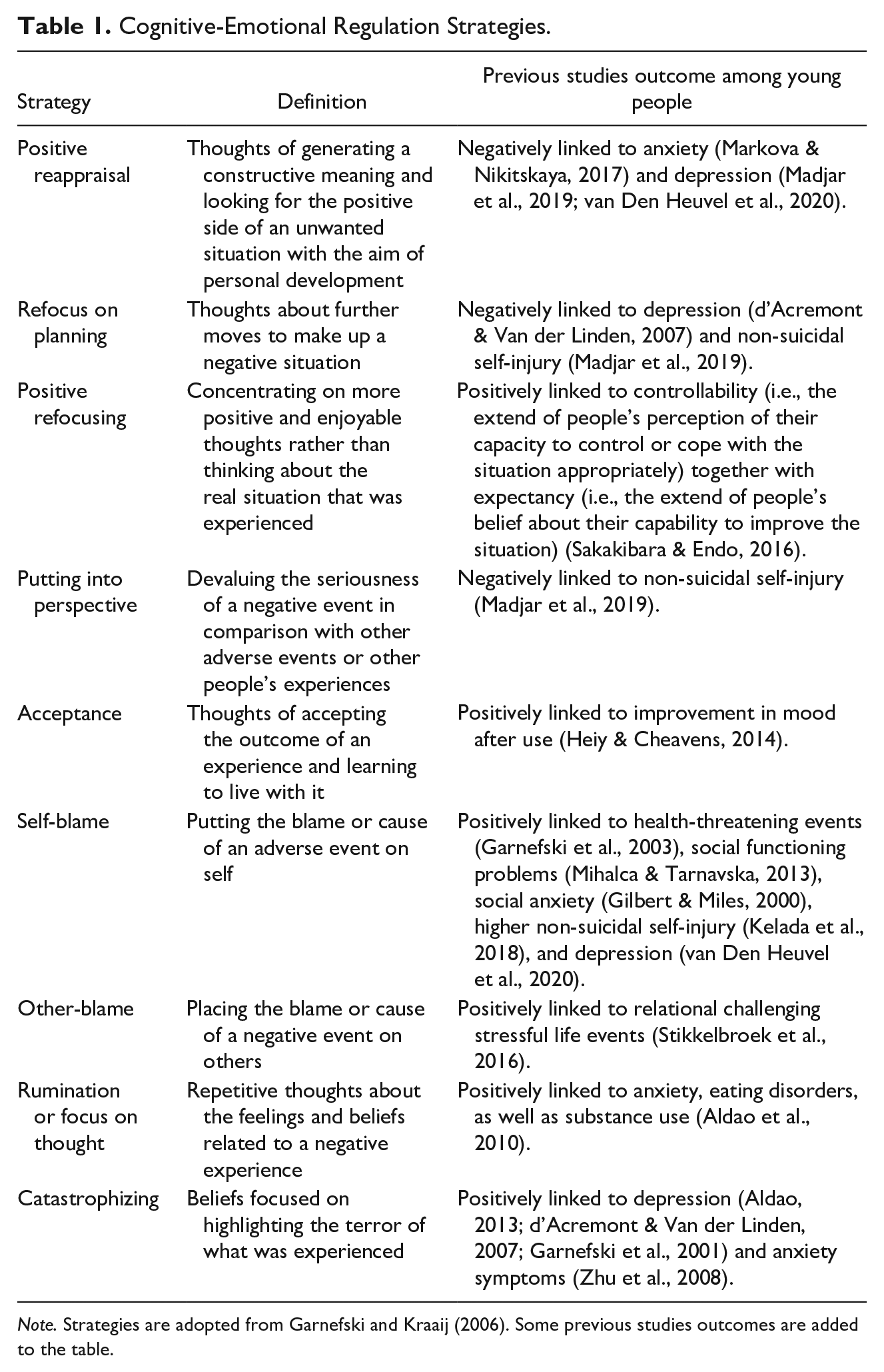
Note. Strategies are adopted from Garnefski and Kraaij (2006). Some previous studies outcomes are added to the table.
Garnefski, Legerstee et al. (2002) reported that adolescents meaningfully use all cognitive coping strategies to a lesser extent than adults. Additionally, in a more recent study, Theurel and Gentaz (2018) found that adolescents more frequently apply adaptive strategies than less adaptive strategies. However, gender-based studies among adolescents have shown that females reported more use of rumination (Kökönyei et al., 2019; Vinter et al., 2021), self-blame, catastrophizing, putting into perspective, planning, and positive reappraisal (Kökönyei et al., 2019) in comparison to boys. Therefore, cognitive coping strategies can have implications for youth development outcomes later down the track and it is important to understand which strategies young people use and how caring adults, like mentors, can support their use of helpful instead of harmful strategies. In this regard, PYD programs offer a set of flourishing relationships and experiences that help young people have better self-regulation skills (Bonell et al., 2016; Mueller et al., 2011; Urban et al., 2009) as one of the strengths that youth develop during adolescence (Weiner et al., 2015).
Youth Psychological Development in Mentoring Contexts
Strength-based approaches are considered the foundation of PYD (Geldhof et al., 2015), and an essential part of PYD approaches and programs is well-established relationships with caring adults in their communities (Lerner, 2004; Roth & Brooks-Gunn, 2003), such as mentoring relationships. In New Zealand and internationally, mentoring programs are known as one of the most popular interventions for raising PYD among young people (Farruggia et al., 2011; Larson, 2006). According to Rhodes (2005) Model of Youth Mentoring, as a result of a cooperative and supportive relationship, mentors can influence a youth’s identity, social-emotional, and cognitive development which contribute to the promotion of youth positive developmental outcomes.
Based on the findings of two recent meta-analyses (Raposa et al., 2019; Van Dam et al., 2018), both natural (adults in youth’s social systems such as older siblings, extended family members, neighbors, etc.) and formal (assigned mentors in program-based mentoring programs) mentoring relationships have been found beneficial for youth social-emotional development, psychological problems, cognition (e.g., executive functioning), and social functioning (e.g., relationships, social skills and support). The psychological development processes can be facilitated through a range of mentoring support such as showing empathy (Spencer et al., 2020), validating and supporting their mentee’s current intellectual interest (Rhodes et al., 2006), improving their motivation and providing guidance (Rhodes & DuBois, 2008; Vaclavik et al., 2017), relationship skill development and self-understanding (Deutsch et al., 2017), role modeling and connecting the youth to other external resources or opportunities (Vaclavik et al., 2017), and taking on mentees’ emotion coaching (Rhodes et al., 2006).
Additionally, according to the mentoring literature from social relationships perspectives (e.g., Sterrett et al., 2011; Yu & Deutsch, 2021; Zimmerman et al., 2005), mentors could be a facilitator of different types of support. More specifically, mentors have been found as a source of emotional support through a range of actions that included empathy, love, trust, acceptance, listening to, as well as offering care and comfort. Moreover, mentors could provide informational support that included offering advice, suggestions and information, as well as guidance. Likewise, mentors’ concrete or instrumental supports were reported by studies that refer to mentors’ tangible aid and service. And also, other types of support are found such as esteem support (encouragement and praise from the mentor to the mentee), companionship support (participating in joint activities), validation support (providing positive affirmation), and appraisal support.
As suggested by Murray and Rosanbalm (2017), mentors also can provide a context for teaching self-regulation skills (e.g., through role modeling, practicing skills, observing and highlighting adolescents’ improvement on skill progress), as well as providing a pleasant and caring relationship (e.g., a safe relationship to learning skills and their functions), in addition to building an environment for constructive self-regulation and to reduce stressors (e.g., decreasing risk-taking situations or managing destructive emotion arousals). However, mentors’ supporting approach in mentoring relationships matter.
Studies on the Mentors’ Role in Youth Emotion Regulation Skills Development
Mentoring relationships and programs may provide an excellent opportunity to assist young people’s emotional regulation skills since mentees are in a close relationship with an adult who provides advice and skill development opportunities. In this regard, Morrow and Styles (1995) found that a beneficial mentoring relationship facilitates space for the mentee to share concerns (e.g., family issues) and in what way they cope with hard times. However, Rhodes et al. (2006) noticed that the type of support needed to support effective emotion self-regulation in mentees was not well understood, nor was it clear how mentors can help mentees regulate and express their emotions effectively.
To address the gap in the research, researchers began focusing on the role of mentoring relationships in mentees’ coping, emotion-regulation, and cognitive emotion regulation skills. In this regard, Rusk et al. (2013) found that adolescents in youth programs learn to regulate their emotions through the common practice of trial and error, and reflection through their active engagement in purposeful testing of different emotion regulation strategies. Furthermore, Brady et al. (2015) qualitatively evaluated the role of mentoring support in promoting mentees’ emotional well-being within Irish mentoring programs. Their findings have shown evidence of mentors’ capability in providing caring, empathy, helping the mentee’s emotion-regulation, providing information and advice as a practical pathway to improve the mentee’s emotional well-being.
In another qualitative research conducted in a school-based mentoring program among at-risk adolescents (academically, behaviorally, or with a background of using family therapy), Wesely et al. (2017) have found that mentors can be responsive to their mentees’ strain (i.e., being highly under pressures resulting from environmental factors) through representing four positive coping strategies. These strategies included providing a context for mentees to regulate their emotions (e.g., adopting a different perspective toward a negative situation or redirecting the mentee’s negative emotion), offering conflict resolution strategies (e.g., solving a problem by considering both sides’ perspectives and satisfaction), offering future-oriented strategies (e.g., hopefulness or goal setting), and finally being an active listener for their mentees (e.g., hearing the mentees’ feeling out).
Following this, Villegas and Raffaelli (2018) focused on emotions and emotional learning within youth programs. In their quantitative study among 319 youth, they have identified that participating in such programs includes experiencing more positive emotions, the existence of different patterns of learning about emotions from different sources (e.g., self, peers, and program staff) based on the nature of program, and experiencing positive emotions as a link to emotional learning from different sources. Similarly, in a most recent study conducted by Orson and Larson (2021), these scholars explored how experienced youth program leaders support youth to deal with stressful situations in the context of youth programs. Using data collected from 27 program leaders, they have found that leaders’ initial approach includes reframing which refers to facilitating youth’s novel cognitive skills in order to understand stressful situations, decrease anxiety, and to re-establish their motivation. This approach could involve strategies of reframing youth’s understanding of their abilities (e.g., providing opportunities to change youth’s attitude about their capabilities), understanding of challenging situations (e.g., analyzing the stressful situation), and understanding of emotions (e.g., normalizing the anxiety as a pathway to problem-solving).
The recent study conducted by Orson and Larson (2021) could somehow address the gap suggested by Rusk et al. (2013) in terms of exploring the types of professional skills that empower leaders and mentors to efficiently support youth through emotionally challenging situations. Yet many gaps remain. In particular, most of the research which focused on youth emotion, emotional learning, and emotion regulation skills have been conducted in the context of youth programs while there are many natural mentoring relationships in the communities that are not considered or assessed in evidence-based studies. Besides, there might be many challenging situations in young people’s lives that are not restricted to their performance in the youth programs and could lead them to seek support from their mentors (e.g., conflict with parents or peers). Additionally, it is still unclear how mentors respond to the mentees’ use of specific strategies when dealing with stressful situations. Therefore, the current study was designed to address mentees’ emotion regulations through two objectives: to capture the rate of nine pre-defined regulation strategies youth mentees use when they experience stressful situations (from mentees’ and mentors’ perspectives), and how their mentors respond to them when they bring up these challenges.
Methods
This research is a multi-methods cross-sectional questionnaire-based study. Multi-methods design refers to using of two or more different research methods within the same research (Brewer & Hunter, 2006). This study drew on data that were collected from mentees and mentors who participated in a larger study on the dynamics of youth-adult mentoring relationships (Deane et al., 2021) for which ethical approval was granted by the University of Auckland Ethics Committee. The larger lab-based study required mentor-mentee pairs to travel to the University of Auckland to complete various tasks that constituted the larger project. This included the completion of online questionnaires by mentors and mentees, independently. The questionnaire was administered to the pairs after some mentoring activities. The mentors’ questionnaire included a series of closed and open-ended questions about the cognitive emotion regulation strategies their mentees’ use when faced with stressful life events and their own responses to their mentees’ behaviors in such situations. Moreover, the mentees’ questionnaire included a set of questions regarding the cognitive emotion regulation strategies they employ during stressful life events. This study exclusively focuses on data pertaining to these sets of questions thus aspects of the larger study are not discussed further in this article.
Participants
This research was conducted among two groups of participants that included some mentors and their mentees.
Mentees
Forty-one mentees completed their questionnaire who were 12 to 18 year olds youth (M = 16.17, SD = 1.60). Most of them were female (68.3%), followed by males (29.3%), along with one missing (2.4%). In terms of their ethnicity, most of them were Pacific (36.6%), followed by Asian (5.7%), New Zealand European (12.2%), Māori (7.3%), Māori & Pacific (7.3%), Pacific and other ethnicities (2.4%), and Others (2.4%). There were also some missing data on the mentees’ ethnicity (7.3%). Furthermore, one questionnaire was excluded due to the extensive number of missing data.
Mentors
Forty-one mentors that comprised natural (24.4%, n = 10) and formal mentors (75.6%, n = 31) completed the questionnaire containing the closed and open-ended items analyzed for the current study. In terms of the frequency of their meetings, most of the mentors (53.7%,) reported having 10 to 12 monthly meetings with their mentees, followed by having 1 to 7 times of monthly meetings (43.8%). Also, some participants did not respond to this question (2.5%). Additionally, mentors were asked whether they had received any mentor training. In response to this question, most of the mentors responded positively (68.2%, n = 28). In comparison, some participants (4.8%, n = 2) claimed they did not receive any training. Also, there were some missing responses to this question (26.8%, n = 11).
Of the 41 participants (mentors), thirty-five (85.4%) indicated that their mentees discuss stressful or unpleasant experiences with them. The six mentors (14.6%) who indicated their mentees never discuss such experiences with them were excluded from the study. The excluded participants were three males and three females, four formal mentors and two natural mentors from 21 to 36 years old. Of the 35 who were retained for further analyses, 31.4% were male, and 68.6% were female. Their ages ranged from 19 to 58 years (M = 31.2, SD = 1.95). The race/ethnicity proportions of the sample were as follows: 45.7% (n = 16) New Zealand European, 11.6% dual ethnicities (n = 4), 8.6% (n = 3) Pacific, 25.7% (n = 9) Asian (including Indian), 2.9% (n = 1) New Zealand Māori, 2.9% (n = 1) Other European, and 2.9% (n = 1) Other ethnicities. Mentors responded to their mentees in different ways depending on how their mentees reacted to a negative or stressful situation.
Procedure
Convenience sampling was used to recruit eligible participants. The eligibility criteria for the mentee participants were being under 18 year-olds as well as being in a natural or formal mentoring relationship for at least 3 months. The eligibility criteria for mentor participants included being 19 years of age or older, in a formal or natural mentoring relationship with a young person aged between 12 and 18 years of age for at least three months, and being able to travel to the University of Auckland to participate in the study with their youth mentee. Both formal and natural mentors were recruited for this study.
Natural mentoring pairs included young individuals who had a non-parental adult mentor or role model in their life. The adult mentor or role model might include an older sibling, family friend, aunts/uncle, or neighbor. Natural mentoring pairs were recruited via advertisements, such as flyers holding details about the study and the research project contact details. These flyers were distributed throughout some of the Auckland-based universities and polytechnic institutes. Formal mentoring pairs were primarily recruited from both youth work and mentoring organizations as well as those who were listed on the New Zealand Youth Mentoring Network database of mentoring programs and Ara Taiohi’s—the peak body for youth work and youth development—public membership list. The questionnaire was administered online via Qualtrics software in a lab after the mentor and their mentee completed the mentoring activities. The questionnaire took approximately taking 10 to 15 min to complete. Each participant received $30 in movie vouchers as compensation for their time to participate in the larger study.
Questionnaire Design
Garnefski et al. (2001) focused on conscious mechanisms of emotion regulation to develop a set of coping strategies. They provided Cognitive Emotion Regulation Questionnaire (CERQ), which is a 36-item questionnaire comprising nine sub-scales, including self-blame, other-blame, rumination, catastrophizing, putting into perspective, positive refocusing, positive reappraisal, acceptance, and refocus on planning. Using this scale to develop a set of questions for this research provided a wide-range of adaptive and non-adaptive strategies that could be used daily. Furthermore, this scale was reported valid and reliable. Data were collected through anonymous questionnaires and administered online for both mentors and mentees. Therefore, no written consent was required. However, a question asking for participants’ consent to participate after reviewing the Participant Information Sheet (PIS) was presented in the questionnaire. While participants could stop participating at any time during the questionnaire completion, they could not withdraw their data because responses were anonymous and no participants were at risk of being identified.
Mentees’ Questionnaire
Mentees completed 36 items of the CERQ. Each sub-scale contains four items relating to what adolescents think after experiencing a threatening or stressful life event (e.g., I feel that I am the one to blame for it). A mean score is used for the four items included in each scale or strategy. Sub-scales were found to have acceptable Cronbach’s α offering through the following results: self-blame .76, other-blame .65, rumination .81, catastrophizing .69, putting into perspective .60, positive refocusing .80, positive reappraisal .73, acceptance .61, and refocus on planning .80.
Mentors’ Questionnaire
Using of CERQ scale, the mentor questionnaire included a set of 19 closed and open-ended questions relevant to the current study. The first question asked “Does your mentee ever talk to you about their own stressful or unpleasant experiences?” and if the mentor’s response was “Yes,” a series of questions were then presented based on Garnefski, Kraaij, and Spinhoven (2002) nine cognitive emotion regulation strategies. (e.g., “Do they ever blame themselves?”). If a mentor responded “Yes” to any of the nine strategies presented, they were asked to elaborate by responding to the following open-ended question “If yes, how do you respond to your mentee during such conversations?” This type of questioning was helpful in two ways: the mentors’ responses provided an overview of the types of cognitive emotion regulation strategies this sample of mentees commonly used, and they also provided an opportunity to investigate how the participating mentors support their mentees when mentees experience stress.
Analysis
Descriptive statistics were calculated to ascertain the frequency of mentees’ cognitive emotion regulation strategies during stressful life events based on their own responses and also their mentors’ reports to the closed questions regarding the nine different cognitive emotion regulation strategies. Data were analyzed manually in each strategy and then codes were combined to build the themes or subthemes. Thematic analysis was then employed to analyze the participants’ responses to the open-ended questions. This approach is especially suitable for under-researched areas (Braun & Clarke, 2006) and to specify the pattern of meaning (themes) within a qualitative data set (Braun et al., 2018). The six phases of reflexive thematic analysis developed by Braun and Clarke (2006) were applied in the current study. The first coder (the first author) developed the initial themes, searched and constructed the themes within the first three stages of the reflexive approach. For this purpose, all the participants’ responses were added to a table.
Within the stage of familiarizing oneself with the data and identifying items of potential interest (the first stage), the first coder independently and actively read and re-read responses provided within each of the nine cognitive emotion regulation strategies for several times, noting down initial ideas. The familiarization began with reading each descriptive account within a particular strategy. Then some notes of related and interesting data segments were collected before moving on to the next strategy. For instance, this involved reviewing each mentor’s response to their mentee’s use of the self-blame strategy. Below is an example of a mentor’s response to their mentee’s self-blame strategy in Figure 1.
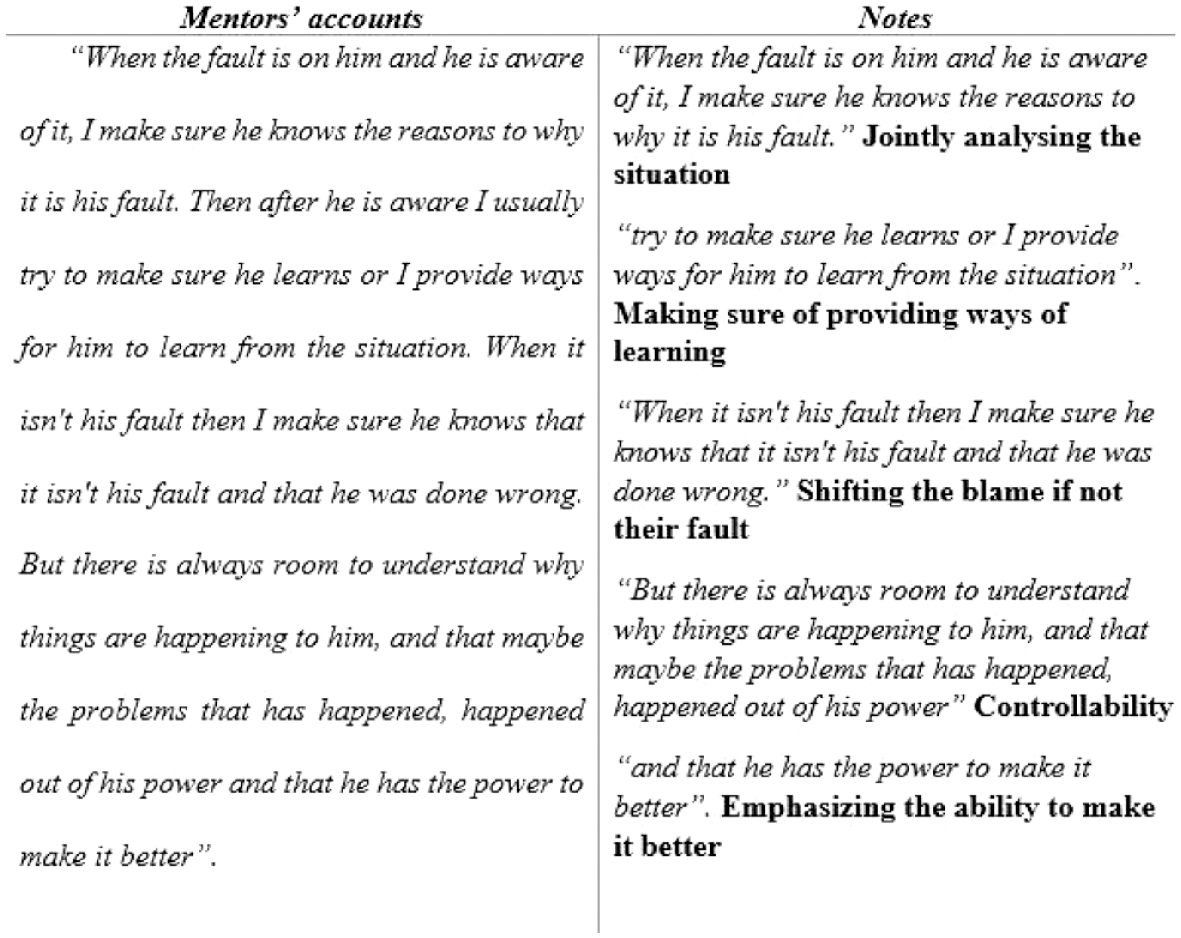
An example of mentors’ responses to their mentee’s self-blame strategy and taking notes at the stage of familiarization.
At the stage of generating initial codes (the second stage), the first coder moved to more in-depth and organized engagement with the data and began generating initial codes through an inductive approach. Through this approach and as suggested by Braun et al. (2018), the researcher started by identifying the meanings embodied in the dataset and labeled each relevant data segment with a few words or phrases to provide initial codes at both semantic and latent levels. During the stage of searching and constructing themes (the third stage), the first coder actively built or explored for themes to capture the probable clusters of patterned meaning by examining codes and associated data, merging, grouping, or collapsing codes into a bigger or meaningful pattern as suggested by Terry et al. (2017). Therefore, within each cognitive emotion regulation strategy, a central or a big code was promoted to a potential theme and connected with a cluster of comparable codes wherein initial thematic maps were shaped for each strategy. For instance, reassurance became a potential theme.
In the fourth stage, two other coders engaged in the coding process. The phase of reviewing potential themes was a filtering stage to ensure that the recognized themes were noticeably interrelated to the coded data, dataset, and research question. The author further formed, clarified, or excluded some of the themes. At this stage, all of the data extracts were appraised to make sure they were representative of the central organizing concept of the theme they were associated with. In this phase, the focus was on whether the story expressed by the themes replied to the research question (as recommended by Terry et al., 2017). By the stage of defining and naming the themes (the fifth stage), stronger thematic labels were provided that represent the range and core concepts related to a theme to confirm the clearness, comprehension and summary of the themes to reassure the names offer the meaning of data linked to the research question and a finalized analysis. By the end of this stage, a final thematic map was created to finalize the themes by their names. According to Braun and Clarke (2006), the final stage of producing the report (the sixth stage) of thematic analysis provides the complex story of the dataset. At this stage, the names and definitions of the first-level themes and sub-themes were reviewed to help with the selection of clear, convincing quotations from the mentors’ responses. Nominated extracts were re-analyzed and checked in relation to the analysis of the research question and background of the study in preparation for the report. To achieve this aim, the final report of this study was revised several times to provide a high-quality report demonstrating the above-mentioned features.
Results
This section provides results from descriptive and thematic analyses.
Mentees’ Report of Their Cognitive Emotion Regulation Strategies
The findings of descriptive analysis provide an overview of mentees’ use of cognitive emotion regulation strategies. Forty completed questionnaires from the mentees show that most of the participants employed positive reappraisal strategy (M = 18.8, SD = 4.13) during stressful events, followed by acceptance (M = 17.85, SD = 3.5), refocus on planning (M = 17.77, SD = 4.14), putting into perspective (M = 17.3, SD = 3.83), and rumination (M = 17.2, SD = 4.54). Lower averages were found for using strategies of self-blame (M = 15.2, SD = 4.49), followed by positive refocusing (M = 15, SD = 4.72), catastrophizing (M = 12.45, SD = 4.44), and other-blame (M = 10.35, SD = 3.3).
Mentors’ Report of Their Mentees’ Use of Cognitive Emotion Regulation Strategies
According to their mentors’ report regarding the frequency of their mentees’ using of particular cognitive emotion regulation strategies during stressful or unpleasant situations, acceptance (88.6%) was the most commonly applied strategy followed by positive reappraisal (82.9%), positive refocusing (80%), putting things into perspective (77.1%), refocus on planning (74.37%), other-blame (31.4%), self-blame (22.9%), and catastrophizing (20%). rumination (17.1%) was the least likely strategy to be used by their mentees.
Mentor’ Responses to the Open-Ended Questions Analysed Through Thematic Analysis
Participants mostly provided responses to the open-ended questions if they had reported their mentee’s use of a cognitive emotion regulation strategy. However, there were a few blank responses as well (three blanks). Furthermore, most of the responses to the open-ended questions included more than three sentences and there were a few single-sentence responses (e.g., Positive reinforcement, Just be friendly and reassuring, or It’s all about learning). Additionally, there were no repetitive responses and most of the adaptive strategies (e.g., acceptance, positive reappraisal, positive refocusing, putting things into perspective, and refocus on planning) were responded to and further explained by mentors. For example, 82.9% of the mentors reported their mentees’ use of positive reappraisal during stressful life events, and 71.4% provided statements to explain how they respond to their mentees. However, using of non-adaptive strategies was less than adaptive strategies.
With regards to the mentors’ responses to their mentees’ use of different cognitive emotion regulation strategies, two first-level themes were identified as demonstrating the mentors’ broad approaches to such circumstances: providing emotional support and providing new ways of learning. A map representing these themes and their sub-themes was created in the stage of report production (see Figure 2).
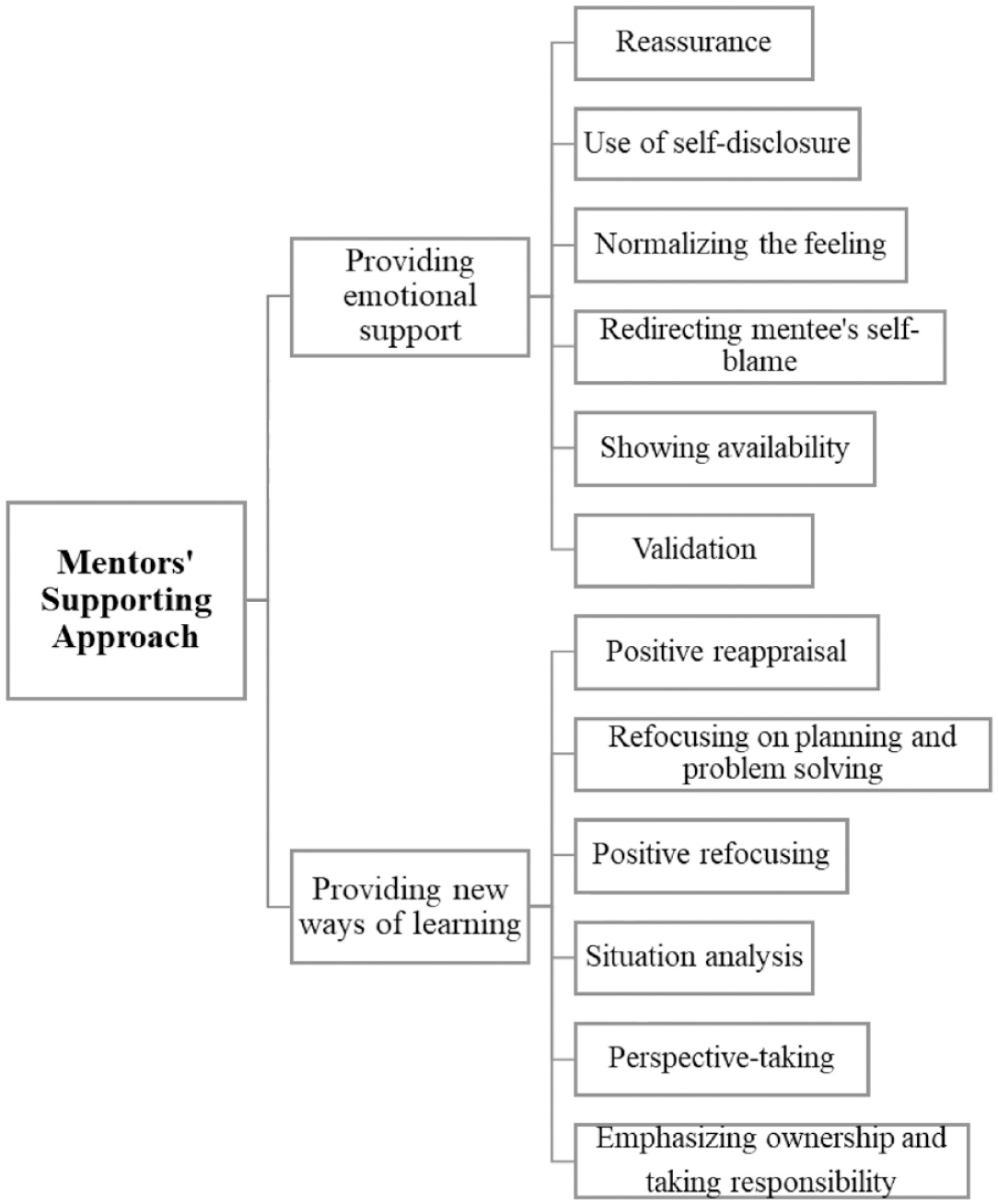
Final thematic map of mentors’ supporting approaches.
Figure 2 presents the first-level themes of providing emotional support and providing new ways of learning. Providing emotional support includes 6 second-level themes: mentors’ use of reassurance, self-disclosure, normalizing mentees’ feelings, redirecting mentees’ self-blame, showing availability, and validation. Following these the first-level theme of providing new ways of learning emerged that consists of 6 second-level themes, teaching positive reappraisal, refocusing on planning and problem solving, positive refocusing, situation analysis, perspective-taking, as well as emphasizing ownership and taking responsibility.
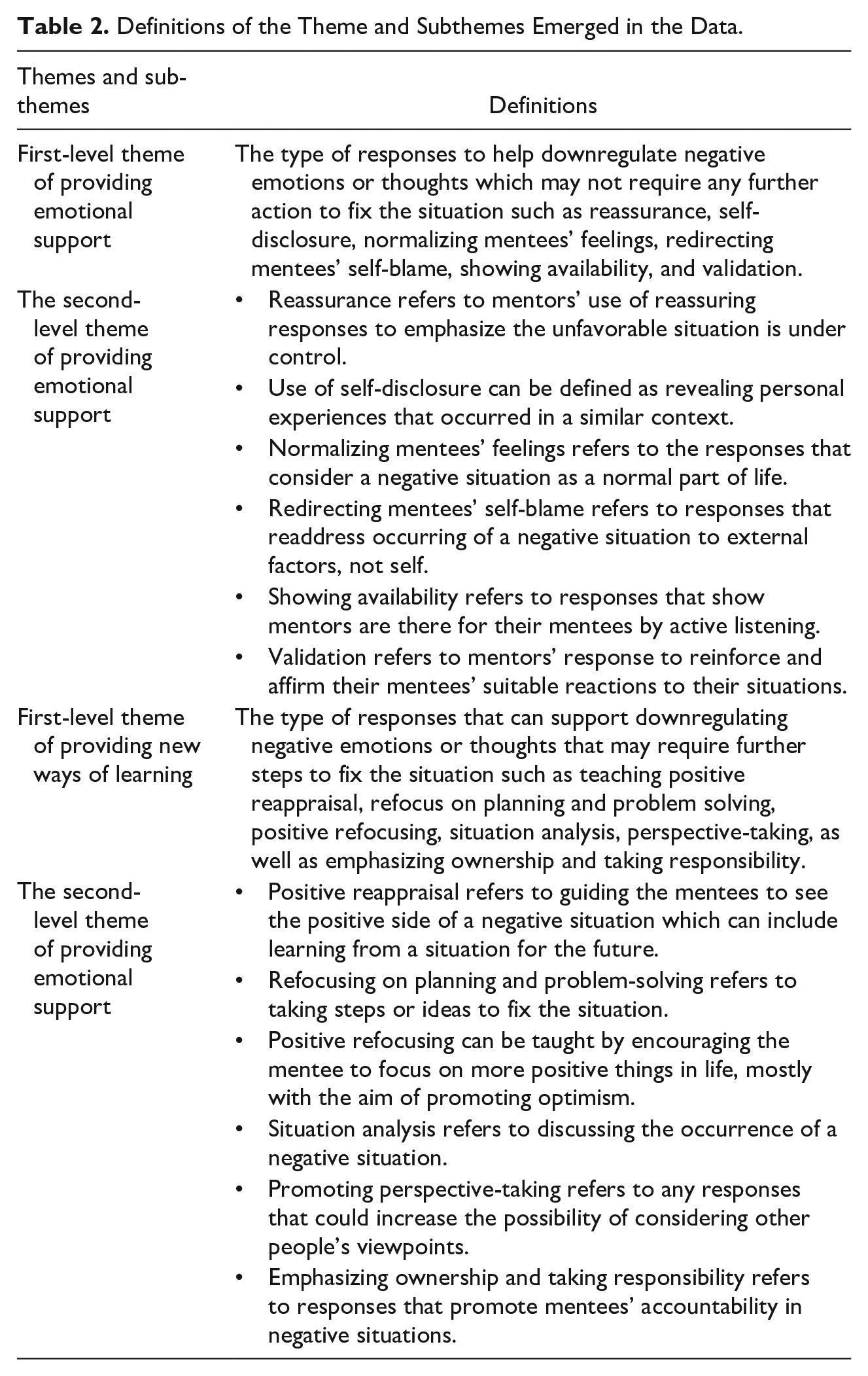
Table 2 represents definitions of the theme and subthemes shown in Figure 2. Each theme is described in the next section. The qualitative extracts from each mentor are distinguished by means of “MeR” and a numeric identification code to track each participant’s data excerpts whilst ensuring confidentiality. For example, “MeR1” is used for extracts from mentor 1.
Definitions of the Theme and Subthemes Emerged in the Data.
First-Level Theme of Providing Emotional Support
Mentors reported providing emotional support for their mentees through reassurance, use of self-disclosure, normalizing their mentees’ feelings, redirecting mentees’ use of self-blame, and showing availability.
Reassurance
Looking across the participants’ responses, many reported explicitly reassuring their mentees feelings and thoughts across the strategies of positive reappraisal, positive refocusing, acceptance, putting into perspective, rumination, and catastrophizing. For instance, one mentor indicated that they “Reassure them that everything is ok and everything will be ok” (MeR13), and another said, “I reassure them on this aspect, and make sure they feel supported” (MeR1).
Use of Self-Disclosure
Typically, the mentors employed self-disclosure when their mentees’ used the strategies of acceptance, catastrophizing, and self-blame. These mentors reported a tendency to support their mentees’ cognitive emotion regulation through sharing personal experiences, as two mentors put it: “Tell them that it’s okay to do so and that even I am guilty of this, then if relevant share own experiences/thoughts” (MeR15), or “I would say it happened to me sometimes and just let it go. Probably after a few month when you look back to it, it will become less horrible and you will have another feeling about it” (MeR3).
Normalizing Mentees’ Feelings
Some mentors tried to normalize the mentees’ emotions and thoughts by explaining that stressful situations are a normal part of life. Normalization typically occurred in response to mentees’ use of positive reappraisal, positive refocusing, acceptance, and self-blame. This approach was reflected in mentors’ responses such as: “try be supportive tell them that everyone goes through those same emotions and feelings too so its normal” (MeR7), or “and that it is ok to have stressful things occurring in your life” (MeR19).
Redirecting Mentee’s Self-Blame
In addition, some mentors reported providing emotional support by redirecting their mentees’ emotions when they use self-blame, particularly when the undesirable situation was out of their mentees’ control. As an illustration, a mentor stated: “if he was not responsible I try to help him see that and I try to help him externalize the problem so he does not see it as a problem with or within himself” (MeR11).
Showing Availability
The subtheme of showing availability refers to comforting the mentee and actively listening and predominantly occurred when mentees’ used acceptance, positive reappraisal, positive refocusing, and rumination strategies. One mentor explained she would “give her comforting words, verbally and physically show her that I’m listening and understanding of what she is discussing” (MeR34). Another explained “I give them the opportunity to talk about their feelings and thoughts” (MeR17).
Validation
Across the dataset, validation was identified as a common approach among mentors use to affirm their mentees’ reactions to stressful circumstances, particularly when their mentees talked about learning from a situation or looking at the positives—that is, when they used positive reappraisal. To demonstrate, one mentor indicated: “have expressed to my mentee and discussed how growth comes from challenge” (MeR18), and another said “Provide further validation that focusing on the positive learning from their experience is good and see what we can improve on next time” (MeR2). Mentors also used validation in response to mentees’ focusing on other positive events instead of dwelling on the current adverse situation, which is akin to positive refocusing. For instance, rather than focusing on the challenges, one mentor said “I agree that there’s no point in dwelling on it” (MeR6). Examples of validation also included direct affirmations and encouragement such as: “I encourage this sort of thinking where they are being positive about the situation” (MeR10) or “I usually affirm his reaction if he is accepting” (MeR32).
First-Level Theme of Providing New Ways of Learning
The first-level theme of providing new ways of learning comprised 6 second-level themes: teaching positive reappraisal, refocusing on planning and problem solving, positive refocusing, situation analysis, promoting perspective-taking, as well as emphasizing ownership and taking responsibility.
Teaching Positive Reappraisal
Regarding the mentees’ use of positive reappraisal, the mentors in this study frequently stated that learning from an adverse situation could help with handling similar future situations. This teaching was used both when mentees employed an adaptive strategy (e.g., positive refocusing) or a non-adaptive strategy (e.g., self-blame). For example, the following extract illustrates a comment in response to a mentee’s use of self-blame: “I will try and reinforce that nothing is set in stone, and that each situation is just a learning opportunity to take on board for next time” (MeR31), or another mentor commented on their mentee’s use of acceptance, “. . .try to give her guidance on how to overcome any issues and how to be more confident in similar situations” (MeR34). Likewise, mentors used this learning approach in response to their mentees’ use of positive refocusing. For example, one mentor said: “Tell them to always focus on the positive sides of everything! there is always something positive in every scenario, from something bad you will always gain experience” (MeR9).
Teaching Refocusing on Planning
Teaching the strategy of refocusing on planning was recognized within the theme of teaching adaptive strategies. The mentors wrote of their effort to support their mentees’ re-planning strategies when their mentees reacted with acceptance (e.g., “sometimes explore alternative ways of coping if appropriate” (MeR23)), rumination (e.g., “. . . I would give advice on how to deal with the situation” (MeR11)), self-blame (e.g., “we have put a plan in place to work on stressful feelings and finding balance in life/work/school” (MeR18)), positive refocusing (e.g., “So even if she starts talking about positive things, I ensure we have a plan in place for dealing with anything hard or stressful” (MeR18)), and particularly, when they tried to refocus on planning (e.g., “providing my ideas and ask for their ideas. Then develop their plan with possible ideas together” (MeR2)). In general, the mentors claimed that they give advice or support their mentees to discover ways to make the situation better or substitute solutions or plans.
Teaching Positive Refocusing
With regards to teaching positive refocusing, some mentors explained that they attempt to develop their mentees’ hopefulness and focusing on other positive events instead of the negative situation within a varied range of strategies such as positive reappraisal (e.g., “as long as you have tomorrow, you have the best chance of doing amazing things” (MeR1)), rumination (e.g., “but it’s also important that they can move on and think about other stuff; otherwise it can really adversely affect their well-being” (MeR8)), putting things into perspective (e.g., “I try to explain different people’s circumstances so she can understand outside of her own. It has helped her get that understanding that not everyone is the same and to be grateful for her own situations and maybe one day could help someone else” (MeR30)), and catastrophizing (e.g., “But they have a certain way of coping with it, through laughter but always chooses to be optimistic which I support” (MeR1)).
Teaching Situation Analysis
On the subject of teaching situation analysis, the mentors tried to help their mentees’ reinterpret some events by discussing the incident and asking questions to analyze the cause of a negative situation (e.g., relational conflicts or school-related issues), the consequences that arose from it, and other contributing factors. Mentors engaged in situation analysis when their mentees used the strategies of positive reappraisal (e.g., “We talk through the situation” (MeR18)), refocus on planning (e.g., “I also try to explain what the outcome may be, so she understands if she does something, her actions could result in difference [different] outcomes and try to focus on those outcomes being positive ones” (MeR34)), acceptance (e.g., “Help them try and see the bigger picture” (MeR5)), putting things into perspective (e.g., “still recognize the impact on her as being valid and appropriate regardless of comparisons to other’s situations” (MeR3)), rumination (e.g., “It’s important to reflect on situations so that they can avoid it happening again” (MeR10)), and self-blame (e.g., “Ask further questions to clarify and expand on situation” (MeR35)). Mentors also made an effort to help their mentees evaluate their emotions toward negative situations when their mentee used the strategies of acceptance, positive refocusing, or rumination (e.g., “I have a conversation about it and how she feels about the situation and how she has overcome that situation and how she feels about it afterward” (MeR29), or “I encourage them to think about how they really feel about the situation” (MeR20)).
Teaching Perspective-Taking
The subtheme of perspective-taking was mirrored in some mentors’ responses to their mentees using two strategies: putting things into perspective (e.g., “I try to get her to see things from someone else’s view, I try to explain different people’s circumstances so she can understand outside of her own” (MeR12)), and other blame (e.g., “I try to make him see both sides and make sure that he knows that people react for reasons that we may not be aware of yet” (MeR11)).
Emphasizing Ownership and Taking Responsibility
However, the sub-theme of emphasizing ownership and taking responsibility suggested the mentors sought to increase their mentees’ sense of accountability. Some mentors commented that they direct the mentee to take the responsibility of the situation, especially in response to their mentees blaming others (e.g., “try to get her to accept that she has played a part in it too so she has to also accept responsibility for her actions” (MeR12)). One mentor also used this approach in response to his mentee’s use of self-blame (e.g., “When the fault is on him and he is aware of it, I make sure he knows the reasons to why it is his fault” (MeR11)).
Summary of Mentors’ Approaches on Each Strategy
Table 3 summarizes how each of the mentees’ cognitive emotion regulation strategies is associated with different mentor support responses. In particular, it shows the sub-themes identified in mentors’ responses in relation to each strategy they reported their mentees used. For example, with regards to mentees’ self-blame, the mentors’ emotional support included use of reassurance, self-disclosure, normalizing their feelings, and redirecting the blame whereas mentors’ approaches to provide new ways of learning refers to promoting positive reappraisal and situation analysis. They also guide their mentees to promote refocusing on a plan for problem-solving and responsibility-taking to handle negative events. In contrast, mentors do not provide any emotional support to the mentee when they blame other people or factors; instead, they tend to expand the mentee’s perspective-taking and ownership/responsibility-taking skills.
Mentors’ Approaches in Response to Their Mentees’ Use of Each Strategy.
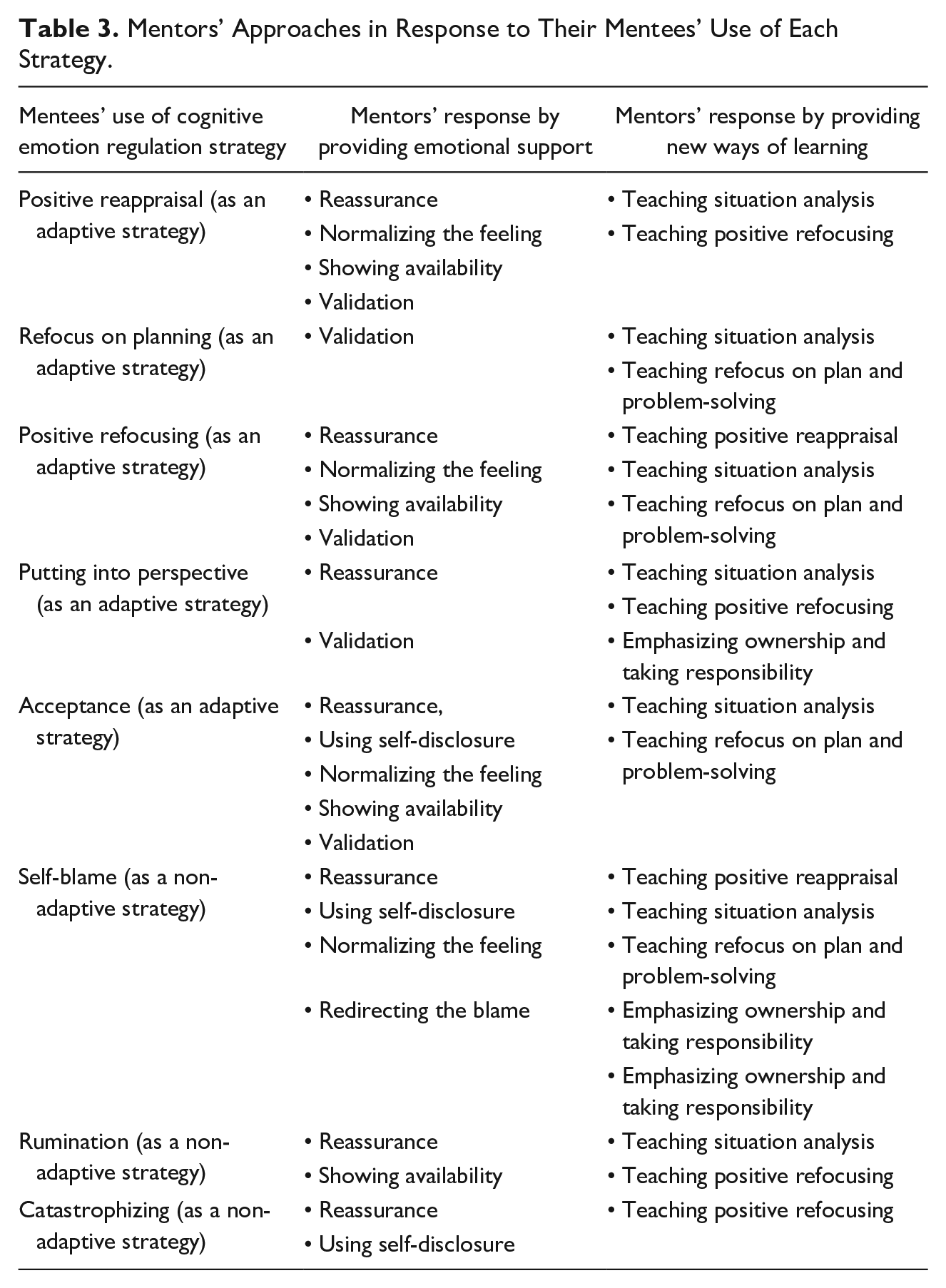
Based on the Table 3, validation of mentees’ cognitive emotion regulation strategy was only evident within adaptive strategies. However, reassurance was a common response to facilitate mentees’ emotional support when they employed a range of adaptive and non-adaptive cognitive emotion regulation strategies. Similarly, teaching situation analysis was the most frequent response to mentees when the mentors aimed to provide new ways of learning. Though, some of the responses were specifically delivered for a single strategy such as redirecting the blame in response to mentees’ self-blame, and promoting perspective-taking when mentees employed other-blame strategy.
Discussion
The potential influence of mentoring relationships on mentees’ favorable outcomes (e.g., emotional well-being, academic achievements, etc.) through social-emotion development, cognitive development, and identity development is evident (e.g., Rhodes, 2005; Rhodes et al., 2006; Rhodes & DuBois, 2008). Yet, the ways mentors can help their mentees to efficiently regulate and express their emotions have not yet been well known (Rhodes et al., 2006). This study set out to identify mentors’ responses to their mentees’ experiences of negative situations and using of cognitive emotion regulation strategies.
Distinctions and Similarities of Mentors’ and Mentees’ Reports Regarding Mentees’ Use of Cognitive Emotion Regulation Strategies
In line with previous research, one of the primary findings of this research refers to the fact that of the mentors recruited, the majority agreed that their mentees talked to them about stressful or unpleasant experiences, which indicates that mentors may be able to facilitate support when mentees experience challenges in life (e.g., Brady et al., 2015; Morrow & Styles, 1995; Orson & Larson, 2021; Villegas & Raffaelli, 2018; Wesely et al., 2017).
Moreover, following Compas et al. (2001) suggestion on parallel assessments of adolescents’ coping strategies from the youth and other informants (e.g., parents, teachers, or peers), the current findings have provided two sides of reports from mentees and their mentors about the mentees’ use of cognitive emotion regulation strategies during stressful events. In this regard, based on the mentors’ reports, their mentees mostly employed more adaptive strategies (e.g., acceptance, positive reappraisal, positive refocusing, putting things into perspective, refocus on planning) during negative events. However, the mentees’ descriptions slightly differed by reporting higher means of some non-adaptive strategies (e.g., rumination and self-blame), whereas mentors reported these strategies at the lowest rate. In this sense, consistent with Theurel and Gentaz (2018), the findings support mentees’ frequent use of more adaptive strategies. In this study, both groups of participants reported mentees’ use of acceptance, positive reappraisal, positive refocusing, and putting into perspective as the most common strategies among mentees. However, the mentees reported a higher rate of using self-blame and rumination strategies than their mentors. There might be some explanation for this inconsistency of reports. In part, this finding may suggest that feeling shameful acts as a trigger of self-blame strategy (Pulcu et al., 2013) that may drive youth to self-alienation along with a sense of being worthless (Jordan, 2013). Similarly, rumination involves repetitive thoughts which are self-focused (Law & Chapman, 2015), and can be an involuntary response to stressors or a negative event (Compas et al., 2001). Rumination and self-blame are strategies that are internal to the person using them and not as observable by others as some of the other strategies. Therefore, mentees might be less interested in sharing their concerns with their mentors about their emotions and thoughts in comparison to their use of more adaptive strategies. Moreover, it would also likely be more difficult for mentors to detect them.
Two Overarching Responses Provided by Mentors
The findings may provide new evidence on the subject of mentors’ responding to their mentees’ efforts in regulating emotions during stressful life events. In the comparison of the findings with those of other studies reviewed earlier (e.g., Brady et al., 2015; Sterrett et al., 2011; Yu & Deutsch, 2021; Zimmerman et al., 2005), in which mentors were known as a source of providing different types of supports, the current findings showed that mentors were capable of coming up with a wide range of supports when their mentees face challenges. On this subject, two broad mentors’ responses emerged from the data that included providing emotional support and providing new ways of learning. Similarly, the findings of this study are in accord with Wesely et al. (2017) findings. In particular, mentors’ responses were found similar to their findings regarding mentors’ responses to their mentees’ strain. However, more range of mentors’ responses were identified in this study that included reassurance, using self-disclosure, normalizing the mentees’ feelings, validation, teaching positive reappraisal, emphasizing ownership, and taking responsibility.
Providing Emotional Support
Although the effectiveness of mentors’ responses was not measured in this study, the literature promises youth positive outcomes by employing emotional support and providing new ways of learning to assist the mentees. Seen from this perspective, mentors’ efforts to reassure their mentees may suggest promoting mentees’ self-confidence (Andrews, 1945). Likewise, sharing one’s own relevant experiences (i.e., mentors’ self-disclosure) could be a pathway to show empathy, normalize the mentees’ feelings and offer advice (Lester et al., 2019). Furthermore, explaining that challenges and frustration are a normal part of life helps frustration tolerance (Bernard et al., 2006) which is known as a factor of resilience (Dryden, 2007). Also, redirecting self-blame may help to separate judgments about actions from self-worth which fosters self-acceptance and youth mental health (Bernard et al., 2006). Moreover, effective mentoring is found to be related to showing availability in times of need, non-judgmental listening, and active listening when mentees experience difficulties in their lives (Larsson et al., 2016; Morrow & Styles, 1995). What is more, validation or positive feedback and endorsement of the mentees’ behavior (e.g., highlighting the mentee’s strengths and perspective) is found as a key factor in supporting them to feel important, competent, and heard (Yu & Deutsch, 2021). All in all, mentors’ emotional support may assist in promoting their mentee’s self-awareness through assessing their feelings, values, and strengths which support their self-confidence (e.g., CASEL, 2017).
Providing New Ways of Learning
In terms of teaching adaptive strategies, the mentors underlined the necessity of looking for a positive side and an opportunity for personal growth within teaching positive reappraisal. Similarly, in teaching situation analysis, the mentors attempted to construct links between the mentees’ views or attitudes of a negative situation, possible outcomes, other causative factors, and self-analysis of the emotionally arousing situations. Both skills of learning from a situation (positive reappraisal) and analyzing a situation may provide an opportunity to build a link between thoughts, emotions, and behaviors. This connection may further enhance youth’s rational thinking contributing to goal-directed behaviors and healthy emotions (Bernard et al., 2006).
Through teaching refocus on planning strategy and problem-solving, mentors’ sharing ideas or working with their mentees could promote their joint activities which improves their relationship quality (e.g., Rhodes et al., 2006), as well as developing new cognitive skills by learning of problem-solving techniques (e.g., Garnefski et al., 2001; Rhodes et al., 2006). In the same way, teaching positive refocusing (i.e., focusing on other positive events) to distract mentee from the emotional impacts of stressful situations may promote optimism that enhances confidence about life in general (Carver & Connor-Smith, 2010) and having the perspective of a hopeful future has been found as a significant predictor of youth’s PYD (e.g., Schmid et al., 2011). Equally important, mentors’ effort in improving mentees’ perspective-taking skills (e.g., understanding of other people’s behavior or feelings) might be helpful in promoting youth social awareness, which is known as one of the core components of successful emotional self-regulation (CASEL, 2017). Lastly, emphasizing ownership and taking responsibility may help mentees development of moral behavior, other acceptance, caring, and contribution to society’s development (Bernard et al., 2006; Eisenberg, 2000; Haidt, 2003).
In adolescence, important tasks of the self are regulating behaviors, thoughts, feelings, and actions (Oyserman et al., 2017). Regarding the promotion of PYD by improving youth emotion regulation, a well-regulated youth can be an active agent in their positive development by showing more functional emotion regulation that influences their social relationships, decision-making, mental and physical health, and well-being (Garnefski et al., 2001; Kim et al., 2015; Thompson, 1991). For example, a well-regulated youth can show regulated behaviors and emotions which may help them to be socially competent and may show more positive values (e.g., caring, integrity, honesty, and so forth) (McKown et al., 2009; Schlenker et al., 2009). Altogether, in accord with Rhodes’ conceptualization of emotion coaching, this research supports the idea that mentors can adopt an emotion-coaching role.
Implications for Practice
A number of implications can be drawn from this study that may be beneficial to youth and mentoring programs. First, the findings revealed that mentors attempt to support their mentees’ emotion regulation once they experience stressful or adverse life events. This finding indicates the need for youth and mentoring programs to deliver training for mentors in terms of improving their knowledge of how to support their mentees’ emotion regulation efforts when they discuss stressful life events. Mentors should be experienced in the facilitation skills required for effective emotion coaching and to provide proper responses.
Mentoring programs provide an important context for the development of formal matches (e.g., Bowers et al., 2015; Keller, 2005). Additionally, informal/natural mentoring relationships also can contribute in promoting youth’s favorable outcomes (e.g., DuBois & Silverthorn, 2005; Hurd et al., 2014; Schwartz et al., 2007). It is important for mentors to recognize how to respond to their mentees’ cognitive emotion regulation strategies during adverse life events since these strategies are delicately connected to emotions and cognitions, which at a higher level are tied to the individual’s psychological well-being. Therefore, intervention planners, practitioners, and organizations engaged in youth programs should consider mentor training by a psychologist or CBT (Cognitive Behavioral Therapy) trainer as many mentors might not be educated in the mental health field. As it was reported by one of the mentor participants in this research that stated “I give them the opportunity to talk about their feelings and thoughts. I am CBT trained so I try and get her to connect her feelings, thoughts and responses,” mentor training could promote mentors’ skills when responding to their mentees during negative life events.
Regarding the training of natural mentors who might be unaware of their position in a young person’s life, the first step can be to provide information for youth and adults that describes their close and trustworthy relationship as a natural mentoring relationship. These types of information can be presented in schools, afterschool programs, or religious centers. The next step can be providing a platform for mentors to have access to evidence-based mentoring training and resources such as public websites (e.g., the ministry of education, the ministry for youth, or school websites).
Mentors could employ both emotional support and provide new ways of learning determined by the mentees’ emotional reactions or the type of responses to stressors they are in search of. To elaborate, the mentors can deliver emotional support responses when their mentee’s support seeking is emotion-focused coping aiming to reach emotional support and reassurance (Carver & Connor-Smith, 2010). The mentors could respond by providing new ways of learning to support their mentees who are seeking problem-focused coping which refers to reaching guidance and instrumental help (Carver & Connor-Smith, 2010). Therefore, in a balanced mentoring approach, the mentors could support the mentee to reduce the emotional impact by emotional support along with directly working on modifying the stressful situation by providing new ways of learning. As the former might directly decrease the stressor to support the mentee’s emotional well-being, the latter approach directly points to reforming the meaning of a destructive situation to improve the mentee’s cognitive change. Nevertheless, two strategies of reappraisal and problem-solving are initially adaptive strategies (Aldao et al., 2010), therefore, mentors could be encouraged to employ responses such as teaching positive reappraisal, teaching refocus on planning and problem-solving.
In a newly published resource by the US National Mentoring Partnership (Herrera & Garringer, 2022), some researchers and practitioners have provided a source of guidance for mentors that covers a range of mentoring skills for a beneficial mentoring relationship. For instance, Santiago and Chen (2022) explain how active listening and questioning may help mentors understand the type of support their mentees are looking for or when they share any concerns such as “what is something you’re struggling with right now, and what can I provide for you?” or “what would be most helpful for you at this moment, and how can I help?.” On the whole, youth-adult partnerships are significant to mentoring programs and respected in positive youth development. Policymakers need to encourage practitioners and staff involved in youth and mentoring programs to become more aware of the mentors’ supporting, and enhancing youth’s mental and emotional well-being.
Study Limitations
Every study unavoidably has strengths and limitations. This study has deficiency regarding generalizability of the findings, moderators in the mentoring models, and the questionnaire. In part, the current sample size and potential selection bias might be the limitations in which the small sample size allowed for in-depth analysis but restricted the generalizability of the results. A larger sample size, especially within quantitative research, may provide evidence of whether different types of mentoring strategies may influence the mentees’ use of adaptive or non-adaptive cognitive emotion regulation strategies. More specifically, it might be helpful to investigate how relational-focused and goal-directed mentoring interactions could be beneficial in regulating mentees’ emotions. The effect sizes from such studies may assist in improving our knowledge. Also, the sample is self-selected wherein the mentors might be in a much higher-quality relationship. Furthermore, this study lacks the mentees’ viewpoints on the ways they might react to their mentors’ emotional support and provide new ways of learning techniques.
Also, the moderators in the Rhodes’ model were not evaluated in this research, such as the duration of a mentoring relationship, social competencies, interpersonal histories, demographics, and developmental stage. For example, in terms of relationship duration, possibly mentees in natural mentoring may experience more satisfaction or closeness with their mentors than a mentee who recently joined a formal mentoring program. What is more, the type of mentoring (group or one-on-one mentoring) and the number of mentors also can be important. For example, mentoring pairs in a one-on-one mentoring relationship might spend more time discussing mentees’ concerns. Equally, having more than one mentor may be more sources of information or support when assisting mentees’ cognitive emotion regulation skills during stressful situations.
Other limitations of this study refer to the used scale and mentees’ sample. In this sense, an existing framework of nine cognitive emotion regulation strategies was used which may have limited further strategies from being identified (e.g., avoidance, suppression, etc.). As pointed out in the literature review, females may use more of the non-adaptive strategies (i.e., rumination, self-blame, and catastrophizing) strategies than males; in turn, the dominance of female mentee participants in this study may affect the findings (e.g., reporting a higher rate of rumination).
Recommendations for Future Studies
Further work needs to be carried out to support the findings of this study in the same or other contexts. In terms of mentors’ use of self-disclosure, it might be important when and in what situation mentors share similar experiences. For example, if a mentee shares a challenge and a mentor uses self-disclosure too quickly in a conversation, it may have a neutral/more negative impact than if a disclosure is made at the end of active listening. In this instance, it could be perceived as dismissive. Mentors may provide different responses, for example, two participants of this study reported, “Help them try and see the bigger picture and the silver lining and with personal experience. (MeR5)” and “Share experiences, ask about fiends [friends’] experiences (MeR35).” Therefore, the way mentors respond to their mentees regarding their own experiences may affect their relationship. This point may worth further investigations.
Another recommendation for future studies is to provide some details on the domain of challenging situations (e.g., family trouble, peer conflict, discrimination, or break ups) in adolescence, which need emotion regulation. And also, their responses to the type of challenge in terms of their controllability (e.g., poverty, divorce, or losing a loved one), and/or their mentor may not have personally experienced that may also be influencing which types of support a mentor uses in each situation.
Additionally, future researchers may focus on identifying case by case patterns. In particular, mentors’ pattern of responses might be different from formal mentors in terms of their responses (e.g., emotional support or providing new ways of learning).
Given the limits of these findings, further evaluation and testing is needed. Future researchers are highly recommended to adopt a pre-test-post-test design if their intervention includes the findings of this study. This form of evaluation will definitely build on the existing evidence. Both emotional support and providing new ways of learning techniques give the impression to be theoretically linked to adaptive strategies and youth positive outcomes, and it would be valuable to study how mentees perceive their mentor’s support for adaptive emotion regulation. All in all, the results of this study may represent initial steps in improving our understanding of emotion regulation in the mentoring context, it should be validated by a larger sample size.
Conclusion
As mentoring can be effective at promoting mentees’ self-regulatory skills, studies have been directed to identify the ways that mentoring skills can be enriched. On the whole, this study advances our understanding of how mentors are able to assist youth through life challenges by responding appropriately to their emotion regulation strategies. The findings provided new insights into mentors’ supporting approaches by unpacking how mentees’ cognitive emotion regulation can be impacted in a relationship with a non-parental adult. It was identified that mentors could use their skills to inspire mentees’ adaptive strategies or modify non-adaptive strategies. It also highlights the possible benefits of amending youth emotional experience and training mentors with techniques and skills that might develop their relationship quality and positive outcomes for the mentee.
Footnotes
Acknowledgements
I would like to extend my sincere thanks to all the reviewers.
Declaration of Conflicting Interests
The author declared no potential conflicts of interest with respect to the research, authorship, and/or publication of this article.
Funding
The author received no financial support for the research, authorship, and/or publication of this article.
