




Abstract
Anxiety and depressive disorders are the most prevalent mental health problems in adolescents, however, little is known about the strategies they use to deal with their difficulties and regain power over their symptoms. This exploratory study documented the self-management strategies used by adolescents to recover from difficulties related to anxiety and/or depression. Individual interviews were conducted in Montreal, Canada with 49 participants aged 11 to 18 years (28 girls, 20 boys, and 1 non-binary person from various cultural origins) after approval by the Institutional Review Board. Young people were questioned about the self-management strategies they put in place when they felt stressed, sad, or anxious. The data were coded according to the thematic analysis method using an inductive approach. Participants reported 73 self-management strategies, regrouped in four broad themes: (a) I think through; (b) I surround myself with people/animals; (c) I feel and manage my emotions; (d) I continue my daily activities. Their strategies emphasize the role played by their social network and the place of social media as a support in their recovery. Self-management is an empowering process that allows adolescents to take responsibility and to make decisions that foster their recovery.
A proportion of 10% to 20% of adolescents are experiencing mental health disorders worldwide (Grist et al., 2019; Polanczyk et al., 2015; UNICEF, 2021; WHO, 2020). Anxiety and depression are among the most common and comorbid mental health problems in young people, particularly for girls (Cournoyer-G et al., 2013; Ginsburg et al., 2018; Merikangas et al., 2009; Piché et al., 2017). Together, they represent more than 40% of all mental disorders in adolescents between 10 and 19 years abroad (UNICEF, 2021). The increasing prevalence of youth anxiety and depression symptoms observed over the last decade has also been exacerbated by the COVID-19 pandemics (Oosterhoff et al., 2020; Racine et al., 2021). Social isolation, school closure, and increased family stress all contributed to the observed psychological distress among youth. In parallel, the COVID-19 pandemic generated increased demands for mental health services, but also added to the numerous barriers to accessing mental health resources (WHO, 2020). It appears even more pressing to understand the self-management strategies that allow youth living with difficulties related to anxiety or depression to play an active role in managing their difficulties, to regain power over their symptoms, and to maintain their well-being.
The literature on mental health recovery typically distinguishes between clinical recovery, which is focused on controlling the symptoms, and personal recovery, which is focused on the general well-being. Clinical recovery generally sees treatment (e.g., psychotherapy or medication) as necessary to reduce symptoms under a certain diagnostic threshold (Slade & Longden, 2015). Personal recovery considers that people will take different paths on their journey which do not necessarily include professional treatment (Anthony, 1993; Slade & Longden, 2015). A commonly used definition describes personal recovery as “a deeply personal, unique process of changing one’s attitudes, values, feelings, goals, skills and/or roles. . . a way of living a satisfying, hopeful and contributing life even with the limitations caused by illness” (Anthony, 1993, p. 527). Indeed, the personal recovery approach emphasizes that it is possible to live a meaningful life despite the presence of symptoms (Ellis & King, 2003; Slade & Longden, 2015). This is not to suggest that mental health treatment is not necessary, but rather that we should adopt a more holistic view of recovery that places the person at the center of their experience.
While the literature on youth mental health recovery is growing, there remain important knowledge gaps (Hall et al., 2016; Mental Health Coordinating Council of Australia Au [MHCC-Au], 2014; Rayner et al., 2018; Ward, 2014; Woodgate, 2006). Often, young people’s mental health issues are addressed using evidence from studies that have been conducted with adults and, thus, may not be reconcilable with youth life experiences (Law et al., 2020; MHCC-Au, 2014; Naughton et al., 2018; Rayner et al., 2018; Simonds et al., 2014; Topor et al., 2011; Ward, 2014). Indeed, certain factors that take on a central role during adolescence such as the strong influence of peers and family and the development of identity, emphasize the “highly social nature of youth recovery” (MHCC-Au, 2014; Law et al., 2020; Naughton et al., 2018; Rayner et al., 2018; Simonds et al., 2014; Topor et al., 2011; Ward, 2014). Ward also highlighted that the concept of recovery, as used in adult mental health literature, does not reflect the major physiological, cognitive, and social changes experienced by youth throughout their developmental trajectories (Ward, 2014). Given that personal recovery underlines the centrality of people’s experience, there is a need for a better understanding of the particularities of youths’ recovery journey.
One area of investigation to better understand youth mental health concerns self-management. As previously mentioned, studies on personal recovery with adults have shown that mental health treatment is only one of the options (Slade & Longden, 2015). This also seems to be relevant for youth given that up to 70% of young people with mental health problems do not seek professional support or help from family or friends (Rickwood et al., 2015). People who live with mental health difficulties actively engage in their recovery through a diversity of self-management strategies (Villaggi et al., 2015; Barlow et al., 2002; Deegan, 2005). Self-management includes strategies that aim to reduce symptoms, prevent relapses, and optimize well-being (Houle et al., 2013; Barlow et al., 2002; Canadian Network for Mood and Anxiety Treatments [CANMAT], 2016; National Institute for Health and Care Excellence [NICE], 2011). Therefore, in addition to pharmacological and psychotherapeutic treatments, it is essential to empower young people suffering from anxiety and/or depression, so that they can play an active role in their own recovery (Hughes et al., 2018). Adolescent self-management strategies have been documented primarily in intervention studies of young people living with chronic physical health conditions, such as diabetes or arthritis (Jaser et al., 2012; Law et al., 2020; Stinson et al., 2008). To our knowledge, no prior research has been conducted with adolescents in recovery for difficulties related to anxiety or depression concerning their self-management strategies. A recent scoping review protocol has underlined that the definition of self-management was not specifically developed for adolescents, which could hinder its conceptual clarity (Town et al., 2021).
However, a few recent studies examined coping behaviors and resilience in children and adolescent populations (Gonzalez et al., 2022; Phillips et al., 2019; Stapley et al., 2020, 2022). As stated by Audulv et al. (2016): “(. . .) the terms and concepts of coping, adaptation, and self-management are used interchangeably, often without clear definitions, giving rise to several important questions.” (p. 2630). Coping is understood as how a person processes their cognitions, behaviors, and emotions in the face of stress while aiming for resilience and well-being (Folkman & Moskowitz, 2004; Lazarus & Folkman, 1984). There is some overlap between self-management and coping, yet studies have shown that they are distinct concepts (Authors, 2015; Jaser et al., 2012). In a systematic review of self-management support strategies in primary care, coping and stress management strategies were categorized as one type of self-management (Dineen-Griffin et al., 2019). More precisely for youth, in one study with adolescents who had type 1 diabetes, self-management was a mediator of the relationship between coping and quality of life, which underlines the importance of self-management (Jaser et al., 2012). More research is needed to clarify the conceptual distinction of self-management (Town et al., 2021). We still chose to frame this paper around the concept of self-management because of its more inclusive and encompassing nature.
It remains important to anchor the present study in the literature on youth mental health recovery. As such, studies on coping can be useful to increase our understanding of youths’ experiences. Stapley and colleagues documented the coping behaviors children without mental health difficulties used to respond to stressful events (Stapley et al., 2020). Using a longitudinal design, they also reported that adolescent coping behaviors were different according to the level of adversity they experienced, but also depended on protective factors in their environment (Stapley et al., 2022). Another study consulted healthy adolescents to know how they adapted when they encountered stressors in their life, such as schoolwork or conflicts with friends and family (Phillips et al., 2019). Participants identified different sources of resilience, such as having strong social connections, self-reliant activities, and personal characteristics such as optimism. While these results are interesting, the goal of coping strategies is to reduce stress in the face of a challenging event. Exploring youth self-management could provide a more holistic portrait of recovery, one which is person-centered and varies over time and situations whether stress is involved or not.
The main objective of the present study is to document and develop a better understanding of the strategies used by adolescents to process their symptoms of anxiety and/or depression, prevent relapse, and increase their well-being. We used a qualitative approach to question adolescents in recovery from difficulties related to anxiety or depression about the behaviors they used to feel better. We believe that these results will contribute to show the importance of self-management in the recovery process of adolescents.
Method
Mutual Knowledge Sharing Approach
In line with a mutual knowledge sharing approach (Strøm & Fagermoen, 2014), the research team was formed by five academic members, two community/professional members, and eight peer-researchers. Peer-researchers are people with lived experience of the problem under study, who take part in decisions about the methodology, interpretation, and dissemination of the results (Buffel, 2019; Roche et al., 2010). In the current study, two adults and six adolescents (16–18 years old) who had experienced difficulties related to anxiety and/or depression were involved as peer-researchers. The peer-researchers first participated in a 2-day training course at the university to allow them to get to know each other, to familiarize themselves with the nature of the project, and to understand their expected contribution and the approach of knowledge sharing. The research team met 12 times over a 2-year period to decide on the study protocol and the appropriate tools, and analyze the results of the qualitative study.
Study Design and Participants
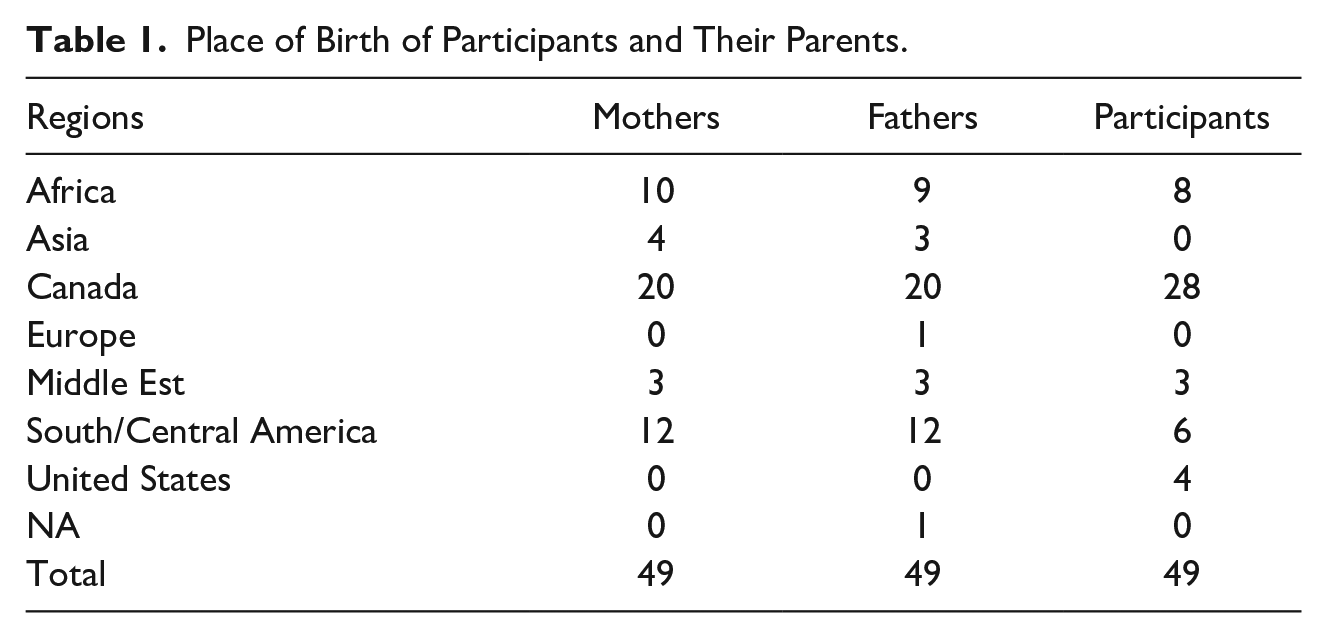
We conducted a qualitative study with individual, face-to-face interviews between June and September 2019. Young people were recruited in Montreal (Canada) and its suburbs through presentations in community organizations frequented by youth (e.g., youth centers, YMCAs), in city parks during free sports events organized to encourage participation of youth from low socio-economic backgrounds, as well as through social media. To be eligible, participants had to meet the following criteria: (a) be between 11 and 18 years old, (b) speak French, (c) obtain their parents’ approval to participate (if < 18 years), (d) be in self-reported recovery from difficulties related to anxiety and/or depression (medical diagnosis not necessary), which means that young people are able to talk about their recovery experience without showing signs of distress or too much discomfort, and (e) have a certain distance from their experience (to talk about their recovery experience without exhibiting signs of distress or experiencing excessive discomfort). The original plan was to interview youth from 12 to 17 years. We decided to accept participants aged 11 to 18 years since one participant of 11 years was interviewed due to miscommunication with the interviewer and several youths aged 18 years expressed their interest during the recruitment phase. We obtained the approval from our institutional ethics board for this modification. The study enrolled 49 participants, including 28 girls, 20 boys, and 1 non-binary person, aged 11 to 18 years. The sample also varied in terms of cultural origin. Twenty-eight participants were born in Canada, and 21 were born outside the country (See Table 1).
Place of Birth of Participants and Their Parents.
Data Collection
Interviews were conducted during the summer of 2019 either at the university, in youth centers or organizations, or at the participant’s home by one of two trained research assistants (doctoral students in psychology having completed their first clinical internship). Consent forms were sent to parents by email by the project coordinator or handed to the youth by a support worker from the youth centers. Parents were invited to contact the coordinator by email or by phone if they had any questions or concerns about their child’s participation. During the interview, youth were questioned about the self-management strategies they used when they felt stressed, sad, or anxious. Examples of such questions were as follows: “What do you do to relax when you feel stressed? What do you do to feel better when you feel sad?” The interview guide emphasized the importance of storytelling during interviews with young people (DeRoche & Lahman, 2008) and also included questions related to positive moments they experienced, such as the following: “What makes you proud of yourself?” and “What are your hobbies?” (Park et al., 2004). An amount of $20 was given to each participant as compensation for their time. All the interviews were audio-recorded and transcribed verbatim.
Data Analyses
The data were coded in NVivo v.12 software, following the thematic analysis method (Braun & Clarke, 2006). Braun and Clarke suggest a five-step analysis: (a) immersion in the data (multiple readings of transcripts and intuitive annotation of repetitions and highlight groupings of ideas, (b) development of codes (identification of significant parts of the transcripts representing a particular idea), (c) development of themes (grouping of different codes that are part of a larger whole, i.e., the different themes), (d) review of themes (refinement of themes, so that the codes grouped in each have a meaning that is both unique and shared and that the themes are clearly distinct from each other), (e) description of the themes (naming the themes, so that the name expresses its essence). We used an inductive approach, keeping an open mind toward the identification of new themes throughout the analysis process. Meetings were planned regularly during the analysis process, allowing peer researchers and the rest of the team to contribute to the analysis. It was a time for team members to discuss and share their opinion on the pertinence of identified themes and to make changes accordingly. Modifications to new themes were made only after team members reached a consensus.
Our team wondered whether it was advisable to categorize the strategies report by youth in the study as positive or negative. We realized that participants demonstrated a nuanced understanding of their strategies and of their impacts on their well-being. We chose not to interpret the valence of any strategy, even though some might seem to us less positive than others and, interestingly, were often qualified as such by participants.
Trustworthiness
The research team implemented several strategies to answer Tracy’s (2010) quality criteria for qualitative research of rich rigor, sincerity, and credibility. Rich rigor was ensured by a strong anchoring in theoretical constructs of recovery and self-management, as well as sufficient data collection to allow data saturation, where the last few interviews did not bring any new theme. All 49 interviews were coded to access the wealth of data, and identify not only the most frequent self-management strategies but also paying attention to more infrequent strategies, which enhances the trustworthiness of the data (Elo et al., 2014). The sincerity criterion was followed by developing a reflexive journal, in which the main coder detailed each step of the analysis while being transparent about questions and uncertainties she had. Finally, credibility was ensured though multiple conversations to compare understandings, to have a rich and in-depth analysis, and to confront contradictory explanations. Thick descriptions of each theme were presented during meetings to underline the complex reality described by participants. The research team contained multiple perspectives, and the knowledge sharing approach allowed for triangulation of these perspectives.
Results
The 73 distinct self-management strategies identified during the interviews with 49 young persons are presented in Table 2. We report the entirety of the strategies shared by youth with the interviewers. The strategies fostering youth recovery encompassed four broad themes and 21 subthemes. The following are the broad themes: (a) I use thinking through strategies, (b) I surround myself with people/animals, (c) I live and manage my emotions, (d) I continue my daily activities. We have highlighted in italics the strategies that involve social media or use of Internet. While these were frequent, we chose to integrate them in the themes rather than create a stand-alone theme to better reflect participants’ reality. The different strategies and related quotes are described in the following sections.
Participants’ Mental Health Self-Management Strategies.
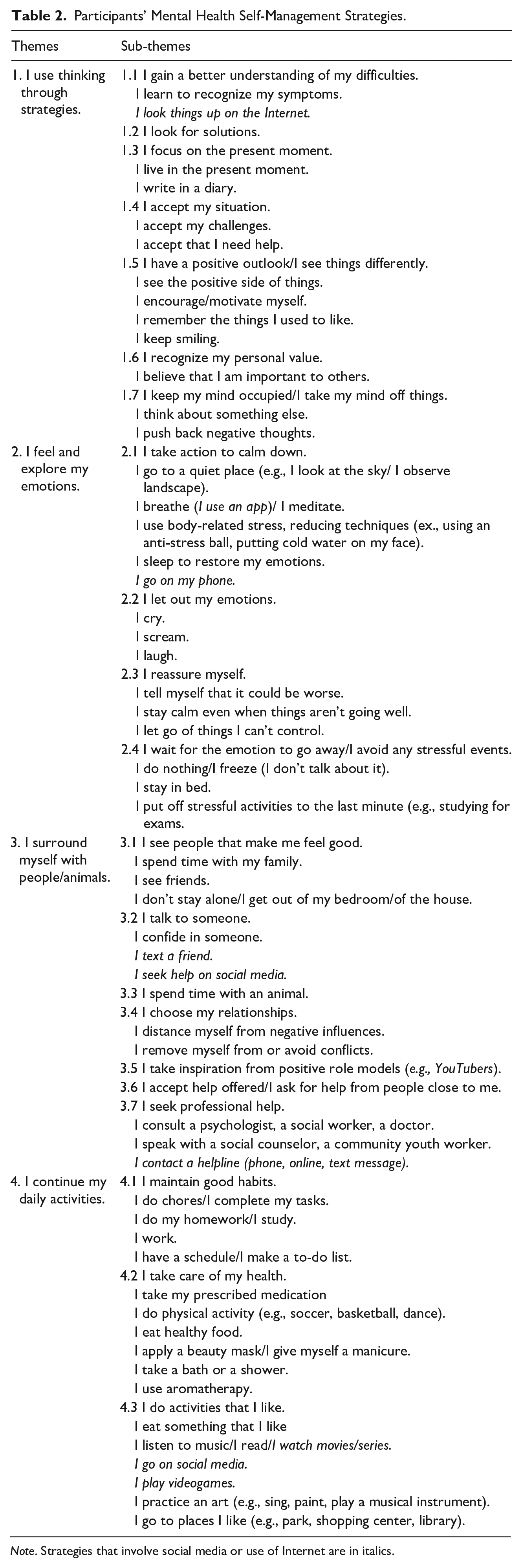
Note. Strategies that involve social media or use of Internet are in italics.
I Use Thinking Through Strategies
An important theme in participants’ self-management strategies was to take time to reflect on their feelings, their difficulties, or their thoughts concerning a challenging situation. They used different strategies that allowed them to spend time alone to think. It gave them the opportunity to see things with a new perspective or to understand themselves better.
Youth mentioned that a big step in their recovery was to learn to recognize their symptoms and to gain a better understanding of their difficulties. This helped them understand what they were going through and represented a big step toward learning how to deal with their life challenges. One participant mentioned how painful it was for her to live without knowing what was wrong with her.
Getting a diagnosis, whether you like it or not, it’s frustrating not knowing what’s wrong with you, why you’re not like everyone else. So like getting a diagnosis. . . It pissed me off at first because I didn’t want to have mental health problems, but, after that, I told myself: Well, at least we know what I have; it’s easier to treat it then. (G, 15)
1
Some of them also used the Internet to do some research or to get information related to their difficulties.
Participants emphasized that they took time to think about the problems they encounter, to look for solutions or to clear their mind. Sometimes talking about it helped unravel complicated situations. One participant mentioned that “. . .often I will also try to talk about what is wrong and try to find solutions there.” (G, 15).
Youth also tried to focus on the present moment to help reduce intrusive thoughts that may prevent them from achieving certain goals. In that sense, one participant described: “So, it’s about doing a new thing, and you don’t always have to focus on what has past, you have to get things done and move on. You have to focus on the present.” (G, 14)
Living the present moment was a way to concentrate on “what is going on right now,” and just live and not worry about the future. One participant mentioned receiving, from their psychologist aunt, suggestions on techniques they could use to do so. While this was not initially well received, the participant mentioned that these did sometimes work. Some used a diary to be able to let their thoughts go freely.
Like, how do you feel this week, what happened; they tell me to really get it off my chest a little there, not to be embarrassed . . . it helps me, um, especially for anxiety. I write what scares me, and, after that, I can read it again to find out. (G, 17 )
In addition, for some participants, just focusing on accepting their difficulties was an opportunity to help them make choices to get better. This, then, became a necessary step to move forward with their recovery.
I think the fact that I accepted that I was anxious because, before, I was really in denial, I was like, “well no, that’s not true.” I think just accepting it . . .When I realized that I had to live with it, I started making more choices for myself that were going to help me get better. This is when I decided to change school, to change group of friends. I tried really hard for myself, not for others and what they want, but for me. (G, 16)
Participants used strategies allowing them to have a positive outlook or to see things differently. They found that changing the way they think about their difficulties, to put things in perspective, enabled them to slowly change their attitude and the repercussions on their day-to-day life.
I have to think positive because if I think negative every time, I will not get far. So, I have to think positive and then I breathe deeply and then, that’s it. . . if I think in a positive way, then I’ll calm down and then I will have no more stress. (B, 15)
To engage in their recovery, some participants highlighted that they had to recognize their personal value. They also learned to believe that they are important to others.
Yeah, well, the fact that people made me realize that I was important, that I was worthwhile to other people . . . and that I still had some great things to experience, that there was no use to be down when you could see so much more beautiful things when you are well, and things like that. . . And learning to believe that, I think, is what helps me the most in life, and to come back to it when I’m not well, that’s what helps me too. (G, 15)
Some also tried to keep their mind occupied or to take their mind off things by engaging in activities or hobbies that allowed them to stay busy or that pushed back negative thoughts. Often, participants tried “not to think about” the stressful or challenging situation.
I Experience and Explore My Emotions
For many participants, a large part of their recovery process has taken place by living and learning how to handle their own feelings. Dealing with these roller coasters of emotions required their time and patience.
They took actions to get through difficult times and they had strategies to calm down when they felt sad, anxious, or stressed. They used different techniques to reduce their stress level, such as playing with an anti-stress ball, doing auto massage, moving their legs, or putting water on their face. Others used meditation, relaxation, or breathing techniques. One participant explained how breathing helped her reduce the physical symptoms associated with her anxiety. Another one used a phone application to guide her breathing when she was stressed: “. . .now I have a breathing app in my phone. Breathe in for five seconds, breathe out for five. And there is like a level going up and down, and you have to follow it.” (G, 16)
Going to a quiet place to be alone was a strategy that allowed the dust to settle, so to speak, after a difficult moment. For example, one participant explained that he liked to be alone and look up at the sky when he needed to calm down. Many participants evoked sleeping as a strategy to feel better when nothing works anymore. They used sleep as a way to reset after a bad day or to calm themselves down when they experience an overflow of emotions. One participant described this as: “Yeah, sometimes when you’re tired, there’s no point in trying to fight emotions; you just have to sleep and try to let that go.” (G, 17)
Participants often mentioned “going on their phone” or using social media whenever they feel stressed, sad or when they want to relax.
When things go wrong, I go on my phone, or I play. Uh, I go on my phone, or I play, yeah . . . like, on my phone, I go on social networks, watch videos or talk to my friends. (B, 14)
Watching videos on different platforms allowed them to change their mindset or makes them happy for a while. One participant said that watching YouTubers whom he liked made him laugh, and this “removes his sadness.”
Often, youth expressed that they learned to take some time to work through their emotions. Letting out their emotions helped them manage and reduce their symptoms. For example, one participant said that laughing “decreases anxiety” (G, 18). For others, screaming or crying was a good way to reduce their suffering and to help them move on.
When I cry I take my cats in my arms and I cry. I do nothing but cry, so it feels like after that, you have no more tears, you know you have no choice but to be happy. (G, 15)
One participant felt that she needed to keep smiling and not concentrate on what was going wrong in her life.
Others used strategies that allowed them to reassure themselves when facing different challenges. Some reported feeling reassured by the thought that things could be worse when tough periods hit. Others said that they tried to see difficult situations differently, to listen to their inner voice or to encourage themselves. One participant said that when she faces stressful situations, she tells herself that “she will not die, it will pass.” When she is too nervous, she tried to convince herself that the challenging moment or activity will be fun.
Others tried to let go of things they could not control, such as an exam or an oral presentation. One participant explained that trying to leave the past behind helped her the most, while another one thought about funny things when he was stressed out. Strategies evoked by some participants were to put off stressful activities until the last minute. These strategies were described as more or less effective, but they allowed them not to think, for a while, about a task or a homework assignment they had to do.
I have a very, very bad strategy related to stress. When I’m really stressed out about something, I put it off until the last minute. Let’s say I have a big job to do, and I’m stressed out: I’m going to ignore it consciously. I will ignore it; I will do something else, and, then, when it’s time to do it, I’m going to spend all night doing it. . . I wouldn’t say it relaxes me, but I get to ignore enough so that it doesn’t causes me stress. (B, 16)
I Surround Myself With People/Animals
The vast majority of participants outlined the importance of surrounding themselves with others when they faced difficult times. Most of them discussed the central role played by their social network, mainly family and friends who supported them.
One strategy related by many participants was to see people that make them feel good. They often expressed spending time with their friends or family, people with whom they share a special bond or relationship. Some also reported that they sometimes “need not to stay or to feel alone.” This is why one participant mentioned that: “Or even just go talk to your parents or just spend time with a person you love, without necessarily talking to them, just like being with them, not feeling alone.” (G, 15)
Another participant explained that just getting out of his bedroom was enough to make him feel better, since it helped coming out of his isolation. It was sometimes a way to force him into action.
When I’m not okay, I don’t want to stay in my room because when I stay in my room it’s like I’m isolated. Worse, it’s like I’m trapped with what’s going wrong. So usually if I’m not feeling good, I’ll try to go to the living room or go to the kitchen or even, I don’t know, go out for a walk or maybe go cycling, go skateboarding, skateboarding, something that helps me going out and that makes me at least think that I’m doing something that helps me a little. (B, 17)
Talking to a friend or confiding in a person who is close to them when they experience a stressful situation or when they feel sad was a strategy used by many participants. It was an important step in their recovery to be able to speak freely with someone they trust and to feel understood. For one participant, having friends with whom she can be herself was very reassuring.
Because, I don’t know, like, there are people that I am with, for example, my friends, well there are some of my friends who are so comforting. Like, when you talk to them and everything, they understand how you feel. And[one friend] she knows how to talk to you when you’re angry, she knows how you’re going to act when you’re angry. Like, that’s what I like, that they can understand; they can understand you in any situation. (G, 12)
Social media were frequently used by participants to communicate with friends. Several participants text their friends using different platforms to stay in touch, to talk, or to ask for help.
Yeah, sometimes texting helps because you don’t necessarily see the expression of the person in front of you, and that person doesn’t see your expression, so sometimes they can’t know that you’re sad, but you just say like, “I’m not so well right now, can you be there for me?” And it helps, in my opinion. (G, 17)
Youth also talked to their parents when they needed comfort, advice, or help to solve a problem or a challenging situation.
(. . .) my father is really there for me. . . he has a lot of life experience and when I need help with my problems, he is there to talk to me. And if things are not doing well, you know, he will help me dissect what is wrong. . . (B, 17)
Some participants expressed that the presence of an animal also makes them feel better. Taking care of an animal or spending time with an animal was a really positive aspect of their life because it forced them to go out for a walk or it brought them back to living in the present moment. It also encouraged them to take care of themselves: . . . there was a little gray rabbit, and I just fell in love with it. So, we bought it. I named her Billie, and she’ll be two years old soon. And every time I feel bad, I take her, and it really makes me feel good. It seems that she understands that I am not feeling well because when I got her, I made myself a promise to take good care of her . . . because if I am not well, and I’m just, like, moping around, I will not be able to take care of her. So, I have to be well to take good care of her. (G, 16)
Many of the youth also outlined how important it is and has been to choose the right friends or sometimes to re-evaluate their relations. The decision to distance themselves from certain negative influences allows them to be surrounded by more positive people. For example, one participant said: “Well . . . hmm, if you have friends who are really like negative, and they judge you because you are depressed, like cut them off: you don’t need them, and surround yourself with positive people.” (G, 17).
To get better, participants tried to avoid or to stay away from conflicts. Some decided to change their group of friends because they experienced too many conflicts. One participant explained that changing her group of friends was her way to move away from bad influences. One participant said that they take inspiration from positive role models, who make them feel good and understood. The affection for their idols gives them a very strong sense of belonging.
Something that makes me really happy is when I see good representation. You know, like, me, literally, recently, when I’m not well, I listen to Captain Marvel because it’s one of the best portrayals of women I’ve seen in my life, and it’s beautiful. So, to see good LGBT representation or whatever, I really like that. (NB, 17)
Some also highlighted the importance to ask for help or to accept help from people close to them. Participants mentioned that it was sometimes very difficult for them to ask for help when they did not feel good, but they learned that it was useful to their recovery process. They also said that they realized that people who stick around them have really been there to help them.
(. . .) don’t shut yourself off from everyone around you because it won’t help you, you know: you can’t . . . for example, someone who lives with anxiety or stress, especially depression . . . you can’t stay in your little bubble and, like, don’t want to know what, like not having help from others because it will not disappear by itself, you know. It’s rare that it disappears by itself. And that’s it, I think; it’s important to stay surrounded and not to block people trying to help. (G, 15)
It was underlined by participants that seeking professional help was sometimes crucial to help them taking charge of their difficulties. Some of them consulted a psychologist or a doctor for advice or to be able to discuss their feelings with someone who understands them.
Well, me when I don’t feel so good, I’m going to see a therapist you know I started, I think in secondary one, I started to see a therapist because my parents separated and since then, every time I feel that things are going a little less well in my life, I go back to see him. (G, 15)
Some participants were hospitalized for their anxiety or depression problems, and they reported this difficult experience as an opportunity to grow and develop new strategies to manage their difficulties. One participant described this experience as: “Well, for me, it is the hospital. I think it’s really. . . that’s where I learned my tools, and it’s where I started to use them, that’s what allowed me today to apply them in my environment.” (G, 15)
Others appreciated being listened to and receiving tips and advice from professionals who know them sometimes very well, and that they meet on a regular basis, such as the specialized educator at school or the community worker at the YMCA or youth center. One participant underlined the importance of his relationship in the following way: “Because the specialized educator has helped me from kindergarten until my sixth grade. And I think if I didn’t have her, how would I have done? And that’s it.” (B, 14)
Others contacted a helpline via text, online, or by phone. Indeed, some participants said that it was easier to text a helpline, since it was less stressful to discuss their problems with a professional anonymously than in person.
Kids Help Phone Line for real it really helped. . . Kids Help Phone Line, for real, even if I didn’t know the person, even if I just knew their name. I don’t know who it was; I’ll never know who she is either, but just talking with someone sometimes helps. I am not a very sociable person in life. For real, if you have to ask someone for directions, I’d rather avoid it. But texting, like, you don’t have the same stress as meeting someone new, so I would say it really helped. (G, 17)
I Continue My Daily Activities
Continuing daily activities was often the foundation that allowed youth to move forward a little more each day.
Maintaining good habits, including school, chores, or work, was an essential part of recovery for many participants. Planning a daily routine or keeping track of what they have to do during the day was reassuring and helped them reduce their stress level. One participant explained that checking items on a list, even if it is just washing her hair, reminds her what she must do and is comforting. Others try to plan ahead their homework or their studies before an exam in order to decrease their stress, as one participant pointed out: “But ideally, if there’s something that stresses me out, like let’s say about some homework, like if I do it in advance, I will do little pieces and that will really help me de-stress.” (B, 16). Doing their homework also allowed certain participants to focus or to concentrate on something other than their problems.
Often, participants reported controlling their stress levels by taking care of their health. Physical activity was very frequently mentioned by participants as a strategy since it allowed them to let off steam or to free their mind. Many participants also used sports for its calming effects and to help manage their emotions. Sports allow youth to manage stress in difficult times, to clear their head, but also to feel better in general, and to take care of their mental health. Youth played soccer, basketball and football, or practiced martial arts or dance. Others ran or went for a bike ride.
One participant appreciated team sport and the feeling of being supported and encouraged by people: Climbing is fun because you do it with people and people help you do it. Team sports too. Basketball, soccer, people will often be there to encourage you and to help you . . .It’s good to have a sport that allows you to unwind, but in addition to having a sport where people are there to encourage you, I think it’s twice as helpful. I think that it really helps a lot when things go wrong. (B, 17)
Many appreciated the relaxing effect of taking a walk, playing outside, or just spending time outside to enjoy the sun or to breathe. Participants said that taking some time just for themselves or taking moments to take care of themselves was comforting and a good way to feel better.
You wake up in the morning; you’re like, “Ah, I don’t feel good. I feel bad.” You eat breakfast, wash your hair, if you’re a girl, or a guy, you could just paint your nails. Just do a makeover on yourself, by yourself. Even if you’re not gonna go out, just to have fun. Choose clothes that make you feel good, like, you feel good in, and, basically, that’s it. (G, 17)
Taking a prescribed medication was a strategy for certain participants when they were struggling with managing their difficulties. One participant explained how difficult it was to convince her mother of her need to take an antidepressant: “I said, ’Let’s just say I have a headache, you don’t mind me taking Tylenol because I’m physically ill, but if I’m mentally ill, why can’t I take something?” (G, 16)
Most participants engage in an activity that they like, saying that spending some good times helps them forget about their problems for a while or keeps their mind busy. Listening to music was reported very frequently as a way to cool down and to spend time alone relaxing. As one participant said: . . . I was a little stressed, and then, what I do? I take my headphones, I put on music and, actually, I don’t know why, but it just decreases my stress level a bit, little by little. And in the end, I forget - it makes me forget. I forget the problem and it relaxes me. (B, 15)
Social media were an important source of entertainment for many participants. Often, participants said that they like watching a movie or a series or they just “play with their phone.” Others played videogames to clear their head or just to have a good time, as one participant mentioned: “Like, when I’m bored and I go play videogames, then I’m not bored anymore; and, also, when I’m mad, I play a game that relaxes me and everything.” (B, 14)
Most youth practiced a hobby, like cooking, playing an instrument, singing, knitting, taking pictures, drawing, or reading. One explained that when she does something that she likes, such as making bracelets, it cheers her up and she forgets her problems or what stresses her, at least for that moment. Other participants mentioned going to places they like, such as a park, the library, the YMCA, the youth center, or the shopping center. Some also enjoyed doing activities “just for me,” such as applying a mask, having a manicure, take a bath or a shower, using aromatherapy or eating healthy food. These strategies helped them calm down and helped them relieve the tensions caused by a stressful or a bad day.
Discussion
The present study documents the self-management strategies used by adolescents to recover from difficulties related to anxiety and/or depression. We reported the wide range of strategies mentioned by youth during the interviews using an inductive approach. The results illustrate that young people use a variety of self-management strategies to help them feel better in their everyday life. Seventy-three different strategies were found, classified in four themes: (a) I use thinking through strategy, (b) I surround myself with people/animals, (c) I live and manage my emotions, (d) I continue my daily activities. This is, to our knowledge, the first study to ask adolescents which self-management strategies they use when they feel anxious, sad, or stressed and to feel better on a daily basis. In the following paragraphs, the results will be discussed by theme and put in relation to the broader literature. We will also make suggestions for practical implications and future research before exposing the strengths and limits of our study.
Thinking Through
Youth used strategies to think through or reflect about their feelings and their difficulties and to find solutions. They learned to recognize their symptoms and to gradually understand, accept, or become more aware of their challenges. The participants experienced their adolescence with mental health difficulties, in addition to the challenges already associated with this period of life. Indeed, youth with mental illness, going through recovery, need to become familiar with a “new version” of themselves (Rickwood & Ferry, 2018). Mental health difficulties during adolescence can interfere with identity development as these difficulties can be experienced “as a sense of loss of self,” often associated with the loss of connections with their social network (Pettie & Triolo, 1999; Simonds et al., 2014). Throughout recovery, youth can experience a progressive awareness of their strengths and build a new sense of self-confidence (Simonds et al., 2014). Many participants’ strategies focused on living in the present moment and on the reduction of symptoms. This is in line with previous research showing that hope and optimism in teenagers living with mental health difficulties are often represented by being “symptom free,” instead of a projection of themselves into the long-term future (Law et al., 2020; Simonds et al., 2014).
Being Surrounded
Our results show that seeking support from family and friends was a strategy reported by most participants. Spending time with friends, talking to them, and confiding in parents allow the development of bonds needed to build social identity during adolescence (Simonds et al., 2014; Topor et al., 2011). The development of identity in older adolescents is mostly achieved through positive interactions with peers, who are increasingly important throughout this period (MHCC-Au, 2014; Richardson et al., 2009). This social connectedness fosters positive mental health because of a feeling of trust and the strengthening of social ties (Hall et al., 2016; McCay et al., 2011). In this study, participants also mentioned learning to ask for help through these reassuring relationships.
Other social relationships were also named as having a positive influence by the participants. Role models allowed participants to identify with them or to relate to life experiences these role models have had. YouTubers and celebrities become more accessible through different platforms and applications and are often significant in these youths’ lives and recovery. Another source of emotional support is the presence of pets, who are unconditionally present, forcing participants to move, to act, and to take care of themselves, in order to care for their animals. In addition to consulting professionals such as psychologists or doctors, participants are often first inclined to ask for help from professionals in their daily environments, such as school educators or youth center community workers, who can be important trusted sources of support (Rickwood et al., 2014). As highlighted by some authors, the ecological system surrounding youth, such as family and peer relationships, are a critical part of the recovery process in youth and should be added to conceptualizations of recovery in this population (Law et al., 2020; Rayner et al., 2018). Given this study’s findings, we argue that this system should also include other types of relations, such as role models, pets, and local professionals.
Managing Emotions
Youth have many different ways of managing their emotions: meditation, breathing techniques, and other relaxation strategies. It has been shown in adult literature and in a few studies with children and adolescents that relaxation techniques improve mood and resilience to stress (Johnstone et al., 2016). Participants also let out their emotions by crying, screaming, laughing, or smiling. Interestingly, during the interviews, sleeping and eating were mentioned mainly as a way to deal with overwhelming emotions and not for their role in a healthy routine. Participants said they ate to “treat themselves” and slept when they were no longer able to deal with something or needed a fresh start. They emphasize “taking care of themselves,” and they use some of these strategies to restore their emotions. This is aligned with other studies reporting that for youth living with mental health difficulties, the meaning of a good quality of life is having the capacity to deal with their emotions and their mental health symptoms (MHCC-Au, 2014; Simonds et al., 2014).
Daily Activities
Self-management strategies employed in daily-life experiences helped youth to keep moving forward, and helped them maintain a routine, mostly related to homework, tasks, activities, or making a “to do” list. Participants took care of their health by doing sports but also enjoyed hobbies or activities with friends. It has been shown that the development of a “sense of meaning and purpose” is achieved through hobbies and activities that make youth of this age feel good (Leamy et al., 2011; MHCC-Au, 2014). One interesting finding is that participants generally used strategies that showed a form of self-compassion, such as taking moments for themselves or taking care of themselves. In their meta-analysis, the conclusions drawn by Finlay-Jones (2017) are supportive of a positive link between self-compassion, emotion regulation, and mental well-being.
Our results are related to many themes reported by a recent study of coping behaviors used by preadolescents, aged 9 to 12 years, in situations of stress (Stapley et al., 2020). However, older participants in the present study also spoke of using strategies allowing them to gain a better understanding of their difficulties or to better recognize their personal value. It could be that youth gradually adapt their self-management strategies depending on where they are in their recovery journey. A future study could use a longitudinal approach to capture such a developmental perspective. Participants also referred to strategies that allowed them to maintain a daily routine, such as doing homework, planning activities, or making a to-do list.
Social Media/Digital Technologies
In Stapley and colleagues’ study with younger participants (2020), social media was reported solely as an entertainment strategy. However, in the present study, it became obvious through coding and discussion with the research team that strategies related to social media overlapped with all the other themes. In addition to staying in touch with friends or entertainment purposes, participants referred to social media as a source of general information, as well as a place to go to look for information related to mental health. It is worth mentioning that social media are used to search for help by adolescents who experience distress, often before asking for help in person (Rassy et al., 2015; Rideout et al., 2010). This might be related to the reported difficulties sharing problems or asking for help during adolescence (Moen & Hall-Lord, 2019) or to the stigma associated with seeking help for mental health problems (Levin et al., 2018). Participants mentioned that it was often easier for them to ask for help using text or online services since they did not have to face the person, meaning one less hurdle to overcome. This is in line with previous research showing that e-mental health services facilitate youth’s disclosure of mental health difficulties in the context of health care (Bradford & Rickwood, 2015). In this sense, different youth services have developed online or text-line services, accessible to youth 24/7. This may be a promising avenue for increasing mental health services for adolescents, especially since the COVID-19 pandemic exacerbated the existing challenges with access to mental health services. In addition, it has been shown that young people receiving mental health care are already using technology as an additional resource to their treatment (Montague et al., 2015). The use of technological tools, in addition to traditional treatment, has been recommended by the NICE (2011) good practice guideline for the care of problems related to anxiety and depression.
The study’s participants reported a nuanced understanding of the strategies they used, often indicating when they considered a strategy to be less helpful. These strategies include delaying or pushing back tasks or situations as long as possible (e.g., postponing homework to the last minute). Other such strategies were to escape from or avoid stressful events, challenges, or conflicts. Stapley et al. (2020, 2022) also reported distraction strategies that can be useful in response to stress. We decided to include all strategies, as any strategy can potentially be negative or positive, depending on its use. In other words, a person might develop the ability to effectively “dose” the use of strategies and recognize if they use one strategy to the detriment of others. This might be especially important in the adolescence period when youth learn to self-manage their difficulties related to anxiety and/or depression, which could necessitate a trial and error process. Sleeping, for example, was used by our participants when emotions became too overwhelming. The intimate relationship between sleep and emotional regulation is well known (Gruber & Cassoff, 2014; Palmer et al., 2018). However, excessive sleep or prolonged sleep loss may also be linked to behavioral and mental health difficulties (Jansson-Fröjmark & Lindblom, 2008; Meijer et al., 2010). This means that sleep, like other self-management strategies, can be beneficial if used appropriately. Learning to use self-management strategies appropriately seems to be an ongoing process for adolescents.
Practical Implications and Future Research
Self-management is an empowering process that allows adolescents to take responsibility and make decisions about their own mental health, while being supported by family, friends and, in some instances, professionals (Collins & Laursen, 2004; Honey et al., 2013; MHCC-Au, 2014). These results show that youth can identify strategies that allow them to feel better on a daily basis, reinforcing the relevance of including youth in decisions that concern their mental health, as they know best what is good for them. Such experiential knowledge should be harnessed to develop policies tailored to adolescents’ needs. The Mental Health Commission of Canada (MHCC) has implemented a Youth Council in 2008, which notably revised the 2012 mental health strategy to make it more accessible for young people (MHCC, 2016). They have also developed a short video and an accompanying discussion guide to promote reflection among practitioners concerning recovery-oriented practices for youth (MHCC, 2018). The focus is on putting youth at the center of their recovery journey and giving them options so they can make their own decisions. While this initiative is interesting and has produced valuable tools, the Youth Council is open to people 18 to 25 years old, which leave younger youth out of the discussions.
For young people to feel heard, understood, and empowered about their recovery, mental health services would benefit from sharing the same vision and language with them and their family. The recovery-oriented approach (State of Victoria & Department of Health, 2013, p.7), based on aspirations and needs of people, would lead to more engagement if youth, families, and mental health professionals share the same understanding, expectations, and goals about youth recovery (Lozano & Houtrow, 2018; MHCC-Au, 2014). Learning to engage in self-management involves the development of autonomy and critical thinking in the use of different strategies. In addition, youth will gain an understanding of how to make good choices for themselves, while evaluating the impacts of their strategies on their daily functioning and on their relationships with family and peers. As such, mental health practitioners should engage in self-management support with their adolescent clients. Such practices have been shown efficient with adult patients with severe mental health disorders (Lean et al., 2019) and more generally in primary care (Dineen-Griffin et al., 2019). Previous researchers have also called for the need for increased self-management support for youth who live with medically or socially complex conditions (Lozano & Houtrow, 2018). While there is existing literature on self-management support for adolescents with chronic physical illness, more research on such programs is needed (Schoemaker et al., 2022; Town et al., 2021). In addition, using information gathered from youth, with the help of other adolescent peer-researchers, may enrich literature and guide interventions that will be more attuned to their needs.
Future research, therefore, should seek to integrate youth with lived experience to produce more nuanced designs and findings. An interesting avenue would be to document the evolution of strategies in a longitudinal study, which could shed light on the process of trial and error and show how strategies are developed, and then consolidated over time. Since self-management strategies are influenced by the ecological system surrounding youth, studies could explore the role and needs of the parents and other significant adults. Self-management strategies of youth with a confirmed diagnosis of anxiety or depression should also be documented to see the areas of convergence and divergence.
Strengths and Limits of This Study
This study is, to our knowledge, the first to have examined the self-management strategies of difficulties related to anxiety and/or depression among adolescents. The involvement of peer researchers at each step of the study is an important strength since youth with lived experience contributed to the interpretation of data and provided useful insight that adults could have missed. The sample was diverse regarding age, gender, and cultural origin (28 participants were born in Canada, and 21 were born outside of Canada (mainly Africa and Latin America/the Caribbeans). However, some limits need to be acknowledged. First, the recruitment of participants was based on self-reported symptoms. As a result, the severity of symptoms and the level of recovery might greatly vary between participants. Second, most participants came from the greater Montreal area and may not be representative of youth from smaller cities or from more remote regions.
Conclusion
Youth experiencing symptoms associated with anxiety and/or depression have numerous self-management strategies to deal with moments of stress, anxiety, or sadness. They also use such strategies to improve their well-being on a daily basis. The strategies shared by youth in this research highlight the role of their social network and the importance of social media/digital life as a support in their recovery. Self-management is an empowering process that allows adolescents to take responsibility and to adopt behaviors that help them feel better. The inclusion of youth living with mental health problems, in every step of research, enriches scientific knowledge and will guide future interventions.
Research Data
sj-docx-1-jar-10.1177_07435584231154840 – Supplemental material for Self-Management Strategies in Youth With Difficulties Related to Anxiety or Depression: What Helps Them Feel Better
Supplemental material, sj-docx-1-jar-10.1177_07435584231154840 for Self-Management Strategies in Youth With Difficulties Related to Anxiety or Depression: What Helps Them Feel Better by Hélène Gaudreau, Stephanie Radziszewski, Janie Houle, Annie Beaudin, Louis-Philippe Boisvert, Syphax Brouri, Mathieu Charrette, Laurent Côté, Simon Coulombe, Réal Labelle, Elissa Louka, Benjamin Mousseau, Noémie Phaneuf, Debra Rickwood and Pierre H. Tremblay in Journal of Adolescent Research
Research Data
sj-docx-2-jar-10.1177_07435584231154840 – Supplemental material for Self-Management Strategies in Youth With Difficulties Related to Anxiety or Depression: What Helps Them Feel Better
Supplemental material, sj-docx-2-jar-10.1177_07435584231154840 for Self-Management Strategies in Youth With Difficulties Related to Anxiety or Depression: What Helps Them Feel Better by Hélène Gaudreau, Stephanie Radziszewski, Janie Houle, Annie Beaudin, Louis-Philippe Boisvert, Syphax Brouri, Mathieu Charrette, Laurent Côté, Simon Coulombe, Réal Labelle, Elissa Louka, Benjamin Mousseau, Noémie Phaneuf, Debra Rickwood and Pierre H. Tremblay in Journal of Adolescent Research
Footnotes
Acknowledgements
We first wish to thank all the participants who have generously shared their strategies. Thank you to the interviewers, Marie-Elaine Labelle and Sarah Chaussé, for their work with the participants, as well as the research assistants who transcribed the interviews: Evelyne Gratton, Tommy Vallée and Jany St-Cyr. We are grateful to the youth centers, community centers and YMCAs who collaborated in the recruitment of participants. And also we are grateful to Dr François Lauzier-Jobin, Dr Kadia St-Onge and Marie-Ève Rioux for thoughtful discussions and comments on the manuscript.
Declaration of Conflicting Interests
The author(s) declared no potential conflicts of interest with respect to the research, authorship, and/or publication of this article.
Funding
The author(s) disclosed receipt of a financial support from the Fondation de l’Institut universitaire en santé mentale de Montréal for the research, authorship, and/or publication of this article.

Notes
Author Biographies
Syphax
References
Supplementary Material
Please find the following supplemental material available below.
For Open Access articles published under a Creative Commons License, all supplemental material carries the same license as the article it is associated with.
For non-Open Access articles published, all supplemental material carries a non-exclusive license, and permission requests for re-use of supplemental material or any part of supplemental material shall be sent directly to the copyright owner as specified in the copyright notice associated with the article.
