



Abstract
This mixed methods study examined how middle school students (ages 11–13) in middle-class neighborhoods in Western Canada characterized a caring teacher. Specifically, qualitative content analysis was conducted on 199 sixth and seventh grade students’ written responses to the question “What are three things that teachers do to show they care?” Guided by recent work in the area of mindfulness in teaching, we identified 19 themes: one was categorized as General Teaching (e.g., “They teach”), and 18 that were grouped into one of three thematic categories associated with mindful teaching: Calm (e.g., calm/not reactive), Clear (e.g., democratic communication), and Kind (e.g., empathy). In their descriptions of caring teachers, almost all students (97.5%) used Kind themes, while many used Clear themes (41%); with fewer students using Calm (13.6%) or General Teaching (10.6%) themes. Chi square analyses revealed that girls were more likely to mention Clear themes compared to boys, while boys were more likely to use the specific themes of nurturance and helpfulness. Additional demographic differences were also explored. This research adds to the growing body of studies aimed at elucidating the role of mindful teaching in caring student-teacher relationships, particularly from the perspectives of early adolescents.
Keywords
Supportive student-teacher relationships have been shown to have a positive impact on students’ social and academic lives (Hamre & Pianta, 2010), including their academic engagement (Engels et al., 2016), well-being (Braun et al., 2019), and prosocial behaviors (Wentzel, 2002). Understanding the connection between student-teacher relationships and student outcomes is particularly important during the early adolescent years (ages 10–14 years), a time when non-familial adults and peers become increasingly influential (Eccles & Roeser, 2011; Fredricks et al., 2019; Yu & Deutsch, 2021). Though many studies have examined the importance of caring student-teacher relationships for students, there remains a lack of consensus as to what it means to be a “caring” teacher—with conceptualizations of caring often varying across researchers, developmental stages, cultures, racial groups, and genders (Antrop-González & De Jesús, 2006; Noddings, 2015; Thompson, 2003). Moreover, few studies have examined how students define a caring teacher, particularly in the unique context of middle school (Alder, 2002; Wentzel, 1997). The present study addresses this gap in research by examining middle school students’ characterizations of a caring teacher through a “mindful teaching” lens (Hulburt et al., 2020). Mindfulness involves “attention [and] openness to experience, and a compassionate stance toward present moment experience” (Roeser, 2016, p. 151). Mindful teaching supports the contention that students who experience their teachers as more mindful, for instance by being calm, clear, and kind in their interactions with students (Hulburt et al., 2020), have more positive developmental outcomes (Colaianne et al., 2020). Specifically, this study investigated the degree to which middle school students’ characterizations of a caring teacher would reflect the qualities of calm, clear, and kind that represent the conceptualization of “mindful teaching” (Hulburt et al., 2020).
Caring Student-Teacher Relationships
Research has shown that teachers’ emotional support and social-emotional competence (SEC) are essential for fostering student well-being and learning in the classroom (Jennings & Greenberg, 2009; Schonert-Reichl, 2017). A corpus of studies have explored the impact of teachers’ caring and personal support on student outcomes (Guess & McCane-Bowling, 2016; Longobardi et al., 2016). In fact, supportive teachers tend to establish better relationships with their students and create positive classroom climates (Jennings & Greenberg, 2009). This further leads to greater student motivation, academic success (Eccles & Roeser, 2016; Wentzel, 1997) and to students’ development of prosocial behavior (Wentzel, 2002).
For decades, researchers and theorists have debated the meaning and components of “teacher caring.” For instance, Noddings (2015), a pioneer and advocate for fostering caring relationships in schools, has stressed the importance of teachers leading with a pedagogy of care, which emphasizes attending to students’ needs and fostering a reciprocal, empathic relationship. Other researchers have emphasized qualities such as emotional closeness and low conflict as essential for caring student-teacher relationships (Longobardi et al., 2016; Pianta et al., 2012). Furthermore, researchers have shown that perceptions of caring can vary among students of color, different cultural groups or underrepresented peoples, with some groups defining caring with greater emphasis on aspects such as academic support and encouragement (Thompson, 2003; Tosolt, 2009). Taken together, more research is needed that explores the specific qualities and behaviors of teachers that define a caring approach to teaching and student-teacher relationships in different school contexts, particularly from the perspective of early adolescent students.
The Role of Mindfulness in Teaching
Mindfulness in teaching has emerged as an important framework for understanding the ways in which to foster caring and compassionate classroom environments (Schonert-Reichl & Roeser, 2016), which in turn promote optimal student development. Mindful teaching is expected to benefit both teachers and students in the classroom as it nurtures care and support in the student-teacher relationship (Schonert-Reichl & Roeser, 2016). Specifically, recent studies have demonstrated that teachers with high trait-mindfulness have better well-being and more positive interactions with their students (Molloy Elreda et al., 2019). In a study of 58 middle school teachers, Braun et al. (2019) found that teachers’ self-reported mindfulness was significantly related to lower levels of occupational stress, burnout, anxiety, and depression. In addition, middle school teachers’ self-reports of mindfulness were associated with higher observer reports of emotional support in the classrooms in which teachers reported high levels of stress. Similarly, in a longitudinal study with 599 high school students, Colaianne et al. (2020) found students’ perceptions of their teachers’ mindfulness predicted positive changes in students’ need fulfillment (autonomy, competence, relatedness), which in turn predicted students’ own mindfulness and compassion for self and others. Furthermore, when mindfulness is combined with critical cultural and racial awareness and responsivity, it has been shown to have the potential to reduce bias and foster more equitable classrooms (Cannon, 2016; Lueke & Gibson, 2015). In sum, growing research is supporting the efficacy of mindfulness in fostering caring relationships between teachers and students and promoting both student and teacher well-being (Lawlor, 2016).
Calm, clear, kind framework
Recently, Hulburt et al. (2020) proposed a conceptual framework for a mindful and compassionate approach to teaching: the Calm, Clear, Kind (CCK) Educator. The CCK framework builds upon decades of research regarding the emotional labor (Hochschild, 1983; Isenbarger & Zembylas, 2006) and practice of teaching (Hargreaves, 1998) and the importance of teachers’ social and emotional competencies (SECs) (Jennings & Greenberg, 2009), while incorporating emerging contemplative approaches to education (i.e., Kabat-Zinn, 1994; Rodgers & Raider-Roth, 2006). Specifically, the CCK framework draws from work by Daniel Goleman who has highlighted the importance of teachers being “calm in body, clear in mind, and kind-hearted” in their approaches with their students (Hulburt et al., 2020, p. 4). Hulburt et al. (2020) describe “calm in body” as a teacher’s ability to remain calm and non-reactive and regulate their own stress in the face of the challenges inherent in teaching. In so doing, teachers are better able to support students with their own emotion regulation. Within the CCK framework, “clear in mind” encompasses a teachers’ capacity to remain present with their students and to be attuned to their needs. It also emphasizes the importance of teachers’ ability to listen and maintain clear, democratic communication with their students (Rodgers & Raider-Roth, 2006). Finally, “kind in heart” expands beyond solely a kind or nice disposition and encompasses practicing non-judgment and embodying warmth and connection, nurturing trust and respect, and attending to the needs of students (Kabat-Zinn, 1994; Rodgers & Raider-Roth, 2006). This aspect also emphasizes the importance of teachers’ compassion toward themselves (i.e., self-compassion), which in turn better facilitates a compassionate approach with students (Hulburt et al., 2020). These posited facets align with established theories and perspectives such as attachment theory (Ainsworth et al., 1978/2015), family socialization literature (Baumrind, 1991), and Noddings’ (2015) care ethics, which emphasize qualities such as teacher presence (an awareness and receptivity of students’ needs; Rodgers & Raider-Roth, 2006), democratic communication, and attunement (understanding and knowledge about the student; Skinner & Belmont, 1993) as important aspects of student-teacher relationships. Moreover, a mindful approach to caring addresses some concerns posed about the dangers of generic and ethnocentric approaches to “caring” literature and campaigns in schools (Thompson, 2003), by emphasizing authentic relationships and responsivity to students’ unique needs and backgrounds.
Despite the burgeoning and compelling evidence of the value of mindfulness in teaching (Molloy Elreda et al., 2019; Schonert-Reichl & Roeser, 2016), most studies have relied heavily on classroom observations and/or teacher reports (Braun et al., 2019), while few have investigated whether mindfulness features are meaningful to students (Rickert et al., 2020). Moreover, no studies to date have taken a qualitative or mixed-method approach to explore students’ characterizations of caring teachers through the lens of the CCK framework of mindful teaching. Thus, examining whether the CCK framework is applicable to students’ generated themes of caring teachers can provide additional and grounded insight into whether mindful teaching is a resonant approach in classrooms, specifically for early adolescents.
Early Adolescents’ Descriptions of Caring Teachers
Few studies have examined caring and mindful qualities of teachers from the perspectives of students (Ozer et al., 2008; Rickert et al., 2020; Yu et al., 2018). Furthermore, in studies that have assessed students’ perceptions, the operationalization of caring teachers has still largely relied on experts’ conceptualizations of what is important in student-teacher relationships (Brinkworth et al., 2018). Research has demonstrated, however, that adolescents have first-hand experience of their own realities and thus their perspectives may differ from outside observers (Rickert et al., 2020; Zee & Koomen, 2017). Given the disparities found between students of different gender identities (Hughes, 2011; Koomen & Jellesma, 2015) and ethnic and racial backgrounds (Tosolt, 2010) regarding student-teacher relationships, different groups are likely to have different expectations and experiences of teacher caring as well. Hence, in order to enrich our knowledge and theories of student-teacher relationships during this developmental period, it is increasingly important to appreciate a wide breadth of students’ own understanding of what it means to be caring in these relationships (Wentzel, 1997). Moreover, including students’ perspectives in research and theory development respects their rights (i.e., UN Convention on the Rights of the Child [Article 12], unicef.org/crc) and their growing need for belonging and feeling heard (Benard & Slade, 2009; Ben-Arieh, 2005).
In addition, the majority of studies that have investigated students’ perspectives of teacher characteristics and quality of student-teacher relationships have relied on quantitative methods (Roorda et al., 2011), while qualitative or mixed methods studies including students’ perceptions of caring and supportive qualities of teachers are in nascent stages (Garza & Soto Huerta, 2014; Wentzel, 1997) with most studies focusing on younger elementary (Jeffrey et al., 2013) or older high school students (Yu et al., 2018). The use of a mixed methods approach combines the benefits from both approaches and can enrich the depth and breadth of our understanding of complex constructs (Onwuegbuzie et al., 2007), such as student-teacher relationships.
As mentioned previously, few studies to date have asked early adolescent students directly for their accounts of what teachers do to show they care, particularly in the context of middle school (Garrett et al., 2009; Wentzel, 1997). In her pioneering study of 375 sixth to eighth grade students, however, Wentzel (1997) was one of the few researchers to ask early adolescent students for their own perspectives by posing the questions: “How do you know when a teacher cares about you? List three things that teachers do to show that they care about you” and “How do you know when a teacher does not care about you? List three things that teachers do to show that they don’t care about you.” These open-ended data were then content analyzed with the themes of effective caregiving (Noddings, 2015) and family socialization literature (Baumrind, 1991) in mind. Students’ responses were coded into six categories: modeling, democratic interactions, expectations based on individuality, nurturance, rule setting, and other. Although the above frameworks largely fit the data in Wentzel’s (1997) study, a proportion of students’ responses did not align with the categories, leaving a residual category of “other/vague” which contained responses such as “Nice to me” and “Helps me.” Given recent work on the importance of teachers’ SEC and mindful dispositions in student-teacher relationships (Jennings & Greenberg, 2009; Schonert-Reichl, 2017), the current study sought to expand Wentzel’s (1997) work and related work by others (Alder, 2002; Garza & Soto Huerta, 2014), by examining sixth and seventh grade students’ characterizations of caring teachers and exploring the comprehensiveness of a new framework of mindful teaching (CCK) for understanding students’ definitions of a caring teacher.
Present Study
Taking a mixed methods approach (Guest, 2013; Onwuegbuzie et al., 2007), the present study explored how early adolescents characterize a caring teacher through a qualitative content analysis of students’ open-ended responses to the question “What are three things that teachers do to show they care?” Specifically, this question was explored in the context of three middle schools in middle class neighborhoods in Western Canada. We had a particular interest in whether students’ responses contained themes of mindful teaching; therefore, we examined the degree to which early adolescents’ characterizations of caring teachers comprised themes of calmness, clarity, and kind-heartedness as described in the CCK framework.
To extend previous work that has found disparate experiences of teacher “caring” by students of various genders, ages, and cultural backgrounds (Garrett et al., 2009; Tosolt, 2009), we transformed qualitative data into quantitative codes and investigated how the prevalence of themes differed by students’ gender, grade, and first language learned. This mixed methods study is grounded in a critical realist ontology, whereby we as researchers believe knowledge about student-teacher relationships is socially co-constructed between researcher and students. This approach utilizes our knowledge of the field while also allowing for meaning to emerge from students’ own lived experiences.
Method
Participants and Research Context
Data for this study were drawn from baseline data in the context of a larger study examining the effectiveness of a social and emotional learning (SEL) classroom program for early adolescents. The study took place in a public-school district serving approximately 32,000 students, located in a suburban, primarily middle-class community in British Columbia (BC), Canada. As indicated in the 2018 Canadian census data (Statistics Canada, 2019), BC is predominantly comprised of people who report European, North American, or Asian ethnic origins, with smaller proportions of peoples with Indigenous or Aboriginal, African or Caribbean, Latinx, or Oceania origins (see Table 1 for more details). Further regarding the study setting, the BC school system has had a longstanding focus on promoting students’ emotional and social development.
Ethnic Origin Proportions of BC and School Neighborhoods.
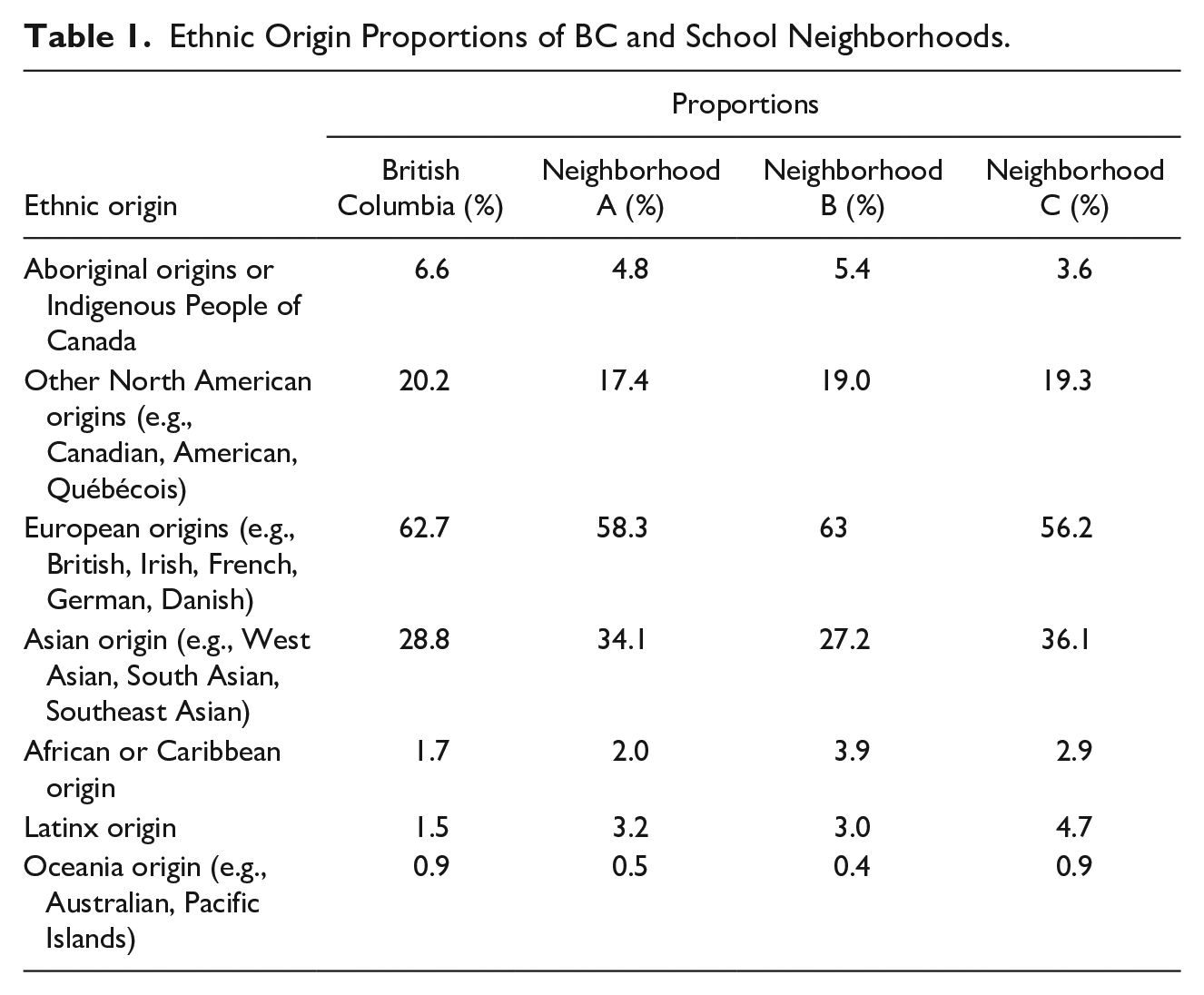
The participating students were recruited from three middle schools in the district that were equivalent in size, socioeconomic status (SES), and ethnic diversity. The ethnic diversity of people in the neighborhoods in which the schools were located was representative of the larger district and population of British Columbia (see Table 1). In the present study, schools were chosen, in part, because the principal in each school had an explicit interest in implementing SEL programs to promote students’ SEC and well-being. The median household income in the neighborhoods in which the schools were located was slightly below the Canadian average, ranging from $60,907 to $106,338 CAD (Mean = $77,790.00 CAD; Statistics Canada, 2019).
Three hundred and fifty students in 14 classrooms across the three public, middle schools were recruited for the study. Of these, 260 received parental/guardian consent and gave assent to participate. Of the 260 students, 77% were present on the day of data collection and had complete data and thus formed the analytical sample of n = 199 (49.5% male, 49.5% female, 1% non-binary gender identification). The mean age of the students was 11.84 (SD = .55). Most students (83.4%) reported English as one of the first languages they learned at home, the next most frequently reported first language was Mandarin (3.5%). The rest of the students reported 28 other languages (e.g., French, Hindi) or combination of languages (e.g., English and Korean). Of the 14 participating teachers, nine identified as female and five identified as male, and they reported their ethnicity as either Caucasian/White (50%), East Asian (14.3%), South Asian (7.1%), or multiracial (28.5%; e.g., Indigenous and Caucasian). Analyses indicated that the students who opted out or were excluded due to incomplete data did not differ from participating students in terms of gender (χ2 [2, n = 244] = 1.33, p = .52) or first language learned (χ2 [22, n = 244] = 23.79, p = .36). Seventh grade students, however, were more likely than sixth grade students to have opted out of all or part of the study, Fisher’s exact test, p = .02, V = .16.
Procedure
Ethics approval was obtained from the University of British Columbia Behavioural Research Ethics Board and from the participating school district. A researcher visited all participating classrooms to explain the purpose of this research. Upon receiving consent and assent, trained graduate research assistants (RAs) administered the student self-report survey at baseline during two 30-minute sessions in one school day. Regarding amount of time interacting with their teacher, sixth and seventh grade students in the participating district spent most of their day with a homeroom teacher and had different teachers for “exploration” classes (e.g., cooking, music) throughout the week. Students were in their main homeroom classrooms during survey administration.
Measures
Students responded to a battery of measures via two-part written survey as part of the larger research study. For the purposes of the present study, demographic data and the open-ended question described below were used.
Demographics
Student demographics were obtained by asking students to respond to questions about their birthdate, grade, gender identity, and the first language(s) they learned at home. Collecting first-language learned, rather than ethnicity, from students is a common practice in Canada and draws from previous work in middle schools (Guhn et al., 2016; Milin et al., 2016). To ensure inclusivity, students could indicate their gender as boy, girl, or in another way and then write (in their own words) how they define their gender identity. These responses were then coded for analysis as 1 = boy, 2 = girl, or 3 = identified in a way other than binary boy or girl.
Open-ended question
As part of the larger student self-report survey, students responded to the open-ended survey question “What are three things that teachers do to show they care?” Students were instructed to respond to this question about teachers in general, not just their present teacher, however a small number of students appeared to respond with one teacher in mind (e.g., “She takes time out of work to get us supplies,” “He is very nice and understanding”). Students provided between zero and three responses (i.e., codable units) to this question. A codable unit was defined as a distinct word, phrase, or sentence, typically written on each line provided under the survey question. Although the question requested students write “three things teachers do to show they care,” students’ responses were not restricted in any way, and they were instructed by RAs that they could write as much or little as they wanted to for the open-ended question.
Analytic Approach
Qualitative content analysis
Coding of students’ descriptions of caring teaching occurred in a few iterative phases based on an abductive coding approach to qualitative content analysis (Onwuegbuzie & Combs, 2010). This approach allowed for the interpretation of text data through the identification of specific themes, followed by the systematic winnowing and classification into thematic categories (Wolcott, 1990). Although we had an aim to examine the applicability of the CCK framework for students’ characterizations of caring teachers, we first inductively examined the themes that emerged from the data. Specifically, the first author familiarized herself with the data by reading through all the student responses and conducting preliminary open inductive coding for themes of teacher caring. As a result, an initial coding frame (O’Connor & Joffe, 2020) was created, which outlined the organization and definition of codes and comprised several mindfulness-related themes and an additional general teaching theme. Following this, themes were collapsed to decrease redundancy through discussions among the first and second author and experts in the field.
Next, the first author and a second coder independently practice coded responses from the same 50, randomly selected participants. Note that the second coder was external to the field of mindfulness, thus provided an impartial contribution to coding and refinement of the coding frame. Each response (codable unit) was assigned up to two codes, meaning each student could have between one and six theme codes assigned to their full answer to the survey question. After doing so, the coders convened to compare their codes, discuss ambiguities, modify codes, and create additional coding rules as needed to minimize discrepancies. Development of the codebook was an iterative process and involved refining and expanding codes based on the practice coding (Saldaña, 2013). Through this process and further winnowing of themes, it was determined that 18 themes could be organized into the three thematic categories representing the CCK framework, Calm, Clear, and Kind, alongside one additional theme of General Teaching.
Considering the refinement of the coding manual, the first author and secondary coder independently practice coded responses from a new, randomly selected, set of 50 cases. Finally, given the high level of agreement in this practice stage of coding, the full coding of the entire data set proceeded. There was a goal of achieving Cohen’s kappa ≥.70 and exact agreement ≥90% in the coding of the full data set, which are deemed acceptable cut-offs for agreement indices for a sample of this size (Lombard et al., 2002). In a last step, the first author coded all responses in the study sample. As a means of establishing reliability in the final study sample, a secondary coder independently coded all responses from a new random subsample (i.e., independent of the practice subsamples) of 25% (n = 61) of the sample. This percentage has been established in previous research as an acceptable proportion on which to calculate reliability (i.e., minimum 10%; Lombard et al., 2002). The first author was unaware of which students’ data were coded by the secondary coder. Cohen’s κ and percent agreement were calculated between the two coder’s codes of this random subsample (n = 61) of the data. This resulted in an overall percent agreement of .90 and Cohen’s κ of .73 across all codes. Any significant discrepancies were discussed and resolved before final analyses. As suggested by Creswell and Miller (2000), the combination of intercoder reliability analyses, peer review of coding frame by experts in the field, and a triangulation of findings with regard to previous research (Wentzel, 1997) establishes trustworthiness of the qualitative findings.
Transformation of qualitative data
To identify the most commonly used themes by students, we transformed qualitative data into quantitative data and conducted statistical analyses on these data. We chose this mixed methods approach because utilizing qualitative exploration of students’ own words provides insight into the contextual nuances and differences of students’ understandings of caring teachers (Creswell & Plano Clark, 2018), however these insights may be unique to the present sample. Including a quantification of the qualitative data can allow for a comparison of present results with previous and future research with other populations. Moreover, this approach follows and extends previous work on students’ conceptualizations of caring teachers (Garrett et al., 2009; Wentzel, 1997). Total counts of theme incidences across all responses were calculated to report overall frequency of themes. To estimate prevalence of each theme in students’ responses, themes were also coded dichotomously, with a 0 representing no presence of the theme and 1 representing a student using a given theme at least once in their responses. We also collapsed the 19 themes into their four thematic categories, created dichotomous coding for these categories, and analyzed frequencies at this broader level to allow for an overview of theme trends. Frequencies and percentages of themes (in Table 2) as well as combinations of themes (Table 3) within students’ responses are presented in the following section.
Frequencies (%) of Themes and Responses by Gender and Grade.
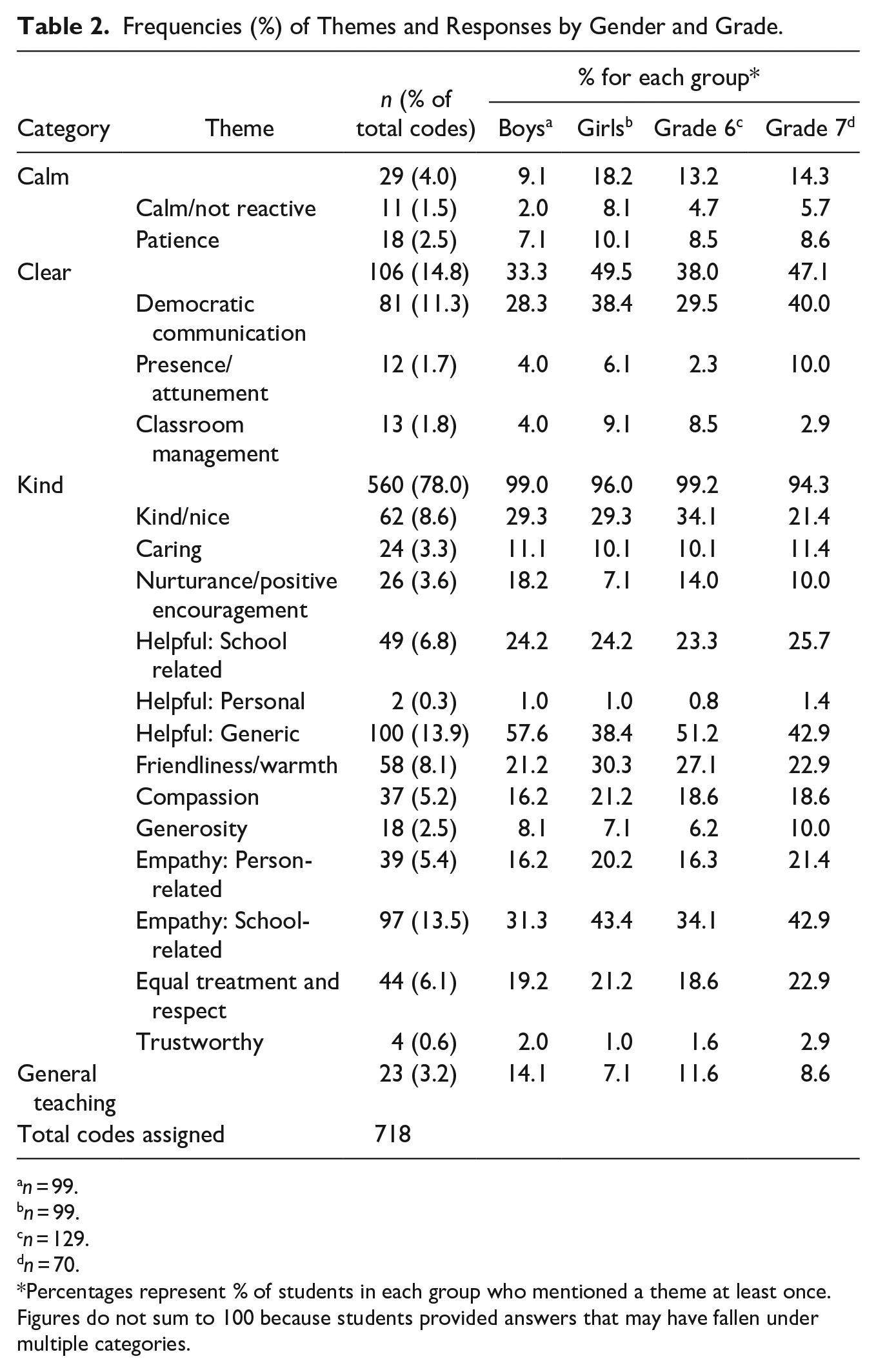
n = 99.
n = 99.
n = 129.
n = 70.
Percentages represent % of students in each group who mentioned a theme at least once. Figures do not sum to 100 because students provided answers that may have fallen under multiple categories.
Combination of Themes Present in Students’ Responses.
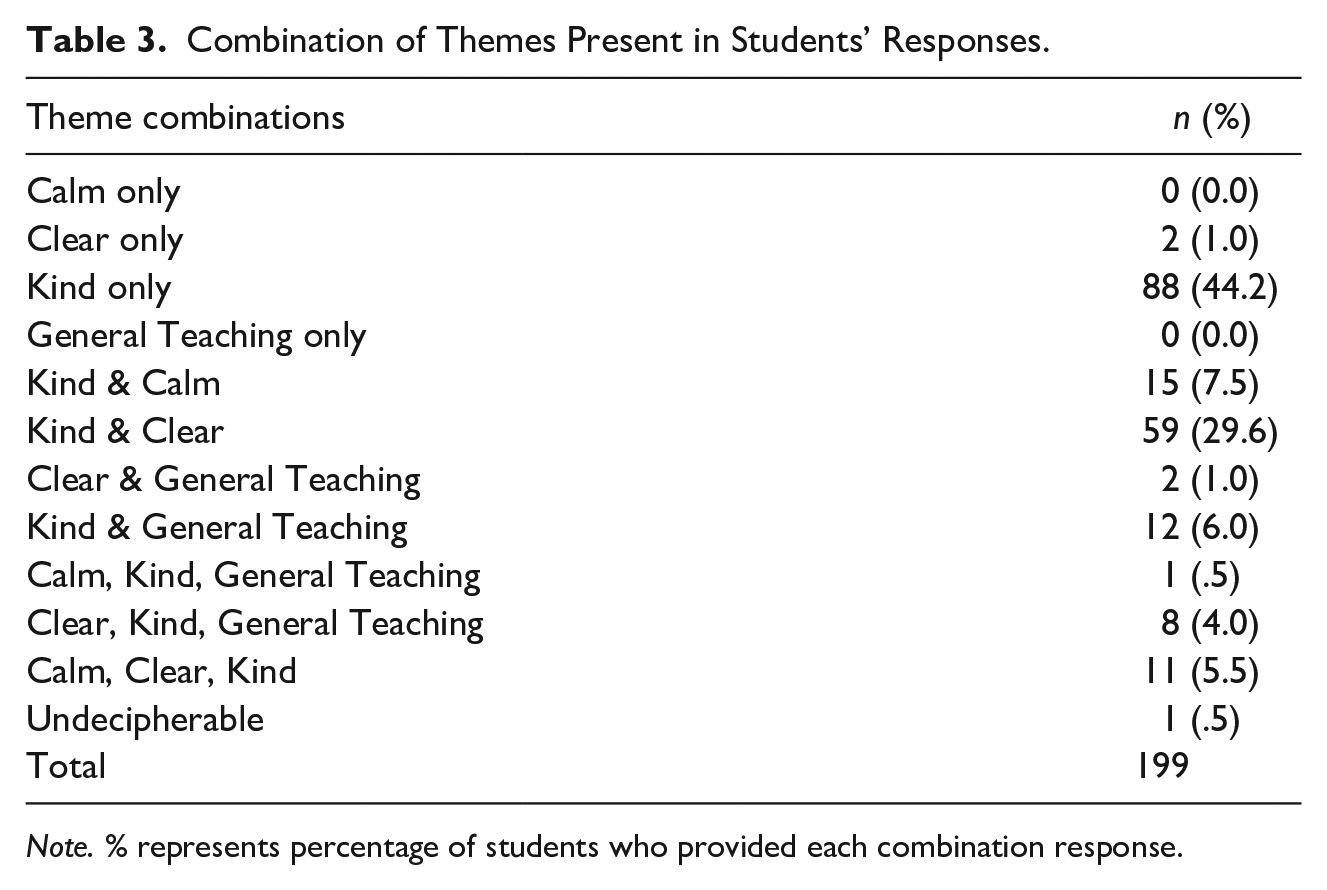
Note. % represents percentage of students who provided each combination response.
We used a series of chi square analyses to examine if there were differences in the themes present in students’ responses, according to their gender, grade, and first language learned. Chi-square tests of independence are non-parametric tests that are appropriate for nominal data with unequal group sizes (McHugh, 2013). For each analysis, effect size was estimated using the strength test Cramer’s V (also known as Cramer’s phi), which is a form of a correlation and is interpreted as such. As with most correlations and effect sizes, a correlation of .20 is considered small whereas correlations of .50 would be moderate and above .80 would be large (Ferguson, 2009).
Findings
Qualitative Findings
The qualitative content analysis was conducted on data from the 199 participating students who provided codable responses to the question “What are three things that teachers do to show they care?” Students’ responses ranged from single words (“Help”) to longer phrases (“If someone doesn’t understand something, he will take his time to help them”). A total of 19 themes were identified in students’ responses. These themes were then organized into the four thematic categories of Calm, Clear, Kind, and General Teaching. All themes and additional sample responses are provided in Table 4.
Themes and Sample Student Responses.
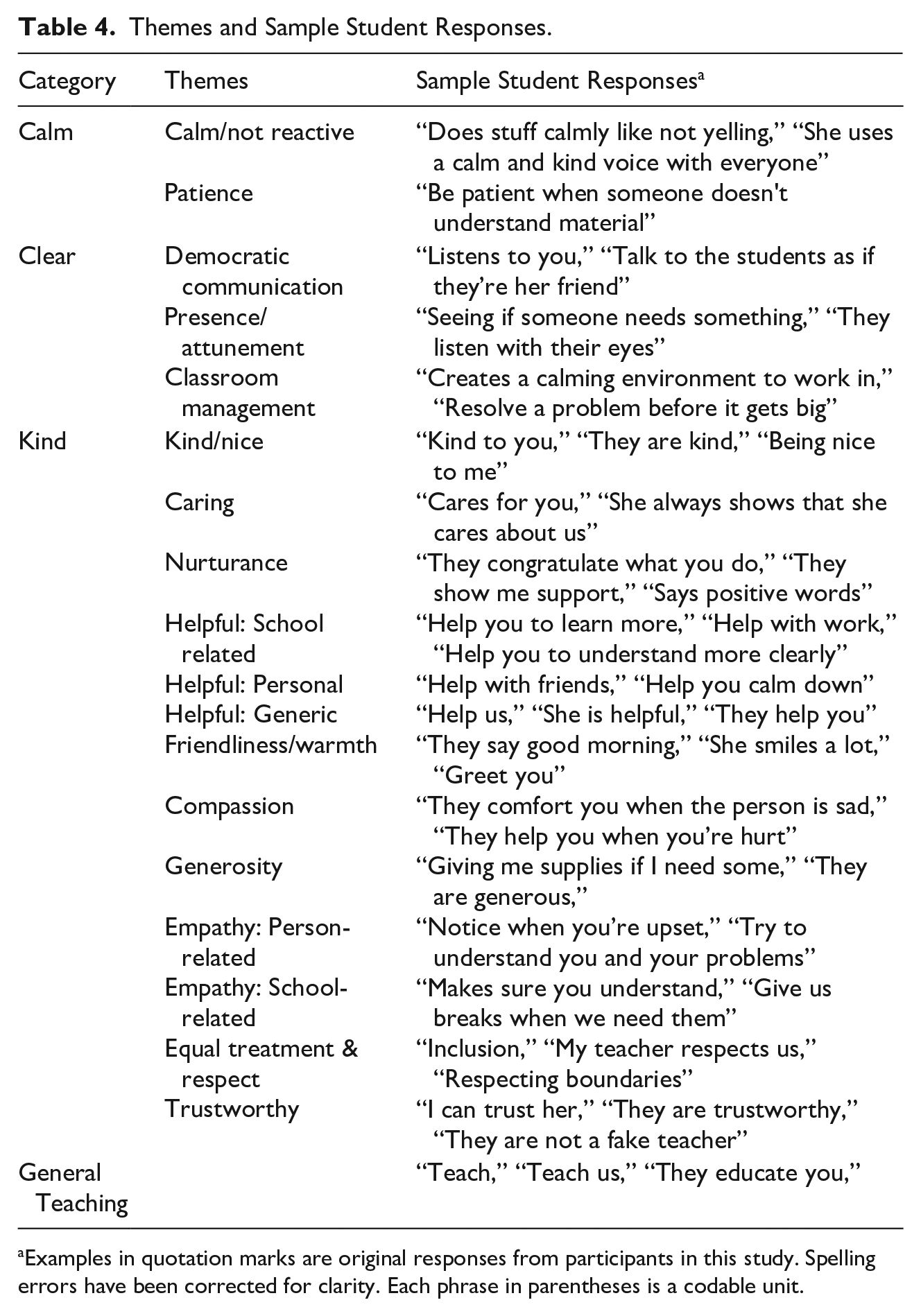
Examples in quotation marks are original responses from participants in this study. Spelling errors have been corrected for clarity. Each phrase in parentheses is a codable unit.
Calm
The Calm category comprised 4.0% of the total theme codes assigned across all responses from students, with 13.6% of students mentioning a Calm theme at least once. This category encompassed themes related to teachers’ calmness, stability, and ability to regulate their emotions (Rodgers & Raider-Roth, 2006). The Calm category themes were unique in that they never occurred in isolation within students’ responses. Rather, they were always present in combination with another theme category. For example, students who provided responses that contained Calm themes (e.g., “She doesn’t yell”) always concurrently provided responses with a theme from another category (e.g., Kind theme compassion; “She helps when someone has a problem”). Specifically, two themes that emerged from the data aligned with this thematic category: Calm/not reactive and patience.
Calm/not reactive
The calm/not reactive theme included responses about the teacher remaining calm (“stay calm”), commonly with mentions of not yelling (e.g., “They don’t yell”). This theme often occurred alongside another theme, such as the Clear theme classroom management in responses such as “Creates a calming environment to work in.” Five percent of students had at least once incidence of a calm/not reactive theme in their responses.
Patience
One theme referred to teachers being patient and “taking their time” and was assigned to responses such as “She takes her time to help me understand” and “Be patient when someone doesn’t understand material.” Less than one percent of students used this theme to describe a caring teacher.
Clear
The Clear category comprised 14.8% of all codes and contained themes regarding teachers’ presence and focus, attunement, lack of distraction, and effective communication with their students (Kabat-Zinn, 1994; Rodgers & Raider-Roth, 2006). Forty-one percent of students provided responses with at least one Clear theme. Specifically, three Clear-related themes emerged: Democratic communication, Presence/attunement, and classroom management. Many responses that contained Clear themes were also concurrently coded for other themes. For example, “Gives students opportunities to do what they like” was coded for both the Clear theme of classroom management and the Kind theme of empathy-school related (i.e., empathy regarding school/learning matters).
Democratic communication
The democratic communication theme encompassed teachers’ tendency to listen (e.g., “They listen”) and value students’ voices and opinions (e.g., “They listen to your ideas and talk nicely”). Students also identified the importance of teachers’ open-mindedness (e.g., “they are open-minded”). This theme was the third most frequently mentioned theme (11.3%), with 33.2% of students having used this theme at least once.
Presence/attunement
Presence and attunement, two significant factors in both mindful teaching (Hulburt et al., 2020) and pedagogical caring (Wentzel, 1997) approaches also emerged in students’ responses. This theme involved teachers’ noticing (“notice your feelings even if other people don’t”), attention (“pay more attention to me”), and presence and lack of distraction when interacting with the student (“One-on-one time with you,” “They don’t go talk to students when I’m talking”). Five percent of students had responses that contained this theme.
Classroom management
Several students (6.5%) mentioned teachers’ classroom management techniques, which often included encouraging respect and autonomy, as a signal of caring. Some examples of responses with this theme include “Try to set a good class environment,” “They make sure everyone is listening,” “Let you have fun as well as work,” “Lets us pick certain things in projects,” and “Gives students opportunities to do what they like.”
Kind
The Kind category comprised the most common types of themes that emerged in students’ responses, comprising 78.0% of all codes. Moreover, almost all students (97.5%) mentioned a Kind theme at least once in their responses. In alignment with the inclusive definition of kind-heartedness in the CCK framework (Hulburt et al., 2020), a wide variety of kindness dimensions were identified by students in this study. Specifically, the broad category of Kind included 13 themes ranging from general mentions of kindness or caring to more nuanced and elaborate examples of empathy, compassion, friendliness/warmth, and helpfulness. Additional themes of generosity, trustworthiness, and equal treatment/respect were also present and included in the Kind category. A full list of the 13 Kind themes and additional student examples are provided in Table 4.
Kind/nice
Several students (29.6%) described caring teachers with at least one mention of general kind/nice dispositions such as “Is nice to students,” “Say nice things,” “Kindness” and “Is kind to everyone.”
Caring
Some students (10.6%) reiterated the question by providing responses such as “Cares for students” and “They are caring” or elaborated on care with responses such as “Care for her students like her own family” or “She shows you that she cares.”
Nurturance
Reflective of the theme present in Wentzel’s (1997, 2002) work and Baumrind’s (1991) dimensions of effective caregiving, nurturance encompassed teachers’ offering of positive reinforcement or compliments (“Compliment me,” “Say good job,” “Makes us feel special and supported”) as well as assurance of safety (“Keeps us safe,” “They look out for you”) and support (“They are emotionally supportive,” “They support us,” “She supports all of us in different ways”). Several students (12.6%) described caring teachers in these terms.
Helpful—School related
Nearly a quarter of students (24.1%) responded with themes related to a teachers’ helpfulness regarding school specifically. These responses ranged from simple “Help kids with work” and “Help me learn” to more elaborate and specific descriptions such as “They help you when you are stuck on something,” “Help when someone is confused,” “When they help you, they will keep helping till you understand,” and “Make an effort to help us learn.” Many of the responses with this theme also included elements of empathy-school related, whereby the student recognized the importance of teachers’ appreciating the unique needs of the student and proceeding to help them (e.g., “Help you learn at your own pace”).
Helpful—Personal
A small number (1.0%) of students explicitly mentioned teachers’ helpfulness toward personal issues (e.g., “Help with friends,” “Help you calm down”) as an example of caring.
Helpful—Generic
The most prevalent theme was the Kind theme help—generic, which accounted for 13.9% of all codes assigned, and represented responses such as “They are always helpful,” “Help me if I need help,” and “Helping people.” Specifically, 48.2% of students responded with this theme. Students’ responses were only coded with this theme if they were generic and did not mention personal or school-related helpfulness.
Friendliness/warmth
A quarter of students (25.6%) identified friendly and warm dispositions (e.g., “They smile,” “Teacher is friendly”) as important aspects of teacher caring. This theme also encompassed specific actions such as welcoming students in the morning (e.g., “They say hi to you in the morning”), making school fun (e.g., “They add humor in to make it more exciting,” “They make school fun,” “Laugh with you and have fun with you”), and projecting an enjoyment of teaching and their students (e.g., “He seems to enjoy teaching,” “They enjoy their students”).
Compassion
Several students (18.6%) mentioned examples of compassion when describing caring teachers. As per the definition of compassion, which encompasses both a recognition of suffering and a desire to relieve it (Eisenberg, 2002), this theme was assigned to students’ responses that explicitly included both aspects (e.g., “Help you when you have a problem,” “They help me get through a hard thing,” “If someone is not feeling well or sad she helps us with our problems”).
Generosity
The theme of generosity referred to both teachers’ generous giving of their time (e.g., “Extra after school help”) and resources (e.g., “She takes time out of work to get us supplies,” “They take out their own money to give to students,” “She always says that she can buy stuff for us that we really need”) and was mentioned by 7.5% of students.
Empathy—Person-related
Empathy, specifically pertaining to personal issues, was mentioned by 18.1% of students. This theme referred to teachers showing an interest and noticing students’ adjustment beyond just their academics (e.g., “Say how are you today,” “Understand how we feel,” “Seeing when people are sad”). Sometimes responses with this theme also contained other themes, such as friendly/warm (e.g., “Say how are you today”).
Empathy—School-related
Empathy that was specific to school and learning was the second most frequently mentioned theme overall and accounted for 13.5% of the codes assigned. This theme referred to responses that related to a teacher recognizing the student as a learner with unique academic skills, problems, and contributions to make to the class (e.g., “makes sure everyone has an opinion”). This theme also included reference to a teacher’s concern for the student’s learning (e.g., “They try to help you in different ways so you can understand”). Students who used this theme often also used the theme of help–school (e.g., “Help with work,” “They try to help you in different ways so you can understand”). Thirty-seven percent of students provided at least one codable answer with an empathy school-related theme.
Equal treatment and respect
A key tenet of the Kind domain in the CCK framework is approaching relationships with non-judgment and respect (Hulburt et al., 2020). Twenty percent of students provided at least one response that contained this theme: “My teacher respects us,” “Respect you and others,” and “Respecting boundaries.”
Trustworthy
As mentioned in the CCK framework (Hulburt et al., 2020) and work by Palmer (2017), relational trust is built on the foundations of empathy, kindness of heart, and compassion. Thus, trustworthy was included within the thematic category of kindness. The theme of trustworthy referred to explicit mentions of being able to trust their teacher (e.g., “I can trust them”) as well as mentions of authenticity of the teacher (e.g., “They are not a fake teacher”). Two percent of students mentioned trustworthiness at least once.
General teaching
A small number of responses from students (n = 23) referred generically to teaching (e.g., “They teach,” “Teach”) or described broad teaching strategies (e.g., “They tell me what the assignment is”). These responses were assigned the theme General Teaching. Specifically, 10.6% of students had at least one response with this theme. Like the Calm themes, students never used a General Teaching theme alone; their subsequent responses or part of their responses always included other category themes like Calm or Kind (see Table 3).
Quantitative Results
Participating students provided a total of 591 discrete responses to the question and 726 codes were assigned representing the 19 emergent themes. That is, students provided between one and three responses with most providing the requested three responses (Mode = 3) to the question, and their responses often contained multiple themes (e.g., empathy and helpfulness; compassion and democratic communication). Specifically, each student’s response received between one and six codes (i.e., themes) for their entire response to the question (which usually contained three codable units/phrases), with a mean of 3.69 (SD = .95) theme codes per student. There were no significant gender (χ2[5, n = 198] = 9.48, p = .09, V = .22, 95% CI [0.00, 0.30]), grade (χ2 [5, n = 199] = 3.48, p = .63, V = .13, 95% CI [0.00, 0.18]), or first language learned (χ2 [100, n = 199] = 78.20, p = .95, V = .31, 95% CI [0.00, 0.33]) differences in number of codes assigned, therefore number of responses was not included as a covariate in subsequent analyses. A total of eight discrete responses were not decipherable due to poor spelling or lack of context (e.g., “The school”), but only one student had entirely undecipherable responses for all three responses. Of the 583 interpretable responses, 560 student answers (96%) reflected mindful teaching themes of calmness, clarity, and kindness, whereas 23 responses referred very broadly to teaching (e.g., “Teach us”) thus were assigned a General Teaching theme. Indeed, of the 718 codes assigned to students’ responses, 695 codes could be organized within the Calm, Clear, or Kind theme categories. Over half of the students (54.3%) provided responses that contained multiple themes (Table 3). The most common combination of themes was Kind and Clear, which represented 29.6% of students’ responses, followed by Kind and Calm (7.5%) (see Table 3 for all combinations).
A series of Likelihood Ratio chi square tests were conducted to test for differences among all 14 classrooms in the study with regard to presence of themes (McHugh, 2013). Results indicated no significant differences among the 14 classrooms in the presence of Calm (χ2[13, n = 199] = 19.65, p = .10, V = .31, 95% CI [0.00, 0.44]), Clear (χ2[13, n = 199] = 7.98, p = .85, V = .20, 95% CI [0.00, 0.20]), Kind (χ2[13, n = 199] = 13.08, p = .44, V = .26, 95% CI [0.00, 0.28]), or General Teaching (χ2[13, n = 199] = 19.65, p = .10, V = .31, 95% CI [0.00, 0.44]) themes in students’ descriptions of caring teachers.
Demographic differences in emergent themes
To investigate how students’ responses differed across gender, grade, and first language learned, both CCK category and specific theme frequencies were analyzed via a series of chi-square tests. Because the rows and columns in the contingency tables for demographic differences had only two groups (e.g., two genders and presence/absence of theme), the more precise and recommended Fisher’s exact test was used (McHugh, 2013). Due to the small sample size (n = 1) of students indicating their gender as something other than male or female, thus not meeting χ2 assumptions, this group was omitted from the contingency tables.
Gender differences in CCK thematic categories
Chi square tests indicated differences between boys and girls in the themes they used to describe caring teachers (see Table 2). Specifically, Fisher’s exact tests indicated there were no significant differences between genders in the presence of Calm (p = .10, V = .13, 95% CI [0.00, 0.27]) or Kind (p = .37; V = .10, 95% CI [0.00, 0.24]) themes in students’ responses, but boys and girls did differ in their use of Clear themes, Fisher’s test p = .03, V = .16, 95% CI [0.02, 0.30]. In particular, girls were more likely to use Clear themes (e.g., “Notice your feelings even if other people don’t”) compared to boys. There was no gender difference in students’ use of General Teaching themes, Fisher’s test p = .17, V = .14, 95% CI [0.00, 0.28].
Gender differences in specific themes
When investigating specific themes within each CCK category, some additional gender differences emerged. For example, within the Kind category boys were more likely than girls to mention themes of general helpfulness (e.g., “Helps me”), Fisher’s test p = .01, V = .19, 95% CI [0.05, 0.33], and nurturance/positive encouragement (e.g., “They congratulate what you do”) themes, Fisher’s test p = .03, V = .17, 95% CI [0.03, 0.31].
Grade differences in CCK thematic categories
Fisher’s exact χ2 tests by grade indicated no significant differences between sixth and seventh grade students in their use of Calm (p = .83; V = .01, 95% CI [0.00, 0.14]) or Clear (p = .23; V = .09, 95% CI [0.00, 0.22]) themes when describing caring teachers. A difference between grade levels on whether students mentioned a Kind theme approached significance, Fisher’s test p = .053, and had a comparable effect size to the other significant findings, V = .15, 95% CI [0.00, 0.29]. Specifically, sixth grade students were more likely than seventh grade students to use Kind themes (e.g., “Cares for you”) to describe caring teachers. However, investigation of the 95% CI around the Cramer’s V effect size, which includes 0 at the lower bound, further supports the non-significant conclusion. Sixth and seventh grade students did not differ in their use of General Teaching themes when describing a caring teacher, Fisher’s test p = .62, V = .04, 95% CI [0.00, 0.17].
Grade differences in specific themes
Finally, although no grade difference emerged for the overall Clear category, separate analyses of each individual Clear theme revealed that seventh grade students used presence/attunement themes (e.g., “They listen with their eyes”) significantly more than sixth grade students to describe caring teachers, Fisher’s Exact test, p = .04, V = .16, 95% CI [0.01, 0.30].
First language learned differences in CCK categories
To further explore potential differences between students of different ethnicities and cultures, we examined prevalence of themes between students who indicated only English as their first language learned and students who indicated either English and another language or just another language as their first language learned. This grouping resulted in 116 students who only indicated English as their first language learned and 83 students who reported a combination of first languages. A significant difference was found in the theme compassion (Fisher’s Exact test, p = .02, V = .17, 95% CI [0.03, 0.31]), with students who reported multiple or non-English first language learned more likely to mention compassion themes (e.g., “When someone is sad or upset he will help them”) than other students. In contrast, students who reported English as their first language learned were more likely than students who reported multiple languages or a language other than English as their first language learned (Fisher’s Exact test, p = .003, V = .22, 95% CI [0.08, 0.36]) to mention the theme personal-empathy (i.e., teachers’ empathy and understanding regarding personal issues, as opposed to academic), such as “Understand how we feel.”
Discussion
A growing body of work has demonstrated the importance of teacher caring in fostering positive student-teacher relationships in early adolescence (Noddings, 2015; Wentzel, 2002), however, relatively few studies have examined the conceptualizations of teacher caring from the perspectives of students in middle school (Tosolt, 2009; Wentzel, 1997). Furthermore, no studies to date have delineated students’ conceptualizations of a caring teacher through the lens of mindful teaching. This mixed methods research explored students’ own descriptions of what a teacher does to show they care. Specifically, a qualitative content analysis revealed 19 themes that represent the qualities that students feel exemplify teacher “caring.” These themes predominately reflected the three domains of the CCK mindful educator framework: Calm, Clear, Kind. Some of the most common themes students identified were associated with the Kind category and included themes such as empathy and helpfulness. Clear themes were relatively prevalent as well, such as the theme of democratic interactions which refers to teachers’ propensity to solicit and value students’ voices and opinions. A small number of responses reflected Calm themes (e.g., not reactive, patience) and general teaching.
Some of the emergent themes reflect those found in Wentzel’s (1997) study, such as democratic interactions (e.g., “listens to you,” “they are open-minded”) and empathy (i.e., “recognition of student’s non-academic functioning,” p. 416). Because the coding scheme in the Wentzel (1997) study was primarily guided by family socialization (Baumrind, 1991) and pedagogical caring (Noddings, 2015) frameworks, student responses that did not fit the a priori themes were designated as Other/Vague. This category included responses such as “Nice to me” and “Helps me.” The present study adds to the literature by examining students’ descriptions of what teachers do to show they care through the template of mindful teaching, specifically exploring the potential utility of the CCK framework for classifying the themes in students’ characterizations of caring teachers. In doing so, we further unpacked responses similar to those found in Wentzel’s “other/vague” category that had previously not been captured by extant frameworks and found additional themes such as compassion, helpfulness, and presence.
For the current study, the majority of students’ responses fit under the thematic category of Kind. This was not unexpected, given the diversity of the Kind category and the question posed to students which asked about teacher caring, whereby students may view “kind” and “caring” as interchangeable or closely associated. In addition, often more than one kind theme occurred within students’ responses, increasing the overall frequency of kind themes. However, the diversity of the 13 kindness themes generated by students is notable and aligns both with previous studies that have found a multidimensionality to early adolescents’ conceptualizations of kindness (Binfet, 2020) and the multiple facets of kindness outlined in the CCK framework (Hulburt et al., 2020). Specifically, the present data supports this broader definition of teacher kindness that comprises themes of friendly/warm dispositions (e.g., “They say good morning”), to more complex themes exemplifying a mindful approach to teaching (Hulburt et al., 2020), such as teacher’s empathy (“Notice when you upset”), compassion (“They comfort you when the person is sad”), and helpfulness (“Help you to learn more,” “Help us”). Prevalent themes such as helpfulness highlighted students’ valuing of teachers’ responsiveness to their needs (e.g., “Help you to understand more clearly,” “Help you calm down”). Some more nuanced themes were also included in the Kind category, such as generosity (“Giving me supplies if I need some”) and trustworthiness (“I can trust her”), as these themes have been identified in previous research as important aspects of kindness for young adolescents (Binfet & Passmore, 2019) and integral dimensions of a mindful teaching approach (Hulburt et al., 2020).
Another noteworthy finding was that students independently generated responses reflective of the Clear and Calm aspects of the mindful teaching literature (Hulburt et al., 2020) in their descriptions of teacher caring. In other words, in addition to the importance of teachers showing kindness, students also identified themes of presence, democratic communication, and patience as important aspects of how teacher can show they care - qualities that reflect early adolescents’ growing need to feel heard and seen (Ben-Arieh, 2005).
Regarding group differences in students’ responses, there were no significant differences among the 14 classrooms in the present study, which suggests some overall consistency in how middle school students describe a caring teacher. The current research, however, did indicate gender differences in students’ characterizations of a caring teacher. Previous research has demonstrated that student-teacher relationship closeness and conflict tend to differ by student gender, as reported by both teachers (Koepke & Harkins, 2008; Zee & Koomen, 2017) and students (Hughes, 2011; Koomen & Jellesma, 2015). The current findings may offer some insight into why these differences have been found between genders. Girls and boys equally used Kind, Calm, and General Teaching themes in their descriptions of caring teachers, however, girls used significantly more Clear themes than boys. This suggests that early adolescent girls may value teachers’ presence and attunement (e.g., “Listens to you,” “Pay more attention to me”) in their interactions, more than adolescent boys. Although all adolescents have an increasing need to be heard (Ben-Arieh, 2005), some research has suggested this need may develop sooner or more saliently for girls (Banister & Schreiber, 2001). In addition, boys were more likely than girls to mention themes of help or nurturance/positive encouragement (e.g., “They congratulate what you do”). As such, perhaps there is a disconnect between what teachers offer and what students of each gender need in the relationship. Taken together, these findings may reflect true differences in the needs of students of different genders (Banister & Schreiber, 2001), or it could be reflective of the disparate quality of relationships between teachers and boys versus girls (Koepke & Harkins, 2008). For example, there has been a longstanding concern about the “feminization of education” (Driessen, 2007), whereby teachers value traits more stereotypical of girls compared to boys (Fagot, 1981). Boys’ more frequent use of nurturance themes could be reflective of an unmet need for boys in school, whereby teachers are inherently less nurturing toward boys and more nurturing and supportive of girls. More qualitative research (i.e., focus groups, think-aloud protocols) is needed, however, to better understand the nuances within student-teacher relationships for each gender, as well as the context of students’ characterizations of caring teachers.
In the present study, we were also interested in exploring the degree to which definitions of caring might differ with regard to students’ grade level. For example, it may be that older students are better able to generate more sophisticated features of “caring” in their teachers, in comparison to younger students. Our data revealed only one significant grade difference whereby seventh grade students used the Clear theme of presence/attunement significantly more than sixth grade students to describe caring teachers, perhaps indicating a more advanced understanding of caring or observation of teacher behaviors. Future research may benefit from further investigating grade differences in students’ characterization of caring teachers with a broader range of distinct grade levels.
As is typical in Canada (Guhn et al., 2016; Milin et al., 2016) we collected first language learned as a proxy for ethnicity rather than directly asking students to indicate their racial or ethnic backgrounds. As a result, the 21 reported language groups were complex and often reflected combinations of languages (e.g., English and Cantonese), and although were representative of the languages present in the population (Statistics Canada, 2019), were not an exact representation of the ethnic or racial distribution in the region. We did however examine differences between students who reported English as their first language learned and students who reported multiple languages or a language other than English as their first language learned. The results revealed that students who reported English as their first language learned were more likely to mention themes of teachers’ empathy toward them as a person (as opposed to school-related), whereas students who reported multiple languages or a language other than English as their first language learned mentioned more themes of teachers’ compassion. These findings do mirror previous work that has shown racial and cultural differences in the features that students view as teacher caring (Alder, 2002; Garza & Soto Huerta, 2014). For example, previous studies have shown that White students are more likely to describe teachers’ caring in terms of their attention to personal issues, whereas students of color tend to prioritize other features, such as teachers’ high expectations and support for the academic success, as indicators of caring (Alder, 2002; Garza & Soto Huerta, 2014). As language does not necessarily map onto ethnicity or race, the present results cannot speak to differences that may be found between students of various ethnicities or races but provides preliminary insight into differences that may exist between students of various cultural groups (i.e., English-speaking households vs. multi-lingual households).
Strengths and Limitations
One of the primary strengths of this study was the exploration of early adolescents’ own conceptualizations of caring—a perspective typically missing in the theoretical and empirical study of supportive relationships between students and teachers. An additional strength of this study was the relatively large and diverse sample of students who provided open-ended responses, considering that qualitative studies in schools often involve fewer participants due to the intensive nature of the methodology. Moreover, this study took place in Canada whereas most research on students’ perceptions of student-teacher relationships has occurred in the United States (Wentzel, 1997). Hence, this is one of the first studies of Canadian middle school students’ perceptions of teacher caring.
The mixed methods approach of this research provides a deeper, nuanced understanding of how students perceive teacher caring while also highlighting the aspects most important to early adolescents. Specifically, the mixed-methods approach which included qualitative content analyses followed by quantitative analyses, allowed for the exploration of patterns in the student data by demographic characteristics. In addition, the qualitative content analysis followed a rigorous set of steps, including a second coder for reliability and multiple practice coding rounds.
One limitation of this study regards the degree to which the study’s findings are generalizable to students in other school systems outside of BC’s. For example, as detailed earlier, the BC school system has an intentional focus on promoting the social and emotional development of students and in supporting teachers in doing so. Therefore, the sample of students and teachers in this study may have possibly been more exposed to and primed for creating caring, and social and emotionally supportive classrooms and/or were more familiar with using the language of caring teachers compared to individuals from other districts. This setting can be considered both a strength and limitation of this study. For instance, this fertile, SEL-primed context may have contributed to students’ breadth of vocabulary and awareness of caring characteristics, thus resulting in the wealth of themes that emerged in their responses. It is important to acknowledge however, regarding generalizability, that this study may have resulted in a different magnitude, breadth, and/or type of responses from students, had it been conducted elsewhere. It would be beneficial for future studies to explore student’s characterizations of caring teachers across different districts, and to compare themes of caring teachers between districts with a strong priority on SEL and districts with less of focus on caring contexts, to explore the influence of district-wide SEL initiatives on student-teacher relationships.
An additional limitation is that the larger research study, from which the data were drawn for the present research, did not collect ethnic or racial identity directly from participating students. Asking students to report first language learned rather than ethnicity is a common practice in Canada (Milin et al., 2016), given the complexity of racial identities in Canada. However, this did limit our ability to investigate ethnic and racial differences in students’ conceptualizations of teacher caring. As identified by the neighborhood-level census (Statistics Canada, 2019), the three participating middle schools consists primarily of people who reported European, North American, or Asian ethnic origin, with smaller proportions of people who identify their ethnic origin as African or Caribbean origin, Indigenous Peoples of Canada, Latinx, or Oceania origins. Acknowledging the systemic racism and inequalities experienced by underrepresented cultural groups and students of color, particularly Black and Latinx populations and Indigenous Peoples (Hope et al., 2015), future studies should continue to examine the critical roles that race and culture play in students’ perceptions of “caring” teachers (Bartell, 2011; Garza & Soto Huerta, 2014). As several authors have highlighted, caring is important for all students but may manifest differently in various cultures or ethnic groups (Alder, 2002; Thompson, 2003). At the same time, teacher caring may be of particular significance for certain groups of students’ success in school (Alder, 2002). Moreover, research has shown that the qualities that students of color value in a supportive teacher may differ from those of students more represented in research (i.e., middle class, White) (Garza & Soto Huerta, 2014; Rolón-Dow, 2005; Tosolt, 2009). Future studies should continue to utilize qualitative approaches to investigate how students of color characterize caring teachers.
Implications and Future Directions
The findings in this study shed light on the behaviors and characteristics that early adolescents interpret as caring in their teachers, highlighting mindful teacher qualities and actions, with a particular emphasis on empathy, helpfulness, and teachers’ tendency to listen to and value students’ voices and opinions (i.e., democratic communication). Previous work has stressed that teachers are often acutely aware of how important it is to provide emotional support to their students, but that many report not having the time to focus on these aspects within the already time-constrained school days (Greenberg et al., 2003). The results of the present research point to the need for administrative support (Oberle et al., 2016) to scaffold teachers in their desire to provide this level of care and support to their students. Moreover, although teachers may know they need to provide emotional support to their students, they may not always know exactly how. The present research contributes some tangible teacher characteristics and behaviors that teachers and schools can prioritize, especially when teaching in middle schools. Specifically, this study shows that middle school students themselves identify qualities of empathy, presence, attunement, and democratic communication as ways in which teachers can show their support and caring. This bolsters the growing evidence that emotional support and caring are not only important for young children but remain integral as students move through the later years of school (Longobardi et al., 2016; Zee & Koomen, 2020).
This study illuminates the unique context of middle schools in Western Canada and characteristics that students in this context identify as exemplifying a caring teacher. Additional research is needed, however, to further explore the characterization of caring teachers among additional diverse populations, particularly underrepresented groups. In particular, the participants in this study were from middle class neighborhoods, thus the findings may not generalize to students from other SES backgrounds. For instance, attachment research has shown that when there is less relational stability or more conflict in the home, which could be the case for some economically marginalized families, children may seek more security and safety (i.e., “safe haven”) from trusted adults outside of the home environment (Sabol & Pianta, 2012). Students coming from these home experiences may therefore value additional or different features, when defining a caring teacher (e.g., “they make me feel safe”) than what was reported by the current sample of students.
The findings in the present study provide support for the continued inclusion of early adolescent voices and mixed methods approaches in this field of research. There are many ways prospective studies could expand upon this work, from including more diverse voices to including interviews or focus groups with students, to further understand and elaborate upon students’ characterizations of caring teachers. This study also makes the case for additional mixed methods studies that incorporates students’ qualitative descriptions of their caring teachers as well as classroom observational tools (CLASS-S; Pianta et al., 2012) to triangulate and further contextualize caring interactions in the classroom.
Through the examination of students’ own descriptions of caring teachers, the current study corroborates the accumulating evidence that has demonstrated the value of a mindful approach to teaching (Schonert-Reichl & Roeser, 2016). Moreover, given the critiques of feminist theories of care, particularly regarding their propensity to be ethnocentric and lack cultural sensitivity (Antrop-González & De Jesús, 2006; Thompson, 2003), mindfulness, with its focus on presence, respect, and awareness has the potential to foster a meaningful and more sensitive and responsive approach to caring in the classroom. However, we also echo the importance of explicitly approaching mindfulness practices with an intentional antiracist lens (Cannon, 2016) to ensure potential benefits translate to all students and teachers. Specifically, when integrated with cultural awareness and responsivity, mindfulness has the capacity to be a means to reduce racial bias and promote social justice (Cannon, 2016; Lueke & Gibson, 2015)—acknowledging that true change and care cannot happen without this intersection.
To date, most research investigating teacher mindfulness interventions have focused on teachers’ self-reports of the impact of the program on their well-being and relationships (Crain et al., 2017; Klingbeil & Renshaw, 2018), with few studies assessing the impact of teacher SEL or mindfulness programs on students, and/or as perceived by students (Singh et al., 2013). Bearing this in mind, future developers and researchers should seek to evaluate the impact of teacher mindfulness PD and interventions on early adolescents, by empowering students to provide their perspectives. Furthermore, the present findings provide some characteristics to focus on in the development of teacher PD and classroom interventions. For example, designing interventions and school initiatives that aim to foster the qualities that early adolescents identify as important in student-teacher relationships, such as teachers’ presence, compassion, and helpfulness beyond academics, may be what students at this age need most to thrive. Most importantly, researchers and practitioners must both continue to ask students themselves, what they need to thrive.
Footnotes
Declaration of Conflicting Interests
The author(s) declared no potential conflicts of interest with respect to the research, authorship, and/or publication of this article.
Funding
The author(s) disclosed receipt of the following financial support for the research, authorship, and/or publication of this article: This research was supported by funding from an anonymous donor to the second author.
