




Abstract
Preventing mentor-mentee relationships from ending prematurely is important because an early or unanticipated closure could lead to negative youth outcomes. In this study, the reasons for premature closure of a community-based mentoring program for youth with a visual impairment (VI) are studied. Data from 44 prematurely ended mentor-mentee pairs were analyzed; all mentees (mean age = 18.5, SD = 1.92) and 23 of the mentors had VI. Logbook data with two types of transcribed semi-structured interviews were thematically coded line-by-line. Frequencies of coded responses provided insight into the most frequently reported reasons and the most frequently reported problems. Chi-square analyses were conducted to study differences between matches in the two conditions (i.e., matches containing mentors with or without VI). Regardless of the condition, premature closure was primarily initiated by mentees, and the most common cause was reported to be due to deficiencies in mentors’ relationship skills. Matches with a mentor with VI experienced more problems within one domain of the International Classification of Functioning (ICF) model. These results show that additional pre-match mentor and supplementary mentee training are needed to increase relationship success in mentoring programs serving youth with VI.
Keywords
Introduction
The positive effects of mentoring programs on a wide range of youth outcomes have been demonstrated in meta-analyses (DuBois et al., 2011; Raposa et al., 2019; Tolan et al., 2014). Mentoring programs involve a supportive and caring relationship between a young person and a non-parental adult (Rhodes, 2002). Positive gains for youth participating in a mentoring program are especially evident within the domains of education and employment (DuBois et al., 2002) and for several social, emotional, and behavioral outcomes (Chan et al., 2013). In addition to these positive effects, some studies of the effectiveness of mentoring programs for youth have shown small average effect sizes (d = .21) and some have even shown negative effects (Raposa et al., 2019). Given the wide range of effects of mentoring on mentees, research has begun to study strategies for increasing the positive impact of mentoring on youth and strategies for preventing negative outcomes.
One strategy focuses on the prevention of early relationship termination. Ending a mentoring relationship prematurely could diminish the positive impact of mentoring, as early relationship closure may lead to the mentee experiencing feelings of rejection and disappointment (Grossman & Rhodes, 2002). It is, therefore, important to study the causes of premature match closure by analyzing the reasons mentors and mentees provide for early relationship termination. Also, studying problems that occurred within the match during the mentoring program could provide insight into why some mentoring relationships fail. This information is especially needed in mentoring programs for youth with a visual impairment (VI), as these youth are at heightened risk of having negative social experiences in life (Pinquart & Pfeiffer, 2011b). In fact, little is known about what reasons mentees with VI provide for early mentoring relationship termination and what problems occur within these matches, which could interfere with establishing a successful mentoring relationship.
Premature Closure
Mentoring relationships could either end by decline or because of dissolution (Keller, 2005a). For matches that do make it to the end of the program, some mentoring programs coach matches to decide whether they want to redefine or dissolve their relationship. Unfortunately, a large number of mentoring relationships never reach the finish line to have these types of conversations. Most of what we know about premature closure in mentoring relationships is the frequency that it occurs. Estimates show that a third to a half of formal mentoring relationships end before the initial time commitment is met, which is typically one school or calendar year (Grossman & Rhodes, 2002; Kupersmidt et al., 2017; Schwartz et al., 2013). Personal characteristics (e.g., gender, age, problematic relationships with others) and environmental risk factors (e.g., residential or school mobility, parental incarceration, living in a low-income home) have been related to rates of premature closure (DeWit et al., 2016; Kupersmidt et al., 2017; Raposa et al., 2016; Schwartz et al., 2011). Less is known about what causes premature closure.
Two qualitative studies have helped to build an understanding of why early relationship termination takes place within community-based formal mentoring programs (Spencer, 2007; Spencer et al., 2014). Both studies used data from two Big Brothers Big Sisters of America community-based mentoring programs for at-risk youth in an urban area in the Northeast of the United States. Six reasons for premature closure were identified: (a) mentor or mentee abandonment, (b) perceived lack of mentee motivation, (c) unfulfilled expectations, (d) deficiencies in mentor relational skills, (e) family interference, and (f) inadequate agency support (Spencer, 2007). In a follow-up study of reasons for premature closure, four additional reasons included (a) changes in life circumstances, (b) mentor dissatisfaction, (c) youth dissatisfaction, and (d) gradual dissolution (Spencer et al., 2014). Although these two studies provide some important initial insights into why mentoring relationships ended prematurely and how participants experienced these endings, the studies by Spencer and colleagues were based on small and unique samples from one national mentoring organization. More research is needed to determine whether these findings are generalizable to other mentoring programs and target populations, such as mentees with VI.
Mentoring Youth With a Disability
There is a growing movement to provide mentors to individuals with disabilities, defined as individuals who have long-term physical, mental, intellectual, or sensory impairments which in interaction with various environmental barriers may hinder full and effective participation in society on an equal basis with others (United Nations General Assembly, 2006). Having a disability is associated with a range of developmental challenges, with particular challenges in adolescence and young adulthood associated with autonomy and social support (Hallum, 1995; Stewart et al., 2014). Relationship-based programs, such as community-based one-to-one mentoring, have the potential to support people with a disability by addressing these social developmental challenges. Previous studies have shown the effectiveness of mentoring programs for youth with a disability (Britner et al., 2006; Heppe, Willemen et al., 2020a, 2020b; S. R. Lindsay et al., 2016; S. Lindsay & Munson, 2018) in that mentored youth demonstrated positive gains on a variety of outcomes such as academic success, employment, problem-solving skills, autonomy and competence satisfaction, self-efficacy, and communication skills.
For each group of young people who have a disability, the disability presents a unique set of challenges. The impact of a disability on participation and activity is described in the International Classification of Functioning (ICF) model of the World Health Organization [WHO] (2007). This model shows that someone’s ability to participate and perform activities of daily functioning is the result of the interaction between the health condition and both environmental and personal factors. As described in a recent handbook on VI, having VI hinders a person’s ability to participate in society and perform activities of daily living in many ways (Ravenscroft, 2019). Research shows that young people with VI have, among other things, reduced mobility, smaller social networks, perform less activities outside, have fewer friends, experience problems with communication, and have lower social competence (Gold et al., 2010; Heppe, Kef et al., 2020; Kef et al., 2000). Due to these challenges, these young people may especially benefit from a relationship-based intervention such as mentoring.
Only four studies have been conducted on mentoring youth with VI (Bell, 2012; Heppe, Willemen et al., 2020a, 2020b; O’Mally & Antonelli, 2016). Notably, two studies showed some small to moderate effects on social participation and psychosocial functioning outcomes (Heppe, Willemen et al., 2020a, 2020b). Two other studies examined academic achievement and career outcomes, with one reporting positive outcomes (Bell, 2012) and one showing no significant effects (O’Mally & Antonelli, 2016). A key factor that may have affected youth outcomes in the studies evaluating the effect of mentoring youth with VI is whether mentees experienced premature closure and, thus, did not receive the full dosage of the program. Based on these studies, we can conclude that the effects of mentoring on the social outcomes of youth with VI are mixed.
Strength of the Mentoring Relationship
An important predictor of the positive effects of mentoring programs is the strength of the mentoring relationship. High-quality mentoring relationship leads to better youth outcomes (Erdem et al., 2016). Establishing a successful mentor-mentee relationship is inextricably linked to the quality of other dyad relationships within the mentoring system (e.g., the parent-mentor relationship; the agency worker-mentor relationship; the agency worker–parent relationship; the youth–agency worker relationship; the youth-parent relationship) (Keller, 2005b). This system of relationships supports the creation and maintenance of a high-quality mentoring relationship. If any of the connections within the system are weakened or problematic, it can negatively affect match success (Spencer et al., 2020).
For youth transitioning into adulthood, the relative importance of the parent relationship decreases over time as peer relationships take up a more central role. Due to conflicting parenting responsibilities (ensuring the child’s safety vs facilitating the child’s autonomy development), this process of independence is more complex for parents of children with a disability and could create tension within the reciprocal parent-child relationship (Pinquart & Pfeiffer, 2011a). When a dyad is able to build a strong mentor-mentee mentoring relationship, this could improve the parent-child relationship (Keller, 2005b). But at the same time, tension within the parent-child relationship could negatively affect the mentoring relationship system and decrease the quality of the mentor-mentee relationship contributing to premature match closure.
Having a disability could not only hamper building a strong mentoring relationship, but it could also contribute to quality of the relationship, especially when both the mentor and mentee have a disability. The theoretical model of Eby and colleagues (2013) explained that mentoring relationships would be most successful if they are based upon degrees of similarity between mentors and mentees—proposing that shared interests would be most predictive of success, and experiential similarity or shared lived experiences would be next most predictive. Relationships in which both the mentor and the mentee have the same lived experience of having a disability might be more successful in building a strong long-lasting mentoring relationship, positively contributing to the systems of relationships within the mentoring program. Not having the shared experience of having a disability lowers the degrees of similarity and might, therefore, contribute to premature match closure. Based on Eby and colleagues’ (2013) theoretical model, we suspect that reasons for premature closure and problems experienced within these matches may differ from reasons and problems uncovered in matches lacking experiential disability similarity.
Mentor With a VI Mentoring Youth With a VI
Only two of the four studies, testing the effectiveness of mentoring programs on youth with VI, experimentally tested whether matching youth to a mentor with VI would positively affect the match and the overall effect of the mentoring program (Heppe, Willemen et al., 2020a, 2020b). The first study done by Heppe and colleagues (2020a) showed a positive impact of matching youth with VI to mentors with VI on one of the youth outcomes for social participation. In contrast, the second study did not show an effect of match similarity based on disability on any of the youth outcomes (Heppe, Willemen et al., 2020b). Based on these findings, it is uncertain whether the concept of similar disability contributes to the overall effect of a mentoring program and, thus, matches quality.
An additional study of the same mentoring program reported frequencies of premature closure within the mentoring program (Heppe et al., 2018). Matches including a mentor who did not have VI had a premature closure rate of 44%, which was similar to rates reported by studies on mentoring in the United States (Kupersmidt et al., 2017). A notably higher rate of premature closure of 89% was found for matches including mentors who had VI. Despite these significantly different rates of premature closure as a function of match composition, mentees in both groups reported no significant differences in the strength of their mentoring relationships (Heppe et al., 2018). These results suggest there might be a potential unique experience in matches in which both the mentee and the mentor have VI. Therefore, not only the reasons mentees and mentors in both conditions provided for premature closure should be studied but also differences in problems that occurred within these matches, which could interfere with building a strong mentoring relationship, should be explored
Current Study
The primary aim of the current study is to examine if previously reported findings on the reasons for premature closure found in an urban, one-to-one, community-based mentoring program for youth are generalizable to reasons for premature closure in an one-to-one, community-based mentoring program for adolescents with VI. These results will provide insights into reasons why the majority of the relationships ended prematurely. The secondary aim of this study is to explore problems that occurred within the match related to the ability to participate and perform activities of daily functioning that could interfere with establishing a strong long-lasting mentoring relationship among matches with and without a mentor with VI. These results might provide us insights into why a higher percentage of the matches in which both the mentee and the mentor had VI ended their relationship prematurely compared with matches in which only the mentee had VI. A qualitative approach was chosen, due to the paucity of research on premature relationship closure in mentoring programs, in general, and, for youth with VI, in particular.
Method
Procedure
Participants (mentees and mentors) were recruited through two national service organizations for people with VI in the Netherlands as well as through social media, online banners, magazine advertisements, and brochures. An additional recruitment strategy particularly used to recruit mentors without VI was to disseminate information about the study through several educational organizations (e.g., universities). All participants could sign up for the study on an accessible recruitment website with high contrast text, left-aligned text, descriptions for all non-text content, and structured use of headings and subheadings. While signing up on the website, participants completed a background survey (e.g., age, residential area, impairments). After signing up, all participants were contacted by email or telephone to further assess their eligibility for the study. Mentees had to be between 15 and 22 years old, living in the Netherlands, and diagnosed with VI. Exclusion criteria were not having VI, having severe additional impairments (e.g., severe hearing impairment, intellectual disability, diagnosed with autism spectrum disorder), and not having a mastery of the Dutch language.
Before mentees entered the study, mentees received an information letter and signed an informed consent form. For those younger than 18 years, the parents were also involved in this process. Parental involvement for under-aged mentees included reading the information letter, signing the informed consent form, and being present at the first mentor-mentee meeting. In the information, letters for the parent’s contact details of the mentoring agency were provided. For mentees 18 years and older, parental involvement was not mandatory. Nevertheless, most mentees of legal age (especially those living with their parents) informed their parents about their participation in the mentoring program. The mentoring agency did not provide structural support to parents during the study. However, if needed all parents could reach out to the mentoring agency for support.
Mentors for this mentoring program had to be between 18 and 45 years old, and either had to have VI or did not have any other type of disability. All initially eligible mentors were invited to participate in a second round of screening in a semi-structured interview that included questions about their level of social participation, motivation for becoming a mentor, and previous life experiences. Exclusion criteria included a lack of social participation, mental health problems, trauma history, overcommitment, and motivation to be a mentor to meet their own needs for companionship. In the third round of screening, potential mentors were invited to participate in two 4-hour in-person training sessions conducted a week apart. Training topics included do’s and don’ts for activities, strategies for establishing a positive mentoring relationship, strategies to increase social participation, social rules among people with VI, and safety procedures. During these pre-match training sessions, potential mentors were observed by the research assistants, and those showing antisocial or especially withdrawn behavior were excluded from the study. After being screened, both mentors and mentees received an information letter about the purpose and procedures of the study and were asked to sign an informed consent form. Mentors also had to submit a certificate of good conduct (i.e., obtained from their town council declaring that they had not committed criminal offenses relevant to the performance of duty). More information about the selection processes used to determine participant eligibility of mentors and mentees can be found in recent studies (Heppe et al., 2018; Heppe, Willemen et al., 2020a, 2020b).
At the start of the mentoring program, several closure procedure protocols were established consistent with the Closure Standard of the Elements of Effective Practice for Mentoring (EEPM; Garringer et al., 2015). These closing protocols were presented to each match after their sixth meeting (half-way) or directly when either the mentee or the mentor indicated they wanted to terminate the match before the sixth meeting. A mentor-mentee match was defined as unsuccessful and categorized as prematurely ended when the match did not meet at least 12 times in 18 months. Those ending their relationships prematurely were encouraged to have one formal final match meeting or closing telephone call. During this meeting, the mentor and mentee discussed the reasons for closure. After this final meeting, the mentor and mentee were invited by the mentoring agency to participate in a closing interview.
Mentoring Program
The Mentor Support mentoring program was designed for the purpose of this study by, among others, the first and third author (Heppe et al., 2015). The program serving young people with VI aimed to increase their typically low levels of social participation. This community-based, one-to-one, mentoring program required 12 monthly face-to-face meetings held across a minimum of 12 months. All monthly match meetings were scheduled to last for a maximum of 1 day (8–12 hours). Activities performed during these match meetings were self-designed and, thus, based upon the mentees’ interests, personal goals, and intrinsic motivation. Examples of match activities performed during this mentoring program included participating in sports, inviting friends over for dinner, preparing a resume, discussing life goals over a meal, and visiting a movie theater or art gallery. Most activities occurred outside the homes of the mentees in locations that were mutually convenient for mentors and mentees. The mentoring agency did not provide a mandatory program or standard match activities. In case matches lacked inspiration about what match activities to do, they could ask the agency workers for suggestions or use the Mentor Support Handbook for ideas. The handbook included exercises and assignments that were offered to the matches in the form of suggestions. On a weekly basis, mentors and mentees had online contact, mostly through texts, calls, or e-mail. The amount and time points of the weekly online contact moments were not prescribed by the mentoring agency and, therefore, varied between each match. All (online) contact moments within the mentoring program were planned jointly by mentors and mentees, based on their preference.
Previous to matching the mentee with a mentor, mentors were informed about the goal of the program; promoting their mentees’ autonomy in the context of social relationships, leisure activities, and school or work (social participation). The focus of every match meeting was on positive thinking, choosing activities based on the mentees’ intrinsic motivation, and the mentee having success experiences. This information was provided to the mentors during pre-match training sessions and within the train-the-mentor handbook. Within the pre-match training sessions, mentors practiced with choosing match activities based on the mentees intrinsic motivation during a role-play exercise. During this exercise, feedback on the mentor’s approach was provided by mentoring agency workers and fellow mentors. Mentors also participated in two on side face-to-face coaching sessions during the mentoring program. In each coaching session, a group of at least 15 mentors participated. During these sessions, important information from the pre-match training was repeated and mentors could discuss problems they have experienced with their mentee with fellow mentors and mentoring agency workers during small coaching sessions.
All mentor-mentee pairs were provided with an unlimited transportation budget and a budget of 420 euros to support doing activities together. Aside from the transportation budget, the mentoring agency also offered unlimited support to mentors and mentees throughout the program. In case mentors or mentees had questions or remarks about the program, their mentoring relationship, or the activities performed they could reach the agency through telephone, text, and email at any time point during office hours from Monday till Friday. In case of an emergency, the agency could also be reached through a specific emergency telephone number during after office hours and in the weekends. This emergency line was used only once. No programmatic time points were provided to mentors and mentees for receiving support from the mentoring agency. However, throughout the program, the agency workers provided ongoing support, through semi-structured support interviews, to each mentor-mentee pair by phone once a month. The mentoring agency consisted of two agency workers and two researchers (first and third author). The ongoing support was provided by the agency workers. The researchers were informed by the agency workers about the progress of the mentoring program (e.g., development of the mentoring relationships) on a weekly basis.
Participants
A total of 76 adolescents with VI participated in the total study (Heppe et al., 2015, 2018; Heppe, Willemen et al., 2020a, 2020b). All participating mentees were randomly assigned to one of the three conditions: (a) mentor with VI (n = 25); (b) mentor without VI (n = 26); or (c) care-as-usual control group (n = 25). Those assigned to the control group were excluded from this current study. Mentees in the first and second condition received the same mentoring program. A total of 58 pairs (34 pairs with mentor with VI and 24 pairs with mentor without VI) participated in the mentoring program. Pairs that fully completed the mentoring program were excluded from the study (14 pairs in total; 3 pairs with mentor with VI and 11 pairs with mentor without VI). In total, 44 mentor-mentee pairs ended their relationship prematurely, of which 31 included both mentors and mentees with VI. Five mentors were matched to more than one mentee—three mentors with VI with two mentees; two mentors with VI with three mentees—and 32 mentors were matched (19 mentors with VI and 13 mentors without VI) to one mentee.
Mentees
A total of 37 youth with VI participated in the current study and were between 15 and 22 years of age (M = 18.5, SD = 1.92); 49% were male; 19% were blind; and 81% had low vision. Almost one third (35%) had an inherited visual condition and 43% had VI that was stable over time. Most mentees (68%) received special education services at least once in their lives and half (51%) had a comorbid problem (e.g., hypermobility, mild hearing loss, diabetes).
Mentors
A total of 37 mentors participated in the current study. More than half (N = 23: 62%) of the mentors had VI. All mentors were between 22 and 44 years of age (M = 32.4, SD = 6.8) and 43% were male. Only five mentors were not employed and 35% had a full-time job. In total, 68% of all mentors were involved in a romantic relationship.
Mentor-mentee pairs
Data on 44 mentor-mentee pairs were used in the current study. All pairs were homogeneous with respect to race (all Caucasian) and ethnicity, and 66% were same gender matches. Matching was first based upon geographic proximity of the homes of mentors and mentees to one another and then based upon having similar interests. Matches could meet for up to a maximum of 12 match meetings at the desired frequency of one meeting every month. However, if unforeseen events occurred, then they could extend their relationship to last a maximum of 18 months.
Data Collection
Data from both mentors and mentees were collected by the agency workers of the mentoring at specific time points throughout the study (e.g., after a match ended prematurely in a closing interview; during the monthly support interviews). For analyzing the primary aim of the study, data from the closing interviews were used. All mentor-mentee pairs that ended their relationships prematurely were contacted by telephone to participate in a structured interview, containing standardized close-ended questionnaires about the relationship quality and several open-ended questions such as “What is the reason for terminating the relationship?” “Who came up with the idea to end the relationship?” “How do you feel about closing your mentoring relationship?” and “Do you need additional support from the agency workers?” The open-ended questions were transcribed in the Mentor Support logbook by a member of the mentoring agency and checked by the first author.
For analyzing the secondary aim of this study, data from the semi-structured support interviews were used. Throughout the program, mentor-mentee pairs received ongoing support from the agency workers once a month. These support interviews were conducted over the phone with both mentors and mentees separately and focused on discussing the development of the mentoring relationship and problems that occurred within the match. Each interview was transcribed in the Mentor Support logbook by the agency workers and checked by the first author.
Analysis
For the analyses in the current study, the Mentor Support logbook with the transcribed closing interviews and match support interviews was used. The total logbook consisted of almost 450 pages, which was divided into four separate anonymous files. These files were randomly allocated to four blinded coders. The four coders were matched in two pairs in order to establish a first and second coder for every file. All coders were extensively trained on how to perform line-by-line coding and reach agreement before the data analysis was started. To mitigate against coder bias and further enhance trustworthiness of the findings, no prior information about the aim of the study, content of the logbook, the results of the mentoring program, or strength of each mentor-mentee relationship was provided to the coders. A deductive approach with the use of prior established coding categories was used to thematically analyze all the data.
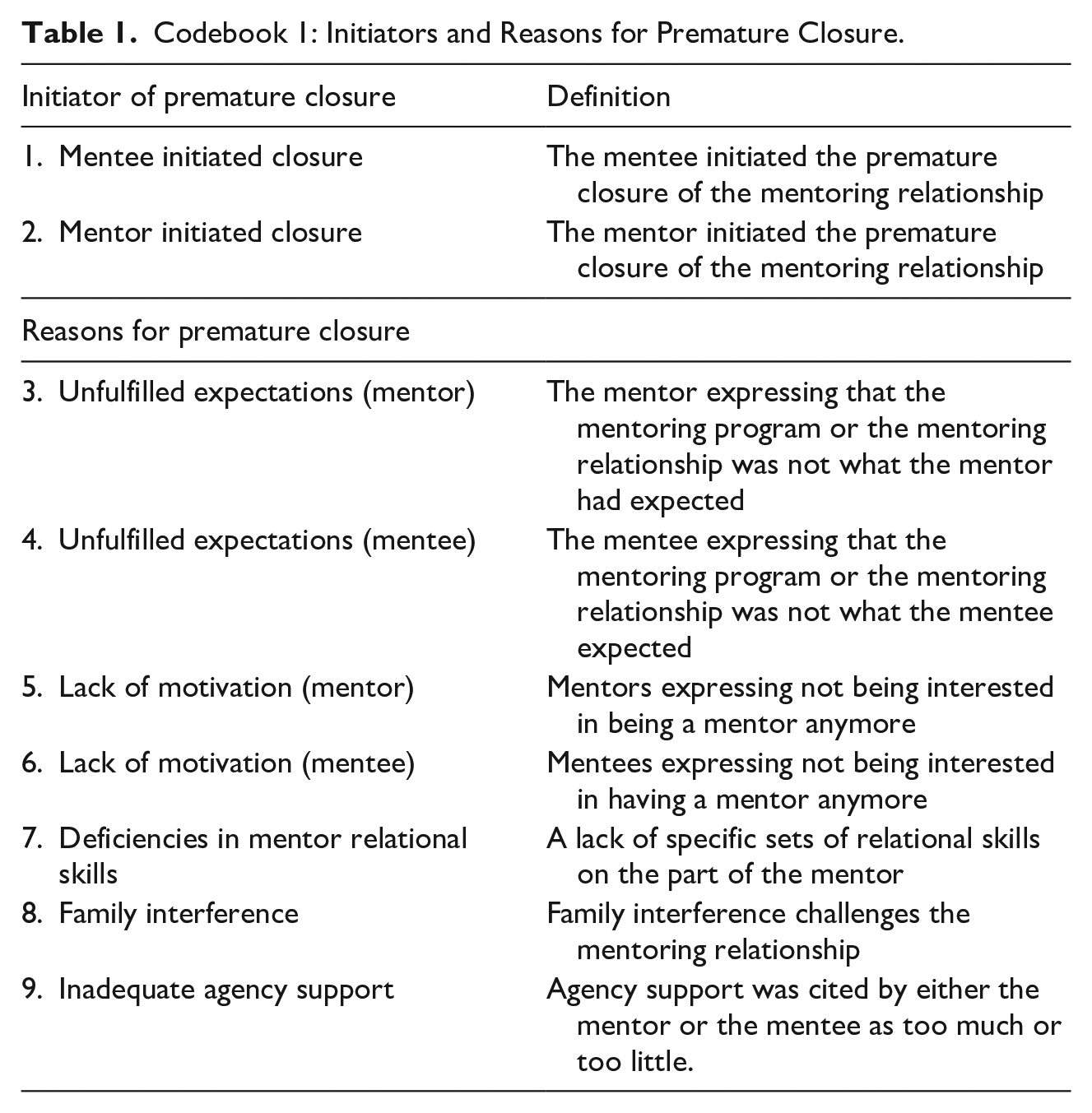
For the primary aim of the study that focused on the reasons for premature closure, a codebook was established based upon two previous studies (Spencer, 2007; Spencer et al., 2014). The 10 themes that emerged from these two studies, (a) “mentor or mentee abandonment,” (b) “perceived lack of mentee motivation,” (c) “unfulfilled expectations,” (d) “deficiencies in mentor relational skills,” (e) “family interference,” (f) “inadequate agency support,” (g) “changes in life circumstances,” (h) “mentor dissatisfaction,” (i) ‘youth dissatisfaction,’ and (j) “gradual dissolution,” formed the basis for the codebook. Based on a inductive approach, involving reading and coding the first 120 pages of the logbook (containing data from 26 mentor-mentee pairs), several changes were made to the 10 themes. First, the theme “mentor or mentee abandonment” was separated into two separate codes: (a) “mentee closure” and (b) “mentor closure.” Also, the theme unfulfilled expectations was separated into two codes: (c) “unfulfilled expectations (mentor)” and (d) “unfulfilled expectations (mentee).” Furthermore, the themes “youth dissatisfaction,” “mentor dissatisfaction,” and “perceived lack of mentee motivation” were re-categorized into two separate codes: (e) “lack of motivation (mentor)” and (f) “lack of motivation (mentee).” At last, two themes were removed from the codebook: “gradual dissolution,” because slow relationship fading was not an option in the mentoring program of this study, and “changes in life circumstances,” because this type of information was not structurally collected or removed from the data in order to ensure anonymity of the participations. Due to the low incidence of the population in the Netherlands, anonymity of participants could not be guaranteed when information about changes in life circumstances were examined, therefore, participants did not provide permissions to study this information. The other three themes (g) “deficiencies in mentor relational skills,” (h) “family interference,” and (i) “inadequate agency support” remained in the codebook to study reasons for premature closure in this study. This resulted in a final codebook that consisted of nine codes: the first two codes indicated who initiated premature closure (mutually exclusive) and the seven following codes indicated the reasons for closure (not mutually exclusive; match members were able to indicate more than one reason for closure). See Table 1 for an overview of the final codebook and coding descriptions regarding the primary aim of the study.
Codebook 1: Initiators and Reasons for Premature Closure.
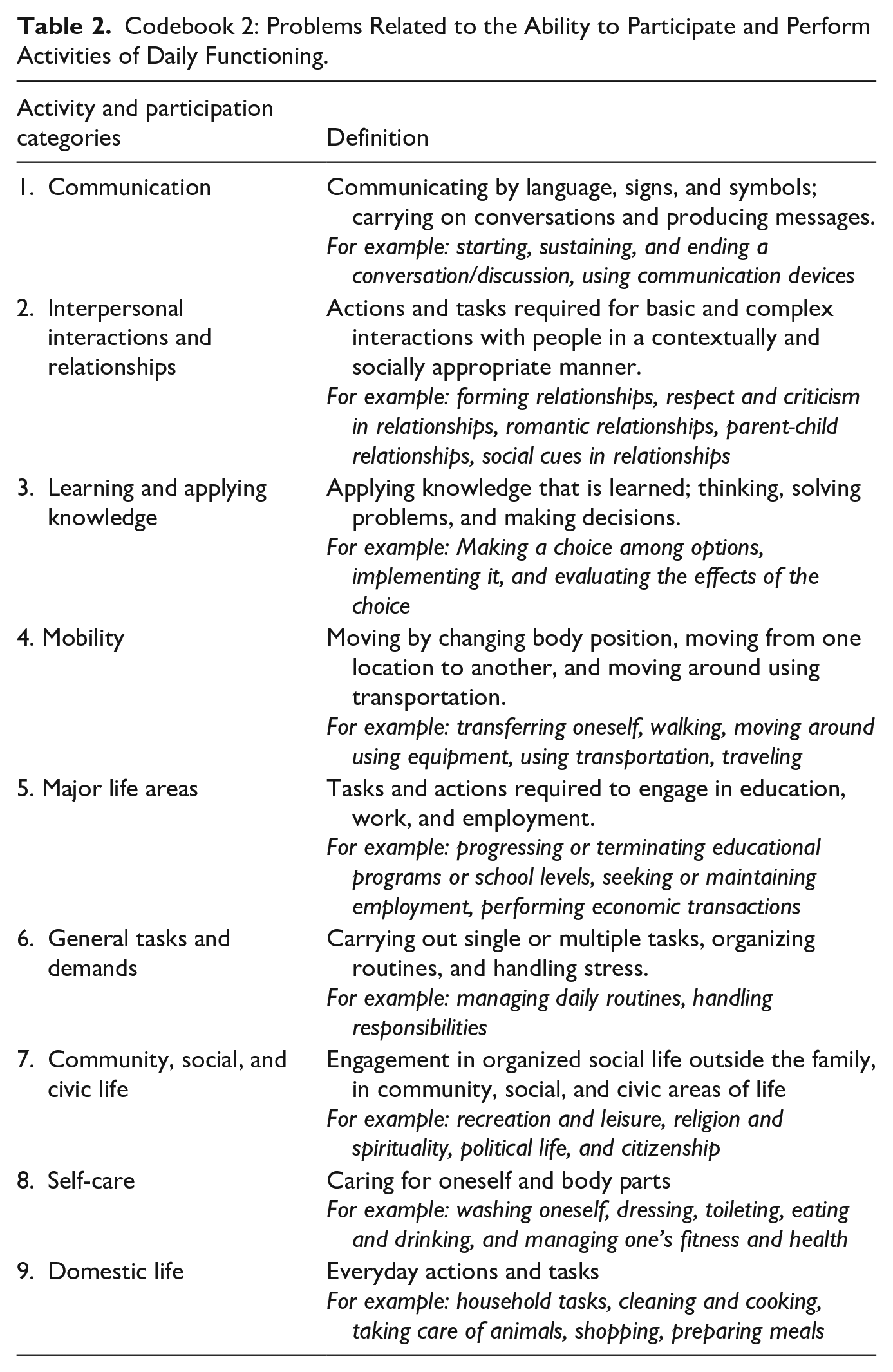
For the secondary aim of this study, focusing on problems that occurred within matches related to the ability to participate and perform activities of daily functioning that could interfere with establishing a long-lasting mentoring relationship, a second codebook was developed. This codebook was based upon the domains of “Participation” and “Activity” in the ICF model of the WHO. The ICF model provides a systematic coding scheme for conceptualizing the functioning of people with disabilities (WHO, 2007). The “Activities” and “Participation” component of the ICF model covers a range of nine domains denoting aspects of functioning from both the individual and societal perspectives. All nine categories were used in the final codebook (see Table 2 for an overview). The nine codes were not mutually exclusive, because multiple problems related to the ability to participate and perform activities of daily functioning could occur within the same match.
Codebook 2: Problems Related to the Ability to Participate and Perform Activities of Daily Functioning.
At first, the two coders read through the coding file separately. Then, line-by-line coding was used. Initial coding was done by the first coder in the document, using the comment box in Microsoft Word. The second coder could only see which lines were coded (empty comment box), but did not know what codes were assigned to each coded line by the first coder. The second coder coded all empty comment boxes. If needed, the second coder could also add additional codes to lines in the document that were not coded by the first coder. Both the first and second coders had weekly meetings to discuss coding challenges. Consensus on codes was reached by discussing discrepancies in coding. The master coder (first author) reviewed the coding of the first and second coders to ensure consistency across cases. Interrater agreement on reasons for premature closure was 65% and for problems related to performing and participating in daily activities was 62%.
Final codes for both aims of every mentor-mentee match were counted. First, it was counted whether a reason for premature closure was provided yes (1) or no (0). Second, it was counted whether a problem related to the ability to participate and perform activities of daily functioning occurred within the match yes (1) or no (0). These counts were summed for each reason or problem separately and imputed in IBM SPSS Statistics. Sum scores provided insight into the most frequently reported reasons for premature closure, as well as the most frequently reported problems within the nine ICF domains of “Participation” and “Activity” together. To test for differences between the two groups (mentors with or without VI) on reasons for premature closure, and problems with “Participation” and “Activity” together, chi-square analyses were conducted. For comparisons in which the expected value was below 5, a Fisher’s exact test was used. A p-value equal or less than 0.054 was considered significant.
Results
Initiator of Premature Closure
Mentees initiated 66% of the premature closures and mentors initiated the remaining 34% of the closures, as can be seen in Table 3. Out of the 31 prematurely ended matches including a mentor with VI, almost 68% of closures were mentee initiated and 32% were mentor imitated. For the matches that ended prematurely with a mentor without VI (N = 13), 62% were mentee initiated and 38% were mentor initiated. No significant difference was found for testing differences in the initiator of premature closure as a function of mentor VI status.
Initiators of and Reasons for Premature Closure.
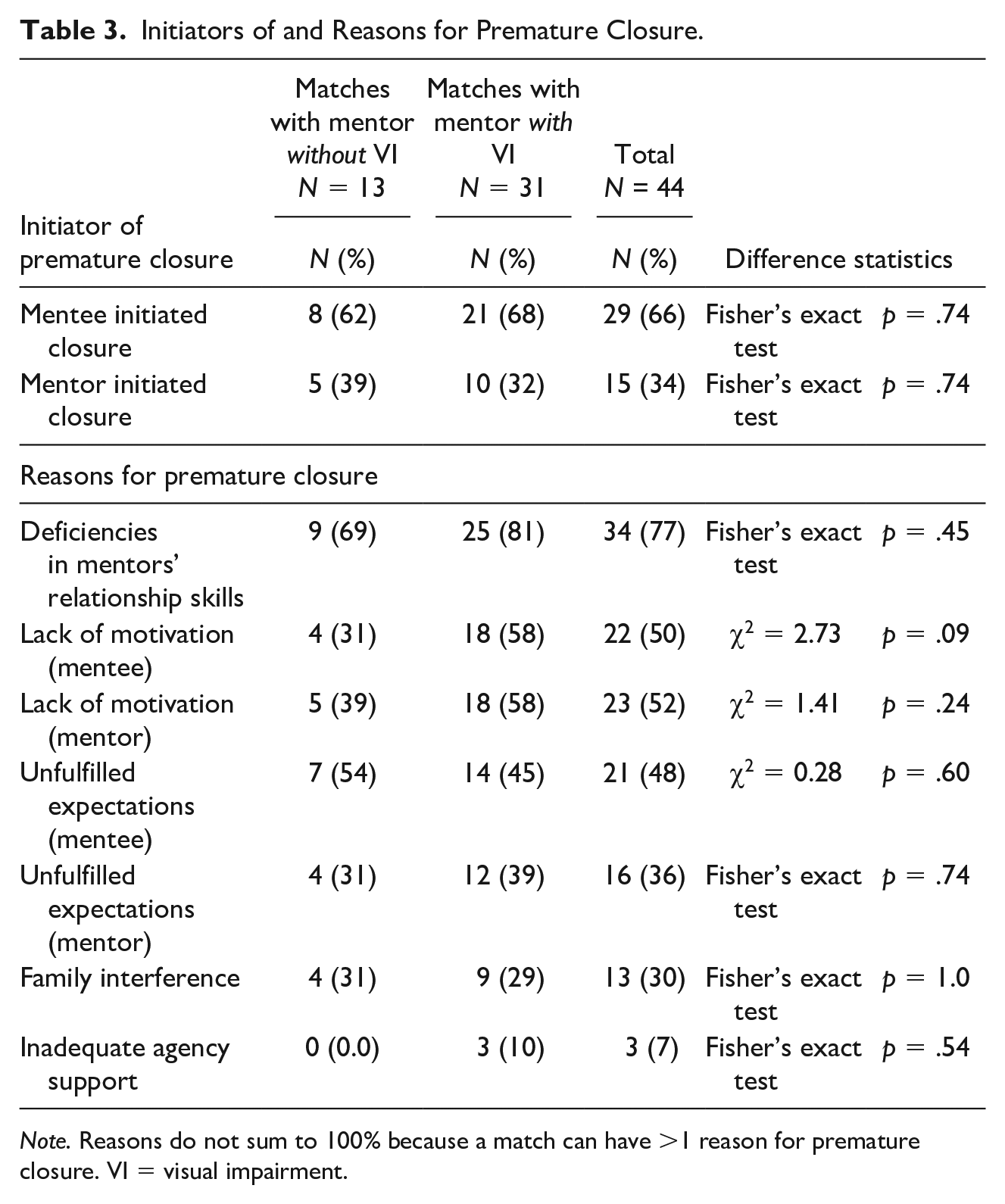
Note. Reasons do not sum to 100% because a match can have >1 reason for premature closure. VI = visual impairment.
Reasons for Premature Closure
Deficiencies in the mentor’s relationship-building skills
The most frequently coded reason for premature closure was “deficiencies in the mentor’s relationship skills” and was mentioned by 77% of the members of the matches that ended prematurely (34 of the 44 matches). As shown in Table 3, almost all of the mentor-mentee pairs with a mentor with VI (81%) and also the majority of the mentor-mentee pairs with a mentor without VI (69%) perceived deficiencies in the mentors relational skills, needed to grow and sustain the relationship. Deficiencies in mentor’s relationship skills could be differentiated into two types of skills, including (a) overall mentoring relationship-building and maintenance skills and (b) specific skills needed to support youth with a disability.
A lack of general relationship-building skills reflect mentors who had an interpersonal style that is more egocentric or domineering. Optimal approaches to mentoring are when the focus of the relationship is on the mentee and where the decision-making between mentor and mentee is collaborative, which has been referred to as a “youth centered” or a developmental approach (Rhodes, 2002). Some mentors were overenthusiastic; some mentors had too high, positive expectations of the mentoring program, mentee, or relationship; and some mentors forgot to take the perspective of their mentee when planning and deciding on what activities to do together. All of these behavioral styles interfered with using a youth-centered approach. As an example, one of the mentors mentioned these types of struggles during her closing interview: I had many idea’s for activities already, before I met my mentee. I wrote them down and tried to incorporate them in the program. However, my mentee didn’t like these activities as much as I did, mostly due to our age difference. The things she liked, I didn’t. It took me some time to think like she does.
A lack of specific mentoring relationship development skills related to the mentee’s disability could be due to a lack of knowledge about the disability and the challenges associated with it. In some matches, mentees experienced problems in addition to having VI, including learning and remembering, motor skills, or mental health problems. In 11 matches, “the mentee having additional disabilities” was described as a reason for premature closure, of which nine mentor-mentee pairs both had VI. One mentor without VI described that she could not really connect with her mentee because he also had learning difficulties: I wasn’t able to get to his level of understanding and couldn’t figure out what he was thinking, and thus, liked to do. Most of the time when I came up with an activity, it was too much for him. I think I was sometimes a bit overwhelming for him.
In another case, a mentor with VI felt like he was not trained enough to support his mentee saying, “I’ve lost my motivation, because I felt like I wasn’t competent enough to support my mentee. I think he might also need professional support to help him deal with his problems.”
Lack of motivation
Both mentors and mentees mentioned that a lack of motivation was one of the reasons why they ended their relationship prematurely. As shown in Table 3, in half (50%) of all 44 mentor-mentee pairs, mentees mentioned a lack of motivation, and in 52% of matches, the mentors lacked motivation. No statistically significant difference was found between the percentage of mentors with VI or without VI who reported that lack of motivation was a factor in closure. One mentee noted the following: “I was not motivated to participate in the mentoring program anymore, my parents thought it might be good for me, but I wanted to do other things.” Also, some mentors in matches that ended prematurely experienced a lack of motivation. Reasons could be related to having unfulfilled expectations, a lack of time, or not feeling a strong connection with their mentees. One mentor mentioned, “I wasn’t really motivated anymore. My mentee often doesn’t respond to my texts and he once cancelled a meeting just a few hours before we were about to meet.”
Unfulfilled expectations
More than a third (36%) of mentors felt like their expectations were not met during the program; and this reason was also mentioned by 48% of mentees. No significant difference was found between matches with a mentor with VI or without VI. All mentors have some expectations about the content and the course of the mentoring program, their mentee, and their mentoring relationship. One important motivation for becoming a mentor is to make a difference in the life of another person, but building a helping relationship is challenging. The discrepancy between pre-match expectations and post-match reality may only become evident over time, especially for mentors who thought that their relationship would be close almost immediately. One mentor stated, When I started, I thought it was going to be easy. I’m a nice person and mentees are probably eager to meet new people. I thought I could just share some of my experiences and have fun with my mentee. I assumed my mentee would call and contact me every week out on his own with questions for me. But, in reality, that was not the case.
Some mentors were also extremely focused on “making a difference” and seeing their mentees change. One mentor explained, “I thought that after we talked about his unprofessional behavior, he would change his behavior the next time we met. But that wasn’t the case. This made me doubt his willingness to change.”
Mentees also mentioned that one of the reasons they ended their mentoring relationship prematurely was because of unfulfilled expectations (48%). This could, among other things, be related to the content of the mentoring program, the mentoring relationship, or characteristics of the mentor. As one mentee mentioned, “I never thought about having a mentor with VI. I just sort of assumed I would get a mentor without VI, although, I knew there were mentors with VI as well.” For other mentees, the mentoring program was not what they expected. For example, one mentee stated, I didn’t know we had to come up with all kinds of activities. I sort of assumed that the mentoring program would tell us what to do. I don’t like the fact that I have to come up with everything.
In contrast, one mentee mentioned, “I don’t like the rules in the program. I don’t like that we have to meet every month. I wish I could just decide every week if I want to meet up with my mentor.”
Family interference
In thirteen of the 44 prematurely ended matches (30%), family interference contributed to relationship closure. No significant difference was found between matches with a mentor with VI and matches with a mentor without VI. In nine matches in which family interference was mentioned as a reason for premature closure, mentors or mentees expressed that parents did not support their child having a mentor with VI. Most of these parents expressed concerns to the mentor about their child’s safety with respect to mobility or traveling as well as the added burden of supporting a match with two people with VI. Some parents asked their child (the mentee) to end the match and other parents were unsupportive and didn’t facilitate match meetings. One mentor described the following situation in his closing interview: During one of our meetings, I met her dad. I soon noticed that he was very protective of her. He didn’t want us to pursue some of the activities we planned on doing. I got frustrated by it, because I believed she was able to do it. I tried to convince my mentee to believe in herself and not to listen to the concerns of her father. I think that is why the relationship ended; she felt like she was in between me and her father.
Inadequate agency support
In three out of the 44 cases (7%), inadequate agency support was mentioned as one of the reasons why the relationship ended prematurely. In two cases, the mentees expressed that they felt like they were not heard by the agency workers. One mentee expressed that he had to tell the same story over and over again, because different agency workers called him at different time points. Another mentee expressed that he had the feeling that he was not heard as much by the agency worker as his mentor was, stating, “They called me and then, they told me that they had spoken to my mentor first. I don’t think that is fair and wished I could have explained the story first.” One mentor did not agree with the way the agency workers informed mentors at the beginning of the mentoring program about their roles and responsibilities as a mentor in the program. He said he was not provided enough information about how time-consuming the program would be. He explained, “During the mentor training session, they told me that it would take up time to establish a relationship with my mentee, but they didn’t tell me that it would take up weeks, maybe months.”
Problems Related to the Ability to Participate and Perform Activities of Daily Functioning
Communication problems
One of the most frequently coded problem within the ICF domains of “Participation” and “Activity” involved “communications difficulties.” During the mentoring program, communication problems were experienced by 52% of the matches that ended their match prematurely (23 out of 44 matches). As shown in Table 4, this was mentioned by slightly more than half of mentor-mentee pairs with a mentor without VI (54%) and with VI (52%). No significant difference was found between these two groups. Communication problems included problems with (a) verbal communication such as starting, sustaining, or ending a conversation; communicating in groups; initiating, maintaining, or terminating an argument or debate; and (b) logistical communication such as using communication devices and techniques. Despite the fact that both mentors and mentees could report on communication problems, mentors reported communication problems with their mentee more often than mentees reported problems communication problems with their mentor.
Problems Related to the Ability to Participate and Perform Activities of Daily Functioning.
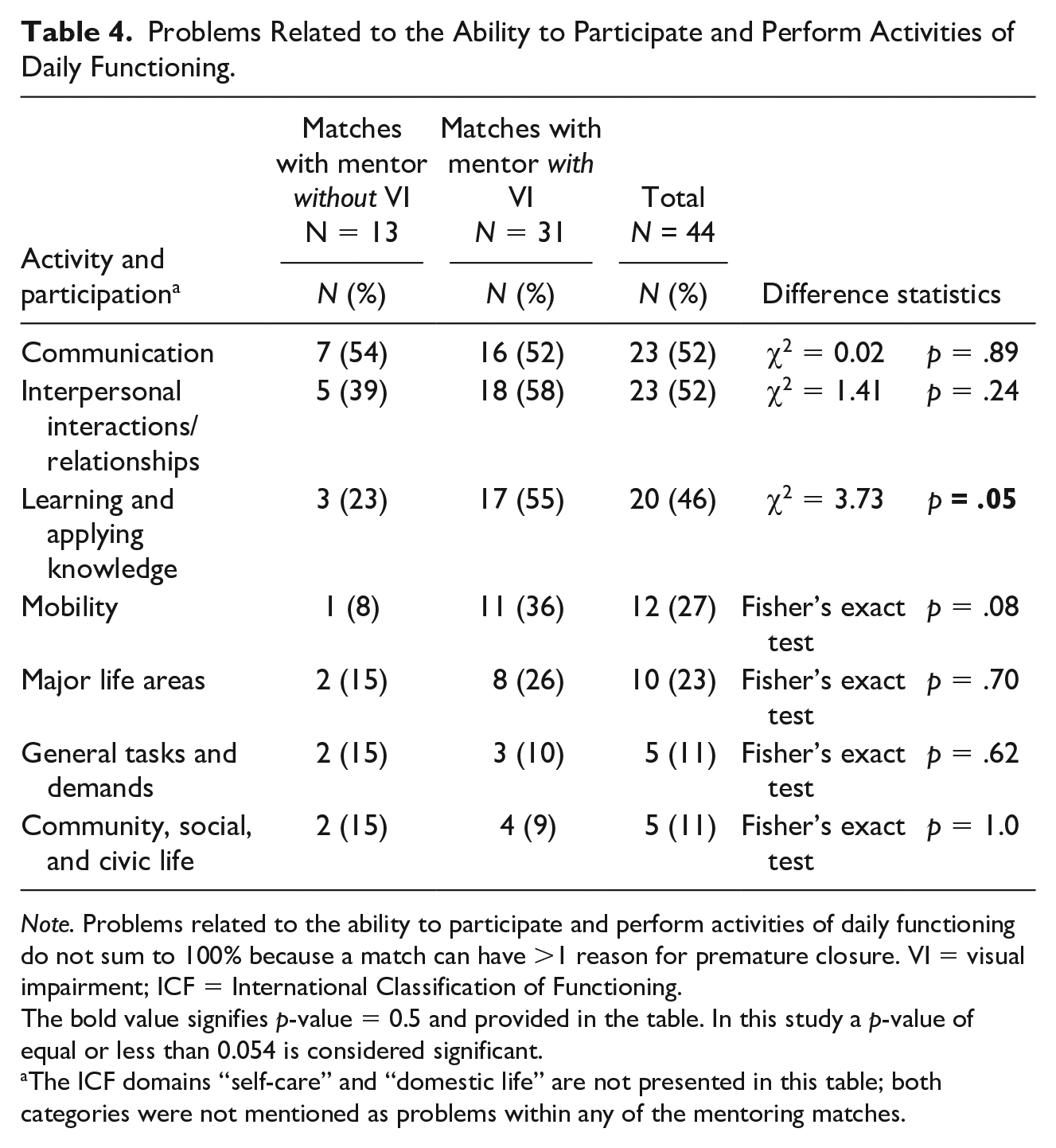
Note. Problems related to the ability to participate and perform activities of daily functioning do not sum to 100% because a match can have >1 reason for premature closure. VI = visual impairment; ICF = International Classification of Functioning.
The bold value signifies p-value = 0.5 and provided in the table. In this study a p-value of equal or less than 0.054 is considered significant.
The ICF domains “self-care” and “domestic life” are not presented in this table; both categories were not mentioned as problems within any of the mentoring matches.
Problems with verbal communication were mostly related to the mentee having problems with starting and sustaining a one-on-one conversation with their mentor. Some mentors expressed disappointment about the level of communications skills of their mentee. One mentor noted that her mentee was not really good at keeping up a conversation: “I sort of get the feeling he doesn’t know how to keep a dialogue. He is most of time just talking about himself. I ask him a lot of questions, but he never ask me anything back.” A smaller proportion of the communication problems noted were related to logistical communication challenges. Most of these problems were related to the mentee not owning a mobile device. In these matches, the mentor and mentee could only contact each other by a third person’s mobile phone or a house phone. One mentor noted, I am really surprised that my mentee doesn’t have a mobile device. Nowadays, some children already have one at age four. It takes up more time to plan activities with him, because I can’t reach him directly. Most of the time it takes us a few days to finally plan one meeting.
Another logistical communication problem involved texting. Some mentors expressed to the agency workers that their mentees often did not respond to texts within a reasonable amount of time. This problem was equally as common within matches with a mentor with VI as in matches with a mentor without VI. One mentor stated, “I know when I text him, I will not get a response within the next 48 hours. So, most of the time I send him several texts a day to get his attention.”
Interpersonal interactions and relationships
Matches that ended their relationship prematurely often reported experiencing problems with “interpersonal interactions and relationships” within the match (52%), which may have interfered with establishing a strong long-lasting mentoring relationship. In fact, the majority of the prematurely ended matches had one or more members who reported experiencing interpersonal problems, and they were mostly mentioned by mentors about their mentees, but rarely reported by mentees about their mentors. When mentors reported that their mentees had problems with interpersonal interactions and relationships, the examples included problems with the mentor, as well as problems with other people, such as parents, siblings, and friends. Mentors mentioned that their mentees experienced problems with forming relationships, understanding social cues, being respectful to others, handling negative feedback in their relationships, interacting according to social rules, and establishing a healthy parent-child relationship. A slightly higher percentage (58%) of matches with a mentor with VI compared with matches with a mentor without VI (39%) experienced having interpersonal problems; however, no significant difference was found between the two groups.
Problems with interpersonal interactions were mostly described by mentors as mentees lacking the behaviors or the initiative needed to form a close relationship. One mentor said, “He never calls me to ask about my day. I also try to text him every time he did something that we talked about during one of our meetings. But he doesn’t do that with me. It is all on my initiative.” Also, another mentor explained, “I have the feeling it is a one-way relationship.” Mentors mentioning their mentees experiencing problems with interpersonal interactions or relationships with other people than themselves was mostly related to a lack of social relationships. Several mentors mentioned having concerns about their mentees, lacking peer relationships. One mentor described the following during one of the match support interviews: “Most of her leisure time she spends alone. She doesn’t meet with friends or anything during the weekends. She is becoming really dependent on me.” Few mentors mentioned that their mentees experienced problems within the relationship with their parents. One mentor explained, “There is a lot of tension in the relationship between my mentee and his parents and this takes up a lot of his energy.”
Learning and applying knowledge
In 20 out of the 44 prematurely ended matches, problems with “learning and applying knowledge” were experienced throughout the mentoring program (46%). A significant difference was found between matches with a mentor with VI and matches with a mentor without VI. A total of 11 matches (55%) containing a mentor with VI reported these types of problems. Notably, this challenge was only mentioned by three matches with a mentor without VI (23%). Learning and applying knowledge included (a) problems with learning, such as learning new skills, for example, listening and reading and (b) problems with applying knowledge, for example, putting what is learned into practice. In this study, only problems with applying knowledge were mentioned by mentors and mentees. Having problems with applying knowledge could lead to difficulties with decision-making (e.g., deciding what activity to do), formulating ideas (e.g., coming up with activities to do), and solving problems (e.g., providing solutions when a planned activity could not go through).
Some mentors mentioned that mentees in matches with a mentor with VI struggled with making decisions on their own and formulating ideas. Mentors were instructed by the program that their mentees had to suggest activities based on their own personal goals. However, this was more complex for mentees within matches with a mentor with VI. One mentor mentioned, “He doesn’t really come up with activities to do. I have asked him several times. I think it is hard for him to come up with activities to do that we could do together. Maybe, because most of his friends do not have VI..” Furthermore, in some matches, planned activities were canceled because of accessibility problems (e.g., restaurants lacking menus for people with VI, outdoor leisure areas not allowing people with VI to enter, or cultural activities [e.g., museum, theater, cinema] not being audio supported). Several mentors reported their mentees having problems with solving this problem by generating solutions or thinking of a replacement activity. One mentor described, It happened two times that we came up with something to do but found out, a few days before, that we couldn’t do it due his and mine impairment. In both these cases, we canceled our meeting, because he couldn’t come up with anything else to do.
Mobility
Almost one third (27%) of the matches that ended their relationship prematurely experienced problems with mobility during their match meetings. Problems with mobility include problems with transferring oneself from one place to another, walking, and using various forms of (public) transportation. Most of the time codes were given to situations where it was hard for matches to move around or use public transportation. These problems were mostly mentioned by matches in which both the mentor and the mentee had VI (36%). This problem was only mentioned by one match in which the mentor had no VI. This difference was only marginally significant. Mobility problems arose in matches including mentees who were not able to use public transportation on their own. In these cases, mentors had to pick up their mentees from their residence before traveling to their destination. This was more difficult for mentors with VI as most of them did not drive a car. As one mentor mentioned, My mentee lives in a rural area. It takes me a few hours to get to her place by public transport. This lowers the amount of time we can spent on an activity and, therefore, also limits our options for things to do.
Furthermore, some mentors expressed that mobility issues were related to concerns parents expressed to them about the mentees’ safety. As one mentor mentioned, “Her mother is very concerned about her safety and doesn’t want us to perform activities outside. She is concerned she would get lost and that I would not be able to find her due to my vision loss.”
Major life areas
Only a few matches (23%) that ended their relationship prematurely experienced problems within the domain of “major life areas” during the mentoring program. This includes tasks and actions required to engage in education, work, and employment. Addressing problems within these domains was part of overall focus of the mentoring program and, therefore, probably not explicitly expressed as a problem within the match by mentors or mentees. No difference was found between matches with a mentor with VI (26%) and without VI (15%). If mentioned, these problems were more frequently mentioned by mentors compared with mentees. Examples included mentees terminating their education program or quitting their job; mentees transferring to another school or a new job; and mentees failing the school year and needing to repeat classes. One mentor mentioned, “My mentee is constantly worried about failing her school year, which I totally understand. School is important. I think she, therefore, has less ‘space in her head’ for me and the mentoring program.”
General tasks and demands and community, social, and civic life
A small proportion (11%) of matches that ended their relationship prematurely expressed having problems within the domains of “general tasks and demands” and “community, social, and civic life” during the mentoring program. In both domains, no difference was found between matches with a mentor with VI and matches with a mentor without VI. Problems experienced with community, social, and civic life were mostly related to mentees not wanting to take part in leisure activities. Problems experienced with general task and demands were related to organizing daily routines. One mentor described the following: “My mentee has a hard time managing her daily life. Her mother helps her with coordinating her day-to-day actions. It is difficult for her to plan our meetings and implement the mentoring program in her daily routine.”
Discussion
This study demonstrated that the main reasons for premature closure of mentoring relationships involving youth in the general population in the United States (Spencer, 2007; Spencer et al., 2014) were also found to be the main reasons for early relationship termination in mentoring relationships involving youth with VI in the Netherlands. The consistency in findings across populations, models, and countries provides confidence in a growing and deepening understanding of the factors associated with both relationship success and relationship failure. In addition, this study provides some unique and new insights into why some relationships might have failed. For matches that are similar with respect to disability, problems related to the ability to participate and perform activities of daily functioning were discovered. Based on these findings, we can conclude that matching two persons with VI in a one-to-one, community-based mentoring program presents some additional challenges (e.g., decision-making, formulating idea’s, solving problems, and mobility) to relationship development, over and above the already complex process of establishing a high-quality mentoring relationship. This helps explain why matches with a mentor with VI more often ended their relationships prematurely compared with matches with a mentor without VI.
Although this study revealed additional obstacles for matching mentors and mentees on having the same disability, no differences were found between the two intervention conditions (having a mentor with or without VI) on reasons for premature closure and who initiated the premature closure. Premature closure was mostly initiated by mentees. This finding suggests that mentees were less satisfied with their mentoring relationship or less persistent in trying to continue their relationships than mentors, especially when their relationship may not have been ideal. A possible explanation for this finding could be that mentors within this mentoring program received pre-match training in which the complex process of establishing a mentoring relationship was explained. Mentees did not receive this pre-match information. Furthermore, members of matches from both conditions provided similar reasons for why they ended their relationship prematurely, with the highest proportion of matches describing that ending their mentoring relationship prematurely was primarily due to deficiencies in their mentor’s social-emotional and relationship building skills. This is surprising, given the amount of pre-match screening and training mentors received before being match to a mentee. An important aspect of the pre-match training was to encourage the likelihood that mentors were going to be capable of providing youth-centered support.
The fact that deficiencies in the mentor’s relationship skills were provided most often as a reason for premature closure could be explained by the problems these matches encountered throughout the mentoring program related to the ability to participate and perform activities of daily functioning. More than half of the prematurely ended matches experienced problems with communication, interpersonal interactions and relationships, and learning and applying knowledge, especially those with a mentor with VI. Problems within these domains all involve interaction and social-emotional skills. Having adequate social-emotional skills as a mentor is crucial for establishing a high-quality and effective mentoring relationship (DuBois et al., 2011). Although mentors in this mentoring program received pre-match training and were screened thoroughly, more attention should have been paid to social-emotional skills of mentors within the screening process and during the pre-match training program. Especially, mentors serving youth with a disability should have adequate social-emotional skills to create a safe, supportive, and long-lasting relationship with their mentee, because these youth are at heightened risk of having negative social experiences (S. Lindsay & Munson, 2018).
Pre-match mentor training on having adequate mentoring and relationship development skills is supported by research (DuBois et al., 2002) and included as a best practice benchmark in the EEPM (Garringer et al., 2015). Based on the finding of this study, these training programs should at least focus on (a) handling disappointment and frustration when reality does not meet someone’s expectations, (b) the development of communications skills, and (c) providing detailed information on the time it takes to develop a mentoring relationship. Thoroughly trained mentors are more knowledgeable, and feel more ready and efficacious at the start of the mentoring program compared with mentors with less training (Kupersmidt et al., 2017). Thoroughly trained mentors may experience less problems with communication, interpersonal interactions, and learning and applying knowledge within their match and stay longer motivated for stabling a strong mentoring relationship. Although mentors in this study were trained in two training sessions prior to being matched with their mentees, these results suggest that mentors may need more thorough training.
Consistent with having more in-depth training, research showed that mentors who were trained, educated, or working in a helping profession had mentees with more positive youth outcomes (DuBois et al., 2002; Raposa et al., 2019). These mentors may be able to create closer and more enduring mentoring relationships because their education and training have prepared them to cope with challenges that naturally occur in the course of a helping relationship with a youth, compared with the preparation of mentors who have less training or education related to relationship development. These findings suggest that if a mentoring program does not want to require or offer thorough pre-match mentor training, then perhaps they should focus their efforts on recruiting volunteers with a background in a helping profession. This practice might be especially relevant in mentoring programs serving youth with VI, as the results of this study show that matches with a mentor with VI experience more problems within the domain of learning and applying knowledge and mobility. These results are is in line with previous research showing an associated between having VI and restricted mobility (Berger, 2012) and lower social competence (Gold et al., 2010).
However, not only mentors but also mentees may have benefited from being thoroughly trained or instructed before being match to a mentor. Based on the fact that a majority of premature match endings were initiated by mentees, more than half of the mentees in the matches that ended prematurely provided a lack of motivation as a reason for the closure, and almost half of the mentees in these matches had unfulfilled expectations, pre-match training informing youth about what participation in a mentoring program and establishing a mentoring relationship entails may facilitate a more willing approach among mentees within the program. As less is known about the effect of pre-match training or instruction for mentees, this might be an important focus for future research, especially for mentoring programs serving youth with a disability.
Furthermore, mentees also experienced communications and social problems within the match. Since all mentees in this mentoring program had VI, it is still uncertain if mentees having a disability could explain these findings. However, due to less experience and engagement in social activities, young people with VI have an increased risk for developing lower social competence (Gold et al., 2010), which could have negatively affected the mentoring relationship. Mentors can support efforts to practice social and communication skills by creating situations in which intentional learning can take place. It may, therefore, be helpful for mentoring programs serving youth with VI to incorporate a mandatory curriculum that fosters the practice of social and communication skills. This could, for example, be established by letting mentors and mentees visit social events and organize social gatherings in which mentees can learn about social interactions within groups, responding to emotions, and keeping up conversations through instructional scaffolding. During these practices, mentors serving youth with VI should pay specific attention to explaining nonverbal information and the understanding of group dynamics (Roe, 2019).
This study also showed that matches were more likely to end prematurely due to mentee’s dissatisfaction with the relationship or interference by their parents. This latter reason suggests that ongoing support during the mentoring program should be provided not only to mentees and mentors but also to parents (especially when mentees are living with their parents). Parental involvement in the mentoring program is necessary to support and build effective mentoring relationships (Spencer & Basualdo-Delmonico, 2014; Spencer et al., 2011, 2020). This perspective is consistent with Keller’s (2005b) systemic model of mentoring suggesting interdependent, bidirectional relationships between the caregiver, mentor, mentee, and the mentoring agency staff, and that the success of the program is dependent upon the interactions between everyone involved. Mentees are expected to be more likely to enjoy their mentoring relationships and commit to them, if their caregivers are enthusiastic about their child’s participation (Keller, 2005b). Alignment in perceptions about the added value of the mentoring program between the caregiver and the mentee contributes to the success of the mentor-mentee relationship (Keller et al., 2018). A clear shared understanding between the caregiver, mentor, mentee, and mentoring program is essential to promote match stability and success (Basualdo-Delmonico & Spencer, 2016; DuBois et al., 2002). This understanding may need to be facilitated and scaffolded on an ongoing basis by the mentoring program. This type of support might be especially needed in mentoring programs serving youth with VI, as these parents might have more concerns about the safety of their child and be more overprotective due to specific disability-related challenges faced by their children (Pinquart & Pfeiffer, 2011a).
As almost one third of the matches in this study, that ended their relationship prematurely, experienced problems within the domain of “major life areas,” it can be suggested that mentoring programs serving youth in the Netherlands might intervene with a younger age group. From the late teens, social behaviors rapidly change and major life transitions occur, such as the transition from school to work and from living with family to independent living (Arnett, 2000). Also, the social network is restructured as young people want to spend more time with peers. These transitions leave less time and motivation for relationships with non-parental adults such as mentors. This move to increasing independence and a greater importance of peer support is a complex process for youth in general and even more complex for youth with VI (Heppe, Kef et al., 2020) Mentoring may be easier to sustain during adolescence, if the mentoring relationship was established earlier during childhood. Therefore, one implication of the findings in this study is that programs might target serving mentees with VI who are under 14 years of age, as youth in late childhood or preadolescence are still motivated to develop relationships with supportive adults.
Although this study shows some additional challenges with establishing a successful mentoring relationship between to two people who have VI, all reasons provided for premature closure and the majority of the problems experienced within the match during the mentoring program did not significantly differ between matches with a mentor with or without VI. This shows that mentoring programs serving youth with a disability might still, with some extra attention paid to pre-match screening and training, want to include mentors with a disability in the program. Especially, since in this study, only unsuccessful matches were studied and less is known about successful matches in which both the mentee and mentor have VI. As in line with the concept of positive health, future studies on premature closure should not merely focus on why relationships end prematurely but also on what makes a mentoring relationship successful. In particular in mentoring programs serving youth who have lower social competencies and smaller social networks, as these insights could help us better support them with building successful relationships.
Limitations
One important limitation to the study is the relatively small and unique sample that was used. All participants in this current study were selected from one single community-based one-to-one mentoring program. This mentoring program was developed with a specific purpose, namely, studying the effect of mentoring for youth with VI. It may, therefore, differ from less research-oriented mentoring programs. Also, the majority of the mentees that signed up for the study were recruited through two national service organizations for people with VI in the Netherlands. These young people received support related to having VI. This group might, therefore, not represent other groups of young people with disabilities. Although the data from this study allowed for conducting in-depth analyses, due to the unique sample and the small size of the sample generalizability of the findings is limited. Future research, studying reasons for premature closure within mentoring programs serving youth with a disability, should include a more diverse group of mentees (e.g., variety of disabilities, from multiple care organizations, from different mentoring programs).
Another limitation to the study is that the data that were used for this study were collected by the agency workers of the mentoring program. These are the same people that run the mentoring program. It is, therefore, likely that complaints about the mentoring program or the agency workers were under-reported. Furthermore, the viewpoints of mentors are overrepresented in the current study. This overrepresentation was especially noticeable in coding the problems related to the ability to participate and perform activities of daily functioning. Mentors more often thoroughly discussed problems within the match during the semi-structured support interviews with the agency workers of the mentoring program compared with mentees. Future studies focusing on studying reasons for premature closure within a mentoring program should set up a more structured data collection plan prior to the study, with specific data collection time points including all participants (mentor, mentees, and parents). Furthermore, the collection of these data should be done by independent researchers. Not including parents in the study is also a limitation to the study. Parents were only involved for mentees under the age of 18 years by reading the information letter, providing consent, and attending the first mentor-mentee meeting. However, the conceptual model of Keller (2005b) showed that ongoing parental involvement in the mentoring program facilitates the development and maintenance of the mentoring relationship. This might especially important for mentoring programs serving youth with disabilities, as the process of becoming less dependent on parents is more complex for young people with a disability. Future mentoring programs serving youth with VI should, therefore, include all subsystems (mentor, child, parent, agency worker) that contribute to the success of the mentoring relationship within the systemic model of mentoring (Keller, 2005b).
Conclusion
Establishing a strong and effective mentoring relationship that lasts until the finish line is a difficult process that is not reached by all mentor-mentee pairs. This process becomes somewhat more difficult when both the mentor and the mentee have VI. However, the reasons reported for early relationship termination by matches with a mentor with VI were similar to reasons reported by matches with a mentor without VI. Premature closure was in both groups most often initiated by mentees. Furthermore, during the mentoring program, similar problems related to the ability to participate and perform activities of daily functioning that could interfere with establishing a strong long-lasting mentoring relationship were experienced within matches with a mentor with or without VI. Only matches in which both the mentee and mentor had VI experienced more problems with learning and applying knowledge. This study showed that supplemental pre-match mentor training might be needed to increase relationship success in mentoring programs serving youth with VI. In addition, mentees with VI might also benefit from participating in pre-match training or instruction informing them about what participating in a mentoring program entails. Incorporating a mandatory curriculum that fosters the practice of social and communication skills might also be needed to enhance relationship success in mentoring programs serving youth with VI. In addition, mentoring programs serving youth with VI should provide ongoing support to mentors, mentees, and the mentees’ caregivers to create optimal circumstances for building effective mentoring relationships.
Footnotes
Acknowledgements
The authors wish to thank all the participants for sharing their experiences throughout the mentoring program. In addition, we would like to thank the four graduate students who coded the data and our research assistants for assisting with the data collection.
Declaration of Conflicting Interests
The author(s) declared no potential conflicts of interest with respect to the research, authorship, and/or publication of this article.
Funding
The author(s) disclosed receipt of the following financial support for the research, authorship, and/or publication of this article: This study was supported by Grant 94309005 by two organizations: Bartimeus Fonds and ZonMw, the Dutch organization for Health Research and Development, program InSight.
