




Abstract
Given the unique challenges and strengths of teen parents, specialized supports are needed to help teen families reach their full potential. This study explored, from the perspectives of teen parents involved in a supportive housing program, what helps teen parents raise their children in healthy ways. Aligned with a community-based participatory research approach, we used the photovoice method. Two 6-month rounds of photovoice were conducted, during which teen parents met with the researchers on a biweekly basis for group discussions and engaged in innovative knowledge mobilization. Resulting categories, in response to the question of what helps teen parents raise their children in healthy ways, consist of (a) supports and services; (b) safe, secure, and affordable housing; and (c) community. Ultimately, teen families have both complex needs and strengths that require relationship-based, trauma-informed, structured supports delivered by nonjudgmental staff who respect their independence, supportive landlords, and communities where they can feel safe to raise their children without stigma and judgment. Importantly, findings emphasize the need for supportive and responsive structures, policies, and housing programs to be in place for teen families rather than focusing exclusively on preventing teen pregnancy. Specific recommendations are provided with direct relevance for research and practice.
Keywords
Teen parenthood has been cited as a significant cause of social and economic disadvantage. However, a growing body of evidence suggests that teen parenthood may be more accurately conceptualized as a marker of living in poverty and, often concomitantly, experiencing intersecting barriers related to racial, gendered, and economic systems of oppression (Barcelos & Gubrium, 2014; Conn et al., 2018; Furstenberg, 2016). Teen parents disproportionately represent groups who experience marginalization in terms of social class, race and ethnicity, and geographic location (Mollborn & Dennis, 2012). Regardless of whether teen parenting can best be conceptualized as a cause or consequence of disadvantage, effective supports are clearly needed to help teen parents and their children reach their full potential. However, few recent studies have investigated the supports that teen parents require in order to be successful; rather, research tends to focus on the risk factors underlying teen pregnancy as well as efforts to prevent teen pregnancy from occurring (Assini-Meytin et al., 2018; Pio & Graham, 2018). Furthermore, given the widespread stigma associated with teen parenting, it is important to understand, in collaboration with teen parents, how supports can be most effective for themselves and their children.
The purpose of this study was to explore, from the perspectives of teen parents involved in a supportive housing program, what helps teen parents to raise their children in healthy ways. To situate this study in light of existing research, the following sections outline some of the challenges faced by and strengths of teen parents commonly mentioned in the research literature. Importantly, we acknowledge that teen parents are not a monolithic group with the same strengths and challenges. However, the following sections provide a starting point for understanding some of the shared experiences that teen parents may have. At the same time, we note that any commonalities are underpinned by intersections of oppression and privilege that make all individual and collective experiences unique. In addition to providing this starting point, we describe the context of this study throughout the following sections.
Challenges of Teen Parenting
Teen parents are navigating their own developmental changes, and parenthood adds significant complexity to the trajectory of adolescence. As a result, teen parents can experience limited access to opportunities for high school completion, and therefore, limited upward socioeconomic mobility (Schuyler Center for Analysis and Advocacy [SCAA], 2008). In general, teen parents experience fewer academic and vocational opportunities and an associated increased risk of poverty (Long, 2009).
The relationship between teen parenthood and disadvantage is complex and defies simplistic notions of cause and effect. Researchers suggest that disadvantage experienced prior to and after becoming a teen parent, such as social inequity, marginalization, and discrimination, are largely responsible for the negative social and economic outcomes experienced by teen parents relative to those who delay childbearing (Kearney & Levine, 2012; Mollborn, 2017; SmithBattle et al., 2017). In other words, studies examining the outcomes of teen parents and their children have often failed to distinguish between the impacts of the economic and social disadvantages associated with teen parenting and the impacts of teen parenting per se (Lawlor & Shaw, 2002; Mayers et al., 2008).
Layered with these complexities and challenges are experiences of stigma and judgment. Especially problematic are simplistic public discourses citing teen pregnancy as a primary cause of poverty and other social problems, and notions of teen pregnancy as a moral failing, with emphasis placed on a lack of values and faulty decisions (Bales & O’Neil, 2008). These negative constructions leave little space for public perceptions of teen parents as active and contributing community members (Bales & O’Neil, 2008).
Strengths of Teen Parents
Researchers exploring the complexities of teen parents’ experiences have challenged the overwhelmingly negative discourses around this population and the consequences of teen parenthood (Mollborn, 2017). Some research has focused instead on the ways that teenage pregnancy can be a catalyst for growth (Duncan et al., 2010; Price-Robertson, 2010). In some instances, teenage pregnancy can serve as motivation to instigate positive lifestyle changes and encourage teens to defy stereotypes and negative expectations by pursuing educational and vocational goals (Clemmens, 2003). Moreover, the presence of protective factors, such as strong social support and positive co-parenting relationships, can insulate teen parents from risks and help them navigate disadvantages (Collins, 2010; Lewin et al., 2012; Narendorf et al., 2016). In addition to research that highlights some of the strengths of teen parents, social media showcases multiple instances of young people themselves actively exercising their agency by resisting the systems of oppression (racism, classism, sexism) that contribute to their stigmatization (e.g., https://noteenshame.tumblr.com/; https://thepushback.org/) and by raising the profiles of successful, inspirational teen parents. With this potential in mind, it is important to enhance understanding of how to support teen families in effective and responsive ways in order to mitigate challenges and build on strengths.
Study Context
This project was part of a larger study that aimed to (a) develop a supportive housing program model for teen families and (b) investigate the impacts of the program on teen parents and their children. The project was carried out through a partnership between the Terra Centre, Brentwood Community Development Group, and a team of researchers from the University of Alberta (UofA) in Edmonton, Canada. Terra is a nonprofit organization that has supported teen parents in Edmonton for more than 40 years, with the goal of helping pregnant and parenting teens develop self-reliance and skills to reach their full potential as parents. Brentwood was formed in 1977 with a vision of affordable housing for Edmonton communities. Brentwood owns and manages 207 townhouse units in Edmonton. Terra and Brentwood partnered in 2014 to offer safe, secure, and affordable housing to teen parents and their children in combination with wraparound supports in an Edmonton neighborhood. Shortly after forming their partnership, executive directors from the two agencies approached the researchers to develop and study a supportive housing program model for teen families.
Through the Successful Families Program, Brentwood acts as the landlord, providing subsidies as well as office and programming space in a house across the street from the townhouse complex where participants reside. Terra provides support staff, employing three full-time housing staff in addition to a full-time housing manager. Staff provide home visits and offer group supports with the overarching aim of supporting families to maintain their tenancies, develop community connections, and successfully raise their children. The Successful Families Program is notably unique, as there is a dearth of supportive housing options for teen parents across Canada, and even fewer that combine affordable housing with wraparound supports.
Community-Based Participatory Research (CBPR)
This project aligned with the principles of CBPR (Israel et al., 1998; Minkler & Wallerstein, 2003). Through CBPR, community partners are equitably engaged and have a voice and power in the research process. CBPR is intended to collaboratively generate actionable understandings of issues that are meaningful to community members by applying local knowledge and experience to research processes. In alignment with CBPR, the researchers and partners from Terra and Brentwood jointly defined the project focus and research questions through brainstorming together at ongoing meetings. We landed on a research question that Terra staff felt was relevant to their work, and that all partners expected would spur discussion and be translatable to photographs. Under the umbrella of the broad research question, teen parent participants shifted and defined our research focus during biweekly group discussions, as described in more detail below. In addition, all partners collaboratively made decisions regarding methods, and worked together to recruit participants, collect and analyze data, and mobilize knowledge.
Purpose
Within the broader project goal of investigating the impacts of the Successful Families Program on teen families, the purpose of the current study was to explore what a community of teen parents needs in order to help their children grow and develop in healthy ways. “Health” is a fluid term that has traditionally been defined using narrow medical language that often exclusively focuses on physical aspects. In our conception of this study and interactions with participants, we acknowledged that health can be more broadly conceptualized as encompassing physical, mental, social, emotional, and spiritual aspects of well-being that are influenced in powerful ways by personal, environmental, structural, and societal factors. We intentionally left the concept of “healthy” open to interpretation so that participants had space to define and explore this concept in ways that made sense to them.
This study advances the current literature by (a) using a participatory approach to explore the needs of teen parents from the perspectives of teen parents themselves, (b) implementing the study in the unique context of a supportive housing program, and (c) generating knowledge with direct relevance for policy and practice. Aligned with a CBPR approach, we used the photovoice method.
Method
Photovoice
Through photovoice, community members take photos in response to a community-defined research question (Wang & Burris, 1997), after which participants come together to discuss their photos. Participants subsequently select specific photos to mobilize knowledge, and this most often takes the form of a photo exhibit.
Photovoice aims to raise awareness, facilitate communication between vulnerable groups and decision makers, and provide opportunities for collective action. Participants direct data collection processes by choosing the subjects of their photos, and the focus is therefore on participants’ perspectives (Einarsdottir, 2005).
Participant Recruitment
A brief training session was held with staff to discuss ethical participant recruitment processes in line with the University of Alberta Research Ethics Board, which provided approval for this study. Thereafter, staff introduced the photovoice project to participants during regular program activities (e.g., during home visits). Staff also posted information and reminders about photovoice groups on social media. In addition, the researchers directly recruited participants by holding a research information session for potential participants and by attending and providing information about photovoice at regular program groups and events.
Participation in the photovoice project was completely voluntary. Upon recruitment, potential participants were informed that their choice to participate or not participate would have no impact on services received by themselves or their children. Informed consent was treated as a process and was repeatedly revisited. In particular, ongoing discussions were held with teen parents as to the potential immediate and long-term implications of making their photographs public for themselves and their children. In addition, if they provided informed consent, teen parents could choose the extent of their participation—they could decide how many group discussions to attend, whether to contribute to the group discussions they attended, how many photos to submit, and the ways in which their photos would be shared.
Photovoice Participants
Two 6-month rounds of photovoice were conducted (December 2016 to May 2017; December 2017 to June 2018). In total, 14 teen parents participated in the first round of photovoice, and 12 teen parents participated in the second round. There was a total of 22 unique participants given that four participants took part in both rounds of photovoice. Typically, between four and six participants were present at each group discussion.
Participants predominantly self-identified as having Indigenous heritage (n = 13) followed by White (n = 7) and Hispanic (n = 2). At the time of the project, participants ranged in age from 17 to 22 years (M = 19.1 years, SD = 1.7 years). Twenty-one participants were female and one participant was male. This reflected the demographics of the Successful Families Program, which typically consists of more than 90% female participants at any given time. During the project, 16 participants attended an educational program (e.g., high school, postsecondary), three participants had paid employment (full-time or part-time), one participant was on maternity leave, and two participants were not involved in a day program due to mental health challenges. All but three participants identified as single parents (i.e., lived alone with their children). Most participants (n = 19) were parents to one child, and the remainder of participants (n = 3) were parents to two children. The children of participants ranged in age from 6 months to 5 years (M = 2.2 years, SD = 1.2 years).
Data Collection
In line with the photovoice method, participants took photos in response to the research question (i.e., “What do you need as teen parents to help your children grow and develop in healthy ways?”), and they came together for biweekly group discussions to talk about their photos in relation to the research question.
Two-hour group discussions were held with the parents on a biweekly basis for each 6-month round of photovoice. All group discussions were audio recorded with participants’ permission and transcribed verbatim. Two researchers (M.T. and B.K.) facilitated the first round, and one researcher (M.T.) and a housing support staff worker (T.B.) facilitated the second. The model of facilitation was changed for the second round to emulate a “train-the-trainer” model so that staff could continue to use photovoice on an ongoing basis. Each group discussion began with a meal shared by teen parent participants, their children, program staff, and the researchers. After the meal, Terra staff provided childcare while the parents engaged in the photovoice group discussion. During the first group discussion, the purpose of the photovoice project was outlined, and logistical details around choosing the subjects of photos and sharing photos were discussed. We started by asking teen parents to answer the research question for this study through their photos, and together with participants, generated sub-questions on an ongoing basis (e.g., what are your strengths as a parent?). This was an important part of our process wherein facilitators encouraged parents to brainstorm their own subquestions and guide the focus of the project toward issues and concerns that were important to them.
Parents took photos in response to questions and sent their photos to a researcher to print before the following group discussion. Some participants sent accompanying descriptions with their photos. For participants who did not send descriptions with their photos, transcripts were printed and participants extracted quotes from transcripts to accompany their photos. During each group discussion, participants spoke to the content of each photo and expanded on their responses to the research question in relation to other participants. The SHOWeD guide (Wang & Burris, 1997) was used to prompt discussion by asking a series of questions regarding photos, namely, (a) What do you
After each group discussion, a researcher posted a summary of the discussion on a private online forum that participants were part of. During the second round of photovoice conducted the following year, additional arts-based methods (collaging, drawing, and painting) were integrated as a way to further stimulate discussion. During each group discussion, participants who sent photos prior to the group were entered into a draw for a gift card to a grocery store as an incentive for participation.
Data Analysis
Data collection and analysis occurred concurrently. In particular, while data were collected, the research team began analyzing data, which in turn informed the questions asked and probes used during subsequent group discussions.
Balancing an exploratory approach with a focus on practicality, we examined the data using thematic analysis (Braun & Clarke, 2006). First, during the early stages of analysis, the researchers printed out transcripts and manually cut out quotes. During one of the group discussions, participants read through and grouped quotes according to categories that they generated. Second, two researchers began thoroughly reviewing transcripts and producing initial codes within the categories defined by participants. The researchers coded hard copies of transcripts by hand. Third, the researchers debriefed and reflected on their learning after each group discussion and brought questions, reflections, and developing codes back to participants and staff on an ongoing basis. This provided the opportunity for participants and staff to challenge emerging codes and for the researchers to make refinements accordingly. Repeated immersion in the data also allowed for arriving at deeper and more meaningful analytic interpretations rather than superficial understandings of the data (Thorne, 1997). Fourth, once emerging codes were agreed on by participants, staff, and the researchers, the researchers began looking for overarching categories among codes, and refining and naming categories and subcategories based on feedback from participants and staff. During this step, categories were revised as new categories emerged or existing categories were determined no longer applicable. Finally, the resulting list of categories and subcategories are presented in this article in narrative form, with a focus on those related to teen parents’ perspectives on raising healthy children. Representative quotes are used to illustrate the categories that were generated, and pseudonyms are presented alongside quotes for the purpose of anonymity.
Knowledge Mobilization
Knowledge mobilization has been defined as the mutually beneficial flow and application of research knowledge between and among researchers, knowledge brokers, and knowledge users to inform, advance, and/or improve research agendas, public policy decision-making, and/or services and practices (Social Sciences and Humanities Research Council, 2020). Given the grounding of the photovoice method in social action, knowledge mobilization is an important component. To this end, photo exhibits were held at the Successful Families House after the completion of each round of photovoice. For each exhibit, 50 to 60 photos were printed, framed, and hung around the house with accompanying descriptions. Staff members from Terra, Brentwood, and other nonprofit organizations, government representatives, academics, and community members were invited to attend the photo exhibits to learn about photovoice findings as well as the Successful Families Program more generally. Approximately, 50 to 60 guests attended each event. Photobooks were also created and distributed with photos and accompanying quotes. During each exhibit, teen parents delivered a panel presentation to discuss their experiences. Photos were also displayed for 6 weeks at Edmonton City Hall.
In addition, participants, a researcher, and a staff member were interviewed for segments on two local radio stations, four local and national news stations (CBC, CTV, APTN, and Global News), a national podcast (rabble.ca), and a local newspaper (Edmonton Journal). Along with these public forms of knowledge mobilization, the researchers shared preliminary findings with staff from Terra and Brentwood at ongoing meetings, prompting reflection and adjustments to programming on a regular basis. Changes made based on these integrated forms of knowledge mobilization are described more fully in the discussion section of this article.
Findings
Analysis of group discussion transcripts resulted in three broad categories, along with subcategories described within each, relevant to our research question regarding what teen parents need in order to help their children grow and develop in healthy ways. Categories consist of (a) supports and services, (b) safe, secure, and affordable housing, and (c) community. Within the categories that follow, select photos are provided to illustrate participant quotes.
Supports and Services
Teen parents indicated that they require particular supports and services to facilitate their children’s healthy growth and development. Within this area, they highlighted the importance of (a) a trauma-informed, relationship-based approach, (b) individualized support for navigating transitions, (c) accessible support that balances structure with independence, and (d) help to expand their support networks.
Trauma-informed, relationship-based approach
Participants spoke about the importance of support workers being sensitive to the trauma that they had experienced by listening in nonjudgmental ways and being willing to establish strong, trusting relationships with themselves and their children. For some participants, trauma was not confined to childhood, as they described recent experiences of sexual assault and, in some cases, relationships with current or ex-partners that involved domestic violence. Even where participants had not experienced domestic violence, they often expressed concerns about the competency of their child’s other parent, who most often lived separately from themselves. As one participant, Desiree, 1 shared, “[My son’s] dad doesn’t know right from wrong still. Even one loving parent he didn’t have, so he doesn’t know how to give that to our son.” This was a commonly reported experience among participants that they felt necessitated a relational approach from staff. This was because participants often felt judged for having a child with a partner whose parenting competency they were unsure about. Having a relationship with housing workers helped participants to feel safe bringing forward these issues in a space where they would be met with support rather than judgment.
Many participants spoke about adverse childhood experiences during their own upbringing, including their own parents struggling with poverty, addictions, and mental health concerns, and experiencing abuse, neglect, and a lack of ability to meet their basic needs. As Michelle recounted, Obviously any 16-year-old would rather be on the street with their hood rat friends than in a situation where your only family is supposed to be supporting you and they’re not . . . I was really scared cause my dad used to discipline me when I was really young, like straight up in the face and that type of beating.
They communicated the importance of support workers engaging with them in nonjudgmental ways. To explicate this point, many participants described negative prior experiences with support workers, and even being actively targeted or mistreated by the systems within which they were embedded. Erin described reaching out to a Children’s Services worker outside of the Successful Families Program and indicated that her concerns about her child’s father were not taken seriously, as she was told that “You had sex with him and made a baby, you obviously feel your child would be safe with him.” Many participants expressed feeling “dismissed” by social workers and other professionals as a result of their age. Several participants described fearing that social workers were constantly looking for a reason to take their children away. As Erin shared with respect to Figure 1, This is a picture of my front door. It is locked, but a lot of times young moms don’t have privacy. We have no choice but to allow a social worker into our home if a false accusation is made or if our age raises suspicion.
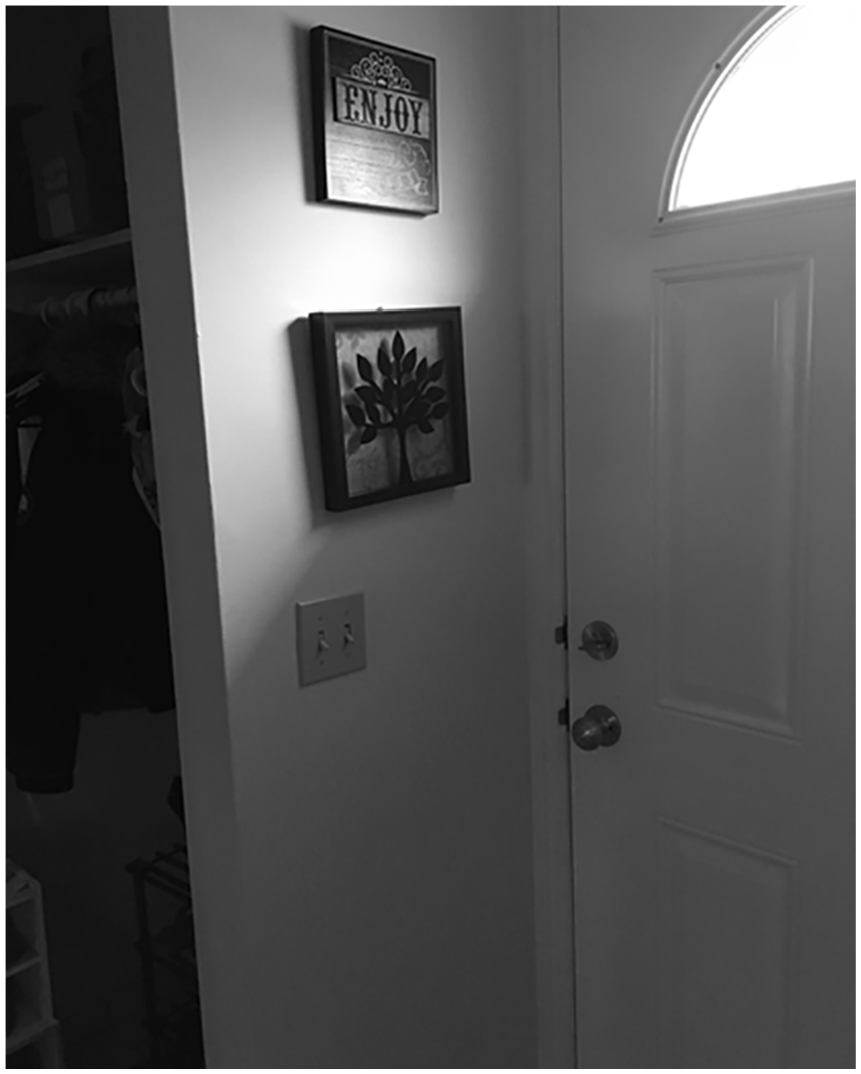
Locked door.
Participants relatedly shared negative childbirth experiences in hospitals. As Reilly described, “A lot of teen moms get red flagged at the hospital. We’re targeted the day our kids are born.” Similarly, Erin indicated that “I didn’t like it in the hospital. Their questions felt judgmental. It wasn’t like ‘Congratulations!’ It was like ‘Do you have somewhere safe to go?’ And ‘We’re gonna drug test you real quick.’”
Thus, according to participants, a trauma-informed approach not only involved demonstrating sensitivity to their past experiences of trauma but also understanding their negative prior experiences with support workers, which meant that trust-building was a long-term, gradual process. Participants spoke about how—in order to accept and benefit from structured, trauma-informed support—relationships with program staff were critical as a foundation. This necessitated an approach grounded in basic respect for teen parents and genuine caring for their unique circumstances. Participants described how they gradually developed strong, trusting, nonjudgmental relationships with Successful Families staff and conveyed that they felt comfortable sharing “anything and everything” with program staff. They also valued the relationships that staff developed with their children, and in some instances, spoke about how their children “loved” their housing support staff.
Individualized support for navigating transitions
Teen parents are a heterogeneous group, with varying levels of knowledge and skills as well as diverse backgrounds. However, participants emphasized that, regardless of their diversity, they shared the common experience of requiring support with the transition to parenthood and independent living. As Jordan described, It’s different for older parents ’cause they maybe plan and get a job . . . but when you’re a teen you’re still figuring out what you’re gonna do after high school, can you even finish high school, and you’re basically cramming ten years of planning into nine months.
As Terry described, “There’s a huge transformation you have to do. Going from a homeless drug addict to a parent is a pretty big change.” At the same time, participants agreed that “You don’t have a choice. You have to go through the transformation,” and therefore, supports could be critical in navigating the significant changes that they were undergoing. Taylor described the transition from a group home to independent living as “culture shock. I was going from always being with people to always being by myself.” As Reilly shared, The first weekend I was alone . . . I didn’t know what to do with all my freedom. Crazy amount of responsibility . . . in a group home, you don’t have to do grocery shopping, all the cooking and cleaning.
As a result, it was important for some participants to receive support to develop basic life skills including household duties, budgeting, and acting as a responsible tenant. Jamie shared that “because of [my housing worker] helping me with a budget, I actually have money for once in my life.” At the same time, participants continued to experience stress over finances. According to Erin, “Budgeting is hard, and even harder when you’re on your own supporting a child. Sometimes it’s hard to focus on [my son] when I’m worried about money and whether I budgeted enough” (Figure 2). The extent to which participants required supports in these areas varied based on their past experiences, which emphasized the importance of individualized support.

Budgeting.
Accessible support that balances structure with independence
Although participants deeply valued the opportunity for independence, they also appreciated the structured support offered through the Successful Families Program. As Tina described, “What I like is an equal balance of the support and recognition that you’re an individual figuring out stuff yourself.” This support came with requirements for structured expectations. As Taylor relayed, If you live here, you need to make sure you’re living a clean lifestyle, you’re not partying, your parenting is up to par, you’re not rowdy. People who aren’t responsible don’t last here. If you don’t come from a stable background, you might not know how to live that way, but having rules can help.
Devon emphasized a similar concept: “stability not just of housing but of routine. So you need to come to group, have a day program, pay your bills.” Some participants described how being encouraged to develop a routine, in part through structured program support, helped them to begin “doing something productive,” which could mean attending school or employment.
Importantly, the support offered by the Successful Families Program was made accessible by staff being located across the street from participants’ homes. Participants often joked about staff being able to simply peer out their office windows to check on participants. However, they did not report this as invasive; rather, they generally reported being grateful that their support workers were close by, and enjoyed knowing that they were able to drop into the Successful Families office and program space freely, as necessary.
Help to expand support networks
According to participants, receiving help to expand their support networks was critical to raising their children in healthy ways. This was because many participants described experiences of loneliness and social isolation. Desiree indicated that “your friendships change when you have a kid. Your friends without kids don’t want to hang out anymore.” For some participants, expanding their support networks meant being mentored to draw on natural supports such as their own parents, ex-partners, and peers, who could offer respite where appropriate. Michelle described a philosophy that resonated with others: “If a mom needs help, help them. You’re part of their development too.”
It was also important for participants to expand their webs of formal support by accessing community resources. They appreciated that their housing workers were intentional in linking them with agencies that could, for example, help them access basic needs, specialized child development information, free recreational programming, career and educational resources, and mental health support. Although participants were often provided with options for mental health resources, this was an area identified for improvement. Participants reported struggling with significant mental health concerns such as depression and anxiety along with past trauma. Importantly, housing support staff were not trained in clinical counseling, and it was important for staff to focus on providing services that were within the limits of their capacity. As a result, April shared that “I think we need extra mental health support. Cause our workers are really good at talking to us about it but what do we do about it after?”
Affordable, Safe, and Secure Housing
Along with supports and services, teen parents emphasized their need for affordable, safe, and secure housing. They expanded on this need by describing the importance of having (a) a space to call your own, (b) parenting autonomy, and (c) a supportive landlord.
A space to call your own
For many participants, moving into the Successful Families Program represented their first home away from their own parents’ home, a group home, or other forms of care. Participants appreciated having a space to call their own with their children in which they could cook their own meals. They also reiterated more than once how much they valued having access to laundry machines in their suites. As Jordan mentioned, this was because “when you have to drag your child on the bus to a laundromat with a huge garbage bag of laundry or even just to a separate laundry room, it’s so much harder” (Figure 3). Participants described taking pride in the opportunity to decorate their homes with their children’s artwork as well as being able to keep their own home clean. According to Amber, “My house isn’t a disaster anymore now that I have my own space.”
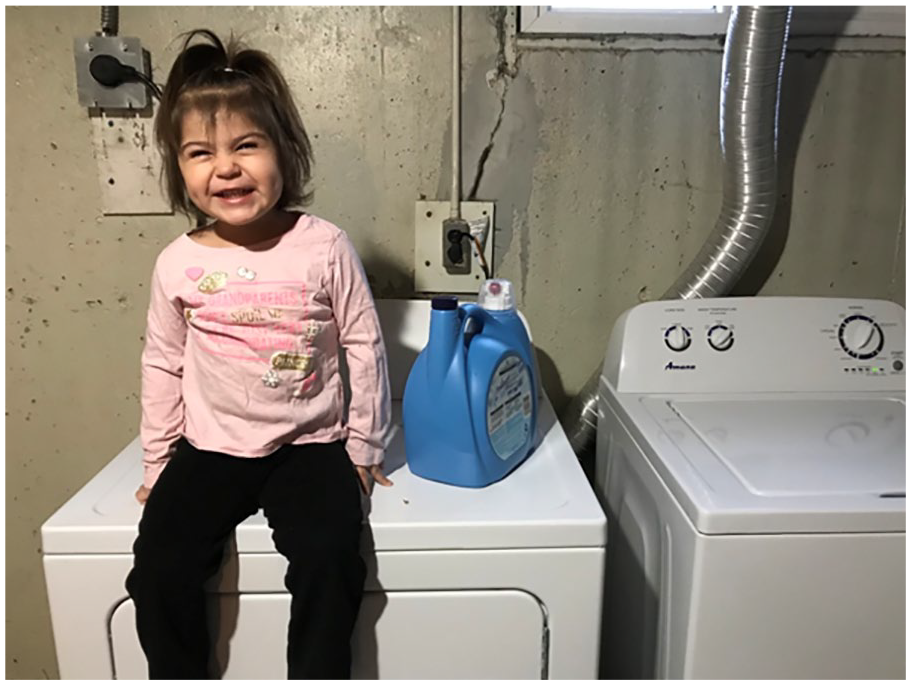
Laundry.
Simply having the space to live and play, including a backyard, was also highly valued by participants. As Tina noted, “my son has toys in the basement, his room, and all over the house. He gets to choose where he wants to play, so he has independence. That’s huge. He’s happier here.” Another participant began running a day home to take in other neighborhood children as a result of having her own place to live. In addition, participants agreed that living on their own came with an element of safety. As Michelle described, “Having your own space . . . you don’t have to be around unsafe situations. You can control what happens in your own space.”
In this way, participants communicated that having a stable home was critical for raising their children in healthy ways. According to Desiree, “stability is not having to intrude on someone else’s space. We’re not going from house to house every week.” Parents also communicated that stable housing was paramount to reducing their stress levels and supporting their mental health. As April expressed, “A big part of what keeps me stable mentally is knowing I’m always gonna have a safe place for my child to be.” According to participants, having a consistent, long-term home lessened their stress. Participants acknowledged that many young parents had experienced significant instability, and emphasized that, even when past circumstances had been chaotic, living in supportive housing “. . . gives people who might not know how to live responsibly the opportunity to learn.”
Parenting autonomy
Along with having a space of their own, a number of participants talked about how empowering it felt to be able to parent their children on their own terms. Living on their own meant having “more room to parent in your own way without being criticized,” and “being able to set our own boundaries and rules.” Where participants had experienced difficulties during their own childhood, they spoke about “breaking the cycle” so that their children could grow up in environments that were healthier than those provided by their own parents. As Desiree shared, “I want to raise my son to be everything his dad is not. I don’t want him to be someone who has to recover from his childhood.” Other participants spoke about aspirations to raise their sons to be respectful of women and to raise strong daughters who could have opportunities that they were never afforded. Having your own space meant having the freedom to raise your children with your own values, including cultural and spiritual practices, and made it easier to spend quality time with your child than was possible in shared living arrangements.
Supportive landlord
Parents emphasized the importance of having a positive relationship with a supportive landlord in order to maintain their stability and autonomy. Many participants had experienced prior difficulty with finding a place to live. For example, Reilly spoke about how “No one wants to rent to a 16-year- old. They wonder, what did she do to get kicked out of her foster home?” Even when they could find a place to live, participants described negative experiences with previous landlords, including being evicted on grounds that they felt were unfair, being threatened, and receiving judgmental comments about their age. Participants relayed that living in supportive housing meant that their landlord had an understanding of their unique needs, which relieved some of the stress involved in living independently. Nonetheless, participants described feeling intimidated to speak to their landlord when necessary (e.g., when repairs were needed in their suite or when their rent was going to be late). However, participants indicated that program staff helped them develop confidence to respectfully raise issues with their landlord.
In addition, participants relayed that receiving a subsidy from their landlord in order to make safe and secure housing accessible was essential for raising healthy children. As Devon shared, “My child used to be sick a lot more before we moved in here. There were cockroaches where we lived and we had to spray a lot. Now that we moved in here, she’s getting sick a lot less.” A number of participants shared similar stories, noting that receiving a subsidy provided the opportunity to avoid unsanitary housing conditions. Participants similarly described how receiving a subsidy helped lower their stress levels. As Jamie shared, “If you’re able to get lower rent . . . you can avoid the stress that comes with having to wait in line at 8 am and being like, if I don’t get this, I’m going to the homeless shelter.”
Community
According to teen parents, the community in which they were raising their children was critical for supporting their children’s healthy development. Teen parents emphasized their needs for (a) a safe, family friendly neighborhood, (b) community integration, and (c) acceptance.
Safe, family-friendly neighborhood
Given that many participants had previous experiences living in areas with high crime rates, they emphasized the importance of living in a peaceful neighborhood. Participants were grateful for space where their children could safely play and explore. As Erin shared, “I love living in a neighborhood where there’s a park that I feel safe to bring my son to even when it’s dark outside” (Figure 4). The neighborhood where the program was located was also certified as “crime free” by the Edmonton Police Service (i.e., the premises and landlord practices meet a standard set out by the Edmonton Police Service to enhance neighborhood safety), and participants indicated that this contributed to their peace of mind.

Safe park.
In addition to safety, participants appreciated living within blocks of a shopping center, library, green space, public transit center, playground, and schools. As Kelly described, “I was lucky enough to find a wonderful day home [for my child] . . . living in a community with close amenities is important to me.” She similarly shared how “it’s nice that we live near parks and an open field so [my son] can play freely” (Figure 5). Similarly, Jamie spoke about the importance of public transit being located within one block of their homes:

Playing freely.
We have the transit centre close by which helps . . . once you spend a hundred bucks at the grocery store it’s like well now I need to pay for a cab to take all this home. When I was living in my old apartment . . . I was already broke and I’m like I can’t spend money on a cab so I walked home carrying all of that with my stroller.
Community integration
In order to raise their children in healthy ways, participants indicated that it was important to feel a sense of integration and belonging in their communities. Developing friendships and connections with other Successful Families participants was helpful in this regard. As Tracy shared, “It gets so lonely. So I’m happy I have other moms around here for other human contact.” As Tina described, “. . . as a result of these friendships and connections, I feel a part of the community.” Taylor similarly shared how “the most important part of this program for me is stabilization and integration in the community . . . finding and networking other resources which could include other moms.” In the same way, it was important for the children of participants to have connections with their peers. Kelly noted that “I love that my son has lots of neighborhood friends. He is always playing with someone.” Overall, other teen parents living close by contributed to a sense of community integration.
Some parents additionally described amicable relationships with neighbors who were not part of the program. Parents gave examples of their neighbors shoveling snow from their sidewalks, tidying up their yards, and swapping babysitting services. However, some parents described less positive relationships with their neighbors. As Taylor described, . . . as young mothers, we’re often worried about what people think about us. You know how kids are; they’re loud. I think subconsciously, we’re always worried about what the neighbours think. And then you’re just always policing your child’s behaviour in a way so that no one can call social services. You’re always worried about that. People judge teen moms more than older moms. Sometimes I feel under surveillance from my neighbours, like they could call children’s services at any time (Figure 6).

Neighbor surveillance.
Austen indicated that teen parents want others to know that “we have the same values and concerns as older moms do.” Parents felt that it was necessary to bridge relationships with neighbors in order to enhance their community integration and avoid feelings of being under surveillance.
Acceptance
Participants shared extensive experiences with stigma and judgment, and therefore communicated the importance of acceptance through public education, understanding, and empathy for teen parents. Michelle described the way she often felt while in public: Everyone stares at you when you’re a teen parent and it feels like you’re being judged. How do they even know we’re teens? Is it the way we dress? Is it because they see us on the bus and think we’re too broke for a car?
Participants also shared the experience of receiving invasive inquiries from strangers. As Desiree shared, “People often ask young moms personal questions. Like, ‘Is this your only kid?’ or ‘Are you still with the father?’” Participants spoke about how people often “blamed” them for their pregnancy while ignoring their male partner’s role. In addition, participants recounted overt experiences of judgment; for example, Tina described how “one time I was in this line-up and my son was acting up. This lady turned to her daughter and said, ‘see honey? That’s why babies don’t have babies.’”
April also shared that teen parents were accustomed to people assuming that they were “unstable, abusive, and bad parents cause we hear these things all the time.” During photovoice groups, they created artwork to describe these experiences (Figures 7 and 8). With respect to Figure 7, April explained that “On my head it says anxiety depression mommy. And my heart is super big. And then I hear people say, she needs to lose weight, she’s unhealthy, a bad mom, unfit for her daughter.” Michelle also spoke about receiving criticism for making parenting mistakes. In comparison, they felt that older mothers were met with empathy: “When we mess up, people question if we’re fit to be parents. Whereas older moms, people might just say, ‘Oh, everyone makes mistakes.’” As a result, participants such as Taylor described worrying about the way they were parenting: “When I’m in public, I feel so much pressure to discipline my child in the right way.”
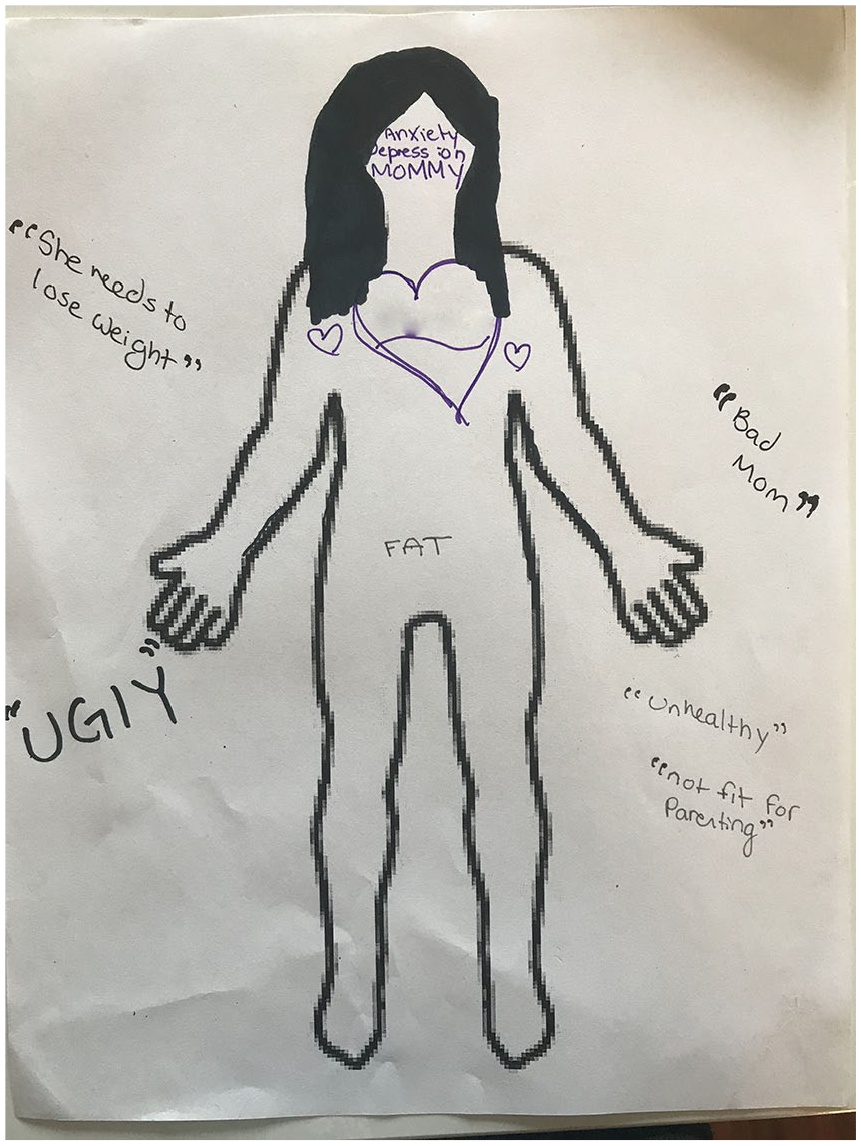
Judgments.
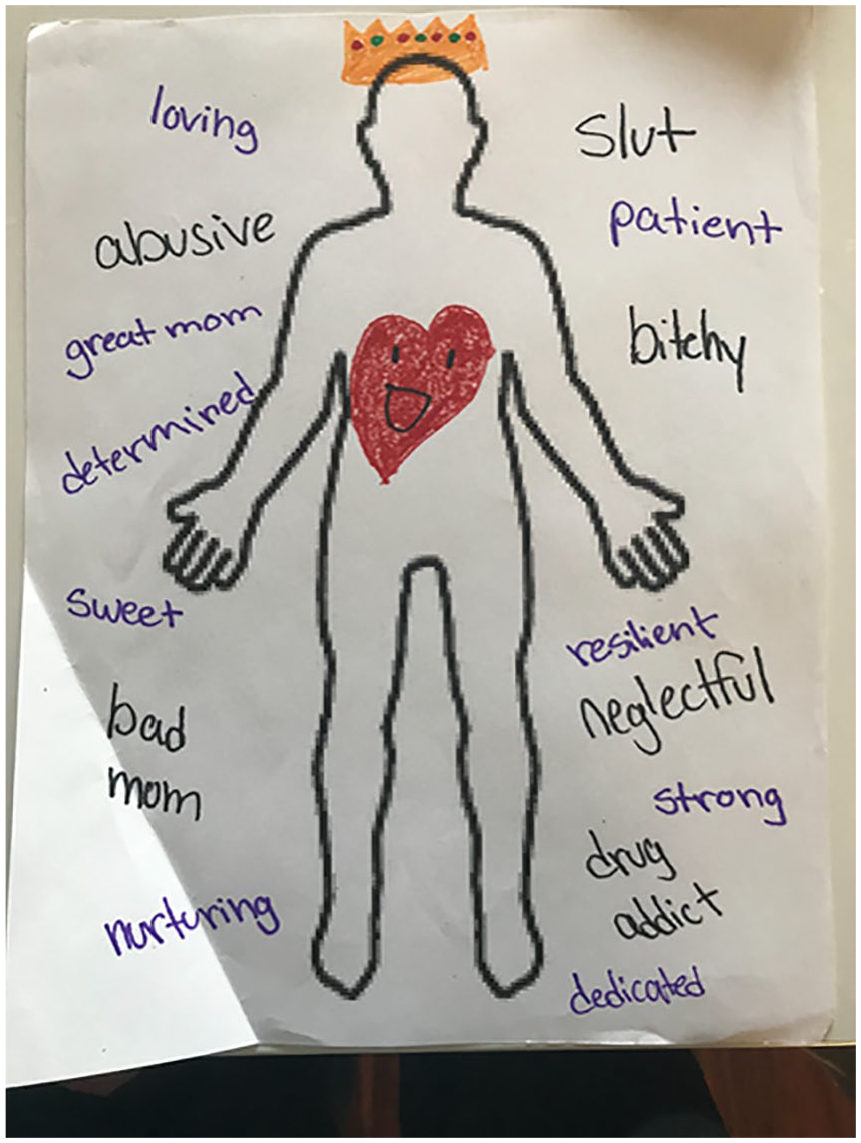
Criticisms.
Tina shared a powerful quote that she wrote from the perspective of her son: I have Tourette’s, and on my bad days I scream. Unfortunately, sometimes when we are in public, people put a label and judge my mom as being too young, that’s she’s a bad mom who can’t control me. What they don’t know is, she is doing her very best to learn and understand me . . . I wish people would stop and talk to my mom instead of judging her based on one moment on a bad day. Maybe then they would like her as much as I do.
Participants also reported experiences of judgment and stigmatization from their peers with and without children. Although being judged and feeling stigmatized by peers, neighbors, and the general public reportedly contributed to feeling stressed and unsure of themselves as parents, participants also shared that when other people treated them with respect, empathy, and understanding, this was valued immensely. Thus, participants emphasized the importance of educating people about the strengths and challenges of teen parenting, with Jamie indicating that “the more educated workers get, the less of a problem they have with my child.” Participants strongly felt that, with increased knowledge and education, it would be possible to be treated with increased acceptance, and that this would help them to raise their children in healthy ways by “making us resilient” and contributing to feeling “uplifted and proud.”
Discussion
This study provides a powerful opportunity for understanding the unique perspectives of teen parents participating in a supportive housing program, with respect to their needs for helping their children grow and develop in healthy ways. Throughout the following discussion section, we describe key takeaway messages and practical implications related to our findings, and describe how our knowledge mobilization processes resulted in changes to the Successful Families Program.
To begin, participants in this study shared adverse childhood experiences and past trauma, including domestic violence, which is consistent with researchers who have demonstrated that teen parents are most often part of marginalized groups before and after pregnancy (Kearney & Levine, 2012; Mollborn, 2017; Mollborn & Dennis, 2012; SmithBattle et al., 2017). It must be recognized that racialized, classed, and gendered systems of oppression construct this marginalization and thus have a role in shaping developmental outcomes for teen parents and their children.
In light of these realities and combined with experiences of judgment from support workers and other professionals, teen parents communicated that a trauma-informed, relationship-based approach was important for them to engage with and benefit from support. Thus, we strongly recommend that staff working with teen families are trained in trauma-informed practice, grounded in a basic respect for the unique circumstances of individual teen parents. Researchers have emphasized the importance of trauma-informed approaches for preventing teen pregnancy (Chilcoat et al., 2016; Schladale, 2013). Our findings stress that, rather than taking an entirely preventive focus, it is necessary to also understand how to work with young people once they become parents, particularly given that many teen parents reported markedly negative experiences with support workers and feeling mistreated by the systems to which they should be able to turn for support.
Participants also indicated a clear need for expanded mental health services in order to raise their children successfully. Access to mental health services may be particularly critical in light of the experiences of trauma and adverse childhood experiences that participants shared. This is in line with other researchers who have demonstrated that teen mothers generally have higher rates of depression and post-traumatic stress disorder given their increased risk, relative to older mothers, of experiencing interpersonal violence and other forms of trauma (Hodgkinson et al., 2010; Lewin et al., 2013; Mitchell et al., 2010). Expanding access to and the quality of mental health services for teen parents has the potential to benefit both teen parents and their children. Although standards of mental health care for teen parents as a unique population have not been established, this is an important area for further research. Recognizing this need, Terra has expanded mental health supports for teen parents and is pursuing a research project with the researchers from the current study to inform this expansion.
Findings from this study also point to the need for accessible, individualized support that acknowledges teen parents’ unique needs during the transitions to independent living and parenthood. Although support was deemed essential, participants additionally valued structure and accountability in the form of clear expectations. This suggests the need for a delicate balance between respecting teen parents’ autonomy and providing limits and boundaries. Importantly, trusting relationships and a trauma-informed approach could assist staff to achieve this balance. In the Successful Families Program, learnings from our ongoing research processes resulted in additional program structure being enacted with the development of a phased approach to working with families. Each program phase carried with it different expectations for the number of home visits and groups that participants attended each month, where fewer visits and groups were expected of families during each successive phase. Participants who did not meet expectations for home visits and groups were at risk of losing their subsidy, although such situations were dealt with on a case by case basis. Based on feedback from teen parent participants, we recommend that programs clearly outline expectations of participants as well as the roles of staff members, such as through the phased approach outlined here. At the same time, programs must respect participants’ autonomy and privacy; for example, by giving participants space when they express a need for it and never showing up to participants’ homes unannounced.
Within the realms of housing and community, participants indicated the value of stability and having a space of their own to raise their children with parenting autonomy, while at the same time a supportive landlord and subsidy helped them live independently. In addition, a safe, family-friendly community and integration in their community were emphasized by participants, although they described pervasive experiences of stigma and judgment from neighbors, peers, and the general public that interfered with developing a sense of belonging.
Although supportive housing programs tend to focus on participants in terms of building their capacity to maintain their tenancy and work toward independence, insights from teen parents suggest that an additional focus for housing programs should be on finding creative ways to educate neighbors and build a sense of community. Our photovoice project provided a means for public education, and it will be important for this and other housing programs to pursue ongoing opportunities for community engagement with the aim of reducing stigma and building a sense of belonging for participants. Importantly, efforts toward education and community building must address how the stigmas around teen parenting have been actively constructed through raced, classed, and gendered discourse. In other words, the forms of stigma that teen parents face are different based on their intersecting experiences of different forms of marginalization and privilege. Thus, we recommend that efforts to educate community members center and privilege the voices and experiences of diverse teen parents in an effort to actively resist the construction of teen families as a social problem. Recognizing this important feedback, Successful Families began building intentional opportunities for community interactions into their programs.
Although some of our findings (e.g., the desire to live in a safe, family-friendly neighborhood) can be seen as universal needs for families, whether headed by teen parents or not, these findings are important for two main reasons. First, that teen parents have such values as living in a safe, family friendly neighborhood illustrates that teen parents have similar concerns to older parents, which is something the participants in this study wished to make known. Second, due to many teen parents experiencing systemic disadvantage (e.g., discrimination from landlords and a lack of financial resources), it may be more difficult for them to access resources such as safe neighborhoods, that older parents take for granted. Findings thus emphasize the importance of providing support for teen families to access their abilities to raise their children in healthy ways. We take the position that, if teen families were to exist in a world that welcomed, celebrated, and supported them rather than judging, stigmatizing, and discriminating against them, their developmental trajectories and opportunities for success could be vastly enhanced. Importantly, this requires supportive and responsive structures, policies, and housing programs to be in place for teen families rather than an exclusive focus on preventing teen pregnancy.
Reflections on the Photovoice Process
Through this project, we demonstrated that photovoice is an effective CBPR approach to engaging teen parents and gathering their perspectives. Informal participant feedback on the process indicated that participants enjoyed photovoice in part due to the opportunities for social connection that were provided as well the chance to share their stories on their own terms. Other researchers have similarly reported that, in emphasizing social justice and client choice, photovoice is suitable for conducting research with marginalized populations (e.g., Peterson et al., 2012; Pruitt et al., 2018).
However, the photovoice process was not without challenges. In both rounds of photovoice for this project, a number of weeks passed before participants began providing photos, necessitating time and patience, and a relinquishing of the control that is generally characteristic of the research process (Potts & Brown, 2015). Offering examples of other photovoice projects and engaging in collaging as a visual exercise helped in this regard. Capturing and sending photos to the researchers also represented a time commitment for busy parents. Providing an incentive in the form of a draw for a gift card each week contributed to participants’ motivation to send photos to the researcher in advance of group discussions. We did not provide an incentive for participants every week because participants received credit for attending group discussions as part of their program requirements. In other words, participants were required to attend two group gatherings per month to maintain their participation in the program, and our group discussions were counted toward this requirement. Therefore, Terra staff preferred that we offered a draw for a gift card during each group discussion rather than providing a gift card to each participant during every group discussion.
Once participants began sharing photos, they gained momentum and provided meaningful information in response to the research questions. This momentum was in large part gained through biweekly group discussions with participants, during which they had the opportunity to share their experiences and listen to other participants’ stories. Importantly, processes were also enabled by being situated within a program that matched the photovoice method’s values of sharing perspectives that are typically marginalized and empowering participants to take action on issues that impact them. Thus, it was possible to involve a staff member in co-facilitating photovoice groups to build staff capacity for using this method as part of regular program delivery. Ongoing engagement with staff and participants also enhanced the practical relevance of findings, as staff and participants integrated their practical perspectives throughout data collection and analysis.
An additional area of challenge was managing group dynamics during photovoice groups, as some participants had personal disagreements with one another that originated outside of the group setting. Communicating with staff was helpful in understanding these dynamics. It was also beneficial for one of the researchers to have expertise in facilitating groups. However, this presented a tension given that one of the researchers was also training to be a psychologist, which necessitated separating the role of researcher from that of clinician. In this way, group facilitators intentionally allowed participants to stray off topic during groups given that the purpose of group sessions was not educational or therapeutic, but rather was to share ideas in response to the research question, build relationships, and shift power to participants. At times, facilitators felt as though they had not gathered enough information during group discussions given that participants often conversed about topics that were completely unrelated to the research questions. On reflection, however, this was important in service of the project’s larger goals and for the participants themselves. Again, patience and time were key in this regard.
Limitations
With respect to the limitations of this study, we did not directly assess the impacts of our knowledge mobilization efforts on public attitudes and policy changes. In retrospect, we could have been more purposeful about the ways that we intended to influence policy. In addition, it should be acknowledged that this study included a specific subset of teen parents who were screened into the Successful Families Program. In particular, to position parents for success in the program, they were required to have a stable source of ongoing funding and be willing and able to live independently. It should therefore be considered that our findings reflect a unique group who may have had less urgent needs and concerns at the time of this study than other teen parents—for example, those who are unhoused, do not have a stable financial situation, and/or are unable to live independently.
In addition, the sample for this study consisted almost exclusively of teen mothers. An important area for future research is examining the extent to which teen fathers and nonbinary teen parents report experiences that are comparable with and different from teen mothers. Indeed, research on teen pregnancy and parenting almost exclusively relies on traditional binary notions of gender identity and roles. An important area of future exploration will be to understand the complex experiences and needs of nonbinary and genderqueer teen parents.
Conclusion
Through our CBPR project, we demonstrated that photovoice can be successfully used to engage teen parents in all stages of the research process, including data analysis and knowledge mobilization. This project resulted in insights that have direct relevance to practice both within and outside of the housing sector. Teen families have both complex needs and strengths that require relationship-based, trauma-informed, structured supports delivered by nonjudgmental staff who respect their independence, supportive landlords, and communities where they can feel safe to raise their children without the burden of stigma and judgment. Importantly, although projects such as this one will not end the deep historical, structural, and political roots of the stigma and judgment that teen parents face, the supports identified in this study may support safe and healthy development even in the midst of widespread societal stigma and marginalization. Ultimately, individual-level support must be combined with efforts to address the systemic racial, economic, and gender-based oppressions that shape the experiences of teen parents, and that many teen parents continue to actively resist.
Footnotes
Acknowledgements
The authors are incredibly grateful to the teen parents who took part in this study by sharing their stories with courage, humility, and wisdom, as well as the valuable support from staff of the Terra Centre and Brentwood Community Development Group without whom this project would not have been possible.
Declaration of Conflicting Interests
The author(s) declared no potential conflicts of interest with respect to the research, authorship, and/or publication of this article.
Funding
The author(s) disclosed receipt of the following financial support for the research, authorship, and/or publication of this article: This project was funded in part by the Government of Canada’s Homelessness Partnering Strategy’s Innovative Solutions for Homelessness, Homeward Trust Edmonton, MITACS, and PolicyWise for Children and Families.
