




Abstract
This study examined the content of injunctive peer norms (i.e., perceived peer approval) of sexting among Swedish adolescents. Written answers from 808 adolescents (Mage = 14.22) to an open-ended question about peers’ views of sexting were analyzed qualitatively using content analysis. Eight categories were distinguished for when and why sexting is acceptable or not in the peer group. A substantial share of adolescents believed their peers approve of sexting, especially if sexting occurs within trusted relationships and when all parties have consented. A large share of adolescents described that peers were non-accepting of sexting, emphasizing that it can be spread to others. The participants also suggested that sexting is seen as a gendered phenomenon surrounded by sexual double standards, with girls at more risk of negative consequences. Some participants emphasized the peer view that adolescents sext to seek attention, and some emphasized that sexting is viewed as an enjoyable activity. Several of these categories’ likelihood to be mentioned was related to the adolescents’ age, gender, and prior experience of sexting. We concluded that adolescents might have a hard time navigating the social context of sexting, given the conflicting and gendered messages from peers.
Adolescence is a fundamentally important period for sexual exploration and sexual development. Although sexual behaviors and feelings occur during childhood, adolescent sexuality is considered qualitatively different (Larsson, 2001; Steinberg, 2011). Due to pubertal development, sexual motivation typically increases in early adolescence, and sexual behaviors become more deliberate. Increased cognitive capacities influence sexuality in adolescence, as they allow for hypothetical thinking (What if . . .?), improved decision-making capabilities (Should I . . . ?), and also heightened self-concern (Am I good enough?). However, as Steinberg (2011) pointed out, one of the main influences on adolescents’ sexual behavior is the social context. In the process of trying to understand who they are sexually, adolescents seek information and guidance from social sources and assume norms about what is appropriate/inappropriate, expected/unexpected, and accepted/condoned (Shafer et al., 2013). As the peer group’s importance increases for development and adjustment during adolescence, so does the importance of the norms and influences that operate on the peer group level. Indeed, peer group norms are usually considered some of the most influential factors for adolescents’ sexual development and behaviors (Buhi & Goodson, 2007).
Today’s adolescents have shifted much of their social attention to the internet. This shift has provided a new arena for sexual exploration, allowing for new ways for adolescents to express themselves and engage in sexual activities. One of these activities is sexting, defined as creating, sharing, and forwarding sexually suggestive nude or nearly nude images through the internet (Lenhart, 2009; Ringrose et al., 2012). A recent meta-analysis found that about 15% of adolescents have sent sexts, and about 30% have received sexts (Madigan et al., 2018). The experiences adolescents have of sexting have often been situated within a negative public discourse that emphasizes the potential for risks and harms (e.g., sexual exploitation or unwanted spreading of explicit pictures; Döring, 2014; Livingstone & Mason, 2015). This view has also been mirrored in research, which has often employed a “risk frame” (Lippman & Campbell, 2014) by seeking primarily to identify links between sexting and different risk-taking behaviors and adverse outcomes. Although the focus on the risks associated with sexting is legitimate, it may delegitimize and misrepresent young people’s own experiences, as young people also tend to emphasize perceived benefits of sexting (e.g., being a fun way to flirt, increase intimacy, and gain interpersonal sexual experiences) (Cooper et al., 2016). Thus, adolescents may hold more nuanced accounts and views on how sexting is perceived in their social surroundings. With this study, we aim to shed light on adolescents’ perceptions of the peer norms of sexting and to provide detailed insights into the social landscape that can influence adolescent sexting.
Peer Norms as a Key Influence for Adolescents’ Sexual Behaviors and Experiences
As a backdrop to understanding peer influence on adolescents’ views of sexting, behaviors, and experiences, this study relies on the social norms approach, as suggested by Cialdini and Trost (1998). This approach emphasizes significant others (e.g., peers) as crucial role models for behavior by attempting to explain how social frames of reference are powerful in regulating individuals’ decision-making and behaviors. Within the social norms approach, different types of norms are separated: descriptive norms, referring to the perception of how common a certain behavior is in the peer group, and injunctive norms, which is the perceived peer approval (or disapproval) of a certain behavior (Cialdini and Trost, 1998). The effects of descriptive and injunctive social norms are mostly indirect, as they affect adolescents’ perceptions. In this study, we focus solely on injunctive peer norms, operationalized into what adolescents believe their peers think about sexting. According to Cialdini and Trost (1998), individuals tend to adapt their behaviors in concordance with the perceived peer norms, that is, the perception of what behaviors are prevalent, accepted, or desired among important others. Although these processes are normative and universal throughout the life-span (McDonald & Crandall, 2015), the behavioral influence of peer norms can be especially strong for adolescents. Indeed, adolescents heavily rely on peers for feelings of belongingness, acceptance, and approval. Consequently, the perception that a sexual activity is accepted and popular among peers may motivate adolescents to engage in this behavior given the importance of “fitting in” and to gain social capital (Cialdini and Trost, 1998; Temple-Smith et al., 2015).
Studies confirm that both descriptive and injunctive norms influence adolescents’ sexual activities, such as touching or intercourse, and sexual risk behaviors (DiBlasio & Benda, 1990; van de Bongardt et al., 2015). In a study on the influence of perceived peer norms for risky online sexual activities (e.g., talking about sex, searching for a sexual partner, sending nude photographs, and disclosing personal information), Baumgartner and colleagues (2011) found that both descriptive and injunctive norms predicted increases in adolescents’ risky online sexual behaviors across time. While descriptive norms demonstrated the strongest effects, similar patterns were identified for adolescents who believed their peers approved of the behaviors in question (i.e., injunctive norms). Similar results have been observed in more recent studies (Van Ouytsel, Ponnet, et al., 2017; Walrave et al., 2015). Thus, adolescents’ beliefs about their peers’ frequency and approval of risky online behaviors, including sexting, seem to affect their propensity to engage in these behaviors themselves. The influence of peer norms can also be moderated by factors such as age, gender, and previous experience (Gewirtz-Meydan et al., 2018; van de Bongardt et al., 2015). For instance, the norms for sexual activities may be gender-specific in which the acceptance for girls to engage in a given sexual activity differs from how acceptable the activity is for boys (Kreager & Staff, 2009). Previous studies also indicate that adolescents with prior sexting experience generally see more benefits and positive norms related to sexting (Gewirtz-Meydan et al., 2018; Strassberg et al., 2013).
Need of Further Qualitative Studies
Quantitative studies examining peer norms and adolescents’ sexual behaviors have typically asked participants about the extent to which they think their peers engage in and approve of certain activities and behaviors. Baumgartner and colleagues (2011), for example, asked adolescents to rate how much they believed their peers approved of sending nude photographs on a 4-point scale, ranging from “not at all acceptable” to “very acceptable.” This quantitative approach is appropriate when exploring injunctive norms in relation to actual behavior. However, it provides no detailed information about why, when, and for whom adolescents believe their peers approve or disapprove of sexting. To fully capture the complexities of injunctive norms, which in turn accounts for the social considerations affecting adolescents’ decision-making, further inquiry is most needed.
A number of previous qualitative studies have shed light on the views and attitudes that young people seem to hold toward sexting. A recurrent finding has been that adolescents view sexting as a possible means of sexual exploration despite its potential risks. For example, adolescents have described sexting as “normal” and “fun” and a way to maintain romantic relationships (Albury & Crawford, 2012; Lenhart, 2009; Setty, 2019a; Stanley et al., 2018; Thomas, 2018). At the same time, adolescents tend to hold skeptical views of sexting—which often revolve around the perceived risks of sexting, such as that sexts can be spread to others and result in a bad reputation at school and among friends (De Ridder, 2017, 2019; Setty, 2019a, 2019b). These qualitative studies also show that adolescents perceive sexting as accompanied by a “sexual double standard” in which girls’ and boys’ sexting is not viewed equally (Ringrose et al., 2013). A typical account is that girls are more likely to receive sanctions for engaging in sexting, such as being called a “slut” or a “skank” or be labeled “attention-seekers,” while boys are more likely to receive praise and being called “kings” (Johansen et al., 2019; Lippman & Campbell, 2014; Naezer & van Oosterhout, 2020; Ringrose & Harvey, 2015; Ringrose et al., 2013; Setty, 2019a, 2019b; Symons et al., 2018; Thomas, 2018).
The above studies provide important insights into the “rules” and stipulations that seem to surround sexting, that is, injunctive norms. What may be of further interest is investigating the content of these injunctive norms and the extent to which adolescents perceive them. To our knowledge, no previous studies have detailed the various injunctive norms adolescents perceive by asking them what they believe peers may think about sexting. Given the potential of injunctive norms in influencing adolescents’ sexting behavior (Cialdini & Trost, 1998), mapping these may provide valuable insights into the social considerations adolescents need to account for in their decisions to sext (e.g., for whom, when, and why sexting is approved/disapproved).
The Present Study
Scholars (e.g., Van Ouytsel, Van Gool, et al., 2017) have called for further qualitative investigation of sexting, including exploring the peer norms guiding adolescents’ sexting behaviors. Lippman and Campbell (2014) emphasized a strong need for insights into “the normative landscape” (p. 372) surrounding sexting, in which peers are one of the most important components. The present study extends on previous qualitative research by examining adolescents’ views of what their peers think of sexting. In addition, the present study uses a relatively large sample of adolescents (n > 800) covering a broad age span (12–16 years). This approach allows for capturing a broad spectrum of injunctive norms perceived by adolescents, as well as for valuable comparisons to be made of whether these perceptions differ based on participants’ age, gender, and prior experience of sexting.
Finally, the present study also extends on previous research by examining adolescent sexting in the cultural setting of Sweden. Sweden is among the most secularized countries globally (World Values Survey, 2020), with a liberal approach toward adolescents’ sexuality (Jaf & Skoog, 2018). Sexual education in Sweden primarily focuses on sexual health, lust, intimacy, and mutuality rather than on abstinence (Lennerhed, 2014). Swedish adolescents tend to be satisfied with their sexual knowledge and report good sexual health, with low cases of sexually transmitted diseases and unwanted pregnancies. However, the sexual opportunities for girls are more likely to experience sexual abuse (Public Health Agency of Sweden, 2017, 2019).
This study was designed to explore the norms that Swedish adolescents emphasize when asked to reflect upon their peers’ behaviors and views about sexting. The research question that guided the study was as follows:
As previous studies have shown that there are both gender and age differences associated with sexting behaviors (e.g., Burén & Lunde, 2018; Hensel et al., 2011; Lenhart, 2009; Lippman & Campbell, 2014; Ringrose et al., 2013), we also examined whether there are gender or age differences in terms of what adolescents believe their peers think about sexting, and given the likelihood that adolescents with prior sexting experience may have a different perspective on sexting (Gewirtz-Meydan et al., 2018; Strassberg et al., 2013), we also examined whether there were differences between adolescents with and without prior sexting experience.
Method
Procedure
This study was part of an ongoing research project (OWN YOUR BODY) examining sexting experiences and behaviors among Swedish adolescents. The data were collected from fall 2016 to spring 2017. A questionnaire was distributed to 12- to 16-year-old adolescents (in all, 1,653 adolescents). The questionnaire focused on sexting and included questions about the adolescents’ background (e.g., family income and birth origin), online habits (e.g., online habits and internet rules at home), and body image. The questionnaire was distributed in 10 primary schools in Sweden, which were selected to represent different socioeconomic areas based on statistics from the Swedish National Agency for Education’s (2018) statistical tool SALSA. The questionnaires also included open-ended questions (e.g., the question analyzed in the present study). Each participant answered the questionnaire privately in a classroom setting, and boys and girls were placed in separate groups with one researcher present. This research was approved by the Regional Ethics Board in Gothenburg, Sweden.
Participants
For the open-ended question concerning injunctive norms, 1,340 adolescents (727 girls, 613 boys; 81.1% of the total sample) provided statements. Of these, 339 (25.3% of total) contained no meaningful information (e.g., “I don’t know” or “No”) and were excluded. Furthermore, 193 statements (19.3%) described solely the participant’s own belief about sexting (e.g., “I think sexting is okay”) and were excluded. This left 808 statements (61.3% girls, 38.6% boys) analyzed in the present study. Mean age was 14.22 years (SD = 1.03). Descriptive statistics indicated that 88.9% of participants were born in a Nordic country, 1.7% were born in a European country (excluding the Nordic countries), 5.4% were born outside Europe, and 4.0% did not indicate where they were born. Socioeconomic status was measured by asking adolescents about their perceived family economic situation. The majority of the adolescents, 78.8%, considered their family economic situation to be good or excellent, 16.9% rated it as average, and 4.2% rated it as poor or not good at all.
Measures
The participants received the following definition of sexting: “Sexting is the sending and/or receiving of images or video clips that contain nudity or are sexual in nature, such as sending nude or semi-nude pictures/video clips, showing a body part or doing a sexual act via webcam.” The participants received the definition in written form in the questionnaire and orally by the researcher. The contents of injunctive peer norms about sexting were measured with the open-ended question “What do people of your own age think of sexting?” To encourage full written disclosure, the question was followed by these probes: “Do you think people of your own age think sexting is okay?” “Is it more or less okay if a girl rather than a boy send sexts?” and “Is it more or less okay to sext depending on whom people are sexting with?” The participants were also asked about their own sexting experience with four questions: whether they had sent sexts to romantic partners, friends/peers, online friends, or strangers. The questions were answered on a 5-point Likert scale ranging from 1 = never to 5 = very often. For this study, these items were combined into a binary variable that represented whether the participants had sexting experience (Response Alternatives 2–5) or not (Response Alternative 1).
Analyses
To explore peer norms about sexting, we conducted a conventional content analysis (i.e., inductive approach) in line with Hsieh and Shannon’s (2005) recommendations, thus allowing categories and names to be created from the data. We assumed that each one of the participants’ meaningful statements held one or more codes. As the first step in the code generating process, the first author familiarized himself with the data by reading each statement from start to finish. Each statement was then read word by word, highlighting text that included key thoughts and concepts that described peer norms about adolescent sexting. The first author then developed preliminary labels that reflected key thoughts or concepts in the statements. These labels functioned as templates for the coding scheme, including definitions, inclusion criteria, and representative examples for each code. During the coding scheme creation, meetings were held between all the authors to discuss the coding. One identified problem was the difficulty of discerning whether the participant mentioned their personal views or peers’ views about sexting. An agreement was reached to exclude codes and statements where it was clear that the participant stated their personal views with wordings such as “my belief is,” or “my view is.” The new set of codes were organized and clustered based on their conceptual relationships with each other. These clusters were categorized and named based on the contents of each cluster of codes. The named clusters were then combined into categories and subcategories.
As an example, the coding process of the “Sexting can be spread” subcategory started with statements such as “I think people my own age are afraid of sending sexual content to people because they can be spread to others,” or “. . . it is never safe, if you have a bad break-up with a partner, the pictures can be leaked as revenge.” These statements were coded as “you can never be sure if pictures are sent to others” and “you can never trust others with sexts of yourselves.” These and similar codes were then clustered to form the subcategory “Sexts can be spread,” within the main category “Category 2: Non-accepting view of sexting.” All the codes in the cluster shared the underlying meaning that sexting is harmful as it can be spread to others.
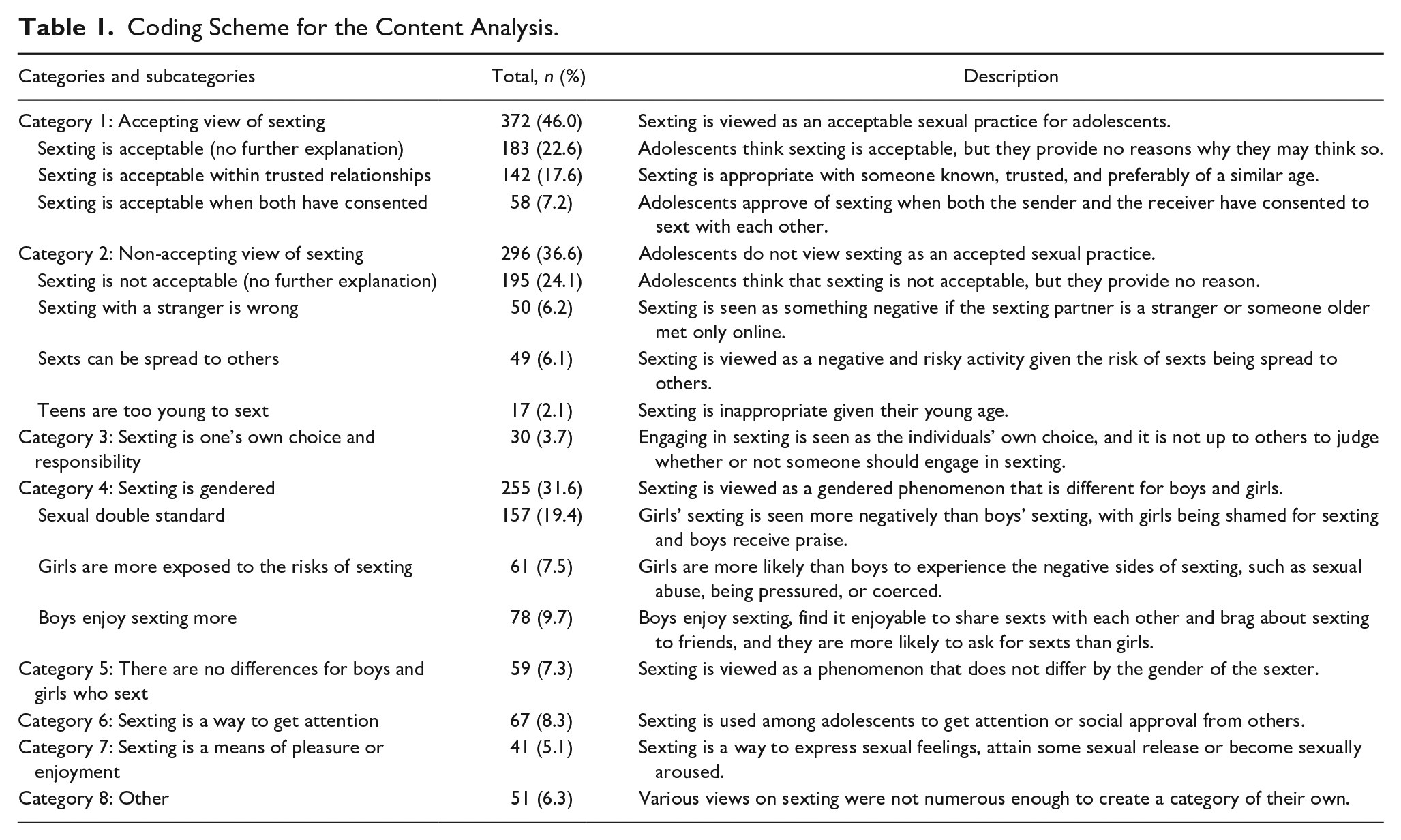
Given the large sample size, the quantification of the qualitative data, and examining differences between groups (age, gender, and prior sexting experience), we assessed intercoder reliability to ensure that the coding was consistent (Burla et al., 2008; Syed & Nelson, 2015). For interrater reliability, a coding manual was developed that was based on the coding scheme. An external rater, with no affiliation with the research project, coded a random set of statements (20% of statements). After slight modifications in the coding manual, a satisfactory agreement was reached for all categories and subcategories, with Cohen’s kappa ranging from .72 to .96. Finally, all the authors individually coded random statements to verify the coding’s accuracy and consistency. These were compared and discussed between the authors, who concluded that no more coding scheme modifications were needed. Table 1 includes the final coding scheme.
Coding Scheme for the Content Analysis.
Two-way chi-square tests were used to investigate possible gender differences between girls’ and boys’ likelihood of mentioning each category and subcategory. Girls were used as the reference group in these analyses. Also, 2 × 3 chi-square tests were conducted to investigate possible differences between the age groups. For each test, Cramer’s V was calculated to determine effect sizes. In case of obtaining significant differences between the age groups, Bonferroni-corrected pairwise comparisons were conducted with alpha set at .05/3 = .017. Two-way chi-square tests were also performed to determine differences in mentioning categories and subcategories based on whether the participants had prior sexting experience. SPSS 25.0 was used for all statistical analyses.
Results
Answers to the open-ended question were organized categories and subcategories reflecting perceived peer norms about sexting (injunctive norms). Most categories reflect situations that peers are believed to either approve or disapprove of (when), and some categories captured the underlying motives of sexting (why). Many participants incorporated several elements into their statements, and statements may appear in different categories simultaneously. Citations have been slightly edited for clarity.
Category 1: Accepting View of Sexting
In the first category (n = 372, 46.0%), participants expressed that peers generally hold an accepting view of sexting. The category was divided into three subcategories, with statements—to varying detail in content—indicating that sexting is seen as an acceptable practice by peers. The prevalence of each subcategory and its associated gender, age, and prior sexting experience differences are detailed in Tables 2 to 4. Although about one fifth of the statements in the subcategory “Sexting is acceptable (no further explanation)” did not explain why peers view sexting as acceptable (“They think sexting is completely okay,” Boy, 16 years old, with no prior sexting experience), the majority of statements within the main category stressed prerequisites for when sexting is acceptable. First, almost 18% of the participants emphasized the sexting partner as an important component for the acceptability of sexting: when sexting is done with someone known and trusted (preferably a romantic partner) and of a similar age. This subcategory was named “Sexting is acceptable within trusted relationships.” One female participant wrote that “I believe most people think it is ok to send a picture to someone trusted who won’t forward the images, like a boyfriend or girlfriend” (Girl, 14 years old, with no prior sexting experience), and another participant stated, I think it depends on who you send that picture to. If it’s like a girl/boyfriend then maybe it’s more okay because you’re in a relationship. But if it’s a classmate that you only meet in school, then maybe it’s seen as more offensive. (Boy, 15 years old, with no prior sexting experience)
Frequencies and Distributions of Girls’ and Boys’ Mentions of Main Categories and Subcategories.
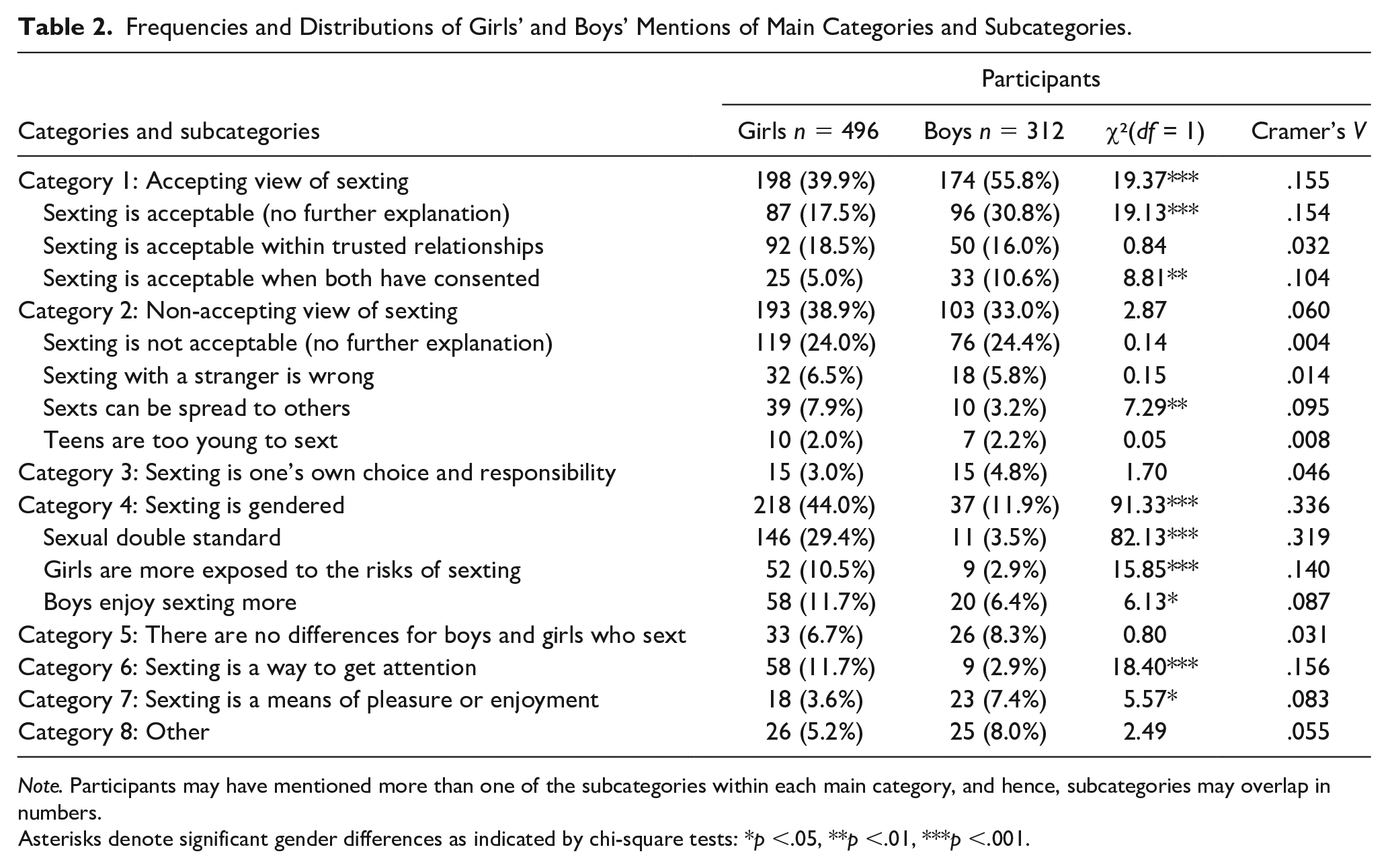
Note. Participants may have mentioned more than one of the subcategories within each main category, and hence, subcategories may overlap in numbers.
Asterisks denote significant gender differences as indicated by chi-square tests: *p <.05, **p <.01, ***p <.001.
Frequencies and Distributions of the Different Age Groups’ Mentions of Main Categories and Subcategories.
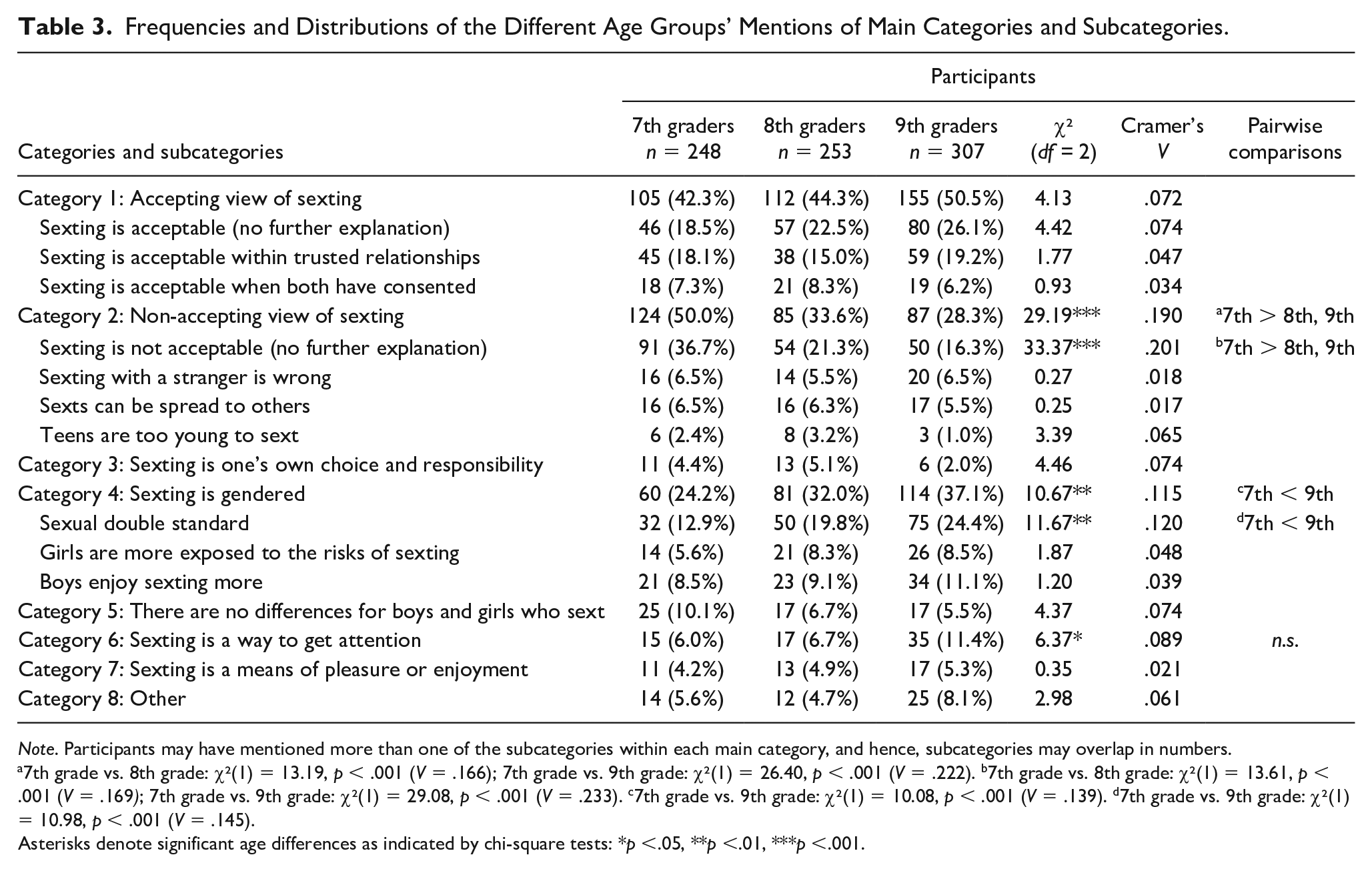
Note. Participants may have mentioned more than one of the subcategories within each main category, and hence, subcategories may overlap in numbers.
7th grade vs. 8th grade: χ²(1) = 13.19, p < .001 (V = .166); 7th grade vs. 9th grade: χ²(1) = 26.40, p < .001 (V = .222). b7th grade vs. 8th grade: χ²(1) = 13.61, p < .001 (V = .169); 7th grade vs. 9th grade: χ²(1) = 29.08, p < .001 (V = .233). c7th grade vs. 9th grade: χ²(1) = 10.08, p < .001 (V = .139). d7th grade vs. 9th grade: χ²(1) = 10.98, p < .001 (V = .145).
Asterisks denote significant age differences as indicated by chi-square tests: *p <.05, **p <.01, ***p <.001.
Frequencies and Distributions of Adolescents’ Mentions of Main Categories and Subcategories Based on Prior Sexting Experience.
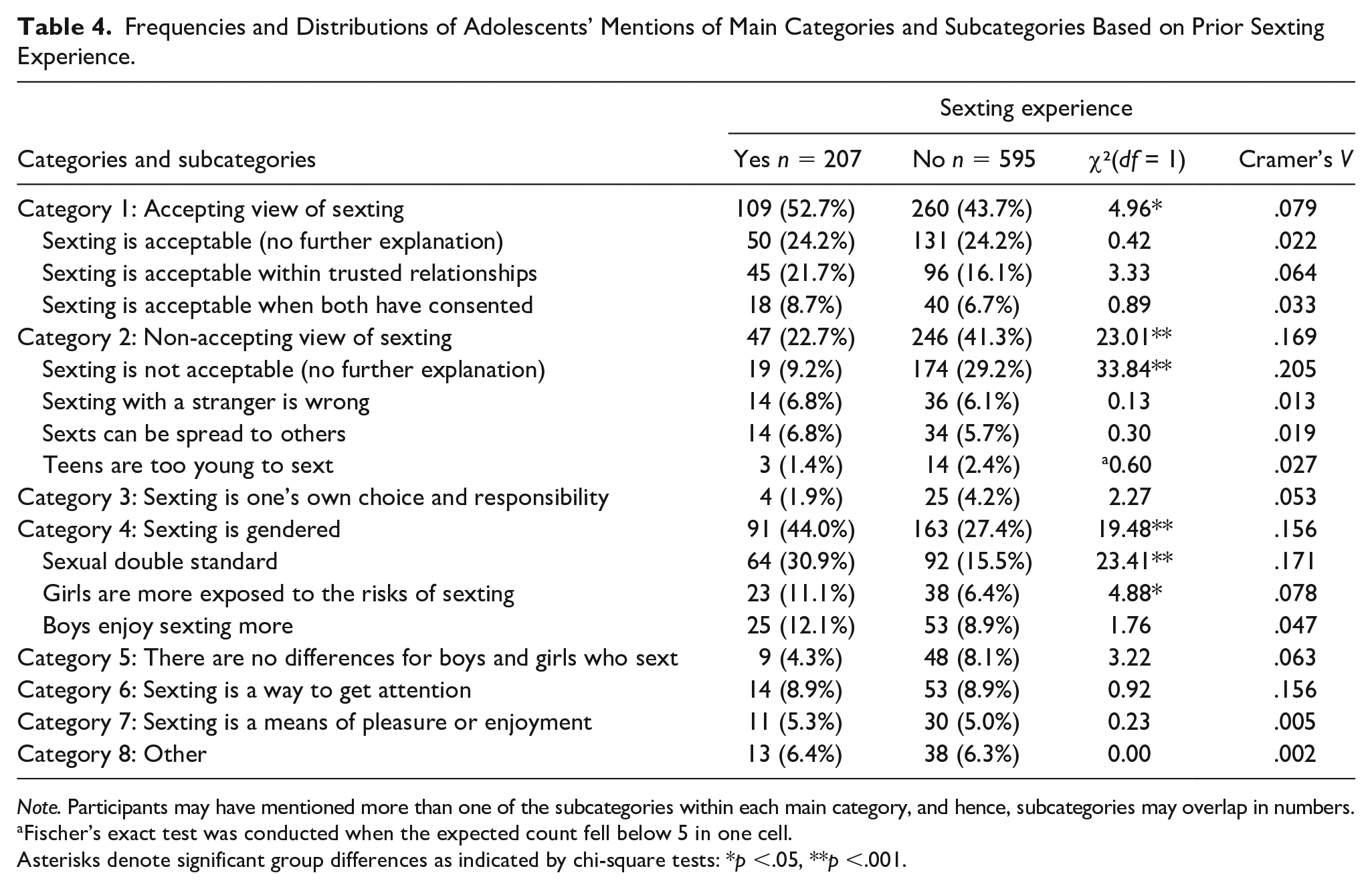
Note. Participants may have mentioned more than one of the subcategories within each main category, and hence, subcategories may overlap in numbers.
Fischer’s exact test was conducted when the expected count fell below 5 in one cell.
Asterisks denote significant group differences as indicated by chi-square tests: *p <.05, **p <.001.
Mutual consent was also emphasized as an important component for the acceptability of sexting, which about 7% indicated. This subcategory was called “Sexting is acceptable when both have consented.” One boy (age 15) with prior sexting experience wrote, “I believe many [adolescents] think it is exciting. It is okay as long as both agree to it. It is important to have a good dialogue and to know each other well outside of the screen.” Another participant, with prior sexting experience, stated, “I believe that people my age think it is okay if both have agreed to do it, and if they keep it private” (Boy, age 15).
In terms of gender, age, and differences in sexting experience, inferential statistics indicated that boys were more likely to perceive that sexting is acceptable in the peer group, but without explaining why. Boys were also more likely to perceive the importance of mutual consent. No age differences were observed for statements about peers having an accepting stance toward sexting. A weak but significant group difference was also found between participants who had prior sexting experience, indicating that they were more likely to mention the main category, but none of the subcategories.
Category 2: Non-Accepting View of Sexting
The second category, which was mentioned by about 37%, contained non-accepting views of sexting. The category included four subcategories, with the first subcategory containing statements that were scarce in detail (Sexting is not acceptable [no further explanation]; e.g., “I believe others think you should not send those types of pictures [sexting] regardless of who you are,” Boy, 13 years old, with no prior sexting experience). The more elaborative statements included beliefs that sexting is viewed as unacceptable behavior by peers, but for different reasons. One reason that was repeatedly described was that peers are more skeptical of sexting if the sexting partner is a stranger or someone older met online: “Sexting with a stranger is wrong.” One 15-year-old girl with prior sexting experience said, “Several of my friends, and I, think that it is really gross if you send to someone that you have never met or don’t have a relationship with.” Another participant wrote, “If you send to someone that you don’t know, it may be viewed as weird or slutty” (Girl, 15 years old, with prior sexting experience). A 15-year-old boy with sexting experience provided a similar belief: “If you send to people you don’t know, then that’s another thing, and it is not good.”
The risk of sexting being spread to others was also linked to the belief that peers view sexting as unacceptable (mentioned by 6%), and this subcategory was named “Sexts can be spread to others.” One girl with prior sexting experience (age 16) stated, Everyone knows that it is not okay to have sex via the internet [. . .]) because you can never trust the person you have been sharing the picture with [ . . . ] and that person just wants more and more pictures [ . . .] and then it ends up with he or she posting the picture.
Another participant wrote, “I don’t think they [peers] think it is okay at all. [ . . . ] Just imagine what happens if that person spreads the picture to others” (Girl, 14 years old, with no prior sexting experience).
About 2 % of the participants also stressed that sexting is considered inappropriate because “Teens are too young to sext.” One participant wrote that “I believe that many think that it [sexting] is really stupid, and so do I. We are children and shouldn’t be doing that kind of stuff” (Boy, age 13, with no prior sexting experience). Another participant referred to sexting as unacceptable in the peer group as she (wrongfully according to Swedish law) thought that sexting is illegal for minors: “It is illegal if you are not 18 because it is child pornography” (Girl, 15 years old, with prior sexting experience).
In terms of gender differences, girls were more likely to mention that sexting is seen as unacceptable as it can be spread to others (see Table 2). The youngest participants (Grade 7) were more likely to state that peers view sexting as unacceptable without further explanation (see Table 3). Participants with no prior sexting experience were more likely to mention the main category and also more likely to mention the “Sexting is not acceptable (no further explanation)” subcategory (see Table 4).
Category 3: Sexting Is One’s Own Choice and Responsibility
A smaller share of the participants (n = 30, 3.7%) emphasized that sexting is one’s own choice and responsibility and that peers do not or should not care about it. Within this category, participants stated that sexting is the individual’s responsibility and they should take the consequences. Some emphasized that it is one’s own choice and believed peers to be positive: “I believe people are ok with it. You are free to do what you want, and as long as you obey the law, I also think that it is ok” (Boy, 14 years old, with no prior sexting experience). Others believed that peers were disapproving or indifferent: “I don’t think that people my age care that much. I guess some people think that it is gross, but most people don’t care about it and says that it is up to you” (Boy, 15 years old, with no prior sexting experience). A statement from a 15-year-old girl with prior sexting experience also mentioned, “You do what you want, but you also take the consequences.” No gender, age, or differences in sexting experience were found for this category.
Category 4: Sexting Is Gendered
Almost a third of the participants (n = 255, 31.6%) mentioned the category “Sexting is gendered.” The category included three subcategories. In the first subcategory “Sexual double standard,” participants believed that peers hold girls and boys to different standards when engaging in sexting. Girls were believed to be branded as “sluts” or “whores” when sexting, whereas boys are more likely to be called “kings” or referred to as “cool.” One 15-year-old girl with prior sexting experience wrote, “It is considered much worse if a girl sends a nude picture of herself than if a boy sends a picture of his dick. Then you just laugh about it, but when a girl does it, you consider her a slut.” About 8% of the participants emphasized that girls are more exposed to risks of sexting, “Girls are more exposed to the risks of sexting.” This subcategory was linked to statements of girls becoming exposed to more direct forms of victimization (e.g., sexual aggression, coercion, abuse). It was emphasized that girls received more unsolicited sexts, being pressured and coerced, and having their pictures spread to others: “It is always guys who ask the girl for pictures, pressuring her, nagging, and becoming aggressive if she doesn’t comply. It’s like . . . the girl is always the victim” (Girl, 14 years old, with prior sexting experience). Another girl, age 14, with prior sexting experience reasoned, Most guys wouldn’t be ashamed of sending a dick-pic. That would be considered cool or manly. When a girl sends a nude, all guys spread the picture around, laughing at her. They call her “picture-whore” and think that she is a slut. Girls are more victimized than boys. It is always the boy that pushes for it and wants her to undress more and more. [. . .]. But in the end, everyone think that it is her fault. Sure, you need to think for yourself, but it is extremely hard when the boy forces her to do things.
Participants believed in the “Boys enjoy sexting more” subcategory, that boys enjoy sexting more, enjoy sharing sexts, and brags about sexting to friends. Boys were also believed to take the initiative by asking for sexts: “I believe boys are the ones that ask for ‘sexting’ from girls, and I can quite easily say that almost all boys feel pleasure from getting these pictures” (Boy, 16 years old with no prior sexting experience). A 14-year-old girl with no prior sexting experience stated, “All boys ask all the time about nudes or if you’d want a dick-pic. I don’t believe girls want to have them.” The subcategory statements also seemed to follow gender-stereotypical notions that boys have stronger sexual needs than girls, which a 13-year-old boy with prior sexting experienced recounted: “Boys are more ‘in to’ sexting and check out sexual stuff, while girls my age are not.”
Some gender (but no age) differences were found, with girls being more likely to stress each of the subcategories that indicated a belief among peers about the gendered nature of sexting (see Table 2). Participants with prior sexting experience were more likely to mention the main category and the “Sexual double standard” subcategory. Participants with prior sexting experience were also somewhat more likely to mention the category “Girls are more exposed to the risks of sexting” (see Table 4).
Category 5: There Are No Differences for Boys and Girls Who Sext
About 7 % (n = 59) of the statements contained a belief that boys and girls engage in sexting on equal terms. These statements varied by including accepting or unaccepting views of sexting, for example: “I believe people my age think it is unnecessary, and some think it is gross. I believe people my age think that it is wrong regardless of gender” (Girl, age 13, with no prior sexting experience), and “I believe most people think it is okay [. . .] I guess more girls than boys do it, but it is equally okay for both of them” (Girl, age 14, with no prior sexting experience). No gender or age differences were observed for this belief or differences based on sexting experience.
Category 6: Sexting Is a Way to Get Attention
Some participants (n = 67; 8.3%) reflected on peers’ views about the motives for engaging in sexting. They believed that peers view sexting as a way to get attention or social approval from others or to boost self-esteem. Girls could also be labeled “attention-seekers” for sexting. To illustrate: “I believe that both boys and girls send sexting, but I believe girls do it more. Perhaps they are forced to do it (peer pressure) or because they are insecure about their body and themselves” (Girl, 14 years old, with no prior sexting experience). A 16-year-old girl with prior sexting experience provided a similar statement: “Most of them just send it [sexts] when somebody asks for it, without thinking about the consequences, to get attention.” Significantly more girls than boys mentioned this category (see Table 2), but no differences in age or sexting experience were found.
Category 7: Sexting Is a Means of Pleasure or Enjoyment
A few participants (n = 41; 5.1%) emphasized that sexting may be a way to express sexual feelings, to attain sexual release, or to become sexually aroused. One boy (age 15) with prior sexting experience emphasized that sexting can be an opportunity to express sexual attraction: “I believe that both girls and boys our age send pictures and videos because they are sexually attracted to each other, but they don’t dare to show themselves naked in real life.” No differences regarding gender, age, or sexting experience emerged for these beliefs.
Category 8: Other
Finally, some participants (n = 51, 6.3%) provided various beliefs of peers’ views of sexting that were not common or numerous enough to amount to a separate category and thus combined into a single category.
Discussion
This study examined the content of injunctive peer norms about sexting—thus scrutinizing when and why peers are believed to approve or disapprove, which may serve as reference points in adolescents’ sexting decision-making. Categories that shed light on the specific situations and circumstances believed to underlie peer approval/disapproval of sexting were identified. The findings also indicated differences based on gender, age, and prior sexting experience regarding the likelihood of mentioning the categories and subcategories.
The most common belief was that peers approve of sexting but with prerequisites for when sexting was acceptable in the peer group. The perceived acceptance of sexting within romantic relationships suggests that sexting is viewed as safer with a trusted partner. One of the core expectations of romantic relationships is trustworthiness (Norona et al., 2017), the belief that another person has an “intrinsic motivation to take one’s own best interest into account when acting” (Boon & Holmes, 1991, p. 88, in Norona et al., 2017). This argument is strengthened by peers being critical of sexting with someone unknown, which could increase the risk of spreading sexts and for sexual abuse. Recent findings have shown that adolescents most often engage in sexting with a romantic partner (14–16%), although a considerable proportion (8%) of adolescents also send sexts to strangers (Burén & Lunde, 2018). Our study clearly indicates that consideration of whom adolescents sext with is focal within the peer group and seems to be a strong determinant for when sexting is perceived as acceptable or not. Building on this reasoning, adolescents’ decision of whether to sext with strangers may not be solely preceded by reflections about personal safety and the risk of having sexts spread, but also by considerations of the risk of being stigmatized in the peer group for sexting with strangers. Building on these findings, future studies may want to explore how adolescents and their peers view issues of trust with an unknown sexting partner. Further examination of trust could provide important insights into adolescents’ decision-making within the digital landscape and into the social reactions that might follow from sexting outside the normative script of a romantic relationship.
Mutual consent was a salient topic in the study, with more boys mentioning that peers accept sexting when both parties agree. This finding may mirror the emphasis on sex education in Sweden that tends to focus on sexual safety rather than abstinence, in which mutual consent is upheld as one of the key components (Lennerhed, 2014). In this light, mutual consent may be seen as an important way of making sexting safer and, therefore, more likely to gain peer approval. The importance of consent has also been observed in previous studies where adolescents have argued that sexting is defined as a “willing action,” and without consent, it should be treated as a crime (Albury et al., 2013). This distinction may also show a disconnection between adolescents’ realities compared with the adult world, indicating that adolescents see several nuances in sexting and that the contextual characteristics determine whether sexting is acceptable or not. The adult world may instead have a more simplistic and dogmatic view of sexting, seeing it only as a uniform behavior and preoccupying around the legal ramifications of it (Albury & Crawford, 2012). That boys were more likely to mention mutual consent in peer approval is a novel finding in the literature and may be due to a perception that boys are more likely to pressure girls for sext (Kernsmith et al., 2018). It may also mirror heteronormative scripts and norms, which assume that boys are the main initiators of sex(ting) and therefore bear more responsibility (Hasinoff, 2016; Symons et al., 2018). These heteronormative norms may also have been mirrored in the belief that boys are more likely to enjoy sexting, as illustrated by Category 4.
Despite several participants’ belief that peers approve of sexting, many participants also thought that peers viewed sexting as inappropriate. That many adolescents hold negative attitudes toward sexting has been observed in several studies (e.g., De Ridder, 2017, 2019; Setty, 2019a, 2019b). Here, participants emphasized that peers held concerns about sexting with strangers and people who are much older, the risks of sexts being spread, and the age-(in)appropriateness of sexting. It should be noted that these findings correspond both to the negative public discourse surrounding sexting and to a reality that sexting carries several risks for adolescents, especially for girls. Our study could also show that younger adolescents and adolescents with no prior sexting experience were more likely to stress non-accepting views of sexting within the peer group, but with no further explanation. This is expected, given that these adolescents may have less motivation or reason to discuss sexting with peers. Without these discussions, the adolescents may be less likely to recollect elaborate views on sexting and more likely to provide a non-reflective negative judgment of sexting (De Ridder, 2019). In contrast, older adolescents with experiences of sexting may have had more opportunity to talk about sex with others (Flannery et al., 1993; Temple-Smith et al., 2015), which may explain why older, more experienced adolescents were less likely to believe that peers disapprove of sexting. Older adolescents also tend to feel more confident in their digital abilities (Doornwaard et al., 2017).
Several of the findings highlight adolescents’ views of sexting as marked by sexual double standards. These perceptions were especially prominent in the girls’ and older adolescents’ statements and adolescents with prior sexting experience. The sexual double standard mentioned included the belief that girls are at greater risk of being stigmatized if they engage in sexting, whereas boys may be socially rewarded. Girls were also described as more exposed to the risks of sexting, which is probably why more girls than boys also believed their peers were non-accepting of sexting. This gendered nature of sexting reflects what adolescents have discussed in other qualitative studies (e.g., Johansen et al., 2019; Lippman & Campbell, 2014; Naezer & van Oosterhout, 2020; Ringrose et al., 2013; Ringrose & Harvey, 2015; Setty, 2019a, 2019b; Symons et al., 2018; Thomas, 2018) and may also reflect a reality for girls who sext (Albury & Crawford, 2012; Lenhart, 2009; Lippman & Campbell, 2014).
Because of these unfair sexual double standards, sexting has been described as a “lose-lose proposition” for girls (Lippman & Campbell, 2014), potentially restricting their sexual agency and exploration—both of which are important for sexual development (Brooks-Gunn & Paikoff, 1993). Indeed, Thomas (2018) has articulated the challenges girls may face from sexting as a dilemma for them, given that girls tend to receive pressure to sext but also to refrain from it. Furthermore, some adolescents, mainly girls, may experience a tension between following the norm that (consensual) sexting is one’s right and the gendered peer norms that restrict sexting behaviors (De Ridder, 2019). The gendered pattern of sexting, as illustrated in the present findings and the literature, is regrettable as it clearly shows that girls’ sexuality is still much more restricted than boys’, and the online context is no exception. Our findings expand on previous findings by showing that even among adolescents growing up in Sweden, one of the world’s most gender-egalitarian societies (World Economic Forum, 2018), girls and boys still face different social rules when it comes to sexting.
The more restricting view on girls’ and more perceived freedoms for boys’ sexting may also explain why boys are believed to enjoy sexting more. This belief was communicated by some of the adolescents in this study and corresponds to previous findings (e.g., Albury et al., 2013; Naezer & van Oosterhout, 2020; Reed et al., 2020; Ringrose et al., 2012; Setty, 2019a). It may also be a further indication that peers’ views on sexting are shaped by stereotypical and heteronormative notions of adolescent sexuality. For boys, sexting can be intertwined with masculinity expressions, in which receiving and collecting sexts can be used to gain popularity and social capital (Naezer & Ringrose, 2018; Ringrose et al., 2013). However, many boys still face challenges when sexting, such as risking reputational damage and bullying (Ravn et al., 2021; Setty, 2019b). For instance, sending dick-pics or asking others for sext may increase boys’ risk to be stigmatized at school and be the labeled “creep,” which may hamper future sexual experiences with others (Setty, 2020). Like girls, boys also risk being shamed when sexting for not living up to cultural appearance norms if their bodies deviate (Ravn et al., 2021; Setty, 2019b, 2020).
Furthermore, the belief among some adolescents that girls, in particular, engage in sexting in search of attention from others, should be further explored. While this seems to be a common assumption among adolescents (Lenhart, 2009; Lippman & Campbell, 2014), to our knowledge, no studies have systematically examined this issue. Future studies could contribute by exploring sexting for attention-seeking, as engaging in sexting to seek external affirmation may be a risk factor that puts adolescents at increased risk of adverse consequences such as online sexual abuse. However, such research needs to be informed by the argument proposed by Lippman and Campbell (2014), who emphasized that labeling girls as “attention-seekers” rather than acknowledging the possibility that girls engage in sexting for their own pleasure—may also be indicative of shaming girls for sexting.
Limitations and Future Work
One limitation was that girls were more likely to answer the open-ended question, and the findings from this study may thus mirror girls’ views of peer norms more than boys’. This was, however, expected given boys generally provide less and shorter answers to open-ended questions (Denscombe, 2008). Another limitation is the inclusion of the example probes, which clearly affected the content of responses and also the identified categories. The omission of probes would potentially have yielded other categories and findings. However, we believe that the use of probes was necessary to stimulate participants’ reflections on the content of peer approval of sexting. In addition, although a large share of the participants’ statements were included in this study, over half of the participants who finished the main questionnaire were not included. Thus, the generalizability of the results should be made with care.
It should be acknowledged that some of the participants may have been prone to provide answers that were more socially desirable. Issues concerning gender and sexuality are socially and politically sensitive, and given that the question was answered in a classroom setting, the participants may have felt monitored. Similarly, adolescents’ own positions regarding sexting may have influenced the peer norms they perceived in the peer group. Individuals tend to interpret norms differently based on their own attitudes, experiences, and perceived group membership (Rice & Klein, 2019; Rimal & Real, 2003). Positions regarding sexting may also change over relatively short periods, for instance, due to maturation and new sexual experiences (Steinberg, 2011). Future work may consider different ways of assessing injunctive norms related to adolescent sexting. For example, using individual interviews or focus group interviews instead of an open-ended question would allow for follow-up questions, for example, regarding how participants weigh their own attitudes in relation to perceived peer norms.
A similar limitation and consideration for further research are to distinguish between what adolescents perceive about sexting and what their actual experiences and behaviors are. Croft and colleagues (2015) maintained that the personal experiences of sexting might be even more nuanced than what adolescents perceive in the peer group. Indeed, adolescents typically make erroneous judgments about others’ behaviors and views compared with their own and often underestimate or overstate what others think and do (Berkowitz, 2005). It should also be noted that even if adolescents perceive a specific norm in their peer group, it is not a certainty that it will lead to behavior. According to Cialdini and Trost (1998), for injunctive norms to influence behavior, the norm should not deviate too much from personal values and attitudes. Recent studies have shown that even if peer norms are in line with personal norms about sexting, it is not certain that the adolescent will follow the norm (Symons et al., 2018).
Finally, it could also be of interest to further discern what types of sexting practices the adolescents considered in their answers. Some participants may have solely referred to receiving sexting, while others referred to sending or forwarding sexts. Previous studies have indicated that different sexting behaviors can be linked to different experiences, such as sexting with strangers can increase the likelihood of adverse consequences (Rice et al., 2014; Wolak et al., 2008). Future studies could explore what types of sexting the adolescents refer to when they provide theirs and others’ views on sexting, potentially providing more in-depth information.
Conclusions and Practical Implications
This study provided detailed accounts of the contents of the injunctive peer norms of sexting. Based on the social norms approach (Cialdini & Trost, 1998), it should be expected that the norms indicated in this study will influence adolescents’ sexting behaviors as they will function as social point-of-references. Many adolescents in this study believed that peers approve of sexting, indicating sexting being a normalized sexual behavior in some peer groups. However, an almost equally large share of adolescents reported that peers have negative views of sexting. Indeed, as the adolescents maintained that sexting is one’s own choice as long as it is consensual, the adolescents were still mindful of various social stigmas surrounding sexting. The gendered nature of sexting was also evident in this study in which the equal opportunities for girls and boys to sext seem to be compromised. Thus, navigating the sexting landscape may not be so easy for all adolescents due to the many and often disparate stipulations that accompany sexting.
One practical implication of this study is to bring the gendered norms operating on the peer group level, and their potentially adverse consequences on young people’s sexual development, into the spotlight. We believe that our findings can be used by professionals working closely with adolescents, as it highlights the importance of considering what norms operate in the peer group. This understanding may be vital in providing suitable guidance for adolescents when they need to navigate the social-sexual landscape of sexting. Suitable guidance can also aid adolescents in handling and challenging harmful norms that restrict their sexual agency. From a broader perspective, the present findings could be tied to adolescents’ healthy sexual development. When biological, cognitive, and social transitions confront young adolescents with questions of who they are, whom they want to be, and how they are supposed to be, peers become a fundamental source of social guidance and, hopefully, support.
Footnotes
Declaration of Conflicting Interests
The author(s) declared no potential conflicts of interest with respect to the research, authorship, and/or publication of this article.
Funding
The author(s) disclosed receipt of the following financial support for the research, authorship, and/or publication of this article: This research was supported by grants from FORTE: Swedish Research Council for Health, Working Life and Welfare (2015-00248) and Mayflower Charity Foundation.
