



Abstract
Children with intellectual and developmental disabilities (IDDs) require intensive multicomponent interventions to learn to read. Parent-implemented interventions have been shown to be effective for children with disabilities and are one potential method for providing intervention. This study used a multiple probe single case design to evaluate the effectiveness of an early multicomponent reading intervention implemented by parents in the home. This study was designed as a conceptual replication of Lemons et al. in response to concerns with the overall quality of instruction during schooling at home during the COVID-19 pandemic. Three U.S. parents of children with IDD (ages 4–7 years) participated in this study. Results indicated that with systematic training, coaching, and feedback, parents were able to positively impact their child’s reading abilities and implement the intervention with fidelity.
There is a wide evidence base supporting the effectiveness of parent-implemented interventions for children with disabilities (e.g., Heidlage et al., 2020). Intervention studies where parents are trained to interact with their child using specific strategies and provided with on-going coaching and feedback have been shown to be effective for teaching a variety of skills, including: language, communication, literacy, play, imitation, and social skills (e.g., Akamoglu & Meadan, 2018; Barton & Fettig, 2013; Heidlage et al., 2020; Meadan et al., 2009; Roberts & Kaiser, 2011). Literacy-focused interventions, where parents were taught to use language facilitating strategies with their children in the context of shared book reading have been shown to be effective for increasing both rates of language and communication and expressive vocabulary for children with disabilities (Akamoglu & Meadan, 2019; Akemoglu et al., 2022; Akemoglu & Tomeny, 2021; Heidlage et al., 2020; LeJeune et al., 2021; Skotko et al., 2004).
A meta-analysis examining the effects of parent involvement on student outcomes for general education students found moderate and significant effects for reading measures in studies where parents engaged in reading activities with their child outside of school hours, suggesting that parent involvement outside of school can lead to improved reading performance in school (Nye et al., 2006). These results have the potential to extend to students with disabilities. In tandem with the overall positive results from the parent-implemented literature for students with disabilities, these results are promising; however, to our knowledge, this study is the first experimental evaluation of a parent-implemented intervention focused on enhancing basic reading skills for children with intellectual and developmental disability (IDD).
Reading Interventions for Students With IDD
Recent research recommends that students with IDD receive intensive multicomponent reading interventions to make meaningful gains in their reading skills (Afacan et al., 2018; Browder et al., 2009). When we say reading interventions, we are talking about a subset of the broader base of literacy interventions that focus on the following early literacy skills: vocabulary, fluency, comprehension, phonemic awareness, and phonics. In multicomponent programs, these are organized into a systematic scope and sequence that builds toward independent reading (Afacan et al., 2018; Browder et al., 2009; Lemons, Allor, et al., 2018). Lessons include multiple opportunities for the student to respond, explicit modeling of skills, prompting, and corrective feedback provided contingent on student responses, and cumulative review for previously mastered skills (Browder et al., 2009; Lemons, Allor, et al., 2018). Including guidelines for maintaining engagement (e.g., positive reinforcing, pacing) and behavior management is also supported by research (Allor et al., 2010).
A series of single case design replication studies have demonstrated the effectiveness of two early reading intervention programs (Blachman et al., 2000; Blachman & Tangel, 2008) adapted for students with IDD (Lemons et al., 2015, 2017; Lemons, King et al., 2018). Lessons included instruction for multiple skills and were adapted to provide simplified language and elements of high-quality explicit instruction (repeated practice, modeling, scaffolding, prompting, and corrective feedback). Lessons included guidelines for maintaining engagement and behavior management (pacing and positive reinforcement). Practice with previously mastered lessons (cumulative review) was built into each lesson to ensure that skills were maintained. This intervention has been shown to be effective when implemented by both trained teachers and school staff (Lemons et al., 2015, 2017; Lemons, King et al., 2018), however, it has not yet been evaluated with parents as implementers.
Although previous parent-implemented literacy intervention studies have not evaluated multicomponent reading interventions, based on the overall positive findings from the parent-implemented literature and research from our previous studies (Lemons et al., 2015, 2017; Lemons, King et al., 2018) indicating that interventionists without formal teacher training (i.e., paraprofessionals) were able to deliver reading intervention with fidelity and demonstrate improvements in children reading outcomes, we hypothesized that parents would be able to implement the intervention with high fidelity and that accompanying improvements in child reading outcomes would be demonstrated.
The purpose of the present study was to examine the effects of a multicomponent parent-implemented reading intervention for children with IDD. The study was designed as a closely aligned conceptual replication (Coyne et al., 2016) of Lemons, King et al. (2018). The primary difference in this conceptual replication was to evaluate outcomes when parents served as the interventionists rather than educators or other school personnel as evaluated in prior work (Lemons et al., 2015, 2017; Lemons, King et al., 2018). The research questions guiding this study were as follows:
Method
Study Context
This study was conceptualized in response to COVID-19 school closures that impacted the 2019 to 2020 and 2020 to 2021 academic school years. As described above, this study was a closely aligned conceptual replication of Lemons, King et al. (2018). During this time, our research team was conducting two federally supported projects aimed at enhancing educators’ ability to improve literacy outcomes for students with IDD. Due to the need to adjust planned research activities and the desire to be supportive of families and educators of students with IDD, our research team decided to conduct a small-scale evaluation of a parent-implemented reading intervention. Three families expressed interest in being involved in a study to support their children in reading at home. One parent reached out to project staff because they knew of one larger on-going project and were looking for support. Two of the parents were known to research team members and were invited to participate in the study. All project activities (training, coaching, and assessment) were provided virtually due to the pandemic.
Participants and Implementers
Child participants
The participants in this study were three children with IDD between the ages of 4 and 7 years. Maverick was a White, non-Hispanic male with Down syndrome (DS), Hope was a White, non-Hispanic female with DS, and Cash was an African American and Hispanic male diagnosed with autism spectrum disorder (ASD). Cash and Maverick communicated primarily using one- to two-word spoken utterances and Hope communicated primarily using multi-word spoken utterances. To participate in the current study, participants were required to: (a) use speech as their primary form of communication, (b) see and hear well enough to benefit from intervention without additional adaptations, and (c) demonstrate mastery (i.e., knowing seven or more of eight target items) on fewer than four of eight lessons on the reading intervention screener. After meeting inclusion criteria, we administered the CUBED literacy assessment (Petersen & Spencer, 2016) to all three participants to describe their pre-intervention reading abilities. Cash and Maverick were not able to identify any letters or letter sounds, and Hope was able to identify a minimal number of letter names and letter sounds. Additional descriptive information is provided in Table 1.
Descriptions of Child Participants in Study on Parent-implemented Reading Interventions.

Parent participants and coaches
Intervention was delivered by one parent (i.e., mother) of each child participant. Each mother was supported by a coach as they learned and implemented the reading intervention. Two of the mothers were not employed and one was employed part-time. Two of the mothers had a high school education, and one of the mothers had a college education. Hope and Cash both had three siblings and Maverick had one sibling living in the house. Coaching was conducted by three project staff members, all with 12 to 15 years of experience teaching children with IDD. One of the coaches was a White female who was a Board-Certified Behavior Analyst with her doctorate in special education, the second coach was an Asian Indian female completing her doctorate in special education and who had previously worked as a certified teacher for 12 years, and the third coach was a White female with her master’s degree in education and who had previously worked as a certified teacher for 4 years.
Setting and Materials
Intervention was conducted in the participants’ homes. All assessment, training, and coaching sessions were conducted virtually using Zoom web conferencing. A limited amount of coaching and feedback were provided via telephone or text message during times when it was more convenient for the parent. Prior to training, a reading intervention kit was mailed to each parent. This kit included an intervention manual with scripts and corresponding materials for all eight lessons as well as an iPad© with a tripod mount. Parents also received access to video models of each step of intervention to review during the training portion of the study. Parents used the Torsh Talent application (v.2.0.0) on their iPad to video record and upload all sessions. Parents were asked to print data sheets, which were e-mailed to them once a week. Project staff also provided other supplies to support intervention delivery (e.g., printers, paper, and ink).
Experimental Design
Each participant’s performance was evaluated in a multiple probe single case design across behaviors (Gast et al., 2018). Each participant was involved in an independent study in which there were eight tiers (i.e., eight intervention lessons) of intervention. Baseline data were collected for all lessons; when data were stable and there were at least three data points for each lesson, intervention began with the first lesson. Visual analysis was used to analyze level, trend, and variability for each participant across lessons to determine if a functional relation existed (Barton et al., 2018). Each participant had the potential to demonstrate up to eight replications of response to intervention.
Independent Variable
The reading intervention was designed and evaluated by our research team and is described in detail in previous publications (Lemons et al., 2017; Lemons, King et al., 2018). The intervention includes original activities and activities adapted from Road to the Code and Road to Reading (Blachman et al., 2000; Blachman & Tangel, 2008). It was originally designed to meet the unique needs of children with DS in alignment with the DS behavioral phenotype (e.g., Fidler, 2009). The intervention includes eight lessons. Each lesson is focused around three highly imageable, decodable key words (e.g., pig, sun) and the sounds of the initial letters in each key word. Key words are taught as sight words paired with pictures. Each lesson also includes three additional partner words that also start with one of the three letters and are paired with a picture (e.g., pup, sub). The remainder of each lesson uses the key and partner words to teach phonological awareness and phonics skills.
Each of the eight lessons is divided into two blocks of instruction. The first block includes four steps that take approximately 20 minutes to complete. In Step 1–Key Words (5 minutes), students learn to match key and partner words to pictures and to read the words. In Step 2–Letter Sounds (5 minutes), students learn to say the sound of the three target letters (i.e., first letter of each key word). Step 3–Phonological Awareness/Word Building (5 minutes), includes two activities that are taught on alternating days. The first activity, Phonological Awareness, was adapted from the Say-It-Move-It activity included in Road to the Code (Blachman et al., 2000). Students practice isolating the first sound of key and partner words; as competence is developed, students practice segmenting and blending the first sound and the remainder of the word. In the second activity, Word Building, students practice “building” words. Students use picture cards of taught words, magnetic letters, and a magnetic dry-erase board. In Step 4–High-Frequency Words (2 minutes), students learn to read two high-frequency (e.g., is, the) words per lesson.
In Step 5–Vocabulary (5 minutes), the instructor focuses on teaching the meaning of two vocabulary words selected to increase understanding of early reading instruction (e.g., where, what, first, last). Step 6–Writing/Reading-Connected Text (10 minutes), includes two activities that are delivered on alternating days. For both of these activities, instructors are provided with a menu of activities that vary in complexity and are given guidance for selecting activities that are appropriate for their student (i.e., activities that are instructionally challenging but not frustrating). The first activity, Writing, includes activities ranging from tracing taught letters and saying their sounds to independently writing sentences on a dry-erase board. The second activity, Reading-Connected Text, focuses on oral reading of connected text. Instructors are provided with stories that include the words taught in each lesson. The intervention manual is available from the first author upon request.
In this study, parents were given the option of including Steps 5 and 6 of the intervention (Cash and Maverick only received Steps 1–4; Hope received Steps 5 and 6 intermittently). The last two steps were made optional to ensure the time commitment was more feasible for the parents, and to decrease frustration for students who came into the study with fewer skills. Also, the dependent variable (i.e., lesson mastery probes) did not include skills taught in the two optional steps. Intervention targets for each lesson are provided in Table 2.
Parent-Implemented Reading Intervention Content.
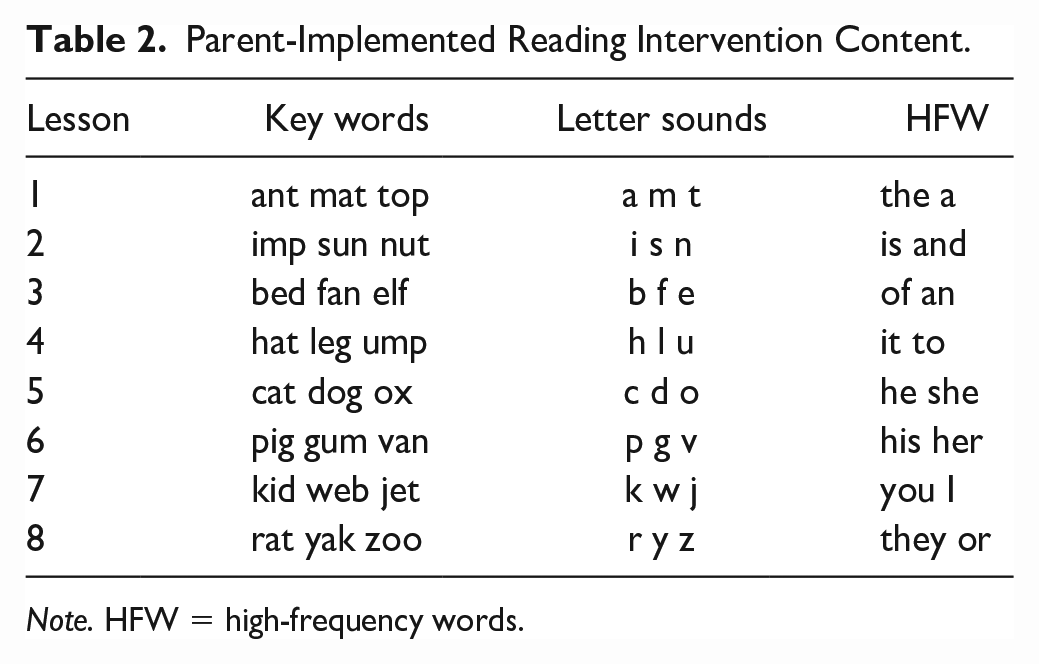
Note. HFW = high-frequency words.
Measures
Dependent variable
The primary dependent variable was mastery of directly taught skills in Steps 1, 2, and 4 of each lesson (i.e., lesson mastery probes). For each lesson, data were collected on eight total targets: three key words (Step 1), three letter sounds (Step 2), and two high-frequency words (Step 4). Intervention continued in each lesson until the child met mastery criterion (i.e., three consecutive sessions with a score of 7 or greater of 8; see the “Intervention Condition” section for more detail). During baseline, parents conducted 32 probes per day (a total of four lessons). During intervention, data were collected during each lesson with a daily check for the eight targets that were taught in the current lesson as well as eight targets from a previously mastered lesson (maintenance) or a lesson that had yet to be taught (baseline probes) for a total of 16 probes per lesson (data for one additional lesson were collected during each intervention session). These probes were conducted at the end of steps one (key words), two (letter sounds), and four (high-frequency words). The procedures for the daily check were identical to the procedures used to collect data during baseline, other than that probes were conducted throughout the intervention session, rather than consecutively.
Generalization
The CUBED literacy assessment (Petersen & Spencer, 2016) was provided at the beginning and end of the study as a measure of generalization of skills taught during intervention. The CUBED is a progress monitoring assessment that provides a measure of literacy across several foundational literacy skills, including: phonemic awareness, word identification, letter-sound correspondence, and early decoding (Petersen & Spencer, 2016). During the phonemic awareness tasks, the participants were asked to identify letter sounds in words orally provided by the instructor. During the word identification, letter sound, and letter name tasks, participants were asked to identify high-frequency sight words and upper and lowercase letter sounds and letter names during a 2-minute timed fluency assessment. During the decoding task, participants were asked to read a series of four nonsense c–v–c words. The CUBED has demonstrated strong predictive and concurrent validity with larger standardized measures as well as high levels of inter-rater reliability across tasks (Petersen & Spencer, 2016).
Experimental Procedures
Baseline condition
Parents were provided with printed cards placed onto a circular, metal binder ring in their intervention kit. This set of cards included all eight targets for each lesson across the eight lessons (64 total cards). Parents were also provided with data sheets and a short instruction sheet describing baseline procedures. Coaches trained the parents on data collection procedures during a short Zoom call. Parents were asked to show their child the cards corresponding to the eight targets in each lesson one at a time. They were asked to say: “What word?” for key words and sight words and “What sound?” for letter sounds. Parents shared data daily with project staff until they determined that sufficient baseline data had been collected for each lesson. After sufficient baseline data had been collected and low and stable responding had been established for each participant, parents were trained on intervention data collection procedures and asked to begin intervention for Lesson 1.
Intervention condition
Parents were asked to collect data using data sheets that were provided at the beginning of each week (one per session). Parents shared data with project staff after each intervention session and were provided feedback on when to make condition changes. Intervention continued until the child met mastery criterion (three consecutive sessions with a score of 7 or greater of 8) for the target lesson. At this point, project staff asked parents to begin intervention for the next lesson. This continued until each participant met criterion for all eight lessons or until they exited the study.
Parent training and implementation
Parents were trained to implement the intervention through a series of Zoom calls and video models. Parents were trained using the same coaching procedures that were used in previous studies with teachers and paraeducators as implementers (Lemons et al., 2017; Lemons, King et al., 2018). In the initial meeting, coaches explained the intervention and oriented the parent to all of the materials in the reading intervention kit. Coaches also confirmed that parents were able to use all study-related technology (i.e., Torsh, iPad, accessing video models). Coaches provided an opportunity for parents to ask questions and then scheduled a follow up meeting within 1 week based on their scheduling availability. Parents were encouraged to explore the materials and to read through the scripted intervention manual in between meetings. In subsequent meetings, coaches introduced parents to each step of the program sequentially by going through the scripted intervention manual with them. The number of steps that were introduced at a time varied based on the preferences and needs of each parent. The parent was asked to watch a video model of each assigned step/s between calls. Parents were asked to read the scripted intervention manual for that step as they watched the video. They were also asked to practice each step after watching the video model. In the next meeting, the coaches role-played the assigned step/s with parents until they felt comfortable. Then, they walked through the scripted intervention manual with the parents and assigned video models for the next step/s. This continued until parents were able to successfully model all intervention steps with coaches and indicated that they felt comfortable beginning intervention. After collecting sufficient baseline data, parents were instructed to begin intervention. Although two of the parents only implemented Steps 1 to 4, all three parents were trained on Steps 1 to 6.
After intervention began, initially, coaches reviewed each session video and parents received feedback after every session. This feedback was debriefed over a phone or Zoom call with the parent before the next session. Feedback included highlighting positive aspects of the intervention, and providing one to two suggestions for improving the implementation of the intervention as related to the intervention fidelity checklist and child engagement and behavior during the session as well as performance during the daily check. Once it was established that the parent was able to provide all aspects of the intervention with necessary fidelity and consistent engagement and on-task behavior were demonstrated by the child, feedback was provided less frequently. At this point, coaches reviewed one session video a week. This feedback was debriefed during a weekly Zoom or phone call and continued throughout the duration of the study. The suggested dosage for intervention was 4 days a week, but flexibility was provided to suit the unique needs of each child and their family. Hope consistently received intervention 4 days a week throughout the study. Maverick received intervention 4 days a week for the first two lessons, and an average of two sessions a week throughout the rest of the study. Cash received an average of two sessions a week throughout the entire study.
Interobserver agreement and procedural fidelity
Interobserver agreement (IOA) and procedural fidelity (PF) were calculated for at least 25% of all sessions across participants and conditions (Ledford et al., 2018). Interobserver agreement sessions were randomly selected and scored by the parent’s coach to assess the reliability of their data collection during intervention sessions. Coaches watched the session video and scored independently from the parent and then compared their scoring with the parents’ scoring. Procedural fidelity was rated for parent training, parent coaching, and parent implementation sessions. Fidelity sessions were randomly selected for rating. For parent training and parent coaching, separate fidelity checklists were used to rate the coaches’ use of the key strategies to train the parents how to implement the intervention and to give the parents feedback on their implementation of the intervention. For parent implementation of intervention, the coach evaluated the parent’s correct implementation of the various components of the reading intervention. Interobserver agreement on PF was calculated for at least 25% of all parent sessions across conditions and participants. Agreement was calculated using point-by-point agreement (number of agreements divided by the sum of agreements and disagreements × 100; Ledford et al., 2018).
Social Validity
The three parents who participated in the study rated their experience on a social validity survey provided at the end of the study. This survey included a series of 10 questions using a 5-point Likert-type scale ranging from 1 (strongly disagree) to 5 (strongly agree). The questions evaluated the importance of the skills taught during intervention as well as the effectiveness, feasibility, and acceptability of intervention procedures. Parents were also asked to provide any additional feedback that was not reflected in the rating scale portion of the survey. Questions from the social validity survey are provided in Table 3.
Social Validity Questions and Results.
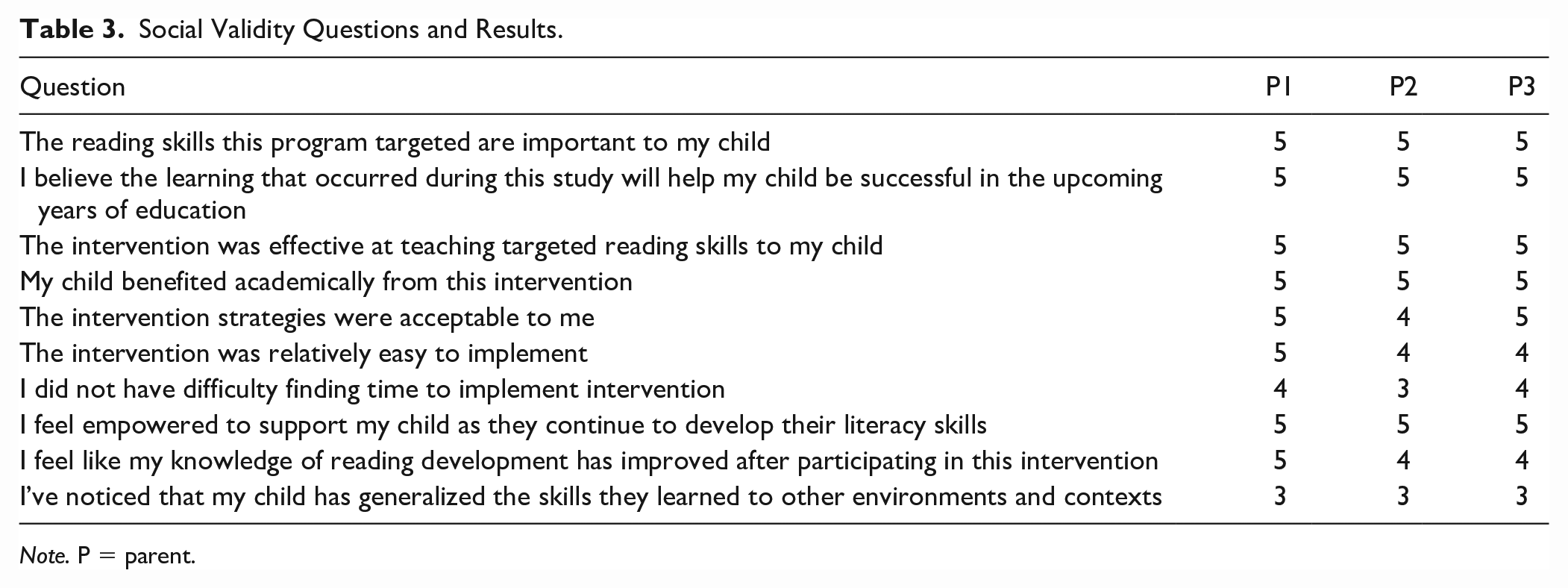
Note. P = parent.
Results
Results from this study indicate a clear functional relation between the onset of intervention and increases in lesson mastery probes for all three participants, indicating that the parent-implemented reading intervention was effective at improving reading outcomes. Hope and Maverick completed Lessons 1 to 8, and Cash completed Lessons 1 to 4. There was evidence of maintenance across all three participants, although individual results varied. All three participants showed levels of maintenance across lessons and there was some evidence of generalization for Hope and Cash. Results for individual participants are described in more detail below.
Hope
Baseline and intervention
Although there was some variability in Hope’s baseline data, in general, data were low (mostly below 3) and relatively stable during baseline for all eight lessons. Across all lessons, there were only three points where her data were above 3 (all three data points were at 4). After intervention began, there were immediate shifts in level across all lessons with increasing trends in all lessons except for 2, 7, and 8. In those lessons, her data increased immediately to mastery levels and stayed at or close to mastery levels until she met criteria for that lesson. Hope completed the study after 70 sessions. Intervention data for Hope are provided in Figure 1.
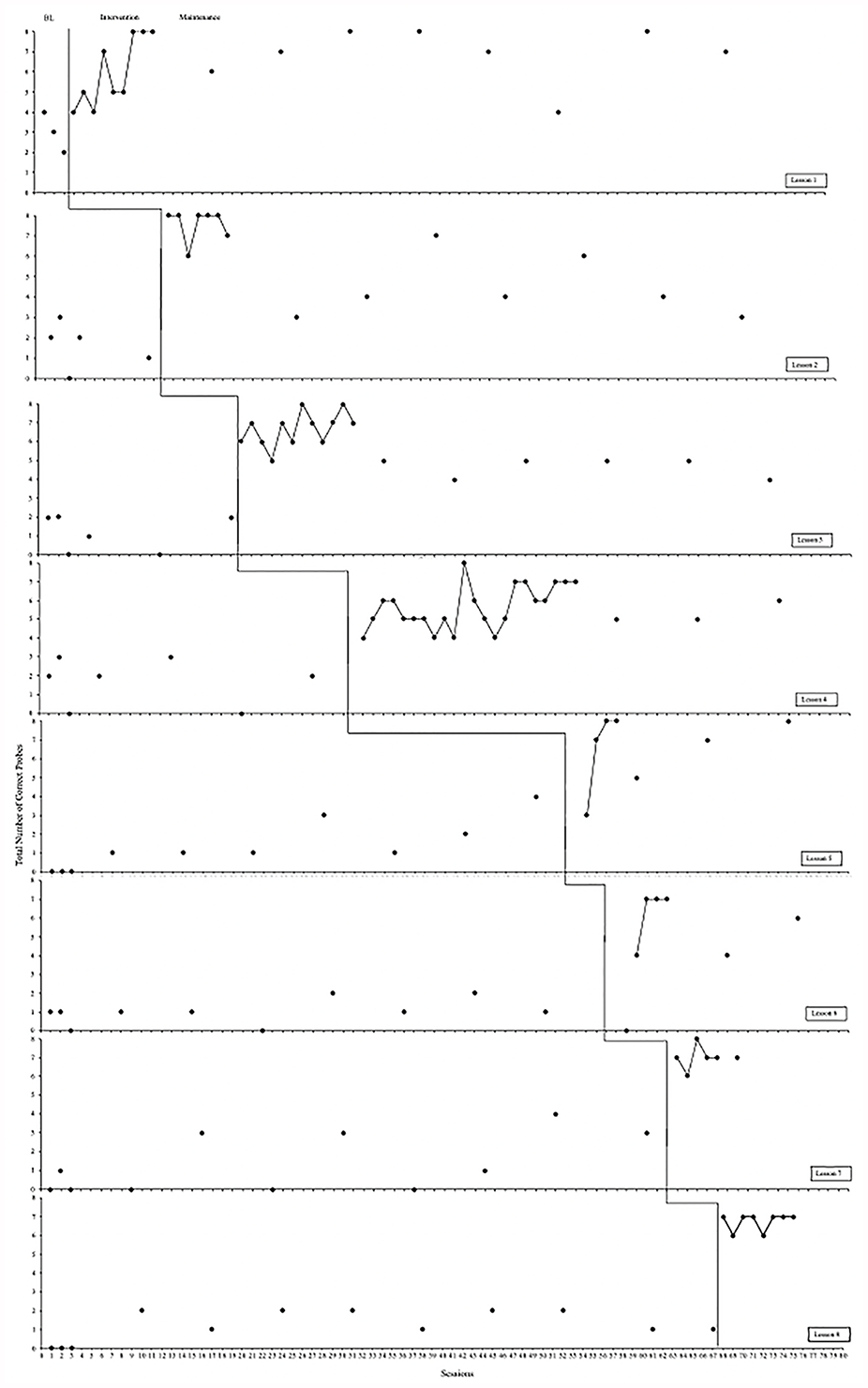
Hope’s lesson mastery probes.
Maintenance and generalization
Hope had relatively high and stable levels of maintenance for Lessons 1, 4, and 5 and moderate levels of maintenance for Lessons 2 and 3. Her maintenance data showed some variability for Lesson 2, but were relatively stable for Lesson 3. She only had one maintenance point in Lesson 7, but it was at mastery level. There were no maintenance data for Lesson 8. Hope showed generalized changes in her ability to identify letter sounds and decode c–v–c words from pre- to post-intervention on the CUBED literacy assessment. Prior to intervention, she was able to identify 13/62 letter sounds on a 2-minute timed fluency assessment, and was not able to decode any c–v–c words. Following intervention, she was able to identify 22/62 letter sounds and decode one of four c–v–c words. Hope’s generalization data are provided in Table 4.
Pre- and Post-Intervention Generalization Data.
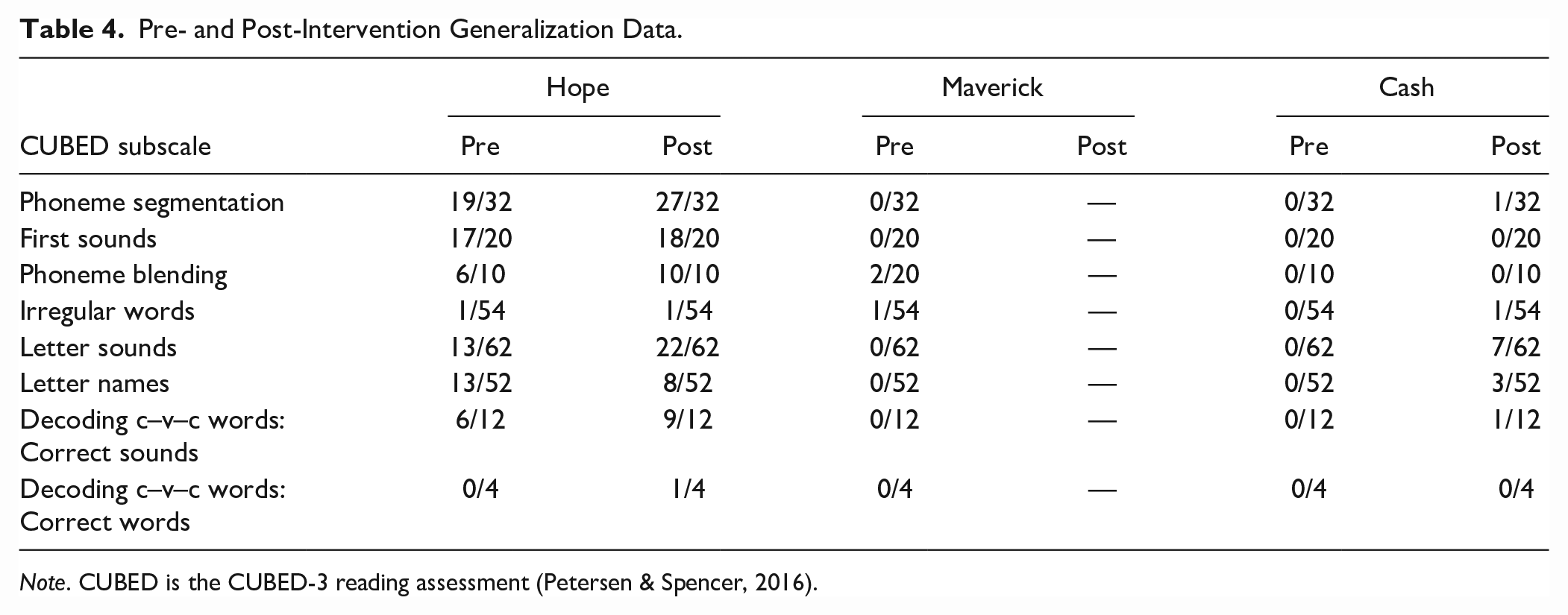
Note. CUBED is the CUBED-3 reading assessment (Petersen & Spencer, 2016).
Maverick
Baseline and intervention
Baseline data for Maverick were very low and stable for Lessons 1 to 4. In Lessons 5 to 8, baseline data increased slightly in level but were relatively stable until intervention began, with a little more variability in baseline for Lesson 7. After intervention began, there was an immediate increase in level for Lessons 1 to 8. There was an increasing trend for all eight lessons, with some variability in the data. Maverick was approaching mastery criteria for Lesson 8 before leaving the study due to extenuating circumstances that required the family to disengage from the study. Maverick completed the study after 91 sessions. His data are provided in Figure 2.
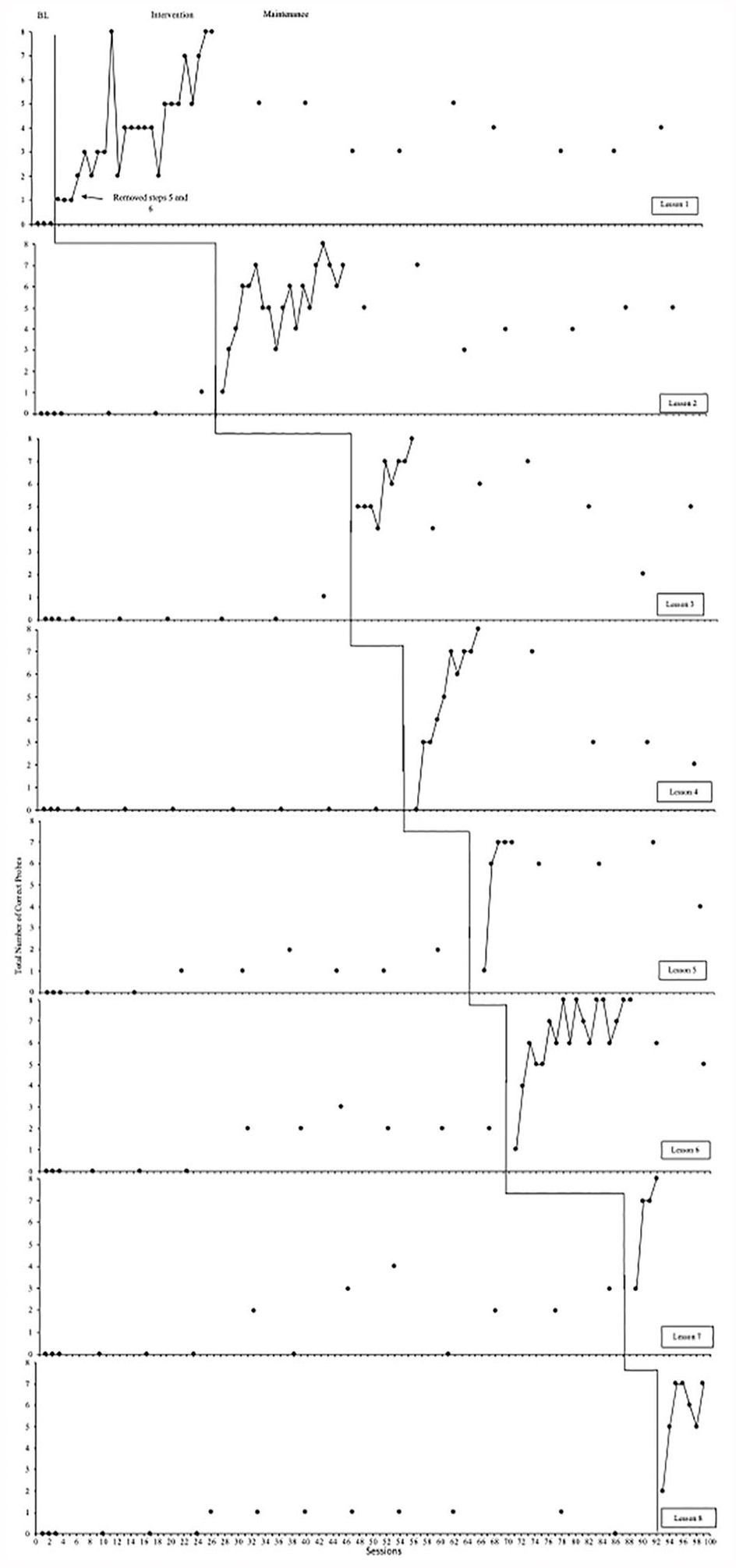
Maverick’s lesson mastery probes.
Maintenance and generalization
Maverick’s maintenance data were moderate for Lessons 1 to 3. They were relatively stable for Lessons 1 to 2, but showed more variability in Lesson 3. Maintenance data were slightly lower in level for Lesson 4, but relatively stable. He had high and stable levels of maintenance for Lessons 5 and 6. There were no maintenance data for Lessons 7 and 8. There are no generalization data for Maverick.
Cash
Baseline and intervention
Prior to intervention in Lesson 1, six sessions were used to systematically increase the amount of time Cash was able to engage with the lesson. After Session 6, he was able to participate during the full lesson and data collection began. Cash had low and relatively stable levels of responding during baseline for Lesson 1. After intervention began, there was an immediate and large shift in level. Cash’s data remained at the same level for eight sessions. He was not able to identify the high-frequency words during the daily check during sessions for Lesson 1, and was exhibiting some challenging behavior during his sessions. Project staff decided to have him discontinue and move to Lesson 2 before meeting criterion for Lesson 1. In Lessons 2, 3, and 4, baseline data were low and stable. After intervention began, there was an immediate shift in level with an increasing trend and minimal variability for all three lessons. Due to changes in her personal situation, Cash’s mother was no longer able to meet the time requirements of the study and therefore decided to withdraw before Cash met criterion for lesson 4. Data were slightly below criterion level when he exited the study. Although Cash did not meet criterion for Lesson 4, although there was a clear shift in level with an increasing trend and minimal variability. Cash completed the study in 36 sessions. Cash’s data are provided in Figure 3.
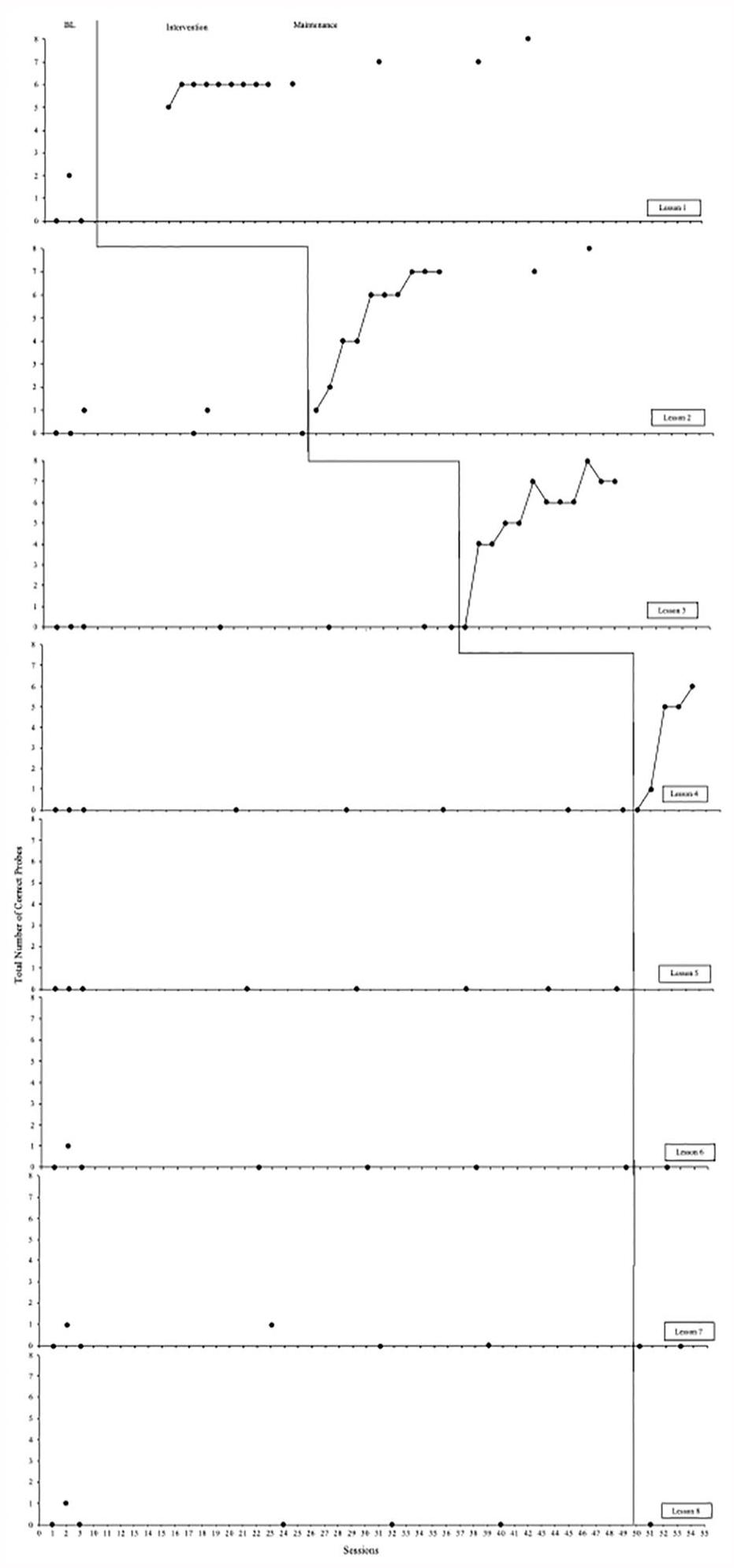
Cash’s lesson mastery probes.
Maintenance and generalization
Cash’s maintenance data were high for Lessons 1 and 2, with levels at criterion. There were no maintenance data for Lessons 3 and 4. Cash also showed generalization of skills taught during intervention from pre- to post-intervention. Prior to intervention, he was not able to identify any letter sounds, letters, or sight words. Following intervention, he was able to label 7/62 letter sounds, 3/52 letter names, and 1/54 sight words during a 2-minute timed fluency assessment. Generalization data for Cash are provided in Table 4.
Interobserver Agreement and Procedural Fidelity
Reliability was high for all three participants, averaging 99.3% (range: 94%–100%) for Hope, 99% for Maverick (range: 86%–100%), and 100% for Cash. PF for parent training was high, averaging at 100% for Hope, Maverick, and Cash. PF for parent coaching averaged at 100% for Hope, 98% for Maverick (range: 83%–100%), and 100% for Cash.
Fidelity during baseline was at 100% for all three parents. Parents were able to implement intervention with relatively high levels of fidelity. Fidelity averaged 87.2% (range: 81%–90%) for Hope’s mother, 83.3% (range: 65%–89%) for Maverick’s mother, and 82% (range: 67%–86%) for Cash’s mother. Interobserver agreement on PF was also relatively high for parent implementation, averaging 99.3% for Hope (range: 97%–100%), 93% for Maverick (range: 82%–100%), and 93% for Cash (range: 82%–100%).
Social Validity
Results from the social validity survey indicated that all three parents strongly agreed that they felt the intervention was highly effective and that the reading skills their children learned in this program would help them to be successful in their upcoming years of education. Parents also strongly agreed with feeling empowered to support their children as they continued to learn and grow in their literacy skills and that their overall knowledge of reading development improved after participating in this study. On average, parents were neutral in their assessment of whether or not their child had generalized the skills they learned to other environment and contexts, with one parent further clarifying that they were still trying to gauge if and how generalization was occurring. Additional results from the social validity survey are provided in Table 3.
Discussion
Results from this study indicated that parents of children with IDD can learn to provide a multicomponent reading intervention with relatively high levels of fidelity, and that this intervention can lead to increases child reading outcomes that maintain over time and may generalize outside of the intervention context. Although results from the pre-/post-generalization assessment were lower than intervention levels, the generalization assessment measured fluency with the skills taught during intervention during a 2-minute timed assessment, whereas during intervention the assessment was the presence or absence of the target behaviors. Even minimal changes in the generalization measure are promising given the fluency context of the measure.
We consider the findings to be a successful conceptual replication of Lemons, King et al. (2018) in that parents were able to positively impact the reading outcomes of their participating children. Furthermore, the findings are general consistent with previous literature conducted with teachers and school staff (Lemons et al., 2015, 2017; Lemons, King et al., 2018) and with overall positive effects found in the parent-implemented literature for children with disabilities (e.g., Heidlage et al., 2020). These results extend the results of the existing parent-implemented literature by showing that parents can successfully implement more intensive multicomponent reading interventions. Moreover, parents reported feeling empowered to continue to support their children’s reading growth and felt that their overall knowledge of reading development improved, suggesting that participating in this study may impact their child’s participation during school both in the short-term and over time.
Although it is positive that all three parents were able to implement the intervention with high fidelity, it is worth considering how fidelity of implementation might be reconsidered in future research involving parents. While we consider our fidelity form a representative measure of the core components of our intervention, there may be indicators of high quality instruction that are not captured (e.g., contingent positive reinforcement, positive affect, appropriate rate and pacing of instructional opportunities). Future studies should seek to expand on our current measures of fidelity by measuring quality indicators that we believe to be highly correlated with positive student outcomes.
This study provided systematic coaching and feedback that was faded over time as parents learned to implement the intervention with fidelity and as they indicated that they were comfortable implementing the intervention with less frequent feedback. At the beginning of intervention, the majority of the feedback provided was focused on supporting the parent in learning to implement the intervention with fidelity. Over the course of intervention, feedback became more focused on helping parents make changes based on the child’s response to intervention and providing recommendations for behavior support and maintaining and increasing engagement. For parents to implement similar interventions with their children with IDD with fidelity, they will likely need intensive training to learn the intervention, as well as coaching and feedback to support their child as they learn new skills and engagement and behavior changes over time.
All three parents indicated that with coaching and systematic feedback they found the intervention procedures to be acceptable and that the intervention was relatively easy to implement. One element of the coaching model that may have contributed to the effectiveness of the parent-implemented intervention was the supportiveness of the relationship between the parent and the coach. In counseling, the client’s perception of their experience with the therapist is one of the strongest predictors of treatment outcomes (Duff & Bedi, 2010). Moderate correlations were found for specific behaviors that clients reported they valued within the context of the relationship. These behaviors include: making encouraging comments, identifying and reflecting back the client’s feelings, making positive comments about the client, asking questions, and validating the client’s experience (Duff & Bedi, 2010).
These findings have implications for the relationship between the coach and the parent within the context of parent training. Parents are children’s first teachers who play an important role in their child’s development. They can provide unique insight into how their children learn and what is motivating for their child. It is as important to listen to and validate the parent’s experience throughout the coaching process as it is to provide them with training on how to implement the intervention. Another key element of parent training is to highlight their strengths and encourage them as they learn to interact in new ways with their child. All three parents reported that they felt empowered to support their child as they progressed with their literacy skills. This may have impacted the relatively high levels of fidelity and positive child outcomes.
Although parents were given flexibility in the number of sessions that were implemented each week, we recommended that parents provide four sessions each week for approximately 30 to 60 minutes depending on if they implemented all of the steps of the program. The overall recommended time commitment for this intervention is intensive, however, for parents who have the time and desire to support their children’s learning at this level, parents can play an important role in their child’s reading development when in-person instruction and services are limited or not available.
Limitations
Although all three parents in the current study indicated that the time spent in intervention was feasible, two of the three parents who participated in this intervention did not work outside the home, and one of the participants withdrew halfway through the study due to time constraints. Many parents may not have the time or support needed to implement intervention with this level of intensity. Parents are not the only avenue for supplementing services provided at school. It is important to identify other ways to support intervention for children with IDD in ways that work to me the unique needs of each family.
Although there was some indication that all three participants showed generalized changes following intervention, likely attributable to participating in the current study, it is possible that outside factors (e.g., learning taking place at school) may have also contribute to changes in reading abilities from pre- to post-intervention. In addition, generalization was only measured in a novel measurement context. It is unclear how much generalization occurred from home to school or to novel materials. Finally, this intervention was the first step toward building independent reading. Students with IDD will need additional comprehensive support for word reading, fluency, and comprehension throughout their education to build upon skills taught in early multicomponent programs and become independent readers who can engage with advanced reading and writing activities (Erickson, 2017).
Implications for Research and Practice
This study was conceptualized in response to the COVID-19 pandemic. With schooling at home, many students with disability were receiving inadequate reading instruction and we hypothesized that parents could offer short-term intervention support. Findings indicate that with systematic coaching and support, parents can learn to implement multicomponent reading interventions and make meaningful changes in their child’s reading trajectory. And, it is likely that these results will maintain over time and generalize outside of the intervention context.
We want to emphasize that we do not think parents should be responsible for being the primary reading instructor for their children and we think the intensity of the present intervention is unlikely to be sustainable or feasible for a majority of families. That said, it is promising that parents reported positively on the intervention and that parents felt their understanding of how reading development improved as a part of participating in this study. Furthermore, all three parents reported feeling empowered to support their child as they continued to develop their literacy skills, making it more likely that they can support their progress in the future and advocate for the services and interventions that they will need to continue to grow as independent readers.
Researchers should be encouraged to explore additional strategies to engage family members in reading instruction for students with disabilities. Connecting school-based reading intervention with home-base supports for practice and generalization offers an opportunity to increase the amount of time students are involved in reading practices and has the potential to enhance student outcomes. Researchers could explore the value-added of family-implemented components, evaluate facilitators and barriers of parent implementation across a wider range of participants and contexts, and develop strategies for educators to better engage and support family members.
Practitioners can reflect on our findings to consider strategies to engage family members of their students. It is encouraging that the parents in our study were eager to support reading needs at home. Educators should contemplate ways to reinforce family member’s efforts to provide opportunities to practice new reading skills, to generalize these skills to new settings, and to access high-quality literature with goals of increasing background knowledge, vocabulary, and comprehension skills (see Lemons, Allor, et al., 2018). And, family members should be encouraged to advocate for additional supports for home reading activities from their children’s educators.
Supporting practice and generalization of reading skills in the home setting may accelerate learning at school, as these skills may impact learning opportunities in the school environment (Browder et al., 2009). And, providing success with early reading instruction increases the likelihood that children continue to maintain that success as they continue to expand their skills (Catts et al., 2001). Engaging family members in the process of developing students into independent readers holds promise for ensuring that a larger number of students with disabilities transition into post-secondary settings better prepared for success. This area of exploration has thus far been underexamined and we remain excited about the potential.
Footnotes
Declaration of Conflicting Interests
The author(s) declared no potential conflicts of interest with respect to the research, authorship, and/or publication of this article.
Funding
The research described in this article was supported in part by Grant H326M190010 from the Office of Special Education Programs and Grant R324A190240 from the Institute of Education Sciences, both within the U.S. Department of Education. Nothing in the article necessarily reflects the positions or policies of the funding agencies and no official endorsement by them should be inferred.
