



Abstract
One relatively low-cost mechanism to assist teachers serving many English learner (EL) students and struggling readers is to hire, train, and manage paraprofessionals to provide supplementary instruction to such students. This study evaluated a program in which one district provided instructional aides to all first-grade teachers in the lowest-performing schools. To estimate program effects on reading, we used matched comparison schools in two research designs. One was a comparative interrupted time-series design, which compared school-level test score averages for treatment and comparison schools before and after program implementation. The other analyzed student-level test scores in these schools before and after the program. Both yielded positive estimates of program effects, significant at the p < .10 and p < .05 levels.
The percentage of Latina/o students in the United States has increased to nearly 27% of the total public school enrollment (NCES, 2021). However, Latinos still demonstrate many academic disparities across the U.S. education system (Schneider et al., 2006). For instance, socioeconomic and racial/ethnic opportunity and achievement gaps between Latino students and non-Latino peers are present at kindergarten entry (Reardon & Portilla, 2016), and these gaps tend to persist throughout elementary school and beyond.
In this study, we evaluated the effectiveness of one strategy aimed to reduce the gap in such disparities, that is, by hiring paraprofessional instructional assistants to provide supplemental literacy instruction to students, particularly those from Spanish-speaking homes. Specifically, during the 2018–2019 academic year, a predominantly Latina/o district in Southern California provided selected schools additional instructional support by hiring approximately 25 part-time teacher assistants who were also biliterate in English and Spanish. The intention behind this decision was to improve the school-level English Language Arts (ELA) performance of six of the lowest-performing schools that were selected based on their fall 2017 ELA performance and growth as determined by tests administered statewide in California. Paraprofessionals, also known as paraeducators, teacher assistants, teacher aides, or in this study as biliterate instructional assistants (BIAs), were placed in select schools to assist and supplement the instruction provided by first-grade teachers (Goe & Matlach, 2014). Thus, we evaluated the success of the paraprofessionals in promoting students’ foundational literacy skills by comparing the reading test scores of students in schools that received BIAs with those of students in comparison schools that did not receive BIAs within the same district who were selected to match these schools. Next, we present an overview of the literature on supplemental reading instruction and the effectiveness of paraeducator-led reading instruction.
Literature Review
Effective reading instruction
According to the National Reading Panel (2000), the five components necessary for effective reading instruction are phonemic awareness, phonics, fluency, vocabulary, and comprehension. Also, both individual (e.g., working memory, motivation) and environmental (e.g., formal and informal instruction) factors influence the reading comprehension skills of monolingual and bilingual students alike (August & Shanahan, 2006). Hakuta et al. (2000) have also noted that it can take language minority students from 3 to 7 years to develop sufficient English oral language proficiency skills necessary for academic excellence. Thus, effective reading instruction for ELs requires appropriate second-language scaffolding and high-quality instruction targeting different areas of reading throughout their elementary school years and beyond.
The IES Practice Guide (Gersten et al., 2008) offers specific recommendations to educators in identifying students who need targeted support in reading when core instruction is, by itself, insufficient. Within a multi-tier system of supports (MTSS) framework, the Guide recommends that educators provide students scoring below a benchmark score with intensive and systematic instruction on up to three of the reading components (outlined above), 3 to 5 times per week, for 20 to 40 min per day, in small groups. They also state that it does not matter whether a teacher or a paraprofessional provides the instruction, but instruction should be highly explicit, systematic, interactive, and must include instruction in other reading components beyond phonemic awareness and decoding, such as vocabulary and comprehension.
Supplemental reading instruction
Accordingly, one common approach for improving the foundational literacy skills of ELs and struggling readers is providing them with supplemental reading instruction in the early grades. Foorman and Torgesen (2001) note that this instruction must be made more comprehensive and explicit, more intensive, and more supportive in small group and one-to-one formats to ensure students’ needs are being met. Several studies reviewing prior research on programs for struggling readers in elementary school have reported the positive effects of one-to-one and small-group tutoring on both standardized and researcher-developed reading measures (Gersten et al., 2017; Neitzel et al., 2022). Important to note is that the Gersten et al. (2017) review excluded programs that specifically targeted EL students and did not distinguish outcomes based on who delivered the intervention (e.g., teachers, paraeducators, or researchers).
Neitzel et al. (2022) reviewed programs for struggling readers in elementary school. Studies in their review needed to include independent reading measures (they excluded studies using measures developed by the program implementers themselves), and programs had to be implemented by school personnel, such as teachers and teaching assistants. They found an overall positive impact of reading programs across 65 studies (Effect Size [ES] = 0.23). No significant differences in outcomes were found between teachers and teaching assistants serving as tutors, although programs offering one-to-one tutoring resulted in significantly better outcomes than small-group tutoring (ES = 0.41 vs. ES = 0.24, respectively). As in the other reviews, they did not identify or code for the language status of study participants.
Supplemental reading instruction for ELs
In a review of reading programs for Spanish-dominant EL students, Cheung and Slavin (2012) found that structured small-group and one-to-one tutoring programs had overall effect sizes of 0.48 and 0.19, respectively. Although the overall effect size of small-group tutoring was larger than one-to-one tutoring, the programs included in this review varied in terms of sample characteristics and program structure, making it difficult to compare the two types of tutoring. Nevertheless, the programs that were proven to be effective in promoting students’ reading skills included extensive coaching and professional development for teachers and paraeducators who were tutors. These programs also provided educators with explicit curricular manuals and materials while offering ongoing support and feedback throughout program implementation, although they did not distinguish study outcomes based on who implemented the program.
Richards-Tutor and Colleagues (2016) reviewed research on the effectiveness of reading interventions for ELs who were identified as at risk for reading difficulties or with a learning disability. They identified 12 studies published from 2000 to 2012, and these were all randomized control trials. Spanish was the home language of participants in all but two of the studies, and only three employed paraprofessionals as interventionists. Across seven studies that focused on kindergarteners and first graders, findings indicated that the reading interventions had significant moderate-to-large effects (ES = 0.58–0.91) on beginning reading skills. Furthermore, they found no significant differences between moderating variables, including group size, minutes of the intervention, or personnel delivering the intervention (i.e., researchers vs. school personnel). Again, they did not distinguish differences in program effectiveness between teachers and paraprofessionals.
Paraprofessionals as reading tutors
The reviews cited earlier offer substantial support for providing struggling readers and ELs with supplemental reading instruction. However, there has been less focus on evaluating the effectiveness of paraprofessionals in delivering this instruction. This is significant, given the increasing presence of noncertified instructional support staff in districts receiving Title I funds, particularly those with greater enrollments of minoritized students, ELs, and those from low-income backgrounds (U.S. Department of Education, 2007).
The U.S. Department of Education defines paraprofessionals as those individuals employed by schools and supervised by certified or licensed teachers who provide instructional support to students, including support for language instruction programs, special education, and migrant education (Every Student Succeeds Act [ESSA], 2015). Considering the instructional roles of paraprofessionals in many public schools across the nation, the legislation also now requires paraprofessionals employed in Title I programs to have completed at least 2 years of study at a higher education institution or an equivalent level of education (Lewis, 2005).
In the most recent review of literature on the overall effectiveness of paraprofessionals as reading tutors, Jones et al. (2020) found the mean effect size of paraeducators across nine studies and six reading outcomes was ES = 0.55. However, only two of the studies included in their review specifically targeted language minority students, and all the studies were conducted in settings that included researcher training and support. In a best-evidence synthesis of the literature, Samson et al. (2015) identified three key components associated with the effective use of paraprofessionals as reading tutors. Like the recommendations offered by Cheung and Slavin (2012), the three components they identified were (a) extensive training of paraprofessionals in delivering research-based reading instruction, (b) ongoing supervision of tutors, and (c) access to scripted reading lessons with an emphasis on phonics instruction.
Aside from the studies cited earlier, much of the research on the use of paraprofessionals for instruction has been qualitative or observational in nature (Bonner et al., 2011; Causton-Theoharis et al., 2007; French, 2001; Giangreco, 2003), and much of this research has focused on paraprofessionals’ roles in supporting students with identified disabilities in inclusive settings (Giangreco et al., 2010; Mason et al., 2020), with very little focusing on their work with EL students.
Current Study
Although the evidence on paraprofessionals as reading tutors looks promising, there is still quite limited research on their overall effectiveness in improving the reading performance of ELs. In addition, many of the supplemental reading programs implemented by paraeducators and evaluated in the literature cited earlier were developed and implemented by researchers, typically working from research grants. By contrast, in the current study, district administrators were responsible for hiring, funding, training, and providing ongoing support to paraprofessionals to improve student reading outcomes at selected schools.
Hence, the current study expands the evidence base by evaluating a large-scale implementation of paraprofessional reading tutors within one low-income school district where student enrollment was almost completely Latina/o. This study expands the evidence base in three ways: (a) assesses the impact of bilingual paraprofessionals on the English reading achievement of Spanish-dominant EL first graders; (b) evaluates the effectiveness of paraprofessionals hired and trained by district and school leaders as opposed to researchers; (c) analyzes individual and school reading outcomes using standardized reading measures. The following research questions were addressed:
Program delivery
BIA training
After recruiting the BIAs, the district provided a full-day training session at the beginning of the academic year, which included ice breakers, a guest presentation by university faculty, and researchers discussing relevant research on language, phonological awareness, and reading achievement, specifically with an emphasis on ELs, and a rundown on best teaching practices for teaching foundational literacy skills to emerging and struggling readers. This was followed by a half-day training session after BIAs spent some time in the classrooms. During these district-led training sessions, emphasis was placed on phonics instruction and the importance of phonological awareness for reading skill development. BIAs also had the opportunity to practice teaching such skills after observing the trainers, learned more about their role in the classroom, asked specific questions they had about any issues they confronted, and received some training on behavior management.
After these initial trainings, they continued to attend training meetings for 2 hr each month to continue learning about teaching strategies they could utilize with students. Topics covered during the training meetings included phonemic awareness (i.e., how to identify and manipulate individual sounds in spoken words), teaching sight words or high-frequency words and the significance of automatic word recognition, how to work with decodable books, how to boost students’ reading fluency, grammar, spelling, and assessing reading comprehension. BIAs were also instructed on how to individualize instruction depending on a student’s level of performance, were provided with an overview of the curriculum, and received additional materials from the curriculum manual that included a range of strategies they could utilize to teach different sound and word patterns.
In addition, during the winter term, the district hired an instructional coach who went to each school site to provide the instructional aides further training on how to organize and implement the curriculum in small-group settings, to observe their instruction, and provide feedback. The instructional coach went to the school sites once a week for about a month, and BIAs were able to reflect on and discuss their instructional experiences. Aside from the training provided by the district, some BIAs also received additional training at their respective school sites by administrators and teachers.
Instructional content
The instruction the BIAs provided to students largely reflected the training they received. Instructional lessons were teacher-directed and drawn from both the Benchmark Advance (Dorta-Duque de Reyes et al., 2017) and Open Court (U.S. Department of Education, 2014) curricula and included lessons from the SIPPS (Systematic Instruction in Phonological Awareness, Phonics, and Sight Words) program (Shefelbine & Aldridge, 2013) that many teachers were familiar with. They reviewed specific phonics lessons with students, often mirroring the teacher’s lesson of the week, reviewed letters, sounds, digraphs, word families, multisyllabic and sight words, blending and segmenting words, read decodable books, had students practice their reading fluency, assessed reading comprehension, assisted students with spelling and dictation, and monitored student progress by maintaining student records.
Instructional delivery
Each school had discretion in how to organize the BIAs schedules; thus, the frequency and intensity of supplemental instruction varied from school-to-school and from classroom-to-classroom. For instance, within some schools, BIAs were placed in only kindergarten and first-grade classrooms, whereas in other schools, BIAs assisted all grade levels and floated between classrooms. Nonetheless, the BIAs’ schedules were consistent throughout the year, and many of the BIAs provided both small-group and individualized instruction depending on student needs and teacher preferences. The amount of one-to-one and small-group instruction first-grade students received varied from 10 to 40 min per day at least 3 to 5 times per week, and student groups were often readjusted throughout the year depending on student progress.
Data and Method
Participants
Six schools providing academic instruction primarily in English were selected to receive BIAs in the fall of 2018, based on their ELA performance and growth in prior years. Demographic characteristics, that is, percentage of female, Latina/o, EL, free or reduced-price lunch status (FRPL), and parent education level, and fall of 2018 average reading performance of each non-BIA school in the district were then compared with the six BIA schools through significance testing. A total of five non-BIA schools matched at least one of the six BIA schools (p < .05 on all covariates and test scores) in the fall of 2018 (during the implementation year) and were included as comparison schools in the comparative interrupted time-series (CITS) and student-level analyses described below.
Tables 1 and 2 summarize the demographic characteristics and average reading test scores of the BIA and comparison schools, respectively. Regarding missing data, less than 15% of all participants included in the student-level analysis had missing data on any of the covariates included in the regression model. Multiple imputation was used to account for these missing data, and results using imputed data are presented in Table 5. Although the data are multilevel, we chose not to use hierarchical linear modeling to estimate the effects. Instead, we used the “sandwich” estimator in Stata, which gives equivalent results (McNeish et al., 2017).
School-Level Demographic Characteristics (Percentages) of First Graders in BIA and Comparison Schools (AY 2018–2019).
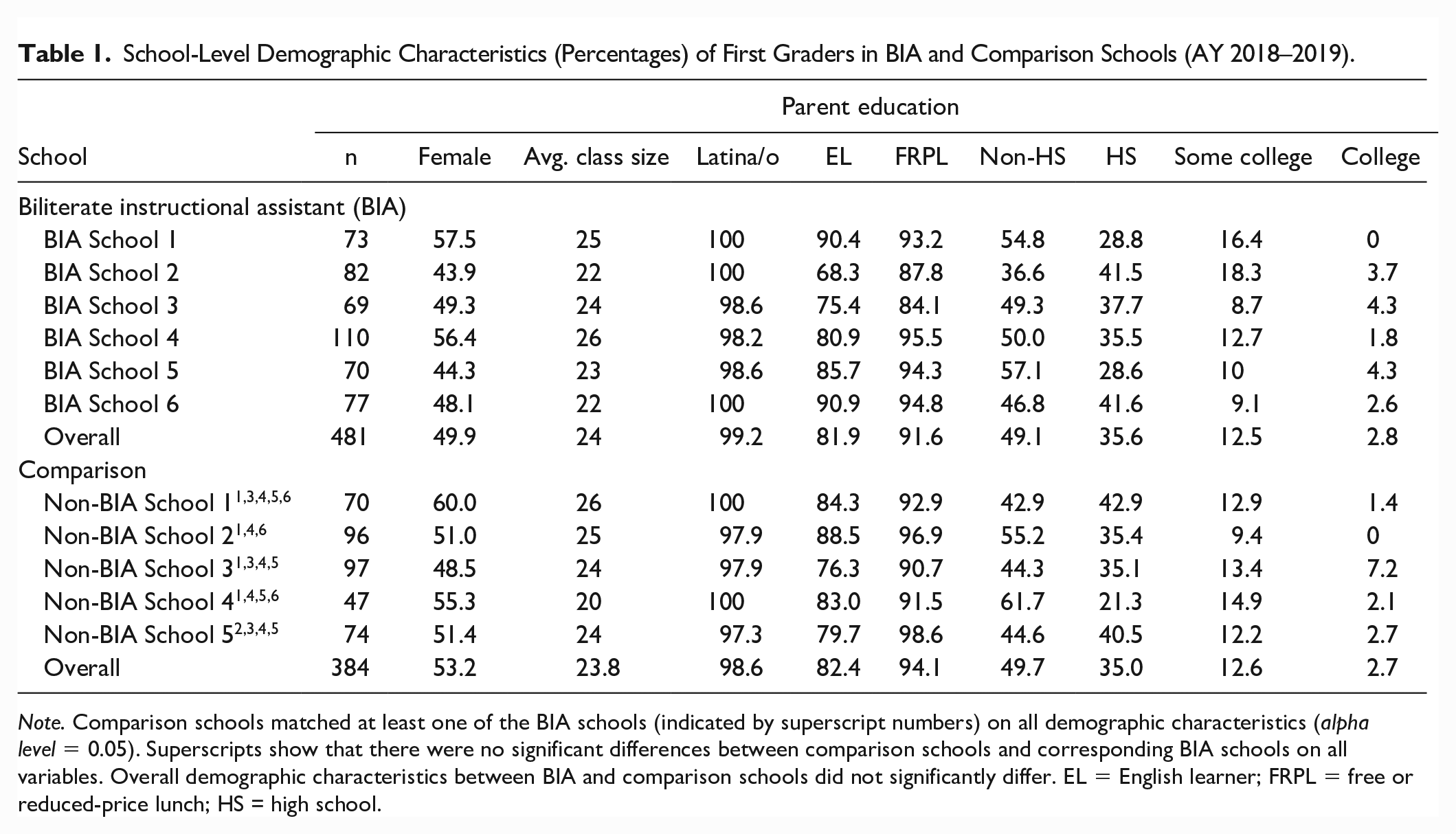
Note. Comparison schools matched at least one of the BIA schools (indicated by superscript numbers) on all demographic characteristics (alpha level = 0.05). Superscripts show that there were no significant differences between comparison schools and corresponding BIA schools on all variables. Overall demographic characteristics between BIA and comparison schools did not significantly differ. EL = English learner; FRPL = free or reduced-priced lunch; HS = high school.
School-Level First-Grade DIBELS Performance in BIA and Comparison Schools (AY 2018–2019).
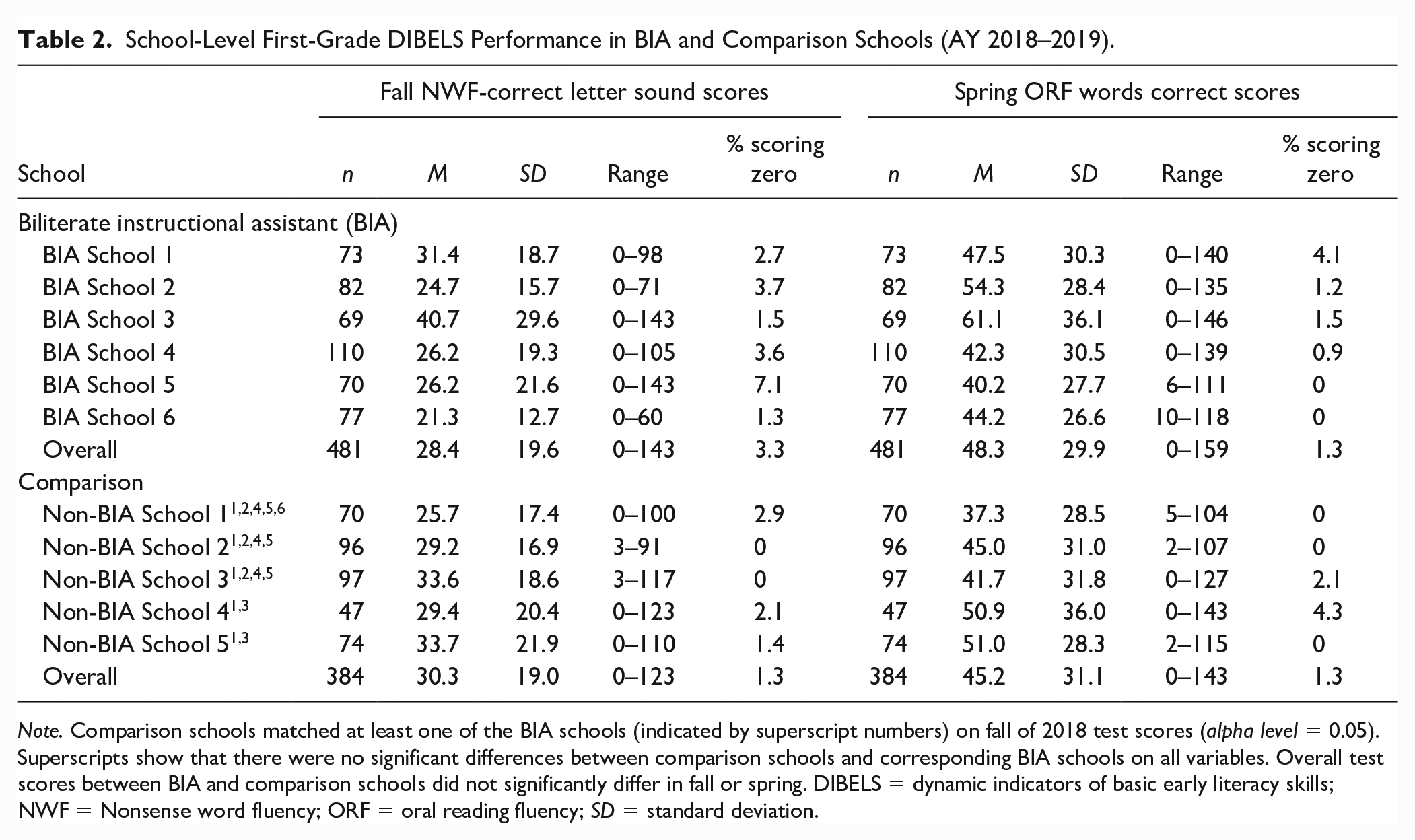
Note. Comparison schools matched at least one of the BIA schools (indicated by superscript numbers) on fall of 2018 test scores (alpha level = 0.05). Superscripts show that there were no significant differences between comparison schools and corresponding BIA schools on all variables. Overall test scores between BIA and comparison schools did not significantly differ in fall or spring. DIBELS = dynamic indicators of basic early literacy skills; NWF = Nonsense word fluency; ORF = oral reading fluency; SD = standard deviation.
Table 1 shows that within each school included in the sample (n = 11), more than 97% of students were Latina/o, a large percentage were English Learners (68–91%), and more than 84% qualified for free or reduced-price lunch. Overall, BIA and comparison schools did not differ significantly on demographic characteristics and test scores at the beginning of the implementation year (2018–2019). Superscripts show that each comparison school matched many of the BIA schools on all variables. The overall statistics for the two groups of schools (BIA and comparison) also matched quite well.
Table 2 shows each school’s average fall 2018 and spring 2019 first-grade scores on the DIBELS nonsense word fluency and oral reading fluency subtests, respectively. Overall, the program schools began the year about two points below the comparison schools and ended the year about three points above the comparison schools, suggesting the likelihood of a positive program effect. This is tested more formally below.
As for program implementation, biliterate instructional assistants (n = 27) were all female, except for one male participant, and all identified as Latina/o. Between three and five BIAs were placed at each of the selected schools corresponding with the number of first-grade classrooms at each site. In accordance with federal and state policy, hiring criteria required all BIAs to have at least an associate of arts (A.A.) degree or 48 college or university units. Of the 27 BIAs interviewed, 70% of them had bachelor’s degrees, two were credentialed teachers, another three were pursuing their bachelor’s degree, and the remainder had their associate of arts degree. Given the large percentage of Spanish-speaking students within the district, BIAs were also required to pass a Spanish language proficiency exam to be eligible for hiring.
Prior to data collection, this study was approved by the Institutional Review Board in the Office of Research at the University. Approval was also obtained by the Research and Evaluation office at the participating school district. Participating teachers, paraprofessionals, and school leaders provided informed consent during an initial meeting where they were given more information about the study.
Measures
Students’ standardized scores on district-administered reading assessments were used to assess the impact of BIAs on reading outcomes. The Nonsense Word Fluency (NWF) subtest of the Dynamic Indicators of Basic Early Literacy Skills (DIBELS; University of Oregon, 2018) is administered to first graders at the beginning of each school year. This measure assesses letter–sound correspondence and students’ ability to blend basic vowel-consonant and consonant-vowel-consonant words. The reliability estimate for this measure is .94, the median concurrent validity with the Woodcock-Johnson Psycho-Educational Battery is 0.51, and with the Stanford Binet Verbal Reasoning and Abstract/Visual tests is 0.30 and 0.32, respectively (Good et al., 2004).
The DIBELS Oral Reading Fluency (ORF) subtest was administered to first graders at the end of each school year. Students were asked to read a short passage, and their score was the total number of words they read correctly in 1 min. Alternate-form reliability for the ORF is above .90, and concurrent validity ranges between 0.92 and 0.96 (Good et al., 2004). The DIBELS tests were administered by school staff, including school psychologists and certified teachers. Demographic data were also collected by the district and include EL status, FRPL status, parent education level, and whether the student was eligible for special education.
Analytic Design
To assess whether BIAs had a positive impact on the average first-grade reading performance of students within selected schools (RQ1), BIA and comparison schools’ average spring of 2017 to 2019 DIBELS scores were used in short CITS (Hallberg et al., 2018) analysis, controlling for their fall scores each year. The CITS design allows for differences in initial performance between treatment and comparison schools as long as their school-level achievement followed parallel trends during the academic years 2016–2017 and 2017–2018, prior to the implementation of the program. This is known as the parallel trends assumption (Mora & Reggio, 2013). This can be understood through a causal framework where the counterfactual condition is predicted based on preprogram slopes. In other words, school outcomes during the postprogram period (Spring of 2019) for both BIA and comparison schools are projected from their preprogram trends (Spring of 2017 and 2018) so that any significant changes in the postprogram slopes of BIA but not comparison schools’ test scores can be attributed to the program. By comparing test score changes in BIA and comparison schools, any time-invariant school characteristics (both observed and unobserved) among the two groups of schools are differenced out of the equation. Thus, as long as any differences in the preprogram slopes are appropriately accounted for, CITS can yield unbiased program effects.
Prior to running the CITS model, the parallel trends assumption was tested by graphing BIA and comparing schools’ average reading performance gains during the preprogram and postprogram period with academic year on the x-axis and average standardized gains on the y-axis (see Figure 1). A visual inspection of this graph clearly depicts the parallel trends of BIA and comparison schools during the 2 years prior to the implementation of the program. A significance test of the null hypothesis that the slopes were identical was run, H0: b = b1—b2 = 0, resulting in b = 0.08, t = 0.18, p = .86 and provided confidence in using CITS analysis to evaluate the impact of the program, given the parallel trends of both groups during the preprogram period.
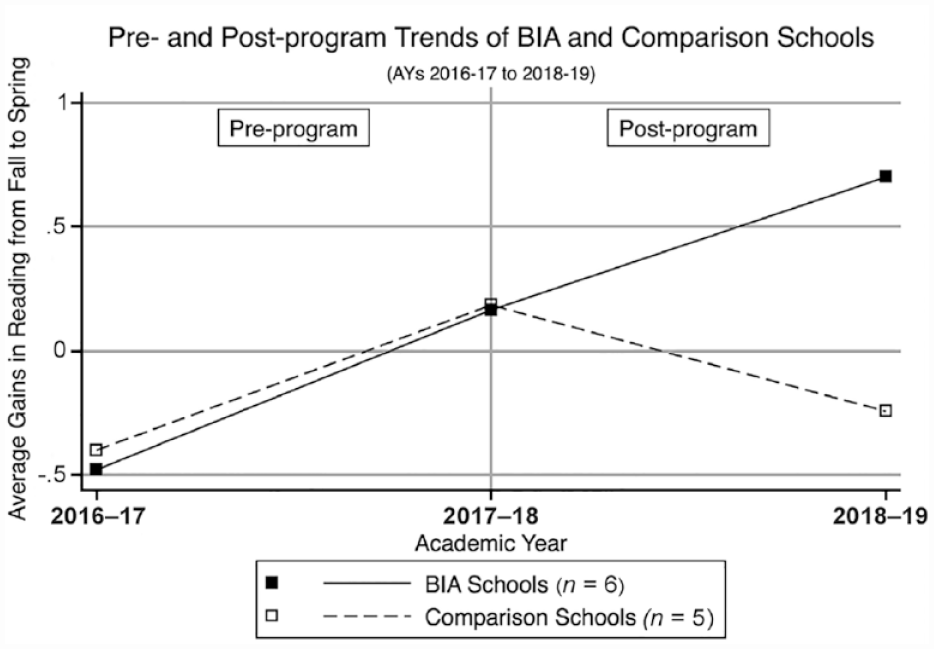
Preprogram and Postprogram Trends of BIA and Comparison Schools.
CITS analysis of school-level data
This study utilizes the baseline mean model, which is the simplest modeling approach and is characterized by the following equation,

where .
Regression analysis of student-level data
To provide a second estimate of the impact of BIAs on student performance (RQ2), multiple regression analysis was conducted using individual-level data with the following equation,

In this equation,
Results
Table 3 presents the results of the CITS analysis and estimates of the parameters in Equation 1. For the six BIA and five comparison schools, the equation predicts first-grade spring test scores for two preprogram years (2017 and 2018) and one postprogram year (2019). After controlling for schools’ average DIBELS Nonsense Word Fluency scores in the fall and percentage of ELs during any given year, schools who received BIAs averaged .825 of a standard deviation higher than controls on the DIBELS Oral Reading Fluency subtest administered in the spring, and this was a marginally significant finding (p < .10; Model 3). This p value is considered acceptable, given the small number of clusters and considering this was a pilot study. Although the two groups of schools followed parallel trends prior to the implementation of the program (2016–2017 and 2017–2018), during the implementation year (2018–2019), BIA schools exhibited steeper growth in reading performance when compared with matched comparison schools (see Figure 1).
CITS Estimates Predicting Schools’ Average DIBELS Oral Reading Fluency Standardized Scores in Spring 2019.
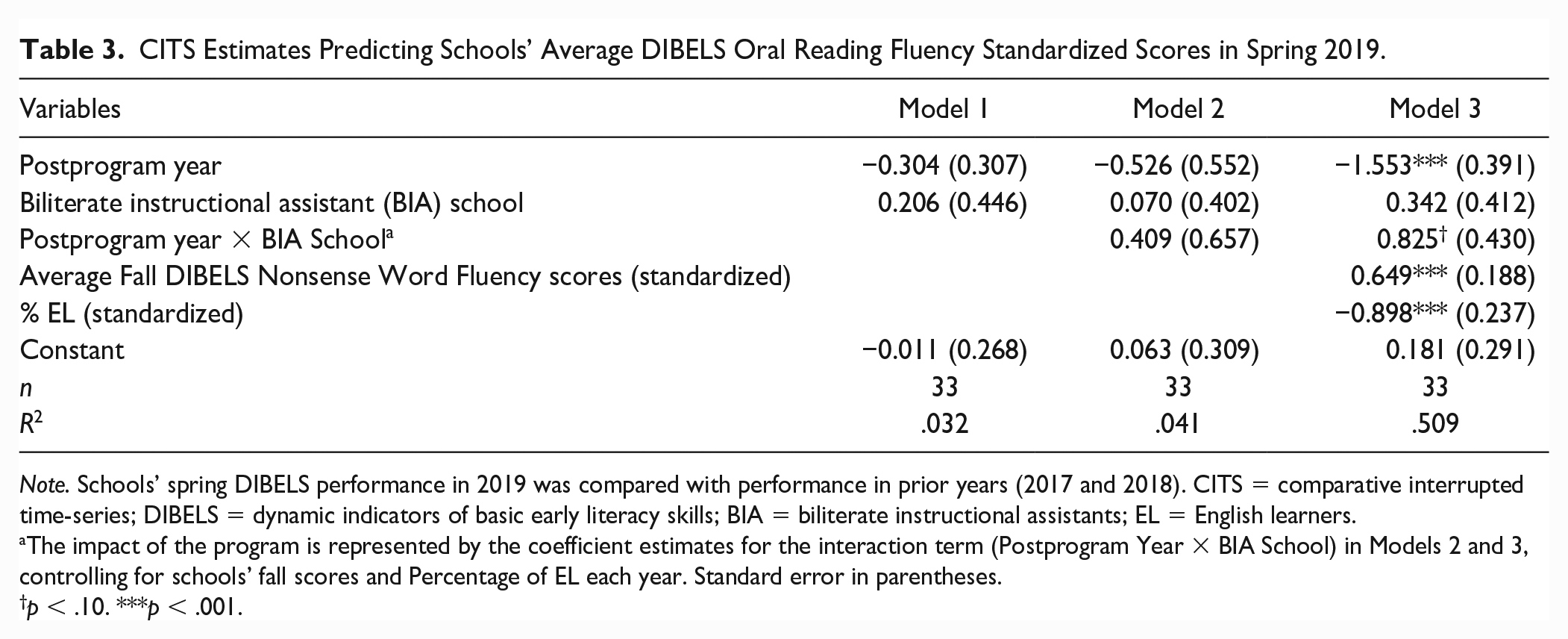
Note. Schools’ spring DIBELS performance in 2019 was compared with performance in prior years (2017 and 2018). CITS = comparative interrupted time-series; DIBELS = dynamic indicators of basic early literacy skills; BIA = biliterate instructional assistants; EL = English learners.
The impact of the program is represented by the coefficient estimates for the interaction term (Postprogram Year × BIA School) in Models 2 and 3, controlling for schools’ fall scores and Percentage of EL each year. Standard error in parentheses.
p < .10. ***p < .001.
Descriptive statistics for students with complete data within BIA and comparison schools are found in Table 4. Overall, students within these schools were largely from Spanish-speaking homes with 82% of them classified as English learners, 93% qualified for the free or reduced-price lunch program, and a majority of their parents had a high school diploma (36%), or did not graduate from high school (49%). Students in BIA and comparison schools gained approximately 20 and 14 raw score points, respectively, from fall to spring on reading tests suggesting that the BIAs had a positive influence on students’ test scores.
Descriptive Statistics for Student-Level Analysis.
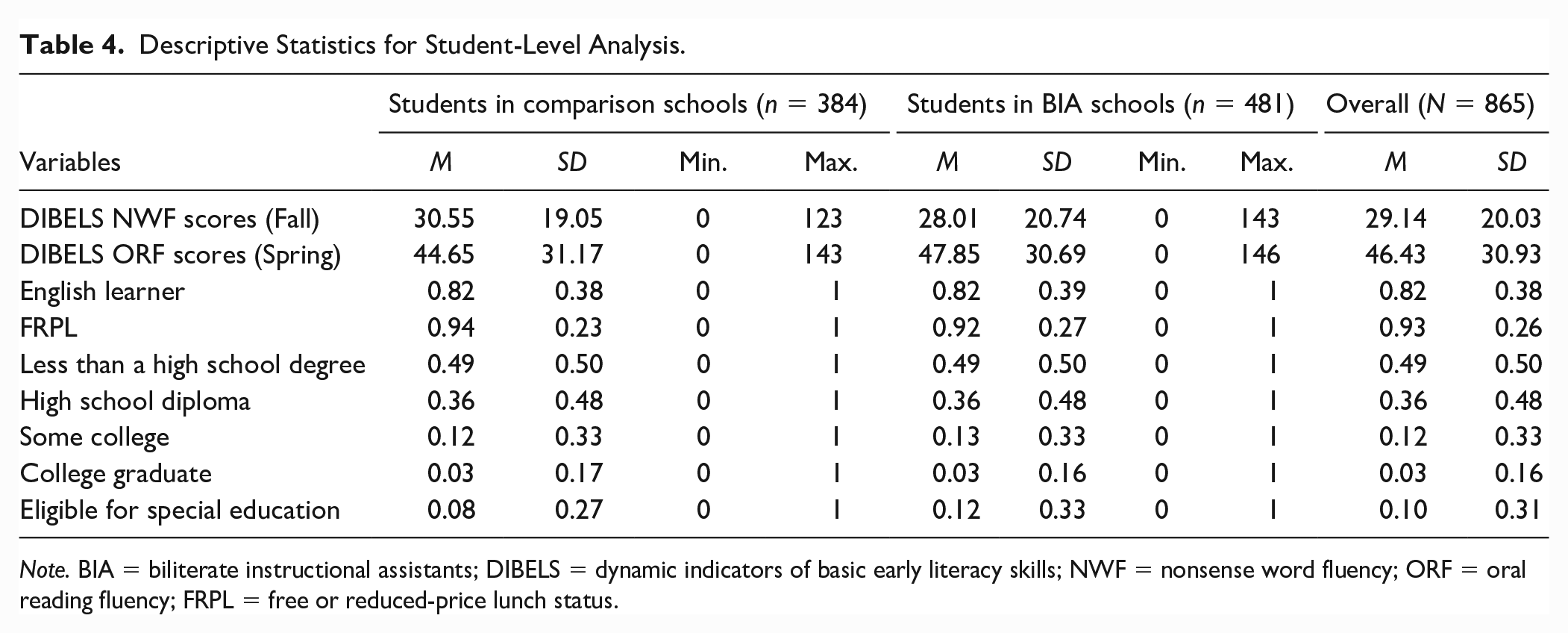
Note. BIA = biliterate instructional assistants; DIBELS = dynamic indicators of basic early literacy skills; NWF = nonsense word fluency; ORF = oral reading fluency; FRPL = free or reduced-price lunch status.
Table 5 shows the results of the student-level regression analysis using complete data as well as multiple imputation results used to account for missing data. After controlling for students’ demographic characteristics and fall test scores, students within BIA schools performed .193 of a standard deviation higher on the spring DIBELS compared with their peers in comparison schools, and this was a significant finding (p < .05; Model 1). Likewise, the results from the multiple imputation analysis using all available cases yielded nearly the same estimate. In this model, students in BIA schools compared with those in non-BIA schools performed .195 of a standard deviation higher on spring DIBELS scores, controlling for fall scores and demographics, and this was also a significant finding (p < .05; Model 2). Thus, the school-level CITS (Equation 1) and the student-level fall to spring analyses both yielded positive program effects, significant at the p < .10 and p < .05 levels, respectively.
Regression Estimates Predicting First Graders’ Spring DIBELS Oral Reading Fluency Scores.
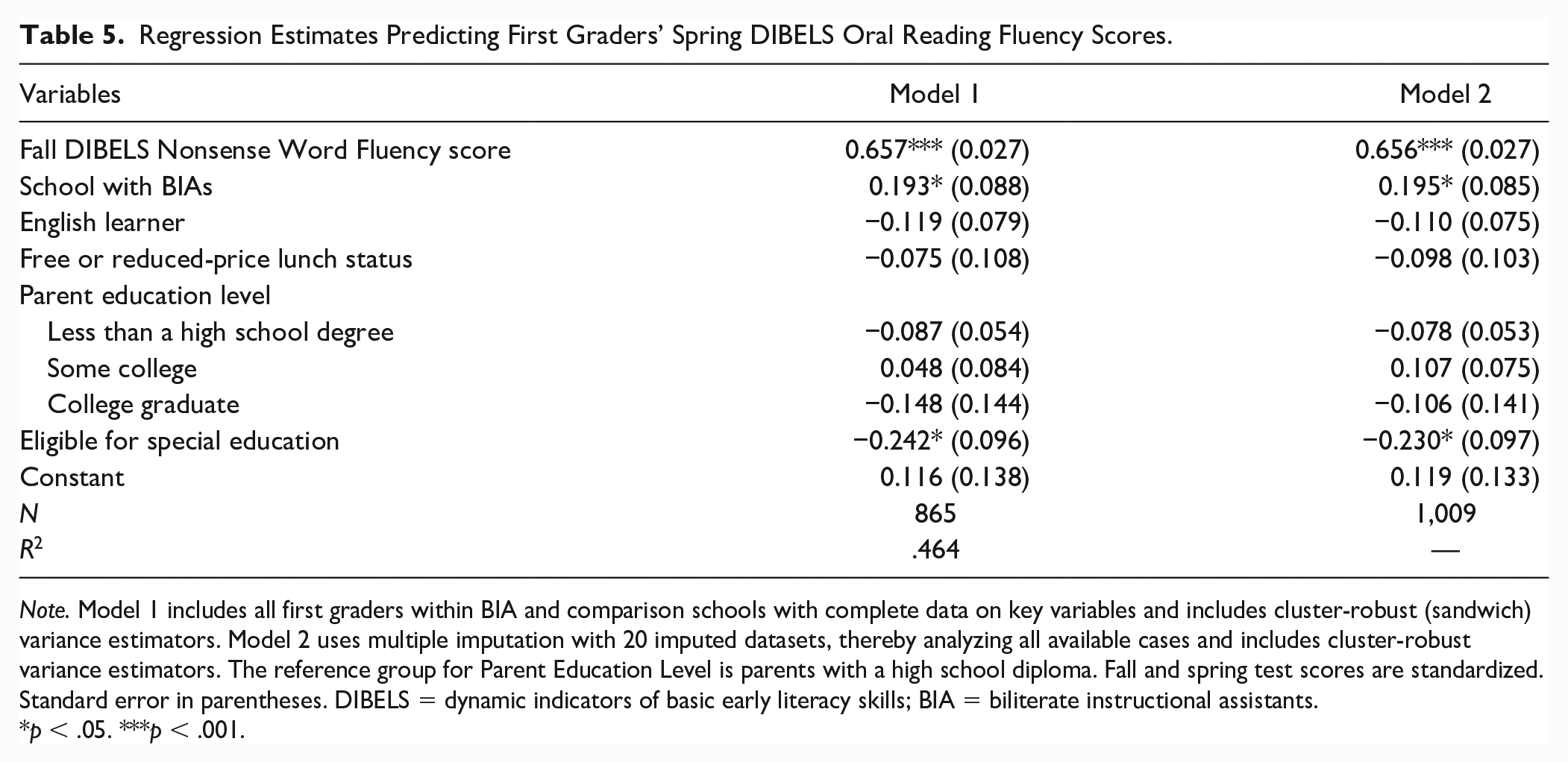
Note. Model 1 includes all first graders within BIA and comparison schools with complete data on key variables and includes cluster-robust (sandwich) variance estimators. Model 2 uses multiple imputation with 20 imputed datasets, thereby analyzing all available cases and includes cluster-robust variance estimators. The reference group for Parent Education Level is parents with a high school diploma. Fall and spring test scores are standardized. Standard error in parentheses. DIBELS = dynamic indicators of basic early literacy skills; BIA = biliterate instructional assistants.
p < .05. ***p < .001.
Discussion
We used two methods to estimate the effects of biliterate paraprofessionals serving as instructional aides to first-grade teachers on student reading performance in the lowest-performing elementary schools in an almost entirely Latina/o, low-income district. The CITS analysis, comparing school-level average test scores for BIA and comparison schools before and after the program, yielded a large, positive effect, ES = .83 SD, approaching significance at p < .10. The analysis using students as the unit of analysis and comparing fall to spring test score gains for students in BIA and comparison schools during the program implementation year yielded a positive effect, ES = .19 SD, significant at p < .05.
The magnitude of the impact of the BIA program on DIBELS ORF scores aligns well with prior research on the effectiveness of small-group and one-to-one tutoring. For example, Vadasy and Sanders (2011) found a supplemental phonics program had a significant effect on language minority students’ reading fluency (ES = 0.18 SD). Similarly, Vaughn et al. (2006) found a small-group reading tutoring program serving Spanish-English bilingual students had a positive impact on a range of literacy skills, although the effect (ES = 0.18 SD) on DIBELS reading fluency was nonsignificant at p < .05. Despite the substantial variation of implementation features across schools, the BIAs had a large positive impact (ES = 0.83 SD, p < .10) on schools’ aggregated reading performance, lending support to the district’s decision to hire paraprofessionals as an evidence-based approach to raising students’ reading performance at low-performing schools.
Study Limitations
The study had at least four limitations. First, the findings of a positive program impact would have been more definitive if the program had been studied across more grade levels and more years of implementation. Second, estimated program effects would have been better protected against selection bias if an experimental design had been used, by randomly assigning schools, classrooms within schools, or students within classrooms to treatment or control status. Instead, matched control schools were used to estimate the counterfactual. However, the matching was good, and if any bias was involved, it should have acted against finding a program effect, as the program was implemented in the lowest-performing schools. On the positive side, the data met the CITS requirement for parallel slopes in the preprogram period. Two separate analyses—the CITS analysis comparing test score averages for BIA and comparison schools before and after the program implementation, and the student-level analysis comparing fall to spring test score gains for students in BIA and comparison schools—gave positive effect estimates, significant at the p < .10 level and the p < .05 level, respectively.
Third, reading performance in this study was assessed using the DIBELS oral reading fluency subtest. A more complete analysis of the program’s impact on reading performance would include other measures of different reading components, such as phonics, phonemic awareness, vocabulary/background knowledge, word recognition, reading comprehension, spelling, and Spanish-English language proficiency. As in prior studies, results may vary depending on the choice of reading skill and its measurement instrument. Students were also observed receiving instructional support in writing, mathematics, science, and art activities throughout the week. Thus, a more comprehensive review of the program’s impact would have employed a more comprehensive set of measures. Finally, external validity was limited by the restriction of the study to a single school district in Southern California. Replication in other, similar districts would increase the generalizability of the findings.
Implications for Practice
Despite the limitations, the results of this study are promising. They suggest that large-scale, district-administered supplemental reading instruction delivered by biliterate paraprofessionals may improve student performance in a cost-effective way. More importantly, these findings indicate that Latino students and ELs can be properly supported in terms of their reading development by providing them with individualized or small-group supplemental instruction tailored to their individual needs. Findings also suggest that policy efforts should aim toward providing more schools with extra funding and teachers with extra support and assistance, particularly those with larger class sizes and greater numbers of students with learning needs. Federal grants could also fund and expand this research to widen the scope of students benefiting from such evidence-based reading programs as the one presented in this study. It is important to provide supplemental instruction to Latino students and ELs during the early grades when they are building foundational literacy skills as doing so can reduce the prevalence of subsequent reading difficulties and promote these students’ long-term reading achievement.
Bilingual paraprofessionals could also serve as language brokers for families by communicating with parents about student progress and offering guidance on how to better support literacy learning at home. For instance, Kosanovich et al. (2021) provide practitioners with specific recommendations on strategies parents could utilize at home to support literacy learning. Paraprofessionals could collaborate and assist teachers with preparing home literacy activities and explain to families how to engage with their child in an activity. Extending children’s learning time outside the classroom and providing them with greater opportunities to practice literacy skills at home would have a positive impact on their reading performance as well as engage families as partners in their child’s learning.
Still, more research is needed in identifying effective strategies bilingual paraprofessionals can use to harness students’ linguistic strengths and promote their literacy skills as well as their role in meeting students’ social–emotional and psychological needs. In addition, more evidence on the effectiveness of different implementation features (e.g., optimal group size, frequency and intensity of supplemental instruction, language scaffolding, and family involvement) may provide further guidance to other school and district leaders who are considering hiring paraprofessionals to supplement their core reading instruction and improve student outcomes.
Footnotes
Declaration of Conflicting Interests
The author(s) declared no potential conflicts of interest with respect to the research, authorship, and/or publication of this article.
Funding
This research was supported in part by grants from the National Science Foundation Graduate Research Fellowship (grant no. DGE-1839285).
