



Abstract
This article reports a case study of teachers’ enactment of writing instruction for adult learners in Swedish as a second language at lower secondary level in municipal education. It highlights instructional practices and discourses surrounding writing in three classrooms. The analysis centers on literacy events initiated by teachers to support adult learners’ final individual assignments. Data consist of classroom observations (24 hours) and informal interviews with teachers. The findings reveal that teachers adopt different positions in their teaching. There are varying levels of support for students, with varying numbers of literacy events occurring both inside and outside the classroom. Teachers universally adjust their methods based on contextual factors, including diverse student groups, local agreements on content, and time constraints, raising questions about equality. Furthermore, a text-focused approach prioritizes templates and models over content. As a result, writing assignments emphasize genre awareness rather than personal views, thoughts, or experiences. In sum, teachers' pedagogical choices in writing instruction are shaped by their beliefs about writing, learning to write, and contextual factors. These differences in teaching practices seem to provide students with partly unequal opportunities for writing development. This is further elaborated in the discussion.
In today’s globalized world, many adults are learning to speak, read, understand, and write in new languages. This article focuses on writing and writing instruction at the lower secondary level, one of three educational levels that encompasses a significant number of adult second language learners in Sweden. Over the past 5 years, Swedish as a second language (SSL) courses have been taken by more than half a million migrants (Swedish National Agency for Education, 2024). Sweden is an interesting example from an international perspective, as it has one of the highest participation rates in adult education relative to its population (cf. Fejes & Andersson, 2022). Additionally, the country offers SSL as a separate school subject, providing the same qualifications as the subject Swedish. Despite this, our understanding of the pedagogical context of these courses remains limited.
Effective writing skills are essential not only for societal engagement and democratic participation but also as a prerequisite for most occupations, extending beyond academic contexts (cf. Brandt, 2015). Students enrolled in SSL courses come from diverse educational backgrounds and represent a heterogeneous group in terms of first languages, ages, and lengths of residence in Sweden. While they share the common experience of migration, their specific circumstances vary—some are asylum seekers who have fled war and conflict, while others have moved voluntarily for work or study opportunities. The broad goals of municipal adult education include preparing students for careers, further studies, societal engagement, and personal development (School Law [SFS 2010: 800], 2010). Regarding writing, the steering documents emphasize the need to provide students with opportunities to write a variety of texts and “stimulate a desire for reading and writing” (cf. Swedish National Agency for Education, 2022a, 2022b). However, these documents also grant teachers significant autonomy in choosing instructional methods and content, and there are no central assessments.
The article reports a study where instructional practices in SSL classrooms are investigated and informed by previous studies that examine discourses of writing (Ivanič, 2004). Research has shown that the recurring discourses identified in steering documents across contexts and age groups are those of skills, process, and genre (Jeffery & Parr, 2021). In the Swedish context, the prevailing discourses among SSL teachers are the skills and genre discourses (Bergsten Provaznik & Wedin, 2023; Magnusson & Rejman, 2023; Palm, 2025; Sturk et al., 2020), while guiding documents reveal a broader conception of writing, characterized by a social practical discourse with an emphasis on practical applications (Palm, 2023). However, research on actual writing instructional practices in classrooms is less studied (Jeffery & Parr, 2021), and studies on adult education in Scandinavian settings are scarce. Yet, it is known that writing is perceived as challenging for both SSL students and teachers (Sandgaard-Ekdahl & Walldén, 2022). Self-reported data from teachers highlight several contextual challenges, including time constraints, heterogeneous student groups, and continuous enrollment (Andersson et al., 2023). As teachers in Sweden have considerable autonomy, it becomes essential to investigate the discourses put into practice and the pedagogical choices teachers make.
This study is relevant beyond the Scandinavian context, as migration to societies with high literacy demands is a global issue. The aim of this research is to provide a deeper understanding of writing instruction for adult learners by examining the discourses of writing and the practical implementation of writing instruction, offering empirical insights from three different classrooms. The research is guided by the following questions:
What are the prevailing discourses of writing in classrooms for adult learners?
What pedagogical choices are made in writing instruction for adult learners of SSL?
Theoretical Framework and Previous Research
In the following section, the theoretical framework is presented, followed by a review of previous research.
Social Theories of Literacy
This study is informed by a social view of literacy, where literacy is not merely a set of individual skills, but a complex and dynamic phenomenon, shaped by the social context in which it occurs (cf. Barton, 2007). Literacy, thus, involves the ability to engage meaningfully with written language within specific social, cultural and historical settings. The concept of literacy practice emphasizes that literacy is used in patterned ways, reflecting the social and cultural norms of a particular community (Street, 2000).
Building on Fairclough’s model of language and context, Ivanič (2004) outlines a model foregrounding text as intricately interwoven with social as well as cognitive dimensions, symbolized through Ivanič's layer metaphor. These layers include the “text” at the core layer, concentrating on linguistic features. The subsequent layer delves into the cognitive processes of writing, followed by the writing event, which pertains to the immediate social context in which language is employed. The outermost layer encompasses the sociopolitical and sociocultural context of writing, where numerous factors come into play. These include broader societal norms, economic conditions, educational policies, and cultural values, all significantly shaping not just what is written but also who can write and be read. The multilayered view of language establishes the groundwork for the analytical framework of writing discourses, as elucidated by Ivanič (2004, 2017), facilitating an exploration of diverse beliefs about writing, as applied in this study. Here, the focus is on the writing process that occurs in the layer of the writing event.
Discourses of Writing
Ivanič’s framework assumes that all writing instruction is grounded in beliefs about writing and the process of learning to write, subsequently influencing instructional approaches and assessment (Ivanič, 2004, 2017). A discourse of writing is understood as “constellations of beliefs about writing, beliefs about learning to write, ways of talking about writing, and the sorts of approaches to teaching and assessments likely to be associated with these beliefs” (Ivanič, 2004, p. 224). In short, the skills discourse is perceived as adhering to predetermined rules necessary for composing a text—a prevailing viewpoint in education, where writing is commonly seen as a collection of skills and subskills that progressively build upon one another (cf. Barton, 2007). Conversely, the creativity discourse views writing as an outcome of the writer's individual creativity. Within the process discourse, writing is conceptualized as encompassing cognitive composing processes and their practical execution. The discourse of thinking and learning positions writing as a tool for further learning and deepening thought. In the genre discourse, the underlying belief is that writing comprises a set of text types formed in different social contexts. In the social practice discourse, writing is seen as a purpose-driven event in a social context, with learning to write occurring by participating in real-life contexts. In the seventh discourse, the sociopolitical discourse, writing is perceived as a sociopolitically constructed practice, with implications for learners' identities.
Literacy Events
Literacy events are specific occurrences or activities that involve the use of written text within a social context (Barton et al., 2000; cf. Heath, 1982; Street, 2000). Literacy events highlight the dynamic nature of reading and writing, emphasizing that literacy is enacted in specific situations with distinct purposes and outcomes. Literacy events can be analyzed using three analytical concepts introduced by Holmberg and Wirdenäs (2010), namely, text chain, text talk, and text typology. This approach assists researchers in identifying and comparing how writing instruction is manifested in the writing process, as well as capturing the writing event in a more nuanced way, making different layers visible. The writing event goes beyond language use and includes “the purposes for language use, the social interaction, the particulars of time and place” (Ivanič, 2004, p. 223). A text chain refers to how literacy events are linked to each other. Common to the activities in the chain is their alignment toward a specific goal, which is the final product in the writing process. Text talk is defined as “all conversations held in the classroom during the writing process that can address aspects of both students' own texts and texts that are read or invoked as common experiences or individual starting points for writing and learning” (p. 111, our translation). Text talk is divided into three different types of conversations: anchoring, functional, and modeling. Anchoring text talk aims to deepen students’ knowledge or to connect to personal experiences relevant to the writing assignment. It can, for example, be talk around what students have previously read in textbooks or other sources in preparation for their own writing. Functional text talk involves discussions about the function of writing in terms of who writes the texts, the purpose of the writing assignment and the specific genre in question, reflecting on the role of the text and its impact on the reader. Modeling text talk aims to guide students to text structure. The talk can, for example, clarify different linguistic features of the text or relate students’ text to assessment criteria. The focus in the modeling text talk is on form. The categorization of text typologies can be divided through three perspectives: writer oriented, reader oriented, and text oriented. First, a writer-oriented typology focuses on the writer’s purpose—such as to inform, persuade, or narrate—and how language is used to achieve that goal. Second, a reader-oriented typology takes into account the needs and expectations of the intended audience, emphasizing what must be made explicit to whom. Last, a text-oriented typology involves examining internal features of texts, making comparisons and contrasts between them based on textual characteristics.
Discourses of Writing in Previous Research
Previous research shows that some discourses of writing dominate while others are more or less absent in today’s school system. A pattern that seems to extend beyond the Scandinavian context is the dominance of the skills discourse and genre discourse, as well as the process discourse, while the social practice and sociopolitical discourses are less prevalent (Elf & Troelsen, 2021; Müller et al., 2021; Parr, 2021; Peltzer et al., 2022; Peterson et al., 2018; Sturk & Lindgren, 2019; Wilcox et al., 2021). This pattern has also been confirmed in the teaching of writing in Grades 7-8 in Chile, where a genre-based and process-oriented approach to writing is influential (Flores-Ferrés et al., 2024). Research on writing discourses in the Scandinavian context aligns with international research. However, a large-scale study of writing discourses for younger learners in the Swedish school system, focusing on subjects other than Swedish, found that teachers tended to emphasize the discourse of thinking and learning, in addition to the skills and social practice discourse (Sturk, 2023). Another large-scale Norwegian study on secondary students' writing instruction showed a preference for genre and process discourses (Blikstad-Balas, 2018).
Jeffery and Parr (2021) observed differences in the perception of genre, noting that in some cases, it was understood as a social process, while in others, it was limited to text form. The latter is consistent with research involving SSL teachers, which has shown that the genre and skills discourses dominate and are closely connected (Palm, 2025). Furthermore, Malmström’s (2017) study of writing discourses in steering documents for upper secondary school shows that a dominant genre discourse increasingly manifests as a skills discourse in more advanced courses, with a focus directed toward academic skills. The emphasis on genre writing is further supported by Sturk et al.’s (2020) examination of SSL textbooks and is also evident in a recent study on SSL teachers' beliefs about writing for adolescent learners (Magnusson & Rejman, 2023). Sturk et al. (2020) also found a dominance of the skills discourse, followed by the genre discourse, in SSL teachers' online discussions about writing for younger learners. Although the genre discourse appears to be influential among Swedish teachers, we know that teachers can adopt different positions in their teaching (Holmberg & Wirdenäs, 2010; Randahl, 2012). To what extent teachers’ beliefs and practice align seem to vary. McCarthey et al. (2014) observed differences between teachers’ beliefs and their practice, while Randahl (2012) found alignment.
In the lower secondary level steering documents for SSL, there is an overarching social-practice discourse, while a genre discourse emerges when course content is specified. Furthermore, the skills discourse takes a subdued role, focusing on “functionality” in the assessment criteria. The creativity and sociopolitical discourses are notably absent (Palm, 2023).
Regarding a genre approach, one challenge identified for second language students in writing is understanding genre structure and the need for substantial teacher support (Sandgaard-Ekdahl & Walldén, 2022). For instance, Winlund’s (2021) study on classroom literacy practices found that while students were motivated to learn, they required scaffolding through model texts and shared experiences or discussions. Sandgaard-Ekdahl and Walldén (2022) emphasize that model texts should align with the level of writing expected from students, with a clear focus on the text's communicative purpose and context. Similarly, Bergsten Provaznik and Wedin (2023) found that beginner students of SSL struggled to identify the communicative function of model texts. A challenge identified across contexts is promoting authentic communicative writing rather than focusing solely on form (see, e.g., Flores-Ferrés et al., 2024; Walldén, 2019). In regard to previous studies, some discourses are more prominent than others, both in the Scandinavian and broader contexts. This study seeks to examine whether the same discourses are also prevalent in the specific context of adult second language learners.
Methodology
In the following, the context of the study, data collection method, the participants, recruitment process, procedure, and the analysis are presented.
Research Context
Municipalities hold the responsibility for delivering adult education in SSL, either by organizing it themselves or by outsourcing to independent schools. There are no prescribed teaching hours, and the format of instruction may range from online and hybrid models to traditional classroom settings. With 290 municipalities in Sweden, organizational approaches vary significantly. Students can independently choose among the schools offered by the municipality. Sweden, from an international perspective, has high enrollment rates in adult education. Factors contributing to this include the education being free of charge, the availability of child care while studying, and opportunities for financial support (Fejes & Andersson, 2022).
Language education spans from beginner to upper secondary levels. This study specifically concentrates on lower secondary level education. Prior to entering lower secondary level courses, most students complete the Swedish for Immigrants (SFI) program, designed for beginners. The typical duration of SFI studies is approximately 1 year, although there is considerable individual variability. Lower secondary level education comprises four courses, each equivalent to 10 weeks of full-time study. However, students can take these courses separately or as a unified program, depending on factors such as student enrollment, individual needs, and school-specific policies. A pass on the fourth course is a prerequisite to upper secondary level studies.
At national level, lower secondary level students constitute a highly diverse group, characterized by varying educational backgrounds. Roughly half of them have completed at least 3 years of upper secondary education in another country, while the remaining half have had less extensive formal education. Students within the age range of 20-64 years have the right to enroll, with an average age of around 30 years. The lower secondary level does not depart from the Common European Framework of Reference for Languages (CEFR); however, the previous educational level is expected to correspond to B1 in the framework.
The students in this study are quite similar across the 3 classrooms, representing diverse languages, ages, and genders. They all had prior schooling and (Latin-based) literacy experiences. However, the length of their stay in Sweden varied. While some had working life experience in Sweden, others had been studying continuously after their arrival in the country. As the courses are part-time, most students combined their studies with work or other studies. The motives for students to undertake these courses vary. At the lower secondary level, passing is necessary to apply for admission to certain vocational programs, such as child care and bus driver training, and the upper secondary level serves as a prerequisite for further studies, and eventually at the university level.
Method
Given the limited existing research in the area, we opted for open observations to gain a comprehensive understanding and thorough reflections of the writing instruction (cf. Atkinson & Hammersley, 2007). This study includes three lower secondary teachers from three schools in three different municipalities. The data were gathered through classroom observations and informal interviews with teachers in connection with each lesson. The lessons ranged from 90 to 180 minutes in duration and were observed in their entirety on all occasions. The informal interviews consisted of an initial interview (approximately 15 minutes) with each teacher, followed by ongoing conversations before, during, and after the lessons.
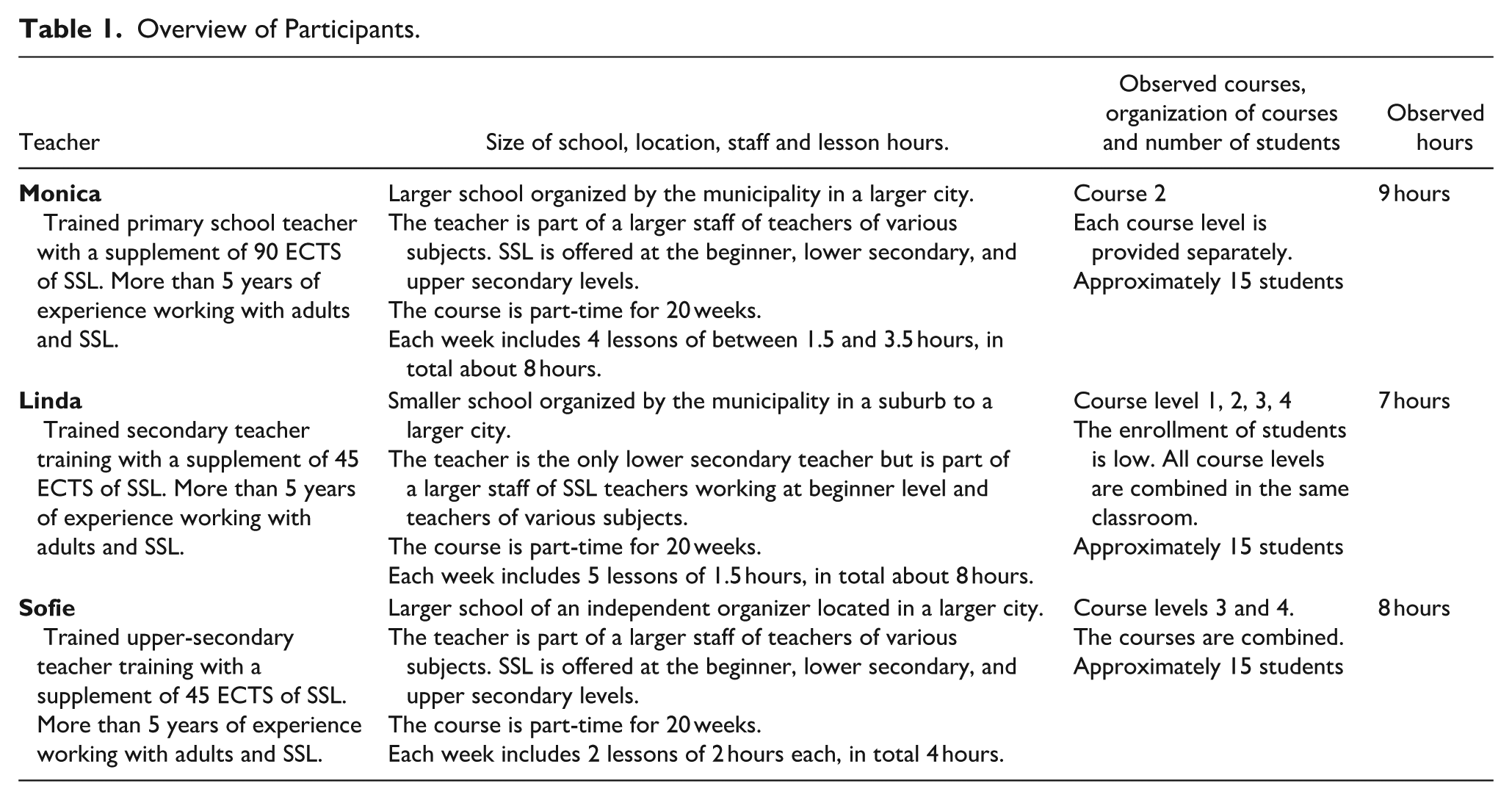
Observations occurred over a period of 2-3 weeks and encompassed all the lessons in one specific writing process. The number of students present ranged from 10 to 18. Each observed course spanned 20 weeks, equivalent to half-time studies. However, the number of weekly teaching hours varied between 4 and 8. The size of schools and municipalities differed. A more detailed description of the teachers’ backgrounds and the schools is provided in Table 1. All names of teachers and schools, as well as geographical locations, have been replaced with pseudonyms to ensure confidentiality.
Overview of Participants.
Recruitment Process
Participants for this study were recruited using a convenience sampling method through email outreach to schools located in and around a large city in Sweden. The recruitment emails were typically addressed to the school's headmaster, with a polite request to forward the message to interested teachers. These emails included detailed information about the study's purpose and clarified that participation would involve the first author visiting the classroom at the teacher's convenience to observe teaching.
The only inclusion criterion for participation was that the teachers were instructing Swedish as a second language at the lower secondary level. Although being a qualified teacher was not a requirement for inclusion, all participating teachers had both qualifications and more than 5 years of experience. Observations were scheduled chronologically based on responses from interested teachers. The recruitment emails were dispatched in January 2023, and the data collection process took place from February to May 2023. There were no preexisting relationships between the researcher and the participants.
Procedure
School visits were coordinated with each teacher. Both teachers and students were informed that the researcher intended to follow a writing process in its entirety. The selection of lessons to be observed was left to be decided by the teachers, and observations began when it was convenient for them.
During observations, the first author positioned herself at the back of the classroom with a notebook and pen in hand. In Linda’s and Sofie’s classrooms, students were seated in rows facing the whiteboard, with the teacher positioned at the front. In Monica’s classroom, tables were grouped together, and students sat in clusters of four. The researcher primarily conversed with the teachers but occasionally spoke with students, usually addressing questions about grammar or the university. In most cases, it was felt that teachers were interested in discussing their teaching. As one teacher put it, “it is good to have someone else's eyes on you to reflect on what you are actually doing.” The first author experienced that the presence had less of an impact after attending multiple sessions, indicating a growing sense of familiarity and comfort among both students and teachers (cf. Friedman, 2012). Observations continued until the whole writing process had been observed. At this point, the teachers were asked to determine whether the observations had provided a representative picture of typical writing instructional practices in the observed course, which they confirmed.
Field notes were taken on-site, structured into three columns: “Teacher's Actions,” “Student Activities,” and “Reflections.” For example, in the “Teacher's Actions” column, notes might include “The teacher initiated the lesson with a discussion about the weather and reminded students about next week's writing test.” In the “Student Activities” column, entries could resemble “A student raised their hand to ask about the test duration.” The “Reflections” column contained comments such as “The introduction of new text types via PowerPoint presentations was a recurring activity.” The informal interviews were conducted in conjunction with lessons and were initiated by both researcher and teachers. The interviews probed for an understanding of the lessons and the observed writing instruction by posing open-ended questions such as “Would you consider this a typical lesson?” or “Why did you choose this task?” The informal conversations were therefore informed by the observations, while also contributing to a more complete picture of the observations (cf. Patton, 2015). They also made teachers' reasoning about pedagogical choices visible, in contrast to a formal interview, which would not necessarily take place during teaching. The informal interviews were documented directly after each conversation. After the observations, all field notes were entered into the computer. In total, material from 24 hours of observations was included. Informal interviews and field notes constitute the data analyzed in the article.
Ethical considerations were addressed by informing both teachers and students, verbally and in writing, about the researcher’s presence in the classroom, what their participation would entail in terms of taking notes of what was being observed, and how their involvement contributed to provide a deeper understanding of writing instruction in this context. They were also informed of their right to withdraw consent at any time, which nobody chose to do. All participants had the opportunity to ask questions and retain an information sheet, which included contact details. Most students provided written consent, while those who did not were excluded from the field notes.
Analysis
In the analysis, writing processes in three different classrooms were examined. A writing process is, in this study, understood as a sequence of lessons where teachers have specifically planned to devote time to writing instruction. The writing processes thus consisted of various activities, including reading, writing, and discussions, all aimed at producing a written final product (cf. Holmberg & Wirdenäs, 2010). The analysis focused on the writing instruction that culminated in an individual writing assignment as the objective. Initially, the writing processes were analyzed using Ivanič's discursive analytical framework, addressing the first research question: What are the prevailing discourses of writing in classrooms for adult learners? The analysis was based on the various dimensions of the framework, which are as follows: the layer in the comprehensive view of language, beliefs about writing and learning to write, approaches to the teaching of writing, and finally, assessment criteria (Ivanič, 2004, p. 225). The field notes contained both observational and interview data and formed the basis for the joint analysis work. The analysis of discourses was carried out by all three authors reading the field notes individually. Afterward, the authors met to share which discourses were particularly prominent. There was a high degree of consensus, which may be due to the fact that all three authors have experience using the framework. To answer the second question about teachers’ practices, text chains were constructed collaboratively by the three authors based on the field notes. Initially, the authors agreed on which literacy events the text chain should include—these were the teacher-initiated events related to the final individual assignment, whether they took place at home or in school, and whether they involved reading or writing activities. Examples of excluded literacy events in the analysis were, for instance, when students took notes on what the teacher wrote on the board that was not related to the specific writing process in focus or when students read a text related to another instructional moment, such as a listening exercise. The next step was to analyze the type of text talk that occurred and the type of text typology that was made visible. Text talk had a clear connection to the discourses, while the text typology followed a different pattern.
Findings: Writing Instruction in Three Different Classrooms
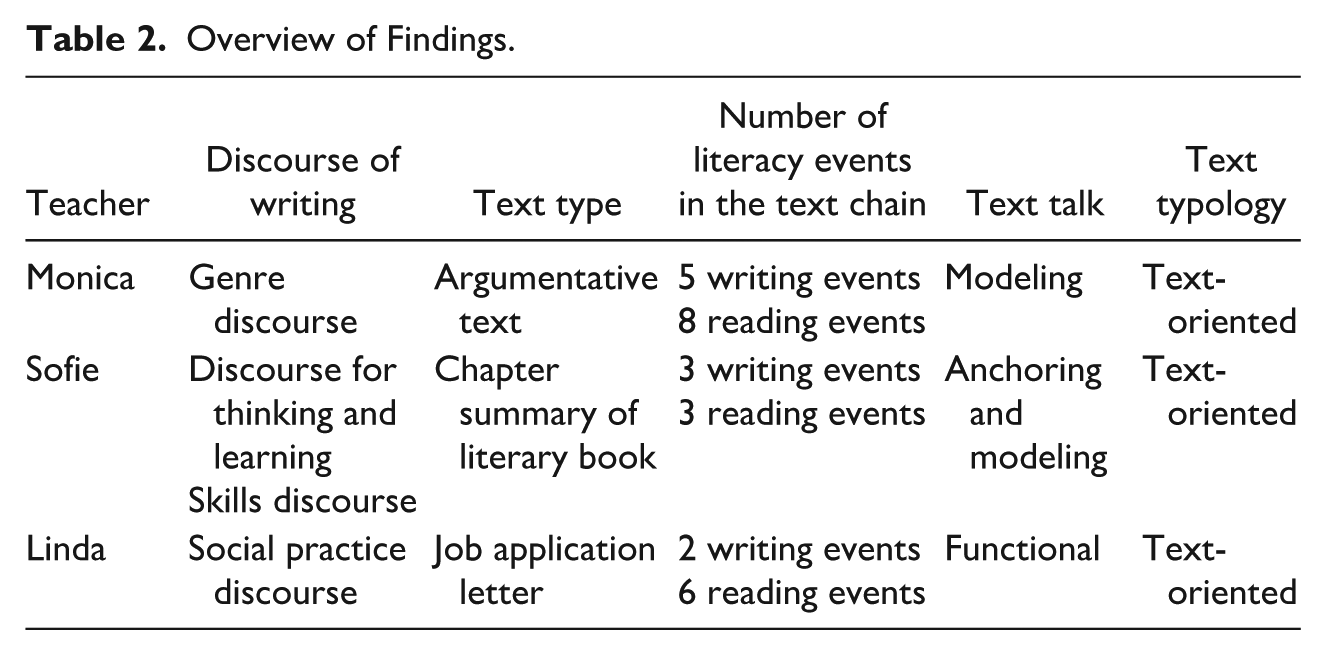
This section reports on what the prevailing discourses of writing are and what pedagogical choices are made in the writing instruction. The presentation begins with an overview (see Table 2). From this, it is evident that there are both similarities and differences. The observed similarities include the fact that the final individual assignment is framed by various literacy events and there is a focus on text structure manifested in a text-oriented typology. Further, the final individual assignment is written outside class. Some differences that emerged are that three different discourses are manifested in the classrooms, which is reflected in various types of literacy events and different text talk. The number of literacy events included in the text chain varies. Monica’s classroom included five writing events and eight reading events, all of which occurred in the classroom. Sofie’s classroom included three writing events and three reading events, but only two of the writing events occurred in class. Lastly, Linda’s classroom consisted of two writing events and six reading events, with all but one writing event occurring in class. Next follows a close examination of each one of the three writing processes.
Overview of Findings.
Focus on Genre in Monica’s Classroom
In Monica’s classroom the genre discourse was manifested through the teaching of and talk about writing (cf. Ivanič, 2004). The aim of the writing process is for the students to compose an argumentative text in the form of an opinion piece, which was also the focus of their talks. Monica explained in informal interviews that she is grounded in genre theory and that her clear aim with her teaching of writing is to equip students with knowledge about text types. The overarching aim is, according to Monica, to prepare students for studies at upper secondary level.
Monica explained that using genre as the point of departure in writing instruction is something the teachers at the school have agreed upon. While Monica was working with argumentative texts, all the school’s teachers were working with the same text type, but at different levels. In addition, Monica utilized a textbook that is organized around various text genres. Monica underscored the importance of keeping the focus on the text type and not on language correctness. When asked about what is important in the assessment of texts, Monica responded, “I am trying to have my ‘genre glasses’ on. That means not to focus on the grammar because there will always be mistakes.” During the writing process, the use of predefined text types, such as checklists and templates, indicated that there was also a skills discourse present in Monica’s teaching to some extent. These templates tended to focus on static and structural aspects of writing rather than texts’ social use and function (cf. Ivanič, 2004).
A text chain influenced by genre pedagogy
The text chain in Monica’s classroom primarily comprised various writing activities designed to familiarize students with and practice the specific text type targeted by the writing process. The text chain is illustrated graphically (see Figure 1), where “W1” stands for the first writing event, “R1” for the first reading event, and so forth. “A” and “B” indicate that the same text is written in two versions. The writing process commenced with the teacher using a PowerPoint presentation to introduce the text type (R1). The presentation was organized around three aspects: the purpose, the structure of the text type, and the linguistic features of the text type. Subsequently, Monica read aloud examples of the text type from the textbook (R2).
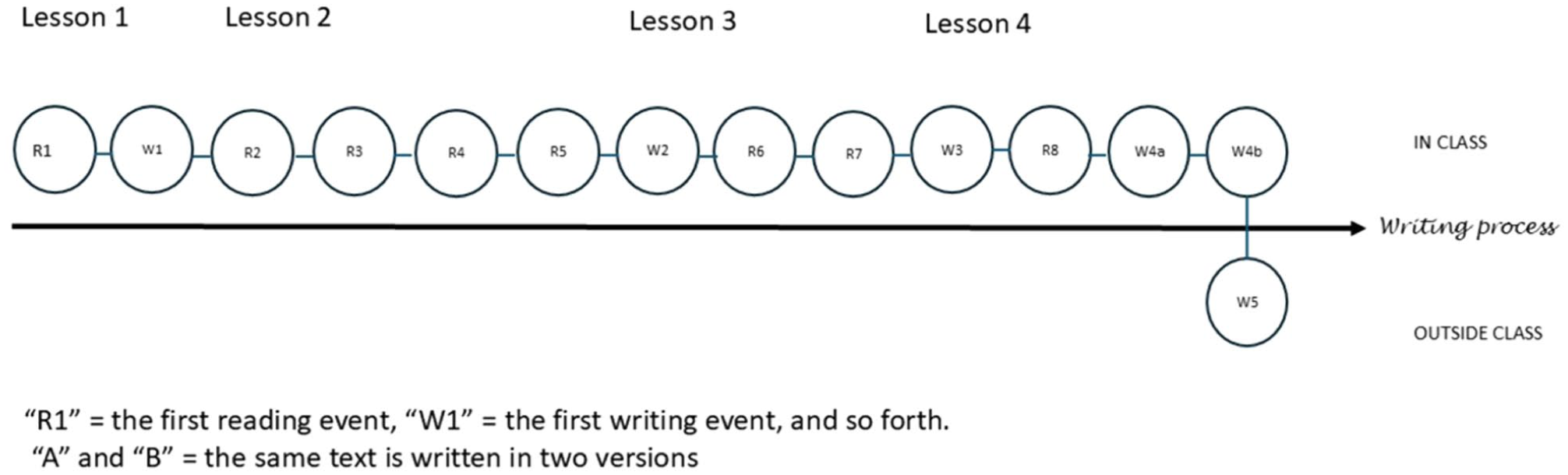
Monica’s text chain.
The selected texts in the text chain were chosen by Monica and consist of either textbook content or materials provided by her. The reading served as preparation for the final individual assignment, regarding text genre. In the later stages of the writing process, the teacher presented a checklist for composing an opinion piece and commented that they also had a checklist for the preceding text type, assuring students that “this is nothing new for you.”
Fieldnote 1: The teacher has written an introduction that she says everyone can use, regardless of the arguments they use afterwards. The students are given a table to help them develop their arguments, which includes space for outlining three distinct arguments. The teacher goes through the structure and then hands out the checklist. “I look at this one when I assess your texts and you can use it,” she says. The teacher reads out everything on the checklist that relates to structure. “First, think about what arguments! Think about language and content!” encourages the teacher.
All the writing before the individual final assignment occurred in small groups (W1, W2, W3, W4a, W4b). As an example, the teacher opened a shared online document where students, in smaller groups, were to input different arguments on the topic “for and against having mobile phones in the classroom.” Subsequently, the teacher reviewed all the arguments that have been submitted (W1). In the following lesson, the teacher presented an opinion piece that she herself has written based on the arguments the students gathered in their groups about mobile phones in the classroom (R3). In another exercise, students worked in groups to construct a text that the teacher has dissected (R5). They read the text as a group, with a focus on identifying the structure of the text type. The text is then collectively reviewed, with students marking different arguments in various colors, based on the teacher's guidance. Afterward, students worked in pairs to write a text with the same structure (W2). The teacher determined the topic of the text and supported the students with vocabulary. The teacher began by writing the first two paragraphs, and then the students continued. These collaborative writing activities consisted of multiple instances where students received support in understanding text structure and how the text type was linguistically constructed.
Throughout the writing process, students have both written together and read each other's texts (R8). They have been given the opportunity to provide comments and contribute to each other's texts. However, the concluding text was written individually and was read and assessed by the teacher (W5).
Modeling text talk
In Monica’s classroom, a modeling text talk dominated. Writing was supported by text talk both in whole-class settings and in smaller groups. The classroom was characterized by extensive interaction, and a larger portion of lesson time was dedicated to students engaging in conversations in smaller groups, constructing texts in various ways according to the text type. Many of the discussions revolved around language features typical of the genre. Most exercises begun with the teacher introducing the text and emphasizing that the conversation served as a model, followed by students practicing in smaller groups. One exercise involved a whole-class session where Monica explained modality and presented words such as “often, never, mostly, rarely.” Four students were seated around each table, and each pair was equipped with a small whiteboard and pens. After the explanation, students were tasked with ranking the words. The students were highly engaged in the activities and the text talks. Subsequently, they presented their whiteboards to each other and discussed their answers. Whole-class conversations largely aimed to provide models for students' individual writing. For instance, the teacher reviewed texts, deconstructed them, and color-coded different parts of the text that are typical for the text type. Conversations also occurred on the function of the text. As an example, students were encouraged to discuss with each other on topics, such as Who writes opinion pieces? and Where can you find an opinion piece? Fieldnote 2 illustrates how, at the beginning of the writing process, the teacher showed a PowerPoint presentation with examples of opinion pieces and commented on why the authentic example didn’t look like the template.
Fieldnote 2: The teacher says that “not all opinion pieces look like this.” A student asks if they are more difficult? “Yes,” says the teacher, “but in the beginning it is good to have a template, a pattern, and then when you become more confident in the language you can vary. Then you can play more with the language.” The teacher then shows an authentic example of the text type that doesn’t fit into the template.
In Monica's classroom, the use of templates was an active choice to make various text types more accessible to students. As noted in the field note, an authentic opinion piece may not always fit neatly into the template, a point that is explicitly communicated to students.
A text-oriented typology
The text typology in Monica’s classroom was text-oriented. All instruction during the writing process aimed to solidify the text type, with exercises maintaining a consistent focus on the final product. The writing process involved a significant amount of collaborative writing and multiple practice tasks linked to the text type and its specific features. The text type was identified based on structure rather than primarily by function. To illustrate structure, continuous comparisons were made with other text types—for example, when Monica compared the argumentative text type with the instructional text type the class had previously worked with. The writing was done with a future reference, in the form of the texts that students will need to write in later courses or in connection with upcoming examinations.
Focus on Thinking, Learning, and Skills in Sofie’s Classroom
In Sofie's classroom, a hybrid approach emerged, intertwining the discourse of thinking and learning with the skills discourse (cf. Ivanič, 2004, 2017). The text chain aimed to culminate in a written summary of a literary text (“The Tower of Lies” by Selma Lagerlöf). The discourse of thinking and learning was manifested as students, through writing, learn to read in a specific way. Writing served as a tool for delving into the content of literary work. The focus in writing was on plot and course of events, but in the questions that students received as the basis for discussions, there were also tasks of a more interpretive nature, e.g. “What do you think is the character’s reasons?” However, language proficiency constituted a substantial component of the subject content, wherein the literary work was analyzed through vocabulary exercises and grammar activities directly linked to the novel, whereby a skills discourse was manifested. Sofie and a colleague have developed their own teaching materials because, as they expressed it, they “grew tired” of the outdated textbook and found that there were no updated alternatives available. Informal discussions with Sofie unveiled a perception of writing also governed by predefined structures, leading to a discourse centered on skills, where writing is guided by templates, as exemplified in fieldnote 3, when students are reminded about the final summary and the feedback template: Fieldnote 3: The teacher ends the lesson by going through the homework assignment, which is to summarize a chapter in the book. She tells the students that they must not copy paste but write in their own words. There is a checklist that she shows them. It says: 1. Read the book. 2. Summarize. 3. Check that you have included the most important points. 4. Add a heading. 5. Check grammar, capitalization and punctuation. The teacher encourages students to use the words in the list at the back of the booklet, checking for spelling, form, capitalization and paragraphing. “Look at the sample text, but don't write the same one! Questions on that?”
Text chain departing from literary reading
The text chain in Sofie’s classroom involved students reading some chapters in the literary work at home (R1), followed by a written summary (W1) that students wrote in smaller groups during the lesson after discussing the novel (see Figure 2). Subsequently, the students continued their reading at home (R2 & R3).
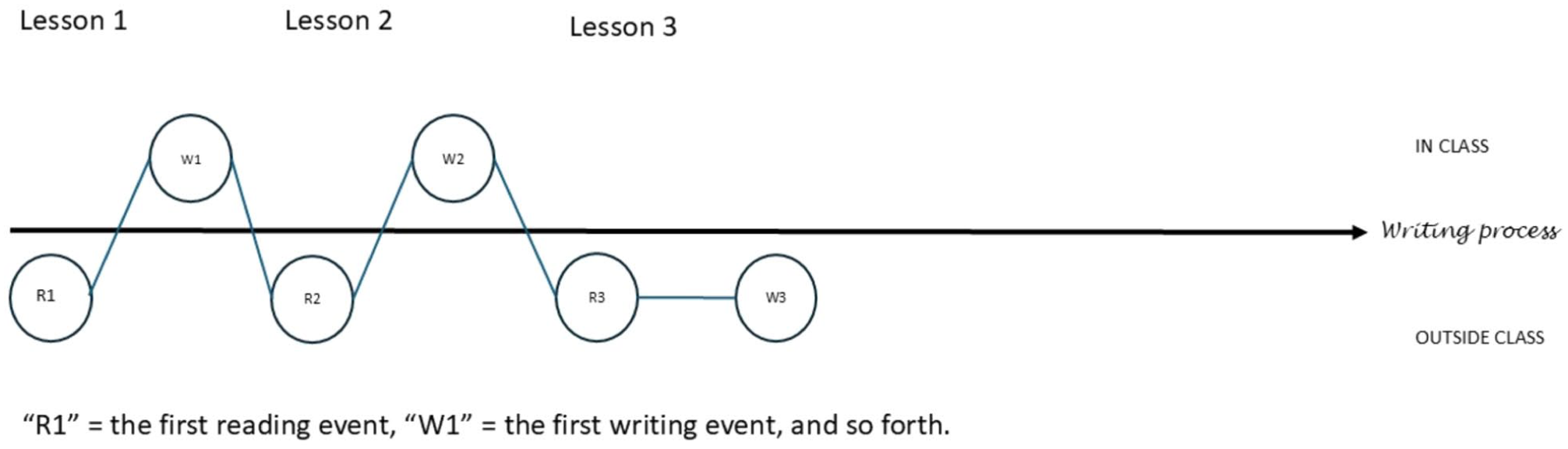
Sofie’s text chain.
The literary text was processed with the aid of questions related to the content of the book, vocabulary exercises, and grammar exercises. The students worked with these exercises both at home and during the lesson. Prior to the individual summaries, students practiced once again writing another summary in a group setting (W2). One challenge, however, arose during the writing process, as not all students had had the opportunity to read before the lesson. Consequently, as the students were not prepared to talk about and summarize the chapters, the teacher instructed them to read during lesson time instead of participating in the discussion. In informal interviews, Sofie explained that the course requires a great deal from the students, and a significant amount of work is required outside of class hours. Sofie acknowledged that initially, there may be challenges in getting everyone to fully comprehend the course structure and an effort is invested in introducing students to, for example, the digital learning platform, where students can also find checklists and templates to support their reading and writing. Sofie described the course as a “system” and mentioned that “all content is predetermined.” Minor adjustments are possible, but there is only time to modify the course once a year.
All reading activities in the text chain and the final writing assignment (W3) were intended to be completed at home. Sofie addressed a conflict regarding the most effective use of limited lesson time and a challenge of moving literacy events outside the classroom. This also shows a potential conflict between the intention with the writing process and the enactment of the instruction.
Anchoring text talk
The dominating text talk in Sofie’s classroom was anchoring. The text type “summary” was addressed in text talk by having students practice orally summarizing their reading from the book. The initial textual conversation in the writing process involved discussing the chapters they have read at home in their literary book. The teacher divided the chapters between the groups, and one group worked with a couple of chapters from the book and the other group with other chapters. The groups took notes on their discussion and then summarized it for the others. The discussions within small groups aimed at anchoring students in discussions and reflections on the content of the literary book.
Concurrently, text talks also served as a role model for students' individual writing, aligning the summarization of a chapter in the book with the corresponding written final product in the writing process. Besides, text talks focused on the language. For example, the teacher handed out two different pieces of paper with words on them and asked the students to sit in pairs; one student was to explain the word on their paper while the other tried to guess it. Sofie encouraged students to focus on words when reading and to practice words. Language proficiency reoccured in the writing instruction as central to students' writing, and language features were consistently emphasized by the teacher as decisive in the assessment of the final text.
A text-oriented typology
The typology was text-oriented. In the final writing assignment, the focus was on internal features of texts and textual characteristics, primarily language aspects. There was a checklist of language components that students should double-check in their own texts before submission. Writing was guided by templates, allowing limited space for creative or reflective writing based on the literary text.
In informal conversations with Sofie, she explained that they worked with predetermined text types in the course. While the opinion piece temporarily had been removed from the course, it would probably return, since the students would need it at upper secondary level, and, according to Sofie, “if the teachers at lower secondary level have not worked with it, it will be difficult for the teachers at upper secondary level.” Thus, writing was directed toward a set of text types required in future studies.
A Social Practice Discourse in Linda’s Classroom
In Linda's classroom, the predominant discourse identified during the writing process aligns with the social practice discourse (cf. Ivanič, 2004). The final text of the writing process was a job application letter. The texts students engaged with have connections beyond the confines of the classroom. The instructional tools employed by the teacher to support writing included resources such as the school’s study counselor and the Swedish Public Employment Service’s website. The trajectory of writing in Linda's classroom was outward facing. In contrast to the other two classrooms, there were no explicit references to further studies; instead, the writing was intended to serve authentic purposes. This was evident during one lesson, when a student asked whether it was possible to pretend to be someone else while writing. As shown in Fieldnote 4, the teacher declined the suggestion and emphasized that the text should preferably be applicable in real-life situations: Fieldnote 4: A student asks if you can pretend to be someone else when you write. The teacher replies that you should preferably be yourself so that you can use the text.
This hesitation is understandable in relation to the fact that the majority of the students were working or applying for work, while a smaller number of students would continue with their studies. At this school, Linda was the only teacher at the lower secondary level, as the student base is small. Therefore, all students also studied in the same group, and there were students from Course 2, 3, and 4 in the same classroom. The course lasted for 20 weeks, and after 10 weeks, students were “moved” up (but still in the same classroom), and new students came in. The writing instruction, therefore, ideally needed to be adapted to suit all students' language levels. Yet, all students read the same texts with the same level of difficulty. The teacher utilized a textbook based on various text genres.
A text chain involving job application letters
The text chain in Linda’s classroom led students toward an individualized submission involving the writing of a personal letter for a job application (see Figure 3). The commencement of the writing process involved the teacher explaining the assignment of writing personal letters, drawing reference from the textbook where illustrative texts of the designated type were to be found (R1). Within this text chain, the writing trajectory encompasses two text versions. In the initial stage, students independently formulated a preliminary version during class hours (W1a). Subsequently, during the same lesson they engaged in a collaborative phase where, working in pairs, they reviewed and provided feedback on each other's drafts (R6). The students were expected to finish writing a final text version at home (W1b), which then was read and assessed by the teacher.
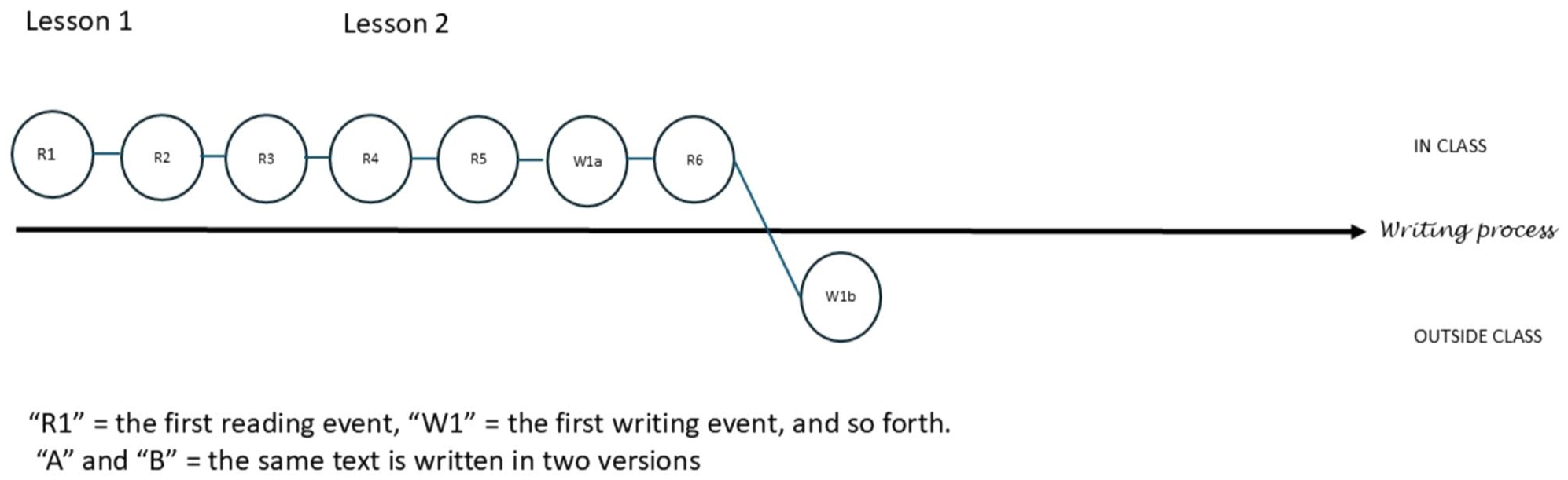
Linda’s text chain.
Central to the writing process was reading, wherein the texts chosen served as exemplars of the targeted text type. The reading materials consisted of sample texts read aloud by the teacher from the textbook (R2), examples of how to write personal letters available online on the webpage from the Swedish Public Employment Service (R3, R5), and reading another example of a personal letter in the textbook (R4).
Functional text talk
The dominating text talks in Linda’s classroom were of the functional type. The text talk in the classroom occurred both in whole-class settings and smaller groups. Initially, the text talk gave students the opportunity to engage in smaller group, departing from the text. The students were to discuss the social function of the text. Subsequently, these discussions were extended to the entire class, as exemplified in Fieldnote 5.
Fieldnote 5: The teacher writes on the board which pages they will work on in the book. The students open their books and the teacher reads the text aloud. The teacher then writes two questions related to the text on the board. “What is most important for getting a job in Sweden?” “What kind of person is the company looking for?” “Sit in groups and do task A first, and then go into the questions,” the teacher says. The teacher then walks around and listens and supports when students do not understand words. An hour later, the teacher says that it is time to gather and talk about the questions together. One student is given the floor, “what do you think about question 1?”
The discussion then shifted to the second question concerning personal attributes based on the texts provided in the teaching materials. Linda introduced the Swedish Public Employment Service's website, featuring a list of different personal attributes. Linda emphasized that the attributes on the website are commonly used in personal letters and encouraged students to incorporate them into their own writing. Students engaged in small group discussions about the mentioned attributes and were assigned homework to think about which qualities they could stress in their own texts. In the upcoming lesson, Linda had invited a study counsellor to offer insights into key considerations for writing a personal letter. The counselor reviewed common phrases from the Employment Service's website that are typically used in application letters and provided students with the opportunity to ask questions about the text type. The text talk served a functional purpose while simultaneously acting as a role model, intending to equip students with the components of the text type.
A text-oriented typology
The writing process indicated a leaning toward a text-oriented typology. The students were to import expressions from the Swedish Public Employment Service's website and the writing was outwardly addressed. Yet, there remained a focus on textual characteristics, with particular attention to the formal aspects of the text. For example, the writing template was referenced at a few points, and students were encouraged to review their grammar, spelling, and text structure. Students were encouraged to adhere to a predefined template accessible on the school's learning platform, and they were directed to incorporate the “writing tips” in their textbook as part of their writing process. Classroom discussions primarily centered on making comparisons and contrasts regarding textual features, rather than adopting a reader's viewpoint. The text-oriented typology can be understood as part of the language development goal of the teacher.
Discussion
This study aimed to provide a deeper understanding of writing instruction for adults by examining discourses of writing and pedagogical choices in instructional practices in the SSL municipal adult education. The findings show three distinct discourses of writing underpinning the instruction, along with varied pedagogical choices to support students’ writing processes. Further, the study shows differences in resources provided in instruction leading to varying access for students to the broad array of literacy practices prescribed in steering documents (cf. Swedish National Agency for Education, 2017).
Discourses of Writing in Writing Instruction for Adult Learners
There is a predominant alignment with the textual layer in Ivanič's multilayered model (Ivanič, 2004), emphasizing structural and linguistic aspects, with content playing a subordinated role. Despite disparities in writing processes and certain instructional practices leaning toward a more reader-oriented approach and acknowledging the text's function, the core of the observed teaching remains centered on the text itself. This focus on the textual layer can be understood in relation to the formulations in the steering documents, with their explicit expectations and emphasis on providing students with opportunities to write a variety of texts. It also reflects the fact that Sweden, as a country with high literacy expectations (cf. Brandt, 2015), assigns a significant role to education in enabling individuals to become self-sufficient through further studies, where particularly genre knowledge has come to be regarded as a crucial component for achieving success. The writing instruction does not stand out in any particular way as being tailored to adult second language learners. Genre writing is manifested in the three observed writing processes through teachers' references to templates and checklists and in teachers’ descriptions of the course structure. This is an expected result because of the dominance of genre pedagogy in SSL textbooks (cf. Sturk et al., 2020) and alignment with SSL teachers’ talk about writing (Magnusson & Rejman, 2023; Palm, 2025; Sturk et al., 2020). However, the understanding of text genre is more in line with the understanding of genre as a text type, rather than a social process (cf. Jeffery & Parr, 2021; Malmström, 2017).
The same discourses emerge in these classrooms as in previous studies, which has shown a dominance of the skills discourse and genre discourse, along with the process discourse, while social practice and sociopolitical discourses are less prevalent (Elf & Troelsen, 2021; Müller et al., 2021; Parr, 2023; Peltzer et al., 2022; Peterson et al., 2018; Sturk & Lindgren, 2019; Wilcox et al., 2021). Thus, discourses of writing and writing instruction for adults are similar to writing instruction for younger learners, also in first language contexts. Further, this study confirms previous research that a challenge in writing instruction is promoting authentic writing rather than focusing on form (cf. Bergsten Provaznik & Wedin, 2023; Flores-Ferrés et al., 2024; Sandgaard-Ekdahl & Walldén, 2022).
Varying Support in the Writing Instruction
The analysis of literacy events shows clear differences in the extent to which students receive support for writing their final individual writing assignment. Variations exist in whether literacy events occur inside or outside the classroom, the number of events included, and the length of text chains, despite comparable durations of observation and writing instructions spanning 2-3 weeks. This suggests considerable variation regarding the level of teacher responsibility to provide students access to the goals of the writing process, as well as whether students are expected to take significant responsibility for reading and writing outside the classroom with limited support. However, these differences and the literacy practices that are put into play must be understood in relation to their situated context (cf. Street, 2000). Hence, contextual constraints such as the number of teaching hours and combined language levels in the same classroom vary significantly between teachers.
The results thereby show differences in the tools and opportunities provided to students through writing instruction. Students in need of teacher scaffolding may risk not having access to the literacy practices included in the instruction that they are expected to participate in adequately. This may result in them being denied access to these practices, since we know that SSL learners find writing challenging and need explicit teacher support. This is particularly true for students with limited schooling backgrounds (cf. Sandgaard-Ekdahl & Walldén, 2022; Winlund, 2021). The study thereby indicates a potential inequality built into the structure of adult education (cf. Barton, 2007; Barton et al., 2000; Street, 2000). Learners needing more scaffolding might risk being unable to access new literacy practices or gaining a writing voice in their new society, thus reestablishing unequal power relations among writers (cf. Ivanič, 2004).
A Narrow View of Writing
Steering documents prescribe that the student should be provided with ample opportunities to write a variety of texts and stimulate a desire for reading and writing (Swedish National Agency for Education, 2017). While the observed instruction addresses the first aim of writing a variety of texts, the latter aim is not visible. For instance, despite the inclusion of literary texts that could have potentially included a more creative writing approach, the focus remains on language skills and text genre. The text-oriented typology in SSL writing appears strong. Creativity, reflective ability, and personal opinions are not valued or used as resources in writing, nor are the adults’ own knowledge and experiences. The primary knowledge emphasized is genre awareness and language skills, particularly for the purpose of participating in academic writing.
Success factors and challenges in the teaching of writing are visible across the observed writing processes. All three processes incorporate various forms of support, with text talks aiming to scaffold students’ writing and the individual final assignment. Interactive elements, where students discuss and model text types, are integral in each writing process. Teachers consciously engage with writing throughout the writing process, striving to make text norms and text qualities explicit and accessible for students. Despite these efforts, the study points to a need for a writing instruction that integrates both language development and meaningful, authentic writing experiences relevant to the students' lives.
Conclusion
In relation to previous studies of discourses of writing and learning to write, this study highlights the limited opportunities for adult learners to access new literacy practices (cf. Street, 2000), as the focus remains predominantly on form and text structure and aims to prepare students for further studies. This somewhat instrumental approach to writing is noteworthy in relation to future studies on adult literacy from an international perspective. Further research specifically targeting the pedagogical practices of writing for adults, including the learners themselves, is needed. This study sheds light on the writing instruction for adult learners in SSL municipal education, revealing three distinct discourses and diverse pedagogical choices. These underpinning discourses, coupled with contextual factors, influence various pedagogical choices. Notable differences include the frequency of reading and writing events within the text chain and whether they occur inside the classroom or involve homework. A common thread across instructions is the focus on genre and text-oriented writing instruction. All teachers implement a scaffolding structure, utilizing models and text talks to elucidate text qualities for students. Nevertheless, the variations in literacy events, writing resources, and writing opportunities provided to students raises concerns about equality.
Footnotes
Declaration of Conflicting Interests
The authors declared no potential conflicts of interest with respect to the research, authorship, and/or publication of this article.
Funding
The authors received no financial support for the research, authorship, and/or publication of this article.
