



Abstract
Marking the point of departure of the clause, Theme position is used to identify subject matter, the writer’s angle on that subject matter, and the direction of travel of the text. Learning to exploit this cohesive resource is essential to the learning-to-write process, becoming increasingly relevant in late childhood as children begin to write longer texts in a wider variety of registers. This research explores how children achieve this, by comparing texts written by 17 children aged 8-9 and 9-10 years, analyzing changes to thematization and identifying children’s “gateways” into new repertoires. Findings reveal that the writers’ choice of “macroTheme” (an overarching initial thesis statement) significantly influenced subsequent thematic choices. Furthermore, experimentation with new thematic resources reflected the writers’ adoption of a meta-perspective elicited by appropriation of modeled macroThemes, the integration of counterarguments, and recognition of the potential of abstract Themes to provide new insights into lived experience.
Background
The magic gateway. This is the strategy of finding a special way in, a magic gateway to a different world of meaning. . . . The learner may sense where he or she has to go next, but have [sic] to find a route by which to pass. (Halliday, 1993, p. 98)
Because of its relatively static and linear nature, written language can project a distanced perspective, rendering knowledge and experience open to objectification, analysis, and reflection. To optimize this affordance of the written mode, a repertoire of resources has evolved around Theme position in written language (Halliday, 1998). While mostly learnt implicitly alongside concomitant textual and syntactic features associated with a differentiated writing style (Perera, 1984), the ability to exploit these resources across longer, monologic texts is essential to realizing the affordances of the written registers introduced through formal education. Inability to do so may give rise to writing that appears repetitive or descriptive and reduces the scope to reflect on and critically analyze knowledge and experience. The learning process is lengthy, extending throughout primary (Berry, 1995; Christie & Derewianka, 2008; Perera, 1984), secondary (Myhill, 2009), and into tertiary education (Hawes, 2015; North, 2005). It is multifaceted, requiring knowledge of abstract linguistic structures (Christie, 2012; Humphrey, 2017; Schleppegrell, 2004); self-regulation of goal-oriented composition; identification with texts characterized by such structures and processes (Burgess & Ivanič, 2010); all in addition to the capacity and confidence to integrate the resources into the writer’s own repertoire to realize meaning.
With reference to argument-texts written a year apart by the same 17 children from age 9, this study used tools from Systemic Functional Linguistics (SFL) to build on existing research tracing the development of thematic resources during the later years of primary education. Further, with an aim of informing contingent writing instruction for this age-range, the research attempts to identify the “gateways” these children found to pass “into the different world of meaning” (Halliday, 1993, p. 98) afforded by leveraging the thematic resources of written language. Analysis focuses on arguments written during normal classroom conditions by children from four different classes in two London primary schools when the children were 9 and then 1 year later. Topics for the writing task were chosen to be ones with which the classes were emotionally invested at the time of writing. In the first research year, the topic was whether Year 4 children should be allowed to write with pens and, in the second research year, whether Pokemon card trading should be allowed in school. Full analysis of the thematic resources used in these texts can be found in the findings section, but excerpts of the children’s writing are used to exemplify different thematic resources through the paragraphs immediately to follow.
Because they are intrinsic to the research and will be referred to throughout the analysis, it is important from the outset to provide clear definitions of Theme and the repertoire of resources that have evolved around it. In SFL, language resources are understood as clustered according to three linguistic metafunctions. These metafunctions support a human disposition to “interact communicatively” (the interpersonal metafunction) and to “interpret experience by organizing it into meanings” (the ideational metafunction) (Halliday, 1993, p. 95). The third, textual metafunction, weaves together ideational and interpersonal elements to create comprehensible discourse and is realized through the situational status that derives from “coming first” and “coming last” in the clause: “Theme and Rheme, and Given and New” (Berry, 2019, p. 111). In English, “the peak of prominence at the beginning of the clause is referred to as Theme” (Martin & Rose, 2013, p. 190) and is understood to be addresser-oriented to what “I, the speaker, choose as my point of departure” (Thompson, 2007, p. 672). Rheme is the term given to the remainder of the clause.
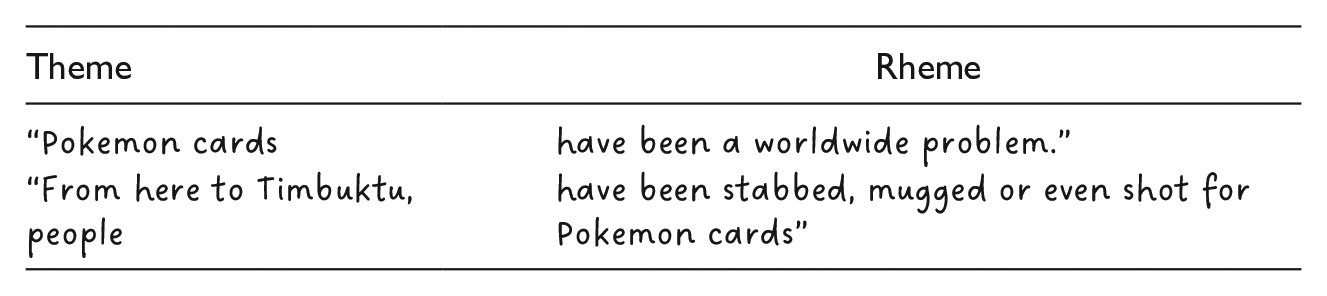

In contrast, Given, is understood to be “what you, the listener, already know about” (Halliday & Matthiessen, 2004, p. 93) and pairs with New “newsworthy for the hearer” (op cit.) information presented at the end.
Through these clausal bookends, information flows through “pulses” or “waves” of tonic prominence, “a thematic wave with a crest at the beginning of the clause, and a news wave with a crest at the end” (Martin & Rose, 2013, p. 192).
These thematic signposts are not limited to the clause complex but exist at all levels of language (Ravelli, 2004; Thompson, 2007). Analysis of Thematic content across sentences identifies various approaches to Thematic progression, usefully summarized “either in terms of maintaining the topic or shifting the topic in various ways” (Christie & Derewianka, 2008, p. 21). Pivotal to forecasting, maintaining or shifting topic across larger stretches of text are macroThemes and hyperThemes that pair with macroNews and hyperNews (Martin & Rose, 2013, p. 198).
Just as the Theme announces a clause’s message, the macroTheme is “an overarching thematic statement which identifies items of information and/or ideas to be taken up and elaborated upon in later elements of the text” (Christie & Derewianka, 2008, p. 118) and correlates with what would be traditionally termed an introductory paragraph. In the shorter texts that are the focus of this research, identifiable macroThemes comprised single sentences that, nonetheless, foreshadowed the principal preoccupations of the text to follow, for example, 

HyperThemes are sentences or groups of sentences that establish the topic to be developed at paragraph level. Used as nexus points in a text to anchor the paragraph in relation to the macroTheme, hyperThemes often encapsulate and predict the Themes of sentences to follow, for example, 
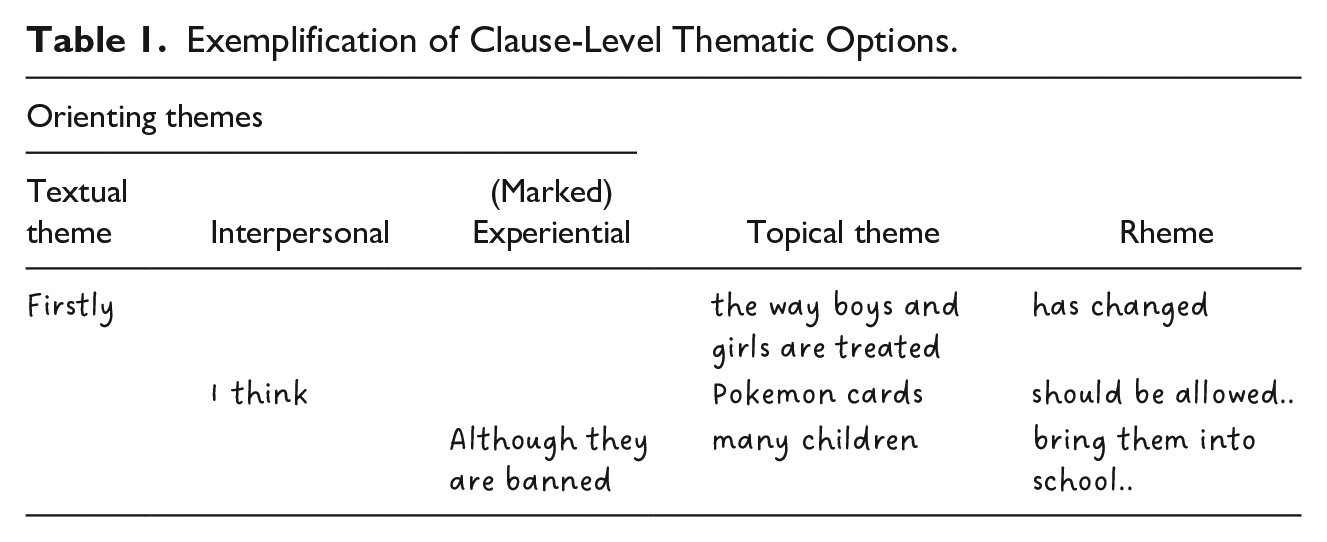
At the clause level, Theme can be identified as a zone comprising everything up to and including the grammatical subject of the clause (Thompson, 2007, p. 674). Usually, subject and Theme are conflated and referred to as the topical Theme (Halliday & Matthiessen, 2013, p. 105). Themes that are not grammatical subjects are more prominent and termed marked Themes. The most usual form is an adverbial group or clause of time, place, or manner (Halliday & Matthiessen, 2013, p. 98).
SFL also recognizes other thematic components that represent interpersonal or textual meanings. Typical interpersonal Themes are expressions of modality including “personal and impersonal projection (reporting)” (North, 2005, p. 438) while typical Textual Themes are “conjunctions and conjunctive adjuncts . . . which indicate the relationship of a clause to the preceding text” (op cit.).
Exemplification of these clause-level thematic options is provided in Table 1 below with reference to my own data.
Exemplification of Clause-Level Thematic Options.
Developmental Trajectory for the Expansion of Thematic Resources in Late Childhood
Existing research on primary-aged children’s Theme use (Berry, 1995; Christie & Derewianka, 2008; Humphrey, 2017; Perera, 1984) identifies late childhood to early adolescence as a critical period for expansion (Christie & Derewianka, 2008). Understandably, children’s early writing is characterized by the syntactic structures of speech. Because of their different communicative contexts, speech and writing have different thematic content, with Themes in spoken language frequently being personal pronouns. Berry (1995, pp. 58-59) distinguishes this kind of “interactional thematization” that references either the writer (I) or reader (you) from “informational thematization.” Informational thematization is characteristic of expository writing and is particularly pivotal to the logical and coherent progression and development of ideas across longer texts. The situational status of Theme is fully maximized, often by nominalization through which complex ideas and processes relating to the topic area are encapsulated within a single, condensed, expanded abstract noun-phrase, for example,  Once named within a nominalization, complex ideas can be easily referenced through a single clausal element and further developed through following sentences, giving rise to coherent texts. This movement is summarized in Table 2 (paraphrased and all examples from Christie & Derewianka, 2008, pp. 212-244.)
Exemplification of the Trajectory of Thematic Expansion During Late Childhood.
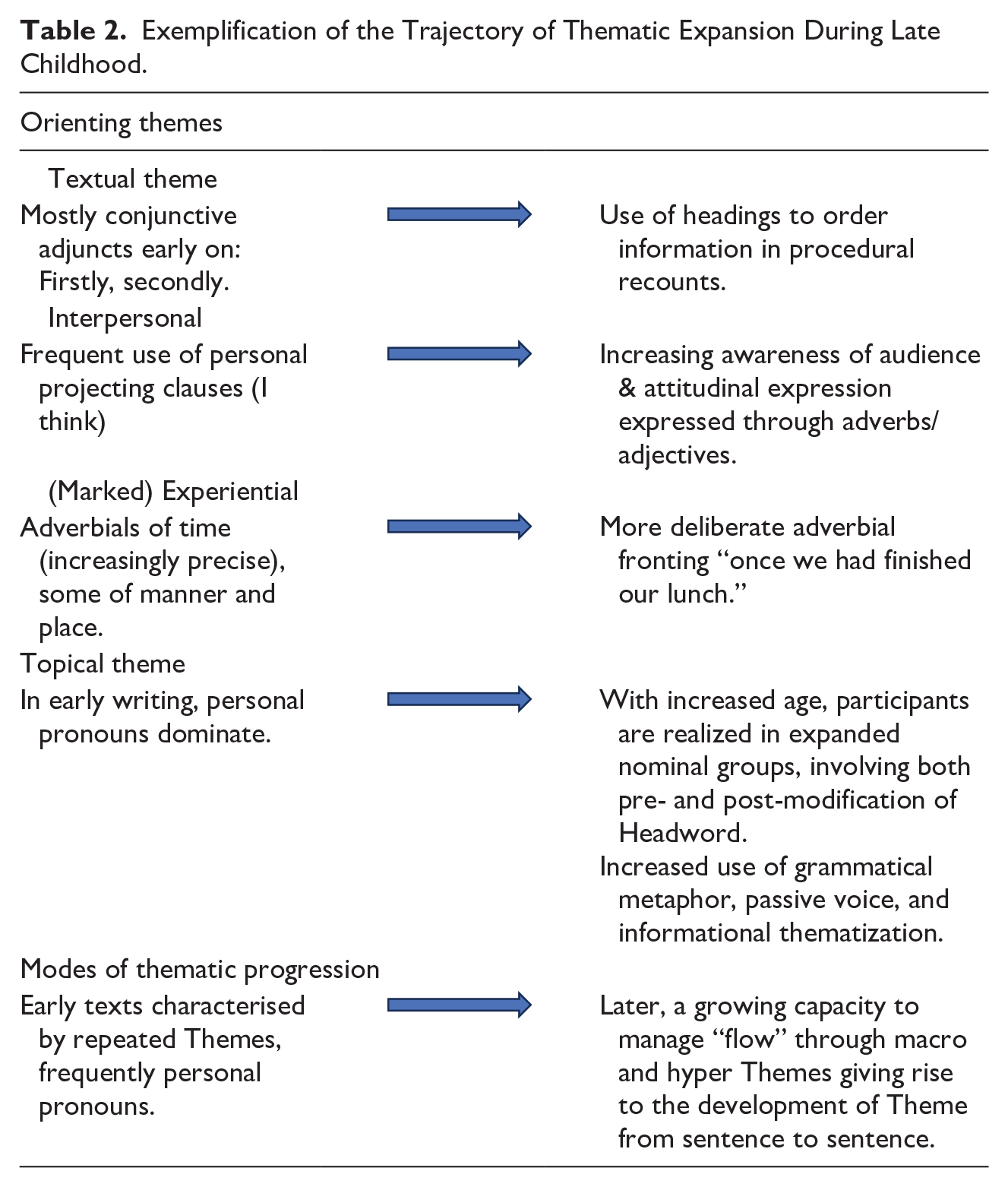
To summarize, the expansion of thematic resources during the years around primary to secondary transition represents a diversification from modes of representation tied to the concrete and familiar toward those that are increasingly abstract and facilitate reflection and reasoning.
The Importance of a Wide Repertoire of Thematic Options to Analytical Thinking and Academic Success
Despite this developmental trajectory, a good grasp of Theme eludes some writers, potentially limiting their opportunities to analyze knowledge and experience from new, alternative perspectives. Referring to research with 13-16-year-olds, Myhill identifies that “weaker writers,” irrespective of age, tend to repeat the personal pronoun in Theme position, leading to writing that she characterizes as “very plot-driven, with limited description or emotional contextualisation” (Myhill, 2009, p. 410). Hawes observes in the writing of international adult students on a pre-MA course “[repeated Theme] was used disproportionately often by weaker students, resulting at worst in a series of unrelated statements about a topic theme” (2014, p. 97). Similarly, with reference to middle school students’ writing in expository genres, Schleppegrell (2004) and Humphrey and Macnaught (2016) draw attention to novice writers’ challenges in shifting topical Theme from sentence to sentence to develop ideas and instead remaining “focused on the same participant in a way more typical of narrative than expository writing” (Humphrey & Macnaught, 2016, p. 806).
Both Schleppegrell (2004) and Humphrey and Macnaught (2016) attribute this challenge to novice writers’ apparent lack of confidence in exploiting discourse- and sentence-level resources which have evolved to enable “writers to shift up in levels of abstraction” (Ravelli, 2004, p. 104). They cite children’s difficulties with the effective use of macro and hyperThemes, which lead to difficulties with coherence and the progression of ideas, the consistent integration of interpersonal Themes to “manage multiple points of view” (Humphrey & Macnaught, 2016, p. 806), and “little evidence of sentence-level resources to package ideas and events as ‘things.’” (op cit.).
Three Perspectives on Contexts That Foster the Learning of New Thematic Resources
In common with sociocultural paradigms, the SFL tradition also understands learning as “semiotically mediated” (French, 2019, p. 268) through talk and other tools that direct voluntary attention to the meaning-making potential of new linguistic forms (French, 2019; Halliday, 1993). In interaction with significant others, learners actively engage with, and thereby transform, those forms perceived to be relevant to their social or intellectual needs. A particular challenge with the semiotic mediation of expository genres is the fact that their characteristic features have evolved within specialized academic communities (Halliday, 1993) and are sustained by those with disciplinary knowledge and authority. Therefore, they may not transfer easily to the semiotic milieux of primary-aged children. However, “there is growing recognition that the language patterns for meaning making in academic contexts have their foundations in developments that typically occur during the middle years” (Humphrey, 2017, p. 1). The educational establishment’s failure to effectively scaffold and “mobilize” (Salas et al., 2023, p. 884) these forms during the primary years exacerbates the challenges they present to secondary-aged children, particularly those susceptible to marginalization from academic discourses (Humphrey & Macnaught, 2016).
The SFL, cognitive psychological and social semiotic research reviewed below provides three perspectives as to how thematic resources associated with expository genres are learnt during late childhood and early adolescence.
Perspective 1 – New thematic resources learnt as a result of explicit instruction in academic discourses
A growing body of research informed by SFL (Christie, 2012; French, 2019; Humphrey & Macnaught, 2016; Lemke, 1990; van Drie & van de Ven, 2017) indicates the effectiveness of scaffolded cycles of “deconstruction” and then “joint construction” followed by “independent text creation” (Humphrey & Macnaught, 2016: 799) for socializing children into the forms and functions of discipline-specific, expository genres. Reporting on the results of the first 18 months of an SFL-informed intervention in an Australian urban secondary school where 97.5% spoke English as an additional language, Humphrey and Macnaught (2016, pp. 807-808) describe how students demonstrated greater control of developing points across paragraphs, began to exploit the interpersonal Theme to “manage arguments” and learnt to condense and then “package key ideas and events in expanded noun groups.” Key to the intervention’s success was teacher-facilitated discussion through which SFL metalanguage was used alongside everyday terminology, focusing attention on the meaning potential of abstract language forms such as nominalizations to interpret phenomena from a new, more abstract perspective.
Reporting on practice in the Australian primary context, Christie (2012) and French (2019) stress the effectiveness of “playing around with” Theme as “motivated choice” (French, 2019, p. 276) and active consideration of the implications of “making different entities thematic” (Christie, 2012, p. 216). Meanwhile, internationally, there is increased research interest in discipline-specific interventions in the primary context (Meneses et al., 2023; Sturk, 2023; Walldén, 2019). However, the extent to which primary-aged children are likely to have the impetus or subject knowledge to engage in discipline-specific reasoning in their subsequent independent writing remains questioned (Meneses et al., 2023; Walldén, 2019). Focusing on expository writing in Geography in a Swedish multilingual Grade 6 class, Walldén (2019) reports that while during initial deconstruction stages of the unit the teacher “unpack[ed] the condensed meaning” (op cit., p. 5) of abstract nominalizations such as precipitation, during the later individual construction phases, the scaffolding of discipline-specific reasoned arguments was sidelined. This insight resonates with a growing recognition that, with regard to younger writers, discipline-specific instruction has evolved toward reading as opposed to writing in the disciplines and, while writing in the disciplines “is a goal that is authentic for students in graduate or professional school . . . it is less authentic for students at elementary level” (Klein & Boscolo, 2016, p. 326).
To summarize the first perspective, it appears that explicitly raising awareness of resources to structure text and name, link, and develop points is effective, particularly where dialogic talk provides opportunities for oral rehearsal of new and abstract linguistic forms. For primary-aged students, however, writing in the disciplines may not elicit opportunities for reasoning simply because of younger children’s relatively limited subject knowledge and authority. More research is required with this age-phase about “how we might begin to orient children to language in context as we select content and design learning sequences” (French, 2019, p. 281).
Perspective 2 – The emergence of new thematic resources reflects shifts in compositional goal setting
Recent cognitive psychological research clarifies that self-regulation of goal-oriented writing evolves with experience but also because of focused interventions (Ferretti & Fan, 2016). If this research rarely alludes to thematic resources as SFL understands them, it is of interest because of insights it provides into the development of cognitive processes that mobilize their use. Kuhn et al. (2016) identify a developmental trajectory for “argument moves” in addition to the instructional elements key to their development. A 2-year intervention characterized by many iterations of a 13-session topic cycle with educationally disadvantaged American 11- and 12-year-old students successfully raised their capacity to integrate contrasting perspectives and present exemplifying evidence (op cit., pp. 101-102). Corroborating the SFL research discussed above, the authors highlight extended dialogic exchange as pivotal to the success of the intervention ensuring that the words of “real-life others” were “clear and vivid” enough so that “the student writing an individual essay can represent them in the essay and address them, and, moreover, sees the relevance of doing so” (op cit., p. 115). An additional effective factor was the selection of discussion areas likely to be relevant to students’ lived experience and interests. The developmental trajectory itself from “thesis-antithesis-synthesis” is interesting. The authors identify that whereas “support own/weaken others” strategies were “readily and quickly learnt” (op cit., p. 116), argument strategies that required the representation and integration of “component arguments that point in different directions” were much more challenging (op cit., p. 116). To be integrated successfully within the text, these argument moves require some sort of reference back to the initial macroTheme to mark a nexus point in the argument and, often, an abstract noun in topical Theme position (e.g., “Although they can have education in adult jail, evidence shows . . . ” [op cit., p. 113]). As identified previously, this sort of hierarchical structuring of text is both cognitively and linguistically challenging for novice writers (e.g. Humphrey & Macnaught, 2016). Kuhn et al. concede: “we did not see much in the way of hierarchical structure characteristic of sophisticated argumentative writing, in which sub arguments are embedded in higher-order ones” (2016, p. 114).
Both SFL and cognitive psychological research illustrate that explicit, contextualized instruction can render informational thematization, commensurate argument moves, and their meaning-potential visible and accessible to young writers. Both bodies of research also suggest that abstract nominalization and goal-directed logical exposition of topic matter is challenging for novice writers. Scope to inform contingent instruction through the later primary years is dependent on greater specificity with regard to younger children’s entry points to abstract thematic resources.
Perspective 3 – New thematic resources emerge alongside children’s evolving control of the sentence and the paragraph
Complementing insights into language learning derived from focused interventions, smaller-scale longitudinal qualitative research seeks to account for language development over time, often with a focus on individual language producers. Such research is well positioned to illuminate the microgenesis of forms across successive texts and to identify contextual factors central to their transformation. Social semiotic research (Halliday, 1993; Kress, 1994, 1996) examines the way a child’s language evolves through their negotiations with available resources as their attention is drawn to those forms most immediately relevant to them and closest to their current language repertoire (Halliday, 1993). Kress’s and Halliday’s analyses of language learning illustrate how children make newly encountered linguistic forms and conventions their own, actively reshaping them along with their existing meaning-making resources to meet their own communicative needs. Both the original form and the child’s own meaning potential is transformed in the process, opening the possibility for further transformations.
This dialectic process is evident in Kress’s 1994 account of the evolution of the sentence in children’s writing. Drawing on multiple texts written by children from early childhood to adolescence, he illuminates how the main clause of a sentence and, therefore, Theme become more prominent in children’s writing and new modes of thematic progression present themselves (op cit., pp. 71-97). Kress argues that, because the sentence is not a unit of the spoken language, young writers find a way to integrate this new unit around the chaining syntax of speech with which they are much more familiar. Early sentences tend to be textually motivated “loosely constructed joined clauses related to the same topic” (op cit., p. 71), as is evidenced in this example written by an 8-year-old cited in his work: “I have not got a bird but I know some things about them. The have tow nostrils and They clean Ther feather and They eat seeds, worms, cuddle fish, and lots of other things. And they drink water” (quoted in Kress, 1994, p. 61). Gradually, experimentation and exposure to adult models of writing lead to increased awareness of ways to produce sentences characterized by more restricted topics and denser, more condensed syntactic structures. Whole text considerations, and particularly the advance of the paragraph, become catalysts for the reconstitution of the sentence. The paragraph becomes the unit that contains topically related material so “the sentence can now become the unit which contains one topically discrete element” (op cit., 94), and possibilities present themselves to expand and develop topical material across, rather than within, sentential boundaries. Kress illustrates how processes that would have been separated out over multiple chained clauses in earlier writing are condensed into single expanded noun phrases, often in the Theme position of sentences that build in logical hierarchies across a whole paragraph.
Kress’s account clarifies how new thematic resources reveal themselves and become functional as children begin to produce longer monologic texts and recognize the affordances of thematic conventions for building logical links between sentences. Previously internalized written language structures (particularly the sentence and the paragraph) are entry concepts to, and facilitate the broadening of, thematic resources between 9 and 12 years of age while increased exposure to expository genres raises tacit awareness of different thematic patterns.
Summary and Research Questions
Extant research provides compelling evidence that contextualized modeling and the synthesis of contrasting opinions can foster the expansion of thematic resources during late childhood. However, across disciplines, there is little detailed understanding of either the development of a full repertoire of, and entry points to, thematic resources through the later primary years, or contexts likely to render them accessible, or children’s impetus to draw on them ahead of their immersion into the academic discourses of secondary education.
SFL-informed longitudinal research focusing on the ways in which individual children’s thematic resources evolve during this pivotal age-phase can reveal those resources that are within or outside the linguistic “challenge zone” and likely to be attended to or “filtered out” (Halliday, 1993, p. 106), in addition to contexts likely to elicit their production.
The research presented in the article addresses these two questions:
Research Question 1: What do differences between texts written at 8-9 and 9-10 years of age reveal about the expansion of children’s thematic repertoire in the argument genre during late childhood?
Research Question 2: What does analysis reveal about potential gateways to the expansion of primary children’s thematic repertoire?
Method
Identifying “gateways” to the expansion of thematic repertoire over time required a longitudinal design (Compton-Lilly, 2014; Meneses et al., 2023), focusing on arguments written by the same children at two sampling points one year apart. The labor intensity of linguistic analysis demanded a small sample size, consistent with similar qualitative writing research.
Participants, Sampling, and Participant Consent
A sample size of 24 children aged 8 or 9 years at the beginning of the research period was selected to be large enough to support the identification of patterns yet small enough to facilitate in-depth analysis. As a result of attrition, the final sample size was 17 children (see Table 3).
Data set.
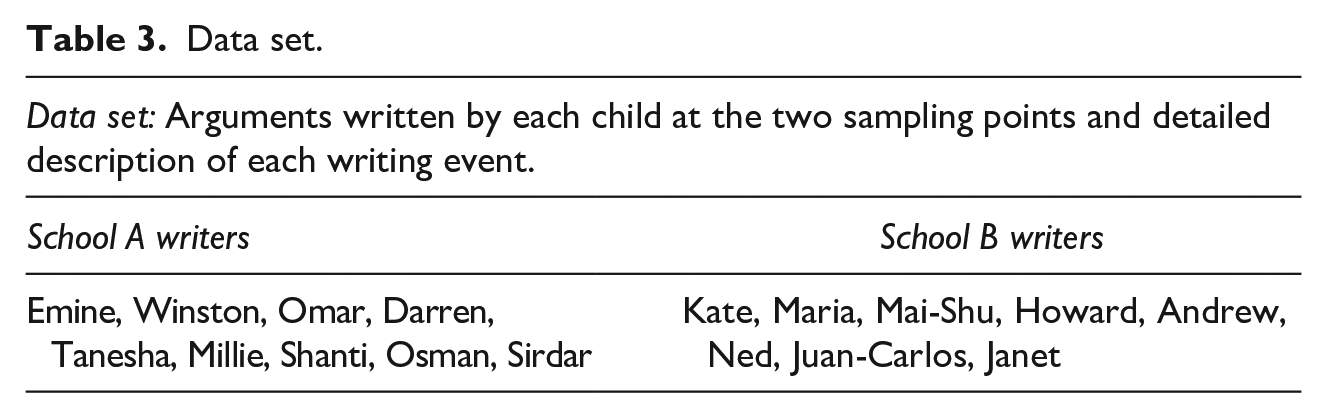
The sample represented mixed-ability children from four classes in two inner-city London schools. None of the participants were new speakers of English and all had attended London schools from the outset of their education. Seven spoke a home language other than English. The schools were known to me (the researcher) from recent work as a permanent member of teaching staff or a substitute teacher. The schools were similar in terms of student intake, performance, and religious affiliations and the curriculum for English. Other than inevitable differences between school micro-cultures, the main difference between the two was greater consistency between teaching approaches in School A where teachers jointly planned and resourced English lessons. Written consent was gained from the headteachers of both schools. I explained the nature of the research and data collection methods to the children and requested their written consent to participate. At additional sampling points, children were given the option to decide whether the text they had written could be used as research data. From the outset of data handling, pseudonyms were used to refer to participants and schools.
Procedure
It was important for me, as researcher, to be present in the classroom when the sample texts were written, to provide “thick description” (Geertz, 1973, p. 6) of the writing context and to teach all four classes, ensuring across-class consistency regarding the brief for the writing task, pre-writing preparation, and additional teaching input. My familiarity with the classes and their teachers ensured that normal classroom writing conditions were maintained as much as possible. Extensive discussions with the class teachers and the collection of texts from previous lessons also enabled me to replicate typical writing conditions, reference children’s previous instruction, and develop understanding of children’s typical writing.
Literacy lessons ahead of both sampling-point tasks focused on argument and/or persuasion. In Year 4, both schools focused on letters of persuasion beginning with an initial thesis followed by points of exemplification (see Appendices 1 and 2). In Year 5, School A favored writing frames to scaffold new genres. The frame for persuasion (see Appendix 3) models an introductory topic sentence setting out a thesis followed by points of exemplification. School B did not use writing frames but provided a two-column table divided into points for and against a proposition and a final row provided for a conclusion (see Appendix 4). In all sampling-point lessons, I introduced the task as written argument in which children could choose to argue for and/or against a proposition. I did not provide a writing frame but, prior to writing, arguments for and against the proposition were discussed as a class. Topics for discussion were selected to be relevant and engaging. I intended to minimize my influence on the writing produced. However, in one of the Year 5 classes, I inadvertently provided a starter sentence during whole class discussion. As will be discussed, this intervention impacted children’s thematic options.
Data was collected in compliance with British Educational Research Association (2004) ethical guidelines.
Data Analysis
The first stage of analysis focused on systematic description of Theme and modes of thematic progression in each text. A cross-case descriptive matrix was constructed to compare individuals’ use of Theme position and thematic progression between Sampling Points 1 and 2, and then to identify the general direction of change across the cohort. Texts or sections of texts that were “hybrid/creative” relative to the child’s previous writing (Fairclough, 2000, p. 173) were identified and scrutinized to illuminate potential factors influencing the thematic choices. The internal validity of the research required clear definitions of Theme and modes of thematic progression. Consensus exists in the SFL community that Theme is “that which locates and orients the clause within its context” (Halliday & Matthiessen, 2004, p. 64) and that analysis of Theme should be restricted to declarative main clauses. Opinions differ regarding how much of the clause to count as thematic. According to Halliday and Matthiessen (2013), Theme is “the first group or phrase that has some function in the experiential structure of the clause” (p. 91) even where this is an orienting thematic element rather than the traditional subject of the clause. North (2005) among others asserts that “the subject should be regarded as necessarily thematic” (p. 437), arguing that it is “the most important spot for determining what a writer is writing about” (North, 2005, p. 434). Aware that topical Theme was likely to shift significantly between the ages of 9 and 12, I chose to align with more inclusive definitions of Theme. Separate categories for “topical” (subject) Themes and “orienting” Themes were therefore adopted, directly informed by North’s (2005, pp. 438-439) definitions: “Topical themes are distinguished from [optional] orienting Themes in that they fill participant roles within the clause.” Elements that occur before the topical themes are regarded as orienting themes, and can be classified under the three headings of textual, interpersonal, and experiential. Thematic progression was analyzed with reference to the three types identified by Danes (1974). These three are identified in Table 4 following Hawes’s (2015, p. 95) definitions, using examples from my own data.
Exemplification of Three Modes of Thematic Progression.
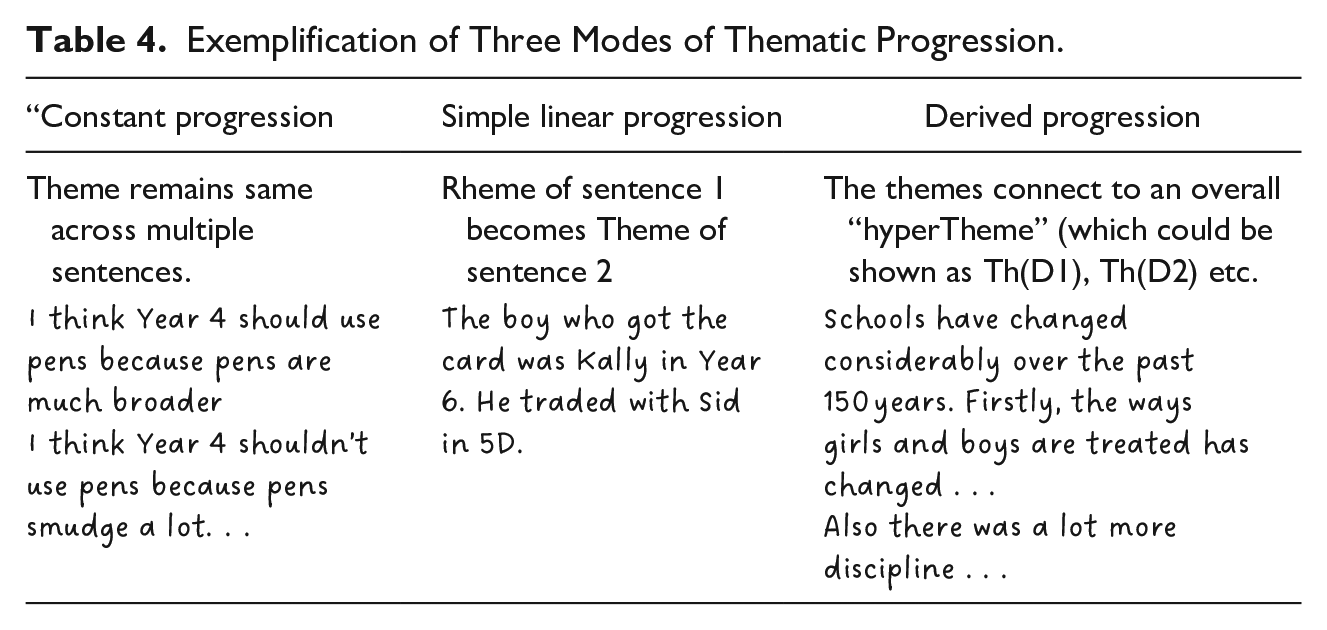
Across the research period, a movement was anticipated away from a dependence on constant progression toward simple linear and derived modes of progression.
Findings
Figure 1 presents three children’s Year 4 and Year 5 arguments that will be referenced throughout this section. These texts were selected as being characteristic of cohortwide change between Year 4 and Year 5 while also being indicative of the varied responses that characterized the Year 5 arguments. While the original texts were handwritten, the reproduction below is faithful to each child’s spelling, punctuation, and line-spacing.
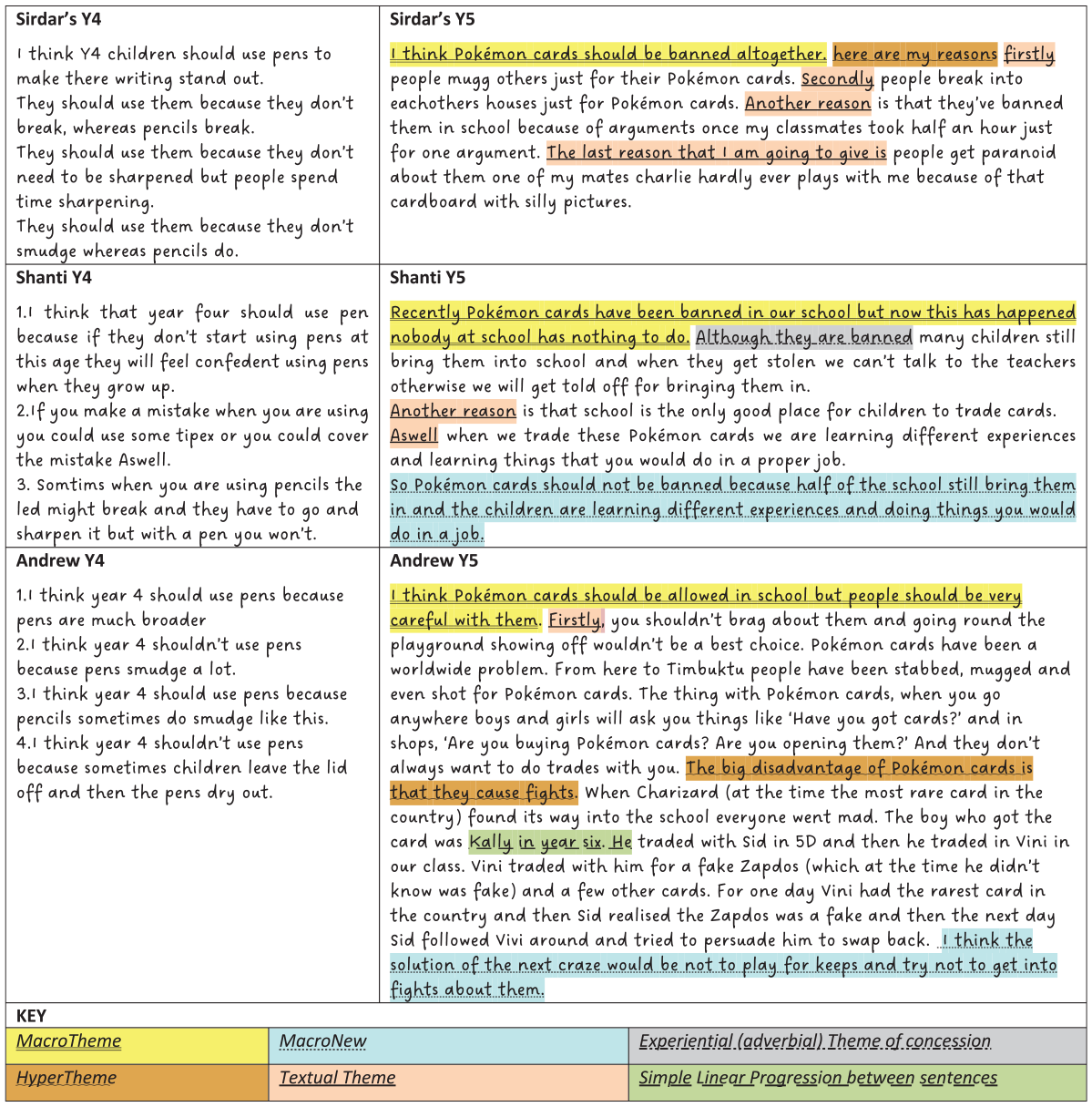
Three children’s Year 4 and Year 5 argument texts annotated to indicate the impact of macroThemes on the Year 5 texts. A summary of all thematic changes from Year 4 to Year 5 can be seen in Appendix 5.
Analysis of the Expansion of Thematic Resources Between Year 4 and Year 5
Broadly, thematic differences between the Year 4 and Year 5 arguments can be understood as representative of the “transitional passage” (Schleppegrell, 2004, p. 78) from language forms that are more characteristic of spoken language to those more characteristic of writing. For example, between Year 4 and Year 5, there is a slight decrease in first- and second-person pronouns in topical Theme position and a commensurate increase in nouns and noun-phrases. Particularly striking in relation to Theme use in this data set is the impact of macroThemes  on all other thematic elements. While modeled in both schools in Year 4 and Year 5, macroThemes are used independently only in Year 5. While the adoption of macroThemes is almost universal across the cohort, other elements such as hyperThemes
 , adverbials of concession
  , pronouns referencing a previous rheme (e.g., this) and simple linear progression
  are found in some parts of some Year 5 arguments but are not universal. These elements are pivotal to argumentation and writing for reflection as they elicit (or are an outcome of) the “naming” of abstract concepts (hyperThemes), the integration of alternative viewpoints (adverbials of concession) and referencing these in some way (e.g., using the demonstrative pronoun “this”) before exemplifying and elaborating a point of argument across clause complexes (simple linear progression).
A second difference is the homogeneity of the Year 4 arguments compared with the heterogeneity of those written in Year 5. Differences between the Year 5 arguments are largely attributable to the macroTheme adopted by the writer, three types of which are discernible and discussed below.
Analysis of the Affordances of Three Distinct MacroThemes for Structuring Text Flow and Elaborating on and Qualifying Argument
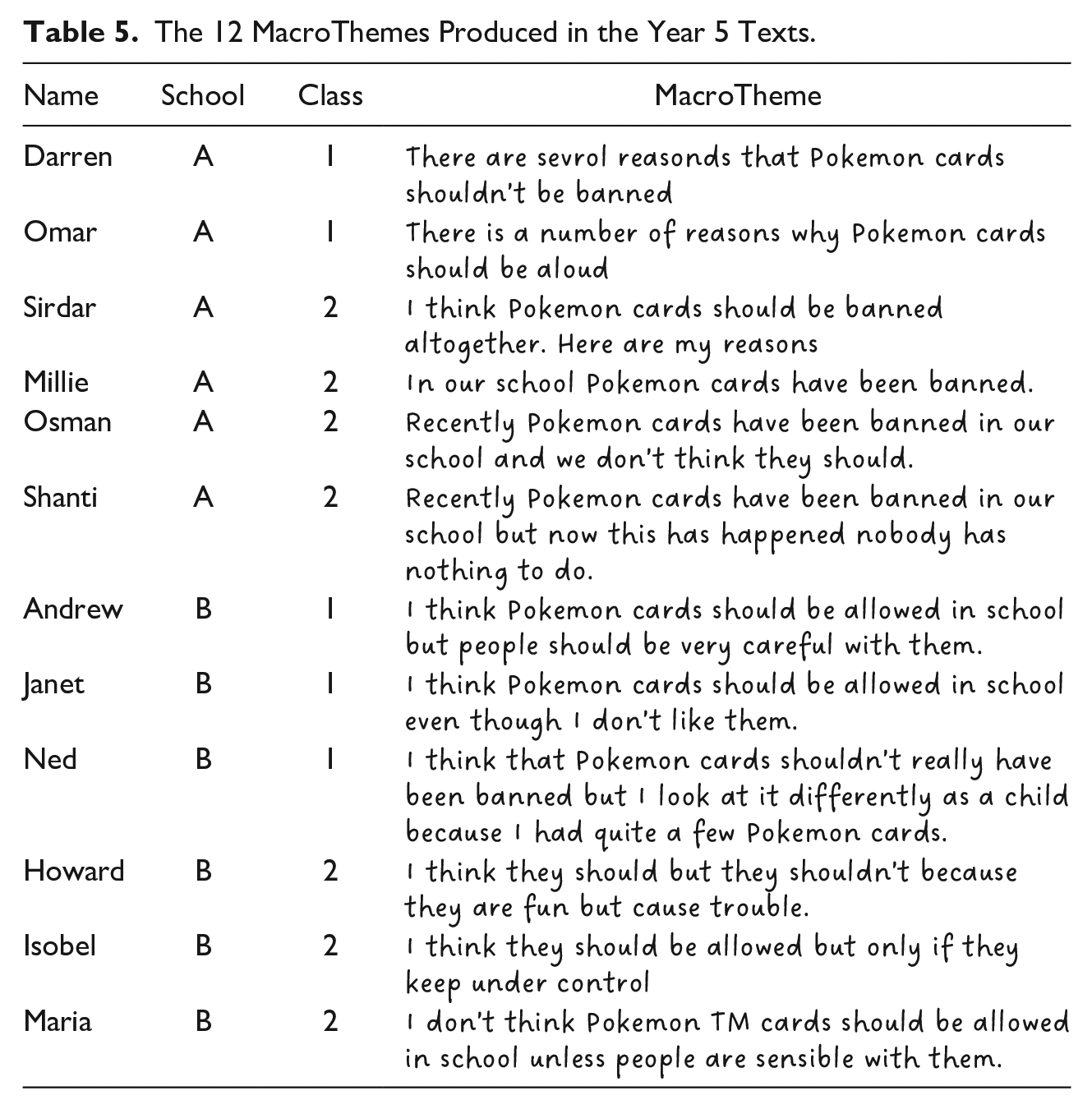
In Year 5, 12 of the 17 participants produced one of three similar macroThemes. Two of these were clearly informed by previous in-school instruction while Millie, Shanti, and Osman used the starter-sentence inadvertently shared by me in substitute teacher role. The 12 macroThemes are shown in Table 5 below.
The 12 MacroThemes Produced in the Year 5 Texts.
The impact of chosen macroTheme on other Thematic choices is the focus of analysis to follow.
MacroTheme 1 encapsulates a superordinate thesis for the whole text, foregrounding the topical theme (see Sirdar’s Year 5 argument, Figure 1)
In School A, both Year 4 and Year 5 writing frames model a generic macroTheme, easily adaptable to any persuasion or argument text. In the model, a separate sentence introduces the subject for discussion or, in the case of persuasion, the writer’s opinion statement, followed by a generic hyperTheme: “There are a number of reasons. . . .” This structure is easily appropriated as evidenced by its ubiquity. Even those School A children who began their texts differently sought ways to introduce a generic hyperTheme such as “Here are my reasons.” New thematic resources evidenced in response to macroTheme 1 were as follows:
generic macroTheme
textual Themes linked to macroTheme
foregrounded topical Themes expressed as generalized nouns/noun-phrases
derived & simple-linear modes of thematic progression
Dialectic between form and meaning characteristic of texts written in response to MacroTheme 1
The ellipsis and pronominal reference evident between Sentences 1 and 2 of Sirdar’s Year 4 text suggest he has existing whole-textual awareness in that he seeks opportunities to avoid repetition across sentences. However, by beginning his Year 5 text with a superordinate macroTheme  , what had been a repeated thesis statement in Year 4 can be referenced by a textual Theme
  . Consequently, the Year 5 text is more coherent and less repetitive. Furthermore, each topical Theme is foregrounded, a point of argument encapsulated within a single clause:
 Potentially in response to this lightened sentence load, in Points 3 and 4 Sirdar draws on a wealth of personal experience to exemplify points through additional juxtaposed clauses.
The initial macroTheme sets in motion a derived mode of thematic progression that, in turn, leads to an additive form of text expansion. In the final two sentences, which constitute a hybrid section of this text, Sirdar’s exemplifications change this pattern, and a hierarchical, general-to-specific relationship is established between initial and subsequent clauses. The topical themes of these clause-complexes 
 are expanded noun phrases explicitly indicating their semantic relationship to the preceding rheme.
Sirdar could have constructed a text-specific hyperTheme to expand or elaborate a point of argument across a paragraph. Two factors suggest this is outside the repertoire of most Year 5 children. Firstly, such a hyperTheme requires some sort of abstract encapsulation of the argument to be represented; for example, “Pokemon cards cause arguments.” Such abstractions are rarely evidenced throughout the data set. Secondly, Sirdar’s punctuation suggests that he, like many children at primary-secondary transition, continues to experiment with sentence boundaries (Kress, 1994), frequently conflating point and sentence. It is to be anticipated, therefore, that the default response to a generic macro or hyperTheme (There are a number of reasons why . . . ) will be one in which single sentence points are added in defence of a single view-point even where this inhibits scope for topical expansion and elaboration.
MacroTheme 2, a text-specific MacroTheme and linked HyperTheme represent contrasting perspectives evidenced in Year 5 arguments from School B (see Andrew’s Year 5 argument, Figure 1)
School B did not provide a writing frame. Arguments completed in class were written as bullet points in “for” and “against” columns with a final conclusion.
It is the representation of different perspectives, as opposed to a modeled starter sentence, which informs the macroTheme produced by 6 of the 8 School B children. As in Year 4, the Year 5 arguments begin with the interpersonal Theme  but the Year 5 introductory sentences integrate either a concession or opposing viewpoint that foreshadows the presentation of a two-sided argument. Furthermore, in contrast to the School A macroTheme, those produced by this group cannot be referenced by successive textual Themes (firstly, secondly . . . ); rather the macroThemes themselves suggest a discursive response and the construction of a text-specific hyperTheme referencing the macroTheme while simultaneously introducing a specific viewpoint. Because the arguments written in class were presented in bullet-point columns, the children had not necessarily previously constructed an argument-specific macroTheme or hyperTheme but repurposed existing resources in their responses.
New thematic resources evidenced in response to MacroTheme 2 were as follows:
text-specific macroTheme encapsulating concession or opposing perspective
text-specific hyperTheme to introduce separate paragraphs
macroNew
causal adjuncts (even though) as textual Themes
judicious use of interpersonal Themes to indicate writer perspective
marked Themes of time, place, and manner
abstract, expanded noun phrases used to deliberately exploit subject Theme position
derived and simple-linear modes of thematic progression
Dialectic between form and meaning characteristic of texts written in response to MacroTheme 2
Paragraph-specific hyperThemes are evident in three children’s texts, introducing a sequence of sentences presenting a range of points or exemplifying examples. These hyperThemes are challenging to compose and each response is unique. However, all three indicate retrospection, prospection, and whole-text awareness.
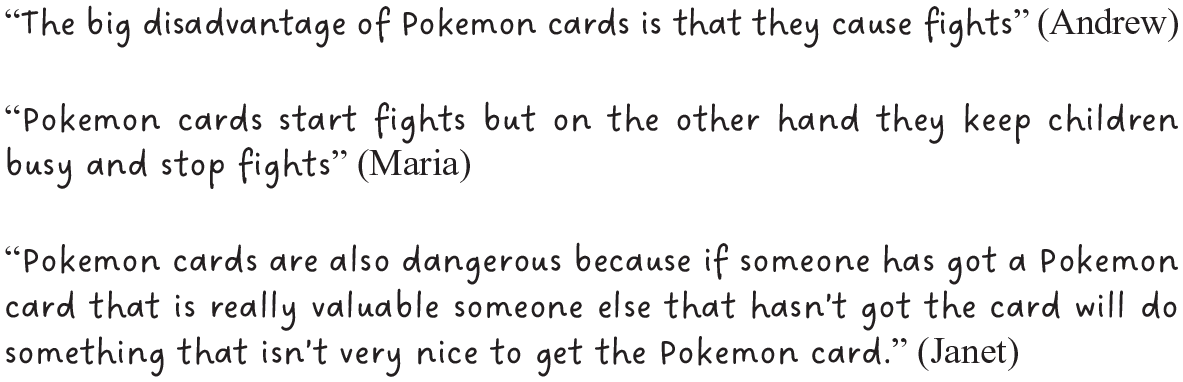
As Kress (1994) predicts, the emergence of paragraph units disrupts sentence/point conflation and facilitates discussion and expansion through the “picking up” (Ravelli, 2004, p. 105) of previously introduced material in the topical Theme of a subsequent sentence. Potentially linked to this more discursive approach, is a more judicious approach to the interpersonal thematic element. The projecting clause “I think” was a ubiquitous preface to points of argument in Year 4. In Year 5, it still features but is used more judiciously. After his introductory statement which acknowledges that, 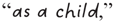 his perspective may be biased, Ned concedes,
 Both Maria and Andrew include “I think” clauses, only in their introductory and concluding sentences.
The School B children were more likely to end their arguments with a conclusion. Those not introduced by an “I think” clause, begin with an adjunct (e.g., “So”) suggestive of active consideration of the whole text, some illustrating a changed perspective from their introductory statement: 

 (Janet).
Paragraph 2 in Andrew’s text is representative of “technicalization”—the ability to use semiotic abstractions in Theme position to achieve seamless progression across sentences 

 This section can be considered hybrid within this text and in relation to other texts Andrew produced in this period. The technicalization appears facilitated by the opportunity to analyze the personally familiar from the perspective of distance afforded by writing. The paragraph strays into personal recount, but having scope to reason about personally significant events at this age may provide a “gateway” to linguistic experimentation.
MacroTheme 3, a modeled abstract MacroTheme (see Shanti’s text, Figure 1)
The macroTheme used by three children in School A, Class 2, was informed by a model provided by me as substitute teacher. In School A, a ban on Pokemon card trading had recently been introduced and pre-writing discussion was animated, children expressing strongly held differing opinions. Almost as a throw-away remark, I suggested the children could begin their texts with the sentence “Recently Pokemon cards have been banned in our school.” For most, it was the model from the school’s writing-frame which informed the choice of macro-Theme. For Shanti, Millie, and Osman, however, my suggestion became the macroTheme for their text.
New resources evidenced in response to macroTheme 3 were as follows:
abstract macroTheme incorporating an agentless passive structure
other passive structures in subsequent sentences
hyperThemes and marked themes of concession (although) at textual nexus points
macroNew
causal adjuncts as textual Themes 
judicious use of interpersonal Themes to indicate writer stance
demonstrative pronoun (this) in Theme position
simple linear mode of thematic progression
Dialectic between form and meaning characteristic of texts written in response to MacroTheme 3
Possibly this macroTheme was chosen because it offered a fresh perspective on a subject about which the children were passionate; passion is clear in these texts! It is clear they were unlikely to have referenced the ban in this way in the absence of the model; in his argument Sirdar writes  This is a more concrete representation than the modeled sentence, which includes an agentless passive drawing attention to “the ban” rather than those who imposed it.
Building on this macroTheme is challenging, requiring some sort of reference to the ban rather than the listing of reasons for or against it. All three children re-voice the modeled passive structure at one point in their argument to theorize about it and its consequences. Furthermore, uniquely in this data set, all three use the demonstrative pronoun “this” to refer to “the ban” evidencing tacit awareness that a process can be encapsulated as a single entity and picked up in subsequent sentences. The three responses illustrate some challenges and affordances associated with the appropriation of semiotic abstractions and warrant detailed analysis.
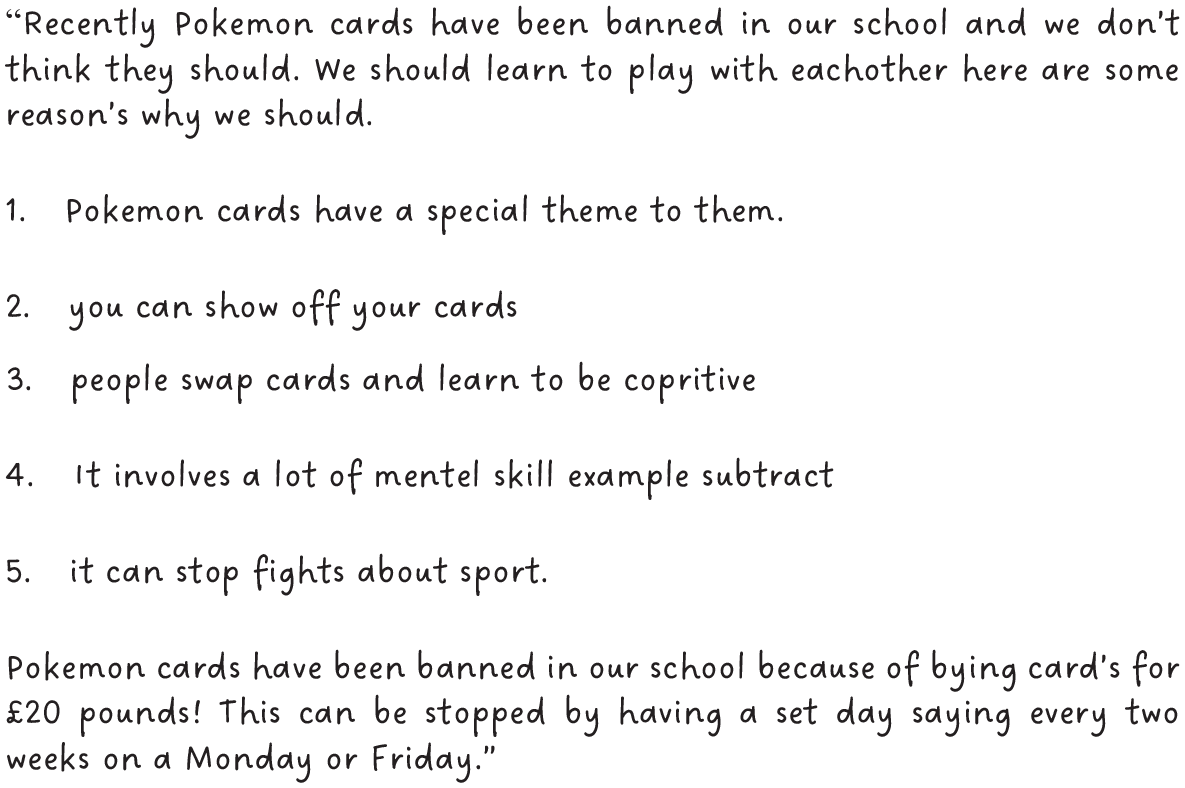
Osman (see text below) adds  to the initial macroTheme alluding to the passive structure through ellipsis. The next sentence,
  seems to offer an alternative to the ban. At this point, a variation of the generic hyperTheme modeled in School A is introduced:
  Although the listing that follows is less challenging to produce, Osman chooses to repeat the modeled macroTheme in his conclusion that considers the cause of the ban. In his final sentence, Osman uses the demonstrative pronoun “This” within his own agentless passive abstract sentence to reference the challenging behavior alluded to in the previous sentence.
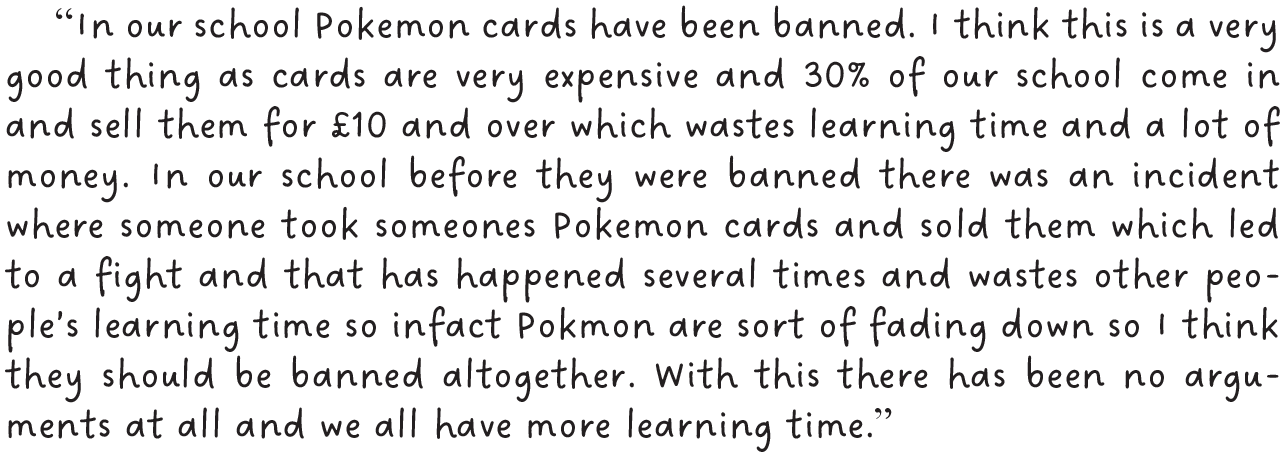
Millie (see text below) also uses the demonstrative pronoun “this” from the outset of her Sentence 2 to reference the ban. By including the interpersonal thematic element  she indicates that, in her opinion,
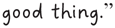 From here, her argument becomes an opinion essay in which the causes and consequences of the ban are explored. Her third sentence functions as a hyperTheme, the marked Theme (“in our school before they were banned”) linking back to the initial macroTheme (verb-tense tweaked correctly) before introducing an exemplifying incident. Finally, she reintroduces her own opinion, ending with a macroNew using
  as a preface to the pronoun “this” to provide an update on the ban’s impact.
Shanti (see Figure 1) follows up on the modeled macroTheme with the additional clause  the demonstrative pronoun “this” used to reference and then comment on the ban. Moving on, a marked theme of concession,
 revoices the modeled passive structure to further explore consequences. This “technicalizing” (Ravelli, 2004, p. 104) of lived experience to reflect and analyze on it clearly remains cognitively and linguistically challenging; in Sentences 3 and 4, Shanti raises points of argument in a more familiar way. However, like Osman and Millie (but unusually for School A children) she too concludes her argument with a macroNew that succinctly integrates all points raised.
Discussion
Research Question 1: What do Differences Between Texts Written at Age 8-9 and Those Written at Age 9-10 Reveal About the Expansion of Children’s Thematic Repertoire During Late Childhood?
Corroborating previous research on children in anglophone school contexts, the findings identify late childhood as a period characterized by significant changes to Theme use, concomitant with other transformations associated with the development of a differentiated writing style (Perera, 1984). Specifically, it identifies this cohort’s growing interest in linguistic mechanisms for managing the flow of information across longer texts as central to their expanding thematic resources. The research details the impact of the macroTheme on other thematic elements: textual Themes emerge to reference the overarching initial thesis statement, and interpersonal Themes are used less ubiquitously and more judiciously to qualify arguments. Marked ideational Themes emerge at nexus points to introduce alternative perspectives. Topical Themes are more prominent because of reduced repetition of optional thematic elements. Therefore, at points, children explicitly signpost connections between successive Themes (derived mode of thematic progression) or establish connections between rheme and subsequent Theme (simple linear mode of thematic progression).
In addition to illustrating interdependence between thematic elements, the research highlights those which are relatively easily appropriated (i.e., macroThemes and textual Themes, e.g. 
 and those that present greater challenges (representing lived experience as abstract expanded noun phrases, e.g.,
  Corroborating sociocultural and social-semiotic perspectives (e.g., Compton-Lilly, 2014; Kress, 1996), the research highlights the context-dependent nature of language development, demonstrating that the cohort has tacit knowledge of a range of thematic resources that is mobilized in specific contexts.
Research Question 2: Potential Gateways to the Expansion of Children’s Thematic Repertoire
Hybrid sections of text characterized by new thematic resources reflect moments where the writer is adopting a meta-perspective on lived experience and establishing logical-semantic links between phenomena represented. In these moments children recognize both the limitations of their existing grammar to qualify and expand on their arguments and the usefulness of more abstract forms. The findings indicate three interrelated contexts that elicit this meta-perspective.
The consideration of alternative viewpoints
A macroTheme provides a conceptual framework for the whole text: an overarching thesis statement, referenced in each point, serving as a reminder of the main thrust of argument to be illuminated. The findings illustrate that some macroThemes provide a “strong[er] structural framework” (Ravelli, 2004, p. 44) for writing than others. Corroborating Kuhn et al.’s (2016) insights, it is the process of representing and synthesizing opposing viewpoints that led School B children to pause to reflect on the phenomenon of Pokemon trading and to mobilize tacit knowledge of thematic resources to pivot between alternative perspectives, to qualify their arguments judiciously and, in some cases, to subtly change their own perspective by the end of the writing process.
Active engagement with a nominal form representing a condensed version of reality
The findings indicate that forging logical-semantic links between topical Themes, particularly those in macroTheme or hyperTheme position, requires some sort of semiotic abstraction that remains challenging for most of the cohort. They also show the power of modeled semiotic abstractions to propel children into a different world of meaning. The abstract macroTheme “Pokemon cards have recently been banned in our school” directed attention to the causes and consequences of the ban itself, and the demonstrative pronoun “this” provided a way to reference a complex process succinctly in sentences to follow. That the form elicited a more analytical approach is suggested by the fact that, unusually for the School A children, all three chose to distil their points in a final macroNew that included a version of the modeled form. Insofar as this model was provided inadvertently, it can be surmised that similar spoken or written micro-models are a ubiquitous part of language learning in homes and classrooms. The impact of this modeled semiotic abstraction highlights the potential value of instructional approaches that systematically induct students of all ages into subject-specific vocabulary and interrelated conceptual frameworks.
Personal interest in reasoning about lived experience
Hybrid sections of the Year 5 arguments illuminate the cohort’s challenges with the production of abstract language, which suggests that, while this age-phase is alert to the affordances of some modeled constructions to their “in-the-moment” meaning-making, in many school-writing contexts informational thematization may not meet their immediate communicative interests. As discussed in the background, it may be unrealistic to suppose that children can genuinely theorize in academic subjects ahead of their secondary and tertiary education (Klein & Boscolo, 2016). Encouragingly, however, hybrid sections indicate the cohort to be willing and able to reason in their own writer voice when focusing on personally meaningful content. Writing about the personally meaningful per se did not give rise to a meta-perspective and reasoning; Pokemon card trading was a personally meaningful issue to many. Rather each hybrid section, be it triggered by a modeled macroTheme or an argument subgoal, illuminates the moment where the child recognizes the potential affordance of an alternative form to reframe an aspect of lived experience of emotional salience to them. For Sirdar and Andrew, this comes from exploring the scope within a condensed sentence (Sirdar) or paragraph (Andrew) to exemplify card trading issues through inter-clausal reasoning. For Shanti, the moment comes when a focus on the Pokemon card ban facilitates the voicing of strongly felt frustrations about its unfair consequences. Each remaking represents a transformation of the child’s linguistic resources, their understanding of the lived experience, and potentially, their awareness of the affordances of the written mode. Halliday’s notion of a “magic gateway” is complemented by the identification of “a generalized interpersonal gateway, whereby new meanings are first construed in interpersonal contexts and only later transferred to ideational ones, experiential and/or logical” (Halliday, 1993, p. 104). With reference to her research on infants’ earliest oral language learning, Painter (2004) observes that the impetus for language development “comes from the child’s emotional engagement with the world” and wonders whether “the child’s emotional life continues to drive new linguistic developments” (p. 142). These findings seem to corroborate Painter’s hypothesis that the drive to explore thematic resources for reasoning lies in their potential to shed new light on emotionally charged lived experience.
Limitations
While efforts were made to ensure texts produced at sampling points were representative of children’s usual writing, I acknowledge that findings may be compromised by the fact that the sample texts were written during atypical writing conditions. Additionally, while efforts were made to identify topic areas that would be engaging at the time of writing, the Year 5 Pokemon card topic generated more interest than the Year 4 pencils/pens topic. The stark differences in Theme use identified between the Year 4 and Year 5 texts should be interpreted in this context.
The research reported is very small in scale and focused on a single written genre. Insights revealed into the micro-genesis of a full thematic repertoire should be substantiated through further longitudinal research sustained over longer time periods with reference to a range of genres.
Implications for Practice and Future Research
The findings suggest that contextualized modeling of semiotic abstractions, the synthesis of contrasting viewpoints and opportunities to write about subject matter in relation to which children have authority and vested interest should all be carefully considered when “we select content and design learning sequences” (French, 2019, p. 281) that will orient primary-aged children to the affordances of more abstract written language forms.
The findings provide insights into the specific written models and cognitive perspectives most likely to elicit a meta-perspective. The data analysis illustrates why some modeled macroThemes provide “stronger structural frameworks” (Ravelli, 2004, p. 44) than others and that while primary-aged children will gravitate toward generic macroThemes (e.g., “There are a number of reasons . . . ”), it is text-specific macroThemes characterized by semiotic abstractions that will propel them into a different world of meaning and invite reasoning around subject content in sentences to follow. Furthermore, with regard to learning sequences, the data analysis corroborates a wealth of existing research insights into the importance of contextualized, teacher-led discussion to scaffold the “initial exploration of key ideational domains” (Painter, 2004, p. 152). Within this research, the modeling of the passive structure “Pokemon cards have been banned” was unplanned. However, the example illustrates the potency of inter-thinking in rendering “new meanings . . . visible to the child” (op cit.).
Additionally, other implications for practice can be surmised from the finding that children’s tacit knowledge of thematic resources is most likely to be mobilized when writing harnesses “reflection on affectively salient domains” (Painter, 2004, p. 143). This insight raises the potential effectiveness of integrating forms of reflective writing into the primary writing curriculum. Practiced extensively in tertiary and vocational education, reflective writing is understood to engage writers in “higher-order thinking to analyse and evaluate their experiences” (Klein & Boscolo, 2016, p. 334). Currently rarely evidenced in the primary context, this form of writing could provide an age-appropriate way to socialize children into textual and syntactic structures of expository genres and the catharsis of reflecting on lived experience.
Further practice-led research in primary classrooms is required to investigate and further fine-tune the potential for both discipline-specific and reflective writing to elicit a meta perspective that, in turn, will elicit expansion of thematic resources. Methodologically, my research highlights the value of charting the microgenesis of specific linguistic features in individuals’ writing over time. Such longitudinal research has the capacity to illuminate novice writers’ “ways into” new forms that are challenging to identify through larger-scale cross-sectional analyses of language development. The research also highlights the value of focusing on Theme position as a barometer of general writing development during this critical age-phase.
Footnotes
Appendices
A Summary of the Thematic Resources Evidenced in the Argument Texts in Y4 and Y5.
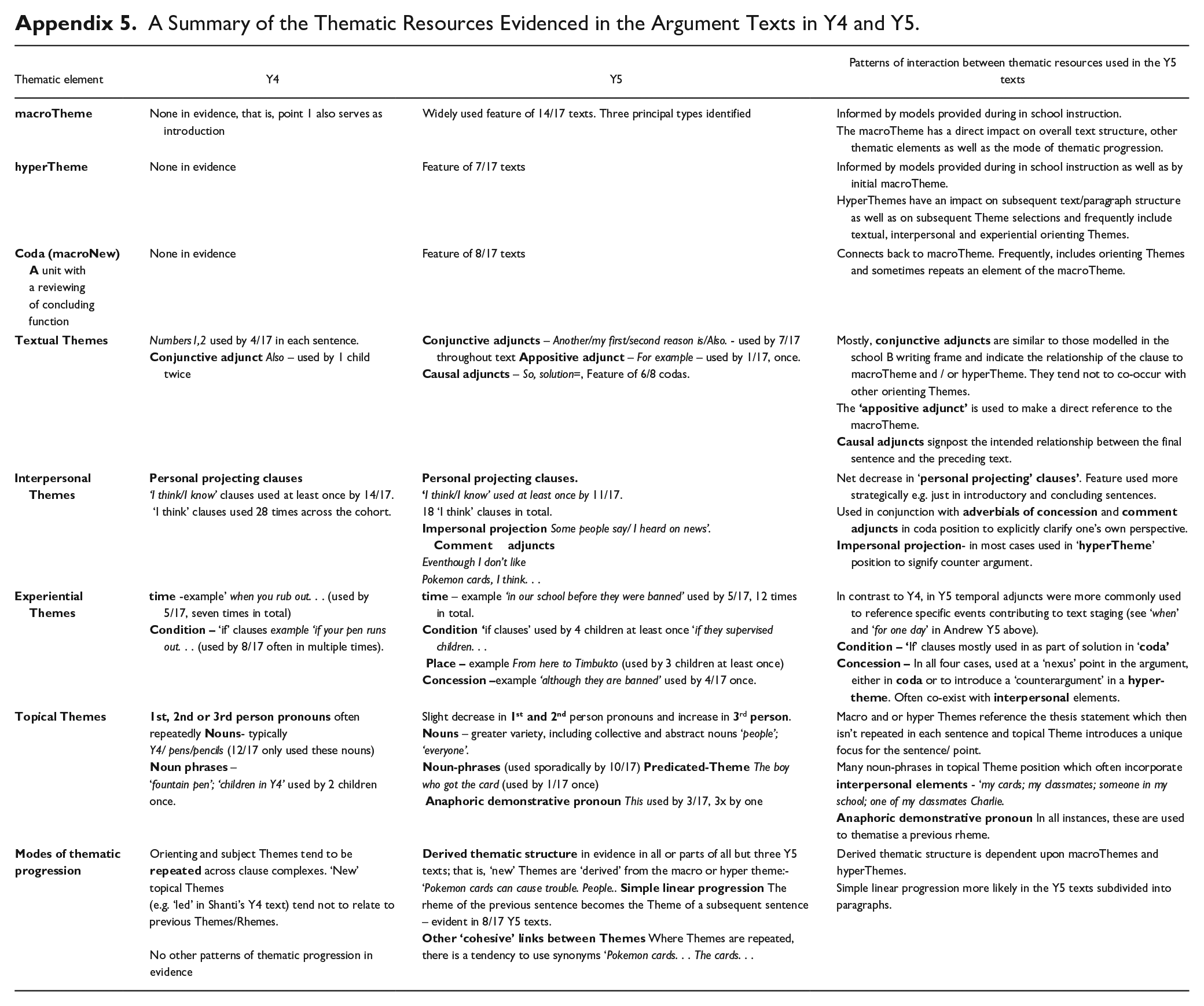
| Thematic element | Y4 | Y5 | Patterns of interaction between thematic resources used in the Y5 texts |
|---|---|---|---|
|
|
None in evidence, that is, point 1 also serves as introduction | Widely used feature of 14/17 texts. Three principal types identified | Informed by models provided during in school instruction. The macroTheme has a direct impact on overall text structure, other thematic elements as well as the mode of thematic progression. |
|
|
None in evidence | Feature of 7/17 texts | Informed by models provided during in school instruction as well as by initial macroTheme. HyperThemes have an impact on subsequent text/paragraph structure as well as on subsequent Theme selections and frequently include textual, interpersonal and experiential orienting Themes. |
| None in evidence | Feature of 8/17 texts | Connects back to macroTheme. Frequently, includes orienting Themes and sometimes repeats an element of the macroTheme. | |
|
|
Mostly, The |
||
|
|
‘I think/I know’ clauses used at least once by 14/17. ‘I think’ clauses used 28 times across the cohort. |
18 ‘I think’ clauses in total. Eventhough I don’t like Pokemon cards, I think. . . |
Net decrease in ‘ Used in conjunction with |
|
|
In contrast to Y4, in Y5 temporal adjuncts were more commonly used to reference specific events contributing to text staging (see ‘when’ and ‘for one day’ in Andrew Y5 above). |
||
|
|
Y4/ pens/pencils (12/17 only used these nouns) ‘fountain pen’; ‘children in Y4’ used by 2 children once. |
Slight decrease in |
Macro and or hyper Themes reference the thesis statement which then isn’t repeated in each sentence and topical Theme introduces a unique focus for the sentence/ point. Many noun-phrases in topical Theme position which often incorporate |
|
|
Orienting and subject Themes tend to be (e.g. ‘led’ in Shanti’s Y4 text) tend not to relate to previous Themes/Rhemes. No other patterns of thematic progression in evidence |
Derived thematic structure is dependent upon macroThemes and hyperThemes. Simple linear progression more likely in the Y5 texts subdivided into paragraphs. |
Declaration of Conflicting Interests
The author declared no potential conflicts of interest with respect to the research, authorship, and/or publication of this article.
Funding
The author received no financial support for the research, authorship, and/or publication of this article.
