



Abstract
The Chilean curriculum for writing education includes five paradigms: cultural, macro-linguistic, micro-linguistic, procedural, and communicative. The implementation of such a poly-paradigmatic curriculum can occur in multiple ways. Therefore, we analyzed classroom practices with two aims: (a) to describe how the paradigms are evident across practices, and (b) to analyze the paradigms’ internal alignment within each practice. We conducted classroom observations with five Spanish language teachers with varied orientations toward writing instruction. A content analysis of teachers’ discourse formed the basis for a narrative case-by-case analysis and a cross-case analysis. This process was guided by data collected during a previous survey study and supported by teachers’ interviews. Findings revealed that the cultural, macro- and micro-linguistic paradigms were implemented most often, while the implementation of procedural and communicative paradigms was rare. Additionally, paradigm alignment was visible in two practices but not in other practices. Possible reasons for this lack of integration and potential solutions to resolve this issue are discussed.
Keywords
Introduction
Globally, numerous countries have reformed their curriculum aiming to reinforce writing instruction at school (Cutler & Graham, 2008; Tse & Hui, 2016), and are promoting research that describes how writing is being taught at school (Graham, 2019).
Chile is not an exception to such reforms. Since the 2010s, the country has substantially invested in reinforcing national public policies about writing instruction. This includes a deep curricular reform that emphasizes the writing subdomain within the Spanish subject area. The curriculum seeks to promote communication skills among the younger generation, which “are essential for active and responsible participation in society. These are acquired by participating in real situations of reading, writing and oral interaction” (MINEDUC, 2013, p. 33). Specifically, regarding writing, MINEDUC claims that effectively managing writing ability has become an increasingly necessary requirement to adequately participate in the various areas of life.
Even when countries undergo a national reform, there is usually a large gap between the intended and the implemented curriculum. Such a gap can take years to narrow, since such changes generally bring about profound social changes (Graham & Rijlaarsdam, 2016; Ten Brinke, 1976). Changing teachers’ practices require transforming teachers’ beliefs regarding them and the curriculum (Graham & Rijlaarsdam, 2016, Kyriakides et al., 2009).
Previous Studies Regarding Writing and Writing Instruction in Grades 7-8
When aiming to ensure that students have quality educational opportunities, it is key to diagnose their real needs in the classroom (Cutler & Graham, 2008). In Chile, several efforts in the country have attempted to describe how writing instruction is implemented at school. For example, Gómez et al. (2016) aimed to describe writing instruction practices in Grades 5 and 6 of Chilean schools with students who demonstrated high test scores on the 2013 national writing exam. The study first collected quantitative data from 117 schools. It then focused on six schools, qualitatively. Findings revealed that writing was relevant in all the schools involved but tended to be conceptualized as part of reading. Moreover, writing activities prioritized the formal requirements of writing texts (Gómez et al., 2016, p. 112). In addition, Bañales et al. (2020) used survey methodology to provide a national insight regarding how writing is being taught in Grades 4-6. Findings showed that even though teachers devoted more time to teaching reading than writing, they generally felt rather positive regarding their preparation for teaching writing. In addition, they reported often implementing evidence-based practices for teaching writing, such as teaching strategies to facilitate the writing process (Bañales et al., 2020, pp. 2682-2684).
In comparison, few studies have focused on writing instruction in upper grades in Chile. A recent survey-study provided a national overview of writing instruction in Grades 7-12 of Chilean public schools (Flores-Ferrés et al., 2022). For all grades, the Chilean writing curriculum is now poly-paradigmatic, which means it is based on a set of five writing education paradigms: communicative, cultural, procedural, macro-linguistic, and micro-linguistic paradigms. In this context, the survey-study described teachers’ implementation of the curricular paradigms in the classroom by relating teachers’ practices with their beliefs. The picture revealed by the survey is, to some extent, in line with findings from other international descriptive studies. Adherence to a genre-based approach, which is related to the macro-linguistic paradigm, and a focus on micro-linguistic elements seem to be quite strong in Chile. The procedural paradigm appears to be implemented, and authentic communicative writing in the classroom appears to be scarce.
Such findings represent a first step in describing how the new writing curriculum is implemented in Grades 7 through 12 in Chile. To obtain a more detailed picture of the new writing curriculum, triangulating several methodological perspectives is useful (Yin & Yin, 2013; see also Cutler & Graham, 2008; Morgan, 2014). Through a mixed method approach, it is possible, for example, to investigate the way in which teachers implement in practice what they report in surveys, as Lipson et al. (2000) did. The authors investigated the variations that the implementation of the procedural paradigm (process writing) had in the classroom. They found that teachers’ orientations toward language instruction, and on pedagogy in general, appeared to be key (Lipson et al., 2000).
We conducted two related studies (S1 and S2) aimed to provide complementary qualitative insights regarding how teachers deal with the poly-paradigmatic intended curriculum for writing instruction in Grades 7-8 of Chilean public schools. Both studies focused on the same five teachers who demonstrated varied orientations toward writing instruction in the national survey study (Flores-Ferrés et al., 2022). The first study (S1, Flores-Ferrés, 2021) focused on teachers’ beliefs, based on five teachers discourses as revealed in interviews. Findings revealed that teachers’ behaviors in the classroom were driven by different priorities: teachers adhering to transmissional priorities preferred to stick to formal curricular requirements (similar to Lipson et al., 2000, curricularistic teachers), while those teachers adhering to adaptive priorities prioritized adapting curricular requirements to their classroom. Adaptive priorities could be generic, for example, related to the function of schooling, or domain specific, related to literacy instruction (similar to Lipson et al., 2000’s inquiry teachers).
The present, second study (S2) reported in this article provides information from classroom observations of the same five teachers who had been interviewed for study 1 (Flores-Ferrés, 2021). We expected that observing them in action would provide insights regarding how teachers with different orientations toward writing instruction implement the Chilean poly-paradigmatic intended curriculum in their writing lessons. We know that effective writing instruction requires internal alignment between a lesson’s various components, in a means-end relationship that makes the lesson meaningful (Flores-Ferrés et al., 2023; Rijlaarsdam et al., 2017). Additionally, we know that teachers are the ones who make the ultimate decisions regarding curriculum implementation, and that their decisions are strongly influenced by their beliefs (Graham & Rijlaarsdam, 2016; Lipson et al., 2000). Making this connection between practice and beliefs could help the growing body of knowledge of the international community studying writing instruction, and the factors that shape it across the world. Additionally, it could enable educational institutions in Chile to determine where to invest their efforts to promote quality writing instruction.
Writing Curriculum Guidelines for Grades 7-8 in Chile
Until the end of the 20th century, the Chilean curriculum of Spanish emphasized that students acquired literary content and basic literacy skills (Gysling, 2016). The curricular reform conducted in 1998 positioned language as the basis of knowledge development and stated the importance of promoting communicative skills (MINEDUC, 2009). From 2010 onward, Chile joined the international movement aiming to strengthen young people’s writing skills. Prioritizing early grades (see Bañales et al., 2018; Sotomayor et al., 2021), the country gradually increased public efforts to ensure that the upcoming generation would acquire the writing skills they need to participate in contemporary society. Among others, such efforts included implementing a deep curricular reform and promoting scientific studies that describe students’ writing performance and teachers’ practices and beliefs about writing instruction. These efforts started from early grades until grade 6 (see Bañales et al., 2018; Gómez et al., 2016; Sotomayor et al., 2017). Because of the initial focus on early grades, studies focusing on upper grades are more recent (BCNC, 2014, 2019; see also Flores-Ferrés et al., 2022).
The curricular reform conducted in Chile during the last decade modernized the intended writing curriculum. Nowadays, it has a poly-paradigmatic nature, leaving room for individual schools, departments, and teachers to make their own decisions regarding curriculum implementation when providing writing instruction to students. The reform structured the curricular guidelines for Grades 7-10 (MINEDUC, 2013) in three main sections: a general introduction, a description of the curricular subdomains (Reading, Writing, Oral communication, and Research) and an operationalization of the guidelines through Grade 7-8 learning goals.
The general introduction of the national curriculum document explicitly states its cultural and communicative grounds. Regarding the cultural paradigm, it is stated that literacy skills fulfill human needs, mainly related to social life, communication, and transmitting and preserving knowledge, which aligns with sociocultural perspectives (Graham, 2018; Prior, 2006). In the Writing subdomain, the document provides two foci within the cultural paradigm: writing to learn (Klein & Boscolo, 2016) and writing for (social) personal development (Nicholls, 2009). Regarding the communicative paradigm, teachers are required to teach writing in a way that stimulates students to use language for authentic communicative purposes (Hymes, 1972; Moffett, 1968/1983). Writing should focus on understanding and being understood (Flores-Ferrés et al., 2023). Therefore, a contextualized view of writing should be promoted, in which the text’s purpose and reader become key (Rijlaarsdam et al., 2008, 2009).
The Writing subdomain includes specific sections explicitly related to the procedural, macro-linguistic, and micro-linguistic paradigms. The description of the procedural paradigm (MINEDUC, 2013, pp. 37-38) aligns largely to the “strict” version of it, by highlighting the nonlinear nature of the writing process (Hayes, 1996, 2012; Kellogg, 1999). It conceives writing as a decision-making process with various foci to deal with, such as goal setting, generating ideas, text construction, and confirming whether the latter responds to the goal that has been set (Bereiter & Scardamalia, 1987/2013; Hayes, 2012). The Writing subdomain describes two linguistic levels (see Berman, 2008; Grisot & Blochowiak, 2021), which in this study we understand as two paradigms: macro-linguistic and micro-linguistic. The curricular guidelines relate macro-linguistic structures to discourse genres (Driscoll et al., 2019; Tardy et al., 2020), which are central to the document, as a social-cultural construct (MINEDUC, 2013, p. 37). Teaching writing based on discursive genres requires a focus on text features, and clear distinctions between genres and their rhetorical functions. The micro-linguistic paradigm refers to language structure at the sentence and word levels, including grammar, spelling, and vocabulary. It is placed at the service of other literacy aspects, such as functional reading and writing (MINEDUC, 2013; see also Sotomayor et al., 2020).
The curriculum document does not relate the various curricular paradigms explicitly, but it does so in an implicit way: from the more general to the more specific. It starts the general introduction with the cultural and communicative paradigm; it then states its genre-approach, which is related to the macro-linguistic paradigm. In the Writing subdomain, the national curriculum document introduces the procedural paradigm and finishes with the micro-linguistic paradigm, by relating writing to cultural and communicative functions. This provides a consistent model (e.g., Graham, 2018), which is however not made explicit to the reader.
To achieve effective writing instruction, teachers in Chile must find a way to build an internally aligned pedagogical unit that integrates the various curricular requirements (Flores-Ferrés, 2021; Flores-Ferrés et al., 2023; Rijlaarsdam et al., 2017). They have the choice to support their work by using the official textbooks. These textbooks (one per year, per educational grade) support curricular operationalization by providing complete instructional sequences that combine the various curricular requirements into one whole. Nevertheless, the use of these textbooks is not compulsory: schools and teachers are free to decide whether to use them or not (Cox, 2011).
Objectives and Research Questions
In the present study, we aimed to describe how teachers in Grades 7-8 deal with the Chilean poly-paradigmatic intended curriculum for writing education. We opted for a qualitative perspective that would allow us to triangulate the information previously gathered quantitatively, through survey methodology (Lipson et al., 2000; Yin & Yin, 2013). To do so, we aimed to obtain insights into a variety of classroom practices. 1
We analyzed teachers’ classroom practices with two aims: (a) to reveal the presence of each of the paradigms across practices, by analyzing their operationalization in teachers’ practices and (b) to analyze the integration of the various paradigms that the intended curriculum suggested within each practice. With this aim, we used internal alignment as an index for integration (Flores-Ferrés et al., 2023; Rijlaarsdam et al., 2017). Within the upper grades, we focused on Grades 7-8, since our methodology required us to study only a few comparable cases.
Given the above, we formulated the following two research questions:
Research Question 1: How are the different paradigms of the intended curriculum evident across classroom practices of teachers with different orientations regarding writing instruction working in Grades 7-8 of Chilean public schools?
Research Question 2: How are the different paradigms of the intended curriculum aligned within teachers’ pedagogical units in Grades 7-8 of Chilean public schools?
Methods
To answer Research Question 1 (RQ1), we conducted a multiple-case study (Cohen et al., 2007; Yin & Yin, 2013) that would shed light on the operationalization of each domain-specific paradigm in each case. We opted to perform content analysis (Cohen et al., 2007) as the basis for narrative case-by-case analysis (De Fina & Georgakopoulou, 2015). To answer Research Question 2 (RQ2), we conducted a comparative cross-case analysis that would provide insight regarding the extent to which each participant’s practice integrated the various curricular demands with internal alignment, based on the response to RQ1. In this way, our analyses studied phenomena within and across cases (Yin & Yin, 2013).
To collect data, we chose to observe the practices of five teachers working in Grades 7-8, as observation is considered to be one of the strongest methods to gather information about teachers’ classroom practices (Kelcey & Carlisle, 2013). Classroom observation data were collected in various regions of Chile—the Metropolitan region, Valparaiso, Bio-bio, and Ñuble. Based on the five paradigms represented in the national curriculum document, we selected teachers who represented variation in foci on writing instruction.
Participants
Participants were selected from the respondents of the national survey (Flores-Ferrés et al., 2022), based on five criteria. We selected teachers who (a) reported high self-efficacy beliefs concerning writing instruction, (b) gave relevance to the writing subdomain within the intended curriculum of Spanish, and (c) showed differences in their preferences for writing instruction paradigms, as the goal of the study was to obtain insight into a variety of classroom practices. In addition, (d) we restricted the selection to teachers working in Grades 7 and 8 within a 500-km range from the research venue in Santiago, and (e) we based our final selection on teachers’ responses to one item from the survey, which we will elaborate on below.
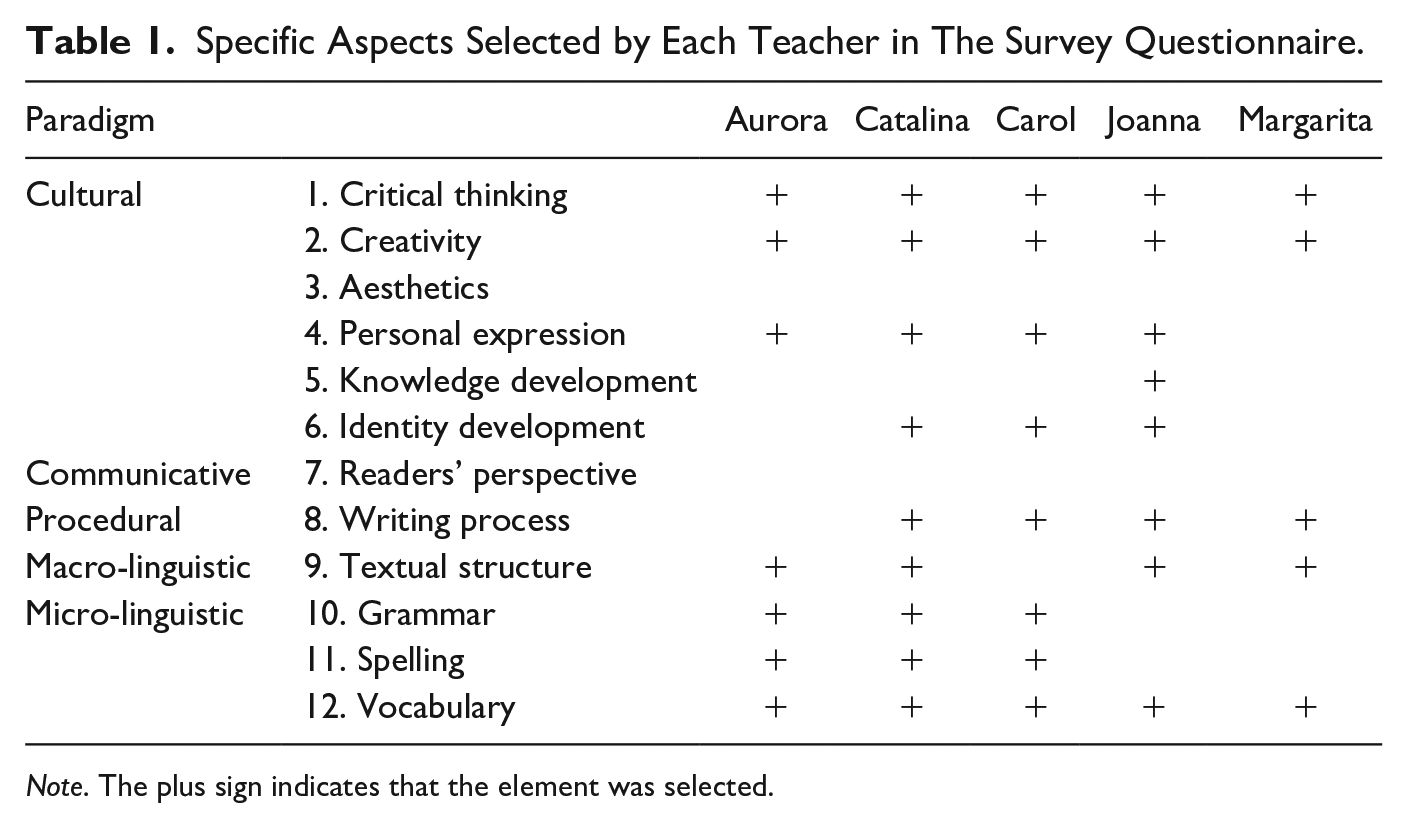
We initially selected 12 teachers. Specifically, we based our selection on teachers’ responses to one multiple-choice, multiple-answer item (criterium 5). Participants were asked to indicate their orientations by responding to the following question: How relevant are the following aspects for your writing lessons? To respond to it, participants were meant to select items among 12 options: critical thinking, creativity, aesthetics, personal expression, knowledge development, identity development, readers’ perspective, writing process, textual structure, grammar, spelling, and vocabulary. They had to drag the items into three different groups: Great relevance, Low relevance, and No relevance. The 12 options represented the five domain-specific paradigms under study.
We invited the 12 teachers, via email, to participate and informed them about the study’s objective. We also informed them that the study would require classroom observations and audio recordings of teachers’ discourses in the classroom, for which school authorization would be required. In addition, we assured them that the data collected would remain anonymous and would not be associated publicly to the participants’ identities in any way. Participants were offered feedback on their teaching practices, and 30,000 clp [Chilean pesos] (about 50 U.S. dollars) as a reward. We did so to motivate them to participate because of constraints related to time and human resources for data collection. 2
Five teachers subsequently confirmed that they were willing to participate in this study: Aurora, Catalina, Carol, Joanna, and Margarita 2 (all female). Table 1 represents teachers’ responses to the survey multiple-choice item (criterium 5 for selecting participants).
Specific Aspects Selected by Each Teacher in The Survey Questionnaire.
Note. The plus sign indicates that the element was selected.
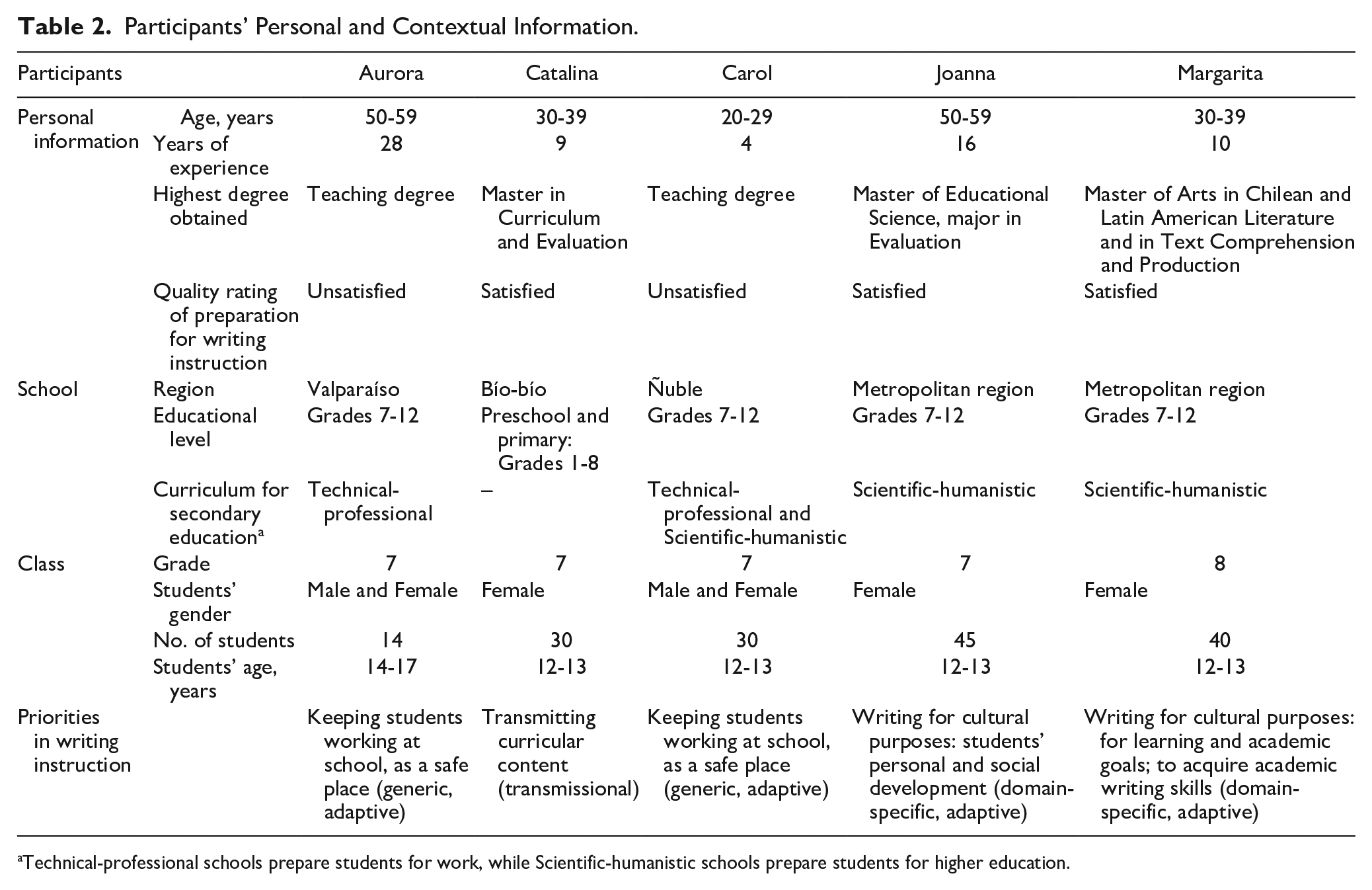
Table 2 reveals variations between the participants’ personal and contextual information, which is based on the national survey (Flores-Ferrés et al., 2022) and teachers’ interviews (S1, Flores-Ferrés, 2021, see Data Collection). The last row represents teachers’ priorities in their classroom, as expressed in the interviews.
Participants’ Personal and Contextual Information.
Technical-professional schools prepare students for work, while Scientific-humanistic schools prepare students for higher education.
Procedures
Five researchers participated in the process of data collection, preparation, and analysis. The main researcher (MR, Chilean), and researchers A and B (Dutch) were part of the same academic team, at the University of Amsterdam. Researchers C and D (Chileans) were members of Chilean research teams of literacy instruction. Furthermore, one research assistant supported us by translating the qualitative analysis from Spanish to English (and vice versa).
Data Collection
We started with an introductory interview with each teacher (S1, Flores-Ferrés, 2021) in which we asked them to describe their writing instruction. Teachers’ interviews are not part of the data we analyzed for this article, but they played a key role in our methods. We interviewed each participant before the observations since this would promote building trust between the researcher and the participating teacher. This, in turn, would contribute to the ecological validity of the data obtained during the observation of classes and to reducing the risk of the Hawthorne effect (Sedgwick & Greenwood, 2015). Furthermore, the interview provided contextual information that would help to guide the posterior interpretation of the observation data.
We observed 2-3 lessons per teacher, within a period varying from 1 to 3 weeks, at the end of the 2017 Chilean academic year. The procedure followed the guidelines of the ethical committee at the authors’ home institution. 3 We aimed to observe three lessons in each case to obtain reliable information based on classroom observation (Martínez et al., 2016). However, for three cases, we observed two lessons because of time and resource constraints.
We registered the teachers’ voice during classroom practice with the support of a microphone that was attached to each teacher’s upper body. Additionally, the main researcher attended the lessons. She noted the main characteristics of the lessons in a registration form (including date, number of students, pedagogical resources used in the classroom, topic of the lesson, among others), and collected copies and/or pictures of pedagogic resources (such as PowerPoint slides and a handout distributed by the teacher). This additional input was used to contextualize and orientate the posterior data analysis (Yin & Yin, 2013). We decided not to video record the lessons to favor the ecological validity of the observation, by using noninvasive procedures for both the teacher and the students (Sedgwick & Greenwood, 2015).
Table 3 indicates the pedagogical units and lessons observed in each case. The number of units observed varied, from two to six units of 40-45 minutes each per case. 4
Number of Pedagogical Units (PU) and Lessons (L) Observed by Case.
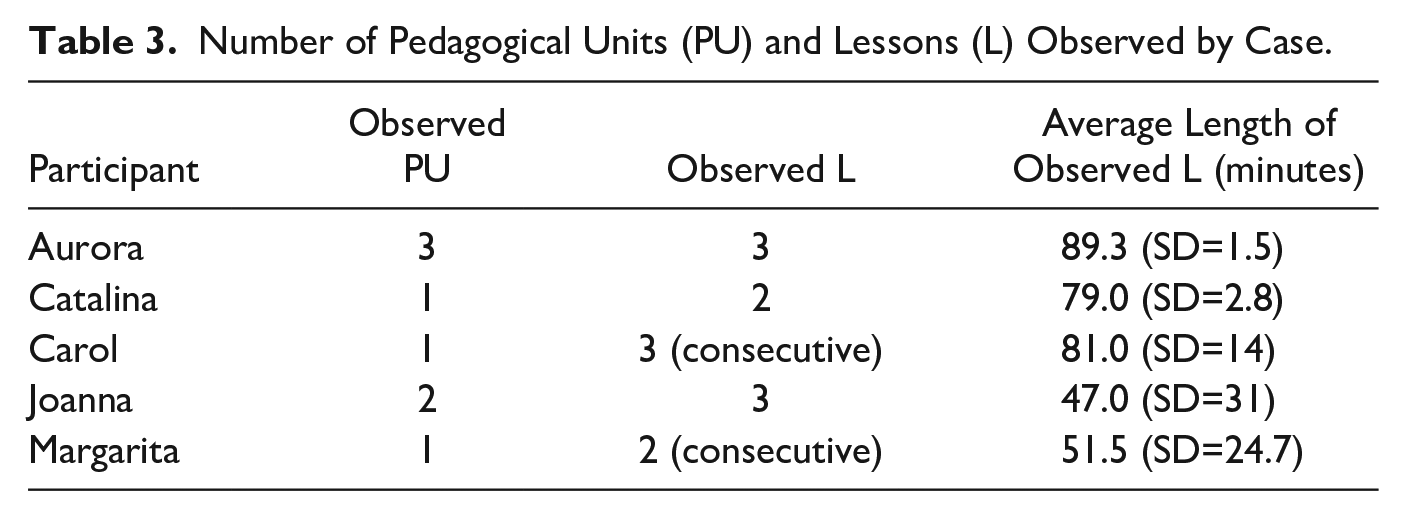
The average length of audio recordings per case was 155 minutes (SD = 55), which varied because of a combination of teachers’ work plans, school situational events, and the logistics of data collection.
Research Design
We opted for a combination of multiple case studies and comparative cross-case study (Yin & Yin, 2013) from a naturalistic approach (Cohen et al., 2007). We define case study as “an in-depth inquiry into a specific and complex phenomenon, set within its real-world context” (Yin & Yin, 2013, p. 312), and opted for a multiple-case study that would allow us to study five varied units of analysis holistically (Yin, 2009). Additionally, we define a comparative cross-case study as “the systematic comparison of these within-case configurations” (Yin & Yin, 2013, p. 313).
The research design included two main phases: content-analysis (Cohen et al., 2007; Kleinheksel et al., 2020) and a comparative cross-case analysis (Yin & Yin, 2013). The present study (S2) focuses on observational data, which was used to complement information previously gathered through survey methodology.
Data Processing
To prepare the data for further analysis, the observational data were first transcribed, to allow for posterior analysis. This process was done by researchers C and D and checked by the MR (Chilean).
Data Analysis
Content analysis
To respond to RQ1, we needed to describe the operationalization of each domain specific paradigm by case.
The analysis procedure included labeling segments of the transcribed text by categories, which corresponded to the domain-specific paradigm under study. We counted on the national survey as a frame of reference (Flores-Ferrés et al., 2022). We started listing the teaching practices that the survey questionnaire inquired about, by domain-specific paradigm (our categories), which resulted in a first list of possible labels. Then, we conducted a first exploratory reading of the data, which aimed to verify that we could apply the labels to our data, and that they were sufficient. Several new labels emerged from the data, which we included in the List of labels (see Appendix A).
Based on the content analysis, we carried out a case-by-case narrative analysis (De Fina & Georgakopoulou, 2015), which resulted in a descriptive report by case. Each report included a description of the classroom practices and of the observed signs of the implementation of each curricular paradigm. After these analyses, we conducted an iterative process in four stages:
Interpretation 1
The MR labeled the first two cases and drafted two descriptive reports for them in English. They were evaluated by researchers A and B to ensure that they could serve as a basis for the future cross-case analysis. The MR then elaborated the five reports, in Spanish (M = 5884 words, SD = 2159).
Validation 1
The reports were validated by Researchers C and D (Chileans) as critical readers. First, Researchers C and D were introduced to the setting of the study. Second, they read the transcribed data of the corresponding case and provided their own interpretations of what happened in the classroom. Third, they validated each report by adding written comments in Word to them and sent them back to the MR (in Spanish).
Interpretation 2
The evaluated reports (including Word comments) were translated into English by the MR and the research assistant. Then, the data were further interpreted by the MR, Researchers A and B (Dutch), in terms of what happened in the classroom and the operationalization of the intended curriculum paradigms. In their evaluation, the researchers (MR, A, B, C, and D) considered the focus of the cross-case analysis, and differences reported by each of them between participants’ conceptualizations of the five paradigms, which were raised during the evaluation of the profiles. The most important differences were related to variations in the understanding of cultural and communicative paradigms.
Validation 2
After the MR and Researchers A and B agreed on a common understanding of the five narrative reports, the MR created a summary of each of them (M = 930 words, SD = 120.5) to make the data more manageable for further analysis. To ensure that the syntheses accurately portrayed our participants, the syntheses were first discussed by the MR and Researchers A and B. Second, each synthesis was sent to the corresponding participant for validation. To make this possible, each English text was translated to Spanish. All five participants confirmed that their syntheses accurately portrayed them.
Cross-case analysis
To respond to RQ2, we needed to indicate the extent to which each teacher’s practice articulated the various paradigms with internal alignment. We did this by conducting a cross-case analysis based on the summaries of the narrative reports by case.
The cross-case analysis was conducted by the MR, and Researchers A and B (Dutch). They did the analysis by discussing the results obtained from RQ1 from a comparative perspective. The researchers first intended to determine what role each paradigm played in each of the observed practices. Then, they sought to determine in which way each teacher’s practice articulated the various paradigms with internal alignment. The discussion was guided by the list of labels we compiled for the analysis (Appendix A), and by the findings of the parallel multiple-case study regarding teachers’ beliefs: specifically, by teachers’ priorities as revealed in their interviews (S1, Flores-Ferrés, 2021). In this way, our analyses triangulated multiple sources of information and methodological perspectives (Yin & Yin, 2013).
Results
We will first provide a summary of the observations, followed by a summary of our main findings. We will then report the results obtained per research question, which we will illustrate with teachers’ quotations.
Evidence of the Paradigms Across Practices (RQ1)
Our first RQ aimed to obtain insight regarding how the different paradigms of the intended curriculum are evident across classroom practices of teachers with different orientations in Chilean classrooms. In the curricular document, they are expressed as theoretical constructs, which teachers must operationalize in their writing lessons. We will now describe how each paradigm was visible in teachers’ practices (based on our content analysis). To illustrate our findings, we refer to quotations (Q) from teachers’ discourse quotations based on the audio recordings made during their lessons.
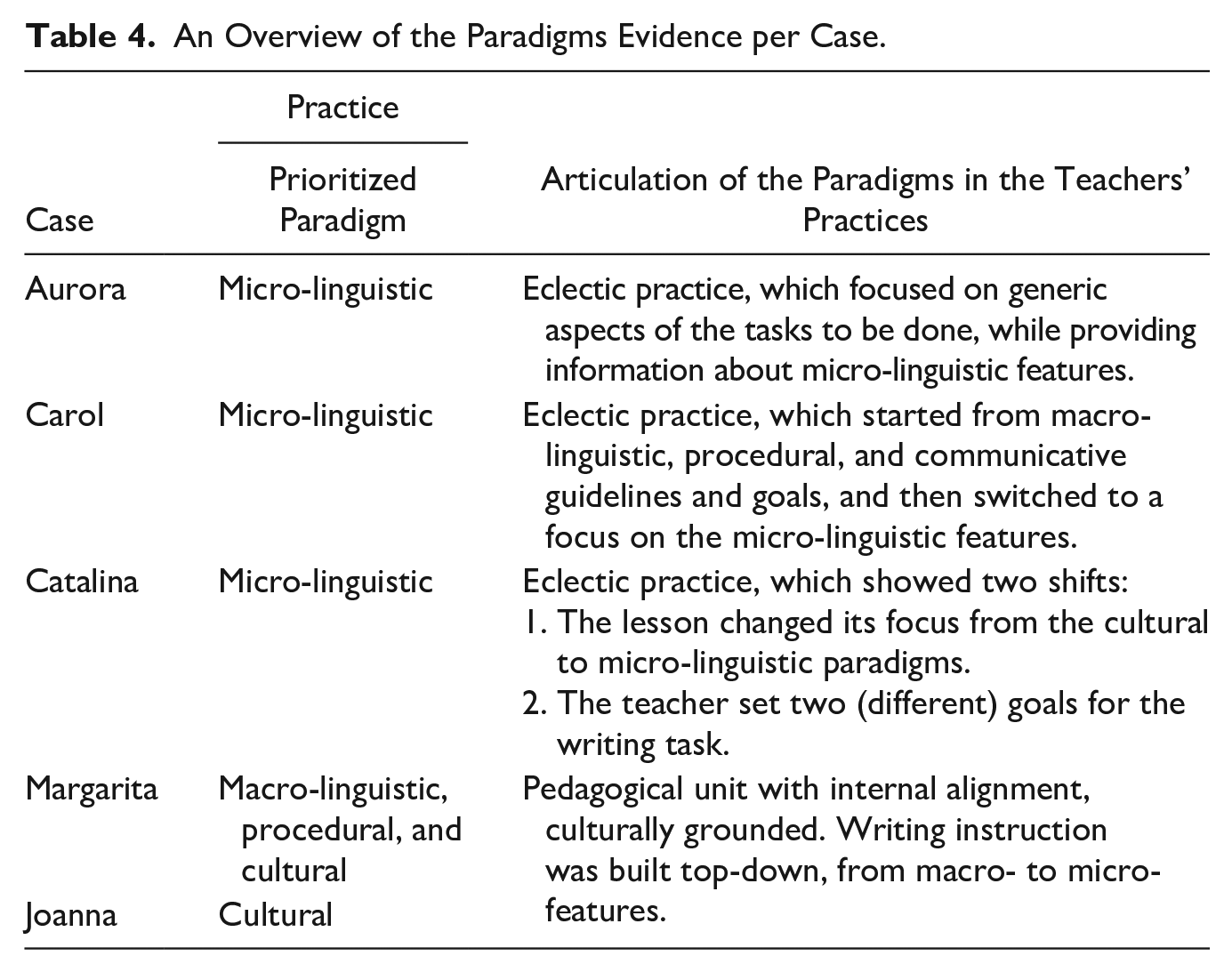
Findings showed signs related to the curricular paradigms in all five cases. We found that the cultural and the macro- and micro-linguistic paradigms were most often adhered to, while signs related to the implementation of the procedural and the communicative paradigms were rare (Table 4). The way each practice contained signs of the different curricular paradigms varied (Table 4). Teachers each prioritized some aspects (generic and domain-specific), while leaving others in a secondary place. Therefore, in each case, one (or some) domain-specific paradigm(s) was prioritized, while elements from other paradigms were supplemented. Some teachers did this practice in a fragmented or eclectic way, meaning that they picked elements from various paradigms, which were not integrated within the lesson. The other did it with internal alignment, maintaining the focus of their practice.
An Overview of the Paradigms Evidence per Case.
Cultural paradigm
The cultural paradigm was, to some extent, present in all five teachers’ practices, varying from brief signs of the cultural paradigm to relatively consistent manifestations. Signs were, for instance, teachers’ acknowledgment of students’ personal interests (Carol, Joanna) and linking writing activities with previously conducted reading activities (all cases).
Margarita and Joanna illustrated consistent cultural practices. Both prioritized writing-to-learn and promoting students’ critical thinking, to varying degrees. Margarita based her practice on reading. Her writing lesson was based on students’ experience of a literary text and promoted students’ reflection on key cultural concepts (prejudices, stereotypes, gender).
Margarita, L1: We are going to write a book review, a literary criticism (. . .). Now I want you to remember this text a bit [“Carolina”]; we are going to criticize it. (Reading a question from the textbook) How are women reflected in the piece, what aspects do you think have changed nowadays?
Joanna’s practice linked writing-to-learn to students’ personal and social development. In her classroom, writing became a means for students’ personal expression on stereotypes and discrimination.
Joanna, L2: Take this sentence: Your stereotypes are not the reality (. . .) This is important: I should give myself a few minutes to think if what others tell me is true, meaning what the media, advertising, etc. are asking me to believe.
Joanna began her practice by activating students’ prior experiences and opinions and provided room for students to share and discuss them.
Joanna, L2: The other day you had thousands of stories to tell, and we couldn’t hear them all.
Her focus on students’ own experiences and opinions was maintained during her monitoring of students’ writing.
Joanna, L2 Let’s see, tell me. [Two students read their text]. What do you mean by “she was different from the others”? [The students respond] Ok. . . So, that she was unique, she was different. Oh, how beautiful your story, girls. It surprised me. With little things.
Communicative paradigm
Findings revealed scarce evidence of the communicative paradigm. Both Carol and Joanna demonstrated some communicative evidence (e.g., purpose, context, readers), promoted by the curricular document. However, the communicative elements were not meant to guide students to communicate with others through writing. For example, Carol’s practice started with an initial communicative purpose. She started her first lesson by asking students to work in pairs to write an interview with a famous character, which was meant to be presented in front of the class.
Carol, L1: When presenting the interview in front of the class, one of you is going to be the interviewer and the other is going to be that famous person.
Nevertheless, the oral presentation of the interviews became, at the end, an independent activity, disconnected from the writing activity. When students presented their work in front of the class, Carol’s feedback focused on their oral and nonverbal communication.
Carol, L3: Very good volume of the voice, but we lacked body language. You are supposed to be an interviewer and an interviewee.
For her part, Joanna provided some feedback on her students’ writing, from the reader’s perspective.
Joanna, L2: Please stop at this point; you want me to want to read it, get it? You want to leave me in suspense.
However, neither Carol nor Joanna’s practices prioritized the communicative paradigm, by setting authentic communicative writing tasks.
Procedural paradigm
We did not observe practices that aimed to promote students’ awareness and management of their own (recursive, autonomous) writing process, as suggested by the curricular document. However, we observed a more practical interpretation of the procedural paradigm in practices by Joanna, Carol, and Margarita. On the one hand, Joanna and Carol appeared to decompose the writing task in different instructional stages.
Carol, L1: You must write the questions and the answers in a Word document and then send this to me, so I can review it, ok? As a draft. Joanna, L2: Today we are going to use two [paper] notebooks, for two different stages. You will write your draft in the notebook you have for Spanish [subject area].
On the other hand, Margarita’s practice departed from the procedural paradigm. She mainly provided students with writing strategies that they could use to write in academic settings, in separated phases. She taught students to structure a coherent text and to incorporate linguistic features (cohesion markers) during the writing process. Margarita did so by asking her students to revise each other’s texts based on specific rubric-based guidance.
Margarita, L2: The second part of the task requires passing your notebook to your partner, so that she evaluates this text based on the rubric. Let’s check whether the rubric criteria are met or not. (. . .)
In the end, we did not observe any practices aimed at teaching students to independently manage their own (recursive) writing process in her lessons.
Linguistic Paradigms
Macro-linguistic paradigm
Each of the five teachers incorporated key macro-linguistic features in their writing lessons, while they differed in terms of the role that these features played in their writing lessons. On the one hand, three teachers (Aurora, Carol, and Catalina) focused their practices on teaching students to acquire characteristics of certain textual types as a primary goal. For example, Catalina began her L1 by referring to the textual structure of poems.
Catalina, L1: We are going to see two types of poems (. . .) We are going to see structural elements of the lyrical genre, of the poems, that relate to rhythm and rhyme.
On the other hand, Margarita and Joanna placed the macro-linguistic at the service of students’ cultural development. They promoted students’ genre knowledge to help them arrange their content materials to be included in the text. Margarita’s practice emphasized students’ development of academic writing skills. She taught writing as a (procedural) skill, which was articulated based on macro-linguistic guidelines.
Margarita, L1: The text can be described as a set of statements that allow us to give a coherent and cohesive message, (with) the necessary logic to make sense.
The macro-linguistic structure, in turn, integrated micro-linguistic features (cohesive elements).
Margarita, L2: Discursive markers help us to give unity to a text. There is also another concept (cohesion) about which we learned some time ago. It helps us to give unity to a text, to give it fluency.
For her part, Joanna provided her students with macro-linguistic guidelines to support their learning and personal development.
Joanna, L1: What I want is a story, but not just any story. (. . .) If you have ever been in a conflict, or you can make it up (. . .) And here, the story must have, well, the beginning, a development, and a closure. (. . .) Girls, look: You will write a story in which there is a conflict of prejudices, but I want that to be solved in the closure. One of the characters will have to solve the problem. I want a solution.
In the two units that we observed, Joanna spent one entire lesson on promoting students’ engagement with the writing task and allocated substantially less time to explaining its formal requirements.
Micro-linguistic paradigm
Micro-linguistic features were the priority for three of the five teachers, either from the beginning of the lesson (Catalina, Aurora) or during the lesson’s development (Carol). Catalina’s practice focused on the metric rules of the décima, which constituted the basic elements needed to build its macro-structure.
Catalina, L1: After you decide the topic, you are going to go backwards. (. . .). First, start by deciding what the words that you are going to place at the end of the verses are, to make them rhyme.
Aurora’s practice focused on textual formulas, grammar, and spelling, and included the latter as a key evaluation criterion of the writing task.
Aurora, L3: What I am going to evaluate is writing, spelling and coherence.
She explicitly focused on form over content.
Aurora, L1: I am not going to read what you wrote, but how it is written.
By contrast, Carol’s practice started from macro-linguistic guidelines in combination with elements of the procedural and communicative paradigms. However, during her desk-by-desk monitoring of students’ work, her actual focus proved to be the acquisition of the linguistic code, mainly spelling.
Carol, L1: When we ask questions, we should always add a graphic accent: Dónde [where], cómo [how], por qué [why], right?
Internal Alignment of the Poly-Paradigmatic Curriculum In Teachers’ Pedagogical Units (RQ2)
Our second research question (RQ2) aimed to provide insight regarding how the different paradigms of the intended curriculum are aligned within teachers’ pedagogical units in Chilean classrooms. Three teachers (Aurora, Catalina, and Carol) revealed unconnected features of the various paradigms in their practices, while the two others (Margarita, Joanna) showed paradigms articulated with internal alignment within their practices (Table 4). We did not observe an integration of all five curricular paradigms in any case. To illustrate our findings, we refer to quotations based on the audio recordings of teachers’ discourses during their lessons.
Within their cultural pedagogical units, both Margarita and Joanna included features from other paradigms. They did so by following a top-down principle of discursive organization (Berman, 2008): first, a cultural background, purpose, and content was set. Features from other paradigms were then included to support the realization of the cultural unit, as we will demonstrate in the following subsections. By contrast, Aurora, Catalina, and Carol picked elements from various paradigms that were not integrated with internal alignment. Aurora’s standard lesson added linguistic content as students wrote, without integrating it into the activity. For their part, Catalina’s and Carol’s pedagogical units changed their purpose as they unfolded.
A comparison of Margarita and Catalina’s practices can help to illustrate the contrast between units that were more and less internally aligned. While their practices revealed some similarities—for example, both were textbook based and focused on linguistic features, Margarita’s practice showed more internal alignment than Catalina’s.
Catalina started her first lesson by closely following the beginning of one instructional sequence—from the textbook for Grade 7—which was framed by a prominent cultural background: popular poetry.
Catalina, L1: Page 248. (. . .) We are going to see the romances and the décimas, which are popular poetry (. . .). What else are we going to learn? Lexical families.
Later, Catalina gave her students instructions to write décimas in pairs. When doing so, Catalina complemented her use of the textbook with linguistic focused additions.
Catalina, L1: First: let’s see how to count syllables. We will do it as a review, before we get to work, because today we are going to start writing a décima. (. . .) The décima has a special structure.
She did not appear to integrate the linguistic content with the cultural background set by the textbook resources. Furthermore, the specific (intrinsic) purpose she set for the lesson did not seem important, since it could be changed: first, the purpose was dancing the décima, in a circle—as indicated by the textbook activity—but later the aim became visually presenting a neat version of the décima, on cardboard.
Catalina, L1: Write the décima in pairs (. . .). We will later play it in a [dancing] circle and we will all dance it here in the room. Catalina, L2: As you finish, you are going to bring a cardboard to present your décima on it. (. . .) For the next lesson, do it on cardboard.
By contrast, Margarita’s practice seemed to integrate elements from four paradigms (cultural, procedural, macro- and micro-linguistic) into a functional whole. She started her lesson based on one instructional sequence provided by the textbook (for Grade 8), as Catalina did.
Margarita, L1: Page 159. Do you remember this text? (. . .) We will not read it again; I just want you to remember. The character of Carolina appeared together with. . ..? Student: With Carlos.
Nevertheless, the use of the textbook in Margarita’s practice was integrated with her whole pedagogical unit, in combination with other resources, in pursuit of the cultural goal of her writing lesson. With this aim, Margarita selected some activities from the textbook, disregarded others, and added material of her own—PowerPoint slides with theory and text examples. In the slides, Margarita showed an example of the type of text that students needed to write; the example was written by one girl of the group for a reading comprehension test.
Margarita, L1: I took a photo of a text from the test (. . .), and the girl did well (. . .) She says: The book “My orange lime plant”, (. . .) narrates the story of a boy who. . .
Such evidence suggests that Margarita designed a learning activity that was oriented toward a clearly specified goal beyond the resources offered by the textbook, while Catalina’s practice was not. In Margarita’s practice, the textbook became a tool to serve her purpose, which she then complemented with her PowerPoint slides.
To conclude, we observed two pedagogical units (Joanna, Margarita) in which the various domain specific paradigms were internally aligned, with the goal of promoting writing from a cultural paradigm. Contrariwise, the other three cases prioritized local aspects of language and included characteristics of various domain specific paradigms in their practices but did not integrate them with internal alignment.
Discussion
The aim of the present observational study was to provide insights regarding the implementation of the poly-paradigmatic curriculum for writing instruction in Grades 7-8 in Chile. We aimed to do so by describing (RQ1) how the different paradigms of the intended curriculum were evident across classroom practices of teachers with different orientations regarding writing instruction working in Grades 7-8 of Chilean public schools, and (RQ2) how the different paradigms of the intended curriculum were aligned within teachers’ pedagogical units in Grades 7-8 of Chilean public schools. When teachers teach writing following the poly-paradigmatic curricular guidelines, they must construct their own curriculum, by constructing a learning unit that links the various paradigms with internal alignment. In this way, teachers’ practices fit the curriculum better and, we assume, will be more efficient and effective (Rijlaarsdam et al., 2017).
Main Findings
The way teachers organized their learning units led them to prioritize certain paradigms in each case, while relegating others to a secondary position. When teachers do so, they focus on genre characteristics, cultural content, and linking reading to writing. For Aurora, Carol, and Catalina, the micro-linguistic paradigm was the most emphasized. For Joanna’s and Margarita’s practices, the priority was clearly the cultural paradigm, which integrated elements from other curricular paradigms. Macro-textual and procedural guidelines were included to support students’ tasks. Basic linguistic elements were meant to be revised only after the macro-structure of the text was already built.
The cultural and macro-linguistic paradigms show a rather strong presence, which is consistent with findings from the survey study (Flores-Ferrés et al., 2022). Our observational data showed that these paradigms are interrelated through discursive genres, as a sociocultural construct (RQ1), which follows curricular guidelines. When teaching students to write one text (e.g. a story), teachers usually promote a reading activity in which students first experience the discursive genre they are expected to later produce. Discursive genres allow students to participate in culture, while organizing content with recognizable structures. These genres play a central role in writing instruction, not only in Chile but also in other countries (Blikstad-Balas et al., 2018; Sturk & Lindgren, 2019). The genre approach gained international influence in writing instruction over recent years (Sturk & Lindgren, 2019). Some recent studies show its prominent presence in Scandinavian writing instruction (Blikstad-Balas et al., 2018; Sturk & Lindgren, 2019). There is also knowledge about its presence in Canadian (Peterson et al., 2018) and Latin American curricular guidelines (UNESCO, 2020).
Concerning the procedural and the communicative paradigms, none of the teachers taught their students either to master a recursive writing process or to communicate authentically in writing (RQ1). Our data reinforce the finding that the implementation of authentic communicative writing is rare in Grades 7-8 of Chilean public schools, as suggested by the survey study (Flores-Ferrés et al., 2022). Such results are, in turn, similar to those obtained by other international studies. One Norwegian study revealed that students are not clear about the purposes of their writing tasks and that they only address their texts to the teacher as their only audience (Blikstad-Balas et al., 2018). Additionally, in the Netherlands, communicative writing was found to be insufficiently implemented (Rietdijk et al., 2018).
Regarding the procedural paradigm, our findings differ from those obtained by the survey, which indicated that it was widely implemented, especially in Grades 7-8 (Flores-Ferrés et al., 2022). We conclude that, in this educational context, teachers tend to break down the writing activity into stages, in a linear way (e.g., planning > drafting > revising > rewriting), probably with the aim to reduce the cognitive load, as a kind of scaffolding. This is consistent with indications from previous international studies. On the one hand, the procedural approach has become strongly influential internationally, since the 1980s (Sturk & Lindgren, 2019). Studies reveal how it permeated writing instruction in several countries, often in combination with other approaches (e.g., discursive or linguistic). Where there are signs of its implementation, there are doubts about whether teachers emphasize the cognitive work of their students in their writing or implement it in a more practical way (Lipson et al., 2000; Sturk & Lindgren, 2019). In Chile, as in other countries, teachers do not seem to encourage students to take ownership of their (cognitive and recursive) writing process. Learners do not appear to become aware that they can autonomously decompose the task into parts to create a more manageable process, as stipulated by the curricular guidelines (MINEDUC, 2013).
The micro-linguistic paradigm tends to be prioritized in Chilean classrooms, as shown by three cases (Aurora, Catalina, and Carol) who focused on linguistic elements at the sentence and/or word level. This micro-linguistic focus is similar to what studies in other countries indicated (Cutler & Graham, 2008; De Smedt et al., 2016; Sánchez-Rivero, 2021). However, it goes against what is stipulated in the Chilean intended curriculum (RQ1), which requests that micro-linguistic features support functional and procedural reading and writing, in a secondary role. In fact, international studies indicate that a strong emphasis on micro-linguistic features could hamper the development of advanced writing skills (Sánchez-Rivero, 2021, p. 108).
Regarding the cultural paradigm, it represents the focus of the other two cases (Joanna and Margarita, RQ1), as requested by the curricular document. Specifically, Joanna and Margarita promoted writing-to-learn in relation to the concepts of stereotypes and prejudices, which are set by the curricular learning goals. We will expand on this further in our discussion of the RQ2 findings.
Our findings regarding RQ2, on how the different paradigms of the intended curriculum were aligned within teachers’ pedagogical units in Grades 7-8 of Chilean public schools, revealed that both Joanna and Margarita prioritized the cultural paradigm in the context of an internally aligned pedagogical unit, that included features from various paradigms with a consistent cultural basis, from beginning to end (RQ2). Joanna and Margarita integrated characteristics of other curricular paradigms (e.g., macro-linguistic guidelines), while keeping the lesson’s internal alignment. By contrast, Aurora, Catalina, and Carol, who prioritized micro-linguistic features, did not demonstrate a writing lesson that integrated the various curricular paradigms with internal alignment.
When we try to explain these results, we should consider some factors that seem to play a key role in the implementation of the intended curriculum. First, it seems that constructing one writing lesson following top-down principles (such as Joanna and Margarita) favors the lesson’s internal alignment.
They clearly prioritize students writing for cultural purposes: Joanna emphasizes her students’ personal and social development, while Margarita emphasizes that her students should acquire academic writing skills (see Table 2). For this purpose, they teach their students more specific or local writing techniques. This approach could be in line with the Writing Within Community model, proposed by Graham (2018). The model considers various dimensions of writing, in which the most local or specific ones (e.g., linguistic) are nested within the most global dimensions (socio-cultural).
However, the operationalization of the curricular guidelines in the form of learning goals does not seem to support building a lesson internally aligned. The specific learning goals (MINEDUC, 2013) mainly provide macro- and micro-linguistic guidelines, and some procedural orientations related to writing in stages (e.g., planning > drafting > reviewing). The latter would make it difficult for teachers to focus on advanced aspects of writing and literacy instruction, as promoted in the general introduction of the curriculum document. This approach would, in turn, pose an obstacle to building a lesson following top-down principles and, thus, nesting local or specific aspects of writing within more general ones (Graham, 2018).
Additionally, there is a risk of conceiving some perspectives of writing instruction as step-by-step guidelines. As previous research indicates, some of these perspectives, which consider the complexities of writing (processes, genre) may end up focusing on promoting the acquisition of correct ways of writing (Lipson et al., 2000; Sturk & Lindgren, 2019), instead of promoting “a deeper understanding of one’s own writing in relation to readers and purposes” (Sturk & Lindgren, 2019, p. 523).
Second, the focus of the guidelines would not represent a difficult obstacle if teachers are supported by a strong preparation regarding writing instruction. Nevertheless, this preparation does not seem to be the case for most teachers teaching writing in Grades 7-8 and above. Most secondary teachers declare to be unsatisfied with their preparation for writing instruction (Flores-Ferrés et al., 2020, 2022), and the most qualified teachers tend to work outside the public system (Cabezas et al., 2017). Furthermore, previous studies suggested that secondary teachers’ preparation programs are content-focused but are not preparing teachers to teach their students how to acquire writing skills (Sotomayor & Gómez, 2017; Sotomayor et al., 2021).
Third, teachers’ practices of writing instruction seem to be driven by their priorities. Catalina prioritizes transmitting curricular content. Meanwhile, Aurora and Carol prioritize keeping students at school. Only Joanna and Margarita guide their practices by adaptive and domain-specific beliefs. They prioritize that their students write for cultural purposes (see Table 2). They both integrated the poly-paradigmatic intended curriculum in a lesson that was internally aligned, by prioritizing achieving advanced writing—linguistic and cultural—goals, following top-down principles of discourse organization.
These results suggest that the challenge of implementing the poly-paradigmatic writing curriculum within an internally aligned pedagogical unit, would imply a specific knowledge and deep understanding of what it means to teach writing. Although Joanna and Margarita managed to do this, they do not seem to be representative of the teaching population teaching Spanish in Chilean public schools. They have master’s degrees in educational sciences and, in the survey, they reported being satisfied with their preparation for writing instruction, contrary to what was reported by most participants. To conclude, it seems that a deep understanding of what writing instruction entails is not common for teachers of Spanish in Chile, which is also the case in other countries (Graham, 2019).
Furthermore, it seems teacher training programs in Chile are not promoting that teachers’ beliefs change in alignment with curricular modernizations, which would represent a problem for public efforts aimed at strengthening writing skills of the upcoming generations.
Most teachers declare to be unsatisfied with their preparation for writing instruction (Flores-Ferrés et al., 2022), and the most qualified teachers tend to work outside the public system (Cabezas et al., 2017). Additionally, previous studies suggested that secondary teachers’ preparation programs are content-focused but are not preparing teachers to teach their students how to acquire competent—writing—skills (Sotomayor & Gómez, 2017; Sotomayor et al., 2021). The case of Chile does not seem to be unique: international studies have shown the insufficiency of the preparation that teachers receive for writing instruction (Graham, 2019), also at the secondary level (Kiuhara et al., 2009).
Limitations and Strengths
We should consider our conclusions with caution since we observed only a few lessons in each case. Nevertheless, we believe that triangulating multiple data sources and methodological perspectives contribute to validating our interpretations from classroom observations (Morgan, 2014; Yin & Yin, 2013). First, this qualitative study confirmed the orientations that the participants had reported in the questionnaire (Table 1), in general terms. For example, all five teachers reported being oriented toward more than one element of the cultural paradigm, which was confirmed by the observational data.
Second, basing this multiple case study on the previous survey study allowed us to define a rationale for selecting our participants. We aimed to describe a varied array of teachers’ implementations of the writing curriculum in Grades 7-8 of public schools. Our sample was indeed varied regarding contextual aspects, such as group composition (both mixed and girls-only groups), type of school (primary/secondary, scientific-humanistic/technical-professional) and regions of the country (four regions: 67.867 km2). Our sample was also varied concerning teachers’ characteristics, such as age, preparation, and orientations toward writing instruction. It was composed of only female teachers, but that is not surprising, given their prominence in the Chilean national teaching population (Centro de Estudios MINEDUC, 2017). In sum, our sample reflects the diverse realities within the Chilean national spectrum, which provides essential information regarding curricular implementation in the country.
Conclusions
This study provides insights into the complexity of implementing a poly-paradigmatic writing curriculum. Our results indicate that teachers teaching writing in Grades 7-8 need to learn how to integrate the various curricular requirements within an internally aligned pedagogical unit. The latter would require designing writing lessons by following top-down principles and positioning the micro-linguistic paradigm in a supportive role. In addition, there is a need to promote authentic communicative writing and recursive procedural writing in Chilean classrooms. With these aims, supporting the transformation of teachers’ beliefs through an overarching model that allows configuring all curricular requirements in a means-end relationship might be of help (e.g., Graham, 2018).
To conclude, national curricular changes need to be implemented with an awareness that multiple paradigms will be taken up at once. This implies preparing teachers so that they can implement internally aligned lessons. For this, teachers would need more support to become fully aware of what writing instruction really involves.
Supplemental Material
sj-docx-1-wcx-10.1177_07410883231207628 – Supplemental material for Teachers’ Implementation of the Writing Curriculum in Grades 7-8 of Chilean Public Schools: A Multiple Case Study
Supplemental material, sj-docx-1-wcx-10.1177_07410883231207628 for Teachers’ Implementation of the Writing Curriculum in Grades 7-8 of Chilean Public Schools: A Multiple Case Study by Magdalena Flores-Ferrés, Daphne van Weijen, Gabriela Osorio-Olave, Magdalena Palacios-Bianchi and Gert Rijlaarsdam in Written Communication
Footnotes
Acknowledgements
We would like to acknowledge the support of the National Agency of Research and Development (in Spanish, ANID) of the Ministry of Science and Technology of Chile, and of the Book Fund of the Ministry Arts, Culture and Heritage of Chile, for their financial support to this project.
Declaration of Conflicting Interests
The authors declared no potential conflicts of interest with respect to the research, authorship, and/or publication of this article.
Funding
The authors disclosed receipt of the following financial support for the research, authorship, and/or publication of this article: This project was funded by the National Agency of Research and Development (in Spanish, ANID) of the Ministry of Science and Technology of Chile, and of the Book Fund of the Ministry Arts, Culture and Heritage of Chile. Respectively, their support was materialized through the BECAS CHILE (2015 call) and BECAS CHILE CREA (2020) grants obtained by Dr. Magdalena Flores-Ferrés.

Supplemental Material
Supplemental material for this article is available online.
Notes
Author Biographies
References
Supplementary Material
Please find the following supplemental material available below.
For Open Access articles published under a Creative Commons License, all supplemental material carries the same license as the article it is associated with.
For non-Open Access articles published, all supplemental material carries a non-exclusive license, and permission requests for re-use of supplemental material or any part of supplemental material shall be sent directly to the copyright owner as specified in the copyright notice associated with the article.
