



Abstract
Restrictive immigration policies and enforcement practices are associated with poor health and mental health outcomes among Latinx immigrants. Over the last two decades, the state of California has enacted over 20 pro-integration immigration policies to protect and enhance the quality of life for immigrants. Accounting for the nested structure of immigration policy, this study examined the relationship between immigrants’ perceptions of integration and health. Participants originated primarily from Mexico (N = 137). Hierarchical regression analysis was used to evaluate the contribution of variables in sequential blocks. While controlling for demographics, and immigration characteristics, we assessed the relationship between California immigration policy knowledge, perceived immigrant integration, threat of deportation, and two indicators of health—psychological distress and self-rated health. Perceived immigrant integration was associated with lower levels of psychological distress and better self-rated health. The threat of deportation was associated with a decline in self-rated health and higher levels of psychological distress. Policy advocacy and access to health care are needed to reduce the harmful effects of enforcement practices.
In the U.S. immigrants encounter a nested structure of immigration policy that can shape their integration process (De Trinidad Young & Wallace, 2019). At the federal-level, the U.S. government has overwhelmingly implemented restrictive immigration policies since the late 1800s curtailing the number of Latin American, Asian, and African immigrants arriving to the U.S. (Ewing, 2012). This collective ambivalence against immigrants, particularly immigrants from Mexico, has been reflected over the last two decades in U.S. immigration policies. Restrictive policies in the U.S. have ranged from increasing criminalization of immigrants through detainment and deportation (Abrego et al., 2017) to limiting access to public services and benefits to preventing migrants and asylum seekers from entering the U.S. under the COVID-19 public health crisis (Gramlich, 2020) to further scrutinizing asylum seekers trying to cross the U.S.-Mexican border under Biden’s Administration (The White House, 2023).
State-level policies have varied substantially throughout states. For example, states like Arizona have pioneered draconian anti-immigrant policies such as SB1070, which aim to criminalize immigrants and adversely affected immigrants’ health, both documented and undocumented (Hardy, et al., 2012; Toomey et al., 2014). On the other hand, more progressive states such as California, New York, and Illinois have become “Sanctuary States” prohibiting cooperation between local law and federal agencies (LIRS, 2021). California, the site of the present study, has adopted several pro-integration policies that intend to increase immigrants’ access to services and benefits, such as access to driver’s licenses, healthcare, education, and employment protections for the undocumented population. While the state has implemented pro-integration policies for nearly 20 years, few studies have examined immigrants’ perceptions of integration in California and how these policies have improved their circumstances.
Research on the impact of immigration policies on health have primarily focused on the extremes of either criminalization or integration (De Trinidad Young & Wallace, 2019). A plethora of studies find that restrictive policies and enforcement practices increase the risk for poor health outcomes among Latinx undocumented immigrants and co-ethnic residents and citizens (Hatzenbuehler et al., 2017; Philbin et al., 2018). Emerging studies are also finding that pro-integration policies can be protective of health (Koball et al., 2022). This study builds on these findings by accounting for the nested structure of immigration policies (i.e., federal and state level policy); and centering Latinx participants’ perceptions of integration and threat due to the multi-layered immigration policy environment on their health outcomes. We focus on Latinx immigrants in California because the state has the largest immigrant population (10.4 million), accounting for about 23% of all foreign-born population nationwide and half of the immigrant population is from Latin America (49%) (Mejia et al., 2024). Furthermore, Latinx immigrants have been the target of racialized and punitive approaches to immigration policy enforcement (Asad & Clair, 2018; Sabo & Lee, 2015; Viruell-Fuentes et al., 2012).
Nested Structure of Immigration Policy: California and U.S. Government
Researchers have established that policies at the federal, state, and local level can shape undocumented immigrants’ experiences of integration in the United States (Golash-Boza & Valdez, 2018). According to the nested context of reception framework, undocumented immigrants’ experiences are shaped by governmental policies that relate to their legal status, social receptors in societal encounters when arriving to the U.S., and their involvement with institutions such as labor and education (Golash-Boza & Valdez, 2018). The framework maintains that the “context of reception is not necessarily uniform with respect to favorable or unfavorable circumstances at the local, state, or federal level” (Golash-Boza & Valdez, 2018, p. 537). For instance, an undocumented individual can experience the threat of deportation at a federal level; while also living in a pro-integration state where they have access to many resources, opportunities, and protections.
Building on the framework of nested context of reception, De Trinidad Young and Wallace (2019) analyzed the variation of states’ inclusionary and criminalizing policies to demonstrate how distinct contexts can impact immigrants’ well-being. De Trinidad Young and Wallace (2019) propose that the “overall process by which immigrants experience criminalization or inclusion is the result of more than one, not mutually exclusive, policy process” (p. 1173). In other words, the experiences of undocumented immigrants at the state and local level are still embedded and shaped by the federal immigration context (De Trinidad Young & Wallace, 2019). De Trinidad Young and Wallace (2019) classified California as a “proactive inclusionary” state—high integration, low criminalization. That is, California has passed many policies expanding rights, opportunities, and eligibility for resources while actively buffering against criminalization.
In the last two decades, the state of California has enacted pro-integration policies enhancing the quality of life and advancing protections for immigrants (California Immigration Policy Center, 2015; Ramakrishnan & Colbern, 2015). Policies have aimed to expand access to post-secondary education for undocumented youth (AB540) and provide financial support (AB130/131; SB1210). Several policies have also expanded work-related protections, such as making E-Verify optional for non-governmental institutions, protecting against retaliation or extortion associated with undocumented status (AB1236; AB263, AB 524; AB622) and supporting entrepreneurship among undocumented populations through the Safe Sidewalks Vending Act (SB946). Additionally, undocumented individuals are eligible for driver’s licenses (SB60). Access to driver’s licenses makes for a safer driving environment, as undocumented individuals are eligible to purchase car insurance (Cáceres & Jameson, 2015) and increases access to jobs (Cho, 2022). In California, protections for immigrants have also expanded by ending collaboration with federal agencies to detain unauthorized immigrants (AB4, AB2792, SB 54). The presence of sanctuary policies decreases the rate of deportations (Hausman, 2020); thus, buffering against criminalization.
Moreover, the Health4All campaign in California has worked toward securing access to public health for all, regardless of immigration status, for those who meet the income eligibility criteria. In 2016, Health for All Kids (SB75, SB4) was passed, expanding access to Full-scope Medi-Cal for eligible undocumented children under 19 years old. In 2020, access to public health care expanded to youth between the ages of 19 to 25 (SB104). In 2021, Full-scope Medi-Cal was expanded to approximately 235,000 low-income undocumented immigrants ages 50 and older (AB133; Governor Gavin Newsom, 2021). In 2024, access was expanded to the remaining age group, 26- to 49-year-olds (Governor Gavin Newsom, 2022). The implementation of all these policies and ongoing pro-integration immigration campaigns, underscore De Trinidad Young and Wallace’s (2019) classification of California as a “proactive inclusionary” state. Despite California’s present pro-integration position, immigrants residing in California are still subject to the effects of federal immigration policies and enforcement.
During the same time period, at the federal-level, immigration policies have been restrictive, as reflected by the continuously increasing number of deportations each year. In 2008, the Secure Communities pilot program initiated under the Bush administration aimed to increase data sharing and communication between the Federal Bureau of Investigation (FBI) and Immigration and Customs Enforcement (ICE) to increase deportation of immigrants who came in contact or were under the custody of law enforcement (U.S. Government Accountability Office, 2012). During the Obama Administration, in 2013, the Secure Communities program scaled up, and it was operational in all jails and prisons in the U.S. (Chishti et al., 2017). According to data from the Department of Homeland Security’s (DHS) Immigration and Customs Enforcement (ICE), from October 2008 through March 2012 about 183,000 undocumented immigrants were deported through the Secure Communities Program (U.S. Government Accountability Office, 2012). Between July 2015 and January 2017, Secure Communities was replaced by the Priority Enforcement Program (PEP), which targeted detaining and deporting individuals convicted of significant criminal offenses (Rosenblum, 2015).
During the Trump administration, the approach to immigration was multifaceted as efforts increased to deter entry into the country, increased detention/deportation, rescinded existing protections, and aimed to limit access to any benefits. States such as California became a target for federal enforcement after the passage of the Sanctuary State policy under Trump’s Administration (Gerstein, 2018). The Secure Communities program was reinstated (Capps et al., 2018) as well as the use of workplace raids (Chishti et al., 2018). To deter migrants from coming to the U.S./Mexico border, Trump’s administration implemented the zero-tolerance policy and Title 42. The number of arrests at the border in 2019 exceeded 800,000, and the number of individuals detained in the interior was close to 145,000 (Gramlich, 2020). Efforts were made to end the Deferred Action for Childhood Arrivals (DACA). The Supreme Court upheld DACA; however, DACA applications can only be renewed, and new applications are no longer accepted (USCIS, 2023). Additionally, changes to the Public Charge Rule aimed to bar unauthorized immigrants from using public benefits (Perreira et al., 2018).
The Biden administration has made significant strides to reverse its predecessor’s anti-immigrant policies. Biden’s executive actions have included halting funding for the construction of the U.S.-Mexico southern border (The White House, 2021d); ending Trump’s discriminatory travel ban targeting largely Muslim countries (The White House, 2021a); preserving the Deferred Action for Childhood Arrivals (DACA) program (The White House, 2021c), ending federal use of privately operated prisons (The White House, 2021b). Although President Biden has made important strides to reverse Trump’s anti-immigrant policies, many have criticized his “slow approach” as many Trump-era policies are still in place (Chishti & Bolter, 2022) and the lack of an immigration reform leaves immigrants at risk. Thus, while California is a “proactive inclusionary” state (De Trinidad Young & Wallace, 2019), whose pro-integration policies can be protective of immigrants’ wellbeing, at the same time immigrants’ daily lives unfold and they contend with the embedded structures of federal immigration policy which has been categorically more stringent. The present study accounts for the nested structure of immigration policy and examines Latinx immigrants’ perceptions of integration; and the implications to their health.
Immigration Policy, Enforcement, and Immigrants’ Health
To date, most research on immigration policy and immigrants’ health has focused on restrictive state-level policies. Evidence suggests state-level restrictive immigration policies have harmful effects on the emotional and psychological well-being of Latinx immigrants. Studies based on community samples have found that restrictive immigration policies in the state of Arizona had negative consequences for immigrants’ psychological well-being. Qualitative interviews reveal that policies such as SB 1070 impacted Latinx immigrants’ mental health as they experienced increased levels of isolation, powerlessness, fear, stress, and chronic trauma (Salas et al., 2013). Similarly, Szkupinski Quiroga et al. (2014) found that 67% of their sample experienced elevated levels of psychological distress, and 17% experienced psychological distress severe enough to warrant clinical intervention. Concomitantly, findings based on large population surveys have also identified a relationship between restrictive immigration state-level policy and poor health outcomes. Hatzenbuehler et al. (2017) merged the Behavioral Risk Factor Surveillance System (BRFSS) dataset with state-level data on the number of immigration policies passed in each state. Findings indicated that Latinxs in states with more restrictive immigration policies have 1.14 times the number of poor mental health days compared to Latinxs in states with fewer restrictive immigration policies (Hatzenbuehler et al., 2017).
Enforcement practices through joint collaboration by the County’s Sheriff Department and ICE have resulted in community and workplace raids or discretionary stops that have also been linked to poor health outcomes. Exposure to community raids has been linked to higher levels of stress and lower self-rated health (Lopez et al., 2017). The militarization of border communities has exposed Latinx communities to high rates of community violence as raids and discretionary stops subject individuals to verbal and emotional abuse, racial profiling, and physical mistreatment (Sabo et al., 2014). Indeed, findings reveal the long-term effects of exposure to workplace raids, using a quasi-experimental design, Novak et al. (2017), examined birth outcomes before and after the 2008 Postville, Iowa raid at a meat processing plant where 389 employees (98% Latino) were detained. Their analysis of birth certificate data indicated that infants born to Latinas (foreign and native-born) after the raid had a 24% greater risk of low birth weight compared to Latinas who gave birth prior to the raid.
Immigrants residing in pro-integration states are aware of their vulnerability due to federal level immigration policy and enforcement. Several studies have found that perceived immigration policy vulnerabilities have been associated with poor health outcomes among immigrants residing in California, a pro-integration state (Hernandez-Castro et al., 2022). A cross-sectional study of Hispanic/Latina women in early postpartum in Los Angeles were surveyed before and during the COVID-19 pandemic to evaluate differences in perceived immigration policy vulnerabilities (Hernandez-Castro et al., 2022). Findings from this study indicate that Hispanic/Latina mothers experienced higher levels of perceived discrimination, social isolation, and family threat during the COVID-19 pandemic compared to the pre-pandemic period given the social and political stressors during the pandemic and heightened anti-immigrant climate (Hernandez-Castro et al., 2022). Among Latino day laborers, Haro-Ramos and Rodriguez (2022) found that perceived immigration vulnerability was associated with higher levels of depression and anxiety among Latinx male day laborers (Haro-Ramos & Rodriguez, 2022). Despite day laborers residing in California, a pro-integrations state, immigration policy vulnerability negatively impacted immigrants’ mental health outcomes (Haro-Ramos & Rodriguez, 2022). Eskenazi et al. (2019) also examine the association between perceived immigration policy vulnerability and health outcomes among U.S.-born Latino adolescents (N = 397) from immigrant families in Salinas, California. Nearly, half (44.8%) of the youth reported feeling worried about the consequences of U.S. immigration policy, fear of family separation (44.6%), and being reported to immigration officials (41.3%) (Eskenazi et al., 2019). Youth with high perceived policy vulnerability reported significantly higher levels of anxiety (Eskenazi et al., 2019). Given the restrictive immigration federal climate, Latinxs individuals are vulnerable, fear family separation, and constantly navigate the threat of detainment and deportation.
Inclusionary or pro-immigrant policies, by contrast, have expanded rights and protections of immigrants which can be protective of immigrants’ health and well-being (Kiehne & Hafen, 2022). For example, in states with In-State Resident Tuition, such as AB540, Latinxs are 1.54 times more likely to enroll in college (Flores, 2010). Having access to higher education can directly improve accessibility to better jobs and improve economic conditions, which can become protective of immigrants’ health (Ross & Wu, 1995). Among the first studies to examine the health impacts of “immigrant-friendly” or pro-integration policies, Koball et al. (2022) examined the effects of state-provided driver’s licenses and policies limiting cooperation with ICE (i.e., Sanctuary policies) on the health of Latinx immigrant families. Specifically, among children with immigrant parents, in states with driver’s license policies in place immigrant children were more likely to have a usual source of care and less likely to have unmet needs or delays in care; while in states with sanctuary policies immigrant children were more likely to have a usual source of care and U.S. born children in immigrant families were less likely to have unmet or delays in care (Koball et al., 2022).
We build on the extant research on the negative effects of restrictive policy and enforcement on immigrants; and emerging research on the effects of pro-integration policy on health by accounting for the nested structure of immigration policy. Specifically, we assess participants’ perceptions of integration and knowledge of California policy (state-level) and the threat of deportation (federal level vulnerability). We use hierarchical regression model to examine the relationship between perceptions of integration and health outcomes (psychological distress and health status self-report) while controlling for demographics (gender, age, educational level, marital status), known immigrant-specific indicators of health (i.e., status, length of time in the U.S. and deportation of a family member). In the final model, to account for federal-level threats to immigrants, we included a measure on their perceptions of threat to their family due to deportation. Based on existing research, we hypothesize that knowledge of California pro-integration immigration policies and higher perceptions of integration will be protective of immigrants’ health; and threat of deportation will be associated with a decline in health outcomes.
Methods
Procedures
Participants were recruited through the research teams’ (1) network, (2) three nonprofit partner organizations, and (3) snowball sampling. Individuals who were Latinx and foreign-born, residing in any part of California, and 18 years or older were eligible to participate in the study. The survey was available online and in paper format for individuals who may not have access to the internet. The survey was available in Spanish and English. All study materials were translated into Spanish by one of the authors, who is a native Mexican-born Spanish speaker, and reviewed by the other two authors, who are bilingual and native Spanish speakers as well. Following Institutional Review Board approval at the University of California Riverside, the researchers disseminated the online survey via their social media and personal networks. Paper surveys were distributed to community members and individuals who did not have access to the internet or who preferred the paper version survey. Supporting organizations disseminated the link to the online survey through their social media and serve-lists, and by providing paper surveys to community partners and members of their organization. The participants self-administered the online and paper surveys in locations most convenient to them, such as their homes. Study recruitment and timeline was cut short due to the onset of the COVID-19 pandemic shutdown.
For participants who took the paper survey, a researcher team member reached out to potential participants to inform them about the study and shared the consent form; if the individual was interested in completing the survey, verbal consent was obtained. Following the consent process, participants received a packet in their preferred language (English or Spanish) that included the following materials: a study cover letter with study instructions, a copy of the consent form, a raffle ticket form if participants desired to enter a raffle at the end of data collection, a project thank you letter, a study flyer to share with others, and a return stamp. Participants returned completed paper surveys in person to one of the team researchers or via mail.
Participants who took the survey online were prompted with the consent form in their preferred language (Spanish or English) and an acknowledgment of consent before being able to begin the survey. If participants consented to participate in the online survey, they were directed to begin the survey. If participants clicked “no” on the consent acknowledgment, they were redirected to the study thank you letter. At the end of the online survey, participants were prompted with the opportunity to opt in to enter a raffle; if participants opted in, we collected their names, email addresses, and phone numbers. Lastly, participants received a project thank you letter, which included a QR code that participants could scan with their cell phones to access the correct answers on the state policy question portion of the survey. Ten ($20.00) gift cards were raffled to compensate participants for their time. For the protection and confidentiality of study participants, personal information such as names, addresses, and phone numbers were not collected except for those who opted in to participate in the raffle; this information was maintained in a separate file and deleted once the raffle was completed.
Measures
This study employs two new measures created by the research team and three existing validated measures. Building upon existing literature and frameworks on integration (Goodman, 2015; Harder et al., 2018; Huddleston et al., 2015), the first measure was created by the authors to assess immigrants’ perceptions of integration. The new measure includes 15 items assessing five indicators of integration: language, sense of belonging, access to services and resources, financial security, and civic engagement and advocacy. Exploratory factor analysis and confirmatory factor analysis revealed that the items fit well together. The second-order factor model fit the data well while also retaining the five first-order factors (CFI = .951, TLI = .940, RMSEA = .057, SRMR = .088). Sample items include, “I find it difficult to interact with others because I do not speak English,” “I feel safe walking in my community,” and “I know where in my community to access services”, see Supplemental Appendix A. The integration measure used a 5-point Likert-type scale (5 = Always, 1 = Never), scores could range between 15 and 75, with higher scores representing higher levels of integration (α = .85). On average, participants’ score on the Integration Scale was 45.5 (SD = 11.37) with a range of 21 to 67.
Knowledge of California Policies, another measure created by the authors, was measured through 15 true and false items reflecting state-level immigration policies. Items for this measure reflect key pro-integration policy areas in California: labor/employment protections, health, mobility (e.g., driver’s licenses), education, and social support services. These areas of policies have been recognized by other scholars as having implications for Latinx immigrants’ health (Hatzenbuehler et a., 2017; Philbin et al., 2018). Sample questions include, “The state recently made it illegal for street vendors to carry out business in the city,” “All employers are required to verify the immigration status of workers regardless of the job industry,” and “All undocumented people are restricted from accessing public health care”, see Supplemental Appendix B. Response options included true/false, and I don’t know. Questions that were answered correctly were computed into a score representing participants’ knowledge of California policies. A higher score indicates greater knowledge and awareness of CA state-level policies. Participants’ mean score on the California Policy Knowledge was 5.02 (SD = 3.42), with a range of 0 to 14. [See supplemental file for measures created by the authors.]
To assess immigrants’ perceptions of the immigration policy context, one subscale from the Perceived Immigration Policy Effects Scale (PIPES), a validated measure, was included—threat to family (Ayón, 2017). The threat to family subscale assesses immigrants’ perception of threat to their family associated with potential deportation. A sample item includes: “Do you fear that you or a family member will be reported to immigration officials?” The subscale has three questions, measured on a five-point Likert-type scale ranging from “Never” to “Always.” Higher scores indicate a higher level of perceived threat to their family (α = .87). Participants’ mean score was 9.76 (SD = 4.28) with a range of 0 to 12.
Two existing measures were used to assess the participant’s health. To assess mental health, the Kessler Psychological Distress Scale (K6) includes six items rated on a 5-point Likert-type scale. The K6 measures psychological distress over a period of 4 weeks prior to participation in the survey; a higher score is indicative of more psychological distress (α = .94). A sample item includes, “About how often during the past 30 days did you feel nervous?” The K6 has six questions, measured on a 5-point Likert-type scale ranging from “All the time” to “None of the time.” A score of 13 and higher on the Kessler 6 indicates serious psychological distress (Kessler et al., 2003) warranting clinical intervention. The K6 has been validated for various populations, including Latinxs (Lim et al., 2017). Next, to assess health status, a single-item question, “How would you rate your health?,” was used. Participants self-rate their health as excellent (1), very good (2), fair (3), or poor (4). A higher score is indicative of poor health. This single item has been used extensively in past research and has been found to be reliable and valid across ethnic groups (Chandola & Jenkinson, 2000).
Analysis
We merged the two data files (paper vs. online surveys) and completed preliminary analyses. Twenty cases were dropped from the final sample size because they were missing over 50% of the questions (all surveys completed online), for a final sample size of N = 137. IBM SPSS v. 24 was used to complete the hierarchical regression analyses. In hierarchical regression, variables are added in sequential blocks and we are able to observe the contribution of each block of variables and changes in the model as blocks of variables are added. Block one included control variables, age, gender (Female = 1; Male = 0), marital status (Married = 1; all other = 0), and education (dummy coded with less than high school as the reference category). Block two included immigration characteristics; immigration status (dummy coded with Naturalized citizens as the reference category), deportation of family members (yes = 1, no = 0), and time in the US. (number of years). In block three, we added CA immigration policy knowledge and immigrant integration. In block 4, we added the PIPES-threat of deportation subscale. The analysis was completed independently for each health outcome—psychological distress and self-rated health. By structuring the analysis hierarchically, it was possible to isolate the effects of each set of variables and evaluate their additional contribution to the model beyond the established controls, thereby providing a clear view of the progressive explanation of variance in the health outcomes studied.
Results
Sample Demographics
All participants were Latinx immigrants (N = 137), with most participants reporting Mexico as their country of origin (92%, n = 126). See Table 1 for a summary of the demographics. Fifty-two percent of the participants were women (n = 71); on average, participants were 43 years old (SD = 13.3), and 70% (n = 96) reported they were married or in a serious relationship. Approximately 75% (74.5%, n = 102) of participants reported having children. On average, participants had about three children (SD = 1.4). Level of education ranged from less than high school 46.7% (n = 64) to high school degrees or GED 19.7% (n = 27) to some college and more 22.6% (n = 31). Of those participants who shared their family income, over half incomes below $30,000 (n = 70).
Participant Demographics (N = 137).
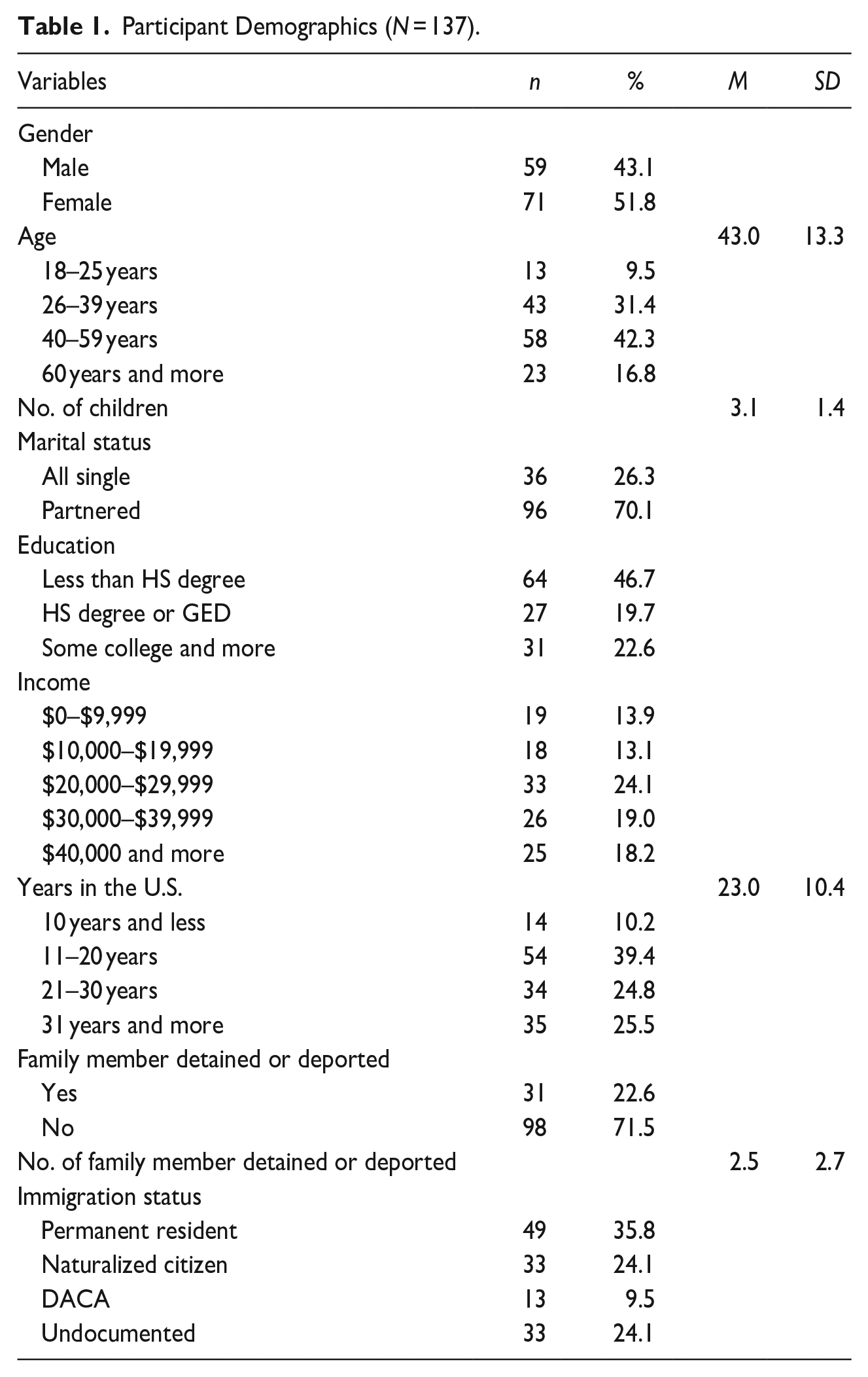
Participants’ average length of time in the U.S. was 23 years (SD = 10.4). Twenty-two percent (n = 31) indicated that an immediate family member had been detained or deported. Of those who reported experiencing the deportation of a family member, on average 2-3 (SD = 2.7) family members had been deported. Among participants, 35.8% (n = 49) were Permanent Residents, 24.1% (n = 33) were Naturalized Citizens, 9.5% (n = 13) were DACA recipients, and 24.1% (n = 33) were undocumented.
Psychological Distress
The average score for the Kessler 6 scale was 15.52, with a maximum score of 30. Sixty-one percent of the participants were experiencing psychological distress at a clinical range. In the regression, block one included the demographic control variables accounting for 3.8% of the model’s variance (R2 = .038, F(5,95) = .748, p > .05, see Table 2). In the second model, we included immigration-related variables that accounted for 11.2% of the variance (R2 .112, F(9,91) 1.275, p > .05). Status, deportation, and length of time in the U.S. were not significantly associated with psychological distress. In model 3, we included the immigration integration scale and the California policy knowledge score. Model 3 accounted for 24.8% of the model variance (R2 .248, F(11,89) = 2.668, p < .01). In model 3, education was a significant predictor compared to participants with less than high school education, those with “some college or more” experienced more psychological distress (.275). The integration scale was also significant; as the integration score increased, participants’ psychological distress decreased (-.462). In model 4, we included the PIPES subscale threat of family deportation, the model accounted for 28.2% of the variance (R2 = .282, F(12,88) = 2.874, p < .01). Education was no longer significant in model 4 with the addition of the PIPES subscale. Integration remained significant in Model 4, with individuals who scored higher on the integration scale reporting decreased psychological distress (−.353). Additionally, individuals who reported experiencing higher levels of threat of family deportation reported higher psychological distress (.250).
Hierarchical Regression Analysis—Kessler 6.
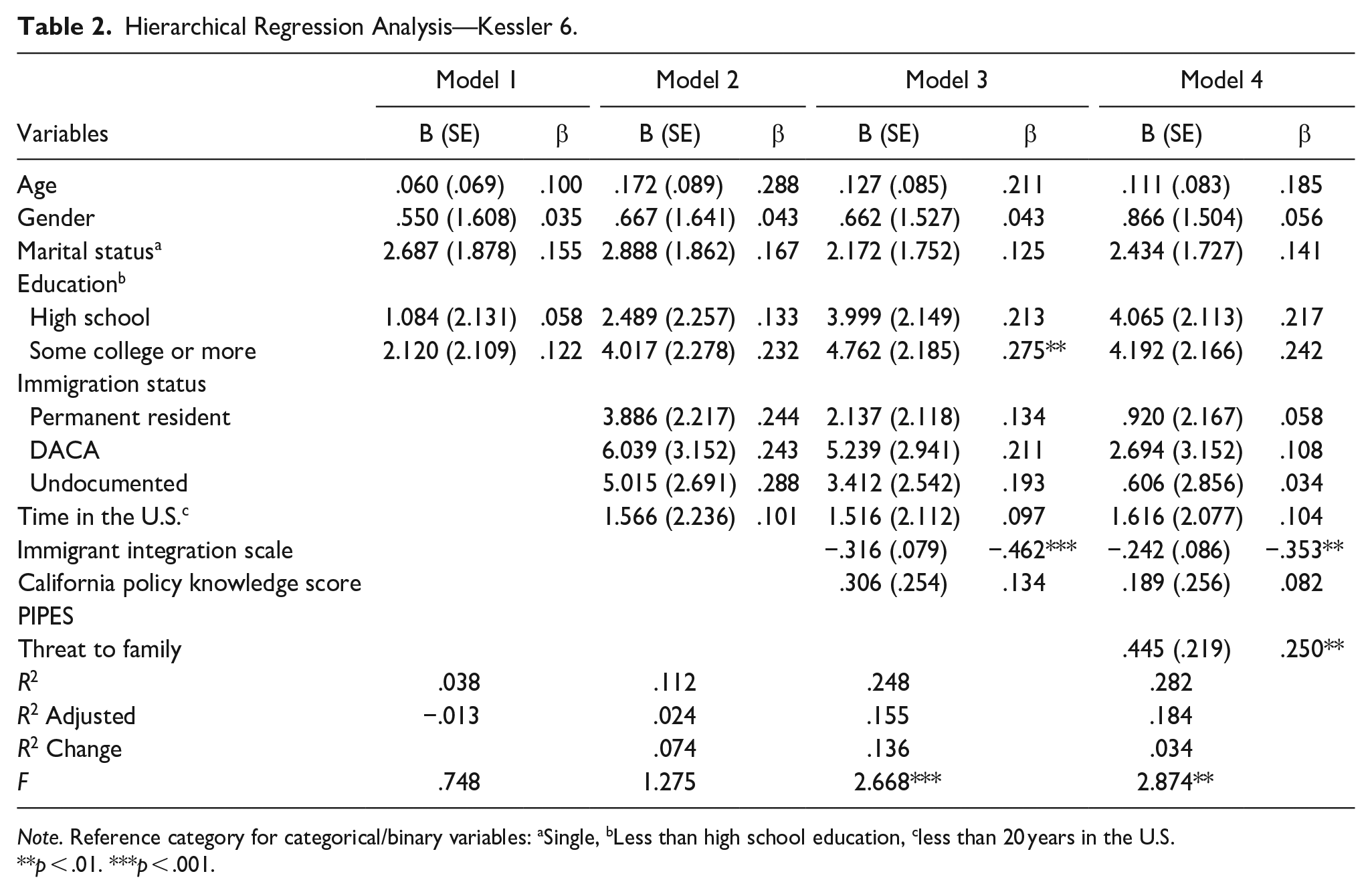
Note. Reference category for categorical/binary variables: aSingle, bLess than high school education, cless than 20 years in the U.S.
p < .01. ***p < .001.
Self-Rated Health
Over half of the participants rated their health as fair (n = 65, 47.5%) or poor (n = 7, 5.1%), and the remaining participants rated their health as very good (n = 35, 25.5%) or excellent (n = 17, 12.4%). Hierarchical regression included the demographics in model 1, which accounted for 10.9% of the model’s variance (R2 = .109, F(5,95) = 2.335, p < .05; see Table 3). In model 1, age was significant, indicating that as age increased (.243), participants reported worse self-rated health. In model 2, we added immigration-related variables, which accounted for 15.6% of the variance (R2 = .156, F(9,91) = 1.871, p > .05). With the addition of the immigration-related variables, age was no longer a significant predictor for self-reported health. We included the immigrant integration scale and the California Policy Knowledge score in model 3. The model accounted for 36.3% of the model variance (R2 = .363, F(11, 89) = 4.611, p < .001). Model 3 indicated that individuals who scored higher on the integration scale reported having better health (−.505). Lastly, we included the PIPES subscale threat of family deportation in model 4. The full model accounted for 40.5% of the variance (R2 = .405, F(12, 88) = 4.989, p < .001). The integration scale remained significant in model 4, indicating that individuals who scored higher on the integration scale reported better health (−.377). In addition, we found that compared to naturalized citizens, undocumented individuals reported having better health (−.391). We also found that participants who reported experiencing higher levels of threat of family deportation reported having worse health (.277) (Table 3).
Hierarchical Regression Analysis—Self-rated Health.
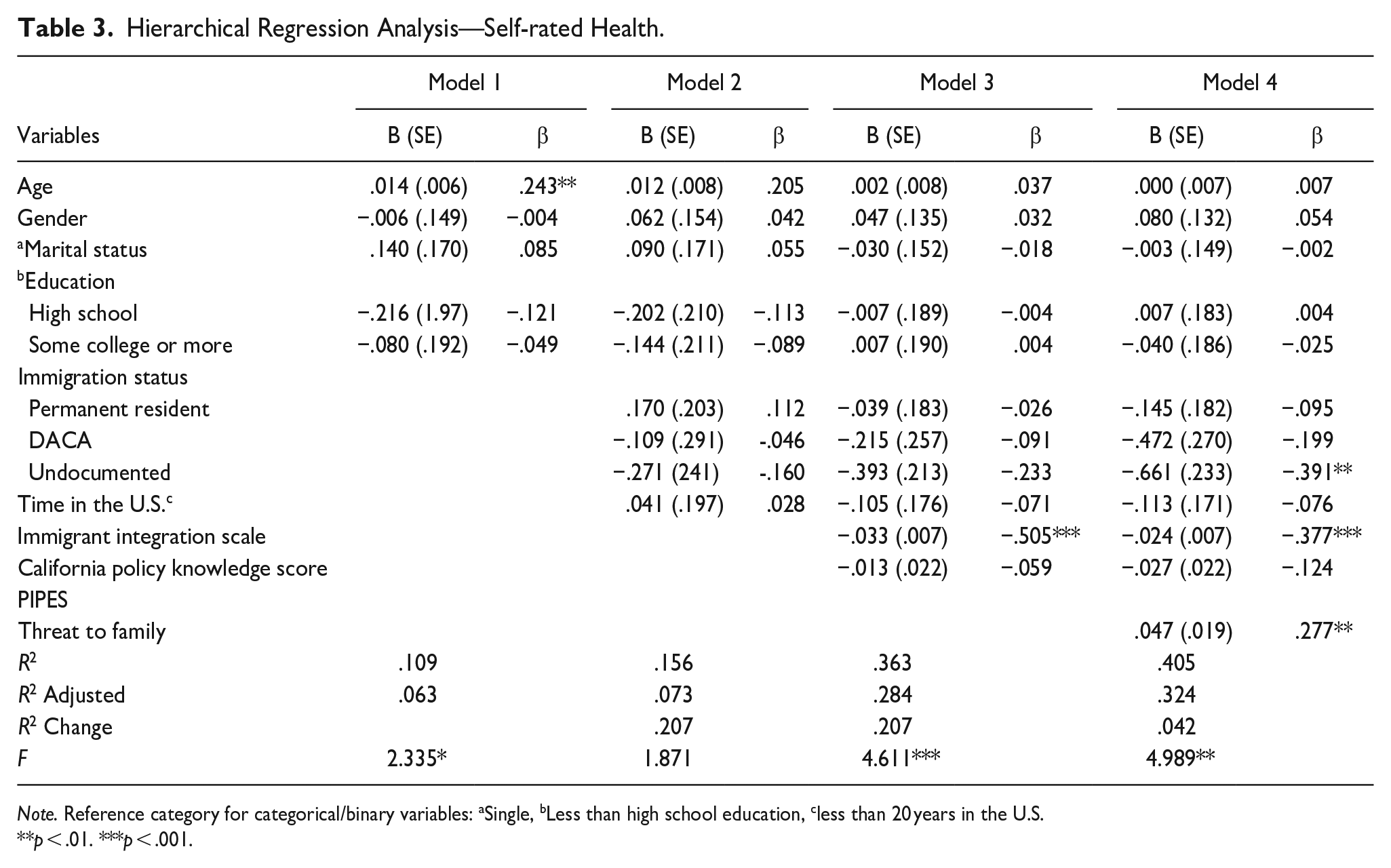
Note. Reference category for categorical/binary variables: aSingle, bLess than high school education, cless than 20 years in the U.S.
p < .01. ***p < .001.
Discussion
Given the surge in restrictive state-level immigration policies in the early 2000s and the continued restrictive immigration policy climate, much of the literature on the experiences of immigrants in the U.S. has focused on the impact of restrictive immigration policy and enforcement on immigrants’ health and well-being. The growing literature on state-level pro-immigration policies have documented the potential protective effects on Latinx immigrants’ health (Hatzenbuehler et al., 2017; Philbin et al., 2018). The state of California has been at the forefront of enacting pro-integration policies (Ramakrishnan & Colbern, 2015). Yet few studies have examined perceptions of immigrant integration in the U.S. and its association with health outcomes. Accounting for the nested structure of immigration policies, findings from this study indicate that pro-integration immigration state-level policies can be protective of health, but federal-level enforcement still remains a threat to immigrants’ health.
Immigrant Integration and Health
The hypotheses were partially supported as only the immigration integration scale was associated with improved health outcomes, as measured by psychological distress and self-rated health. Thus, integration indicators such as language, sense of belonging, access to services and resources, financial security, and civic engagement and advocacy are critical components of integration with implications for health. It is possible that individuals who had higher perceptions of integration may be more aware of the types of resources available to them, and in turn, experience improved health. Additionally, feeling welcome and safe in the state could also promote individuals’ sense of identity and connection to their community, improving their overall sense of health and well-being. In California, undocumented youth, regional coalitions, and allied organizations have played a significant role in advocating for pro-integration immigration policies. Social movements aimed at improving the social condition of the undocumented population strengthen individuals’ ties to their community and local allied organizations (Chávez, 2011; Walter, 2021). These types of social ties can help mitigate the social isolation unauthorized communities may experience due to exclusionary federal policies. Knowledge of immigration policies was not significantly related to psychological distress or self-rated health. On average, participants’ scores on the California Policy Knowledge scale was low. There is a persistent need to increase awareness, teach, and inform immigrant communities of such policies. More research is needed to explore how immigrants’ awareness of pro-immigrant policies shapes their health experiences.
Threat of Deportation and Health
Consistent with our hypothesis and other studies that have documented the negative effects of stringent immigration enforcement practices on immigrants’ health (Salas et al., 2013; Szkupinski Quiroga et al., 2014), we found that the threat of deportation was associated with increased psychological distress and a decline in self-rated health. For those who are undocumented or who have a family member who is undocumented, the federal level threat of deportation is always present. They experience it daily as they know and understand how detrimental the detention and deportation of a family member would be to their family and household. Anti-immigrant rhetoric and immigration enforcement, such as raids, serve as constant reminders of the threat to their family and own well-being. Consequently, individuals are emotionally affected as they experience “sadness, loss of energy, hopelessness, crying, anxiety, loss of sleep, weight loss and gain, anger, fear, hypervigilance, distrust, nightmares, and worry” (Brabeck et al., 2011, p. 284).
By introducing the variable threat of deportation in the final block of our model, we are able to assess how it changed our model, specifically the relationship between variables added in previous blocks and the outcomes. While the threat of deportation does not eliminate the protective relationship between perceived immigrant integration and health, we do see a decline (i.e., for psychological distress, −.462 to −.353; for self-rated health, −505 to −.377). This finding highlights that it is critical to account for the nested structure of immigration policy on the health of immigrants. Pro-integration policies serve to protect immigrants, but their day-to-day lives continue to unfold within the context of a restrictive national atmosphere which continues to place them at threat of deportation. Although state-level pro-integration policies can serve protective roles, the persistent threat of deportation and anti-immigrant federal enforcement climate continues to undermine these benefits. This interplay between protective state policies and harmful federal actions reflects the dynamic interactions among the multilayers policy structure.
Limitations
There are some limitations to the generalizability of the findings. The sample is small and based on convenience sampling. The study was completed in California, and results may not be representative of immigrant populations in other states or account for regional variations in California. The study sample size is smaller than expected as a result of the COVID-19 shutdown. In addition, this is a cross-sectional study, and we cannot infer causality (Levin, 2006). While the study has limitations, findings broaden our understanding of immigrants’ perceptions of immigration policy; and how pro-integration immigration policies can lead to better integration and improved health among Latinx immigrants.
Implications for Practice, Policy, and Future Research
Few studies have examined the relationship between pro-integration immigration policies and health outcomes. While pro-integration policies at the state level can be protective of Latinx immigrants’ health, the lack of a comprehensive immigration reform deeply impacts Latinx immigrant communities (Daftary, 2020). Prior research on Latinx immigrants has documented the deleterious and long-lasting impacts of the threat of deportation on access to health care and health outcomes (Salas et al., 2013; Vargas, 2015) and the traumatic experiences of discrimination and anti-immigrant policies on Latinx immigrants’ health (Rojas-Perez et al., 2023; Viruell-Fuentes et al., 2012). There is a need for more education and advocacy to inform policymakers of the long-lasting effects of anti-immigrant policies and the limits to the protective capacity of state-level policies. The lack of immigration reform is detrimental to unauthorized and mixed-status communities. Access to health care and support services is critical. COVID-19 demonstrated the lack of support services, particularly for undocumented immigrants (Garcini et al., 2024). There is also a need for more resources among local NGOs to disseminate education on pro-immigrant policies in Latinx communities.
To assess causal effects, national datasets need to collect information about nativity and legal status in an ethical manner. Few representative datasets have information on status limiting the cause-and-effect assessment of pro-integration policies. Those that do have information on status still have small samples (see Nieri et al., 2023). Additional research is needed to validate our integration measure to determine if changes are needed and its application with other immigrant populations. Future research should aim to examine how different policy areas are related to indicators of health and well-being. By focusing on the different policy areas (access to higher learning vs. access to health care or a driver’s license), we can get a sense of which policies are needed to protect immigrants and support their integration. Future studies should dive deeper into how nested structures of immigration policy—at the federal, state, and local level—inform health trajectories in immigrant populations, thus amplifying our understanding of perceived integration and immigrant health.
Supplemental Material
sj-docx-1-hjb-10.1177_07399863241274168 – Supplemental material for Latinx Immigrant Health: Does Immigrants’ Perceptions of Integration Protect their Health?
Supplemental material, sj-docx-1-hjb-10.1177_07399863241274168 for Latinx Immigrant Health: Does Immigrants’ Perceptions of Integration Protect their Health? by Mirella Deniz-Zaragoza, Esaú Casimiro Vieyra and Cecilia Ayón in Hispanic Journal of Behavioral Sciences
Footnotes
Acknowledgements
We are grateful to the Center for Community Action and Environmental Justice (CCAEJ), the Inland Coalition for Immigrant Justice (IC4IJ), and the Inland Empire Immigrant Youth Collective for helping us disseminate our study to their membership and community.
Declaration of Conflicting Interests
The author(s) declared no potential conflicts of interest with respect to the research, authorship, and/or publication of this article.
Funding
The author(s) received no financial support for the research, authorship, and/or publication of this article.

Supplemental Material
Supplemental material for this article is available online.
Author Biographies
References
Supplementary Material
Please find the following supplemental material available below.
For Open Access articles published under a Creative Commons License, all supplemental material carries the same license as the article it is associated with.
For non-Open Access articles published, all supplemental material carries a non-exclusive license, and permission requests for re-use of supplemental material or any part of supplemental material shall be sent directly to the copyright owner as specified in the copyright notice associated with the article.
