




Abstract
This study examines how neighborhood perceptions, measured through satisfaction and observable conditions, relate to risk perception and shape residents’ disaster preparedness behaviors. It employs regression models using the 2017 American Housing Survey data. Findings indicate that households satisfied with their neighborhoods are more likely to engage in disaster preparedness behaviors. Moreover, the presence of abandoned structures or the lack of good schools discourages such actions. In communities with low awareness of disaster risks, improving neighborhood conditions can encourage disaster preparedness behaviors and increase community protection against disaster risks.
Keywords
Introduction
As climate change accelerates and disasters become more unpredictable, it is increasingly important for households to understand how to prepare for and cope with these events (Keim 2008). Researchers have investigated how human actions before, during, and after disaster events affect the vulnerability and ability of households and communities (Aerts et al. 2018; Fritz 1961; Masterson et al. 2014). For households, preparedness actions such as collecting knowledge and resources can minimize disaster effects (Keim 2008; Paton 2003). When households are prepared, they can leverage their social connections to collaborate on risk-reduction efforts, strengthen community resilience, and collectively lower vulnerability (Kapucu, Hawkins, and Rivera 2013). These efforts ultimately foster a more disaster-resilient society.
Although disaster preparedness is critical, household preparedness remains low in many communities (Kapucu 2008; Levac, Toal-Sullivan, and O’Sullivan 2012), motivating extensive research on the factors that promote such actions. For example, risk perception can influence households’ motivation to prepare for disasters (Lindell and Perry 2012). However, risk perception is not an objective measure, as it relies on people’s knowledge or information, entailing that it is subject to residents’ feelings and emotions.
Neighborhood contexts also shape human behaviors, including disaster preparation. Using neighborhood satisfaction levels, prior studies assessed how neighborhood perceptions influence disaster resilience, particularly in response to recovery actions (e.g., Frey 2018). When examining disaster preparedness behaviors, scholars have primarily focused on neighborhood attachment in their investigations (e.g., De Dominicis et al. 2015; Kim and Kang 2010; Mishra, Mazumdar and Suar 2010; Wallis, Fischer, and Abrahamse 2022). However, the role that neighborhoods play in household perceptions and disaster preparedness behaviors is not straightforward. For instance, perceiving physical disorder or feeling unsafe may either motivate preparedness by creating a sense of urgency, or discourage it by fostering helplessness.
This study examines how and in what ways neighborhood perceptions relate to risk perception and encourage residents’ disaster preparedness behaviors. To the best of our knowledge, the relationship between neighborhood perceptions and disaster preparedness behaviors has not yet been studied. The intent is to provide evidence to guide strategies that strengthen neighborhood-level disaster preparedness as a means to enhance disaster resilience.
Disaster Preparedness and Risk Perceptions
Emergency preparedness is defined as “pre-impact actions that provide the human and material resources needed to support active responses at the time of hazard impact” (Lindell 2013a, 803). Hazards can range from natural catastrophes, such as earthquakes, flooding, and hurricanes, to human-caused hazards such as oil spills and explosions (Scannell et al. 2016). They are considered disasters if they have a direct or indirect impact on society, such as when their scale exceeds the ability of a community to cope with the situation (Masterson et al. 2014). To deal with disasters, households’ disaster preparedness is as important as disaster response (Masterson et al. 2014). A typical measure of household disaster preparedness is the number of emergency resources intentionally or coincidentally available to households (Levac, Toal-Sullivan, and O’Sullivan 2012), including emergency plans, tools, medical supplies, basic supply items (e.g., water and food), and plans for potential shelters (Paton 2003).
Some studies have examined the factors that encourage households to engage in disaster preparedness behaviors. Scholars found that acquiring knowledge about potential disasters and ways to prepare for them and having access to the required media and communication all help increase disaster preparedness (Kellens, Terpstra, and De Maeyer 2013; Kim and Kang 2010). Moreover, factors that may motivate households to engage in disaster preparedness include the extent of their knowledge of disaster(s) (Hoffmann and Muttarak 2017; Rivera 2020), personal experiences (Hoffmann and Muttarak 2017; Malmin 2021; Zaalberg et al. 2009), gender, race, ethnicity, income, age, family type (Lindell and Hwang 2008; Lindell and Perry 2000; Mishra, Mazumdar, and Suar 2010), length of residence, and home ownership (Mishra, Mazumdar, and Suar 2010).
The decision-making process surrounding household disaster preparedness is rather complex. Most theories and models that attempt to explain the behavioral process associated with household disaster preparedness focus on risk perception. The protection motivation theory is widely known and illustrates how households prepare for potential risks (Rogers 1975). This theory was originally introduced to explain health-related risk behaviors but has since been extended to the context of natural hazard risk (Bubeck, Botzen, and Aerts 2012; Floyd, Prentice-Dunn, and Rogers 2000; Mulilis and Lippa 1990). It distinguishes underlying risk perceptions through the perception of the likelihood of a potential risk and the perception of the ability to cope with the risk (Poussin, Botzen, and Aerts 2014). Another related model is Paton’s model of disaster preparedness, which specifies the process of intention formation that promotes hazard adjustment behavior (Paton 2003). This model was further developed to add social cohesion and empowerment as mediators (Joffe et al. 2016). Additionally, Lindell and Perry’s (2012) modified protective action decision model suggests that the preparedness decisions follow a household’s assessment of a threat, other protective actions, and pertinent stakeholders (e.g., information sources).
In the disaster preparedness literature, risk perception has long been a major research topic. To ensure that households are prepared for disasters, it is critical to share knowledge of potential risks within the community (Lee et al. 2023), as households with a strong sense of risk perception tend to engage in proactive behaviors (e.g., Poussin, Botzen, and Aerts 2014). Nonetheless, the relationship between risk perception and disaster preparedness is still quite complex (Scolobig, De Marchi, and Borga 2012), and it remains unclear how risk perception influences disaster preparedness decisions (e.g., Bubeck, Botzen, and Aerts 2012; Greer, Wu, and Murphy 2018). For example, Bubeck, Botzen, and Aerts (2012) found limited evidence that risk perception has a meaningful impact on disaster preparedness. They also found that the weak explanatory power of risk perception may be due to other factors that mediate the actual effects of risk perception. Other studies have found that low-income or minority households tend to have low levels of preparedness even when risk is perceived (Van Zandt et al. 2012), and that other variables such as previous hazard experiences, proximity to hazard (Knuth et al. 2014), and subjective norms (Ng 2022) could potentially mediate the relationship between risk perception and preparedness. Meanwhile, Greer, Wu, and Murphy (2018) found that risk perception is not a critical factor in disaster preparedness, especially in the absence of disaster experience. Huntsman, Wu, and Greer (2021) found that risk perception does not encourage households to obtain disaster supplies before a disaster occurs. Relatedly, Weinstein and Nicolich (1993) argued that cross-sectional analyses cannot fully capture reciprocal causation: heightened risk perception may increase preparedness, which, in turn, reduces perceived risk.
Neighborhood Perceptions in Pre-Disaster Contexts
In pre-disaster contexts, residents’ perceptions of their neighborhoods may influence their risk perception and disaster preparedness behaviors. The National Research Council, the primary operational body of the National Academies of Sciences, Engineering, and Medicine (n.d.), defines resilience as “the ability to prepare and plan for, absorb, recover from or more successfully adapt to actual or potential adverse events” (The National Academies, with Committee on Increasing National Resilience to Hazards and Disasters, Committee on Science, Engineering, and Public Policy, and Policy and Global Affairs 2012, 16). Scannell et al. (2016, 161) further define resilience as “an individual capacity to identify and access resources (e.g., psychological, social, cultural, and physical), and the individual and collective ability to ensure the equitable and culturally relevant provision and access to these resources,” emphasizing the influence of pre-disaster socioeconomic and physical vulnerabilities.
Residents’ neighborhood perceptions are influenced by socioeconomic and physical contexts, often through a shared collective image of the neighborhood (Sampson 2012), and by individual profiles (e.g., sociodemographic and housing characteristics; Kellens et al. 2011). Physical and social disorder can negatively influence neighborhood perceptions, as they may serve as indicators of neighborhood deterioration and abandonment (Brown, Perkins, and Brown 2003; Lee, Newman, and, Day 2024). Concerns about public safety and perceived criminal activities are additional factors that negatively shape residents’ neighborhood perceptions (Ferguson and Mindel 2007; Mesch and Manor 1998; Zhang et al. 2021). Conversely, neighborhoods that are clean, safe, and have high-quality schools tend to be perceived more favorably (Bonaiuto et al. 1999).
Studies on disaster preparedness and neighborhood perceptions usually employ place attachment to describe the emotional bond between individuals or groups and a place (Hidalgo and Hernández 2001; Low and Altman 1992; Scannell and Gifford 2010). Place attachment is also considered an essential component of human experience (Scannell et al. 2016). Individual factors associated with place attachment include socioeconomic characteristics such as one’s educational level (Comstock et al. 2010; Mesch and Manor 1998), homeownership (Brown, Perkins, and Brown 2003; Comstock et al. 2010; Mesch and Manor 1998), race and ethnicity (Brown, Perkins, and Brown 2003; Comstock et al. 2010), length of residence (Manzo and Perkins 2006), and knowledge of a place (Scannell and Gifford 2010). Turner, Nigg, and Paz (1986) found that community “bondedness” is related to disaster preparedness for earthquakes. Although they did not use the term “place attachment,” community bondedness is conceptually similar to place attachment.
Place attachment is known to promote disaster resilience (Berkes and Ross 2013; Mishra, Mazumdar, and Suar 2010; Wei 2022), although empirical findings on this relationship remain mixed (Lindell and Perry 2000). For example, place attachment can impart a false sense of security and hinder people’s ability to cope with the threats of potential hazards (Scannell et al. 2016), and it can also decrease the impact of risk perceptions on disaster preparedness (De Dominicis et al. 2015). Place attachment can also influence household recovery (Frey 2018) and relocation decisions (Depari and Lindell 2023) and has been shown to support preparedness during a disaster event but not beforehand (Kim and Kang 2010). Some more recent studies found that place attachment is positively associated with community-level preparedness and management rather than household preparedness behaviors (Peng et al. 2020; Wallis, Fischer, and Abrahamse 2022).
In the pre-disaster context, neighborhood satisfaction has received relatively little research attention compared to place attachment. Neighborhood satisfaction differs from place attachment, as a household may be happy with its neighborhood but not necessarily be attached to it (Mesch and Manor 1998; Ringel and Finkelstein 1991). For example, high neighborhood satisfaction can arise without social bonding or long term residency, indicating that neighborhood satisfaction is a component of place attachment shaped by how households perceive the built environment (Scannell and Gifford 2010).
Over the past fifty years, protection motivation theory and protective action decision model have served as the theoretical foundation for understanding protective behaviors. Building on Lindell and Perry’s (2012) modified protective action decision model, researchers have investigated how neighborhood perceptions influence disaster preparedness behaviors, particularly through place attachment dimensions such as shared culture and community support. Extant work, however, has not sufficiently examined other dimensions of residents’ neighborhood perceptions. To address this gap, this study investigates how and in what ways these perceptions relate to risk perception and household disaster preparedness behaviors.
Data and Methods
Conceptual Framework
This study specifies four models. Models 1 and 2 analyze neighborhood perceptions as an explanatory variable for the dependent variable, disaster preparedness behaviors, while Models 3 and 4 assess neighborhood perceptions as a moderating variable influencing the relationship between risk perception and disaster preparedness behaviors. Neighborhood perceptions are measured in two ways: (1) through households’ overall neighborhood satisfaction in Models 1 and 3 and (2) using specific variables representing observed neighborhood conditions in Models 2 and 4. Figure 1 presents the conceptual framework.
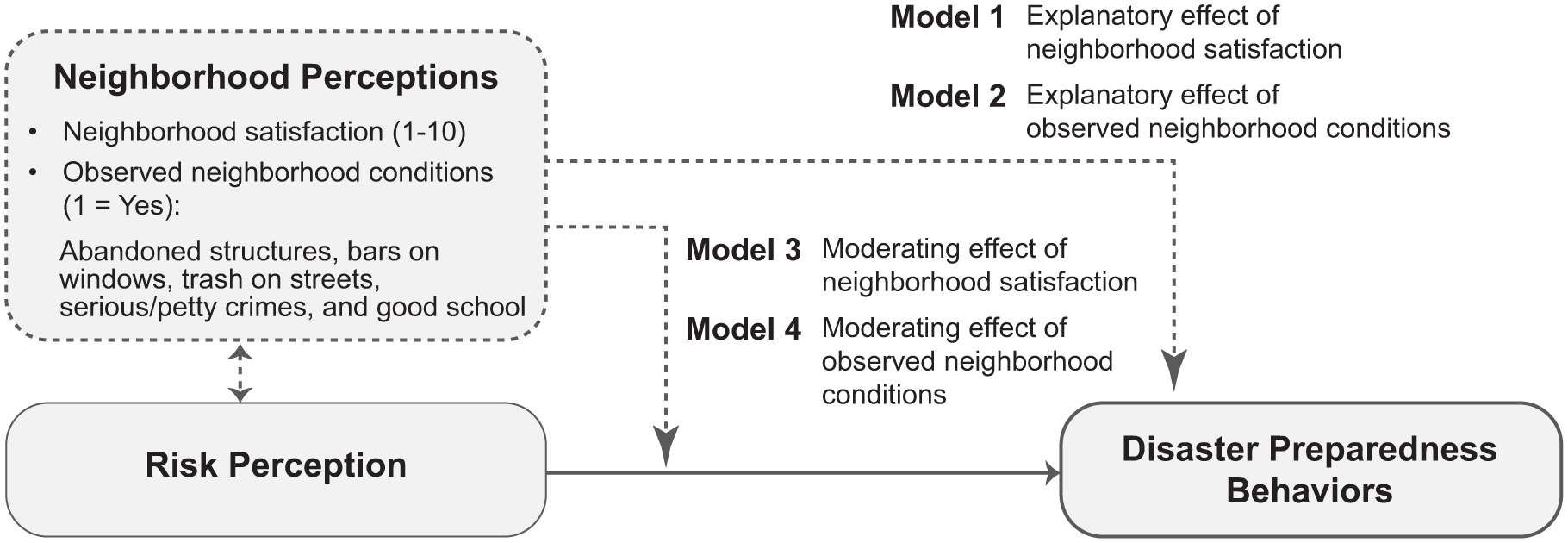
Conceptual framework.
Data and Study Area
This study used national-level microdata from the 2017 American Housing Survey (AHS) comprising a sample of 9,254 observations. The AHS is a bi-annual survey on housing and neighborhood conditions conducted by the U.S. Department of Housing and Urban Development. The 2017 AHS dataset includes observations from the fifteen largest U.S. metropolitan areas based on 2013 population estimates, ten additional metropolitan areas selected from a pool of twenty metropolitan areas, and non-metropolitan areas. Each survey year includes both core questions and topical modules. Importantly, this study used data from the 2017 survey, which uniquely included fifteen survey items on disaster planning. Because the AHS employs a stratified sampling method, this study applied the weight variable provided in the AHS dataset to ensure representative estimates.
Measuring Neighborhood Perceptions and Disaster Preparedness Behaviors
The dependent variable for this study is disaster preparedness behaviors. Among the AHS survey items, the following ten survey questions are directly related to disaster preparedness: (1) availability of non-perishable emergency food; (2) water; (3) emergency kit; (4) disaster plan with financial and contact information; (5) meeting location; (6) alternative communication plan (other than use of cell phones); (7) backup generator; (8) evacuation location to stay for two weeks; (9) vehicle; and (10) financial resources for evacuation (e.g., savings of $2,000 or a credit card available balance of $2,000). Each response was coded as a binary variable, and the sum of these variables resulted in a preparedness score ranging from 0 to 10, with higher scores indicating greater household disaster preparedness behaviors. This scoring method is frequently used in disaster preparedness research, where researchers sum up yes/no answers to create an overall preparedness score (Al-rousan, Rubenstein, and Wallace 2014; Zamboni and Martin 2020) or create dummy variables after summing up the yes/no responses (Ablah, Konda, and Kelley 2009; Bethel, Foreman, and Burke 2011). The author conducted Cronbach’s reliability tests for these ten variables (α = .6413), which showed an acceptable internal reliability (Daud et al. 2018; Tavakol and Dennick 2011). Following the literature reviewed above, this study also included household risk perception as a key predictor of disaster preparedness behaviors. Risk perception was measured using a binary survey question from the AHS that asked whether respondents perceived their neighborhood of residence to be at high risk for natural disasters.
This study measures neighborhood perceptions in two ways, based on the AHS survey: overall neighborhood satisfaction and specific observed neighborhood conditions. Respondents rated their neighborhood satisfaction on a scale from 1 to 10. For ease of interpretation, this study codes the satisfaction rating as a continuous variable. To capture observed neighborhood conditions, this study uses six binary variables from the AHS neighborhood features category that represent positive or negative neighborhood perceptions: the presence of abandoned structures, bars on windows, trash on the street, petty crime, serious crime, and good schools. The study excludes other binary variables due to their ambiguous valence.
Additionally, the study included selected housing, household, and spatial characteristics as confounding variables. These factors were included because prior research shows that they relate to disaster preparedness (Lindell 2013b) and neighborhood perceptions (Kellens et al. 2011). Housing characteristics comprised whether the unit was part of a subdivision, a multi-family building (e.g., apartment or condominium), or a mobile home; the year when the house was built; the unit size; and the presence of a garage or porch. Household characteristics encompassed whether household members were a minority, the year in which the residents moved into the residence, whether the residents had a college education, their income level, whether the household’s income was below the poverty level, and whether the household was a tenant or owner. This study also included a variable representing mandatory flood insurance information, which captured households living in areas with high flood risk. While floods are only one form of disaster, they are the most prevalent. To reduce potential bias from omitted indicators of disaster preparedness behaviors, this study includes data on flood insurance. Other spatial variables that were controlled for included a variable reflecting a resident’s Census region (i.e., Northeast, South, West, or Midwest) and a dummy variable indicating the resident’s metropolitan area.
Analytical Procedures
This study used four regression models to identify the explanatory and moderating effects of neighborhood perceptions on disaster preparedness behaviors. The first two models examined the direct effect of neighborhood perceptions on disaster preparedness behaviors (Model 1 with neighborhood satisfaction ratings, and Model 2 with observed neighborhood conditions). The other two models tested the interaction effect of risk perception and neighborhood perceptions (Model 3 with neighborhood satisfaction rating and Model 4 with observed neighborhood conditions) to determine whether the effects of neighborhood perceptions changed when households perceived higher or lower risk.
The dependent variable (i.e., disaster preparedness behaviors) has a ranked scale from 1 to 10, making ordered logistic (OL) regression the appropriate method. For an intuitive interpretation of the coefficients, however, this study tested ordinary least squares (OLS) regressions (which assume that the dependent variable is a continuous variable) alongside the ordered logit regressions. With the dependent variable showing a left-skewed distribution (Figure 2), the Breusch-Pagan/Cook-Weisberg test as well as the White/Koenker test showed potential heteroskedasticity. Thus, to ensure better model fit, this study tested a model including the squared dependent variable, and the estimates were equivalent to those from the OLS regression without the squared term. Although omitted variable bias is an inherent challenge in empirical research, the model specification grounded in protection motivation theory and the protective action decision model, together with robustness checks (e.g., alternative specifications and sensitivity analyses), provides reassurance that the findings remain robust despite unobserved confounders. Finally, due to concerns about the statistical power of the large sample size for detecting small effects in neighborhood perceptions, this study employed a 0.01 significance level (p < .01) rather than the conventional 0.05. Using a 0.01 significance level also minimized concerns regarding the experiment-wise error rate because the large number of coefficients in the models could have led to a high false discovery rate (Benjamini and Hochberg 1995; Glickman, Rao, and Schultz 2014).
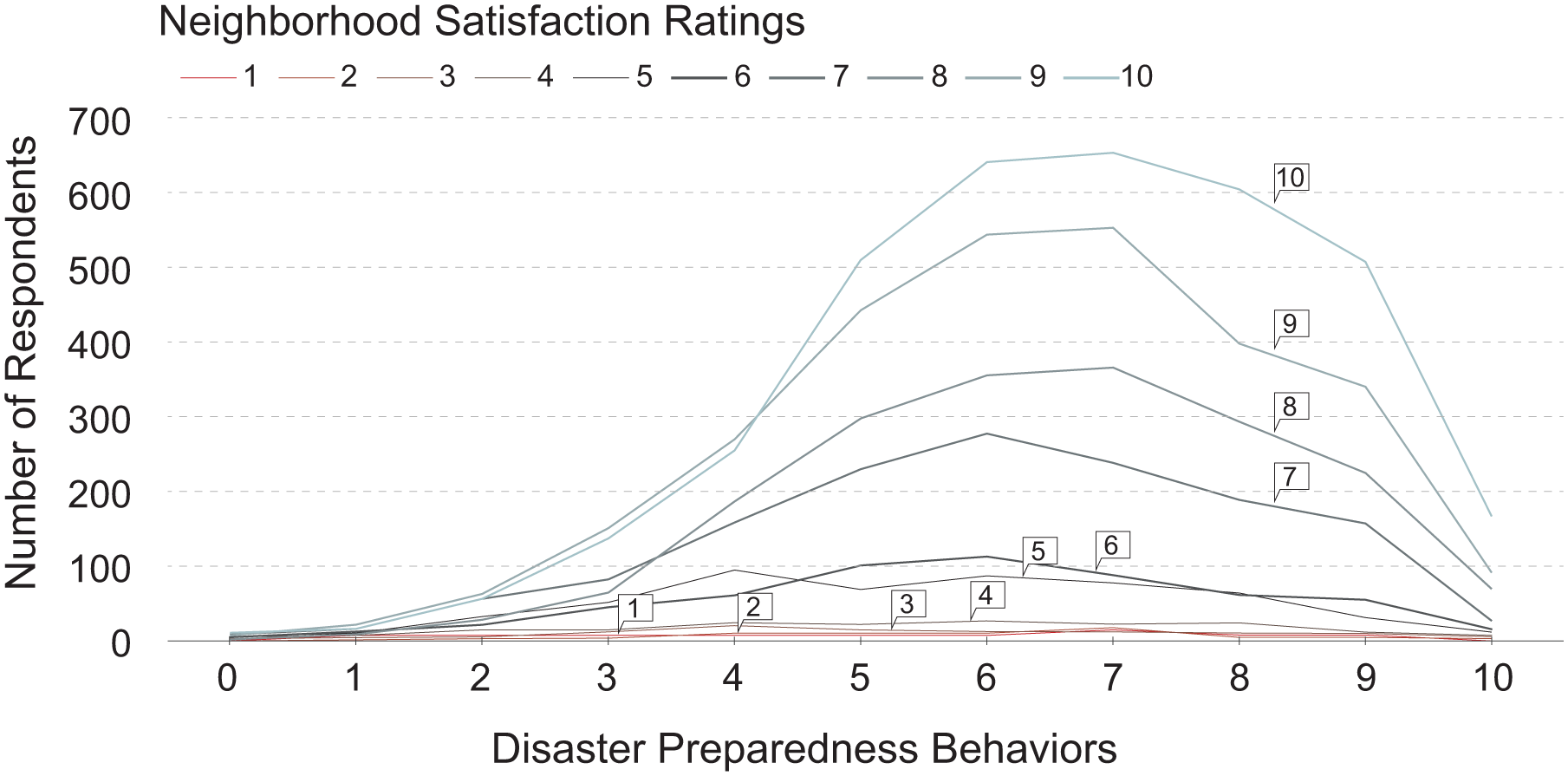
Neighborhood satisfaction ratings by degree of disaster preparedness behaviors.
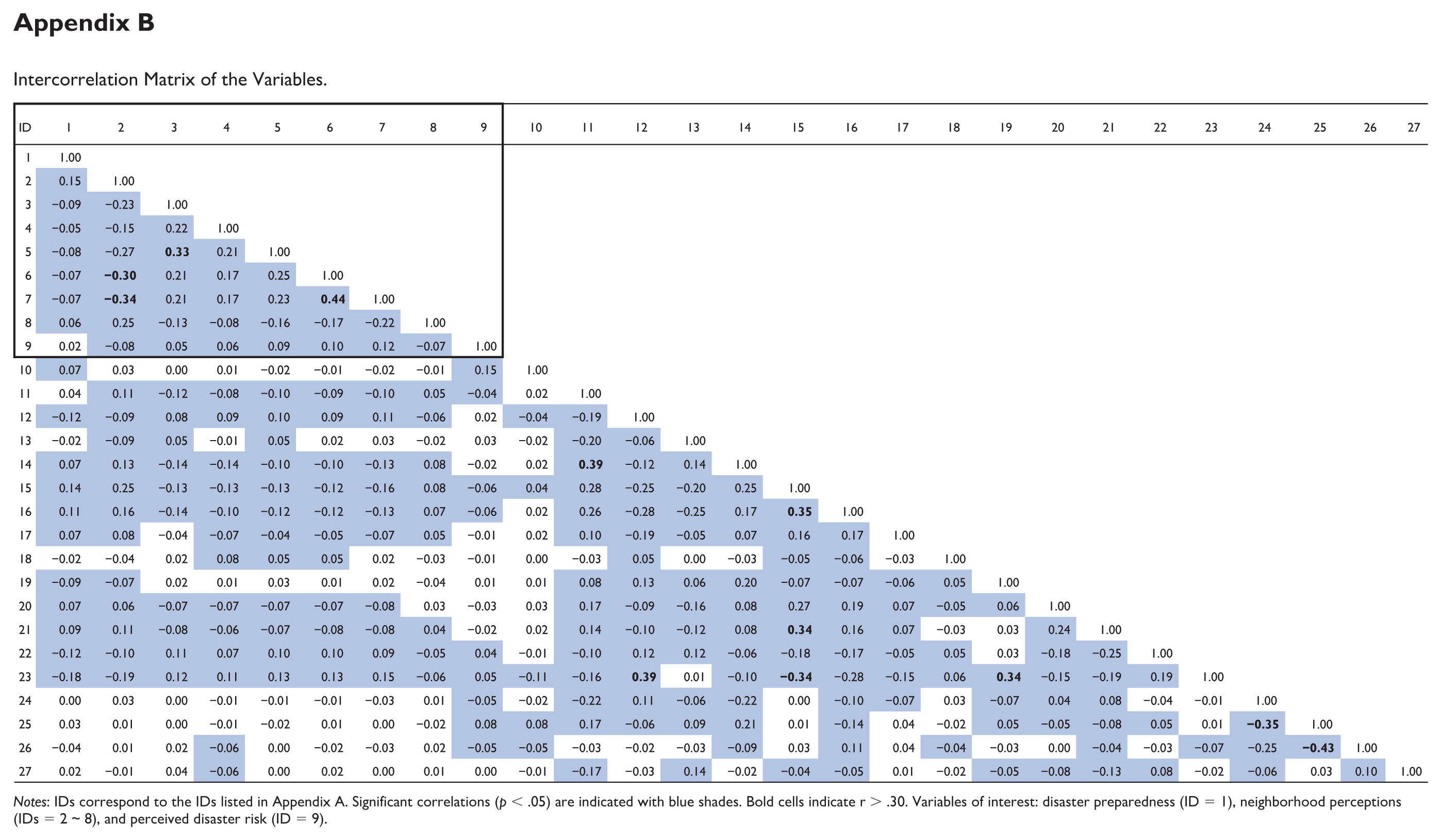
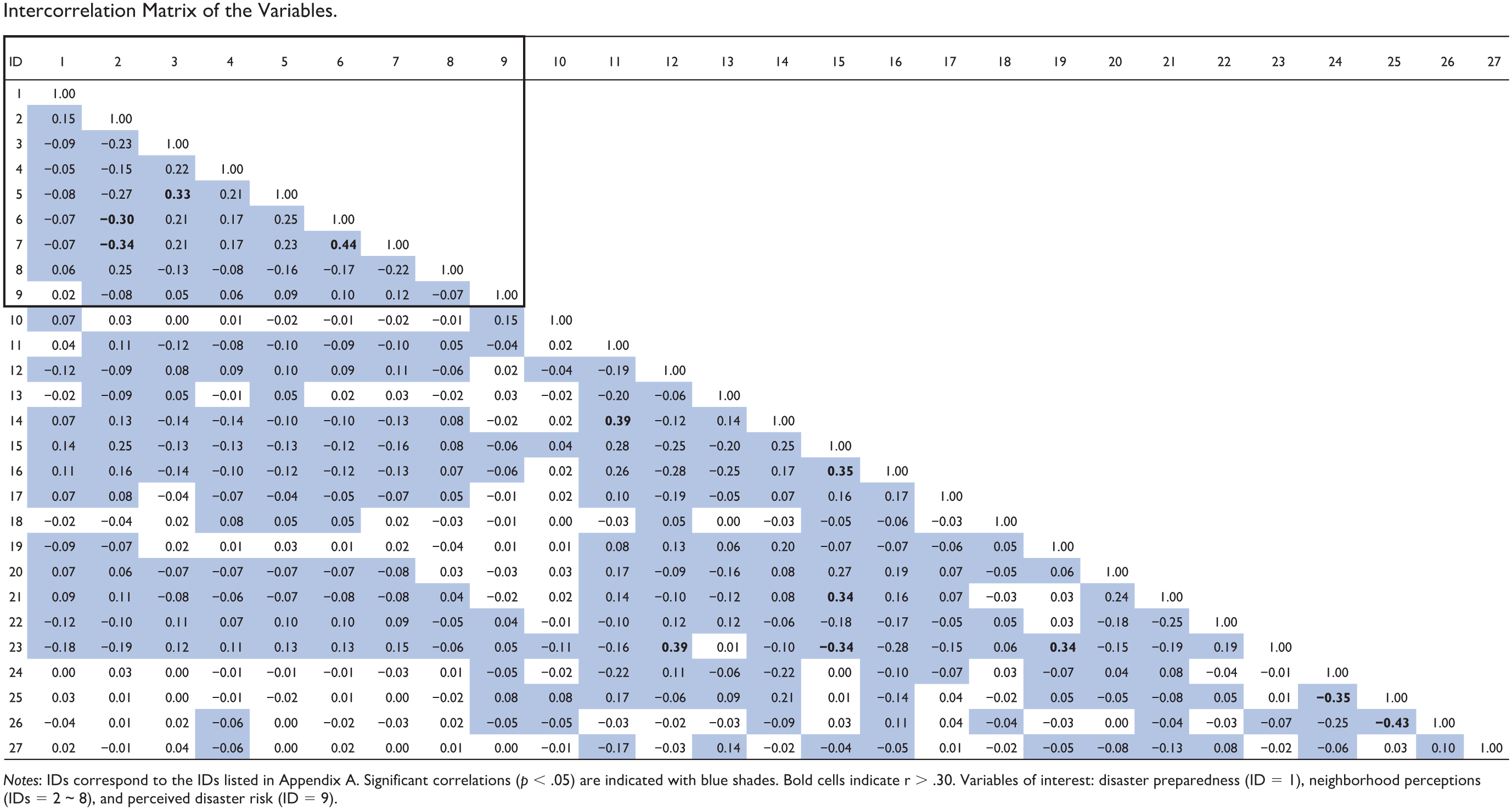
Appendix A presents descriptive statistics. When comparing neighborhood satisfaction rating and disaster preparedness behavior variables (Figure 2), it becomes clear that households with high disaster preparedness behavior scores tend to have higher neighborhood satisfaction scores. This study also examined the potential correlations among the variables and multicollinearity in the regression models. When examining the correlations among all twenty-seven variables (Appendix B), most coefficients were distinct but correlated (range: .00–.43), with the majority falling below .3. All variance inflation factors were below two, indicating that multicollinearity was not a major problem.
Relationship between Neighborhood Perceptions, Perceived Risk, and Disaster Preparedness Behaviors
Models 1 and 2 showed that risk perception marginally predicted disaster preparedness behaviors (Table 1). Specifically, when households perceived a hazard risk in the neighborhood, their preparedness increased by 0.236 in Model 1 (p < .05) and 0.245 in Model 2 (p < .01). Some of the variables representing neighborhood perceptions also turned out to be significantly related to disaster preparedness behaviors. For example, the presence of abandoned structures in the neighborhood led to a preparedness score drop of 0.391 points (p < .01), indicating a negative association. Although perceptions of bars on windows, trash on the street, as well as petty and serious crime were not significantly related to disaster preparedness behaviors, good schools were strongly associated with disaster preparedness behaviors (unstandardized regression coefficient b = 0.234, p < .01). Furthermore, neighborhood satisfaction was significantly positively related to disaster preparedness behaviors. Specifically, when the satisfaction score increased by one point, the preparedness score increased by 0.114 points (p < .001).
Relationship between Neighborhood Perceptions and Disaster Preparedness Behaviors.
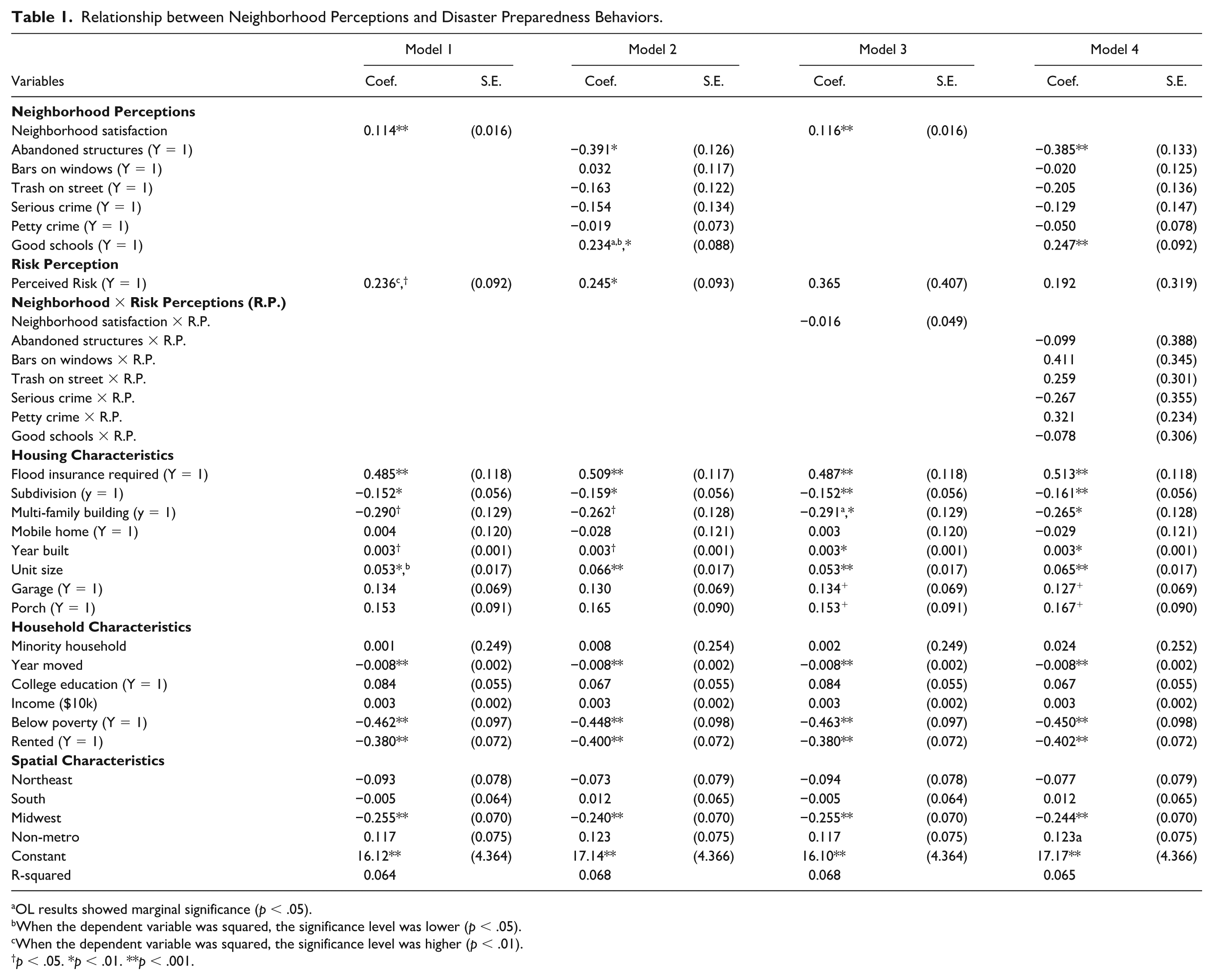
OL results showed marginal significance (p < .05).
When the dependent variable was squared, the significance level was lower (p < .05).
When the dependent variable was squared, the significance level was higher (p < .01).
p < .05. *p < .01. **p < .001.
Other variables exhibited consistent patterns across the models, and several showed a common relationship with disaster preparedness behaviors (Table 1). For instance, households with mandatory flood insurance engaged in a higher number of disaster preparedness behaviors, regardless of their level of risk perception. Households living in subdivisions generally carried out a lower number of disaster preparedness behaviors, while those with incomes above the poverty level and living in large, recently constructed units demonstrated a significantly higher number of disaster preparedness behaviors. The OL and OLS models produced very similar results. For ease of interpretation, Table 1 presents the OLS estimates, with annotations noting any differences in significance levels between the models. The OL results are available upon request.
In Models 3 and 4, none of the interaction terms were significantly associated with disaster preparedness behaviors. Neighborhood perceptions did not necessarily alter the relationship between risk perception and disaster preparedness behaviors, despite having significant direct effects on such preparedness in Models 1 and 2. Indeed, there are complex mechanisms underlying the effects of risk perceptions on disaster preparedness behaviors (Bubeck, Botzen, and Aerts 2012), and there is the potential of reciprocal causation in this cross-sectional study (Weinstein and Nicolich 1993). Figure 3 displays the OLS coefficients from Models 1 to 4.
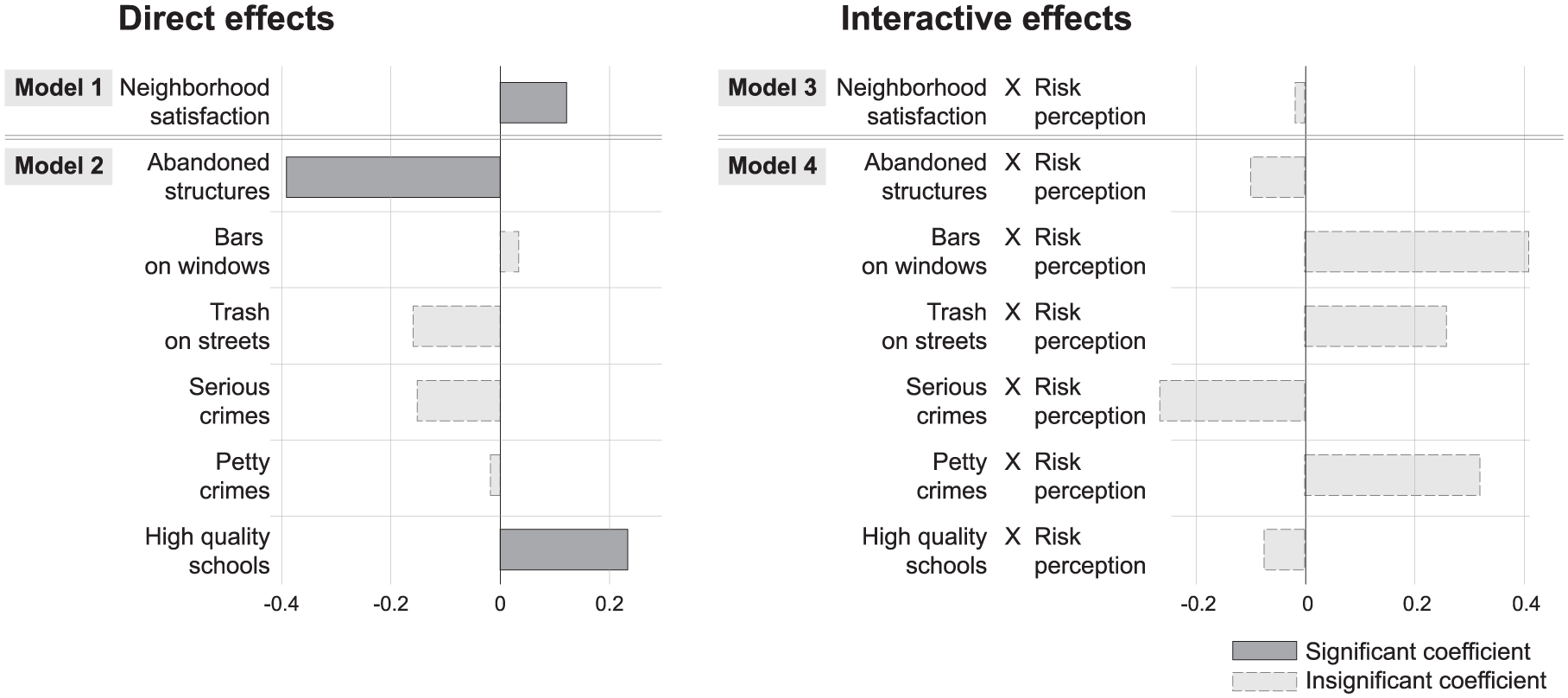
Regression coefficients for neighborhood perceptions variables.
Discussion and Conclusions
This study contributes to understanding the potential relationship between neighborhood perceptions and disaster preparedness behaviors by measuring neighborhood perceptions in two ways: first, based on residents’ neighborhood satisfaction, which is an overall perception and, second, based on six variables representing observed neighborhood conditions. These six variables represented observable physical disorder (i.e., abandoned structures and trash on the street), neighborhood safety (i.e., bars on windows and petty/serious crimes), and the presence of good schools. This research found that households more satisfied with their neighborhoods prepared more for disasters, while households that perceived that the neighborhood featured abandoned structures and lacked good schools carried out a significantly lower number of disaster preparedness behaviors. However, there was no evidence that neighborhood perceptions altered the association between perceived disaster risk and disaster preparedness.
Limitations
The findings should be interpreted with caution, owing to some limitations. First, this study did not include some known factors of disaster preparedness, such as proximity to disasters and previous experience with disasters, because the AHS lacked such data. Second, the research controlled only for the most common natural disaster—floods—using flood insurance purchase information. However, the AHS data includes information on risk perception, as it queries residents as to whether their neighborhood has any potential hazard risks. Therefore, this measure may have captured some unmeasured hazard-related characteristics, such as past disaster experiences and knowledge of hazards. Third, this study controlled for respondents’ socioeconomic characteristics but could not capture neighborhood-level socioeconomic characteristics because the public AHS data provided limited locational information. Still, the neighborhood characteristics may have limited the ability of households to prepare for disasters. Because the public AHS dataset only identifies metropolitan areas and lacks detailed spatial information, this study could identify only regional differences and could not assess site specific characteristics. Because the Breusch-Pagan/Cook-Weisberg and White/Koenker tests indicated potential heteroskedasticity, the results may be affected by omitted variable bias, highlighting the need for further research. Fourth, although consistent with most existing disaster risk research, this study used a cross-sectional design that does not allow for the interpretation of longitudinal relationships (Hudson, Thieken, and Bubeck 2020; Siegrist 2014; Weinstein and Nicolich 1993).
Role of Neighborhood Perceptions in Disaster Preparedness
This study highlights the importance of improving neighborhood perceptions to motivate disaster preparedness behaviors, extending existing research on place attachment (Mishra, Mazumdar, and Suar 2010; Wallis, Fischer, and Abrahamse 2022) by considering both overall neighborhood satisfaction and observable neighborhood conditions. Measuring overall satisfaction and specific conditions (e.g., observed abandoned structures) confirms that neighborhood perceptions are associated with disaster preparedness behaviors. Notably, satisfaction ratings predicted disaster preparedness behaviors, whereas specific neighborhood conditions, such as crime or street maintenance, did not show the same effect. This nuanced finding suggests that improving neighborhood satisfaction can promote household and community resilience to disasters, although some aspects of neighborhood conditions may not motivate protective actions. The limited influence of neighborhood conditions is possibly because a positive environment may also foster a reluctance to acknowledge potential risks and create a false sense of safety (Scannell et al. 2016).
From the viewpoint of social vulnerability, communities with limited awareness of disaster risks could benefit from improved neighborhood conditions. Although risk perception is vital for motivating preparedness behaviors, socially vulnerable households with limited resources and information may not perceive actual disaster risks. Accordingly, community-level interventions such as remediating and repurposing abandoned structures can improve neighborhood perceptions, motivate engagement in disaster preparedness behaviors, and enhance community resilience. Along with efforts at enhancing the communication tools to promote awareness and knowledge sharing across the community, perhaps well-maintained neighborhood conditions (e.g., reutilizing or demolishing existing abandoned structures) could motivate residents to prepare for disasters.
Spillover Effects of Neighborhood Problems in Promoting Disaster Resilience
This study suggests that negative neighborhood perceptions can exert a disproportionately strong influence on residents’ disaster preparedness behaviors, aligning with negativity bias—i.e., the tendency for individuals to weigh negative experiences more heavily than positive ones (Baumeister et al. 2001). In particular, the presence of abandoned structures (a salient indicator of neighborhood disorder) was significantly associated with a lower number of disaster preparedness behaviors. This finding is consistent with Scannell et al.’s (2016) study, which showed that visible damage to neighborhood places can increase stress and slow down the disaster recovery process. In contrast, this study found that perceptions of crime and street maintenance did not predict disaster preparedness behaviors, indicating that not all negative neighborhood conditions carry equal weight in discouraging disaster preparedness behaviors.
The adverse effects of diverse neighborhood risks are well documented, but related studies have rarely addressed these various neighborhood risks together or measured how one risk can influence the others. The finding that residents with lower neighborhood satisfaction levels reported lower levels of disaster preparedness is consistent with the work by Sampson, Raudenbush, and Earls (1997) who found that pronounced disadvantages and visible neighborhood disorder erode collective efficacy and engagement. The present study extends past findings by examining how neighborhood problems also have spillover effects on discouraging household engagement in disaster preparedness behaviors. This finding also contributes to Lindell and Perry’s (2012) modified protective action decision model by introducing the possibility of interactions between various neighborhood risks.
To encourage disaster preparedness and resilience, policymakers should prioritize improving neighborhood conditions and addressing community risks (other than disaster risks). Such efforts may include maintaining and repurposing abandoned properties, reducing vacancy rates, and ameliorating overall neighborhood conditions. Doing so could foster community cohesion and motivate household disaster preparedness. Researchers should further investigate neighborhood environments to better understand the spillover effects of neighborhood problems, as related evidence will be critical for city planners and practitioners seeking to promote disaster resilience. Planners may want to integrate social cohesion and environmental improvement measures, thus recognizing the complex interplay between social and physical vulnerabilities. By fostering neighborhood satisfaction and belonging, planners could empower residents to engage in resilient-building efforts and take proactive climate actions.
Footnotes
Appendix
Intercorrelation Matrix of the Variables.
|
Acknowledgements
The author would like to thank the editor and reviewers for their thorough review and insightful comments, which greatly improved the quality of the manuscript. The author also thanks reviewers and participants at the JPER Writing Workshop for their helpful feedback.
Declaration of Conflicting Interests
The author(s) declared no potential conflicts of interest with respect to the research, authorship, and/or publication of this article.
Funding
The author(s) received no financial support for the research, authorship, and/or publication of this article.
