




Abstract
This study underscores the impact of Latino-led commercial gentrification on the political and cultural empowerment of the Latino community. The study is based on interviews, observations, and document analysis in Barrio Logan, San Diego. I propose the concept of “political Gentefiers” and map activism patterns through which Latino gentrifiers engage in urban politics and planning. Although Latino gentrifiers enhance the community’s political and cultural power, their activity generates ambivalence among residents and gives rise to controversial local politics. The research findings shed light on Latino gentrifiers’ conflicting positionalities and roles in the processes of gentrification and the multiple inequalities in the Barrio.
Introduction
Gentrification often occurs when asset devaluation, resulting from institutional disinvestment in urban spaces, creates a gap between the profitable potential of the land and its actual realization. This “rent gap” attracts investors and municipal planning authorities to promote urban renewal and redevelopment. As a result of this process, lower-income residents are being displaced from the area (Smith [1996] 2005). The impacts of gentrification are particularly felt in ethnic/racial communities located on the fringes of redevelopment zones (Fallon 2021; Wilson 2009). Consequently, gentrification represents not only a class transition but also an ethnic/racial shift in urban composition and is therefore described as a product of “racial capitalism” (Rucks-Ahidiana 2022; Sarmiento 2022). Gentrification in ethnic/racial communities leads to multifaceted consequences, encompassing physical, political, and cultural displacement. For instance, in the black communities of DC’s Shaw/U Street and Atlanta neighborhoods, gentrification has led to a reduction in the presence of black elected officials, a diminished role in decision-making processes, and a noticeable erosion of black cultural representation (Howell 2018; Hyra 2015; Martin 2007; Summers 2019). Similarly, commercial gentrification in Latino communities in Chicago, Los Angeles, and Santa Ana has manifested in the displacement of locally-owned Latino businesses, leading to a substantial transformation in the cultural character of these areas (Ahrens 2015; Munoz 2019; Orta 2021; Sarmiento 2022).
Even though displacement patterns of low-income ethnic/racial individuals by white gentrifiers have roots in the history and contemporary of many U.S. cities, a developing body of knowledge has identified a typology of gentrification led by middle- and upper-class ethnic/racial minorities. Ethnic/racial gentrification is a process in which ethnic/racial individuals, including newcomer residents, businesses, investors, artists, and professionals of color, invest in and revitalize urban areas predominantly inhabited by lower-income ethnic/racial communities, often leading to their displacement (Ahrens 2015; Boyd 2005; Delgado and Swanson 2021; Huante 2021; Hwang and Sampson 2014; Moore 2009; Pattillo 2010; Sandoval 2021; Shmaryahu-Yeshurun 2023). This literature contributed significantly to understanding the complex intersection of class and ethnicity/race in gentrification processes and emphasized the formation of intra-ethnic tensions between different classes. Despite this development, it is important to identify the possibility that ethnic/racial gentrification has alternative consequences regarding the local community’s political and cultural power. In particular, ethnic/racial commercial gentrification invites an important yet insufficiently studied perspective on the political and cultural outcomes of urban transformations. Given the nature of their operations and networks, ethnic/racial business owners and entrepreneurs play a substantial role in shaping the physical environment and hold significant power in the economy and urban political dynamics.
To close this knowledge gap, this study focuses on gentrification in Barrio Logan, a Latino neighborhood in San Diego undergoing white gentrification alongside Latino commercial gentrification. Barrio Logan has been significantly affected by discriminatory urban planning practices such as redlining by the Home Owners’ Loan Corporation (HOLC). Combined with discriminatory labor markets, and residential segregation, the neighborhood has faced high unemployment, disinvestment, and poverty. These laid the groundwork for the rent gap, gentrification, and Latino commercial gentrification later on. There are two central questions: First, to what extent and through what means do Latino entrepreneurs and business owners impact the political and cultural empowerment of the Latino community, particularly in response to the challenges posed by gentrification? Second, how do Latino residents perceive the political and cultural engagement of Latino business owners?
This study proposes the concept of “political gentefier” (derived from “la gente,” meaning “the people” in Spanish), building upon the gentefication concept introduced by Guillermo Uribe, an owner of a wine bar in Boyle Heights (Berestein Rojas 2011; Herbst 2014). I argue that Latino business owners play a significant role in enhancing the political and cultural power of the Latino community. Their political activism is expressed in their engagement in local politics and planning, the politicization of products and customer service and employment policies, the politicization of public spaces, informal space policing, and the establishment of non-profit organizations. In a sense, the activism of political gentefier mitigates the multidimensional displacement effects of gentrification by actively empowering the political and cultural influence of the Latino community. Nevertheless, it does not necessarily negate the physical displacement pressure faced by lower-class residents nor does it represent the interests and positions of all community members. Consequently, Barrio Logan displays some tension in its local politics.
As urban redevelopment planning intensifies in ethnic/racial communities and tends to diminish ethnic/racial minorities’ political and cultural power (Howell 2018; Hyra 2015; Martin 2007), this research contributes to a more nuanced understanding of how ethnic/racial individuals potentially influence it from within, to make it more inclusive and strengthening their cultural and political power. Simultaneously, it sheds light on their conflicting role in the processes of gentrification and the multiple inequalities and complicated positionalities of ethnic gentrifiers. Therefore, in addition to incorporating political genteifiers into planning decision-making processes, it is suggested to actively seek economically diverse input and perspectives in municipal decision-making processes. The proactive approach is aimed at empowering local communities, offering them greater control over the gentrification process.
In the following section, I will review the literature on Latino gentrification. I will then outline the context in which Latino commercial gentrification in Barrio Logan occurs. Afterward, I will describe the methodology of this research. I will then map the patterns of activism demonstrated by Latino gentefiers. I will present the residents’ perceptions of political gentefiers and conclude with the study contributions for urban planners, policymakers, and scholars.
Latino Commercial Gentrification and Cultural Commercialization
Ethnic/racial gentrification has been observed in multiple cities throughout the United States (Shmaryahu-Yeshurun 2023). “Black gentrification” first emerged in the mid-1970s in Harlem, New York (Schaffer and Smith 1986) and later on in Chicago, Philadelphia, and Washington D.C. (Boyd 2005; Moore 2009; Pattillo 2010; Taylor 2002). Pilsen in Chicago, El Barrio in New York City, Boyle Heights in Los Angeles, and Barrio Logan in San Diego are also experiencing a form of “Latino gentrification” (Ahrens 2015; Anderson and Sternberg 2013; Dávila 2004; Delgado and Swanson 2021; Huante 2021; Sandoval 2021). Similarly, Chinatown in Los Angeles has experienced “Chinese gentrification” (Hom 2022), while Miami has witnessed “Cuban gentrification” (Feldman and Jolivet 2014). These processes involve a complex intersection of ethnicity/race and class, sparking a debate about whether reintroducing middle-class ethnic/racial individuals into disadvantaged ethnic/racial communities would strengthen community institutions and benefit lower-income residents. Scholars critically examine the motivations of ethnic/racial gentrifiers and argue that ethnic/racial gentrifiers exploit the discourse of “protecting the culture” to advance their economic interests, potentially posing risks to the very ethnic/racial communities they claim to protect (Ahrens 2015; Delgado and Swanson 2021; Huante 2021).
The diversification of ethnic/racial communities and the increasing demand among the middle class for “exotic” and “authentic” cultural products boost ethnic/racial entrepreneurs’ businesses in gentrified areas, leading to “retail/commercial gentrification” (Hubbard 2018; Sarmiento 2022). In some cases, municipal authorities and business associations aim to preserve the enclave’s ethnic reputation for tourism, effectively commodifying the neighborhood’s ethnic identity (Terzano 2014). In particular, Latino neighborhoods such as Pilsen, Boyle Heights, and Santa Ana, which were once stigmatized, have transformed into attractive and “exotic” spaces (Ahrens 2015; Anderson and Sternberg 2013; Sarmiento 2022). Celebrating Mexican culture, food, music, vibrant art, and murals plays a critical role in tourist-oriented redevelopment efforts, effectively turning these Latino neighborhoods into viable sites of “ethnic consumption” (Anderson and Sternberg 2013). This transformation has provided fertile ground for Latino entrepreneurs to establish businesses and engage in commercial gentrification processes, whether to generate profits or as a strategy of resistance against corporate or non-Latino gentrification efforts.
Latino gentrifiers and business owners describe this redevelopment as gentefication, intended to underscore its grassroots, Latino-led orientation, and culturally inclusive nature (Berestein Rojas 2011; Herbst 2014). Scholars, however, argued that it nevertheless led to the displacement of lower-income residents (Ahrens 2015; Delgado and Swanson 2021; Huante 2021). Latino Commercial gentrification led also to the concomitant displacement of the local stores and services on which working-class residents rely (Sarmiento 2022). Although educated, middle-class Latino people returning to working-class neighborhoods are often seen in a positive light compared to white gentrification, anti-gentrification activists view gentefication as a betrayal of working-class solidarity instead of a pathway to socioeconomic mobility (Huante 2021). Commercial gentrification, driven by both white and Latino individuals, in Latino neighborhoods, has raised concerns and resistance among residents (Ahrens 2015; Orta 2021). Communities use cultural production and esthetics as a tool to (re)claim their place in the city against displacement they experience following commercial gentrification (Summers 2019).
While the scholarly debate focuses on intra-ethnic class-based tension and the issues of physical displacement and resistance, only a few scholars have addressed the political aspects of the process—namely the political role of gentrifiers of color and the activism patterns they engage in to promote cultural and political influence for their community. In a few cases, scholars have argued that ethnic/racial gentrifiers express a desire to live with lower-income residents and instigate positive interventions in the neighborhoods, a form of social solidarity and social justice agenda (Boyd 2005; Moore 2009). A coalition of gentrifiers and residents has been found to be a powerful tool for enhancing community participation and promoting more diverse and inclusive planning processes (Lung-Amam 2021). In three Barrios, for example, Latino gentrifiers, business owners, and local artists claimed symbolic territory, engaged in the urban planning process, and regained control of their neighborhoods ahead of gentrification from the outside (Sandoval 2021). The case of gentefication in Barrio Logan, as I will demonstrate in the following sections, highlights the political and cultural influence of Latino gentrifiers and their complex relations with the community.
Methods
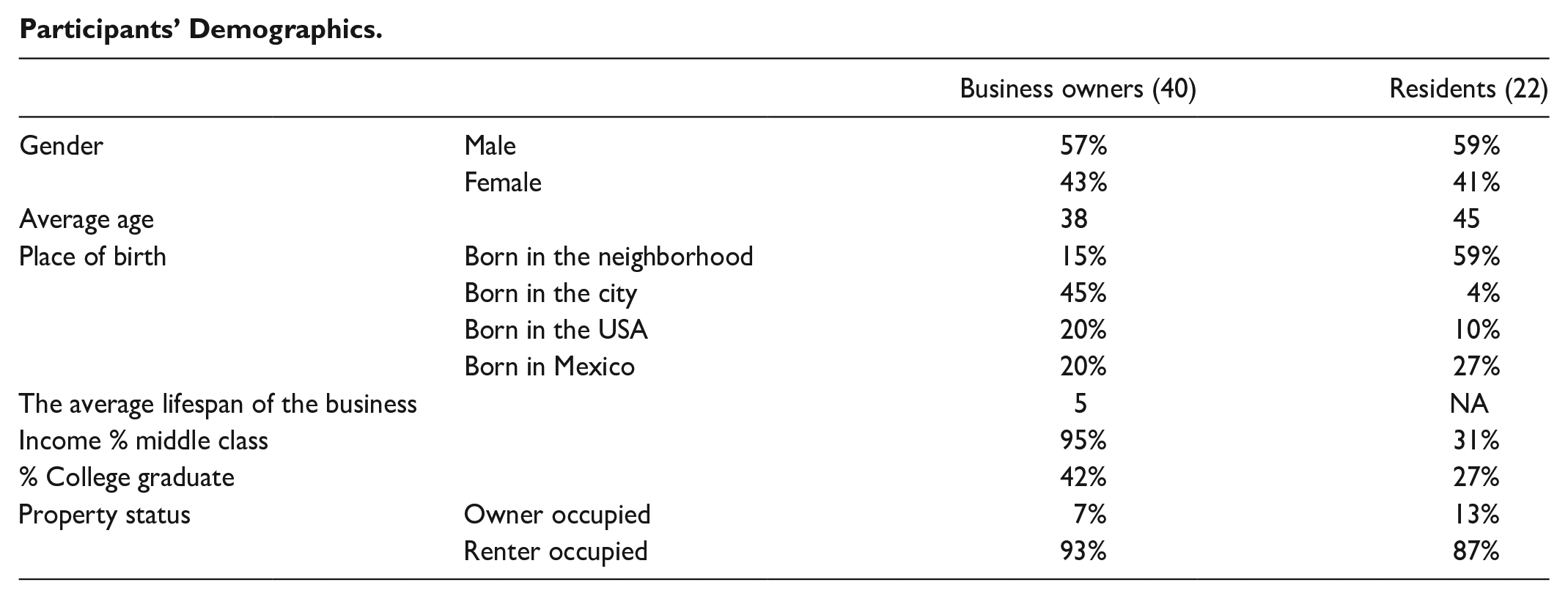
I employed a qualitative, in-depth case study approach (Yin 2009), focusing on the Barrio Logan neighborhood in San Diego. This neighborhood was selected as a site of inquiry due to its ongoing experiences of both gentrification and Latino commercial gentrification, along with its importance in symbolizing the political power and activism of the Latino community. The methodology incorporates four sources for data collection. First, I conducted 68 semi-structured interviews with 40 Latino business owners, entrepreneurs, and artists in Barrio Logan, including restaurants, art galleries, coffee shops, bars, and so on; six government agency representatives (including a California Assembly member, city council member assistant, urban planners, the community planning group chair, and the Promise Zone & Special Projects manager in the city council’s Economic Development Department); and 22 Latino residents and activists (see Appendix A for participants’ demographics).
I recruited participants by attending local community meetings of the organizations mentioned in the following parts of the article, connecting with relevant stakeholders and directly approaching business owners in their stores (located in central commercial areas, e.g., Logan Avenue and 26th Street). Sampling strategies combined snowball sampling of additional relevant stakeholders. All interviews, lasting an average of 60 minutes, were conducted during 2022–2023 as face-to-face meetings in English (with two interviews conducted in Spanish with the assistance of a translator). Subsequently, they were audiotaped and transcribed. Participants’ identities are anonymized for confidentiality following institutional review board protocols. The policymaker interviews aimed to gain insights into the neighborhood’s development policy, specifically focusing on the community plan process and the involvement of business owners in shaping it. The interviews conducted with business owners and residents aimed to identify and analyze the involvement of business owners, as well as to understand the reactions of residents toward this involvement. Accordingly, the questions focused on these aspects.
Second, I conducted participant observations throughout 2022–2023. For research purposes, I attended monthly meetings of local organizations (All For Logan [AFL] and the Barrio Logan Association [BLA]), a community planning group, and the Chicano Park Steering Committee (CPSC). I also observed Barrio Logan’s cultural, political, and arts events, including a Chicano Park Day celebration; national holidays (Dios de la Muertos, Cinco de Mayo, Memorial Day, and so on); “Walk the Block” initiative events (such as a Barrio art crawl); political events and rallies of the Union del Barrio (1st of May march, demonstrations, and so on); the opening of Chicano Park Museum; and social activities (LaVuelta, Women’s Day celebration, and so on). I also participated in events initiated by business owners’ shows, art exhibitions, and workshops. Finally, I conducted informal observations in Chicano Park (e.g., a tour guided by a CPSC activist and Aztec dances, food giving away). To document these observations, I recorded detailed reports including the event’s objectives, participants, and progression and emphasized the role of business owners and their interactions with residents.
Third, to comprehensively map businesses in Barrio Logan, I analyzed data from the Google Maps engine and the City of San Diego. Specifically, my goal was to identify business ownership, the types of businesses, and the activities occurring within the central commercial area of Logan Avenue and 26th Street. To achieve this, I conducted a street and business tour, along with visual documentation of political activism, focusing primarily on capturing murals, signs, and products displayed in stores. In addition, I obtained consent to review businesses’ Instagram/Facebook pages, capturing photographs of ongoing community developments, murals, signs, and notable products. This approach helped me identify additional patterns of political involvement among business owners and artists in the neighborhood.
Fourth, I conducted a content analysis of documents that provided insights into the development processes within the neighborhoods, the organization of residents, and the role of business owners from the perspective of various stakeholders. I analyzed city council policy documents, published between 2010 and 2023, such as the “Barrio Logan Community Plan” of the San Diego Planning Department, monthly meeting agendas and minutes (during 2022-2023), reports, and publications of the mentioned organizations. Finally, data from the U.S. Census Bureau (2022) 2016–2020 American Community Survey five-year estimates, as well as SANDAG data from 2000 to 2020, were also utilized to comprehend the evolving trends in Barrio Logan’s demographics.
The cooperation from the Barrio Logan community laid the foundation for this research to become possible. However, being a non-Latino, middle-class researcher who grew up outside of American society and lacked any prior connection to Barrio Logan, my background presented challenges when interacting with certain community members. This was particularly evident in the context of gentrification, where external forces frequently exploited the community and its culture. Recognizing these challenges, I took deliberate actions to build trust. I maintained a prolonged presence in the research field, continuously worked on learning and understanding cultural and community nuances, and approached my interactions with a healthy dose of skepticism, often asking questions to clarify intentions and interpretations. To foster an “ethic of reciprocity,” (Corbin and Morse 2003) I made myself available to give back to the community when necessary. For example, in response to a request from an activist in the CPSC, I volunteered to assist in the preparation for the opening event of the new Chicano Park Museum. I ensured transparency with interviewees, sharing the research’s purpose and materials. Two interviewees reviewed and gave feedback on my study draft. In some ways, I believe that my “outsider” status became an advantage. My “foreign” appearance and basic questions encouraged interviewees to explain their thoughts explicitly and in-depth, which helped me understand better. I also noticed that my lack of involvement in internal politics and neutral position further encouraged their participation.
I utilized thematic analysis (Clarke and Braun 2017) to identify, analyze, and present themes within all data. Aligned with the research objectives, the thematic analysis aimed to recognize the diverse patterns of involvement and strategies employed by Latino entrepreneurs and business owners to influence the political and cultural empowerment of the Latino community, along with the perceptions of residents toward these efforts. 1 The data underwent thematic coding using the qualitative analysis software Nvivo, revealing predominant themes of business engagement across multiple spheres: business operations, public spaces, and city politics. In addition, it captured residents’ perceptions, including expressions of support, ambivalence, and criticism.
From Barrio to Boutique: Gentrification in Barrio Logan
Barrio Logan is one of San Diego’s oldest and most culturally vibrant urban neighborhoods, with a high concentration of Latino population. The neighborhood was deeply affected by urban planning and policies. During the 1910s and 1920s, as the community was established around maritime activities, military industries, and the Navy, the influx of Mexican migrant workers contributed to the creation of a residential-industrial mixed-use neighborhood (Figures 1 and 2). In the 1930s, the federal government, through the HOLC and Federal Housing Administration (FHA), promoted “redlining” practices, which involved rating neighborhoods to help determine the level of risk associated with lending in specific areas of a city. This policy resulted in the denial of loans for maintenance, development, or purchase in ethnic/racial and low-income neighborhoods, including Barrio Logan. Along with discriminatory labor markets, post-industrial white flight (the exodus of white populations from areas increasing in diversity), and racialized residential segregation, Barrio Logan residents experienced high unemployment, disinvestment, and poverty (see Table 1; Diaz 2005).
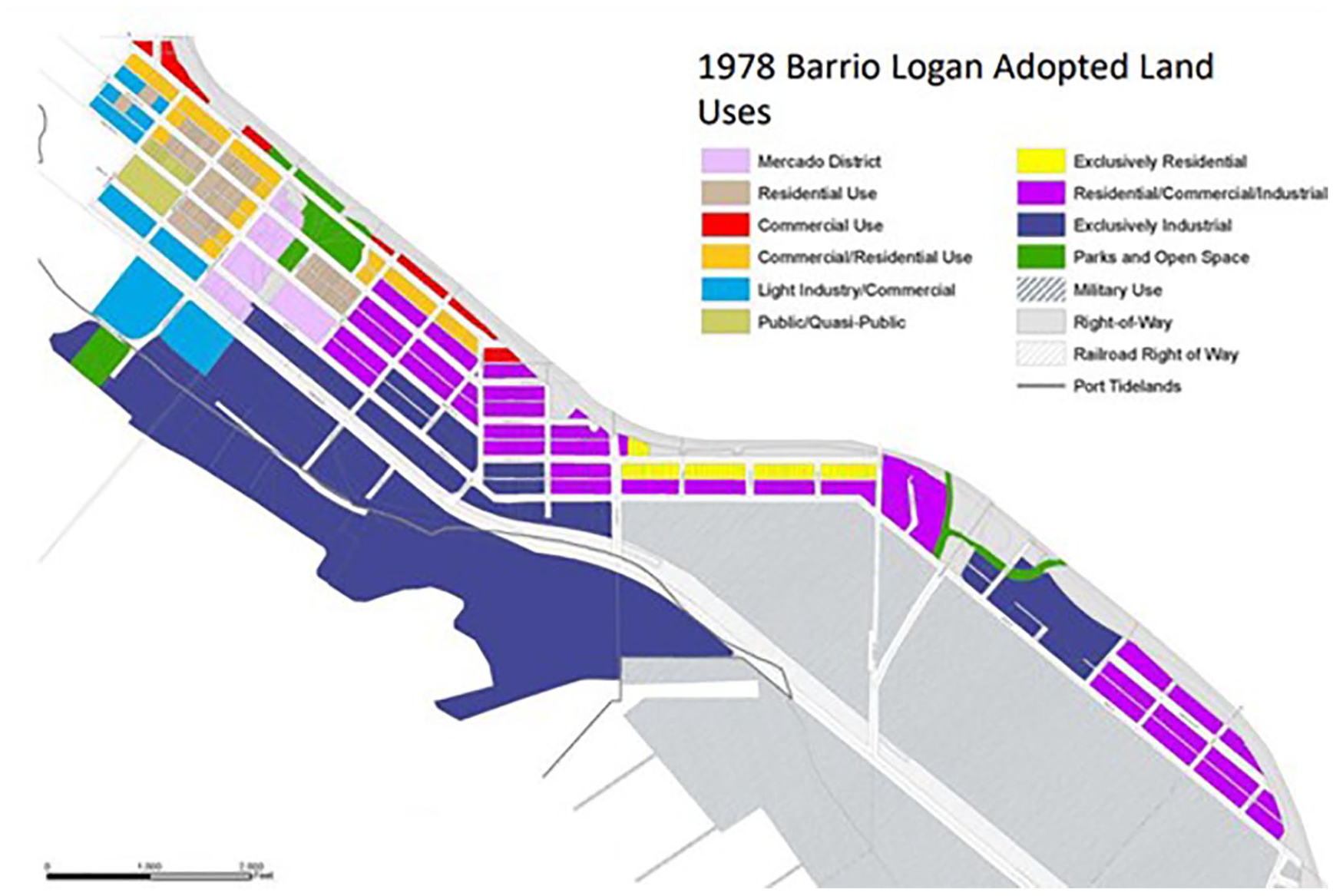
Barrio Logan’s land uses, 1978.
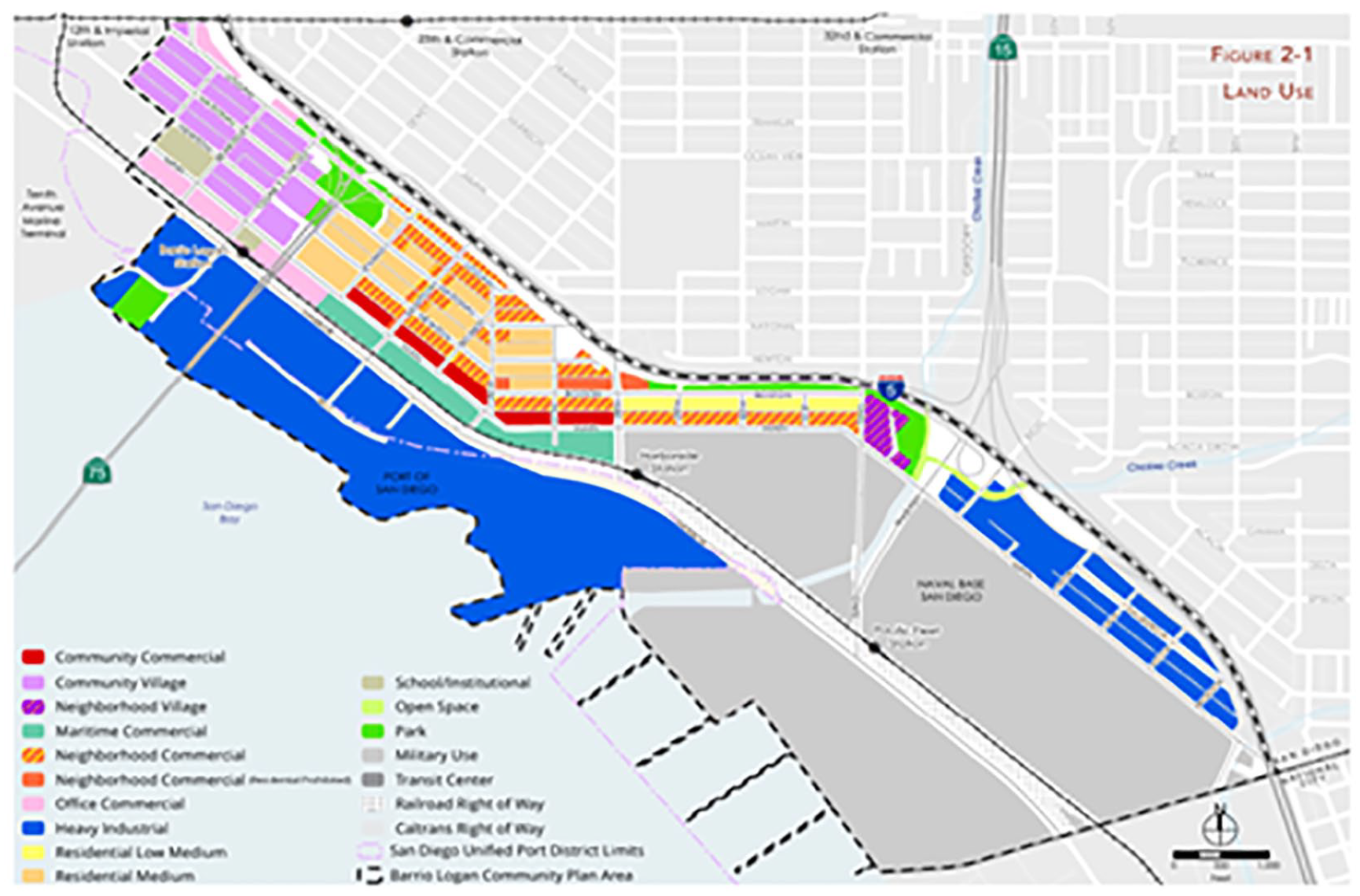
Barrio Logan’s land uses, 2021.
Barrio Logan and San Diego Characteristics.
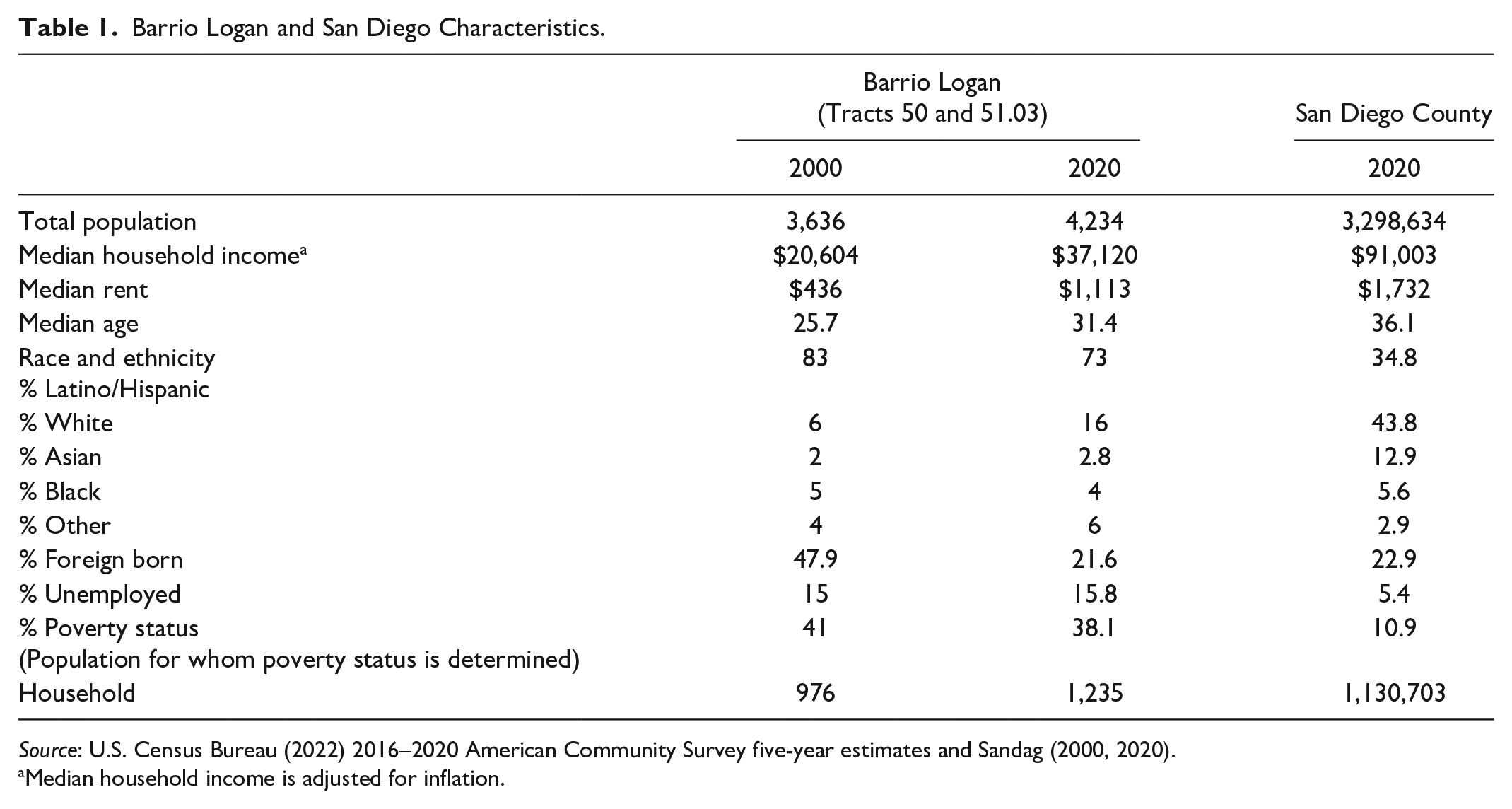
Source: U.S. Census Bureau (2022) 2016–2020 American Community Survey five-year estimates and Sandag (2000, 2020).
Median household income is adjusted for inflation.
The neighborhood degraded further following the urban renewal construction projects of Interstate 5 through the heart of the community in 1963 and the San Diego-Coronado Bridge in 1969. The freeway displaced thousands of residents and divided the previously large neighborhood of Logan Heights into separate neighborhoods, among them Barrio Logan. At the community’s request, the city council approved the construction of a park under the bridge but soon reversed this decision and began preparing instead for the construction of the California Highway Patrol Substation (Figure 3).
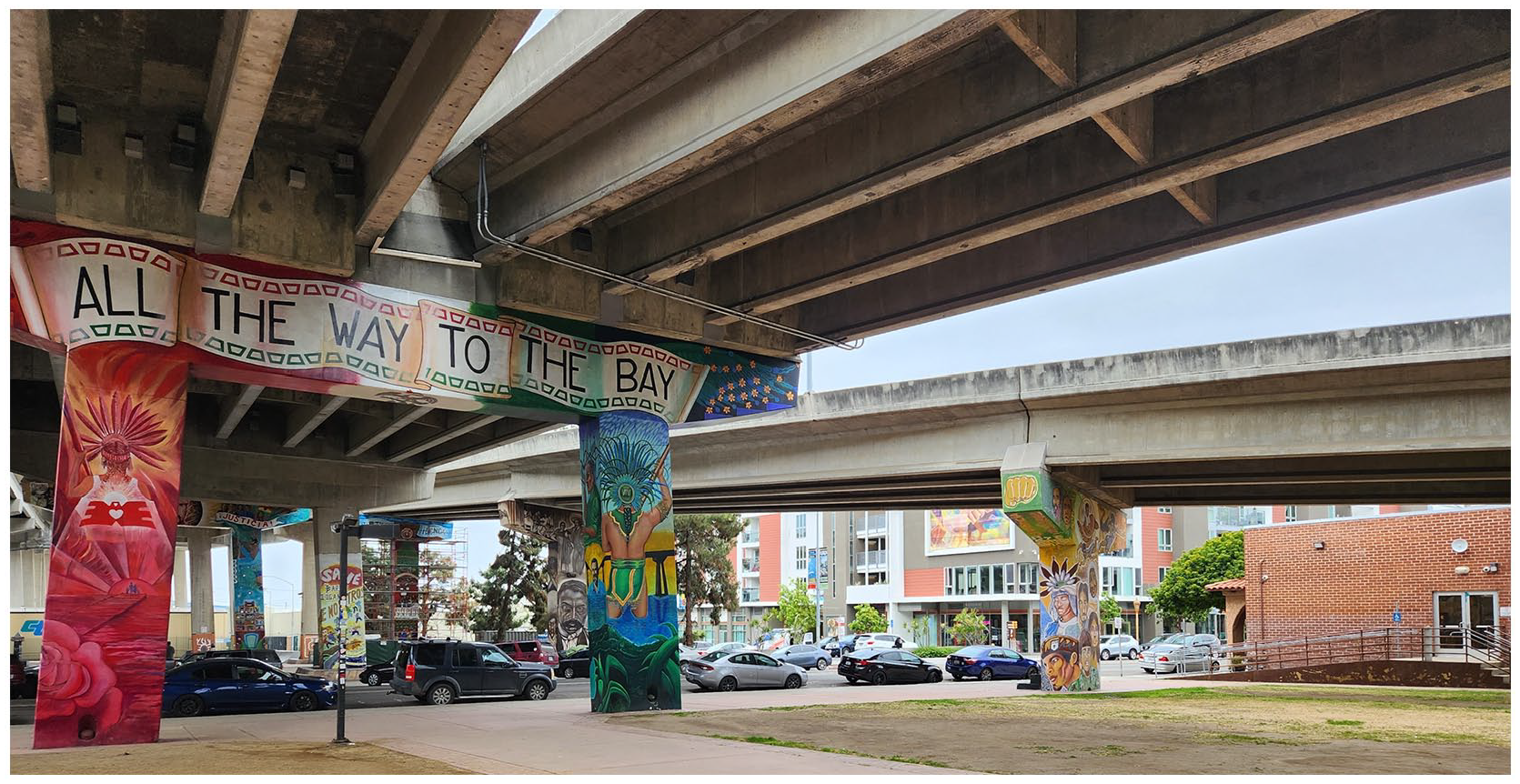
Murals in Chicano Park, Chicano Park Museum, and the Mercado Del Barrio redevelopment project.
This sparked a community resistance, led by activists who took over the space under the Coronado Bridge, successfully halting construction and ultimately establishing Chicano Park as a symbolic site for activism. This park became home to over 100 political and cultural murals and was designated a National Historic Landmark. Following neighborhood rezoning in 1978, there has been an increase in heavy industrial and commercial companies emitting toxic wastes into the neighborhood. For decades until its approval in 2023, Barrio Logan residents fought for a community plan update to protect them from these polluting industries (City of San Diego 2021).
Since the late 2000s, Barrio Logan has faced a new challenge: gentrification, resulting from urban redevelopment policies and rising real estate value in Barrio Logan and throughout San Diego. From the 1980s, several government policies were designed to stimulate economic investment and urban redevelopment. Barrio Logan was designated in 1986 as San Diego’s first California Enterprise Zone and later as part of the federally designated San Diego Renewal Community. These designations allow businesses to claim a variety of tax advantages and enhance an area’s attractiveness for commercial and industrial businesses (ERA 2008). In addition, a significant portion of Barrio Logan was adopted as a San Diego Redevelopment Project Area in 1992, thus supporting additional real estate development. This included residential, retail, and office building development (e.g., the Mercado del Barrio Project and Mercado Apartments in 1995), as well as the construction of larger housing units.
The commercial development and higher density housing in the neighborhood and the new investments in the neighborhood increased gentrification pressures. Development was accompanied by significant demographic changes, including a rise in median property values, household incomes, and rent (see Table 1) and the displacement of lower-income residents (Delgado and Swanson 2021; Sandoval 2021). However, gentrification in the neighborhood was driven not only by white individuals but also by middle-class Latinos who established new commercial enterprises, such as art galleries, boutiques, coffee shops, and restaurants. Delgado and Swanson (2021) argued that this process has nevertheless contributed to the ongoing displacement of the racialized poor, heightening tension between different classes within the community. At the same time, I argue that Latino gentefiers play a crucial political role and adopt specific activism patterns to foster cultural and political Latino empowerment.
Findings: “Political Gentefiers” Planning the Barrio
As of 2023, Barrio Logan has seventy-nine restaurants, bakeries, and grocers, twelve hotels (including navy accommodations), twenty-four art galleries, six bars and breweries, five ice cream parlors, and seven coffee shops. Significant commercial redevelopment has occurred in the past decade on Logan Avenue and 26th Street. These streets, a blend of residential and commercial spaces, have been neglected over the years, and most businesses have closed, leaving behind abandoned buildings. However, commercial revitalization is now evident, with businesses such as art galleries, boutiques, cafes, and restaurants, known as the “ABCs,” signaling pioneers of gentrification (Zukin, Kasinitz, and Chen 2016). Out of the 77 existing businesses on these streets, about 95% were opened in the last decade. Among them, 83% are Latino-owned, 6% are white-owned, 4% are black-owned, 4% are Asian-owned, and the remainder are either unknown or jointly owned.
Latino business owners in Barrio Logan are influential political players, expressing their activism through various patterns which will be presented in the following sections. These include engagement in urban planning and local politics, the politicization of products and customer service and employment policies, politicization of public spaces, informally policing space, and establishing non-profits and grassroots initiatives. However, as further elaborated, because business owners are benefiting from gentrification, their activity creates ambivalence among residents concerning their intentions and effects.
Engagement in Urban Planning
The Barrio Logan community plan remained unchanged from 1978 until 2023. Despite numerous attempts to update it over the years, disagreements between residents and industrial companies hindered these efforts. In 2019, a planning group was established and effectively tackled the challenge, resulting in the approval of the updated plan in 2023. The new community planning group comprised representatives from non-governmental organizations (NGOs; e.g., Environmental Health Coalition), industry, the navy, residents, politicians, council members, and urban planners. Alongside them, the new Latino business owners in the neighborhood, who were not part of the previous 2013 group, played a significant role. They regularly participated as formal and informal representatives of Barrio Logan, pushing for an updated plan and other processes.
During the planning group meetings, business owners advocated for preserving the neighborhood’s cultural character and promoting resident interests such as parking, accessibility, lighting, and safety. Their interest in maintaining a separation between industry and their businesses (and residency), alongside the desire to preserve the cultural character of the neighborhood, was acknowledged in the new plan (see Figures 1 and 2). The approved plan presented an impressive achievement because it also included a requirement that any new residential or mixed-use development will include at least 15% affordable housing (more than the average 10% in other San Diego neighborhoods); recognition of the neighborhood’s cultural uniqueness; and a recommendation to change city housing regulations to ensure that Barrio Logan residents are given priority for 75% of all newly developed affordable housing. Camila, a business owner and member of the community planning group, described the role of business owners in the process: One of my motivations for moving here was to be part of this community, and not just to make money. We want to fight gentrification and advocate for affordable housing. We want to use our platform to amplify the voices of residents who are unable to speak for themselves. The residents do not generate income for the city as we do, so we have a stronger voice because, let’s be honest, money talks. When we initiated our activities in the neighborhood, policymakers began including us in their meetings.
The economic position and the community solidarity of Latino business owners led some of them to engage in local politics. Daniel, a Bar owner in Logan Avenue perceived Latino business owners as intermediaries between the community and politicians, in a way that bolsters the community’s political influence, as he noted: If this block were empty and lacked viable businesses, it would have been challenging for politicians to connect with their constituents by going from house to house. However, now they have a way to engage with the community through someone like me, building a relationship. Politicians can tap into our success and help it grow. It’s a win-win situation. They now genuinely care more about the neighborhood.
In another notable case, after a few years of involvement in local politics, a business owner named Jessica closed her business and began working at the BLA. Similarly, the political involvement of another business owner, Isabella, was so intense that she made a professional transition from being a business owner to becoming a city politician, representing her neighborhood on the city council. As Isabella described: I had our business in the neighborhood, so I was on that street for years every day . . . We hand-made a variety of items, primarily [in] Latino [style] and offered food and culture workshops . . . it was an investment in the community welfare and health . . . I’ve been a community activist for many years [. . .] I was also working at nonprofits, and then the council member called one day and asked me to join the team [. . .] As a Mexican American, I feel responsible for advocating for the residents.
The spatial challenges faced by the Latino community mobilized business owners to participate in local politics, blurring the boundaries between their economic and political roles in the neighborhood. Nevertheless, business owners’ involvement in urban politics arouses ambivalence among residents. While most residents and activists described the business owner’s contribution to the plan, some residents were more suspicious of the business owner’s interests. As Gabriel, a 65-year-old resident active on the CPSC, explained: That becomes a controversial issue because the average businessperson will negotiate with the politicians. Why? Because he has an interest in being sure that the city doesn’t close him up. As much resistance as they want to be part of, they’re too busy trying to run their little business and to be sure that it doesn’t get damaged in any way, so they are very limited in their activism [. . .] at the end of the day- people are still displacing.
While business owners declare their support for affordable housing, I observed during community planning meetings and in interviews that some residents expressed skepticism regarding the update of the community plan. They claimed that a mere declaration of support for affordable housing does not guarantee its actual implementation in the future. They also expressed concerns that developers might exploit legal loopholes and not adhere to the prescribed procedures. Furthermore, the role of the “savior” assumed by some entrepreneurs is seen as an act of arrogance and patronage by certain residents. It also conveys a problematic message that those with economic resources and networks dictate accessibility and influence in neighborhood planning processes.
In addition, some residents reported feeling pushed out due to the development of small businesses in the neighborhood. Although the businesses I interviewed had either occupied previously vacant spaces for the past decade or replaced older business owners who retired, with no direct evidence of resident or long-term business displacement by these newcomers, the claims of displacement can be understood through what Marcuse (1985) referred to as “displacement pressures” or “indirect displacement” (Davidson and Lees 2010). Some residents argue that the proliferation of businesses, particularly along Logan Avenue, which features a mix of residences and small businesses, has led to the transformation of the street into a commercial area with insufficient parking, increased garbage, and driven up rental prices, making it challenging for them to continue living in the area.
The Politicization of Businesses: Products, Customer Service, and Employment Policies
Political gentefiers use their stores to raise Latinos’ political voices. The dominant political messages promoted in stores in Barrio Logan include opposition to gentrification and whitewashing space, United States war policies, immigration policies, capitalism, and racism. Stores also celebrate Chicano identity, neighborhood history, and the struggle in Chicano Park. This is expressed in the names of the stores, the products, and the services they provide and their employment policy. Some of the names of stores, such as Por Vida (for life) and Border X Brewing, represent claim space ownership and belonging and celebrate the connection to Mexico. Similarly, an art gallery called Aztlán represents the Chicano perception of the territory as the ancestral home of the Aztec people.
Similarly, some stores sell pictures, knickknacks, or clothes with Mexican cultural icons and political messages such as, “Fight gentrification,” “El Barrio No Se Vende” (the neighborhood is not for sale), “Viva Raza no mas gentrification: self-determination” (long live the community, no more gentrification), “Aztlán gatekeeper,” “Viva Mexico” (long live Mexico), “Abolish ICE (Immigration and Customs Enforcement),” “Fuck the polICE,” “Daughter of an immigrant,” “We want to have fundamental human rights,” “First generation but not the last,” “Chicana power,” “Chicanas,” and “Chingona,,” which means a mujer (slang for “woman”) who is intelligent, skilled, and capable. Some stores also sell native and indigenous literature, the Chicano Movement and identity, anti-racism, Mexican cooking, Spanish books, and more. One of the interesting prints sold at Barrio Logan on different products is the Chicano Gothic by the San Diego artist Ricardo Islas, an alternative to Grant Wood’s well-known American Gothic from 1930, representing a different model of Mexican-American homeownership (Figure 4).
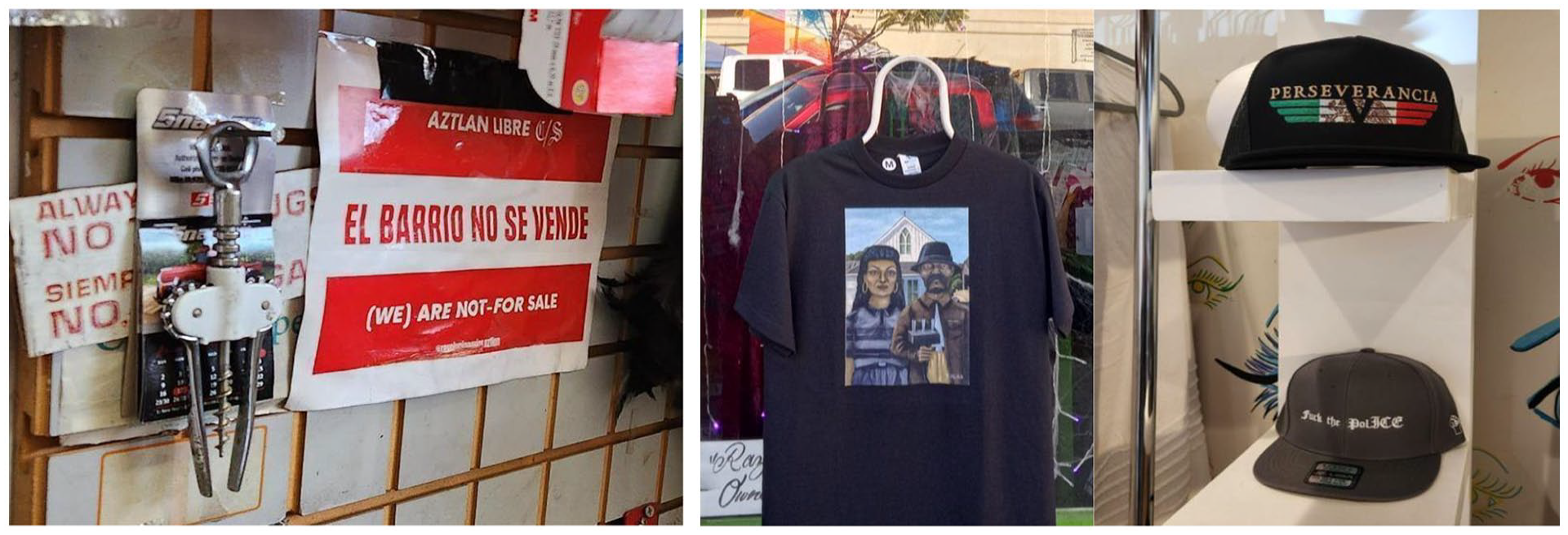
Political products in Barrio Logan’s stores.
In one of the art exhibitions in a local gallery in 2022, for example, a work of art presents white gentrifiers shackling an indigenous Mexican, and in another painting, a statement “Barrio Si. Yonkes No!” (Barrio Yes. Junkyard No!) recalled a protest in the late 1970s to remove forty-eight Anglo-owned auto junkyards from the neighborhood. The statement “Varrio
2
Si, Yonkes No!” is also present in a Chicano Park mural by Raul Jose Jacquez, Alvaro Millan, Victor Ochoa, and Armando Rodriguez from 1977. Valeria, the owner, exhibited her political art and hung a large sign on which she wrote: It is our responsibility to seek ways in which to contribute toward preserving Chicano culture. To preserve and respect what is ours . . . I come from a family of brown hues and indigenous features. Our skin has been our strength and our struggle.
In a nearby bar, the owner Daniel offers Mexican Craft Beer, aiming to promote a sense of pride in the Mexican-American identity, as he explained: The craft beer industry, it’s predominantly white [. . .] This place has been designed one hundred percent with Latinos in mind: the music, the artwork on the walls, and the beer names are in Spanglish [. . .] When someone drinks an incredible beer and says, ‘You took something that I grew up with as a Mexican American and turned it into a beer, and it’s incredible,’ that’s pride. I joke that it’s pride in a glass [. . .] Your culture has been diminished, and now it’s being celebrated.
Similarly, Camila, a Latina from outside San Diego, established her sewing studio to convey a political message of challenging the American beauty model and strengthening Chicana identity: My parents, they’re from Mexico. I knew I was American, and I was born here, but I didn’t have that representation outside [. . .] I always felt like I was too brown. So, for me to be around people that are representative of me is inspiring [. . .] In my business, I am very focused on adding that Chicano cultural aspect to the designs [. . .] Some of the phrases that I incorporate into my designs are “Brown Queen,” “Morena,” “Chicana,” and “Bonita”[. . .] I want people to have that sense of pride.
Some Barrio Logan business owners not only sell politicized products but also serve as community hubs. They collaborate with political organizations like CPSC, Union del Barrio, UFW (United Farm Workers), and the Brown Berets,
3
hosting events, workshops, and services addressing various issues. They offer free services like Wi-Fi, printing, and bureaucratic assistance and often engage in charitable activities. Moreover, they prioritize hiring Latino residents and Mexicans, viewing it as both solidarity and a political statement against immigration policies and societal stigma. Some residents positively perceive the empowered culture and political voice of the Latino community. As Hector described: I’ve lived in this neighborhood my entire life [. . .] there are new businesses and cafes here [. . .] finally, we have a place where we can go to [. . .] It’s a good thing. Sure, what’s the alternative? This street used to be [filled] with drugs, crime, you couldn’t walk around here at night [. . .] we also deserve development.
Residents also explained that many of the products sold in Barrio Logan’s stores are made by Mexican or Latino residents. Latino business owners also promote residents’ small businesses by placing their business cards in stores or selling residents’ products.
However, Barrio Logan’s Latino businesses, culture, and Chicano Park attract also outsiders seeking an authentic experience, transforming the neighborhood into an “ethnic consumption” space seen in other Barrios (Anderson and Sternberg 2013; González and Waley 2013). Consequently, this has sparked concerns among other residents who perceive Latino businesses as exploiting their culture for profit and contributing to displacement. As Gabriel elaborated: Business owners here do not share their profits with their employees; what makes you think they will share it with the community? They do not contribute to us. They are looking at the neighborhood from a business perspective. There is also a certain degree of exploitation of culture and its commercialization [. . .] Because the average person that comes and eats at their local restaurants, they are attracted to it because of the food and culture. But if you ask them about the history of the community, the history of the park, they have no clue.
Some residents argued that the utilization of cultural symbols appeared excessive, ostentatious, and lacking authenticity, serving as a marketing strategy for outsiders. The elevated prices of certain products also suggested that some businesses might not primarily cater to the local community. For example, a clothing studio displayed jackets priced between $110 and $180, and although exceptional, a vintage handmade jacket was offered at a remarkable price of $525. In a nearby gallery, paintings were priced in hundreds of dollars. This suggests that alongside cultural empowerment, there exist distinct cultural practices among some business owners and residents, driven by their different interests and economic statuses.
The Politicization of Public Spaces
In public spaces outside Logan Avenue, business owners place signs, Mexican flags, art sculptures, or murals that claim space ownership. One entrepreneur hung a chain of flags that said, “Brown is beautiful” and “Todo por la Raza” (we are all for the race or community). Outside some stores, entrepreneurs hang signs such as “Mexican/Chicana Owned” (Figure 5). One mural cynically describes “Tips for developers who want to gentrify,” including statements such as “Push out community spaces,” “Raise rent to displace pesky multigenerational families and residents,” and “Destroy existing culture . . ..” Next to the mural, someone painted Mexican immigrants trying to cross the border with police blocking their way. This mural, representing the local critique of the U.S. policy regarding Mexican-American illegal immigrants, moves beyond resistance to gentrification. Similarly, on a wall outside a local Veterans of Foreign Wars (VFW) bar, one of the employees wrote a mural (see Figure 6) in 2021 that conveys a dual-powerful political message. It calls upon the Barrio community to contribute to American society through military service, while also showcasing to outsiders the Mexican-American immigrants and Barrio Logan residents as patriotic and valuable members of society. The bar owners also express criticism toward the deportation of Mexican-American immigrant veterans. Adjacent to the bar’s entrance, a mural featuring deported soldiers with the message “Leave No One Behind” is part of the Leave No One Behind Mural Project (LNOBMP), combining art and community political advocacy (Home—Leave No One Behind Mural Project; Figure 6).
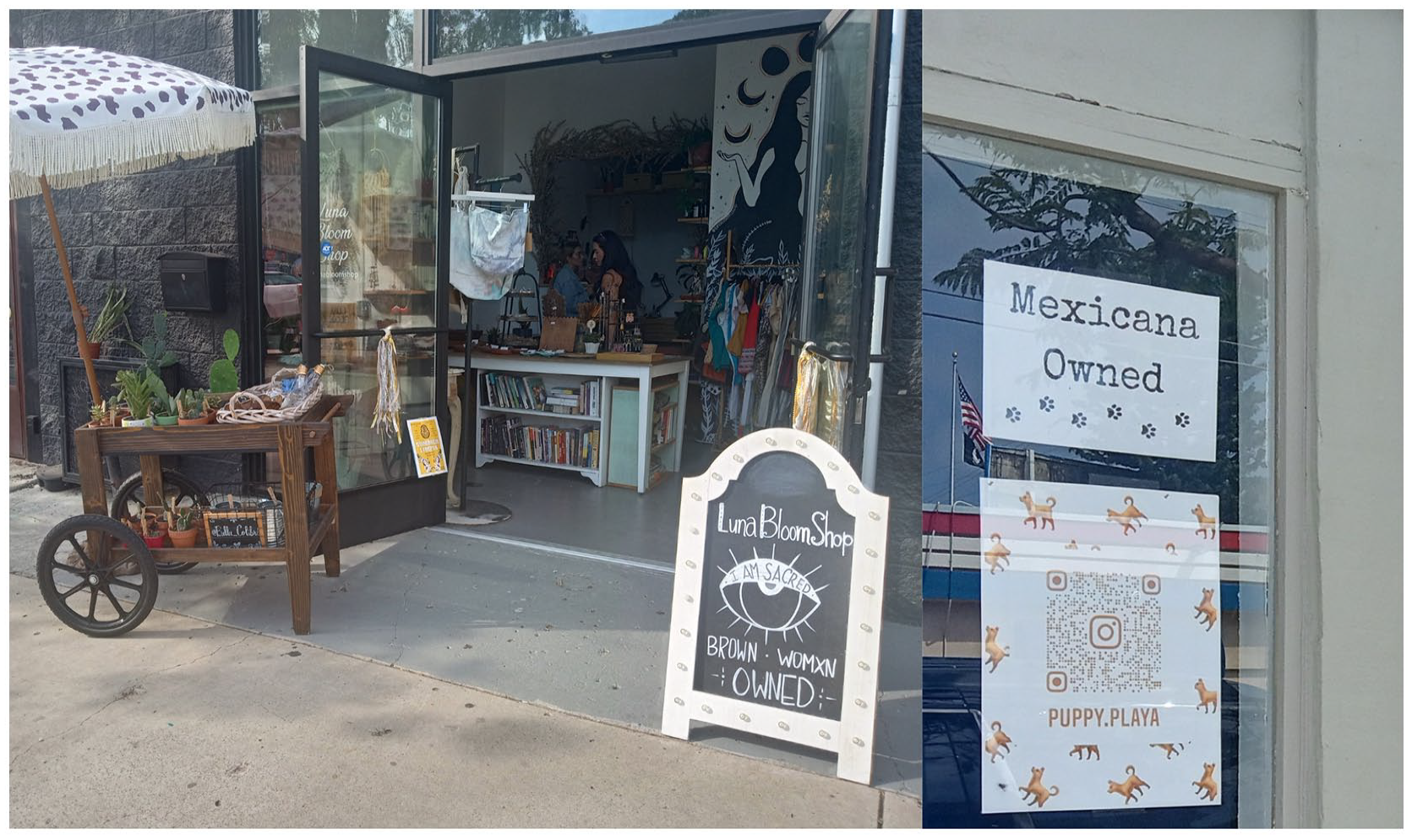
“Mexicana owned” stores.
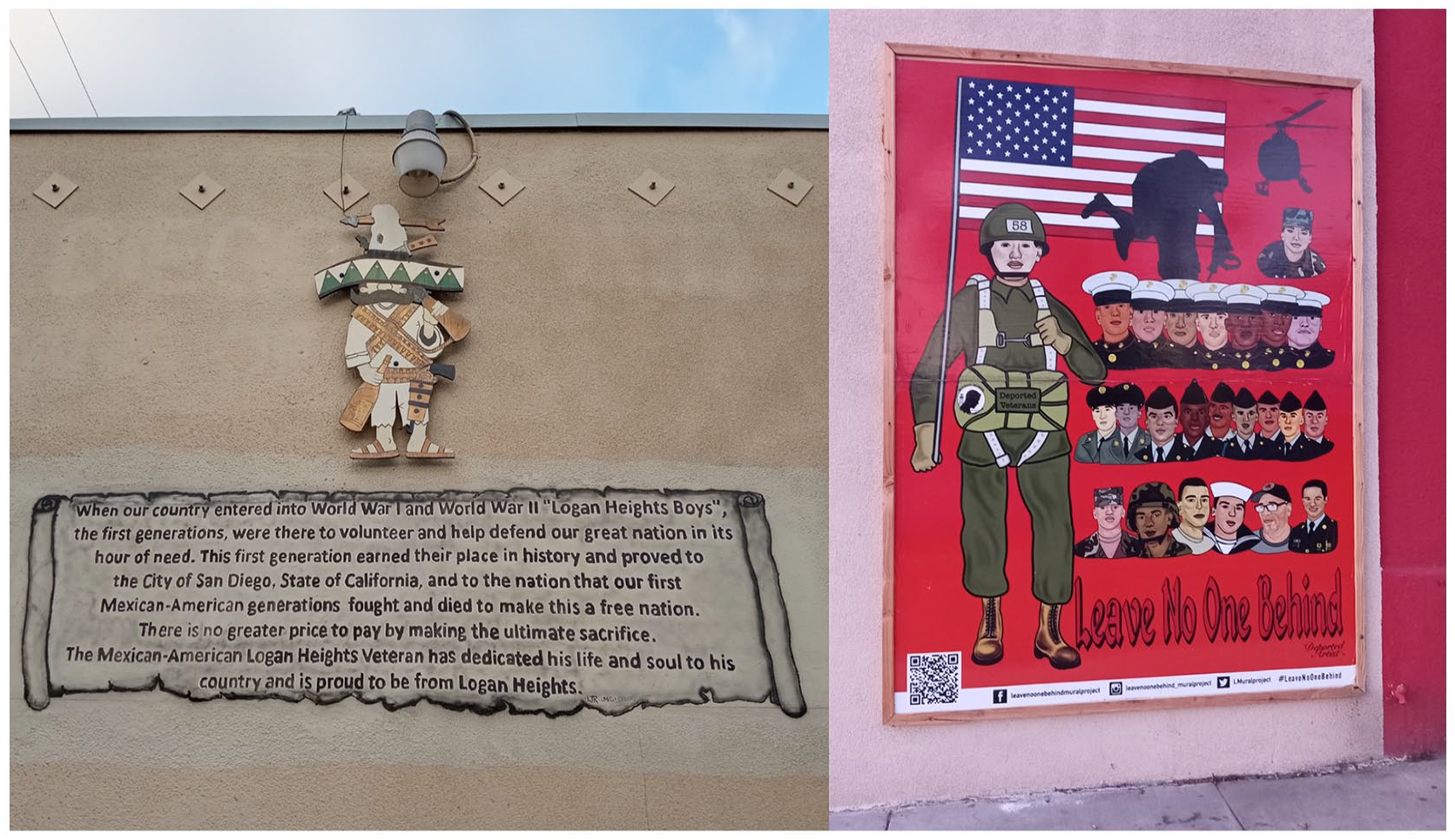
Murals in Barrio Logan.
Political empowerment also manifested during local and national elections in 2022, when some business owners placed signs in their shop windows and outside their stores, backing candidates who support the Latino community in Barrio Logan. For example, in the 2022 local elections, some business owners placed signs supporting David Alvarez, who grew up in the neighborhood and was running to represent District 80 in the California State Assembly.
The politicization of the space also evokes mixed reactions among residents. As Luna, a 38-year resident and mother of two children noted: For me, it is a pride to see people who grew up with me in the neighborhood and today have their own businesses [. . .] I want my kids to see that . . . but we also need to be respectful to others, you know? [. . .] This has always been a diverse neighborhood, so it doesn’t get interpreted that we don’t welcome others to come. We don’t want to be separated.
The fight of political gentefiers against gentrification sparks controversial discourse on attitudes toward newcomers (gentrifiers) and the neighborhood’s character. This is further emphasized by the following practices of informal space policing.
Informally Policing Space
Political gentefiers and activists also seek to empower the Latino community’s political voice by informally controlling space and influencing who enters and who does not and how they should behave. They accomplish this by establishing and participating in organizations and managing an internal network of communication.
A prominent organization in which business owners also participate alongside activists, residents, and city council representatives is the BLA, established in 2014. The BLA serves as the advisory committee for the Barrio Logan Maintenance Assessment District (BL MAD) and includes a representative of the San Diego police department, JDS security (Personnel Guard & Patrol Agency), the Mayor and Assembly member, the city council, the urban corps/MAD manager, and the business organization AFL. While this is not an organization founded by business owners, some of the official officers and meeting attendees are business owners. It aims to revitalize the community through the beautification of public areas, the promotion of public safety, and organizing educational and cultural events. Following security problems in the neighborhood including cases of violence and theft, the organization maintains regular contact with the police department while also working independently to promote internal policing in the neighborhood. For instance, during the organization’s meetings, I observed that the association is actively working to reduce the presence of homeless people in the neighborhood, not only by contacting the authorities but also by allocating funds to hire a contracting company that evacuates homeless people from businesses.
Boycotting perceived “racist gentrifiers” is another form of internal policing. In 2017, a white travel blogger’s Kickstarter campaign to open a “plant-based cocina” and “modern fruteria” in Barrio Logan sparked controversy. She used a promotional video with Chicano Park and Frida Kahlo images to claim her venture would improve the neighborhood with healthy food options. However, residents and business owners boycotted her, leading to her leaving the neighborhood. Similarly, in 2021, flyers circulated among local businesses calling for a boycott of a new cafe owner who is black and works for U.S. Customs and Border Protection. During the BLA meeting and conversation with me, some business owners and activists accused him of presenting himself as an improvement to the neighborhood, branding him as racist. According to the new cafe owner, this led to a 60% drop in the cafe’s monthly income, harassment, and vandalism, including damage to his shop window. Flyers and signs labeled him as “racist, cop, ‘fed,’ & rat,” and a website was created to protest against him. In 2022, he closed his business, and the property was leased to new Latino entrepreneurs. Some business owners legitimize this internal policing by addressing Latino ownership of the space, as Juan, a resident and business owner, observed: We’ve had people who have attempted to make statements about their upcoming businesses as the best thing that’s ever happened to the neighborhood. That’s the worst thing you can ever do [. . .] We are a tight-knit community. This is the Barrio. if you don’t act out of respect for the neighborhood, you will be called out [. . .] if you invite somebody to your house and they disrespect you, they’re gonna be treated disrespectfully.
Similarly, in several stores, entrepreneurs hung signs: “Racists Cops ICE Not Welcome Here,” (Figure 7) refusing to let police or the U.S. border guard enter their store. Carlos, a 35-year-old business owner born in Mexico, explained: There’s a lot of systemic racism. You feel it on the streets, in low-income neighborhoods, and at the border. It was felt here, especially with the gentrification of white people coming in [. . .] a lot of people forget that this country was built on immigrants [. . .] residents told us that they didn’t feel safe in the presence of cops, and they asked us to not serve them anymore. And we agreed. we don’t allow people that work in law enforcement to be in uniform in our store [. . .] We let them know that they’re not welcome here.
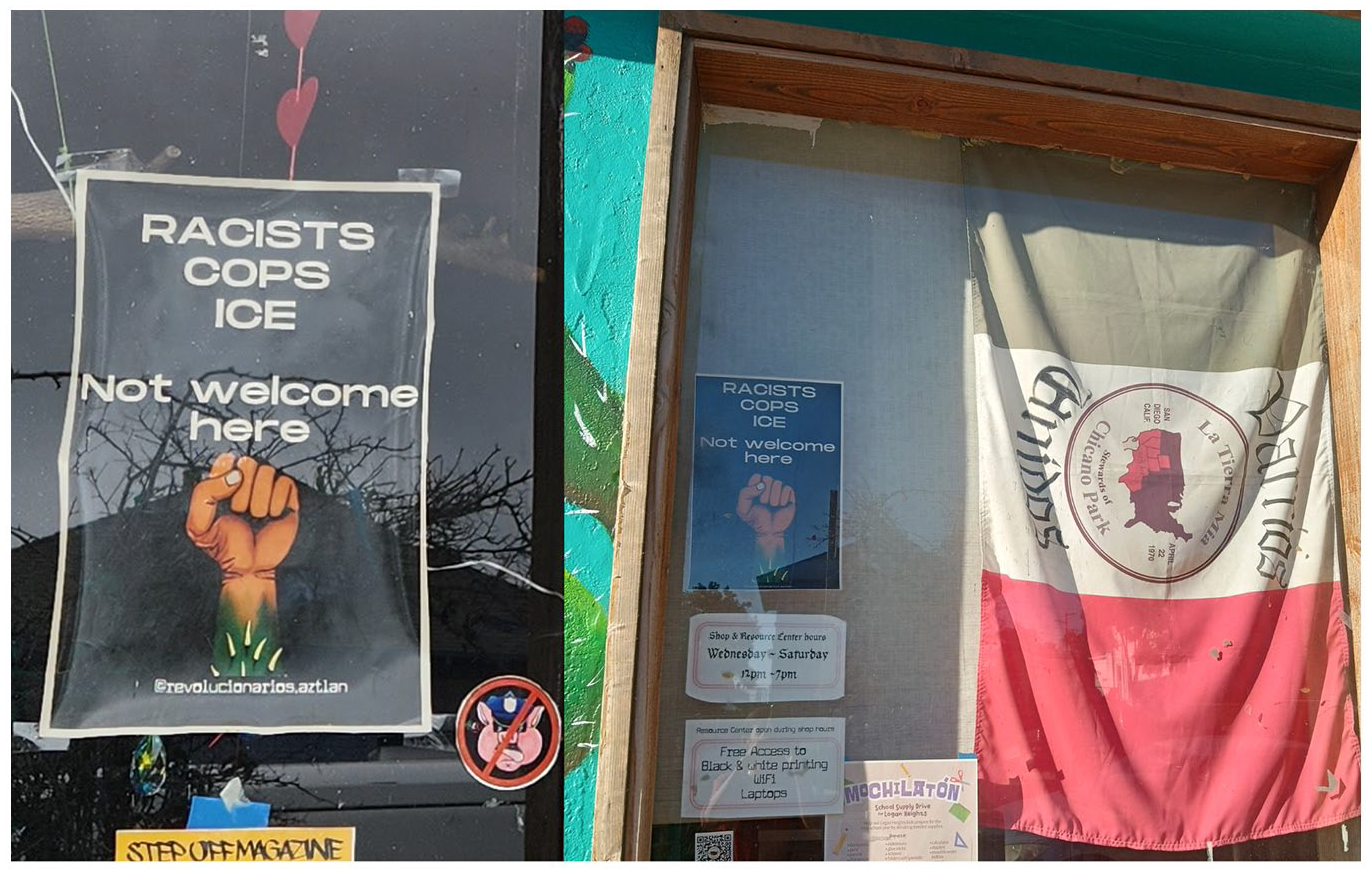
Racists cops ICE not welcome here.
However, not all business owners or residents agree with these actions. Samuel, a resident, criticized such actions: This neighborhood suffers from a lot of crime and murders, so we want and need the police here. Did this shop owner who told you he speaks for us? He didn’t [. . .] We can’t think we’re above the law. We’ve got to stay humble and be kind. Law enforcement should be respected in our community because they sacrifice their life to protect us.
In contrast, Pablo, a resident, justified the business owners’ policies and explained: The police shoot our people. If you’re white and you commit a crime, they take you to Burger King. It’s a double standard [. . .] The laws were not held the same way in the different neighborhoods.
The emerging practice of policing and boycotting gentrifiers, seen as exploiters of the community and its culture, is now interwoven with the community’s persistent struggle against police brutality and deportations. This intensifies ongoing debates within the community over rightful membership and defining its boundaries. In this context, political gentrifiers seek to set themselves apart from outsiders and assert themselves as integral community members, even though not all residents accept them as such.
Establishing Non-Profit Organizations
Business owners have united through associations and supportive networks to bolster small businesses, safeguard neighborhood culture, and amplify the community’s political influence. Especially following 2020 with the outbreak of the COVID-19 virus and resulting economic hardship, business owners joined together in a grassroots community initiative called “Walk the Blocks,” which encourages business owners and residents to sell their products in vendor stands on the streets. This initiative continued long after the COVID-19 crisis subsided and became a tradition. Almost every weekend, a Logan Street Fair is held, featuring cultural events empowering the Chicano identity and referring to Mexican holidays.
Over time, this initiative expanded into the establishment of the non-profit organization AFL. AFL focuses on promoting neighborhood businesses and addressing Barrio Logan’s social needs. They hold open monthly meetings for business owners, organize cultural events, and engage with policymakers to tackle issues like gentrification, security, crime, and homelessness. AFL’s efforts have led to improvements in municipal services, such as adding streetlights, trash cans, and traffic lights to the neighborhood.
Furthermore, the association board encourages business owners and residents to get involved in city politics and impact policymakers through various means: sending resident petitions to policymakers and encouraging community activism and participation in elections. AFL also encourages business owners to exercise their rights in submitting applications for various public grants. Melissa, a resident, explained how business owners helped her set up as a street vendor after she was fired from her job due to COVID-19 layoffs: I started my business during the coronavirus because I was just at home [. . .] These business owners here encouraged me to come here to sell [. . .] I grew up a couple of blocks from here and I wanted to sell here, so they gave me that chance . . . they just want to give me a chance because I am also a Latina business owner. To embrace [Latino-owned] small businesses. they help a lot in the community [. . .] They sometimes have free toys for kids. they’re all about empowering the community, especially in this area, because they’re trying to gentrify us.
The solidarity and support network of political gentefiers in the community offered Melissa and other vendors the chance for economic profit, enabling them to establish formal businesses and become more engaged political stakeholders. These diverse patterns of activism of political gentefiers are intended to strengthen the presence of the Latino community and its culture in the face of gentrification and create a lively arena of political activism through business.
Conclusion
This research illustrates how, amid rapid gentrification, Latino-owned businesses function not only as economic endeavors for profit and economic mobility but also as platforms for political mobilization and resistance. By leveraging their economic status, business platforms, networks, and solidarity within the Latino community, Latino gentefiers sought to amplify their community’s political voice and cultural empowerment. Their efforts extended beyond mobilizing their businesses, encompassing urban politics and the neighborhood itself. They aimed to fight gentrification, displacement, and broader social and political issues such as immigration policy, policing, and racism. Consequently, they emerged as political gentefiers, emphasizing positive cultural representation, political empowerment, activism, and agency.
Shining a light on the role of political gentefiers contributes to both the planning and policymaking processes, as well as scholarly endeavors. Analyzing their strategies and impact can inspire urban planners and policymakers to harness the political savvy and power of the gentefiers to promote culturally inclusive urban development. Incorporating representatives of political gentefiers into planning decision-making processes holds the potential to empower local communities by granting them increased control over the gentrification process. Similar to Pattillo’s (2010) description of the middleman/woman, businesses can also serve as intermediary spaces, facilitating communication between policymakers, planners, and the community.
However, it is equally crucial for urban planners to acknowledge that intra-ethnic class disparities and conflicting interests may be masked under the notion of ethnic solidarity. This portrayal of Latino business owners as political actors does not necessarily mean that they represent the political voice and economic interests of the entire community. The Latino community in Barrio Logan is not monolithic; it is diverse in terms of political positions and class affiliations. While, in certain instances, political gentefiers have served as buffers, deterring non-Latino gentrifiers—who are perceived as exploiting the community—from entering, and have presented a distinctive case of gentrification mitigation through ethnic gentrifiers, internal class tensions and conflicts remain evident. Similar to previous studies (Delgado and Swanson 2021; Pattillo 2010), some lower-income residents in Barrio Logan suffer physical displacement due to gentrification and are not benefiting from the neighborhood’s political and cultural blossoming. Some residents point to displacement pressures (Marcuse 1985) or indirect displacement (Davidson and Lees 2010) following the activities of the political gentefiers in the neighborhood. These are manifested in the transformation of the street into a commercial area for tourists and outsiders, insufficient parking, and increased garbage. In addition, there is the commercialization of culture for economic profit and prices and products in businesses that do not serve the lower-class residents.
Thus, the political activism of Latino gentrifiers simultaneously bolsters the political and cultural influence of the Latino community, yet it does not necessarily negate physical displacement pressures experienced by lower-class residents. Political gentefication thus reveals a complex story about voice and political representation: While it empowers some community members, it raises intra-class issues, not only regarding the Latinos community’ ability to adopt such representation but also regarding who is truly being represented. Therefore, urban planners and policymakers should actively seek diverse input and perspectives in municipal decision-making processes.
More broadly, as cities were the first places where ethnic/racial communities were able to gain significant political power, understanding the effect of gentrification on ethnic/racial minorities’s engagement in urban planning and political power in urban areas holds special importance (Casellas and McBrayer 2019). With urban redevelopment planning becoming more common in ethnic/racial communities and the middle ethnic/racial class growing, there is an increasing need, as well as an opportunity, to engage ethnic/racial entrepreneurs and business owners in urban redevelopment and emphasize culturally inclusive planning. Given the similarities between Barrio Logan and other ethnic/racial communities in the United States (like Pilsen in Chicago and Boyle Heights in Los Angeles, that are also experiencing a form of “Latino gentrification,” see the works of Ahrens 2015; Anderson and Sternberg 2013; Huante 2021; Sandoval 2021; or cases of “black gentrification,” Pattilo 2010), I believe this research has broader implications for activism by minorities and political power in gentrified neighborhood debates.
My intention, therefore, is to encourage a similar perspective, focusing on the influences of political gentefiers, and challenge the discourse citing political and cultural displacement as the ultimate outcome among gentrified communities. While communities of color tend to lose their political and cultural power because of gentrification (Howell 2018; Hyra 2015; Martin 2007), the current study suggests a coping path to mitigate such consequences through the involvement of political gentefiers. While gentrification seems an inevitable process at times, this research suggests that ethnic/racial individuals can influence it from within in a process to make it more inclusive and even strengthen their political power. This approach offers a comprehensive and more nuanced portrayal of ethnic/racial communities in gentrified neighborhoods, not as displaced victims or powerless, but rather as proactive citizens, engaged in urban politics and planning processes and claiming their Barrio.
Footnotes
Appendix A
Participants’ Demographics.
| Business owners (40) | Residents (22) | ||
|---|---|---|---|
| Gender | Male | 57% | 59% |
| Female | 43% | 41% | |
| Average age | 38 | 45 | |
| Place of birth | Born in the neighborhood | 15% | 59% |
| Born in the city | 45% | 4% | |
| Born in the USA | 20% | 10% | |
| Born in Mexico | 20% | 27% | |
| The average lifespan of the business | 5 | NA | |
| Income % middle class | 95% | 31% | |
| % College graduate | 42% | 27% | |
| Property status | Owner occupied | 7% | 13% |
| Renter occupied | 93% | 87% | |
Acknowledgements
I am deeply grateful to the interviewees—residents, activists, business owners in Barrio Logan, and policymakers—who kindly agreed to participate in the research and share their invaluable insights. My heartfelt appreciation goes out to my spouse, Elchanan Yeshurun, and our sons, Eithan, Yiftah, and Ido, for supporting me throughout this postdoctoral journey in a new country. I extend my sincere thanks to Professor Gershon Shafir of the Sociology Department at the University of California, San Diego, and Professor Avner de-Shalit of the Political Science Department at the Hebrew University for their invaluable comments and suggestions. I also thank the editor and the reviewers for their generous and constructive feedback.
Declaration of Conflicting Interests
The author(s) declared no potential conflicts of interest with respect to the research, authorship, and/or publication of this article.
Funding
The author(s) disclosed receipt of the following financial support for the research, authorship, and/or publication of this article: The European Union’s Horizon 2020 Research and Innovation Program under the Marie Skłodowska-Curie Grant Agreement No. 101025665.
