




Abstract

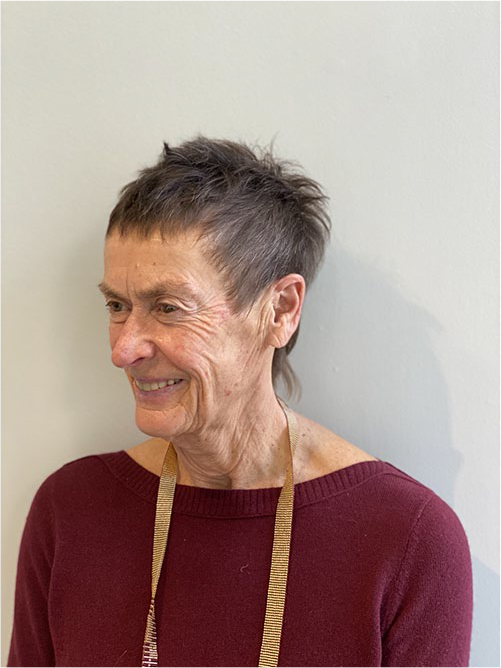
This essay is the twenty-sixth in a series on the recipients of the Association of Collegiate Schools of Planning Distinguished Educator Award, ACSP’s highest honor. The essays appear in the order the honorees received the award.
I arrived as a Master’s student at the University of British Columbia’s (UBC) School of Community and Regional Planning (SCARP) in 2005, already in admiration of Leonie Sandercock’s scholarship and full of curiosity about the school’s new Cosmopolis media lab. Little did I know that Leonie’s work would substantially alter the arc of my own life, inspiring me to combine my love of filmmaking with my enduring interest in community planning. Leonie has been a PhD committee member, mentor, and friend for nearly twenty years. The trajectory of her work demonstrates a deep commitment to learning and change through a constant questioning of positionality, beliefs, and ways of seeing the world. It is this openness to personal transformation, often catalyzed through students, collaborators, and larger political contexts, that has enabled Leonie to continue to shift and significantly contribute to planning theory and practice for over three decades.
Leonie Sandercock was born in 1949 in Adelaide, Australia. Raised as an only child in a poor, working class family, Leonie held a deep intellectual curiosity for the world she found herself in: a world filled with questions about belonging, difference, and disconnection. She spent her childhood dreaming of escape and teachers encouraged her to take up a university scholarship, which became a turning point. At the University of Adelaide, Leonie studied under Professor Hugh Stretton, who became her most important mentor and encouraged her to pursue a PhD in Urban Research at the Australian National University, which became her first book, Cities for Sale (Sandercock 1975).
Leonie became Australia’s youngest full professor, a member of Australia’s Commission to UNESCO, and served on several federal bodies. She also became a serious bodysurfer, fell in love, experienced profound grief, and established herself as a leading urban political economy scholar. Leonie would later reflect on this period (Sandercock, 2023), suggesting that while she found success and recognition in writing through the strong, positivist detached voice typical of academic writing at the time, it came at the erasure of her own. The drive for connection and belonging remained. There had to be another way.
In 1981, Leonie became Professor and Head of Graduate Urban Studies at Macquarie University, in Sydney, Australia. Five years later, following love and a desire to leave academia, she moved to Los Angeles (LA) where she completed an MFA in scriptwriting at the University of California, Los Angeles (UCLA) while also teaching in UCLA’s Graduate School of Architecture and Urban Planning, and marrying planning theorist John Friedmann. Leonie has referred to this time as “deeply transformative.” Immersed in writing screenplays, Leonie’s voice shifts. She decides to return to academia but makes herself a promise that she will concentrate “on the power of story” (Sandercock and Attili 2010; preface). Leonie’s work moves toward feminist theory and a critical examination of the official story that planning tells about itself.
Making the Invisible Visible (Sandercock, 1998a) and Toward Cosmopolis (Sandercock, 1998b) mark an important moment of personal transformation and a critically significant intervention in planning history, theory, and practice. Released at the end of Leonie’s decade at UCLA, Making the Invisible Visible is dedicated to Leonie’s students, including Barbara Hooper, Clyde Woods, and Ann Forsyth: students whose own stories, experiences, and approaches to planning and theory were, like Leonie’s, deeply shaped by the 1992 LA riots and the broader racial, gender, and class politics of LA in the 90s.
In the introduction to Toward Cosmopolis (Sandercock 1998b), Leonie asks “How might we live with each other in the multicultural cities and regions of the next millennium?” (Sandercock 1998b, 4). There she details how modernist planning and its spatial technologies of power have violently rearranged and appropriated space, dispossessing Indigenous Peoples and excluding “the Other” (Sandercock 1998b, 3). She believes that modernist, mainstream planning is hegemonic and, in continuing to only center one story, is unable to plan for difference. For her, planning must become more people centered, oriented toward other ways of knowing, focused on community empowerment, and recognize the existence of multiple planning histories and publics. “We have moved from planning history to planning’s histories” (Sandercock 1998b, 54).
Inspired by contemporaries such as Iris Marion Young, bell hooks, Cornell West, Gloria Anzaldua, Trinh T. Minh-ha, and John Forester, Leonie argues that the future (utopian city of her imagination)—cosmopolis—“cannot be imagined without an acknowledgement of the politics of difference” (Sandercock 1998b, 44). Insurgent planning histories bring questions of belonging and difference to the fore. The articulation of these histories becomes the connective tissue over the next two decades of Leonie’s work, spanning five books, eighty chapters and articles, and three films, bringing about tectonic shifts in planning education, theory, and practice.
In 2001 Leonie moves again, this time to British Columbia, Canada, where she takes up a professorial appointment at SCARP at UBC. 1 Soon after, Leonie meets Giovanni Attili, a PhD student whose own work combines biography and multimedia to capture the everyday lives of migrants in Rome’s Esquilino district. For Attili, multimedia is a catalyst for analysis and interactive problem solving (Attili 2010, 204). Leonie describes their encounter as serendipitous; this is the moment where she understands the expansive possibilities of story and planning (Sandercock and Attili 2010). Leonie then found the Cosmopolis lab, a place where multimedia projects create and present alternatives to the modernist planning paradigm. The first project completed is Where Strangers become Neighbors (Attili and Sandercock 2007), a fifty-minute documentary.
Attili reflects
The encounter with Leonie has been radically life changing for me. Not only because she provided me with tremendous insights regarding the planning field, but mostly because she embraced me with her experimental and thoughtful approach to life/work. The research projects I had the honour to share with Leonie, have been enchanting and powerful playgrounds nurtured by her groundbreaking creativity. I treasure each luminous and transformative epiphany she magically offered to me with her self-reflective gaze. No other person I met has ever had the ability of looking back at one’s own footsteps and moving forward with such unbelievable heightened awareness. That’s why Leonie has been and still represents such a vital learning source for me. A lighthouse, where beauty and poetry have always been dialoguing with political commitment and a search for social justice. A true friend and an incredible teacher.
Asserting that “planning is performed through story” (Sandercock 2003, 12), Leonie spends the next two decades collaborating with a range of scholars, insurgent planners, filmmakers, and Indigenous Nations to co-create films and publications that center story in planning within broader questions of social and environmental justice. 2 Her work demonstrates that storytelling is inherently relational and can catalyze healing, moving communities toward relationships of mutual respect where power is shared and problems are collectively solved (Sandercock and Attili 2014, 19). For Leonie, story is a therapeutic planning intervention.
The story turn enables scholars throughout the world to position their work and their own histories, often marginalized by traditional, rational-scientific approaches to planning theory and practice, as valuable and legitimate to the discipline. Leonie’s pedagogical contributions run in parallel to her scholarly interventions. While multiple, two contributions stand out for their broad impact. For over a decade, Leonie and John hosted intimate, biennial gatherings of doctoral students from across the world who gathered in Vancouver to present their research and attend workshops. These jamborees brought together students working at the margins of planning theory to help build an enduring network of connection. Maged Senbel, a former student and now SCARP Professor shares: “as an educator she inspires me by her example of unraveling and broadcasting difficult yet essential truths and wrapping them in poetic reasoning, patience and compassion.”
Leonie’s focus on questions of Indigenous dispossession and decolonization have also significantly contributed to planning education. In 2011, Leonie successfully raises the funding to bring the Indigenous Community Planning concentration at SCARP into being. The program, in partnership with the Musqueam Indian Band, aims to “train a new generation of community planners who will break with the colonial legacy and culture of planning.” Ten students a year are accepted into the program, and the relationship with Musqueam is materially backed by a transfer payment that recognizes their centrality to the program. Aftab Erfan, a former PhD student of Leonie’s, explained in an email, the significance of the program and this work:
It’s hard to imagine in 2022—post Canada’s Truth and Reconciliation Commission report and 1900+ unmarked graves of children identified—that watching the rough cuts of Leonie and Giovanni’s film, Finding Our Way, was the first time I saw survivors of Indian Residential School tell their stories. So many of us were in the same boat, bright-eyed planning students with big visions for the world, finding ourselves grappling with the darkness of Canadian history, then immediately with the role of the planning profession in it. Over the years some of us got to watch Leonie as she worked through her version of what it looks like for a planning scholar trying to make things right—the humbling experience of building and working in relationship with Indigenous communities. I am lucky to be touched by her example, in all of its imperfection, and by her generosity and sharing, as I walk my own path on lands waiting to be returned, amongst human relationships waiting to be repaired.
Leonie’s contributions to planning history, theory, and practice are multiple and have been formally recognized both internationally and nationally. She has earned an honorary doctorate from Roskilde University, Denmark, and been inducted as a Fellow of the Royal Society of Canada. Throughout her life, Leonie has sought to question the official story and think about planning as a catalyst for change. Belonging and connection through community-building, have threaded through her life’s work and, in so doing, she has enabled generations of scholars to narrate planning’s histories and help shape planning’s futures. Her much-anticipated book Mapping Possibility: Finding Purpose and Hope in Community Planning (Sandercock, 2023) shares more of her own perspective on the ideas and relationships that have shaped her work.
Footnotes
Declaration of Conflicting Interests
The author(s) declared no potential conflicts of interest with respect to the research, authorship, and/or publication of this article.
Funding
The author disclosed receipt of the following financial support for the research, authorship and/or publication of this article: This article was written with the financial support of a Social Sciences Research Council (SSHRC) postdoctoral fellowship .