



Abstract
Wartime violence profoundly shapes attitudes and political behavior, yet its impact on preferences for specific conflict resolution strategies remains underexplored. Using survey data (n = 1452) from Syrian refugees in a Turkish UNHCR camp, we analyze how the severity and type of violence experienced during the Syrian Civil War influence support for various conflict resolution options. Our findings support the “war-weariness” hypothesis: individuals exposed to severe, direct violence favor political solutions like ceasefires, negotiations, and elections, expected to address immediate safety needs. Our findings have significant implications for peacebuilders, highlighting the importance of considering diverse conflict experiences when designing effective peace initiatives.
Introduction
Violent conflicts leave profound and lasting effects on those who experience them. Research indicates that experiences of wartime violence profoundly influence people's attitudes (Hartman and Morse, 2020; Hazlett, 2020), their policy preferences (Costalli and Ruggeri, 2019; Zhukov and Talibova, 2018), and social relationships (Bauer et al., 2016; Skoog et al., 2023). If exposure to war-related violence has such power, does variation in experiences of conflict-related violence also translate into different preferences for conflict resolution? A substantial body of literature highlights the critical role of public support in the success of peace agreements and post-conflict institutional reforms: constructive behavior and pro-peace attitudes of those who have often suffered the most during conflicts are crucial for the long-term success of conflict resolution and the rebuilding of war-torn societies. In contrast, widespread desire for revenge and strong support for spoiler groups can undermine the durability of peace processes and destabilize post-conflict societies (Nilsson and Söderberg Kovacs, 2011; Reiter, 2015; Steinert et al., 2019).
Existing research on the impact of wartime violence on political preferences tends to focus on public attitudes toward broad concepts of peace and conflict (Fabbe et al., 2018; Hazlett, 2020; Hirsch-Hoefler et al., 2016). However, from a conflict resolution point of view, this approach is insufficient, as general support for peace does not necessarily translate into widespread support for specific conflict resolution strategies. Understanding who supports particular resolution options and who might align with spoiler groups is essential to designing effective peacebuilding efforts. In this paper, we argue that individuals’ experiences of wartime violence play a significant role in shaping their preferences for how conflicts should be resolved. Specifically, we propose that greater exposure to violence correlates with stronger support for political reforms and peace negotiations, as these conflict resolution strategies are perceived to offer immediate relief. In contrast, extensive exposure to wartime violence diminishes support for peace enforcement through military interventions, secession, or decisive military victory, which are regarded as riskier and more costly strategies.
Building on the “violence begets weariness” hypothesis, we contend that heightened exposure to wartime violence intensifies the desire for an immediate end to violent conflict and fosters an increased demand for stability and security. We hypothesize that individuals who have experienced more severe or direct forms of violence are more likely to favor less risky approaches to preventing future personal harm. This is reflected in the support of war victims for institutional reforms and political solutions, which they view as a more sustainable and less costly means of achieving lasting peace. Drawing on data from a unique survey of 1452 Syrian refugees conducted in a UNHCR camp in Turkey, our study moves beyond the typical reliance on aggregated measures of general support for peace among war-affected populations. Instead, we provide a more nuanced analysis of how multiple wartime experiences influence preferences for different potential pathways to peace. Specifically, we explore how exposure to various forms of violence, along with the overall severity of these experiences, shapes preferences for different conflict resolution strategies.
Recognizing the empirical and normative significance of post-conflict institutional reforms and negotiated settlements, we examine individual preferences for a range of hypothetical yet realistic political solutions to the Syrian Civil War, as well as alternative scenarios such as military interventions and a territorial division of the country. These potential solutions were identified through an inductive approach, informed by pre-consultations with war-affected refugees conducted during the ongoing civil war in August and September 2017. Our regression models provide strong evidence supporting our hypotheses: exposure to wartime violence significantly influences conflict resolution preferences. Specifically, refugees who personally experienced high levels of wartime violence, including direct forms of violence such as torture, imprisonment, or physical abuse, are more likely to favor political solutions, such as monitored post-war elections, the establishment of a transitional government, or inclusive peace negotiations which are perceived as less risky and less costly conflict resolution strategies. In contrast, individuals who encountered lower levels of violence or more indirect forms of harm tend to support maintaining the status quo, territorial division, or military intervention. Overall, our findings provide compelling evidence that the identified “weary-effect” of exposure to violence translates into specific preferences for conflict resolution.
The study makes two core contributions. First, we demonstrate the need for a more disaggregated measure of both violence exposure and conflict resolution preferences to advance research on the effects of war-related violence on attitudes and policy preferences, as well as public support for peace. Second, from a practical standpoint, our study underscores the importance of closely examining how different forms of violence, whether direct or indirect, shape preferences for conflict resolution strategies. By taking into account these varied experiences and preferences, policymakers and peacebuilders can better align peace initiatives and mitigate the impact of spoiler groups, thus enhancing the chances of achieving durable and more effective solutions in post-war contexts.
Theoretical framework
Literature review
Exposure to violence is often regarded as perpetuating further aggression, thereby undermining support for compromise and peace. This self-reinforcing dynamic contributes to the belief that certain conflicts are intractable, trapped in what is commonly referred to as the “conflict trap” (Collier et al., 2003). Various explanations have been proposed: from a rational-choice perspective, preemptive attacks may provide the best option to forestall future aggression from adversaries. For example, in Northern Ireland, communities affected by violence have been found to be less inclined to support the decommissioning of paramilitary weapons owing to increased security concerns (Hayes and McAllister, 2001). Other authors emphasize the role of threatening events and emotion-driven retaliatory violence that perpetuates the “cycle of conflict” and obstructs the path to peace (Lickel et al., 2006; Petersen, 2002).
Exposure to violence may even cultivate a “conflict-supporting ethos” (Canetti et al., 2017) or a “culture of honor” (Grosjean, 2010; Nisbett, 1996; Uskul et al., 2019). Such environments heighten the desire for revenge, bolster reputations for toughness, and encourage the preference for violent actions over negotiation and political bargaining. Research on the Israel–Palestine conflict, for example, has shown that intense combat experiences correlate with a decrease in support for negotiation and compromise (Canetti et al., 2013; Grossman et al., 2015; Hirsch-Hoefler et al., 2016). A related psychological and psychiatric literature suggests that mental health conditions such as post-traumatic stress disorder (PTSD) are important driving factors in this regard (Vinck et al., 2007). Canetti et al. demonstrate that exposure to political violence induces psychological distress, shapes threat perceptions, and fosters increased hostility toward ethnic out-groups (Canetti et al., 2013; Canetti-Nisim et al., 2009). Together, these findings reveal a destructive feedback loop: exposure to violence entrenches extremist attitudes, promotes militaristic preferences, and erodes support for peaceful compromise (Canetti et al., 2013).
The intuitive notion that “violence begets violence”, frequently echoed in journalistic narratives and popular discourse, has found surprisingly little empirical support (Widom, 1994). While some studies have found that exposure to violence does not significantly influence individuals’ attitudes toward war and peace (Dyrstad et al., 2011; Kijewski and Freitag, 2018; Matanock et al., 2022), a growing body of literature increasingly supports the existence of a “weariness effect”: exposure to war-related violence makes individuals less bellicose (Bellows and Miguel, 2009; Gilligan et al., 2014; Huesmann et al., 2023). This assumption is supported by evidence from various conflict zones including the North Caucasus (Bakke et al., 2009), Pakistan (Fair et al., 2018), Darfur (Hazlett, 2020) and Colombia. In Colombia, for example, studies by Arjona and Otálora (2011), Tellez (2019), and Kreiman and Masullo (2020) show that residents of areas heavily affected by violence perpetrated by the Revolutionary Armed Forces of Colombia tend to exhibit stronger preferences for peace initiatives. A key argument for adopting a pro-peace stance in violent contexts is based on the concept of differentially revealed costs and learned consequences: those who endure the most intense violence are more likely to recognize the severe costs of conflict. Drawing from past experiences and the expectation that a peace agreement will alleviate suffering in the near future, individuals come to see “peace” as a more viable and appealing alternative to continued violence (Hazlett, 2020; Matanock et al., 2022).
A related literature in social psychology and psychiatry suggests that, unlike PTSD, depression resulting from conflict-related violence is often linked to a more subdued and wary reaction (Mendeloff, 2009; Vinck et al., 2007). Authors in this field have shown that violence-related trauma can foster altruism, compassion and social engagement (Bellows and Miguel, 2009; Gilligan et al., 2014; Voors et al., 2012). For instance, Hartman and Morse (2020) observed that during the 2010–2011 Ivorian refugee crisis, individuals who had endured violence during the Liberian civil war demonstrated increased altruism, choosing to host more refugees despite the potential for heightened outgroup antagonism. Skoog et al. suggest that exposure to violence may amplify compassion within certain groups, particularly those perceived as non-threatening (Skoog et al., 2023). In line with this, Hall et al. (2021) show that exposure to war heightens threat sensitivity, affecting altruistic behavior: individuals linked to more threatening social categories experienced diminished altruism, signifying an intensified bias against these groups resulting from war exposure (Hall et al., 2021). In general, also these findings support the “violence begets weariness” perspective (Bauer et al., 2016). However, as previously noted, we currently lack a comprehensive understanding of how this “weariness effect” influences preferences for different strategies to end violence.
More recently, nuanced analyses have moved beyond abstract measures of “war weariness” and pro-peace stances and have begun to unravel the complex relationship between individual exposure to wartime violence and their policy preferences (Fabbe and Sinmazdemir, 2018; Gould and Klor, 2010; Matanock et al., 2022; Weintraub et al., 2015). For instance, Fabbe et al. (2018) find that Syrian refugees were more likely to support a ceasefire when proposed by a civilian actor. A recent study on the ongoing war in Ukraine suggests that different types of exposure to violence yield different attitudes toward war and peace. For example, property loss and displacement tend to increase support for peace, while losing a friend, neighbor, or colleague tends to reinforce the preference to continue fighting (Korostelina et al., 2024). While disaggregating the independent variable is a step forward, the dependent variable tends to remain too generalized. However, general preferences for war or peace provide only little insight into public support for specific conflict resolution strategies. Building on recent approaches, our study seeks to address this research gap by exploring the interplay between individual experiences of violence and preferences for different conflict resolution options.
Argument
Building on the “violence begets weariness” proposition and recent works, we posit that preferences for conflict resolution among war-affected civilians are not uniform but instead vary significantly between individuals. Citizens develop their opinions and make decisions based on past experiences and future expectations within contexts shaped by specific social, political, and economic conditions, all of which are endogenous to them (Gerber and Jackson, 1993; Hurd, 2008; Rosenstone and Hansen, 2002; Schildberg-Hörisch, 2018). These conditions not only shape personal experiences but also define the information environment in which citizens evaluate their incentives and form policy preferences. In the context of civil wars, exposure to wartime violence emerges as a critical exogenous factor (Matanock et al., 2022). Even within the same conflict and country, civilians experience violence in vastly different ways. Some face direct physical violence, while others endure indirect consequences such as displacement, hunger, or untreated illness. As Rustad et al. (2011) aptly notes, “all conflict is local” (Rustad et al., 2011), and proximity to active conflict zones varies substantially—some civilians live in regions where fighting is immediate, while others reside in areas less directly impacted by violence. We argue that individual preferences for conflict resolution are principally determined by two distinct aspects of wartime violence: (1) the overall severity of violence experienced; and (2) the specific types of violent acts encountered. While these dimensions often overlap, distinguishing them can reveal critical variations in how individuals process their experiences and develop preferences for conflict resolution strategies.
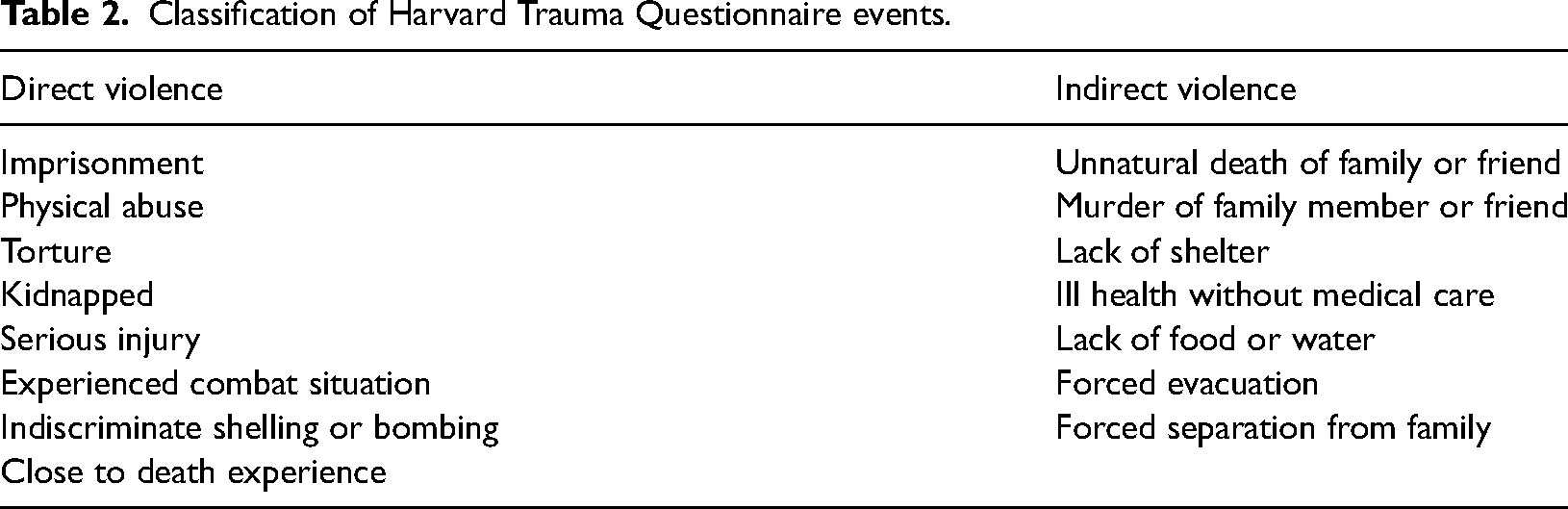
The severity of violence exposure pertains to the frequency with which individuals are exposed to different violent events during war. Such events—including killings, bombings, and kidnappings—generate profound psychological and physical consequences, ranging from acute psychological distress to chronic physical illness (Canetti et al., 2013; Miguel-Tobal et al., 2006). Studies have found a cumulative effect in this context: prolonged exposure to wartime violence or chronic violence correlates with increasingly severe negative outcomes for individuals (Bleich et al., 2003; Murthy and Lakshminarayana, 2006; Scholte, 2004). However, while the cumulative impact of sustained exposure to violence may produce severe trauma, even isolated violent incidents can inflict lasting psychological damage (Miguel-Tobal et al., 2006). To account for the multifaceted nature of violence exposure, we distinguish between the two fundamental types of violence: direct physical violence and indirect experiences of violence. Direct physical violence encompasses acts that cause immediate personal and somatic harm, such as torture or assault, perpetrated by identifiable actors (Galtung, 1969). We refer to forms of indirect violence as experiences of the consequences of violent conflict, such as restricted access to healthcare, lack of shelter, or forced displacement (Table 2).
Drawing on evidence that past experiences significantly shape individuals’ expectations of future policy outcomes (Egan and Mullin, 2012; Matanock et al., 2022; Richardson and Konisky, 2013; Weeden and Kurzban, 2017), we argue that both the severity and type of violence exposure mediate preferences for conflict resolution strategies: individuals exposed to severe and direct violence often have an acute awareness of the personal costs of conflict and prioritize the immediate cessation of personal harm. Consequently, they develop preferences for conflict resolution strategies that promise swift relief, even if such strategies involve politically or morally fraught compromises or diverge from their ideological beliefs. Specifically, individuals with high levels of exposure or exposure to direct violence are more likely to favor negotiated political solutions, including ceasefires, peace agreements, and institutional reforms over peace enforcement alternatives such as military victories, or external military interventions or costly strategies including secession and continued fighting. These strategies are seen to offer the most viable path to peace and stability while minimizing the risk of further violence and personal harm. This risk-aversive preference is rooted in the psychological imprint of direct violence, which significantly shapes the risk assessments of individuals (Jakiela and Ozier, 2019; Kim and Lee, 2014; Mengel et al., 2016; Moya, 2013). In contrast, individuals with a lower exposure to (indirect) violence are more likely to base their conflict resolution preferences on political, economic, and ideological considerations, rather than the immediate desire to end violence. The following hypotheses guide our analysis:
Higher exposure to conflict-related violence enhances the preference for post-war political reforms.
Exposure to direct conflict-related violence enhances the preference for post-war political reforms compared with exposure to indirect conflict-related violence.
Research design
Case selection
In this study, we focus on the Syrian Civil War, which is a particularly relevant case to test our hypotheses for three key reasons. First, the Syrian Civil War stands out as one of the deadliest conflicts in recent years with more than 350,000 deaths and half of Syria's population displaced (United Nations, 2021). Since its onset in 2011, the war has left millions homeless and caused severe trauma through various forms of direct and indirect violence. The widespread exposure to wartime violence among the population sets the Syrian context apart from other civil wars, making it a most-likely case for testing our argument. In the midst of this turmoil, some Syrians have joined rebel factions, motivated by the hope of enforced change and military victory (Mironova et al., 2014), while others have opted to flee violence, seeking safety wherever possible. These divergent responses not only highlight the profound impact of wartime experiences on individual fight-or-flight decisions but also suggest fundamentally differing perspectives on how to end the bloodshed. In other words, second, we note anecdotal evidence of varied preferences for conflict resolution preferences among civilians. Third, from a normative perspective, the Syrian Civil War represents one of the most devastating humanitarian crises of our time. The sheer magnitude of human suffering calls for a thorough examination of all potential approaches to managing the conflict, let alone terminating the fighting.
Data collection
We conducted a face-to-face survey (n = 1452) among Syrian refugees in August and September 2017 at the Midyat refugee camp, an officially registered UNHCR camp in south-eastern Turkey (see Figure 1). We chose this camp, along those generally accessible to researchers, for two key reasons: the camp is located 51 km from the Syrian city of Qamislo, an area close to the ongoing civil war and a key exit point for many displaced individuals from Northeast Syria. The close geographical proximity to the war zone helps minimize the potential for our measurements of war-related violence exposure to be confounded by migration-related violence and trauma. During the investigation period, the camp hosted around 8000 Syrian refugees, including individuals of various ethnic backgrounds such as Sunni Muslims, Yezidis, Syriacs, Kurds, Arabs, and some Turkmens. The size and diversity of the camp ensure that our sample is largely representative of the larger Syrian population, which minimizes potential selection biases. We discuss this aspect in the conclusion.
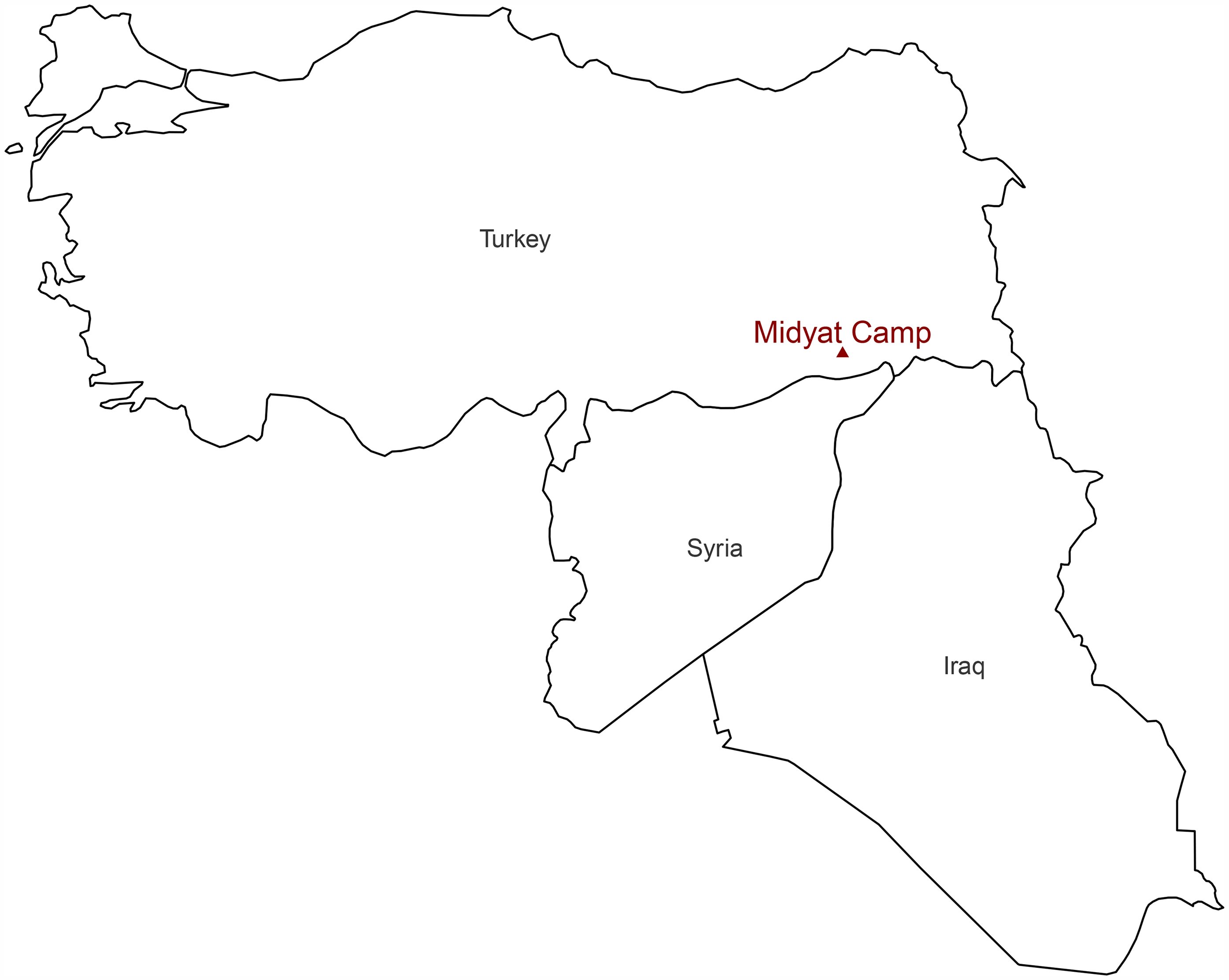
Location of the Midyat refugee camp.
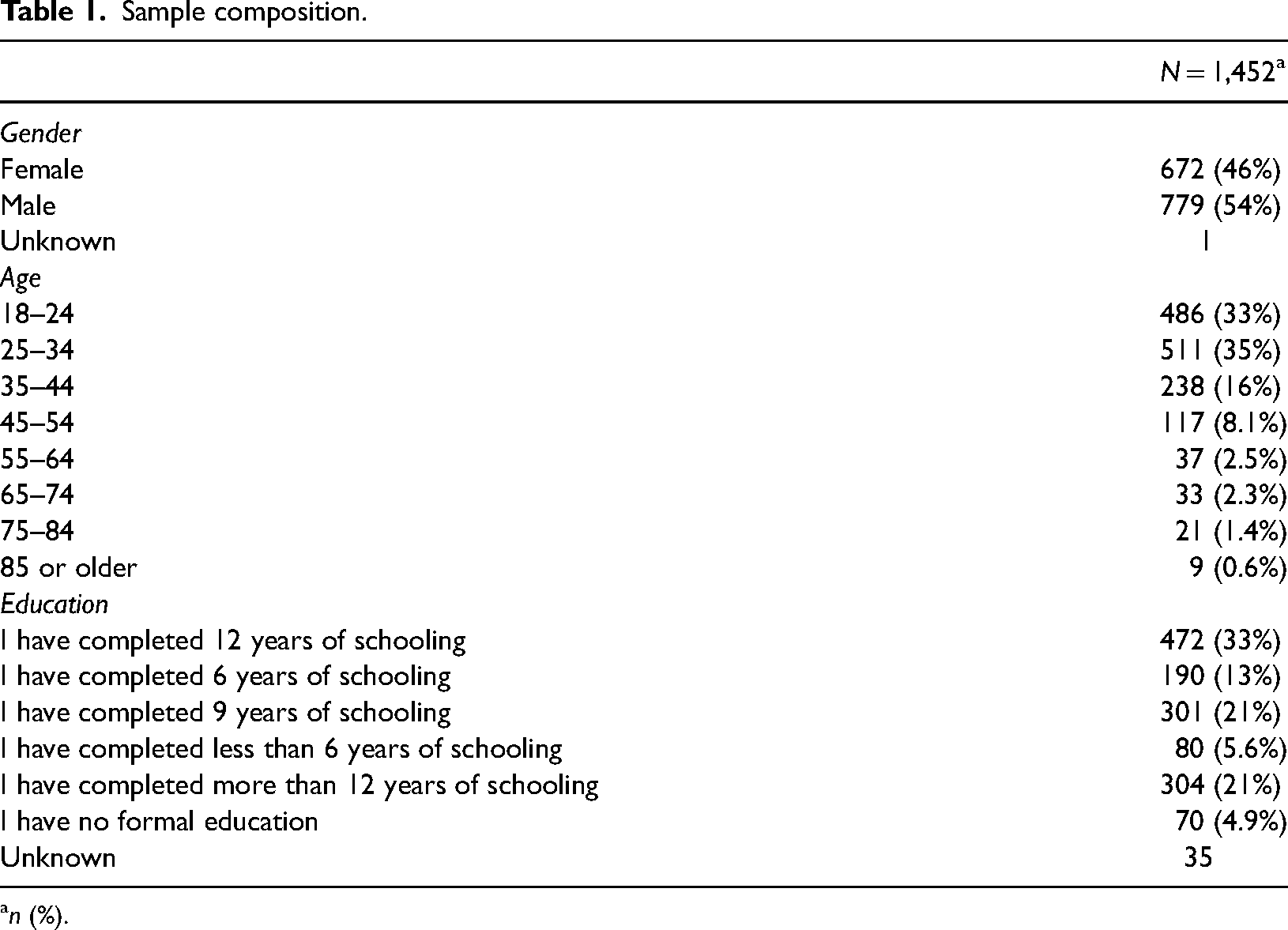
Over a 4 week period, we invited Syrians to gather in secure locations outside the camp, such as tea houses, to participate in our survey. Each day, the camp coordinator allowed 300–400 refugees to temporarily leave the camp to attend to their needs in the city. This allowed roughly one representative per family to participate in the survey, ensuring a diverse representation. The composition of the sample is detailed in Table 1 and Figure A7 in the Online Appendix.
Sample composition.
n (%).
Classification of Harvard Trauma Questionnaire events.
Independent variables
We use the Harvard Trauma Questionnaire (HTQ) (Berthold et al., 2019; Mollica et al., 1992) to assess individuals’ exposure to various forms of conflict-related violence. The HTQ includes 16 different types of traumatic experiences: lack of food or water, ill health without medical care, lack of shelter, imprisonment, physical abuse, serious injury, combat situations, indiscriminate shelling or bombing, close-to-death experiences, forced evacuation, forced separation from family, murder of family or friend, unnatural death of family or friend, murder of stranger(s), kidnapping, and torture. 1 Participants were asked, “Please indicate whether you have experienced any of the following in your life before arriving in Turkey. Select all that apply.” 2
We use the term “exposure to violence” to describe the objective experience of conflict-related events, rather than an individual's subjective reaction to them. Wartime exposure involves encountering highly stressful situations that can be traumatic for those affected. However, the extent to which individuals perceive these events as traumatic or develop post-traumatic stress may vary significantly, which is not the focus of our study (Hall et al., 2021). Reporting traumatic experiences imposes psychological burdens on respondents, potentially introducing recall bias and under-reporting owing to limitations in both the ability and willingness to disclose such experiences (Krieger et al., 2011; Lewis, Cogburn and Williams, 2015; Pavlova and Rogowska, 2023). Given the lack of suitable alternative measurements, we employed trust-building measures and a careful sampling procedure to enhance the validity and minimize biases to the greatest extent possible.
We employ three different kinds of independent variables to test our hypotheses: (1) a binary variables for every 16 different types of violence, with a value of 1 if the respondent selected the corresponding option and 0 otherwise; (2) a count variable (violence_severity) cumulating all selected options to measure the severity of violence exposure each individual experienced; and (3) separate binary and count variables to distinguish between direct and indirect forms of violence (direct_violence_count, indirect_violence_count, experienced_direct_violence, indirect_violence).
We adopt a comprehensive approach by classifying all events listed in the HTQ as instances of “direct violence”, which, as outlined above, involve direct personal and somatic harm to the individual. This category encompasses the following types of events: imprisonment, kidnapping, physical abuse, torture, severe injuries, experience of combat situations, indiscriminate shelling or bombing, and near-death experiences. All other event types are considered forms of indirect violence exposure (Table 2).
Our findings indicate that 99% (n = 1439) of the respondents have experienced some form of war-related violence, with exposure to at least one traumatic event. Of these, 66% (n = 952) have encountered direct violence, and nearly one-third (n = 403, 28.5%) report experiencing two or more instances of direct physical harm. Some 34% (n = 487) report having been exposed to indirect violence. The most frequently reported experiences include lack of shelter (n = 648), imprisonment (n = 367), serious illness without access to medical care (n = 293), and physical abuse (n = 242). Figure 2 provides an overview.
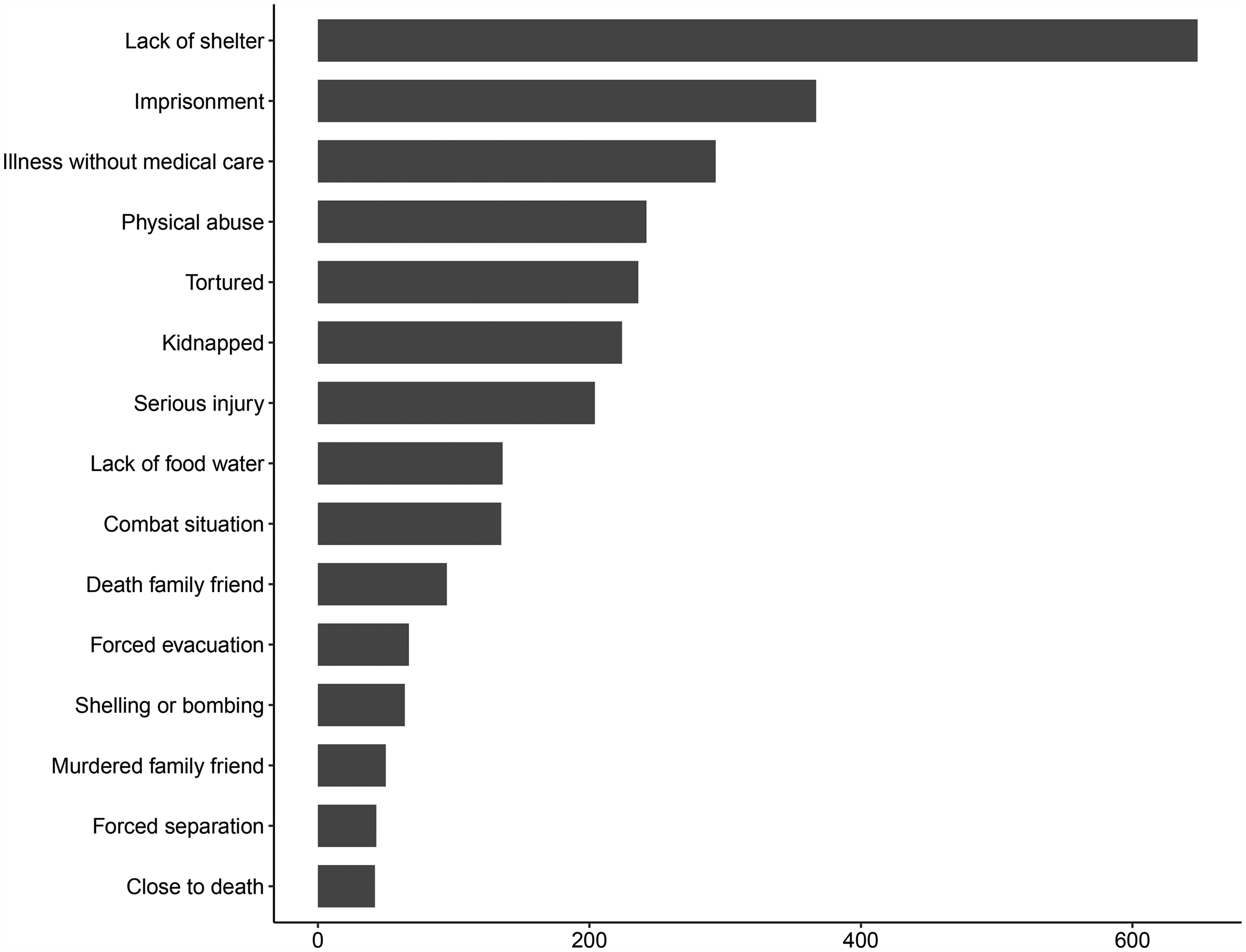
Frequency of types of war-related violence in the sample.
Dependent variable
To construct our dependent variable, we adopted an inductive approach. This process began with consultations involving Syrian refugees and former local mediators and peace negotiators from various cities, including Aleppo, Deir Ez-Zor, Raqqa, and Damascus, who have had direct experience with armed conflict and local conflict resolution in Syria. Their insights into potential pathways for resolving the civil war enriched our understanding, validated our survey questions, and ensured their relevance to respondents. Inspired by this input, we incorporated nine multi-choice options in our survey: (1) the resignation of President Bashar al-Assad; (2) comprehensive peace negotiations; (3) a national ceasefire; (4) general elections organized and monitored by independent organizations; (5) the establishment of a transitional government involving all conflicting parties; (6) an international military intervention to end the fighting; (7) the replacement of the existing political system with Sharia law; (8) a territorial division of Syria; and, finally, an option for (9) no preference for conflict resolution.
To test our main hypotheses, we create a dichotomous variable to account for the preference for political reforms (political_solution), coded 1 if the respondents’ choice included one or several of the following options: peace negotiations (2), ceasefire (3), elections (4), and transitional government (5). Other conflict resolution strategies identified during the pre-survey consultations were either military approaches (international intervention) or options that consultants believed could exacerbate violence in the country, such as the resignation of Bashar al-Assad, territorial division, or the implementation of Sharia law. While these alternatives are not strictly “non-political”, we distinguish them from the consensus-oriented political solutions in our main models.
Figure 3 illustrates the descriptive statistics: The majority of the respondents preferred Assad's resignation (34%, n = 496), closely followed by negotiations (31%, n = 457) and a ceasefire (29%, n = 420). The least liked options were territorial division (4.5%, n = 66), military intervention (4.5%, n = 66), and the replacement of the existing political system with Sharia law (7.3%, n = 106). Interestingly, only 8.3% of respondents selected the option “none”. Given the wide range of hypothetical conflict resolution strategies presented in the survey, we interpret this choice as indicative of a lack of hope for peace in the near future and a preference for continued fighting. Put differently, 91.7% of the respondents expressed general optimism and preferred at least one of the proposed strategies, indicating distinct preferences for various pathways to resolve the conflict.
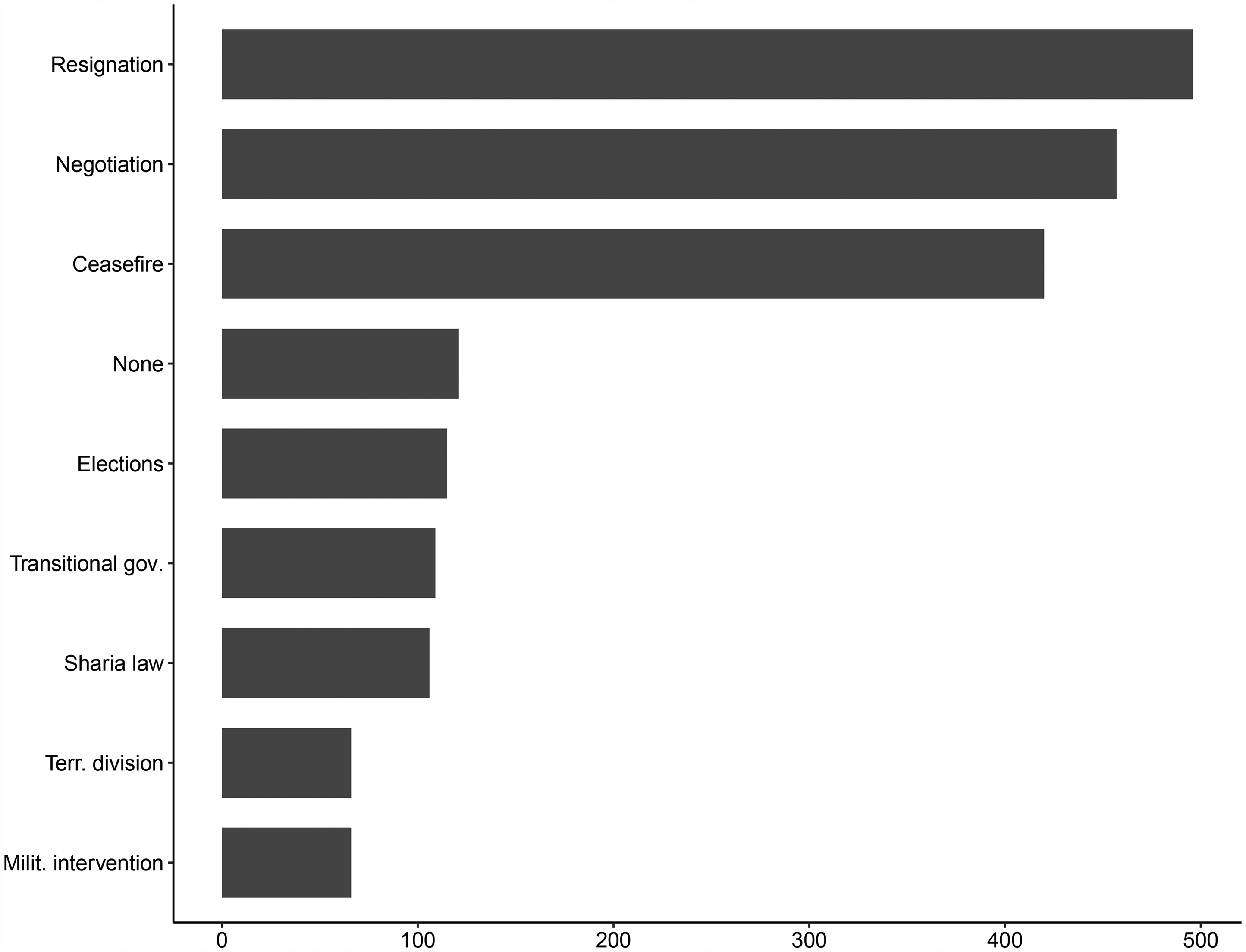
Conflict resolution preferences in the sample.
Controls
To account for potential confounding variables, we include age, education, and gender as control variables in our models. Age is a critical factor, as life experience and generational differences can influence one's attitudes toward conflict and peace. Older individuals, in particular, may hold perspectives influenced by personal or historical experiences (Biaggio et al., 2004; Covell et al., 1994). Gender may also shape conflict resolution preferences, as research has shown that men and women can differ in their attitudes toward aggression, risk, and willingness to fight (Hart et al., 2023; Torgler, 2003). Education serves as a third control variable, as higher educational attainment is typically associated with greater access to information, enhanced critical thinking skills, and exposure to diverse viewpoints, all of which have been found to shape attitudes toward peace and conflict (Puranen, 2014; Torgler, 2003). We limit our control variables to these three key factors to maintain a focused analysis, as the primary investigation into violence exposure and conflict resolution preferences among refugee respondents is already extensive.
Findings
Descriptive analysis
A descriptive analysis (see Figure 4) shows that individual preferences to resolve the Syrian Civil War are linked to different levels of experienced conflict-related violence (severity). Consistent with our expectations, the preferences for all four types of political reforms (elections, transitional government, ceasefire, and negotiation) are associated with higher average levels of experienced violence. Notably, individuals who have experienced significant violence during war are the strongest proponents of a national ceasefire and inclusive peace talks. As suggested earlier, this preference probably stems from an urgent desire for an immediate peaceful resolution to the civil war, driven by the desire to avoid further violence and personal harm.
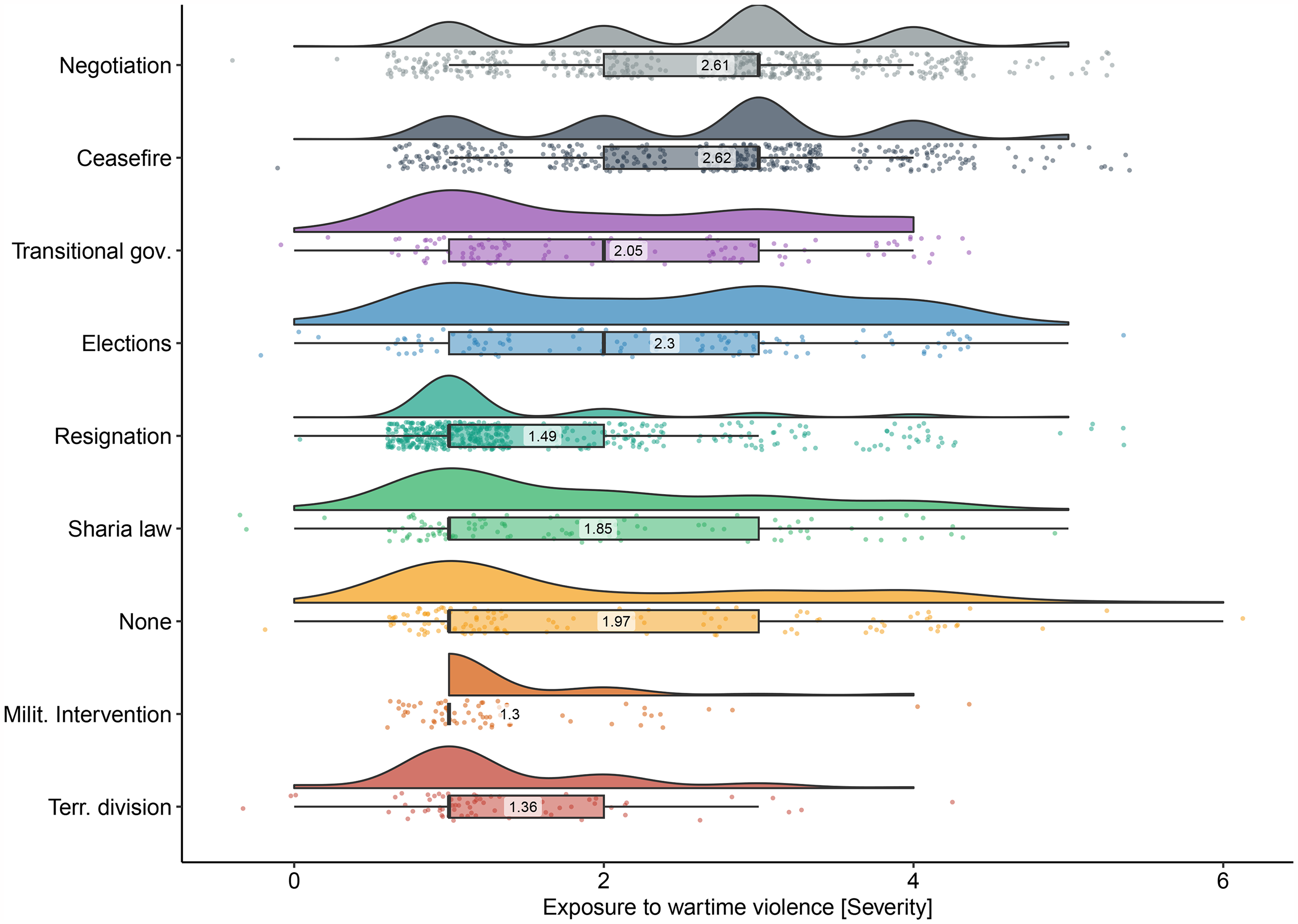
Exposure levels and conflict resolution preferences. Note: Values in the boxplot represent means of violence_severity (Forbes, 2020; Wickham, 2016).
Respondents who favor a territorial division of the country or military intervention tend to report relatively low levels of experienced violence. This pattern likely stems from the perception that these options could introduce new violence, a concern that is more prevalent among those with less exposure and traumatic experiences. Conversely, individuals who refrain from endorsing specific resolution strategies (categorized as “none”) or advocate for the implementation of Sharia law or the resignation of Assad also tend to report lower levels of violence experienced during the civil war.
Main models
We employ logistic regression models to examine the effect of violence severity on the support of various conflict resolution options. Our main model is specified as follows, with p being the probability of supporting a specific conflict resolution option:
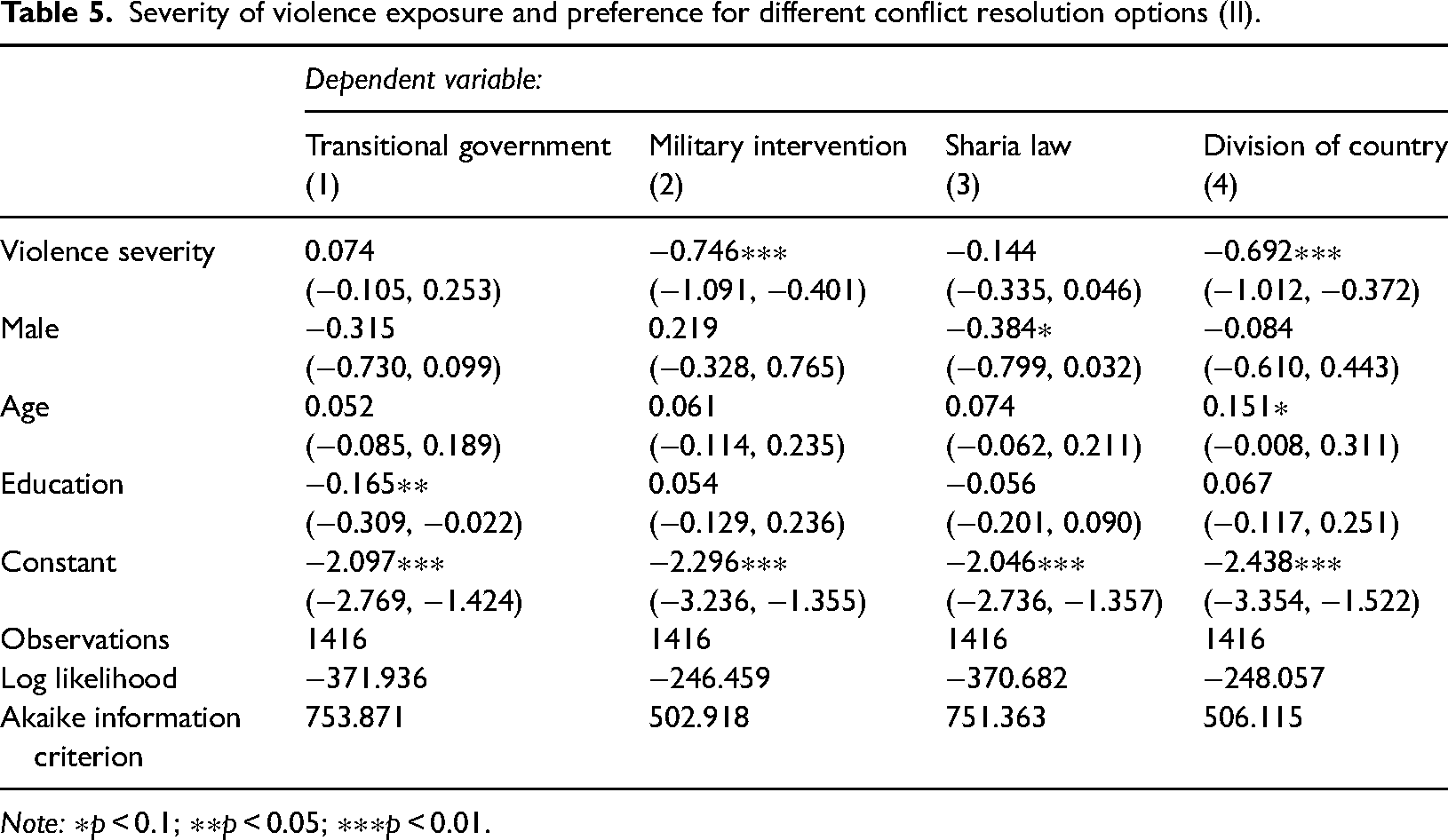
We begin by examining how variations in the severity of violence exposure influence the support for the nine different conflict resolution strategies. To operationalize this, we create a dummy variable for each violence type, where 1 indicates that respondents selected the respective option and 0 otherwise. Our models show that higher severity of exposure to violence significantly decreases support for military intervention (β = −0.746, p < 0.001), territorial division (β = −0.692, p < 0.001), and the resignation of the ruling dictator Assad (β = −0.561, p < 0.001). The severity of violence exposure has no substantial effect on the likelihood of rejecting all proposed conflict resolution options (β = −0.057, p = 0.521). Similarly, we observe no significant effects regarding the preferences for a transitional government (β = 0.074, p = 0.417) or the implementation of Sharia law (β = −0.144, p = 0.137). In contrast, increased exposure to violence significantly increases support for a national ceasefire (β = 0.631, p < 0.001), inclusive peace negotiations (β = 0.657, p < 0.001), and post-war elections (β = 0.262, p = 0.002).
These findings are in line with our theoretical expectations and strongly support the “violence begets weariness” perspective, suggesting that greater exposure to violence drives individuals to favor proactive political strategies—such as ceasefires, negotiations, and elections—while decreasing support for more extreme and costly options like military intervention and territorial division that are expected to prolong the conflict without addressing urgent security needs. We report the predicted probabilities for choosing different conflict resolution options in Figure 5, along with the full regression results in Tables A4 and A5 in the Online Appendix.
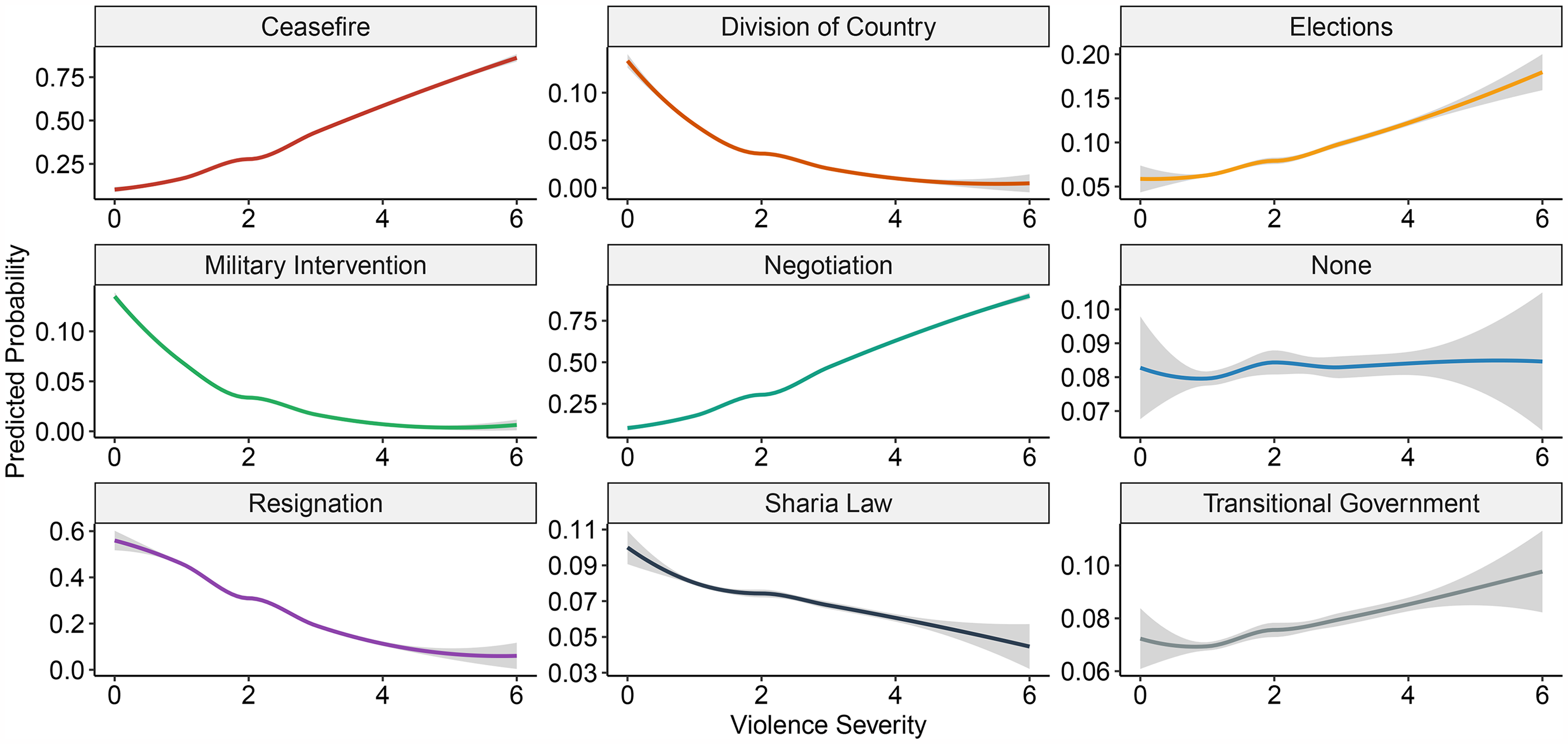
Violence exposure and preferences for different strategies.
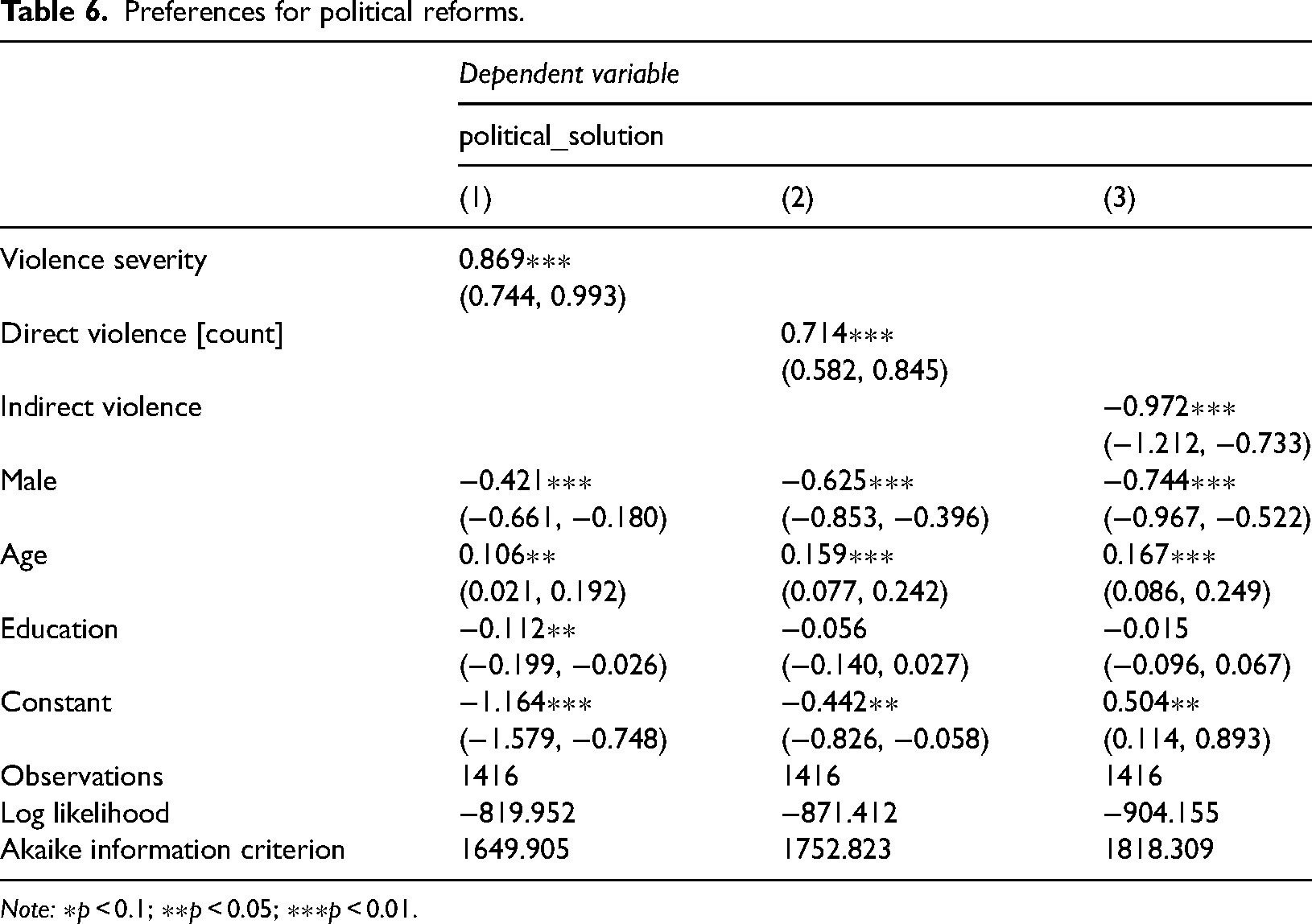
To test our second hypothesis, we analyze how exposure to wartime violence influences preferences for political solutions, i.e. peace negotiations, ceasefire, elections, or transitional government, as a distinct type of conflict resolution strategy. We estimate three separate regression models using different measures of violence exposure as independent variables: (1) a measure of the severity of violence exposure (violence_severity); (2) a count variable quantifying the number of experienced events involving direct violence (direct_violence_count); and (3) a count of indirect violence exposure (indirect_violence). The control variables from our previous models remain unchanged.
The findings of this analysis, shown in Figure 6 and detailed in Table A6 in the Online Appendix, demonstrate that both the severity of violence and exposure to direct forms of violence have a substantial and statistically significant impact on support for political reforms. Specifically, a one-unit increase in the severity of violence is associated with a 2.38 increase in the odds of supporting political solutions (OR = 2.38, β = 0.869, p < 0.001). Similarly, each additional instance of direct violence corresponds to a 2.04 increase in the odds of supporting political reforms (OR = 2.04, β = 0.714, p < 0.001). In contrast, exposure to only indirect violence shows a strong and significant negative effect, with an odds ratio of 0.38 (OR = 0.38, β = −0.972, p < 0.001) on the preference for political reforms. These results strongly support our second hypothesis (H2), highlighting how exposure to direct forms of war-related violence distinctively shapes preferences for post-war political reforms.
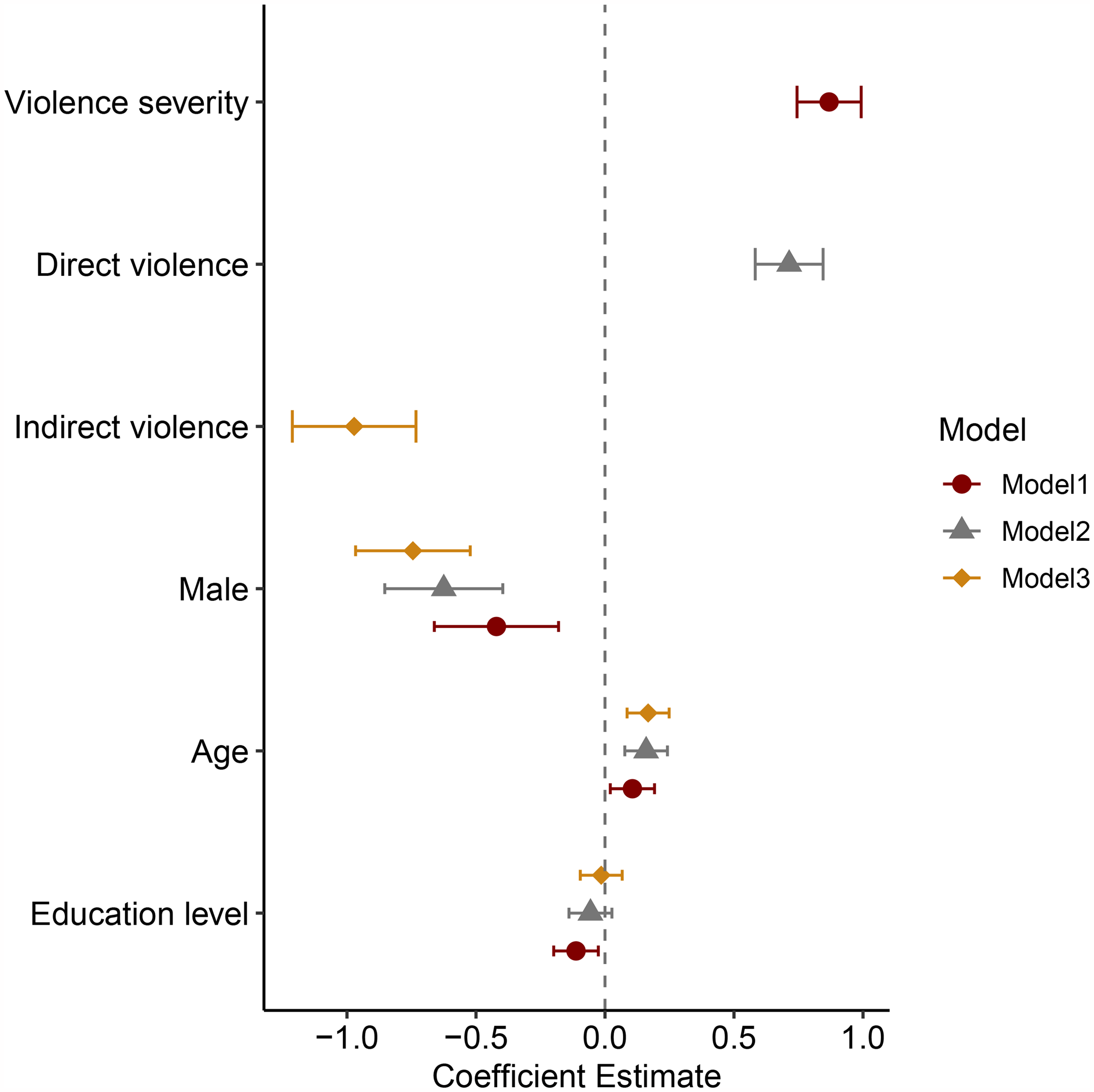
Violence exposure and preferences for political solutions.
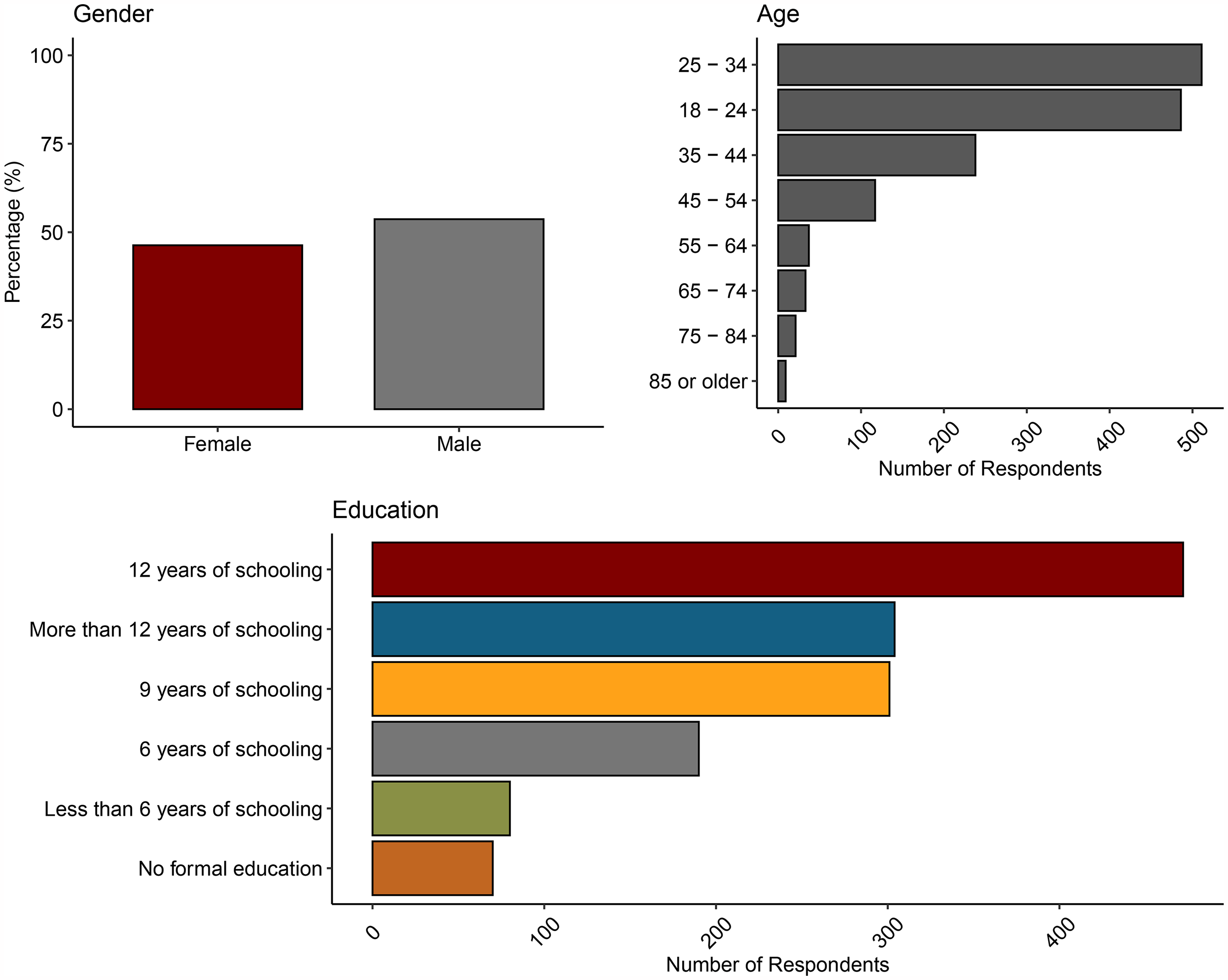
Distribution of gender, age and education in the survey sample.
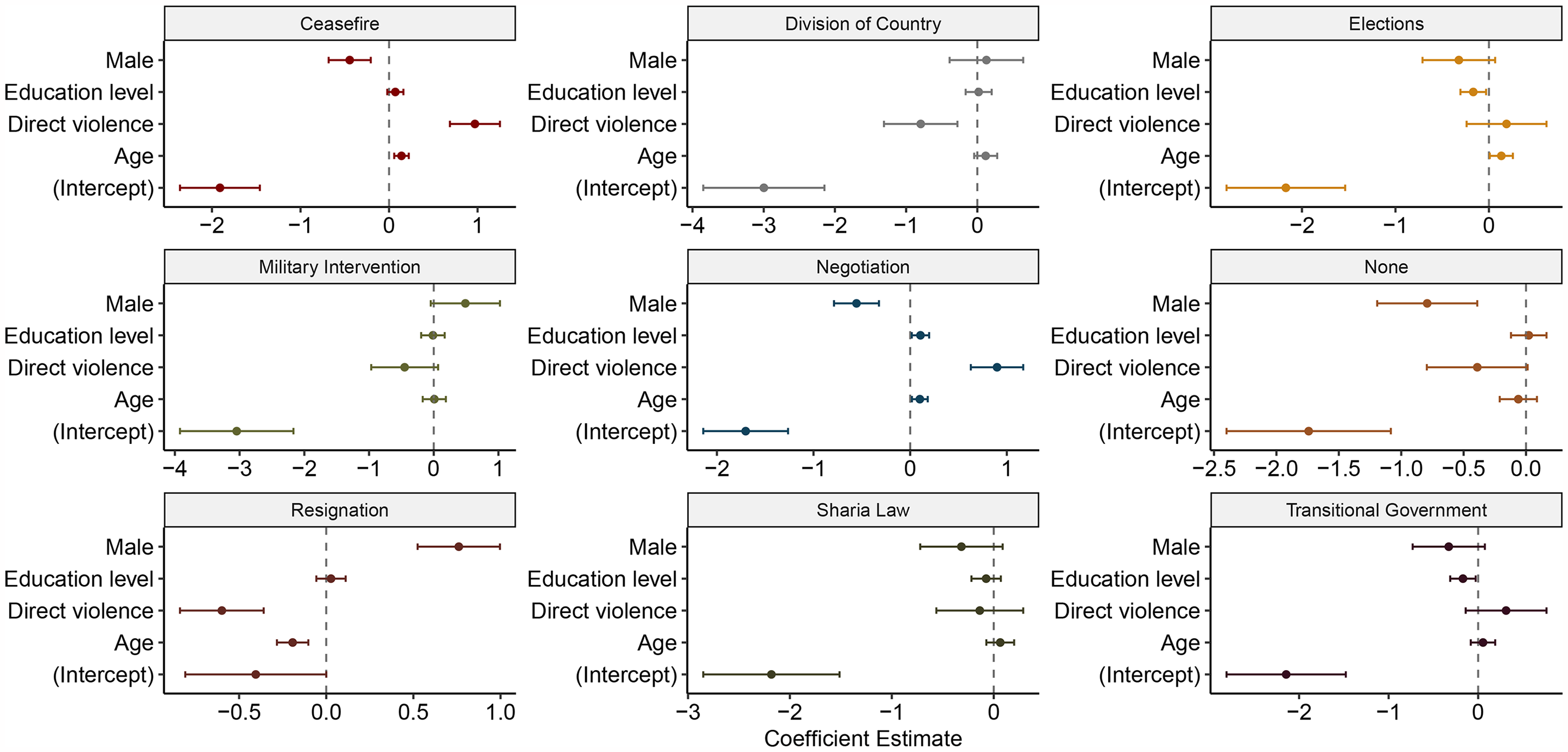
Coefficient plot—direct violence exposure and conflict resolution preferences.
Robustness
We employ a range of additional models to test the robustness of our findings. First, we evaluate how direct exposure to violence impacts the nine distinct conflict resolution strategies differently. This allows us to determine whether the effects observed in the main models are primarily driven by preferences for specific options. Next, we analyze the effect of different (aggregated) types of violence exposure on the preference for rejecting all provided conflict resolution strategies (“none”). If our theoretical assumptions are correct, individuals with lower levels or indirect exposure to wartime violence should be more likely to reject all presented solutions compared with those who have experienced severe and direct forms of wartime violence.
(1) The first robustness test supports our findings (see Figure A8 in the Online Appendix): Direct exposure to violence during the civil war decreases the likelihood of supporting Assad's resignation (β = −0.599, p < 0.001) as well as the territorial division of the country (β = −0.795, p = 0.003). The analysis also shows negative, though statistically insignificant, coefficients for support of a military intervention (β = −0.450, p = 0.088), and the implementation of Sharia law in the country (β = −0.137, p = 0.530). The same applies to the “none” category (β = −0.391, p = 0.058). Although the negative coefficient suggests that as exposure to direct forms of violence intensifies, individuals may be less likely to oppose conflict resolution in general, the lack of statistical significance prevents any definitive conclusions.
On the other hand, direct exposure to violence significantly increases support for a ceasefire (β = 0.970, p < 0.001) as well as peace negotiations (β = 0.899, p < 0.001)—the two political solutions par excellence. We also observe positive, though insignificant, effects for support for a transitional government (β = 0.312, p = 0.175), and post-war elections (β = 0.188, p = 0.388). Overall, these results align with the findings of our main analysis and support our theoretical expectation: exposure to violence shifts preferences toward less costly political solutions.
(2) The second robustness test largely aligns with our theoretical expectations and previous findings; however, its results are less conclusive and do not provide further empirical evidence. The models suggest that greater severity of violence exposure (violence_severity) tends to be associated with a decreased likelihood (β = −0.057, p = 0.521) of choosing none of the options given, although this effect is not statistically significant (see Table 3). Similarly, exposure to direct violence (direct_violence_count and experienced_direct_violence) show a negative relationship with the preference for “none” (β = −0.119, p = 0.251 and β = −0.391, p = 0.058, respectively), but again, both coefficients do not reach conventional levels of statistical significance. Notably, exposure to only indirect forms of violence (indirect_violence) tends to be associated with an increased likelihood of not favoring any of the given conflict resolution options, but this effect reaches statistical significance only at the 0.1 level (β = 0.393, p = 0.057). In summary, the patterns are largely consistent with our theoretical expectations and earlier results, but owing to the lack of statistical significance, the findings from this second robustness check remain suggestive rather than conclusive.
Preferences against all provided conflict resolution options.
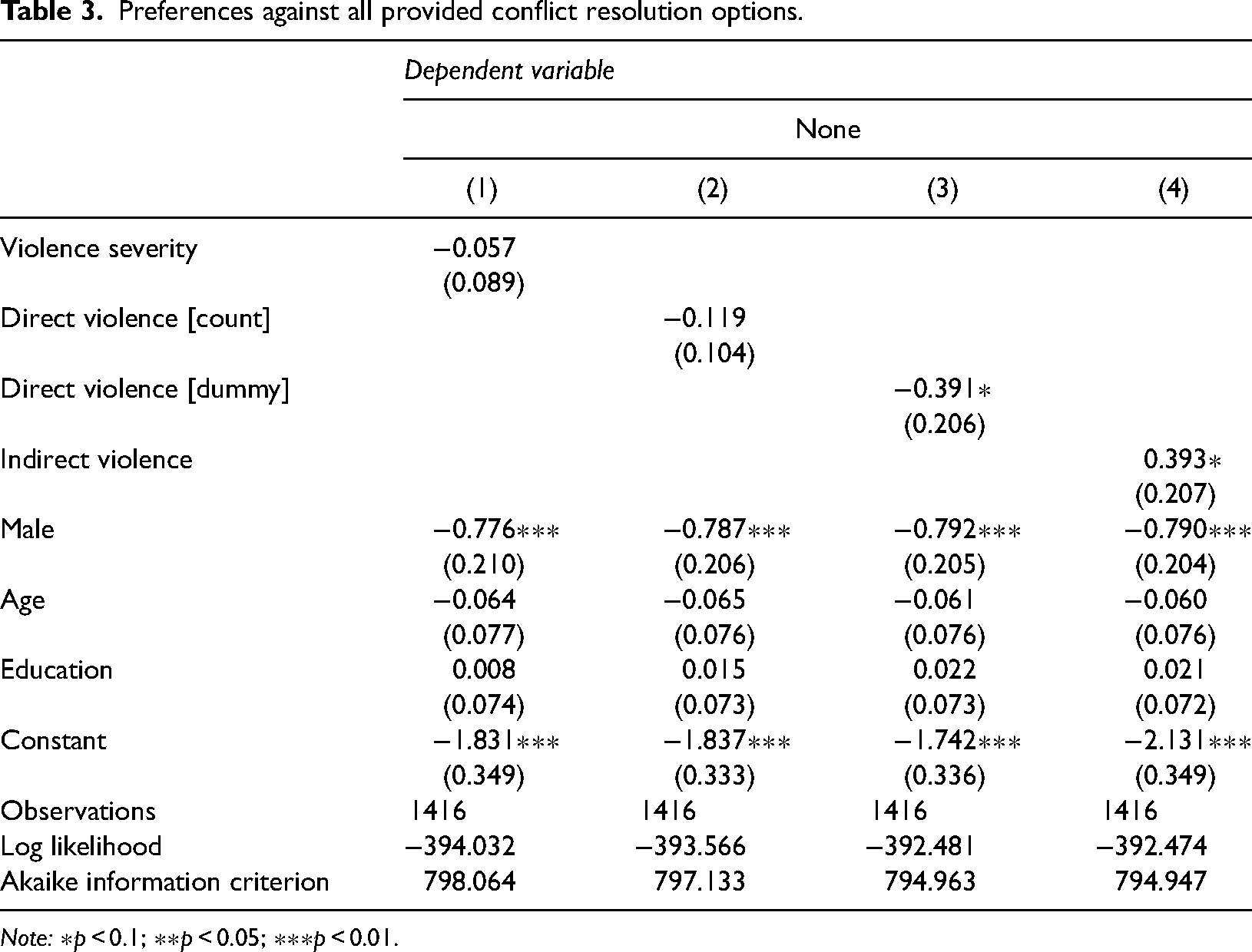
Note: ∗p < 0.1; ∗∗p < 0.05; ∗∗∗p < 0.01.
Severity of violence exposure and preference for different conflict resolution options (I).
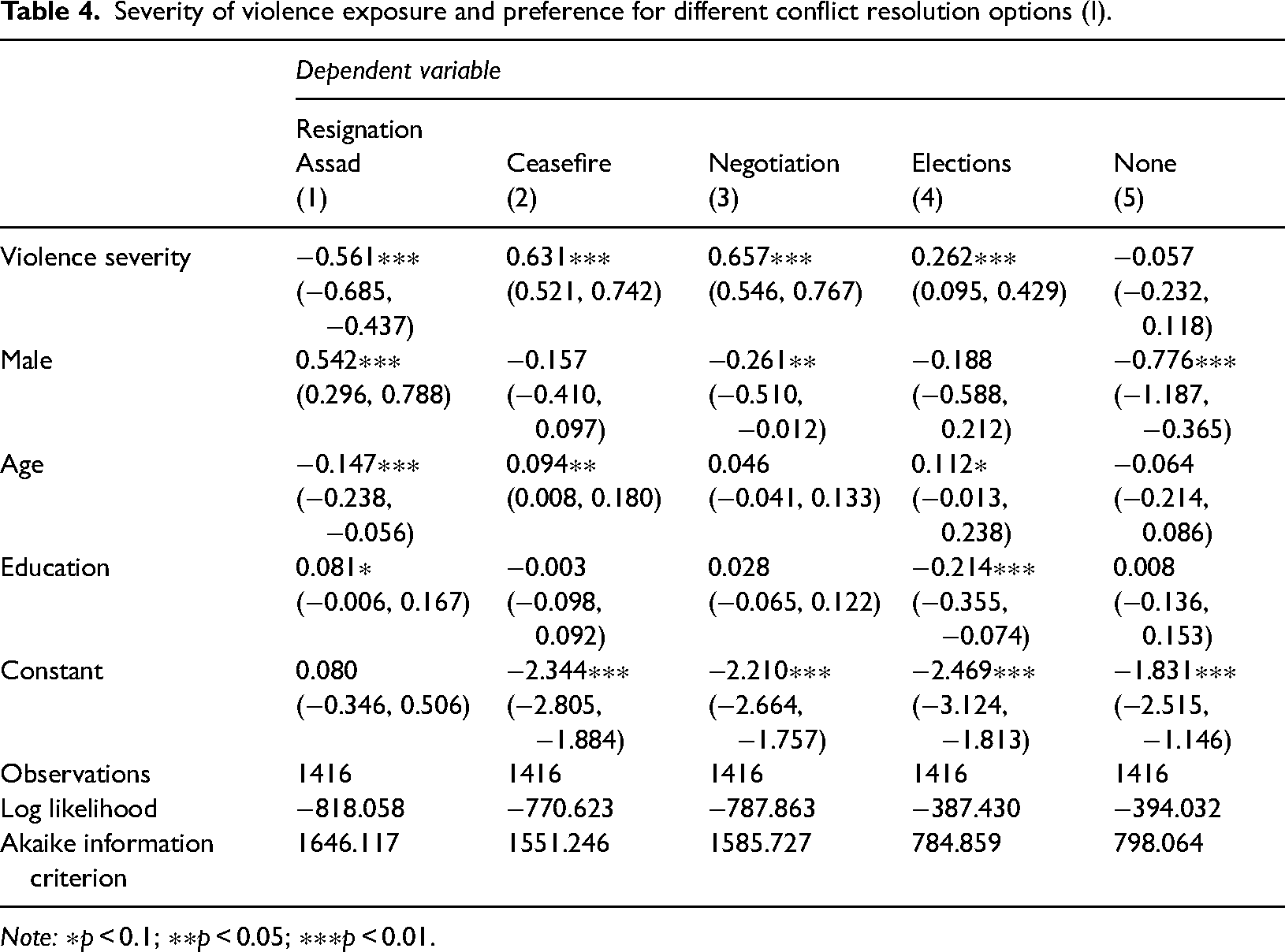
Note: ∗p < 0.1; ∗∗p < 0.05; ∗∗∗p < 0.01.
Severity of violence exposure and preference for different conflict resolution options (II).
Note: ∗p < 0.1; ∗∗p < 0.05; ∗∗∗p < 0.01.
Preferences for political reforms.
Note: ∗p < 0.1; ∗∗p < 0.05; ∗∗∗p < 0.01.
Conclusion
This study addresses a critical yet underexplored question: How does exposure to war-related violence shape individual preferences for different conflict resolution strategies? While the broader impact of wartime violence on attitudes and political behavior is well-documented (Canetti et al., 2013; Costalli and Ruggeri, 2019; Hazlett, 2020; Korostelina et al., 2024), the nuanced ways in which different forms of violence influence specific conflict resolution preferences remain insufficiently understood. Understanding these preferences is crucial for successful peacebuilding, as sustainable peace requires not only appropriate conflict management strategies but also broad public support. Previous research on spoiler groups (Findley and Young, 2015; Nadin et al., 2015; Nilsson and Söderberg Kovacs, 2011; Reiter, 2015) demonstrates how public attitudes can significantly impact the stability of post-conflict settlements.
Our study advances the debate between two competing perspectives: whether exposure to violence perpetuates further violence (“violence begets violence”) or promotes conflict aversion (“violence begets war-weariness”). Expanding upon existing literature, we argue that the severity and nature of violence exposure significantly influence preferences for conflict resolution strategies. As past experiences heavily shape individuals’ expectations of future policy outcomes, those who have endured severe and direct violence tend to have a heightened awareness of the personal costs of conflict and, as a result, prioritize strategies that promise a rapid cessation of personal harm. Consequently, these individuals are more likely to favor less costly negotiated political solutions, including ceasefires, peace agreements, and institutional reforms, over enforcement strategies such as military victories, external military interventions, or highly costly alternatives such as secession or continued fighting.
Drawing on unique data from a face-to-face survey conducted with Syrian refugees in a camp near the Turkish–Syrian border, we employed an inductive approach to identify nine potential options for resolving the civil war. We then assessed the relationship between experienced wartime violence and the preferred solutions using the Harvard Trauma Questionnaire. Our regression analysis provides empirical evidence supporting the hypothesis that the type and intensity of violence experienced significantly shape individuals’ conflict resolution preferences. Specifically, those exposed to higher levels of direct violence, such as torture or physical abuse, were more likely to favor political and negotiated strategies, whereas those with lower or more indirect exposure tended to support more costly alternatives like a territorial division of the country, military intervention or continued fighting. These findings lend strong support to the “violence begets war-weariness” perspective.
Furthermore, our study underscores the importance of utilizing disaggregated measures to capture the complexity of both wartime violence and conflict resolution preferences. Our findings demonstrate that public support for peace strategies is profoundly shaped by personal wartime experiences—a factor that policymakers, peace negotiators, and mediators must take into account when designing post-conflict interventions.
Three limitations of our study should be noted. First, the study relies on self-reported experiences of violence. Despite our careful sampling procedure, we cannot entirely rule out the possibility of over- or underreporting owing to memory biases or a reluctance to disclose sensitive information (Pavlova and Rogowska, 2023; Saunders, 2013; Strange and Takarangi, 2015). Using trust-building measures and pre-consultations with Syrian refugees as well as local mediators, we tried to limit potential biases as much as possible. Second, the sample consists exclusively of Syrian refugees in Turkey, which may introduce selection bias. Refugees in Turkey may differ from those in other countries, and regime opponents with stronger preferences for conflict resolution might have been more likely to flee to Turkey. While we cannot entirely dismiss this possibility, the demographic diversity of the camp and the variation in preferences observed in our sample suggest that such bias is likely minimal. Third, our inductive approach to identifying relevant conflict resolution options is inherently limited in scope. Further research is needed to investigate additional conflict resolution preferences and to examine other conflict-related experiences that may shape policy preferences across different contexts. Moreover, our ability to control for confounding variables was constrained by the survey design, which accounted only for age, education, and gender. Other potentially influential factors, such as political affiliation, family background, economic status, and combat experience, were excluded owing to ethical and logistical constraints. Addressing these limitations is an important direction for future research.
Footnotes
Acknowledgements
The authors would like to thank Eric Skoog, Sebastian van Baalen and Niko Quade for their helpful comments on earlier versions. We would like to thank the reviewers and the editors for their constructive comments and suggestions, which improved the quality of this work.
Funding
The author(s) disclosed receipt of the following financial support for the research, authorship, and/or publication of this article: This work was partly funded by the Deutsche Forschungsgemeinschaft (DFG, German Research Foundation) – 493809260.
