




Abstract
Conventional arms control imposes costs and benefits on states in civil wars: it restricts their own armament and that of rebel groups. I argue that the benefits outweigh the costs because states design conventional arms control measures that primarily curb rebels’ armament. I investigate these arguments through regression analyses of United Nations General Assembly (UNGA) voting records and a content analysis of UNGA speeches. While I find a positive relationship between civil wars and support for conventional arms control in the aggregate, I also show that states in civil wars consider both the benefits and the costs of arms control.
Introduction
In March 2013, the UNGA adopted the Arms Trade Treaty (ATT)—the first legally binding international agreement to regulate the trade in conventional weapons (Meyer, 2014: 204). Civil war-ridden Syria harshly criticized the ATT owing to an alleged lack of restrictions on arms transfers to non-state actors (NSAs) 1 (Fukui, 2015). In contrast, Colombia, also involved in a long-lasting civil conflict, 2 embraced a comprehensive ATT, arguing that it would help to curb armed violence (Amnesty International, 2007). This leads to the question of how civil wars affect states’ preferences on conventional arms control.
Scholars of international relations have argued that security threats are the main driver of states’ opposition to arms control (e.g. Gray, 1992; Kydd, 2000). In this regard, previous studies have almost exclusively focused on external threats by other states and weapons of mass destruction (e.g. Glaser, 1994; Gray, 1992; Jervis, 1978). Yet, security threats have shifted to NSAs and conventional weapons—that is, weapons other than weapons of mass destruction—since the end of the Cold War (Bauer, 2010: 307). Accordingly, multiple arms control agreements adopted during the post-Cold War period aim to curb the transfer and use of these weapons in areas of civil conflict (Bromley et al., 2012; Wisotzki, 2013). By examining internal threats in the form of civil wars and restrictions on conventional weapons, I therefore offer a new perspective on the relationship between security threats and states’ arms control preferences.
Furthermore, I argue that civil wars increase states’ support for conventional arms control. This is because civil conflicts not only increase the costs of arms control—that is, restricting governments’ armament—but also its benefits: first, conventional arms control limits rebel groups’ access to weapons and thereby their ability to fight governments; second, and going beyond military-strategic considerations, limiting rebels’ armament can decrease the deadliness and duration of conflicts as well as the damage to the economy, environment and beyond.
I argue that states design conventional arms control measures in a way that these more effectively constrain NSAs’ arms acquisition rather than their own armament. This is because governments aim to maintain their monopoly of violence and sustain existing power structures. Accordingly, the benefits of such agreements outweigh their costs for states involved in civil wars, leading them to embrace conventional arms control.
I assess this argument in a large-N analysis of the post-Cold War period, employing a mixed methods approach. First, I conduct regression analyses to assess the association between civil wars and support for conventional arms control. To do so, I rely on a new measure of the dependent variable, which combines UNGA voting records with manual coding of resolutions (Risse, 2023). Second, I conduct a content analysis of 446 UNGA speeches that deal with conventional arms control. I focus on speeches held by states involved in civil wars to examine whether these states’ preferences are indeed driven by the costs and benefits of restrictive measures in the event of a civil conflict. Hence, the first part of the analysis aims to investigate the empirical relationship between civil wars and support for conventional arms control in the aggregate. In contrast, the purpose of the content analysis is to unravel the mechanisms that link the two variables rather than to identify a causal effect.
The empirical analysis supports my theoretical arguments. As hypothesized, the regression results show a positive relationship between civil wars and support for conventional arms control. The content analysis suggests that states’ positions are driven by their desire to restrict NSAs’ armament and contain the negative consequences of armed conflicts. While the regression analysis illustrates that states experiencing an intrastate conflict attach more weight to these benefits of conventional arms control, the speeches reveal that states also consider the costs of constraining their own armament.
This study advances our understanding of arms control and international politics in multiple ways. States’ positions on arms control depend on threats not only by other states, but also by NSAs. These threats do not induce opposition to arms control, but rather increase arms control support, as cooperative measures entail benefits for states involved in civil wars, which outweigh their costs. Moreover, the findings provide further evidence that intrastate conflicts can induce foreign policy changes. This underlines the importance of examining developments within the state to fully understand why states embrace or reject arms control—and international cooperation in general.
Determinants of state support for arms control
Many arms control 3 studies have pointed toward security considerations and threats as the main explanatory factor of states’ arms control preferences (see, e.g. Rosert, 2011; Sagan, 1996). Focusing on external threats by other states, several scholars have argued that these increase the demand for armament and thus lead states to oppose arms restrictions (e.g. Gray, 1992; Kydd, 2000; Sagan, 1996). In contrast, multiple studies have pointed to the domestic arena to explain variation in states’ positions toward arms control (e.g. Becker et al., 2008; Knopf, 1998; Sands, 1997).
Nevertheless, threats from within the state have mostly been overlooked as an explanation of states’ arms control preferences. One potential explanation for this gap is “the narrow focus in scholarship and practice on weapons of mass destruction” (Krause 2011: 20; see, e.g. Becker et al., 2008; Sagan, 1996; Sands, 1997), 4 which are largely irrelevant in the context of most intrastate conflicts (Moore, 2012). However, arms control efforts in the aftermath of the Cold War have shifted to the containment of intrastate violence and, accordingly, to conventional weapons (Wisotzki, 2013)—given that these weapons are primarily used in conflicts within rather than between states (Bauer, 2010: 307; Blanton, 1999: 233). This suggests that internal threats may also affect states’ preferences in the field of conventional arms control.
While an internal threat might refer to different events and actors, including coup attempts as well as opposition movements (Miller and Toritsyn, 2005), I here focus on civil wars. This is the most extreme form of internal threat (Han and Thies, 2019) and thus arguably the most relevant type with regard to arms control. Moreover, previous research suggests that intrastate conflicts can indeed induce foreign policy changes (Gleditsch et al., 2008; Miller and Toritsyn, 2005). I therefore examine the relationship between civil wars and state support for conventional arms control.
Civil wars and support for conventional arms control
Previous studies have argued that security threats induce opposition to arms control, as they restrict the threatened states’ access to arms to deter and fight their opponents (e.g. Gray, 1992; Kydd, 2000; Sagan, 1996). In contrast, I argue that civil wars increase support for conventional arms control. While states in civil wars consider the drawbacks of arms limitations, conventional arms control simultaneously provides benefits for them. Arms restrictions affect not only states’, but also rebel groups’ armament. This is important from a military-strategic perspective, but also beyond this: curbing rebels’ armament can decrease the duration and lethality of civil conflicts as well as their negative impact on the economy and environment. As states prioritize the adoption of measures that primarily affect NSAs’ access to arms, these benefits outweigh the costs of conventional arms control for states involved in civil war. This leads them to shift their preferences in this area toward more favorable positions.
Hence, I do not contradict the argument that security threats increase the costs of arms control. On the contrary, I argue that this holds not only for external threats, but also for civil wars. Previous research has shown that both military spending (Collier and Hoeffler, 2007) and arms imports (Blomberg and Tocoian, 2016) are positively related to the incidence of intrastate conflicts. Conventional arms control runs counter to this increased demand for armament in the event of a civil conflict. For instance, the ATT prohibits arms transfers to crisis areas (Bromley et al., 2012). The Anti-Personnel Mine Ban Convention (Ottawa Treaty) and the Convention on Cluster Munitions ban the stockpiling, transfer, and use of landmines and cluster munitions, respectively—weapon types that have been frequently used in civil conflicts (Wisotzki, 2013). Accordingly, involvement in civil wars increases the costs of conventional arms control for the concerned state, which indeed creates incentives to shift their preferences and oppose international agreements in this field.
That being said, I argue that civil conflicts simultaneously increase the benefits of conventional arms control, as it not only affects states’, but also rebel groups’ arms procurement. This is beneficial for states for two reasons. First, the access to arms is crucial for rebel groups’ ability to challenge governments (Cunningham et al., 2009). States exposed to civil wars can thus benefit from conventional arms control to gain a military advantage.
Second, the advantages of conventional arms control in the event of a civil conflict go beyond the mere question of how to win the conflict. More precisely, arms restrictions can reduce the detrimental consequences of armed conflict in general. Arms transfers to rebel groups can lead to deadlier and longer conflicts (e.g. Mehltretter and Thurner, 2021; Moore, 2012). Moreover, the use of indiscriminate weapons—as well as other conventional weapons—has severe long-term consequences. These include, for instance, negative effects on the environment, economy and public health (Hoteit and Fares, 2014; Newman and Mercer, 2000; Somasundaram and Renol, 1998). This can inflict serious costs on the government, which it might want to avoid. Hence, I argue that states have incentives to curb the negative consequences of arms procurement, even if they are not genuinely interested in the protection of, for instance, the environment or the civilian population.
Of course, I recognize that attempts to restrict NSAs’ armament come with several challenges. Rebels are not bound by international law (Fazal and Konaev, 2019) and mostly acquire their arms through illicit and clandestine activities, which are naturally difficult to monitor (Jackson, 2010). Nevertheless, interstate agreements hold the potential to effectively constrain NSAs’ armament. I even argue that, in the field of conventional arms control, states tend to design measures that primarily affect NSAs’ armament—rather than restrictions to their own armament. This is because maintaining states’ monopoly of violence and consolidating existing hierarchies and power structures have always been—and continue to be—among the main purposes of arms control (Krause, 2011; Stavrianakis, 2011). Therefore, I argue that the above advantages of arms control outweigh the drawbacks, and that civil wars lead states to shift their preferences in favor of conventional arms control measures.
This applies, for instance, to restrictions on the arms trade and landmines, both of which have been at the forefront of conventional arms control after the end of the Cold War (Bauer, 2010). Regulations of arms transfers primarily focus on combating the illicit arms trade and preventing arms proliferation to NSAs (Bauer, 2010). Although the ATT affects arms transfers to both states and NSAs, it emphasizes states’ sovereignty and the legitimacy of state-to-state transfers (Lustgarten, 2015: 576). Moreover, the ATT as well as other attempts to regulate the arms trade affirm states’ right to self-defense as stated in the UN Charter (Meyer, 2014: 207; Bauer, 2010: 308). In addition, post-Cold War transfer controls often focus on small arms and light weapons (Bauer, 2010), which have reputational value for rebel groups but less so for states (Spindel, 2018).
Similarly, the Ottawa Treaty prohibits states’ use, production, stockpiling, and transfer of anti-personnel mines (Wisotzki, 2013), but aims at establishing a global norm against landmines that applies to states and NSAs alike (Krause, 2011: 30). 5 These weapons are particularly useful for rebel groups: as they are not only cheap and easily available but also valuable to overcome military disadvantages against stronger opponents (Fazal and Konaev, 2019: 155; Harpviken and Fixdal, 1997: 280), they have been labeled “the poor man's arms” (Harpviken and Fixdal, 1997: 280). Hence, their ban constitutes a military advantage for states, which—in the vast majority of intrastate conflicts—are the much stronger actor (Cunningham et al., 2013). I thus argue that conventional arms control initiatives primarily aim at restricting rebel groups’ rather than states’ armament, or at the very least, at preserving states’ military superiority.
While I argue that restrictions on landmines and arms transfers disproportionately affect rebels’ armament, this does not necessarily apply to every other conventional arms control measure. For example, the Convention on Cluster Munitions prohibits the possession and use of cluster munitions, which are almost exclusively owned and used by states (Hiznay, 2006: 17–18; Wisotzki, 2013: 83). Yet, while the Ottawa Treaty was adopted in 1998, it took the international community until 2008 to negotiate a similar treaty on cluster munitions, resulting in a weaker “taboo” on these weapons (Wisotzki, 2013). In other words, in the post-Cold War era, states have generally prioritized measures that have a greater impact on the arming of rebel groups than that of states.
Accordingly, civil wars create incentives for governments to support conventional arms control. For instance, the Colombian government has consistently supported the adoption and implementation of a comprehensive ATT, laying a particular emphasis on the prevention of arms transfers to rebel groups (Bromley and Malaret, 2017; Cancillería de Colombia, 2022; Zughni, 2012). Sudan, being severely affected by landmines, endorsed the Ottawa Treaty and called for global aid to facilitate the mine-clearing process (Herr, 2010). Sudan's support for the mine ban was preceded by rebels’ announcement that they would abandon landmines if the government joined the treaty (Herr, 2010).
In sum, intrastate conflicts increase the costs and the benefits of conventional arms control. On the one hand, arms restrictions limit governments’ capabilities to fight NSAs. On the other hand, they constrain NSAs’ armament, which benefits governments for military-strategic reasons and beyond. In the aggregate, the added benefits outweigh the added costs of restrictive measures in the event of a civil conflict, as states focus on conventional arms control agreements that disproportionately affect rebel groups’ access to arms. This leads to a positive impact of civil wars on states’ support for conventional arms control. Accordingly, I formulate the following hypothesis:
Empirical analysis
I assess my theoretical argument using a mixed methods approach and conducting two complementary analyses. First, I employ regression models to analyze the relationship between civil wars and a new measure of support for conventional arms control based on UNGA voting records. Second, I carry out a content analysis of UNGA speeches to investigate whether states that are involved in civil wars consider the costs and benefits of conventional arms control when forming their policy preferences. The first empirical approach allows me to assess the relationship between civil war and states’ arms control preferences in the aggregate and thereby test my hypothesis. In contrast, the content analysis examines the underlying reasons for states’ positions in the event of a civil war.
Regression analysis
Dependent variable
For the dependent variable of my regression analysis, I use data from the first comprehensive measure of state support for arms control (Risse, 2023), combining manual coding of 1178 UNGA resolutions adopted between the 49th and 71st sessions (1994/1995 to 2016/2017) with voting records on these resolutions. This data holds multiple advantages over other data sources, for instance treaty ratifications. These reflect states’ preferences to a certain degree, yet are not only subject to severe selection bias but also dependent on various other factors, such as institutional constraints (Hug and König, 2002; Kreps et al., 2018). 6
In contrast to arms control treaties, UNGA resolutions are non-binding and thus largely inconsequential for international law (Bailey et al., 2017: 437). While one might argue that this leads states not to vote according to their true preferences (Bailey et al., 2017: 436), multiple scholars have argued that it should in fact lead states to minimize strategic voting, as there will be no severe consequences from their votes (e.g. Bailey et al., 2017; Mattes et al., 2015). Moreover, UNGA resolutions cover all relevant issues of international politics (Kim and Russett, 1996: 629), including all aspects of arms control (Müller et al., 2013; Thakur, 2017). Hence, Risse's (2023) measure relies on UNGA voting not for the purpose of analyzing states’ voting behavior in itself, but because it is a useful—and widely used—data source to identify states’ foreign policy positions (see, e.g. Bailey et al., 2017: 430).
However, existing measures of states’ foreign policy preferences that rely on UNGA votes primarily capture states’ positions relative to each other rather than toward the topic under consideration. For instance, the ideal points identified by Bailey et al. (2017) measure alignment with the global West in various policy areas, but not whether states are for or against a particular issue. To identify support for arms control, every resolution was therefore coded into one of five different categories (Risse, 2023; see Appendix A for more details). The categorization depends on whether a resolution tends to strengthen or weaken arms control and whether voting behavior might be driven by preferences on issues other than arms control support. Contingent on the resolution's category, every vote by a state is assigned a position, reflecting its support for arms control (see Table 1).
Categories.
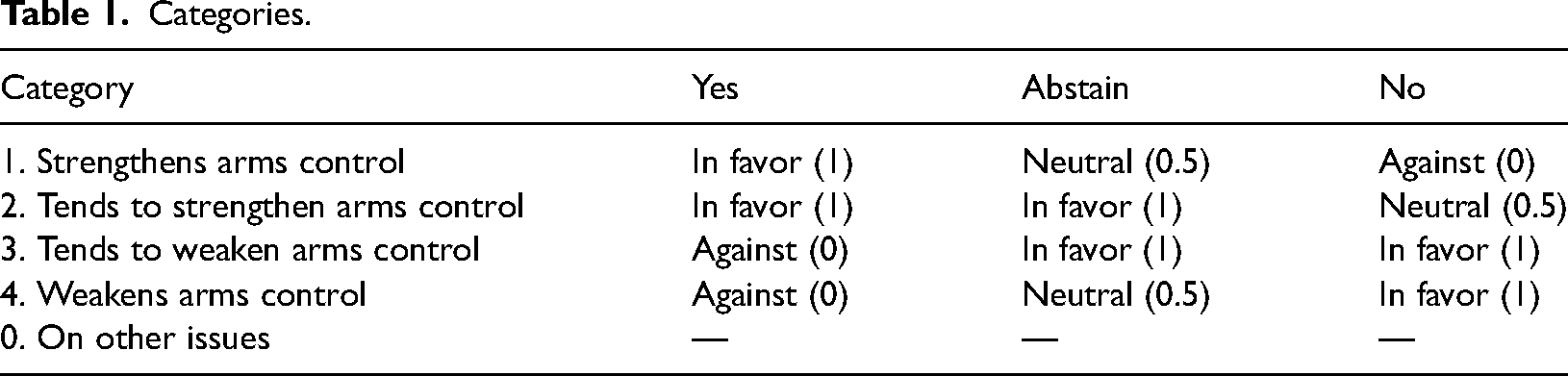
Category 1 includes resolutions that strengthen arms control, and proponents of arms control will cast positive votes. Category 2 resolutions also seek to reinforce arms control, but contain elements that some states may consider counterproductive, leading them to abstain even if they support arms control in principle. In contrast, resolutions in Categories 3 and 4 undermine arms control. Category 4 clearly weakens arms control, whereas Category 3 also contains sections that could be seen as supportive of arms control. Consequently, states advocating arms control may either abstain or vote against resolutions in Category 3, depending on the weight they attach to each element. Finally, all resolutions in Category 0 are excluded from the analysis. This is because for these resolutions, all three voting options may indicate positions on conflict dimensions other than support or non-support for arms control.
A total of 194 out of the 1178 resolutions deal with conventional weapons—between 6 and 12 per session. Of these 194 resolutions, 102 deal with the legal and illegal arms trade (e.g. A/RES/49/75C: “Transparency in armaments”), while 24 address landmines (e.g. A/RES/51/45S: “An international agreement to ban anti-personnel landmines”). The remaining resolutions cover indiscriminate weapons more generally (23 resolutions), regional and subregional measures (23), confidence-building measures (8), ammunition (7), cluster munitions (4) and improvised explosive devices (2). Interestingly, none of the resolutions are assigned to Categories 3 and 4 and only one is coded as 0. 7 Of the remaining 193 resolutions, 170 are coded as 1 and only the 23 resolutions on regional and subregional measures are coded as 2. 8
I focus on these 193 resolutions, leading to a set of 34,292 votes, out of which 33,178 (96.7%) are in favor, 1099 (3.2%) are neutral, and only 15 (0.04%) are against arms control (see Appendix D for the distributions by sub-topic). 9 While the large share of favorable votes and the small number of votes against arms control might appear problematic at first glance, one needs to consider several aspects in this regard. First, the data structure is in part derived from the inclusion of consensus decisions. The removal of consensus decisions excludes 19,078 favorable votes from the analysis and reproduces the findings from the main analysis.
Second, abstentions are often regarded as a “soft” form of opposition and, similar to negative votes, “signs of not accepting a resolution” (Voeten, 2000: 193). Accordingly, not only the negative, but also the neutral votes create meaningful variation in the dependent variable. In line with this, several studies merge the neutral and opposing votes (e.g. Voeten, 2000; Wang, 1999). A robustness test that does just that yields similar results.
I ran a variety of tests to assess the validity of this variable (see Appendix B). These focus on the votes dealing with conventional arms control and complement the validation checks conducted by Risse (2023) concerning the complete dataset. They show, for instance, that country level scores reflect conventional wisdom, that the measure captures developments over time, and that it relates to existing variables as expected. The validation checks thus illustrate that states’ votes are driven by their arms control support, while the coding procedure removes biases through other conflict dimensions. States’ UNGA voting behavior is thus a suitable proxy for their support for conventional arms control.
Empirical model
For my main empirical model, I use the single vote rather than the country-year as the unit of analysis, as this allows me to include resolution-specific control variables to account for agenda changes over time and increase statistical efficiency. I run a linear regression, as it is easier to compute and interpret than non-linear models, but produces similar results (Angrist and Pischke, 2009: 94–107). In line with previous studies of UNGA voting (e.g. Dreher and Jensen, 2013), I assign numerical values of 1, 0.5, and 0 to the favorable, neutral, and opposing votes, respectively.
To account for the clustered data structure, I include random effects on three levels: country, year, and (repeated) resolution. 10 I use random instead of fixed effects in the main model, as I am interested not only in the effect of civil war outbreaks and terminations, but also in cross-country differences. Hence, fixed effects would remove a large amount of meaningful variation. Robustness checks include a regression with fixed effects on the country and year levels, a logit model that merges, as explained above, the neutral and opposing votes, and a linear regression model on the country-year level, which aggregates the dependent variable.
Independent and control variables
I measure the main independent variable, civil war, using data from the UCDP/PRIO Armed Conflict Dataset (version 21.1) (Gleditsch et al., 2002; Pettersson et al., 2021). This dataset has become the standard data source to identify intrastate conflicts and is widely used in studies to investigate the consequences of civil wars (e.g. Bove et al., 2017; Gleditsch et al., 2008; Phillips, 2015). An intrastate conflict is “a contested incompatibility that concerns government or territory or both” and “occurs between the government of a state and internal opposition groups” (Gleditsch et al., 2002: 618–619).
The dataset uses two different thresholds to distinguish minor conflicts from wars: 25 and 1000 battle-related deaths per year. Neither option is ideal for the purpose of this study: Whereas the use of the lower threshold would lead to the inclusion of low-level conflicts that might not affect states’ positions toward arms control, the higher threshold excludes a variety of relevant cases. For instance, the Ugandan civil war crosses the threshold of 1000 battle-related deaths only in 1996, 2002, and 2004, but comes very close in several other years—which would not be coded as civil wars using the higher threshold.
Phillips (2015) therefore chooses a middle-ground approach: he codes all years of intrastate conflicts above the lower threshold, but only if they cross the higher threshold in at least one conflict-year. This holds the advantage that all major civil wars are included, while not more or less arbitrarily excluding certain years of a conflict. My independent variable is thus binary and takes the value of 1 if a country experiences an intrastate conflict in a given year that crosses the threshold of 1000 battle-related deaths in the same or any other year, and 0 otherwise. 11
The United States’ armed struggle against al-Qaida from 2001 is coded as an intrastate conflict in the UCDP/PRIO data. At the same time, the United States drastically decreased its arms control support under George W. Bush, who took office in 2001. All of the United States’ votes against conventional arms control were cast during his presidency. This case is a stark outlier and reflects “an untraditional case of internal armed conflict, with most of the violent activity taking place outside of the US” (UCDP, 2021), which might bias the results. I therefore exclude the United States from the analysis.
As the analysis is purely observational, correlations do not necessarily reflect causal relationships. I introduce several control variables on the country-year and country levels that might affect the likelihood of support for conventional arms control as well as intrastate conflict to avoid omitted variable bias. I include states’ level of electoral democracy (Coppedge et al., 2021), GDP per capita (United Nations Statistics Division, 2020), trade openness (Feenstra et al., 2015), national military capabilities (CINC) (Singer et al., 1972; Singer, 1988), region (Gleditsch et al., 2002; Pettersson et al., 2021), and EU membership. As indicated above, I additionally control for four resolution-specific variables. These include the coded category, the global relevance as well as the topic, all of which have also been coded by Risse (2023), and the salience, measured as the number of UNGA speeches referring to the resolution (Finke, 2023a). 12
Dynamics of state support for conventional arms control over time
Before examining the impact of civil wars on support for conventional arms control in regression analyses, I first assess the two variables, especially the latter, in a more descriptive manner. Figure 1 shows that states’ average support for conventional arms control remained fairly constant over time, with only a slight decline toward the end of the observation period. The highest levels of arms control support were reached in 2004 and 2010 (0.993), and the lowest in 2013 (0.97). The latter is the year in which the ATT was adopted, resulting in three of the eight opposing votes in the dataset—by Iran, North Korea, and Syria. At the same time, the number of civil wars declined in the late 1990s and began to rise again after 2010.
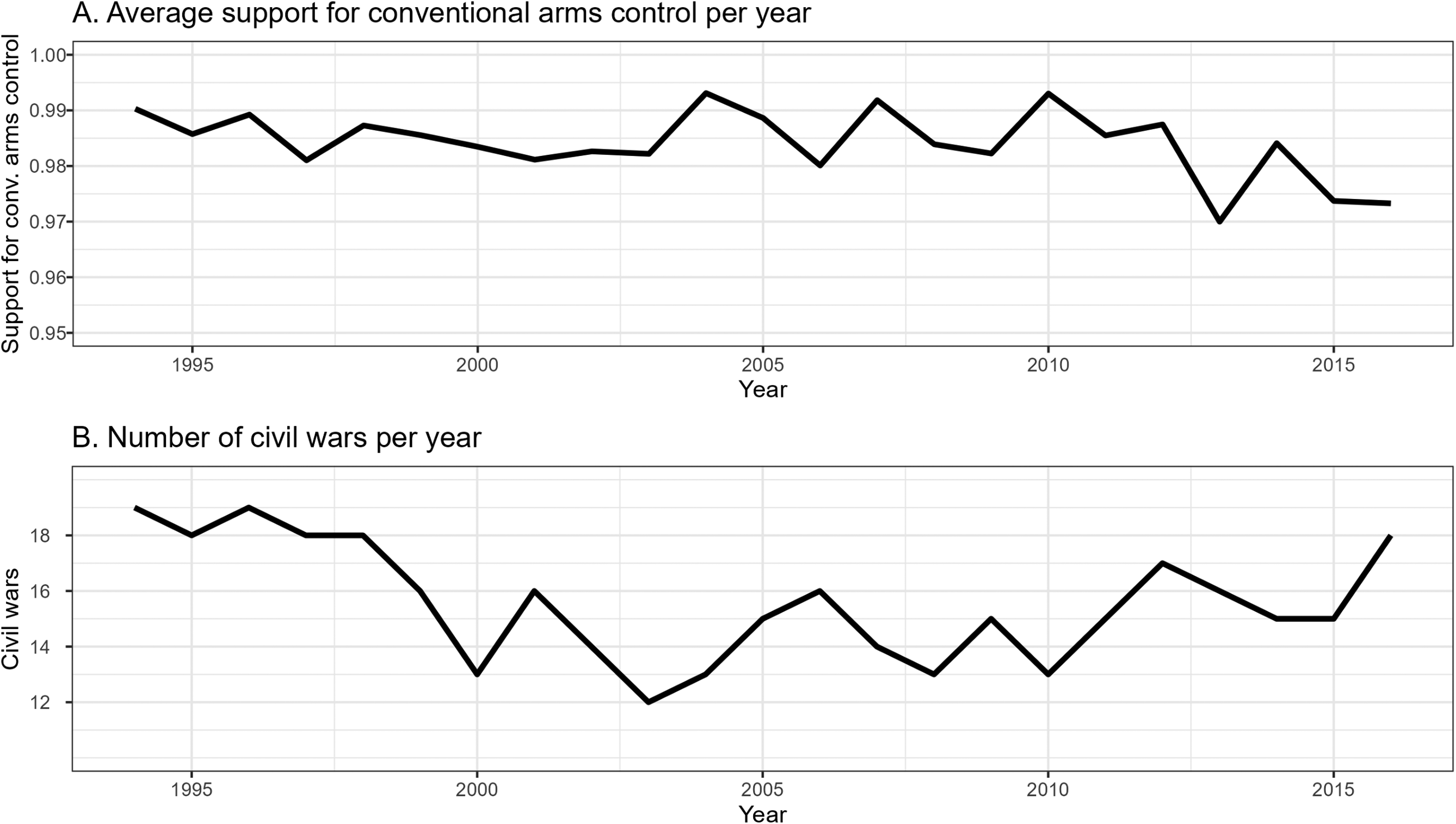
Civil war frequency and positions on conventional arms control over time.
In the next step, I focus on the 26 states that experience civil war outbreaks or terminations—that is, changes in the independent variable—during the observation period. Among these states, five states have lower levels of arms control support during their civil wars compared to the peaceful years, while the opposite is true for 13 states. Eight states do not change their position over time (see Appendix E for the individual cases).
Moreover, I assess these states’ positional developments in the five years before and after civil war outbreaks and terminations (see Figure 2). This shows that, on average, states are slightly more supportive after civil war outbreaks (0.959) than before (0.957). A closer look at the individual years shows that there are no major changes in the first year after an outbreak. Instead, one can already observe higher levels of arms control support in the preceding years, which then decline again several years after the beginning of a civil war. With regard to civil war termination, one can observe a larger divergence between the average scores before (0.987) and after (0.97) the end of a civil war. Again, this difference is driven more by a positional decline in the years leading up to the end of a civil war rather than in the first year after the war. These observations may indicate that states anticipate the beginning and the end of civil wars and adjust their positions accordingly, although a more detailed analysis is beyond the scope of this study.
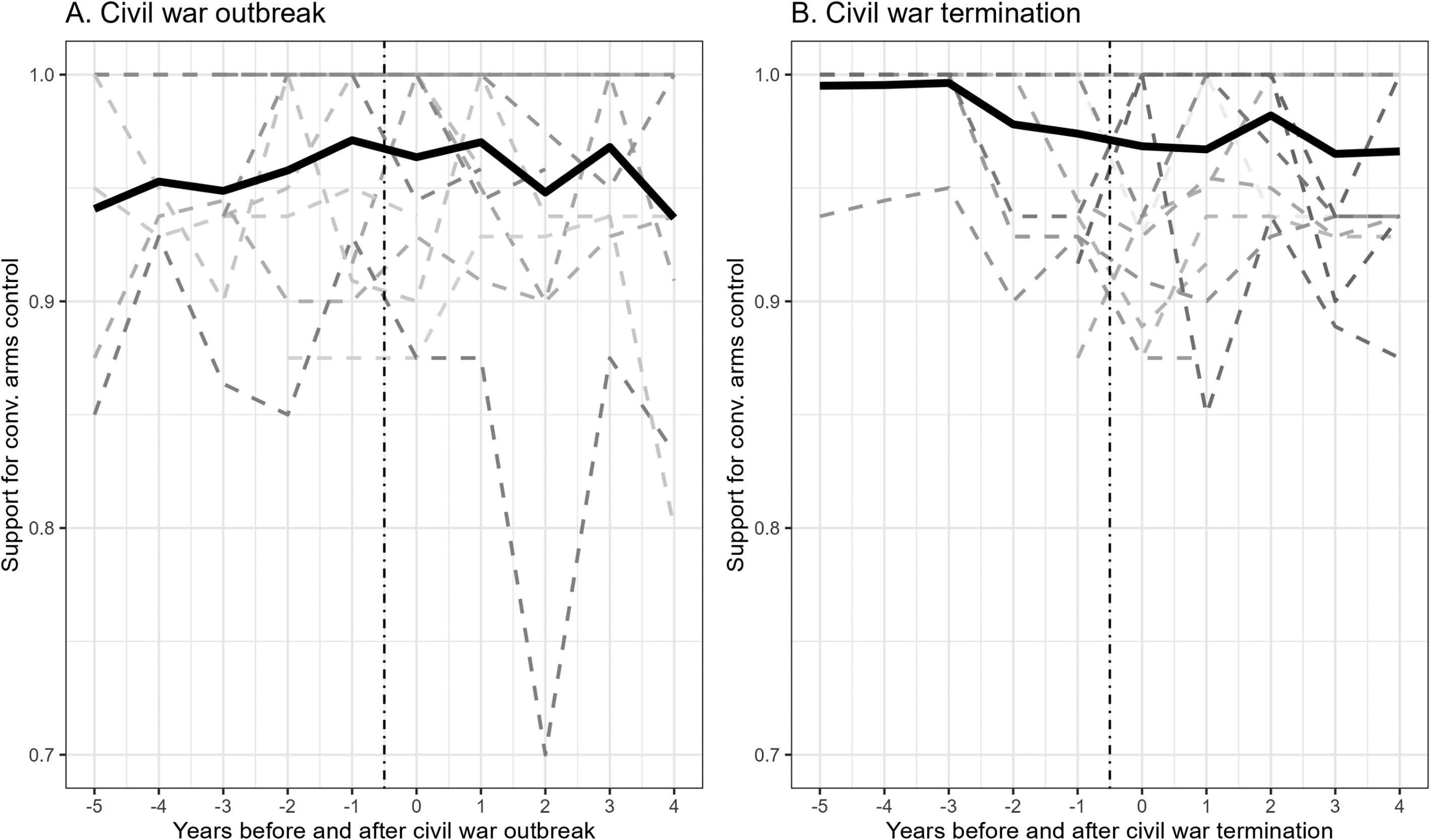
Positional changes before and after civil war outbreaks and terminations.
However, Figure 2 also illustrates that some individual states’ positions are much more volatile than the averages. The most striking example is Syria's negative shift from 0.929 to 0.875 in 2011 and then to 0.7 in 2013—the lowest value in the dataset. For this reason, Appendix E also includes a more detailed discussion of states’ overall levels of positional volatility. Nevertheless, the descriptive evidence tends to support my theoretical argument, as states are less supportive of conventional arms control after the termination and before the outbreak of civil wars than during the conflicts.
Main analysis
Turning to regression analyses, I first run a regression (see Appendix F for all regression tables) between civil war and support for conventional arms control that only includes random effects, but no control variables. This yields a positive and significant coefficient. Adding the control variables on the country and country-year levels leads to an even larger and more significant coefficient. The final model (see Figure 3) also adds the resolution-specific controls to the regression. The relationship between civil war incidence and support for conventional arms control remains positive and significant at the 1% level.
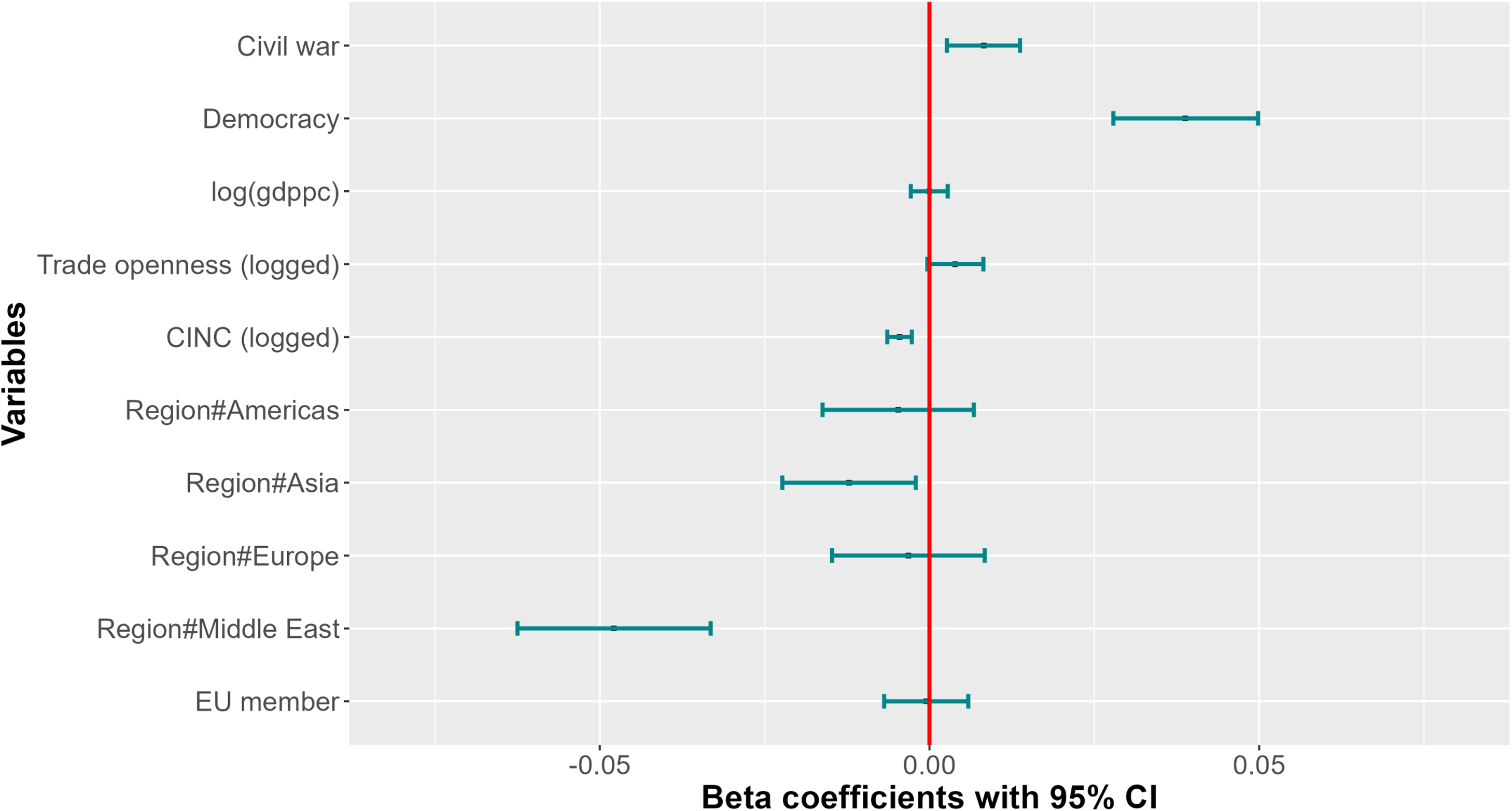
Main analysis (showing country- and country-year level variables only).
The coefficient of 0.008 implies that states experiencing an intrastate conflict cast a more positive vote 13 than other states in around one or two out of 100 resolutions—or around three of the 193 resolutions included in the analysis. Risse (2023) defines effect sizes above the threshold of 0.005 as meaningful, given that more than half of these resolutions are adopted by consensus and that even those that are put to vote usually enjoy large majorities. In other words, even a single neutral or negative vote can send a strong signal. Since around 8.4% of all votes are cast by states in civil wars, this means that in one out of four resolutions, a state involved in a civil war does not send such a signal, while another state would. This can be considered a substantial difference.
The regression analysis thus supports the hypothesis: civil wars are associated with higher levels of support for restrictions on conventional weapons. This might suggest that states acknowledge the added benefits of arms control in the event of an intrastate conflict; that is, it helps to prevent rebel groups’ arms acquisition. This can help governments to maximize their chances of winning the conflict and to curb its negative consequences.
Robustness checks and supplementary analyses
Next, I run a variety of robustness checks. I first exclude the CINC score from the regression model, as its inclusion might suppress a negative effect. I also run a logit model, a linear regression with the country-year as the unit of analysis, a model that excludes consensus votes, one that adds a dummy variable for civil war involvement in the past five years, and two models that exclude or recode Category 2. All models confirm the significant and positive relationship.
Furthermore, I compute a regression model with fixed instead of random effects and one that lags all independent variables, except those on the resolution level, by one year. While the latter model reproduces the results from the main analysis, the civil war dummy is not quite significant in a fixed effects model (p ≈ 0.17). However, the coefficient is even larger than in the random effects model. This might indicate that the insignificant result is rather driven by the small number of cases than by non-existing within-country variation: the independent variable changes over time in only 26 countries. The fixed effects model thus arguably supports rather than challenges the findings.
I also run two analyses with all intrastate conflicts above the conventional thresholds of 25 and 1000 battle-related deaths per year, respectively. Both variables yield positive coefficients, although, not surprisingly, they are not significant (p ≈ 0.15; p ≈ 0.28). This supports the notion that the lower threshold includes low-level conflicts that do not influence the affected states’ positions, while the higher threshold removes relevant cases. However, excluding Syria from the analysis—an exceptional case for several reasons, such as the large involvement of foreign countries, in particular the United States and Russia (Hughes, 2014)—also leads to significant results for these two variables. Similarly, the exclusion of Syria from the main model increases the effect size by one-third—a quite substantial amount.
This also illustrates that outlier cases might strongly affect the empirical results. To ensure that the significant positive finding in the main model is not driven by a single case, I run regressions that exclude one region at a time. Regardless of which region is excluded, the relationship between civil wars and conventional arms control support remains positive and at least significant at the 10% level. This confirms that it is a general trend that is not induced by one positive outlier case.
Moreover, I run several supplementary analyses to assess under which circumstances the proposed relationship holds—and under which ones it does not. As noted above, the applicability of my argument might depend on the type of conventional arms control. Therefore, I first conduct analyses that focus on more specific topics; that is, arms trade, anti-personnel mines, and others. I do not further disaggregate the latter because these issues are either addressed in only a few resolutions, create little variation in the dependent variable, or both (see Appendix D). The regression results show that the positive relationship in the main model is driven primarily by resolutions on landmines and, to a somewhat lesser extent, on the arms trade—restrictions that tend to disproportionately affect NSAs and thereby secure states’ military superiority.
In contrast, an analysis of votes on other issues reveals a negative association that is significant at the 10% level. A closer look at this category shows that voting divergences are mainly due to measures that primarily affect states’ armament. In particular, they deal with cluster munitions and with (sub-)regional measures aimed at preserving a military balance between states. Hence, this analysis indicates that the positive relationship might indeed depend on the specific type of arms control measure under consideration and the degree to which it constrains states and rebel groups. Exploring these nuances in greater depth may be a potential avenue for future research.
Second, I assess the relationship between civil war and support for arms control in general as well as support for all types of arms control except conventional arms control. As my theoretical arguments apply only to conventional arms control, neither of the two analyses should produce any significant results. Indeed, they yield very small and insignificant coefficients.
Third, I split the civil war cases into those with and without third-party involvement. This shows that the positive correlation holds for civil wars without external support for the government or rebels. In contrast, the coefficient for internationalized intrastate conflicts is also positive, but smaller and insignificant. This could have multiple reasons: for instance, civil wars with third-party rebel support may be viewed as external rather than internal threats, whereas support for governments might change their means of arms acquisition—and thus the costs and benefits of conventional arms control. Further disentangling different types of civil wars and the resulting divergences in states’ underlying motivations regarding their support for conventional arms control could also be a promising direction for follow-up studies.
In sum, the regression analyses suggest that states acknowledge the added benefits of conventional arms control in the event of a civil conflict: it hinders rebels’ armament, which is beneficial for governments for military-strategic reasons, but also because it can help to make armed conflicts shorter, less deadly, and less destructive for the economy, the environment, and beyond. Yet this does not necessarily mean that they do not consider the costs of restricting their own armament at all. In particular, the positive relationship does not hold for all types of conventional arms control and of civil wars. This might indicate that civil wars create incentives to increase as well as to decrease arms control support, but that the positive aspects outweigh the negative ones in the aggregate. The purpose of the content analysis of UNGA speeches is to assess whether this is indeed the case or whether there are other factors driving states’ preferences in the event of a civil war.
Content analysis
Data and coding procedure
The UNGA is recognized as the forum where all UN member states can openly express their foreign policy agendas. Although UNGA speeches have been labeled as “cheap talk” (e.g. Czaika, 2008), existing research suggests that they actually reflect states’ foreign policy positions: for instance, the ideology of governing parties affects their thematic focus (Finke, 2023a) and those states most concerned with global development allocate more time to that topic (Finke, 2023b). As most speeches are either broader statements that outline states’ positions more generally or explanations of specific votes, this data source thus provides an ideal opportunity to dig into the factors that drive states’ support and rejection of arms restrictions.
To identify the set of speeches to analyze, I use a recently published dataset containing the verbatims and metadata, such as date, speaker, nationality, and agenda item of all speeches by any state in the UNGA between the 49th and the 71st sessions (Finke, 2023a). As a first step, I use the metadata to identify all speeches on arms control, that is, those that are either held in the First Committee or assigned to the topic of Disarmament according to the official UNGA agenda. The verbatims then allow me to exclusively focus on speeches dealing with conventional arms control by including speeches that either refer to one of the draft resolutions included in the regression analysis or contain a term related to conventional weapons. 14
As I am interested in the impact of intrastate conflicts, I only analyze speeches by states involved in a civil war in the relevant year, according to the definition introduced above. This implies that the goal of the content analysis is not to strengthen the causal claim of the regression analysis by comparing states that experience civil wars with those that do not. Instead, I aim to investigate whether the costs and benefits of conventional arms control in the event of a civil war indeed matter for states’ positions, or whether there are alternative explanations for an empirical relationship.
This leads to a set of 534 speeches. From these speeches, 82 exclusively cover other matters such as nuclear arms control, and merely mention one of the terms as a side note. Another six speeches only discuss procedural or administrative aspects of conventional arms control. Thus, the dataset includes 446 speeches by states involved in civil wars that substantially deal with their support or non-support of conventional arms control. 15
The manual coding process consists of three steps. First, I code whether a state mentions its ongoing intrastate conflict as part of its justification for its support or non-support. This does not necessarily mean that the state explicitly speaks of an ongoing conflict or war, as states are often reluctant to do so. I also include statements that, for example, refer to terrorists within the country or landmines that have been planted over recent years.
Second, I code whether the state references the aforementioned costs and benefits of arms control to justify its position. These include (1) restricting its own demand for arms, (2) restricting NSAs’ armament, and (3) containing the negative consequences of armed violence. These categories are coded regardless of whether the state refers to the ongoing civil war, as explained above, or not.
Finally, I identify alternative explanations linking the civil war to states’ positions in order to assess whether there are other causal mechanisms that might drive the regression results. In this category, I do not code all kinds of justifications for states’ support or non-support, but only those that can be linked to the civil conflict yet do not fit my proposed theoretical arguments.
Analysis
Thirty-five countries have experienced civil wars between 1994 and 2016. As states mostly self-select into giving speeches and do not experience civil wars over the same number of years, there is substantial variation in their number of speeches. While India gave 73 speeches, eight states did not speak on conventional arms control at all. The dataset thus includes speeches by 27 countries (see Appendix G).
Of the 446 speeches, 122 (27.4%) refer to their civil war experience to justify support, non-support, or both. Considering that many speeches merely contain very short statements without any in-depth explanations, this is quite a substantial amount. This indicates that intrastate conflicts indeed play an important role in shaping states’ positions on conventional arms control. In the following, I will first investigate these 122 speeches, as considerations of the costs and benefits of arms control can clearly be linked to the ongoing civil wars in these cases.
Almost all speeches in this subset (95.1%) refer to the positive impact of arms restrictions; that is, that they limit rebels’ armament and contain the negative consequences of armed violence (see Figure 4; see Appendix H for a more detailed version on the country level). Sudan, among other states, has announced its commitment to eliminate landmines and its support for a treaty banning these weapons owing to their use by terrorist groups (SUD_A/C.1/51/PV.21). 16 Several states, such as Colombia and Iraq, have pushed for measures to curb the illicit arms trade and cut the flow of weapons to armed groups within their country (COL_A/C.1/68/PV.19; IRQ_A/C.1/60/PV.11). In line with this, even Syria has demanded a stronger regulation of the international arms trade to curb “the transfer of small arms and light weapons to terrorist groups, non-State parties and illegitimate armed groups and mercenaries” (SYR_A/C.1/67/PV.8).
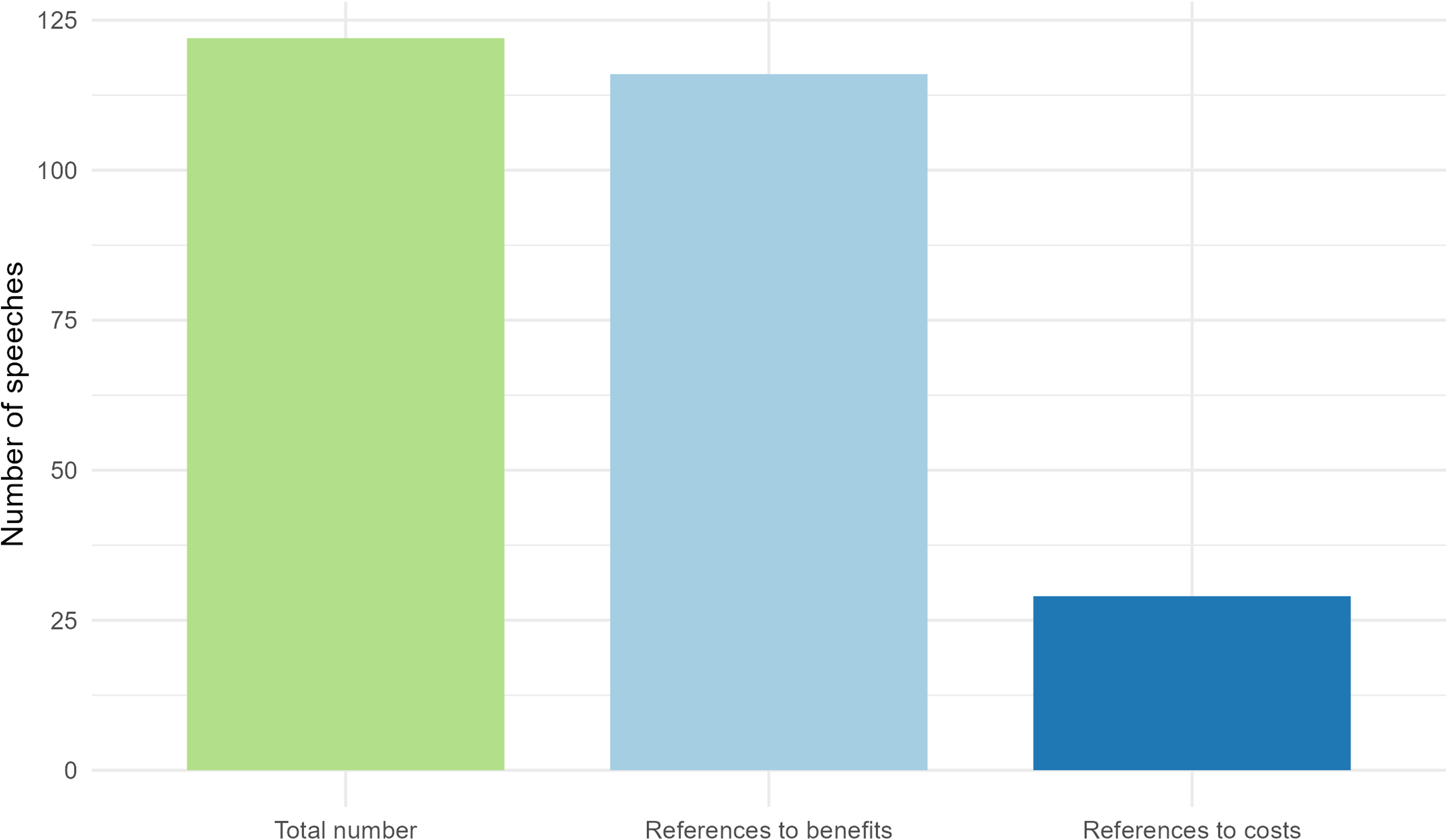
Content of speeches that refer to the countries’ civil wars.
States also mention the detrimental effects of different types of conventional weapons quite frequently. For instance, Uganda has emphasized the impact of cluster munitions on the civilian population (UGA_A/C.1/65/PV.15), while the DR Congo has highlighted the negative influence of the trade in small arms and light weapons on its social and economic development (DRC_A/C.1/66/PV.15). These examples emphasize the detrimental effects of arms more generally, but in many cases, states explicitly focus on the negative impact of NSAs’ armament. This includes, inter alia, the Sudanese delegation claiming that the arms supply to rebels leads to the destruction of “people and resources” (SUD_A/C.1/51/PV.12) and Sri Lanka pointing toward the “devastating results” (SRI_A/C.1/51/PV.20) of insurgents’ use of anti-personnel mines for the civilian population. Hence, states indeed announce their support for conventional arms control owing to its benefits when experiencing a civil war.
Yet there is also plenty of evidence that states aim to circumvent restrictions to their own armament. Twenty-nine of the 122 speeches (23.8%) that refer to states’ intrastate conflicts mention these drawbacks of arms limitations. For example, while states such as Colombia and India have pushed for measures against the illicit arms trade, their representatives spoke in favor of unrestricted state-to-state arms transfers to protect their right to defend themselves (COL_A/C.1/68/PV.19; IND_A/C.1/65/PV.14). 17 Similarly, Sri Lanka has argued against the moratorium on landmine exports, which “cut off the supplies to Government forces” (SRI_A/C.1/51/PV.20). Thus, states mention both costs and benefits, regardless of whether a particular type of weapon is primarily used by states or by rebel groups.
In several cases, states explicitly acknowledge the tradeoff they face with regard to conventional arms control. In light of the Second Congo War, the Congolese delegation argued: “If we arm ourselves further, social progress, which is the major goal of any responsible Government, will suffer. However, failing to arm ourselves further will mean exposing the sovereignty and territorial integrity of our State vulnerable to danger” (DRC_A/C.1/53/PV.10).
Moreover, states not only refer to the costs and benefits of arms control when explicitly speaking about their civil conflicts (see Figure 5). Ninety-six of the remaining 324 speeches (29.6%) emphasize concerns about the impact of arms control on states’ access to arms, often stressing their right to self-defense. A total of 208 speeches (64.2%) point out the virtues of arms limitations, including the hindrance of NSAs’ armament and the containment of the impact that weapons have on conflict lethality and duration as well as the economy, environment, and other factors. While not all of these statements are necessarily connected to the ongoing intrastate conflicts, 18 they still bolster support for the idea that states acknowledge the advantages and disadvantages of arms control in the event of a civil war.
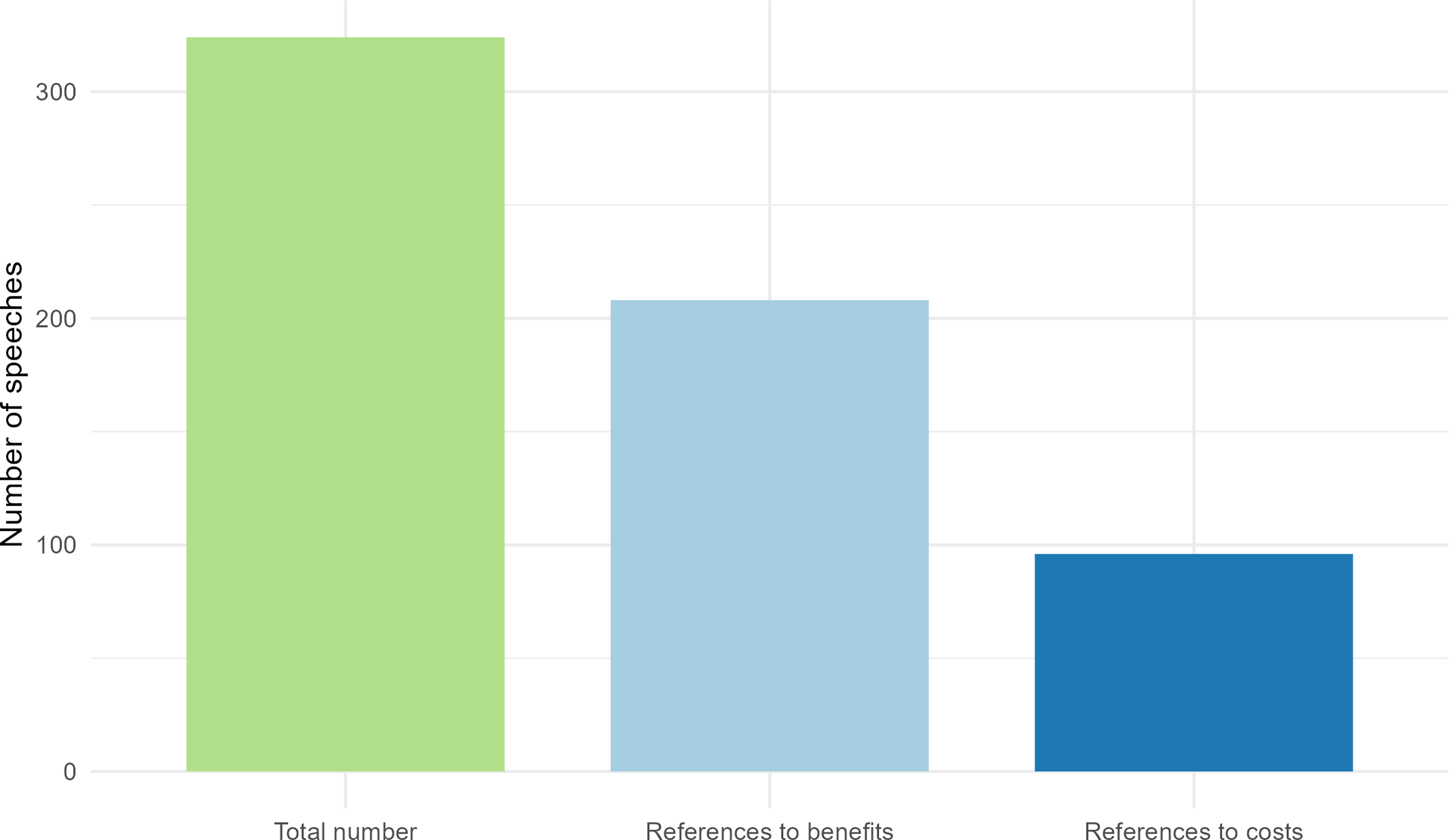
Content of speeches that do not refer to the countries’ civil wars.
On top of that, I find no evidence for alternative explanations of a positive relationship between civil conflicts and support for conventional arms control. 19 The analysis thus speaks in favor of my theoretical argument that the added benefits of arms control in the event of a civil war are driving the positive association between civil wars and arms control support. The speeches provide extensive evidence that states consider the value of limiting NSAs’ access to weapons when they form their arms control preferences.
At the same time, the analysis also reveals that the regression results do not speak against the notion that states consider the costs of limiting their own armament. The prospect of stricter regulations leads states to oppose arms control measures in multiple cases. This indicates that, in line with my theoretical argument, states that experience a civil war face a tradeoff between the added costs and benefits of conventional arms control. The regression analysis suggests that, in the aggregate, the pendulum swings more toward the advantages of cutting arms proliferation to rebel groups than the drawbacks.
Conclusion
In this study, I have examined the relationship between civil wars and support for conventional arms control. Using a new measure of the latter variable, which combines manual coding of UNGA resolutions with states’ voting records, I have found that states involved in civil wars are more favorable of conventional arms control than other states. This, I argue, reflects the fact that interstate agreements prioritize the restriction of NSAs’ armament. Therefore, the added benefits of arms control for states involved in civil conflicts—that is, constraining rebels’ arms procurement to gain a military advantage and to curb the detrimental consequences of armed violence—outweigh the costs of limiting their own armament. This argument is supported by a content analysis of UNGA speeches, which illustrates that states exposed to civil wars indeed emphasize the benefits of conventional arms control, although they consider the drawbacks of arms restrictions.
The empirical analysis does not come without limitations. Even if the positive and significant correlations can be interpreted as causal, it is still possible that the underlying mechanism is not the one postulated in my theoretical argument. The hypothesis formulates a relationship between civil wars and support for conventional arms control in general, but the analysis focuses only on arms control efforts in the UNGA. Relying on other data sources might have led to different conclusions.
States in civil wars might strategically vote more favorably of conventional arms control as a means of virtue signaling to the international community or to NSAs in order to improve their social reputation (Erickson, 2015). This could be done, for example, to avoid foreign intervention or conflict escalation, but also because of a more general desire to avoid confrontation with other states. However, the validation checks for the dependent variable, as well as a variety of additional analyses, suggest that the findings reflect differences in states’ sincere policy preferences. They only hold for measures that primarily affect rebel armament, which argues against virtue signaling to other states or rebel groups—the most obvious alternative explanation.
Furthermore, the analysis of UNGA speeches illustrates that the prospects of curbing NSAs’ as well as states’ own armament matter for their level of arms control support. As states self-select into giving UNGA speeches and decide what to talk about and how to talk about it, the numbers and proportions expounded here should not be overinterpreted. Nevertheless, the frequency with which states speak about the costs and benefits of arms control strongly suggests that these play a major role in forming their preferences.
It should be noted, however, that the observation period is limited to the years between 1994 and 2016. While the neglect of the years prior to 1994 is arguably less of a problem given the insignificance of conventional arms control during the Cold War, international politics, civil conflicts, and weapons systems have continued to evolve and change since then. In a few years, replication analyses would be appropriate to assess whether the findings of this study still hold up under more recent developments.
Moreover, while the regression analysis indicates that states attach more weight to the benefits than to the costs of arms restrictions in the aggregate, the supplementary analyses of different weapons categories and third-party support indicate that the positive relationship between civil conflicts and support for conventional arms control does not hold under any circumstances. These preliminary findings should be subject to further investigation—and could help to unravel potential moderating factors in the relationship between intrastate conflicts and support for conventional arms control. In addition, civil war is operationalized in this study primarily as a binary variable, but conflicts vary not only in terms of third-party involvement, but also in terms of intensity and duration. Future studies should therefore examine whether these variables shape how civil wars affect support for conventional arms control.
In sum, the empirical analysis illustrates that intrastate conflicts create incentives for states to try to limit the availability of conventional weapons. The combined benefits of curbing rebels’ arms acquisition to gain a military advantage and to contain the negative consequences of armed violence outweigh the need for unrestricted armament. Consequently, states that experience civil wars are more likely to vote in favor of conventional arms control than other states—even though they are well aware of its additional costs.
This study has a number of important implications. First, although intrastate conflicts are far more common than interstate conflicts, previous studies of states’ positions toward arms control have largely neglected these as an explanatory factor and primarily focused on external threats by other states. The analysis shows that threats from within the state also play a role in the explanation of these positions. Internal threats—and more broadly speaking, the domestic arena in general—matter and need to be considered in studies of arms control. Second, this finding provides new evidence to our understanding of civil conflicts as international phenomena. Not only are they caused and shaped by processes beyond state borders, but they also have an impact on international cooperation and conflict—for instance owing to foreign policy changes by the affected state.
Finally, the positive relationship between civil conflicts and support for conventional arms control suggests that states are not only concerned with the costs of limiting their own access to conventional weapons, but also aware of the benefits of arms control. They adjust their preferences accordingly when faced with an intrastate conflict. This is good news for proponents of arms control as well as international cooperation in general, as it runs counter to the idea that security threats unequivocally induce opposition to arms restrictions.
Supplemental Material
sj-pdf-1-cmp-10.1177_07388942231223422 - Supplemental material for Civil war and state support for conventional arms control
Supplemental material, sj-pdf-1-cmp-10.1177_07388942231223422 for Civil war and state support for conventional arms control by Tobias Risse in Conflict Management and Peace Science
Supplemental Material
sj-zip-2-cmp-10.1177_07388942231223422 - Supplemental material for Civil war and state support for conventional arms control
Supplemental material, sj-zip-2-cmp-10.1177_07388942231223422 for Civil war and state support for conventional arms control by Tobias Risse in Conflict Management and Peace Science
Footnotes
Acknowledgements
I thank Ida Braad Albek for valuable research assistance. I also thank Valentin Daur, James W. Davis, Han Dorussen, Daniel Finke, Kristian Skrede Gleditsch, Madeleine Hosli, Prabin Khadka, Clara Neupert-Wentz, Svend-Erik Skaaning, Hannah Smidt, Jakob Tolstrup, the Comparative Politics Section at Aarhus University's Department of Political Science, panel members at the Annual Conference of the German Association of Peace and Conflict Studies as well as two anonymous reviewers for their excellent comments and suggestions.
Funding
The author disclosed receipt of the following financial support for the research, authorship, and/or publication of this article: This work was supported by the Department of Political Science, Aarhus University.

Supplemental material
Supplemental material for this article is available online.
Notes
References
Supplementary Material
Please find the following supplemental material available below.
For Open Access articles published under a Creative Commons License, all supplemental material carries the same license as the article it is associated with.
For non-Open Access articles published, all supplemental material carries a non-exclusive license, and permission requests for re-use of supplemental material or any part of supplemental material shall be sent directly to the copyright owner as specified in the copyright notice associated with the article.
