




Abstract
Group-level metacognitive scaffolding is critical for productive knowledge building. However, previous research mainly focuses on the individual-level metacognitive scaffoldings in helping learners improve knowledge building, and little effort has been made to develop group-level metacognitive scaffolding (GMS) for knowledge building. This research designed three group-level metacognitive scaffoldings of general, task-oriented, and idea-oriented scaffoldings to facilitate in-service teachers’ knowledge building in small groups. A mixed method is used to examine the effects of the GMSs on groups’ knowledge building processes, performances, and perceptions. Results indicate a complication of the effects of GMSs on knowledge building. The idea-oriented scaffolding has potential to facilitate question-asking and perspective-proposing inquiry through peer interactions; the general scaffolding does not necessarily lessen teachers’ idea-centered explanation and elaboration on the individual level; the task-oriented scaffolding has the worst effect. Pedagogical and research implications are discussed to foster knowledge building with the support of GMSs.
Keywords
Grounded upon the socio-cultural perspectives of learning (Vygotsky, 1978), a wealth of perspectives in the field of learning sciences has posited that learning is not a passive reception; instead, it is an active process of knowledge building (KB) in socially situated contexts (Bereiter, 2002). Teacher learning, as a KB practice, highlights computer-supported collaborative learning (CSCL) process where individual and collective understandings and practices are deepened with the pedagogical and technological supports (Damşa & Nerland, 2016; Hmelo-Silver & DeSimone, 2013; Kelly, 2006). However, a high quality KB is a complex, higher-order learning activity; simply dividing participants into groups does not necessarily guarantee productive interactions and communications (Dillenbourg, 1999; Scardamalia & Bereiter, 2006; van Aalst, 2009). Instructors should not assume students will automatically acquire metacognitive knowledge and regulation strategy to achieve high quality of collaborative learning. External instructional or technological scaffoldings are usually provided to improve KB quality (Reiser & Tabak, 2014).
Metacognitive scaffolding is one of the primary scaffoldings to help learners assess what they know, what to do, and how to do it to achieve learning goals (Hill & Hannafin, 2001). Most previous work has implemented metacognitive scaffoldings to improve the individual level of self-regulation strategies (e.g., Järvelä et al., 2015). But metacognition should also be considered at a group level rather than only as a reflection of individual learning (Biasutti & Frate, 2018). There is currently a research trend to examine the group-level metacognitive scaffolding (GMS), aiming to help a group of students jointly plan, monitor, reflect and evaluate groups’ work to achieve high quality of collaborative learning (Biasutti & Frate, 2018; Bodemer et al., 2018; Lyons et al., 2021; Zheng et al., 2019). Empirical research initially verifies that groups with GMS could have better metacognitive transitions and group performances compared to the groups without the supports of GMS (e.g., Zheng et al., 2019). Moreover, different forms of GMS can be used in collaborative learning, including task-oriented or idea-oriented GMSs, which can result in different effects on KB performances and processes (Biasutti & Frate, 2018; Hong, 2011; Zheng et al., 2019). Another issue is that the additional cognitive load and workload caused by external scaffoldings may lessen positive effects of scaffoldings (Lyons et al., 2021). Therefore, it is necessary to examine the effects of GMSs on groups’ knowledge building processes and performances in order to further provide implications for instructional design.
Echoing this research trend, this research designs three types of GMSs, namely the general, task-oriented, and idea-oriented GMSs, to facilitate in-service teachers’ knowledge building. A mixed method is used to examine groups’ knowledge building processes, performances, and perceptions. Based on research results, pedagogical and research implications are provided to foster knowledge building with the support of GMSs in the CSCL processes.
Literature Review
Knowledge Building Model
Knowledge building (KB) is one of the CSCL modes that highlights sustained improvement of ideas, creation of knowledge products or artifacts, and development of new knowledge in the technology-supported environments (e.g., Knowledge Forum; KF) (Scardamalia & Bereiter, 2006). During the KB process, a group of learners participate in coordinated collaborative activities to maintain dialogues, to build knowledge work on a shared problem, and to achieve shared goals as a collective group (Scardamalia & Bereiter, 2006; van Aalst, 2009). KB is a principle-based approach that is composed of 12 interconnected principles (Scardamalia, 2002); the principles of collective responsibility for community knowledge, epistemic agency, improvable ideas, and a “rise-above” philosophy are particularly conductive to foster the groups’ knowledge building quality (van Aalst & Chan, 2007; Yang, Chen, et al., 2020). These principles confer that students have abilities to carry out progressive work with diverse and messy ideas, to collectively synthesize ideas, to advance beyond competing perspectives, and to advance the community knowledge (Scardamalia, 2002).
Empirical research reveals that the implementation of KB pedagogy has positive results to help pre- and in-service teachers improve domain understanding of teaching content (van Aalst & Chan, 2007; Yang, Chen, et al., 2020) and develop the higher-order thinking skills such as epistemic agency, judging promising ideas (Ouyang & Chang, 2019; Yang et al., 2016; Zhang et al., 2018). Since KB is an active, cognitive-demanding, intentional learning process that requires learners to maintain effective coordination, manage task information, and exploit participation quality of each group member (Bereiter, 2002), it is necessary to provide scaffoldings to help groups engage in productive knowledge-building process. To facilitate the knowledge-building process, various scaffoldings are designed, e.g., instructor-student interactions (van de Pol et al., 2010), structural or procedural scripts (Kollar et al., 2006) or computational or technological tools (e.g., Jeong & Hmelo-Silver, 2016). A series studies conducted by Yang et al. (2016; Yang, Chen, et al., 2020; Yang, Du, et al., 2020) reveal that metacognitive scaffoldings have potential to help learners engage in productive knowledge building. Moving this research strand forward, the current research designs different group-level metacognitive scaffolds to help students engage in successful knowledge building process.
Group-Level Metacognitive Scaffolding
Metacognitive scaffolding originates from the concept of metacognition, the thinking about and reflection on one’s cognitive processing (Ouyang et al., 2021; Winne & Azevedo, 2014). To support collaborative learning, metacognition is extended from the individual level to the social context, e.g., group metacognition (GM) (Biasutti & Frate, 2018) and socially shared regulation of learning (SSRL) (Hadwin et al., 2018). These concepts emphasize group members’ communal awareness of the conditions, products, and evaluations bearing on the group processes and the group’s ability to plan, monitor, and reflect on knowledge created at the group level (Winne et al., 2013). Volet et al. (2009) argue that the socially shared regulation has two dimensions: a social regulation dimension and a content-processing dimension. The social regulation dimension represents the regulation of group work, including goal setting, planning, strategic enactment, monitoring and reflections; the content-processing dimension relates to members’ questioning of shared understanding, evoking relevant background knowledge, elaborating on each other’s ideas. Those two dimensions are similar with Biasutti and Frate (2018)’s definition of group metacognition (GM) that includes two dimensions: knowledge of cognition and metacognitive skills. Therefore, GMS can be provided in two ways, as abovementioned, namely metacognitive skill and knowledge of cognition to help groups achieve a high quality of collaborative learning (Jeong & Hmelo-Silver, 2016; Reiser & Tabak, 2014; Volet et al., 2009).
Empirical research has used GMS to facilitate the group’s metacognitive skills and knowledge of cognition. First, GMS can take the form as a task-oriented scaffolding to help the groups complete specific tasks or subtasks and achieve collective goals (Hong, 2011). The task-oriented scaffolding aims to facilitate the group’s goal setting, planning, monitoring and strategic enactment (Biasutti & Frate, 2018; Hadwin et al., 2018). Many previous studies provide task-oriented metacognitive scaffolds to support groups’ collaborative learning. For example, Molenaar et al. (2014) designed orientation, planning, and monitoring scaffolds in the structuring and problematizing conditions; results found that the task-oriented metacognitive scaffoldings increased high quality intra-group metacognitive interaction. Kwon et al. (2013) designed a web-based group coordination tool including metacognitive scaffolding components: planning, monitoring, and evaluating. Results found that active metacognitive teams showed higher positive interdependence, fostered more engagement in positive interactions, and enhanced group productivity than passive metacognitive teams. Zheng et al. (2019) designed and examined task-oriented group metacognitive scaffolding (including planning, monitoring, evaluating, and reflection) to foster collaborative learning; results showed positive effects of GMS on group metacognitive transition and group performance and at the same time GMS did not increase students’ cognitive load. The task-oriented group metacognitive scaffolding facilitates the group’s skills to negotiate about the collective goal, evaluate current collaborative progress, and make regulatory decisions about how to stay or get back on track (Hadwin et al., 2011; Winne et al., 2013).
In contrast to the task-oriented scaffolding, GMS can take another form as an idea-oriented scaffolding in terms of the group’s knowledge of cognition (Biasutti & Frate, 2018). The idea-oriented scaffolding aims to facilitate a group’s awareness of information selection, use of materials and resources, and categorization and processing of new information (Biasutti & Frate, 2018; Hong & Sullivan, 2009). In contrast to the task-oriented scaffolds, the idea-oriented metacognitive scaffolds are used to facilitate groups’ metacognition during higher-order thinking, e.g., knowledge building. For example, Knowledge Forum (KF) is widely used to help shape groups’ KB processes with the idea-centered scaffolding supports (Scardamalia & Bereiter, 2006). In KF, the idea-oriented scaffoldings facilitate students work to post their problems, produce initial ideas for problem-solving, and connect, revise, and synthesize ideas (Hong, 2011). Moreover, Ak (2016) adopted technology-supported GMS scaffoldings to facilitate learners’ knowledge construction in asynchronous discussions. Results showed that the groups that used the scaffolded platform with the supports of message labels and sentence openers contributed more high cognitive level discourse (e.g., idea elaborations) than groups that used the non-scaffolded platform. The idea-oriented GMS facilitates the group’s thinking about the knowledge constructed and created through less-scripted, self-organized interactions in groups (Hong, 2011; Hong & Sullivan, 2009; Zhang et al., 2009).
The Effect of GMSs on Collaborative Learning
Previous studies show that GMSs may result in varied effects on groups’ knowledge building. For example, Hong (2011) compared the conventional task-based collaborative learning using Jigsaw instruction and the idea-centered collaborative knowledge building; results showed that engaging students in idea-centered collaboration better enhanced their collaborative competencies, facilitated their peer interactions, and improved the idea improvement quality. But some characteristics of learning and instruction overlapped: the routines and procedures were still the unavoidable parts in the idea-oriented learning while knowledge advancement also occurred in the task-oriented learning (Hong, 2011). Wang et al. (2017) examined the effect of student collaboration in the concept-oriented task (involving sharing information and knowledge) and design-oriented (involving task planning, monitoring and problem-solving) task; results showed that collaborative concept mapping functioned more effectively in the concept-oriented task than the design-oriented task, in terms of promoting students’ question-asking and positive motivations. But there were no significant differences in other social, cognitive, and emotional dimensions. Zheng et al. (2019) used the task-oriented scaffoldings at the group level to foster the CSCL processes and research results showed that GMS had better effects on metacognitive transitions and group performances compared to the traditional collaborative learning without GMS. And the GMS did not increase students’ cognitive load. But some research showed that the external scaffoldings might cause additional cognitive load and workload which lessened positive effects of collaborative learning (Lyons et al., 2021). Given the complexity, it is necessary to further examine how different GMSs influence knowledge building processes in order to further provide implications for instructional design.
One of the major reasons that result in this complication is the complex, multi-dimensional characteristics of collaborative learning. Previous CSCL studies have promoted the use of mixed methods to understand collaborative effectiveness and collaborative learning processes and outcomes (Janssen et al., 2013; Medina & Stahl, 2020; Stahl, 2009). For example, the statistical analysis, sequential analysis, and social network analysis approaches have been used to investigate correlations between collaborative variables (Zemel et al., 2009), sequences of students’ knowledge contributions (Chen et al., 2017) and social interaction structures and participatory roles (Ouyang & Chang, 2019; Ouyang & Scharber, 2017). Moreover, qualitative, ethnographic approaches (e.g., discourse analysis, observation, or interview) have also been used to examine the micro-level relevancies of collaborative activities and students’ actions during collaboration or perceptions about collaboration (Stahl, 2009). Taking quantitative and qualitative methods together, Hong (2011) collected teacher students’ online discussions, survey responses, and interviews to investigate their interaction patterns, reflective patterns, and perceptions about knowledge building. Ak (2016) used a multi-method approach (including content analysis and performance analysis) to examine the effects of technology-supported GMS scaffoldings on learners’ knowledge construction and building in asynchronous discussions. Multiple analytical methods can complement each other to provide a more holistic picture of collaborative learning. Taken together, this quasi-experiment research uses the general, task-oriented, and idea-oriented GMSs to facilitate groups’ KB processes, and uses a mixed method to examine the KB processes, performances, and perceptions under those three GMS scaffoldings.
The Present Study
The Research Purposes and Questions
The study designed three GMSs, namely the general scaffolding (GeS), the task-oriented scaffolding (GTS), and the idea-oriented scaffolding (GIS), and empirically investigated the effects of three GMSs on in-service teacher groups’ knowledge building. Three research questions were addressed:
What were the effects of three GMSs on groups’ interactional behavior and cognitive engagement during KB process?
What were the effects of three GMSs on groups’ domain understandings and collaborative cognitive loads?
How did teacher students perceive the functions of the three GMSs?
Research Context and Participants
The research context was a four-day graduate-level online course, titled Educational Technology Development and Application, offered at a top China’s research-intensive university during the summer 2020. This course focused on learning theories, instructional design, research methods, educational technologies, and case studies. The goal was to improve in-service teachers’ understanding of learning and instructional theories, advance their technology integrations in the teaching practices, and develop their research capacities. Participants were 36 part-time M. Ed. teachers from the College of Education of the university (referred to teachers or teacher students below); they were K-12 in-service teachers or educational administrators (33 females and 3 males; age between 25 to 36). Teaching subjects included Chinese literature, mathematics, English, chemistry, dancing, information technology, and academic administration.
The Instructional Process
The instructor (the first author) designed a KB environment enhanced by GMSs. There were three main parts of this course: online lecture hosted through DingTalk (the China’s version of Zoom), the KB activity hosted in KF for groups to build knowledge, and groups’ reflections in DingTalk. KF is a networked, communal knowledge building space, where learners can create, build on, and refer to peers’ notes to summarize and advance their understandings, and create higher order integrations of ideas (see Figure 1A). The KF scaffolds were customized to the course subject, including I need to understand…, I need some information…, This information cannot explain…, My question is…, I propose a solution…, A better thought about this question is…, I agree/disagree with this perspective because…, Integrating these ideas together, we conclude… (Scardamalia & Bereiter, 2006) (see Figure 1B). The groups made synchronous discussions in DingTalk with the instructor’s intervention prompts (see details below) (see Figure 1C).
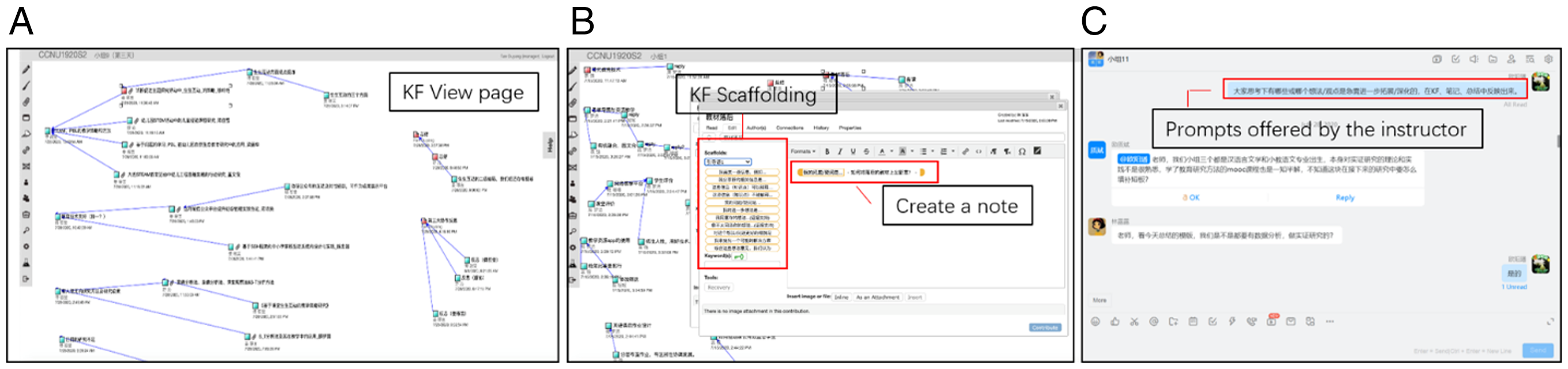
The Online Learning Environments. (A) KF (B) KF scaffolds (C) DingTalk discussions.
Adapting from the previous work (Yang et al., 2016; Yang, Chen, et al., 2020), the instructor designed a three-phase KB process as followings. Phase 1 - Cultivating the culture for collaborative research (Day 1). In Phase 1, teacher students read widely to search information, posted notes in their group’s view, summarized main points, and raised questions in KF. Toward the end of Phase 1, they were asked to use a Research Question format to state the problems, and to select the most promising problem for further inquiry. The instructor was engaged in the process to help teachers identify the target topic. Phase 2 - Promoting productive knowledge building using GMSs (Day 2 and Day 3). Groups worked in KF to create, build on, and integrate ideas on the research topic they chose in Phase 2. Teacher students researched their problems by reading additional resources, extended their inquiries, identified gaps of group members, and deepened their understanding about the research topic. At the end of Day 2 and Day 3, groups were asked to post a summary research note. Phase 3 - Deepening KB and domain understanding through reflection (Day 4). In this phase, groups summarized, evaluated, and reflected on what they learned during the previous two phases. The groups were asked to finalize one knowledge gap in Phase 2 and to further optimize their research design. Then groups made a 5-minute presentation to the whole class, and the peer-assessment strategy was used to evaluate group performances.
The Research Procedure
36 participants were assigned to 12 groups (3 teachers/group). The pre-course questionnaire was used to collect in-service teachers’ information regarding their educational background, teaching experiences, use of technologies, and prior knowledge level (see Appendix A). To assure group balance, the instructor assigned participants into triads in terms of their educational background, working experiences, and prior knowledge levels. Then, groups were randomly assigned into one of the three GMS scaffoldings. The GMSs interventions were introduced to groups at Phase 1 (Day 1) and the main intervention was offered during Phase 2 and Phase 3 by the instructor (see Figure 2). Scaffoldings were provided by the instructor through DingTalk every 20–30 minutes during the intervention; groups were required to reflect on those questions and write down their responses in DingTalk when the prompts were provided (see Figure 1C). The general scaffolding (GeS) reminded groups about the main goal, timing, and progress that was usually used to scaffold self-regulated learning; the prompts included: Our learning goal is …, how is our current progress…, How much time we have left for achieving the goal…, what we need to do next… etc. The task-oriented scaffolding (GTS) helped the groups plan, monitor, and reflect on information about task and sub-tasks. The prompts included Our overarching goal is … as a group, We plan to complete the task with step 1…, step 2…, and step 3…, Our strategy is … to complete the task 1/2/3…, Currently, we focus on the idea/question/solution of… What we have done well is … What we could improve is… Where we are now to achieve the goal… What we need to do next to complete the goal is.. The idea-oriented prompts (GIS) helped groups create and improve the quality, coherence, and creativity of research ideas. The prompts included: Is this idea novel and interesting (The degree to which an idea is original)?, Can we improve the idea in any way?, Is this idea workable (An idea is feasible if it can be easily implemented and does not violate known constraints)?, Is this idea relevant (An idea applies to the stated problem and will be effective at solving the problem)?, Is this idea specific to the problem to be solved (An idea is specific if it is clear? The general scaffolding (GeS) that reminded groups about the main goal, timing, and progress was also used in the GTS and GIS groups. The instructor and teaching assistants introduced three GMSs to groups at the beginning of this course, explained the meanings of those prompts and the purposes, and showed examples of how to respond to prompts. In addition, at the end of Day 2 and Day 3 (Phase 2), groups were asked to make a KF summary note to reflect on the overall collaborative work.
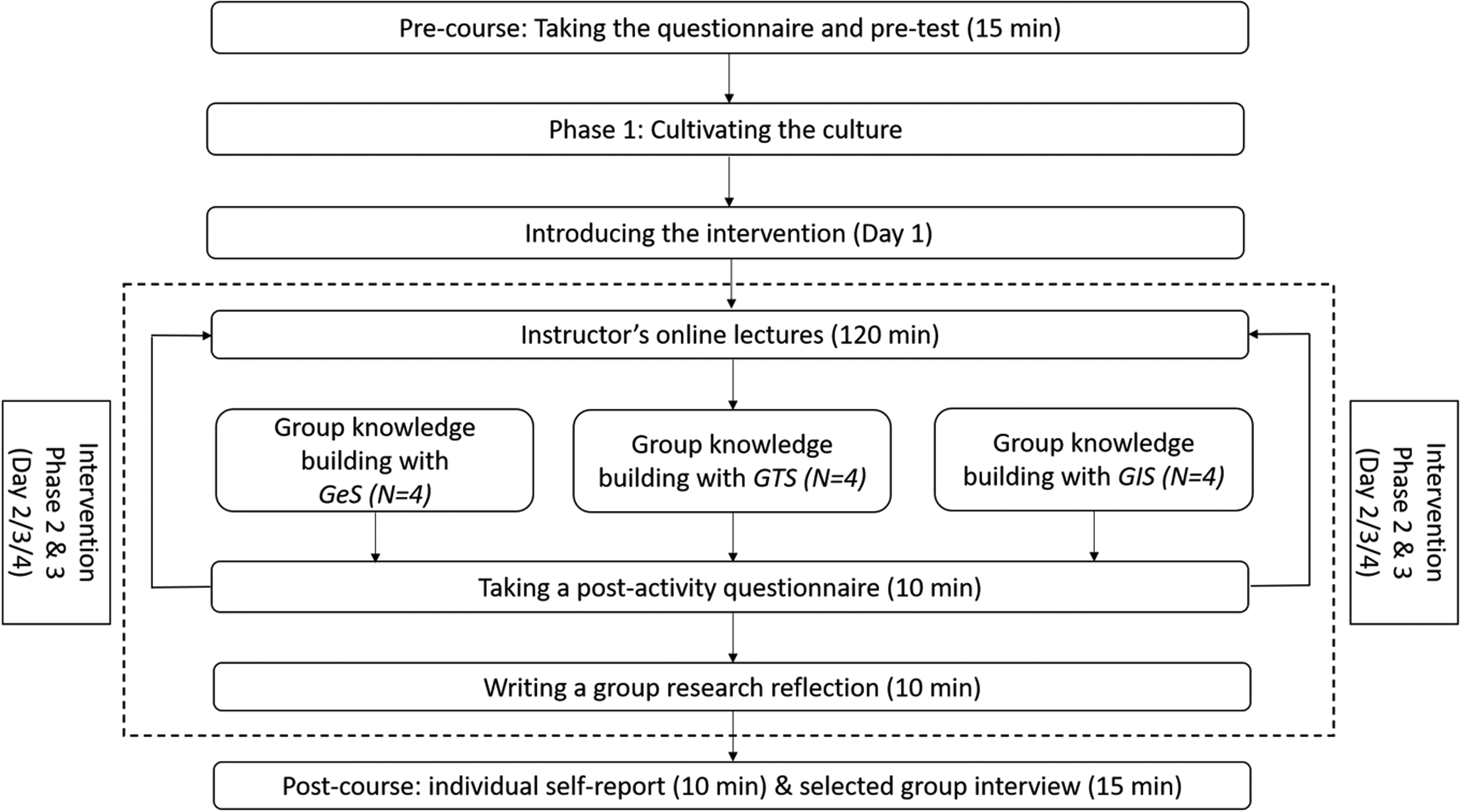
The Experimental Procedure.
Data collection and Analysis Process
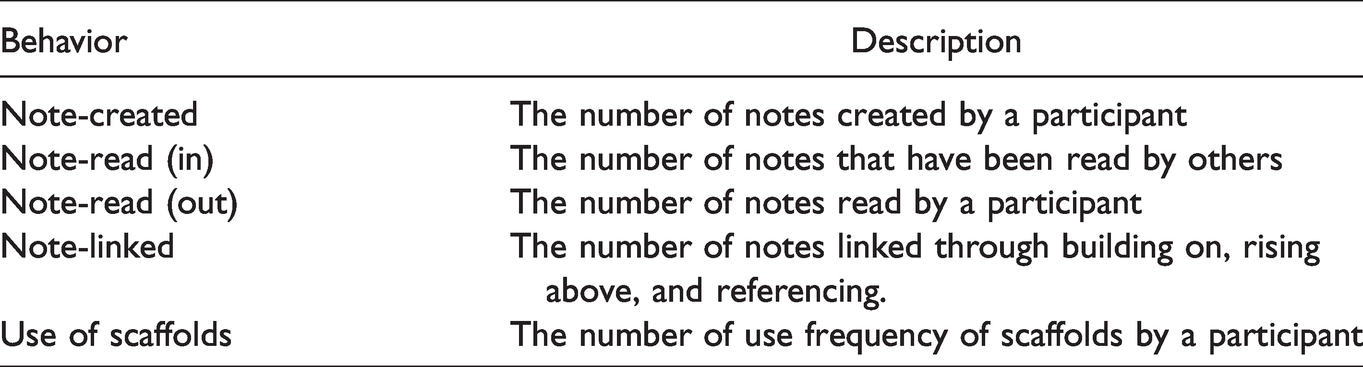
To answer research question 1, groups’ KB processes were examined at two dimensions, namely interactional behavior and cognitive engagement. All KF data was saved after the course from the Analytic Toolkit (ATK) of KF (Burtis, 1998), including number of notes written, read, notes linked to each other, note content, and use of scaffolds, etc. (see Table 1). To examine the interactional behavior, SNA was used to analyze teacher students’ reading and building-on networks. Here, outdegree and indegree were calculated with Opsahl’s network measures (α = 0.5) that combined both the effect of the number of ties and the tie weights (Opsahl, 2009, 2015; Opsahl et al., 2010).
Descriptions of Online Behaviors.
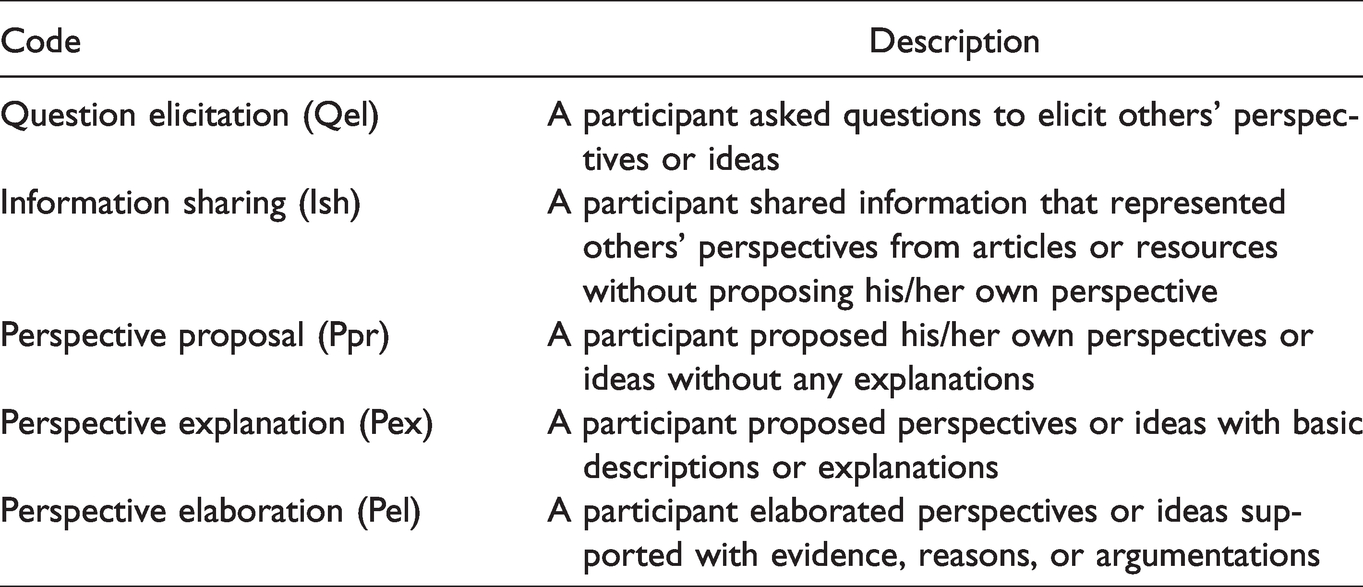
To analyze cognitive engagement, quantitative content analysis (QCA) (Grbich, 2006) and lag-sequential analysis (LsA) (Lehmann-Willenbrock et al., 2013) were conducted to examine the content of KF notes. A coding scheme was proposed based on iterative open coding by three trained raters (see Table 2). Three raters next coded all data again and reached an inter-rater reliability (Krippendorff’s alpha = 0.835). The first author double-checked all codes and made the final decisions when there were conflicts. Next, based on the QCA results, LsA was used to examine the sequential contingencies of cognitive codes for each group (Chen et al. 2017). The Yule’Q value was used to calculate the strength a code transitioned to another code (lag = 1). Yule’s Q represents the strength of transitional association because it controls for base numbers of contributions and is descriptively useful (with a range from −1 to +1 and 0 indicating no association) (Chen et al., 2017).
Coding Framework of Cognitive Engagement.
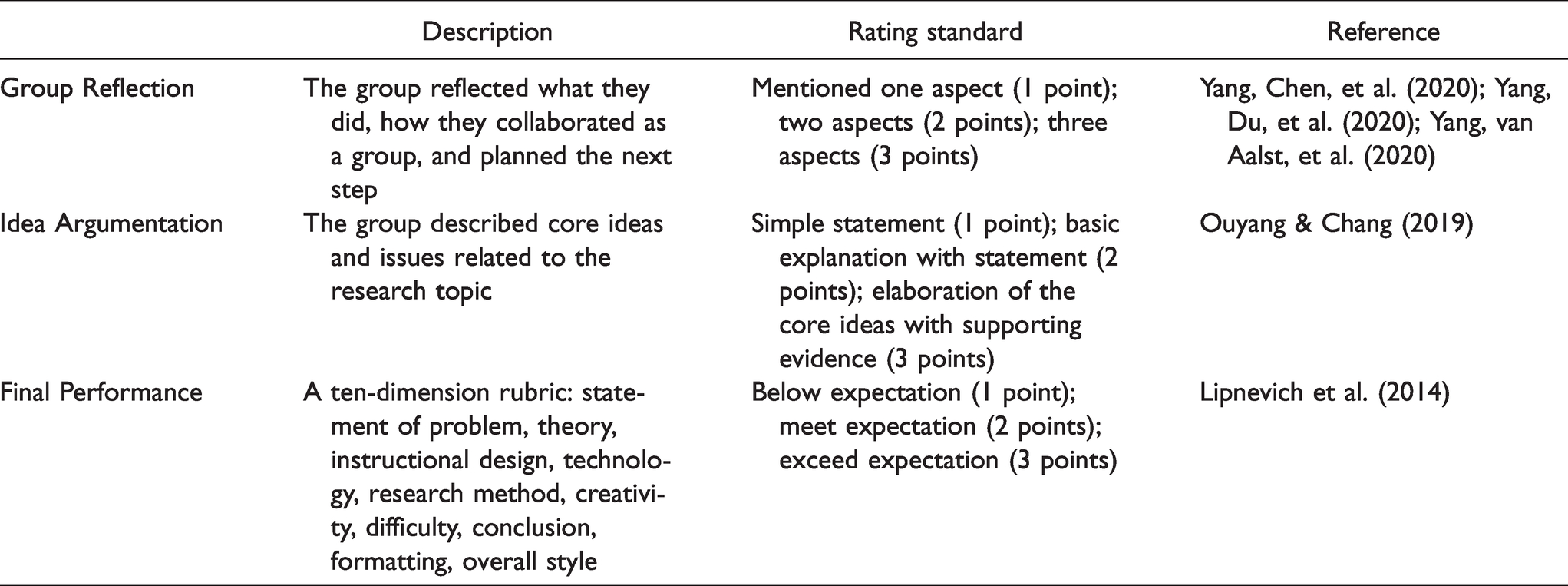
To answer research question 2, the group-level research reflections were used to collect group’s reports of domain understandings during KB processes (at the end of Day 2, Day 3, and Day 4) (see Appendix B). In addition, groups’ final research proposals (at the end of the course) were collected and evaluated as the groups’ final domain understanding. Further, domain understandings were analyzed in terms of a proposed framework, including three dimensions, namely group reflection, idea argumentation, and academic performance (see Table 3).
The Analytical Framework of Domain Understandings.
To answer research question 3, online questionnaire, self-reports and group interviews were conducted. First, teachers were asked to complete a questionnaire three times (at the end of Day 2, Day 3, and Day 4) about their perceptions of collaborative cognitive load experienced during group work (Kirschner et al., 2018) (see Appendix C). The factor analysis of the questionnaire showed a high reliability (Cronbach’s alpha = 0.833) and validity (KMO = 0.806, Bartlett’s test = 0.000). Next, multiple Analyses of Covariance (ANCOVAs) were performed to analyze whether there were statistically significant differences among three GMSs after taking prior knowledge as a covariate. In addition, individual-level self-reports and group-level semi-structured interviews were conducted after the course to gain a deeper understanding of teacher perceptions about the effectiveness of the GMSs provided (see Appendix D). Thematic analysis was conducted to explore strengths and weaknesses of three GMSs.
Results
RQ1: What Were the Effects of Three GMSs on Groups’ Interactional Behavior and Cognitive Engagement during KB Process?
First, the interactional behavior results indicated that GIS had the best effect on facilitating idea creations (M = 153.00, SD = 15.41), builds-on of ideas (M = 125.00, SD = 14.85), and using scaffolds (M = 132.25, SD = 23.64) among three conditions (see Table 4). Further network analysis results confirmed the results. For the building-on network, GIS groups had the highest degree (M = 49.89, SD = 8.09), followed by groups with GeS (M = 45.96, SD = 7.00), and GTS (M = 38.58, SD = 5.21). Next, GeS had the best effect on facilitating idea reading behaviors (in: M = 379.75, SD = 77.28; out: M = 388.75, SD = 106.10) (see Table 4). Again, the reading network analysis confirmed this result. Groups with GeS had the highest total degree (M = 67.54, SD = 4.23), followed by groups with GIS (M = 65.06, SD = 7.37) and groups with GTS (M = 58.22, SD = 8.61). Groups with GTS had the least behaviors on all five types. Overall, GIS had the best effect on facilitating idea creation and builds-on behaviors; GeS had the best effect on facilitating idea reading behaviors; and GTS had the worst effect on facilitating interactional behaviors.
Interactional Behaviors Under Three GMSs (M, SD).

Note. Note-linked and building-on data included building on, rising above, and referencing. GeS refers to the group-level general scaffolding, GTS refers to the group-level task-oriented scaffolding, and GIS refers to the group-level idea-oriented scaffolding.
Second, QCA results showed that GeS had the best effect on facilitating information sharing (Ish) (M = 41.25, SD = 14.59), perspective explanation (Pex) (M = 35.50, SD = 12.15), and perspective elaboration (Pel) (M = 16.00, SD = 6.68) (see Table 5). GTS had the worst effect on most cognitive engagement codes, i.e., Qel (M = 20.75, SD = 11.06), Ish (M = 25.00, SD = 6.68), Pex (M = 25.00, SD = 3.65), and Pel (M = 12.75, SD = 5.85) (see Table 5). GIS had the best effect on facilitating question elicitation (Qel) (M = 36.00, SD = 17.57) and perspective proposal (Ppr) (M = 27.50, SD = 16.66); but GIS did not have the best effect on facilitating perspective explanation (Pex) and elaboration (Pel), as we would expect (see Table 5).
Cognitive Engagement Results (M, SD).
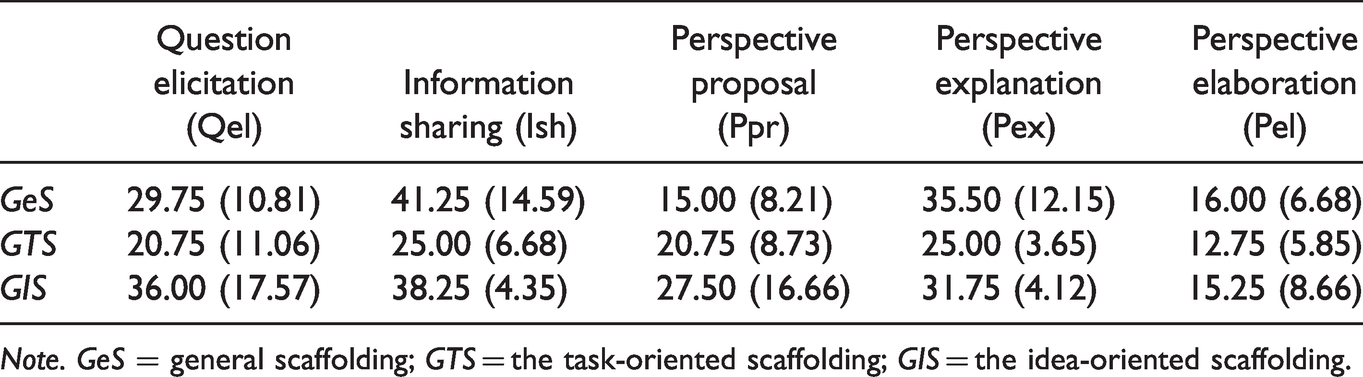
Note. GeS = general scaffolding; GTS = the task-oriented scaffolding; GIS = the idea-oriented scaffolding.
Moreover, LsA results showed different transitional patterns among three GMSs (see Table 6; Figure 3). Groups with GeS, GTS, and GIS all had frequent transitions between the same code, e.g., Ish->Ish, Qel->Qel and Pex->Pex (see Table 7). In addition, for transitions between two codes, GeS groups had a transition of Pel->Ppr, indicating teachers tended to propose new ideas after elaboration (see Figure 3); GTS groups had a mutual transition between question elicitation and perspective proposal (Qel->Ppr, Ppr->Qel) (see Figure 3), indicating that teachers tended to propose their perspectives while asking questions. GIS groups had transitions from Qel->Pel and then from Pel->Ish, indicating groups tended to ask questions and make detailed elaborations about those questions, and finally found related information about the problems they brought up earlier.
Sequential Transition of Cognitive Engagement.
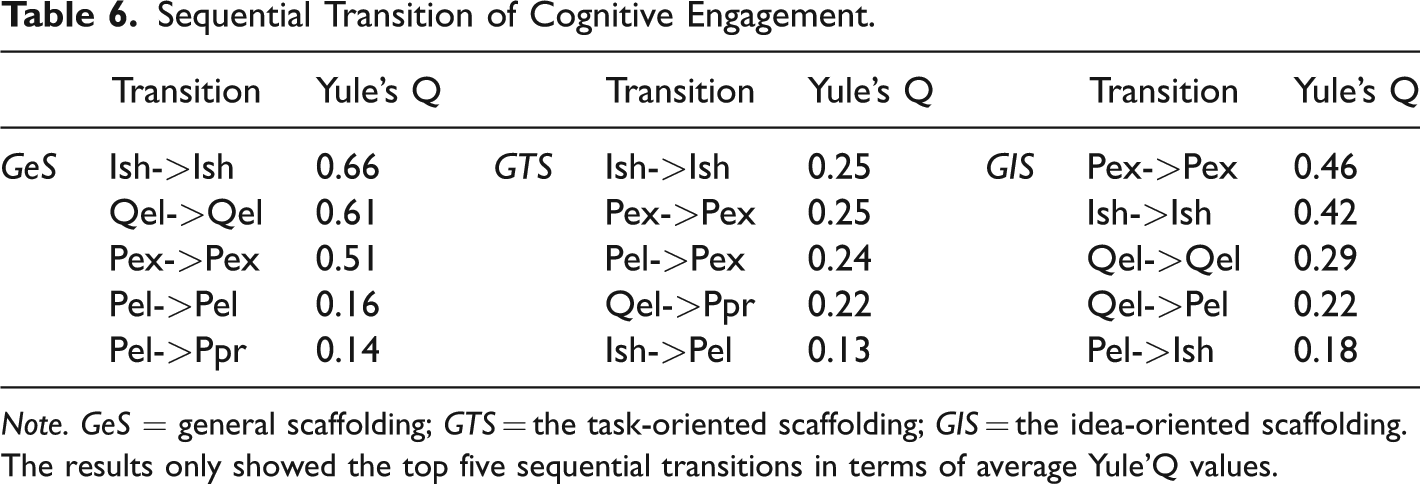
Note. GeS = general scaffolding; GTS = the task-oriented scaffolding; GIS = the idea-oriented scaffolding.
The results only showed the top five sequential transitions in terms of average Yule’Q values.
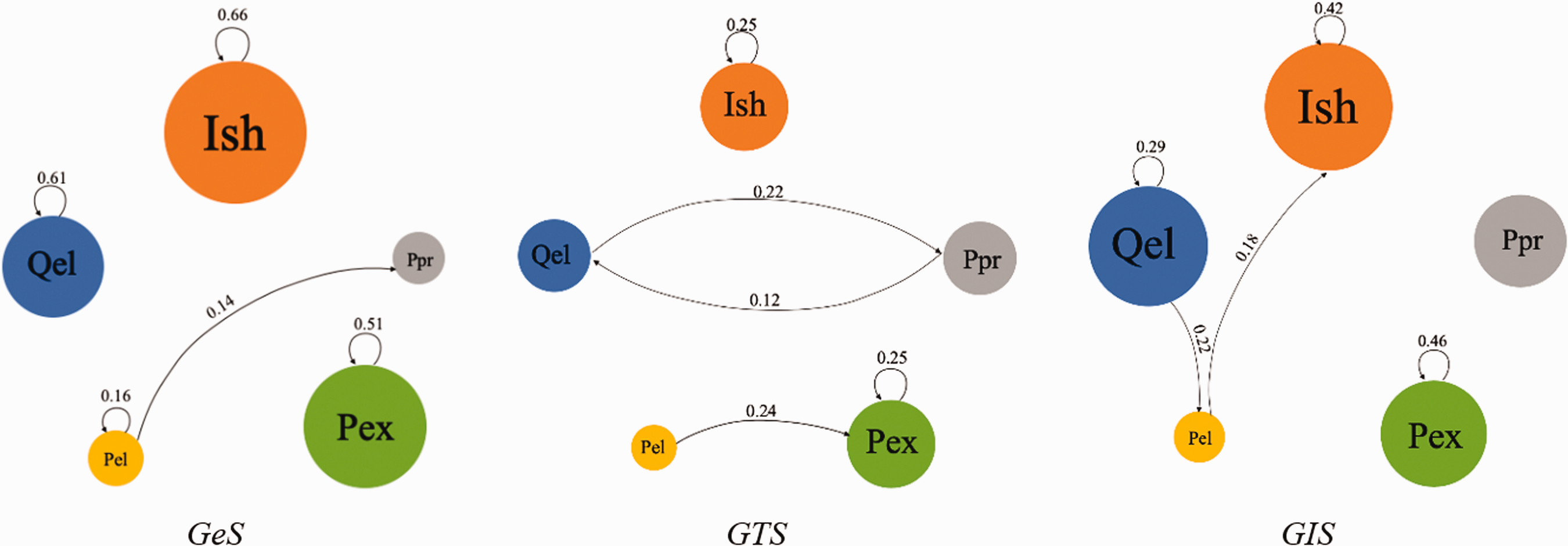
The Cognitive Engagement Sequences Under Three GMSs.
Collaborative Cognitive Loads of Groups With Three Scaffoldings (M, SD).
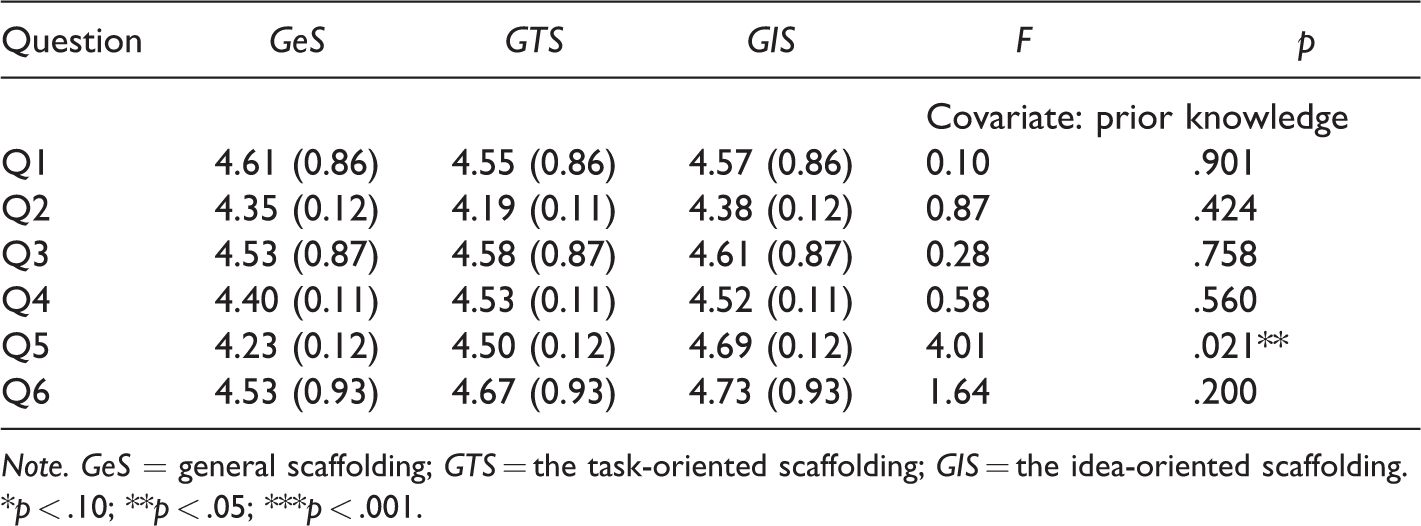
Note. GeS = general scaffolding; GTS = the task-oriented scaffolding; GIS = the idea-oriented scaffolding.
*p < .10; **p < .05; ***p < .001.
RQ2: What Were the Effects of Three GMSs on Groups’ Domain Understandings and Collaborative Cognitive Loads?
Regarding domain understandings, groups with GIS had the highest average scores on group reflection (M = 6.38, SD = 1.19), followed by GTS groups (M = 6.25, SD = 0.71), and GeS (M = 5.50, SD = 1.85). Again, GIS had the highest average score on idea argumentation (M = 5.50, SD = 0.76), followed by GeS (M = 5.38, SD = 2.20) and GTS (M = 5.25, SD = 0.71). GIS groups had the highest final performance (M = 90.92, SD = 3.26), followed by GeS (M = 87.67, SD = 2.84) and GTS (M = 85.08, SD = 3.73). Overall, GIS groups had better domain understandings, followed by GeS and GTS groups.
An adapted questionnaire was used to examine teachers’ perceptions of collaborative cognitive load (Kirschner et al., 2018) (see Appendix C). ANCOVA analyses results showed that there were no statistically significant interaction between the variables of prior knowledge and scaffolding except Q1. Therefore, ANCOVA analyses (taking the prior knowledge as a covariate) were further conducted on Q2 to Q6, which showed a statistically significant difference among three GMSs on group composition (Q5) (F = 4.01, p < .05). Groups with GIS (M = 4.69, SD = 0.12) perceived that their group composition was more helpful than groups with GTS (M = 4.50, SD = 0.12) and GeS (M = 4.23, SD = 0.12). Moreover, although there were no statistically significant differences on most dimensions, GIS groups in general reported higher scores on collaborative cognitive load questionnaire than the GTS and GeS groups.
RQ3: How Did Teacher Students Perceive the Functions of Three GMSs?
The most noticeable strengths of GIS were triggering new ideas. For example, as two teachers responded: The scaffolding helped us come up with more new ideas and extend our existing thoughts. (self-reflection, a teacher in Group 11) After the instructor asked some scaffolding questions, my group members provided new information which I was not familiar with… this triggered my further exploration… (group interview, Group 10) …because we have different educational background, sometimes we expressed different thoughts, which were scattered…the scaffolding helped us take some time to reflect on those ideas and think deeper to improve those ideas… (self-reflection, a teacher in Group 9) The questions [from the scaffolding] helped us modify and improve our ideas as a group. (self-reflection, a teacher in Group 10) When we were trapped in the small details which was deviated from the topic, the instructor asked some questions to scaffold us think about the core ideas of our research design which help us make an explicit direction… (group interview, a teacher in Group 11) “although GIS triggered more ideas at the beginning, but it was not easy to implement those ideas in such a short duration…” or claimed that “it was not that useful at later stage of the collaborative activity.” (self-report, a teacher in Group 12). the scaffolding helped us control the group procedures to finish the collaborative task. (self-report, a teacher in Group 5) the scaffolding helped us divide the whole task into subtasks, then we could solve the problem step by step. (self-report, a teacher in Group 7) The general reminders [provided by the scaffolding] was not useful for us… which did not help us solve the specific questions… (self-report, a teacher in Group 6) as the course progressed, I realized that the prompting questions were deliberately designed and delivered by the instructor as a routine, which made it less effective… (group interview, a teacher in Group 8) The questions motivated us to engage actively in the collaborative knowledge building process. (self-report, a teacher in Group 3) sometimes I got distracted… the questions provided by the instructor reminded me to get engaged in the learning process… (group interview, a teacher in Group 2) I hope the instructor can point out what we need to modify directly, rather than providing general reminders about timing (self-report, a teacher in Group 1) it would be more effective if the instructor … could give specific suggestions about the research ideas, especially when we get stuck… (group interview, a teacher in Group 2)
Discussions
Since teaching is an intelligent activity itself (Putnam & Borko, 2000), teachers need to work as knowledge builders, instead of reproducing “best” teaching practices, which highlights the importance of KB practices in teacher education and professional development (Chen & Hong, 2016; Hargreaves, 1999). However, during teachers’ KB processes, they usually do not have awareness and skills for reflecting and regulating their collective idea development without external or technical supports. To address this issue, this study designed the general scaffolding (GeS), the task-oriented scaffolding (GTS), and the idea-centered scaffolding (GIS) to help teachers engage in productive knowledge building. We used a mixed method to investigate the effects of different GMSs on groups’ knowledge building, focusing on their KB processes, domain understanding and collaborative cognitive load, as well as perceptions of scaffoldings.
For the first research question, the effects of three GMSs on KB process were examined based on KF data. Results showed that GIS had the best effect to facilitate question elicitation and perspective proposal through peer interactional behaviors. But GIS did not have the best effect on facilitating idea explanation and elaboration, which did not confirm the hypothesis. On the contrary, GeS does not necessarily lessen teachers’ idea-centered explanation and elaboration, but teachers tended to explain or elaborate their own perspectives rather than communicating perspectives through peer interactions. Consistent with previous research results (e.g., Hong, 2011; Lin & Chan, 2018; Wang et al., 2017), the idea-oriented scaffolding has potential to facilitate social interaction behaviors and question-oriented elicitations, which is a prerequisite of the higher quality of KB discourses. But our results showed that GIS groups did not outperform GeS groups in terms of perspective explanation and elaboration. One of the reasons to explain this phenomenon is that groups with GIS need more time to move from peer communications of question-oriented uptakes to group perspective elaborations, while groups with the support of GeS express their perspectives directly with less peer interaction and question inquiry activities (Lin & Chan, 2018). Among three GMSs, GTS had the worst effect on fostering interactional behavior and cognitive engagement. One reason might be that the task-oriented scaffolding reduced the complexity of the learning activities and pushed learners to complete subtasks, which discouraged the sustained development of collective ideas (Molenaar et al., 2014; Yang, Du, et al., 2020). In summary, GIS had the best effect on promoting question-proposing and perspective-proposing engagement through social interactions; GeS promoted the groups to explain their own perspectives rather than communicating perspectives with peers; and GTS had the worst effect.
To answer the second research question, the effects of three GMSs on teachers’ domain understandings and collaborative cognitive loads were examined. Analysis of groups’ research reflections and research proposals indicated that GIS had greater effects on improving teachers’ domain understanding compared with GeS and GTS. This result supported prior research on the positive effects of GIS on improvement of domain knowledge (Lin & Chan, 2018; Yang, Chen, et al., 2020). Analysis of groups’ collaborative cognitive load suggested that GIS was perceived by teachers as more effective on addressing collaborative cognitive loads than GeS and GTS. This empirical result confirmed the collaborative cognitive load theory and relevant practices. Collaborative cognitive load theory argues that effective collaborative learning depends on collective working memory of knowledge exchange and construction (Kirschner et al., 2018). As the results above showed, the GIS scaffolding facilitated the groups’ social interactional behaviors and interconnected group members’ multiple perspectives; these working opportunities make learners interdependent, increase collective working memory, and build group coordination, which are effective factors for addressing the group’s collaborative cognitive load (Hong & Lin, 2019; Kirschner et al., 2018; Molenaar et al., 2014). Overall, compared to GeS and GTS, GIS had better effect to improve teachers’ domain understanding and to address the groups’ collaborative cognitive loads.
The results of the third research question indicated that groups perceived GIS as the most useful scaffolding for triggering new ideas, improving ideas, and providing directional instructions. Teachers perceived that GTS helped them control the task procedures and solve problems; but they did not like GTS since it provided useless reminders and followed deliberate arrangements. This might be one reason that resulted in the ineffectiveness of GTS on the interactional behavior and cognitive engagement, as the results of research question 1 showed. Although teachers perceived GTS as effective for helping them set group goals, make plans, and manage time (Zheng et al., 2019), GTS may prevent them from taking their time to explore and exchange information, ask questions and think deeply before expressing ideas, which is critical in actual KB process for creating new knowledge (Wang et al., 2017). Similarly, teachers also perceived that GeS provided useless reminders but improved their engagement in collaborative activities, which was consistent with previous studies (e.g., Kim & Ryu, 2013; Lee & Hannafin, 2016; Roschelle et al., 2010). In summary, although scaffoldings provided by instructors, peers and appropriate technology could enhance engagement, this research showed that teachers liked the idea-oriented guidance rather than routine questions related to tasks, timing, and management as GeS and GTS offered.
This research confirms the potential of the idea-oriented scaffolding for promoting teacher learning and practices through peer interactions, improving domain understandings, and addressing groups’ collaborative cognitive loads. Consistent with previous studies (e.g., Hong 2011; Lin & Chan, 2018; Wang et al., 2017), this research found that GIS not only encouraged participants to express questions and ideas with less restricts, but also strengthened the interconnection of ideas between group members. Besides, compared to GTS, the idea-centered scaffolding was less likely to be perceived as deliberately designed reminders by participants, which helped participants to discuss and reflect on questions and ideas in a more flexible and less scripted way (Lin & Chan, 2018). Based on the empirical results, this research proposes pedagogical implications for helping instructors to engage learners in productive knowledge building. First, the instructors are supposed to be aware of the advantages and disadvantages of both the task-oriented and idea-oriented GMSs, and use them depending on the feature of the collaborative learning tasks and also pay attention to the timing of providing GMSs to groups. Second, the instructors are supposed to be well equipped with the professionalism to understand the content discussed by students and to provide timely and instructive feedback, which is expected to provide guidance for the student’s next steps. Third, the provision of scaffolding should be well integrated with the instructional design in order to make students think deeper and interact with peers about those ideas.
Conclusion, Limitations, and Future Directions
In collaborative knowledge building, teachers can exchange and design curricula, develop new understandings of knowledge, and solve authentic problems to improve teaching quality (Akiba et al., 2019; Voogt et al., 2011; Yuan et al., 2018). The research indicates that the group-level metacognitive scaffolding has positive effects on helping teachers engage in question-idea exchanges with peers and reflecting and regulating their collective knowledge building process, and therefore fostered productive knowledge building. The findings have practical implications for researchers and instructors who are interested in the design of metacognitive environments to support knowledge building, social engagement and learner agency. Although the results verify that the idea-centered scaffolding is the most useful strategy, future research should extend idea-centered collaboration to a longer term and also expand the sample size of participating participants, in order to verify the different effect of the scaffoldings on CPS. In addition, from an analytical perspective, future research can consider conducting a more holistic examination of knowledge building processes on varied dimensions, such as social, cognitive, metacognitive, emotional, and behavioral dimensions. Overall, engaging teachers in knowledge building challenges them to appropriate a novel epistemic process where appropriate metacognitive scaffoldings are needed to improve the KB quality.
Appendix
A. Pre-course questionnaire
Personal information: Name, Gender, Age, current work position, educational background Educational technologies: What educational technologies did you use in your work or study? What educational technologies you would like to learn and further apply to your work? What influences may educational technologies have on your work or study? Collaborative learning: Have you ever experienced any collaborative learning, such as open-ended inquiry or discussions, problem-based learning, or project-based learning in small groups? You prefer to study alone by yourself, in small groups (2–5 people), or in large groups (6–15 people)? Prior knowledge level about theory and application of educational technologies (a total score of 100): 6 yes-or-no questions, 6 single-choice questions, and 6 multiple-choice questions (deleted details of questions due to length limits).
B. Group written reflection
Please make a written reflection about how your group understand about the research topic you are addressing for the research proposal, what you did well and what need to be improved during today’s collaboration, and what you plan to do for the next step.
C. Collaborative cognitive load questionnaire
The collaborative activity was complex enough such that the group needed to spend time and energy ton completing the activity. (task characteristics) The instructor provided enough guidance and support to help us complete the collaborative activity. (task characteristics) Group members applied relevant domain knowledge and experience to complete the collaborative activity related to the research proposal. (learner characteristics) Group members had enough collaborative skills to complete the collaborative activity. (learner characteristics) The group composition were beneficial for the current collaborative activity. (group characteristics) The group members took appropriate roles to complete the collaborative activity. (group characteristics)
D. The final self-report and group interview (selected questions)
The instructor provided scaffoldings during the collaborative processes. Did you think the prompts offered in the scaffolding were effective? Did group collaboration change with the instructor scaffolding? And how? If you thought the scaffolding was not useful, why? And what the instructor could do to make the scaffolding more effective? How?
Footnotes
Declaration of Conflicting Interests
The authors declared no potential conflicts of interest with respect to the research, authorship, and/or publication of this article.
Funding
The authors disclosed receipt of the following financial support for the research, authorship, and/or publication of this article: Fan Ouyang acknowledges the financial support from the National Natural Science Foundation of China (61907038) and the 2021 University-level Educational Reformation Research Project for Undergraduate Education, Zhejiang University, China (zdjg21033).
