




Abstract
The integration of visual programming in early formal education has been found to promote computational thinking of students. Teachers' intuitive perspectives about optimal learning processes – "folk psychology" – impact their perspectives about teaching "folk pedagogy" and play a significant role in integrating educational technologies, such as visual programming, within the formal curriculum. This study was conducted based on the mixed method research paradigm. First, a folk pedagogy questionnaire was distributed to 89 teachers who integrate differing technologies in their classroom in order to identify the teachers' pedagogical perspectives: constructivist versus instructivist. Then, semi-structured interviews were conducted with 24 teachers who teach Scratch in order to gain a deeper understanding of their instructivist/constructivist perspectives and actual pedagogical practices and strategies. Finally, we analyzed 96 students' programming artifacts to explore differences, if any, in students' outcomes related to the pedagogical perspectives of their teachers. Findings revealed that pedagogical perspectives are reflected in teaching strategies and assessment practices employed in a visual programming environment. It is promising that teaching visual programming promoted constructivist pedagogy even among instructivist teachers and was consequently reflected in student perspectives and expressed in their programming artifacts. We discuss theoretical and educational implications of these findings.
Keywords
Introduction
Visual Programming – Scratch Environment
In recent years, integration of visual programming through code and robotics studies has been a growing trend around the world (Rich et al., 2019; Wei et al., 2020) and in the Israeli education system (Israeli Ministry of Education, 2019). The reason for this is experts’ claim that visual programming is a powerful tool for promoting and developing computational thinking (Jacob & Warschauer, 2018; Kafai, 2016; Shute et al., 2017; Wei et al., 2020). Following this world movement, Israeli elementary and middle schools incorporated a standard new curriculum – “Code and Robotics”, which focuses on visual programming (Hadad et al., 2020) and includes a high-stake standardized test for middle school students. This reflects a desire to promote students’ computational thinking – a complex system of thinking skills, such as data collection, programming, and data analysis, which are necessary for success in the digital era (Rodríguez-Martínez et al., 2020; Wing, 2008). Practicing visual programming allows the learner to experience skills such as abstraction, decomposition and problem analysis, critical thinking, algorithmic design, evaluation, and generalization (Jacob & Warschauer, 2018; Kafai, 2016). In addition, previous research indicates that engaging in visual programming may promote the computational thinking of elementary school students (Olmo-Muñoz et al., 2020).
The original idea for teaching coding in a creative way through visual programming is based on Papert's (1980) constructionist approach. According to this theory, optimal knowledge construction can be empowered by building and constructing tangible artifacts in a physical or digital environment. In the last decade, recognizing the importance of constructionist learning has been strengthened in advanced technological platforms that allow intuitive coding through visual programming in environments such as Newgrounds, Alice, and Kodu (Kafai, 2016). These environments support project-based learning, which is found to be an effective way of promoting computational thinking (Hsu et al., 2018).
To date, most research on the contribution of visual programming to the computational thinking of school-age students has been conducted in informal learning settings (e.g., Luo et al., 2020; Zuckerman et al., 2009). A few studies, which examined the integration of visual programming in formal education, have shown a contribution to the development of creativity and the promotion of computational thinking (Calder, 2010). It was also found (Ke, 2014) that integrating visual programming in the context of a standard school curriculum may increase learning motivation and accentuate the relevance of the content taught in school to the students’ world (So et al., 2020). A recent literature review (Hu et al., 2021) reported a small to medium positive effect of visual programming on students' achievements. Thus, it seems that integrating visual programming in the education system may benefit both students and the learning processes and outcomes. In addition, it can promote interdisciplinary learning when programming artifacts is related to the curriculum in math, language, history, geography, etc. (Hadad et al., 2020). This promise is seldom realized, as a literature review conducted by Hsu et al. (2018) found that most of the studies focused on programming skills training and mathematical computing, while only a few were interdisciplinary.
The visual programming environment examined in this study is “Scratch Online” (Figure 1), which is widely used in countries around the world in order to develop programming skills and promote computational thinking of students (Rich et al., 2019; Zhang & Nouri, 2019). This environment was developed at MIT in the United States in order to enable young learners to learn programming in an intuitive and creative way in a digital collaborative environment. Programming in the Scratch environment takes place as a process of assembling “building blocks” of various types. The environment allows students to experiment coding independently or with peers in producing creative and meaningful artifacts such as animated videos, interactive quizzes, games, and more (Resnick, 2012). The artifacts designed by users can be shared on the Scratch online platform and thus be accessible to others for learning or leisure activities. We refer to them in the paper as the “end users” of the artifacts.
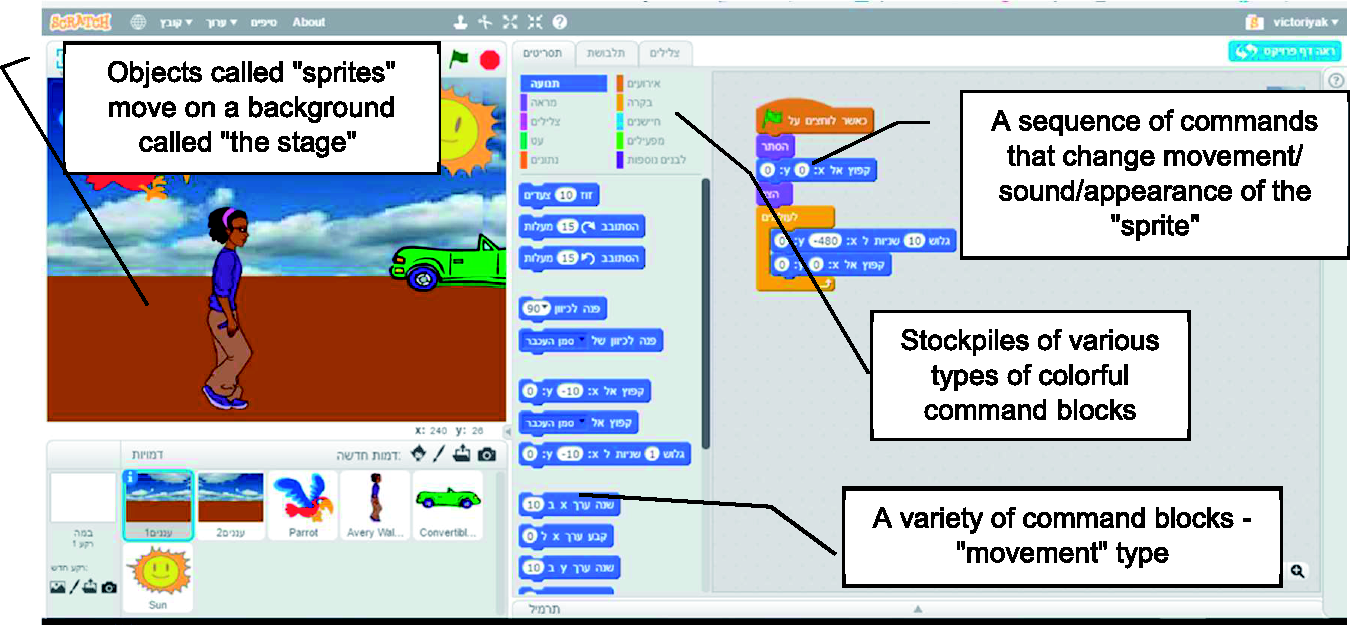
Visual Programming Through Scratch 2.0 Platform.
The quality of technology-enhanced learning processes in the education system is related to the role of the teacher (Ching et al., 2018). This study focuses on the role of the teacher in a visual programming classroom.
The Role of the Teacher
Olson and Bruner (1996) found that teachers hold intuitive perspectives about teaching-learning processes. These folk perspectives were divided into four models, representing different types of learner consciousness. Each model is represented by folk psychology, which characterizes the concept of the learning process, and folk pedagogy, which describes how to teach in accordance with a particular folk psychology. Figure 2 shows the relationship between folk psychology and folk pedagogy.
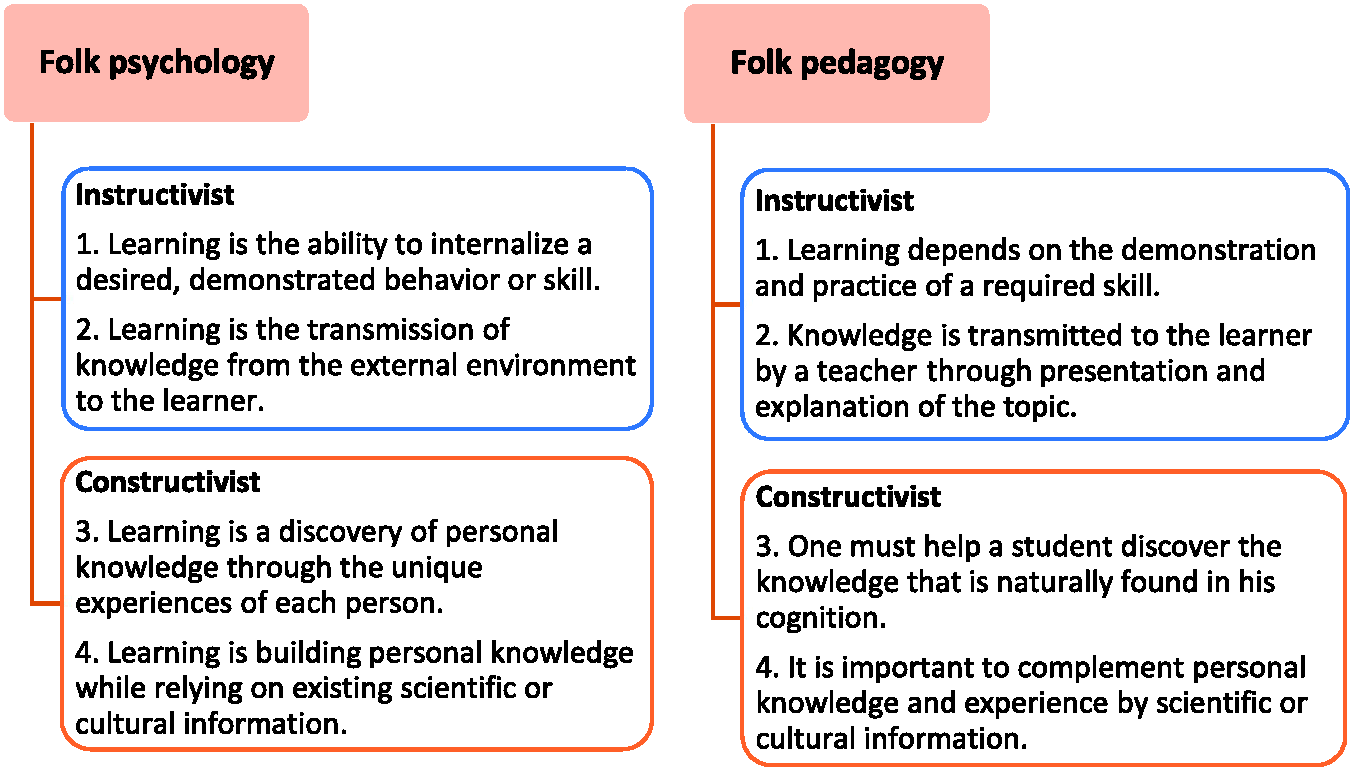
Four Models of “Theory of Mind” in Learning and Teaching (Olson & Bruner, 1996).
As shown in Figure 2, the four models of “theory of mind” belong to two opposite pedagogical perspectives of learning (Peled et al., 2015). The first and second models reflect the instructivist perspective, while the third and fourth models reflect the constructivist perspective to learning. According to the instructivist perspective, knowledge is objective, and there is only one correct answer to each question. In contrast, the constructivist perspective perceives learning as a complex process, in which there are several correct answer and more than one solution. Thus, each individual may contribute his or her unique experience to help create extensive knowledge (Peled et al., 2015).
The different pedagogical perspectives of teachers in the context of teaching-learning processes and the adoption of innovation have a crucial impact on the perception of the role of the teacher and how he/she uses digital tools in teaching (Thibaut et al., 2018). Unfortunately, these perspectives are one of the most difficult factors to change (Tondeur et al., 2017). Studies have shown (Avidov-Ungar et al., 2020; Blau & Shamir-Inbal, 2021; Peled et al., 2015; Tondeur et al., 2017) that the instructivist perspective among teachers leads to a use of technology that reinforces the “teacher-centered” approach. These teachers will make extensive use of pedagogical strategies such as demonstration or explanation. It is reasonable to assume that the artifacts of a learning process guided by instructivist teachers will be homogeneous, since, based on the teacher's perspective, there is one particular way to program an optimal artifact. In contrast, teachers who hold a constructivist pedagogical perspective may lead students to use technology for active learning in the “student-centered” approach (Blau et al., 2018; Shamir-Inbal & Blau, 2020). These teachers will encourage their students to experiment independently and to rely on peer learning in order to acquire new knowledge. It can be assumed that the learning artifacts guided by constructivist teachers will usually be more diverse, since, depending on the teacher's perspective, there are many ways to program an optimal artifact.
In the context of visual programming, previous studies claimed that constructivism is a proper approach for teaching and learning (Bakar et al., 2019; Hadad et al., 2020). However, research findings that followed the process of creating games using the Scratch environment (Ke, 2014) found that most of the educational digital games created by students under the guidance of computer science teachers in schools were instructive in nature and may have reflected the pedagogical perspective of the teachers. The literature review conducted by Hsu et al. (2018) found that such activities as aesthetic experience, design-based learning, and storytelling have rarely been adopted when teaching visual programming. That is, it can be assumed that the experience of a visual programming environment such as Scratch in the education system will not necessarily lead to pedagogical change, but will reflect the folk psychology and folk pedagogy of teachers who integrate it in their classroom.
In order to explore these issues, this study examines the following What are the pedagogical perspectives of instructivist and constructivist teachers regarding the way they design the teaching of visual programming in the classroom? How, if at all, are the pedagogical strategies of teachers with instructivist and constructivist perspectives reflected in student artifacts? How, if at all, are the pedagogical strategies of teachers with instructivist and constructivist perspectives reflected in the degree of active learning conducted by the end users of student artifacts?
Methodology
This study was conducted using the mixed-method approach. On the one hand, we used qualitative methods to examine in depth the pedagogical perspectives that guide teachers of visual programming using the Scratch environment. On the other hand, qualitative methods were employed to categorize teachers' “folk pedagogy” (Olson & Bruner, 1996). Based on this categorization, we further explored the connection between teachers' perspectives and the characteristics of programming artifacts created by their students, as well as the level of active learning conducted by the end users of these artifacts.
Participants
In the first phase of this study, participants were 89 teachers from elementary and secondary schools across Israel who integrate different technologies, including visual programming, in their teaching. These teachers filled in a folk pedagogy questionnaire detailed in the following section. In the second phase, 22 teachers were selected for interviews aimed at a deeper understanding of their pedagogical perspectives and classroom practices. The interviewees are representative of the education system in Israel in terms of teaching experience (2-30 years), experience in teaching visual programing (half year - 7 years), gender (13 women and 9 men), sector (14 Hebrew speakers and 9 Arabic speakers), and the age of the learners (13 elementary and 9 secondary school teachers). These teachers completed a professional development course for basics of visual programming offered by the Ministry of Education (60 hours). The main focus of their training was on technological aspects of using Scratch visual programming in the classroom with only a few references to methods of its integration.
In addition, the teachers who were interviewed were asked to send a link to examples of representative artifacts (at different levels) created by their students and published on the Israeli Scratch Community website (http://www.scratch.org.il/) or on the international Scratch community website (https://scratch.mit.edu/). According to the teachers, these 3-4 artifacts provided by each teacher (in total, n = 109) reflected different levels of student work. There were 78 artifacts created by students from Hebrew-speaking schools and 31 by students from Arabic-speaking schools.
Research Tools and Procedure
In this study, we combined several tools that helped us characterize the pedagogy that guides teachers, identifies their teaching strategies, and analyzes student artifacts:
Factor Analysis of the Folk Pedagogy Questionnaire (Blau & Pieterse, 2015, Based on Olson & Bruner, 1996 Framework).
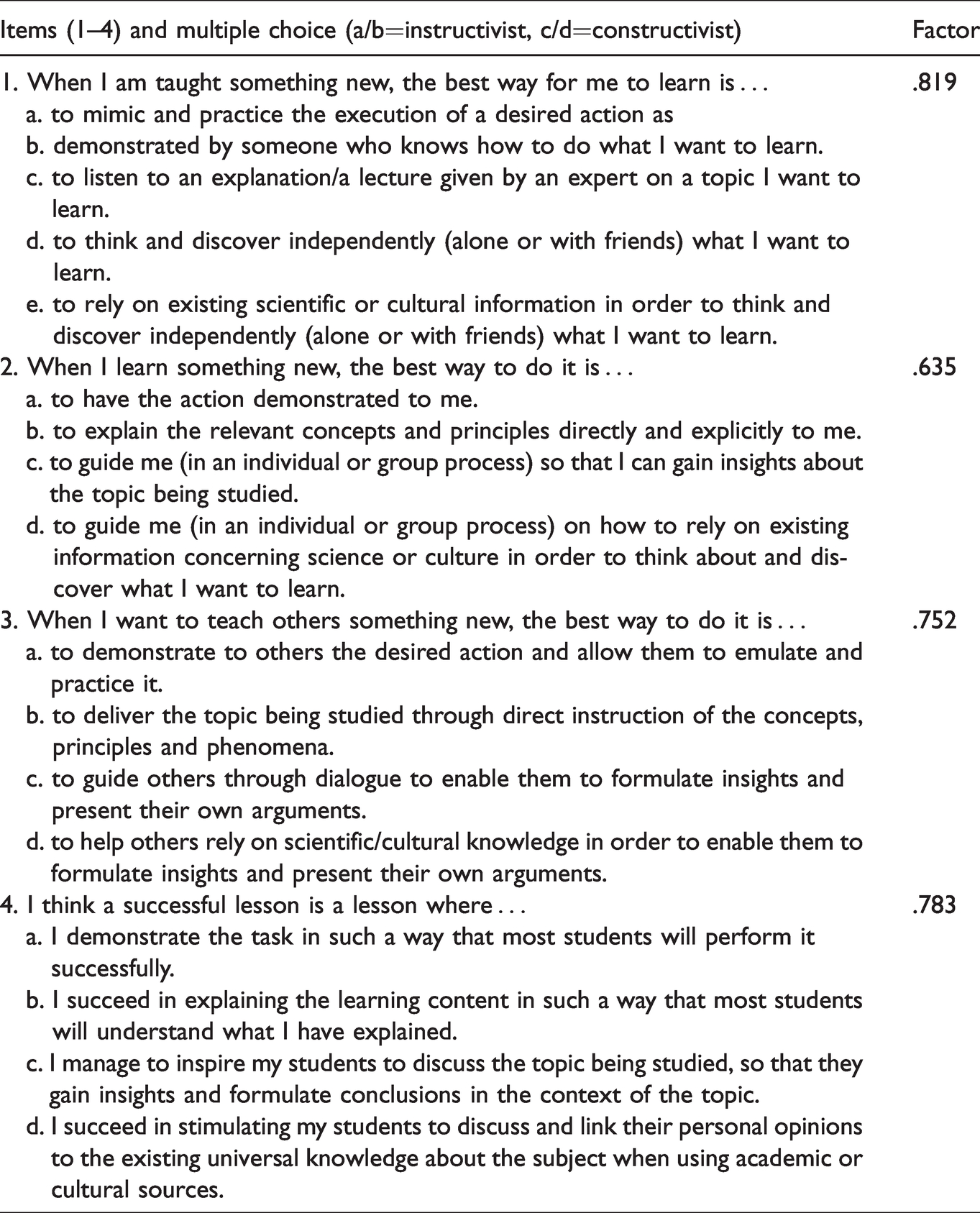
Analysis of factors confirmed with Warimax rotation showed that all items in the questionnaire were pooled into a single factor (Table 1). Reliability as an internal consistency of the questionnaire was good, Cronbach's α = .714, and all statements were included in the index that was normally distributed (range: 1-4, average: 2.80, standard deviation: 0.76, median: 2.75, skewness: 0.281).
The interviews were recorded, transcribed, and analyzed bottom-up based on the Grounded Theory approach (Charmaz, 2014), which presents participants' perspectives and practices in their natural context. The coding yielded 629 statements, and 25% of the data was re-coded by two additional raters. A few statements, which were coded differently, were discussed between the raters, and the findings presented in the Results section reflect full agreement between the three raters.
Student artifacts provided by the interviewees as representative artifacts were analyzed by raters according to criteria used in previous studies (Blau & Benolol, 2016; Kafai, 2016; Peppler & Warschauer, 2011). A number of parameters were examined on a scale between 1-5. These parameters were: the level of programming of the project (i.e., the degree of its technological sophistication; Blau & Benolol, 2016; Peppler & Warschauer, 2011), the degree of clarity of the project idea, the degree of clarity of the user interface (i.e., the degree to which the project's interface is clear and understandable for users and allows them to make efficient and convenient use of the project; Blau & Benolol, 2016; Peppler & Warschauer, 2011), the degree of originality and creativity of the project (e.g., the extent to which the visual design or concept of the project is innovative and special, relative to other projects examined; Peppler & Warschauer, 2011), and the level of aesthetics of the project design. Beyond these six criteria from previous studies, we used four criteria that emerged bottom-up from interviews with our participants: target user's activity (i.e., to what extent users of the students' projects become active learners), connection to the curriculum (yes/no), number of scripts, and number of sprites, as counted by the Scratch interface for each project.
Additionally, assessment of the programming level and complexity was conducted using the Dr. Scratch app (http://www.drscratch.org/; Moreno-León et al., 2015). The app evaluates each project on a scale from 0 to 21. Each project is rated according to levels: 0–7 – basic level, 8–14 – developing level, and 15–21 – mastery level. The projects are evaluated according to the following seven parameters, with each parameter measured on a scale from 0 to 3: flow control, data representation, abstraction, user interactivity, synchronization, parallelism, and logic. The combination of two analysis methods enabled a comprehensive assessment of student artifacts.
The artifacts' coding, based on the criteria from previous studies, was conducted by two raters trained by the researchers. The first rater assessed the entire data set, while 25% of the artifacts were independently assessed by a second rater, a visual programming expert who was unaware of the research questions. The inter-rater reliability between the raters was high, Cohen's kappa = .88, and the average rating was used for the analysis presented in the next section.
Results
Pedagogical Perspectives and the Design of Teaching Visual Programming
The aim of the
Strategies Used by Teachers Who Were Categorized as Instructivist.
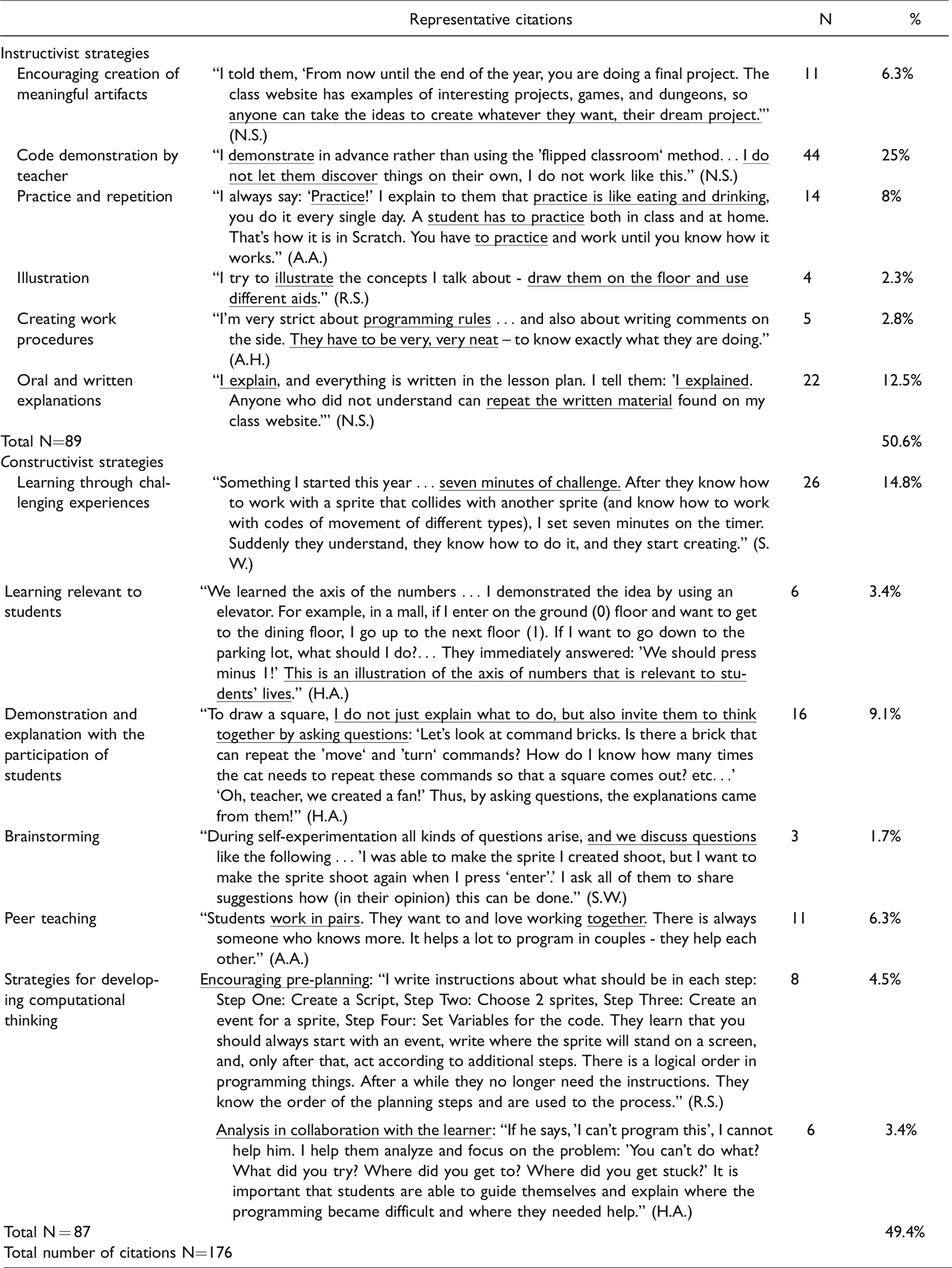
Strategies Used by Teachers Identified as Constructivists.
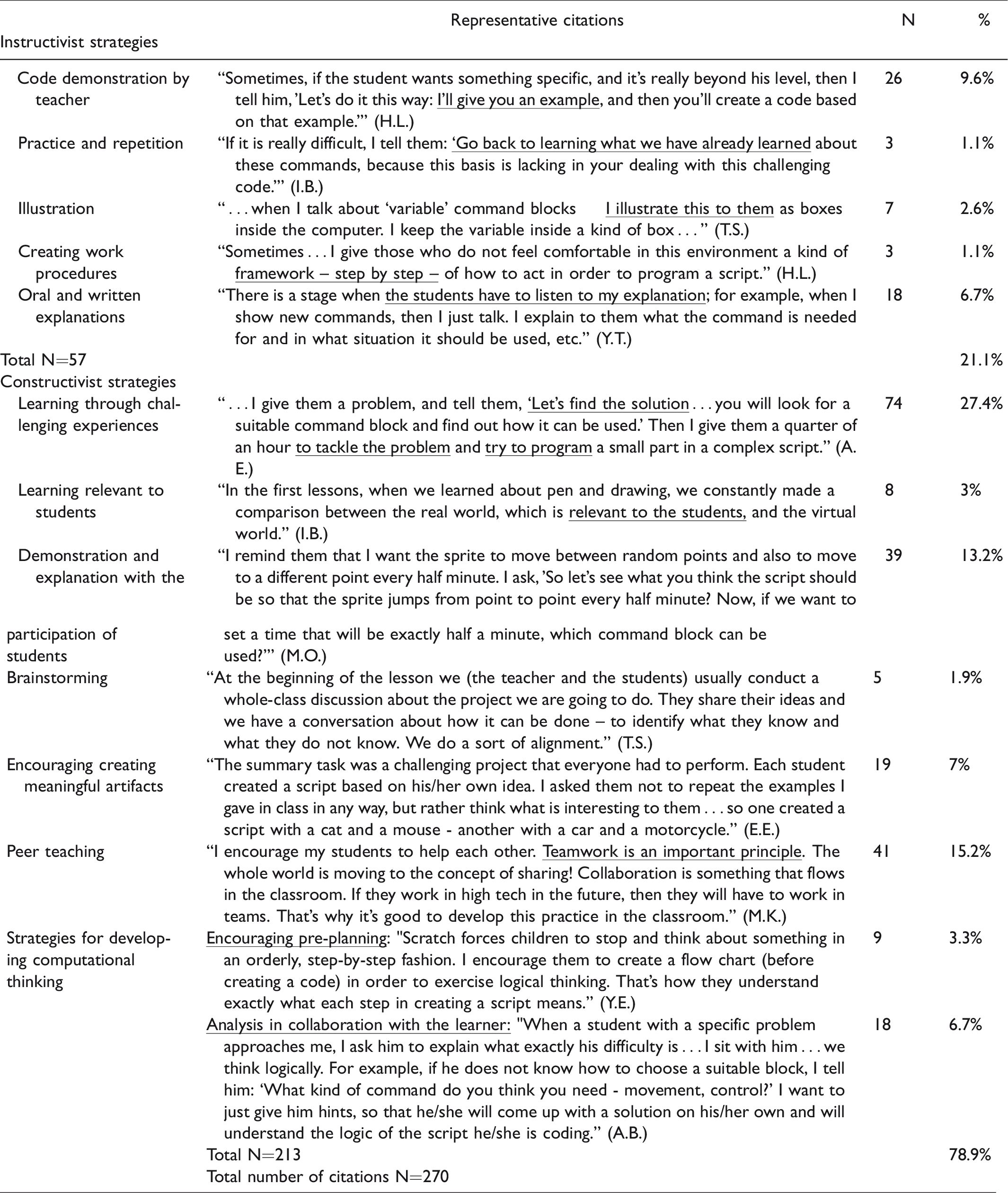
The findings presented in these tables show that out of 446 content units from the interviews which relate to the various teaching strategies, the implementation of teaching strategies of the constructivist type is significantly higher (χ2 = 22.101, p < .001) among teachers with constructivist perspectives, compared with their colleagues with instructivist perspectives. It was also found that teachers with instructivist perspectives apply, almost equally, strategies which reflect both instructivist and constructivist perspectives in their teaching of visual programming (Table 2). In contrast, teachers who were characterized as having a constructivist perspectives apply mostly constructivist strategies (Table 3). The differences between applying instructivist versus constructivist strategies are presented in Figure 3.
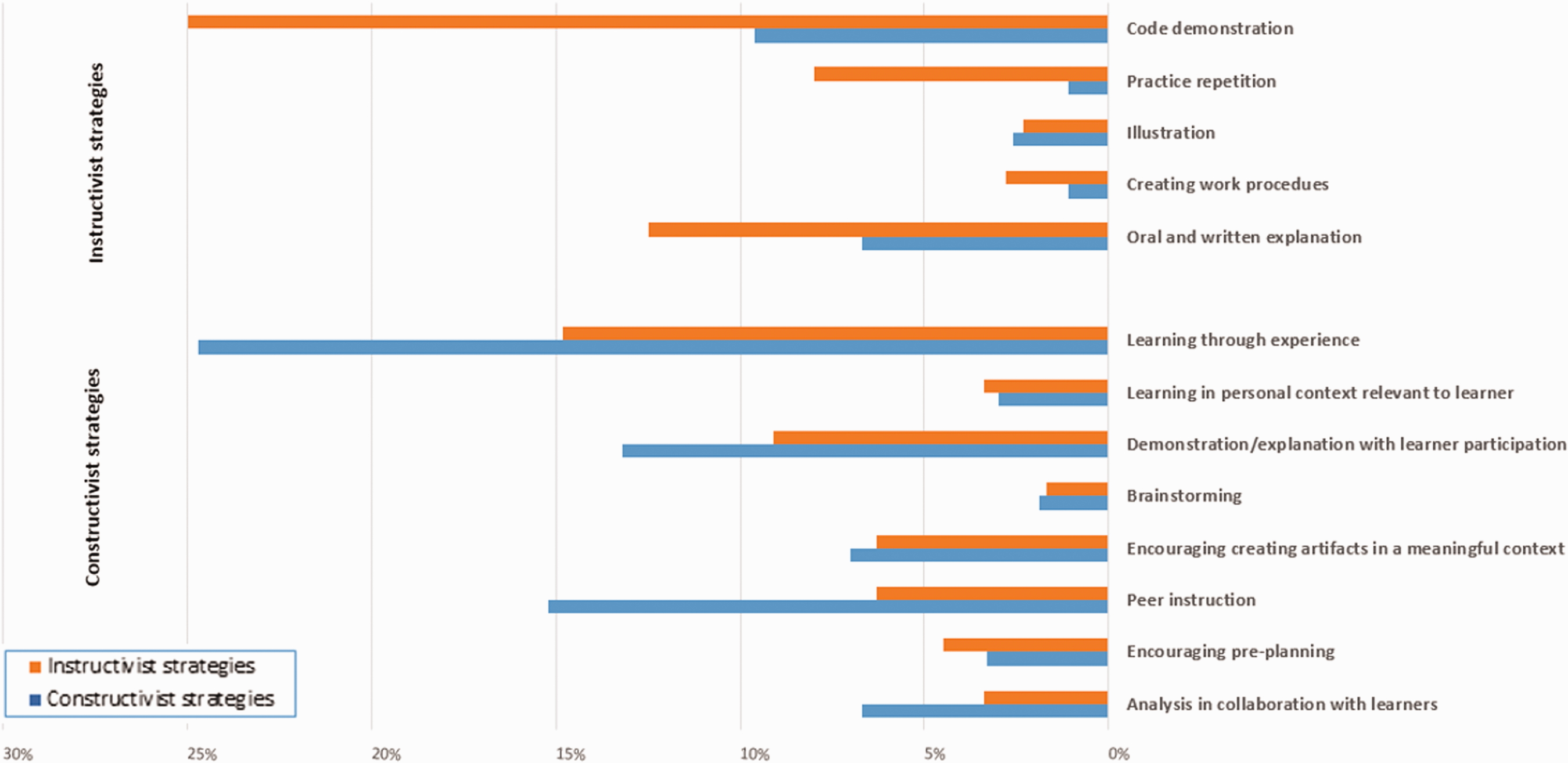
Differences Between Instructivist and Constructivist Teachers in Pedagogical Strategies Applied for Teaching Visual Programming.
The findings in Figure 3 show notable differences between instructivist and constructivist teachers with respect to the use of different strategies. The most prevalent instructivist strategy in teaching visual programming was demonstration, and the most prevalent constructivist strategy was allowing for learning from experience. A comparison of the degree of implementation of these strategies within each group of teachers shows that teachers with an instructivist perspective tend to use a demonstration strategy 1.5 times more than constructivist teachers and allow fewer independent learning experiences for their students. In contrast, teachers with a constructivist perspective tend to allow students to experiment independently in a Scratch environment almost three times more than with the demonstration strategy. In addition, teachers with an instructivist perspective tend to explain verbally and use more practice and repetition than constructivist teachers. In contrast, teachers with a constructivist perspective allow their students to acquire knowledge through learning by peer instruction and direct their students to work independently to problem-solve in a visual programming environment.
Another interesting finding is illustrated in Figures 4 and 5, which show percentages of the use of different teaching strategies by each of the teachers interviewed for the study. From the diagrams, it can be concluded that, as expected, all teachers with a stated constructivist perception tend to use significantly more constructivist-type strategies (Figure 5). Surprisingly, some teachers with a declared instructivist perspective also adopt more constructivist than instructivist-type strategies in their teaching in a visual programming environment (Figure 4). These four teachers were defined as having mixed pedagogical approaches and thus, artifacts of their students (n = 13) were removed from the comparative analysis reported in Tables 4 and 5.
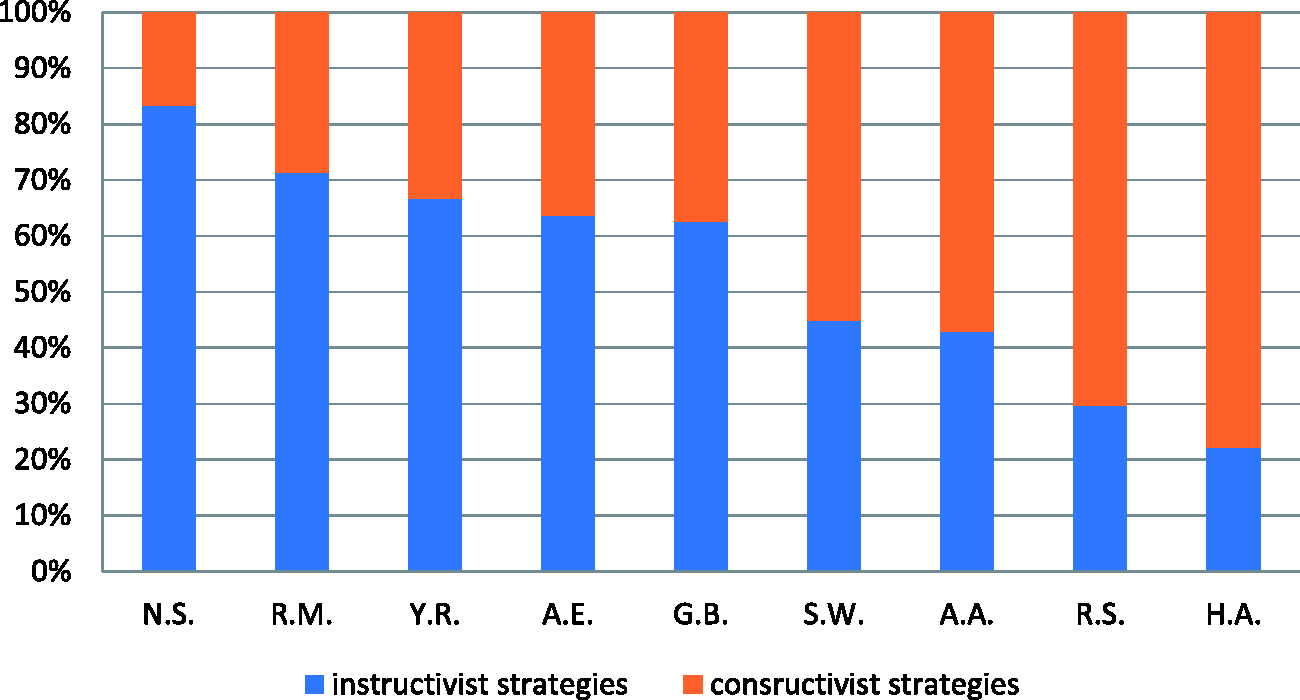
Rating of Instructivist Teachers: Using Strategies That Characterize Different Pedagogical Perspectives.
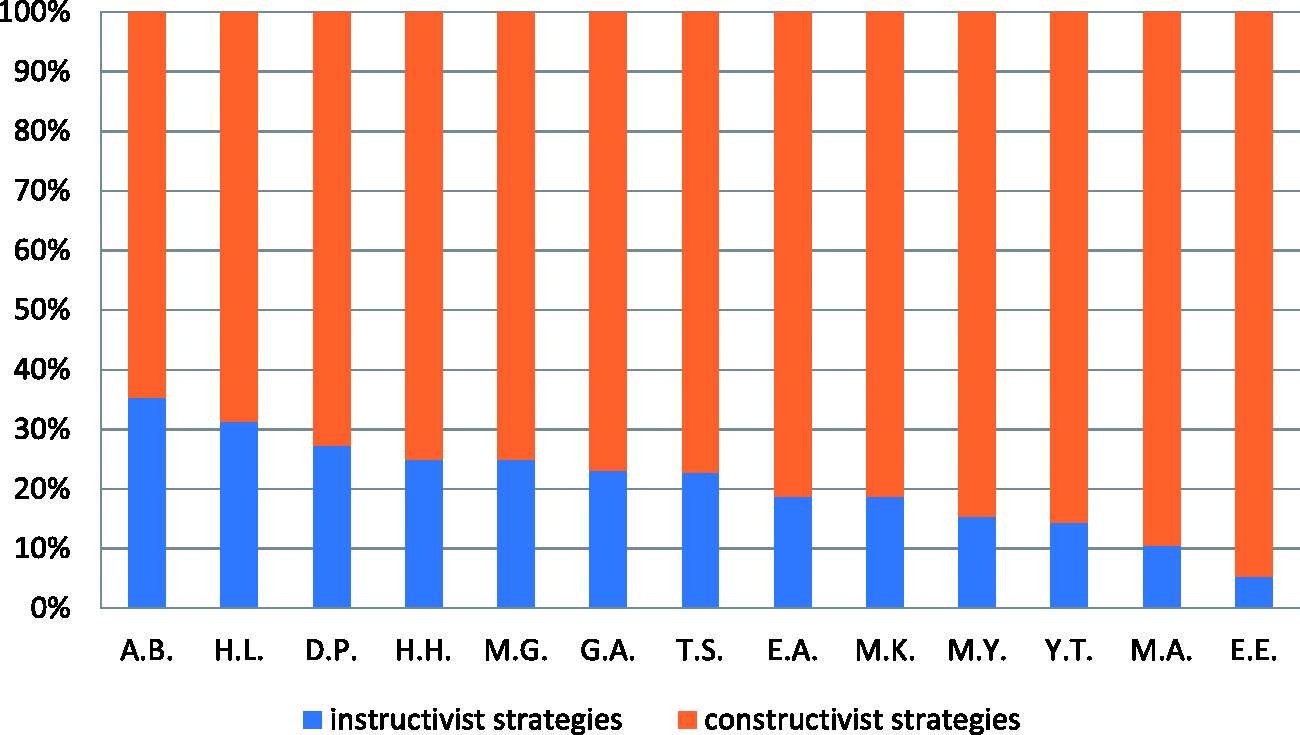
Rating of Constructivist Teachers: Using Strategies That Characterize Different Pedagogical Perspectives.
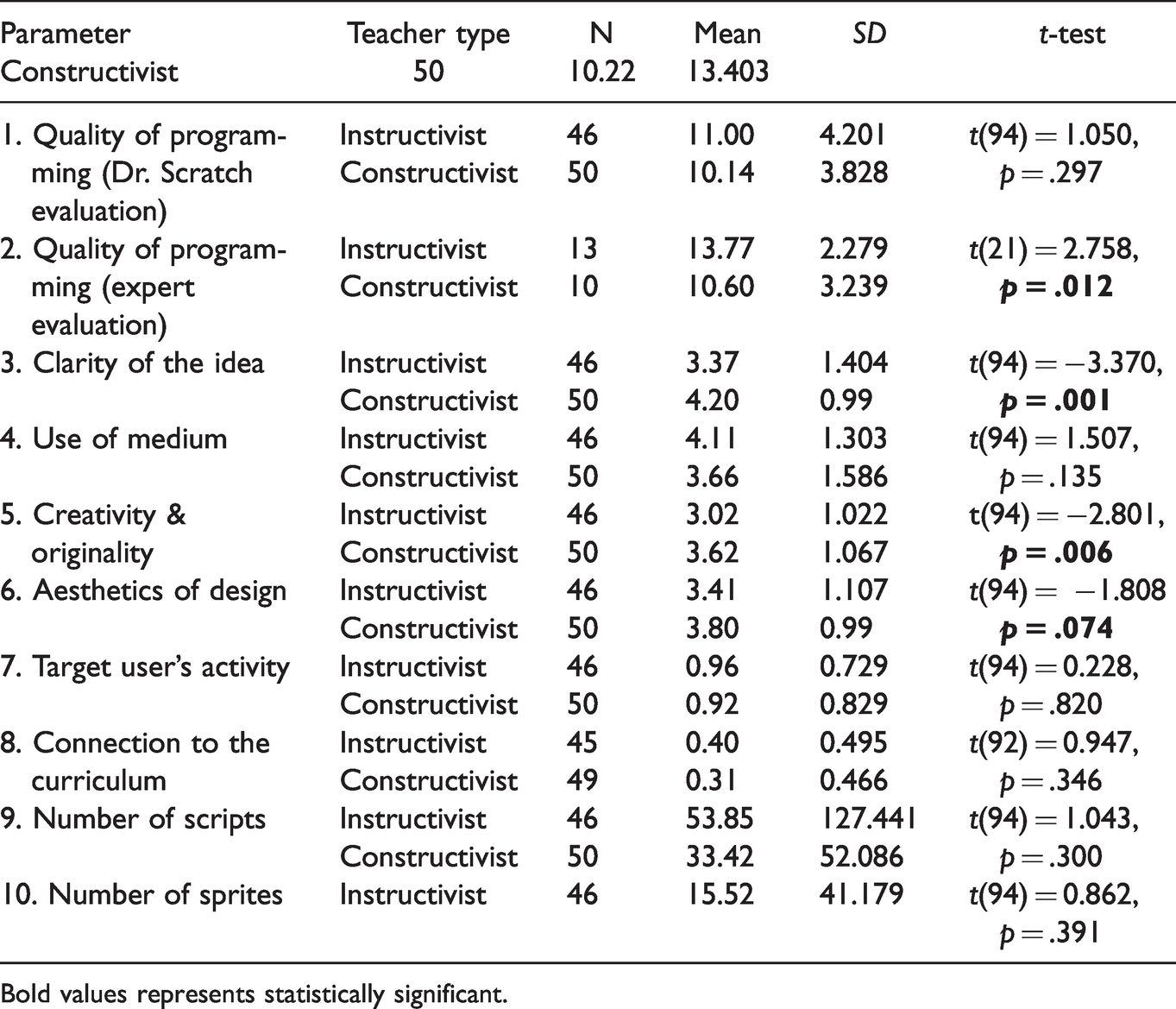
Differences Between Quality Parameters of Student Artifacts as a Function of Teacher Pedagogical Perspective (Instructivist Versus Constructivist).
Bold values represents statistically significant.
Differences Between Quality Criteria of the Products of Expert Students as a Function of Teacher Perspective.
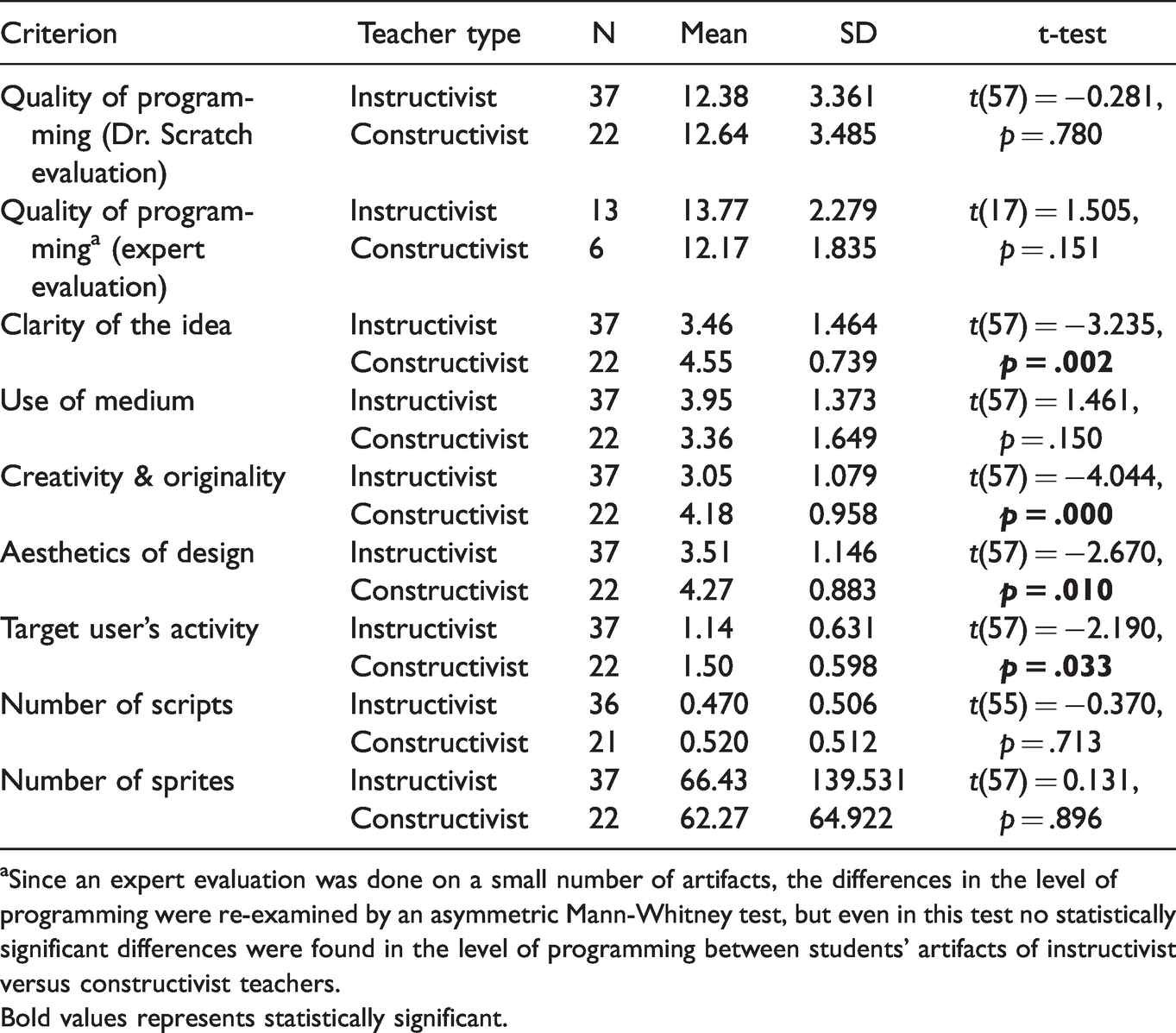
aSince an expert evaluation was done on a small number of artifacts, the differences in the level of programming were re-examined by an asymmetric Mann-Whitney test, but even in this test no statistically significant differences were found in the level of programming between students' artifacts of instructivist versus constructivist teachers.
Bold values represents statistically significant.
Differences in Artifact Quality as a Function of Teacher Perspective
As can be seen in Table 4, the “
We have presented the analysis of differences between students of instructivist versus constructivist teachers in all the artifacts. In addition, we used an independent samples t-test to explore the differences in artifacts which were created after six months or more of studying visual programming, i.e., by students who could be defined as “
Table 5 shows that
Moreover, in the artifacts of the “expert” students under constructivist teacher guidance, the level of
Figure 6 illustrates the difference between artifacts created under two pedagogical perspectives. On the right an artifact of the
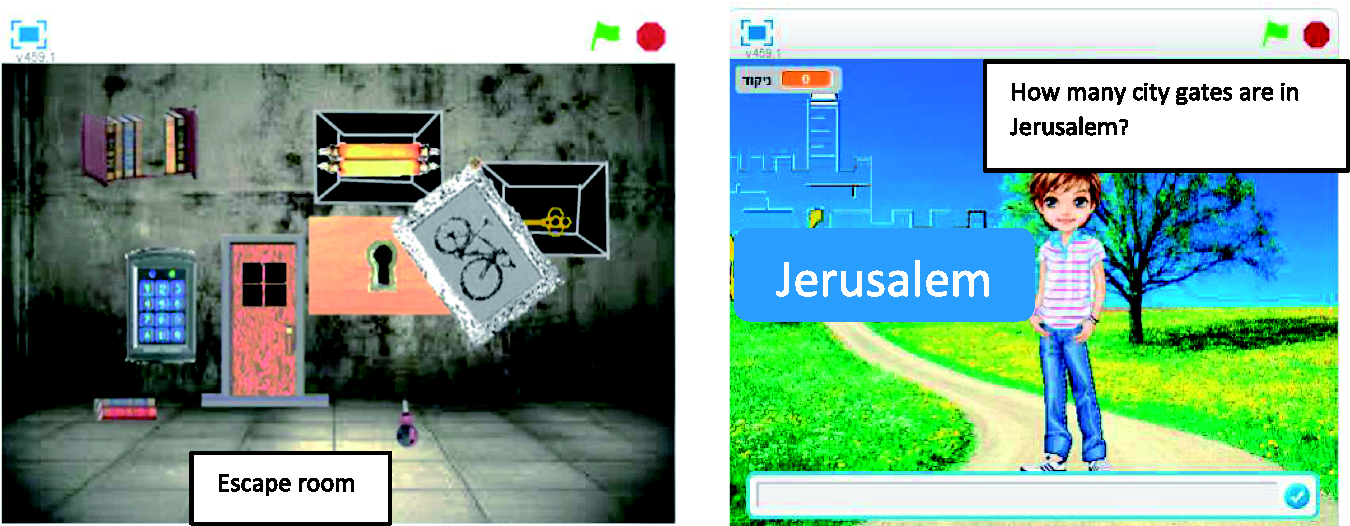
Examples of Student Artifacts: Creativity and Originality and Target User’s Activity Criteria.
Discussion
This study examined teaching-learning processes in the Scratch visual programming environment from the perspective of teachers who integrate visual programming in various formal frameworks. Unlike previous studies, which focused mostly on learners in non-formal learning environments (e.g., Luo et al., 2020), the current study focused on teaching strategies and on the perspectives of teachers. Moreover, this is a pioneering study that explores teaching perspectives and strategies in terms of Bruner's “folk psychology” and “folk pedagogy” framework (Olson & Bruner, 1996). In this context, the study examined teachers' pedagogical perspectives and the expression of these perspectives in teaching visual programming. In addition, this study goes beyond previous works, in that we explored differences in the quality of student artifacts. Also, the activity of the end users of these artifacts was examined as a function of teacher perspective. Finally, we examined possible implications of teachers “folk pedagogy” on their students' “folk pedagogy”.
In this study we documented the stages where teachers with instructivist perspectives use constructivist pedagogy and articulate this in the interviews. However, their perspectives, i.e., cognitive schema, through which teachers approach learning processes, remain instructivist. The process documented in this study, in which a teacher uses strategies of current constructivist teaching when his/her declared pedagogical perspective is still traditional teaching, is consistent with Vygotsky et al.'s (1994) claim. According to their claim, the new cognitive schema is assimilated into cognition only after the individual uses the new term learned by him in practice at an applied performance level and over time.
Our findings suggest that teachers with an instructivist perspective first make changes in their actual pedagogy, while their stated perspective (folk psychology) remains stable. Following a change in pedagogy, folk psychology eventually may also be refined. Only then may teachers refine their perspective of evaluation, which requires a deep pedagogical understanding and a good acquaintance with the environment in which they teach (Nevo, 2002). Figure 7 presents this process, which shows a gradual transition from a traditional instructivist pedagogical approach to a constructivist pedagogical approach.
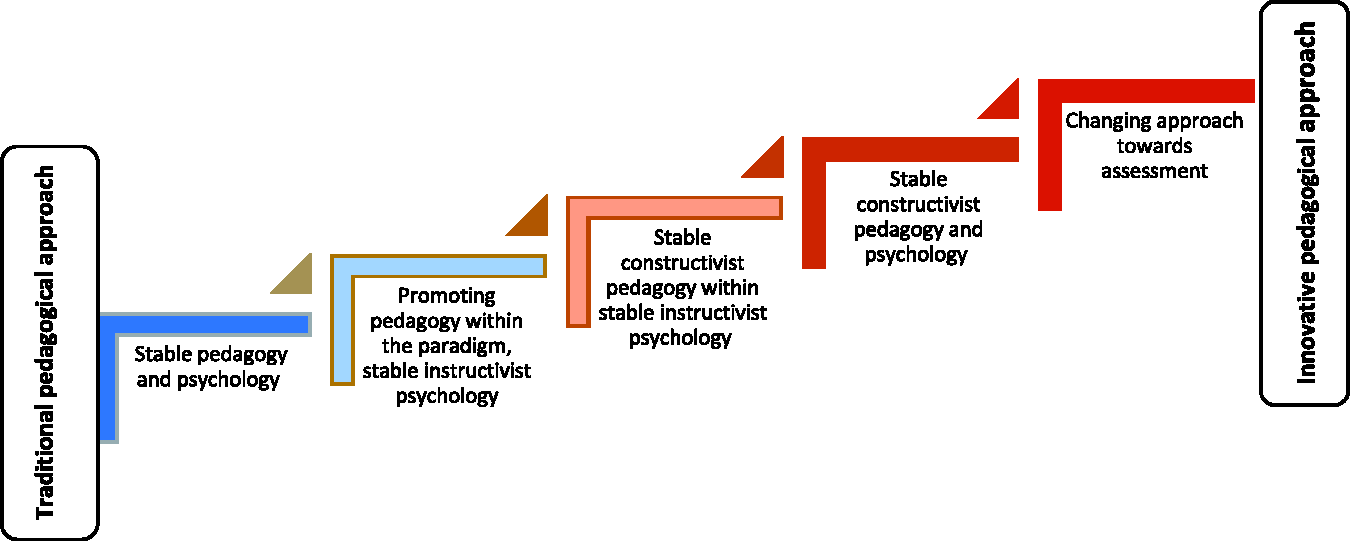
A Process of Pedagogical Flexibility in Teachers of Visual Programming.
It seems that integrating visual programming environments in schools may increase the use of constructivist pedagogy, even among teachers with traditional instructivist perspectives, and it is possible that in doing so they will, over time, change their pedagogical perspective accordingly. The latter change is still waiting to be empirically demonstrated in future longitudinal studies, but, based on the pedagogical shift found in this study, we recommend encouraging teaching in the visual programming environment in formal education.
From this study it seems that in the beginning of the process, artifacts of students guided by instructivist teachers were found to be higher in their programming level quality, compared to the products of students guided by constructivist teachers. It can be assumed that teachers with an instructivist perspective tend to explain explicitly and demonstrate to their students how to create code, and thus, the programming level of the artifacts they produce in the early stages of learning is higher than those of students who are guided by constructivist pedagogy and are required to experiment and create codes independently. This is consistent with the perspective underlying the first and second models of theory of mind, according to which optimal learning occurs through demonstrations and explanations (Olson & Bruner, 1996).
Nevertheless, it seems that students who learn by constructivist guidance and over time gain experience in visual programming, close the gap with students learning under instructivist guidance in their ability to create an artifact at a good programming level. It can be assumed that ongoing constructivist guidance emphasizing active learning, encourages students to choose high standards for their projects (Nouri et al., 2020; Resnick, 2012;) and, as a result, create artifacts with a high quality of programming. This finding is consistent with Olson and Bruner's (1996) claim that constructivist pedagogical approaches, resulting from the third and fourth models of theory of mind, will ultimately lead students to overall and broader success in the learning process, although this does require additional time. Also, in this finding there is evidence that continuous learning through personal and independent experience, which is widely expressed in constructivist guidance, improves the quality of programming and results in artifacts that require rich programming knowledge (Resnick, 2012).
Equally important, artifacts created by constructivist guidance were found to be more original and creative, designed more aesthetically, and expressed an idea more clearly in comparison to the artifacts of students learning under instructivist guidance. After six months of experience under constructivist guidance, students were able to program with a base of wider personal knowledge and experience and thus arrived at more original and creative artifacts than students learning mostly from teacher demonstrations. This finding suggests that teachers with a constructivist perspective are able to take advantage of the nature of the Scratch environment, enabling their students to create artifacts in a personally meaningful and unique context (Maloney et al., 2010; Nouri et al., 2020; Resnick, 2012).
Conclusion, Implications, Limitations, and Future Directions
This study found that the pedagogical perspectives of teachers have an impact on both the teaching strategies of these teachers in a visual programming environment and on the artifacts of students learning in this environment under different pedagogical guidance. In this study, we also found evidence that the pedagogical perspective of teachers may have an impact on the pedagogical perspective of their students and thus, even improve the artifacts they create. Moreover, teachers’ pedagogical perspectives are reflected in the activity level of students' programming artifacts and thus, have implications on the active learning level of the end users. At the same time, it has been found that continuous experience in teaching in an environment for visual programming makes teaching approaches more flexible; namely, it increases the use of constructivist teaching strategies in the formal learning system.
This study adds to research literature by providing an empirical analysis of the “four models of theory of mind” approach (Bruner & Olson, 1996) in a new context of visual programming. Moreover, the study contributes to our understanding of the connection to and transfer of what Brunner calls “folk pedagogy” from teachers to learners (which is reflected in the quality parameters of programming artifacts created by students and implied by the activity level of the end users of these learning artifacts).
Regarding educational implications, the study reveals which teaching strategies are used by teachers in the classroom when teaching in a visual programming environment, which strategies promote computational thinking, and which strategies are recommended for the training of teachers who plan to work in the field of visual programming, in order to enable them to design the best learning practices in this environment. As for students, we recommend exploring in future studies whether computational thinking in general and specific parameters of students' artifacts, such as creativity and originality which are developed in the context of visual programming, can be transferred to a different context.
This study took place six months after the initiation of the code curriculum based on virtual programming environments in Israeli schools and focused on the Scratch online environment. We recommend performing follow-up studies that will examine diverse environments for visual programming and include additional research methods. These studies should include observations of teaching strategies and students' learning processes in the classroom with reference to pedagogical perspectives held by teachers and assessment of student programming artifacts.
Footnotes
Declaration of Conflicting Interests
The authors declared no potential conflicts of interest with respect to the research, authorship, and/or publication of this article.
Funding
The authors disclosed receipt of the following financial support for the research, authorship, and/or publication of this article: This study was supported by the Research Authority Foundation, The Open University of Israel.
