




Abstract
Amid growing backlash against diversity, equity, inclusion, and accessibility (DEIA), this study centers on the continued importance of DEIA perceptions and psychologically safe environments in enhancing job satisfaction. This study examines how diversity perceptions influence job satisfaction among a diverse federal workforce in the United States, with a particular focus on the role of psychological safety. Despite growing emphasis on DEIA, psychological safety has received comparatively little attention as a means to enhance job satisfaction in the workplace. Using data from the 2023 Federal Employee Viewpoint Survey (FEVS), this study addresses this gap by exploring how perceptions of DEIA influence federal employees’ job satisfaction in the public sector. This study investigates the mediating role of psychological safety in the relationship between DEIA perceptions and job satisfaction. By fostering an environment where employees feel secure(safe) discussing DEIA topics, the research seeks to illuminate how psychological safety impacts job satisfaction in diverse workplaces. This is especially important given the current backlash against DEIA policies in the US. The findings of this study will contribute to public management research by introducing an understudied variable—psychological safety—and its potential effects in the public sector. Additionally, the results offer valuable insights into designing effective DEIA strategies that enhance employee well-being and job satisfaction in federal organizations, advancing the understanding of these complex dynamics.
Keywords
Introduction
Recent backlash against diversity has intensified, emphasizing the importance of fostering inclusive and psychologically safe work environments. Workplace diversity has often been discussed in relation to concerns about inequity and fairness in public management (Mor Barak et al., 2022). As concerns over biases and structural obstacles shape how employees perceive and experience the workplace, organizations continue to struggle to implement Diversity, Equity, Inclusion, and Accessibility (DEIA) policies (Mor Barak et al., 2022). Building on this context, this study explores how perceptions of DEIA and psychological safety relate to job satisfaction in the public sector.
Despite growing commitments to diversity initiatives, organizations often struggle to measure the effectiveness of DEIA programs and to cultivate inclusive climates. Demographic and social differences such as gender, race, and disability may pose challenges that call for careful consideration (Choi, 2009, 2013; Dwertmann & van Dijk, 2020; Kellough & Naff, 2004; Lee et al., 2020; Moon & Christensen, 2020). To address these differences and ensure equal opportunities for all employees, diversity policies and programs have been developed and implemented across organizations (Pitts, 2009; Sabharwal et al., 2018). These initiatives have helped create positive perceptions of diversity within the workforce. A number of research reports that diversity management is positively associated with performance outcomes (Pitts, 2009; Sabharwal et al., 2019; Shore et al., 2011; Yang & Konrad, 2011). Consequently, well-designed diversity initiatives can create an inclusive work environment and promote positive organizational outcomes (S. Cho & Mor Barak, 2008; Moon & Christensen, 2020; Sabharwal, 2014).
Recently, DEIA has become an important focus in public management studies (Hsu & Riccucci, 2025). While Diversity, Equity, and Inclusion (DEI) have been widely studied, the inclusion of accessibility has received comparatively less attention. In July 2021, President Biden’s Executive Order 14035 introduced the DEIA index to raise awareness across federal agencies. Over time, executive orders from President Clinton through President Biden have emphasized DEIA in federal employment, encouraging the recruitment and advancement of diverse populations across race, gender, and disabilities. As the workforce becomes more diverse, understanding how DEIA perceptions impact employee performance in the workplace has become increasingly important.
A growing body of research has documented positive associations between diversity-related practices and workplace outcomes such as employee satisfaction, performance, and collaboration (Choi, 2009, 2013; Choi & Rainey, 2010; Hoang et al., 2022; Lee et al., 2020; Vanderschuere & Birdsall, 2019). While these findings underscore the value of diversity initiatives, public administration has only recently begun to examine DEIA perceptions as an integrated construct (Emidy et al., 2024; Hersugondo et al., 2025). Moreover, although psychological safety is recognized as an important factor, its role in public administration remains insufficiently studied, indicating an important research gap.
Building on this gap, this study seeks to provide further empirical evidence on whether DEIA perceptions are associated with job satisfaction and whether psychological safety mediates this relationship. We propose the following research questions: “How do DEIA perceptions affect job satisfaction in the public sector?” and “How does psychological safety mediate the relationship between DEIA perceptions and job satisfaction?” This study draws on the 2023 Federal Employee Viewpoint Survey (FEVS), an individual-level dataset administered by the U.S. Office of Personnel Management (OPM). By analyzing this large-scale survey, this study provides empirical evidence on whether DEIA perceptions and psychological safety jointly shape job satisfaction, advancing existing research and providing a more comprehensive understanding of how inclusive environments influence employee well-being in public administration.
The remainder of this paper is organized as follows. The next section presents the theoretical background and hypotheses. The subsequent section describes the research methods, including measurement validity and robustness checks. Results are then presented, and the paper concludes with a discussion of the main implications.
Theoretical Frameworks and Hypotheses
Diversity, Equity, Inclusion, and Accessibility (DEIA) and Job Satisfaction
Diversity management, encompassing diversity, equity, inclusion, and accessibility (DEIA), have garnered significant attention the U.S. federal workforce policy, particularly since Executive Order 14035 (Emidy et al., 2024). These four dimensions address workplace inequities affecting marginalized workforces (Arterberry & Nukpezah, 2025; McCandless et al., 2022; von Schrader et al., 2024). Executive Order 14035 characterizes these dimensions as follows: diversity is “the practice of including the many communities, identities, races, ethnicities, backgrounds, abilities, cultures, and beliefs of the American people, including underserved communities”; equity is “the consistent and systematic fair, just, and impartial treatment of all individuals, including individuals who belong to underserved communities that have been denied such treatment”; inclusion refers to “the recognition, appreciation, and use of the talents and skills of employees of all backgrounds”; and accessibility concerns “the design, construction, development, and maintenance of facilities, information and communication technology, programs, and services so that all people, including people with disabilities, can fully and independently use them.” Among these, accessibility has attracted growing attention in both workplace and public administration research (Chordiya, 2022).
Previous studies underscore the importance of studying all facets of DEIA, suggesting that each component is critical to increasing job satisfaction in federal agencies. Chordiya (2022) proposed that when federal employees perceive their organizational environment as equitable and inclusive, they experience fewer work-related difficulties. Raising job satisfaction among marginalized workforces may depend on both implementation of DEIA policies and employees’ perceptions of these policies (Emidy et al., 2024). This study posits that DEIA plays a critical role in improving job satisfaction by driving work motivation through employees’ perceptions of diversity, equity, inclusion, and accessibility.
Although diversity is a multidimensional construct, previous studies frequently treated diversity-related concepts collectively under a narrower framework focusing on diversity and inclusion (Sabharwal, 2014). However, a broader perspective incorporates additional dimensions, such as accessibility, belonging, and justice, that help explain diverse organizational outcomes (Chordiya, 2022; Hersugondo et al., 2025; Moon & Christensen, 2022). Recent research on accessibility inclusion highlights that DEIA perceptions are particularly meaningful for employees with disabilities, influencing their work attitudes and organizational experiences (Emidy et al., 2024). Yet, in public administration research, comprehensive analyses that consider all DEIA dimensions and assess their effects on employees’ workplace outcomes remain limited.
Diversity and equity policies represented the initial stage of DEIA and have been associated with job satisfaction. Policies and practices such as Equal Employment Opportunity and Affirmative Action (EEO-AA) have long played a significant role in creating an inclusive and welcoming work environment through initiatives, and research consistently links these initiatives to improved performance and job satisfaction (Choi & Rainey, 2010; S. Cho & Mor Barak, 2008; Hoang et al., 2022; Kang et al., 2023; Kellough & Naff, 2004; Lee et al., 2020; Naff & Kellough, 2003; Pitts, 2009; Sabharwal et al., 2018, 2019). Pitts (2009) suggested that minority work groups in federal agencies tend to perceive diversity management as effective and that diversity policies can help employees perform their jobs effectively.
Previous research further shows that diversity policies positively affect work outcomes and organizational goals (Sabharwal et al., 2018; Vanderschuere & Birdsall, 2019). By managing heterogeneous workgroups, federal agencies have strived to achieve higher productivity and performance within a diverse workforce (Leslie, 2019; Vanderschuere & Birdsall, 2019). Diversity management programs, such as recruiting a diverse workforce and cultivating a sense of belonging, can also foster psychological safety and, in turn, strengthen work outcomes (Randel et al., 2018; Sabharwal, 2014; Trochmann et al., 2023). When taken together, diversity and equity policies are strongly associated with enhanced job satisfaction, as organizational equity—defined as fair and just treatment—has been shown to promote positive outcomes such as satisfaction (Adams, 1965; Choi, 2011; Y. J. Cho & Sai, 2013; Emidy et al., 2024; Lawler, 1968; Lee et al., 2020). For instance, Y. J. Cho and Sai (2013) examined federal agencies and showed that three dimensions of justice significantly influence job satisfaction, indicating that employees’ perceptions of fairness foster positive workplace outcomes.
Numerous studies demonstrate that equitable and inclusive workplaces promote job satisfaction (S. Cho & Mor Barak, 2008; Dwertmann & van Dijk, 2020; Hoang et al., 2022; Naff & Kellough, 2003). This relationship is explained in part by evidence that inclusion enhances employees’ psychological safety (Brimhall et al., 2022; Hassan & Jiang, 2021; Mor Barak et al., 2016; Shore et al., 2011). Inclusion, reinforced by psychological safety, fosters a sense of belonging and contributes to higher job satisfaction (Nembhard & Edmondson, 2006; Trochmann et al., 2023). Inclusive behaviors are significant for managing diversity and are associated with performance and satisfaction outcomes (Choi & Rainey, 2010; A. C. Edmondson, 2004; Hirak et al., 2012; Shore et al., 2018; Trochmann et al., 2023). By valuing diverse perspectives, inclusion practices promote appreciation of differences that are essential in public organizations (Hoang et al., 2022). Psychological safety reinforces this process by enabling employees to feel secure when expressing ideas, which can enhance performance and collaboration (A. C. Edmondson, 2004; Shore & Chung, 2022).
However, research shows that merely increasing the employment of women or Black, Indigenous, and other People of Color (BIPOC) does not automatically result in inclusion (Hoang et al., 2022; Sabharwal, 2014). Rather, fostering inclusive and psychologically safe environment is essential to convert workforce diversity into positive outcomes. Beyond gender and race, recent studies emphasize the importance of further investigating broader inclusiveness and safe work environments, which contribute to performance and retention (Headley & Wright, 2020; Hoang et al., 2022). In this regard, perceptions of inclusion and an inclusive work environment can enhance workplace satisfaction (Ashikali et al., 2021; Kim et al., 2023; Lee et al., 2020; Mor Barak et al., 2016; Trochmann et al., 2023).
Finally, accessibility represents an emerging but critical dimension of DEIA that has been relatively underexplored in public administration. Recent studies have focused on the importance of accessibility in public administration (Chordiya, 2022; Chordiya et al., 2024; Emidy et al., 2024). Employees with disabilities often feel less included, which can reduce job satisfaction. Accessibility policies are therefore essential for creating equitable work environments (Chordiya et al., 2024), and empirical research shows that accessibility has a direct and positive effect on employee satisfaction (Hersugondo et al., 2025; Trochmann et al., 2023). These findings underscore the growing recognition of accessibility and its impact on work outcomes. While accessibility and inclusion efforts are essential for ensuring equal opportunity and workplace participation, the new Executive Order issued by President Trump, “Ending Radical and Wasteful Government DEI Programs and Preferencing,” (January 2025), rolls back decades of progress in advancing disability inclusion within the federal workforce.
Historically, federal DEI and accessibility policies have expanded employment pathways, reasonable accommodations, and leadership development opportunities for people with disabilities. By rescinding or limiting such programs, the new order risks undermining these long-standing efforts to ensure equitable access and opportunity.
While most previous studies have explored perceptions of diversity, equity, and inclusion (DEI) to understand diverse workplaces, this study examines the broader concept of DEIA. Beyond diversity and inclusion, DEIA initiatives have been shown to facilitate inclusive government workplaces that serve increasingly in government workplaces with diverse populations (Hersugondo et al., 2025). Perceptions of DEIA have developed with the broader conceptualization of diversity, highlighting the importance of assessing how these perceptions shape workplace outcomes. Given the increasingly diverse workforce and the ongoing implementation of DEIA policies and initiatives, all four elements—diversity, equity, inclusion, and accessibility—are now recognized as interrelated drivers of an equitable and inclusive work environment (Emidy et al., 2024). Yet the accessibility dimension remains under-examined in public administration. Emerging studies on disability inclusion highlight that accessibility is not only a policy requirement but also a driver of employee well-being and organizational performance (Arterberry & Nukpezah, 2025; von Schrader et al., 2024), making it critical to understand how employees perceive accessibility and how these perceptions affect job satisfaction. Capturing employees’ perceptions of these dimensions provides a more comprehensive view of organizational inclusion, since federal employees with disabilities report lower job satisfaction when fairness, openness, support, and empowerment are lacking (Chordiya, 2022).
Four dimensions of DEIA are crucial for cultivating equitable and inclusive work climates. Following President Biden’s Executive Order 14035 (July 2021) on DEIA, all four elements are considered essential for building a diverse and inclusive federal workforce. Building on this foundation, the following hypotheses are proposed:
Theoretical Background: Psychological Safety (PS)
This study is grounded in theories of DEIA, psychological safety, and job satisfaction. According to A. Edmondson (1999), a diverse workforce requires an inclusive and psychologically safe work environment that encourages open communication and interpersonal interaction across backgrounds and perspectives. Psychological safety refers to employees’ shared belief that they can express their thoughts and ideas without fear of negative consequences (A. Edmondson, 1999; Kahn, 1990). Employees experience psychological safety when their unique needs are recognized, and they feel a sense of belonging in the organization (Brewer, 1991).
Psychological safety supports inclusive climates in which employees engage and collaborate effectively. In demographically diverse settings, it alleviates anxiety about expressing oneself freely (Singh et al., 2013), fostering inclusion and engagement that enhance job satisfaction. Prior research shows that psychological safety is positively related to job satisfaction and other work outcomes (Afsharian et al., 2019; Dollard & Bakker, 2010). Inclusive work environments where employees can share opinions without fear lead to higher productivity, satisfaction, and performance (Carmeli et al., 2010; A. C. Edmondson & Bransby, 2023; Hassan & Jiang, 2021; Nembhard & Edmondson, 2006; Sabharwal, 2014; Shore et al., 2011). Inclusion behaviors that strengthen psychological safety help employees feel a sense of belonging and strengthen collaboration (A. C. Edmondson, 2004; Hoang et al., 2022; Shore & Chung, 2022).
DEIA Perceptions and Psychological Safety
Psychological safety theory proposes that inclusive and equitable workplaces make employees feel secure and supported, leading to better performance (A. Edmondson, 1999; A. C. Edmondson & Bransby, 2023). Inclusive behaviors foster belonging and help employees feel valued and integral to the organization, thereby creating climates that encourage participation and improve outcomes (Dwertmann & van Dijk, 2020; A. C. Edmondson & Bransby, 2023; Randel et al., 2018; Sabharwal et al., 2019; Shore & Chung, 2022), leading to enhancing job satisfaction (Hoang et al., 2022). Thus, psychological safety can play a significant role in linking inclusion practices to meaningful outcomes in diverse workplaces.
Drawing on previous research, inclusion and psychological safety appear to be interrelated, suggesting a reciprocal relationship between the two. Inclusive behaviors, such as open communication, promote trust among employees (Carmeli et al., 2010; A. C. Edmondson, 2004; A. C. Edmondson & Bransby, 2023; Hirak et al., 2012; Korkmaz et al., 2022). Leaders enhance employees’ perceptions of psychological safety by listening and providing feedback (Hassan & Jiang, 2021; Nembhard & Edmondson, 2006; Sabharwal, 2014; Shore et al., 2018). High-quality interpersonal relationships further reinforce this process (Carmeli et al., 2010).
Psychologically safe work environments encourage employees to take interpersonal risks, share ideas, foster open communication, and collaborate without fear of embarrassment, which contributes to organizational effectiveness and employee satisfaction (Dwertmann & van Dijk, 2020; A. Edmondson, 1999; A. C. Edmondson, 2003; Hoang et al., 2022; Shore et al., 2018). Inclusive work climates can manage and mitigate negative conflict, reduce anxiety, and encourage mutual respect, improving performance (Nembhard & Edmondson, 2006; Randel et al., 2018; Shore & Chung, 2022).
Moreover, inclusive and equitable work environments facilitated through diversity policies and practices can enhance employees’ success and outcomes (Ashikali et al., 2021; Shore et al., 2011). Diverse workforces can foster openness to difference and boost their psychological safety and a sense of belongingness (Ashikali et al., 2021; Randel et al., 2018). Recent studies further emphasize that enhanced accessibility, which ensures fair treatment and inclusion of employees with disabilities, enhances motivation, well-being, and job satisfaction (Chordiya, 2022; Emidy et al., 2024; McGrandle, 2019). Therefore, DEIA perceptions are expected to strengthen psychological safety and contribute to positive work outcomes in increasingly diverse public organizations.
The Mediating Role of Psychological Safety
This study explores whether psychological safety mediates the relationship between DEIA perceptions and job satisfaction. When employees perceive diversity, equity, inclusion, and accessibility, they are more likely to feel valued and respected (Ashikali et al., 2021; Hersugondo et al., 2025). Such perceptions can foster a supportive climate where employees can express their ideas, thereby promoting psychological safety (Carmeli et al., 2010).
Inclusive leaders play a vital role in reinforcing psychological safety by creating an environment where employees’ needs for belongingness and uniqueness are met (Randel et al., 2018; Shore et al., 2011). By fostering a climate of mutual respect and trust, inclusive leaders help facilitate knowledge sharing and information exchange among heterogeneous employees, strengthening psychological safety (Randel et al., 2018; Sabharwal, 2015). Despite the growing attention to psychological safety, research in public administration has only recently begun to examine this topic, and its role remains underexplored (Bernards et al., 2024; Chordiya & Sabharwal, 2024; Potipiroon & Wongpreedee, 2021). By creating a safe environment, perceptions of DEIA can enhance job satisfaction, which in turn contributes to improved organizational performance. Nevertheless, this research gap may limit the development of effective management practices that support diverse teams and foster an inclusive organizational culture.
For DEIA initiatives to have a meaningful impact, employees must feel psychologically safe. Simply adopting policies is not enough—organizations must also foster an environment where individuals can express themselves without fear. When psychological safety is prioritized alongside DEIA efforts, employees are more likely to feel valued, leading to greater engagement, job satisfaction, and commitment to their work. We therefore hypothesize:
According to the literature review, this study proposes a conceptual framework (Figure 1) that describes the hypothesized relationships among DEIA perceptions, psychological safety, and job satisfaction.
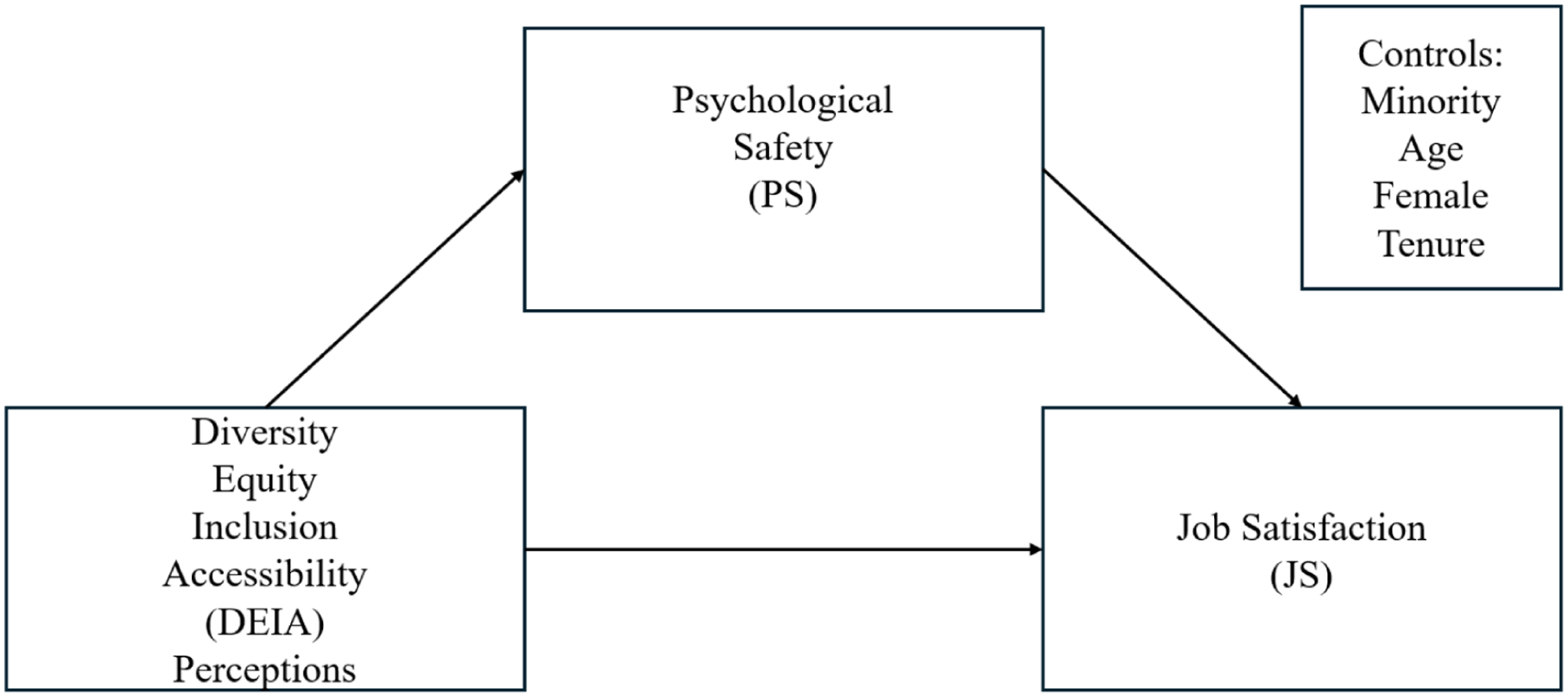
Theoretical model.
Data and Methodology
This study utilized measurement items from the 2023 Federal Employee Viewpoint Survey (FEVS), conducted by the U.S. Office of Personnel Management (OPM) between May and July 2022. This survey is designed to evaluate job satisfaction and perceptions of the organization among federal employees. Each section consists of various items that comprehensively assess the work environment, job satisfaction, job efficiency, leadership, working conditions, and other factors of federal employees. Questionnaires gauge employees’ perceptions of policies and practices promoting diversity and inclusivity within the organization, allowing for an in-depth analysis of how the organization’s DEIA policies impact employees’ job satisfaction. Using these data, the study aims to comprehensively evaluate how each variable influences the job satisfaction of federal employees and, ultimately, to investigate how DEIA perceptions influence job satisfaction. The questionnaire items used in this study are shown in Table 1. Each question employs a 5-point Likert scale, ranging from “strongly disagree” to “strongly agree.” Most variables were measured using multiple survey items.
Descriptive Statistics for Each Variable.
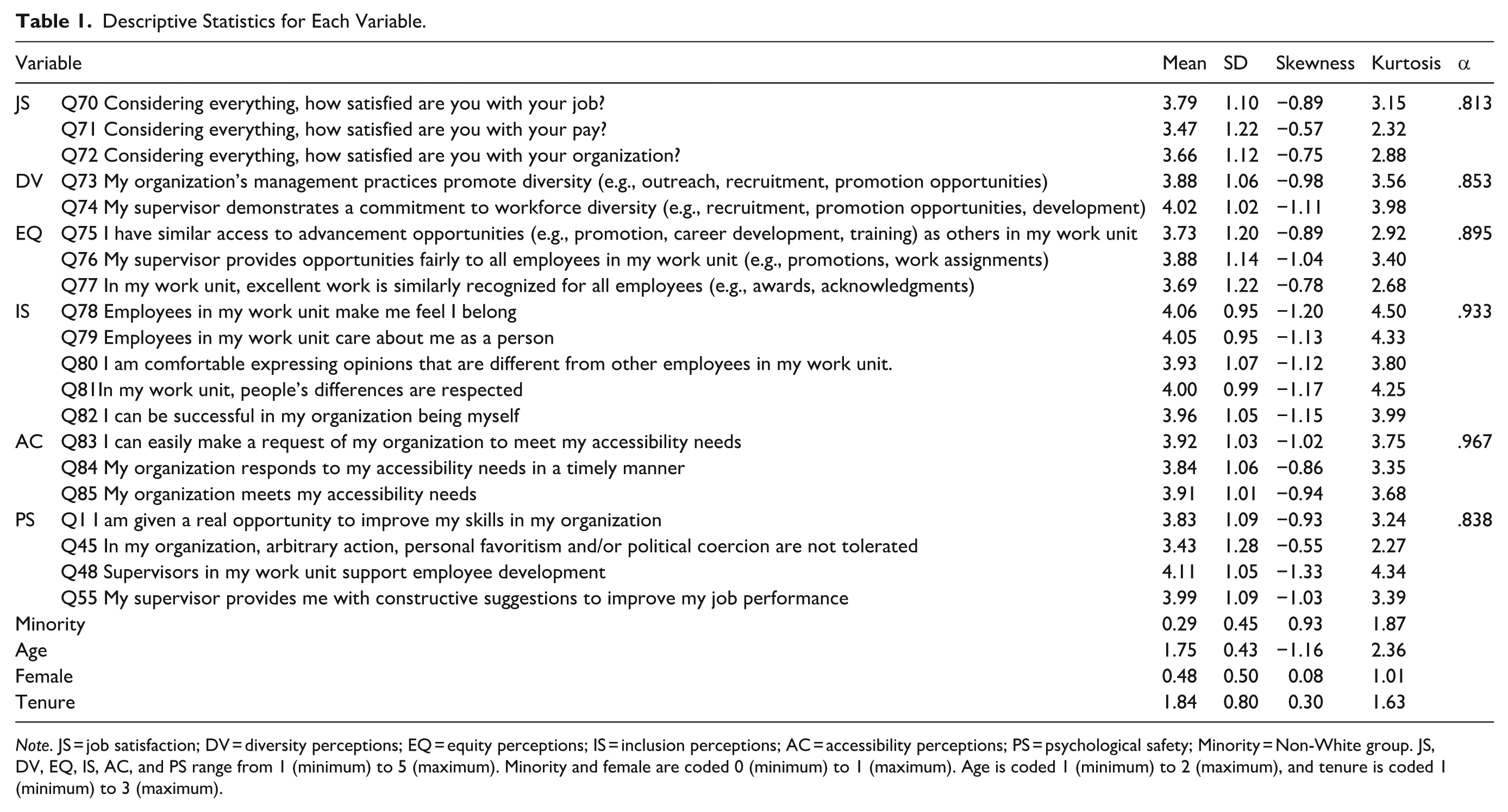
Note. JS = job satisfaction; DV = diversity perceptions; EQ = equity perceptions; IS = inclusion perceptions; AC = accessibility perceptions; PS = psychological safety; Minority = Non-White group. JS, DV, EQ, IS, AC, and PS range from 1 (minimum) to 5 (maximum). Minority and female are coded 0 (minimum) to 1 (maximum). Age is coded 1 (minimum) to 2 (maximum), and tenure is coded 1 (minimum) to 3 (maximum).
Table 1 provides the mean, standard deviations, and the scale validity of each variable. A Confirmatory Factor Analysis (CFA) was performed to assess the convergent and discriminant validity of the measures with the criteria that the Comparative Fit Index (CFI) and Tucker-Lewis Index (TLI) should be close to or above 0.95. Measurement model will be applied to show construct validity of latent factors. The Root Mean Square Error of Approximation (RMSEA) value below .05 indicates a “good” model fit (Kline, 2023). Using STATA 18, structural equation modeling (SEM) was employed to test the hypotheses. Model fit statistics will be tested to assess the goodness of fit for the analysis.
Variable Measurements
Dependent Variable: Job Satisfaction
The dependent variable is job satisfaction, defined as “a pleasurable or positive emotional state resulting from the appraisal of one’s job or job experiences” (Locke, 1976, p. 1304). To measure this, this study utilized three questionnaires from 2023 FEVS (Emidy et al., 2024; Hersugondo et al., 2025; Kim et al., 2023). These items gauged employees’ emotional evaluation of various facets of their job (Choi & Rainey, 2014; Rainey, 2009), such as “Considering everything, how satisfied are you with your job?”, “Considering everything, how satisfied are you with your pay?”, and “Considering everything, how satisfied are you with your organization?”. Consistent with prior research, these three items can measure both intrinsic and extrinsic facets of job satisfaction, reflecting employees’ affective evaluation of their work and organizational environment (Kim et al., 2023; Lee, 2020). This operationalization aligns with Locke’s (1976) conceptualization of job satisfaction as a positive emotional state resulting from one’s job experiences, supporting the construct validity of the measure. The measure demonstrated acceptable reliability (Cronbach’s α = .81).
Independent Variable: Diversity, Equity, Inclusion, and Inclusion (DEIA) Perceptions
DEIA perceptions reflect employees’ individual-level awareness and preferences of diversity-related practices. Following previous studies (Emidy et al., 2024; Hersugondo et al., 2025), diversity perceptions (DV) were measured with two items (Cronbach’s α = .85) from the official Diversity Index of the 2023 Federal Employee Viewpoint Survey (FEVS). These items capture both organizational-level practices and supervisory behaviors that demonstrate commitment to diversity:
(a) My organization’s management practices promote diversity (e.g., outreach, recruitment, promotion opportunities), and
(b) My supervisor demonstrates a commitment to workforce diversity (e.g., recruitment, promotion opportunities, development).
Although structural equation models require three or more indicators, the Diversity Index was developed by the U.S. Office of Personnel Management (OPM) as a validated two-item measure and has been used in previous studies (Emidy et al., 2024; Hersugondo et al., 2025).
Equity (EQ), Inclusion (IS), and Accessibility (AC) perceptions were measured using multiple items adapted from the same dataset. Equity perceptions (EQ) were assessed with three items (Cronbach’s α = .90). Inclusion perceptions (IS) with five items (Cronbach’s α = .93), and Accessibility (AC) with three items (Cronbach’s α = .97). All variables were measured using a 5-point Likert scale ranging from 1 (“strongly disagree”) to 5 (“strongly agree”). The specific survey items are presented in Table 1.
Each DEIA dimension represents a distinct yet complementary component of an inclusive workplace: diversity reflects organizational and supervisory commitment to workforce representation; equity captures perceptions of fairness; inclusion emphasizes belongingness and participatory voice; and accessibility indicates organizational responsiveness to employees’ needs and barriers. These conceptualizations align with contemporary DEIA frameworks in public administration (Arterberry & Nukpezah, 2025; Emidy et al., 2024; Hersugondo et al., 2025), supporting the construct validity of the measures.
Mediator: Psychological Safety
Psychological safety is the mediator in this study. Four items (Cronbach’s α = .84) were used to construct the variable of psychological safety. Following existing studies (Ward, 2021; Wilson, 2021), the items include: (a) I am given a real opportunity to improve my skills in my organization (Q1), (b) In my organization, arbitrary action, personal favoritism and/or political coercion are not tolerated (Q45), (c) Supervisors in my work unit support employee development (Q48), and (d) My supervisor provides me with constructive suggestions to improve my job performance (Q55). Each item was rated on a 5-point Likert scale ranging from 1 (“strongly disagree”) to 5 (“strongly agree”).
These items reflect A. Edmondson’s (1999) conceptualization of psychological safety as a shared belief that the work environment is safe for interpersonal risk-taking and grounded in mutual trust and respect. The items capture opportunities for learning (Q1), fairness and non-punitiveness (Q45), and supervisory support and constructive feedback (Q48 and Q55), all of which align with prior conceptualizations and empirical validations (Ward, 2021; Wilson, 2021).
Control Variables
This study conducts individual-level data and controls race, gender, age, and tenure in the analysis. Previous studies on DEIA perceptions and job satisfaction have identified demographic factors (Emidy et al., 2024). Minority and gender minority groups have been negatively associated with job satisfaction (Clark et al., 2022; Hur, 2020; Sabharwal et al., 2019). Demographic variables such as gender and tenure are controlled for in this study based on prior research (Bae & Yang, 2017). Race (ethnicity) was treated as a minority group variable in this study, and respondents were categorized into “White” and “Non-White” groups. The “Non-White” group was defined as the minority group in the analysis. Female was recoded as “1” for female respondents and “0” for male respondents, as a dummy variable to indicate gender and a dichotomous variable. Tenure was measured as an ordinal variable and categorized into three groups: 10 years or fewer, 11 to 20 years, and more than 20 years. Age was measured as a continuous variable, dividing into two groups: under 40 years old and 40 years old or older.
Although the FEVS questionnaire includes a demographic item asking whether respondents identify as individuals with disabilities, this variable was not included in the present analysis because the study’s conceptualization of accessibility focuses on broader organizational responsiveness rather than disability-specific characteristics. In addition, the study did not conduct disaggregated analyses by social identity (e.g., gender or race), as its primary focus is to examine overall employee perceptions rather than subgroup-specific effects.
Results
Descriptive Statistics Results
Table 1 reports descriptive statistics of variables in this study, including means, standard deviations, and the scale reliability of each latent variable. Most of the respondents were male (52%), while females made up 48% of the respondents. Survey questions are self-reported and measured on a 5-point Likert scale. Overall, job satisfaction was assessed using Q70, Q71, and Q72, and the results indicate a high level of satisfaction. Perceptions of DEIA appear to be high among federal employees. DV was rated positively, indicating mean scores of 3.88 and 4.02. The mean scores of perceptions of equity, inclusion, and accessibility were all above 3. Thus, respondents had positive perceptions of DEIA. Table 2 presents that job satisfaction is significantly and positively correlated with diversity (DV), equity (EQ), inclusion (IS), accessibility (AC), and psychological safety (PS).
Descriptive Statistics of Latent Variables for Correlation Analysis.
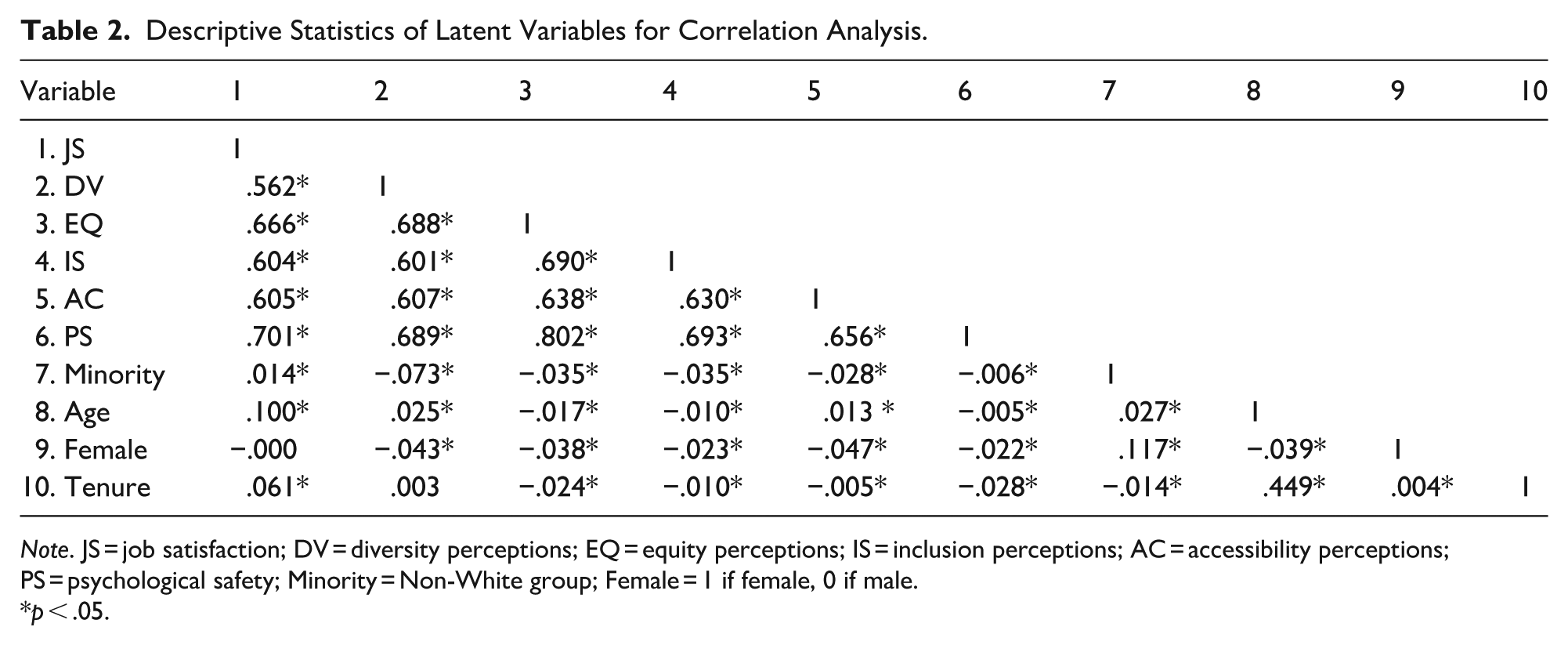
Note. JS = job satisfaction; DV = diversity perceptions; EQ = equity perceptions; IS = inclusion perceptions; AC = accessibility perceptions; PS = psychological safety; Minority = Non-White group; Female = 1 if female, 0 if male.
p < .05.
Confirmatory Factor Analysis (CFA) was conducted to validate the results and evaluate the convergent and discriminant validity of the constructs and the reliability of each measure. All results from the measurement model indicated that the latent variables employed in the analysis demonstrated sufficient reliability and validity. The measurement model met the criteria for construct reliability, and the goodness-of-fit indices for the analysis confirmed the validity and reliability of the model (Tucker-Lewis Index = 0.943, Comparative Fit Index = 0.953, Root Mean Square Error of Approximation = 0.078). Detailed results are provided in Appendix 1.
Hypotheses Test
Structural equation modeling (SEM) was employed to test the hypotheses, and the results are provided in Figure 1. The results of this study support the hypotheses significantly and provided insights into the relationship between DEIA perceptions, psychological safety, and job satisfaction. Hypotheses H1a and H1b proposed a positive association between diversity (DV) and equity (EQ) perceptions and job satisfaction (JS). However, the statistical results did not support these hypotheses.
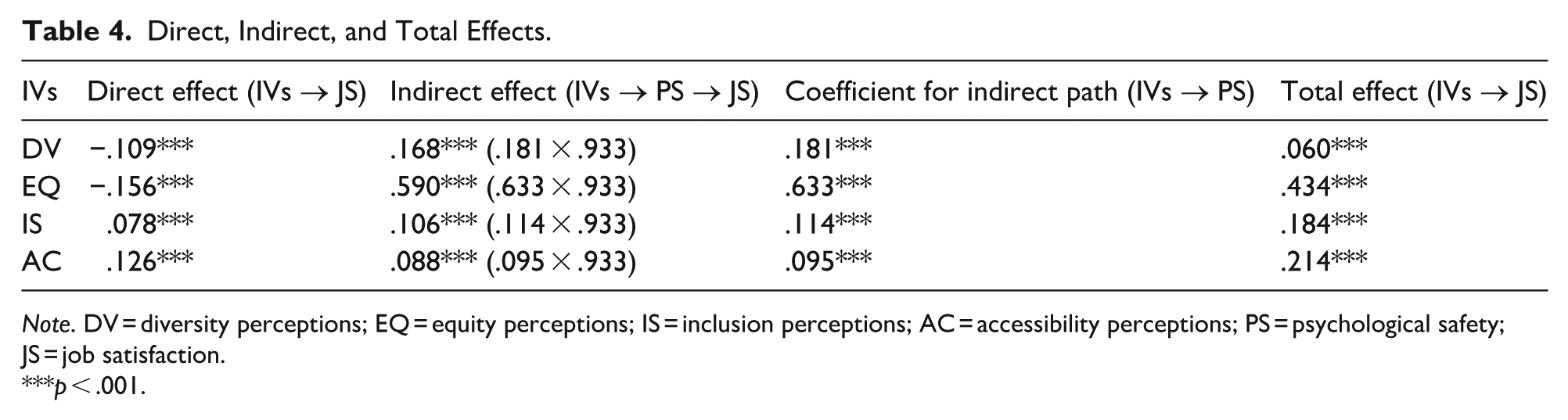
For H1a, the relationship between DV and JS showed a negative effect (β = −.109, t-value = −29.50). For H1b, the relationship between EQ and JS was also negative (β = −.156, t-value = −20.85). Hypothesis H1c proposed that there is a positive association between Inclusion (IS) perceptions and job satisfaction (JS), and the results supported this hypothesis, showing a significant positive effect (β = .090, t-value = 28.54). Additionally, Hypothesis H1d suggested that Accessibility (AC) perceptions would have a positive effect on job satisfaction, and the data confirmed this, with a significant positive effect found (β = .126, t-value = 52.76). Hypotheses H3a, H3b, H3c, and H3d proposed that Psychological Safety (PS) would mediate the relationships between Diversity (DV), Equity (EQ), Inclusion (IS), Accessibility (AC) perceptions and job satisfaction (JS). The results supported all four mediation hypotheses as shown in Table 3.
Path Coefficients and Indirect Effects for Mediation Model.
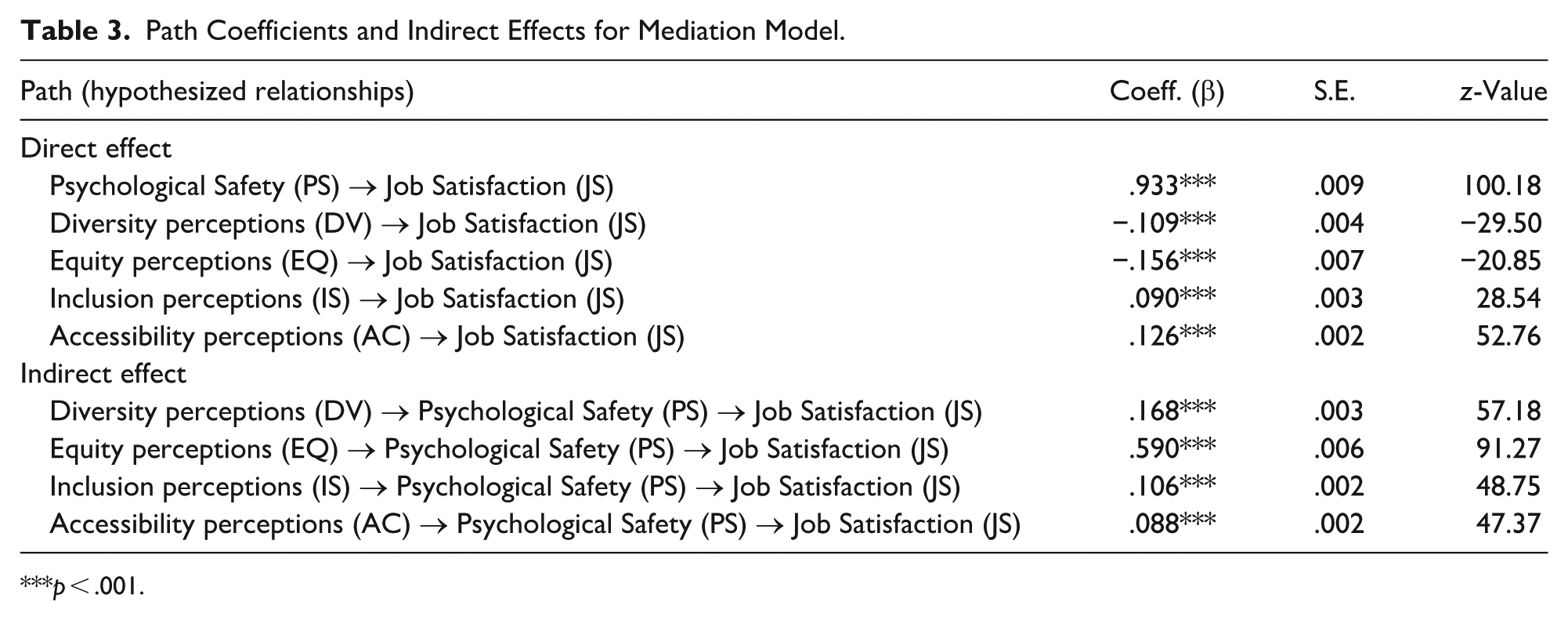
p < .001.
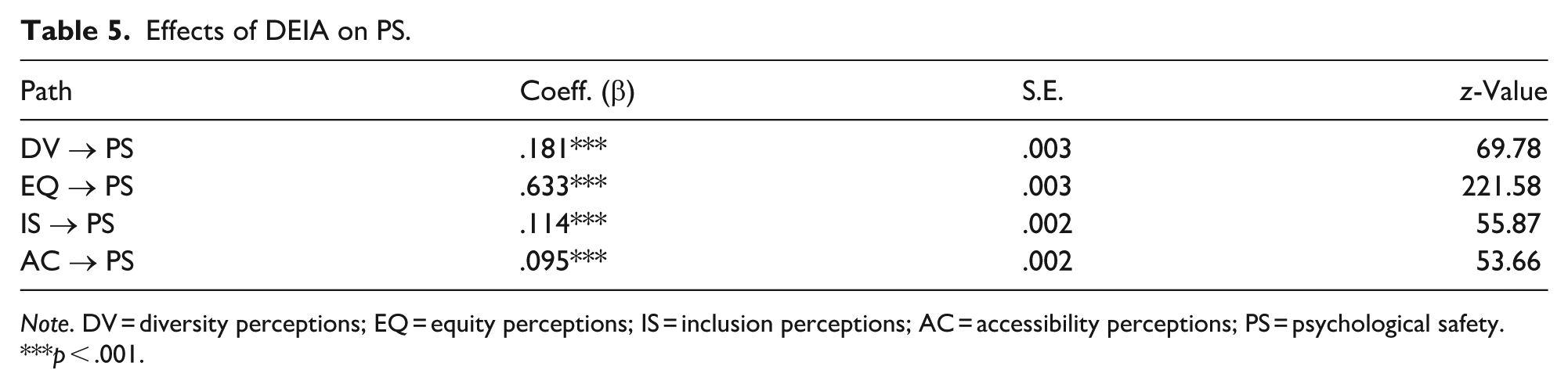
Tables 4 and 5 provide empirical support for Hypotheses 2a, 2b, 2c, and 2d. Diversity (DV), Equity (EQ), Inclusion (IS), and Accessibility (AC) had significant positive effects on psychological safety (PS).
Direct, Indirect, and Total Effects.
Note. DV = diversity perceptions; EQ = equity perceptions; IS = inclusion perceptions; AC = accessibility perceptions; PS = psychological safety; JS = job satisfaction.
p < .001.
Effects of DEIA on PS.
Note. DV = diversity perceptions; EQ = equity perceptions; IS = inclusion perceptions; AC = accessibility perceptions; PS = psychological safety.
p < .001.
The mediation test for Hypothesis 3 revealed statistically significant indirect paths from Diversity (DV), Equity (EQ), Inclusion (IS), and Accessibility (AC) to job satisfaction (JS) through psychological safety (PS), indicating that PS mediates the relationship between DEIA perceptions and job satisfaction.
Based on the results from Tables 3 and 4, we can conclude that DEIA perceptions (Diversity, Equity, Inclusion, and Accessibility) have a significant effect on job satisfaction (JS) through psychological safety (PS). PS plays a mediating role. Although the direct effects of Diversity (DV) and Equity (EQ) perceptions on job satisfaction are negative, their indirect effects through psychological safety are positive. Specifically, DV and EQ perceptions are positively associated with psychological safety, and psychological safety, in turn, enhances job satisfaction, effectively mitigating the negative direct effect of DV and EQ on JS. This suggests that psychological safety plays a key role in improving job satisfaction by acting as a mediator, with DV and EQ likely influencing job satisfaction indirectly through this mediator. Thus, psychological safety serves as a critical factor in transforming the negative direct effects of DV/EQ perceptions on JS into positive outcomes.
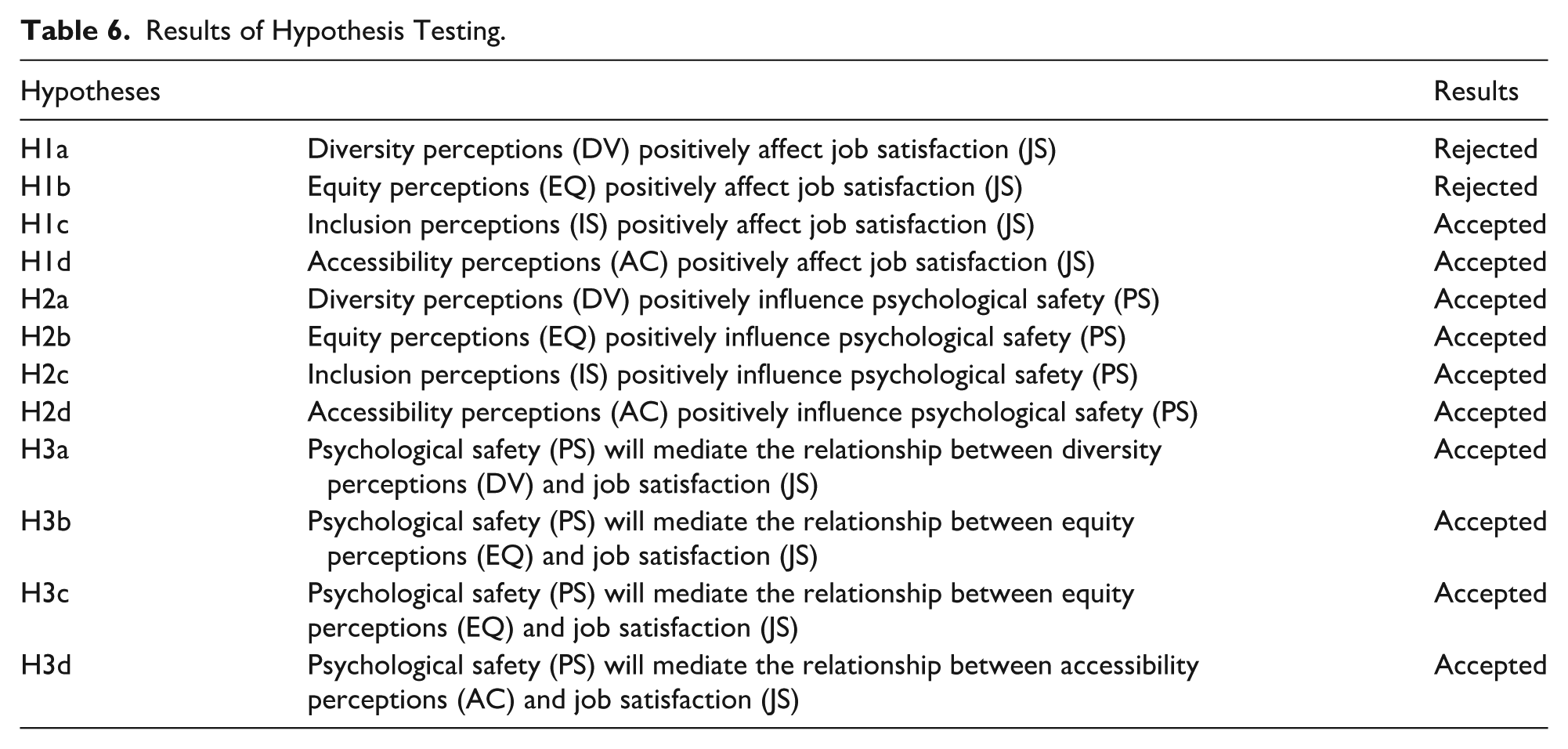
This finding suggests that diversity and equity perceptions may lower job satisfaction; however, psychological safety can help offset this negative effect. Both inclusion and accessibility perceptions are positively associated with job satisfaction, and these positive effects may be amplified through psychological safety. Therefore, psychological safety can play a role in counteracting the negative effects of diversity and equity perceptions while encouraging the positive effects of inclusion and access perceptions. Overall, psychological safety plays a role in mediating the effects of diversity, equity, inclusion, and accessibility on job satisfaction (Table 6).
Results of Hypothesis Testing.
Discussion and Conclusion
When diversity and equity policies backfire, they may lead to challenges and result in unintended consequences (Hoang et al., 2022; Leslie, 2019). This study aligns with previous studies on the unintended consequences of diversity policies, finding that diversity and equity perceptions may decrease job satisfaction. Employees can perceive diversity policies as unfair treatment, which can lower job satisfaction. Consistent with previous research, diversity perceptions can negatively affect job satisfaction in a diverse workforce. Diversity-related programs and policies, such as Equal Employment Opportunity and Affirmative Action (EEO-AA) policies, have not proven to be consistently effective in achieving intended outcomes in diverse workplaces (Hoang et al., 2022). When the work environment emphasizes diversity but fails to actively support fair practices, or when opportunities for career advancement appear unequal, it undermines the trust in the organization. Additionally, the unequal distribution of rewards and acknowledgments can lead to resentment and feelings of unfairness among federal employees. When diversity and equity remain mere buzzwords without meaningful action to foster an inclusive and supportive work environment, employees may develop negative perceptions and fears. It is thus important to create psychologically safe workplaces and enhance the positive impacts of diversity policies, contributing to enhanced job satisfaction.
The contradictory findings for Hypotheses 1a and 1b can also be interpreted in light of the measurement focus of the diversity and equity constructs. In the 2023 FEVS, these items are highly behavioral and action-oriented, emphasizing managerial behaviors (e.g., supervisors’ dedication to diversity) and opportunities for advancement, recognition, or assignments within the work unit. However, they may not fully reflect the broader cultural or structural aspects of diversity and equity that influence employees’ daily experiences. As a result, employees may view these initiatives as procedural or symbolic rather than systemic, which could weaken their link to job satisfaction. This interpretation is consistent with previous research suggesting that simply increasing representation—such as hiring more women or BIPOC employees—is insufficient to ensure perceptions of fairness or satisfaction (Hoang et al., 2022; Sabharwal, 2014). Instead, inclusive organizational climates and leadership practices that promote belongingness, fairness, and psychological safety are essential for achieving equity and justice in diverse workplaces.
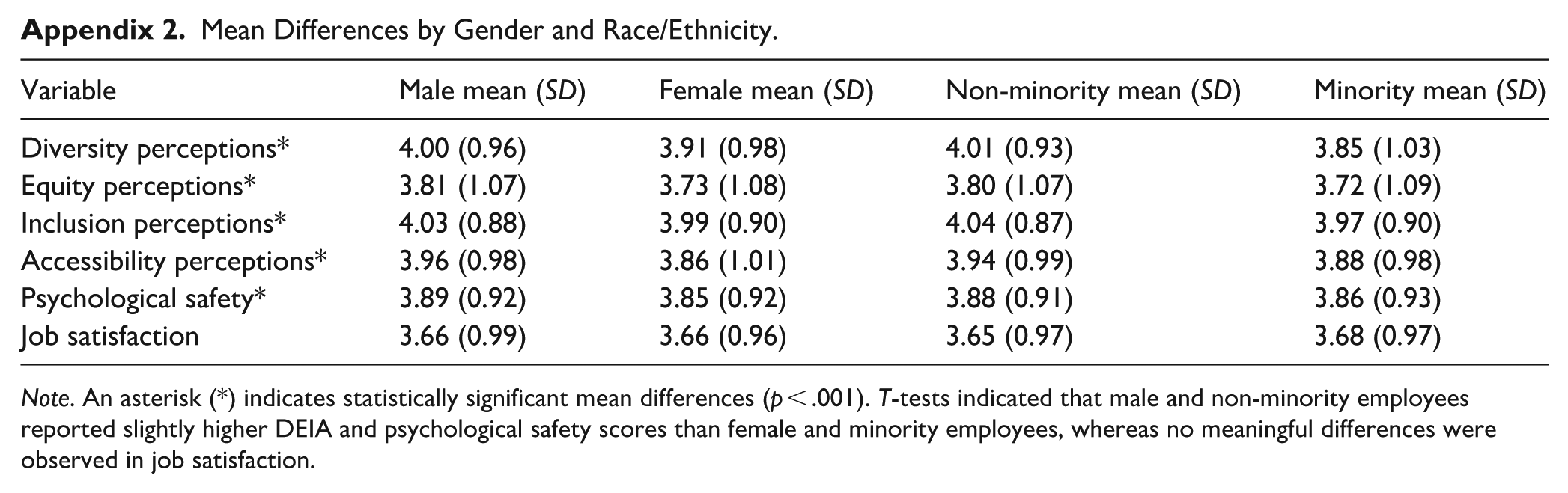
Although descriptive analyses comparing group means by gender and minority status were conducted (Appendix 2), these differences were small and did not meaningfully alter the overall relationships among DEIA perceptions, psychological safety, and job satisfaction. This suggests that the dynamics identified in this study operate similarly across diverse demographic groups.
In contrast, Inclusion and Accessibility perceptions have a clear positive effect on job satisfaction, as they ensure that all employees, regardless of their background, feel integrated into the workplace and have equal opportunities to contribute. Inclusion promotes a sense of belonging, respect, and empowerment, directly enhancing job satisfaction by making employees feel heard and appreciated (Sabharwal, 2014). Unlike diversity and equity, which can create tensions if not carefully managed, inclusion fosters a supportive work environment that enhances overall satisfaction (Hoang et al., 2022). Furthermore, employees with disabilities are more likely to feel included when they experience fair treatment and supportive work environments (Chordiya, 2022). McGrandle (2019) emphasized that inclusion, particularly with regard to accessibility, should be considered an important factor influencing job satisfaction.
Beyond inclusion, accessibility represents a pivotal yet underexplored component of DEIA in public administration. Accessibility goes beyond physical accommodation to encompass digital accessibility, equitable access to career development opportunities, and inclusive decision-making processes. Recent studies have shown that when public organizations establish accessible workplaces and communication systems, employees with disabilities report higher job satisfaction and organizational commitment (Arterberry & Nukpezah, 2025; von Schrader et al., 2024). Despite this, empirical research that systematically integrates accessibility into the broader framework remains lacking. Addressing this gap is essential for advancing equitable and psychologically safe public workplaces that fully support employees with diverse abilities. Future research should examine how accessibility perceptions interact with psychological safety and other DEIA dimensions to shape employee experiences and outcomes.
By incorporating accessibility as a vital component of DEIA, this study advances the understanding of disability inclusion and justice in public organizations. Furthermore, future research should explore how accessibility initiatives, including digital inclusion, affect psychological safety, employee engagement, and job satisfaction among employees with disabilities. This study has revealed that psychological safety can mediate the relationship between DEIA perceptions and job satisfaction. By creating an environment where employees feel secure discussing DEIA issues, organizations can address the negative impacts of perceived inequity and discrimination. Consequently, encouraging psychological safety is essential to leverage the positive benefits of DEIA when implementing diverse, equitable, inclusive, and accessible policies and programs.
This study contributes to expanding the existing understanding of comprehensive diversity perceptions by examining DEIA perceptions and psychological safety. By utilizing DEIA perceptions as a proxy for diversity management and programs, the findings underscore the complex relationship between diversity, equity, inclusion, and accessibility policies and outcomes. This study highlights the crucial role of psychological safety in ensuring their potential and intended outcomes such as job satisfaction. The findings reveal that fostering inclusive environments where diversity is genuinely valued, and psychological safety is prioritized is essential for organizational outcomes and success. However, focusing solely on equity perceptions may not be sufficient to drive job satisfaction. A holistic approach that integrates DEIA elements with strong psychological safety is critical for improving workplace satisfaction and overall organizational success.
This article provides practical implications that organizations need to adopt comprehensive approaches and implement DEIA policies that go beyond workforce representation and tokenism. It highlights the importance of fostering DEIA perceptions and establishing psychologically safe workplaces where employees feel valued and secure. Psychological safety plays a critical role in mediating the benefits of these diversity elements. To achieve this, leaders need to prioritize creating psychologically safe environments where employees can freely express themselves without fear. Fairness alone may be insufficient without meaningful efforts to improve inclusion and accessibility.
Public organizations can take strategic steps to hire or promote leaders who value diversity, encourage active participation and inclusion, and cultivate psychologically safe work environments (Trochmann et al., 2023). These leaders can demonstrate their commitment to diversity by moving beyond superficial efforts and fostering a culture of trust. Diversity can be frustrating when it is perceived as tokenism, especially if employees feel their opportunities are limited by fulfilling diversity quotas rather than being based on merit. Leaders must address these concerns by implementing practices that foster strong psychological safety. Additionally, while DEIA perceptions have been utilized as a proxy for diversity management and DEIA programs and policies, this article underlines that incorporating broader DEIA perceptions into strategies and connecting them to psychological safety may help boost job satisfaction.
Limitations
Despite its valuable contributions, this study has several limitations that merit further attention. First, the use of cross-sectional and self-report data from the FEVS raises the possibility of common method bias, which may affect the validity and reliability of the results. Additionally, diversity perception was measured using two items from the official FEVS Diversity Index. While this approach aligns with prior studies and maintains comparability, using a two-item construct may limit measurement approach. Future research should consider employing more comprehensive scales to capture the multidimensional nature of diversity perception.
Moreover, the FEVS items often fail to capture multidimensional concepts, as they aggregate multidimensional constructs into single survey questions, thereby oversimplifying their underlying dimensions (Fernandez et al., 2015; Resh et al., 2021). Measuring complex constructs with a single item may limit the accuracy of findings because it fails to capture the full scope of underlying dimensions (Goldenkoff, 2015). Moreover, the FEVS dataset lacks uncertainty measures, making it difficult to distinguish actual trends from statistical fluctuations (Goldenkoff, 2015).
Another limitation concerns the demographic variable of disability status. Although the FEVS questionnaire includes a demographic item asking whether respondents identify as individuals with disabilities, this study did not examine differences based on disability status. This decision aligns with the conceptualization of accessibility adopted in this research, which extends beyond disability accommodations to encompass broader organizational practices and infrastructures. Nonetheless, future research could investigate whether and how perceptions and experiences of accessibility differ between employees with and without disabilities. Additionally, future research could conduct subgroup or intersectional analyses to explore potential variations in DEIA perceptions and job satisfaction across gender, race, and disability status. To address these limitations, future studies could enhance robustness by merging multiple data sources (e.g., OPM datasets) and adopting longitudinal data collection methods. These approaches would provide a deeper understanding of how changes in DEIA policies and practices influence job satisfaction over time. Future studies could also expand the scope by incorporating additional outcomes, such as organizational commitment and turnover intention, to offer a more comprehensive understanding of how DEIA policies affect employee attitudes and behaviors.
Footnotes
Appendix
Mean Differences by Gender and Race/Ethnicity.
| Variable | Male mean (SD) | Female mean (SD) | Non-minority mean (SD) | Minority mean (SD) |
|---|---|---|---|---|
| Diversity perceptions* | 4.00 (0.96) | 3.91 (0.98) | 4.01 (0.93) | 3.85 (1.03) |
| Equity perceptions* | 3.81 (1.07) | 3.73 (1.08) | 3.80 (1.07) | 3.72 (1.09) |
| Inclusion perceptions* | 4.03 (0.88) | 3.99 (0.90) | 4.04 (0.87) | 3.97 (0.90) |
| Accessibility perceptions* | 3.96 (0.98) | 3.86 (1.01) | 3.94 (0.99) | 3.88 (0.98) |
| Psychological safety* | 3.89 (0.92) | 3.85 (0.92) | 3.88 (0.91) | 3.86 (0.93) |
| Job satisfaction | 3.66 (0.99) | 3.66 (0.96) | 3.65 (0.97) | 3.68 (0.97) |
Note. An asterisk (*) indicates statistically significant mean differences (p < .001). T-tests indicated that male and non-minority employees reported slightly higher DEIA and psychological safety scores than female and minority employees, whereas no meaningful differences were observed in job satisfaction.

Funding
The authors received no financial support for the research, authorship, and/or publication of this article.
Declaration of Conflicting Interests
The authors declared no potential conflicts of interest with respect to the research, authorship, and/or publication of this article.