



Abstract
This study examines the influence of intersectional identities on job satisfaction among federal employees, addressing the increasing diversity within the public sector. Using data from the 2023 US Federal Employee Viewpoint Survey, which includes responses from over 500,000 federal employees, the research examines how the intersection of race, gender, disability, and Hispanic ethnicity influences workplace experiences. This study applies an intersectional framework to reveal how overlapping identities shape satisfaction in inclusive versus non-inclusive settings, providing empirical insights for the implementation of DEI in federal HR systems. Findings reveal that intersectional identities have a significant influence on job satisfaction in nuanced and sometimes unexpected ways. For example, while being male or nondisabled is generally linked to higher satisfaction, the combination of being white and male does not always result in increased satisfaction, challenging conventional assumptions. The study also highlights the critical role of inclusive work environments in moderating these relationships. An inclusive workplace enhances job satisfaction and promotes equity by valuing the diverse backgrounds of its employees. These insights have implications for public sector leadership and workplace strategies that address the complexities of intersectional identities.
Keywords
Introduction
Diversity and inclusion are pillars of a healthy workplace, yet their collective impact on employee satisfaction remains underexplored. Recent public administration scholarship has underscored the importance of restoring institutional trust and embedding equity in workforce systems, especially in response to post-crisis complexity and systemic challenges (Aggarwal & Zeraatpisheh, 2024). The federal workforce, a microcosm of society’s diverse identities, provides a rich ground for studying these dynamics (An et al., 2024; Chandra & Sharma, 2022; Thatcher et al., 2023). This study examines how intersecting identities such as race, gender, disability, and ethnicity shape employee experiences in federal organizations, moving beyond traditional single-axis analyses (Andrews et al., 2006; Choi, 2013; Grissom et al., 2012; Kang et al., 2023; D. Pitts, 2009; Sabharwal, 2015; Selden, 1997; Yang & Kassekert, 2010). Building on intersectionality theory, introduced by Kimberlé Crenshaw, this research highlights the nuanced ways overlapping identities relate to systems of privilege and oppression.
Despite its relevance, intersectionality has been limitedly applied in public administration research (Choi, 2009; Kang et al., 2023; Ting, 1996). Using this framework, this study explores how interconnected identities influence job satisfaction and assesses the moderating role of an inclusive work environment (Ely & Thomas, 2001; Fredman & Davidson, 2002; Shore et al., 2011). This study addresses two questions: (1) How do intersectional identities influence job satisfaction among federal employees? (2) Does an inclusive work environment moderate these effects?
Intersectionality
Intersectionality, introduced by Crenshaw (1989) and Crenshaw (2020), is a framework that examines how multiple social identities, such as race, gender, and disability; intersect to create overlapping systems of privilege and oppression. Crenshaw emphasized the importance of naming and addressing these intersecting oppressions to understand their systemic impact (Crenshaw, 1989; Crenshaw 2020). Building on the work of anti-racism and feminist scholars, intersectionality reveals how power structures marginalize people of color and other vulnerable groups (Bowleg, 2012; Hancock, 2011). By promoting an “intersectional consciousness,” this framework replaces single-issue analyses with a comprehensive understanding of how social categorizations impact individuals and communities (Cho et al., 2013; Hancock, 2011).
Initially focused on race and gender, particularly the experiences of Black women, intersectionality has expanded to encompass additional dimensions, including age, class, sexuality, and others, providing insights into power dynamics across various social identities (Cho et al., 2013; Collins & Bilge, 2020). It underscores the socially constructed nature of identity and its institutional embedding (Heckler & Starke, 2020; McCall, 2005). In public administration, intersectionality fosters a holistic approach to addressing systemic oppression, emphasizing the importance of empathy, solidarity, and shared humanity (Bearfield, 2009; Butz & Gaynor, 2022; Chordiya & Sabharwal, 2024; Lorde, 2007; Morris, 2018).
The framework also challenges the denial of differences, promoting compassion across diverse groups (Chordiya & Protonentis, 2024; Zeraatpisheh & Aggarwal, 2025). It emphasizes harmony rooted in shared humanity, reciprocity, and healing (Chordiya & Protonentis, 2024; Chordiya & Sabharwal, 2024; Crenshaw, 2016). These principles make intersectionality a powerful tool for public administrators to identify systemic barriers and design HR policies that promote equity and inclusion.
In public administration, intersectionality has been pivotal for understanding social equity and diversity in bureaucratic systems (Breslin et al., 2017). It is especially relevant for addressing the compounded challenges faced by marginalized employees, such as those intersecting with race and gender, and fostering equitable organizational cultures (Diggs, 2022). Recent scholarship has emphasized the importance of this approach in public service curricula for addressing social equity challenges and advancing diversity within institutions (Fay et al., 2021). By integrating this framework, public administration can better meet the needs of all communities through inclusive and intersectionality-informed approaches.
Intersectionality acknowledges that individuals do not experience social categories such as race, gender, and disability in isolation. Additive intersectionality indicates that each identity-based marginalization adds cumulatively to social disadvantage (Reisen et al., 2013). In contrast, multiplicative intersectionality posits that intersecting identities may interact in ways that amplify, diminish, or transform experiences of privilege and disadvantage beyond the sum of individual parts. This study employs a multiplicative intersectional lens, drawing on Crenshaw’s theory, to examine how overlapping social identities, race, ethnicity, gender, and disability, affect job satisfaction among federal employees. Rather than assuming additive effects, we assess whether specific identity combinations yield unique outcomes. The study hypothesizes that individuals with overlapping marginalized identities may experience compounded disadvantage, particularly in non-inclusive environments. Interaction terms are employed to test these complex identity configurations, allowing us to observe whether combinations of dominant or marginalized identities shape satisfaction differently from what would be expected under additive assumptions. Hence, this study employs an intersectional lens, drawing on Crenshaw’s theory, to examine how social identities affect the job satisfaction of federal employees. This study hypothesizes that individuals with overlapping marginalized identities may experience compounded disadvantage, especially in non-inclusive environments. This study examines both through interaction terms to assess whether combinations of identities influence job satisfaction differently.
Such principles include recognizing systemic oppression, valuing lived experiences, embracing complexity across identities, and promoting solidarity (Bowleg, 2012; K. Crenshaw, 1989). These principles make intersectionality a powerful tool for public administrators to identify systemic barriers and design HR policies that promote equity and inclusion. Knepper et al. (2023) argue that applying an intersectional lens is essential to addressing structural inequities in public-sector HR and advancing equity-oriented practices.
Social Identities and Employee Satisfaction
Race and Gender
Social identity and categorization theories suggest that individuals classify themselves and others into social categories, such as race, gender, ethnicity, and religion, which influence job-related outcomes, including employee satisfaction (Choi, 2009; Kang et al., 2023; Tajfel & Turner, 1985; Ting, 1996). Although the US public sector is becoming more diverse in terms of race and gender (Johnston & Packer, 1987; Pitts, 2005), challenges persist in managing workforce diversity. For instance, race is negatively associated with employee satisfaction due to anticipated interpersonal conflicts among racial groups (Choi, 2009; Kang et al., 2023; Moon & Jung, 2018).
Recent research has increasingly recognized the importance of intersectionality and demographic representation in public sector institutions. For example, Borry et al. (2021) examined the implementation of Executive Order 13583, which aimed to promote diversity and inclusion across federal agencies, shedding light on demographic trends and policy effectiveness. Similarly, Zajicek et al. (2020) applied an intersectional lens to school leadership in multiethnic districts, arguing that overlapping identities such as race, gender, and ethnicity shape leadership opportunities and outcomes. These studies align with our inquiry into federal HR systems by emphasizing that inclusive policies must consider complex identity configurations to promote equitable experiences. Our study builds on this literature by quantifying how such intersectional identities, particularly among dominant and marginalized groups, impact perceived job satisfaction in the federal workforce.
Gender dynamics and employee satisfaction have been significant areas of research in public administration. The feminist theory of public administration emphasizes understanding the intersectionality of gender, race, and diversity values (Bearfield, 2009; Stivers, 1990). Kingsley (1944) highlighted that gender representation enhances job satisfaction when employees perceive inclusivity and fairness, a view supported by several studies (Andrews et al., 2006; Choi, 2013; Grissom et al., 2012; Kang et al., 2023; Pitts, 2009; Sabharwal, 2015; Selden, 1997; Yang & Kassekert, 2010). Naff (1994) argued that gender diversity in federal agencies fosters equality and satisfaction, although Pitts (2009) noted that diversity has a dual potential to improve satisfaction while also increasing workplace tension.
The concept of unearned privilege was originally coined by McIntosh (2020) and later introduced to public administration by Blessett (2017). Unearned privilege is crucial for understanding workplace satisfaction, particularly in the context of diversity and inclusion initiatives. These privileges, advantages .based on characteristics such as race, gender, or the absence of disabling conditions, can lead to workplace inequalities and perceptions of reverse discrimination, especially among employees who feel disadvantaged by inclusion efforts (Mujtaba & Sims, 2011). Such perceptions may erode morale and productivity, ultimately disrupting the organizational culture.
Numerous studies have examined the job satisfaction of minority groups. Research indicates that women experience lower satisfaction in high-level positions due to limited influence and promotional opportunities (Bell et al., 2002; Chiu, 1998; Fleischer & Wanckel, 2024). Federal Employee Viewpoint Survey data reveal no significant differences in satisfaction levels across gender and racial categories, although women and minorities often encounter career barriers, such as the “glass ceiling” (Choi, 2013; Lee et al., 2020). Employees with disabilities similarly report lower job satisfaction compared to their counterparts (Baumgärtner et al., 2015). These findings lead to the hypothesis:
Intersectionality and Employee Satisfaction
To understand how intersectionality influences job satisfaction, it is crucial to examine how overlapping social identities such as race, gender, ethnicity, and disability combine to create unique privileges and disadvantages that shape workplace experiences. Intersectionality offers insight into the systemic factors that influence job satisfaction, particularly in diverse environments such as the public sector. Since Kingsley’s (1944) introduction of the representative bureaucracy framework, significant progress has been made in understanding disability and employee satisfaction in public organizations. Barnes and Mercer (2005) emphasized the barriers disabled individuals face and the critical role of inclusive policies in fostering equity and belonging, which, when effectively implemented, increase job satisfaction among disabled employees.
Disability rights research highlights inconsistencies at the intersection of law and policy, providing crucial insights into workplace inclusion. Studies indicate that active accommodations and integration measures for employees with disabilities enhance their satisfaction (Bagenstos, 2009; Lengnick-Hall et al., 2008; Sabharwal, 2015; Wilton, 2004). For example, Baumgärtner et al. (2015) examined federal employees, while Pagán and Malo (2009) found similar trends among college students with disabilities. Though distinct populations, both groups highlight the positive effects of inclusive practices. However, limited research explores this relationship within federal organizations.
Efforts to integrate minorities, including Hispanic and female employees, into public organizations are also linked to equity and increased satisfaction (Choi, 2013; Fernandez & Wise, 2010; Lankau & Scandura, 1996; Yang & Kassekert, 2010). Based on representative bureaucracy theory, active representation enhances satisfaction among minority employees, mainly Hispanic individuals, by promoting fairness and Inclusion (Aggarwal & Hoang, 2026; Sowa & Selden, 2003). Additionally, studies highlight the strategic advantages of diverse hiring practices, which promote fairness and enhance organizational effectiveness (Pitts, 2009; Riccucci, 2002; Selden, 1997).
Several studies have specifically examined the relationship between Hispanics and job satisfaction. Lankau and Scandura (1996) found that Hispanics reported higher satisfaction than whites and blacks in public sector roles, with whites exhibiting lower organizational commitment. McNeely (1989) similarly observed higher satisfaction among Hispanic human services workers than non-Hispanics. Conversely, Choi (2017) reported lower satisfaction levels among minority employees in federal agencies, with whites in minority-dominated settings reporting the lowest satisfaction levels. These findings reflect the nuanced dynamics of race and workplace satisfaction.
Inclusive Working Environment and Employee Satisfaction
An inclusive working environment is “the degree to which an employee perceives that he or she is an esteemed member of the work group through experiencing treatment that satisfies his or her needs for belongingness and uniqueness” (Shore et al., 2011, p. 1256). Inclusion values individuals’ unique attitudes, beliefs, and backgrounds, integrating connectedness and individuality into effective organizational systems (Ely & Thomas, 2001; Ferdman & Davidson, 2002; Shore et al., 2011). These systems rely on the contributions of supervisors, coworkers, and others to foster inclusivity (Davidson & Ferdman, 2002).
Research highlights the importance of inclusive environments in enhancing job satisfaction. Clark et al. (2022) found a positive correlation between inclusivity and satisfaction among LGBT federal employees, highlighting the importance of inclusive workplace practices. For public sector employees with disabilities, proactive accommodations, beyond mere legal compliance, significantly improve satisfaction (Lengnick-Hall et al., 2008; Wilton, 2004). Studies further suggest that inclusivity within public administration strengthens employee engagement and satisfaction through leadership and human resource practices (Behnke et al., 2023; Kochan et al., 2003; Kuknor et al., 2024; Ping et al., 2022; Shore et al., 2011).
Inclusive leadership plays a crucial role in creating diverse and fulfilling work environments. Ashikali et al. (2021), Aggarwal (2022, 2025), and Rabbi et al. (2026) emphasized the connection between ethical leadership, inclusivity, and social justice in diverse public sector teams, while Sabharwal et al. (2019) linked inclusive practices to lower turnover intentions among LGBT federal employees. Similarly, Nelson and Piatak (2021) highlighted how racially underrepresented women navigate federal government workplaces through the lens of intersectionality and leadership. Hamidullah and Riccucci (2017) explored how family-friendly policies address diverse identities and needs, thereby reinforcing the role of inclusion in satisfaction.
Intersectionality theory further illustrates how social identities, such as race and gender, shape workplace experiences. For instance, an Asian black female may perceive inclusivity differently than a white male due to systemic dynamics. Inclusive environments enhance job satisfaction by fostering a sense of belonging and respect for diversity (Behnke et al., 2023; Ely & Thomas, 2001; Friedman et al., 1998; Shore et al., 2011).
While prior studies have explored DEI broadly, few have empirically tested how privileged identities experience inclusion as a potential disruptor of perceived advantage. This study fills that gap.
Data and Methods
The Office of Personnel Management (OPM) conducts the Federal Employee Viewpoint Survey (FEVS), a key instrument for assessing federal employees’ perspectives of their work environment, engagement, and satisfaction. This organizational climate survey provides insights into employee experiences with agency policies and management practices, highlighting the diverse perspectives of the federal workforce.
This study analyzed data from the 2023 US Federal Employee Viewpoint Survey (FEVS), which 625,568 federal employees completed from 85 federal agencies, representing a 38.9% response rate from 1,609,839 invitations. The demographic composition of the respondents included 48% females, 39% minorities, 17% individuals with disabilities, and 12% Hispanics. 1
While the dataset includes a large and diverse sample of over 500,000 federal employees, this study focuses on dominant identity categories (White, Male, Non-Hispanic, and Nondisabled) to explore how privilege operates within inclusive environments. This decision aligns with intersectionality scholarship in public administration that emphasizes the importance of examining dominant group experiences to uncover how systemic advantage is sustained in organizations (Meier et al., 2006; Sabharwal, 2014). While more detailed disaggregation, such as separating Black, Asian, or Native American identities, would be desirable, modeling high-order interactions across multiple identity groups introduces significant analytic and interpretive complexity (Pitts & Wise, 2010).
Moreover, the goal of this analysis is not to provide an exhaustive accounting of all identity configurations, but to illustrate how multiple dominant identities interact with inclusion to shape perceptions of workplace satisfaction. In this study, “dominant” identity attributes are defined as those held by numerical majorities or by historically advantaged positions within the U.S. federal workforce. These categories, White, Male, Non-Disabled, and Non-Hispanic, reflect groups that research consistently identifies as holding structural privilege in public organizations (Blessett, 2017; Borry et al., 2021; Riccucci, 2022). Accordingly, all non-majority or historically marginalized identities were categorized as non-dominant. This study acknowledges this focus as a limitation and recommends that future research adopt either qualitative methods or stratified modeling approaches to more deeply explore the experiences of historically marginalized groups (Gooden, 2015).
Measures
Dependent Variable (DV)
This paper constructed an additive Employee Satisfaction Index by summing three FEVS items such as job satisfaction, organizational satisfaction, and organizational recommendation based on their strong factor loadings and low uniqueness. This approach, consistent with practices in federal survey research (e.g., Wang & Brower, 2019), preserves the granularity of the dependent variable (range = 3–15) and allows for more straightforward interpretation of regression coefficients compared to a normalized mean. Pay satisfaction was excluded due to its relatively low factor loading (0.527) and high uniqueness (0.713), which indicated limited contribution to the underlying construct.
Three items were used to measure employee satisfaction: (a) “Considering everything, how satisfied are you with your job?” (b) “Considering everything, how satisfied are you with your organization?” and (c) “I recommend my organization as an excellent place to work.” Responses were rated on a 5-point Likert scale ranging from 1 (Very Dissatisfied) to 5 (Very Satisfied). These items demonstrated excellent internal consistency, with a Cronbach’s alpha of .923 and an average inter-item covariance of .978, indicating strong reliability in capturing the construct of employee satisfaction (see Table 1).
Factor Analysis for Employee Satisfaction.
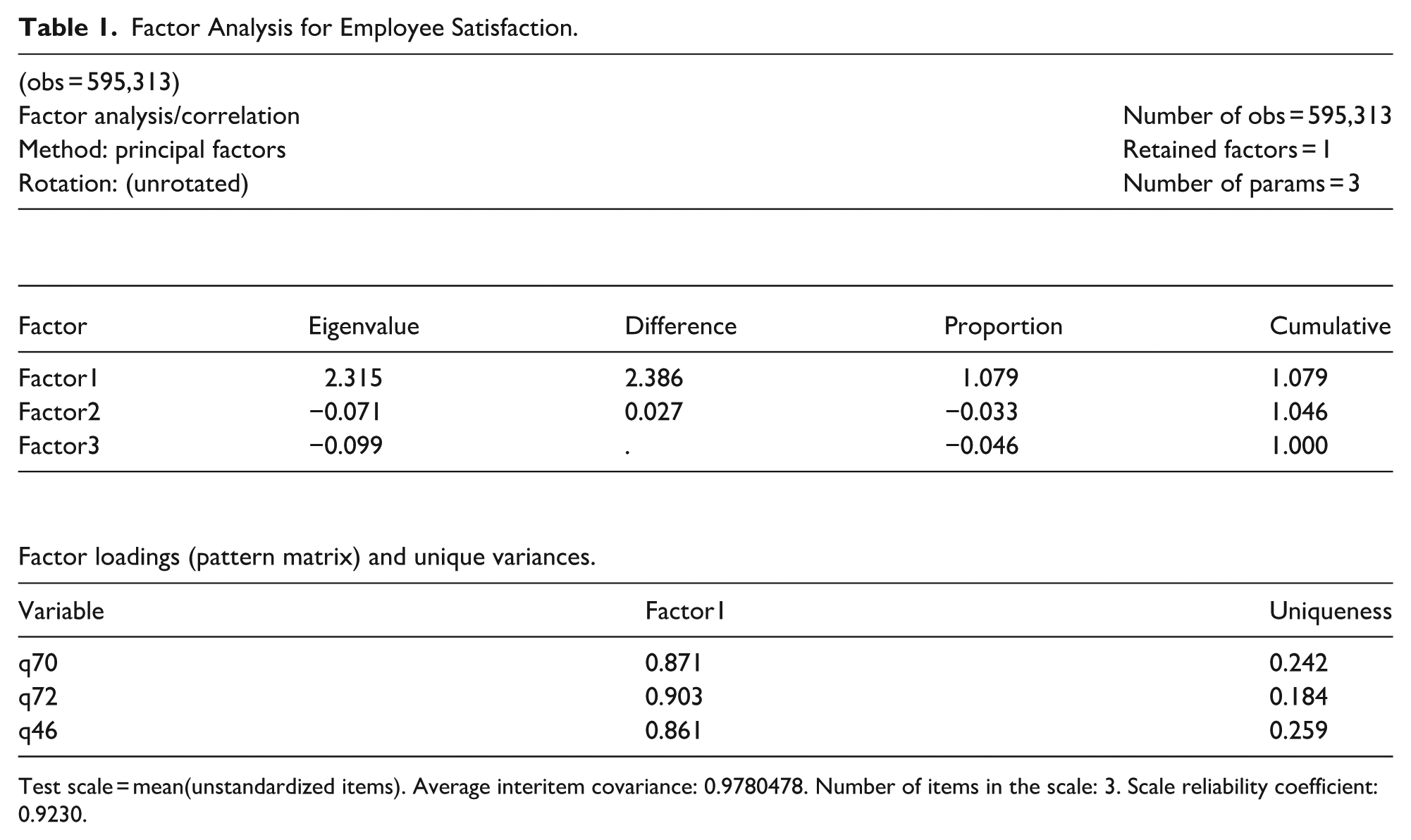
Test scale = mean(unstandardized items). Average interitem covariance: 0.9780478. Number of items in the scale: 3. Scale reliability coefficient: 0.9230.
Independent Variables (IV)
Interaction terms for race, gender, disability, and Hispanic ethnicity were developed to examine how the intersection of these social identities influences job satisfaction. These terms reflect key dynamics observed in prior research (Brown, 2011; Hamidullah & Riccucci, 2017; Nelson & Piatak, 2021; Wilks & Neto, 2013). Privileged identities (e.g., White, male, nondisabled, non-Hispanic) were coded as “1,” while all other identities were coded as “0.” To capture these effects, six interaction combinations, WhiteMale, WhiteNon-disabled, MaleNon-disabled, Non-HispanicNon-disabled, Non-HispanicMale, and Non-HispanicWhite, were included.
Moderating Variable
The Office of Personnel Management (OPM) established the Diversity, Equity, Inclusion, and Accessibility (DEIA) Index as part of the Federal Employee Viewpoint Survey (FEVS) to align with Executive Order 14035 and current research on equitable workplace practices. A central component of this framework is the Inclusion Index, which this study utilizes to measure employees’ perceptions of inclusive work environments. The Inclusion Index comprises five items that reflect key dimensions of inclusion: a sense of belonging, the perception that supervisors care, the freedom to express opinions, being treated with respect, and being oneself at work (Shore et al., 2011; U.S. Office of Personnel Management, 2023). Captured through FEVS questions Q78 to Q82. By employing the OPM-defined Inclusion Index, this study ensures alignment with federal definitions and provides a robust measure of organizational inclusivity.
This study employed mean-centered inclusion in our regression analysis to mitigate multicollinearity and enhance the interpretability of the results. This was especially important given our model’s focus on how intersectional identities impact Employee Satisfaction, with inclusion as a moderator. By centering inclusion, this research ensured that the effects of these interaction terms were more precise, allowing us to understand better how inclusion influences the relationship between intersectional identities and employee satisfaction. Also, this study mean-centered the Inclusion Index at the sample mean to minimize multicollinearity with interaction terms. So, its mean of zero is a statistical artifact and does not reflect the actual average of perceived inclusion, which skews positively in the raw data. To ensure consistency, both employee satisfaction and inclusion were computed using mean scores of their respective items rather than factor scores.
Since the inclusion perspectives of federal employees are subjective, the literature continues to support the validity of this indicator as a predictor in the workplace, and perceived inclusion influences behavior, satisfaction, and employee engagement (Shore et al., 2011). This study investigates whether inclusion moderates the relationship between employee identity and job satisfaction. For example, does perceived inclusion act as a buffer for marginalization for groups such as women of color or individuals with disabilities? Inclusion is inherently subjective, so it is best assessed through employees’ self-perceptions. To examine whether the identity and inclusion variables reflected a common underlying concept, this study conducted a principal factor analysis. The results showed a clear distinction: while the mean-centered inclusion variables and their interactions loaded strongly onto a single factor (e.g., white_inclusion = 0.916, male_inclusion = 0.837, white_male_inclusion = 0.818), the core identity variables had very low factor loadings (e.g., White = 0.064, Male = 0.058) and high uniqueness values (above 0.99). This indicates that inclusion-related variables form a cohesive construct, while identity indicators operate as distinct and independent predictors. Although the model returned a Heywood case warning—due to some uniqueness estimates approaching 1—this was expected given our theoretical distinction between identity and inclusion. Tenure and supervisory status also showed minimal loadings (e.g., Tenure_10_20 = –0.018; Supervisory = 0.081) and were retained only as control variables. Overall, the factor analysis supports our modeling approach by validating the separation between identity variables and inclusion measures in explaining employee satisfaction.
Control Variables
Control variables included supervisory status ia coded as (1 = Non-supervisor, 2 = Supervisor) and tenure, categorized into three groups: 10 years or fewer, 11 to 20 years, and more than 20 years. These controls enhanced the model’s accuracy, accounting for additional variability and clarifying the relationships among variables.
Methodological Approach
The critical descriptive statistics for all study variables, including means, standard deviations, and demographic breakdowns, are presented in Table 2. The summary statistics provided essential insights into the distributional properties of the dataset, including central tendencies, variability, skewness, and kurtosis. This step was instrumental in detecting potential anomalies and confirming the dataset’s suitability for subsequent multivariate analyses. On average, employees report a satisfaction score of approximately 11.28 (SD = 3.09) on a scale from 3 to 15. The distribution is slightly left-skewed (skewness = –0.849), indicating that a larger proportion of employees tend to express higher levels of satisfaction.
Descriptive Statistics.
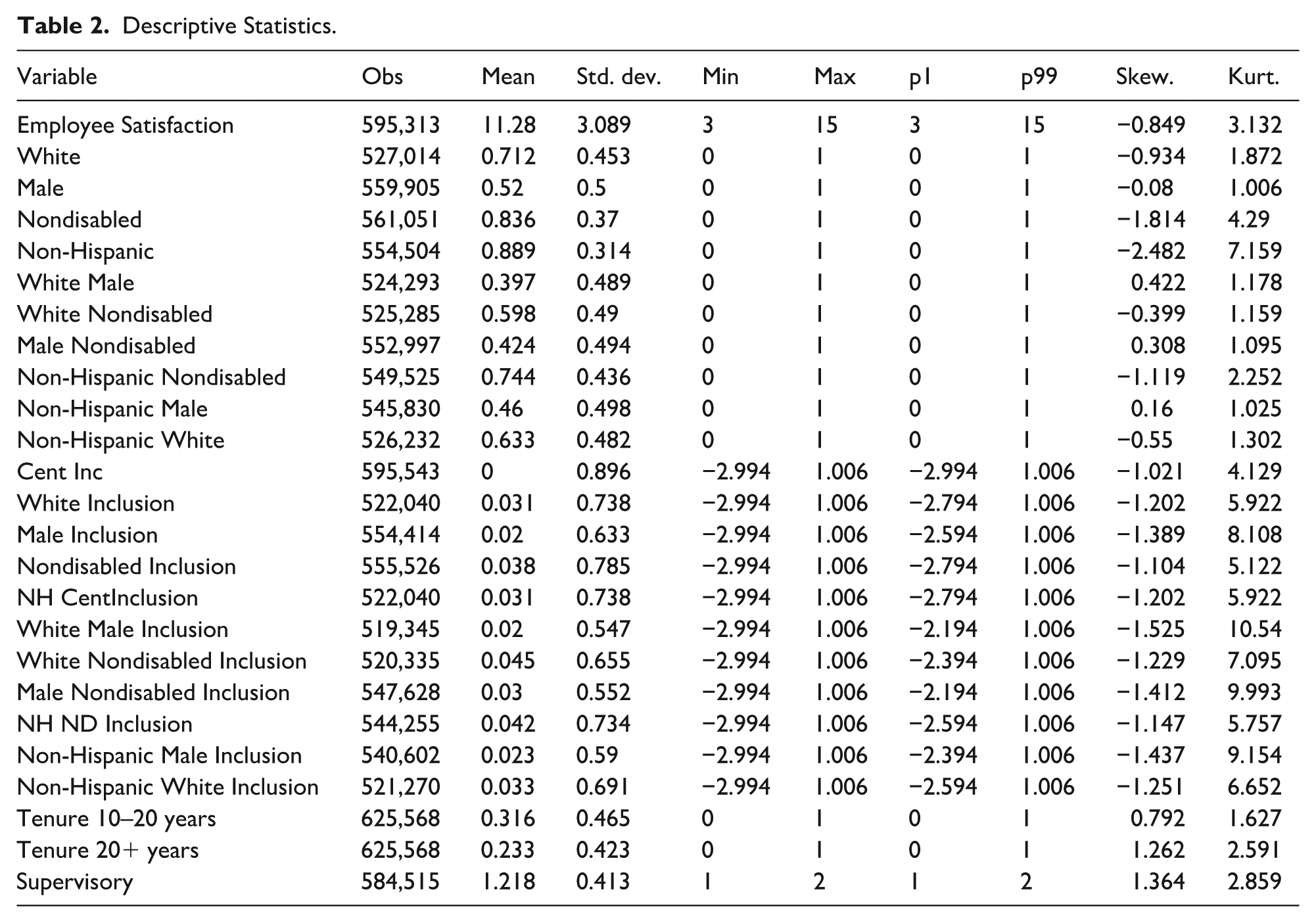
Additionally, the Mean-Centered Inclusion Index has a mean of 0.00 and is negatively skewed (skewness = –1.021), reflecting some inequality in perceived inclusion across groups. Demographic variables, including gender, race, disability status, and Hispanic origin, were also summarized. The results showed that 52% of respondents identified as Male, 71% as white, 84% as nondisabled, and 89% as non-Hispanic. These foundational statistics underscore the importance of further intersectional analysis to explore subgroup disparities in satisfaction and inclusion outcomes.
Figures 1 and 2 illustrate the distributions of the Mean-Centered Inclusion Index and the Employee Satisfaction Index, respectively. Both figures display negatively skewed patterns, indicating that most federal employees report high satisfaction and perceive their work environment as inclusive, although notable variation remains across groups.
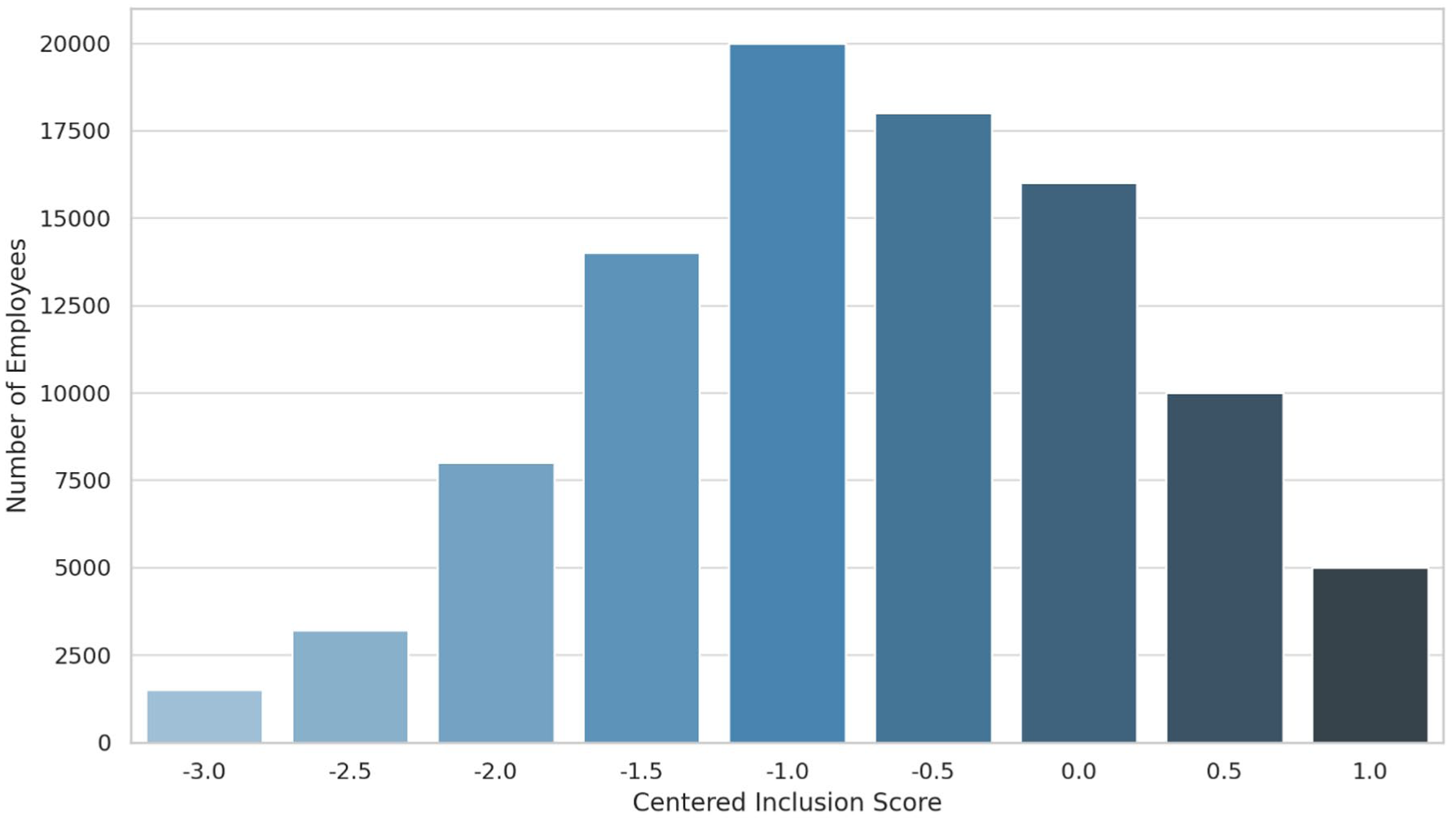
Distribution of mean-centered inclusion scores among federal employees.
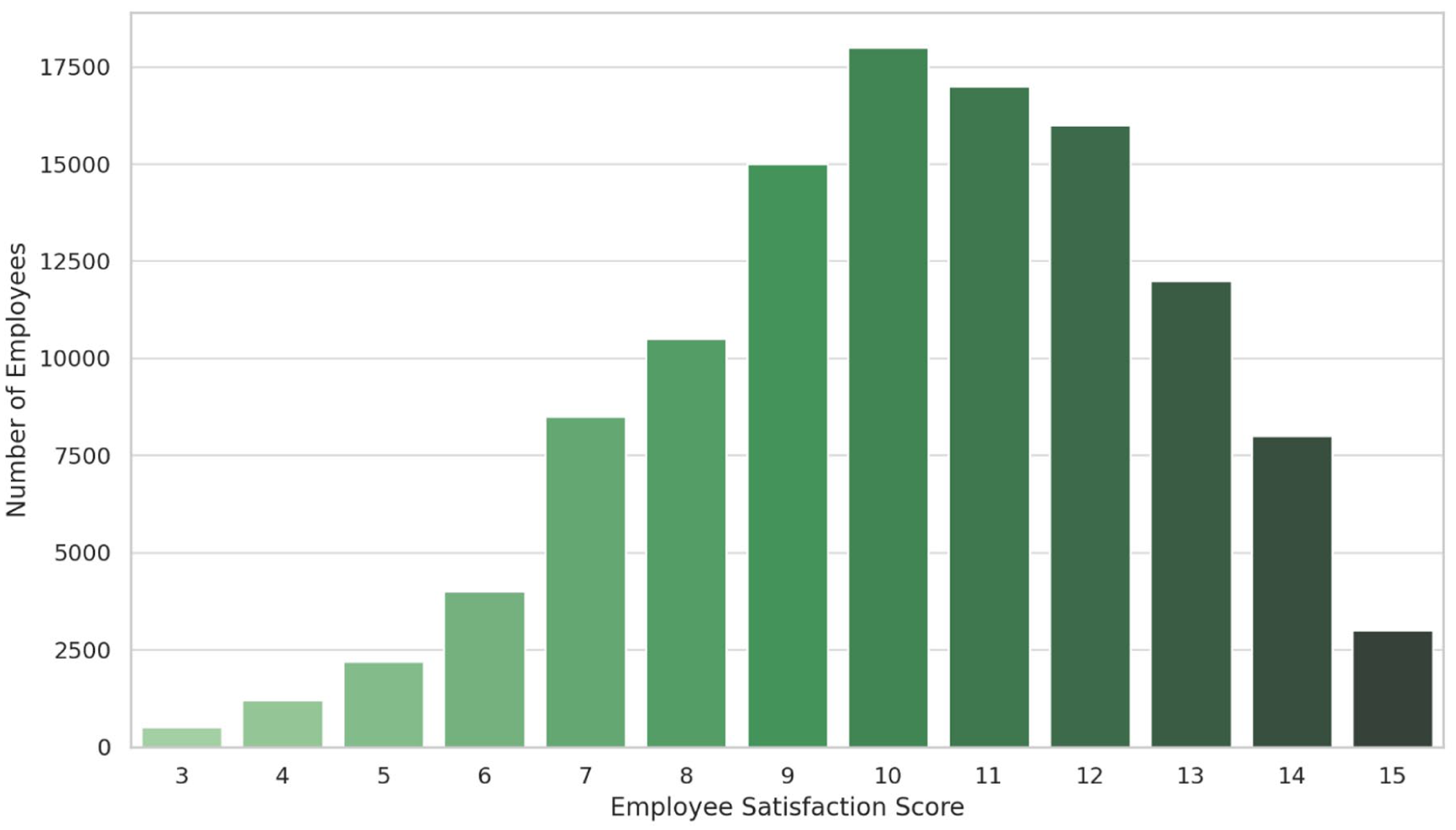
Distribution of satisfaction score among federal employees.
When this empirical work examines the Central Inclusion Index, it averages around zero, indicating a balanced mix of responses, although there is some variation. The scores range from about −3 to 1, and more people tend to score on the lower end, suggesting some challenges in feeling included. Overall, the data paints a consistent picture, with certain groups being more represented or satisfied than others.
The results from the three regression models in Table 3 demonstrate how intersectional identities and perceived inclusion influence employee satisfaction in the federal workforce. Model 1 includes only identity characteristics and explains a small portion of the variance in satisfaction (R2 = .011). Individual attributes, such as being White, Male, nondisabled, and non-Hispanic, are each associated with significantly higher satisfaction. However, some intersectional combinations, such as being both White and Male or Male and nondisabled, are associated with slightly lower satisfaction, revealing nuanced and non-additive identity effects. Model 2, which incorporates the Mean-Centered Inclusion Index, substantially improves model fit (R2 rises to .421), showing that perceived inclusion is a strong and positive predictor of satisfaction. Model 3 reveals compelling patterns in how intersecting identities and inclusion shape employee satisfaction. Interestingly, while White, Male, and non-Hispanic statuses each predict higher satisfaction (β = .250, .136, .374), several combinations of privileged identities yield lower-than-expected satisfaction. For example, White × Male (β = −.138) and Male × nondisabled (β = −.109) are significantly negative, suggesting that additive privilege assumptions may not fully explain satisfaction outcomes. Instead, these interactions reflect complex institutional dynamics that moderate how privilege is perceived or rewarded. Notably, inclusion shows a powerful positive main effect (β = 2.154), confirming its broad value, but its benefits are not evenly distributed across identity intersections. These nuanced findings underscore the importance of designing tailored inclusion policies rather than assuming uniform effects across all groups.
Linear Regression Models Predicting Employee Satisfaction.
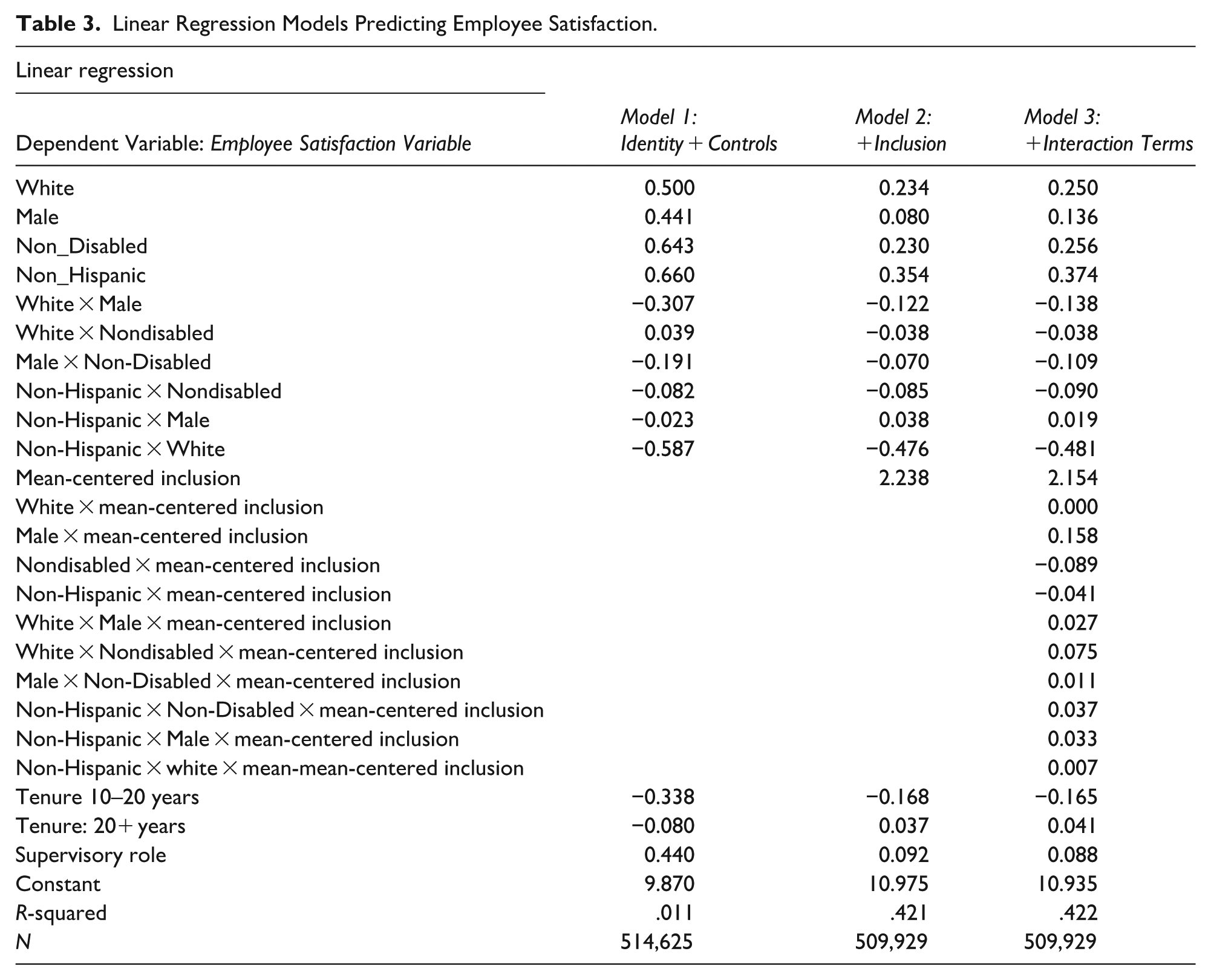
To investigate the effect of multicollinearity, the regression models were re-estimated after selectively removing the interaction terms with the highest Variance Inflation Factors, such as Nondisabled Inclusion and Non-Hispanic Inclusion. The results remained robust, with consistent effect sizes and statistical significance for the key predictors, confirming that the main conclusions are not an artifact of collinearity. 2
The component plot in rotated space provided strong visual confirmation of the distinct latent constructs underlying the factor analysis. Specifically, the inclusion-related variables (e.g., White × Inclusion, Nondisabled × Inclusion) clustered together, indicating that they represent a unified perception of organizational inclusivity. In contrast, identity variables such as race, gender, and disability remained orthogonal, validating their conceptual and empirical independence. This distinction supports the study’s theoretical framework, which treats identity and inclusion as analytically separate dimensions that interact to shape employee experiences.
Our regression model, presented in Table 3, provides compelling evidence in support of
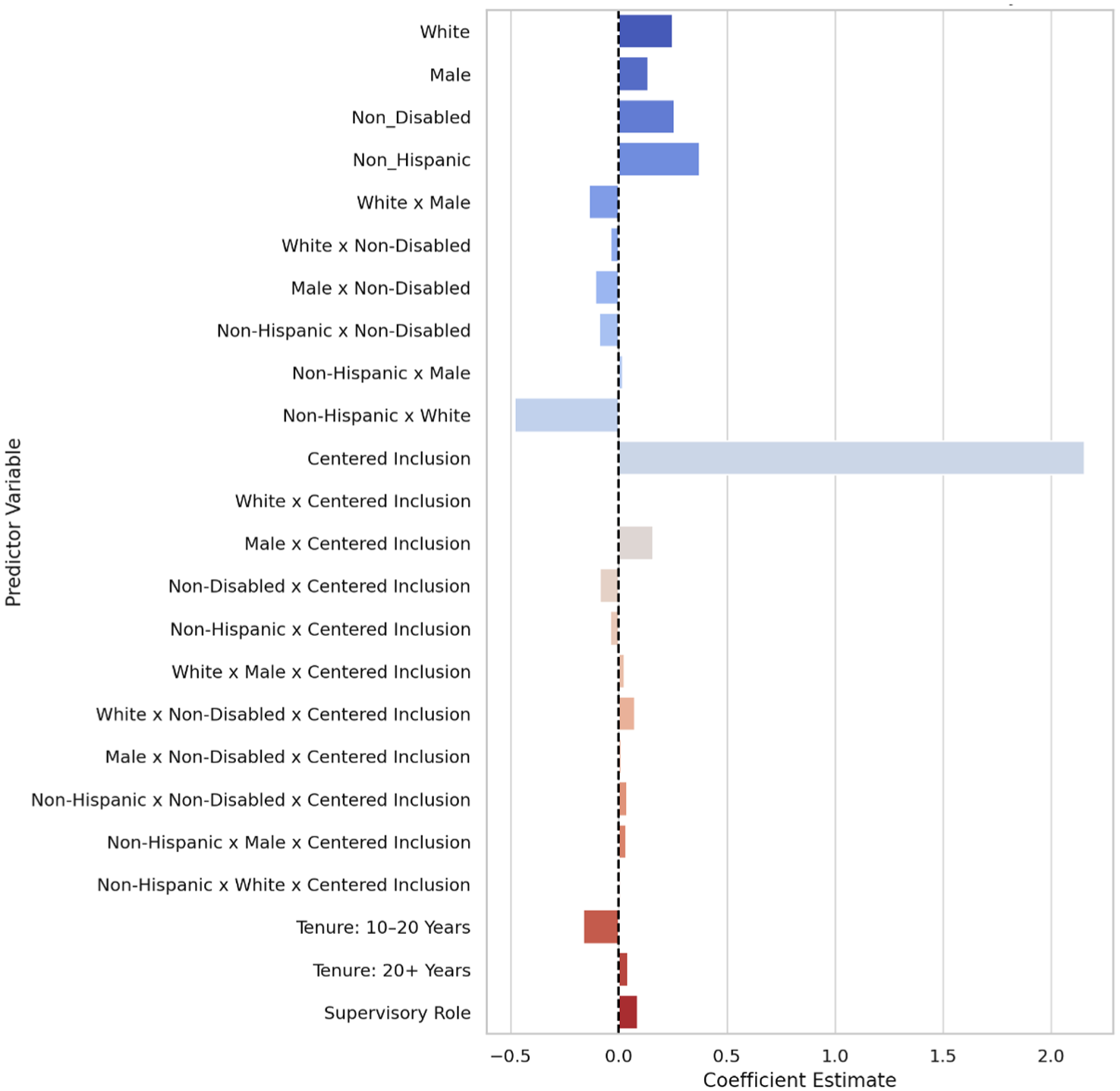
Coefficient plot of model 3 predicting employee satisfaction.
These interaction terms reflect the additional effect of simultaneously holding multiple privileged identities, beyond what would be expected from the sum of their individual main effects. For example, the coefficient for White × Male indicates how much more or less satisfied White males are than what is predicted by simply adding the effects of being White and being Male. The negative sign implies that the intersection of these dominant identities is associated with lower satisfaction than expected, potentially due to complex institutional dynamics, elevated expectations, or hidden pressures not accounted for by single identity categories.
These unexpected findings provide support for
Mean-centered Inclusion in Model 3 deepens our analysis and is central to
Additionally, several three-way interaction terms involving identity and inclusion reveal noteworthy patterns. For instance, White × Nondisabled × Inclusion (β = .073, p < .001) and Non-Hispanic × Nondisabled × Inclusion (β = .054, p < .01) both show positive and statistically significant effects. These findings suggest that inclusion is particularly impactful for individuals at the intersection of multiple dominant identities. For these groups, inclusion may act as an amplifier, strengthening their connection to the workplace and enhancing their satisfaction, perhaps due to heightened sensitivity to organizational messaging or a greater baseline expectation for fairness and belonging.
However, this moderating effect is not consistent across all identity intersections. Interaction terms such as White × Male × Inclusion and Male × Nondisabled × Inclusion did not reach statistical significance, suggesting that the positive influence of inclusion does not uniformly extend to all dominant identity combinations. These variations highlight the context-dependent nature of inclusion’s impact and underscore the complexity of intersectional dynamics in shaping workplace experiences.
As such,
Discussion and Conclusion
This study examines the intersection of race, ethnicity, gender, and disability, as well as their combined impact on job satisfaction among federal employees, using data from the 2023 Federal Employee Viewpoint Survey. By applying an intersectional lens, the analysis highlights how overlapping social identities shape employee experiences in inclusive work environments. The findings offer valuable insights into how diversity and inclusion (D&I) initiatives intersect with identity dynamics and contribute to creating equitable and satisfying work environments (Wang & Brower, 2019).
White employees report significantly higher satisfaction levels (coefficient = 0.311, p < .001), but this advantage does not increase in inclusive environments (White × inclusion = −0.005, p = .835). This finding supports prior work (Pitts, 2009; Choi & Rainey, 2014), suggesting that inclusion efforts do not necessarily enhance the experiences of those already benefiting from structural privilege. The persistence of satisfaction advantages among White employees underscores the limitations of generic inclusion strategies in addressing systemic inequities.
Male employees also report significantly higher satisfaction (coefficient = 0.183, p < .001), though inclusion has a smaller incremental effect for this group (Male × inclusion = 0.193, p < .001). These results reinforce findings by Srivastava (2012) and Bell and Nkomo (2001), which highlight the enduring nature of male privilege in the workplace. While inclusive environments may improve outcomes for men, the disproportionate gains experienced by others suggest that DEI policies must address the specific concerns of gender minorities to foster equitable satisfaction across all groups.
For nondisabled employees, initial satisfaction is high (coefficient = 0.288, p < .001), but inclusion appears to reduce this advantage (Nondisabled × inclusion = −0.074, p < .001). This aligns with discussions by Pitts et al. (2010) regarding how dominant group members perceive inclusion policies as threats to their status, leading to reduced satisfaction. Such findings complicate assumptions that inclusion uniformly benefits all employees and suggest potential tensions when equity efforts reshape workplace expectations.
Non-Hispanic employees also report high satisfaction (coefficient = 0.503, p < .001), though the interaction term with inclusion was excluded due to multicollinearity. This modeling limitation reflects the complexity of capturing racial and ethnic dynamics in satisfaction studies (Choi & Rainey, 2014). It highlights the value of integrating qualitative methods to explore these relationships further.
The intersection of White and Male identities reveals a counterintuitive pattern: White males report lower satisfaction than expected (White × Male = −0.171, p < .001), and inclusion does not significantly moderate this relationship (White × Male × Inclusion = 0.02, p = .338). While these identities are commonly associated with structural advantages (Pagán-Rodríguez, 2015), the results suggest that inclusion efforts may disrupt perceptions of privilege or control, leading to a decrease in satisfaction. This challenges assumptions about uniformly positive outcomes for dominant groups and highlights the psychological complexities of navigating inclusive climates.
In contrast, white nondisabled employees benefit significantly from Inclusion (White × Non-Disabled × inclusion = 0.073, p = .004), challenging narratives of “reverse discrimination.” This supports findings by Hur (2020) and De Fraja (2005), which argue that inclusive workplaces can enhance satisfaction across identity groups when implemented thoughtfully. Inclusion, in this case, serves as a unifying force rather than a zero-sum policy.
The interaction of Non-Hispanic and Non-Disabled identities adds further complexity. While this group reports lower satisfaction (Non-Hispanic × Nondisabled = −0.102, p = .007), inclusion significantly offsets the disadvantage (Non-Hispanic × Nondisabled × inclusion = 0.054, p = .017) which aligns with Pagan and Malo (2021), who argue that well-designed inclusion strategies can uplift identity combinations that are often overlooked in traditional analyses.
Taken together, the results reveal that employees with dominant identities (White, Male, Nondisabled) may experience weaker or even adverse inclusion effects, suggesting perceptions of diminished privilege or shifting workplace norms. These findings have critical implications for public sector HR professionals and scholars: inclusion strategies must be sensitive to how identity configurations affect employees’ interpretations of fairness and recognition. A one-size-fits-all approach risks alienating some groups while failing to meet the needs of others.
This study demonstrates that intersectional identities significantly shape job satisfaction and that inclusion has variable effects across different demographic profiles. While inclusion broadly promotes satisfaction, its influence is neither uniform nor linear. Instead, the impact of inclusion is contingent on the interplay of multiple identities, highlighting the importance of tailored approaches to DEI implementation.
By advancing the conversation on the intersection of identity, inclusion, and satisfaction, this research encourages public administration scholars and practitioners to craft equity initiatives grounded in intersectionality (Coll-Planas et al., 2024; Meyer & Benenson, 2023). Recognizing the lived complexities of a diverse workforce is essential to achieving meaningful progress toward inclusive and high-performing public organizations.
This study contributes to public administration theory by empirically confirming that inclusion is not experienced uniformly, even among dominant identities. It demonstrates that workplace climates can reconfigure perceptions of fairness, challenging assumptions that inclusion only benefits marginalized groups. Instead, dominant group members may experience diminished satisfaction as workplace norms shift, especially when intersectional identities blur the boundaries of privilege.
From a practical perspective, HR leaders in federal agencies must consider how inclusion efforts are perceived across various identity combinations. While inclusion generally boosts satisfaction, it can also generate resistance when perceived as a threat to status. Intersectionality-informed analytics can help federal agencies identify hidden dissatisfaction and tailor initiatives accordingly. Moving beyond one-size-fits-all strategies, organizations can foster inclusive cultures that account for the complex ways identity, privilege, and perception interact in diverse bureaucracies.
Limitations and Implications
One significant limitation of this study is our dependence on secondary data from the 2023 Federal Employee Viewpoint Survey (FEVS). Although this data source is valuable, it may have inherent limitations and biases and may not capture the nuances of our study’s focus. Additionally, sampling bias is possible since the FEVS may only partially represent part of the federal employee population. Missing data in such a large-scale survey is another constraint that can lead to the loss of valuable information and affect the completeness of our analysis. Our study is also limited by its reliance on cross-sectional data, which restricts our ability to draw definitive conclusions about cause-and-effect relationships or observe changes over time.
Furthermore, OLS regression has limitations, including assumptions of linearity and independence of errors, which may not correctly capture complex relationships in the data. The generalizability of our findings may be limited, as they are based on a specific dataset from a single culture and method. This may not apply to other populations or settings. Our quantitative approach, combined with a longitudinal perspective, may partially capture the complexity of intersectionality. Our analysis suggests associations, but this study cannot definitively prove causal relationships due to the challenge of establishing causality in cross-sectional studies.
Additionally, response bias and limitations in survey question framing may affect the accuracy and reliability of our data. The operationalization of critical constructs, like “inclusive working environment,” and the risk of multicollinearity with multiple predictors significantly impact the study’s validity. Ultimately, a longitudinal approach enables our study to capture the dynamics of employee satisfaction and the impact of intersectionality over time.
The study’s findings on employee satisfaction disparities among intersectional identities in federal employees could lead to comprehensive policy reforms and tailored training programs that address intersectionality and its impact on employee satisfaction. Such insights may inform the redesign of hiring and retention strategies to ensure a sense of value across diverse employee demographics and enhance employee well-being initiatives that account for unique identity-based challenges. The push for a more inclusive organizational culture may lead to the formation of support networks targeting specific identity groups, accompanied by a parallel shift in training toward combating unconscious biases and embracing intersectional leadership development. These adjustments could enhance individual and organizational performance, as well as prevent legal challenges, by aligning workplace practices with anti-discrimination legislation.
This research has profound implications for policymaking, HR practices, and organizational culture within the public sector. It advocates for a paradigm shift toward more inclusive, intersectionality-informed policies and practices that acknowledge and value the complex nature of employee identities. By shedding light on the areas where intersectionality impacts job satisfaction, this study paves the way for more informed, inclusive, and effective organizational practices.
Footnotes
Acknowledgements
The authors thank the Office of Personnel Management for providing the Federal Employee Viewpoint Survey data. We would like to thank the editors and reviewers for their time and efforts for this manuscript. We would also like to extend our sincere gratitude to a few scholars that have guided us in the initial stages of data analysis for this research. These scholars are Dr. Andrew Krajewski, Dr. Karl Ho, Dr. Elizabeth Searing, and Dr. Tim Bray.

Ethical Considerations
This study used publicly available data from the 2023 FEVS. Ethical approval was not required, and no identifiable data were included.
Consent to Participate
This study used publicly available data from the 2023 FEVS. Consent was not required, and no identifiable data were included.
Funding
The authors received no financial support for the research, authorship, and/or publication of this article.
Declaration of Conflicting Interests
The authors declared no potential conflicts of interest with respect to the research, authorship, and/or publication of this article.
Data Availability Statement
Data are publicly available from the 2023 FEVS through the Office of Personnel Management’s website.