




Abstract
In the early 1970s, there was an initial effort to quantify the conditions under which firefighters are expected to perform. Harvey Utech led this endeavor by defining three levels of thermal exposure—routine, ordinary, and emergency—which were characterized by combining a range of air temperatures and radiative heat fluxes. In the last half-century, there has been a concerted scientific effort to further understand the conditions to which firefighters are exposed during structural firefighting. Research has been conducted on the resiliency of turnout gear and facepiece lenses, the thermal conditions observed during a structure fire, and the impact of firefighter tactics such as ventilation and suppression. The authors synthesize the results from these research areas to update the original thermal classifications to six categories of exposure—routine, Ordinary I, Ordinary II, Emergency I, Emergency II, and Emergency III—which are more representative of the operating environment and protective equipment thresholds that firefighters should be aware of during firefighting operations and tactical decision-making.
Introduction
In his 1973 report, Harvey Utech argued that in order for something to be known, it must first be quantified. 1 As a member of the National Bureau of Standards’ fire research program, Utech and his team were some of the first to identify and address what he referred to as a “general lack of quantitative data on what fire-fighting equipment is expected to do and under what conditions it is expected to perform.” This was his motivation for establishing a set of “typical thermal conditions” encountered by firefighters, which he divided into three levels characterized by combining a range of air temperature and radiant intensity.
In the nearly 50 years since Utech first characterized these thermal classes, much progress has been made in understanding thermal exposure to firefighters. The advent of synthetic materials in the modern residential environment has, quite literally, fueled larger, faster, and more lethal fireground environments. 2 Numerous studies have been conducted to quantify the conditions of this environment and to establish data-based criteria for firefighter protective gear. 3 It is the purpose of this article to update Utech’s original thermal classes to account for both these advancements in scientific understanding and improvements in firefighter personal protective ensembles (PPE).
Utech argued that it was imperative to measure the important aspects of firefighters’ jobs. In particular, he believed that advancements in PPE could not be achieved unless firefighters’ exposure to heat could be quantified. Firefighters experience heat transfer through all three mechanisms—convection, conduction, and radiation. Heat transfer by convection is a result of the movement of hot air around the firefighter and can be measured in terms of ambient air temperature and velocity. Heat transfer by conduction occurs when a firefighter makes direct contact with a surface (e.g. walls and floors) at an elevated temperature. Heat transfer by radiation, as it pertains to firefighting, is the emission of energy in the form of electromagnetic waves from the surrounding heated surfaces and the fire itself. The thermal exposure to firefighters can be measured in terms of heat flux, or energy transfer per unit of area, which is expressed in units of kW/m2.
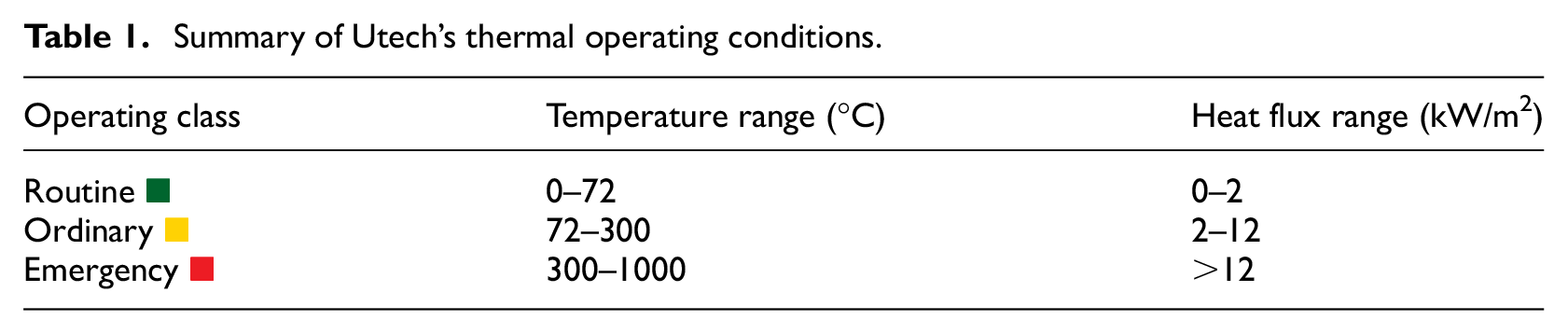
Utech synthesized measurements of temperature and heat flux to specify three progressive levels of exposure—routine, ordinary, and emergency. The operating conditions are bounded by temperature and heat flux exposures as listed in Table 1. Utech described the thermal classes in terms of the typical tasks that firefighters might be performing while exposed to those conditions, their relative proximity to the fire, and the relative duration of their exposure. In Utech’s classification, routine operating conditions equate to the conditions experienced by firefighters operating a hose or fighting a fire from a distance. Ordinary conditions represent a more serious exposure, such as those which might be encountered next to a flashed-over room. Utech maintained that firefighters might be able to operate in the ordinary operating class for the duration of a self-contained breathing apparatus (SCBA) cylinder (20–30 min). Emergency conditions represent the most severe exposures, such as those that a firefighter might be exposed to in or near a flashed-over room. Utech emphasized that a firefighter would only be able to operate in emergency conditions on the order of seconds.
Summary of Utech’s thermal operating conditions.
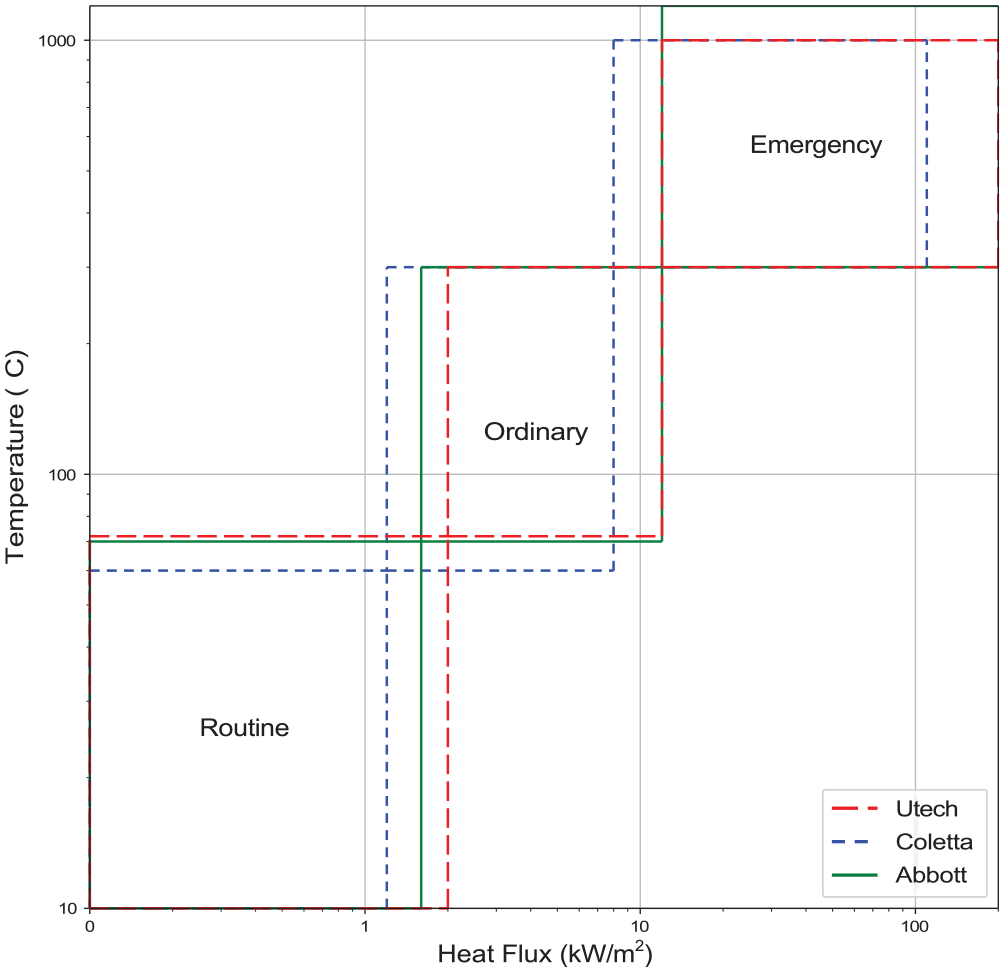
As the first to assign quantifiable ranges to these operating conditions, Utech’s thermal classes have been modified and expanded to meet a variety of experimental use cases. In 1981, Hoschke examined the state of performance specifications for firefighter’s uniforms and found a lack of realistic standards. 4 The paper included thermal class assessments independently led by Coletta and Abbott. In their 1976 paper, Coletta et al. utilized thermal classes similar to Utech’s to define criteria for developing and testing firefighter PPE gloves. 5 Abbott et al. also made use of the thermal classes in their 1976 paper on firefighter protective clothing. 6 These two sets of conditions, along with Utech’s original thermal classes, are represented in Figure 1.
In the approximately 50 years since the works of Utech, Coletta, and Abbott, much progress has been made in understanding the nuances that exist within these thermal classes. Madrzykowski 7 compiled previous research efforts to characterize the thermal operating environment of firefighters. It is likely that a “typical fire” in the 1970s, when these initial thermal classes were developed, may be different than a fire with mostly synthetic fuels, as is common almost 50 years later. The state of the art in personal protective ensembles has advanced considerably since the 1970s, as have the performance standards for firefighter PPE.8,9 Research conducted on SCBA facepieces, which have been identified as one of the weak points of the firefighter PPE ensemble, has quantified the heat flux thresholds at which various forms of damage can manifest.10–13
Although the thermal operating classes defined by Utech and expounded upon by subsequent researchers laid important groundwork for understanding the thermal threat to firefighters, the aforementioned previous research has demonstrated that Utech’s operating conditions may benefit from further distinction. Specifically, it is the argument of this article that the ordinary operating class be split into two subclasses that more appropriately reflect the limits of firefighter protective gear. In addition, recent research quantifying the firefighter operating environment has led to a clearer understanding of the types of exposures that occur within the emergency class range, thus suggesting three subclasses to better represent the conditions under which firefighters, and their protective ensembles, are expected to perform.
Thermal exposure tests to firefighter PPE
Turnout gear
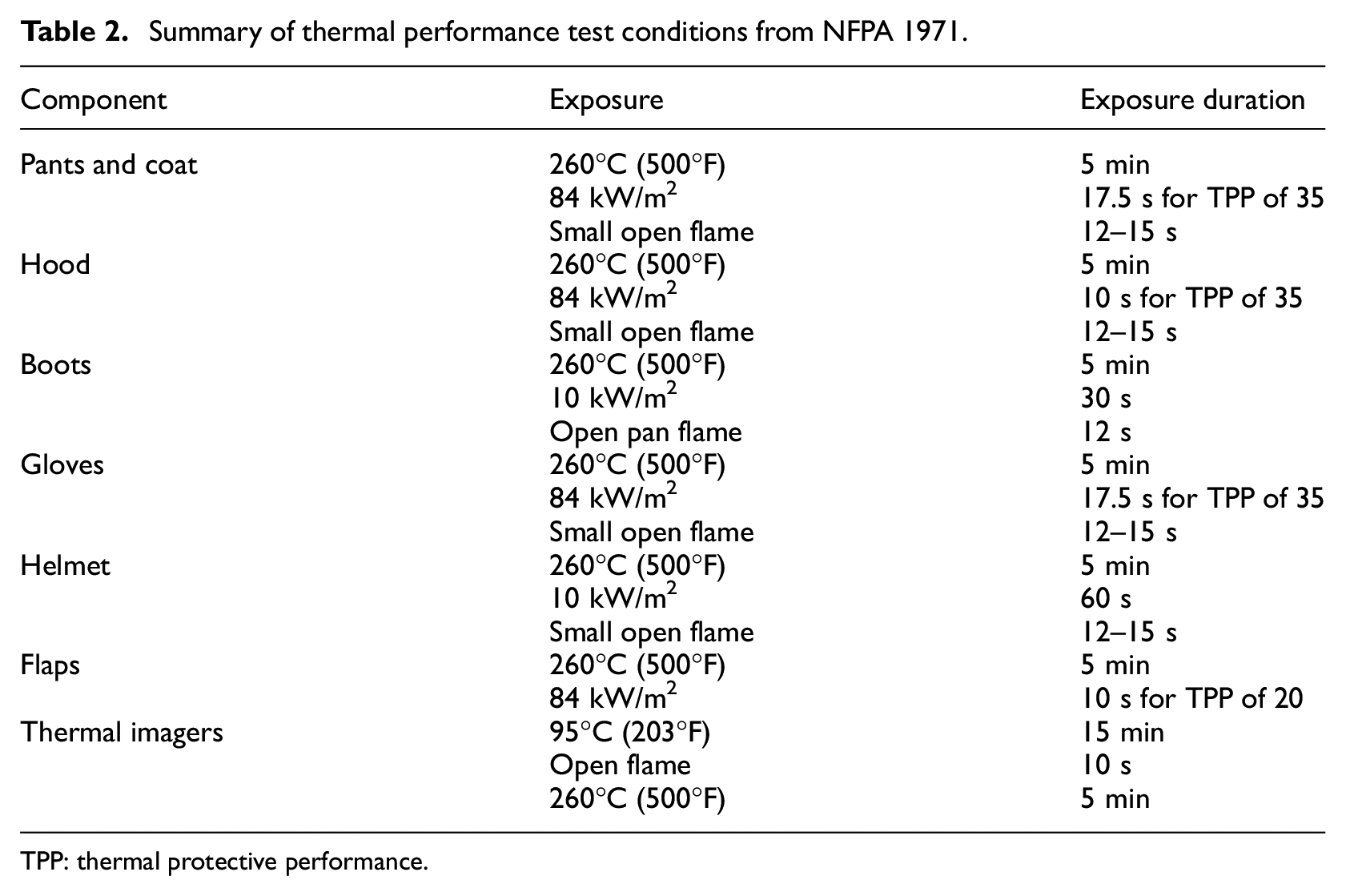
National Fire Protection Association (NFPA) 1971, Standard on Protective Ensembles for Structural Firefighting, has served as the consensus-based, voluntary standard for evaluating the protective properties of firefighter gear. This standard covers such tests as the thermal protective performance (TPP) test, flame resistance, heat/thermal resistance, conductive heat resistance, radiative heat resistance, total heat loss, and thread melting. 8 A summary of standardized thermal conditions utilized to evaluate the structural fire fighting protective ensemble appears in Table 2.
Summary of thermal performance test conditions from NFPA 1971.
TPP: thermal protective performance.
At a minimum, all PPE components (coat, boots, and so on) are required to withstand a temperature exposure of 260°C (500°F) inside an oven for a period of 5 min. Certain portions of the ensemble (coat, pants, gloves, flash hood), in addition, undergo the TPP test, which uses an exposure heat flux of 84 kW/m2 generated by gas burners to provide a convective/radiative exposure and electric heaters to provide a radiative exposure. This heat flux is intended to be representative of the more extreme thermal energy presents in a flashover. For the open flame tests on garments, each layer within the garment is exposed to a premixed flame, approximately 50 mm (2 in) for 12–15 s. After the exposure, there can be no melting or dripping and there are limits on char length and afterflame duration. For the helmet flame resistance tests, the top of the helmet is exposed to a radiant heat flux of 10 kW/m2 for 60 s before the flame is applied. The helmet has limits on both distortion and afterflame duration. The flame resistance test for footwear is an exposure from a heptane-fueled pan fire (pan size: 305 mm × 458 mm (12 in × 18 in)) for 12 s. The footwear has limits on afterflame duration and cannot have any melting, dripping, or burn-through. For more detailed discussion of these tests, see NFPA 1971 directly 8 or work done for the NFPA Fire Protection Research Foundation by Madrzykowski. 7
Aside from the TPP test, which is based on estimated time to injury, the values in Table 2 relate to the exposure capabilities of the materials listed. Anything beyond these thresholds may begin to degrade and become hazardous to the firefighter, as the thermal conditions have moved beyond the scope of the protective equipment.
Facepiece
Recent research conducted on SCBA facepiece lenses has led to an increased understanding of the impact of radiant thermal loads on firefighter personal protective ensembles (PPE). Kesler argued that, despite the critical nature of the SCBA in protecting firefighters, the SCBA facepiece lens is often regarded as the weakest point of the PPE.10,12,14 In fact, firefighter fatality reports published by the National Institute for Occupational Safety & Health (NIOSH) have noted that SCBA facepiece failure may have been a contributing factor in fatal incidents where thermal conditions changed rapidly. Numerous studies have been conducted to understand how thermal radiation impacts firefighter PPE and SCBA facepiece lenses in particular. The initial work performed by Putorti et al. 11 and Mensch et al. 10 led to changes to NFPA 1981, 14 in particular the inclusion of the lens radiant heat test. In this test, facepieces are exposed to a radiant heat flux of 15 kW/m2 for 5 min, after which the facepiece is required to maintain a positive pressure air supply within certain limits for a total of 24 min
Kesler conducted a series of tests to assess the performance of three different models of facepieces, 15 including samples that were compliant with the updated 2013 NFPA 1981 requirements, which included the lens radiant heat test. These tests were performed at four heat flux intensities (5, 10, 15, and 20 kW/m2) to account for a range of thermal exposures. Each facepiece was subjected to the prescribed heat flux until the lesser of 30 min or the occurrence of hole formation was observed. Three levels of thermal degradation were monitored—crazing, bubbling, and hole formation as shown in Figure 2.
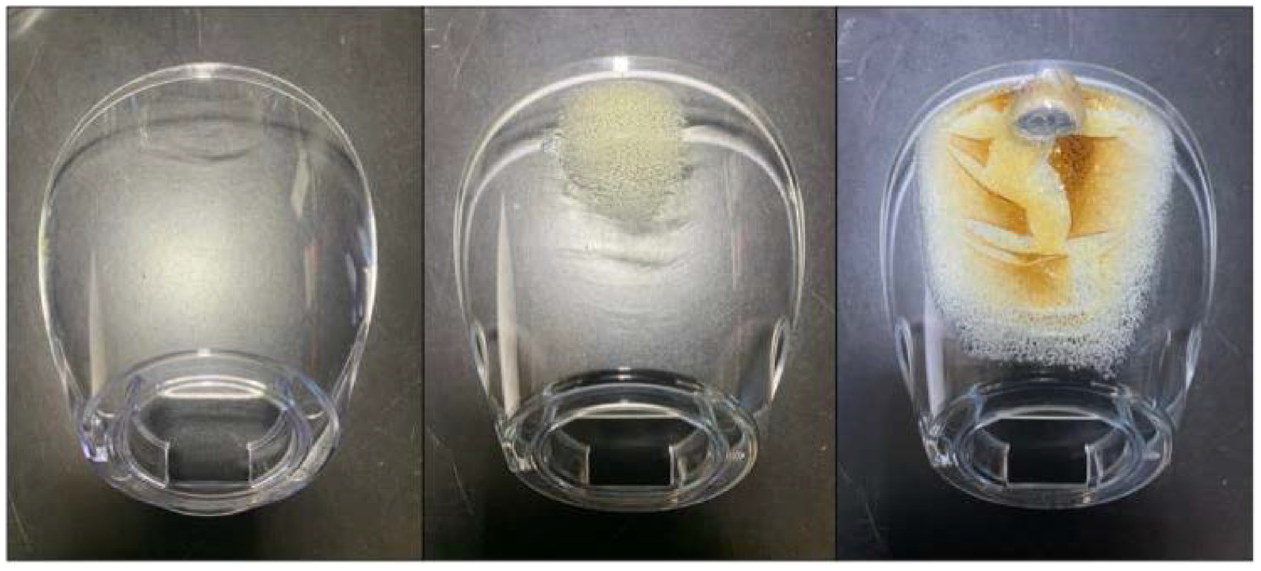
Representative images of thermal degradation: crazing (left), bubbling (center), and hole formation (right). 12
The tests showed statistically significant differences between the three facepiece models for time to degradation. None of the facepiece lenses developed bubbling or hole formation at 5 kW/m2. At 10 kW/m2, however, all three models displayed signs of bubbling, and one of the three models developed hole formation (at approximately 13.4 min). Considering these data, there is a radiant threshold that is crossed between 5 and 10 kW/m2 where the protective capability of older SCBA is compromised and where visual acuity of firefighters wearing even the current SCBA is impacted. Similarly, at 15 kW/m2, all but one of the facepiece models developed a hole in the lens during exposure, and the time to reach this severity of degradation was drastically reduced from 13.4 min to less than 5 min. This suggests that there exists a radiant threshold between 10 and 15 kW/m2 that reduces the defensive capability of the PPE SCBA.
Updated thermal classes
The standardized tests to which firefighter PPE is subjected to in NFPA 1971 and 1981, combined with the research conducted on SCBA facepieces by Kesler et al., suggest that there are several subsets of the thermal operating classes as they relate to the performance and degradation of firefighter PPE. The ordinary operating class encompasses both conditions which are unlikely to result in damage to PPE in the firefighter operational timeframe 12 and conditions which have the potential to exceed conditions by which various components of the PPE ensemble are evaluated in standardized testing. 8 Similarly, the emergency operating class encompasses a broad range of conditions, which generally range from having the potential damage firefighter PPE to postflashover conditions which could result in fatal injuries to a fully encapsulated firefighter within seconds. As a result, the emergency operating class could be similarly subdivided into three different classes to reflect the severity of conditions and timeframe before firefighters would be likely to sustain thermal injury. It is important to note that damage to firefighter PPE is not necessarily indicative of thermal injury to the firefighter wearing the PPE, but can be linked, provided validated heat transfer models for the respective PPE components and physiologically based burn models.
Updated ordinary class
From the Kesler experiments on SCBA facepieces, it is clear that thermal degradation occurs when facepiece lenses are subjected to heat fluxes between 5 and 10 kW/m2, which can impact visual acuity and potentially compromise protection in older SCBA models. Furthermore, the upper bound for temperature for the ordinary/hazardous operating class originally defined by each of Utech, Coletta, and Abbott1,5,6 was 300°C (572°F), a value above the testing threshold for PPE defined in NFPA 1971. 8 It is proposed to define an ordinary operating class that is split into two levels to account for the limits of modern firefighter PPE. Ordinary I can be defined as temperatures between 72°C (162°F) and 200°C (392°F) and heat fluxes between 2 and 7 kW/m2. Ordinary II can be defined as temperatures between 72°C (162°F) and 200°C (392°F) and heat fluxes between 7and 12 kW/m2. This split at 7 kW/m2 integrates the findings discussed previously about threshold in facepiece response to heat flux between 5 and 10 kW/m2.
Furthermore, the ordinary operating class defined by Utech in 1973 was intended to represent the conditions under which firefighters could safely operate for 10 to 20 min—long enough to either extinguish a fire or until their breathing apparatus (with a nominal 30-min cylinder) was exhausted. In a series of SCBA evaluation experiments led by Kesler, it was found that the entire capacity of both 30- and 45-min cylinders could be consumed in less than 20 min. 16 This was based on standard 30- and 45-min SCBA cylinders holding 1274 and 1840 L of compressed air and measured ventilation rates that approached 100 L/min. 16 From additional data presented by Kesler, radiant exposures between 10 and 15 kW/m2 reduced the time to severe thermal degradation from 13.4 min at 10 kW/m2 to less than 5 min at 15 kW/m2. 12 The latter exposure pushes the timeline outside the bounds of the 10–20-min operating time criteria originally set by the ordinary class. It is, therefore, maintained that, as Utech had suggested, a heat flux measurement above 12 kW/m2 will likely place a firefighter into emergency operating conditions. In addition, Utech’s original ordinary class included temperatures up to 300°C and a heat exposure above the NFPA gear testing thresholds of 260°C. The upper bounds of the ordinary class have been lowered to 200°C to better represent conditions under which a firefighter may safely operate for 10–20 min.
Updated emergency class
The emergency class is intended to represent thermal exposures that can only be withstood for a short period of time. The first subset of this class, Emergency I, is bounded by the upper limits to which firefighter PPE is currently tested to in NFPA 1971 8 —260°C (500°F) for turnout gear and NFPA 1981 9 —15 kW/m2. Although both standards have exposure times of 5 min, these time and temperature test limits do not directly correlate to the potential for a burn injury.
Emergency II is defined as the region where the thermal conditions are representative of localized burning/flaming combustion, and Emergency III would be equivalent to a postflashover exposure. The emergency classes represent exposures at which a firefighter may be able to safely operate on the order of tens of seconds (Emergency I), to beyond the limits of personal protective ensembles (Emergency II and Emergency III). This thermal class approach has a sharp change between an Emergency I and Emergency II class; however, thermal conditions may still be operable (on the order of seconds) at the transition between these two classes. In particular, recent work by Kessler and Madrzykowski showed that masks that meet the NFPA 1981 2013 standard showed significantly greater times to crazing, bubbling, and hole formation compared with older masks when exposed to 20 kW/m2, a heat flux above the current test standard. 15
Leveraging recent fire environment 17 and PPE research, the thermal operating classes developed in the 1970s can be modified to better describe the thermal hazards to which firefighters may be exposed. The modified thermal classes and corresponding temperature and heat flux ranges are presented in Figure 3.
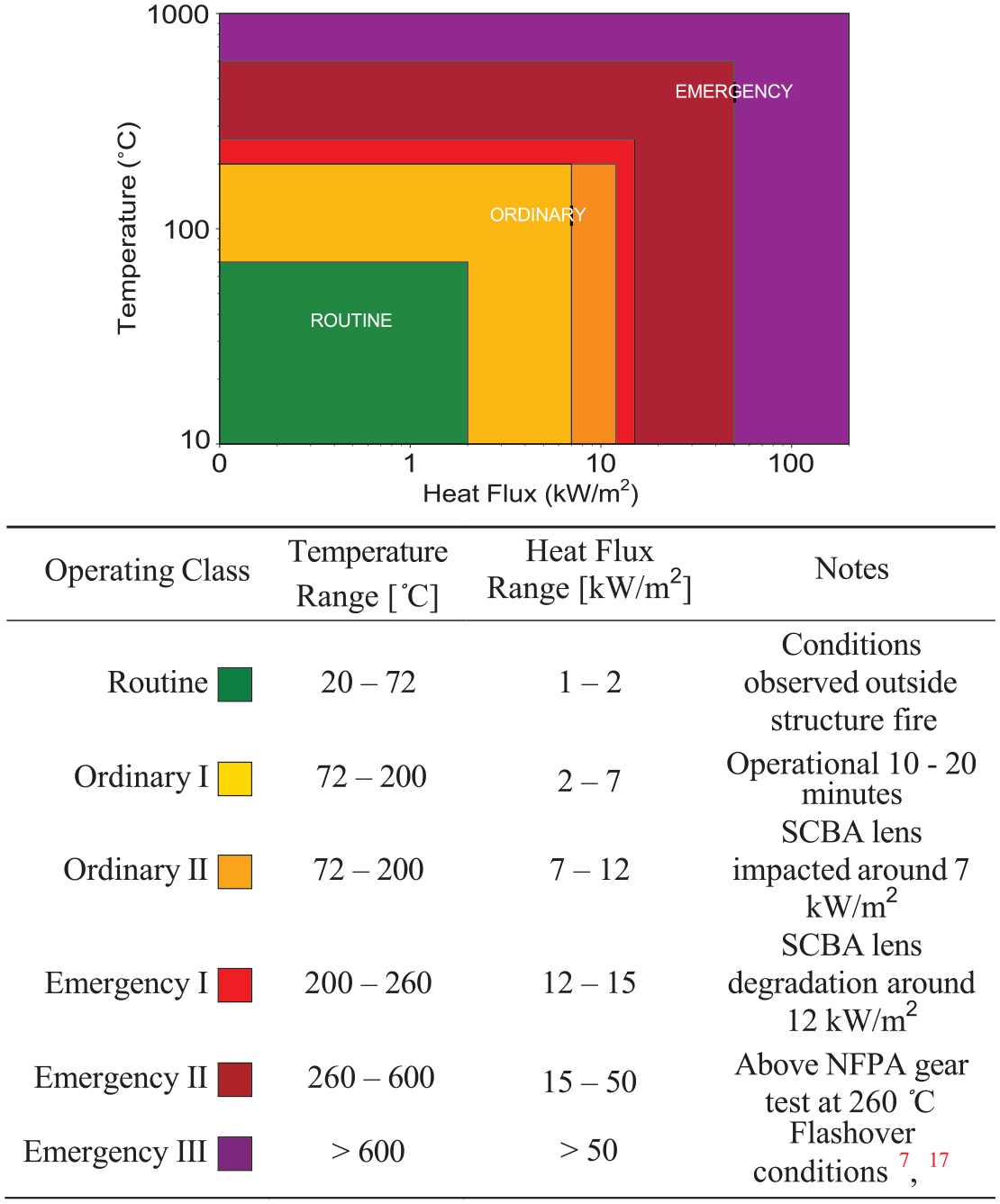
Modified thermal operating classes.
Application
To assess the applicability of thermal classes, consider a series of 21 live-fire experiments conducted in purpose-built single-story, single-family residential structures.18,19 Each fully furnished structure included four bedrooms, two bathrooms, and an open-floor kitchen and living room (LR). The fire was ignited in a bedroom for 11 experiments, in the kitchen for 8 experiments, and in the LR for 2 of the experiments as shown in Figure 4. Although the primary purpose of the experiments was to examine search and rescue tactics, the primary suppression crew (nozzle firefighter and officer) wore instrumented helmets developed by Willi et al. 20 Each helmet had a Schmidt–Boelter heat flux gauge paired with an inconel thermocouple that was mounted both horizontally and vertically. Thermal classes for each firefighter were computed by taking the maximum thermal class of each measured pair at a sample rate of 1 Hz. These data can be compared with the bare-bead thermocouples and Schmidt–Boelter heat flux gauges that were installed at fixed locations (0.9 m above the floor) throughout each room within the structure. While the suppression crew’s position varied from crouching during primary extinguishment (≈0.9 m) to semistanding/standing positions after knockdown (>0.9 m), the fixed 0.9 m elevation provides additional insight into what firefighters conducting search and operations would be exposed to. Note in some rooms, only a thermocouple measurement was present, so the thermal class calculation would not have the heat flux component. More information on the structured instrument can be found in the experimental reports.18,19
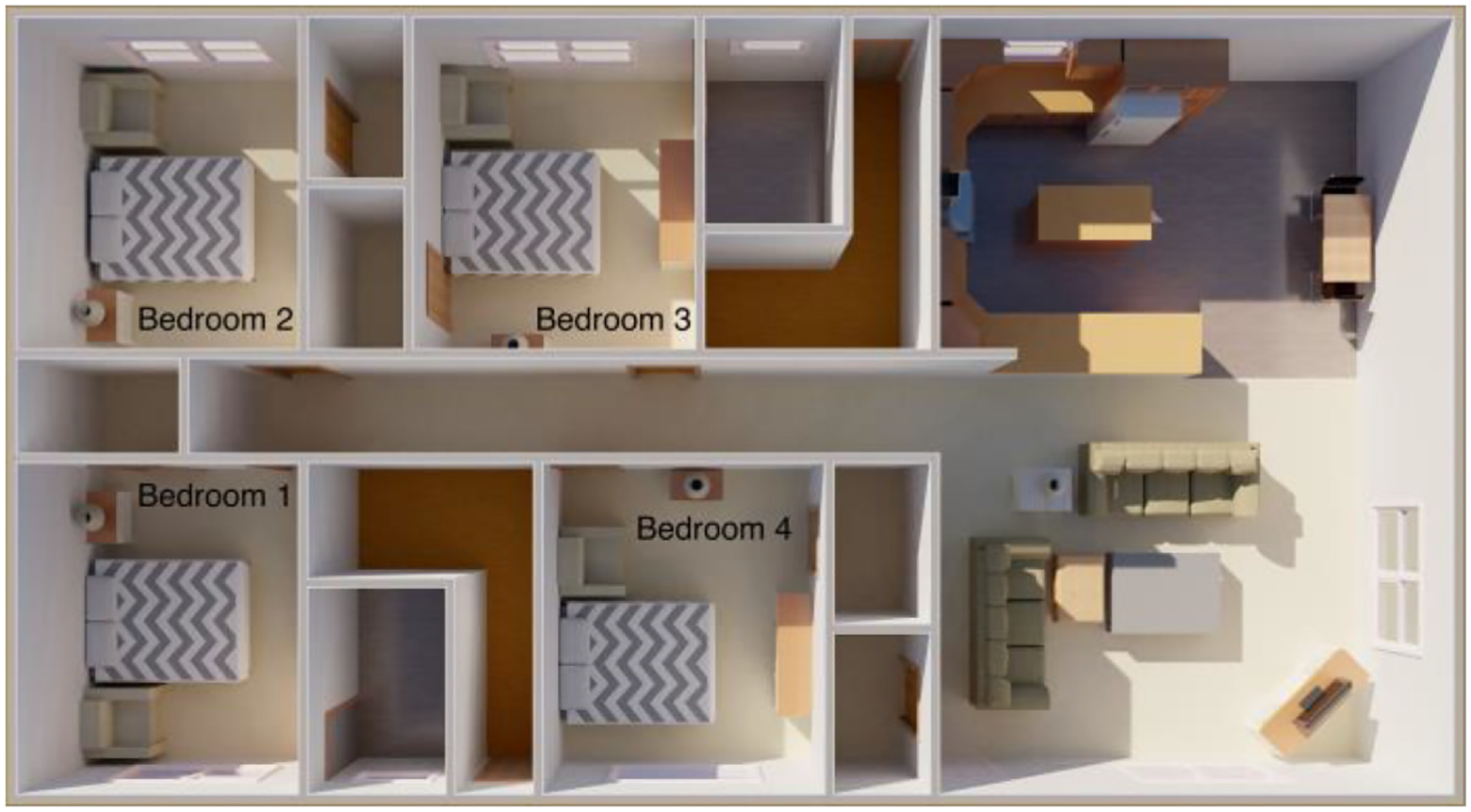
Bedroom ignition
To assess the potential thermal class exposures to a suppression crew for a bedroom fire, consider Experiment 10 from the Fire Safety Research Institute search and rescue study. 18 The fire was ignited in the upholstered chair next to the bed in bedroom 4. At the time of ignition, bedroom 4 window and front door were open. The door to bedroom 1 was closed, while the doors to bedroom 2, bedroom 3, and bedroom 4 were open. The fire spread from the chair to the bed and flashover occurred following the failure of bedroom 4 windows (Figure 5).
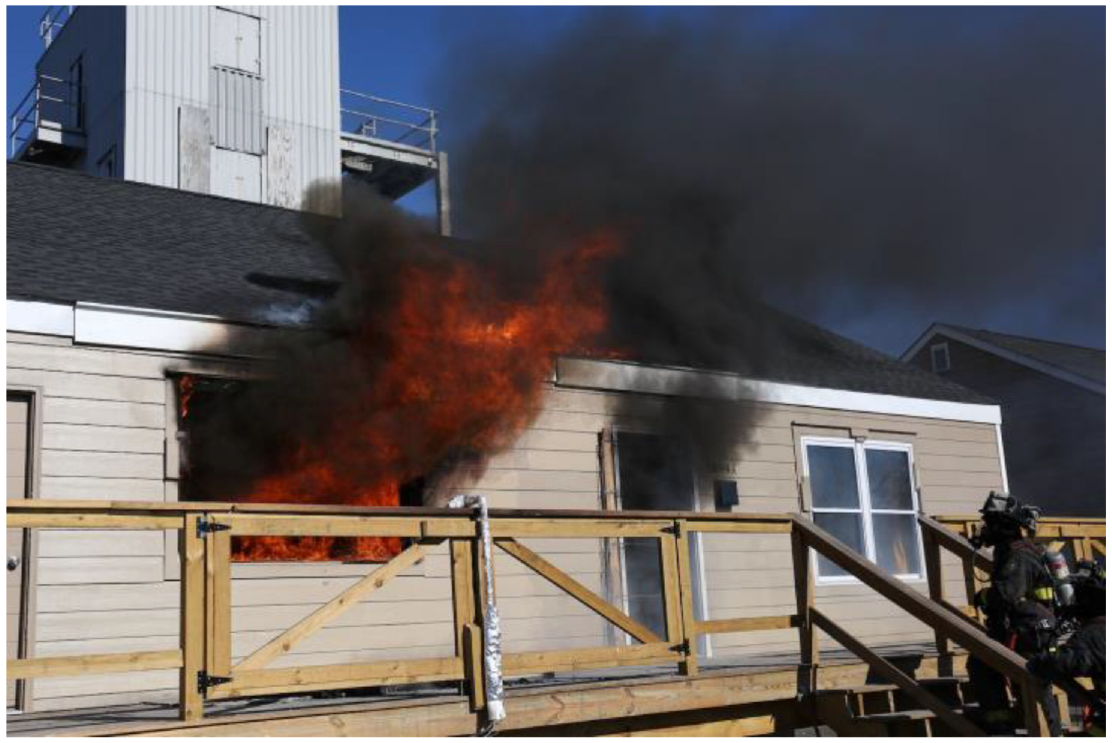
Postflashover photograph of fire extending from bedroom 4 (ignition room) window prior to suppression.
Figure 6 shows the time history of the thermal conditions expressed in terms of thermal operating classes corresponding to the 0.9 m temperature and heat flux for Experiment 10. The operating class in bedroom 4 increased from routine to Ordinary I 160 s after ignition. Temperatures exceeded 72°C (162°F) at the 0.9 m elevation as flames spread to the bed and there was rollover across bedroom 4 ceiling level and into the hallway. Flames in the hallway increased the mid-hallway heat flux to more than 2 kW/m2 which increased the thermal exposure to an Ordinary I operating class.
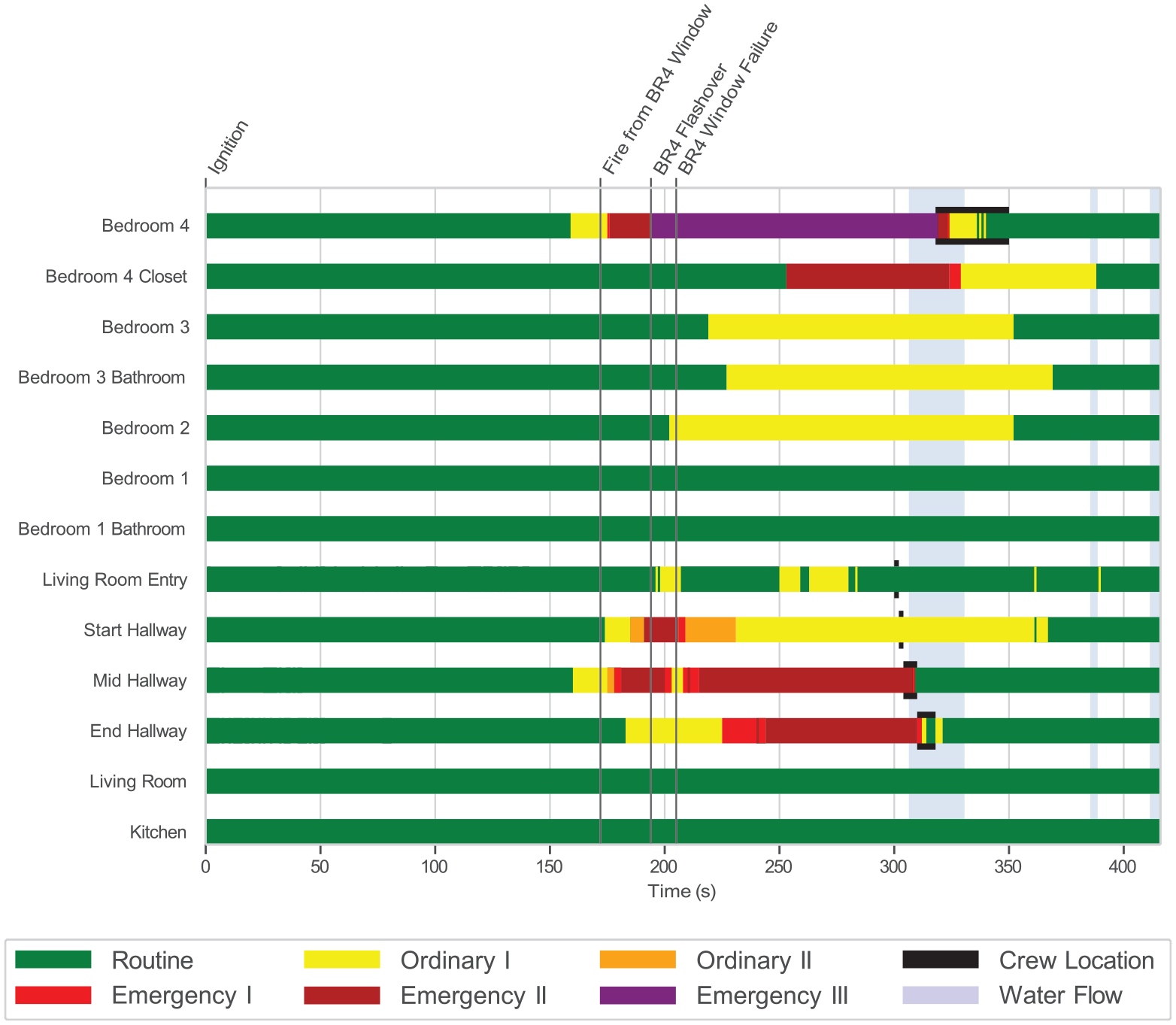
Comparison of thermal operating conditions based upon 0.9 m elevation temperatures and heat fluxes for an ignition in bedroom 4. The black bars represent the position of the suppression firefighters (Experiment 10 18 ).
Further flame spread across the bed and into the hallway over the next 15 s led to Emergency II operating classes in both bedroom 4 (0.9 m temperature in excess of 300°C (572°F)) and the mid-hallway (floor heat flux in excess of 12 kW/m2). As bedroom 4 reached a steady postflashover state at approximately 250 s after ignition (Emergency III), the end hallway location also increased to an Emergency II operating class due to the flame spread along the hallway carpet and accumulation of combustion gases. At the same time, the start hallway reached a steady Ordinary I exposure class (after a temporary increase to Emergency II as fire compartment flashed over) while the LR entry fluctuated between Ordinary I and routine levels as the open front door limited the accumulation of combustion gases. For bedrooms 2 and 3 where the hallway door was open through the duration of the experiment, the operating class reached Ordinary I level and 0.9 m temperatures peaked at approximately 160°C (320°F).
Figure 7 shows the corresponding thermal classes for the two firefighters on the suppression crew during the experiment. The firefighters entered the structure (front door in Figure 7), stayed low to the ground, and had routine thermal class exposures as they moved through the LR (entry in Figure 7). As the crew turned the corner to the start hallway location and began to flow water, the firefighters experienced consistent Ordinary I exposures which align with Figure 6. The heat flux ranged between 5–6 kW/m2, and temperatures ranged between 61°C and 83°C (142°F–181°F). A flow-and-move tactic was used—the crew kept the nozzle open throughout primary suppression (total of 26 s). The crew moved down the hallway toward bedroom 4 while continuing to flow water, at which point the thermal class of the nozzle firefighter increased to Ordinary II due to flaming combustion along the hallway carpet and combustion gases overhead (hallway in Figure 7). At this point, the peak heat flux reached approximately 11 kW/m2 and the peak reached temperature of 130°C (266°F). As the crew entered the bedroom (bedroom 4 in Figure 7), the thermal class of the nozzle firefighter spiked to the Emergency II (5 s total with a peak heat flux of 23 kW/m2 for 1 s) and then down to the Emergency I (7 s total) operating classes at which point the crew was able to effectively suppress the fire (Figure 7(a)). The peak temperature over this time period was 160°C (320°F), which showed that the thermal exposure was heat flux dominant. The thermal class exposure of the nozzle firefighter subsequently dropped to the Ordinary I and II levels buoyed by heat fluxes between 5 and 10 kW/m2 due to radiation from the fire compartment walls and ceiling. As part of this suppression effort, the nozzle firefighter spent a total of 23 s in the Ordinary II operating class, 7 s in the Emergency I operating class, and 5 s in the Emergency II operating class.
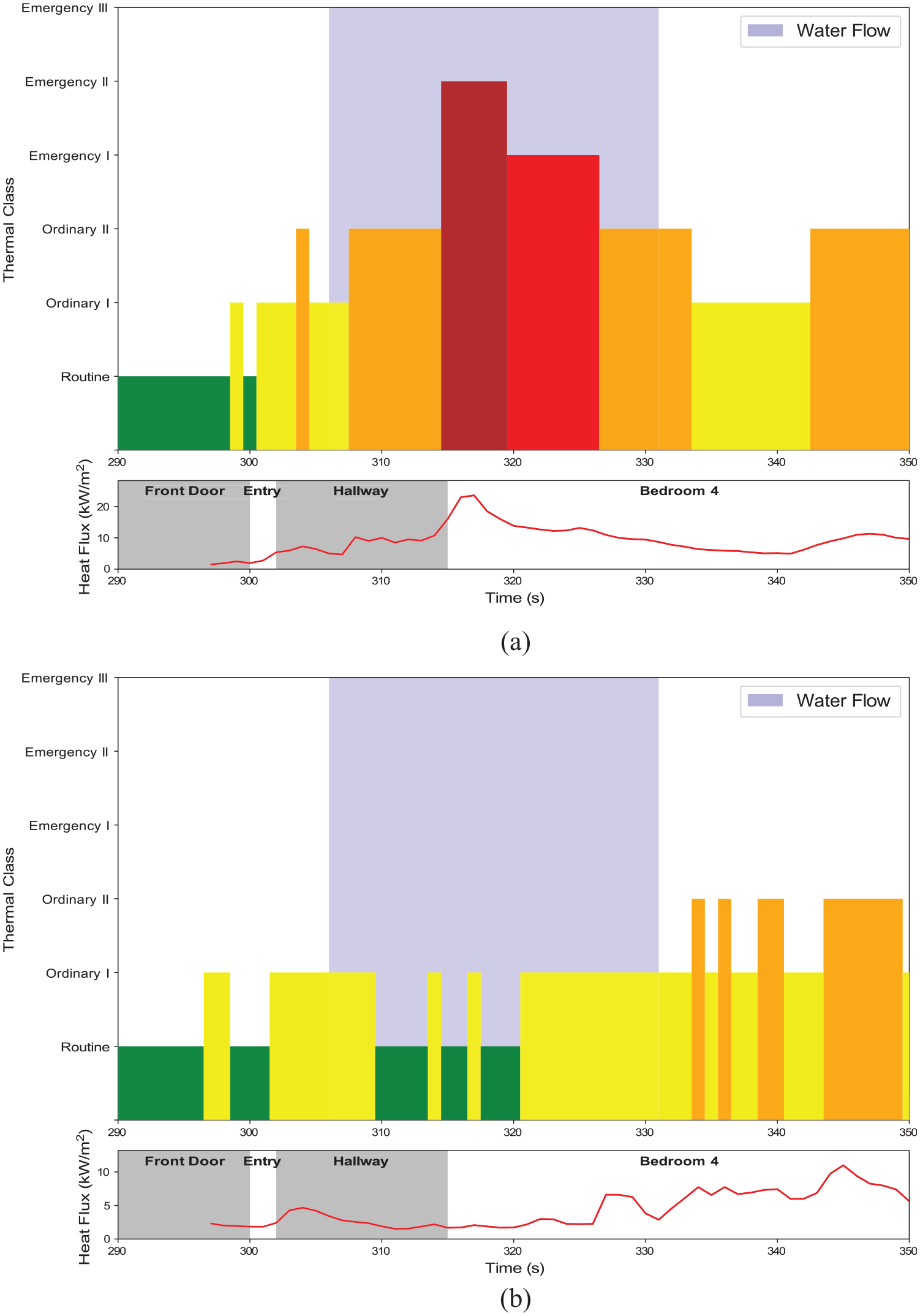
Thermal operating classes from helmets of firefighters on suppression crew for bedroom 4 fire (Experiment 10 18 ): (a) nozzle firefighter and (b) officer.
The officer had lower thermal operating class exposures compared with the nozzle firefighter as the officer was shielded from radiative heat transfer by being behind the nozzle fighter and also convectively cooled by the entrained air due to the flowing water from the hoseline (Figure 7(b)). Following the primary suppression, the thermal class of the officer increased from an Ordinary I (peak heat flux of 6.5 kW/m2 and peak temperature of 70°C (158°F)) to an Ordinary II level for 10 s as the firefighter stood up from a crouch to move back into the hallway to begin opening bedroom windows. Radiation from the walls and ceiling in both the fire compartment and hallway resulted in heat fluxes that fluctuated between 7 and 11 kW/m2 and temperatures that fluctuated between 78°C and 99°C (172°F–210°F).
Kitchen ignition
To assess the thermal class exposures to a suppression crew for a kitchen fire, consider Experiment 12 from the FSRI search and rescue study. 19 To simulate an unattended cooking fire, a 19 cm diameter aluminum cooking tray with 3/4 cup of canola oil was placed on a stand 13 cm above a 4 kW propane burner that sat on the kitchen counter. Once the oil reached its auto-ignition temperature, the burner was turned off. The flame produced by the oil spread to adjacent fuels on the counter and kitchen cabinets. At the time of ignition, both the kitchen window and front door were opened. The interior door to bedroom 1 was closed, while the doors to bedrooms 2 and 3 were opened. The open exterior vents provided sufficient ventilation for the kitchen and LR space to transition through flashover. At 1186 s (19 min 46 s), the kitchen flashed over, and 17 s later, 1203 s (20 min 3 s) after ignition the LR flashed over. At this point, the LR windows had failed and fire extended from the windows and open front door as shown in Figure 8.
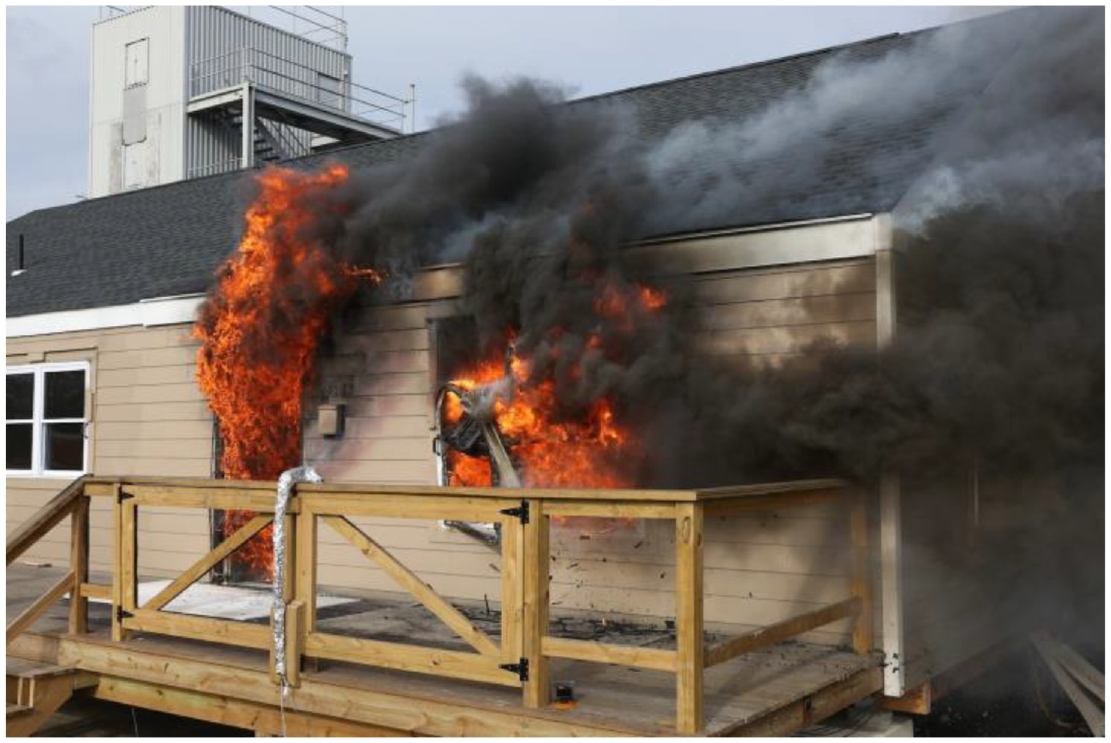
Postflashover photograph of fire extending from front door and living room windows for a fire that started in kitchen.
Figure 9 shows the time history of the thermal conditions through suppression expressed in terms of thermal operating classes corresponding to the 0.9 m temperature and heat flux for Experiment 17. Prior to suppression, the thermal operating class in the kitchen and LR increased to an Emergency III level with temperatures in excess of 750°C (1382°F) in the kitchen and 730°C (1346°F) in the LR. In addition, heat flux to the floor in the LR was in excess of 30 kW/m2.
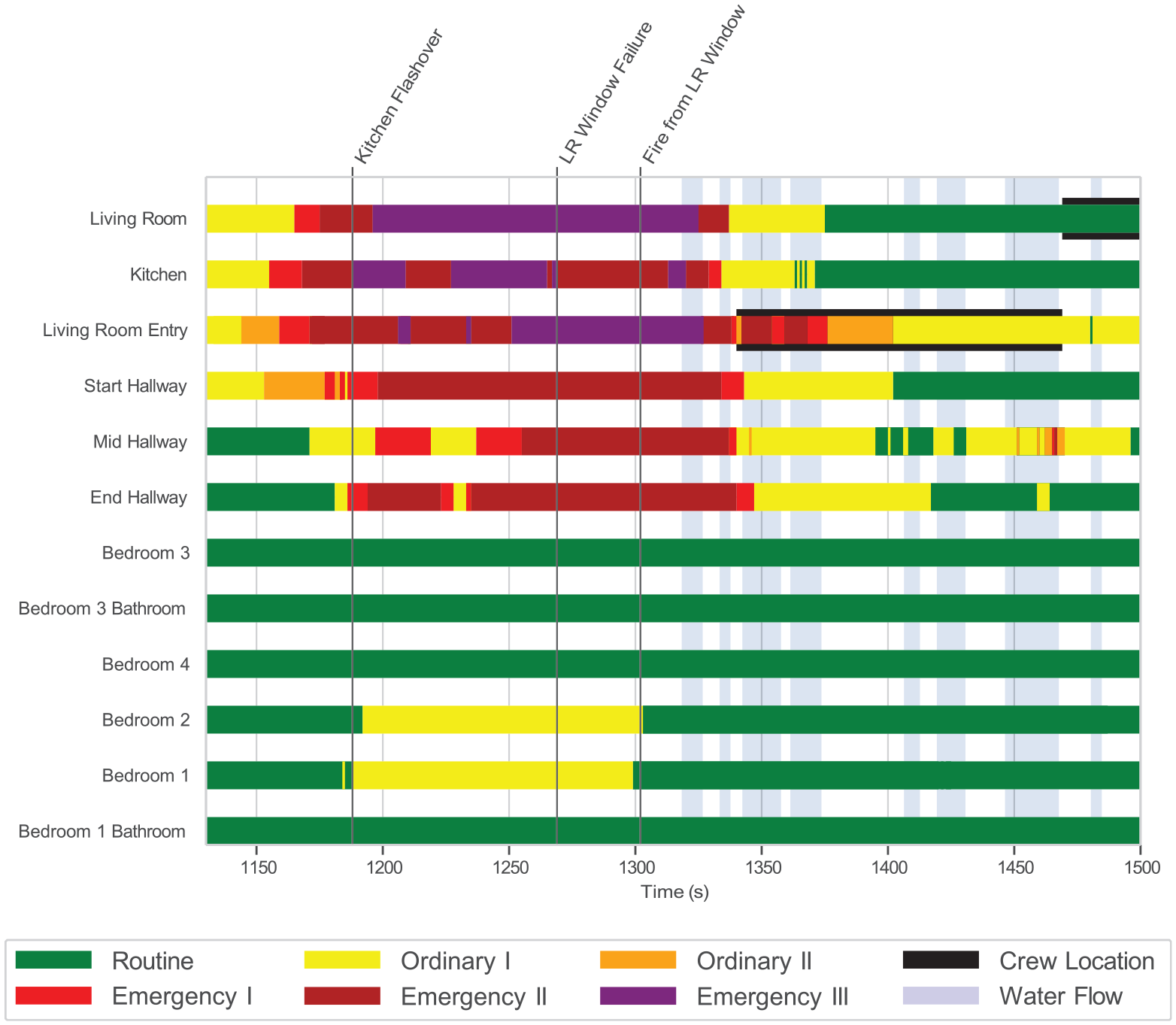
Comparison of thermal operating conditions based upon 0.9 m elevation temperatures and heat fluxes for an experiment with kitchen ignition and subsequent flame spread to the living room. The black bars represent the position of the suppression firefighters (Experiment 17 19 ).
Figure 10 shows the corresponding thermal classes for the two firefighters on the suppression crew during the experiment. Water flow was initiated from the front deck for 10 s. Once on the deck, but prior to suppression, the nozzle firefighter’s exposure spiked from a routine operating class to an Emergency II operating class for 4 s before dropping to Emergency I and Ordinary II levels as the firefighter utilized the reach of the stream to knock down flames which extended from the front door and LR window (front door in Figure 10). Heat flux peaked at 22 kW/m2 for 1 s while the temperature simultaneously peaked at 93°C (199°F) for 1 s. The suppression crew then moved to the threshold of the front door into the LR and flowed an additional 6 s of water. The nozzle firefighter remained in the Ordinary I thermal operating class. The thermal class of the nozzle firefighter increased back to Emergency I levels (8 s total) with a 1-s increase to Emergency II (heat flux increased to 16 kW/m2, and temperature increased to 130°C (266°F)) once the firefighter entered the structure (entry in Figure 9) to continue suppression. Water was flowed for an additional 17 s, which reduced the operating class of the nozzle firefighter down to an Ordinary II level (heat fluxes dropped to between 8–10 kW/m2 and temperatures between 69°C and 95°C (156°F and 203°F)). The last water flow as part of the primary suppression effort lasted 14 s and occurred as the crew moved through the LR to the kitchen. The heat flux to the nozzle firefighter steadily increased to 15 kW/m2 and 104°C (219°F) which resulted in a return to Emergency I conditions (6 s) and Emergency II conditions (1 s), before decreasing to Ordinary I and routine levels after the fire was extinguished. As part of this suppression effort, the nozzle firefighter spent a total of 29 s in the Ordinary II operating class, 19 s in the Emergency I operating class, and 6 s in the Emergency II operating class.
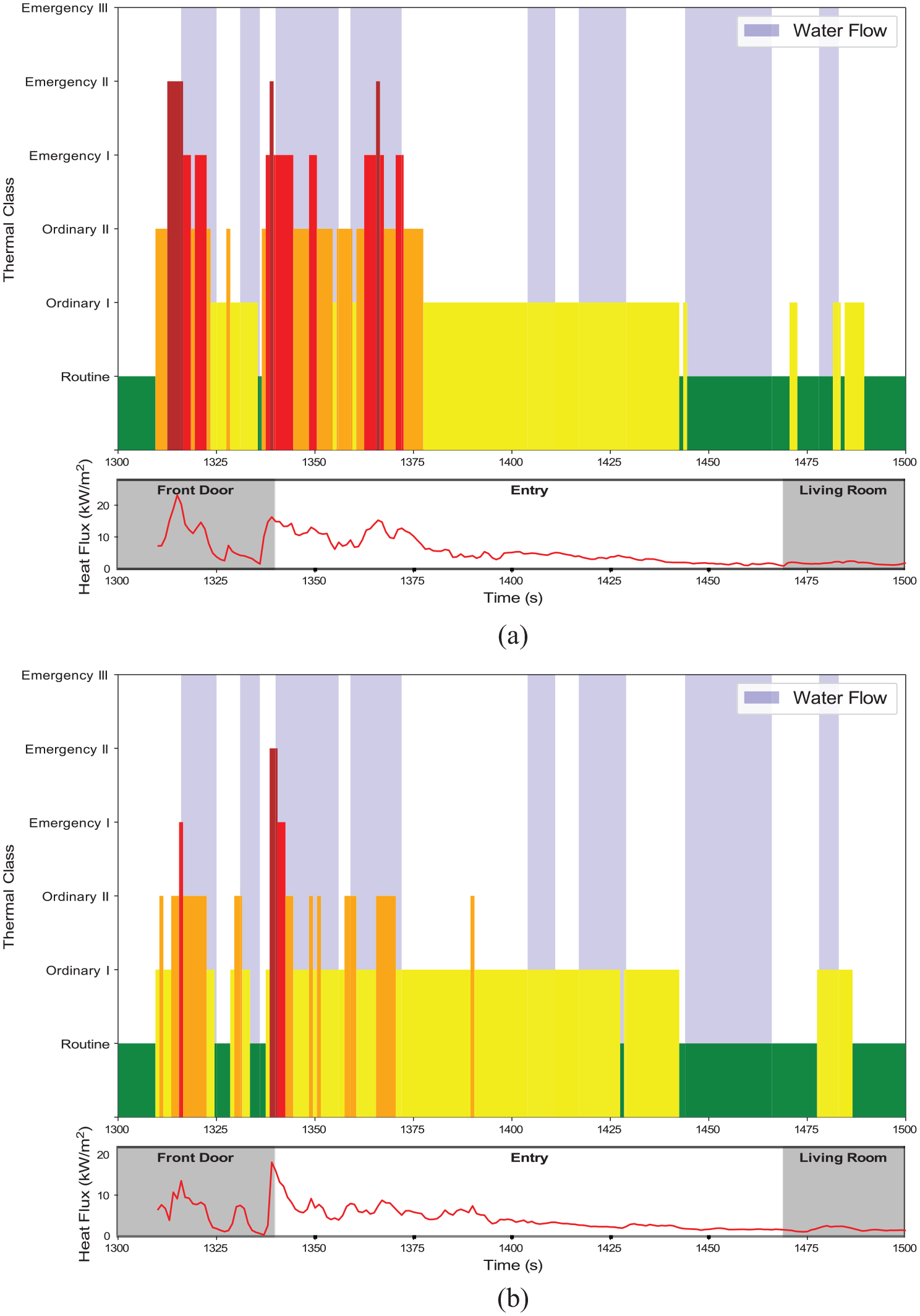
Thermal operating classes from helmets of firefighters on suppression crew during a kitchen fire with flame spread to living room (Experiment 17 19 ): (a) nozzle firefighter and (b) officer.
Similar to the bedroom fire experiment, the officer showed consistently lower thermal exposures compared with the nozzle firefighter. During the initial suppression actions from the deck, the officer was shielded from some of the radiative heat flux by the nozzle firefighter and convectively cooled by the entrained air due to the flowing water. The officer’s thermal class peaked upon entry to the structure, reaching an Emergency II level for 2 s with a peak heat flux of 18 kW/m2 and 118°C (244°F), as there were additional avenues for heat transfer due to the heated LR walls and ceilings and burning furnishings. Over the course of the suppression effort, the officer spent a total of 24 s in the Ordinary II operating class, 3 s in the Emergency I operating class, and 2 s in the Emergency II operating class.
Conclusion
The proposed thermal operating classes are largely based on the current state of testing for firefighter protective gear as defined by NFPA 1971 and NFPA 1981. The ordinary class represents the window of time that an SCBA cylinder will last and should, therefore, reflect working conditions that are below PPE thresholds. This class has been split in two to better reflect the observed degradation of SCBA facepiece lenses. The emergency class represents conditions under which a firefighter should immediately adjust their environment to return to ordinary operating conditions. The emergency class has been stratified into three subcategories based on both the limits of PPE and observed fireground conditions. The fidelity of these operating classes was assessed by examining exposure data to two-person suppression crews who wore instrumented firefighter helmets as part of a series of full-scale, live-fire experiments. The resulting time duration in the respective thermal classes aligned with the estimated time windows proposed as part of their definitions.
Consider the comparison between thermal class exposure times for the bedroom experiment nozzle firefighter, as detailed in Figure 11. Utech’s original ordinary operating class does not account for the observed thermal degradation of SCBA facepiece lenses at higher heat flux values. According to the updated thermal classes, 23 s was spent above this observed threshold in Ordinary II conditions, an important distinction as cumulative exposure over a longer duration may begin to impact the facepiece visibility.
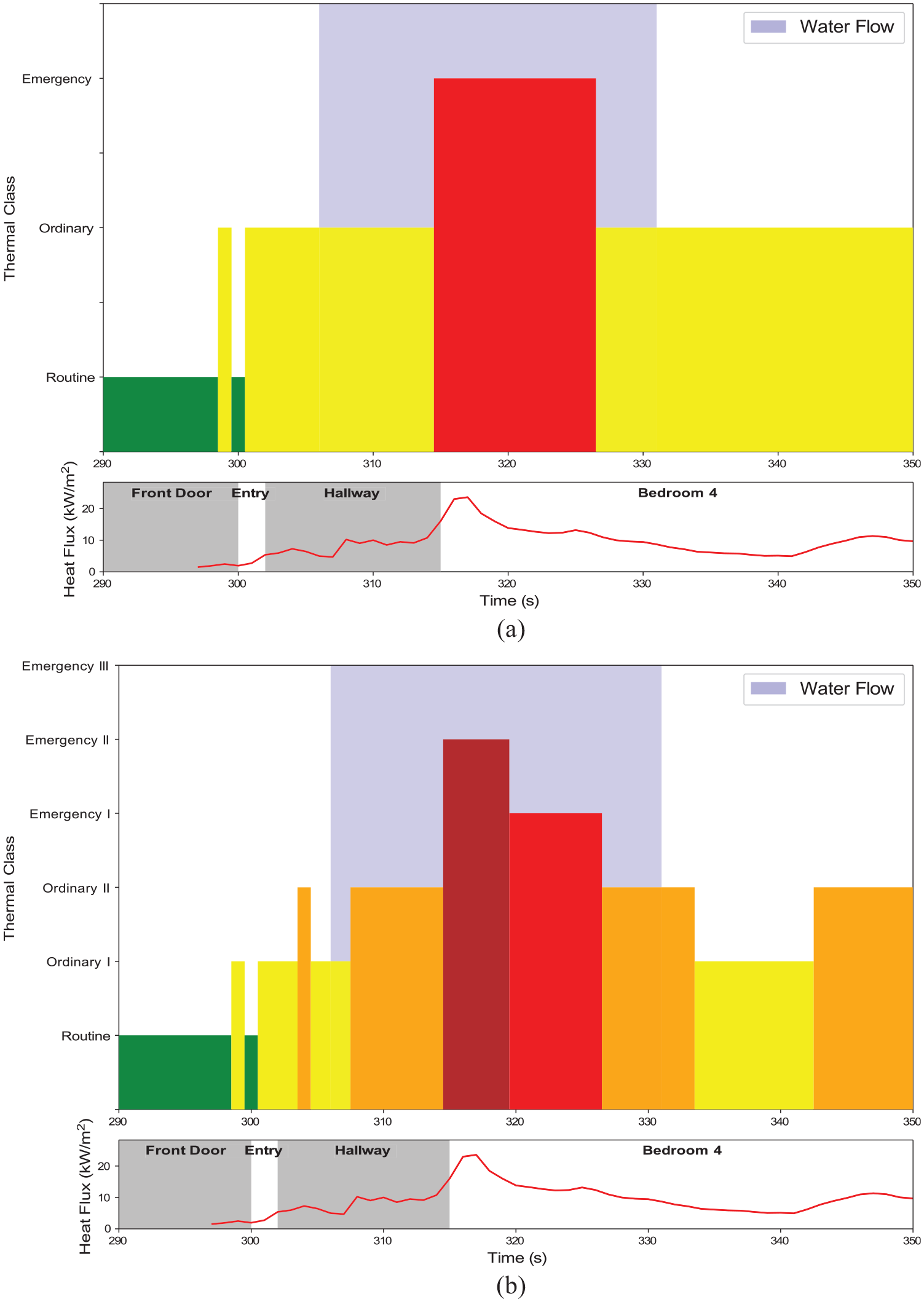
Thermal class comparison from helmets of firefighters on suppression crew during a bedroom fire (Experiment 10) 18 : (a) nozzle firefighter—Utech classes and (b) nozzle firefighter—updated classes.
Furthermore, the updated thermal classes show that effective firefighting tactics ensured that neither firefighter was exposed to Emergency III (flashover) conditions, despite evidence that the thermal class of the bedroom reached these exposures for more than 100 s presuppression (see Figure 6). A firefighter should never find themselves in flashover conditions if possible. Utech’s original emergency class encompasses a thermal range that includes both flashover and less extreme conditions that modern PPE is capable of withstanding for short a duration, and, therefore, fails to properly address the nuances that exist within this class. As evidenced by Figure 11, shorter duration in the Emergency I and Emergency II classes is not only manageable on the order of seconds, but they are expected, particularly during the suppression of a fully involved bedroom fire. The goal, however, is always for the firefighter to immediately adjust their environment to return to ordinary operating conditions, which in this case was accomplished via successful suppression efforts. The updated thermal classes not only demonstrate the thermal thresholds of modern PPE, but also when applied to experimental data, they better illustrate the realities of the firefighting environment and the responses of firefighters to that environment.
Footnotes
Declaration of conflicting interests
The author(s) declared no potential conflicts of interest with respect to the research, authorship, and/or publication of this article.
Funding
The author(s) disclosed receipt of the following financial support for the research, authorship, and/or publication of this article: This project was funded through a grant from the Department of Homeland Security (DHS) Federal Emergency Management Agency’s (FEMA) Assistance to Firefighters Grant (AFG) Program under the Fire Prevention and Safety Grants: Research and Development (EMW-2017-FP-00628).
