




Abstract
Regarding the problem that helicopters cannot spray live transmission conductors and wildfires directly under an insulator, we built a full-scale 500 kV insulator flashover test platform to simulate high-altitude helicopters spraying fire extinguishing agents. The chemical formulation, spray intensity, and fragmentation method of the fire extinguishing agents were varied. We simulated the breakdown characteristics of insulators when helicopters spray fire extinguishing agents, revealing the mechanism of high-altitude live fire extinguishment for high-spray-intensity and high-conductivity agents. Furthermore, an insulation performance verification test of a helicopter spraying live equipment at different flight speeds and altitudes was carried out, and the behavior of the fire extinguishing agents was divided into a five-zone diffusion law consisting of the (1) water column, (2) continuous water block, (3) semi-continuous water body, (4) large droplet particles, and (5) small droplet particles. We propose a spraying live transmission line method in which the helicopter flight height and speed jointly control the particle size of the fire extinguishing agent. When the particle size of the fire extinguishing agent at the terminal is controlled to 560–4000 μm, the insulation performance of the fire extinguishing agent can be effectively improved. During high-incidence periods of wildfires, such as the Spring Festival and Qingming Festival in 2023, on-site firefighting on the Hunan power grid was performed using helicopters to spray fire extinguishing agents from top to bottom through live transmission conductors to extinguish wildfire disasters directly below the transmission conductors. Neither transmission line flashovers nor power outages occurred when the fires were extinguished.
Introduction
Wildfires spread across a vast majority of countries in the world, including Canada, the United States, and China. For example, from 2016 to 2022, an average of 68,000 wildfires occurred in the United States every year, and the government spent an average of US$2.5 billion fighting wildfires, 1 resulting in huge economic losses. In particular, in 2015, wildfires in 11 states, including Washington and California, caused power outages for millions of people. 2 According to the statistics of the North American Electric Reliability Council (NERC), from 2000 to 2006, 638 wildfire trips occurred in US and Canadian power grids, causing 24 major blackouts and serious damage to the grids.
In rural areas of China, coal and liquefied petroleum gas have gradually replaced firewood as the main source of fuel. Residents no longer go up to the mountains to cut firewood.
Transmission line corridors are densely covered by trees, which increases the risk of wildfire hazards. Affected by the burning of wasteland during spring plowing and autumn harvest and grave activities, transmission line corridors are highly prone to large-scale wildfires, causing multiple lines to trip and power off simultaneously or successively3–5 and sometimes causing the power grid to collapse. Transmission line wildfire disasters have two characteristics: first, during high-incidence periods of wildfires such as the Spring Festival and Qingming Festival, most of the wildfires break out in a short period between 14:00 and 18:00; second, long-duration wildfire disasters are likely to cause repeated tripping of transmission lines and long-term power outages, such as the successive tripping of double-circuit lines on the same tower of the 220 kV Zhexiang Line I and Zhexiang Line II, and repeated tripping of the 220 kV Bilong Line. In August 2022, Sichuan, Chongqing, and other provinces in southern China continued to experience drought and severe power shortages, and large-scale wildfires occurred in many places in Chongqing. 6 The wildfires caused a power outage of more than 40 h for several important ultrahigh voltage (UHV) lines, including the 500 kV Luonan Line I and Luonan Line II of the outgoing line from the Banan power plant, and 18 wildfire trips on the 220 kV and above transmission lines of the Hunan power grid, exacerbating the tense situation of power supply. Therefore, wildfire disasters seriously affect the safe operation of UHV lines and large power grids, and there is an urgent need to carry out technical research on the prevention and control technology of power grid during wildfires.
In recent years, Wuhan University, State Grid Hunan Electric Power Co., Ltd., Zhejiang University, and other units have carried out extensive research on the prevention and control of wildfire disasters on transmission lines,2,7–10 mainly focusing on the tripping mechanism of transmission line wildfires,7,8 manmade wildfire prediction, 9 wide-area satellite monitoring, 2 live fire extinguishing, 10 and other aspects, all of which play an important role in the prevention and control of transmission line wildfire disasters. Among the abovementioned prevention and control technologies and measures, fire extinguishment is the most effective means to avoid transmission line tripping. The research of the US Department of Forestry has found that the best time to put out a fire is within a few hours after the fire has broken out. 11 According to statistics, wildfires usually cause line trips within 1–1.5 h after occurrence, and the demand for timely response to wildfires near transmission lines is higher than that to forest fires. Rural roads are severely congested during periods of high-frequency wildfires, such as during the Qingming Festival and Spring Festival. It can take up to 4 h for fire engines to travel along the road from departure to the location of the wildfire, causing delays in extinguishing the fire. Moreover, after the wildfires have spread, there is a high safety risk for firefighters. In 2019 and 2020, the Liangshan wildfires in Sichuan, respectively, caused 31 and 19 firefighters to die heroically. The power grid companies of various provinces are worried about the safety of personnel and have not fully applied ground fire extinguishing measures, and the prevention and control of wildfire disasters in power grids have not been effectively resolved.
In addition to the fast flight speeds of helicopters, fire extinguishment via helicopters is not restricted by traffic and terrain, and the fire fighters do not directly contact the fire site, which vastly improves their safety. However, the voltages of transmission lines can be as high as 1000 kV, and there is a safety risk of line tripping when spraying at high altitudes by helicopters. The application of helicopter spraying fire extinguishment on live transmission lines has not yet been realized internationally. In addition, spraying fire extinguishing agents can easily lead to flashover and the tripping of lines, so, helicopters often do not deal with wildfires directly below transmission lines when extinguishing fires. Moreover, existing research has shown that the insulation performance of fire extinguishing agents is improved after atomization, and when the droplet diameter is less than 400 μm, the insulation performance of water mist is favorable. 12 Therefore, when water mist is used to extinguish fires, it is possible to achieve live fire extinguishment when the droplet diameter is small enough and the insulation distance is long enough.13,14
Experience in spraying live equipment by helicopters on existing transmission line wildfires has come from rain tests of insulators and gaps. High-altitude (the height of the sprinkler port of the bucket from the ground is greater than 10 m and less than 100 m) helicopter spraying of fire extinguishing agents releases 1–5 tons of fire extinguishing agent within 5–20 s. If it is calculated on the basis of uniform spraying in the range of 150 m × 8 m, the spray intensity per unit area is 8 and 40 mm/min, respectively. According to historical rainfall records and the maximum instantaneous rainfall intensity calculated in Yao, 15 the instantaneous value of rainfall intensity is 2.6–12.4 mm/min during heavy rain and extreme rainstorms. However, the instantaneous spray intensity of high-altitude helicopter fire extinguishment is dozens of times higher than the instantaneous maximum value of heavy rain and extreme rainstorms. In addition, the rain test does not consider the influence of factors such as high-conductivity fire extinguishing agents (conductivities >30,000 μS/cm) and spraying methods. The existing operating procedures require helicopters to cut off power to extinguish wildfires near transmission lines. The transmission power of important lines such as UHV lines can reach millions of kilowatts, making it difficult to cut off the power and put out the fire. Studies have shown that the finer the atomization of the fire extinguishing agent, the lower the conductivity.16–18 However, when extinguishing a fire at high altitude, the faster the flight speed and the higher the altitude, the finer the atomization and the lower the fire extinguishing efficiency. In these cases, ground-based high-pressure atomization fire extinguishing technology cannot be applied to helicopter live fire extinguishment. Therefore, there is the urgent need to develop helicopter live fire extinguishing technology and equipment for transmission line wildfires.
In this study, a helicopter spraying a 500 kV insulator test was simulated by changing the fire extinguishing agent formulation, spray intensity, droplet size, spraying method, and so on, to obtain the breakdown characteristics of the insulator under these changing conditions and to determine whether the insulation requirements were met. A diffusion test of a high-altitude helicopter spraying a fire extinguishing agent was carried out under different flight altitudes and flight speeds to obtain the distribution of fire extinguishing agents that meet the insulation requirements and the corresponding fire extinguishing agent droplet size. This article continues with the following parts: Part II describes the spraying live equipment test program using helicopters and discusses the test data and phenomena. Part III provides a method to improve electric insulation performance of fire extinguishing sprayed from helicopter. Part IV describes an application based on the test results. Finally, Part V serves as a summary.
Test: a helicopter spraying live equipment during transmission line wildfires
Test plan
Test principle
The insulation performance of the phase-to-earth and phase-to-phase gaps of transmission lines is higher than that of insulators of the same voltage level. Therefore, this article selects insulators with higher requirements for helicopter fire extinguishing insulation performance to carry out a test of spraying live equipment. A test of a helicopter spraying 500 kV transmission line insulators is carried out to test the flashover of insulators caused by the helicopter spraying a fire extinguishing agent under different flight conditions.
A test platform consisting of a full-scale helicopter spraying 500 kV live transmission lines during a wildfire is used to examine different fire extinguishing agents, spraying intensities, and spraying methods, as shown in Figure 1. The test platform is located at Xiaoshajiang Natural Disaster Test Site, Longhui County, Shaoyang City, Hunan Province, and includes three parts: a power supply simulation device, a live spraying platform, and a flashover measurement system, as shown in Figure 2. Among them, the fire engine and its water delivery system are used to simulate the spraying of fire extinguishing agents under different conditions. The helicopter and buckets are used to verify the electric insulation performance of fire extinguishment by carrying out a spraying test involving actual insulators for transmission line wildfires. The bucket was can hold 600 kg of fire extinguishing agent.
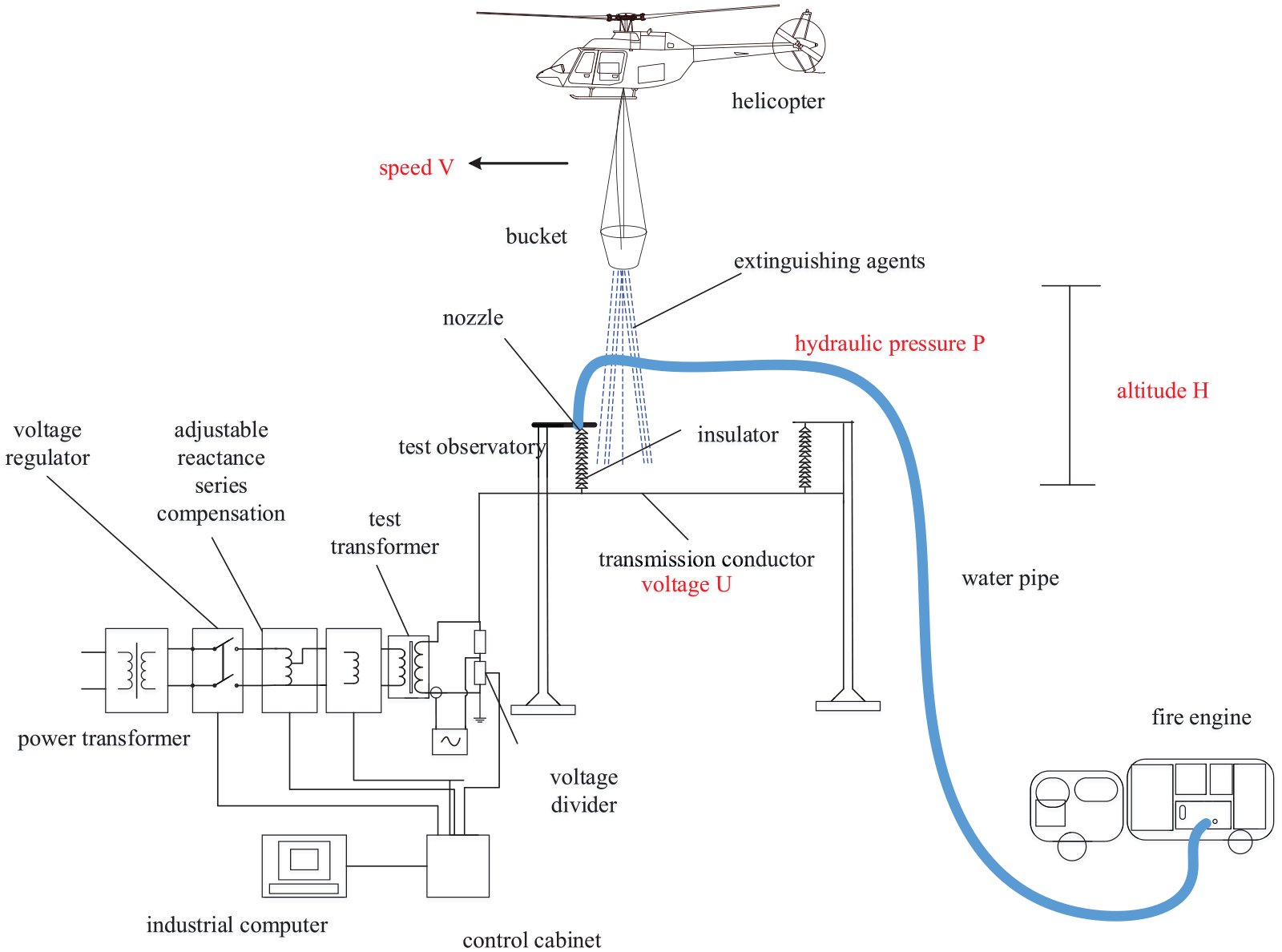
Test principle of spraying live insulator equipment.
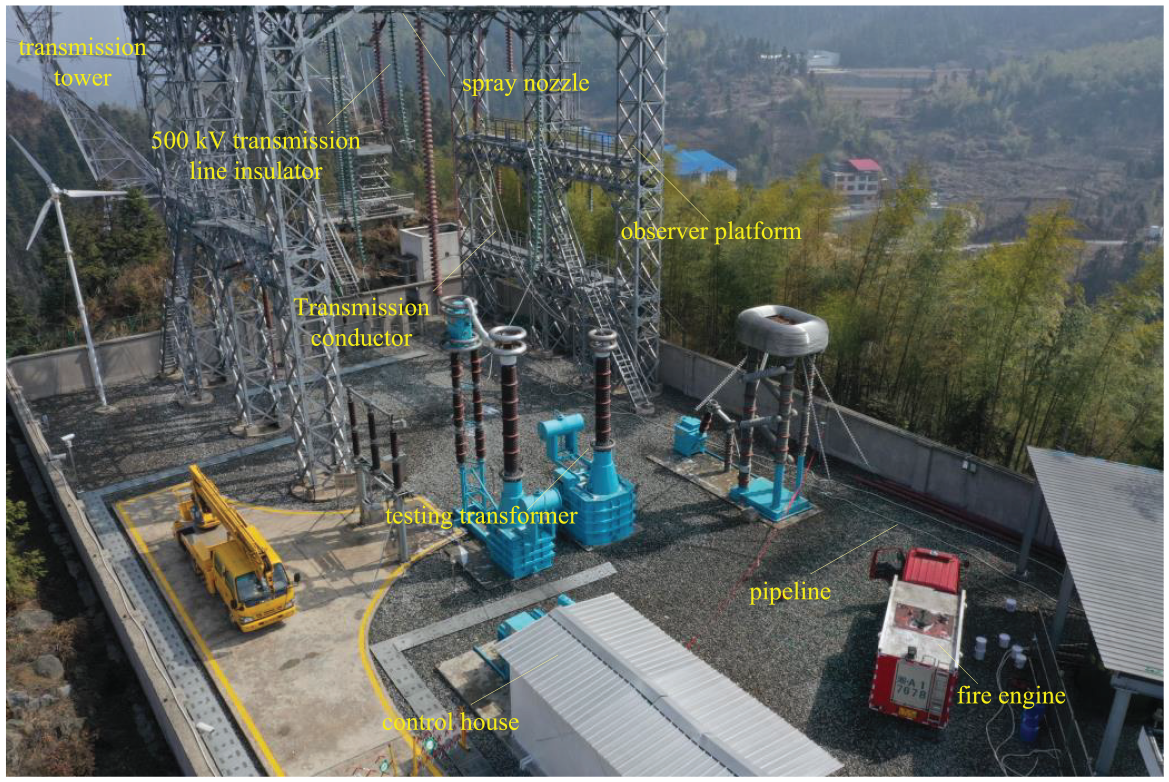
Spraying real objects during the live insulator test.
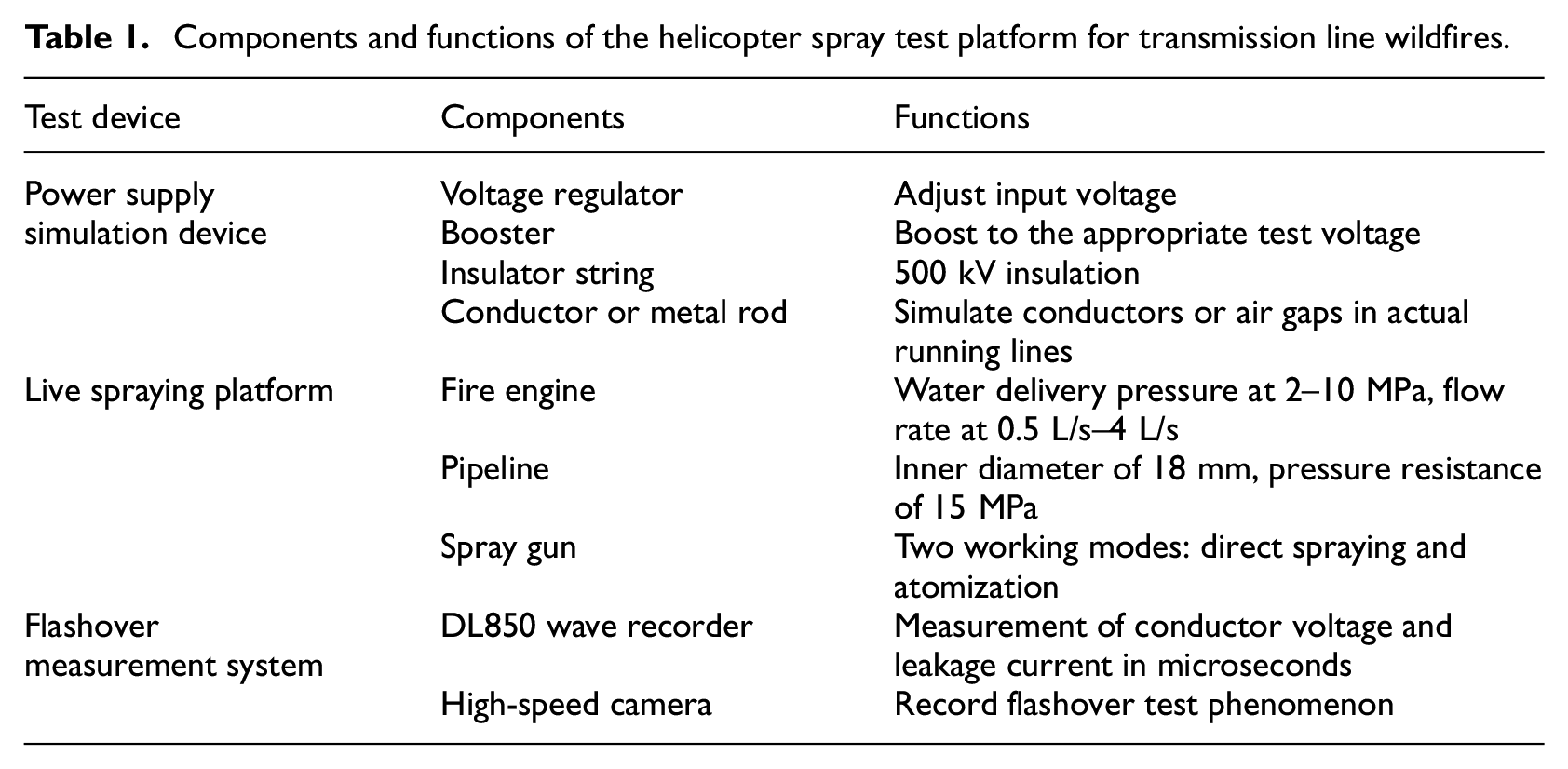
Table 1 shows the components and functions of the helicopter spraying live equipment test platform. The transmission line simulation device mainly includes voltage regulators, boosters, conductors, line protection devices, circuit breakers, and so on, which are used to simulate an actual power grid and lines. The simulation spraying platform is used to simulate the spray intensity and droplet size of the fire extinguishing agent sprayed by the helicopter, and the pressure, spray intensity, natural fragmentation/atomized fragmentation, and top spraying/side spraying can be adjusted. The measurement and analysis devices include wave recorders, cameras, and so on, which are used to measure the tripping parameters of the sprayed live insulators.
Components and functions of the helicopter spray test platform for transmission line wildfires.
The Xiaoshajiang Natural Disaster Test Site is equipped with electrical power supply equipment, and the test power supply can be boosted to a single-phase 330 kV with a power supply capacity of 750 kVA. The specific parameters are as follows:
(a) AC testing transformer.
Model: CQSB(J): 750 kVA/500 kV/0.6 kV.
Rated capacity: 750 kVA. Rated output voltage: 500 kV.
Rated input voltage: 600 V. Rated input current: 1250 A.
No-load current: 2.37%. Impedance voltage: 12.76%.
(b) Compensation reactor.
Model: CHX(L): 500 kVA/600 V.
Rated capacity: 500 kVA. Rated voltage: 0.6 kV.
Rated current: 833.33 A. Rated frequency: 50 Hz.
(c) Electric voltage regulator.
Model: DT: 200 kVA/0.38 kV/0–0.65 kV.
Rated capacity: 200 kVA. Input phase number: three phases.
Working frequency: 50 Hz.
Rated input voltage: 380 V. Rated input current: 526.3 A.
Output voltage range: 0–650 V. Rated output current: 333.33 A.
Glass insulators used in the simulated spray test
In the simulation test, glass insulator strings are used as the object for high-altitude helicopter spraying. Its specific parameters are as follows: U240B/170, standard type of 400 mm, nominal diameter, Dins, of 280 mm, and a structural height, Hins, of 170 mm, as shown in Figure 3. There are 28 single insulator strings, each with a length of 4.76 m, and the distance from the hanging point to the equalizing ring is 6.72 m, as shown in Figure 4.
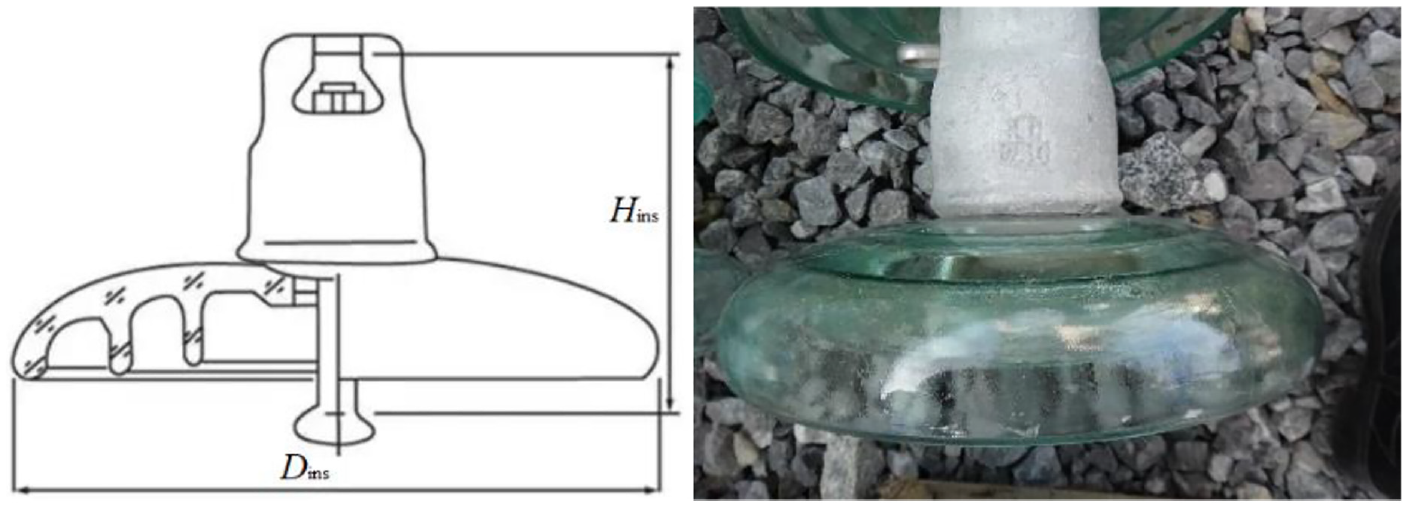
Structure of the U240B/170 insulator pieces.
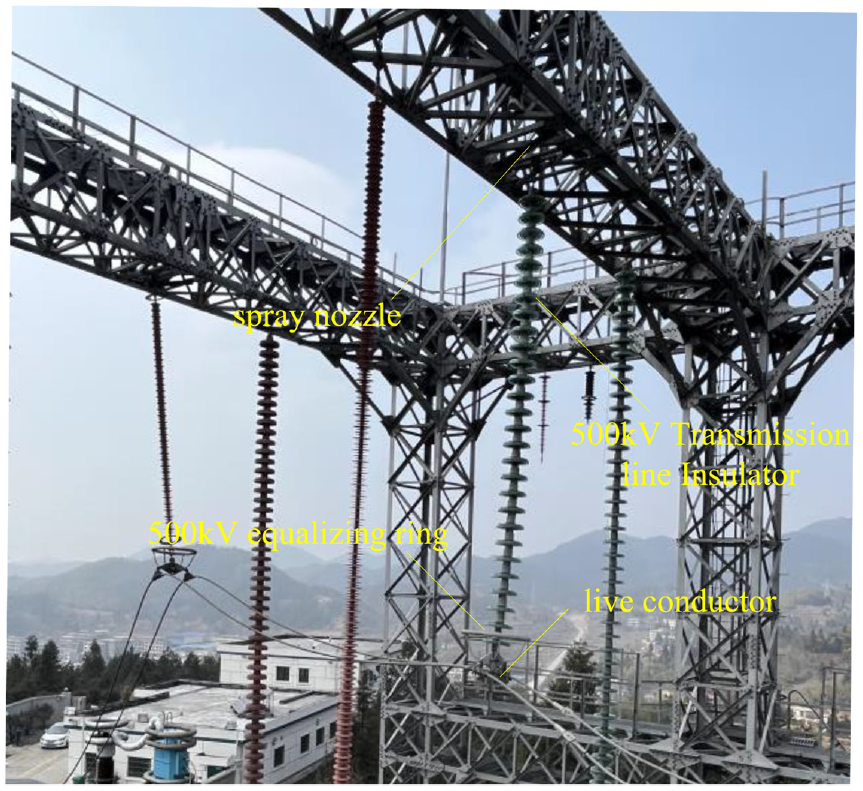
Picture of the test insulator.
Measurement device used for the simulation
The high-voltage terminal current of the test equipment is mainly collected by a YOKOGAWA DL850E oscillographic recorder. The sampling rate is 100 S/s–100 MS/s. The conductivity of the fire extinguishing agent is measured with a Leici DDS-307, which has a measurement range of 0.00–2,000,000 μS/cm and a resolution of ±0.5% (F·S).
Test methods used in the simulation
In this article, two methods are used to simulate the impact of a helicopter spraying a fire extinguishing agent on insulation performance. One is to use the average flashover voltage obtained by uniform boosting during the continuous spraying of the fire extinguishing agent by the helicopter’s fire extinguishing device, 19 and the other is to apply a 500 kV phase voltage to the insulator to simulate a short-duration (5, 10, and 20 s) flashover voltage while the fire extinguishing agent is being sprayed on the insulator during the flight of the helicopter.
The test steps for continuously spraying the fire extinguishing agent to obtain the flashover voltage are as follows:
Step 1. After arranging the insulators and wood stacks according to Figure 2, adjust the relative position of the simulated nozzle and the test insulator.
Step 2. Start the fire engine to spray the fire extinguishing agent, adjust the pump speed, and start to apply the voltage and gradually increase the voltage after the fire extinguishing agent is sprayed stably. When there is an obvious low-frequency corona discharge noise such as “squeak” on the surface of the insulator, slow down the voltage boosting speed and adopt the withstand method; that is, each time the voltage is raised once, withstand for 1 min. If no breakdown occurs, continue to increase the voltage at 5 kV/5 s, and repeat this step until breakdown occurs. Conduct three to five breakdown tests under the same conditions.
Step 3. After the flashover test is over, use a fire engine to spray pure water to clean the surface of the insulator for 10 min, so as to avoid the impact of the previous spray test on the breakdown characteristics of subsequent tests.
Step 4. Change the type of fire extinguishing agent, fragmentation method of the fire extinguishing agent, the spray intensity, and so on, and repeat Steps 1–3.
We take the lowest three test results among the flashover tests, repeat the above test steps, and then take the average value of all test results as the flashover voltage,


where
Parameters of the fire extinguishing agents
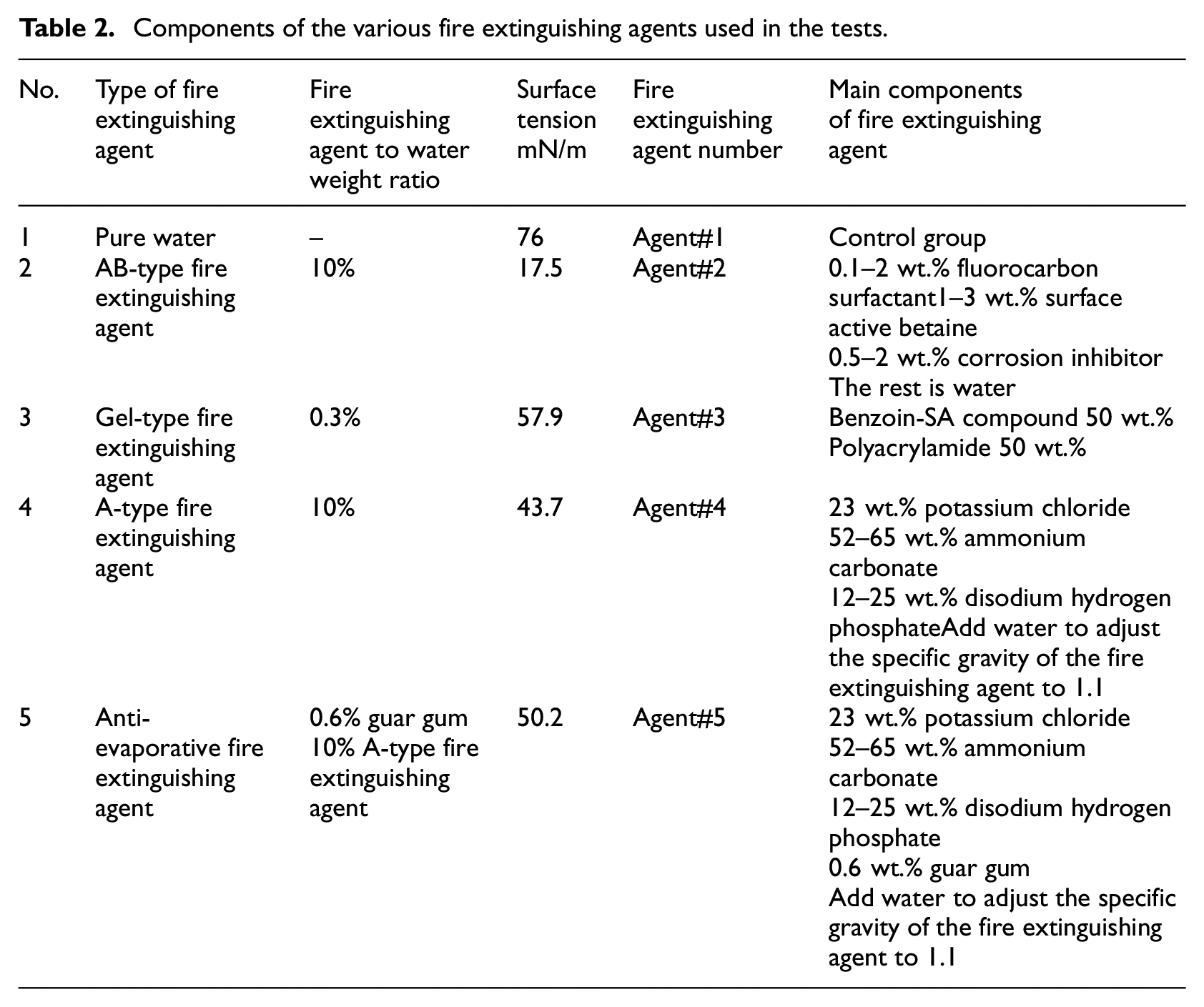
Pure water (agent 1), AB-type (agent 2), gel-type (agent 3), A-type (agent 4), and A-type + guar gum (hereinafter referred to as an “anti-evaporative fire extinguishing agent”; agent 5) are selected as the fire extinguishing media in the comparison tests, where we determine the extinguishing performance and temperature recovery ability of each. The formulations and instructions for the various fire extinguishing media are shown in Table 2.
Components of the various fire extinguishing agents used in the tests.
Equivalence analysis of the simulation test and the verification test
Test plan for the helicopter spraying fire extinguishing agents
To carry out the simulated helicopter fire extinguishment test, it is necessary to obtain the water volume distribution of the sprayed fire extinguishing agent at high altitude. The interval between the liquid storage containers in the flight direction is 4 m, and their interval in the vertical flight direction is 2 m. The helicopter bucket sprays the fire extinguishing agent from a high altitude, and the weight of the fire extinguishing agent in the liquid storage container can be measured to obtain the depth of the fire extinguishing agent at each storage container placement point. Combined with the depth of the fire extinguishing agent in the spray area of the helicopter, the distribution parameters of the high-altitude spraying of the fire extinguishing agent are obtained, as shown in Figure 5. In order to obtain the distribution parameters of the fire extinguishing agent under different flight conditions, the spray height and flight speed are selected as variables. 20
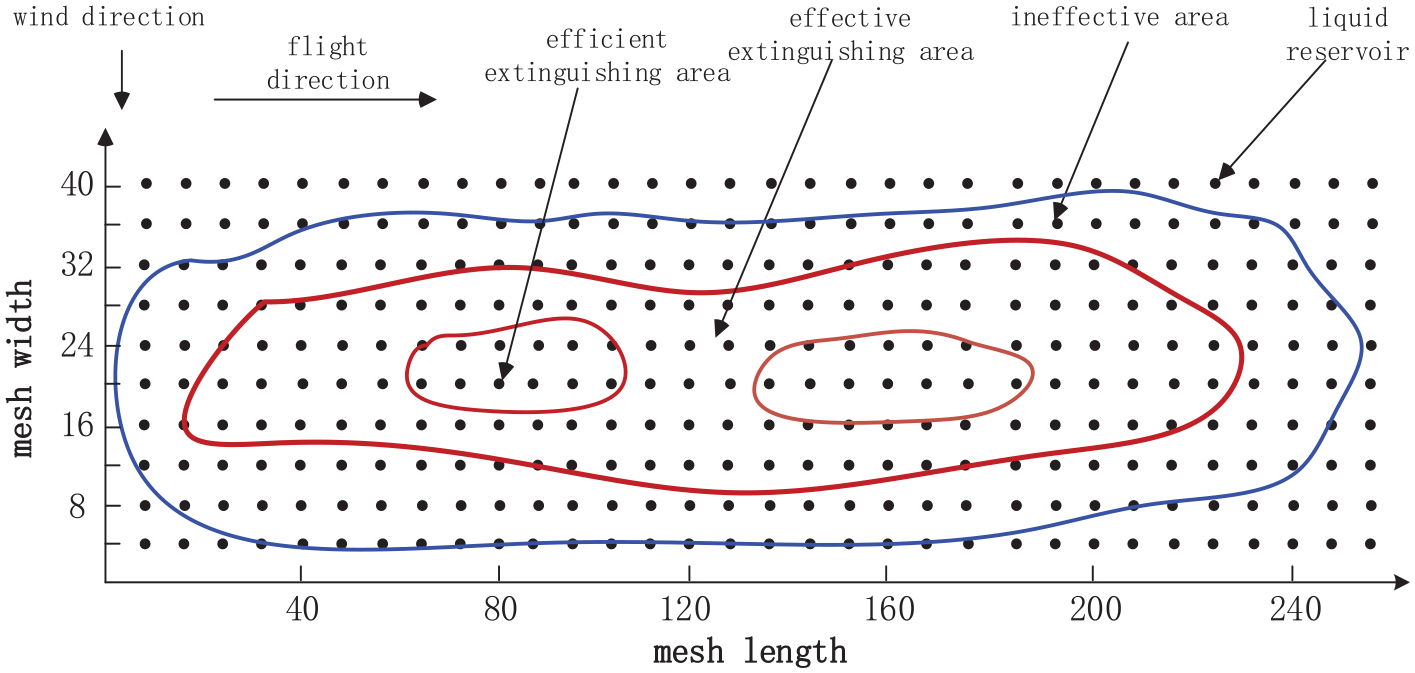
Test principle of the helicopter spraying the fire extinguishing agent.
Steps in the helicopter spray test
The steps for the helicopter high-altitude spray test are as follows:
1. Positioning of the spray starting point. Calculate the free fall time, tm, of the fire extinguishing agent at the spraying height set in the test. Then calculate the distance, Lm, of the helicopter spray device at the minimum speed, Vm, within the time, tm. To ensure that the fire extinguishing water agent is sprayed in the measuring area, the start point of helicopter spraying should be extended by 1.5 Lm in the opposite direction of the test area boundary.
2. Test the temperature, humidity, wind speed, and wind direction at the test time point.
3. Add water to the water cannon fire engine using the fire hydrant and add water to the helicopter spraying fire extinguishing device/take water from the bucket.
4. Flight spraying. After the flight stabilizes, fly over the test area at a fixed speed, height, and direction. Open the valve at the Lh position before entering the test area to spray the fire extinguishing agent, and return to land after flying over the test area.
5. Data recording. Weigh the fire extinguishing agent receiving container together with the fire extinguishing agent. Record the weight data, and then pour out the fire extinguishing agent in the receiving container and place it in its original position.
6. Change the spray height, flight speed, spraying method, fire extinguishing agent viscosity, and spray intensity of the helicopter spraying fire extinguishing device, and repeat Steps 2–5.
7. Use the interpolation method to obtain the falling amount of fire extinguishing agent at each point in the test area, and connect the equal agent lines to obtain the range and distribution of the falling area of the fire extinguishing agent.
It is worth noting that this study is based on the following ideal states:
1. Each helicopter spray test requires measuring the amount of fire extinguishing agent over 500 liquid storage containers, which takes about 0.2 h, and any evaporation of the fire extinguishing agents during the data collection is ignored. However, to minimize the impact of the evaporation of the fire extinguishing agent on the test, the test is carried out in weather with a temperature lower than 15°C.
2. During the test period at the airport, the wind speed is less than 0.3 m/s, and the influence of the wind speed on the distribution parameters of the fire extinguishing agent is ignored.
Distributions of the fire extinguishing agent
To overcome the influence of random factors (environmental wind, flight control accuracy, etc.) and other factors in each test, three tests are conducted for each test type, with two similar test data points selected. Figure 6 shows the spray test results of a helicopter bucket carrying a fire extinguishing agent at a height of 30 m and a flight speed of 50 km/h.
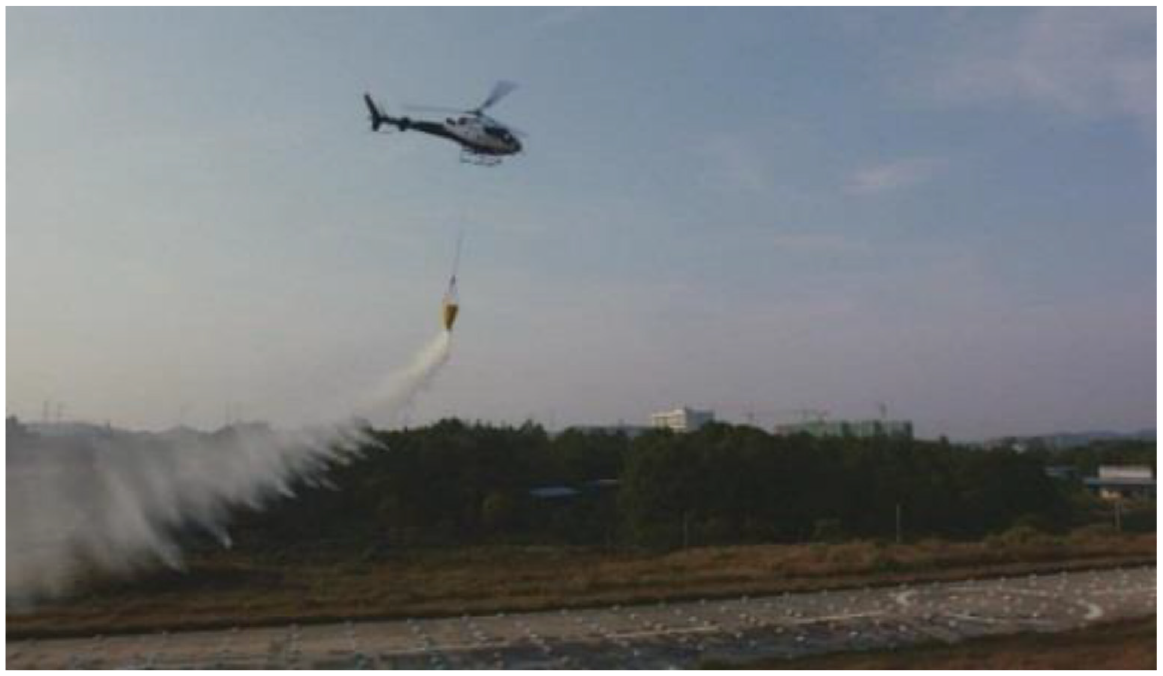
Helicopter spraying/fire extinguishing test.
We subtract the mass of the liquid storage container (0.3176 kg) from the recorded total weight of each liquid storage container to determine the actual weight of the fire extinguishing agent in the liquid storage container. The diameter of the liquid storage container is 0.35 m, and the total surface area of the liquid storage container is 0.09616 m2. We then convert the density and coverage area of the fire extinguishing agent into the the depth of the fire extinguishing agent per square meter (CPS) at the measurement point. Assuming the spray area of the fire extinguishing agent at a certain depth range is evenly distributed, we obtain the distribution of the fire extinguishing agent, where the water depth (CPS) is used as the performance index of the distribution parameter.
Distribution law of the sprayed fire extinguishing agents
Figures 7 and 8 show the distributions of the fire extinguishing agents. Figure 7(a) shows the process of high-altitude spraying of the fire extinguishing agents by the helicopter. Figure 7(b) shows the distribution of the fire extinguishing agents sprayed at a height of 30 m, and Figure 7(c) shows the distribution for a height of 50 m. The depth of the fire extinguishing agent in the spray area has been quantified using the data in the figure, which correspond to depths ranging from 0 to 1.6 mm, and have been divided into eight levels with a step size of 0.3 mm. It can be seen from the figure that the distribution of the fire extinguishing agent depths is discontinuous. As shown in Figure 8(a), there are three discontinuous regions for depths of 1 mm. As the fire extinguishing agent is inconsistently affected by external forces such as air resistance and the ambient wind speed during diffusion, the fire extinguishing agent aggregates and decomposes in the process of falling, so it is not evenly distributed despite being uniformly sprayed.
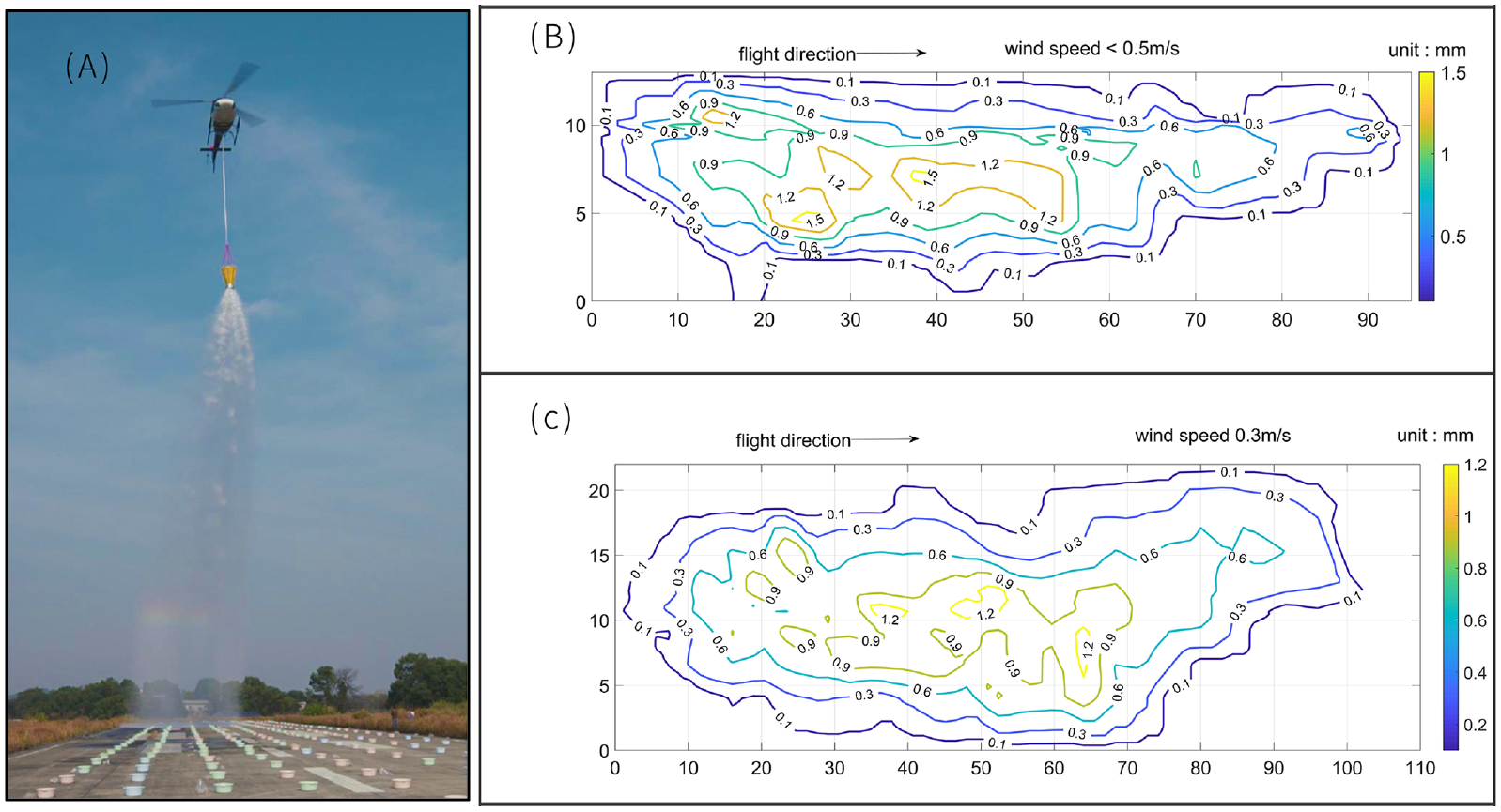
Distribution parameters of the fire extinguishing agent sprayed by the helicopter at a flight speed of 50 km/h: (A) spraying process, (B) 30 m height, and (C) 50 m height.
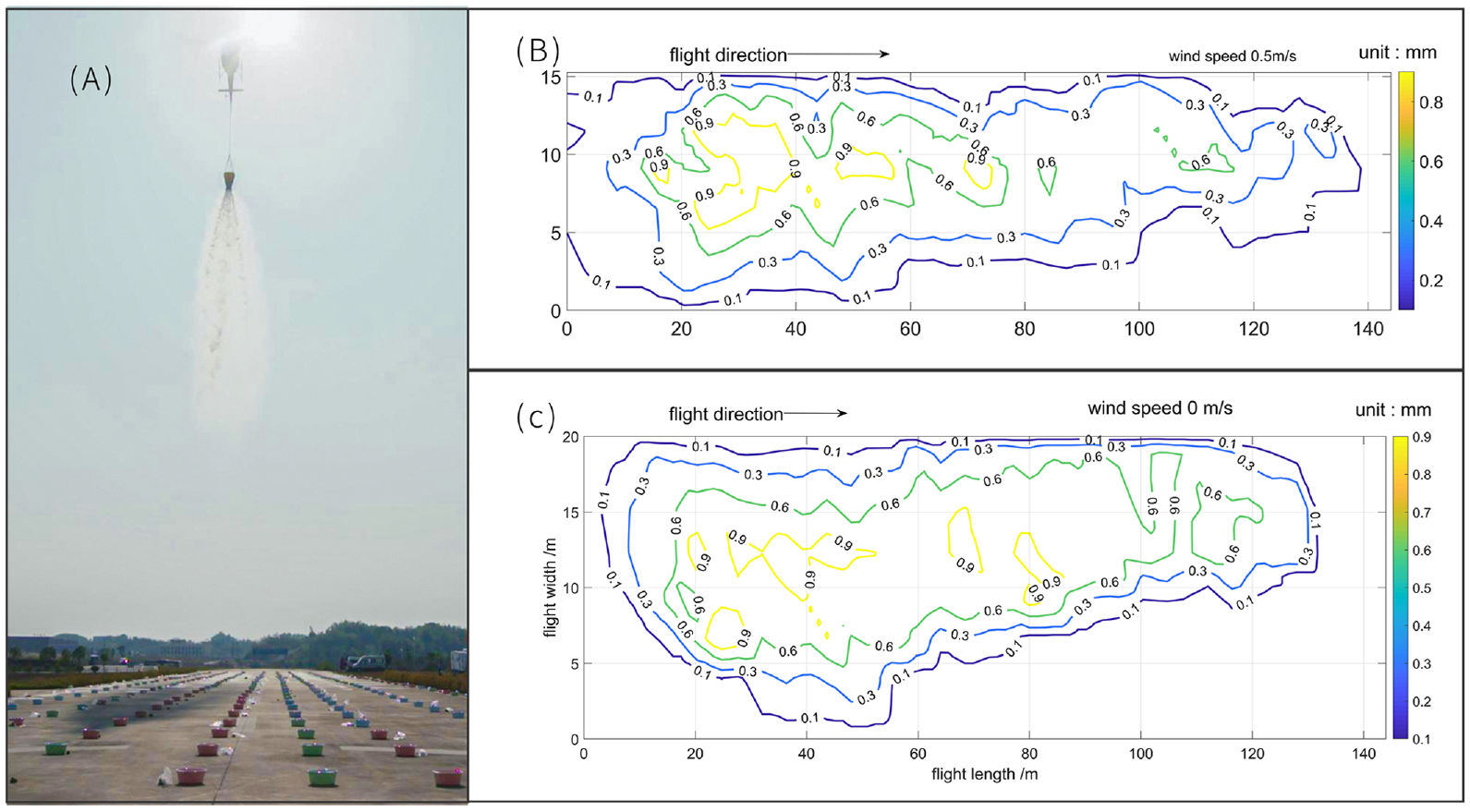
Spray test at a flight speed of 70 km/h: (A) spraying process, (B) 30 m height, and (C) 50 m height.
At a flight speed of 50 km/h and spray heights of 30 and 50 m, the maximum depth of the fire extinguishing agent is 1.2 and 1.6 mm, respectively. When the flight speed is 70 km/h, the maximum depth of the fire extinguishing agent is 1 mm, indicating that the impact of the spray height on the maximum distribution of the fire extinguishing agent is smaller than the impact of the flight speed.
It can be seen from Figure 8 that the spraying of the fire extinguishing agent by the helicopter produces an ellipse shape, with a larger width in the front and middle of the ellipse and a smaller width in the rear. The depths of the fire extinguishing agent show a trend of gradually increasing and then gradually decreasing in the vertical flight direction and parallel flight direction. The reason is that when the bucket valve is just opened, the fire extinguishing agent is sufficient in the vertical direction, the pressure of the agent at the outlet is large due to gravity, the outlet flow is large, and the water depth (CPS) of the fire extinguishing agent at the head of the spray area is large. However, as the amount of fire extinguishing agent in the bucket decreases, the outlet flow rate gradually decreases, and the water depth (CPS) of the fire extinguishing agent at the end of the spray area is shallower.
At a flight speed of 50 km/h, the length of the fire extinguishing agent coverage area is 90–95 m, and the spray width at a height of 30 m is about 12 m. When sprayed at a height of 50 m, the coverage width of the fire extinguishing agent is about 20 m. The length of the fire extinguishing agent under a flight speed of 70 km/h is 125–130 m, and the spray width of the fire extinguishing agent is similar to that under a flight speed of 50 km/h.
Distribution of the fire extinguishing agents in the simulation test
According to the distribution law of the high-altitude helicopter spraying the fire extinguishing agents obtained in section “Distribution law of the sprayed fire extinguishing agents,” the parameters of the simulation test are designed, and the fire extinguishing agents are sprayed on the upper surface of a test insulator with a fire engine and a fire extinguishing water gun. When a spray intensity of 1.0 L/s is adopted, the diffusion shape of the fire extinguishing agent when sprayed from a height of 8 m a semi-ellipse, where the direction of the long side of the ellipse is dictated by the direction of the natural wind, as shown in Figure 9.
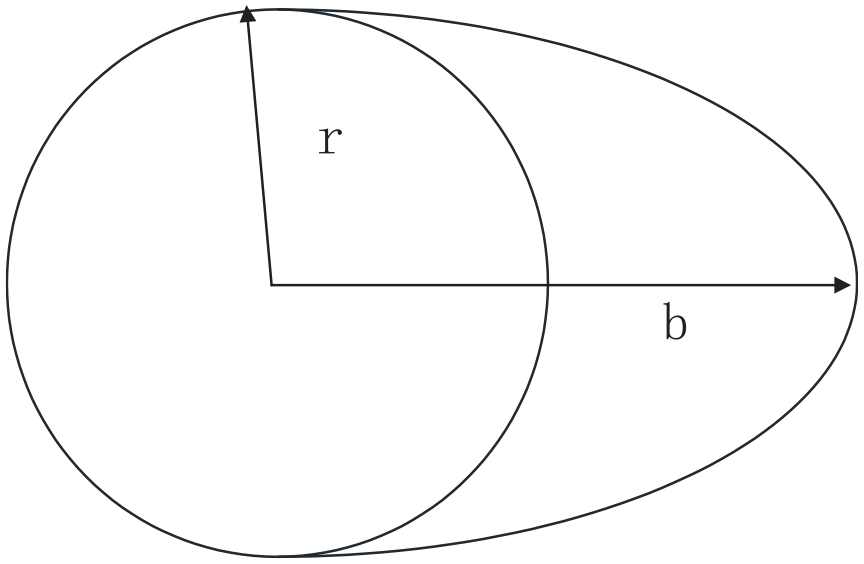
Simulated helicopter spray intensity and the distribution of the sprayed fire extinguishing agents.
Considering that the distribution of a fire extinguishing agent atomized (at pressures of 2 and 4 MPa) becomes more dispersed than in natural fragmentation, the droplet distributions of naturally fragmented and atomized fire extinguishing agents are obtained. The test results show that the distribution parameters of Agents 1 and 4 and Agents 3 and 5 are similar, and their distribution areas are smaller than that of Agent 2. After measuring the radius (r) of the semicircle and the long side (b) of the semi-ellipse, the area (Sq) of the fire extinguishing agent is calculated, as shown in Tables 3 and 4.
Fire extinguishing agents under natural fragmentation conditions.
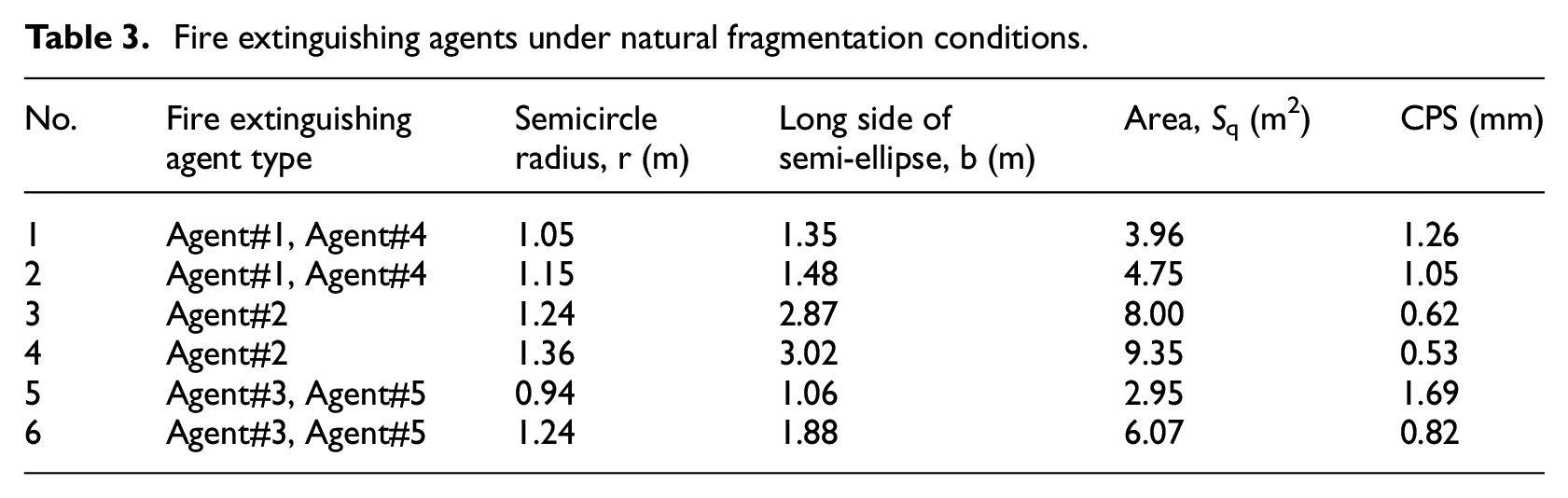
Fire extinguishing agents under atomized fragmentation conditions.
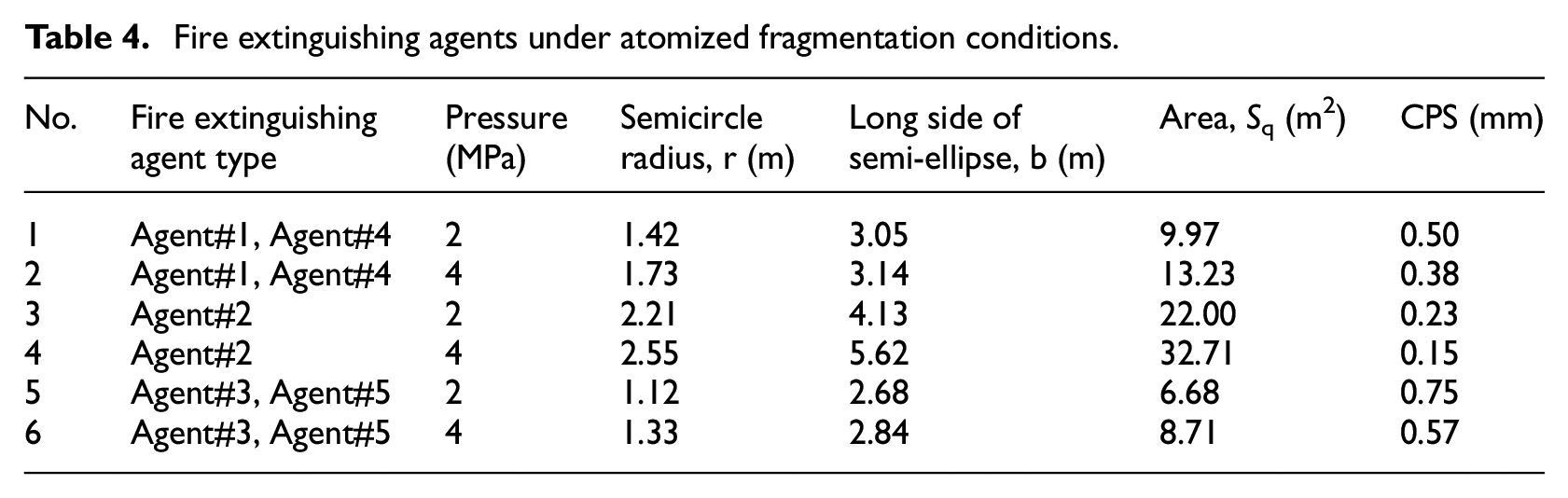
By comparing the distributions of the helicopter fire extinguishing agents in section “Distributions of the Fire Extinguishing Agent” with the diffusion degrees of the fire extinguishing agents sprayed by fire engine in the simulation test, it is found that the distributions of the agents per unit area are equivalent. Therefore, it is feasible to use the fire engine and spray intensity of this test in the simulation test for a helicopter spraying live equipment.
Simulation test data and analysis of high-altitude spraying of live equipment in transmission line wildfires
Influence of the fire extinguishing agent formulation on the AC breakdown characteristics of insulators
Influence of different fire extinguishing agent formulations on the flashover voltage
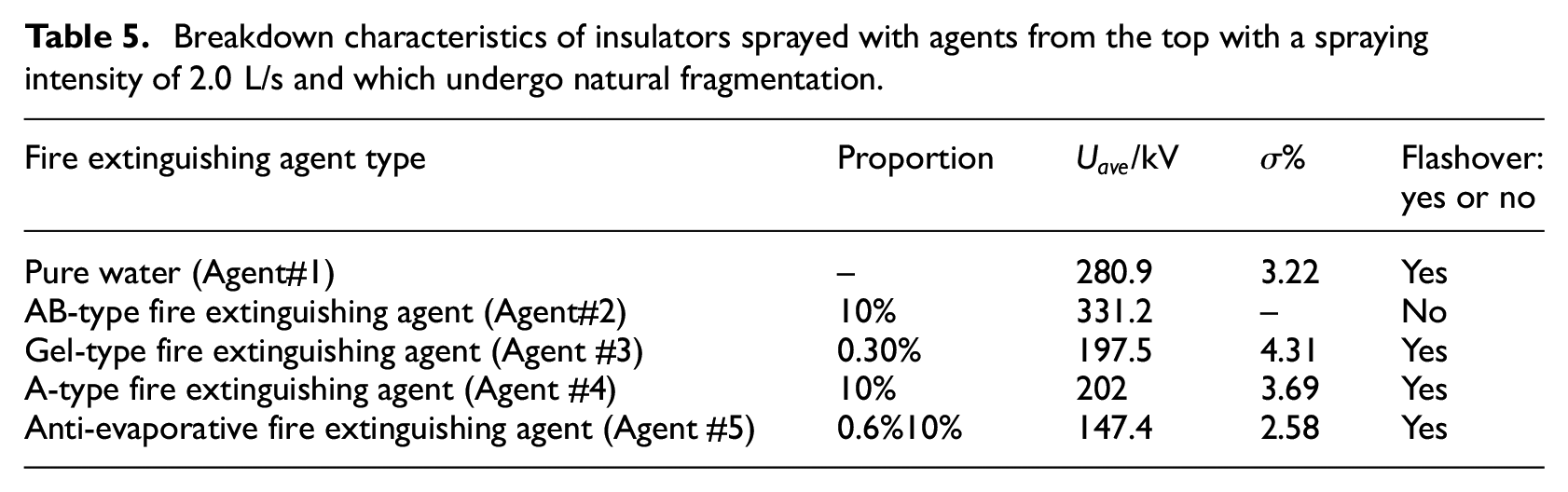
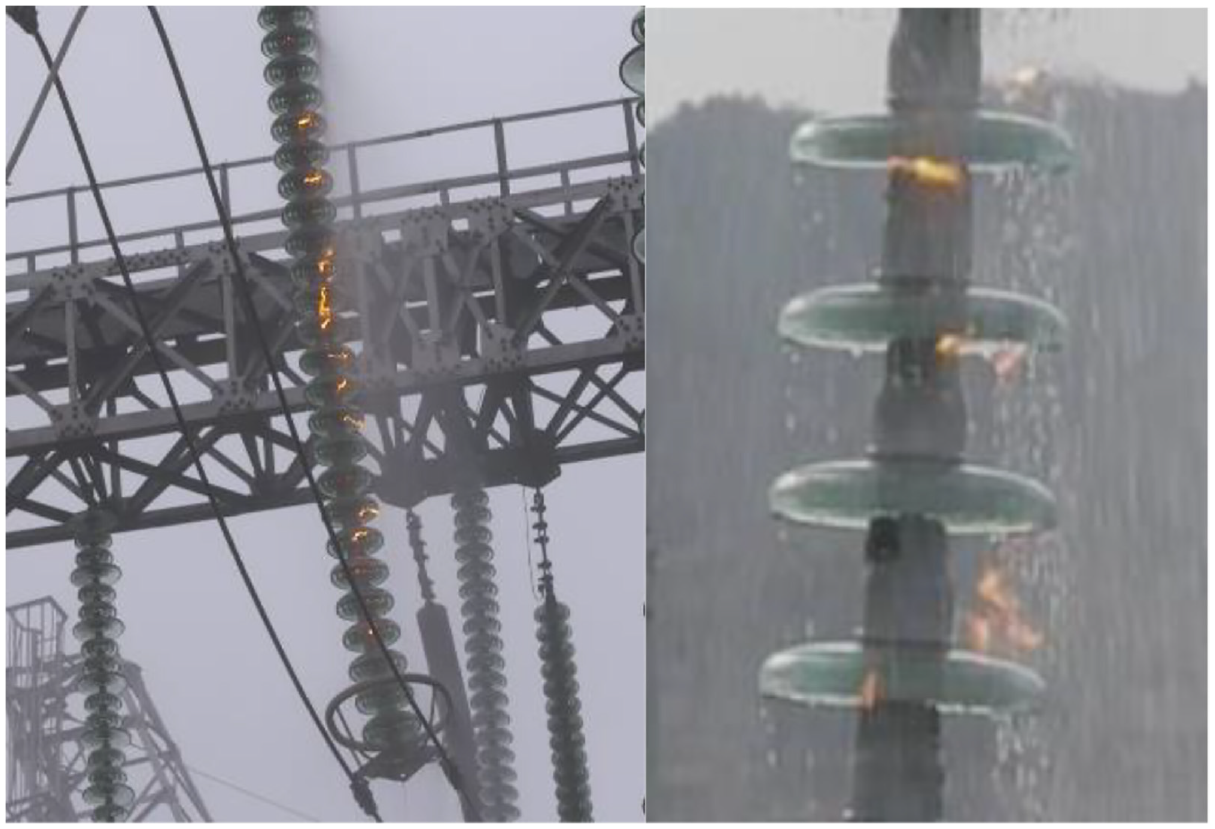
As shown in Figure 10, a spray intensity of 2.0 L/s is used, and the fire extinguishing agent is naturally fragmented and sprayed from the top of the insulator. It has been found that the flashover phenomenon occurs when the glass insulators are sprayed with Agents 1 and 3–5. When the glass insulator is sprayed with Agent 2, no flashover occurs when the voltage is increased to 330 kV.
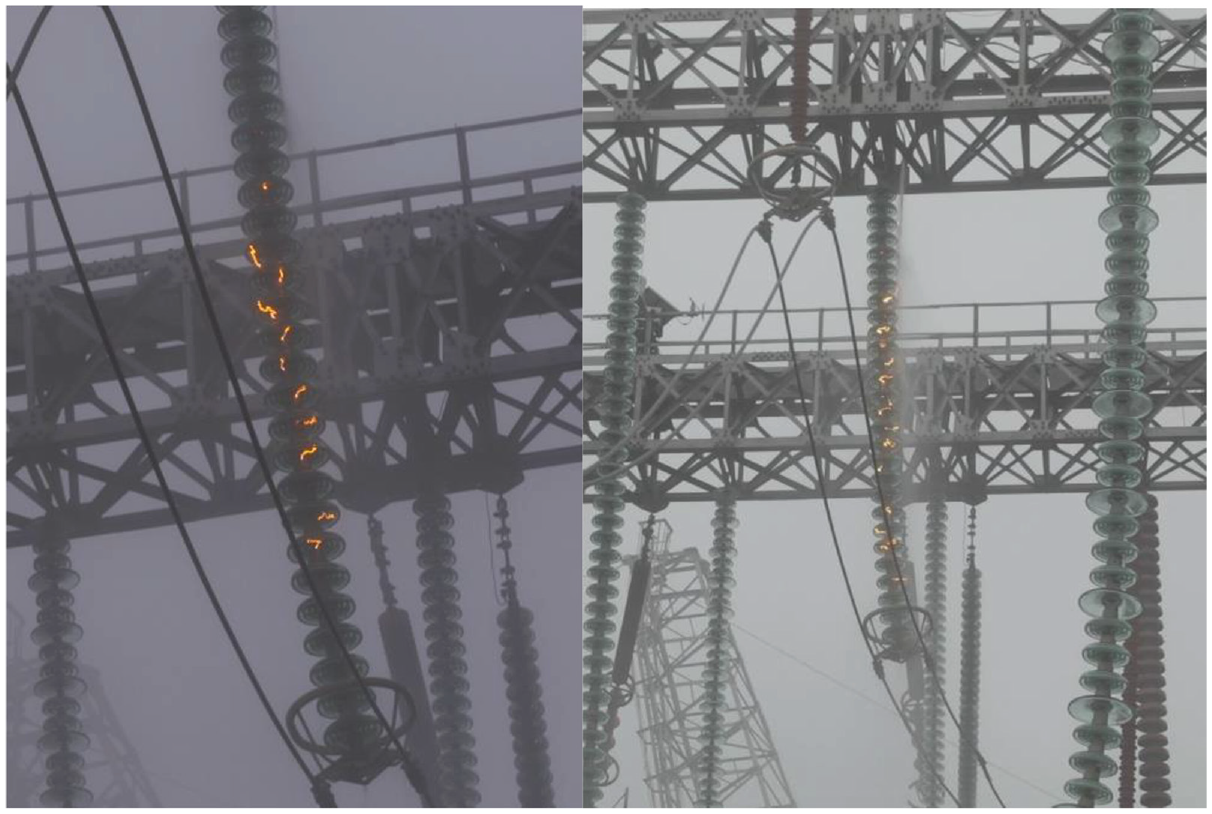
Flashover arc of insulators sprayed by agents from the top with a spraying intensity of 2.0 L/s and which undergo natural fragmentation.
The AC flashover voltages,
Breakdown characteristics of insulators sprayed with agents from the top with a spraying intensity of 2.0 L/s and which undergo natural fragmentation.
A conductivity meter is used to measure the conductivities of the different fire extinguishing agent formulations, and it has been found that the conductivities of the fire extinguishing agents follow the sequence anti-evaporative fire extinguishing agent ≈ A-type > gel-type > AB-type > pure water, as shown in Table 6. The conductivity of the fire extinguishing agent increases with an increase of its concentration, which is consistent with the research conclusions of Gilliam et al. 22
Conductivity measurements of the different fire extinguishing agents.
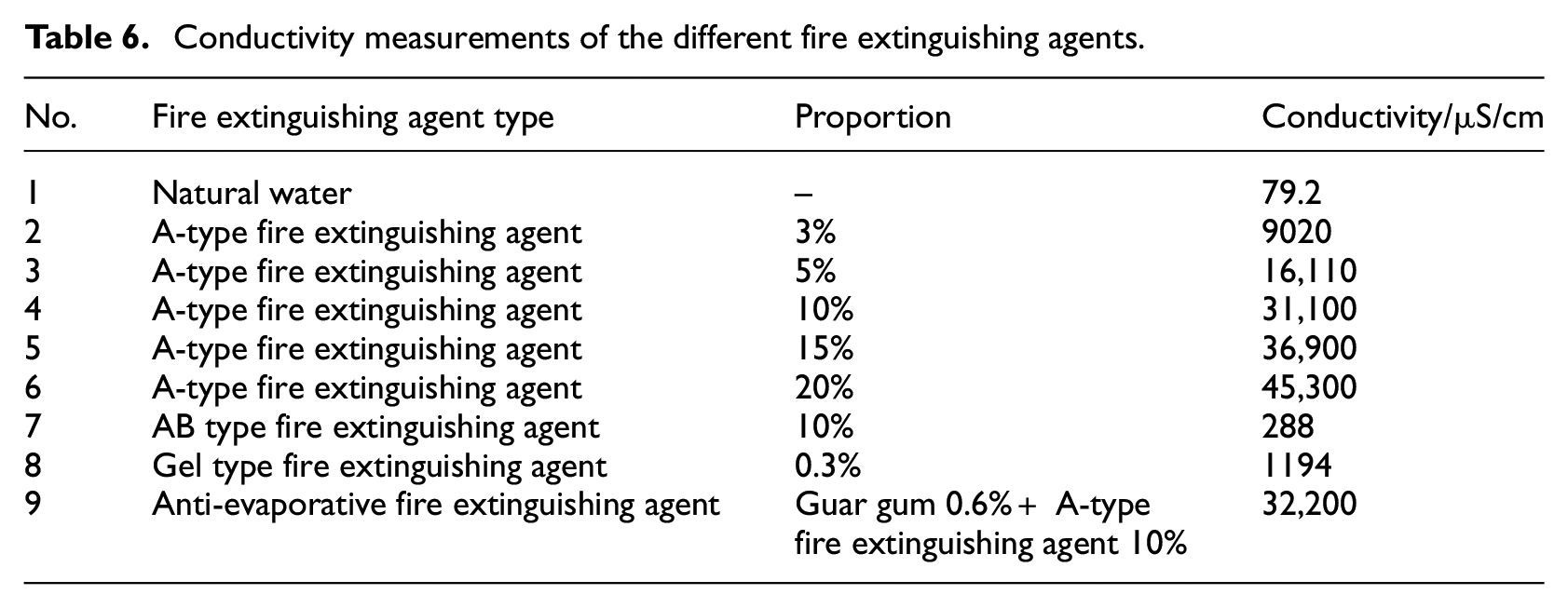
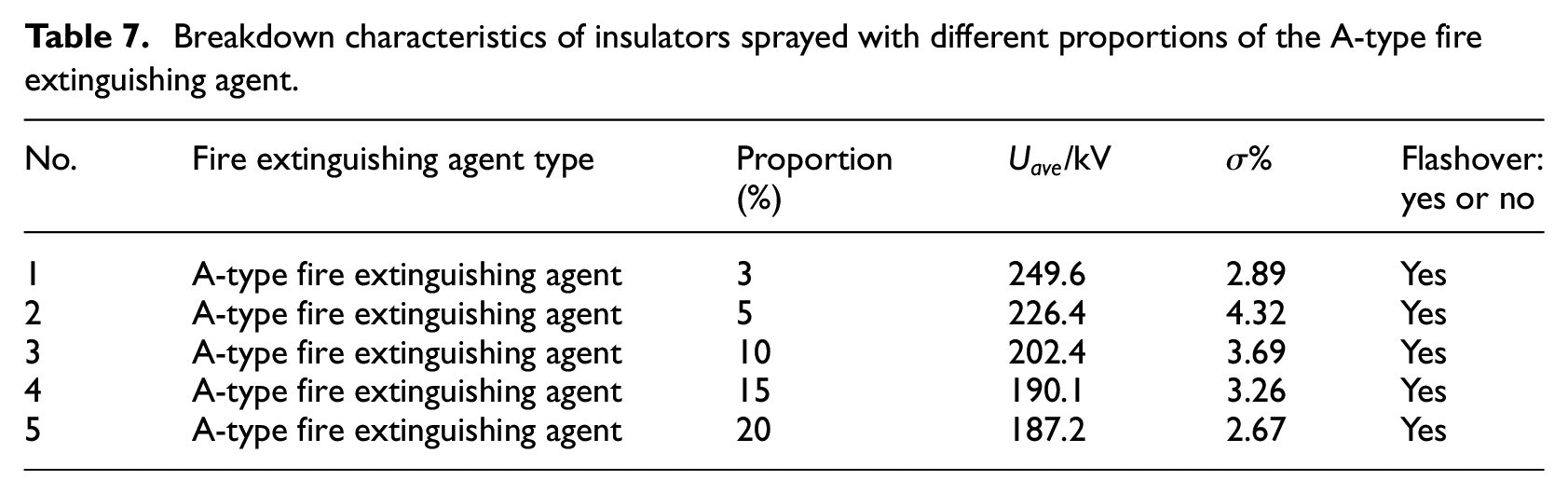
To eliminate the influence of the physical and chemical properties of the different fire extinguishing agent formulations on the breakdown voltage, further spray tests of the A-type fire extinguishing agent with different proportions of the agent are carried out. It has been found that the higher the concentration of the fire extinguishing agent, the higher the conductivity, and the lower the average flashover voltage. In addition, as the conductivity increases, the breakdown voltage decreases slowly, as shown in Table 7.
Breakdown characteristics of insulators sprayed with different proportions of the A-type fire extinguishing agent.
Field emission and photoemission on the surface of the droplets provide a large number of electrons to promote the development of the streamer. According to Gallo and Lama, 23 the surface work function W can be calculated by equation (3) as

where W refers to the ionization energy of the electrons obtained from the surface of the fire extinguishing agent droplet,
The surface work function of water is 6.1 eV, which is less than the ionization energy of oxygen (12.5 eV) and nitrogen (15.6 eV). Babaeva and Kushner24,25 and other authors have carried out surface field emission and photoemission process tests of dielectric particles, and have come to the conclusion that the existence of dielectric particles is conducive to the formation of an electron avalanche at the frontend of the streamer, as well as leading to the easier development of the streamer. Among them, it should be noted that A-type and anti-evaporative fire extinguishing agents contain a large amount of potassium salt, and the ionization energy of potassium salt is relatively low. For example, the ionization energy of K2CO3 is 3.79 eV, therefore, it easily generates electrons.
When the AB-type fire extinguishing agent is sprayed, there is no flashover phenomenon in the insulator gap when the insulator is pressurized to 330 kV. The reasons for this are as follows: the surface tension of the AB-type fire extinguishing agent is significantly smaller than that of the other fire extinguishing agents. As fire extinguishing agents easily fragment under the action of gravity and electric fields, 26 the droplet sizes of the agents are small, as shown in Figure 11. Therefore, the fire extinguishing agents can no longer be considered as continuous. The conductivity of the AB-type fire extinguishing agent is low, and after atomization it is greatly affected by wind; this causes the agent to drift, making it difficult for the lower half of the insulator to be enveloped by the agent.
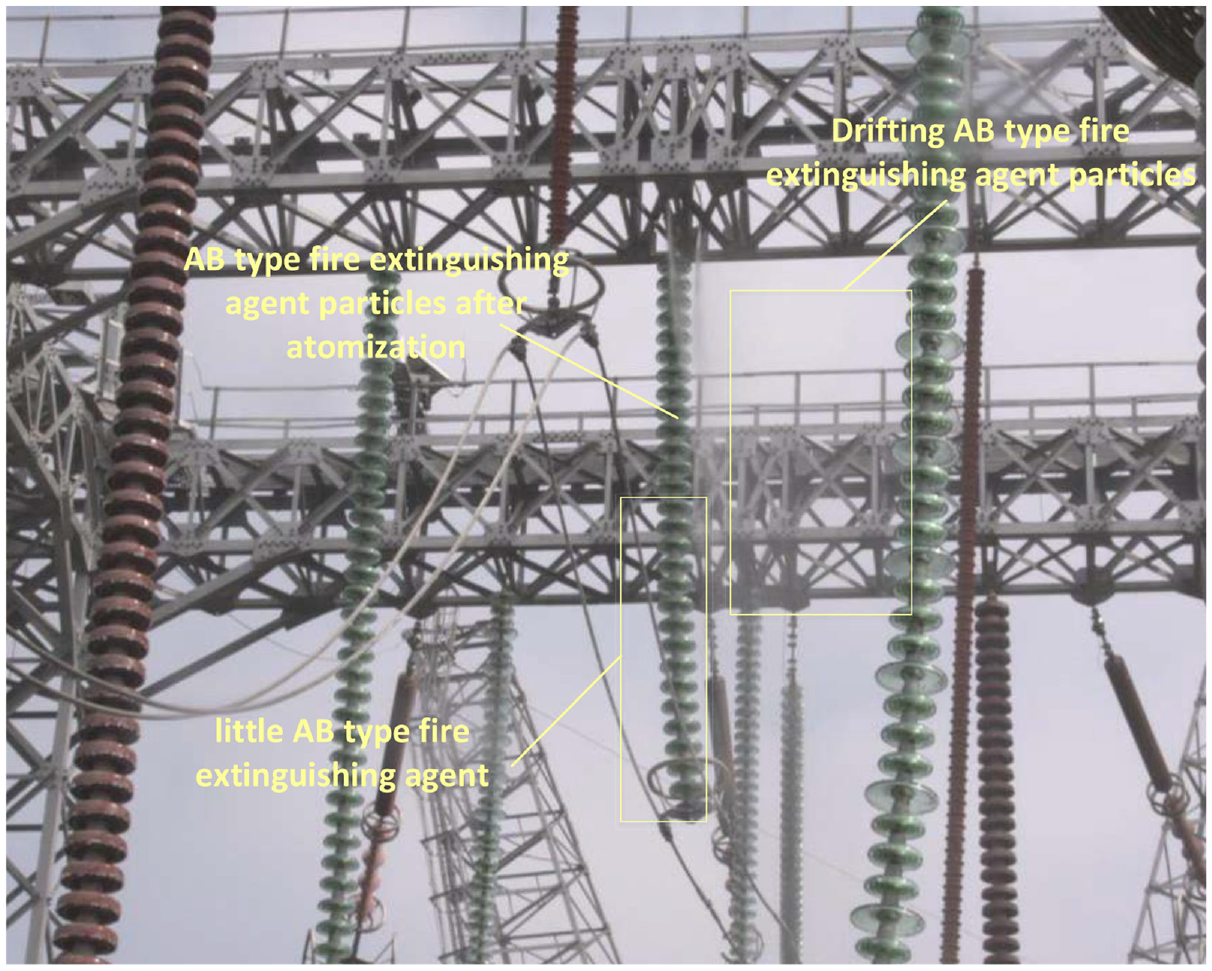
AB-type extinguishing agent: obvious diffusion and atomization.
Gel-type and anti-evaporative fire extinguishing agents (hereinafter referred to as “thickened fire extinguishing agents”) have high viscosity, and their intermolecular forces are significantly enhanced compared with other fire extinguishing agents. The droplets of these fire extinguishing agents can thus be very long and continuous. The increase in the size of the droplet of this type of fire extinguishing agent results in greater electric field distortion than that of ordinary fire extinguishing agents. Although the conductivity of the gel-type fire extinguishing agent is lower than that of the A-type fire extinguishing agent, its droplets are continuous and large in size; the gaps between the droplets of the fire extinguishing agent are small; and the discharge in the distorted electric field forms a discharge channel, as shown in Figure 12, so that the breakdown voltage of the gel-type fire extinguishing agent (with a conductivity of 1194 μS/cm) is lower than that of the A-type fire extinguishing agent (with a conductivity of 31,100 μS/cm).
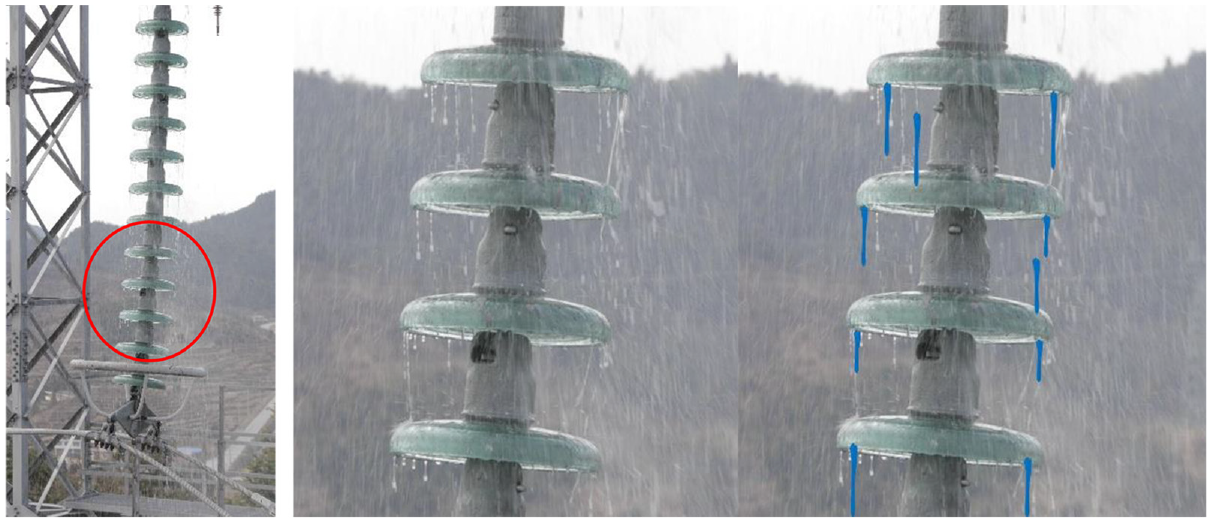
Continuous droplets of the gel-type fire extinguishing agent.
Compared with the anti-evaporative fire extinguishing agent, the pure water, AB-type, and A-type fire extinguishing agents have lower viscosities, and the droplets of these kinds of agents will experience impact fragmentation and natural fragmentation during falling, resulting in small droplet sizes and a small gap ratio between the bridged insulator pieces, as shown in Figure 13. Therefore, the breakdown voltage of the insulator gap is relatively high when such types of fire extinguishing agents are sprayed.
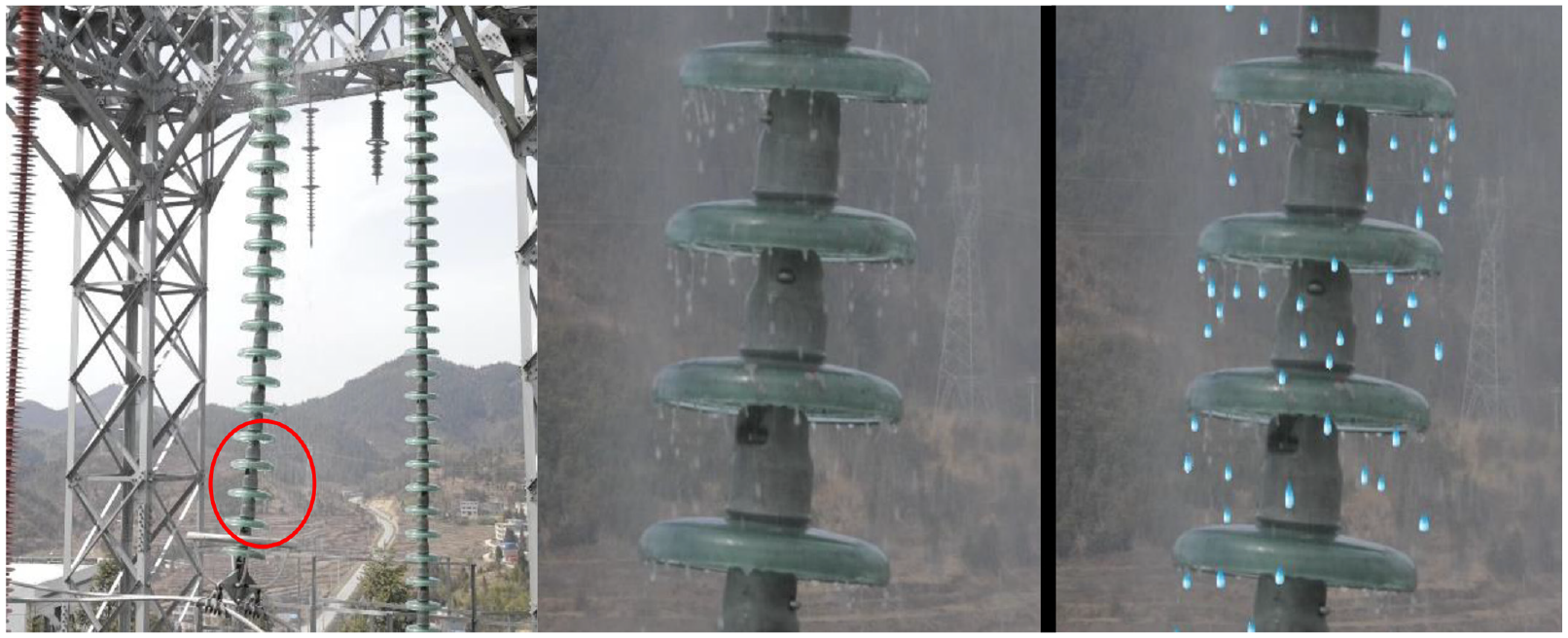
Discontinuous droplets of non-thickened fire extinguishing agents: pure water and A-type.
Influence of different fire extinguishing agent formulations on arc formation
When there is a large amount of fire extinguishing agent droplets in the gap, a chain of fire extinguishing agent droplets is formed that can short-circuit part of the gap. Under the action of gravity and the force imparted by the electric field, electric field distortions near the fire extinguishing agent droplets are enhanced as the fire extinguishing agent droplets approach an area with a strong electric field, such as near the simulation conductor, resulting in partial discharge and arc formation. When electrons and ions in the gap can provide the current required for arc development, it will gradually develop into the breakdown of the entire insulator. Otherwise, the arc will extinguish when the current decreases to zero or the strength of the fire extinguishing agent decreases (resulting in a decrease in the current). When a thickened fire extinguishing agent is sprayed, the thickened particles will increase the surface roughness of the insulator umbrella skirts, making the shape of the arc extremely irregular, resulting in vigorous burning with bending or swinging, 27 as shown in Figures 14 and 15. However, when pure water and A-type fire extinguishing agents are sprayed, the arc will flash along the insulator, and there is no phenomenon of arc swinging and spreading, as shown in Figure 11.
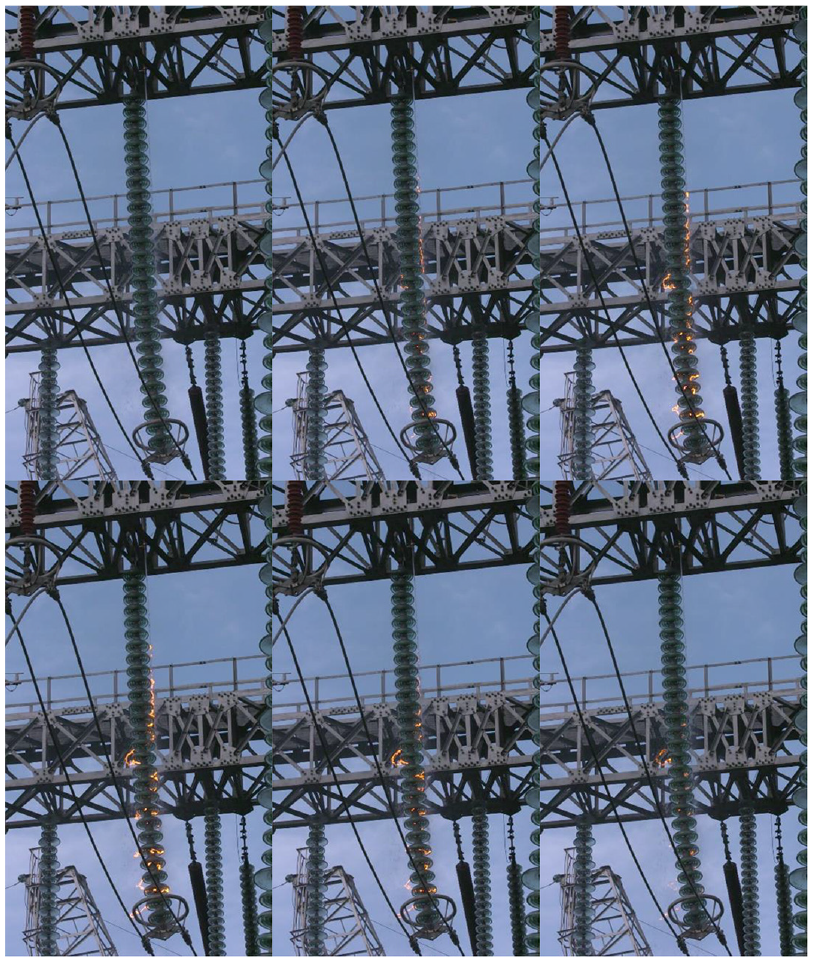
Flashover process of insulators sprayed with a gel-type extinguishing agent.
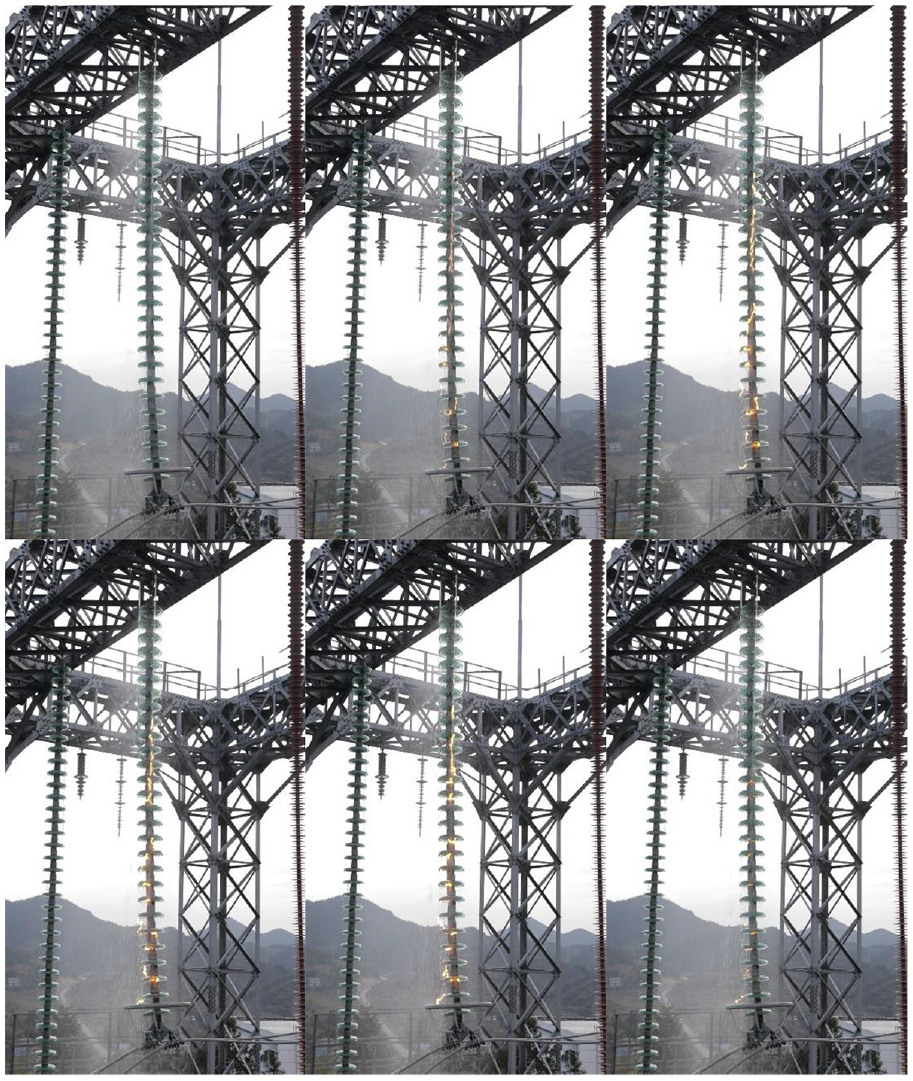
Same as Figure 14, but for spraying with an anti-evaporative fire extinguishing agent.
Influence of different fire extinguishing agent formulations on flashover current waveform
It can be seen from Figures 16 and 17 that the breakdown process of the gap is very rapid, and the current increases instantaneously within 140 ms to complete the discharge process.
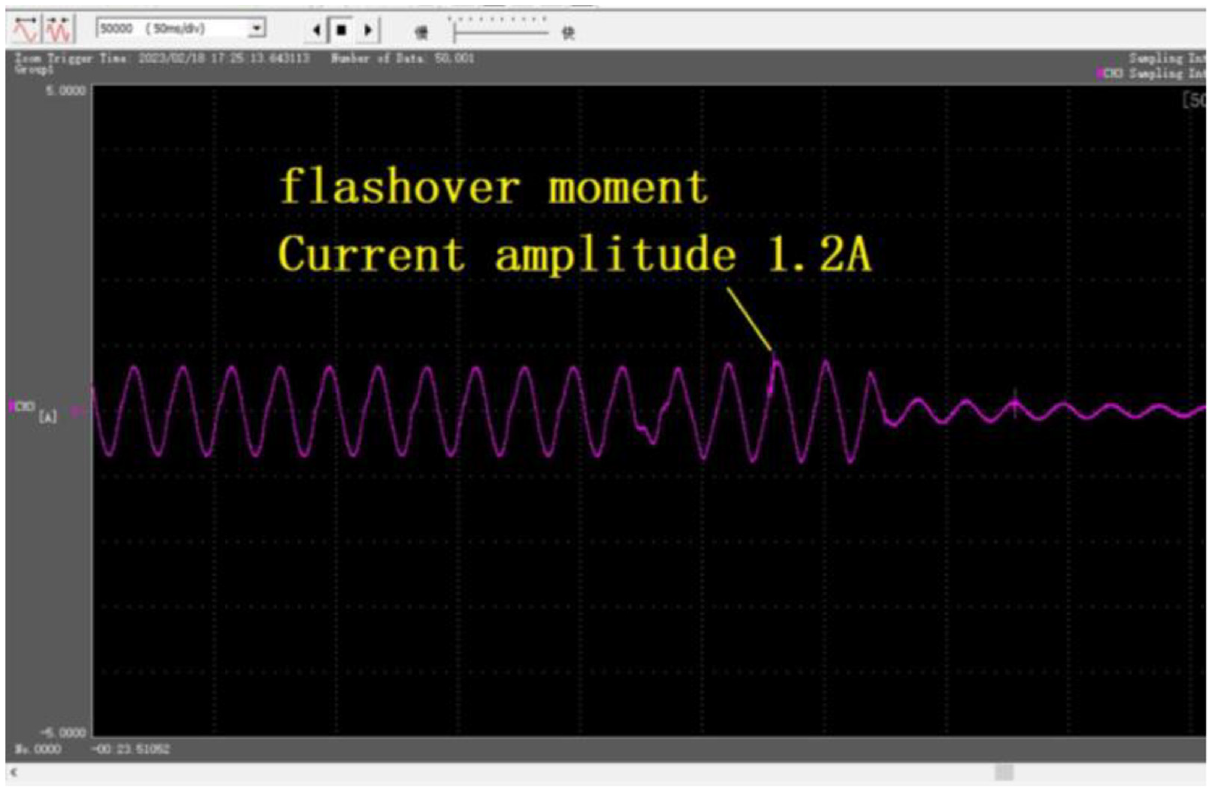
Insulator flashover waveform when spraying with pure water.
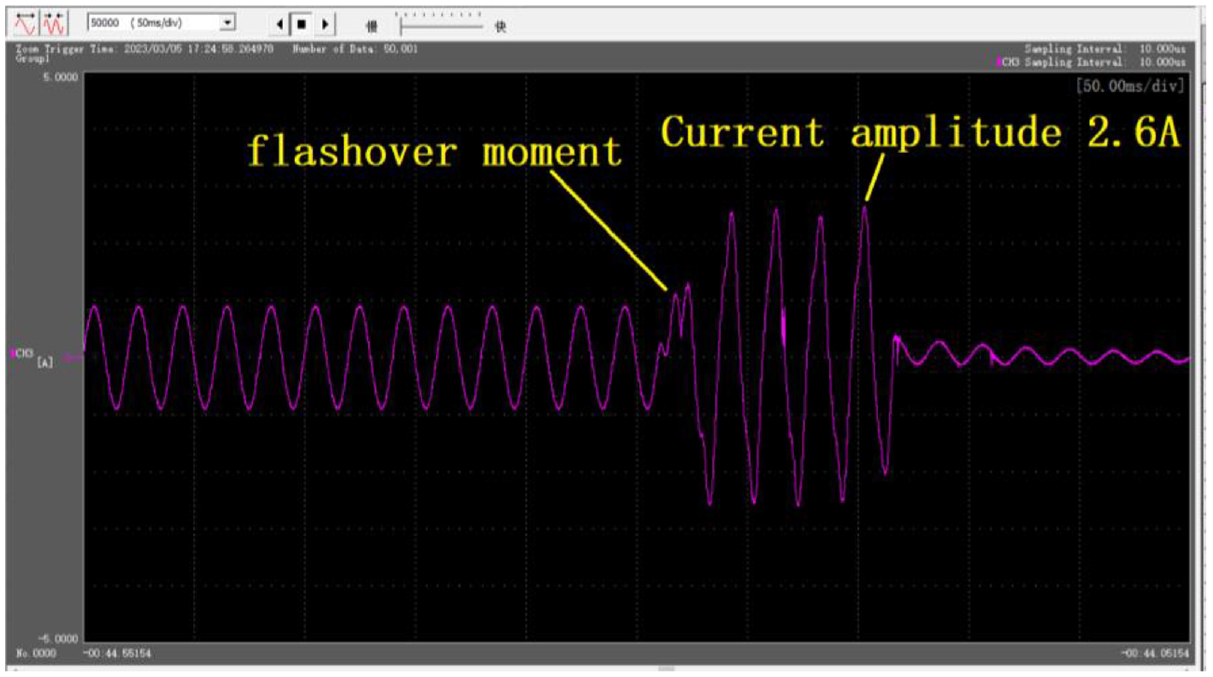
Insulator flashover waveform when spraying with an anti-evaporative fire extinguishing agent.
Comparing the degree and amplitude of the instantaneous flashover current distortion of different fire extinguishing agent formulations, it is found that the distortion of the gel-type fire and anti-evaporative fire extinguishing agents is more serious than that of pure water and the A-type fire extinguishing agent, and the instantaneous amplitude of the current flashover at the high-voltage end is higher. The main reason for this is that the droplet sizes of the gel-type and anti-evaporative fire extinguishing agents are large, the gap electric field distortion is large, and the droplet chains of the fire extinguishing agent short-circuit most of the gaps, resulting in a high instantaneous current amplitude of the current flashover at the high-voltage end.
Influence of the droplet size on the AC breakdown characteristics of insulators
Table 8 shows the insulation performance of the different types of fire extinguishing agents sprayed from the top of an insulator (pure water, AB-type, A-type, gel-type, and anti-evaporative) under natural fragmentation and 2 and 4 MPa nozzle atomized fragmentation conditions with a 2.0 L/s spray intensity.
Flashover of insulators sprayed directly from the top at a 2.0 L/s spraying intensity.
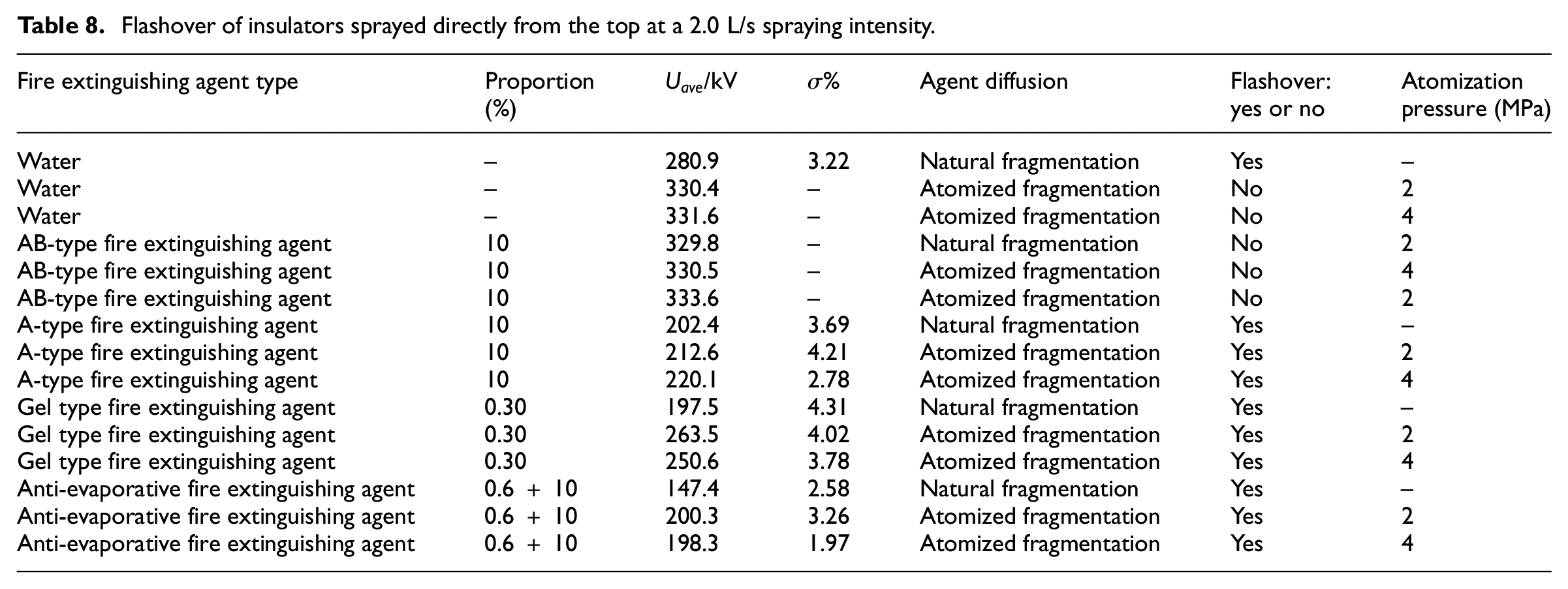
The findings of the tests are as follows:
1. When no external force is used to atomize and fragment the fire extinguishing agent, glass insulator flashover is caused by spraying pure water, A-type, gel-type, and anti-evaporative fire extinguishing agents, but not the AB-type fire extinguishing agent.
2. When an external force is used to atomize and fragment the fire extinguishing agents, spraying of the A-type, gel-type, and anti-evaporative fire extinguishing agents all cause flashover of glass insulators. The flashover voltage is higher than that without an external force used for fragmentation and atomizing, indicating that the smaller the droplet, the higher its insulation performance. When the A-type fire extinguishing agent is atomized, there is little difference between its breakdown voltage and that found under natural fragmentation. When a more-viscous fire extinguishing agent (i.e. gel-type and anti-evaporative) is atomized, its breakdown voltage is greatly different from that under natural fragmentation. The main reason is that the more-viscous fire extinguishing agent has good continuity when not atomized, forming an elongated chain. Moreover, the more-viscous fire extinguishing agent has poor fluidity and does not aggregate after being atomized into small droplets, resulting in a continuous state of small droplets.
3. Atomized fragmentation of the A-type fire extinguishing agent at 4 and 2 MPa pressures causes insulator flashover, where the difference in the flashover voltage is small. However, the insulators will not experience flashover when pure water is atomized and fragmented under both pressures. This shows that the influence of the droplet size of the fire extinguishing agent is greater than that of the conductivity of the fire extinguishing agent.
When light shines on the surface of a fire extinguishing agent droplet, if the energy of the photons is high enough, electrons can be excited from the surface of the droplet according to the Einstein equation

where h refers to Planck’s constant,
Influence of the spraying intensity on the AC breakdown characteristics of insulators
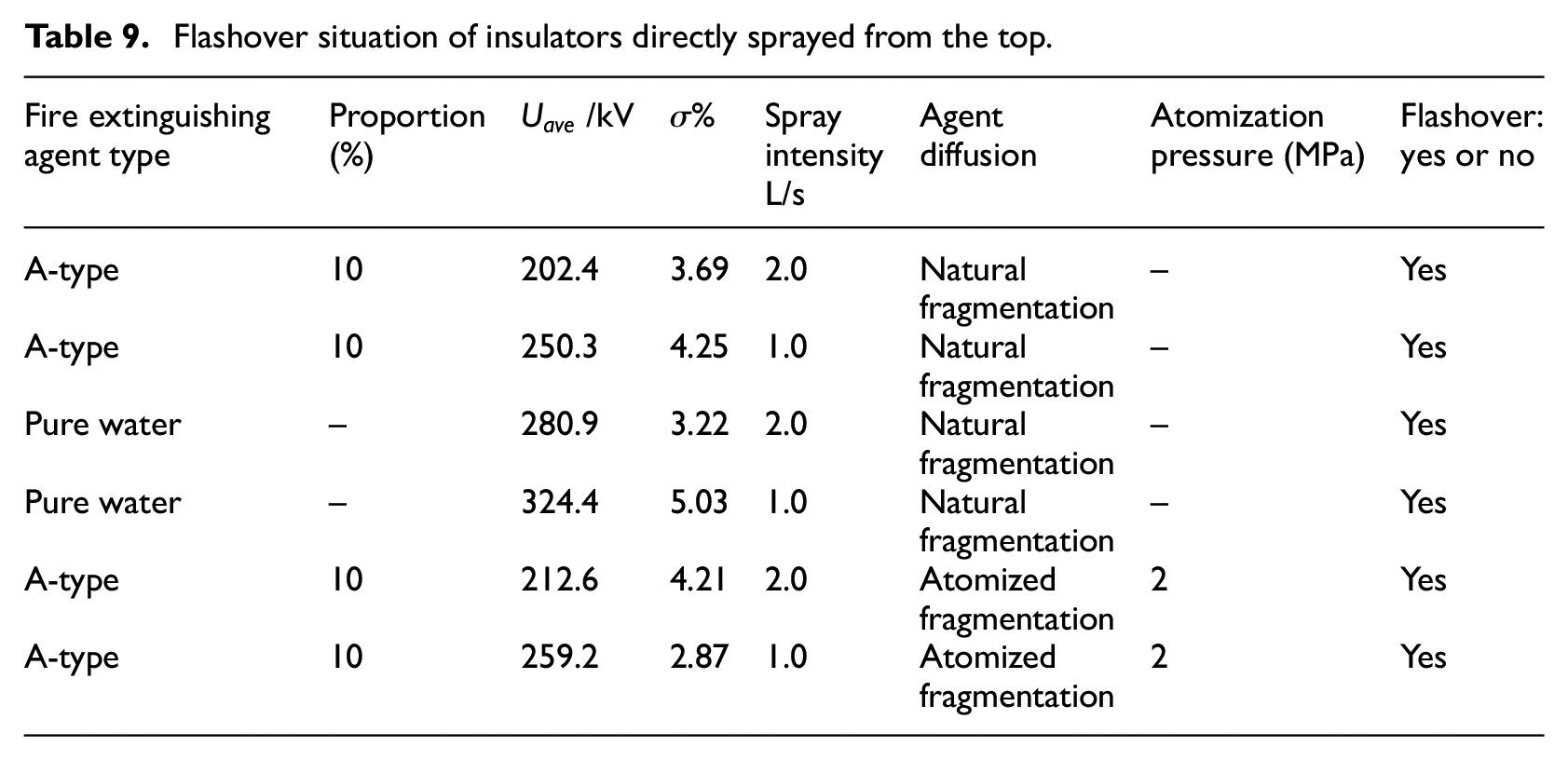
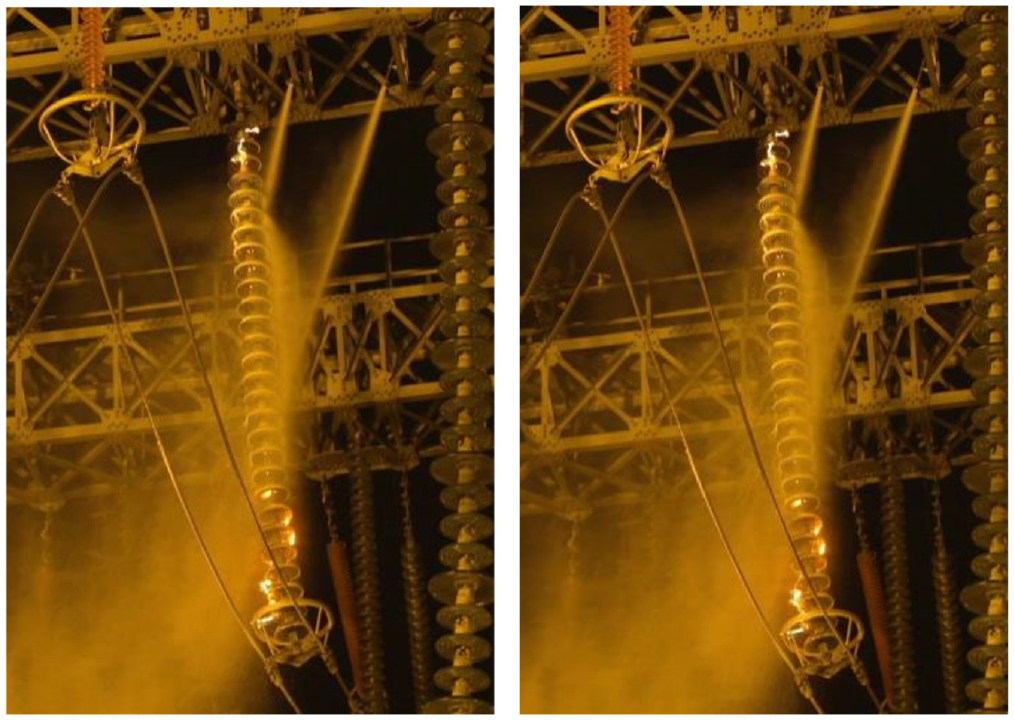
Table 9 shows a comparison of the breakdown characteristics of insulators sprayed with the A-type fire extinguishing agent (including natural fragmentation and atomized fragmentation) and pure water (natural fragmentation), when the spray intensity is controlled between 1.0 and 2.0 L/s. Regarding the spraying of the A-type fire extinguishing agent, no matter whether it is atomized or not, the flashover voltage of the insulator decreases significantly as the spray intensity increases. The main reason for this is that when the spray intensity is increased, the bridging ratio of the gap between the insulator umbrella skirts increases correspondingly, resulting in a significant decrease in the flashover voltage of the insulator. Based on the test pictures, it is further found that during the test of the A-type fire extinguishing agent, where the spray intensity is 1.0 L/s and the wind speed is 1.2 m/s, the droplets shift to the right under the action of the wind force, and the droplet density of the fire extinguishing agent on the right is higher than that on the left, resulting in a discharge arc initiating and developing from the right side, as shown in Figure 18.
Flashover situation of insulators directly sprayed from the top.
Deviation and droplet aggregation discharge of the A-type fire extinguishing agent under a wind force.
This phenomenon is consistent with the simulation results of Babaeva et al. 28 That is, since the droplet size of the fire extinguishing agent sprayed by the helicopter at high altitude exceeds 1000 μm, an increase in the spray intensity is equivalent to an increase in the volume fraction of droplets in the gap. As the gap between adjacent fire extinguishing agent droplets decreases, more droplets jointly undergo polarization, which can raise the lowest point of the axial distortion electric field and promote the development of discharge.
Influence of direct spraying/oblique spraying on the AC breakdown characteristics of insulators
Direct spraying is mainly used to simulate the scene of a large fire occurring directly below a transmission tower, and hovering spraying is required for rapid firefighting. At this time, the helicopter does not have a lateral speed, and the fire extinguishing agent is sprayed vertically downward from above. Oblique spraying is mainly used to simulate a scene when the helicopter is flying forward. At this time, the speed of the fire extinguishing agent is the vector sum of the lateral speed and vertical speed. With a spray intensity of 2.0 L/s, the nozzle remaining on the longitudinal section with the insulator, and spraying the fire extinguishing agent from the side of the insulator at an angle of 30°, the fire extinguishing agent is naturally fragmented. It is found that the A-type fire extinguishing agent, pure water, and gel-type fire extinguishing agent all incur the flashover phenomenon, as shown in Figure 19. When the AB-type fire extinguishing agent is sprayed, there is no flashover phenomenon when the wire is pressurized to 330 kV, as shown in Table 10.
Flashover of insulators sprayed obliquely from the side with a spray intensity of 2.0 L/s.
Flashover of insulators sprayed obliquely from the side with a spray intensity of 2.0 L/s: relevant parameters.
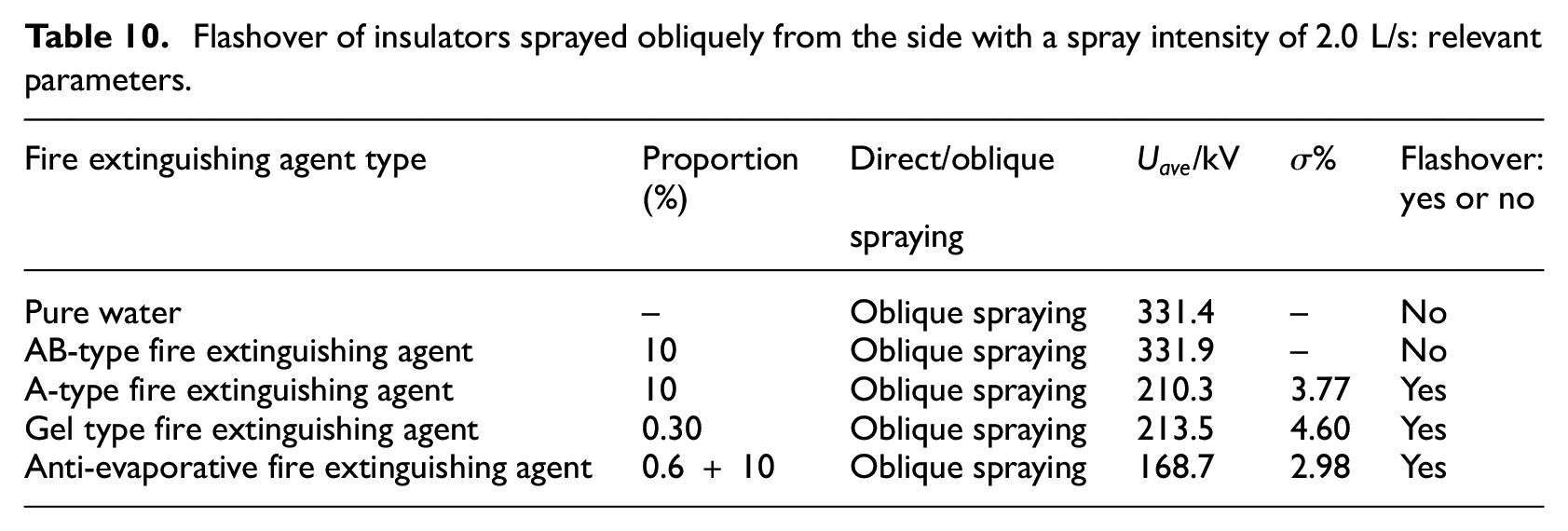
The flashover voltage characteristics of insulators are as follows:
1. The main reason why insulators do not experience flashover during the oblique spraying of pure water is that the fire extinguishing agent used for oblique spraying has a lateral speed as it hits the surface of the insulator. The fire extinguishing agents that do not hit the surface of the insulator flow through both sides of the insulator string, without affecting the insulation performance of the insulating section, especially at the lower ends of the insulator pieces. However, the conductivity of the fire extinguishing water agent is low, and the amount of pure water impacting the insulator and flowing downward is much smaller than when directly sprayed, so there is no flashover phenomenon when the voltage exceeds 330 kV.
2. The flashover voltage (210.3 kV) of the A-type fire extinguishing agent during oblique spraying is similar to that of direct spraying (202 kV), mainly due to the high conductivity of the A-type fire extinguishing agent, which leads to a relatively low spray intensity required for insulator flashover. The continuity of the fire extinguishing agent is better when sprayed from the side than when sprayed directly from the top. Second, due to the oblique spraying of the fire extinguishing agent on the surface of the insulator, the agent impacts the upper surface of the insulator, producing small particles in all directions, some of which enter the inner side of the insulator, reducing its insulation level, as shown in Figure 20.
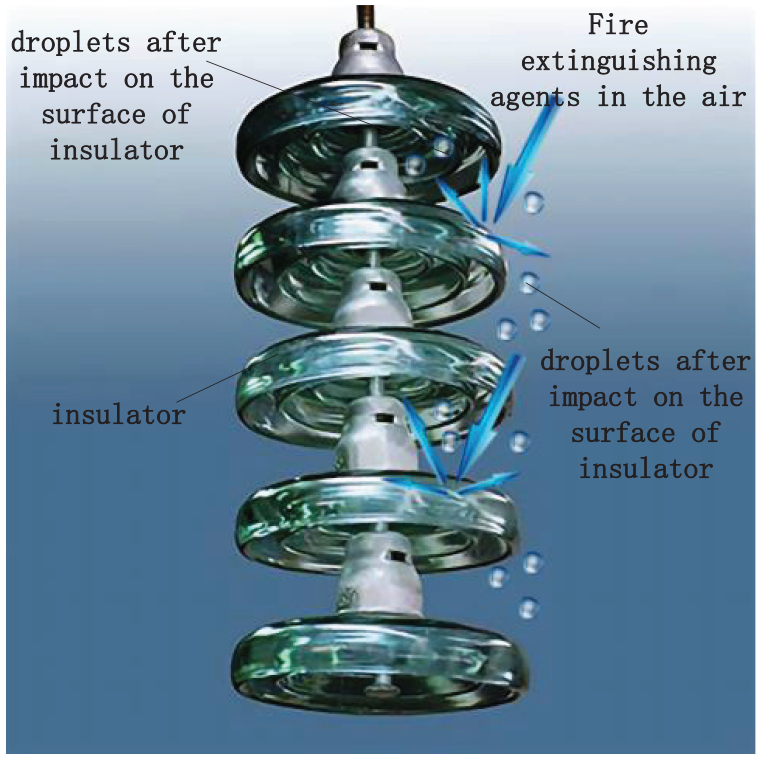
Schematic of fire extinguishing agent diffusion in various directions when impacting the insulator.
AC breakdown characteristics of insulators due to short-term spraying
To obtain the insulation performance of the insulator during high-altitude helicopter spraying of fire extinguishing agents under the most severe conditions, we spray the fire extinguishing agent from the side of the insulator under the condition of a 2.0 L/s spray intensity and natural fragmentation, and apply the voltage of conductors connected to the insulator to 289 kV (i.e. a phase voltage of 500 kV). According to spray durations of 5, 10, and 20 s, it is found that when spraying the A-type fire extinguishing agent, the insulators show flashover for both the 10 and 20 s spray durations, and no flashover occurs for the 5 s spray duration. When spraying pure water, there is no flashover at any spray duration, as shown in Table 11. The results show that the time for the helicopter to spray a fire extinguishing agent at high altitude is too short, and the humidity of the insulator surface and the surrounding air is low, so its breakdown voltage is high. 29
Flashover of insulators sprayed with agents from the top with a spray intensity of 2.0 L/s and which undergo natural fragmentation.
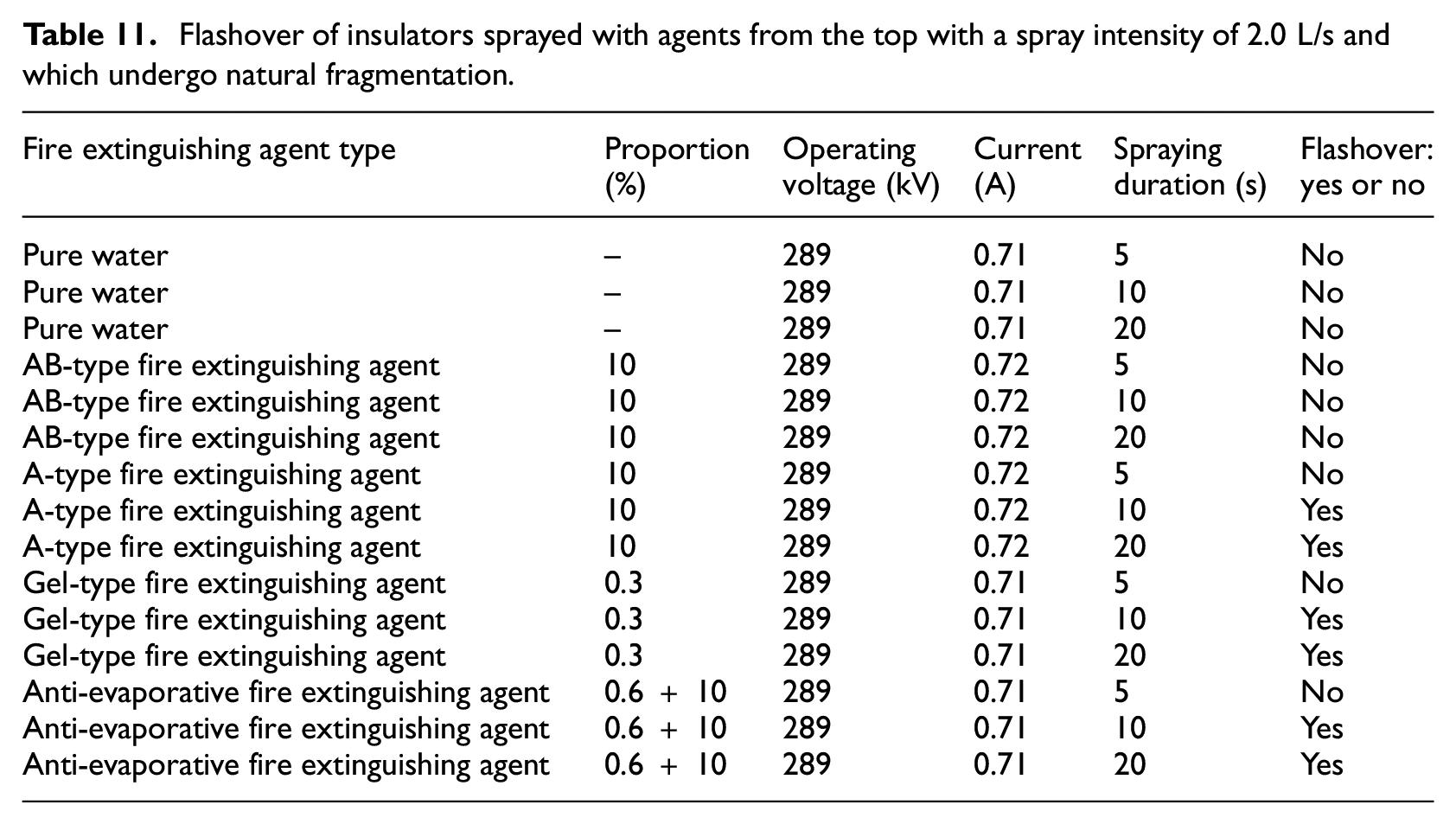
Analysis of the streamer development process during high-altitude helicopter spraying
In addition to the general gas discharge process, the streamer discharge process occurring during high-altitude helicopter spraying of fire extinguishing agents is analyzed. In this article, this is done by combining three processes, including interaction between the discharge streamer and the fire extinguishing agent droplet, and taking full account of microscopic processes such as field emission, photoemission, and the charge-trapping ability of the droplet surfaces, as shown in Figure 21.
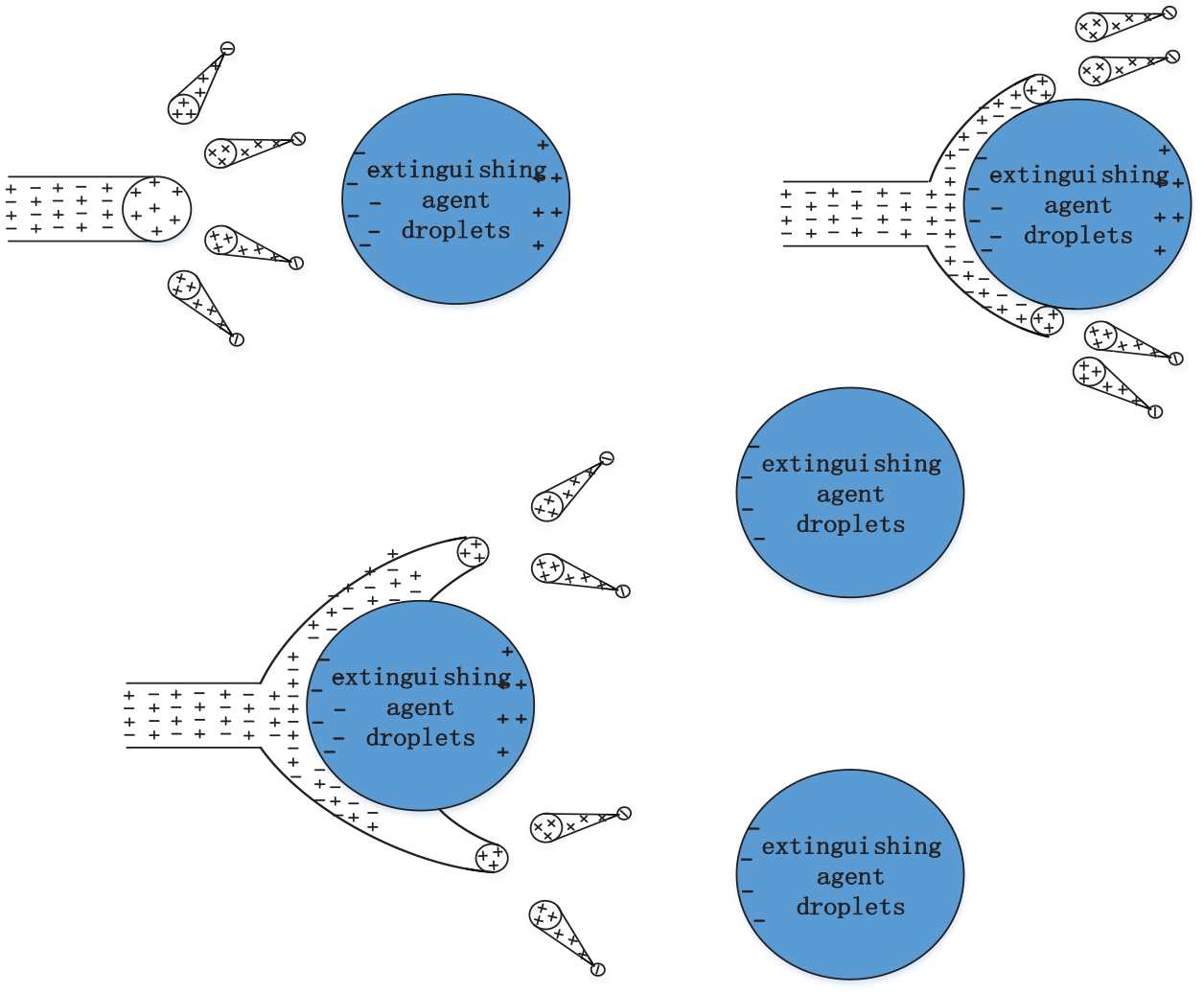
The gap breakdown process caused by a helicopter spraying fire extinguishing agent droplets.
In the first stage, the streamer is located near the frontend of the development of the droplet, and the electric field at the front end of the streamer increases the polarization degree of the droplet, further enhancing the electric field intensity around it. This process accelerates air ionization and increases the field emission intensity on the surface of the droplet, promoting photoemission on its surface. In this way, a large number of electrons are provided for the development of streamers, making it easier for electron avalanches to occur and promoting the faster development of streamers.
In the second stage, the streamer reaches the surface of the fire extinguishing agent droplet, and these high-conductivity droplets will attract the streamer. The charges in the streamer will be trapped by the surfaces of the droplets. When the streamer is trapped by the droplets, the electron avalanche and photoionization processes are suppressed, which to some extent hinders the further development of the streamer. However, a new discharge is triggered at the other end of the extinguishing agent droplets. Field emission and photoemission on the droplet surfaces provide a large number of electrons, which improve the electron density at the front end of the streamer and enable the streamer to continue to develop.
The third stage is the process in which the streamer leaves a fire extinguishing agent droplet and develops toward a nearby fire extinguishing agent droplet. Similar to the second stage, the droplets continue to trap charges, which hinder the development of the streamer, and interactions between the streamer and the next droplet undergoes a process identical to the first stage described above. The fire extinguishing agent droplets inject a large amount of charge into the discharge channel, promoting the transition from partial discharge to stable arc discharge, forming a stable discharge channel, ultimately leading to gap breakdown.
Verification of a high-altitude helicopter spraying live insulators
Based on the above test data, a spray test involving actual insulators for transmission line wildfires has been carried out. In this verification test, the flight altitude and speed corresponding to the maximum distribution depth (CPS) of each fire extinguishing agent in section “The spraying of high-conductivity gel-type, A-type, and anti-evaporative fire extinguishing agents” are used to spray real 500 kV transmission line insulators, to determine whether the simulation test results can be applied to on-site helicopter live fire extinguishment, without causing the transmission line to trip due to the spraying of the fire extinguishing agent. In the verification test, the side phase of Tower 2 of the Xiaoshajiang Natural Disaster Test Site is selected as the object for high-altitude helicopter spraying. Its model is U240B/170, composed of 2 × 1 × 25 pieces of single tension insulators, where the length of each insulator string is 5.44 m, and the length of the whole string from the hanging point to the equalizing ring is 7.42 m, as shown in Figure 22.
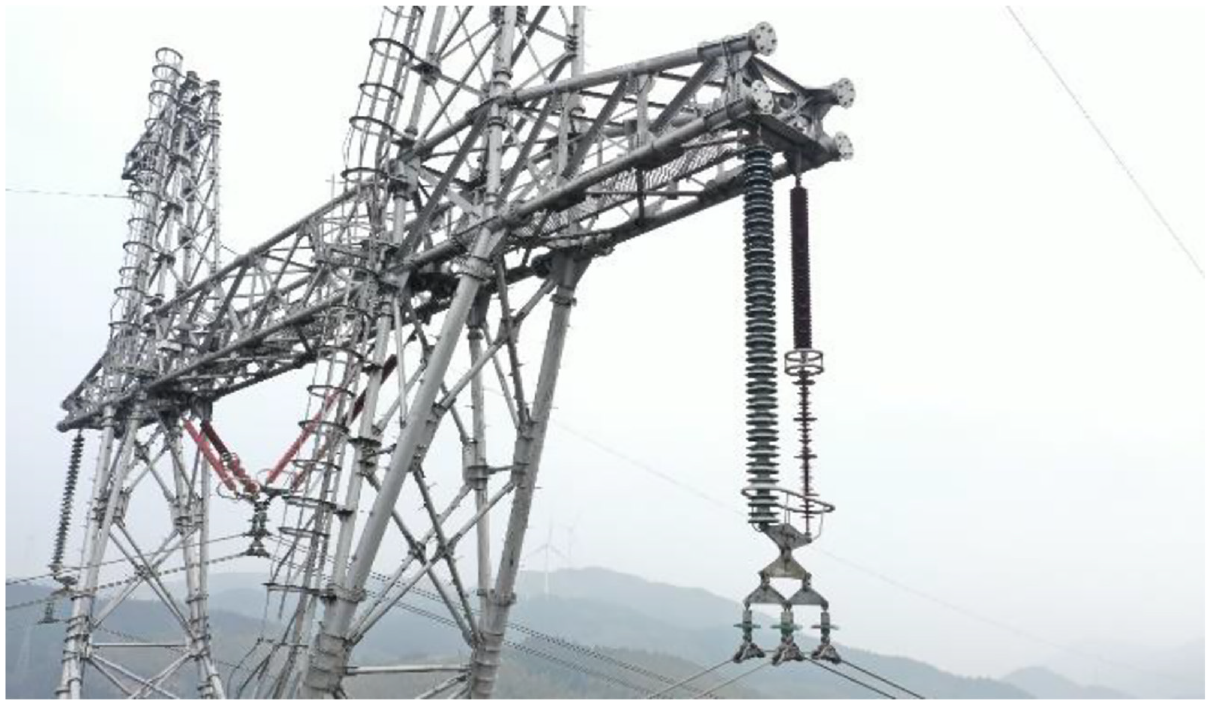
Insulator string of Tower 2 at the Xiaoshajiang Natural Disaster Test Site being sprayed with fire extinguishing agents by a helicopter.
Based on the spray intensity, spray duration, and other operating conditions of the simulation test, the verification test of a helicopter spraying live 500 kV insulators has been carried out, as shown in Figure 23. Each change in the fire extinguishing agent, flight altitude, and flight speed is regarded as a group of states, and 10 helicopter spray tests are required for each group of states. To ensure the safety margin of helicopters spraying live equipment, if there is any one flashover phenomenon after 10 sprays, it is marked with a “Yes” in Table 11; otherwise, it is marked with a “No.”
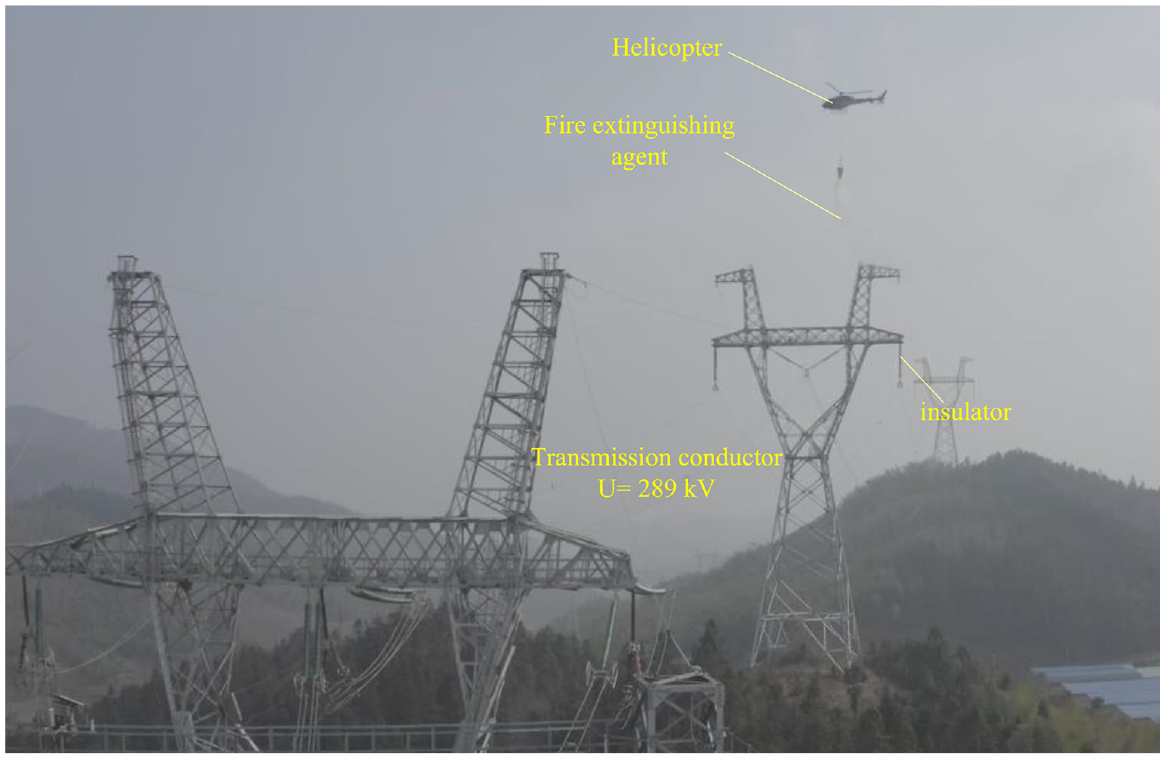
Insulation performance test of a helicopter spraying live insulators.
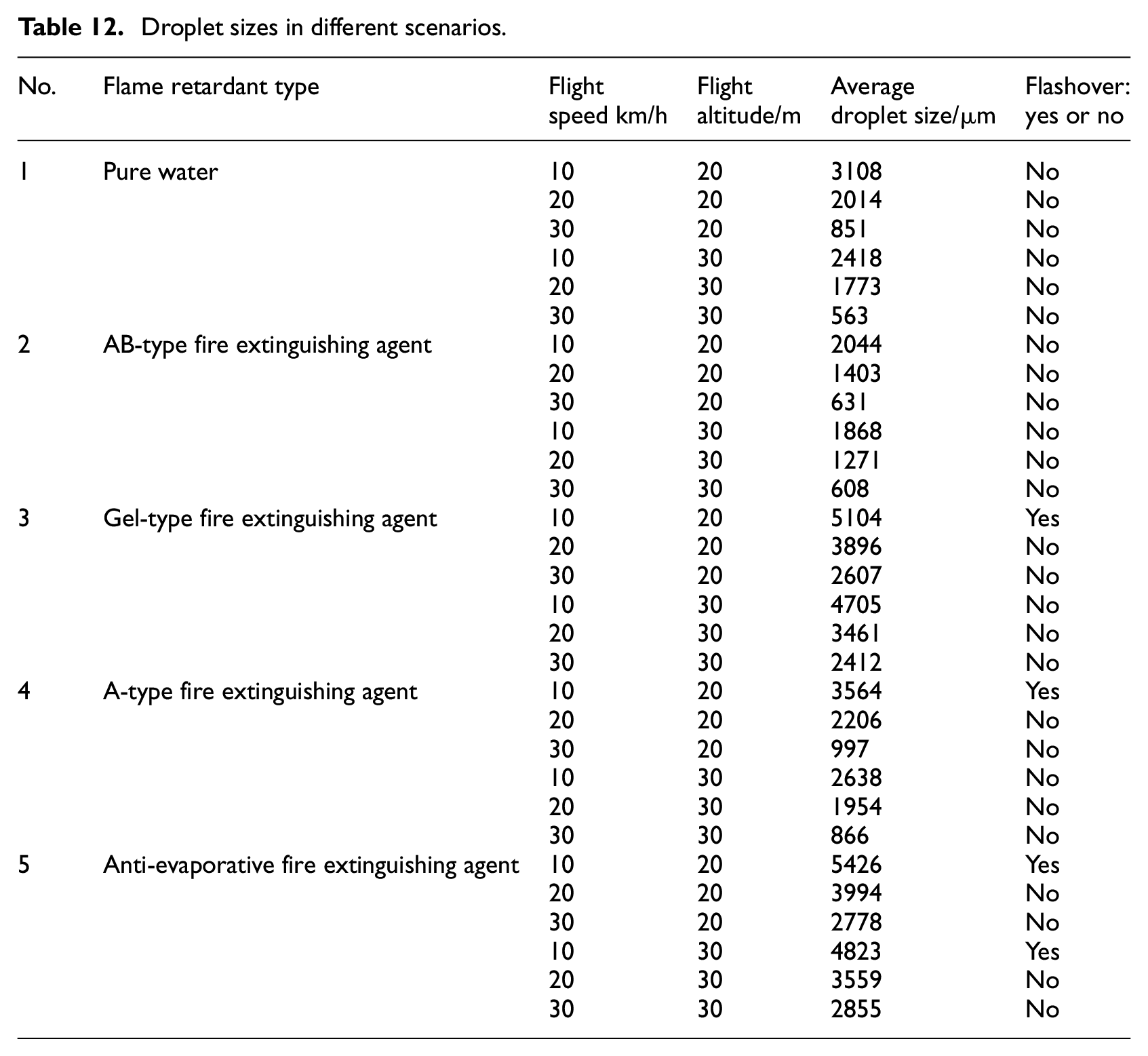
To analyze the relationship between the particle size of the fire extinguishing agent and its insulation performance on the wires, a black background control board with a size of 420 mm × 300 mm is created, consisting of prefabricated squares drawn on the surface of the control board in dimensions of 1 mm × 1 mm, as shown in Figure 24. A high-speed camera is used to focus on the control board. When the helicopter sprays fire extinguishing agent directly above the camera at a certain flight altitude and speed, the ratio of the droplets falling on the camera mirror to the size of the prefabricated squares is measured. This allows us to determine the size of the droplets in each flight state, as shown in Figure 25. The droplet parameters for each group of states are shown in Table 12.
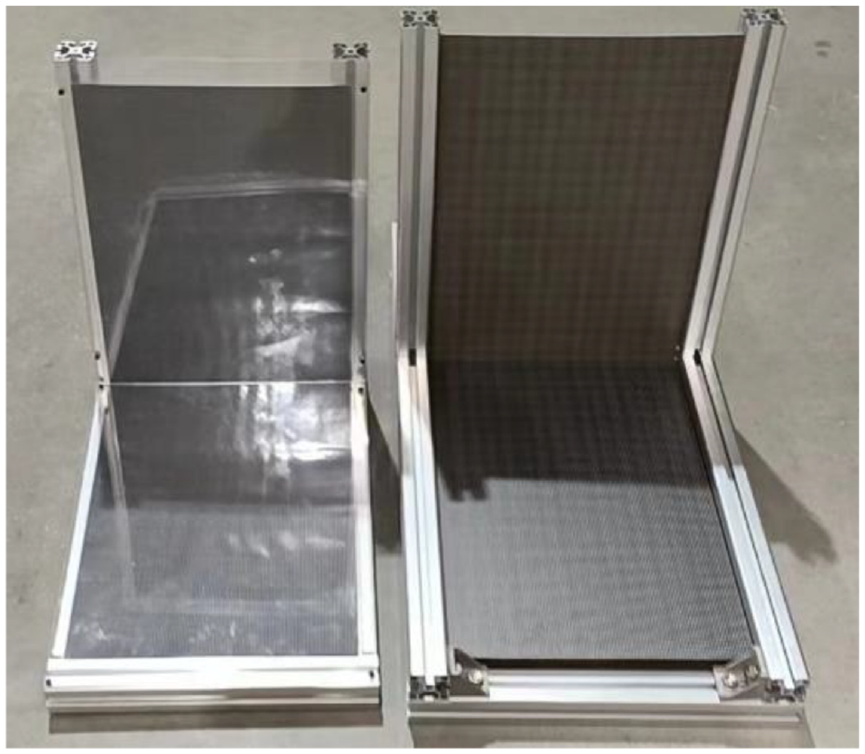
Control board used to measure the sizes of the fire extinguishing agent droplets.
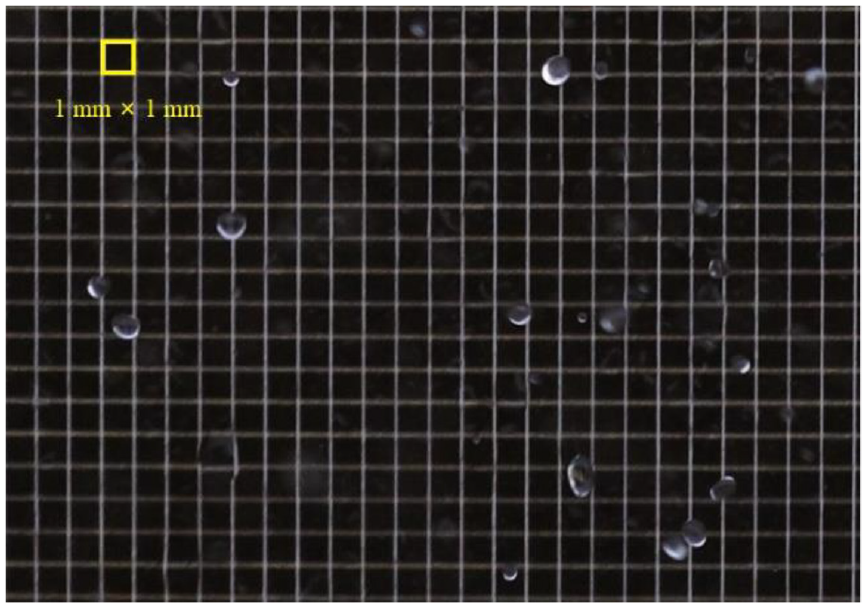
Droplet sizes of each fire extinguishing agent.
Droplet sizes in different scenarios.
Helicopter live fire extinguishing method for transmission line wildfires
The insulation performance of a high-altitude helicopter spraying s fire extinguishing agent is the result of many factors, including flight altitude, flight speed, and the physical and chemical properties of the fire extinguishing agent. The simulation test and the verification test, while comprehensive, do not allow us to carry out tests that consider all influencing factors. Therefore, to infer the appropriate operating procedures that can meet the requirements of live fire extinguishing applications, we make conclusions based on the test parameters and associated reliability margins.
Diffusion law of high-altitude helicopter spraying fire extinguishing agents
According to the analysis of Strizhak et al., 30 the diffusion and fragmentation during free fall after a fire extinguishing agent is sprayed from high altitude can be divided into four stages: (1) water column of the fire extinguishing agent; (2) continuous water chain; (3) semi-continuous large fragmentation; and (4) large fire extinguishing agent droplets. In this article, through our in-depth observations it is found that during the falling process, due to the fragmentation, impact, and evaporation of the agent, the size of the fire extinguishing agent droplet is further reduced, thus forming a fifth stage, (5) composed of a large number of small droplets, as shown in Figure 26. 31 It further constrains the conditions of the four stages, delimiting the diffusion of fire extinguishing agents based on the value of ΔH/d0, as shown in Table 13.
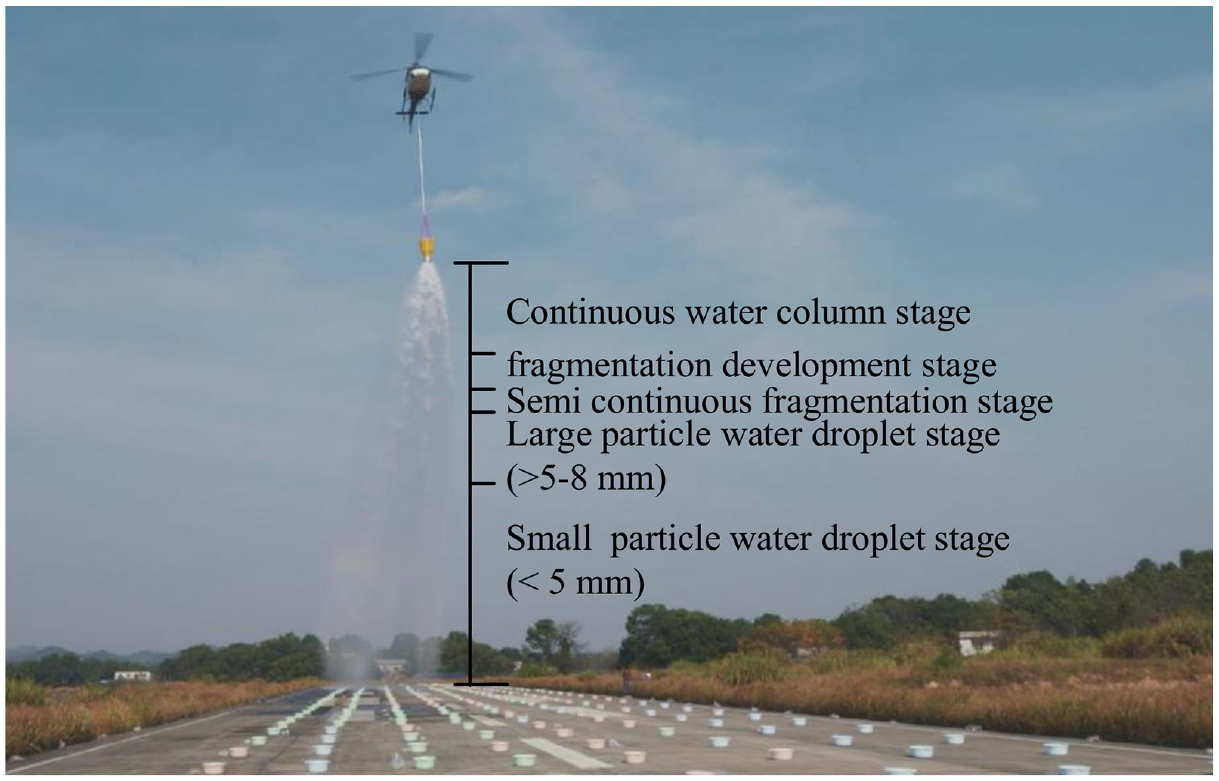
Different diffusion stages of the droplets of fire extinguishing agents sprayed by a helicopter.
ΔH/d0 value range of pure water in the five-stage falling process.
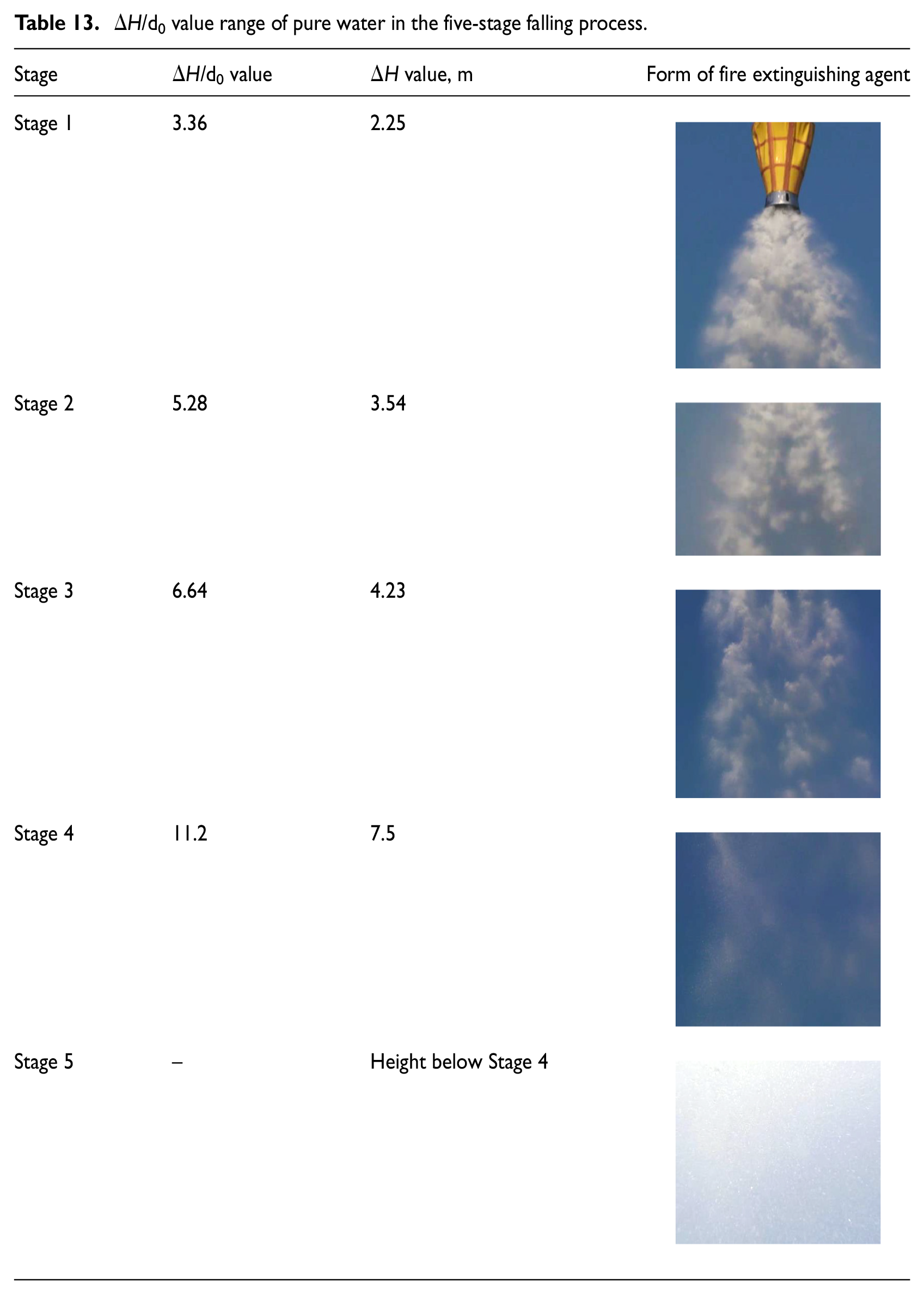
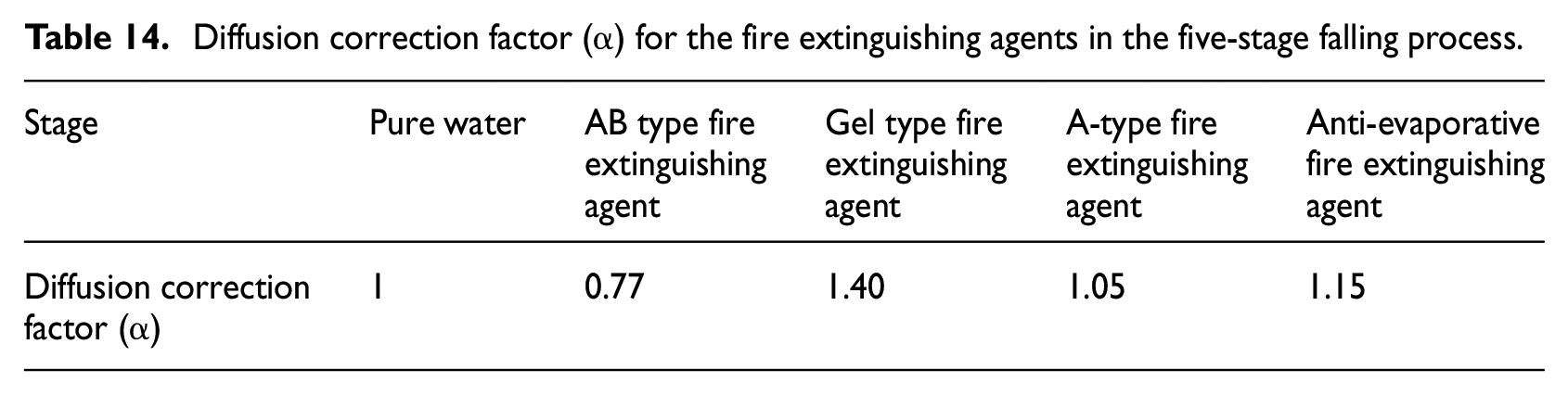
Take, for example, the actual helicopter bucket used in the experiment. The water outlet of the bucket is a trumpet shape with a wide upper end and a narrow lower end. The top and bottom diameters of the bucket are 1100 and 670 mm, respectively. Therefore, the size, d0, of the fire extinguishing bucket used in the test in this article is 0.67 m, which is related to the value of ΔH corresponding to the microscopic spraying process. At 0–2.5 m directly below the bucket, the agent flows out from the bucket in a continuous fluid state, and the agent becomes mixed with a large amount of air, resulting in a continuous white color. The agent starts to fragment between 2.5 and 3.5 m directly below the bucket, and at this time, the continuous fire extinguishing agent begins to become discontinuous, with some of it being white and some being transparent. The agent develops into a semi-continuous state between 3.5 and 4.5 m directly below the bucket, with visible water blocks and a lighter color. The agent is formed of large droplets from 4.5 to 7.5 m directly below the bucket. At this time, the diameter of the fire extinguishing agent droplets is greater than 5–8 mm. The fire extinguishing agent becomes a water mist particle at more than 7.5 m directly below the bucket, presenting as a cloud state, with particle sizes of 563–5426 µm. As the viscosity of each fire extinguishing agents is different, so their ΔH /d0 values at each stage need to be corrected as a function of height (Table 13). According to the on-site test images, the diffusion correction factor values are determined, as shown in Table 14.
Diffusion correction factor (α) for the fire extinguishing agents in the five-stage falling process.
To characterize the five stages of the falling process of each fire extinguishing agent clearly, video screenshots starting from the time when the fire extinguishing agent is about to be sprayed are collected. The form of the fire extinguishing agent at this time can fully reflect the entire spraying and spreading process (the fire extinguishing agent below the bucket has reached the ground, and the fire extinguishing agent inside the bucket is about to be emptied), as shown in Figures 27 and 28.
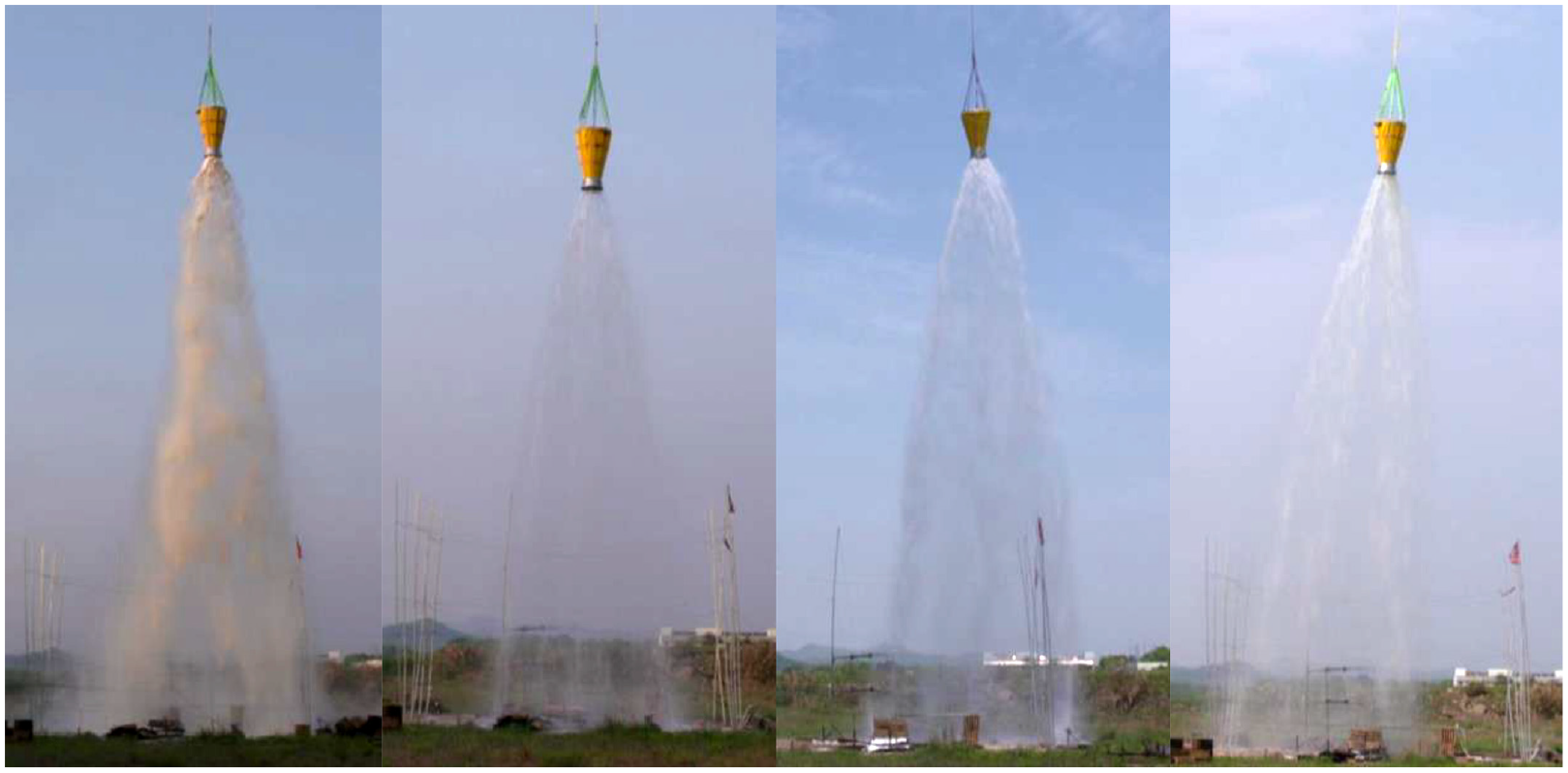
Overall form of the fire extinguishing agent being sprayed by the high-altitude helicopter: AB-type, gel-type, A-type, and anti-evaporative type (front view).
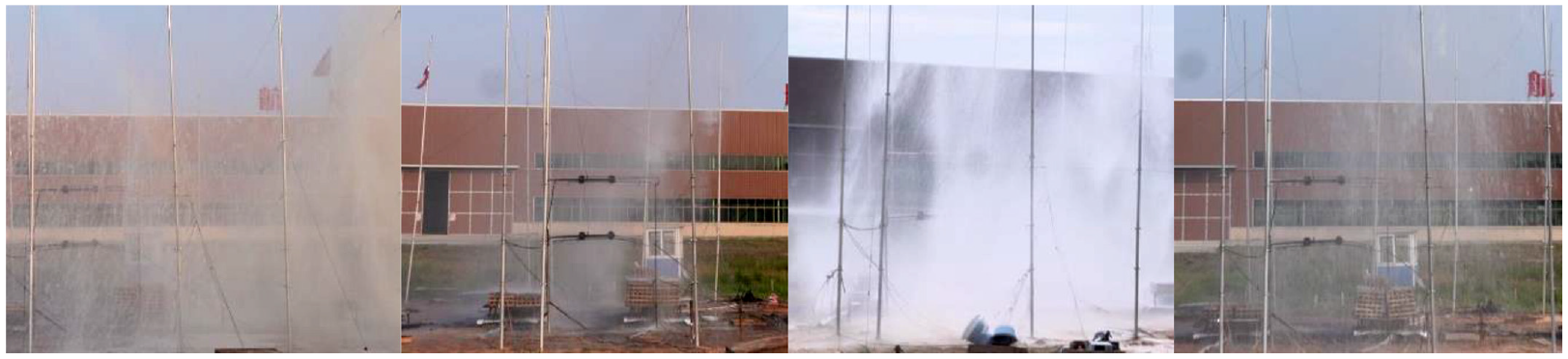
Stage 5: form of the fire extinguishing agent sprayed by the high-altitude helicopter: AB-type, gel-type, A-type, and anti-evaporative type (side view).
Suggestions for engineering practices of high-altitude helicopters extinguishing live fires
To ensure that a high-altitude helicopter spraying a fire extinguishing agent meets the insulation requirements for voltage levels of 500 kV and below, this article selects the most stringent requirements for live fire extinguishment, and puts forward the conditions that need to be met at the same time.
The spraying of low-conductivity pure water and AB-type fire extinguishing agent
The constraints are as follows:
Condition 1: the spraying duration of the fire extinguishing agent is less than 5 s.
Condition 2: the diameter of the fire extinguishing agent droplet is less than 4 mm.
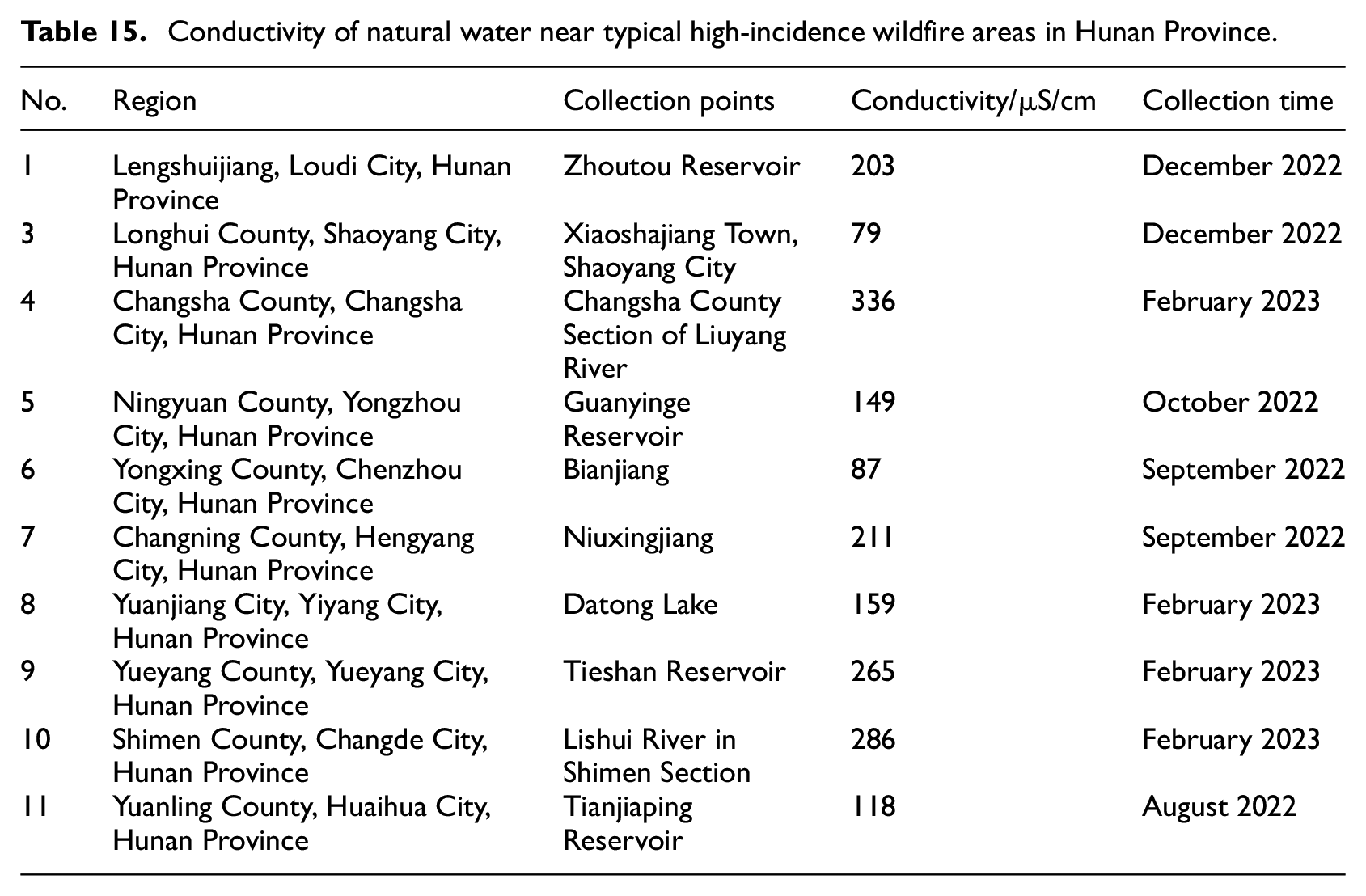
First, the conductivity of natural water in typical wildfire-prone areas in Hunan Province has been tested, with the measured conductivities shown in Table 15. It can be seen that the conductivity of the natural water ranges from 79 to 336 μS/cm, meeting the conductivity requirements for live fire extinguishing. Moreover, pure water and the AB-type fire extinguishing agent have low conductivity and good diffusivity. According to the results of the simulation test and the verification test, only Condition 2 needs to be met. The fire extinguishing agent will naturally fragment and aggregate at high altitude. According to the research results of Islamova et al., 31 the fire extinguishing agent diffuses into a droplet state 2–3 m below Stage 5. Therefore, the height of the helicopter bucket from the conductor satisfies the equation: the starting height of the Stage 5 (with a value of 7.5 m according to Table 13) × diffusion correction factor (α) of pure water (with a value of 1.0 according to Table 14) + 3. Therefore, the height difference between the helicopter bucket and the conductor should be greater than 10.5 m to ensure the discontinuity of the agent.
Conductivity of natural water near typical high-incidence wildfire areas in Hunan Province.
The spraying of high-conductivity gel-type, A-type, and anti-evaporative fire extinguishing agents
The constraints are as follows:
Condition 1: the spraying duration of the fire extinguishing agent is less than 5 s.
Condition 2: the diameter of the fire extinguishing agent droplet is less than 4 mm.
Condition 3: the distribution depth of the fire extinguishing agent is less than 4 mm.
Condition 4: the conductivity of the fire extinguishing agent is not higher than 32,000 μS/cm (i.e. less than 10% of the conductivity of the A-type fire extinguishing agent).
If the ground coverage of the helicopter fire extinguishing device has an area of Ls×Ws (length × width), in order to meet the requirements of Condition 1, then Ws/Vh < 5. Taking a H125 helicopter equipped with bucket fire extinguishing equipment as an example, when the flight height is 30 m and the diffusion width of the fire extinguishing agent is 12 m, the flight speed, Vh, should be greater than 8.64 km/h to ensure that the transmission line insulator is not in the spray area of the fire extinguishing agent.
Next, the fire extinguishing agent will naturally fragment and aggregate at high altitude. When the gel-type fire extinguishing agent is sprayed, the height of the helicopter bucket from the conductor satisfies the equation: starting height of Stage 5 (with a value of 7.5 m according to Table 13) × diffusion correction factor of gel (α; with a value of 1.40 according to Table 14) + 3. Therefore, the height difference between the helicopter bucket and the conductor should be greater than 13.5 m.
Finally, when A-type fire extinguishing agent is applied, the flight speed, Vh, of the helicopter should be kept above 20 km/h to ensure the full diffusion of the fire extinguishing agent, and the diameter of the fire extinguishing agent droplet should be less than 4 mm.
Real-life application
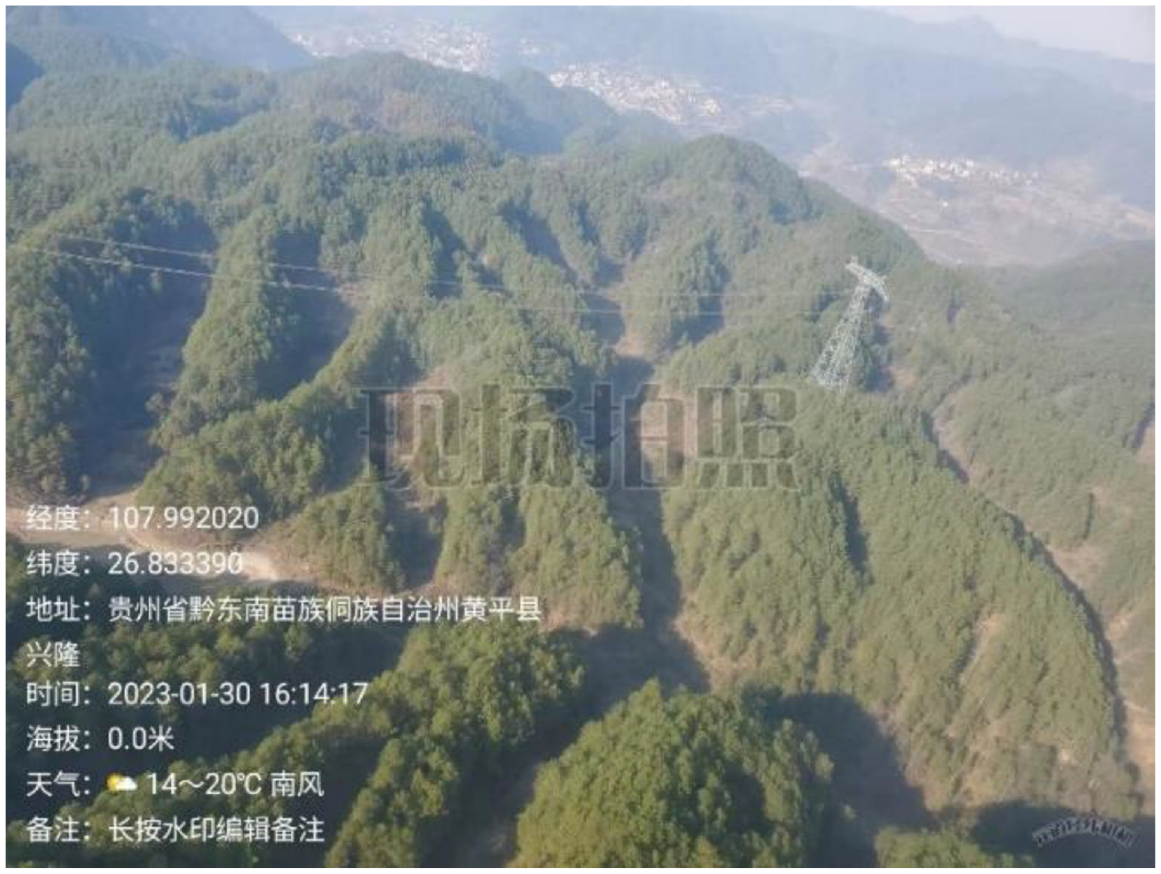
On 28 January 2023, a forest fire broke out in Huangping County, Qiandongnan Miao and Dong Autonomous Prefecture, Guizhou Province. On 29 January, the forest fire spread to the vicinity of sections 1688–1690 on the ±800 kV Yahu Line, representing an area of 12,000 m2 having burned. At 09:49 local time on 30 January, the Loudi helicopter team of the State Grid Hunan Electric Power Co., Ltd. received an emergency request and set off for emergency rescue in southeastern Guizhou at 11:40. The helicopter arrived at the fire site at 14:28 to carry out operations. The fire extinguishing operation lasted for a total of 2.48 h of flight, with a total of 21 buckets (hold 600 kg of fire extinguishing agent) of water being sprayed and 100 L of anti-evaporative fire extinguishing agent being used. The fire near the ±800 kV Yahu Line 1688–1690 was successfully extinguished, as shown in Figures 29–31. When extinguishing the wildfire below the line, the helicopter flew at a height of 92 m and with a flight speed of 50 km/h to spray four buckets of water on the live transmission conductor, which had a unipolar voltage of 800 kV, thereby meeting the insulation requirements of ±800 kV UHV conductor live fire extinguishment.
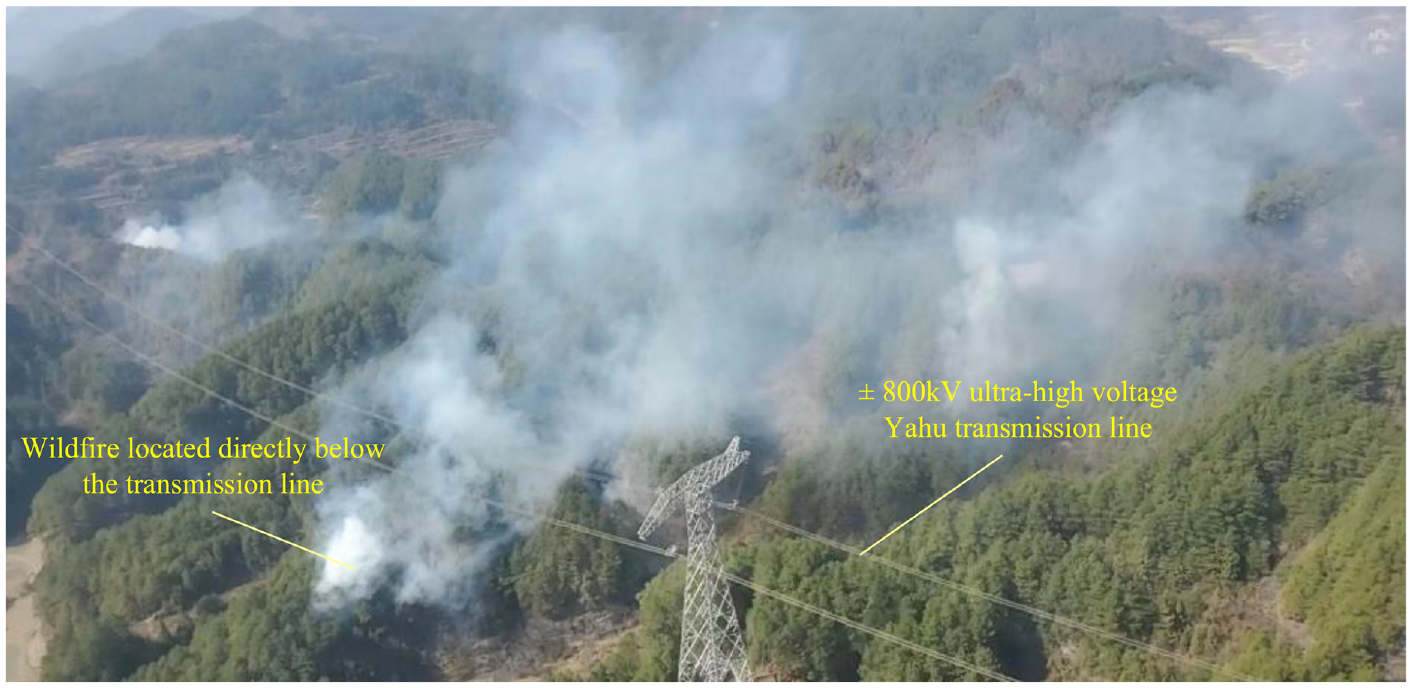
UHV ± 800 kV Yahu Line before the fire was extinguished.
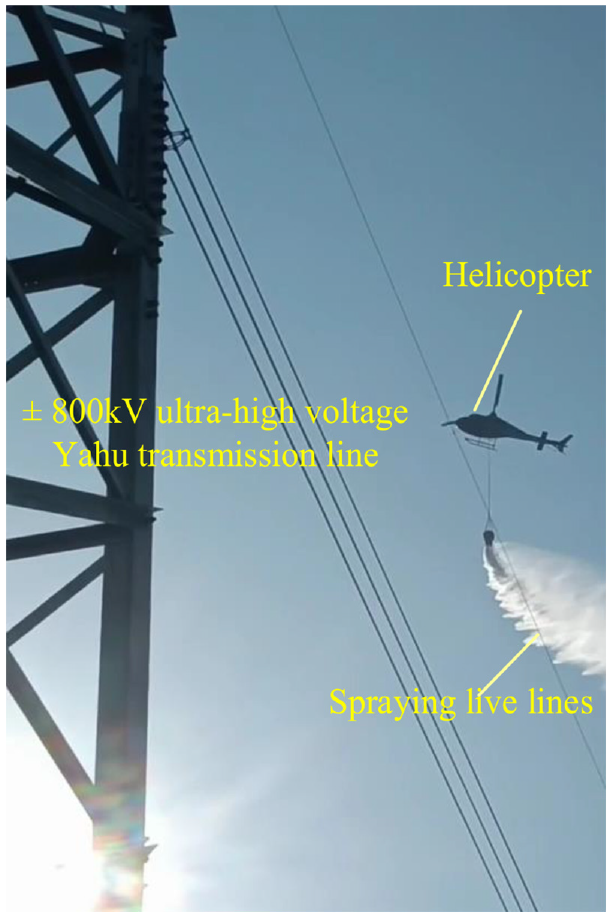
Live fire extinguishing of the ±800 kV Yahu Line.
UHV ± 800 kV Yahu Line after the fire was extinguished.
Conclusion
The article introduced a test plan for simulating a helicopter spraying live insulators based on a constructed simulation test platform for spraying live 500 kV insulators. We carried out tests of spraying live glass insulators with different fire extinguishing agents, obtained the flashover characteristics of sprayed live glass insulators, and analyzed the results. Our main conclusions are as follows:
1. Helicopter spray tests were carried out under different conditions of structure, spray intensity, height, flight speed, wind speed, and so on. The sprayed fire extinguishing agents had an elliptical shape, with a greater distribution in the middle and smaller distributions at both ends and sides, with a maximum depth of 1.2 mm. We found that the faster the helicopter flies and the higher its altitude, the larger its coverage area but with less water received per unit area.
2. A simulated helicopter spraying live insulator test was carried out. The test results showed that after natural water collection, the addition of gel-type, A-type, and anti-evaporative fire extinguishing agents in the bucket caused the insulation performance of the fire extinguishing agent to decline, where the degree of decline follows anti-evaporative >A-type > gel-type fire extinguishing agent. The addition of the AB-type fire extinguishing agent increased the conductivity, but the insulation performance of the fire extinguishing agent was higher than that of pure water when sprayed at high altitude.
3. The addition of 3%, 5%, 10%, 15%, and 20% A-type fire extinguishing agent resulted in a significant increase in the conductivity of the combined fire extinguishing agent, where the breakdown voltage decreased by 11.1%, 19.4%, 27.9%, 32.3%, and 33.4%, respectively. The breakdown voltage of the gel-type fire extinguishing agent with a conductivity of 1194 μS/cm was 20.9% lower than that of the 3% A-type fire extinguishing agent (conductivity of 9020 μS/cm), indicating that the droplet size of the fire extinguishing agent has a greater impact on insulation performance than the conductivity.
4. A flashover verification test of helicopter high-altitude spraying of fire extinguishing agent on live 500 kV insulators was carried out, and we obtained a high-altitude diffusion law for fire extinguishing agents. When a low-conductivity fire extinguishing agent is sprayed, the height difference between the helicopter bucket and the conductor should be greater than 10.5 m. When a high-conductivity fire extinguishing agent is sprayed, the height difference between the helicopter bucket and the conductor should be greater than 13.5 m, and the flight speed of the helicopter should be above 20 km/h to ensure sufficient diffusion of the fire extinguishing agent. Moreover, the droplet diameter of the fire extinguishing agent should be less than 4 mm, so as to realize live fire extinguishing of transmission line wildfires.
5. When the fire extinguishing agent contains soot particles produced by burning combustibles, the insulation performance of the fire extinguishing agent will be affected. In a following article, the quantitative impact of the content and size of soot particles in the fire extinguishing agent on the breakdown characteristics of insulators will be studied.
Footnotes
Acknowledgements
The authors thank the editor and the reviewers, whose comments and suggestions were very helpful in improving the quality of this paper.
Author Contributions
J.L. conceived and designed the paper. T.Z. contributed to data collection. T.Z. tested and analyzed the data. T.Z. and C.W wrote the paper.
Declaration of conflicting interests
The author(s) declared no potential conflicts of interest with respect to the research, authorship, and/or publication of this article.
Funding
The author(s) disclosed receipt of the following financial support for the research, authorship, and/or publication of this article: This work was supported by the Hunan State Grid Major S&T Project (No. 5216A8220008).
