




Abstract
Previous studies indicated that the elderly are vulnerable to fire injury. In this article, the nature of such vulnerability in terms of fire injury risk factors including age band, gender, occupancy level, deprivation, mobility, alcohol consumption and attempting to fight the fire is examined in a UK Fire and Rescue Service between April 2011 and April 2022. Fire injury risk was more common the greater the age of the elderly individual, more likely for males up to 74, but more likely for females above that age, possibly due to the greater proportion of females to males above age 74 in the area and time period studied. Elderly fire injuries mainly occurred in single occupancy housing and in more deprived areas. Cooking-related fire injuries accounted for 60.2% of elderly fire injuries, followed by smoking-related fire injuries (14.3%) and heating-related fire injuries (7.2%). Fire fatalities were not included in the analysis.
Introduction
The elderly had previously been identified as a group vulnerable to accidental dwelling fire injury.1–3 The risk of domestic fire for the elderly has been identified as being higher than for other age groups in numerous countries along with the increasing proportions of such individuals in the population.4–6 However, being elderly in itself does not necessarily imply a higher risk of fire injury. In this article, the different fire injury risk factors associated with the elderly were examined in order to explore the nature of such vulnerability. DiGuiseppi et al. 7 commented that further research into non-fatal injuries from residential fires is required. Thompson et al. 8 stated that the risk of a fire, the risk of a fire-related non-fatal injury, and the risk of a fire-related fatal injury should not be confounded. Johnson et al. 9 stated that the UK National Health Service (NHS) has a vested interest in reducing the number of domestic fires by means of prevention in order to achieve cost savings by reducing the need to treat patients who have been injured in a domestic fire. Previous studies from the United Kingdom found that elderly individuals are more likely to consume alcohol and have mobility impairments (both of which are fire injury risk factors) compared to younger individuals; 10 however, this may not be specific to the United Kingdom. Warda et al. 11 stated that house fire injury and death remain a major public health issue. McNamee et al. 12 commented that if fire safety is to keep pace with the changing needs of modern society, there is a growing need for fire research. Improving the identification of individuals vulnerable to accidental dwelling fires is becoming more important to fire and rescue services. Vulnerability profiles can be used to identify those individuals most in need of intervention from fire prevention services based on risk levels. 10
In this article, the nature of elderly individual fire injury risk factors including age band, gender, deprivation, occupancy level, mobility impairments, alcohol consumption and attempting to fight a domestic fire is examined in a study in Merseyside Fire and Rescue Service in the Northwest of England during the period April 2011 to April 2022. The number and proportion of elderly residents in the Merseyside region is projected to grow, thus indicating a potentially higher number of fire risk individuals within the region in the future. 10 Merseyside covers an area of 252 square miles and in 2021 had a population of 1.43 m people. 13 In the 2021 inspection by HM Inspectorate of Constabulary and Fire and Rescue Services, Merseyside Fire and Rescue Service was assessed as being good in terms of overall effectiveness and outstanding in terms of preventing fires and overall efficiency. In particular, the service’s fire prevention strategy was assessed as being clearly linked to its integrated risk management plan, and prevention activities were effectively targeted and supported by referrals to other agencies with regard to social isolation, smoking and alcohol management. 13 The six local authority areas constituting Merseyside were some of the most income-deprived areas in England in 2021. Of the 316 local authority areas in England, Knowsley was the second most income deprived, Liverpool was the fourth most income deprived, Halton was the 31st most income deprived, St Helens was the 33rd most income deprived, Wirral was the 38th most income deprived and Sefton was the 54th most income deprived. 14 Merseyside was chosen as the study area due to the level of deprivation, in order to examine how this related to fire injury risk among the elderly, who are considered the most vulnerable group of individuals in terms of fire risk. 15
Literature review
Old age and fire injury risk
Numerous studies had indicated that the risk of accidental dwelling fire and fire injury increases as individuals become older.1,16,17 The study by Karemaker et al. 16 concerned fire behaviours by the elderly, and the study by Gustavsson et al. 1 concerned individualized fire safety for the elderly, rather than the characteristics and circumstances of elderly individuals injured in accidental dwelling fires, which is the focus of this research. Age-related physical and cognitive decline may be factors in decreased ability to evacuate or extinguish a domestic fire. 18 For the elderly, reduced mobility, impaired cognitive ability and mental disorders are all fire risk factors.19,20 Restricted mobility reduces the capacity to escape a domestic fire, even if an early warning is present. 5 Elderly individuals with limitations in mobility may have difficulty evacuating from a burning building or quickly removing an article of clothing that has ignited. 21 Harpur et al. 22 highlighted the importance of addressing how elderly householders, especially those with poor mobility, would escape in the event of a domestic fire. Impaired mental function may place elderly individuals at risk from domestic fire-related burns due to effects on the ability to recognize behaviours as dangerous, that fire injury hazards are present or that certain fire-suppression methods may be inappropriate. 21 In addition to health conditions, the effect medications can have on alertness or responsiveness to potential fire cues can place the elderly at risk of domestic fire injury. 22 Accidental dwelling fire injuries are typically more common in those aged 65+ who appear to have a higher risk of accidentally starting a dwelling fire and also may have difficulties identifying or evacuating a fire. In addition, fire injuries sustained by the elderly tend to be more severe and are often complicated by other medical conditions. 16 This research examined mobility and other characteristics and circumstances related to accidental fire injury involving the elderly.
Fire prevention approaches for the elderly
Understanding and predicting the behaviours of different social groups is an important factor for local authorities in terms of delivering effective and efficient public services. This is particularly the case for fire and rescue services as they seek to protect the most vulnerable in the community while having increasing budget constraints. 23 Accidental dwelling fire is a social problem and should be prevented by initiating customized fire-prevention measures. 19 In order to design effective fire-prevention approaches it is important to understand community risk groups and risk factors, particularly the elderly, who are typically the most vulnerable social group to accidental dwelling fires. 15
UK Fire and Rescue Services work in partnership with individuals, their families and those providing care services for older people in order to allow them to remain safe and independent in their own homes for as long as possible. Assistive safety technologies such as community alarms and telecare monitoring services that include smoke and heat detectors can help in this respect. 17 However, assistive technologies are not an alternative to person-centred risk assessments or providing appropriate standards of fire safety. A holistic approach that considers the person, their specific needs/risks and their living environment is essential. 24 Roughly 90% of UK households currently have a working smoke alarm, largely due to a significant programme of home safety visits undertaken by UK Fire and Rescue Services and from regular publicity campaigns around the simple messages of fitting smoke alarms and testing them regularly. 24
Old age has significant effects on both physical and cognitive abilities of an individual, implying that domestic fire evacuation or more complex fire extinguishing can be difficult for elderly individuals. Therefore, early detection of a domestic fire via a smoke detector becomes a main fire-prevention measure for older adults who may have reduced capabilities. 25 Fire prevention for older individuals may be undertaken through leaflet drops, door-to-door visits, community visits and the distribution and fitting of smoke alarms. In the United Kingdom, visits take the form of home fire safety checks which involve firefighters visiting homes to assess fire risk, provide safety advice and install smoke alarms where required. 5 The home fire safety check 26 identifies potential fire risks within a home, provides information to the householders regarding how to prevent or reduce such risks, creates an escape plan in case a fire was to break out, and ensures that the home has working smoke alarms. However, elderly individuals exhibiting significant risk behaviours, such as those with high alcohol consumption, may not modify their behaviour to alleviate domestic fire risks identified by a fire officer during a home fire safety check or other fire-prevention activity. 1 This research examined alcohol consumption and other circumstances such as attempting to tackle the fire related to accidental fire injury involving the elderly.
Overall, although previous research into accidental dwelling fire injuries had identified old age as a factor in such injuries, few studies have examined the nature of the variety of factors associated with old age and fire injury. The originality of the research reported in this article is the detailed analysis of the relationship between old age and accidental dwelling fires injuries between April 2011 to April 2022 recorded by a UK Fire and Rescue Service. In particular, the research reported in this article examined fire injury factors including age band, gender, occupancy level, deprivation, mobility impairments, alcohol consumption and attempting to fight a domestic fire associated with the elderly, and thus extends previous research in this area.
Research method
Merseyside Fire and Rescue Service accidental dwelling fire data and deprivation data from the UK Office for National Statistics were used to examine non-fatal fire injuries sustained by elderly individuals in the age bands: 65–69, 70–74, 75–79, 80–84 and 85+ in terms of alcohol-related, mobility-related and fire-fighting-related injuries between April 2011 and April 2022 in Merseyside. The data used regarding elderly accidental dwelling non-fatal fire injuries were from the UK Fire Incident Recording System. The data concerned the non-fatal injuries sustained by elderly individual from accidental dwelling fires that were attended by Merseyside Fire and Rescue Service. The types of non-fatal fire injuries recorded included burns, smoke inhalation and other types of injuries such as shock or collapse and musculoskeletal injuries. The total number of accidental dwelling non-fatal fire injuries sustained by the elderly in Merseyside during the period studied was 279. Fire fatalities were not included in the analysis.
The research method involved using frequency analysis and correlation analysis to examine patterns and trends in elderly non-fatal fire injury data in terms of age bands, gender, deprivation, occupancy level, type of fire, contributory factors including mobility impairments and alcohol consumption and fire behaviour in terms of attempting to tackle a domestic fire. Spearman’s rank-order correlation coefficient was used for the correlation analysis since it is a non-parametric measure of the strength and direction of association that exists between two variables measured at least on an ordinal scale. This was an appropriate choice of correlation technique when comparing variables such as age bands and indices of deprivation.
Previous research 27 had used a similar analytical framework for analyzing accidental dwelling fire injuries in general, rather than specifically for the elderly. The deprivation measure used was the Indices of Multiple Deprivation decile 28 produced by the UK Office for National Statistics. This measure covers all areas in England and ranges from 1 which indicates the 10% of the most-deprived areas to 10 which indicates the 10% of least-deprived areas in England. The Indices of Multiple Deprivation provides a set of relative measures of deprivation for England based on income, employment, education, skills and training, health and disability, crime, housing and living environment. The software used for the frequency analysis was Microsoft Excel.
The research questions addressed by the research reported in this article are as follow:
How does age band, gender, occupancy level and deprivation relate to accidental dwelling fire injury in the elderly?
What types of accidental dwelling fires result in elderly fire injury?
How do contributory factors such as alcohol consumption and mobility impairments relate to accidental dwelling fire injury in the elderly?
How does fire behaviour such as attempting to fight a domestic fire relate to accidental dwelling fire injury in the elderly?
These are important research questions since the elderly are the most vulnerable in terms of accidental dwelling fire injury risk, and further understanding of the nature of such vulnerability can assist in informing fire-prevention approaches. Fire and rescue services require accurate information regarding the characteristics of individuals most at risk of accidental dwelling fires in order to attempt to ensure that reducing resources are targeted towards such individuals. The originality of the research presented is the detailed analysis of domestic non-fatal fire injuries sustained by the elderly recorded by a UK Fire and Rescue Service in terms of age band, gender, occupancy level, deprivation, type of fire and contributory factors such as alcohol consumption, mobility impairments and attempting to tackle the fire in order to inform fire injury prevention strategies. A limitation of the research undertaken concerned generalizability of the research findings to other UK and overseas fire and rescue services, since the area covered by Merseyside Fire and Rescue Service included some of the most deprived areas in England. In addition, fire and rescue service data regarding fire injuries may potentially not be as thorough as data from health sources.29,30
Old age and fire injury analysis
Elderly age band, gender, occupancy level and deprivation accidental dwelling fire injury
The number of dwelling fire injuries in England between April 2011 and April 2022 is shown in Figure 1. The number of elderly (age 65+) dwelling fires in England during the same period is shown in Figure 2.
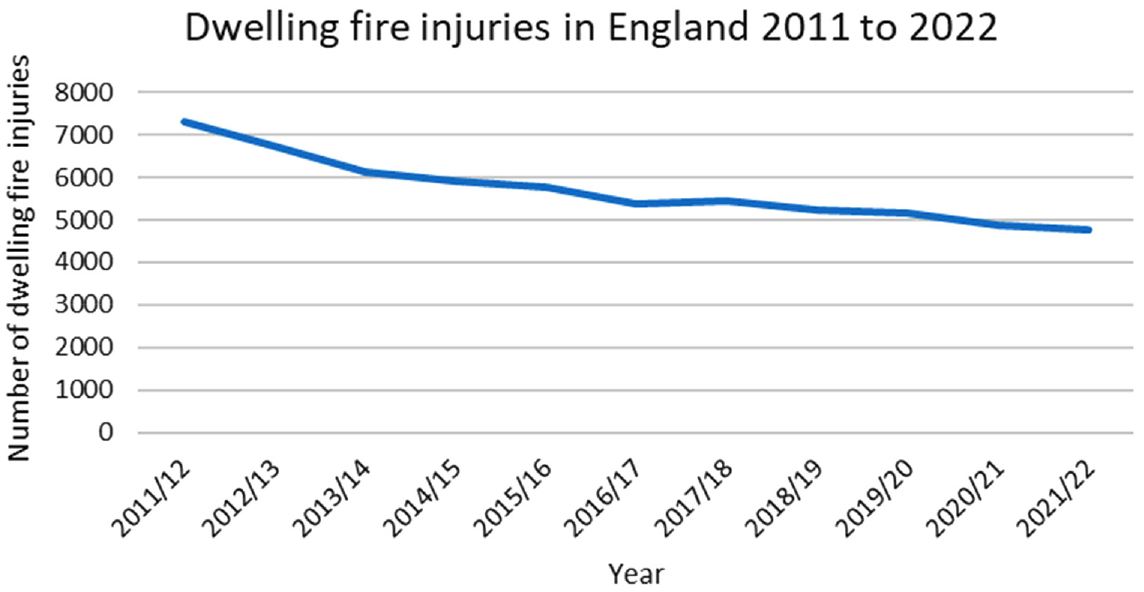
Number of dwelling fire injuries in England (April 2011 to April 2022).
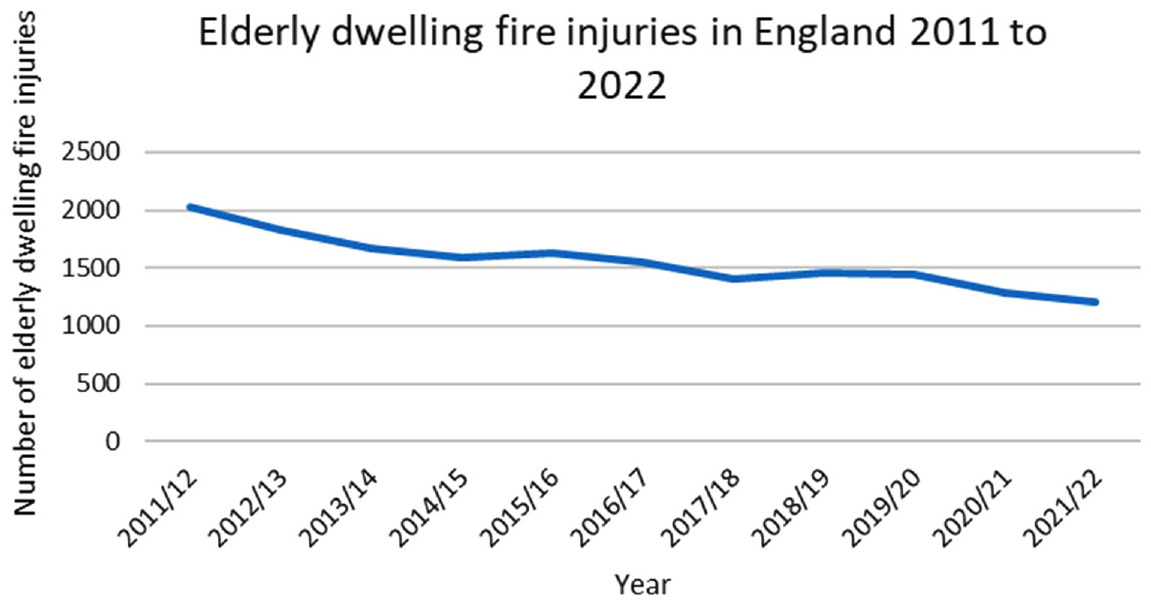
Number of elderly (65+) dwelling fire injuries in England (April 2011 to April 2022).
The percentage decline in dwelling fire injuries in England during 2011–2022 was 34.7%. The percentage decline in elderly (65+) dwelling fire injuries in England over the same period was 40.5%.
From April 2011 to April 2022 in Merseyside, the number of dwelling fire injuries is as shown in Figure 3.
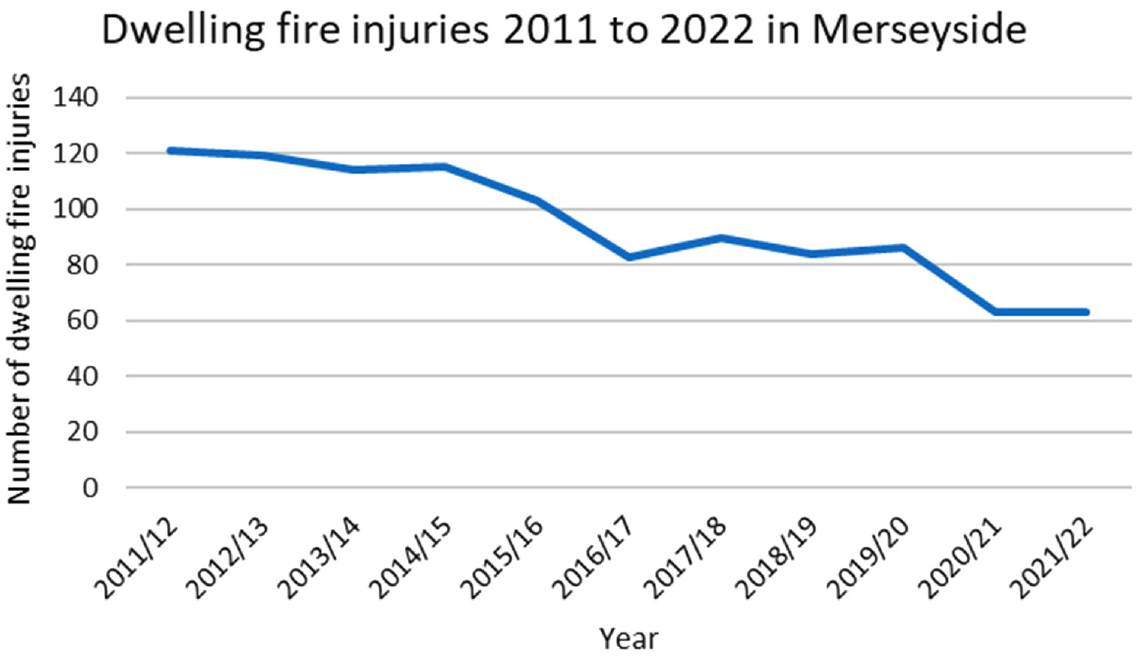
Number of dwelling fire injuries in Merseyside (April 2011 to April 2022).
From April 2011 to April 2022 in Merseyside, the number of dwelling fire injuries involving the elderly (65+) is as shown in Figure 4.
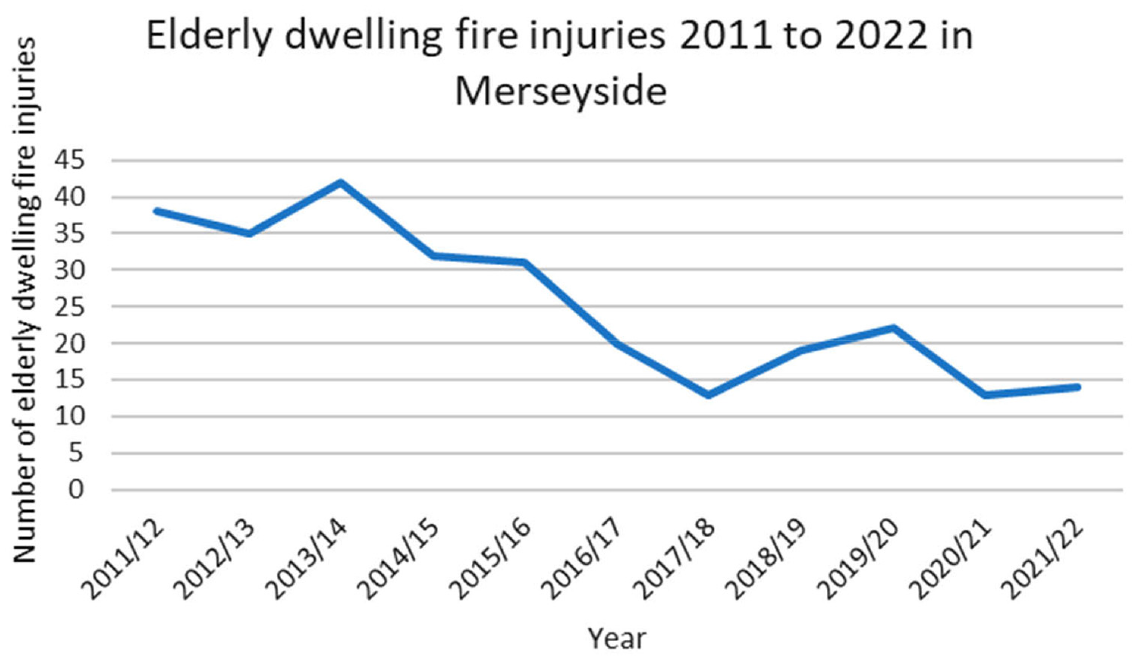
Number of elderly (65+) dwelling fire injuries in Merseyside (April 2011 to April 2022).
The percentage decline in dwelling fire injuries in Merseyside between 2011 and 2022 was 47.9%. The percentage decline in elderly (65+) dwelling fire injuries in Merseyside over the same period was 63.2%. Compared to the overall figures for England, Merseyside had shown a larger decrease in dwelling fire injuries, and in particular, a larger decrease in elderly dwelling fire injuries.
In total, there were 279 accidental dwelling non-fatal fire injuries sustained by the elderly in Merseyside during the period April 2011 to April 2022. The number of such injuries per year varied between 13 and 42 over the period studied. The mean number of injuries per year was 25.4, with a standard deviation of 10.1. Overall, over the time period studied, there was general decline in the number of elderly fire injuries per year.
Figure 5 shows the number of elderly dwelling fire injuries by age band in Merseyside between April 2011 and April 2022.
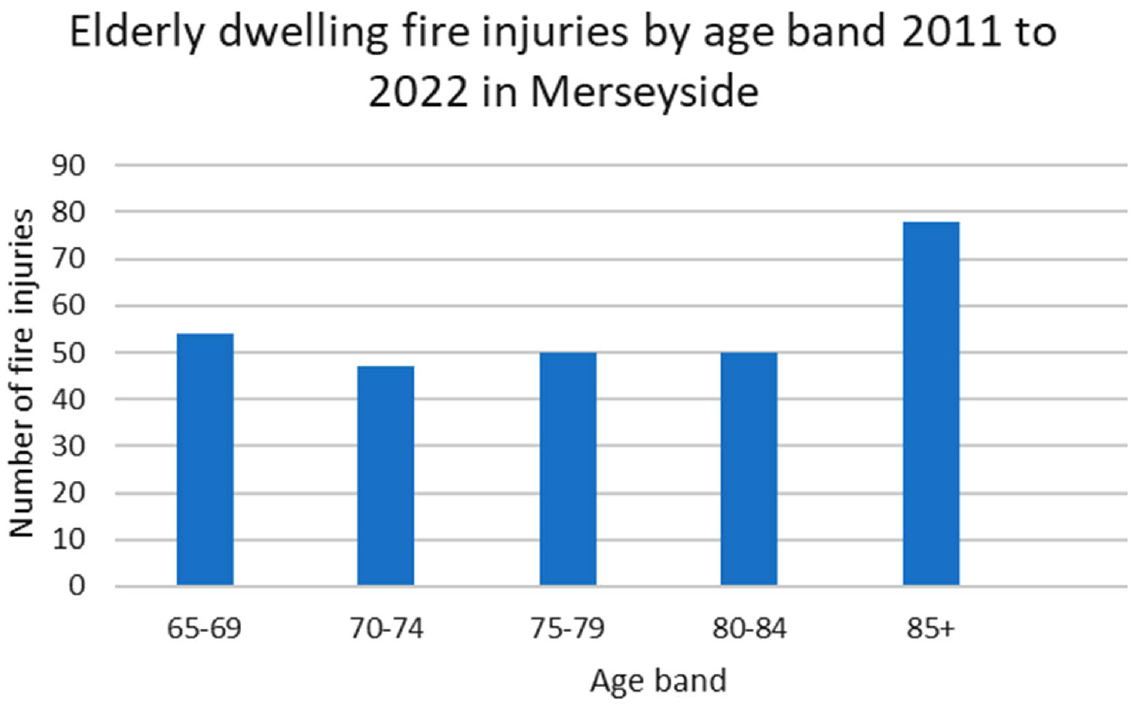
Number of elderly dwelling fire injuries by age band in Merseyside (April 2011 to April 2022).
Figure 5 indicated that the 85+ age band had the highest number of fire injuries, followed by the 65–69 age band.
Figure 6 shows the number of elderly fire injuries by age band and gender in Merseyside between April 2011 and April 2022.
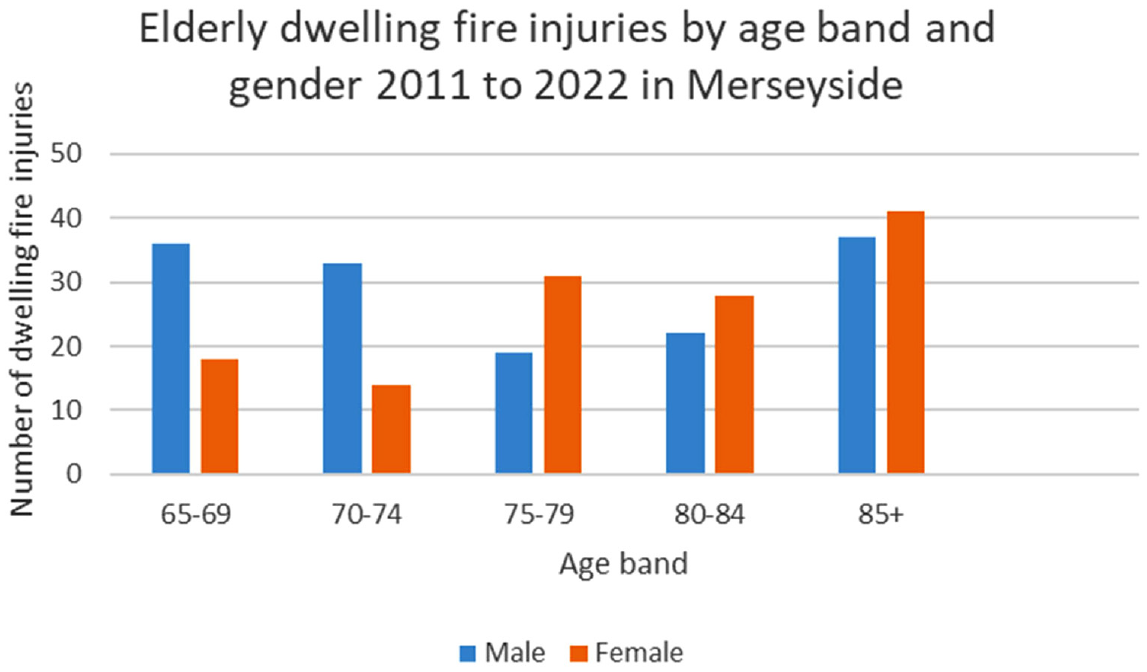
Number of elderly fire injuries by age band and gender in Merseyside (2011–2022).
Figure 6 indicates that more males than females sustained accidental dwelling fire injuries in the 65–69 and 70–74 age bands; however, in the older age bands, there were more female than male fire injuries. This corresponds with the higher female-to-male ratio in the older age bands as shown in Figure 8.
Figure 7 shows the elderly population of Merseyside by age band in 2020 from the latest UK Office for National Statistics data. 31
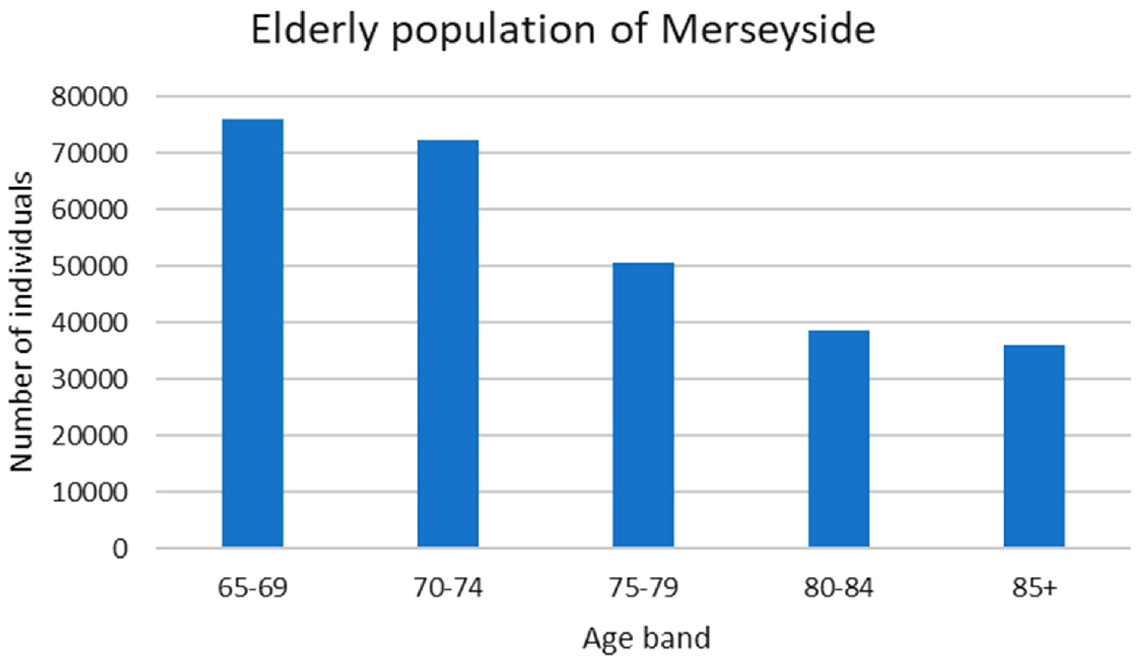
Elderly population of Merseyside by age band in 2020.
Figure 8 shows the elderly population of Merseyside by age band and gender in 2020 from the latest UK Office for National Statistics data. 31
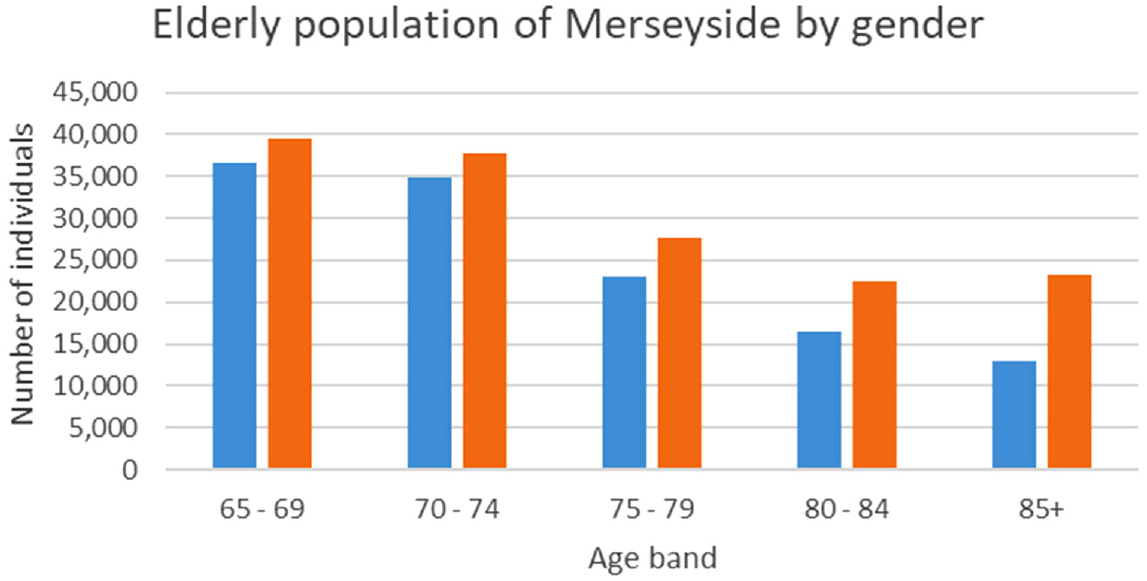
Elderly population of Merseyside by age band and gender in 2020.
Figure 8 shows that there are significantly more females in the higher age groups than males in the Merseyside area.
Figure 9 shows elderly dwelling fire injuries between 2011 and 2022 as a percentage of age band population by gender in Merseyside (based on the most current elderly population of Merseyside by age band data from UK Office for National Statistics data). 31
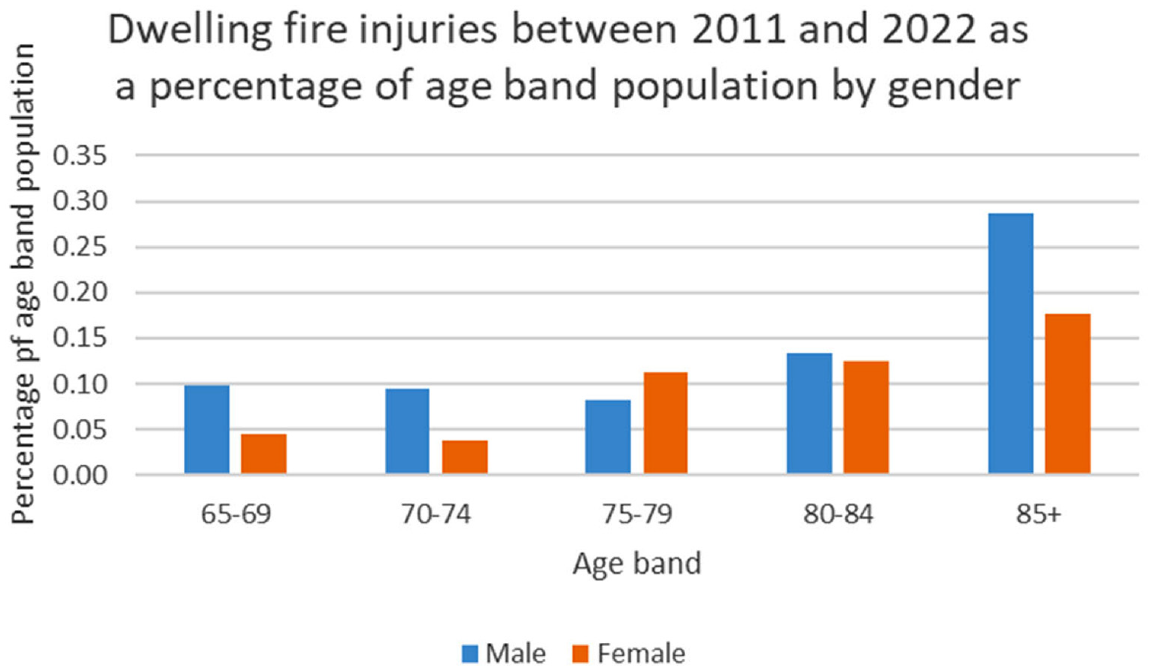
Elderly dwelling fire injuries between 2011 and 2022 as a percentage of age band population by gender in Merseyside.
Figure 9 indicates that overall, as a percentage of the elderly age band population in Merseyside, for males and females, the older the elderly individual, the greater the risk of accidental fire injury based on the UK Office for National Statistics data. Spearman’s rank-order correlation between the elderly age bands and the percentage of elderly age band population injured in an accidental dwelling fire was 0.9 with a significance level of 0.037.
Table 1 summarizes the number of dwelling fire injuries sustained by the different elderly age bands, and the percentage of the elderly age band injured in a dwelling fire over the period studied in Merseyside.
Elderly age band, number of dwelling fire injuries and percentage of age band injured in a dwelling fire between 2011 and 2022 in Merseyside.
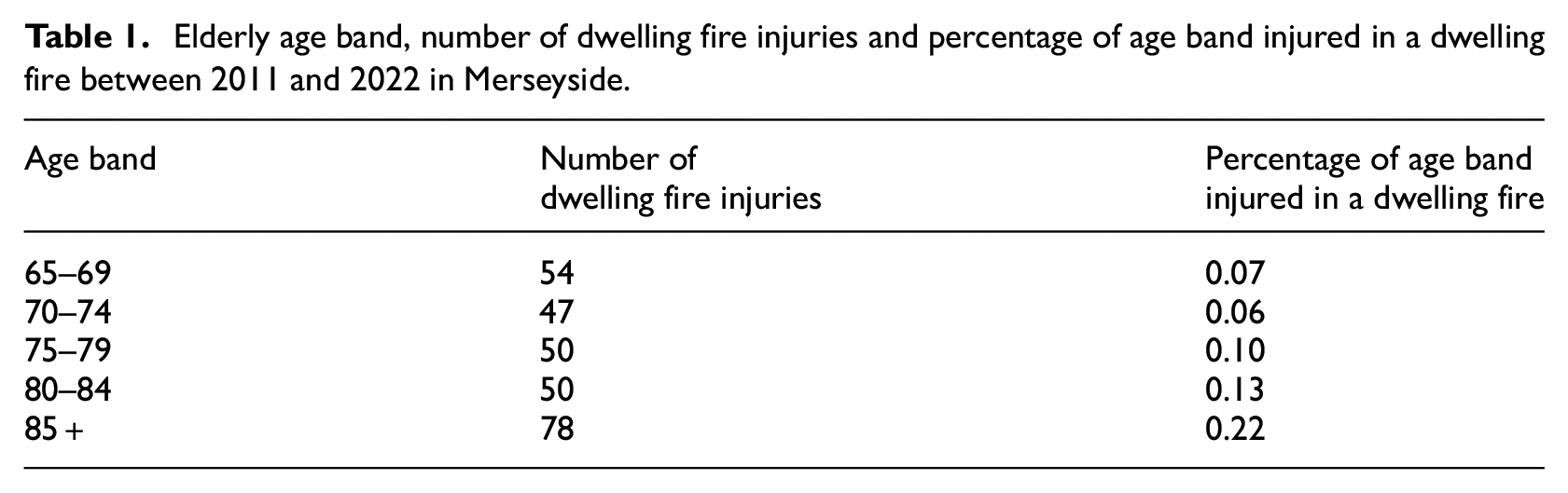
Table 1 shows that although the number of elderly dwelling fire injuries by age band does not appear to follow a pattern, there is a clear increasing trend in the percentage of the elderly age band populations in Merseyside injured in a dwelling fire with increasing age.
To put this in context, the number of dwelling fire injuries and the number of dwelling fire injuries per 10,000 population age band in Merseyside over the period studied is shown in Table 2.
Age band, number of dwelling fire injuries and dwelling fire injuries per 10,000 population between 2011 and 2022 in Merseyside.
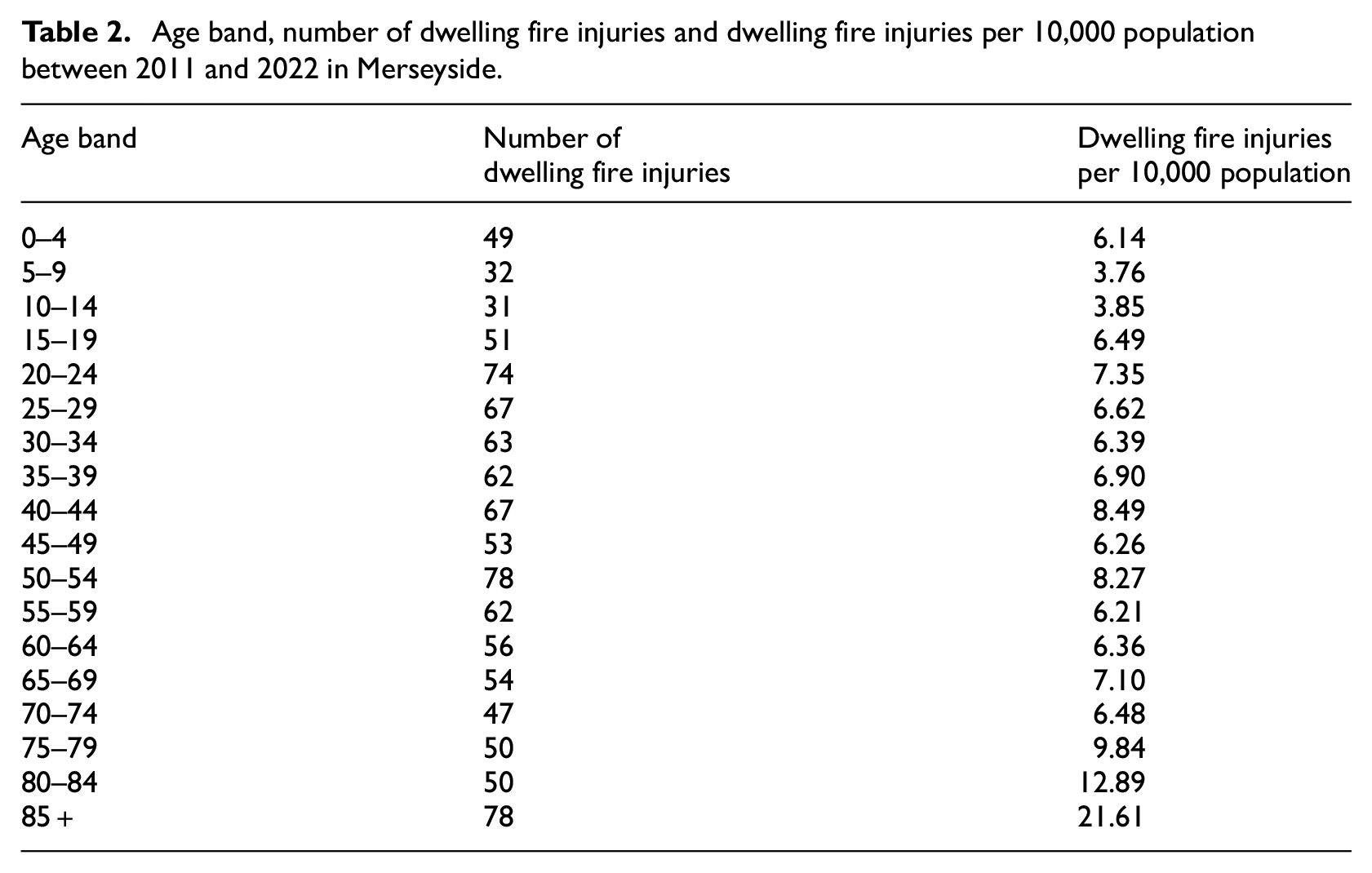
Table 2 indicates that those aged 75+ have the highest number of dwelling fire injuries per 10,000 population of all the different age bands in Merseyside. Overall, it appeared that those in the ‘more elderly’ category (75+) were more at risk of accidental dwelling fire injury than those in the ‘less elderly’ category (65–74). There was also higher risk of accidental dwelling fire injury in other age categories, in particular the 40–44 and 50–54 age categories compared to the ‘less elderly’ (65–74) category. Across all the age bands, Spearman’s rank-order correlation between age band and dwelling fire injuries per 10,000 population was 0.633 with a significance level of 0.005.
Figure 10 shows the number of accidental dwelling fire injuries by type of occupancy over the period studied.
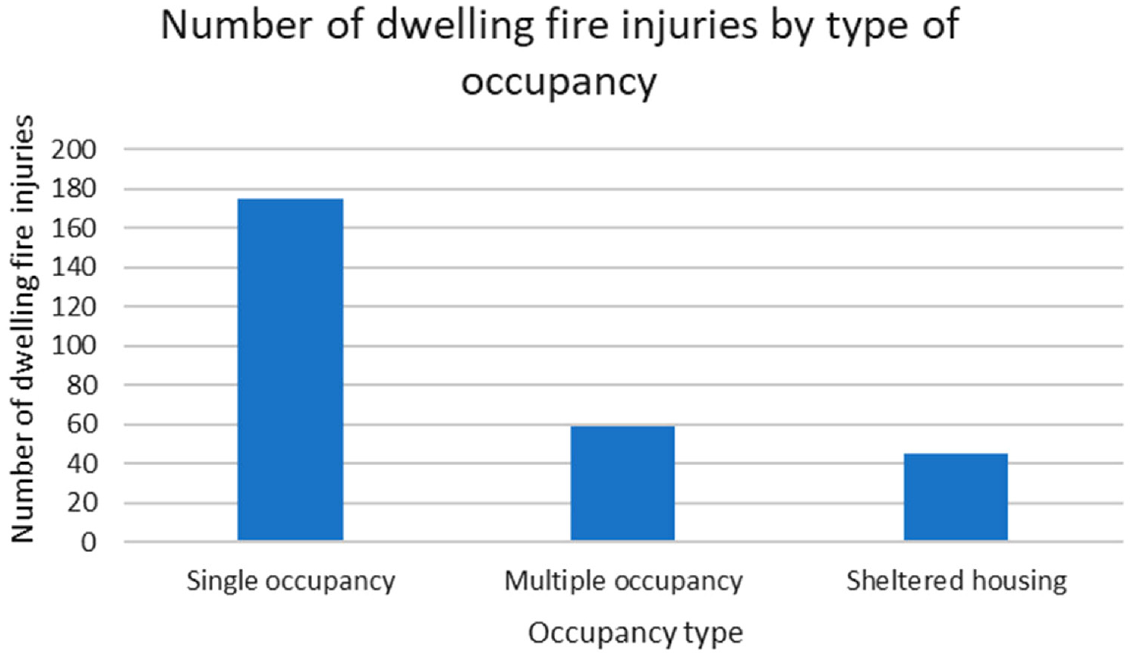
Elderly fire injuries between April 2011 and April 2022 by type of occupancy in Merseyside.
Figure 10 indicates that over the time period studied, the majority of elderly individuals injured in an accidental dwelling fire were in single occupancy housing.
Figure 11 shows the relationship between deprivation (as measured by IMD decile) and elderly fire injury in Merseyside over the period studied. The Indices of Multiple Deprivation decile 28 is a scale of deprivation measurement produced by the UK Office for National Statistics. This scale covers all areas in England and ranges between 1 which represents the 10% of the most-deprived areas to 10 which represents the 10% of the least-deprived areas in England.
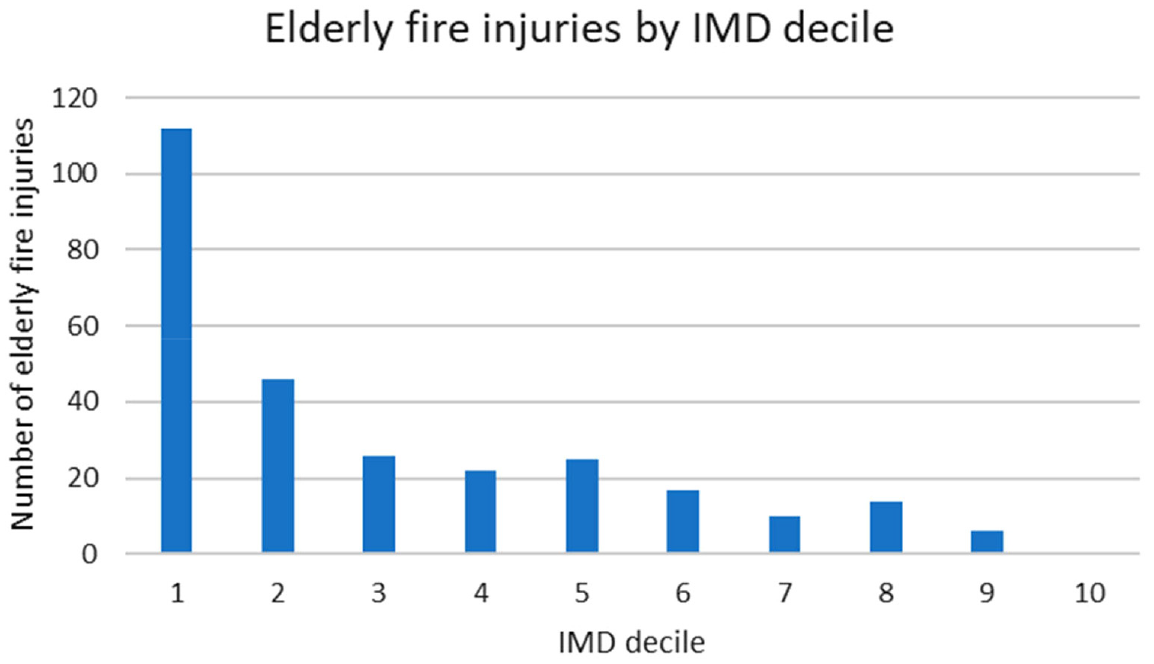
Elderly fire injuries between 2006 and 2016 by IMD decile in Merseyside.
Figure 11 shows that there was a strong relationship between deprivation (as measured by IMD decile) and elderly fire injuries over the period studied, with the highest numbers of elderly fire injuries occurring in areas with the highest levels of deprivation. Spearman’s rank-order correlation between the IMD decile and the number of elderly accidental dwelling fire injuries was 0.976 with a significance level of 0.001.
Types of fire and accidental dwelling fire injury of the elderly
Figure 12 shows the types of dwelling fire in which an elderly individual was injured between 2011 and 2022 in Merseyside.
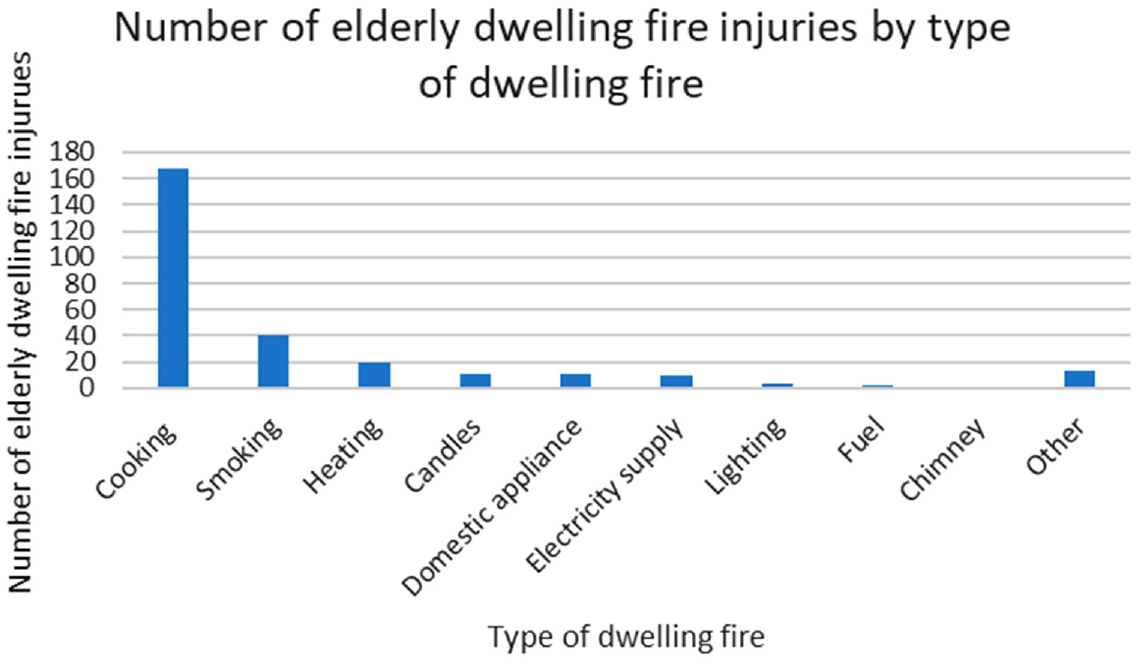
Types of dwelling fire in which an elderly individual was injured from 2011 to 2022 in Merseyside.
Figure 12 shows that cooking-related dwelling fire injuries accounted for 60.2% of all elderly dwelling fire injuries in the period studied, followed by smoking-related fire injuries (14.3%) and heating-related fire injuries (7.2%).
Figure 13 shows the number of elderly dwelling fire injuries by age band and the three most common types of dwelling fire injuries (cooking, smoking and heating related).
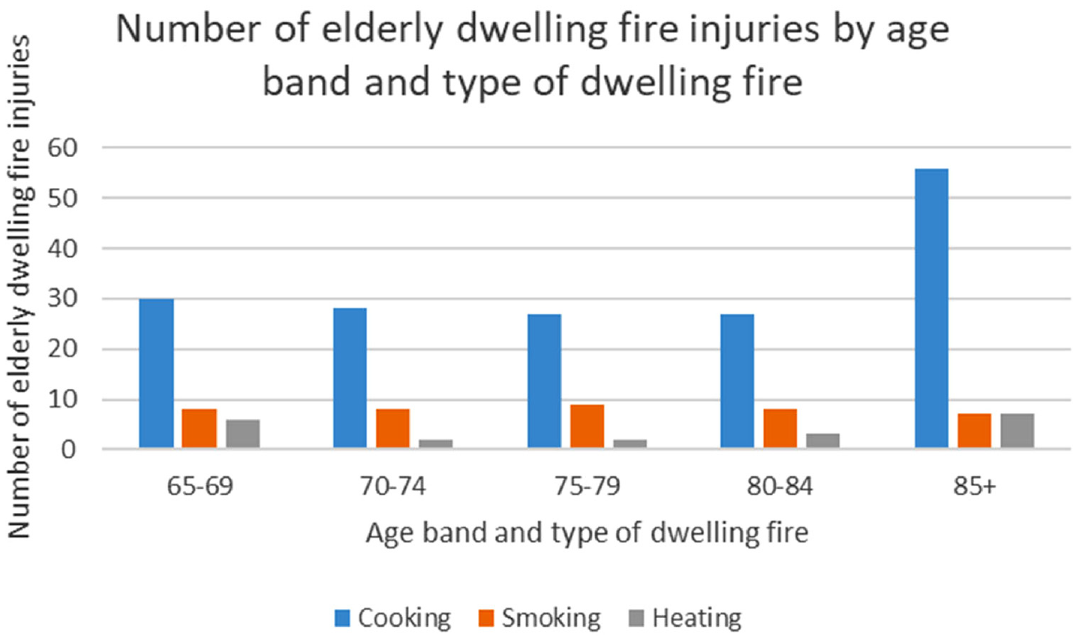
Number of elderly dwelling fire injuries by age band and type of dwelling fire from 2011 to 2022 in Merseyside
Figure 13 indicates that although the distribution of smoking- and heating-related accidental dwelling fire injuries were fairly similar across the elderly age bands, there were more cooking-related elderly fire injuries in the 85+ age band. Around 56 (33%) of the 168 cooking-related elderly dwelling fire injuries were in the 85+ age band.
Alcohol consumption and accidental dwelling fire injury of the elderly
Alcohol-related accidental dwelling fire injuries accounted for 7.2% of the fire injuries among the elderly over the period studied. There were 20 alcohol-related fire injuries in total over the period studied. An accidental dwelling fire injury was deemed alcohol related, if the individual concerned was suspected of being under the influence of alcohol by the firefighters attending the fire.
Figure 14 shows that the number of accidental dwelling fire injuries sustained by the elderly involving alcohol consumption was negatively correlated with age band, with 9 alcohol-related fire injuries occurring in the 65–69 age band down to 3 in the 80–84 age band and none occurring in the 85+ age band. Spearman’s rank-order correlation between the elderly age bands and the number of elderly alcohol-related accidental dwelling fire injuries was 0.9 with a significance level of 0.037.
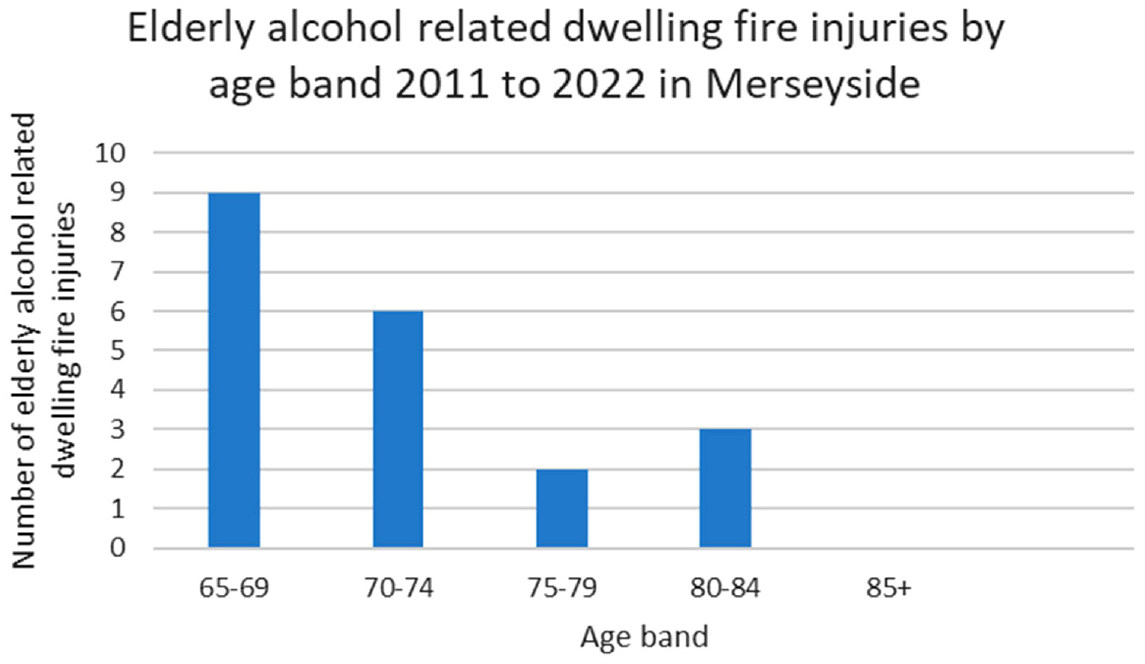
Number of elderly alcohol-related fire injuries by age band in Merseyside (2011–2022).
Mobility impairments and accidental dwelling fire injury of the elderly
There were 21 mobility-related accidental dwelling fire injuries, which constituted 7.5% of the 279 fire injuries over the period studied. An accidental dwelling fire injury was deemed mobility related, if the individual concerned was bed ridden, in a wheelchair or had other mobility issues.
Figure 15 shows that the number of accidental dwelling fire injuries sustained by the elderly involving mobility impairment was highest for the 85+ and 75–79 age bands.
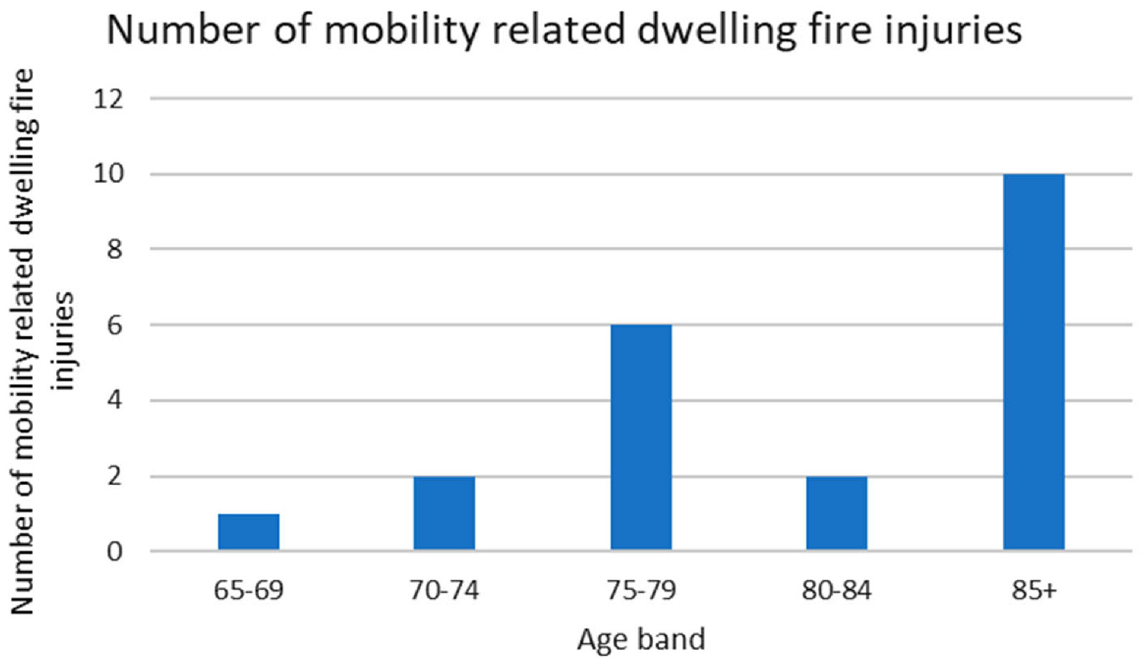
Number of mobility impairment–related accidental dwelling fire injuries involving the elderly by age band in Merseyside (2011–2022).
Fighting a domestic fire and accidental dwelling fire injury of the elderly
Of the 279 accidental fire injuries sustained by elderly individuals over the period studied in Merseyside, 53 (19%) were sustained attempting to fight the fire. Figure 16 indicated that in terms of injuries sustained attempting to fight a domestic fire, the 85+ age band had the highest number of fire injuries, followed by the 65–69 age band.
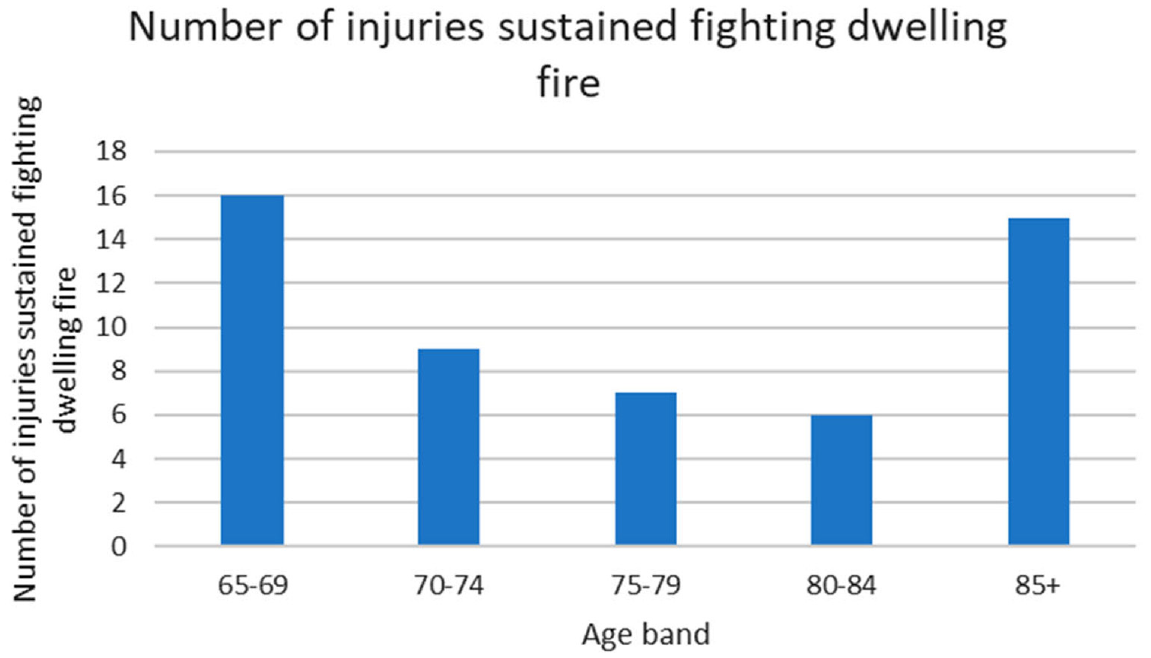
Number of elderly fire injuries involving the elderly attempting to fight a domestic fire by age band in Merseyside (2011–2022).
Conclusion
The originality of the research reported in this article is the detailed analysis of the accidental dwelling fire injuries sustained by elderly individuals over a 10-year period in the Merseyside area of England between April 2011 and April 2022. It appeared that the risk of fire injury was higher, the greater the age of the elderly individual and that fire injuries were more likely for males up to the 70–74 age band but more likely for females above that age band, possibly due to the greater proportion of females to males above the 70–74 age band in the area and time period studied, as there were significantly more females in the higher age groups than males in the Merseyside area.
Single occupancy housing and deprivation appeared to be strongly linked to accidental dwelling fire injury, with the largest numbers of elderly fire injuries occurring in single occupancy housing, and within the most deprived areas of Merseyside. Almost a fifth of the accidental dwelling fire injuries sustained by elderly individuals over the period studied were sustained attempting to fight the fire. The number of accidental dwelling fire injuries sustained by the elderly involving alcohol consumption constituted 7.2% of fire injuries and appeared to be strongly negatively correlated with age band. Mobility-related fire injuries constituted 7.5% of the fire injuries sustained by elderly individuals over the period studied. Overall, the implications of this research are that it is the ‘more elderly’ (age 75+) rather than the ‘less elderly’ (65–74) who are most at risk of accidental dwelling fire injuries and that single occupancy housing, and living in deprivation appears to increase the risk of fire injury.
The recommendations from the research would be that fire prevention activities such as home fire safety checks could be further targeted to the most elderly, in single occupancy housing and elderly individuals living in deprived areas. Also, that further advice should be given during such home fire safety checks concerning the dangers of elderly individuals attempting to tackle a domestic fire themselves. In addition, appropriate mobility adjustments to dwellings could potentially reduce the number of mobility-related elderly fire injuries. Such dwelling adjustments could be arranged through referral to appropriate partner agencies such as local councils. It is hoped that the research presented in this article may be of use to other fire and rescue services, within the United Kingdom and internationally.
Footnotes
Declaration of conflicting interests
The author(s) declared no potential conflicts of interest with respect to the research, authorship and/or publication of this article.
Funding
The author(s) received no financial support for the research, authorship and/or publication of this article.
