




Abstract
Bureaucratic organizations emphasize rule-following to pursue public interests. However, rules may not always capture the complexities of daily life, making them seem burdensome to citizens and professionals. In such cases, prosocial rule-breaking (PSRB) can be a means to better serve the public. We investigate antecedents of PSRB, hypothesizing that goal and task uncertainty reduce professionals’ engagement in PSRB and that supervisors’ leadership mitigates uncertainty, affecting PSRB behavior. Using data from Dutch social welfare professionals (N = 823) and their supervisors (N = 63), we found that task uncertainty is negatively related to PSRB, while goal uncertainty and supervisor leadership have no impact on PSRB. These findings advance research on discretion by highlighting uncertainty as an individual level antecedent of PSRB. Practically, they underscore the need for managerial and HRM support to help professionals navigate task uncertainty when organizations want to foster PSRB.
Introduction
Rules and procedures are an important part of managing people in public organizations (Bernards et al., 2021). Researchers often approach rules through two distinct lenses. On the one hand, the positive view of rules emphasizes that organizational rules are indispensable for public organizations to pursue the public interest (E. L. Borry et al., 2018). From this perspective, rules help to ensure that public service delivery is predictable, legitimate, and fair (Fleming, 2020; Gajduschek, 2003). Rules can also positively impact the work experience of individual professionals working in public organizations. For instance, research has shown that rules and formalization are essential in reducing uncertainty among professionals (Bernards et al., 2021; Raaphorst, 2018). Particularly at the frontlines of public service delivery, professionals and street-level bureaucrats often find themselves in situations where they have to weigh different options regarding whether, what, and how public services are delivered (Bernards, 2024; Lipsky, 1980; Raaphorst, 2018). However, professionals can find themselves feeling uncertain as they experience incomplete, unclear, or conflicting information in their work (Bernards et al., 2021). When professionals are uncertain about what course of action to undertake, they often resort to rules as a claim of authority (Portillo, 2012; Schuster et al., 2022).
On the other hand, the negative view of organizational rules emphasizes how rules do not always capture the complexities of citizen’s everyday life. Rules can form administrative burdens when introduced to limit access to public services (Madsen et al., 2022) or do not fit with the multifaceted nature of citizens’ problems, which have become increasingly interconnected and complex over the last decades (Bryson et al., 2015). As a result, scholars have argued and shown how the rules that professionals must enforce can feel dysfunctional, burdensome, and illogical (Bozeman, 2022; Moynihan et al., 2012). In many instances, it is the rules that organizations have established themselves to streamline public service delivery, rather than the legal framework, that are perceived as illegitimate. It is in those cases that some frontline professionals see rule-breaking, rather than rule-following, as a means to pursue the public interest. When professionals intentionally break rules but do so with the belief that such actions align with the intended purpose of those rules and are thus driven by societal considerations, it is seen as prosocial rule-breaking (PSRB). We draw upon the work by Morrison (2006) who defined it as prosocial rule-breaking (PSRB): “intentional violation of a formal organizational policy, regulation, or prohibition with the primary intention of promoting the welfare of the organization or one of its stakeholders.” (p. 8). The prosocial element of PSRB suggests that the primary motivation for rule-breaking is thus the well-being of another person, sometimes extending beyond the expectations of one’s formal role (Fleming & Bodkin, 2023). Additionally, PSRB pertains to “breaking internal organizational rules or procedures rather than committing illegal acts” (Fleming & Bodkin, 2023, p. 2). PSRB thus does not imply that frontline professionals disobey the law. Examples of PSRB include extending deadlines for debt repayment or granting social benefits to individuals who would not typically qualify (i.e., Bernards et al., 2024; Schmidt et al., 2025). In such cases, PSRB serves as a mechanism for adapting public service delivery to circumstances where strict rule adherence becomes excessively burdensome or hinders effective public service delivery.
For public HRM scholars and practitioners, identifying the factors that may encourage or impede PSRB among professionals is thus an important question. A primary reason in the literature why frontline professionals do not want to engage in PSRB is that rule-breaking might be seen as deviant behavior (Piatak et al., 2022; Vardaman et al., 2014), which exposes professionals to the risk of being sanctioned for not following organizational rules and procedures. In this study, however, we propose another explanation for frontline professionals’ (un-)willingness to engage in PSRB: uncertainty perceptions. As stated above, rules play an important role in reducing uncertainty about what course of action to take. Following this reasoning, it can be expected that professionals experiencing significant uncertainty are less inclined to break rules and, consequently, are less likely to engage in PSRB, as rules serve as their anchor when interacting with citizens. Therefore, this paper’s first aim is to explore how uncertainty perceptions relate to PSRB.
Building on this first aim, we expect that uncertainty perceptions of frontline professionals can be influenced by the leadership behaviors they encounter within their organizations. Previous studies have shown that leadership can decrease uncertainty (Bernards, 2023; Shamir & Howell, 1999; Van der Wal, 2017). Therefore, our second aim is to examine how leadership relates to PSRB by reducing the uncertainty experienced by professionals. Our research question is:
How are uncertainty and leadership associated with prosocial rule-breaking among frontline professionals?
With this study, we aim to contribute to the public administration and HRM knowledge base in two different ways. First, our study contributes to our understanding of frontline professionals’ use of discretionary room, thus adding to the literature on frontline professionals and street-level bureaucrats. We argue that PSRB is an example of what Hupe (2013, p. 435) calls “discretion-as-used.” This view of discretion differs from the traditional “discretion-as-granted,” which refers to the formal authority or latitude provided to professionals in rules and regulations, as it concerns actual decisions taken by professionals that may deviate from formal boundaries (Hupe, 2013). By studying how personal factors such as uncertainty affect discretion, we aim to develop a better understanding of how frontline professionals navigate their work (Visser & Kruyen, 2021). In particular, we use the differentiation between task and goal uncertainty, suggesting that different types of uncertainty may be related to different uses of discretion (Bernards, 2023). While the notion of uncertainty among frontline professionals is often mentioned as an important factor influencing their work, empirical research focusing on the impact of uncertainty on behavior at the frontlines remains understudied (Raaphorst, 2018).
Second, we extend the growing body of literature on PSRB (see, e.g., recent work by Bernards et al., 2024; Fleming & Bodkin, 2023; Piatak et al., 2022; Weißmüller et al., 2022; Wolff, 2025). Previous research has shown that organizational, personal, and client-related factors relate to professionals’ willingness to engage in PSRB behavior. At an organizational level, factors such as psychological safety (Bernards et al., 2024) and supportive norms (E. Borry, 2017) encourage PSRB, while rule formalization (E. L. Borry et al., 2018) and rule consistency (Piatak et al., 2022) reduce it. At the client level, we know that clients’ behavioral (Davidovitz & Cohen, 2022, 2023; Schmidt et al., 2025) and demographic characteristics (Harrits, 2019; Oberfield & Incantalupo, 2021) characteristics shape PSRB behavior. The individual level is currently understudied, as only risk-aversion of professionals (DeHart-Davis, 2007) has so far been explored at this level. By examining uncertainty as an individual level antecedent of PSRB, this study contributes to a greater understanding of the factors that impede or promote PSRB in public organizations.
Third, we aim to contribute to our understanding of how leadership relates to professionals at the frontline of public service. We do so in two ways: by focusing on the underexplored role of supervisor’s leadership, and by studying the mechanism through which leadership contributes to outcomes at the frontlines. While Lipsky (1980) views the relationship between frontline professionals and their supervisors as inherently conflictual, recent research has shown that leadership of direct supervisors can make a difference at the frontlines. Keulemans and Groeneveld (2020), for example, show how supervisor leadership impacts frontline professionals attitudes and judgments. Following the call by Møller and Grøn (2024) for more research on how supervisor leadership impacts how discretion is used, our study helps to unravel what types of leadership behavior do, and do not, impact frontline professionals behavior and their use of discretion. In so doing, we contribute to a body of scholarship that can, and should be, developed further.
In addition to the importance of studying supervisor leadership, our study adds to the existing discussion about when leadership intentions affect the behavior of followers (Jacobsen & Bøgh Andersen, 2015). By adopting a situational strength perspective and examining uncertainty as a mediator, this study contributes to unveiling the mechanisms through which leadership contributes to outcomes at the frontlines. While situational strength theory has not yet played a prominent role in public administration and public HRM research (but see Jakobsen et al., 2022; Potipiroon et al., 2019), our study shows that adopting such a perspective could help better understand leadership in a public context.
Theoretical Framework
This section introduces the situational strength perspective that links uncertainty, PSRB, and leadership. After introducing the situational strength perspective, we review existing studies on PSRB, outlining different antecedents of rule-breaking. Last, we discuss how task- and goal uncertainty affect PSRB and how leadership may mediate this relationship.
Uncertainty at the Frontlines of Public Service Delivery: A Situational Strength Perspective
Frontline professionals play an important role in public organizations by interacting with citizens on a daily basis and providing public services. The role of frontline professionals has been described as that of “policy translators” who sometimes need to translate abstract, vague, and ambiguous policies into concrete action (Møller et al., 2022). Moreover, they often have to balance different types of values, such as responsiveness, efficiency, and equity (Hood, 1991). To support professionals in their role as policy translators, public organizations develop rules, regulations, guidelines, and protocols for frontline professionals on how to act in different circumstances. While a classical Weberian view on rules mainly focuses on the importance of rules for citizens to ensure fair and equal treatment (Gajduschek, 2003), rules also help to guide frontline professionals in how to act (Raaphorst, 2018).
By developing rules, regulations, guidelines, and protocols, organizations provide employees with structured or “psychologically strong” situations. The presence of explicit or implicit cues on how to act is defined as situational strength (Meyer et al., 2010; Mischell, 1977). This notion is based on situational strength theory, originating in psychology. Situtational strength theory posits that individuals in organizations can encounter both strong (structured) and weak (unstructured) situations. Where strong situations provide clear cues on how to act, weak situations lack these cues. Rules and protocols, as well as strong social norms, can serve as cues that indicate to professionals which behaviors are appropriate and which are not.
When frontline professionals feel uncertain about their tasks and goals, we approach this as a psychologically weak situation. This aligns with our perspective on uncertainty, conceptualized as “experiences of incomplete, unclear or conflicting information in an employee’s work” (Bernards, 2023, p. 1062). Uncertainty can affect different domains of an employee’s work. In this study, we distinguish between goal and task uncertainty. Goal uncertainty concerns uncertainty regarding the team’s goal or set of goals, representing the desired future state of the team or organization (Chun & Rainey, 2005). In contrast, task uncertainty concerns those uncertainties experienced by professionals when executing daily work tasks (Bernards, 2023; Raaphorst, 2018). While task and goal uncertainty are related, they are conceptually and (as this study shows) empirically distinct.
Our central expectation, based on situational strength theory, is that professionals who are uncertain about their tasks or goals will look for cues to provide them with information about how to act. This means that professionals who are uncertain might be more inclined to comply with rules rather than to break rules.
Prosocial Rule-Breaking in Public Organizations
Rule-breaking is often seen as deviant and dysfunctional behavior (Rivera & Knox, 2023). Consequently, rule-breaking is often sanctioned within organizations, for example, by issuing a formal warning. However, in public organizations, there is a different perspective on rule-breaking when it is motivated by prosocial considerations (Morrison, 2006). When frontline professionals disregard rules or other formal procedures to benefit the people they are meant to serve, this behavior is defined as prosocial rule-breaking (PSRB). Such behavior can be seen as constructive deviance (Vadera et al., 2013) that ultimately advances the goals of public organizations.
PSRB has been studied in various sectors and among diverse types of public employees. Nevertheless, it is most commonly observed at the frontlines of public service delivery, where client, organization, and societal interests collide (E. L. Borry & Henderson, 2020). In such situations, professionals sometimes use PSRB as a coping mechanism to better address the needs of citizens (Tummers et al., 2015). It is important to note that PSRB is intentional behavior (DeHart-Davis, 2007), meaning that professionals deliberately choose to diverge from organizational rules and procedures because of a “desire to ‘do good’ in one’s organizational role” (Morrison, 2006, p. 8).
It has been debated whether PSRB should be viewed positively or should be avoided (E. Borry, 2017). Some scholars see PSRB as unethical behavior, given that rules are necessary to ensure equity in public service delivery (Weißmüller et al., 2022; Weißmüller & Zuber, 2023). The argument here is that individualized responsiveness may inadvertently generate disparities in access to assistance, thereby raising concerns about equity among citizens (Dietrich et al., 2023). Fleming and Bodkin (2023) argue that while PSRB may not be intentionally harmful, a lack of understanding among professionals regarding the purpose and value of rules may lead to undesirable outcomes when PSRB is used, potentially posing risks to democratic governance. Rivera and Knox (2023) make a similar argument, suggesting that bureaucratic discretion, including PSRB behavior, aimed at fostering social equity, may not always receive a positive response from the public. Simultaneously, PSRB behavior is also seen as a means for frontline professionals to act more as a citizen-agent (Zacka, 2017) and sometimes as a necessity, given that rules do not always capture the complexities of everyday life. PSRB is then seen as a way to provide more customized public services that better suit the specific circumstances of citizens.
Regardless of how PSRB is viewed, a noticeable trend has emerged in public organizations in the Netherlands and beyond, where frontline professionals are granted greater flexibility to deviate from organizational rules and procedures when they deem it appropriate. For example, Dutch social welfare caseworkers are increasingly expected to provide customized care, meaning they are actively empowered to take the initiative and bend or break the rules when strict adherence would result in adverse outcomes (Bernards, 2023). Beyond the Netherlands, rule-breaking has been studied in various professional contexts and countries, such as in sub-district executive organizations delivering a broad range of welfare-related public services in Thailand (Potipiroon, 2022), among social service professionals in child protection services (Fleming, 2020), and employment agencies (Wolff, 2025) in the US, and among police officers in Germany (Brockmann, 2017). Based on these and other studies, several factors affect whether frontline professionals engage in PSRB behavior. Prior studies have categorized these factors into three groups: (1) organizational factors, (2) client-related factors, and (3) factors related to the professional.
First, organizational factors play a role in the likelihood that professionals engage in PSRB. Research by Bernards (2023) shows that working in a psychologically safe environment increases the likelihood of professionals engaging in PSRB. E. Borry (2017) finds that organizational norms are also an important predictor of PSRB, arguing that individuals are more inclined to engage in PSRB when such behavior aligns with prevailing organizational norms. Factors relating to how rules are used in organizations also play a role. For example, high levels of rule formalization (E. L. Borry et al., 2018) and rule consistency (Piatak et al., 2022) decrease the likelihood that professionals engage in PSRB.
Second, client characteristics are another factor that influences PSRB behavior. Research on client-characteristics focuses on the impact of clients’ behavioral (Davidovitz & Cohen, 2022, 2023) and demographic characteristics (Harrits, 2019; Oberfield & Incantalupo, 2021) on frontlie decision-making. Research by Weißmüller et al. (2022), for example, demonstrates that PSRB is more likely to occur when professionals perceive clients positively. In contrast, Hansen (2025) found that client effort, such as unemployed clients seeking employment, is crucial in eliciting extra-role behavior, including PSRB. Studies focused on demographic characteristics have shown that professionals use discretion differently based on stereotyping along racial and ethnic lines (see, e.g., Jilke & Tummers, 2018; Keiser, 2010).
Third, professionals’ characteristics may influence their engagement in PSRB. Research has focused on risk propensity (DeHart-Davis, 2007), finding that risk-averse professionals are less likely to engage in PSRB due to its unpredictable consequences. Unlike rule-following, PSRB may invite scrutiny from supervisors or colleagues. While risk propensity has been studied, the role of uncertainty in PSRB remains unexplored. The only (brief) mention of uncertainty regarding rule-behavior is Bozeman’s (2022) heuristic model on rule compliance behavior. Here, uncertainty is mentioned as a rule characteristic, whereas our study has a much broader understanding of uncertainty as a personal state of employees.
Uncertainty and PSRB
This study distinguishes between goal uncertainty and task uncertainty. In the section below, we first discuss arguments that apply to both types of uncertainty. However, we also expect that the mechanisms underlying these two forms of uncertainty function somewhat differently, which we will elaborate on later in the text.
Our core argument, grounded in situational strength theory (Meyer et al., 2010; Mischell, 1977), is that professionals facing uncertainty, whether about their goals or tasks, actively seek cues to guide their behavior. In psychologically weak situations, where clear guidance is lacking, professionals are more likely to rely on formal rules and procedures as a source of structure. As a result, uncertainty tends to promote rule-following rather than PSRB, as professionals often seek to minimize ambiguity and reduce risk (Bozeman & Kingsley, 1998).
In addition, uncertainty may further discourage PSRB because rule-breaking introduces additional uncertainty about how one’s actions will be evaluated (Morrison, 2006) and fear of punishment may be an important driver for rule-following rather than rule-breaking (Bozeman, 2022). Professionals engaging in PSRB may expect either praise for advancing societal values or criticism for violating formal rules (Morrison, 2006). This ambiguity surrounding the consequences of PSRB increases overall uncertainty (Raaphorst, 2018), reinforcing professionals’ tendency to adhere to established rules. In contrast, following formal procedures offers a baseline level of certainty, providing professionals with a structured approach to decision-making and reducing perceived ambiguity (E. L. Borry et al., 2018).
This mechanism aligns with psychological theories of uncertainty reduction. Specifically, the entropy model of uncertainty (Hirsh et al., 2012) suggests that individuals actively seek to bring uncertainty down to manageable levels. When professionals experience high uncertainty, they instinctively look for ways to transform a psychologically weak situation into a psychologically strong one by adhering to predictable structures. In this way, rule-following serves as a strategy to restore a sense of control, further explaining why uncertainty is likely to suppress PSRB.
Goal Uncertainty and PSRB
Focusing on goal uncertainty, research on goal-setting (e.g., Locke & Latham, 2013; Van der Hoek et al., 2018) and goal ambiguity (e.g., Chun & Rainey, 2005; Rainey & Jung, 2015) indicates that clear organizational goals provide strong guidance for professionals’ behavior. When professionals have a well-defined sense of purpose in their work, they can more easily recognize when rules hinder the achievement of those goals. Since public sector goals are often prosocial in nature (Rainey & Jung, 2015), prioritizing goal achievement over strict adherence to rules and procedures is likely to encourage PSRB. Conversely, when professionals lack clarity about their organization’s goals, they may be less likely to engage in PSRB, as they struggle to determine when breaking rules serves societal value.
In addition, clear goals serve as a key motivational factor, helping professionals focus their efforts and persist in achieving objectives (Latham & Locke, 1991; Locke & Latham, 2013). Simply put, when expectations are well-defined, individuals are more motivated and work harder to fulfill them (Van der Hoek et al., 2018). This is particularly relevant for PSRB, as rule-breaking, rather than rule-following, often demands extra effort and takes more time (Morrison, 2006). Therefore, the motivational and perseverance-enhancing effects of goal clarity provide further support for a negative relationship between goal uncertainty and PSRB. Combined with our general argument that uncertainty leads to as psychologically weak situations, which impede PSRB, these arguments lead to our first hypothesis:
H1: Goal uncertainty negatively relates to PSRB behavior.
Task Uncertainty and PSRB
Focusing on task uncertainty and PSRB, we expect that this relationship is particularly relevant because rules primarily address task-related behavior. Task uncertainty refers to a lack of clarity on how to act in everyday work situations, which can stem from various factors, such as the complexity of the work, insufficient reliable information, conflicting rules, and procedures, or the unpredictability of interactions with clients (Bernards, 2023; Lipsky, 1980; Raaphorst, 2018). In this context, we expect that rule-following rather than rule-breaking becomes a coping mechanism to deal with uncertainty, as organizational rules serve as guidelines for “specific organization behaviors under particular circumstances” (DeHart-Davis et al., 2013, p. 333). Consequently, in cases of high task uncertainty, professionals instead stick to the formal rules and work procedures that exist and engage less in PSRB behavior. This argument, combined with our general argument that uncertainty is associated with lower levels of PSRB, leads to our second hypothesis:
H2: Task uncertainty negatively relates to PSRB behavior.
The Mediating Role of Leadership
Especially in situations of high uncertainty, leadership has a strong potential to guide professionals’ behavior and thus stimulate PSRB behavior (Shamir & Howell, 1999). Studies departing from a situational strength theory perspective find that leadership may help employees cope with psychologically weak situations (Jakobsen et al., 2022). Leadership may, for example, provide implicit or explicit cues regarding the desirability of particular behavior (Meyer et al., 2010). Given that uncertainty can affect different work domains (i.e., tasks and goals), it is expected that leadership is most effective when it is tailored to the type of uncertainty that employees experience. This means that leadership behavior, rather than affecting professionals in a generic way, should be tailored to the specific type of uncertainty that professionals face regarding their work (Møller & Grøn, 2024). Leadership, in this regard, can only be effective when it is appropriate given the context (Johns, 2006). Furthermore, as we examine the impact of direct supervisors on frontline professionals, we must also consider leadership behavior that is congruent with their role in public organizations. Supervisors of frontline professionals serve as the primary point of reference for professionals regarding leadership and support, particularly in addressing operational challenges encountered in daily practice. Therefore, we expect them to exhibit task-related leadership behavior in dealing with task uncertainty, while visionary leadership is more effective in addressing goal uncertainty. We discuss both in the remainder of this section.
Visionary Leadership
Visionary leadership is commonly seen as a set of leadership behaviors that focus on formulating organizational goals as a desirable future (a vision), disseminating this vision toward employees, and sustaining this vision (Jensen et al., 2019). As such, visionary leadership enhances the work’s meaningfulness and has powerful motivational effects (Carton, 2018). This may be especially relevant in a public sector context, where prosocial or altruistic motivations of frontline professionals provide substantial guidance in their work (Andersen, Bjørnholt et al., 2018, 2018).
Visionary leadership is closely related to transformational leadership, one of the most prominent leadership perspectives in public administration research (Hansen & Pihl-Thingvad, 2019). Transformational leadership and visionary leadership have in common that they try to impact followers by providing an appealing vision of what the organization strives for. Transformational leaders also use intellectual stimulation, role modeling, and individual attention to align the goals of the organization with the goals of their followers. However, discussion on the theoretical bases of transformational leadership (van Knippenberg & Sitkin, 2013) led to new conceptualizations of the concept where the visionary element is central (Jensen et al., 2019). We, therefore, do not talk about transformational leadership but visionary leadership, as this is more closely related to what is measured in our study.
Visionary leadership is particularly relevant for direct supervisors of frontline professionals, as it focuses not only on sharing a vision and organizational goals but also on showing how one’s work contributes to realizing organizational goals. Thus, such leadership is tailored toward everyday work practices and, therefore, relevant to the street-level context (Møller & Grøn, 2024).
We expect that visionary leadership contributes to PSRB by reducing goal uncertainty. Visionary leadership is expected to reduce goal uncertainty in several ways (Bernards, 2023). First, where goal uncertainty is rooted in insufficient knowledge of the team’s goals, we expect that visionary leadership contributes to reducing this type of uncertainty by disseminating the team’s goals and vision and by explaining how the work of individual professionals contributes to achieving the goals and vision (Carton, 2018). Second, where unclear or conflicting goals are the cause of goal uncertainty, visionary leadership may contribute to reducing goal uncertainty by explaining how goals should be interpreted in the light of an individual professional’s work (Carton, 2018) and by prioritizing specific goals over others in line with the vision of the team (Bernards, 2023; Berson & Avolio, 2004). This may be an important task for frontline leaders, especially in the public sector, where several public values goals are often ambiguous or conflicting because of competing values and the political aspect of the environment (Boyne, 2002; Hood, 1991). In turn, by reducing goal uncertainty, we expect that visionary leadership positively relates to the PSRB behavior of professionals. Our third hypothesis is thus:
H3: Visionary leadership is associated with higher levels of PSRB through its association with lower levels of goal uncertainty.
Task-Oriented Leadership
Where visionary leadership is concerned with providing direction to professionals by stimulating them to work toward the organizational vision, task-oriented leadership is focused on guiding employees in their everyday work (Yukl, 2012). Task-oriented leadership here describes a set of behaviors that are focused on organizing and structuring work in an effective way (Northouse, 2009). These behaviors may range from relatively simple tasks, such as drafting an agenda for a meeting, to planning and monitoring complex work tasks and projects (Van Wart, 2003; Yukl, 2012). Task-oriented leadership is related to transactional leadership in the way that both are concerned with providing clear expectations about roles in the organization and the work that needs to be done in order to provide certain outcomes (Hansen & Pihl-Thingvad, 2019). The main difference, however, is that transactional leadership is based on an exchange relationship between supervisor and follower. Using rewards and punishments, supervisors may try to persuade followers to reach certain outcomes. Task-oriented leadership, on the other hand, wants to help followers reach certain outcomes by structuring and organizing the work without necessarily setting contingent rewards upon reaching outcomes. Supervisors in public organizations are often limited in the extent to which they can provide rewards (Møller & Grøn, 2024), making task-oriented leadership more applicable to the public sector (Döring et al., 2025).
While task-oriented leadership has often been neglected in contemporary leadership research and practice (Döring et al., 2025), it has recently been shown that task-oriented leadership behaviors still play an important role in steering and guiding the behavior of professionals and that task-orientation is a vital competence of leaders who want to live up to followers’ expectations (Vogel & Werkmeister, 2021). We argue that this set of leadership behaviors is especially important for reducing the task uncertainty of professionals. Task-oriented leadership ensures that employees know what to do and how to perform their work, thus reducing task uncertainty. In turn, by reducing task uncertainty, we expect that task-oriented leadership positively relates to the PSRB behavior of professionals. Our fourth hypothesis is:
H4 Task-oriented leadership is associated with higher levels of PSRB through its association with lower levels of task uncertainty.
The theoretical expectations are summarized in Figure 1.
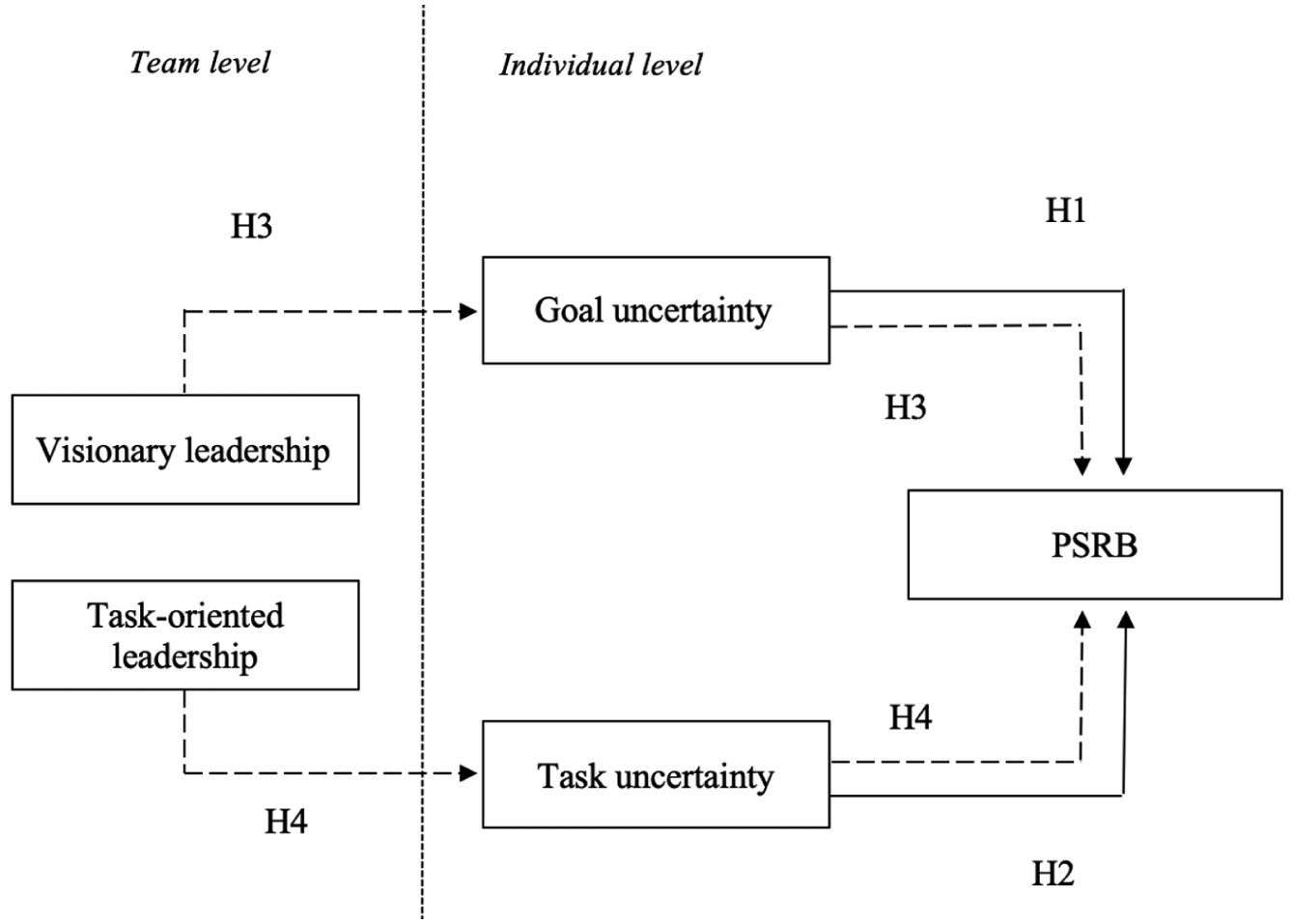
Theoretical expectations.
Methods
Case Selection
This paper uses a unique multilevel and multi-source dataset with data collected among frontline managers and professionals in Dutch social support teams. These teams are responsible for implementing the Social Support Act (Wmo, 2015) and the Youth Act (Jeugdwet, 2015). Their primary role is to provide municipal assistance to individuals and families who face limitations in their daily lives and lack informal support from their social network to compensate for these limitations (Berkers et al., 2021). The frontline professionals surveyed in our study do not provide direct care services; instead, they evaluate whether clients qualify for municipal social benefits. They do so by assessing to what extent applicants qualify for certain benefits, based on different organizational rules and procedures. The type of clients and problems includes supporting families with upbringing problems, coordinating support for multi-problem families, and supporting the elderly or individuals with disabilities by arranging home modifications (such as accessible bathrooms and stair lifts) and providing mobility aids (Jeugdwet, 2015; Wmo, 2015).
We consider this a highly appropriate case to examine the relationships between uncertainty and PSRB, as these teams have recently adopted new ways of working that emphasize professional discretion, aiming to provide citizens with customized solutions that address the unique support needs of their clients (MvT, Wmo, 2015). In fact, the explanatory memorandum of the Social Support Act 2015, which underpins the work of the social support teams, even explicitly encourages professionals and teams to “focus on the client and not (or less) on the rules and practices within the organization” (MvT, Wmo, 2015, p. 30). Consequently, we argue that the concept of PSRB, which involves breaking (organizational) rules that hinder good service delivery to clients, aligns well with the intentions of the legislator. In addition, these new working methods have introduced considerable levels of uncertainty for professionals, as they partly replace the bureaucratic organizational structures that were common in this sector (Bernards, 2023). In contrast to a bureaucratic structure that decreases uncertainty by providing explicit instructions on professionals’ tasks and work performance (Gajduschek, 2003; Raaphorst, 2018), professionals may currently face uncertainty as they must interpret organizational objectives within real-life contexts and experience a lack of comprehensive task guidelines. Leadership is provided by a full-time manager who directly supervises a team of 15 to 20 professionals on average and, in some cases, manages two teams.
Data Collection
Data were collected in the winter of 2022 to 2023 in social support teams in five medium to large-sized Dutch municipalities. 87 teams comprising 2,084 professionals and 77 team leaders were approached for the study. The response was 931 professionals and 63 team leaders, resulting in a response rate of 44.7% among professionals and 81.8% among team leaders. As this study connects leader self-reported leadership behaviors and follower-reported uncertainty and PSRB, we could only include responses of those followers whose leader also filled out the questionnaire. Consequently, 108 responses were excluded from the analysis, leaving a sample of 823 respondents in 71 teams. The team sizes varied between 8 and 55 individuals (with a mean of 23.95 and a standard deviation of 10.50).
Regarding demographics, 86.9% of the professionals were female, 12.5% were male, and 0.6% identified their gender as other or preferred not to disclose their gender. Among team leaders, 82% were female, and 18% were male. Those distributions reflect the gender ratio observed in the social care and welfare sector in the Netherlands more broadly in which 81% of employees is female according to the Netherlands Bureau of Statistics (Langenberg et al., 2023). The mean age of the professionals was 40.96 years old, with a standard deviation of 11.91 years. The age range of the professionals was between 22 and 67 years old. The mean age of the team leaders was 47.15, with a standard deviation of 8.30. The age range of the team leaders was between 29 and 65.
Measures
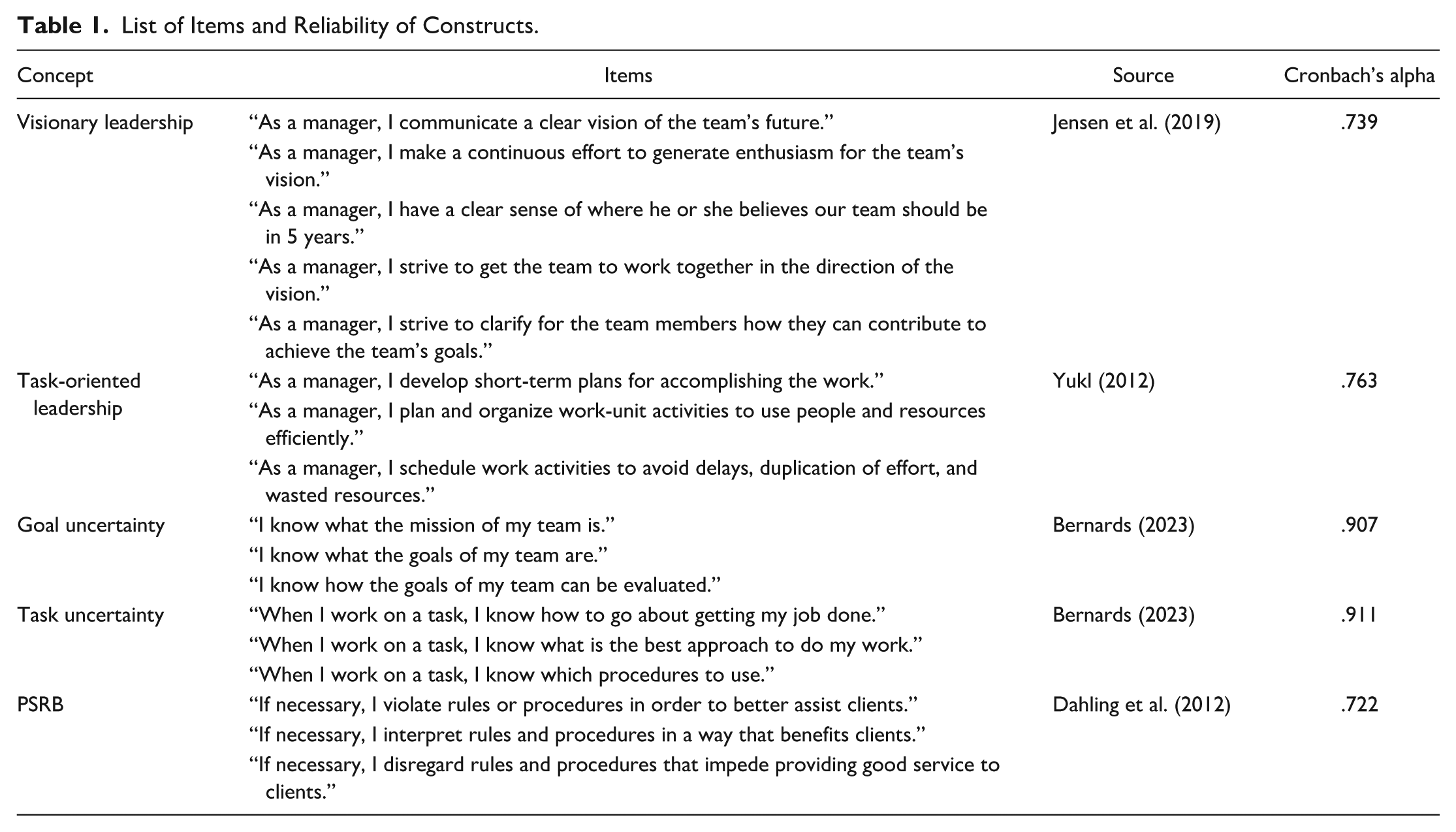
Table 1 shows a full overview of the items that we used, their origin, and the scale reliability. Below, we discuss our choice for the scales that we used and their robustness in more detail.
List of Items and Reliability of Constructs.
Prosocial Rule Breaking (PSRB)
PSRB was measured using three items, originally from Dahling et al. (2012). This scale encompasses three aspects: (1) efficiency, (2) coworker support, and (3) customer support, aligning with the motivations that professionals may have for engaging in PSRB (Morrison, 2006). However, given our specific focus on using PSRB to enhance public service delivery to citizens, we only included items on the latter dimension. These items were adjusted to suit the public sector context, for example, by changing “customers” into “clients.” The measurement by Dahling et al. (2012) captures whether PSRB is seen as appropriate behavior, thus indicating whether professionals intent to show such behavior. Following E. L. Borry and Henderson (2020) and Potipiroon (2022), we have included rule-bending and rule-breaking items, as both represent rule deviation variations, where rule bending involves a partial breach and rule breaking involves a complete violation. This scale proved reliable with a Cronbach’s alpha of .722.
Uncertainty
Goal and task uncertainty were measured using three items for each construct from the scales of Bernards (2023), who has developed a multidimensional scale to measure the uncertainty experiences of frontline professionals. The reliability of both scales was high, with Cronbach’s alpha values of .907 and .911 for goal and task uncertainty, respectively. In addition, factor analysis using principal components analysis with oblimin rotation shows that professionals clearly distinguish between these two types of uncertainty. The Kaiser–Meyer–Olkin (KMO) measure of sampling adequacy was 0.762, indicating a satisfactory level of shared variance among items. The analysis yielded two components with eigenvalues greater than 1 (3.36 and 1.71), together explaining 84.49% of the total variance. Factor loadings, shown in full in Appendix B (Table B1), indicate that all items loaded strongly on their intended factors, with no problematic cross-loadings (i.e., all loadings > 0.40 and cleanly associated with only one factor). Item uniqueness values ranged from 0.097 to 0.172, indicating that the majority of each item’s variance is well explained by the factors.
Leadership
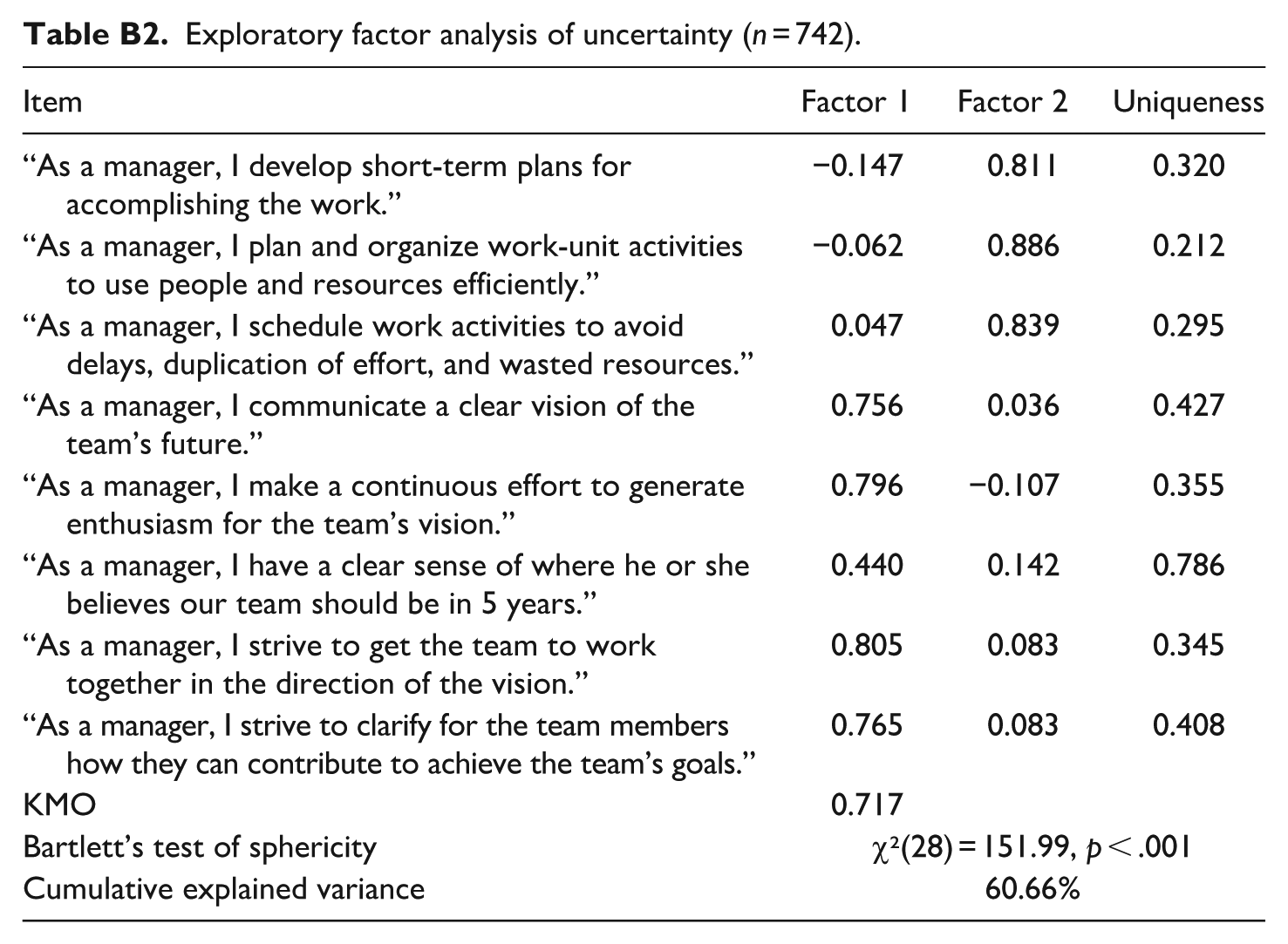
Visionary leadership was measured using the five-item scale developed by Jensen et al. (2019). The reliability of this scale demonstrated strong consistency (α = .739). Regarding task-oriented leadership, a set of three items was used from the scale developed by Yukl (2012). The resulting scale again showed high reliability (α = .763). In addition, factor analysis shows that leaders view these two leadership types as distinct: the analysis yielded two components with eigenvalues greater than 1, together explaining 60.66% of the total variance. The Kaiser–Meyer–Olkin (KMO) measure of sampling adequacy was 0.717, indicating a satisfactory level of shared variance among items. Bartlett’s test of sphericity was significant (χ²(28) = 151.99, p < .001), supporting the factorability of the correlation matrix. Factor loadings, shown in full in Table B2 of Appendix B, indicate that most items loaded clearly on their intended factors, with no problematic cross-loadings. Uniqueness values ranged from 0.212 to 0.786, with one item showing relatively low communality. Overall, the results support the presence of two distinct and interpretable latent constructs. Where PSRB and uncertainty were measured among professionals, we used the leader’s intention to measure their leadership behavior. As such, the study’s design greatly contributes to reducing common source bias (Favero & Bullock, 2015).
A five-point Likert scale ranging from “1” (strongly disagree) to “5” (strongly agree) was used to measure all items related to the dependent, independent, and mediating variables. The respondents’ age, gender, and education level were control variables. A complete list of items for all measures is provided in Table 1.
Analytical Strategy
We used multilevel Structural Equation Modeling (SEM) using the statistical program R with the lavaan package (Rosseel, 2012). The advantage of multilevel SEM is that it accounts for the interdependence in observations that results from the hierarchical structure of our data, with leadership scores measured at the team-level and uncertainty and PSRB measured at the individual level (Hox et al., 2017). In addition, multilevel SEM is preferred over other statistical techniques, such as multi-level random effects models, because it allows us to simultaneously model complex relationships, including latent constructs and indirect effects, which are central to our hypotheses. As such, utilizing multilevel SEM to estimate relationships in complex models offers a more realistic approach than conventional statistical techniques (Kline, 2016).
Results
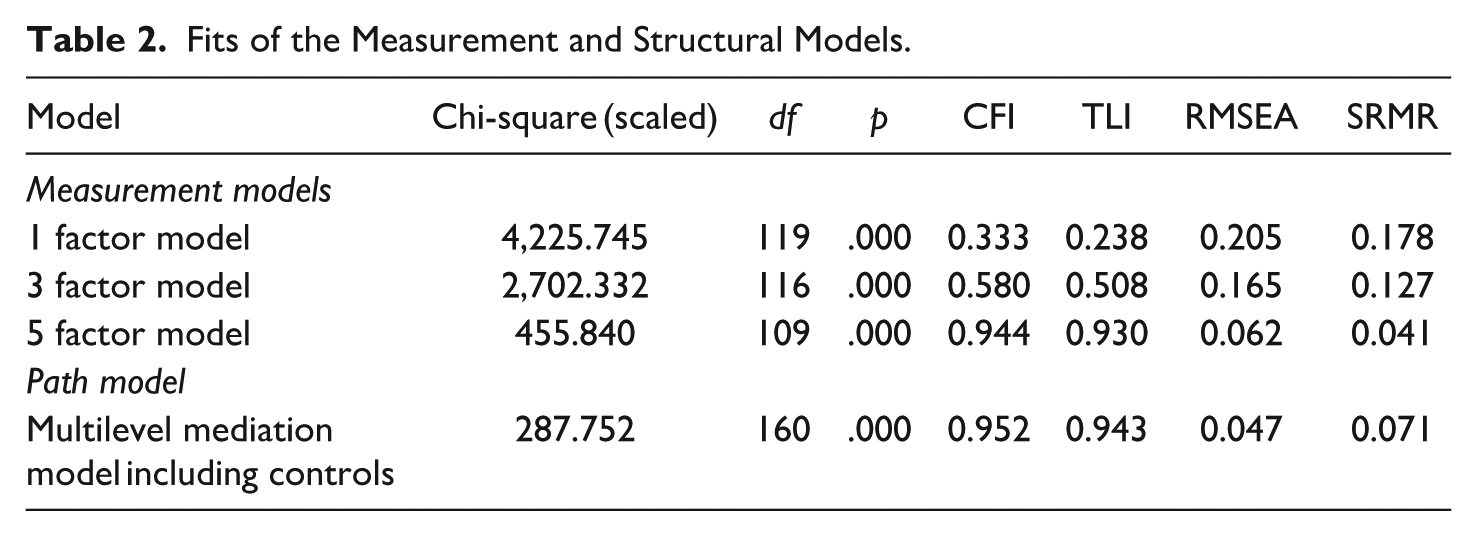
Before presenting the results of the analysis, it is important first to assess the fit indices of the model that was used. This article uses the Comparative Fit Index (CFI), the Root Mean Square Error of Approximation (RMSEA), and the Standardized Root Mean Square Residual (SRMR) to evaluate fit. Generally, values of TLI and CFI > 0.95, RMSEA < 0.05, and SRMR < 0.06 are considered indicators of a good fit, and TLI and CFIs > 0.90 and RMSEAs < 0.10 are still seen as an acceptable fit of the model to the data (Hu & Bentler, 1999). Table 2 shows the fit indices and indicates that the final model indeed has an appropriate fit to the data. In addition, the model is substantially better than models that include only one factor, three factors (clustering independent, mediating, and dependent variables), or five factors without including control variables and the multilevel structure of the data. The multilevel path model, including all dependent and independent variables of our study, shows the best fit based as indicated by chi-squared (df 160) 287.752, TLI (0.943), CFI (.952), and RMSEA (0.047) [90% CI: 0.038, 0.055] values. Although scoring marginally above the desired SRMR values (0.071), the numbers are still adequate for the analysis used in this paper. In addition, we have calculated the pseudo R² for our main dependent variable PSRB as an indication of the proportion of explained variance. The results show a pseudo R² of .043, indicating that the model explained 4.3% of the variance in PSRB. These values suggest that while the structural paths in the model showed adequate fit, the predictive power of the model for these constructs is limited. This may be due to the multilevel structure of the data or the presence of unmeasured influencing factors. Note that pseudo R² values in multilevel SEM should be interpreted cautiously, as standard R² calculations are not fully established for multi-level models.
Fits of the Measurement and Structural Models.
Tables 3 to 5 present the descriptive statistics, correlations, and multilevel structural equation modeling results. The results show that team leaders state that they show considerable amounts of task- and visionary leadership, although more of the latter (4.24) than of the former (3.84). Professionals score fairly low on both goal (2.13) and task (1.67) uncertainty. At the same time, substantial differences between respondents exist, as shown by the standard deviations of 0.89 and 0.67, respectively. Respondents show substantial PSRB behavior with an average score of 3.49 out of 5. Among the correlations, we see a moderate, positive correlation between goal and task uncertainty (.324; p < .01) but no correlation between visionary and task-oriented leadership (.002; p = .989). This suggests that professionals experience different types of uncertainty in related ways. In contrast, leaders do not necessarily combine visionary and task-oriented styles, supporting the conceptual distinction between the two leadership constructs.
Descriptive Statistics and Correlations (n = 742 Professionals).
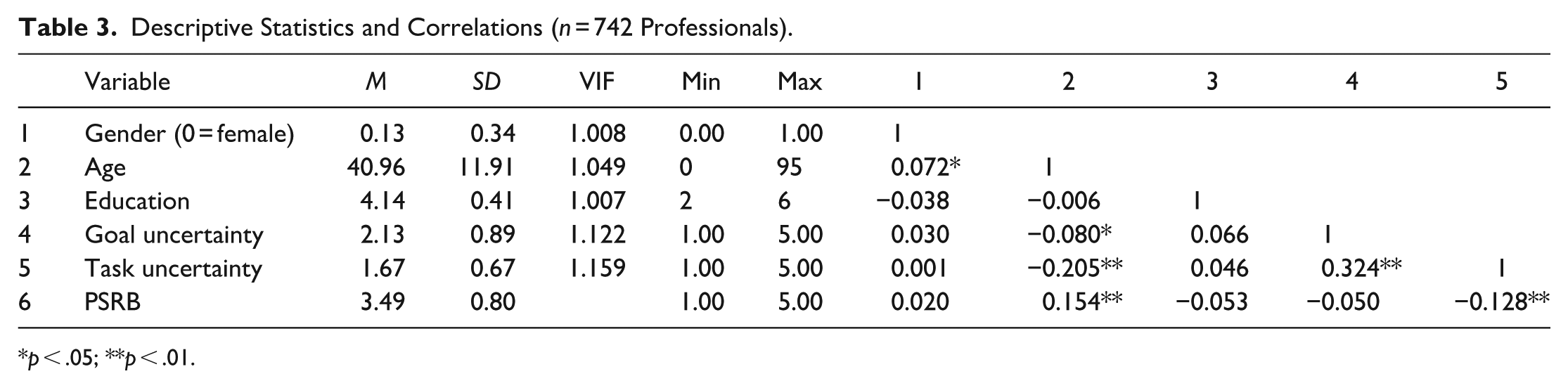
p < .05; **p < .01.
Descriptive Statistics and Correlations (n = 63 Team Leaders).
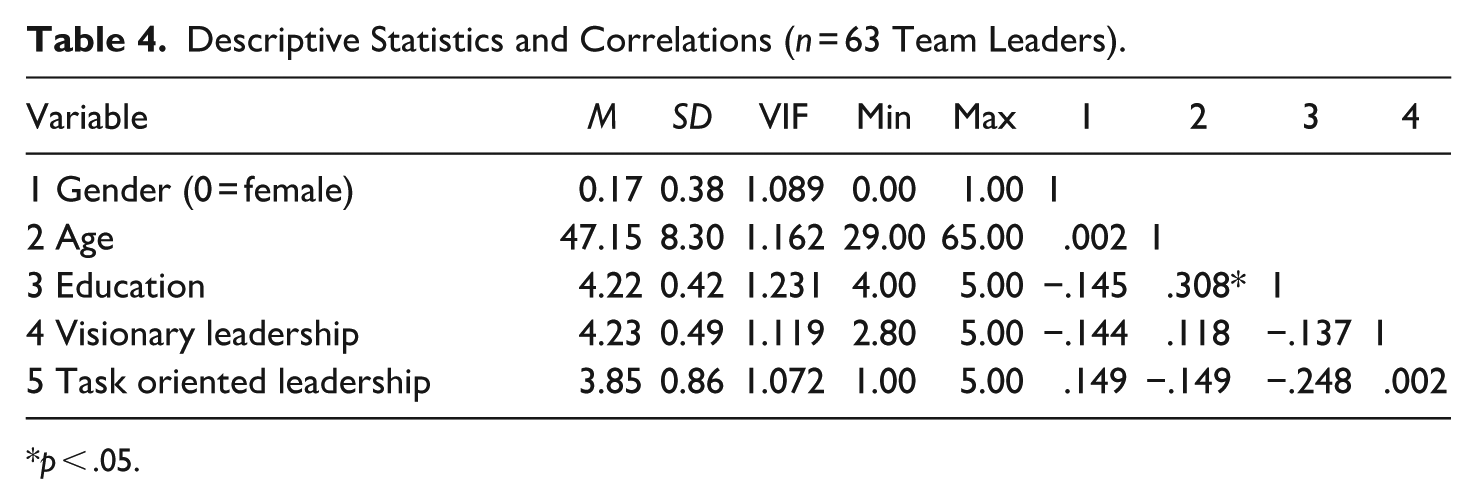
p < .05.
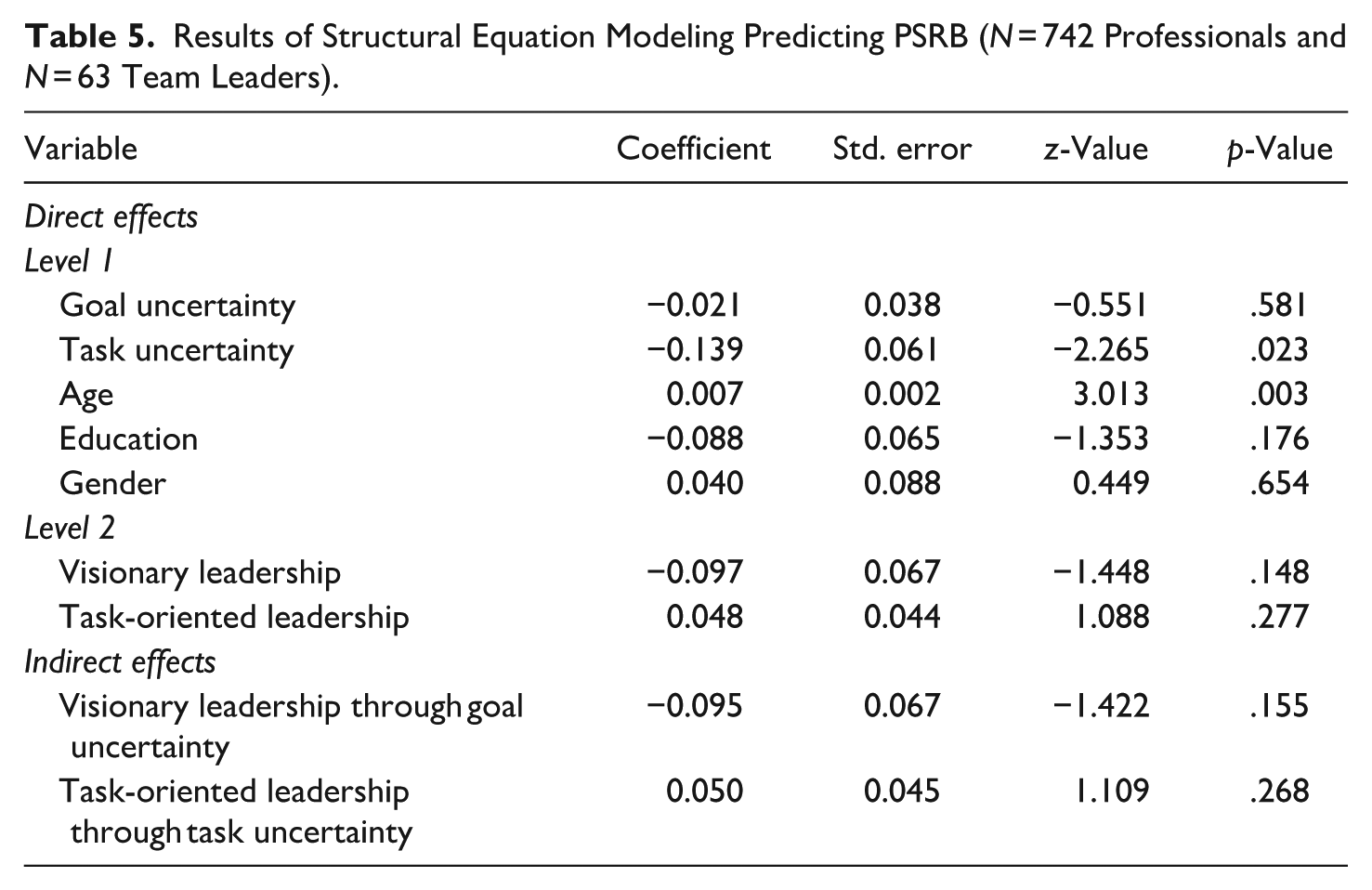
Results of Structural Equation Modeling Predicting PSRB (N = 742 Professionals and N = 63 Team Leaders).
Finally, before estimating the multilevel SEM model, we examined potential multicollinearity among the independent variables. We conducted a Variance Inflation Factor (VIF) analysis using standard linear regression, including all predictors. All VIF values were below the commonly accepted threshold of 5 (range: 1.008–1.231; full results reported in Tables 3 and 4). These results indicate that multicollinearity is not a concern in our models and that the predictors can be interpreted with confidence.
The results of the structural equation modeling are reported in Table 5. They provide mixed support for our hypotheses. Hypothesis 1, which proposed a negative relationship between goal uncertainty and PSRB, is not supported. The relationship is negative but statistically non-significant (coefficient = −0.021, SE = 0.038, z = −0.551, p = .581). In contrast, Hypothesis 2 is supported: task uncertainty shows a significant negative relationship with PSRB (coefficient = −0.139, SE = 0.061, z = −2.265, p = .023). This indicates that professionals experiencing greater task uncertainty are significantly less likely to engage in PSRB behavior.
For the mediating mechanisms, we do not find support for Hypothesis 3, which predicted that visionary leadership would be positively associated with PSRB through reduced goal uncertainty. The indirect relationship is negative and not statistically significant (coefficient = −0.095, SE = 0.067, z = −1.422, p = .155). Similarly, Hypothesis 4, which predicted an indirect positive relationship between task-oriented leadership and PSRB through reduced task uncertainty, is not supported (coefficient = 0.050, SE = 0.045, z = 1.109, p = .268).
We also examined direct relationship between leadership behavior and PSRB. Neither visionary leadership (coefficient = −0.097, SE = 0.067, z = −1.448, p = .148) nor task-oriented leadership (coefficient = 0.048, SE = 0.044, z = 1.088, p = .277) show significant direct relationships with PSRB.
Robustness Checks
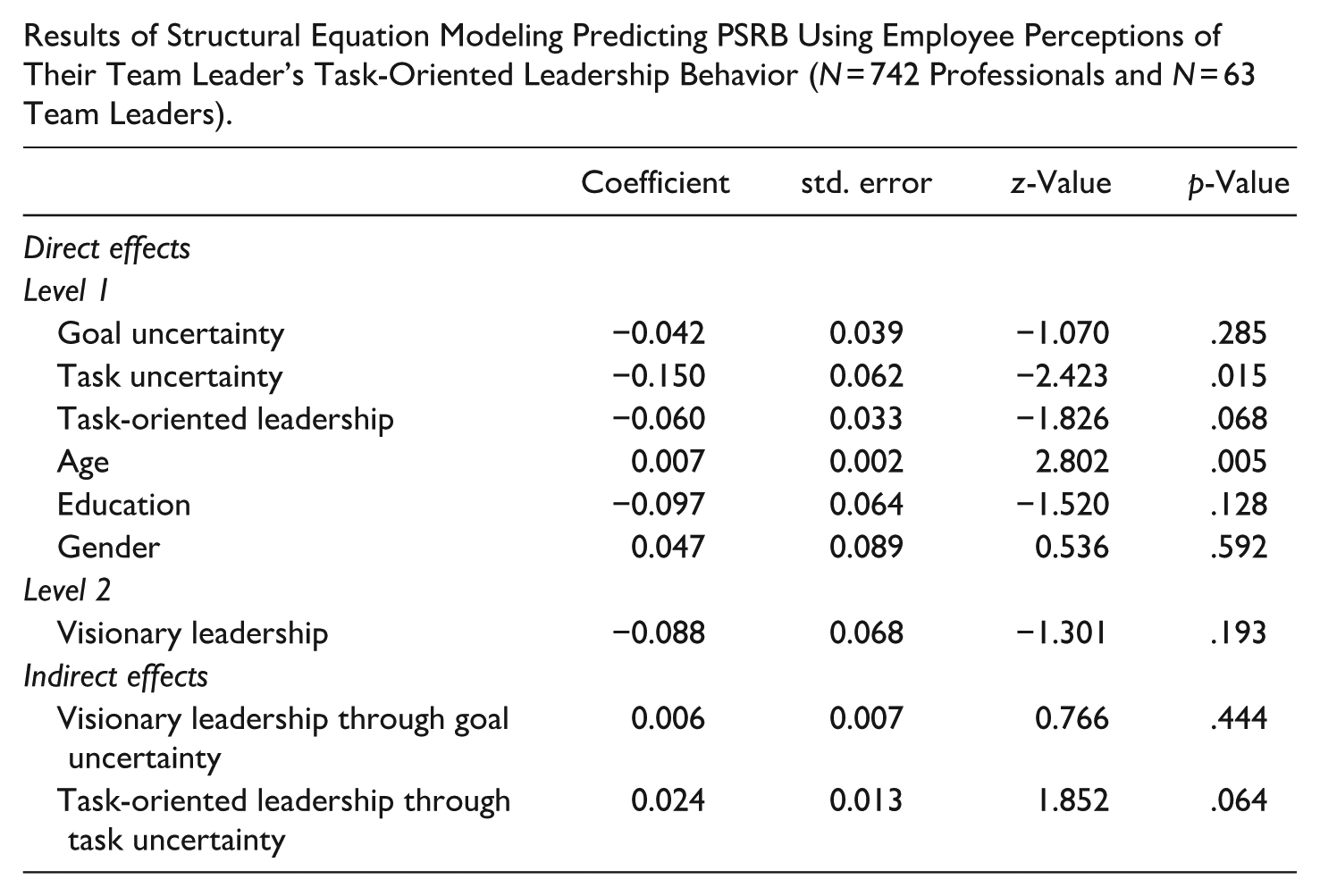
One potential reason for our lack of significant findings may be a discrepancy between what leaders intend and how their leadership is perceived. This phenomenon has been observed in some leadership studies (see, e.g., Jacobsen & Bøgh Andersen, 2015). To determine whether the absence of significant relationships regarding the impact of leadership on PSRB is due to our measurement of the team leader’s leadership intention rather than their employees’ perception of their leadership, we conducted an additional analysis. This analysis uses the same measurement of task-oriented leadership as the original analysis but then asks for employee perceptions of their team leader’s leadership behavior. Unfortunately, we do not have data on employee perceptions of their team leader’s visionary leadership behavior. This analysis equally shows no significant relationship between employee-perceived task-oriented leadership and PSRB (coefficient =−.060, p = .068), thus providing no indication that our lack of significant findings is due to our measurement of leader intentions rather than follower perceptions. The full results of this additional analysis are reported in Appendix A.
We also conducted robustness analyses to explore whether a supervisor’s leadership is associated with other variables measured at the level of the professional, such as work engagement. In so doing, we assess the extent to which leadership behavior is related to other employee outcomes. These analyses revealed a correlation between employee perceptions of task-oriented leadership and work engagement (correlation coefficient = .288; p = .000), indicating that leadership does relate to certain employee outcomes but not PSRB. As will be discussed in the discussion section, there are likely other factors that better explain why individuals engage in PSRB or not.
Discussion and Implications
This study suggests that in the context of Dutch social welfare, task uncertainty is negatively related to the PSRB behavior of professionals. As such, it confirms our theoretical expectation that professionals tend to look for rules and procedures as a safeguard when experiencing task uncertainty and finding themselves in a psychologically weak situation. At the same time, our results show that goal uncertainty is not significantly related to PSRB, contrary to expectation. Similarly, we also do not find any significant relationships between team leaders’ task-oriented and visionary leadership behaviors and the PSRB behavior of professionals, either directly or through reducing task or goal uncertainty. Below, we outline the implications of our findings for the literature on professional discretion and leadership.
First, our finding that only task uncertainty significantly relates to PSRB adds to the literature on discretion and uncertainty among professionals (e.g., Bernards, 2023; Raaphorst, 2018), which mostly focuses on the impact of uncertainty on how professionals make use of the discretionary space that is granted to them. By examining PSRB as an example of discretion-as-used (Hupe, 2013), our study adds to this existing literature in what arguably is a more extreme example of discretion in a professional’s work. In addition, our research contributes to a greater understanding of how uncertainty affects the work of professionals. Previous research has already focused on the cognitive (March & Simon, 1958; Simon, 1976) and motivational (Locke & Latham, 2013) effects of uncertainty, emphasizing how uncertainty impedes rational decision-making and reduces employee motivation. At the same time, research in the field of organizational innovation has demonstrated positive relationships between uncertainty and innovation (Alvarez et al., 2020; Bernards, 2024), which is arguably closely related to PSRB. Our study adds to this literature by showing that while uncertainty may foster innovation, this does not extend to rule-breaking behavior. Finally, we contribute to the literature on uncertainty by showing the importance of differentiating between task and goal uncertainty, demonstrating that different types of uncertainty may have different effects on the use of discretion at the frontlines of public service delivery (cf. Bernards, 2023).
A possible explanation for the different effects of task and goal uncertainty on frontline professionals behavior, is that rules serve as guidelines for “specific organization behaviors under particular circumstances” (DeHart-Davis et al., 2013, p. 333). As such, they may provide more guidance for professionals when experiencing task uncertainty. This might particularly be the case, as task uncertainty may trigger a self-preservation mindset in which “surviving” specific tasks becomes more important than considering the broader societal implications of the tasks (Morrison, 2006). This as opposed to experiencing uncertainty regarding the organizational goals, which are more abstract and intangible (Carton, 2018). As tasks are often more concrete than goals (and are thus also more open to scrutiny from peers, managers, or other stakeholders) professionals become less likely to engage in PSRB when facing high levels of task uncertainty.
The particular context of public sector work may also explain the absence of an effect of goal uncertainty. Organizational scientists describe that situational strength in public organizations is often high, given that these are “designed to control the activities of the organization members” (March & Simon, 1958, p. 37) through rules or other organizational factors. For example, when goals are unclear, professionals in a public sector organization still have a strong sense of what important norms and values are in their work. This also applies to whether or not to break rules. E. Borry (2017), for example, shows how the ethical climate in an organization affects rule-breaking, thus highlighting the importance of organizational rather than individual factors that may impact professionals’ use of discretion. Other research also points to this. For example, Visser and van Hulst (2024) show how frontline professionals who need to make decisions about financial provisions for families in need use deliberation with colleagues to gain support for their actions. When frontline professionals are uncertain about whether to engage in PSRB, they may thus engage with colleagues and supervisors to get a mandate for their actions or collectivize responsibility for specific actions (Martin et al., 2013). Indeed, research has shown that professionals use contextual cues on whether rule-breaking is appropriate and mainly judge this behavior based on what others do (Davis & Pink-Harper, 2016). Thus, professionals thinking about breaking rules may actively look at colleagues and seek help to reduce any uncertainty about possible rule-breaking actions.
Second, our study contributes to the PSRB literature by identifying uncertainty as an individual-level antecedent of PSRB, addressing a gap in existing research that has primarily focused on organizational (Bernards et al., 2024; E. Borry, 2017; E. L. Borry et al., 2018; Piatak et al., 2022) and client-related (Davidovitz & Cohen, 2022, 2023; Harrits, 2019; Oberfield & Incantalupo, 2021) factors. We show that task uncertainty discourages PSRB, as professionals rely on rules for guidance in psychologically weak situations. This finding aligns with prior research on risk aversion (DeHart-Davis, 2007) but introduces uncertainty as a distinct mechanism. In contrast, goal uncertainty does not significantly impact PSRB, suggesting that different types of uncertainty may be related to different uses of discretion.
Third, this study aimed to contribute to unveiling the mechanisms through which frontline leadership contributes to desired organizational outcomes, which is currently mostly lacking in leadership research (Bernards, 2023; Møller & Grøn, 2024). We did not find that leadership affects professionals’ behavior through reducing uncertainty. A possible explanation might be that leadership only reduces uncertainty through other variables. For example, research by Bernards (2023) shows how visionary leadership reduces the uncertainty of frontline professionals by strengthening team cohesion. A similar relationship is found in the work by van der Voet and Steijn (2021), who show how visionary leadership impacts the innovation-related behavior of frontline professionals through team cohesion. Zhang et al. (2022) argue that the impact of leadership on frontline professionals is buffered through organizational learning capability. Such studies add to the importance of taking team-level variables into account, also when researching how leadership impacts the behavior of frontline professionals (Lauritzen et al., 2022). In particular, this is relevant given the increased attention to leadership behavior of frontline supervisors (Keulemans & Groeneveld, 2020; Møller & Grøn, 2024), and the newly developed notion of street-level leadership. Our study underlines that we should not only focus on the direct role of leadership but also the indirect roles of (street-level) leadership.
Our findings have important implications for clients, managers, and other stakeholders in social welfare as well. First, for clients, the negative relationship between task uncertainty and PSRB suggests that when professionals face uncertainty in their daily tasks, they are less likely to break rigid rules to better serve individual needs. This could lead to more standardized but potentially less responsive service delivery, affecting those who rely on personalized support. Related to this, the quest for balancing standardization and responsiveness is also related to more general discussions on how public managers can navigate potentially conflicting public values (Jørgensen & Bozeman, 2007). Whereas PSRB might increase the responsiveness of public services, it may impact equitable public service delivery and require more time from professionals and managers, thus making public service delivery less efficient. Public managers need to manage competing public values (De Graaf & Van der Wal, 2010) that are inherent to the use of PSRB in public organizations. For managers, our results also highlight the importance of addressing task uncertainty when they want to support PSRB. Finally, from an HRM perspective, our findings may inform both selection criteria for those jobs in which PSRB is important, as well as offering training opportunities so as to equip professionals to effectively deal with task uncertainty. Beyond the Dutch context, our findings are relevant for public organizations across countries and sectors as PSRB is studied across different contexts and countries (Brockmann, 2017; Fleming, 2020; Potipiroon, 2022; Wolff, 2025).
Limitations and Future Research
As with all studies, our study has some limitations and avenues for further research. The first limitation of this study is that it focuses on two specific leadership behaviors—task-oriented and visionary—to stimulate PSRB. These behaviors are, however, not explicitly aimed at facilitating or motivating professionals to engage in PSRB. For instance, where we expected that visionary leadership would stimulate PSRB by letting employees work toward the (prosocial) vision of the organization, it may also be conceived that some leaders have a strong vision of the importance of legality and equality of treatment of citizens and as such stimulate professionals not to engage in PSRB. In other words, we measure whether supervisors intend to show visionary leadership but not what their vision is. Especially in public sector contexts characterized by a multitude of (sometimes conflicting) values (van der Wal et al., 2011), what values are most brought forward by supervisors may differ. Therefore, future research should focus on leaders’ stance toward PSRB and examine to what extent team leaders who actively support and encourage PSRB indeed have employees who show more PSRB behavior.
Second, visionary and task-oriented leadership were measured based on supervisors’ intentions. While this approach offers advantages compared to employee perceptions, such as reducing common source bias, it also has limitations. Most notably, it remains unclear whether supervisors’ intentions to show visionary and task-oriented leadership also translated into actual behavior toward professionals (cf. Jacobsen & Bøgh Andersen, 2015). Furthermore, using leaders’ self-reported data limits the power of our multilevel analysis, as the number of observations for team leaders is lower than the number of observations we would have had when focusing solely on professionals. Future research using self-reported data should take into account that finding significant results at level 2 is also dependent on the number of observations at this level. Moreover, future research could employ methodologies that provide deeper insights into the actual behaviors of both supervisors and professionals, such as observational studies of their daily workplace interactions.
Second, this study focuses on the relationship between leadership behavior and PSRB through professionals’ cognitive processes in the form of uncertainty experiences. However, previous research has shown that leadership facilitates team processes and as such impacts employees (Bernards, 2023; Zaccaro et al., 2001). So, rather than focusing on the direct relationship between leadership and PSRB, future research may also focus on how team leaders can facilitate team processes and, as such, stimulate PSRB. A promising avenue of future research is to examine the extent to which team leaders can facilitate psychological safety in the team and, as such, stimulate PSRB. Psychological safety refers to a team climate of interpersonal trust and mutual respect where employees feel comfortable taking risks (Edmondson, 1999). As PSRB refers to deviant behavior, which may result in scrutiny from supervisors (Dahling et al., 2012; Morrison, 2006), a psychologically safe team environment may form a crucial condition for professionals to actually engage in PSRB.
A third limitation is that our research focuses on antecedents of PSRB that are directly related to professionals themselves rather than their team environment and the clients they serve. As explained above, team factors such as a psychologically safe team may impact PSRB behavior among professionals. Furthermore, studies on frontline discretion have shown that client characteristics also impact professionals’ behavior vis-à-vis clients (Raaphorst et al., 2018; Rivera & Knox, 2023; Schmidt et al., 2025). To better understand what factors impact PSRB, we thus need studies that consider antecedents related to professionals, their team environment, and the clients they serve. In-depth case studies could be a way forward to see how these different antecedents intersect and, in turn, impact PSRB.
Finally, while our use of multi-level data and SEM strengthens the robustness of the findings, the study design does not allow for strong causal claims. The observed associations between leadership, uncertainty, and PSRB could partly reflect reverse causality or omitted variables that were not accounted for in our models. Although theory provides a basis for interpreting the direction of the relationships, alternative explanations cannot be fully ruled out. Future research using longitudinal or experimental designs could help to clarify the causal ordering of these relationships.
Conclusion
This study has examined the relationships between goal and task uncertainty of professionals and their PSRB behavior. Confirming our theoretical expectation, it shows that task uncertainty is negatively related to PSRB of professionals, as they tend to stick to the formal rules and work procedures when not knowing how to perform a task. We did not find support for the expectation that goal uncertainty also reduces PSRB. Similarly, this study also finds no significant relationship between task-oriented and visionary leadership behaviors of team leaders and PSRB behavior of professionals. These findings indicate that organizations that want to stimulate PSRB behavior among their staff should focus on reducing task uncertainty. Furthermore, our study underlines the importance of taking organizational and individual factors and client attributes into account when searching to explain PSRB behavior. Given how the complexity of citizens’ needs is constantly increasing and putting pressure on public organizations worldwide, government responsiveness (including PSRB behavior) remains an important priority for public administration scholars.
Footnotes
Appendix A
Results of Structural Equation Modeling Predicting PSRB Using Employee Perceptions of Their Team Leader’s Task-Oriented Leadership Behavior (N = 742 Professionals and N = 63 Team Leaders).
| Coefficient | std. error | z-Value | p-Value | |
|---|---|---|---|---|
| Direct effects | ||||
| Level 1 | ||||
| Goal uncertainty | −0.042 | 0.039 | −1.070 | .285 |
| Task uncertainty | −0.150 | 0.062 | −2.423 | .015 |
| Task-oriented leadership | −0.060 | 0.033 | −1.826 | .068 |
| Age | 0.007 | 0.002 | 2.802 | .005 |
| Education | −0.097 | 0.064 | −1.520 | .128 |
| Gender | 0.047 | 0.089 | 0.536 | .592 |
| Level 2 | ||||
| Visionary leadership | −0.088 | 0.068 | −1.301 | .193 |
| Indirect effects | ||||
| Visionary leadership through goal uncertainty | 0.006 | 0.007 | 0.766 | .444 |
| Task-oriented leadership through task uncertainty | 0.024 | 0.013 | 1.852 | .064 |
Appendix B: Exploratory Factor Analyses
Exploratory factor analysis of uncertainty (n = 742).
| Item | Factor 1 | Factor 2 | Uniqueness |
|---|---|---|---|
| “As a manager, I develop short-term plans for accomplishing the work.” | −0.147 | 0.811 | 0.320 |
| “As a manager, I plan and organize work-unit activities to use people and resources efficiently.” | −0.062 | 0.886 | 0.212 |
| “As a manager, I schedule work activities to avoid delays, duplication of effort, and wasted resources.” | 0.047 | 0.839 | 0.295 |
| “As a manager, I communicate a clear vision of the team’s future.” | 0.756 | 0.036 | 0.427 |
| “As a manager, I make a continuous effort to generate enthusiasm for the team’s vision.” | 0.796 | −0.107 | 0.355 |
| “As a manager, I have a clear sense of where he or she believes our team should be in 5 years.” | 0.440 | 0.142 | 0.786 |
| “As a manager, I strive to get the team to work together in the direction of the vision.” | 0.805 | 0.083 | 0.345 |
| “As a manager, I strive to clarify for the team members how they can contribute to achieve the team’s goals.” | 0.765 | 0.083 | 0.408 |
| KMO | 0.717 | ||
| Bartlett’s test of sphericity | χ²(28) = 151.99, p < .001 | ||
| Cumulative explained variance | 60.66% | ||
Data Availability Statement
The data that support the findings of this study are available on request from the corresponding author. The data are not publicly available due to privacy or ethical restrictions.
Declaration of Conflicting Interests
The authors declared no potential conflicts of interest with respect to the research, authorship, and/or publication of this article.
Funding
The authors received no financial support for the research, authorship, and/or publication of this article.
Ethics Approval Statement
Data collection for this study has received approval Ethical Committee of the Department of Public Administration and Sociology (DPAS) of Erasmus University Rotterdam under reference number 02-20.*
