




Abstract
Representative bureaucracy is used to understand original data, shedding light on the administrative side of the politico-administrative axis in one part of one of the world’s most contentious and divisive conflicts: the Palestinian Israeli conflict. We theorize and test six different theoretically existent roles of elite level bureaucrat (ELB) role conceptions in the West Bank. Using Q Methodology in 22 ELB interviews, we identify two empirically existent bureaucrat role conceptions associated with serving the public: one traditional Wilsonian/Weberian; the other a coproducer of public policy. Bureaucrats serve the entire population, as in public service motivation, not a sub-section. They believe that politics and bureaucracy should be separate and share concerns that bureaucratic independence is in jeopardy. The discovery of these profiles suggests that both pro-social and active representations on behalf of primary identities are notably absent, suggesting further investigation is required into bureaucrat role conceptions in the fragile or developing society.
Keywords
Introduction
Government bureaucracies, through the exercise of legitimate discretion, help to shape and form public policy (Rourke, 1960; Sowa & Selden, 2003). Such discretion is “crucial to the effective operation of public organizations” (Bradbury & Kellough, 2011, p. 157). Further, Blau (1955) Merton (1957) and Simon (1957) remind us that rules are not self-executing. Discretion is inevitable as delegation leads to loss of control (Jowell, 1973). Discretion arises from the need to turn broad goals into practical policy, and to decide how to use limited resources to achieve those goals (Lipsky 1980). In large bureaucracies, discretion is often guided by institutional or professional norms. In the absence of a dominant narrative driven by elected officials, the organization, or its leaders, latent narratives will determine the exercise of discretion on the part of public administrators (Callahan et al., 2006). When bureaucrats use their own preferences to guide their discretion, they, according to Lim (2006) serve the interests of their social group; however, active representation of their social group may be tempered by organizational values (Yun, 2020). The surrounding social milieu may also influence discretion (Reissman, 1949; Rourke, 1960). Steel’s (1988) study found bureaucrats in developing societies (Brazil) to be more cautious and likely to oppose the use of discretion than their developed country counterparts (e.g., United States of America). As the successful implementation of foreign aid programs often depends on collaboration with developing state bureaucracies, it is therefore important to understand the exercise of bureaucrat discretion, and associated representation conceptions, in fragile developing societies. Role conceptions are central to understanding how administrative discretion is exercised.
In a departure from the existing literature on representative bureaucracy, we employ the active representation component to look at competing secondary identities, determining how these inform role conceptions as defined in a broad spectrum of the public administration literature. The research suggests representative bureaucracy as a useful lens to understand bureaucrat behavior, rather than simply as a tool to measure the link between passive and active representation. Finally, our use of Q Methodology in this area allows us to identify subtle differences in role conception and we therefore suggest that consideration is given to its wider use in representative bureaucracy research.
Literature Review
According to the theory of representative bureaucracy, the public is better served by a public workforce that reflects the demographics of its constituent population. Kingsley’s (1944) representative bureaucracy, further developed by Van Riper (1958, p. 552), supposes that decisions made by the bureaucracy should mirror the preferences, “ethos and attitudes” of the society that they govern. Mosher (1968, p. 12) and Pitkin (1967) further develop the theory, differentiating between “that which the bureaucracy is” and “that which the bureaucracy does,” or put differently, differentiating between passive and active representation. Passive representativeness concerns the origin of individuals and the degree to which, collectively, they mirror society, while in active representation we are more concerned with the actions of the bureaucrat.
The foundations of representative bureaucracy have been developed and employed across numerous sectors and increasingly, numerous geographies. To date, representative bureaucracy scholarship has primarily focused on the potential for active representation on behalf of a primary racial, ethnic, or gender identity (Bishu & Kennedy, 2020). More recently, studies have also looked at active representation on behalf of a socioeconomic background (Vinopal, 2020) or a professional identity (O’Connor, 2014). Representative Bureaucracy has also been proposed as the most appropriate lens for examining the politician-bureaucrat relationship (Meier & O’Toole, 2006, p. 69).
However, following Roman (2015), in this article we suggest that representative bureaucracy theory is not only useful for identifying the link between passive representation and active representation, but also as a conceptual framework for measuring competing role conceptions. The burgeoning literature on public service motivation and prosocial motivation suggests that bureaucrats may actively represent the interests of others; B. Kennedy (2008; B. A. Kennedy, 2013) and Lim (2006) find that passive representation is not necessarily a condition for active representation. Further, based on advancements in Europeanization literature (Egeberg, 1999; Trondal & Jeppesen, 2008), O’Connor (2014, 2017) finds active representation on behalf of a professional, learned attachment. While active representation on behalf of a primary identity remains common, scholars are increasingly open to the idea that it may not be the most critical factor in explaining representation. In fact, it might be secondary to role assumption, particularly outside of policy-specific questions (B. A. Kennedy, 2013; Roman 2015, p. 601). In these cases, active representation on behalf of a secondary learned identity or attachment can supersede, not replace, a primary identity. Pivotal to our argument are two studies by Brewer and Selden (1998) and Selden et al. (1999) . Selden et al.’s (1999) study demonstrates that role conceptions are a key determinant of active representation. Only one of their five empirically existent role conceptions aligned with the Weberian view (p. 192), while three of their five typologies reject the idea of being responsive to elected officials (p. 171).
To emphasize our point further, Selden et al.’s (1999) previous study (p. 717) finds that both primary and secondary identities determine the role conceptions among public servants in the Farmers Home Administration in the USA. “Race, education, age, party identification, years employed by the federal government, and perceived work obligations are found to affect adherence to a minority representative role among the sample of FmHA administrators.” While finding active representation on behalf of a primary identity is important, crucial to our argument is that this active representation is based not simply on a primary identity but on a role conception generated from an amalgam of primary and secondary identities. Therefore, we propose that representative bureaucracy can be deployed as a useful lens through which to examine role conceptions beyond the passive (primary identity)-active link.
In this research we use the theory of representative bureaucracy to identify how Palestinian bureaucrats exercise discretion. At a most basic level, upon what foundations are their role conceptions built? Drawing on Q methodological interviews with 22 civil servants, we discover two competing role conceptions, closely aligned with Western conceptions of the role of the bureaucrat: the traditional Weberian/Wilsonian bureaucrat and those belonging to a typology that perceive themselves to co-govern Palestine, a type we label as co-producers. The implications of this for the use of representative bureaucracy theory, for practitioners in the fragile developing society, and for those interested in the study of bureaucrat discretion are discussed in the conclusion.
Trondal (2001, p. 18) describes roles as something that we have, while identity is something we are. Although the literature on the link between passive and active representation, which relies on primary identity, has produced mixed results, we are exploring the link between role conception, often a secondary attachment, and active representation. In the words of Reissman (1949, p. 305) we are interested in the formal structure, interpersonal relationships, and the surrounding social milieu that all contribute to the “social role” the bureaucrat fills. As bureaucratic values are found to be far more effective in explaining bureaucratic outputs and outcomes than political factors, an understanding of bureaucrat role conceptions becomes increasingly necessary. While such a summary is adequate for our purposes, a more detailed exploration of the developments and fissures in role conception scholarship is provided by Roman (2015).
Roles shape the exercise of bureaucrat discretion. We therefore need more research on the exercise and control of this discretion. Machines cannot do the work of elite level bureaucrats. Bureaucrats need the craft skills (Rhodes, 2016) to guide their decisions. Vertical factors such as the hierarchical structure, standard operating and administrative procedures, the law, public opinion, and technological advancements act as controls on this bureaucrat discretion, as do horizontal factors such as an attachment to a profession, peer perception or organizational norms. Sowa and Selden (2003, p. 707) reiterate the importance of norms and values in determining discretion submitting that in “empirical tests of the theory of representative bureaucracy, scholars must pay attention to the discretion assumed by administrators. . . as administrators” perceptions of their discretion to act has now been shown to have a direct influence on the policy outcomes these individuals produce. While Rourke (1991) and Durant (1991) have identified instances where bureaucratic influence has waned; recent research in contested societies (O’Connor, 2017) has found that in certain policy typologies in the contested society, bureaucrat discretion remains high. Any application of representative bureaucracy theory must, therefore examine the vertical and horizontal curbs on bureaucrat behavior: “while the centrality of administrative discretion for public administration theory and practice is never questioned, it is rarely explicitly analysed and receives only a limited amount of empirical attention” (Roman, 2015 p. 596), and even less attention within the fragile, developing society (O’Connor et al., 2020). For our purposes, a fragile society is “a low-income country which has a limited capacity to carry out core state functions and therefore either fails to provide the basic, necessary services to its citizens which are needed for sustainable survival, or which has the potential to be put in a situation where it would fail to provide such services” (Feeny et al., 2015, emphasis added).
The modern literature on bureaucrat role conceptions begins with Weber and Wilson and was further developed by Reissman (1949) and Downs (1967). Kaufman (1956) too wrote about the values underpinning role conceptions, while more recently public service motivation literature has identified role conceptions such as pro social motivation (Braender & Anderson, 2013; Bellé, 2015; Brewer et al., 2000) and service motivation (Ben-Dor et al., 2008; Bozeman & Su, 2014). In the following subsections we identify the basis for our ideal types; it is important to emphasize that these are theoretical ideal types, in that they represent theoretical typologies in pure form. We then test these theoretical types among our population of civil servants in the West Bank, revealing empirically existent types in this fragile region.
Despite the vast literature on evidence-based policy, the social environment within which policy is to be implemented considerably restricts the behavior of bureaucrats. Bureaucrats, like many others in society have multiple primary identities: they may be active in a religious organization or actively participate in demonstrations that press for equal marriage, gender equality or civil rights, but they also have secondary identities that can compete, or potentially out-compete these primary identities. What role do elite level bureaucrats in the fragile, developing society actively represent? Drawing on this long history of research into bureaucrat role conceptions, we have identified the ideal types below.
Ideal Type One: The Case for Co-Leadership
Svara (2001) points to the complementarity of politics and public administration rather than a dichotomy. Politicians, he argues, are constrained by their respect for “administrative competence and commitment,” while administrators are constrained by a “commitment to accountability” (Svara, 2001, p. 179). Harmon (2006) discusses at length the bureaucrat-politician relationship, identifying that to argue that a dichotomy exists is futile. He (Harmon, 2006, p. 22/23) refers to scholarship justifying such a dichotomy as an “effort to reclaim the professions moral innocence.” He asks: if bureaucrats do “get their hands (politically) dirty”, why do they do so? For what greater cause? In this ideal type, bureaucrats and politicians are “at one.” As is typical of traditional bureaucracies, most elite level civil servants in Palestine have been in post for many years. There is very little rotation of jobs at the top. Similarly, the political leadership of the West Bank has been relatively stable over this period. Apart from a few high-profile deaths, the faces at the top have remained the same. This is often the case in developing societies. Political dynasties and tribal or ethnopolitical leaders are re-elected legitimately or otherwise, for multiple terms. It is therefore plausible to expect a close, almost symbiotic relationship between politician and elite level bureaucrat. This gives rise to our “co-governor” or “co-producer” ideal type bureaucrat.
Ideal Type Two: The Case for Political Control; Serving the Minister
In traditional Wilsonian and Weberian doctrines, the bureaucrat’s role is to serve the interests of the Minister. In their study of the Israeli bureaucracy, Nachmias and Rosenbloom, (1978, p. 19) asserted that the political responsiveness of public bureaucracies [is]. . . also of great importance to the development of bureaucratic culture. In their study, Selden et al. (1999) rely on Kaufman as the basis for their “political responsiveness” ideal type. Kaufman (1956) identifies the quest for representativeness as one of three competing bureaucratic values that has governed US public administration. Of relevance to us, is that this was the first of his “quests” to emerge in the early days of the “republic.” Given the similar circumstances within Palestinian public administration, a similar quest for political responsiveness would not be unreasonable. The ideal type “political responsive bureaucrat” therefore emerges.
Ideal Type Three: The Case for Serving the People Directly
In their discussion of the politics-administration dichotomy, Selden et al. (1999, p. 171) reminded us that “this founding principle might not be possible or desirable because public administrators participate in policy making and exercise considerable discretion.” This brings us to the case for direct representation; while the public sector offers extrinsic motivations such as security of tenure, career development, pension security (Perry & Hondeghem, 2008), and quality of life (Vandenabeele, 2008), intrinsic motivations, such as public service motivation (PSM), what Perry et al. (2010) describe as “doing good for others,” may also exist. Lee and Park (2024) find that “higher levels of PSM lead to more ethical behavior” and that “their colleagues with higher levels of PSM are also perceived to be more ethical after policy implementation.” This study is of critical importance for the examination of civil servant role conceptions, arguing that those with high PSM levels are more likely to implement anti-corruption measures in line with the original intentions of policy makers than those with low PSM. Selden et al. (1999, p. 184), in their typology “Stewards of the Public Interest,” find public servants to “see themselves serving the public and furthering the public interest, independent of the goals of elected officials or management.” Such studies give rise to our ideal role conception of “serving the people directly.” 1
Ideal Type Four: The Case for Serving the Organization
Organizations depersonalize relationships, which allows for a technocratic mentality to develop (Radaelli & O’Connor, 2009). As Ferguson (1984, p. 7) notes, bureaucracies are now sufficiently large to prohibit face to face relations among members. Conflict is therefore depersonalized. However, in her view, bureaucracy and these technocratic processes, serve to reproduce traditional inequalities, inferring institutions influence behavior. Marsh and Olsen’s (2004) extensive body of scholarship explores the relationship between institutions and the agency of the official. Balla (1998) questions the ability of rules and procedures to enhance political control, thus leaving the professional administrator more scope within the decision-making process. Dresang (1974) claimed, in what was to become described as “symbolic representation” (Pitkin, 1967), that the primary identity of the bureaucrat did not matter in Zambia as organizational factors discouraged active representation on behalf of a primary identity governed career progression. Thompson (1976) argued organizational socialization raises a significant challenge to the supposed link between passive representation and active representation (Roman, 2015 p. 603). Rehfuss (1986) found organizational identity to supersede a primary (gender and racial) identity within the workplace. He finds male and female bureaucrats to “share a management ideology” (Rehfuss, 1986, p. 459). Wilkins and Williams (2008) find that organizational socialization can hinder the link between passive and active representation. In Europeanization literature, Trondal et al. (2015, p. 26) “find that the role perception of ‘experts’ is primarily explained by organizational affiliation.” Keiser et al. (2002), while finding a link between passive representation and active representation on the part of a primary identity, also acknowledge that the institutional context affects whether passive representation leads to active representation. In two of his typologies, Reissman (1949) identified the “specialist” and “job” bureaucrats as those who seek recognition from those with whom they work: they measure their success by their progression within bureaucratic structures and are meticulous about rules and regulations. The ideal type of bureaucrat who sees their role as to represent the organization therefore emerges.
Ideal Type Five: Serving a Set of Societal Goals/Interests Outside the Bureaucracy
Grissom et al.’s (2009) research finds that it is not the institution that controls bureaucrat behavior but the environment in which the institution is set. Reissman (1949) found that bureaucrats exhibited allegiances, not only to their job and government but also to the “professional organizations” and “social constellations” to which they were attributed. The service bureaucrat, Reissman (1949) identifies as seeking recognition from a particular group outside the civil service: what is now commonly referred to as the “pro social bureaucrat.” Success was measured by the extent to which they can serve this group. This indeed could be something benign such as the elderly or the poor, or it could be on behalf of a primary identity or a particular group in society. Schott et al. (2019) and Ritz et al. (2020) disentangle public service motivation from pro social motivation, with Weißmüller et al. (2022) highlighting the relationship between high levels of PSM and rule-breaking pro-social motivation. Incorporating the works of Downs (1967) and Reissman (1949), we call this the case for representing outside interests. While ideal type three and five share many representation conceptions, they differ along one important dimension: while type three represent “the public” at large, type five represents a subset of the public. Put differently, ideal type three emerges from PSM literature, while type five emerges from the “Pro-Social” literature. As identified by Ritz et al. (2020, p. 975), these are “not only theoretically, but also empirically distinct concepts”. Pro-social behavior benefits a defined group in society, while PSM behavior seeks to benefit all in society. This could be something benign or even worthwhile such as increasing the attainment scores of children from disadvantaged backgrounds or improving the environment. Alternatively, it could favor an ethno-political group or sub-set of society at the expense of another.
Ideal Type Six: Serving the Civil Servant Profession: The Professional Generalist
Incorporating qualified professionals into a bureaucracy also incorporates their professional values into the bureaucracy (March & Olsen, 1984). Reissman’s (1949) “functional” typology sought recognition from outside the bureaucracy, measuring success by their success in the profession, not success in the bureaucracy. They were guided by the ethics of the professions (e.g., medical, veterinarian, or legal profession) not those of the bureaucracy. However, bureaucrats throughout the world share similar norms and values, akin to accountants, medics, and lawyers. While in many cases they do not have the same regulatory oversight as other professions, many bureaucrats regard themselves as professional generalists. While Lægreid and Olsen (1984) found professional affiliation (as part of a professional body) to be the only factor correlating with bureaucrat behavior, we are more interested in identifying if service of the civil servant profession appears as a dominant role conception.
Our review of the literature produced these ideational bases for role conceptions. For each of these ideal types, we have generated a number of statements as part of our Q Sort exercise. These statements are reproduced in table three in the online appendix.
Methodology
The Empirical Setting: The Civil Service in the West Bank
The main contours of the civil service in Palestine have been shaped by a multiplicity of forces that have little similarity with traditional bureaucracies in other parts of the Middle East, including the Arab countries. The impact of long years of colonial and foreign domination are palpable in both the legal and structural dimensions of the public administration. The laws, rules, and regulations that distinguish the modus operandi of the system are mostly inherited from previous regimes that controlled the country and used the civil service as a tool of political and economic domination. The Oslo Accords signed between Israel and the Palestinian Authority in 1993 were envisaged as the start of a process to establish an independent and sovereign Palestinian State with full control over its territory and resources. However, the turn of events in the past 30 years shattered that idea, and the West Bank is still struggling with the same unresolved issues that have ignited and reignited the conflict over the past century.
The political leadership in the West Bank is composed entirely of leading figures in “Fatah,” the political faction in control of the West Bank and the party responsible for crafting the Oslo Agreement with the Israeli government. Fatah members and loyalists form the cabinet and the top layers of the bureaucratic machine. However, the technocrats represent a mixture of Fatah loyalists and independent professionals holding university degrees in different specializations. Political oversight of the bureaucracy has been significantly weakened due to the absence of a viable legislative council. The last parliamentary elections were held in 2006 when the “Hamas” faction gained the majority of seats in the Council. However, the council has been unable to exercise its legislative function as a large number of deputies were imprisoned by Israel. The situation was further complicated by the conflict between the two major political powers: Fatah and Hamas, culminating in the coup staged by Hamas in Gaza in 2007 that resulted in the still ongoing political split between the two territories: West Bank and Gaza. In order to fill the legislative “void,” President Abbas issued a series of executive orders that had the force of law and covered different areas of jurisdiction in the Palestinian territories.
The civil service in the West Bank is comprised of around 63,000 employees classified into six categories according to the Civil Service law of 1998. The Civil Service Commission established by the law (article 6) is authorized to supervise the major human resources functions including recruitment, selection, job analysis, performance appraisal, training, discipline, and compensation plans. The merit system based on competitive exams is applied in the selection process to all categories except the first one, whose members are appointed directly by the President. This top category is known as “deputy ministers.” They are political appointees chosen by the president and are not required to go through the standard recruitment process. In this research we are only interested in the representation conceptions of the permanent civil service: those that have been appointed, or supposedly appointed, on merit. Political appointees and advisers are outside the scope of this research.
Case Selection
We are interested in bureaucrat role conceptions in fragile, developing societies. All too often prominence is given to the political part of the politico-administrative axis. In this article we seek to rebalance this focus. Shahwan (2004) concluded that until Palestinian public administration reform was complemented by a change in its purpose, we would not see a step change in administrative capacity in Palestine: this research sets out the foundations upon which any administrative capacity reform initiatives can take place. In the aftermath of a political agreement, elite level bureaucrats are tasked with its implementation. As we know from Grissom et al.’s (2009) study, the environment in which the bureaucracy sits influences their behavior and representation perceptions. Identifying the bureaucratic norms and values in the Palestinian Authority will have repercussions for how we expect international agreements to be implemented. The case study is therefore important in and of itself, but also serves as a template for research in similar societies such as the Balkans, Lebanon, Jammu and Kashmir, or Northern Ireland.
Q Methodology
We accept Meier and O’Toole’s (2006) argument that political control is best measured by measuring norms and values. We therefore need a methodology specifically designed to measure competing preferences and the values that underpin role conceptions. Q Methodology is a technique for measuring core beliefs, values, and individual preferences. The approach was developed by Stephenson (1935) and relaunched in political science by Brown (1980). The ranking of statements from agree to disagree, called a Q sort, allows participants to view numerous statements, on individual pieces of card, simultaneously. Therefore, unlike a traditional questionnaire, statements are not agreed or disagreed with in and of themselves, but in relation to all other statements presented. The Q-sort therefore more accurately reflects the choices that bureaucrats face on a daily basis (O’Connor, 2013). Most previous research into role conceptions has relied on surveys and interviews. In a methodological step change, Selden et al. (1999) and Brewer et al. (2000) pioneered the use of Q Methodology in measuring bureaucrat role conceptions.
The P Sample (Person Sample)
The P-sample was identified based on interviewee expertise, gender, and policy area, and was drawn from the ranks of Director Generals and Department Heads (purposive). The Q-sorts were administered during spring and summer 2021. These were conducted in Arabic, face to face, and in line with COVID-19 guidelines at the time. This provided us with the opportunity to ask follow-up questions and gain additional information throughout the sorting process. Typically, these meetings lasted between 1.5 and 2 hours. To guarantee anonymity, as is customary practice, references to respondents is done using numbers rather than names (e.g., I1 and so forth). We stressed to interviewees that we were interested in their own personal responses and not those of the organization. We made this distinction as we want to establish how each individual perceives their role—not what others or their organization perceive their role should be.
Conducting the interview in person adds a robustness to the exercise. The quantitative data is combined with the qualitative data in the way originally envisaged by Stephenson (1935). We asked interviewees to sort the statements along a normally distributed continuum from strongly agree (+3) to strongly disagree (−3). We chose this Kurtosis as, in piloting, it proved most convenient for our respondents and sufficiently revealing for our analysis. Having completed the Q-Sort, we asked each interviewee to explain the rationale for their selection, and invited comments on the Q process or any additional comments on their role conceptions. In all cases, respondents enjoyed the Q-sort and felt that the statements and the process allowed them the necessary flexibility to feel represented by their choices.
We interviewed 14 men and eight women. Seven had been in post for under 10 years, while 15 had more than 10 years’ experience. All but three interviewees held either degrees or advanced degrees in the social sciences. Interviewees lived in the southern part of the West Bank: the greater Bethlehem area, Jerusalem, Ramallah, and Hebron.
The Q Sample
The Q-sample, or list of statements, was drawn from a concourse of over 350 statements, based on our review of the literature on bureaucrat role conceptions presented in the online appendix.
The Analysis Process
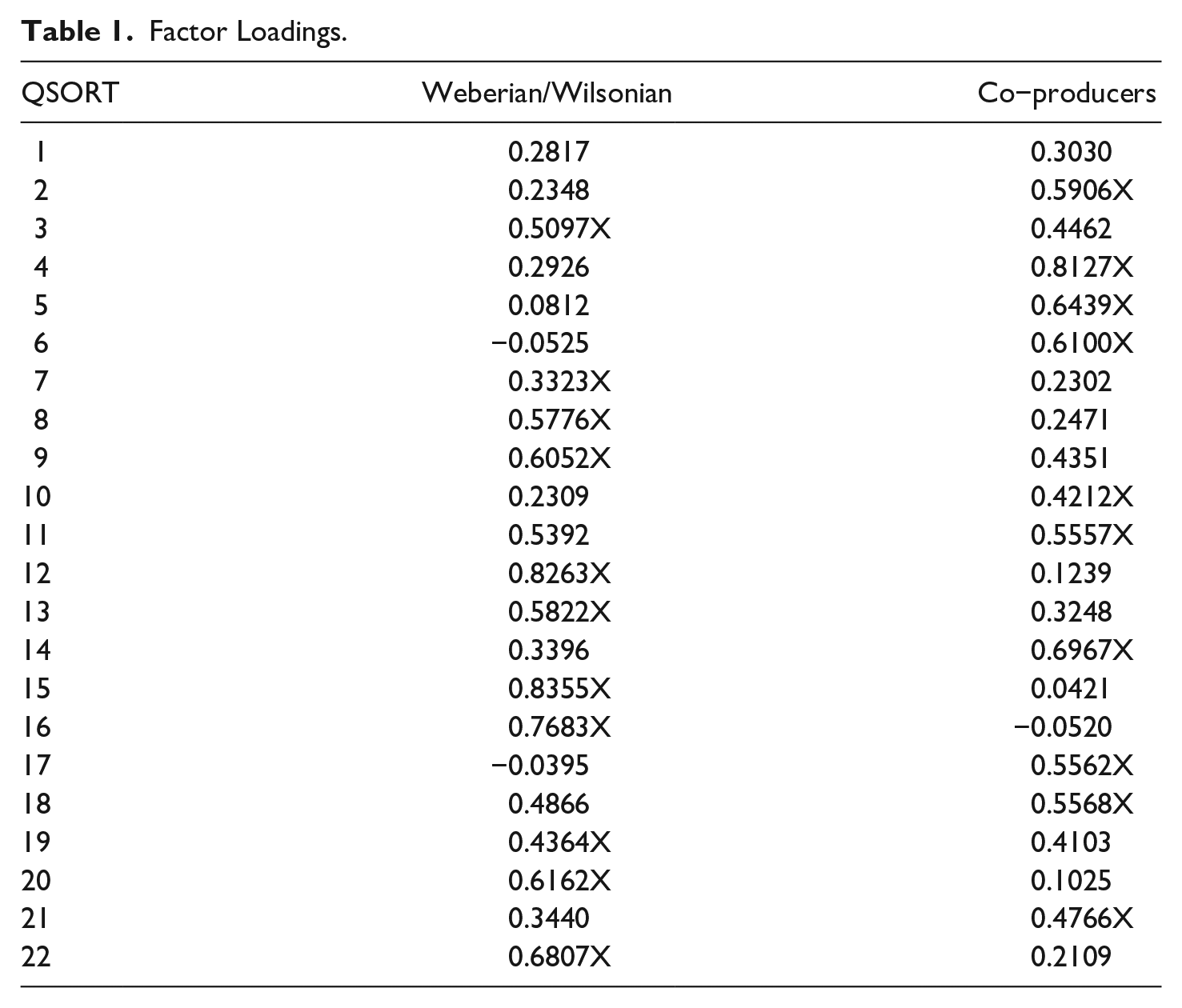
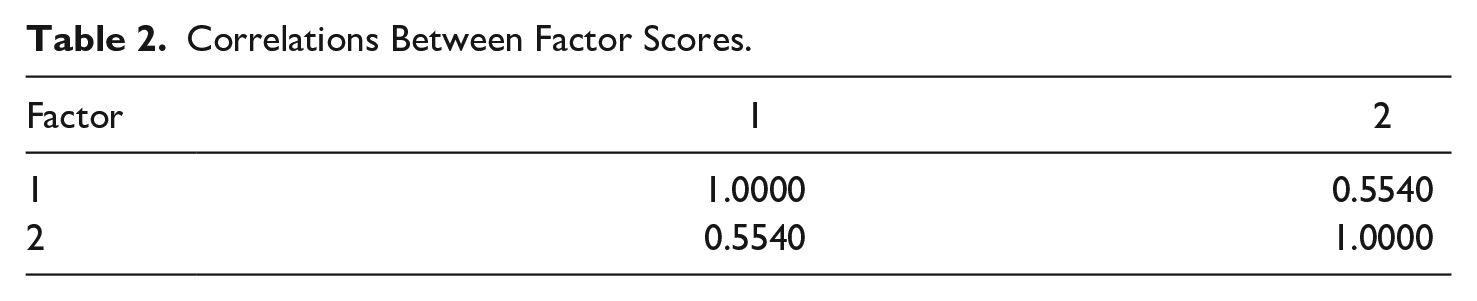
Q Methodology can be described as an inverted factor analysis. Our 22 Q sorts were entered into PQ Method, a freely available online software program designed to assist in the analysis of Q data (Schmolck, 2014). The relationship between all the responses (correlation matrix) was then calculated. We used Principal Component Analysis to analyze the factors and then rotated them according to Varimax criteria. Rotation does not distort the consistency in sentiment but shifts the perspective from which they are observed (van Exel & de Graff, 2005). A numerical representation of how closely each individual’s statements related to the make-up of each factor was then determined (Factor scores). People with similar views weigh on the same factor. Factors in Q are collectives of respondents who share the same viewpoints. Those who possess similar views are said to belong to a factor. The number of factors is subjectively determined by the scholars. In our case we followed the process recommended by Webler et al. (2009, p. 31) to identify two empirical profiles. In each case we checked for explained variance and eigenvalue, the number of significant persons loading or not loading on any factor, the number of persons confounded across more than one factor and the correlation between factor scores.
In Q methodology, it is as important to examine the placement of a statement in the central category as a statement placed at the extremities, as these too contribute to the Q sort profile. Two factors best suited our study. These two empirical profiles, unsurprisingly, differ from our theoretically constructed ideal types. All bar interviewee number one (confounded) contributed to the make-up of these typologies. While our interest is in each of the typologies, not the extent to which they are ascribed, it is worthy of note that the primary characteristics of the interviewee did not correlate with typology alignment (Tables 1 and 2).
Factor Loadings.
Correlations Between Factor Scores.
Results
Common Conceptions
In the presentation of the findings, the number in brackets represents the supporting statement from table three in the online appendix. It is common for some statements to be placed consensually across all factors. In this study, both factors felt that while politicians represented a subset of Palestinians (Statement 27), their role was to represent all Palestinians (1, 2, 33) by presenting solutions that are feasible and efficient (19), thereby aligning with the PSM proposition. The merit principle was held in high regard, but they felt that this was not uniformly applied at the top (31). Both typologies did not feel motivated to represent their political parties (4, 5), faith (14) or family/clan (35). In line with Ferguson’s (1984) previously outlined research, we see that civil servants in type one explicitly highlighted that they did not seek to represent the interests of women in the civil service (6), nor did they prioritize family, religion, and political party. Gender neutral policy making may therefore replicate traditional biases in the bureaucratic system of the fragile society (Ferguson, 1984; Rouse, 2018). We now turn to the viewpoints that distinguished each typology.
Typology One: The Weberian/Wilsonian Bureaucrat
Those contributing to the make-up of this factor do not get involved in politics but act in the best interests of their departments (32). If politicians were to ask them to find a way to achieve a result by going around the law, they would refuse (18). They are rule-bound civil servants (34) that give more weight to the scientific evidence than to political factors when making recommendations (8). Nonetheless, their role is not to only give advice to politicians but goes beyond this (12); they defend the integrity of the organization. Factor one clearly differentiates between the role of the politician and the bureaucrat (25). Where divergence of opinion emerges, it is up to the politicians to broker this difference, not bureaucrats. They would find it unproblematic serving alternative political leaders (17). They do not see it as their role to modify rules to benefit society (9) or a subset of society (6). This typology is more likely to choose efficiency statements over equity statements (11). As expected, they believe bureaucrats to be neutral (20) and prioritize neutrality as one of the primary bureaucratic values (16). Unlike Factor two, factor one identifies the ethical and professional standards of the bureaucracy as the underpinning legitimacy for their decisions (23).
Evidence from our discussions with interviewees further emphasizes the key tenets of this typology. As outlined by Interviewee Three (I3), respondents in this category feel they need to protect themselves against political interference: I must defend myself against criticism or punishment by adhering to the law. . .I do not trust politicians to protect or defend me (I3).
Interviewees eight, 17, and 22 concur, arguing they must also be impervious to societal pressures: working in government institutions must be governed by rules and laws that apply to everyone regardless of religious, ethnic or political affiliation. Basing your actions on religious beliefs is not only risky but also violates the professional standards and ethics of a public job since it leads to prejudice and discrimination against the others who have a different religious affiliation. (I8) the most basic values are transparency and accountability. They are more important than neutrality and equity. Without transparency and accountability there is no use for other values. (I7) Scientific and professional work values should take precedence over political considerations in the civil service. Though politics is important. . .we [as civil servants] should not give it priority over technical and scientific criteria. (I22)
Again, in line with the data presented above, they see their roles in a traditional way. They acknowledge the politicization of the bureaucracy in some areas (likely a reference to those bureaucrats identified in type two) and are fully aware of the dangers of unchecked bureaucrat discretion: Since employment to the civil service is often dependent on political affiliation and not on qualification or work experience, the interests of the public are not served well and therefore it is unjust and unethical to give bureaucrats discretion as this will harm the citizens (I7).
Interviewees nine and 13 similarly highlight the need to be resistant to pressure from politicians: In our work in the bureaucracy many of us have been subject to pressure from politicians to pass decisions contrary to law in order to serve their own interests and do favours to some people in their constituencies but we opposed that strongly and suggested to them to modify or change the law in order that all recipients of the services of the Ministry would benefit from the change. I believe that this is essential if we want to have justice and transparency in the civil service. (I9)‘I think the public administrator should work in a professional way regardless of the political faction he belongs to. . .Professionalism for me is more important than political affiliation. . . public administration officials should not let their political opinions interfere with their work. (I3)
There is a clear distinction between bureaucrat and politician roles for this typology, with one bureaucrat even submitting that: I would support a policy that prevents public employees even from participating in general parliamentary elections, lest their political preferences influence their ability to serve the general public without discrimination. . .being politically oriented jeopardizes a public servant’s impartiality (I3)
Interviewee 13 also gives examples of the importance of the separation of powers: It is a serious dilemma with very negative implications for the civil service when politicians control the selection process especially at high administrative levels. We experienced this when Hamas took over in 2006 and appointed its supporters in high administrative positions. Fatah does that also, the result is conflict within the ranks of the civil service, and you could end up by having two officials with two different political orientations holding the same position. This leads to mismanagement and poor performance.
Interviewee 16 further demonstrates the nature of this viewpoint [separation of politics and bureaucracy]: Our job. . .is very sensitive and neutral. . . .Our role is not to interfere in politics, and we should serve whatever administration the people choose. Not willing to serve a government because it does not align with our political views is a dangerous matter and should not be tolerated because it undermines a democratic system. (I16)
Interviewee 15 nicely surmises the viewpoints of this typology: while they view their role as serving the entire public, they prioritize the rules of the organization, the protection of the law and the independence of the profession from the political level: Our jobs as civil servants are governed by rules and regulations that are permanent and stable to ensure continuity and justice. We cannot play politics. Politicians and the political system may change from time to time, but we remain faithful to our commitments to serve the people regardless of the type of the political regime (I15).
In line with the traditional Weberian/Wilsonian characteristics, interviewee 20 does highlight that while: . . .public servants should not interfere or get involved in political issues. . ..in very rare instances when the bureaucrat finds, and is sure that, the political order grossly violates the political rights of the individual or a group, he/ she should step in and voice his/her opposition.
It is clear that while type one draw on the other ideal type of role conceptions, the dominant trait is that of the traditional bureaucrat best serving the people by serving the rule and norms of the organization.
Typology Two: Coproducer of Public Policy
Factor two are closer to their political masters than factor one, as demonstrated by the placement of statements 17 (slightly disagree) and 25 (strongly agree). While factor one placed the statement “I implement decisions dictated by my superiors without consideration of the implications or consequences for recipients (15)” in the neutral category, type two strongly disagreed. This typology is more likely to agree with their Ministers on political and policy issues than factor one (21). Unsurprisingly, unlike factor one, this type will also take the initiative in proposing policies, mobilizing support for them, and questioning policies that may run counter to the general public interest (22). The placement of statement 10 (disagree), further demonstrates that this type sees societal problems as theirs to directly remedy. Type two would not implement any order or directive if they thought it would contradict with people’s interests or values. Unlike type one, they favor what they perceive as equity over efficiency. Factor one would do so only in exceptional circumstances. Type two align with Harmon’s views on dismissing the traditional distinction between proposing policy and implementing policy (24). While neutrality is important for this type, the placement of statement 23 demonstrates that the professional and ethical standards of the bureaucracy are not the primary values underpinning their role conceptions.
The qualitative aspect of the interviews supports the above narrative. Interview two sees the role of the bureaucrat to “serve the general public” as a collective as: recipients of services may have different demands with special interests which may be contradictory to each other. . .You cannot serve the public as a whole if you consider the special interest of every group in the community. (I2)
They engage directly with the citizen believing that: citizen feedback is essential because no future policies targeting the recipients of public service can be designed without taking the concerns and needs of the citizens into account. (I4)
While similarly interviewee six emphasizes their bridging role between citizens and government: . . .a bridge between government and the citizens (recipients of public services) . . . I am in daily touch with the citizen. . . I listen to their grievances and complaints, and I feel it is my duty to communicate their grievances, demands and complaints to political decision makers. . .in order to help improve public service. (I6)
Interviewee 11 too emphasizes the idea of serving the people directly, but also emphasizes their independence from the political level: A change in the political leadership will not affect my willingness to serve the new regime because I believe that the public administration system is there to service the people directly; not the incumbent political party. (I11)
Interviewee 12 further emphasizes the importance of directly representing the public in a different way from that conventionally done by politicians: Politicians seek to achieve their personal and political goals sometimes this may not be in line with what the general public demand and may not even be in the interest of the general public, therefore I will continue to provide my services fairly and equitably to all those entitled to the service. (I12)
For bureaucrats in this typology, their role is defined in direct public service terms: responding directly to what they see as the public need. The quantitative and qualitative data demonstrate that bureaucratic independence and the autonomy to take decisions are very important for this typology: Permanence and sustainability in the civil service are crucially important and can only be achieved through transparency and accountability. . . Political leaders come and go and the political system changes continuously, but public administration remains to serve the people, therefore, if the civil service is attached and committed to a particular party only, this will undermine the permanence and sustainability of government service. (I17)
Similarly for interviewee 21: the civil servant should take decisions without being under the influence of politicians and other interest groups. . . He/she should be guided only by professional criteria and objective standards in his or her decisions. (I21)
This idea of independence is further emphasized by Interviewee 4 though family and kinship loyalty are very important in the Palestinian society, loyalty to the principles of a professional public service is more important. . .There is a high risk of choosing family over the civil service because this will have disastrous consequences for the community as corruption prevails and the whole moral fabric of the society is eroded leading to national collapse (I4).
In summary, Interviewee six embodies much of the sentiments expressed by this typology (serving the public directly): The main objective of public administration is to serve the public and not a clique of politicians. Serving the interests of politicians at the expense of general interest is, in my view, unethical and unprofessional and contradicts the principles of civil service. (I6)
For type two, they will use the “neutrality of the organisation” argument to push back against what they would regard as interference from the political level. They use their relationships with politicians, the rules and norms of the organization and their professional expertise to serve the public directly.
Both typologies disagreed strongly with the statement: I believe that in public service, loyalty and obedience to authority are more important than fulfilling citizens’ desires and aspirations (33) further emphasizing the PSM spirit. This PSM manifests itself differently in both typologies: both types strongly believe in the independence of the bureaucracy; however, type one is more likely to serve the public by serving the organization, while type two are more likely to represent what they perceive to be the interests of the citizen directly and use organizational and political norms to do so.
Findings
At the outset of this research, we asked: what role do elite level bureaucrats in the fragile, developing society actively represent? We have developed and employed a framework for examining the factors underpinning the exercise of bureaucrat discretion by analyzing role conceptions. We present three interrelated findings of our research.
Key Finding One: While sharing many perspectives, bureaucrats actively represent two distinct role conceptions. We identified six theoretically existent ideal types from well-established public administration research doctrines. We then presented data that demonstrated how these two empirically emergent typologies map onto the theoretical perspectives. One of the strengths of Q Methodology is rather than the scholar defining the boundaries of the typologies, interviewees themselves define typology boundaries. We therefore have a more accurate depiction of the empirically existent beliefs. In our case, while our typologies share many role conceptions, particularly around organizational independence, one typology dominantly maps onto the traditional Weberian/Wilsonian style bureaucrat while the other directly serves the public, as in PSM. Both typologies value the views of citizens when designing policy solutions. Both typologies similarly placed many of the “serving a set of societal goals” and “political control” statements, indicating high levels of agreement in these areas. However, the methodology also allowed us to identify the subtle differences in how active representation is manifest.
Key Finding Two: Representative bureaucracy is a useful lens to investigate bureaucrat motivations beyond the passive-active link. Our theoretical contribution identifies representative bureaucracy as a useful lens to investigate active representation on behalf of simultaneously competing secondary, learned identities, rather than simply primary identities such as race and gender. This socialization thesis was central to Kingsley’s (1944) original contribution. We have measured active representation on behalf of simultaneously competing secondary learned, or socialized, identities. Until now, the three waves of representative bureaucracy research (Bishu & Kennedy, 2020; Kennedy, 2014) have examined (i) the extent to which a minority group is represented in an organization, (ii) the circumstances under which they actively represent the interests of their primary identity, and (iii) the extent to which their position in the organization is symbolically important in terms of perceived legitimacy. We submit that representative bureaucracy research has much to contribute to our understanding of the operationalization and effectiveness of public bureaucracies. In this study we see active representation by both typologies on behalf of a secondary identity: public service motivation: however, how this active representation manifests itself differs.
Key finding three: Serving the public directly is a priority for all of our civil servants. This is tempered by traditional civil service values for typology one, believing that they must maintain the politician-bureaucrat dichotomy; while for type two, they use the tools at their disposal to serve the people directly. In a system without legislative oversight, this may lead to unintended consequences. We have identified how pro-social and public service motivation constructs co-compete with other motivations on the administration side of the political-administration axis. Reflecting on the PSM statements, (1, 2, 22, 27, 28, 30), we see that serving the general public is dominant in both typologies. They feel they serve all of the people, not just a few (1, 27) and they take on board citizen perspectives (2). Type two, seeing themselves as co-producers, goes even further proposing policies and mobilizing support for them (22) and would not implement policies if they believed them to contradict what they perceived to be people’s interests or values. It is also worthy of note that the theoretical typology built on pro-social representation (serving a subsection of society) is firmly rejected. ELBs do not serve political parties (4), groups with whom they share an affinity (7) their faith (14), or family (35) while type one firmly reject advocating in favor of the interests of women (6). In another slight difference, and in line with their “representation of the people” role conception, type two will favor equity over efficiency in a trade-off (11). The nature of public service motivation in fragile, developing societies should therefore be a focus of future research.
An implication from our collective findings is that relying on elite level bureaucrats to informally do the work of politicians by serving the people directly in the fragile developing society could have unintended consequences. Most importantly, from the perspective of understanding the role of the bureaucrat in managing a fragile developing society, we have, for the first time, shed light on role conceptions within Palestinian public administration. While much is known about the Israeli bureaucratic elite (Nachmias, 1991; Nachmias & Rosenbloom, 1978; Saar & Gilad, 2017), less is known about the Palestinian public administration. This research begins to redress this imbalance. In Palestine, where parliament is not functioning and Ministers are governing through the executive orders of the President, the political oversight of the bureaucracy has diminished. While, as expected (Steel, 1998), some bureaucrats eschew the notion of bureaucrat discretion, others have adopted a more interventionist and proactive stance, blurring the, however notional, separation of political and administrative powers. While this may serve the short-term interests of international governmental and nongovernmental organizations, and may indeed serve society, further research is required to identify the motivations of these civil servants. There may be unintended consequences: what does serving society look like? What do they interpret as the public value? Their views of what is in the best interests of society may not now, or always, align with those of the population.
Future research needs to assess how widespread these different role conceptions are. While Q can tell us the variety of viewpoints that exist, it cannot tell us the extent to which they are ascribed. We also need to understand how these roles are manifest. Are bureaucrats in developing or fragile societies predestined for public service? Or is there an element of socialization? What role do education, geography, religion, socio-economic conditions, the conflict, play in developing these norms? Do perspectives change over time with age, length of service or type of role? Representative bureaucracy, as original conceived, can be a useful lens to answer these questions.
Concluding Remarks
One challenge for civil servants in developing environments is to rethink traditional assumptions about civil servant role conceptions that emerged during the New Public Management (NPM) era. The principles of NPM are still being delivered in developing environments. Individuals in type one demonstrate many of the key attributes of the traditional bureaucrat, much coveted in many parts of the world. However, type two is also an asset to a service that seeks to modernize and develop, but questions arise as to how they are held accountable. As these individuals look to serve society directly, rather than through their political masters, and see their accountability to the people rather than their political masters, where are the controls on their discretion? Are professional norms in fragile and developing societies strong enough to control their behaviors? And if so, what are these norms?
Our study has identified the self-reported role conceptions of bureaucrats. As Niskanen (1971) reminds us, without an understanding of the behavior of bureaus, any approach to administrative reform is futile. We now have an understanding of the role conceptions of civil servants in the West Bank. Administrative reforms can be built on this new understanding. Further, any realistic future solution to the Palestinian-Israeli conflict will require enhanced cooperation between civil servants on both sides of the divide. This research goes some way to identifying the types of civil servant on the Palestinian side. At the outset of this research, we knew that bureaucrats played a significant role in managing developing and fragile societies. We now have a better understanding how they do so.
Supplemental Material
sj-docx-1-rop-10.1177_0734371X241242436 – Supplemental material for Governing the West Bank: What Role Do Elite Level Civil Servants Actively Represent?
Supplemental material, sj-docx-1-rop-10.1177_0734371X241242436 for Governing the West Bank: What Role Do Elite Level Civil Servants Actively Represent? by Karl O’Connor and Usamah Shahwan in Review of Public Personnel Administration
Footnotes
Authors’ Note
As we are not interested in the nature of Public Service Motivation (PSM) in this research, we do not measure PSM along its traditional dimensions; we do however draw on the principles of PSM to circumscribe the ideal type of bureaucrat who may see their role as to directly serve society.
Declaration of Conflicting Interests
The author(s) declared no potential conflicts of interest with respect to the research, authorship, and/or publication of this article.
Funding
The author(s) received no financial support for the research, authorship, and/or publication of this article.

Supplemental Material
Supplemental material for this article is available online.
Notes
Author Biographies
References
Supplementary Material
Please find the following supplemental material available below.
For Open Access articles published under a Creative Commons License, all supplemental material carries the same license as the article it is associated with.
For non-Open Access articles published, all supplemental material carries a non-exclusive license, and permission requests for re-use of supplemental material or any part of supplemental material shall be sent directly to the copyright owner as specified in the copyright notice associated with the article.
