




Abstract
Amid a global pandemic, unprecedented numbers of citizens relied on essential public employees as lifelines for their health, safety, and connectedness to the broader community. These public servants worked tirelessly through collective trauma to ensure their neighbors had what was needed to maintain some semblance of a routine in an otherwise unpredictable environment. This article uses narrative inquiry to examine the implications of the COVID-19 pandemic disruption on the public sector workplace, the quality of work life, and to investigate how employees coped during the crisis. Our research reports on interviews with 43 front-line and behind-the-scenes public employees who describe how they coped, maintained their public service motivation, and worked through increased demands for emotional labor in this new work-life environment. The findings suggest the need for human resources policies that allow for a flexible, reflective, holistic, and person-centered approach.
Introduction
“I think the biggest thing we have to remember is in the type of society that we live in, people are important. I think we forget that a lot, because it’s very easy to stop looking at another person as a person, especially with the essential workers. We think that the product, the economy, or profit is the most important thing. . . and I think we have to remember that we’re here because of people.”
The COVID-19 pandemic altered the way we live, work, and interact overnight, shattering myths of certainty and control. Over the course of the pandemic, healthcare workers were justifiably celebrated as #HealthcareHeroes; meanwhile, many front-line and behind-the-scenes public servants continued to perform necessary and essential services to sustain their communities during the stay-at-home orders and times of social distancing and isolation. These public servants saw their workplace environments and job demands abruptly altered; lines between home and work, personal and professional, acutely blurred; and the needs of the people and communities they served increased exponentially. The ways in which these public servants navigated workplace changes and coped during times of crisis and increased demands for emotional labor offers valuable lessons for public and nonprofit human resources management (HRM). This research explores how public servants in three distinct sectors—mental health, emergency services, and local and state government administration—navigated this rapid shift in their work environments. It offers lessons that leaders and managers in public and nonprofit organizations might draw from to ensure their teams successfully cope in future crises.
The research presented here uses narrative inquiry, an inductive and reflexive qualitative approach (Clandinin & Huber, 2010; Trahar, 2013), centering the stories of those in public service during the COVID-19 pandemic to examine the HRM implications for essential workers. Data were collected from the stories of employees and managers working across state, local, and nonprofit organizations in South Carolina and focused on two research questions: (1) What are the workplace—and the quality of work life—implications of the COVID-19 pandemic disruption? and (2) How are employees and managers coping during the crisis?
The article is organized in the following way. First, we consider public and nonprofit sector workplace environments, work-life balance, and literature on the humanizing functions of HRM. Then, we outline the methodology for our study. Next, we discuss findings, noting that while the pandemic revealed increased workload demands, resource constraints, and emotional strain for public servants, their stories also underscored public service motivations, and, ultimately, re-centered the importance of human connection. We also find that the pandemic resulted in additional (and harder) work for public servants in more restrictive, and less connected, bureaucratic environments; in part because the lines between professional and personal intertwined, the pandemic exacerbated inequities for many, including women, caregivers, people of color, and frontline or low-wage workers (Connor et al., 2020; Gaynor & Wilson, 2020). The article concludes with practical advice about how public service leaders might institutionalize the lessons learned through hardship, particularly in relation to emotional labor, reflective practice, and a more person-centered HRM.
The Pre-Pandemic Employee-Friendly Workplace
Employee-friendly practices in many ways relate to work-life balance, though over time family and work life have become increasingly intertwined (West, 2012). Flexible policies are essential in navigating work-life conflict. The Families and Work Institute (FWI) discusses workplace flexibility in terms of providing employees the ability to: temporarily change hours; make individual decisions about when to take breaks; work from home (i.e., telecommute); or take time off for personal or family or matters (Kim et al., 2020, p. 3). Even with these employee-friendly policies, workplace flexibility is a necessary but not sufficient condition to increase workplace engagement, job satisfaction, and overall employee health and wellbeing. Kim and colleagues’ (2020) analysis reveals that in addition to the policies, workers need to feel supervisor and coworker support to achieve positive workplace outcomes.
In federal public service, the Telework Enhancement Act of 2010 led to an increased use and prevalence of telecommuting as a flexible work arrangement. State and local governments have also reported a steady increase in telework and flexible work practices (Center for State and Local Government Excellence, 2020). Telework provides logistical advantages to organizations and has been linked to increased productivity (Mahler, 2012; Mello, 2007). It improves employee perceptions of fairness, job satisfaction, and intention to remain in a job (Lee & Kim, 2018), yet managers must also actively cultivate an environment where teleworkers are supported in their work. At a minimum, this means avoiding the creation of a “two-tiered workforce” in which some employees, typically those with higher-level positions and pay, are afforded more autonomy and flexibility than those in entry-level or administrative positions (Mahler, 2012, p. 417).
While many workplace practices during the pandemic (due to work-at-home orders) avoided the trap of unequal distribution of benefits, for various public servants, the transition to telework lacked preparation or foresight. For others, the nature of their work meant telework was not an option; in turn they confronted increased risks to their health and safety, as well as increased emotional stress, in the COVID-19 public workplace. There is ample pre-pandemic evidence that underscores both opportunities and challenges facing public HRM in providing an employee-friendly workplace. In the next section, we offer some insight as to how HRM practice might evolve as a result of the pandemic and in response to what is known about emotional labor and reflective practice.
Humanity, Emotional Labor, and Reflective Practice
Human resources managers and public leaders play an important role in providing employee services and creating supportive workplace environments that allow public servants to deliver on their public trust obligations, even in times of hardship. Guy and Ely (2018) propose three broad categories to capture the breadth of the processes and functions that comprise human resources management (HRM) in the public or nonprofit workplace: (1) standardizing functions to ensure all employees are treated fairly, (2) humanizing processes to ensure individual differences are considered, and (3) evaluative functions to understand performance-based outcomes (p. 134). Together, these processes ensure the knowledge, skills, abilities, and motivations of each person in an organization are used to achieve the public mission effectively, efficiently, and equitably.
Stivers (2008) and Schaefer (2014) take these humanizing functions one step further. Stivers (2008) argues for a more humane and caring public service less focused on efficiency, while Schaefer (2014, 0:59) describes the importance of behaving “humanly” as an essential, often overlooked, aspect of HRM. To behave “humanly” is to infuse “humanity back into the workplace for those human beings who happen to be employees” (Schaefer, 2014, 0:47) and to address the human needs of belonging, appreciation, and meaning (1:40). Others refer to these considerations as the “soft” side of HRM that is developmental-humanistic as opposed to the “hard” approaches that consider managerial prerogatives and prioritize values of efficiency and economy (West, 2012; West & Bowman, 2008).
Much public administration theory has historically been grounded in mechanistic monism; or a notion of objective technical, rational, and legal knowledge that informs emotionally detached service provision. To humanize public HRM means to consciously blend expert knowledge with an ethic of care (Mastracci, 2021), or “the rational world of administrative theory with the emotion-laden world of administrative practice” (Denhardt & Denhardt, 2012, p. xiii). Public managers humanize the work of personnel management via a holistic care-based approach grounded in compassion and empathy, which takes into account not just the cognitive skills and abilities but also the emotive tools necessary to cope with emotive and relational aspects of serving a diverse public (Burnier, 2003; Dolamore, 2021; Guy et al., 2008; Stivers, 2008). This approach explicitly recognizes that public service is relational, partnership-oriented, individually responsive, and compassionate; it also acknowledges the emotional labor required for success. Moreover, this approach may underscore the necessary public service motivation to sustain commitment to the public interest and civic duty (Perry, 1996, 1997), by moving from an abstract understanding of these motives to a more tangible one grounded in human connection.
In The Managed Heart (1983) Arlie Hochschild coined the phrase “emotional labor,” which she used to describe situations where workers manage their emotions so they might produce a desired emotional state in another person. Emotional labor can be anything from “putting on a smile” to denying one’s truly felt emotional response to avoid alienating coworkers, clients, or citizens. Emotional labor is often shaped by institutions or other social structures; the work environment promotes organizational display rules—professional norms, organizational rules, policies, or culture—which can pressure individuals to behave in ways that suppress their true emotions. The work people do to manage other people’s feelings while also coping with their own, is known as emotional labor (Guy et al., 2008; Hochschild, 1983) and emotional labor demands increase in times of crisis (Mastracci et al., 2012).
While workplace hardship offers lessons for public sector leaders that may be difficult to replicate in a training or professional development environment (Moxley & Pulley, 2004; Seidle et al., 2016), it also increases emotional labor demands. Scholars are only beginning to examine what happens when both the public servant—and the citizens they encounter—live through an extended period of crisis together (e.g., Kroll et al., 2021). 1 Disregarding emotional labor demands on public sector workers can have harsh consequences for public sector HRM, contributing to lower levels of job satisfaction (Yang & Guy, 2015), more turnover intention among employees (Cho & Song, 2017), higher instances of absenteeism and performance problems (Guy & Lee, 2015), and poorer overall organizational performance (Meier et al., 2006).
There are a number of ways to cope with emotive demands, including both individual and organizational actions that can decrease workplace stress. Individual actions include such things as self-regulation, reflective thinking, setting boundaries, and focusing attention elsewhere, while institutional action focuses on efforts to extend autonomy, offer training, and instill pride (Kroll et al., 2021). Institutionalized work breaks have also been shown to address and ameliorate the negative effects of sustained emotional labor in high stress situations (Kroll et al., 2021) and to improve organizational performance (Berman & West, 2007). Particularly in response to high stress situations and crises, successful coping mechanisms include “leaving work at work [and] decompressing alone,” which can reduce burnout and mitigate stress (Kroll et al., 2021, p. 97). Leaders need “a place to be human and replenish” and time away from high stress work situations (Suarez, 2020). The ability to step away from work to reflect on personal motivations, process difficult moments while acknowledging emotional labor demands, and reimagine new possibilities has been an important, if lacking consideration, in organizational policies and practice. These practices may also lead to a more compassionate and humane public sector (Hsieh et al., 2012; Perry, 1997).
Organizations can institutionalize work breaks and support clear boundaries and work-life balance. These steps can foster reflection-on-action: the recollection of prior action taken in order to reveal the knowledge used in practical situations by analyzing and interpreting past actions (Jordan et al., 2009). Relatedly, reflection-in-action, or thinking about what is being done while doing it, in the present moment, is closely connected to the phenomenon of mindfulness and can aid in problem-solving, strengthening leadership, improving work-life balance, and allowing people to reflect on the value of their work (Jordan et al., 2009; Yanow & Tsoukas, 2009).
Mindfulness entails both paying attention, purposefully and nonjudgmentally (Atkins, 2008), and “the continuous creation of new categories; openness to new information; and an implicit awareness of more than one perspective” (Langer, 1997, p. 4). Mindfulness in leadership suggests a quality of openness to foster and maintain reflection-in-action; it means deliberately paying attention to what is happening in the moment, without being swept up in patterns of judgment, evaluation, categorization, and reaction. Focusing on what is happening now, rather than speculation, allows for the discovery of new aspects of experience and creativity instead of being constrained by prior thoughts or habits (Vella & McIver, 2019). Mindfulness not only has the potential to increase resilience, mental clarity, and sense of control despite daily workplace demands or uncertainty, the practice has also been shown to decrease stress and emotional burnout (Vella & McIver, 2019).
While the pandemic and the associated work-from-home orders placed additional expectations on employees and managers alike, they also disrupted traditional service delivery methods and important interactions, including the citizen-public servant encounter. Paradoxically, this mandated break in routine required that both front-line workers and public sector managers pause, think, and reflect so that they could carefully consider how best to meet the needs and expectations of those they served in an unsettled, disconnected, and distanced environment. Perhaps an unintended consequence of the pandemic was that it forced a break from the status quo and in doing so provided people with an opportunity to rethink how they accomplished agency goals and why they chose public service. This research captures the stories of those public servants so the lessons learned might inform a post-COVID public service.
Methods
We used narrative inquiry, an inductive qualitative approach, to explore the research questions: (1) What are the workplace—and the quality of work life—implications of the COVID-19 pandemic disruption? and (2) How are employees and managers coping during the crisis? Narrative inquiry is an approach that centers storytelling and relationships. Rather than starting with a theory or proposition in mind, narrative inquiry is useful for inductive designs that gather data (i.e., stories) first and only later situate the story in conversation with the broader literature. Clandinin and Huber (2010) explain, “Narrative inquirers are able to study the complexity of the relational composition of people’s lived experiences both inside and outside of an inquiry and, as well, to imagine the future possibilities of these lives” (p. 3). This methodology is appropriate for an exploratory study that centers lived experience with the intent to draw lessons for future public service HRM. The research team used a recursive process to specify the semi-structured interview script to examine the research questions.
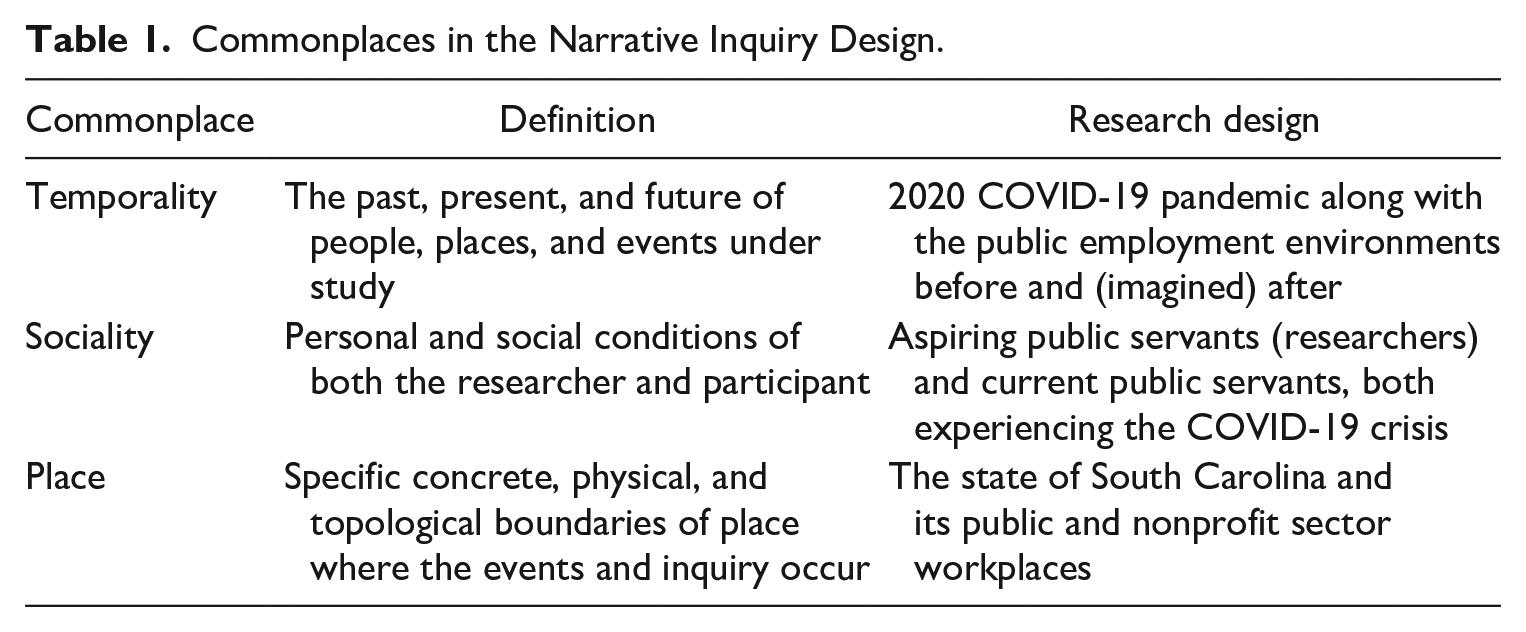
Rather than an archetypal case study design, this research follows the narrative inquiry tradition to specify temporal, sociocultural, and geographic contexts, known in this methodology as “commonplaces” (Clandinin & Huber, 2010, p. 3). Temporal aspects centered around the 2020 COVID-19 pandemic, which gripped the United States beginning in March of 2020 and was ongoing at the time this research was conducted (May–June 2020). To better situate and understand the temporality, the semi-structured interview questions gaged workplace practices before the crisis, during the COVID-19 shutdowns and stay-at-home orders, and during the imagined post-pandemic future. 2 Sociocultural context, or sociality commonplaces, demanded that the narrative inquirers examined their own personal, cultural, institutional, and affective dispositions and experiences. The research team included two professors, themselves former public servants, and current and aspiring public servants in a Master of Public Administration (MPA) program, who all resided in and experienced the COVID-19 pandemic in the context of South Carolina and the College of Charleston’s response. Thus, the selection of current public servants in the same place setting (i.e., South Carolina) allowed for a deeper understanding of the cultural and regional context and a shared experience of the governmental response to the pandemic, which varied vastly from state to state.
Specifying the commonplaces allowed the research team to examine and reflect upon our individual and group subjectivity and the relationships with the interview participants; in the tradition of narrative inquiry and critical qualitative research, we recognize that storytelling involves the co-creation of knowledge based on shared and divergent understandings and experiences (Denzin & Giardina, 2016). As Reissman (2008) explains: “Stories don’t fall from the sky. . . they are composed and received in contexts – interactional, historical, institutional, and discursive” (p. 105). The commonplaces of this research project, as defined by Connelly and Clandinin (1990), are summarized in Table 1.
Commonplaces in the Narrative Inquiry Design.
The process of narrative inquiry is rigorous, creative, and inherently political (Trahar, 2013; Zingaro, 2009). It is thus necessary to lay claim to the intentions of this research project as a political act: the motivation for this research and the accompanying course arose from a desire to underscore the essential but often overlooked work of public service. This research captured stories to recognize acts of public service in the pandemic reality, which often placed greater burdens on caregivers, women, and others who lacked the ability to safely work at home.
Narrative inquiry foregrounds the interactional aspects of storytelling rather than bracketing off the researcher as a “neutral observer” or collector and presenter of others’ stories (Trahar, 2013). Thus, recruitment for interview participants drew a purposive sample from the connections of the MPA Program: its faculty and staff, advisory board, and students. This allowed for the foundation of commonality and interpersonal connections for public servants to entrust the stories and their retelling. The research team co-created a semi-structured interview script to allow for emergent findings and flexibility (Fontana & Frey, 1994) (See Appendix 1). The College of Charleston’s Institutional Review Board reviewed the research design, scripts, and outreach methods to approve data collection in May 2020. Interviews were completed over 1 week via Zoom or phone to maintain social distancing. Recorded interviews were first transcribed via the Otter.ai software, which members of the research team then reviewed, cleaned, and de-identified to maintain participant confidentiality.
The storytellers (i.e., the research participants) were public and non-profit sector employees who worked in some capacity across South Carolina before and during the COVID-19 pandemic. In total, over 90 interviews were conducted by the research team. Although the data set included interviews with public servants from various fields including arts, education, government, sanitation, healthcare, information technology, mental health, recreation, and police/EMS/fire, the authors purposively selected a subset of those interviews (N = 43) to determine if there were meaningful and representative between-group comparisons. Intentionally focusing on contrasting groups of participants (i.e., purposive sampling, Miles & Huberman, 1994) is a qualitative technique which can increase the legitimation of findings and address validity concerns (Onwuegbuzie & Leech, 2007).
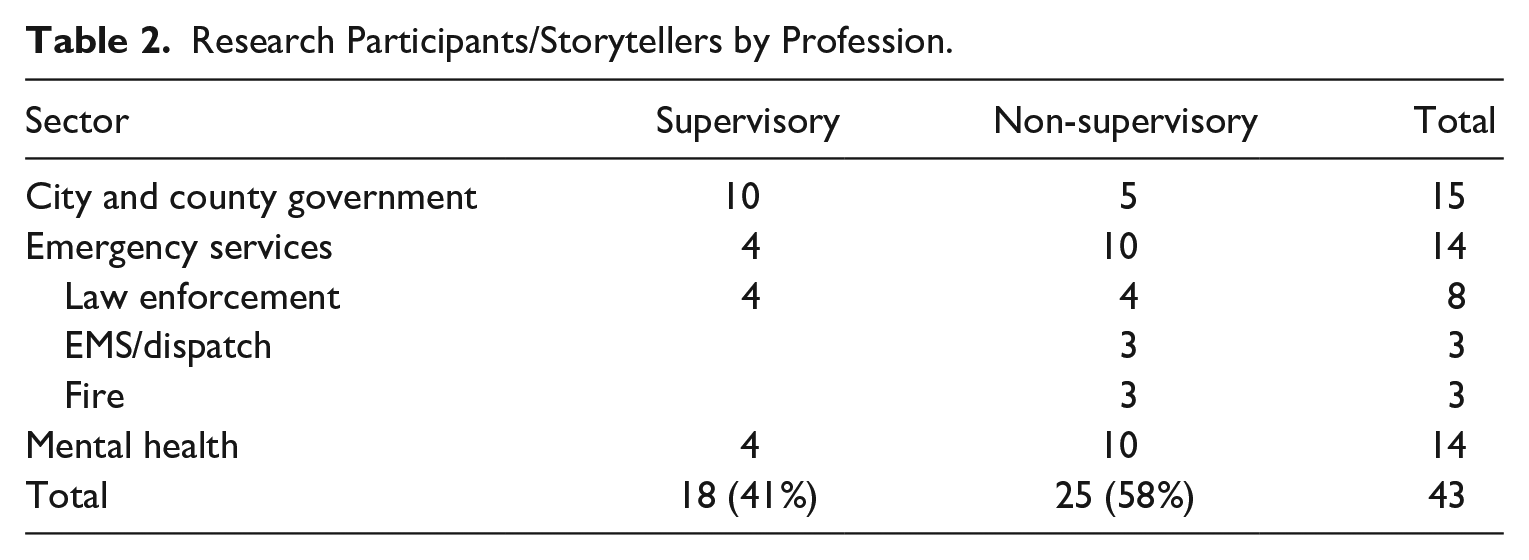
Given the entirety of the data were collected as part of a summer class, the authors participated in robust class-based discussions about the sense each student was making from their data, and as such, we had some knowledge of overarching themes prior to the analysis and coding conducted for the story shared here. For example, we knew that all of our storytellers were struggling with work-life balance, yet how they did so appeared to differ by profession. We were as curious about how public servants were coping with workplace disruptions associated with the pandemic as we were about how these experiences might differ based on the kind of work being done. To that end, we decided to compare the stories among three different types of public sector employees, all robustly represented in the sample: emergency services including policing, fire, and emergency management services (EMS) who maintained front-line work; city and county government (including city planners, administrators/directors, auditors, wellness coordinators, and public affairs) who were behind-the-scenes and able to telework; and mental health professionals (including nonprofit and governmental services) who shifted to a combination of telework and in-person environments. The sub-sample includes both employees with and without supervisory responsibilities. For a detailed breakout by sector, see Table 2 below.
Research Participants/Storytellers by Profession.
All three authors conducted thematic and axial hand-coding to determine overarching themes using an inductive process (Saldaña, 2015). In a second round of coding, the identified themes were used to re-code interviews using a codebook developed in Excel (Meyer & Avery, 2009). The three authors held meetings to refine their codes and concepts and in a collaborative consensus-building approach (Cascio et al., 2019). Finally, in an iterative process, we reviewed the master codebook to determine the narrative. Figure 1 below visually captures the data analysis process.
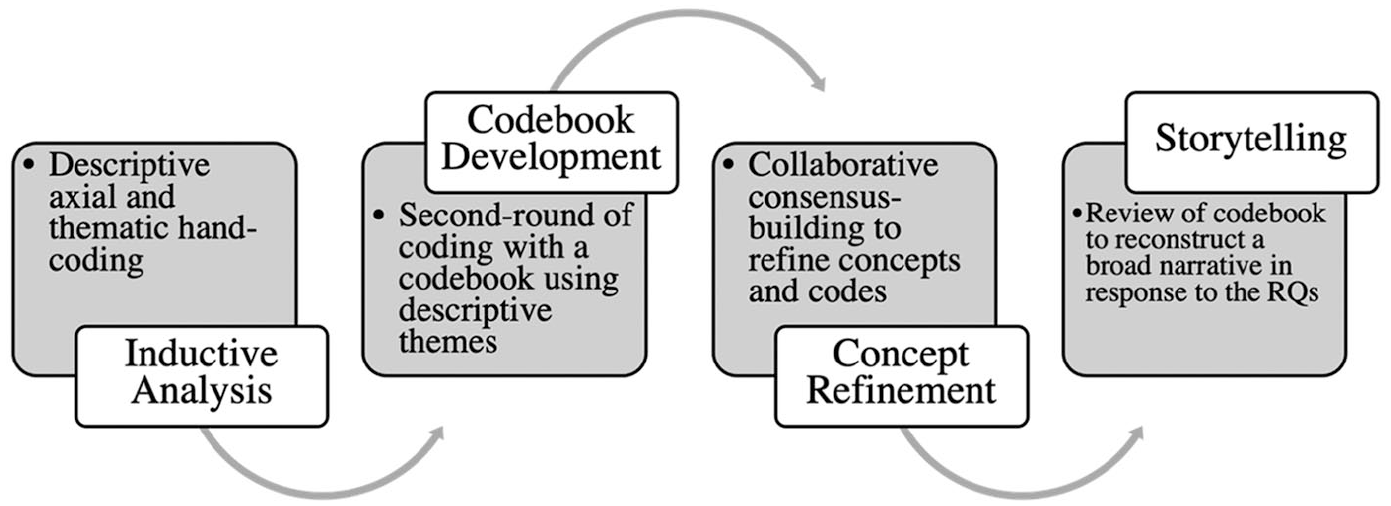
Data analysis process.
The Story
We now turn to the findings and discussion, which we report as “the story.” We start by telling the story of the working environment and work-life quality of public sector employees during the COVID-19 pandemic. This is a story of how public servants were adaptive and resourceful, while also struggling to maintain a healthy work-life balance amidst challenges and uncertainty. Then, we examine stories that add richness, depth, and context to the working environment by exploring how employees and managers coped with higher emotional labor burdens during the crisis. Although we had originally thought there might be significant variations in how people in each of the three sectors experienced and managed pandemic-related demands on their work, we did not find compelling evidence of any difference. That said, there were sector-specific insights and as such, we share the profession of our storytellers throughout.
The Working Environment
During the pandemic, essential workers adapted and remained committed to delivering the public value promised to those they served. Our storytellers debunk the myth of a typical workday and share stories of triumph and heartache as they met the pandemic-related challenges that constrained their work, often resulting in even more work, occasionally at great personal expense. Our findings reflect deep public service motivation (PSM) among our storytellers (Perry, 1996; Perry & Wise, 1990); they reveal one of the most persistent motivations was the knowledge that their work had meaning and created value for people. We conclude with insight as to how our storytellers are struggling to maintain a healthy work-life balance.
A typical day?
Despite any Weberian or Frederick Taylor-inspired notion that bureaucratic public service work is routinized and mechanistic, our storytellers had a difficult time describing a “typical” workday both before and after the pandemic. While it may be true that the actions of career civil servants are bound by rules to ensure the implementation of government programs and services is fair, equitable, and just (Dehart Davis, 2017); even within these bureaucratic structures, very few participants with could describe a “typical” day prior to the pandemic. Of course, there were routinized elements of a “normal” day—roll call for police officers, case review for social workers, and the seemingly endless line-up of “meetings and meetings about meetings” for government officials—yet the nature of their work and the missions of their organizations made for a fast-paced environment with many moving parts. Moreover, since the public employees in our sample interact with a public who is often in distress, predictability was never a hallmark of their professions.
For example, while mental health social workers might develop a plan for the day and perhaps even prepare for scheduled appointments, much of their case management work is in response to constituent needs on any given day. Similarly, although there is some predictability in the work done by police officers, firefighters, and EMS personnel, the exact nature of “routine” calls is far from conventional. This quote from a city administrator captures the volatility of a “typical” workday:
I feel like some of the administrator’s job is putting out little fires all over the place and guiding people through what the work plan is, our job is geared toward implementing the policy from counsel. So, it’s very difficult for me to describe a day in the life of a city administrator, because it’s very different every day. I mean, I have ideas in my head in the morning about my to do list, and then it’s eight o’clock at night, and I haven’t been able to do any of the things that I planned on doing.
Our storytellers described pre-pandemic workdays that included a healthy mix of administrative work and frontline interaction with those they serve. During the pandemic, there was more administrative work that was not only a result of daily temperature checks, questionnaires, and contact-tracing but also due to a decreased workforce because of furloughs and illness. These additional administrative burdens and work-safety protocols meant there was less opportunity for social interaction with the very people who give meaning to the jobs of those we interviewed. At the same time, the necessary physical distance between public servants and citizens underscored the importance of people to their understanding of the work. Consider this comment from a police officer,
Personally, it’s the handshake and the person-to-person interactions, I love talking to people. You know, a handshake to me is like a hug, kind of like embracing someone like, ‘hello, how are you’? It’s a sign of respect. And now I need to tell people, ‘Listen, I would shake your hand, but we can’t because this whole thing you know, social distancing and stuff’. . .that’s the biggest thing for me. . .and talking to someone over the phone is different than me talking to someone in person. . .[how do we] develop ways to help engage the community without actually being with the community physically?
The workplace environment, while unpredictable and fast-paced in both pre- and post-COVID times, thus shifted into one burdened with additional demands and stripped of the social interactions that helped these public servants find meaning in their work. These additional demands and this new environment strained an already tenuous work-life balance, which we now explore in detail.
Work-life balance?
The humanizing function of HRM, which includes employee-friendly practices and programs to facilitate work-life balance (Guy & Ely, 2018), became more noticeable amidst the pandemic, which blurred the lines between professional and personal identities. Like so many others, our storytellers struggled to create and maintain boundaries between work and home. In general, these challenges reflect the constructs of public sector motivation (Perry, 1996; Perry & Wise, 1990) and fell into three broad categories: safety, boundaries, and time management.
The safety concerns of our storytellers reflect the commitment to public interest/civic duty dimension of PSM (Perry, 1996, 1997), particularly because it was not the safety of the storytellers that was concerning, but rather the safety of their families and friends. First responders described how upholding their duty to the public interest required taking on additional risks and instituting complex cleaning rituals when they came home from a shift. To prioritize the safety and health of their family, one police officer talked about stripping down in the garage, putting his clothes in a plastic bag, taking a shower, putting his clothes in the washing machine, and then sanitizing his hands again before he even said hello to his family. Other first responders spoke explicitly about their fear of infecting their families,
And if somehow I catch COVID-19 out here and I take it home, now my kids get sick, but it can be really bad for my wife. So that has been the hardest part for me, just knowing in the back of my mind that. . .if something happens, it’s all me and I brought it home. And that’s a scary thought as a dad and as a husband.
Another explained how concerns about safety extended to their social circles resulting in isolation for both the first responders and their family members:
And really, even in our household, we minimize our exposure to the public due to [the fact that I am] a frontline, essential employee. . .so, we all really try to maintain our distances from other people. . .because we’re always going to be exposed to risk before anybody else is, we want to minimize exposing ourselves to other people.
Perry (1996, 1997) describes the commitment to public service (or civic duty) as an altruistic desire to do good for others and society and, more generally, as loyalty to professional duty even when communal interests do not align with the interests of the individual. As a pastor working with law enforcement shared, “And so what I’ve become aware of is. . .the high cost of public safety. . .they do what they do, because of their calling.” For our storytellers, it was one thing to put themselves in harm’s way (something we expand upon in the next section), but something entirely different when that harm extended to their families and friends. These first responders have come to accept the risks associated with their jobs yet bringing those risks home resulted in a different kind of emotional labor; it was difficult for our storytellers to separate the personal safety concerns of their families and friends from their professional duty.
By the time we interviewed people, it had been about twelve weeks since the pandemic disrupted work and family routines. While most had adjusted to work from home, social distancing, and the looming uncertainty of the future, many were struggling to find the right balance and establish routines to balance competing demands. Like so many workers across the country who had to create spaces in their homes for work and for homeschooling their children, our storytellers talked about the lack of boundaries between work and home life. An Education Specialist at a domestic abuse shelter said:
When you’re at work, you’re at work. But now, there’s no differentiation of location. So now when 5:30 comes around, I sometimes think that I can continue just a bit longer. I’m still trying to figure that all out. I don’t know what a healthy work at home relationship is.
Not surprisingly, this blurring wreaked havoc on carefully curated time management and boundary-setting skills. Consider this comment from a mental health worker:
Working from home is hard. I don’t like it. I feel like the boundaries are really blurred. So normally when I’m home, home is my sanctuary. When the computer is set up on my kitchen table, and I walk past at night, notice that five emails come in that aren’t urgent, I feel compelled to sit down and respond to those. So, I don’t like my work life invading my family life, but it definitely does. And I feel like I always work probably 45-50 hours a week, sometimes 60 hours a week in a normal week. But now I feel like it’s definitely more the norm than the exception to be working 55 to 60 hours a week. So, because it’s always present when I’m home, I’m tired.
It is hard to know whether the people who shared their stories with us ever had a healthy work-life balance or whether the physical act of leaving their homes to do their jobs prior to the pandemic provided the separation needed to satisfy the illusion. Even before the pandemic, our storytellers often worked tirelessly to assure the people they serve have what they need. These essential workers stayed late when necessary, took work home, and showed up to work on their days off. And they did—and continue to do—these things because they love their jobs, because the work they do is “challenging,” “powerful,” and “meaningful.” One of the emergency responders said:
There was an American theologian who said, we must do that thing which makes us feel as if we have come alive because the world needs people who have come alive. So, it breaks my heart to talk to people who hate what they do for a living. And I’m not one of those people. I do feel alive and feel like it’s work in a righteous cause that’s worth doing.
Another social worker shared:
What inspires me most is watching therapists, younger therapists coming up, seasoned therapists as well, and walking toward what other people walk away from - and that is human suffering. It inspires me to see people wanting to be a part of the solution. Especially during times like this when it seems like there’s so many opposing forces. . .I think what inspires me most is watching that and, of course, the resilient human spirit in our clients as well.
These stories center the humanity and complexity of those they serve as the “why” and purpose behind their work.
Perhaps there is no greater evidence of the love our storytellers have for their work than the examples of creativity and innovation they shared about how they connected with the people they served in unique and personal ways in socially-distanced environments. We heard stories of how social workers baked cookies via Zoom to increase family cohesion or re-created their work office in their homes (e.g., brought toys, props, and wall-hangings) so the kids they spoke with over zoom would be familiar with the space. We learned about police officers doing siren-sounding graduation celebrations and birthday parties, Facebook live feeds, and video production to remind community members “we are still here for you.” And finally, government employees told us of how they built new relationships with adjacent communities to share information, advice, and resources as they all struggled to meet the demands of their jobs in the midst of a global pandemic. These findings underscore how pride in one’s job, public service motivation, and a sense of meaning and purpose are imperative to sustain commitment during times of crisis and hardship.
Coping Through Crisis and Uncertainty
As highlighted throughout this article, the life of a public sector worker is often unpredictable and regularly challenges familiar work-life balance scenarios. Yet, the pandemic placed additional burdens on these workers, ones beyond the daily challenges encountered under normal circumstances. In this section, we explore how employees and managers coped during the pandemic, a time of increased uncertainty requiring additional demands for emotional labor. The relational and emotive aspects of HRM and leadership call for affective leadership that recognizes the need for emotional skills (Newman et al., 2009); this is particularly true in times of crisis when public servants respond to citizens in their most extreme, distressing, and emotionally laden times (Mastracci et al., 2012). The stories we heard centered around themes of equitable practice, reflection, and mindfulness. Working from home, working in the field, and the uncertainty associated with the pandemic challenged public sector employees to manage the emotions of the people they served, while juggling the emotional hardships they were personally experiencing, in ways never expected in the past.
Equitable practice
Our storytellers talked about equitable practice as a public service environment that was responsive to specific and evolving needs of employees or citizens. First, they shared stories of gratitude and a bit of guilt that they were working, particularly because so many of the people they interacted with had lost their jobs. Second, we heard stories of great personal sacrifice many public sector employees endured as a result of resource scarcity and other challenges associated with wicked problems. Finally, the pandemic underscored the vulnerability of the populations they served while highlighting societal values that do not necessarily provide the attention, care, and institutional or financial support to serve those populations.
We heard some version of this quote from a mental health worker in stories told by first responders and government workers alike:
One of the biggest challenges is that I have the absolute great, wonderful privilege of still having my job and actively working throughout this [pandemic], and being able to still work, being supported by my employer, which is so much.
Front-line workers saw first-hand the disproportional and inequitable effects the pandemic had in the communities they served. While they were grateful to have jobs, the knowledge that so many others were unemployed, facing undue health risks in their own workplaces, or being told they were “not essential” weighed heavily on them. As one of our storytellers shared, “One thing I didn’t like about this is how we classified essential and non-essential because we were basically telling 75% of America that they weren’t important.” As one of the police officers said, “It’s hard knowing people that were actually out of jobs for three months, struggling trying to figure out how they were going to pay their bills. So [a lesson learned is] not taking anything, don’t take it for granted.”
For all our storytellers, self-sacrifice, one component of PSM, was perceived as an integral part of the job. Our storytellers discussed self-sacrifice as taking on more personal risk than others. For example, the emergency responders spoke about regularly placing themselves in harm’s way in their desire to serve their communities. For them, the pandemic was part of “what they signed up for” and they would say things like, “it is what it is” or “we figure it out” or “this is our job.” To be clear, these responses were not blasé or indifferent, but rather police officers and firefighters spoke of these responsibilities with great pride and an unshakable sense of purpose. One law enforcement pastor shared:
So, I love the diversity of what I do. And while it is full of tragedy. It is also full of meaning. And what I mean by that is, helping people in the worst circumstances I can imagine to a new place; to work through and build some resiliency, and some coping mechanisms, maybe to a new place in their life. . .but it’s very meaningful.
Social workers also talked about self-sacrificing elements of the job. One social worker in the field of harm reduction described how their jobs often entailed putting themselves at risk to meet the needs of the public:
Sometimes even to our own risk, we still go out to homeless encampments and educate the people there that aren’t even aware of the virus. Because they don’t have access to news media. . ., they don’t even know how bad things are and they don’t have access to services. So we’re going out there letting them know what’s going on and taking them soap and washcloths and toothbrush and toothpaste and Narcan and, you know, giving out phone numbers and letting them know that we’re there for them no matter what.
It is important to note that self-sacrifice prior to the pandemic was not always described as “risky” and tended to cluster around some aspect of working extra hours without compensation or recognition. Yet, when the social distancing mandates were first issued, these same workers were fearful for their lives and the lives of their family members. Consider this quote from an EMS logistics coordinator:
We were trained how to use the PPE [personal protective equipment] that we have, in school. And there’s a certain way to put it on to take it off, you’re supposed to change it out a certain amount of times with the same patient. And then, when there was a shortage of PPE, they started changing up the rules, you know, and making us reuse stuff. Instead of me wearing two different masks with one patient like I should have before, now I have the same mask for a week with all the patients. And. . .it makes me feel afraid, but it also makes me feel like a sacrificial lamb. You know, people like to call us essential and things like that. It kind of bothers me because I mean, I’m essential to my family, too. Not just essential to everybody else. I’m not a sacrificial lamb. I’m a human. My kids need me. I couldn’t imagine them being without me, or even worse if I brought something home and gave it to them and they got sick and something happened. I would feel immense guilt over that.
The COVID-19 response not only put many different kinds of essential workers at risk, but it also highlighted the lack of support services needed for healthy vibrant communities. Social workers pointed to the lack of funding for services like substance abuse treatment, harm reduction, homeless shelters, and elder care that they considered essential. One hospice social worker shared:
We were going into places without the proper PPE. We’ve always been told not to ever do that. But at the same token, patients come first. And so, there were a lot of dilemmas like that, and the patients always won, you know? And I think every person that I work with has no regrets on that. Because you just can’t stand there and not help somebody.
For others, the risk was not necessarily about contracting the virus or jeopardizing the health and safety of others, but rather about failing to recognize the gift of a dedicated public sector workforce committed to meeting the diverse needs of those they served. Consider this comment from a government supervisor:
When something as powerful as [the pandemic] comes in and takes over the world and you see people losing money, people losing lives, people losing jobs, people losing relationships, I mean, the whole world is topsy turvy, I’ve really learned to just really let go. I was never a control freak. But I was very accountable. Now I’m much more relaxed about it and I let the process take place more. I think if you would ask my employees, I think they can feel that I’m putting a lot more into them, because I’m trusting them to work from home. I never didn’t trust. . .but I’m trusting at a deeper level. And I’ve become more flexible. It’s been easy just to let go and trust and it relieves the burden on me to be able to be this flexible.
This trust and autonomy allowed public servants to experience a more equitable environment, in which they knew the demands for self-sacrifice were greater than ever before.
A distinguishing characteristic of the self-sacrifice depicted in this section and the safety concerns previously discussed is who has the potential to be harmed. Self-sacrifice can be understood as a person’s willingness to overlook personal needs in order to help others and society. As Kim and Vandenabeele (2010) note, “Public service requires an individual’s self-sacrifice” (pp. 703–704); that in order to achieve the values-based motives of public service, workers sacrifice personal interests while engaging in activities that improve the lives of others and society as a whole. On the other hand, the safety concerns expressed by first responders were additive. In addition to whatever personal sacrifice these dedicated public servants understood as conditions of employment, the COVID-19 pandemic placed an additional burden on these front-line workers and trickled into their home lives due to the fear associated with possibly infecting family and friends.
Reflection and mindfulness
The benefits of reflection-in-action and reflection-on-action are well known (Jordan et al., 2009), and organizational routines—such as work breaks—can help institutionalize mindfulness practices and ongoing reflection, thereby reducing burnout (Atkins, 2008; Vella & McIver, 2019; West & Berman, 2009). Guy and Lee (2015) found that “there is a deleterious effect to being constantly aware of citizens’ demands, expectations, and feelings and there is a positive effect to regulating one’s own emotions” (p. 271). The stories we heard reinforced these findings and demonstrated how the COVID-19 pandemic necessitated public servants reexamine the status quo and respond differently to the demands and expectations of their work. While the COVID-related workplace demands forced upon workers were distressing and inequitably felt across the population, our interviewees shared how they were mindfully assessing not only the needs of those they served, but also the things that they needed to be healthy (broadly defined) and sustain their commitment to this essential work.
The mental health workers, perhaps because of the nature of their work and training, spoke thoughtfully about reflection, mindfulness, and self-care. One mental health worker shared:
We talk honestly [with coworkers] about it before every consult - “How are you coping? What have you done for you lately?” - really recognizing that we want to be as healthy as we can be when we’re trying to work alongside other people in their healing process, but that this time in particular really highlights that we really do have to be purposeful.
Many public servants in this field spoke about their own self-care as an evolving or spiritual journey of reflection. They spoke about the connection between their own spiritual fulfillment, mindfulness, and their work:
People are hurting. People are in pain; they’re struggling. And if you care about people, you feel that pain too. So in keeping my sanity, I have to be “prayed up.” I have to be prepared to deal with [patients] when I get to the office. I don’t know what I’m going to deal with. I don’t know what I’m going to be hit with. So my sanity has been my spiritual journey.
This personal reflection allowed these essential employees to recognize and address burnout, vicarious trauma, and the emotional labor needs with thoughtful self-care, not from a place of selfishness but from one of necessity.
The pandemic itself, while presenting many challenges, also allowed for reflection not just on the purpose of their work, but on the shared humanity that binds them to the citizens they serve. One social worker shared this metaphor:
One of the things that we try to remind people of is that, as therapists, we often like to believe at least that we have done our [own therapeutic] work and that we are on the shore, throwing a life preserver out to someone who’s in the water, right? And we’re trying to help them get to shore. And in this scenario, we have all fallen into the water, right? And so, knowing that, while you are still responsible for being supportive of your clients’ experience, acknowledging that we are both in the water together, and there are some things that we are equally struggling with.
This period of challenge, brought about by a global pandemic, allowed for a new form of workplace reflection and mindful practice capable of not only imbuing empathy and authenticity into public service, but also redefining the concept of essential work.
Conclusion
The COVID-19 pandemic and the associated social distancing requirements resulted in many public employees working from home or, at the very least, diminishing their face-to-face connections with the people they serve. Not only did these mandates result in an increased workload, new challenges related to balancing work and family life, and additional emotional labor demands, they also disrupted traditional service delivery methods and practices. This forced disturbance led to many challenges; it also disrupted the status quo in a way that necessitated public servants reflect on the meaning of their work and how best to meet the needs and expectations of those they served. Many of the public sector workers we spoke with were creative, resourceful, and adaptive in executing essential elements of their jobs. They made new use of existing technology as well as learned and implemented new technology; they introduced new practices and protocols; and they connected with people across unforeseen barriers. These innovations were intended to keep them safe, encourage them to be differently attentive to those they served, and to allow them to focus their attention on achieving public value during challenging times.
Although not many of our storytellers might have described moments of reflective practice in terms of mindfulness, these pandemic-related disruptions led to reflection-in-action. Social workers adapted virtual tools they never thought could be therapeutic in the past; EMS dispatchers triaged non-emergency calls in ways that now free up officers for emergency work; police officers engaged community members through social media and by publicly celebrating personal milestones; and government workers developed a new trust and appreciation for the dedication and commitment of their workforce. Not surprisingly many of these innovations and insights came as a result of necessarily rethinking previously routine work and mobilizing existing resources in ways that were responsive to constituent expectations and equitably addressed the increased demands for self-sacrifice. As a result, many of our storytellers demonstrate a strong public sector work ethic exhibiting pride in themselves, their teams, and most of all the people they serve for their resilience, perseverance, and dedication.
The key takeaway from the narratives of our storytellers was about bringing their whole, complicated full selves to work and more deeply understanding and appreciating that, as the opening quote underscores, public servants are “here because of people.” The COVID-19 crisis underscored the uncertainty and vulnerability of not just the people served, but of all of us—public employees, managers, and citizens alike. It pointed out the need to reflect upon the questions of how we best manage and run public and nonprofit organizations to treat both the workforce and the people “humanly.” It forced our storytellers to take time to reflect and think critically about how public service organizations might redesign practice so that it is not only responsive to public expectations, but so that it also considers the emotional labor essential workers invest in their jobs. From an HRM perspective, our storytellers shifted the conversation away from how we might motivate or engage a public sector workforce, to questions about how we might make HRM more equitable and more human.
The findings of this research suggest there are at least four important implications for HRM practice. First, find ways to institutionalize work breaks and actively encourage a separation of work-life and home-life where possible. Our storytellers recognized that patterns of nonstop work are not accurate measures of productivity; that the potential for better service comes from doing fewer things intentionally. Yet, it is also easy to get caught in familiar patterns of frenzied activity and stepping away from work may be what people need to reduce stress, physically and mentally restore themselves, reenergize thinking, and sustain commitment through crisis (e.g., Kroll et al., 2021). This might mean creating spaces other than the “break room” for people to realize the full potential (both personal and professional) of a break in activity, particularly as the future workplace involves increased telework and blurred boundaries between work and home. HRM might consider both physical spaces—places where employees might sit quietly and read a book, meditate, or journal; grounds that might include benches, green spaces, or walking paths—as well as how their policies and actions demonstrate a commitment to self-care and the importance of work-life balance for remote or teleworking employees. Providing space for employees to engage in mindfulness and other holistic-centered practices has the potential to increase personal resilience and sense of control despite daily workplace demands, which is also reflected in the decreases observed in stress and emotional burnout (Vella & McIver, 2019).
A second, corresponding finding is related to training. When work breaks produce the kind of reflection, sensemaking, and critical thinking expected, it seems reasonable for the organization to capture that learning. Moreover, since workplace hardship is difficult to replicate in training or professional development environment (Moxley & Pulley, 2004; Seidle et al., 2016), it may be useful to HRM to convene sessions where workers can share stories of how they overcame challenges and adapted to meet the demands of the job. Such forms of institutionalized practice might thwart the kind of behavior exhibited by the Governor in our state, when on March 5, 2021 he issued an Executive Order requiring an expeditious return of “all nonessential employees and staff to the workforce on a full-time basis.” Not only did this order jeopardize the health and wellbeing of so many essential public servants, it also exacerbated inequities that disproportionately impact many Black and Indigenous People of Color (BIPOC), women, and caregivers in the public sector workforce. Moreover, referring to public servants throughout the state as “non-essential” ignored and devalued the efforts of many who worked to uphold their civic duty while balancing multiple competing expectations related to working from home. Careful attention to the innovative workplace adjustments and coping mechanisms of these public servants throughout the pandemic could have informed future decision making in ways that would have been more holistic and equitable.
A third HRM implication of this research is specifically related to acknowledging and celebrating a commitment to public service. For many reasons, we reject the characterization of any public servant as “nonessential” and suggest there be additional HRM programs and practices that explicitly recognize a commitment to public service, even and especially when that requires extraordinary self-sacrifice. A familiar theme in the public sector motivation literature, the literature on emotional labor, and the stories told by our local public servants is that however challenging, public service is about people; when people are centered in a compassionate way, the work is rewarding, meaningful, and steeped with purpose. Simple workplace acknowledgment (e.g., simple face-to-face expressions of gratitude; sharing stories of success; acknowledging help from others) that recognizes the emotional labor expended in service to others, is likely to increase confidence, morale, and motivation among workers.
Finally, as workplace demands increase in times of crisis, a work environment that promotes autonomy and nurtures trusting relationships between workers and managers is essential to sustain commitment, allow for innovation, and promote equity. In the challenging COVID-19 environment, some public servants and managers spoke about how they eased emotional burdens by increasing flexibility and autonomy, demonstrating trust, and providing opportunities to reflect on the meaning and purpose of their work for their communities and those they serve. The key for public HRM moving forward is to build upon and institutionalize practices that respect, trust, and recognize the motivated and dedicated workforce, giving them the support necessary to address the human needs of belonging, appreciation, and meaning.
Footnotes
Appendix 1: Interview Script
Declaration of Conflicting Interests
The author(s) declared no potential conflicts of interest with respect to the research, authorship, and/or publication of this article.
Funding
The author(s) received no financial support for the research, authorship, and/or publication of this article.
