



Abstract
Networked governance requires public managers to think and act strategically across organizational boundaries. Taking the literature on the transition from government to governance and its implications for Human Resource Management (HRM) as a starting point, we argue that not only top management, but also lower-level employees are likely to be involved in this work. In order to invest effectively in the strategic and collaborative competencies required for networked governance at all levels of the organization, one needs to be able to assess strategic capacity. This article develops an assessment framework based on an in-depth case study conducted in a government department in the Netherlands over a 6-month period. We evaluate an initial framework to assess strategic capacity derived from existing literature and propose an augmented framework that acknowledges the tension between different accountability relationships and the need for continuous, structured, reflective interaction between managers, employees, and key stakeholders.
Keywords
Introduction
The world today is grappling with existential challenges, including economic austerity, the mass migration of refugees, and the global climate crisis. These challenges have multiple and complicated root causes, and their solutions require the public sector to work together with organizations across sectors (Sørensen & Torfing 2017). Working across silos and sectors requires a shift from bureaucratic government to collaborative governance (Mayne et al., 2020). Traditional models of public management assumed relative stability, but effective public-sector organizations today need to adapt frequently to changing environments while staying within their mandate and remaining accountable to their political leadership (Moore, 1995; Mulgan, 2009). The new paradigm of networked governance suggests that government must continually reorient itself to accomplish social goals (Alford, 2009; Behn, 2014; Hartley, 2005; Moore, 2013; Stoker, 2006; ‘t Hart, 2014). The shift in focus from organizational outputs to social outcomes and from unilateral government intervention to cross-sector collaboration requires deep and persistent sensitivity to social and institutional environments.
This trend has implications not only for public-sector organizations as a whole and their top management, but also for individual public service employees in their day-to-day practice (Donahue & Moore, 2012; Goldsmith & Eggers, 2004; Mulgan, 2009; O’Leary et al., 2012). In the traditional set-up, “being a good civil servant is a legalistic, procedural, neutral, and supportive task” (Van der Steen et al., 2018, p. 391). Human resource management’s (HRM) role was primarily to guide civil servants to execute policies created through the political process. HRM practices therefore had a much more administrative focus—primarily on ensuring employees’ activities and outputs were aligned with the required execution—rather than a strategic outcome orientation focused on enabling employees to co-shape policies and ensure the success of an organization’s goals and mission as is more common in Strategic Human Resource Management (SHRM) (Kaufman, 2001).
In a networked governance setting, the political process and its top-down policy directives are complemented by the efforts of middle and lower-level public sector employees (henceforth “employees”) who communicate, coordinate, and collaborate with external stakeholders. They may not make policy decisions per se, but through their value-seeking and problem-solving efforts, they do shape the creation and execution of policy. Where lines of authority are relatively clear in the context of a traditional bureaucracy, the context of cross-boundary work in a networked governance setting presents strategic dilemmas for employees (De Jong et al., 2021; Waardenburg, Groeneer, de Jong, Keijser, 2019). Employees may find that their managers do not adequately support or recognize competencies necessary for effective cross-boundary work, including interpersonal understanding, teamwork, and team leadership (Getha-Taylor, 2008). Employees therefore need to balance an outward orientation to their environment and an upward orientation to the chain of command (Donahue & Moore, 2012; Pedersen & Hartley, 2008). A challenge for human resource (HR) departments is that traditional bureaucratic skills and attributes (relied upon for hiring and performance management) may not be consistent with the imaginative, value-seeking, collaborative employees that the networked governance paradigm demands (Getha-Taylor, 2008; Getha-Taylor et al., 2016; Van der Steen et al., 2018).
A ship of state that ventures into the ocean of networked governance needs all minds on deck. However, most government organizations are still structured around Weberian bureaucratic principles (Meier & Hill, 2005). Consequently, strategic HR managers need to rethink how they assess the capacity of staff to think and act strategically from stem to stern. Such “distributed strategic capacity”—the engagement of employees in organizational strategizing—is our focus: How can “distributed strategic capacity” be enabled and how can it be assessed?
To answer this research question, we review existing definitions of “strategic capacity,” synthesize the relevant literature, develop a framework for assessing it, and finally introduce the new concept of “distributed strategic capacity.” We explore these themes in a public agency in the Netherlands. This exploration reveals the merits and limits of assessing strategic capacity from a framework based on existing literature and suggests a revised framework, better able to assess the distributed nature of strategic capacity required for today’s networked organizations. The new conceptual framework can contribute to HR departments’ ability to support public employees in their new roles in a networked government.
Enabling (Distributed) Strategic Capacity
Defining “Strategic Capacity” and its Enabling Conditions
Strategy, in Ganz’s (2000) definition, “is the conceptual link we make between the places in which we operate, the times and ways we mobilize and deploy our resources, and the goals we hope to achieve” (p. 1010). Strategic capacity is the ability of an organization and its leadership to make these conceptual links. In the HRM context, organizations with limited strategic capacity struggle to effectively align human resource practices with the organization’s overarching goals and mission. Indeed, the articulation of “Strategic Human Resource Management” (SHRM) as a term distinct from “HRM” epitomizes the relationship between strategic capacity and an organization’s human resources (Kaufman, 2001). According to Ganz (2000), “organizations differ in the likelihood they will develop effective strategy” (p. 1011). Their strategic capacity depends on their leaders’ creativity, which consists of “salient knowledge” (expertise that facilitates problem solving), “heuristic processes” that allow individuals to use salient knowledge in novel ways to generate new concepts, and motivation to complete strategic objectives (Ganz, 2000). While other scholars, such as Gissendanner (2004), have offered definitions of strategic capacity, we rely on Ganz’s definition because of its grounding in organizational theory, social psychology, and cognitive sociology and because its focus on resource utilization as a key aspect of strategy ties neatly with the field of SHRM. Moreover, Ganz’s definition’s practical applicability aligns well with the focus and design of this study.
An important question to consider is how to clarify the basic enabling conditions for generating strategic capacity (Ganz, 2000; Kruyen & Van Genugten, 2017; Pablo et al., 2007; Wynen et al., 2019). The organizational conditions proposed in the literature to promote strategic capacity generally fall into three categories: purpose alignment, which includes an organization’s mission, values, and culture; structure and task alignment; and process alignment, including performance management and incentivization. No single condition can ensure strategic capacity, but the literature suggests that, taken together, these factors form a plausible set of enabling conditions to foster it. Understanding the extent to which these factors are in place is a starting point to assess the extent to which employees are ready and able to contribute to the strategic work of the organization. Identifying deficiencies in one or more of these domains provides focus areas for human resource managers who may use changes to existing HR policy and practice to promote such readiness.
Purpose alignment
Without a clear mission and theory of change, the alignment between goals and the deployment of resources is uncertain at all levels of the organization. The “mission statement” has become widely accepted as a tool for organizations in all sectors to define their objectives (Oster, 1995; Weiss & Piderit, 1999). An organization’s mission gives a common set of terms to define its purpose (Crotts et al., 2005; Wright, 2007). In addition, according to Oster (1995), “mission statements. . . act to motivate both staff and donors and help in the process of evaluation of the organization” (p. 22). Mission statements therefore represent both a declaration of the values to which an organization’s affiliates subscribe and an objective by which success can be measured, at both an organizational and employee level.
If the mission is well defined and championed by an organization’s leaders, organizational strategy can become easier to translate into a set of implementation principles to achieve the stated objectives (Bertucci, 2006; Kim & Yoo, 2015). A carefully operationalized mission will simultaneously motivate employees to implement the strategy and act as a tool to hold them accountable (Fu et al., 2018; Macedo et al., 2016; Pandey et al., 2012; Weiss & Piderit, 1999; Wright, 2007).
Effective organizations build on great mission statements to create a purposive aura where a distinct sense of mission and urgency permeate the organization. They develop internal commitment that intrinsically motivates employees and shapes organizational structures and have sustaining features that give employees autonomy to implement, challenge, and renew the mission (Goodsell, 2010). In this sense, strong mission statements, and associated values and cultures, strengthen employees’ connection to the organizational goals while giving them guidelines on how to use their strategic capabilities (Bronkhorst et al., 2015).
Structure and task alignment
The idea of matching human resources with tasks is as old as the HRM field itself. When tasks are assigned to employees without regard for the nature of the task or the strengths and weaknesses of the employees, organizations cannot realize their full potential (Collings & Mellahi, 2009; Collings et al., 2019). In a recent publication on strategic talent management, Collings et al. (2019) argue that organizations should define their “pivotal positions that differentially contribute to an organization’s sustainable competitive advantage” (p. 543), develop a talent pool that could fill these positions, and establish an infrastructure that can match “competent incumbents.”
Public value theorists hold that in order to reach commonly defined public value objectives, organizations need to realign their operational capacity and activities accordingly (Moore, 1995; O’Flynn, 2007; Stoker, 2006). The theory denies the myth of the ubiquitous, omniscient strategic leader. The implications for public-sector organizations are twofold: (1) organizational leadership must acknowledge that “strategic work” needs to be disaggregated into a variety of tasks, and (2) it must realize that not everyone in the organization will be a good match with all tasks. One of the tasks of strategic HR managers is to discern the roles which have a pivotal impact on the organization’s strategy and match employees with the required capabilities with these roles.
Process alignment
Finally, if strategic work is not incorporated in everyday organizational processes, it is unlikely to become an integral part of the organization’s day-to-day work. Even the most brilliant strategic ideas will perish if they cannot be connected to the everyday realities of the organization (Lim et al., 2017; Tompkins 2002). Boin and Christensen (2008) caution that even a strategic approach that emphasizes the alignment of basic processes, information flows, feedback, and reflection mechanisms may not be sustainable without a certain degree of institutionalization. Semler (1997, p. 28) argues “well-aligned organizations create a rational cascade of goals for key processes, sub processes, teams, and individual jobs so that the output of each process or activity contributes directly to the goal attainment of the process level of which it is a part.” Building on this idea, Crotts et al. (2005) stress the importance of aligning processes with the over-arching organizational goals: “Alignment is the idea of developing and making consistent the various practices, actions, policies, and procedures that managers use to communicate to employees what is important and what is not, what has value to the organization and what does not” (p. 55). An organization’s capacity for strategic decision-making, in other words, depends upon processes that consistently align the organization’s resources with its goals.
HRM is central to achieving this alignment. Feedback and incentive mechanisms are particularly important processes to motivate employees to act strategically (Bertucci, 2006). Sound alignment between performance review systems and organizational goals is essential to demonstrating the importance of desired behaviors. If taking initiative in contributing to strategic thinking is merely encouraged in public while conformism to standard procedure and hierarchy is rewarded, strategic capacity will be constrained—a commonly observed challenge in many organizations in transition from bureaucracy to networked governance. Since the bureaucratic chain of command and task-oriented accountability are still very strong guiding principles in most public organizations, employees will often perceive more strategy-oriented action as risky. Formally recognizing strategic risk-taking and the practical use of strategic capabilities in review systems and incentive structures may help encourage strategic behaviors. Maddock (2002) asserts this need for changes in incentive structures: “Traditional public sector incentives were assumed to be job security, routine promotion and pensions.” She suggests aligning incentives and reward systems with more risk-taking behavior (p. 39).
While extrinsic factors like salary and benefits and personnel evaluation matter, intrinsic incentives also appear to be linked to stronger attachment to the mission, stronger job performance, and lead to lower employee turnover (Perry et al., 2010; Podger, 2017). To foster the attributes and skills needed to enact the mission in a strategic fashion, informal encouragement to learn and take risks must supplement formal incentive mechanisms. For instance, commitment and support from top management and the creation of spaces for learning and reflection help enable employees to engage in strategic work (Fernandez & Rainey, 2006; Kim & Yoo, 2015; Kruyen & Van Genugten, 2017; Maddock, 2002; O’Brien, 2002; Pablo et al., 2007; Sminia & Van Nistelrooij, 2006).
Figure 1 synthesizes the propositions on enabling strategic capacity derived from the prevailing literature and places them in the larger context of a public-sector organization. As purpose, task and structure, and process alignment increases, strategic capacity of organizations is assumed to increase. The outcome is assumed to be improved organizational performance, although proving this is not within the scope of this article.
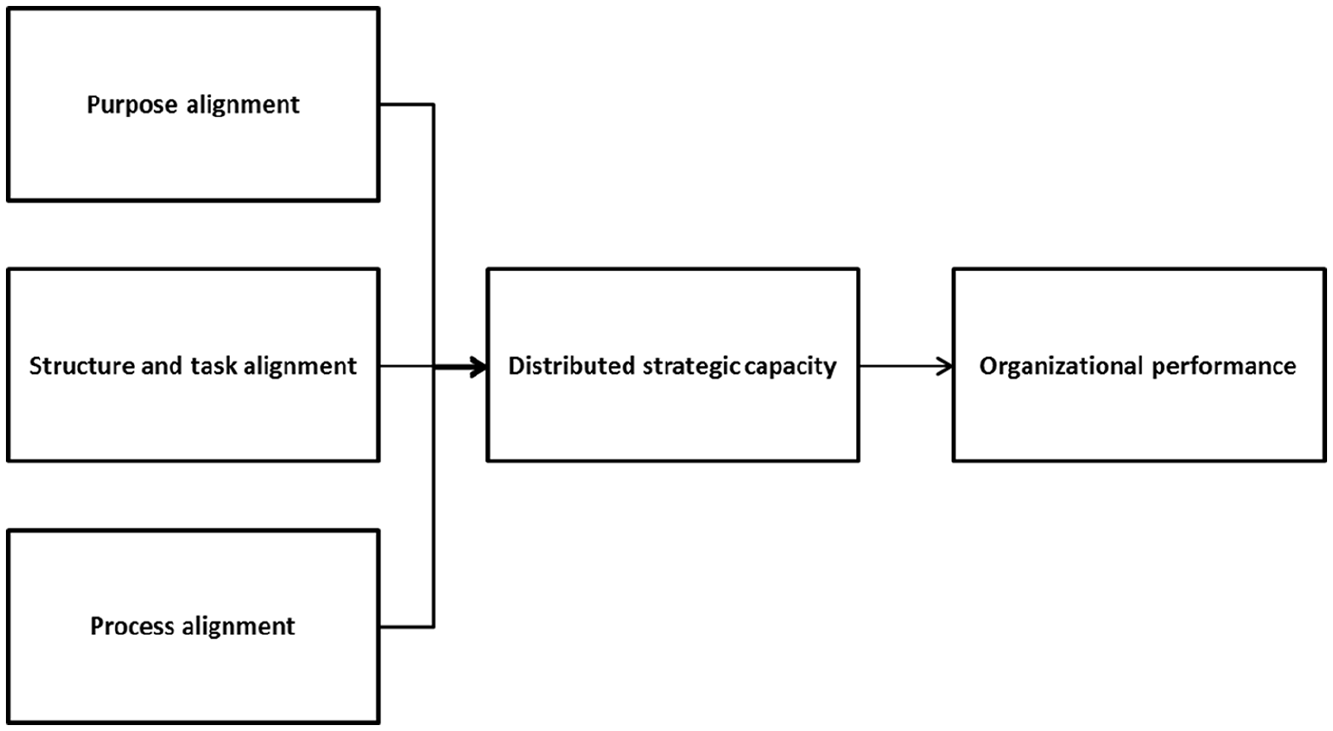
Initial framework to assess strategic capacity based on existing literature.
Strategic Capacity in the Era of Networked Governance
The formal, hierarchical, and standardized bureaucracies of the traditional public administration paradigm are poorly suited to the present era’s complexity and dynamism. As such, the shifts to the paradigms of New Public Management and more recently Networked Governance suggest the need for public sector organizations with greater strategic capacity (Bryson & Roering, 1987; Dickinson, 2016; Nutt & Backoff, 1987; Osborne, 2006; Poister, 2010; Poister & Streib, 1999; Van der Steen et al., 2018).
Scholars also acknowledge that these new philosophies of government require public servants with a different set of competencies across the organization, many of which echo Ganz’ definition of an organization and its leadership’s strategic capacity (Kruyen & Van Genugten 2019; Needham & Mangan, 2014; Noordegraaf et al., 2014; Parker & Bradley, 2000). There is increasing consensus amongst public HR theorists that organizations that hope to work effectively in networks need to staff individuals with collaborative competencies in critical networked positions and focus on building the requisite skills. These include the ability to think strategically, openness and respectfulness toward colleagues, and strong group facilitation skills (Getha-Taylor, 2008; Getha-Taylor et al., 2016; O’Leary et al., 2012). Similar concepts have been laid out by several authors, including “work-related creativity” (Kruyen & Van Genugten, 2019), “innovative work behaviors” (Wynen et al., 2019), and “creative abilities” (Acar & Runco, 2012).
The strategic management literature also concludes that strategy today stems not only from top-down strategy formation processes, but also from “bottom-up” processes that utilize the strategic capabilities of employees at lower hierarchal levels of an organization. Andersen’s (2004) conception of “decentralized strategy” identifies two means through which employees influence organizational strategy. First, employees can be allowed to participate in an organization’s strategic decision-making processes. Alternatively, they can be granted a degree of decision-making autonomy through “distributed decision authority” (Andersen, 2004). Literature on “emergent strategy” formation also describes how employees (should) engage in activities that promote the integration of their own “autonomous strategic behaviors” into the organization’s realized strategy (Mirabeau & Maguire, 2014). Despite the clear relevance of these “bottom-up” processes to an organization’s capacity for strategy, existing scholarship inadequately incorporates the role of lower-level employees as co-shapers of organizational strategy.
Defining and Assessing “Distributed Strategic Capacity”
It is clear that Ganz (2000) and other authors traditionally conceived of strategic capacity as a team or organization-level phenomenon, not an individual phenomenon. With the changing shape of the public sector, roles and responsibilities shift not just around organizations, but also within organizations. The more government embraces a new repertoire of institutional configurations to produce public value, the more it relies on public servants who possess the creative skills to conceive, design, broker, manage, and evaluate these arrangements (O’Leary et al., 2012); skills otherwise coined as collaborative competencies (Getha-Taylor, 2008). If employees across the organization are expected to do this, top management and HRM should not merely assess strategic capacity of the organization in general and wholesale, but approach the subject in a more granular way, zooming in on the distribution of this capacity across the organization. To that end we introduce the concept of distributed strategic capacity. We define distributed strategic capacity as the extent to which lower-level employees are equipped and empowered to engage in organizational strategizing.
Van der Steen et al. (2018) find that a majority of civil servants continue to adhere to traditional values to define good civil service, including taking direction from leadership, not taking risks and diligently completing tasks. Values associated with new forms of governance, including networking, citizen self-organization, and civil servant entrepreneurship are less valued by civil servants. This reluctance to engage in the type of work associated with networked governance presents a challenge for organizations: creating distributed strategic capacity can be a matter of both skill and will. This is reflected in our definition of the concept: assessment should focus on the extent to which lower level employees are equipped (with skills and tools) and empowered (encouraged, incentivized, enabled).
We take the initial framework for assessing strategic capacity derived from the existing literature (Figure 1) as a starting point for assessing distributed strategic capacity. An important question that emerges is whether alignment on each of the three dimensions in this model based on existing literature ultimately leads to distributed strategic capacity for organizations in new networked governance settings, or whether these conditions are necessary but ultimately not sufficient—given they were designed with more traditional organizational set-ups in mind. The research presented here uses this conceptual model as a heuristic device to examine case study findings and reflect on the merits and limits of current knowledge.
Research Case and Methodology
To explore the extent to which this conceptual model is an effective tool to assess an organization’s distributed strategic capacity, we used a participatory action research approach with a mixed-methods case study (Greenwood & Levin, 2007; Yin, 2013). Researchers and practitioners worked closely together to create the opportunity to observe organizational realities from up-close and generate data for the research as well as insights that might benefit practice. The positionality of the research team can be characterized as outsiders working with insiders and interpretive biases were mitigated by several rounds of coding and probing in reflective spirals (De Jong, 2016; Herr & Anderson, 2005). The organization in the study, Directie Burgerschap en Informatiebeleid (Division of Citizenship and Information policy) is responsible for managing the information-based interactions between government and citizens. It exemplifies the tensions inherent in the transition from government to governance. The division has 110 employees divided over three distinct units with related but different policy responsibilities and stakeholder environments. One unit is charged with rethinking and redesigning interactions between government and citizens (from democratic participation to client encounters). Another unit is responsible for administering identity documents and the legal, technical, and administrative infrastructure to process identity cards and passports. The third unit deals with questions regarding information exchanges between governmental agencies and between governments and citizens. It is responsible for shaping government policy on information security, privacy, and the efficient and effective use of data. All units operate in a context of rapid technological change, heterogeneous and dynamic stakeholder environments, increasing public expectations about performance, unstable political preferences, and increasingly scarce resources because of austerity measures.
The organization’s professional staff of 110 people is a balanced mix of policy advisors, IT experts, legal experts, and various generalists. With the exception of the support staff, all employees have Master’s degrees. All employees were hired based on formal criteria for skills and expertise and are subject to annual performance reviews. At the time of study, job satisfaction was relatively high compared to other divisions, but employees also reported chronic unmanageable workloads.
Data Collection
Data collection took place over a 6-month period, beginning with observations of professional development learning sessions and following up with interviews and surveys. The learning sessions took place at the request of the agency’s management team, concerned that day-to-day operations were not yet aligned with the organizational mission and goals. The sessions involved all policy-making employees, including the division’s employees, middle management and unit heads, following four interactive, custom-made “dilemma case”-based learning sessions, which we facilitated.
To assess distributed strategic capacity, we selected “dilemma cases” from approximately 20 policy issues based on the following criteria: (1) essential to the mission, (2) emblematic of the transition from (top down) government to (collaborative) governance, (3) lacking clarity and/or consensus about best course of action, (4) covering a range of common strategic challenges, and (5) requiring group action. The cases were developed based on in-depth case studies using the Harvard case method, in which each case features a protagonist facing a strategic challenge and asks readers to explain what they would do in the protagonist’s position. For example, one revolved around a public employee’s challenge to make citizen data sets more transparent. We hoped that these cases would reveal how employees interpret and respond to strategic challenges and provide an opportunity to reflect on the larger context with their colleagues and management—enabling us to explore the extent of presence of the enabling conditions for strategic capacity synthesized in the literature review.
When studying the responses to professional development programs, it is important to collect data in at least two stages: immediately following the sessions and months later to better understand lasting outcomes (Getha-Taylor & Morse, 2013; Kirkpatrick & Kirkpatrick, 2006; Watad & Ospina, 1999). Kirkpatrick and Kirkpatrick (2006) note that while it is imperative to collect immediate reactions, this is only a basic level of understanding. Following up months later captures longer term outcomes and shifts in attitudes, understanding, and behavior.
In line with these recommendations, we followed a two-staged process intended to develop a single rich case study designed for theory-building. We captured five of the six possible data sources for single case studies identified by Yin (2013). These include:
Given the nature of this case study, we did not collect any physical artifacts, Yin’s final data source.
Data analysis
To interpret these data sources, we used a qualitative research design rooted in grounded theory. Consistent with this methodology, we viewed analysis not as a “structured, static, or rigid process,” but rather “a free-flowing and creative one in which [we] moved quickly back and forth between types of coding” (Corbin & Strauss, 1998, p. 58). In practice, this led to an iterative process of theory development through data-gathering and data interpretation. Through these iterations, we refined our view of the organization’s distributed strategic capacity strengths and deficits, and the extent to which the original framework to assess strategic capacity could capture these. As a form of participatory action research, this study had the advantage of making up-close observations of real world dynamics and engaging practitioners in the interpretive process. In order to mitigate biases, we explicitly considered where and how these might occure in this collaboration of “outsiders with insiders” and we probed interpretations heavily during each iteration by perspective-taking and staying close to the empirical data.
George and Bennett’s (2005) view on theory development from case studies is that “the most convincing procedure is often to develop an explanation from data in the case and then test it against other evidence in the case” (p. 112). We built on this principle by moving back and forth through four distinct stages of analysis:
Open coding of preliminary data (documentation, records, and observations) to formulate our research question and develop initial categories of relevant phenomena;
Continuous refinement of the identified categories through re-interpretation of existing data and gathering of additional data through interviews and surveys including explicit probing of biases;
Integration of the refined categories and development of theory in individual research memos; and
Formulation of integrated theory and conceptual model by counter-coding of individual research memos to extract common interpretations and reconcile opposing views. The categories in the individual research memos had ~85% inter-coder reliability.
Findings
Discussions of the four dilemma cases prompted participating employees to reveal their default responses, articulate their thinking, reflect on each other’s responses, and express their questions and concerns. The results confirmed a picture of an organization coping with various strategic challenges associated with the shift from government to governance and struggling to realize a new operational model better aligned with the enabling conditions for distributed strategic capacity.
Assessment of Organization’s Distributed Strategic Capacity against Existing Framework
We used the conceptual model presented in the first section of this article to organize the findings. The application of this framework revealed two main findings: insights regarding the strategic capacity of this particular organization along all three dimensions derived from the literature and, more importantly for the purposes of this article, insights into the merits and limitations of assessing distributed strategic capacity utilizing the framework for strategic capacity.
Purpose alignment
From the outset, the organization appeared to be implementing the common principles of purpose alignment as described in the literature. First of all, the organization’s mission statement reflected its dependence on other actors to achieve its goals and formed the basis of most policy and strategy discussions between employees and management. The organization also made efforts to align its human resources management, incentive structures, and operational processes with the various goals of a relatively large organization. For instance, it heavily encouraged employees to make important decisions in collaboration with other organizations through inter-organizational steering meetings.
Despite these efforts, many employees expressed a lack of clear and explicit guidance on how to operationalize the mission on a daily basis. Fourteen out of fifty participant survey respondents said the “Management Team does not use [strategic] terminology itself and doesn’t steer based on it.” These difficulties may be attributed to the absence of a sound, explicit theory of change. Very few employees and managers were able to articulate the links between the mission and the required resources, activities, and outputs for their units. The mission seemed too abstract for translation into concrete cultural behaviors and actions. While the mission helped to motivate internal and external stakeholders and inform organizational design and alignment at a high level, it did not give employees the common language, compass, or guidelines to help them make decisions about the distribution of their attention and resources. From a strategic human resource management point of view, this suggests there was a need either for increased strategic competency in lower-level employees to bridge the gap between mission and practice themselves or for a more detailed mission statement, a clearer theory of change and an articulation of how all parts of the organization contribute to the mission.
Structure and task alignment
Case discussions revealed a wide range in employees’ analytic and strategic skills and collaborative competencies (openness to novel perspectives, capacity for abstract thinking, diagnostic capacity, analytic strength, and ability to think innovatively). While the management had initially made deliberate decisions about where to place each employee based on their perceived contribution to the mission, it became clear to management and employees alike that individual portfolios may not have evolved sufficiently in line with changing priorities and the strategic capabilities of employees—that is, the match between tasks and talents was not optimal anymore. One management team member said he “would like to re-assign tasks based on employees’ strategic capabilities, but at the moment this happens very rarely.”
Survey results confirmed that strategic capabilities were an afterthought in the assignment of tasks on an ongoing basis. In most instances, tasks were assigned based on individuals’ traditional roles and expertise, regardless of the strategic nature of the tasks. If and when employees faced strategic issues, management would typically step in and help out or even take over. Although understandable in urgent situations, this perpetuated a tradition of strategic decision-making at the top. In our group interview with the management team (MT), this was described as follows: “The MT does not typically give back the work: this could create an interaction pattern where the employees ask, and MT responds.” In this sense, the lack of task alignment led not only to the under-utilization of employees’ strategic capabilities, but also to an environment where the use of strategic capabilities “on the floor” was in fact—though not by intent—discouraged.
Process alignment
As with the categories of purpose and structure & task alignment, top management recognized the need to focus more explicitly on how processes for collaborating with other stakeholders would produce desired social outcomes. Occasionally there were opportunities for division managers to meet with other departments or political superiors and discuss fundamental questions regarding desired social outcomes, and roles and responsibilities of various stakeholders in the pursuit of these goals. These efforts, however, often did not include lower-level employees and did not seem to affect employees’ day-to-day use of their strategic capabilities in concrete situations afterwards.
In essence, the management had not sufficiently provided employees with tools, guidelines, or frameworks to operationalize their well-intended aspirations and ensure alignment between broader strategic notions and ongoing operations. In fact, when participants were surveyed about their preference amongst nine potential interventions, 23 out of 50 responded that alignment of processes, conversations, meetings, and documentation would be the most effective intervention to put strategic capacity in practice at lower levels of the organization. Many employees, however, suggested that this misalignment between the strategy development processes and other business processes was the result not only of process misalignment, but also the lack of time and space available for strategic reflection in their daily work. A participant in one of the case sessions described it as being “too busy to think,” mentioning that they were always running to get the next output-oriented task done.
Another dominant belief was that management sustained fire-fighting habits by prioritizing the completion of tasks over strategic analysis. As one employee explained, “strategic long-term thinking often yields to the stress of the day.” When asked in the case sessions what a more structured approach to aligning work and feedback processes would look like, many employees suggested that a shared vocabulary or framework and a different kind of interaction between management and employees would be essential, but few had concrete suggestions as to what this would look like and none of the employees brought up individual performance appraisals as an opportunity for reflection on—and appreciation of—one’s strategic capabilities.
One particular example brings this in-practice process misalignment to life: While employees’ participation in the case discussions was mandatory and formally recognized as part of their training requirements, processes for reviewing their annual performance gave little attention to their strategic capabilities. End-of-cycle performance reviews mainly focused on the output objectives agreed upon by the management and the employees in question at the beginning of the cycle, as is common in traditional public agencies. While management verbally encouraged personal initiative, independence, and critical thinking—for example, some employees were explicitly commended for their strategic work by (top) management in public speeches—these were rarely formally recognized in the review and reward process. There was a perception among employees that strategic reflection would be a time-consuming process that would keep them from achieving the daily results on which they were actually evaluated. In their own words during one of the case sessions, “We are evaluated based on our productivity in the short term; not on our strategic capabilities in the long term.”
Additional Enabling Conditions for Distributed Strategic Capacity Uncovered
As the above reveals, while the organization appeared to be transitioning to meet the basic conditions for employees to act and think strategically, theoretically ticking the boxes of the dimensions of the traditional way of thinking about strategic alignment, in practice there was little operationalization of distributed strategic capacity. Employees continued to view developing strategic capacity as a second priority. The case discussions forced participants to locate the source of the discrepancy between the actual and desired level of distributed strategic capacity in the organization. While there was certainly room for the organization to improve its purpose, task, and process alignment, these discussions combined with practical observations and subsequent interviews and surveys revealed two further forms of alignment necessary for assessing strategic capacity in its distributed form: alignment of strategic reflection and demands of the day and alignment of vertical and horizontal orientations.
Alignment of strategic reflection and demands of the day
Although no one seemed to dispute the organizational mission, there was no priority given to strategic thinking at the level of concrete projects to pursue this mission. On one hand, official guidance from the top stressed the importance of developing distributed strategic capacity. On the other, management de-prioritized the concept in their daily interaction with employees and stressed the importance of fulfilling daily tasks amidst a flood of political demands. In fact, 21 out of 50 participant survey respondents said they were “too busy [in their daily jobs] for reflection, practice, discussion, reviewing.”
Top managers were aware of this discrepancy but made little concerted effort to align mid-level managers’ behavior with their aspirations for distributing strategic capacity. Interestingly, in the survey we gave to top managers, all but one moderately disagreed with the statement that they would “give employees more room and space to put their strategic capacity in practice.” Thus, top managers professed distributed strategic capacity and the rank-and-file carried on with business as usual, creating ever increasing skepticism toward the concept. In one interview, an employee explained: “Will strategizing ever make sense given the fact that we will always have insufficient authority, time, and resources to do what we need or want to do? Will it make sense to do it if the top is not visibly doing anything different themselves?” Evidently, the prevalent mindset was an “either/or” approach to strategizing. As mentioned above, employees often felt “too busy to think.” This is consistent with research that indicates when public employees feel under siege from seemingly endless demands, they rely on traditional, rigid bureaucratic structures and processes (Wynen et al., 2019). Rather than using the strategic imperative to pause and reflect on the fact that the organization as a whole seemed to be overwhelmed, strategizing was seen as yet another task added on top of an already long “to-do” list.
Alignment of vertical and horizontal orientations
Ultimately, the issue that was most clearly limiting employees to engage in strategizing was disorientation. Most employees perceived an ambiguity about what should be guiding their actions: serving political demands or serving society. There was a tension—which Agranoff and McGuire (2001) have described as the dualism of network power—between serving the needs of political executives and working with the broader network of stakeholders who demanded a more long-term orientation toward meaningful results for the public. In the case sessions, employees characterized this tension as “paralyzing.” They were “pulled in two different directions”—torn between the conventional vertical orientation with its clear accountability relationship to political superiors and the horizontal orientation toward a network of stakeholders and the public at large. Because of this tension, the employees were ambivalent about their own roles. Most of them perceived creating public value through their work as dedicated public servants as their ultimate goal, but found it hard to reconcile this goal with the pressure to answer parliamentary inquiries on a daily basis. One employee said: “We can’t strategize all the time, because we also have orders to follow and politicians to answer to.”
There is a certain paradox inherent in this disorientation: while their old and new roles seem to have conflicting demands, it is exactly the kind of strategic thinking and action their new role demands that could help them to resolve this apparent paradox. The old role, however, keeps the organization in a reactive state, leaving no time and space to transition into their new role. Successful implementation of new creative and innovative ideas depends on inter-divisional and inter-organizational collaboration and cooperation (Kim & Yoo, 2015; Lim et al., 2017; Tompkins, 2002). It became overwhelmingly clear in the case discussions that unless management could give clearer guidance and realign orientation externally, while providing physical and temporal space for creative strategic behavior, employees were not likely to engage.
Impact on Organizational Performance and Implications for HRM
Overall, we observed an organization that managed to deliver on its core outputs—including administering identity documents and the legal, technical, and administrative infrastructure to process and produce identity cards and passports. Yet, the organization struggled to engage its employees effectively in the more strategic tasks which were a core part of its mission—including rethinking and redesigning interactions between government and citizens (from democratic participation to client encounters). As a result, it failed to position itself in the institutional environment as the effective broker of networked governance it aspired to be. It performed the technical tasks that were within its scope of control well, but did not meet its own expectations with regards to the tasks that relied on productive horizontal relationships with other entities.
Our proposition is that the link between the misalignment described in the results section contributed to the observed organizational outcomes. The absence of enabling conditions for distributed strategic capacity as articulated in the framework and the fact that employees of the organization explicitly attributed the organization’s performance challenges to this absence support this proposition. Additionally, the richness of the data allowed us to identify and articulate two enabling conditions for distributed strategic capacity that did not fit within the traditional three-part framework for assessing strategic capacity: (1) alignment between strategic reflection and demands-of-the-day and (2) alignment between vertical and horizontal accountability. Interviews revealed that the lack of the former demotivated the employees from seriously engaging in part of the strategic work the organization was responsible for, while a lack of the latter caused further disorientation on how to even engage in this strategic work if they had wanted to. The result was a more traditionally output-oriented organization than had been intended or enshrined in its mission.
In Table 1, the basic dimensions from the literature and the dimensions identified through the case study are integrated into a new version of the conceptual framework to measure distributed strategic capacity, giving HR departments a compass to ensure enabling conditions are in place for distributed strategic capacity to thrive in today’s networked governance settings. This new framework represents our attempt to reconcile the concept of strategic capacity with the nature of networked governance. While the framework describes the barriers to distributed strategic capacity for the organization observed in this article, the framework must be applied to other organizations in order to determine its generalizability. Indeed, it is possible that new organizational contexts may identify additional enabling conditions not present in the organization we studied.
New Framework to Assess Distributed Strategic Capacity.
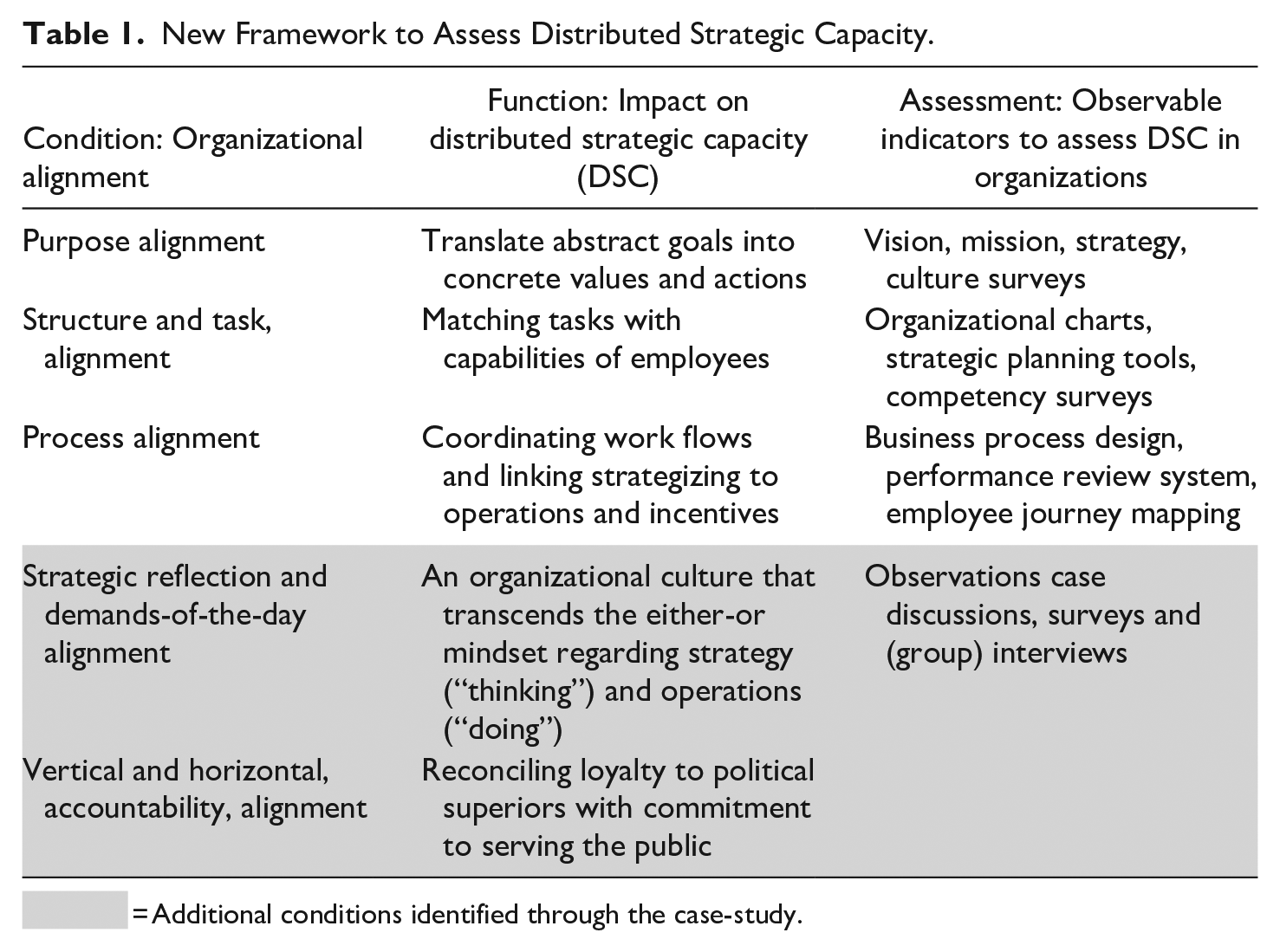
 = Additional conditions identified through the case-study.
Conclusion and Discussion
Public sector organizations that adopt a networked governance approach to public management face strategic challenges around coordinating and collaborating with various stakeholders. To meet those challenges effectively, strategic capacity must exist throughout the organization. The research presented in this article explored the question of what distributed strategic capacity means and how it can be enabled and assessed. Beginning with a conceptual model based on the existing academic literature, we identified three enabling conditions that support strategic capacity: purpose alignment, structure and task alignment, and process alignment. We then demonstrated the need to adjust the concept of strategic capacity for networked governance contexts, introducing the concept of distributed strategic capacity. The case study showed impediments to distributed strategic capacity that are distinct from the three categories of alignment existing scholarship has linked to strategic capacity. Therefore, we suggest that at least two additional forms of alignment are necessary for distributed strategic capacity in today’s networked organizations: alignment between strategic reflection and day-to-day demands and alignment between the vertical orientation toward political superiors and the horizontal orientation toward stakeholders.
This article contributes to the fields of organization development and HRM by providing a novel way to define and assess the concept of strategic capacity, essential in today’s public sector transition from government to networked governance. The model developed suggests relevant sources of data for each of the categories, including the novel approach to assessing organizations’ ability to deal with friction and competing commitments through facilitated discussions of “dilemma cases.”
The article’s findings suggest several areas of focus for human resource managers in transitioning their workforce from the paradigm of traditional public administration to that of networked governance. The findings related to purpose, structure and task, and process alignment suggest that employees in a networked governance context may benefit from a better understanding of their organization’s theory of change; from staffing decisions that better match tasks with employee’s strategic capabilities; and from explicit processes, compensation, and performance appraisal systems that reflect the importance of strategic capacity. More research is needed on the subject of how HRM practices can help translate an organization’s mission and theory of change into concrete implications on the roles and responsibilities of employees. Another worthwhile research avenue could be the exploration of how to properly incentivize and evaluate competencies linked to strategic capacity in lower-level employees, starting to tackle the intricate question of how to monitor this intangible concept, and how to tradeoff incentivizing between an employee focus on output completion versus development competencies such as collaborative competencies.
The uncovering of two enabling conditions specific to enhancing the strategic capacity of lower-level employees, moreover, provides areas of focus especially relevant for human resource managers in networked governance contexts. They suggest that human resource managers working to develop new employee capabilities must also create the time and space for these new capabilities to be utilized in day to day operations. Moreover, they underscore the importance of aligning the demands of an organization’s vertical hierarchy with the demands of horizontally connected external stakeholders: cross-boundary collaboration calls for organizational practices that support employees in dealing with the inherent paradoxes of the work (Waardenburg, Groeneer, de Jong, Keijser, 2019; Waardenburg, Groeneer, de Jong, 2019).
Overall, these findings highlight the expanded challenge for human resource managers in achieving distributed strategic capacity. We find that alignment mechanisms such as mission statements, task assignment and delegation, and various work processes may require adjustment if they are to effectively guide strategy in both senior- and lower-level employees in networked organizations. In addition, new alignment mechanisms like alignment of demands of the day with strategic reflections and alignment of the hierarchical structure with an increasing outward-orientation are becoming more critical. Indeed, this article suggests that networked governance contexts may demand heightened transparency, mission clarity and translation into concrete implications for employees from senior leaders and human resource managers if they are to enable distributed strategic capacity in their subordinates, which involve explicit tradeoffs for an organization. Left unsettled or undiscussed, these trade-offs cause friction and frustration amongst employees. Future research should further investigate the dynamics of leadership and change management in moving organizations from conventional HRM approaches toward a Strategic Human Resource Management (SHRM) aligned with the networked governance paradigm. The challenges facing human resource managers as they work to adapt organizations to respond and succeed in increasingly complex environments are immense. The new concept of distributed strategic capacity provides a terminology and with it a necessary focus for future research on HRM in networked governance.
Limitations and Directions for Future Research
The research approach involved taking concrete dilemmas from the organization’s own practice as a point of departure for a comprehensive assessment of distributed strategic capacity. Our context-specific, exploratory, qualitative study in the participatory action research tradition enabled us to dig deep into the underlying reasons for misalignment in the organization that was the object of study and develop an assessment framework that was sensitive to its particular challenges regarding networked governance. Conclusions drawn are therefore inherently specific to this particular context. Additionally, despite efforts to mitigate bias, the collaboration of outsiders with insiders may have influenced the interpretation of the data. In order to find out if this framework is suitable for other organizations, the findings should be tested in other contexts. Research suggests that collaborative styles and critical conditions for successful collaboration can differ considerably in different situations (Cunningham et al., 2009).
In addition, the 6-month timeframe for the case study may have limited our understanding of causal pathways and nuances within the organization studied in the long run, raising the need for further longitudinal research on how strategic capacity develops sustainably in the long run and can be assessed effectively. We also limited the analysis of distributed strategic capacity to an organizational condition or a characteristic; instead of an independent variable in a causal relationship with, for example, organizational performance or social outcomes. Future research might explore such causal pathways and may comprise (quasi-) experimental research: designing interventions, such as techniques to implement the identified enabling conditions for distributed strategic capacity and testing their impact on organizational performance.
Finally, it is worth considering broader questions surrounding the concept of distributed strategic capacity in a networked governance context in future research. For example, do all minds really need to be on deck or is there an optimal distribution of strategic capacity in the organization? If all minds are on deck, will there be convergence or will there be too many captains steering in different directions? Is it possible to improve distributed strategic capacity simply by aligning different elements in the organization, or will increasing distributed strategic capacity require a different kind of employee with different capacities? And to what extent should the organization’s partners and stakeholders be brought into the process of strategic reflection? To answer these questions, future research will need to assess the existing distributed strategic capacity of organizations in light of their particular strategic challenges. The conceptual model and assessment framework presented here provide a starting point to explore these broader set of questions.
Footnotes
Declaration of Conflicting Interests
The author(s) declared no potential conflicts of interest with respect to the research, authorship, and/or publication of this article.
Funding
The authors disclosed receipt of the following financial support for the research, authorship, and/or publication of this article: The Bloomberg Harvard City Leadership Initiative, funded by Bloomberg Philanthropies provided support for research assistance and publication.
