




Abstract
This three-part investigation contextualizes the Positive Youth Development framework within educational settings through the Academic Positive Youth Development (A-PYD) scale, a measure designed to assess the 5Cs—competence, confidence, connection, character, and compassion—among students. Across three studies, the 15-item A-PYD scale demonstrated robust psychometric properties, with a consistent five-factor structure supported by exploratory and confirmatory factor analyses. Study 1 (n = 863 Filipino undergraduates) established measurement invariance across gender and socio-economic status, while Study 2 (n = 581 Filipino secondary and undergraduate students) confirmed invariance across educational levels and linked the 5Cs to key psychological (anxiety, depression, and resilience) and academic outcomes (intrinsic motivation, extrinsic motivation, and amotivation). Study 3 (n = 614 Filipino and mainland Chinese undergraduates) extended these findings, demonstrating cross-cultural invariance and exploring the role of growth mindset in promoting the 5Cs. Together, these results underscore the A-PYD scale’s utility as a practical tool for educational researchers and practitioners in identifying and nurturing student strengths across diverse academic settings. Limitations and future directions are discussed.
Positive Youth Development (PYD) has gained prominence as a framework for understanding youth well-being and thriving beyond addressing deficits (Lerner et al., 2010; Wiium & Ferrer-Wreder, 2026). The 5Cs model of PYD emphasizes the importance of competence, confidence, connection, character, and compassion in fostering optimal developmental outcomes (Lerner et al., 2005). However, past research has generally conceptualized and measured these dimensions in broad terms (Geldhof et al., 2014), without considering their specific relevance to key developmental settings such as schools. Developmental frameworks and measures should be tailored to particular contexts to ensure their relevance and applicability (Bornstein, 2017). The current study addresses this gap by proposing the Academic Positive Youth Development (A-PYD) scale, which situates the 5Cs within students’ educational experiences.
Guided by the Interpretation/Use Argument (IUA) framework (Kane, 2013), the A-PYD scale was developed to support interpretations of students’ academic strengths and to inform educational research and practice aimed at promoting student thriving in educational settings. This three-part investigation examined the psychometric properties of the A-PYD scale, testing its invariance across gender, socio-economic status, educational level, and country-of-origin, while examining its criterion-related validity with psychological and academic outcomes among secondary school and undergraduate students in two collectivistic settings—the Philippines and mainland China. This integrated approach aims to establish a more contextually specific and robust measure of thriving in educational settings.
The 5Cs Model of Positive Youth Development
Positive Youth Development (PYD) has emerged as an influential framework in developmental sciences, offering an alternative perspective to traditional deficit-based models (Wiium & Ferrer-Wreder, 2026). This approach has generated considerable traction from researchers and practitioners in various fields such as developmental psychology, social work, and education (Buenconsejo & Datu, 2021). The PYD framework is underpinned by several models that aim to conceptualize and measure youth thriving, including the 40 developmental assets framework, the 15 PYD constructs, and the 5Cs model (see Buenconsejo & Datu (2022) for a review of these models). Among these, the 5Cs model (Lerner et al., 2010) stands out due to its empirical support and conceptual parsimony, making it a widely adopted model of PYD among youth researchers and practitioners (Buenconsejo & Datu, 2022).
The 5Cs model characterizes youth thriving by five interrelated yet distinct dimensions: competence, confidence, connection, character, and compassion (Lerner et al., 2010). Specifically, competence refers to a positive perception of one’s abilities in domain-specific areas such as academics, career aspirations, cognitive skills, and social competencies. Confidence is a generalized sense of self-worth and self-efficacy that is not limited to specific areas captured by competence. Connection includes having positive, supportive, and mutually beneficial relationships with family, peers, teachers, and community members. Character reflects an individual’s adherence to ethical principles, including integrity, respect for societal and cultural norms, and the development of a personal moral compass. Lastly, compassion or caring, involves the capacity for sympathy, empathy, and concern for the well-being of others (Geldhof et al., 2014; Lerner et al., 2010).
Despite extensive research supporting the 5Cs model, a key research gap remains: the need to contextualize these dimensions within specific developmental settings, particularly educational contexts. Given the significant amount of time young people spend in schools and universities, interacting with teachers, peers, and mentors, it is crucial to explore how the 5Cs manifest and contribute to thriving within educational environments (Kozina et al., 2019). Schools are not only sites for academic achievement but also critical spaces where social and emotional development can occur (Domitrovich et al., 2022; Jeynes, 2019). Thus, understanding how the 5Cs function in these contexts can provide valuable insights into how educational institutions can better support students’ holistic growth and well-being.
Current Measures and Models of the 5Cs
Several instruments have been developed to measure the 5Cs of PYD, with earlier measures focusing on assessing these dimensions among participants of youth programs in North America. For example, the original 78- to 83-item survey developed by Lerner and colleagues (2005) included items sourced from different scales and was intended for use in the 4-H program in the U.S. While comprehensive, these tools were lengthy and less practical for researchers. To address this, subsequent measures, such as the 55-item PYD inventory (Arnold et al., 2012), the 40-item Bridge-PYD scale (Lopez et al., 2014), as well as the 34-item short and 17-item very short measures of PYD (Geldhof et al., 2014) were developed to assess the 5Cs. However, these measures largely focused on the general assessment of the 5Cs (e.g., measuring academic, social, and physical competence altogether), without tailoring the questions to specific environments or settings wherein youth development occurs.
Along with the development of these instruments, researchers have also examined competing measurement models of the 5Cs: the one-factor model (Figure 1A), where all items load onto a general PYD construct; the five-factor model (Figure 1B), which includes each of the 5Cs as distinct but interrelated latent constructs; the higher-order model (Figure 1C), where the 5Cs serve as first-order factors that converge to form a general PYD construct; and the bi-factor model (Figure 1D), which allows for both a general PYD factor and specific variances for each of the 5Cs independent of the general construct (Geldhof et al., 2014). Although there have been advancements in the conceptualization and measurement 5Cs model of PYD, its instruments and measurement models have focused on general thriving characteristics, often overlooking the specific contexts where youth thriving occurs. In educational settings, the expression of the 5Cs may differ due to factors like academic challenges, peer relationships, or teacher–student interactions. Developing an instrument that specifically examines how the 5Cs manifest in the academic context is critical for advancing PYD research in schools. (A) One-factor model of the 5Cs of Academic Positive Youth Development. (B) Five-factor model of the 5Cs of Academic Positive Youth Development. (C) Higher-order model of the 5Cs of Academic Positive Youth Development. (D) Bi-factor model of the 5Cs of Academic Positive Youth Development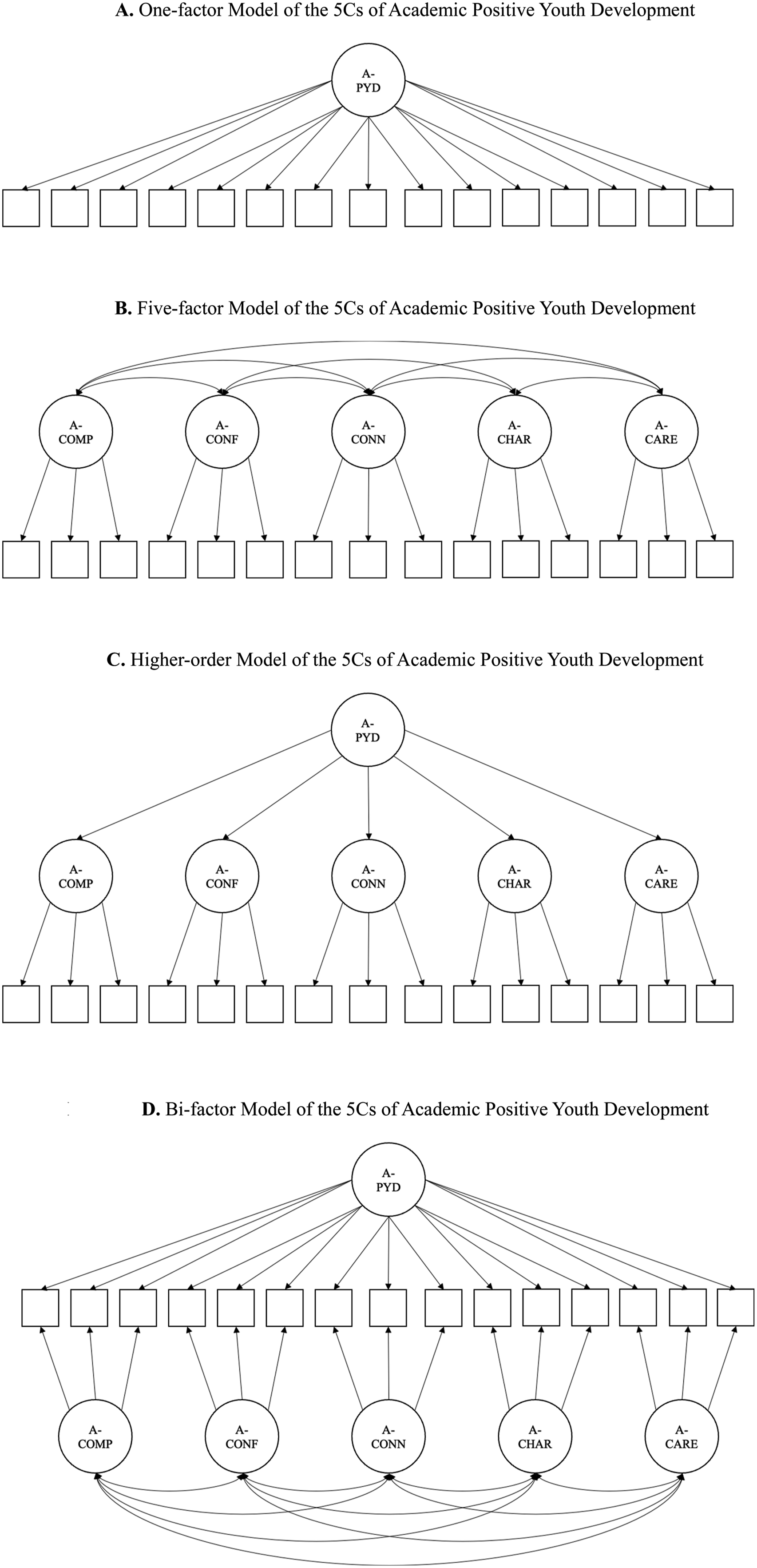
Contextualizing the 5Cs Within the Educational Setting
Given that the 5Cs model was originally conceptualized to capture thriving in broad life domains, adopting an asset-based approach within the educational context requires distinguishing how these constructs operate specifically in the school setting. A substantial body of research indicates the value of contextualizing the 5Cs within students’ achievement, motivation, well-being, and behavior through dimensions like academic competence, confidence, connection, character, and compassion (Honicke & Broadbent, 2016; Jeynes, 2019; Kirby et al., 2023). Examining these concepts as they relate to students’ learning experiences, relationships at school, and educational development provides insight into measuring PYD dimensions that are specifically tailored for learning environments.
Academic competence is a critical dimension of thriving, serving as a foundational psychological need essential for academic success (Ryan & Moller, 2017). Students who perceive themselves as competent in academic settings are more likely to engage in behaviors that foster further development of their academic abilities (Duchesne & Larose, 2018; Trautwein et al., 2009). Longitudinal studies also reveal that academic competence predicts positive academic goals and performance (Duchesne & Larose, 2018). Unlike general forms of competence, academic competence specifically focuses on students’ sense of adequacy and mastery specifically in school-related tasks, including classroom learning, task performance, and participation in academic activities. By distinguishing academic competence from other forms of competence, researchers and educators can accurately assess and support students’ development.
Academic confidence plays a crucial role in promoting optimal school-related outcomes, and has consistently been linked to academic success across primary, secondary, and university levels (Honicke & Broadbent, 2016). Research shows that students with higher academic confidence are more likely to exhibit persistence, adopt goal-oriented behaviors, and engage in deeper learning processes (Ferla et al., 2010). Academic confidence has also been associated with positive psychological outcomes (Kristensen et al., 2023). Compared to academic competence, which focuses on students’ current perception of specific abilities, academic confidence pertains to their general belief in their capability to succeed in future academic challenges, regardless of past school performance. This belief is not tied to specific achievements but represents a global sense of self-efficacy, reflecting an internalized sense of self-worth and agency as a learner (Bandura, 2012). Thus, academic confidence is expected to influence not only current academic behavior but also students’ long-term academic motivation in the face of future challenges.
Academic connection refers to the positive and supportive relationships that students form with individuals in their school community. In the 5Cs model, connection is understood as the quality of relationships across various contexts, including family, school, and the broader community (Lerner et al., 2010). However, the nature and impact of relationships in different settings—such as parents versus teachers—can vary significantly (Guay et al., 2017). Research has shown that these relationships play a pivotal role in shaping student outcomes, with studies highlighting how distinct social environments affect academic and psychological functioning (Korpershoek et al., 2020; Yu et al., 2023). In the current study, academic connection was conceptualized as a student’s sense of social inclusion and support within the school environment. It involves feeling accepted, valued, and understood by teachers, peers, and classmates. Research shows that students who experience academic connection are more likely to feel encouraged, supported, and integrated into their school community, ultimately promoting optimal functioning (Guay et al., 2017).
Academic character encompasses a moral sense of right and wrong, as well as the responsibility to uphold ethical conduct in the school environment. Students with high academic character demonstrate accountability for their actions (Jeynes, 2019). They internalize principles of honesty, integrity, and ethical behavior, particularly when it comes to schoolwork, learning, and assessments (Miller et al., 2011). A key aspect of academic character is the ability to appreciate and respect diverse perspectives, learning styles, and backgrounds, promoting tolerance and inclusivity within the educational setting (Jeynes, 2019; Seider et al., 2013). Research shows that academic character is linked to higher academic performance, improved psychological well-being, as well as reduced instances of bullying and academic dishonesty (Seider et al., 2013). Together, these findings emphasize the importance of nurturing academic character, as it contributes not only to students’ academic success but also to their moral and social development.
Academic compassion, also referred to as academic caring, is characterized by empathy for classmates, a deep understanding of their emotions and challenges, and a willingness to offer support to those struggling with schoolwork and learning. Students with high levels of academic compassion are sensitive to the difficulties of their peers, recognize signs of distress or struggle in the classroom, and respond with care and assistance (Kirby et al., 2023). Research has consistently shown the positive impacts of compassion on students’ well-being and academic outcomes. For example, academic compassion have been associated with higher prosocial behaviors, school engagement, and reduced cynicism (Tikkanen et al., 2022). Cultivating academic compassion also supports social-emotional learning, fostering skills such as perspective-taking and empathy (Kirby et al., 2023). School-based interventions aimed at promoting compassion have demonstrated effectiveness in increasing empathy, prosocial behaviors, and participatory citizenship (Domitrovich et al., 2022).
The Present Study
Consistent with Kane’s (2013) interpretation/use argument (IUA) framework, this multi-phase study was intended to provide a coherent validity argument that links empirical evidence to the interpretation and use of A-PYD scores as indicators of academic thriving. Methodologically, the study was also guided by the recommendations of Boateng and colleagues (2018) on the development of scales that includes three major phases: item development (item generation and expert validation), scale development (pilot testing, survey administration, item reduction, and factor extraction), and scale evaluation (dimensionality testing, reliability testing, and validity testing). To facilitate these phases, three interrelated studies were conducted to examine the theoretical validity and psychometric adequacy of the A-PYD scale among students in the Philippines and mainland China.
Specifically, Study 1 focused on the item and scale development phases. Here, the preliminary version of the A-PYD scale was pilot tested among a sample of Filipino undergraduate students. Aside from conducting exploratory and confirmatory factor analyses, the scale’s measurement invariance was also examined across gender and socio-economic status (SES). Study 2 and Study 3 included the scale evaluation phase. Specifically, Study 2 administered the revised version of the A-PYD scale in another sample of Filipino secondary school and undergraduate students to examine its factorial validity and measurement invariance across educational levels. Criterion-related validity was further examined with psychological (anxiety, depression, and resilience) and academic outcomes (intrinsic motivation, extrinsic motivation, and amotivation) while controlling for socio-demographic covariates (gender, age, and SES). Study 3 investigated the factorial validity and measurement invariance of the A-PYD scale across contexts among samples of undergraduate students in the Philippines and mainland China. Controlling for the same covariates, the associations between growth mindset and the 5Cs of A-PYD were also examined. Aligned with the IUA framework (Kane, 2013), results of the factor analyses may support the scoring inference that students’ responses reflect five distinct but related dimensions of academic thriving. Measurement invariance analyses address IUA’s generalization inference, demonstrating that these scores can be meaningfully compared across groups. Finally, associations with psychological, motivational, and mindset-related variables provide evidence for the extrapolation inference, supporting the interpretation of A-PYD scores as indicators of adaptive academic functioning.
Study 1 Method
Participants
Data were obtained in March 2024 from 863 Filipino undergraduate students (M age = 20.64; SD age = 1.35) from 18 universities in the Philippines, 11 of which were located in the National Capital Region of the country. Majority or 74.16% of the participants were females who were third year undergraduate students (40.79%) majoring in Psychology (73.47%). In terms of socio-economic status, 39.28% reported an average family monthly income below Php 40,000, 41.48% reported Php 40,001–100,000, and 19.24% reported Php 100,001 or above.
Measures
Academic Positive Youth Development
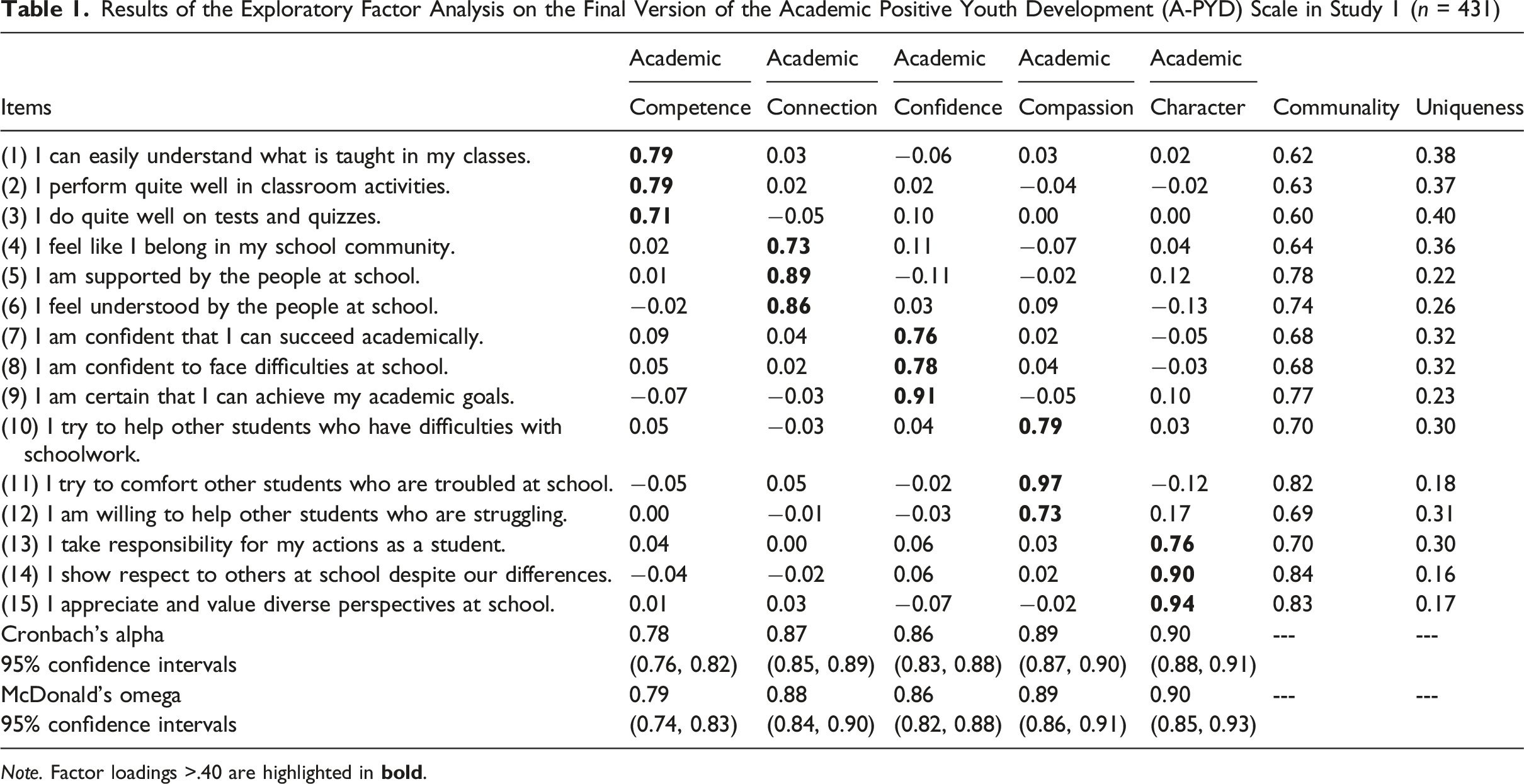
Results of the Exploratory Factor Analysis on the Final Version of the Academic Positive Youth Development (A-PYD) Scale in Study 1 (n = 431)
Note. Factor loadings >.40 are highlighted in
Procedures and Data Analyses
Approval from the human research ethics committee of the researcher’s university was sought prior to obtaining permission from the academic and/or research heads of the universities. Informed consent forms were sent to the students before the survey administration. Course professors assisted in the distribution of the Qualtrics link to the students who then answered the online survey at their most convenient time. Students’ participation was completely voluntary. To ensure data completeness, they were asked to answer all questions in the survey. Otherwise, they had the option of withdrawing from the data collection without any negative consequence. A validity check item (e.g., “Please select ‘strongly disagree’ if you are carefully reading this statement”) was embedded in the survey to detect inattentive responding, resulting in the exclusion of 97 cases (10%) from the original sample (N = 960). The scale was administered in English, one of the two official languages of instruction in the Philippines.
To facilitate item reduction, factor extraction, and dimensionality testing, the responses were randomly divided into two datasets: one for exploratory factor analysis (EFA) (n = 431) and another for confirmatory factor analysis (CFA) (n = 432). For the EFA, Bartlett’s test of sphericity and Kaiser-Meyer-Olkin test were first conducted to ensure the adequacy of the correlations among the items (Hair et al., 2018). The parallel analysis scree plot and the number of factors with eigenvalues greater than .70 (i.e., the empirical Kaiser criterion, a data-driven alternative to the traditional λ > 1 rule) were also examined to determine the ideal number of latent factors (Braeken & van Assen, 2017). The promax oblique rotation was used since the factors were expected to be correlated with each other (Hair et al., 2018).
For the CFA, a one-factor, five-factor, higher-order, and bi-factor models were specified on the second half of the data, which were based on past investigations on the 5Cs model of PYD (see Buenconsejo et al., 2022; Geldhof et al., 2014). After finalizing the reduced list of items, another CFA was conducted on the entire dataset (n = 863), following the same factor structures. The recommendations of Hair et al. (2018) were followed in evaluating the fit indices of the CFA models, including (a) comparative fit index (CFI) and Tucker–Lewis index (TLI) > .90 and (b) standardized mean square residual (SRMR) and root mean square error of approximation (RMSEA) < .08. The chi-square test of difference was also used to compare the relative fit of the four competing models (Schermelleh-Engel et al., 2003).
Multi-group CFAs were then performed to examine the measurement invariance of the of the A-PYD across gender (males and females) and socio-economic status (low-to-middle income and middle-to-high income) by sequentially constraining its factor structure (configural invariance), factor loadings (metric invariance), item intercepts (scalar invariance), and item residuals (strict invariance). Measurement invariance was established if there were no significant changes in the CFI (<.010), RMSEA (<.015), and SRMR (<.010) values (Chen, 2007). Lastly, the reliability coefficients (i.e., Cronbach’s alpha and McDonald’s omega) of the factors from the final version of the A-PYD scale also computed. All analyses were conducted in R using psych (Revelle, 2023) and lavaan (Rosseel, 2012) packages.
Study 1 Results
Exploratory Factor Analysis
The results of the Bartlett’s test of sphericity showed that there were sufficient correlations among the items, χ2 (300) = 7396.20, p < .001, necessary to conduct the EFA. The overall (.93) and individual (.88 to .96) coefficients of the Kaiser-Meyer-Olkin test of sampling adequacy also suggest that there was enough variance to proceed with the EFA. Following the parallel analysis scree plots (see Figure 2) and empirical Kaiser criterion (Braeken & van Assen, 2017), a five-factor structure was specified in the EFA. Parallel analysis scree plot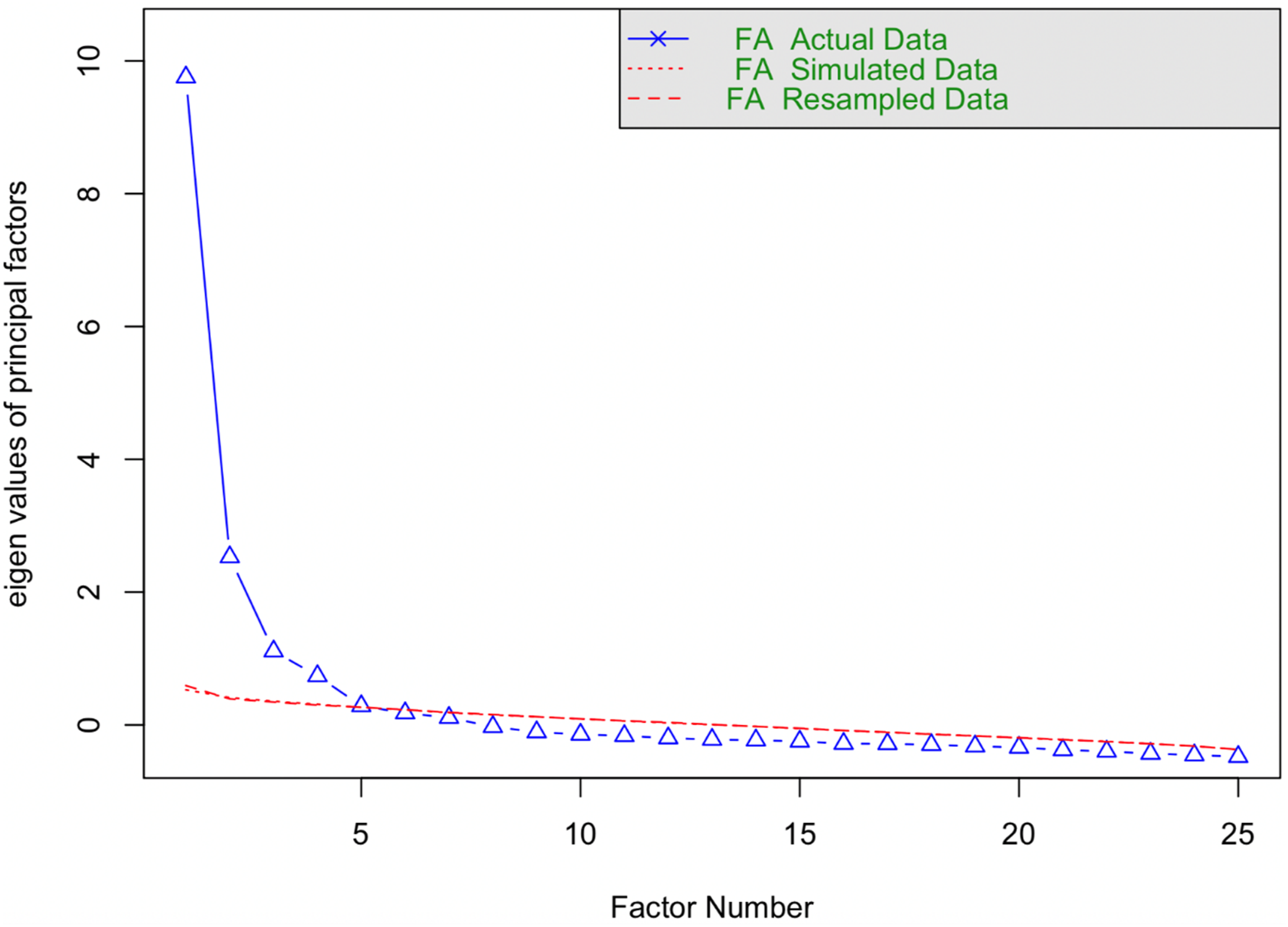
The EFA supported a five-factor structure for the initial 25-item version of the A-PYD scale (see Table A of the supplemental material). The items were evaluated based on the adequacy of their factor loadings (>.40), ensuring that each statement meaningfully contributed to the construct it was intended to measure. Specifically, the items for competence and confidence showed strong loadings on their respective factors, indicating good construct validity. Additionally, the connection factor also demonstrated strong loadings. Items reflecting compassion and character also displayed high loadings on their respective factors. Three items that displayed cross-loadings were removed to avoid conceptual overlaps between factors. Further, three items with low communalities (<.50) and six items with high uniqueness (>.40) values were considered for elimination. Items 12 (“I have the capacity to handle academic challenges”) and 23 (“I try to follow school rules and regulations”) were also excluded given their lower factor loadings relative to the other confidence and character items. This ensured that the final version scale retained only 15 items that were well-explained by their respective constructs and contributed meaningfully to the overall model.
Following the initial item evaluation, another EFA was conducted on the final 15-item version of the A-PYD scale. As presented in Table 1, the refined scale retained the five-factor structure, with all items demonstrating strong factor loadings above .71. The communalities remained high (>.50), and uniqueness values were appropriately low (<.40), suggesting that each item adequately contributed to its respective latent construct. The competence, confidence, and connection factors continued to exhibit strong loadings, reinforcing their structural integrity within the scale. Notably, the items under compassion and character also showed improved factor loadings, with no substantial cross-loadings observed. All factor demonstrated adequate internal consistency as evidence by their Cronbach’s alpha (.78 to .90) and McDonald’s omega (.79 to .90) values.
Confirmatory Factor Analyses
Results of the Confirmatory Factor Analyses on the 15-item Academic Positive Youth Development (A-PYD) Scale in Study 1
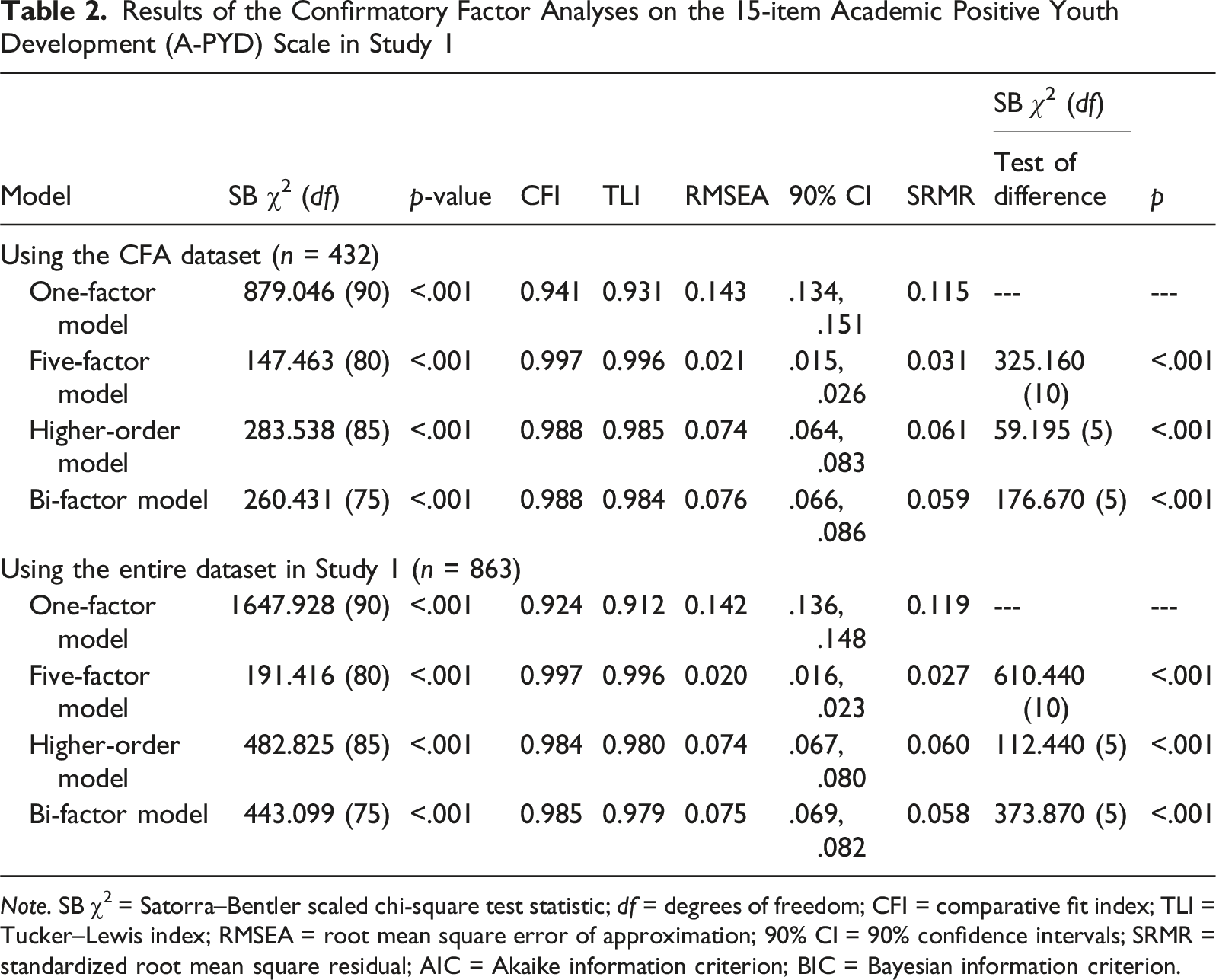
Note. SB χ2 = Satorra–Bentler scaled chi-square test statistic; df = degrees of freedom; CFI = comparative fit index; TLI = Tucker–Lewis index; RMSEA = root mean square error of approximation; 90% CI = 90% confidence intervals; SRMR = standardized root mean square residual; AIC = Akaike information criterion; BIC = Bayesian information criterion.
Multi-group Confirmatory Factor Analyses Across Gender and SES Groups
Results of the Multi-Group Confirmatory Factor Analyses on the Five-Factor Model of the Academic Positive Youth Development (A-PYD) Scale Across Gender and Socio-Economic Status in Study 1 (n = 863)
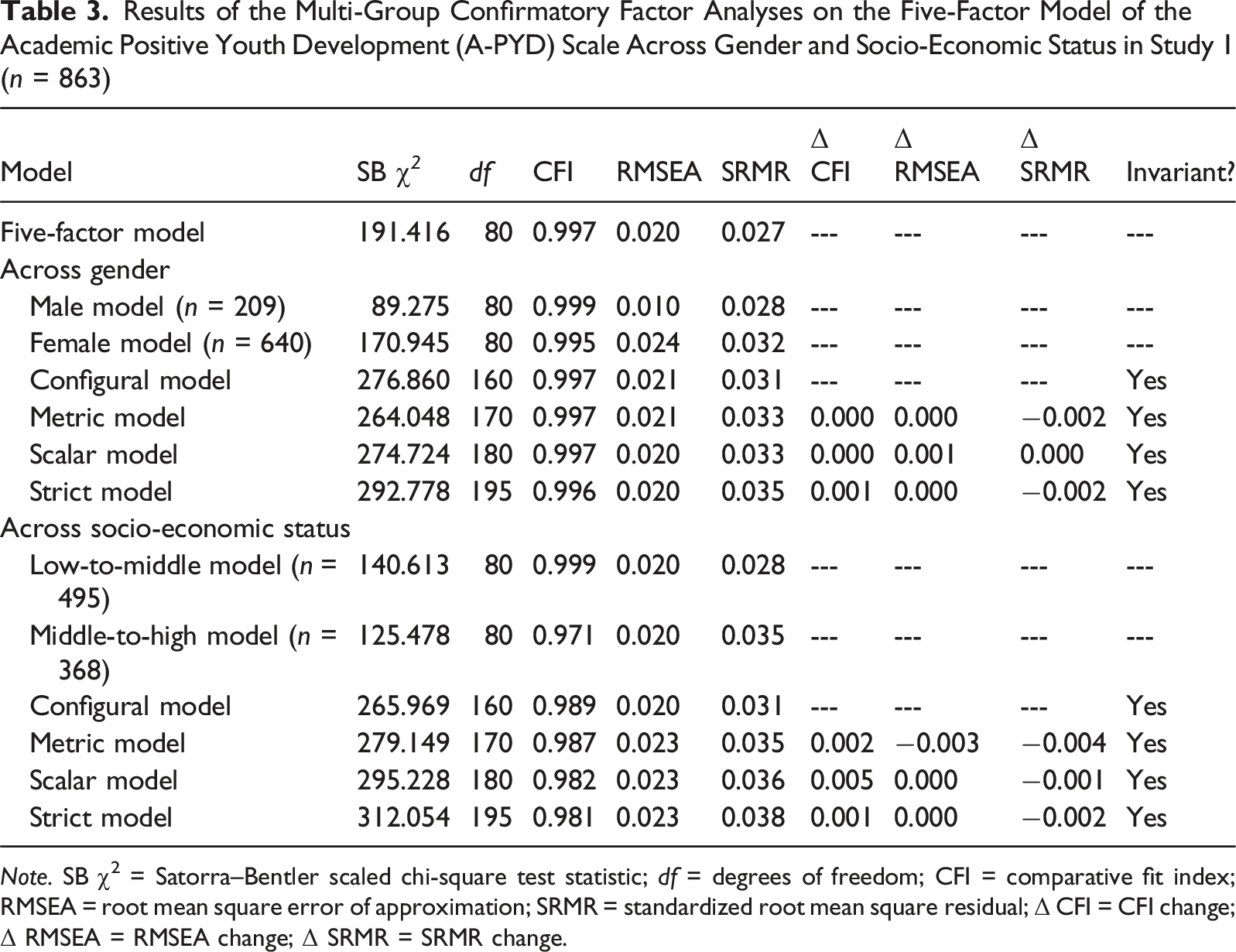
Note. SB χ2 = Satorra–Bentler scaled chi-square test statistic; df = degrees of freedom; CFI = comparative fit index; RMSEA = root mean square error of approximation; SRMR = standardized root mean square residual; Δ CFI = CFI change; Δ RMSEA = RMSEA change; Δ SRMR = SRMR change.
Study 2 Method
Participants
Data for Study 2 were obtained in April 2024 from a total of 581 students in the Philippines. Specifically, there were 289 secondary school students (M age = 17.47; SD age = 1.07) and 292 undergraduate students (M age = 20.36; SD age = 1.45) from 15 schools and universities, 7 of which were located in the National Capital Region of the country. Majority or 67.04% of the participants were females. Most of the undergraduate students were second year students (48.96%) majoring in Psychology (88.54%), while most of the secondary school students were Grade 12 students (50.89%) focusing on STEM (science, technology, engineering, mathematics; 66.86%). In terms of their socio-economic status, 38.78% have an average family monthly income of less than Php 40,000, 47.09% reported Php 40,001 to 100,000, while 14.13% reported more than Php 100,001.
Measures
Academic Positive Youth Development
The 15-item version of the A-PYD scale from Study 1 was utilized to measure academic competence, confidence, connection, character, and compassion. Each dimensions was assessed using three items and items were rated using a five-point scale (1 = strongly disagree to 5 = strongly agree). The reliability coefficients (i.e., Cronbach’s alpha and McDonald’s omega) of the A-PYD scale and the outcome variables are presented in Table E of the supplemental material.
Anxiety and Depression
The PHQ-4 was used to measure symptoms of anxiety and depression over the past 2 weeks (Kroenke et al., 2009). Sample items include “Feeling nervous, anxious or on edge” and “Little interest or pleasure in doing things.” Participants were asked to rate the frequency of these symptoms using a four-point scale (0 = not at all to 3 = nearly every day). The PHQ-4 has been validated among a large sample of Filipino adults yielding adequate reliability estimates (α = 0.71 for anxiety and α = 0.83 for depression) (Mendoza et al., 2022).
Resilience
The six-item academic resilience scale was used to measure students’ ability to effectively deal with setbacks, challenges, and adversities in the academic setting (Martin & Marsh, 2006). Sample items include “I’m good at bouncing back from a poor mark/grade in my schoolwork” and “I think I’m good at dealing with schoolwork pressures.” Items were rated using a seven-point scale (1 = strongly disagree to 7 = strongly agree).
Academic Motivation
The 14-item academic motivation scale was utilized to measure intrinsic motivation (“Because my studies allow me to continue to learn about many things that interest me”), extrinsic motivation (“In order to have a better salary later on”), and amotivation (“I don’t know. I can’t understand what I am doing in school/university”; Kotera et al., 2021). Participants rated the items using a seven-point scale (1 = does not correspond at all to 7 = corresponds exactly).
Procedures and Data Analyses
In Study 2, the 15-item version of the A-PYD scale was administered to new samples of Filipino secondary school and undergraduate students, with 74 responses (11%) excluded from the original sample (N = 655) based on the survey validity item. The same data collection procedures and data analyses for CFAs and MGCFAs in Study 1 were implemented in Study 2. Additionally, criterion-related validity for the A-PYD scale was examined with psychological (anxiety, depression, and resilience) and academic outcomes (intrinsic motivation, extrinsic motivation, and amotivation) following the two-step approach for structural equation modeling (SEM; Anderson & Gerbing, 1988). Specifically, a measurement model with all the latent and observed variables was first tested to ensure adequate fit for the constructs (Step 1). After establishing a satisfactory fit for the model, the hypothesized paths between the latent variables were then specified (Step 2). Model fit was evaluated using the same criteria specified for the CFAs (i.e., CFI/TLI >.90 and SRMR/RMSEA <.08). Factor loadings were also examined to ensure all indicators adequately represented their latent constructs (>.40; Hair et al., 2018). To control for potential confounding effects, we included gender, age, and SES as covariates in the model. These SEM analyses were conducted using the lavaan package in R (Roseell, 2012).
Study 2 Results
Descriptive Statistics and Bivariate Correlations
The descriptive statistics and bivariate correlations of the A-PYD dimensions and criterion-related variables in Study 2 are presented in Tables E and F of the supplemental material, respectively. The Cronbach’s alpha (.81 to .90) and McDonald’s omega (.82 to .95) values demonstrated strong internal consistency across all variables. Skewness and kurtosis values suggest that the data were approximately normally distributed. Bivariate correlations indicate significant positive associations among all 5Cs of A-PYD, with the strongest relationships observed between academic competence and confidence (r = .65, p < .01) and between academic character and compassion (r = .58, p < .01). All A-PYD dimensions were positively correlated with resilience (.14 to .52) as well as intrinsic (.29 to .47) and extrinsic (.24 to .42) motivation. Negative correlations were found with depression and anxiety for academic competence, confidence, and connection. Notably, amotivation only showed a small significant negative correlation with academic character (r = −.13, p < .05).
Confirmatory Factor Analyses
Results of the Confirmatory Factor Analyses on the 15-Item Academic Positive Youth Development (A-PYD) Scale in Study 2 (n = 581) and Study 3 (n = 614)
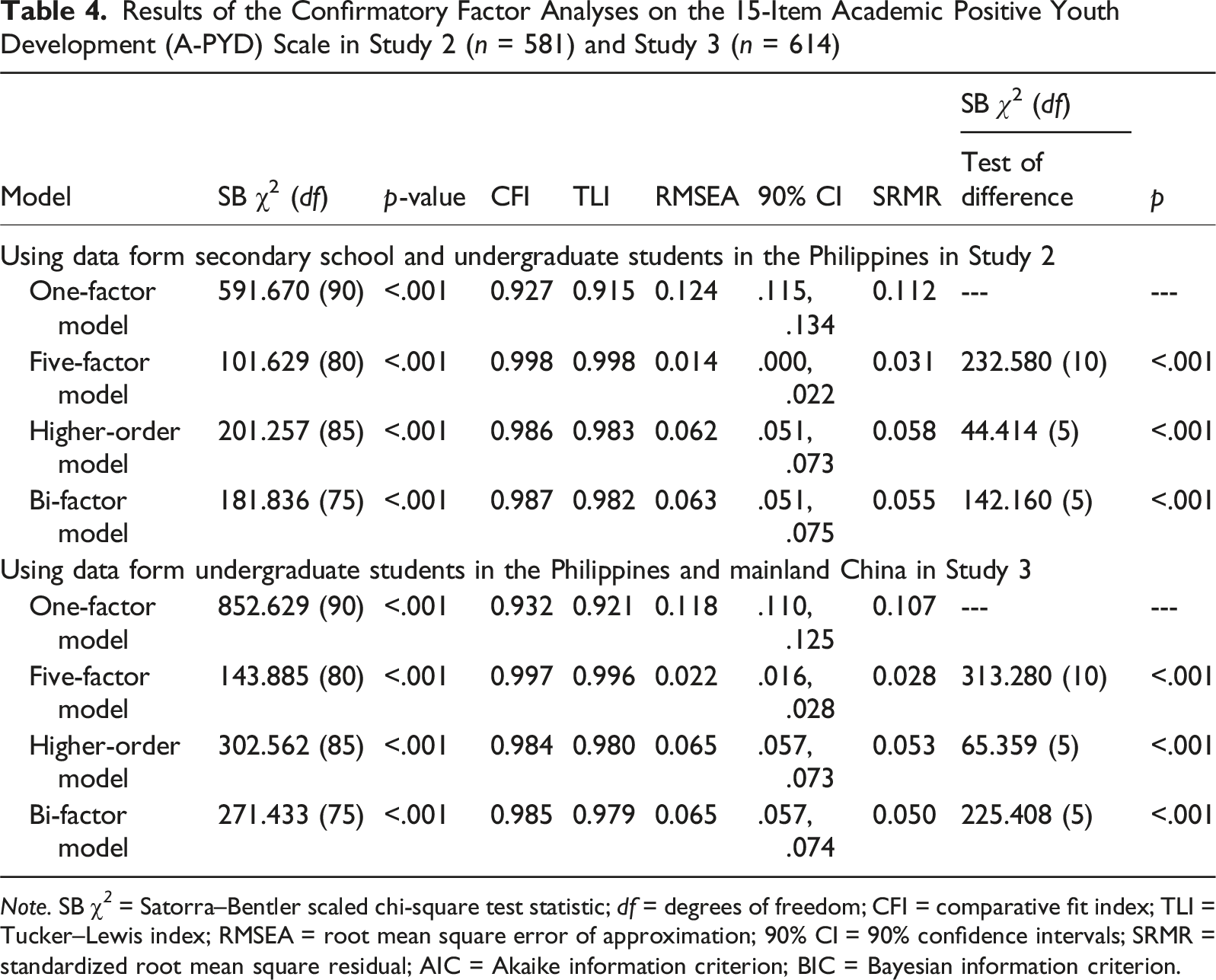
Note. SB χ 2 = Satorra–Bentler scaled chi-square test statistic; df = degrees of freedom; CFI = comparative fit index; TLI = Tucker–Lewis index; RMSEA = root mean square error of approximation; 90% CI = 90% confidence intervals; SRMR = standardized root mean square residual; AIC = Akaike information criterion; BIC = Bayesian information criterion.
Multi-Group Confirmatory Factor Analyses Across Educational Levels
Results of the Multi-Group Confirmatory Factor Analyses on the Five-Factor Model of the Academic Positive Youth Development (A-PYD) Scale Across Educational Level in Study 2 (n = 581) and Culture in Study 3 (n = 614)
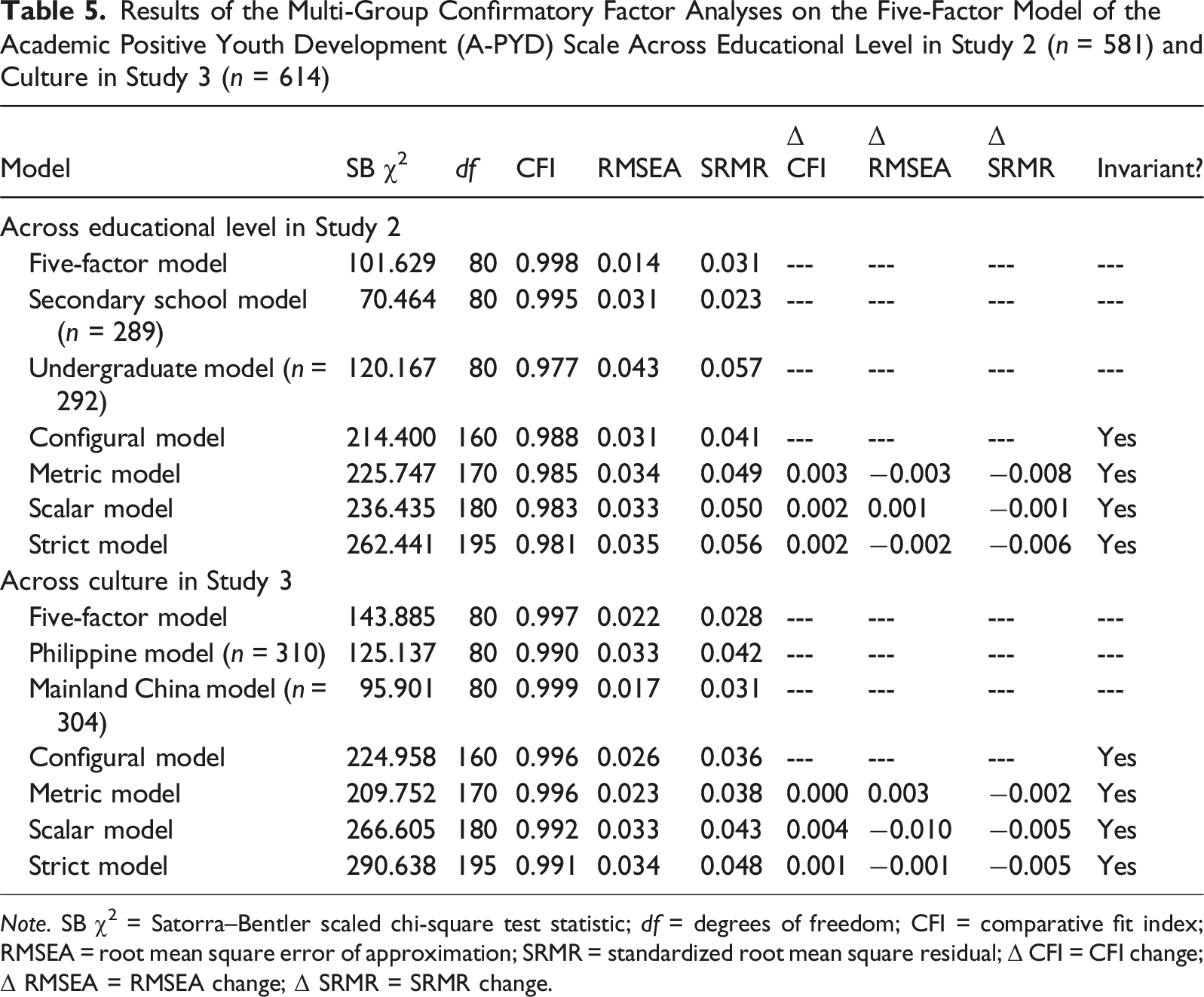
Note. SB χ2 = Satorra–Bentler scaled chi-square test statistic; df = degrees of freedom; CFI = comparative fit index; RMSEA = root mean square error of approximation; SRMR = standardized root mean square residual; Δ CFI = CFI change; Δ RMSEA = RMSEA change; Δ SRMR = SRMR change.
Structural Equation Modeling
The SEM analysis examined the relations between the 5Cs of A-PYD and psychological (i.e., anxiety, depression, and resilience) and academic (i.e., intrinsic motivation, extrinsic motivation, and amotivation) outcomes while controlling for the influence of gender, age, and SES. The hypothesized model demonstrated good fit with the data in Step 1 and Step 2. Figure 3 presents the standardized regression paths between the 5Cs of A-PYD and the criterion-related variables. Among the psychological outcomes, academic connection was negatively associated with anxiety (β = −.19, p < .05), while both academic confidence (β = −.33, p < .05) and academic connection (β = −.18, p < .05) were negatively related to depression. Additionally, academic confidence emerged as the only positive predictor of resilience (β = .61, p < .001). For academic outcomes, intrinsic motivation was positively predicted by academic competence (β = .15, p < .05) and academic confidence (β = .54, p < .001), whereas extrinsic motivation was positively predicted by academic connection (β = .15, p < .05), academic character (β = .32, p < .01), and academic compassion (β = .12, p < .05). Lastly, amotivation was negatively predicted by academic confidence (β = −.12, p < .05) and academic character (β = −.18, p < .05). Structural equation modeling between the 5Cs of Academic Positive Youth Development Scale and psychological and academic outcomes in Study 2 (n = 581). Note: Solid lines indicate significant positive paths; dashed lines indicate significant negative paths; non-significant paths have been lightened; manifest variables and socio-demographic covariates (i.e., gender, age, and SES) have been excluded for parsimony; *p < .05; **p < .01; ***p < .001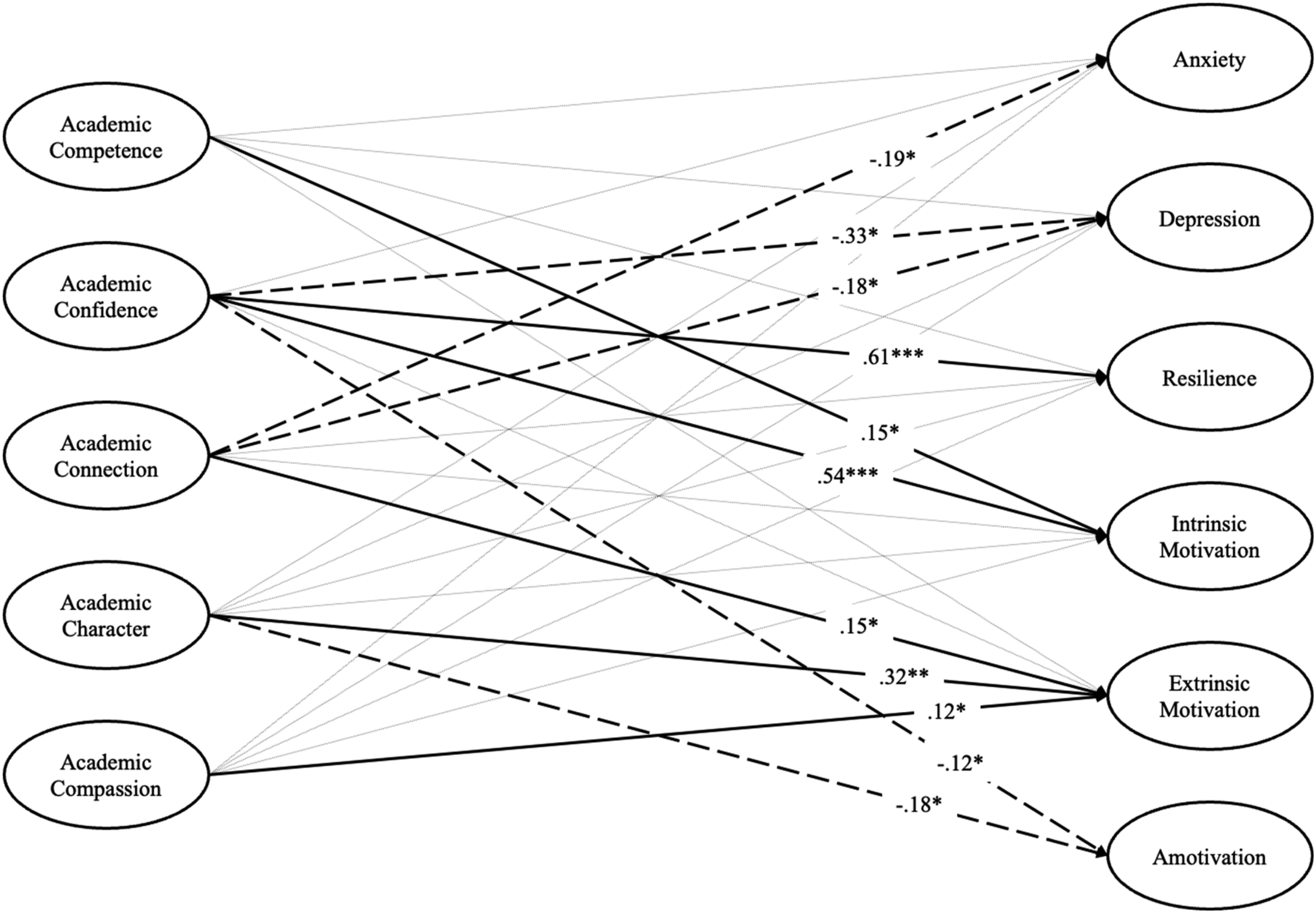
Study 3 Method
Participants
Data for Study 3 were obtained from May to June 2024 from a total of 614 undergraduate students from three universities in the National Capital Region of the Philippines (n = 310; M age = 20.63; SD age = 1.12) and six universities in the Guangdong province of mainland China (n = 304; M age = 19.45; SD age = 1.17). Majority (74.10%) of the participants were females. Most of the undergraduate students from the Philippines were third year students (56.45%) majoring in Psychology (96.46%), while most of the undergraduate students from mainland China were first year students (27.63%) majoring in Humanities (47.04%). In terms of their average family monthly income, most of the students in the Philippines reported more than Php 100,001 (36.77%), most of the students in mainland China reported RMB 5,001 to 10,000 (43.09%).
Measures
Academic Positive Youth Development
The 15-item version of the A-PYD scale described in Study 1 and Study 2 was used to measure academic competence, confidence, connection, character, and compassion.
Growth Mindset
The three-item growth mindset scale (Dweck et al., 1995) was utilized to measure students’ belief that one’s intellectual ability is malleable and can be developed by investing time and effort. A sample item included “You have a certain amount of intelligence, and you can’t really do much to change it.” Items were rated using a six-point scale (1 = strongly agree to 6 = strongly disagree). The growth mindset scale has among undergraduate students in the Philippines (α = 0.81) (Montano, 2024) and mainland China (α = 0.82) (Liu, 2025) under yielding adequate reliability estimates. The reliability coefficients of the A-PYD scale and growth mindset in this study are presented in Table H of the supplemental material.
Procedures and Data Analyses
In Study 3, the 15-item version of the A-PYD scale was administered to new samples of undergraduate students from the Philippines and mainland China, with 57 responses (8%) excluded from the original sample (N = 671) based on the survey validity item. The same data collection procedures and data analyses for CFAs, MGCFA, and SEM in the previous two studies were implemented in Study 3. However, in Study 3, the measurement invariance of the A-PYD scale was examined across cultures. As a trait-like construct, the associations between students’ growth mindset and the 5Cs of A-PYD were examined above and beyond the function of gender, age, and SES. The scale was administered in English in the Philippines and was translated into Chinese for undergraduate students in mainland China using a translation and back-translation procedure, validated by three experts fluent in Chinese (i.e., one educational psychologist, one clinical psychologist, and one linguist). The Chinese version of the A-PYD scale can be found in Table K of the supplemental material.
Study 3 Results
Descriptive Statistics and Bivariate Correlations
The descriptive statistics and bivariate correlations of the A-PYD dimensions and growth mindset in Study 3 are presented in Tables H and I of the supplemental material, respectively. The Cronbach’s alpha (.81 to .91) and McDonald’s omega (.82 to .92) values demonstrated strong internal consistency across all variables. Skewness and kurtosis values suggest that the data were approximately normally distributed. Bivariate correlations between the 5Cs of A-PYD and growth mindset revealed significant positive associations. Specifically, academic confidence showed the strongest correlation with growth mindset (r = .19, p < .01), followed by academic competence (r = .14, p < .01), academic connection (r = .16, p < .01), academic character (r = .13, p < .01), and academic compassion (r = .12, p < .01). These findings suggest that growth mindset is linked with higher levels of A-PYD.
Confirmatory Factor Analyses
As presented in Table 4, the results of the CFA in Study 3 show that the five-factor model provided the best fit for the data from undergraduate students in the Philippines and mainland China. Similar in Study 1 and Study 2, the five-factor model significantly outperformed the one-factor, higher-order, and bi-factor models in Study 3. The five-factor model exhibited excellent fit indices, with substantial improvement over the one-factor model. Although the higher-order and bi-factor models also showed acceptable fit, they did not surpass the five-factor model in terms of fit and parsimony. The factor loadings (.70 to .86) of the five-factor model in Study 3 are presented in Tables J of the supplemental material.
Multi-Group Confirmatory Factor Analyses Across Cultures
As shown in Table 5, the results of the MGLPA across undergraduate students from the Philippines and mainland China show that the five-factor model of the A-PYD scale demonstrated configural, metric, scalar, and strict invariance across the two cultural groups. The configural model, which tested the same factor structure across groups, showed good fit. Further, no significant changes in model fit were observed when constraining the factor loadings, item intercepts, and item residuals, confirming that the A-PYD scale functions equivalently across both cultures. These findings provide strong evidence for the cross-cultural validity of the A-PYD scale.
Structural Equation Modeling
The SEM analysis in Study 3 examined the associations between growth mindset and the 5Cs of A-PYD, while controlling for the influence gender, age, and SES. The hypothesized model demonstrated good fit with the data in Step 1 and Step 2. Figure 4 presents the standardized regression paths between growth mindset and the 5Cs of A-PYD. Results of the SEM indicate that growth mindset was a significant positive predictor of all five dimensions of A-PYD. Specifically, growth mindset was positively associated with academic competence (β = .17, p < .01), academic confidence (β = .22, p < .001), academic connection (β = .18, p < .01), academic character (β = .15, p < .01), and academic compassion (β = .14, p < .01). Structural equation modeling between growth mindset and the 5Cs of Academic Positive Youth Development Scale in Study 3 (n = 614). Note. Manifest variables and socio-demographic covariates (i.e., gender, age, and SES) have been excluded for parsimony; **p < .01; ***p < .001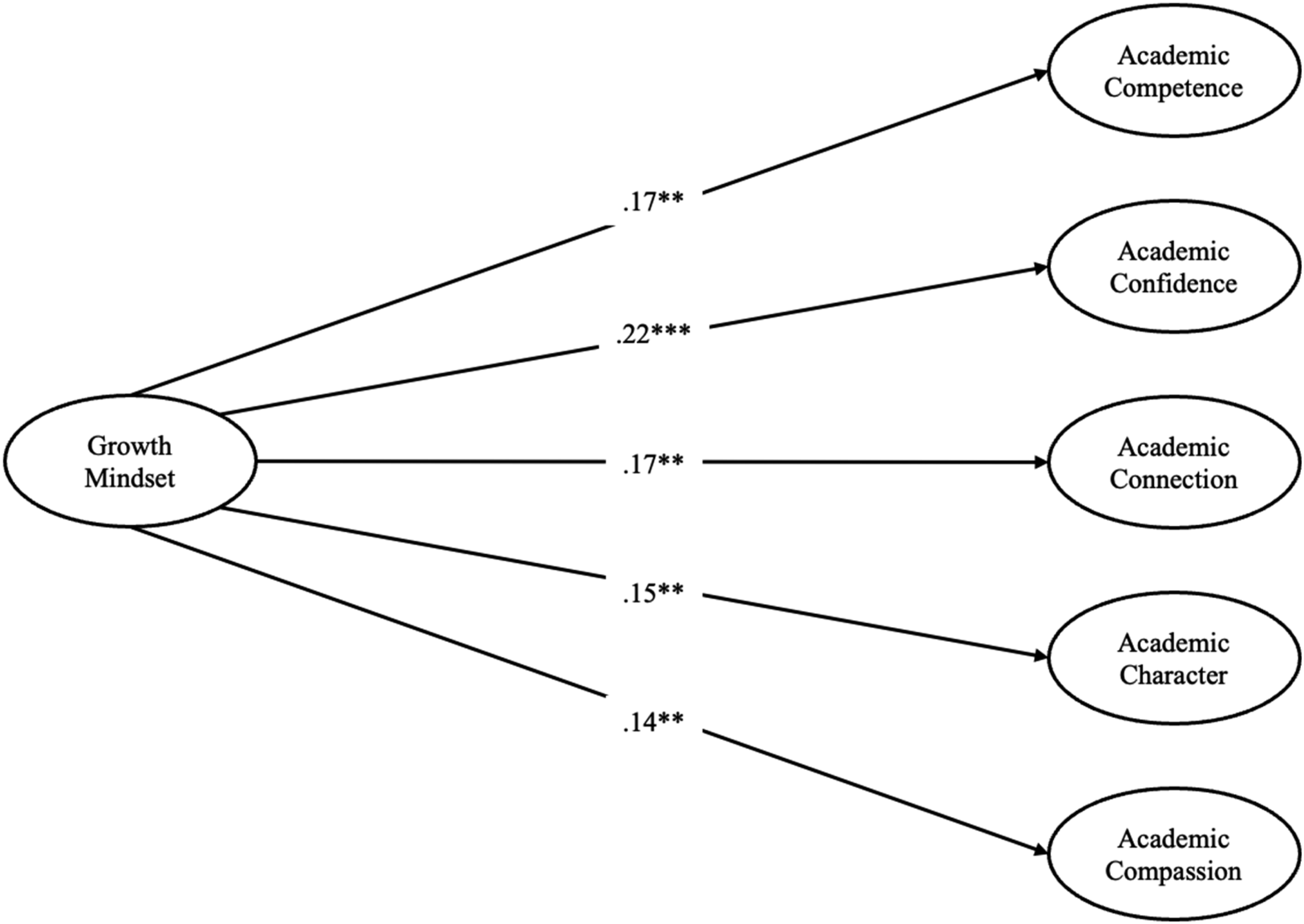
General Discussion
The present study sought to develop and evaluate the validity evidence of the Academic Positive Youth Development (A-PYD) scale, a measure that contextualizes the 5Cs of PYD (competence, confidence, connection, character, and compassion) within educational settings. While past investigations have provided strong empirical support for the 5Cs model, these dimensions have typically been measured in broad, generalized terms, without considering how they manifest in specific developmental contexts such as schools (Arnold et al., 2012; Lopez et al., 2014). Framed within Kane’s (2013) Interpretation/Use Argument (IUA), the findings across three studies provide converging evidence supporting the intended interpretation of A-PYD scores as multidimensional indicators of academic thriving and their appropriate use in educational research and practice. By demonstrating factorial validity, measurement invariance, and theoretically consistent associations with psychological and academic outcomes, this study advances PYD research by offering a more context-specific instrument for understanding and fostering positive development in schools.
The results of the exploratory and confirmatory factor analyses provided support for the five-factor structure of the A-PYD scale, indicating that academic competence, confidence, connection, character, and compassion may be best conceptualized as distinct but interrelated thriving dimensions in educational settings. Consistent with the IUA framework (Kane, 2013), higher scores on each A-PYD dimension are interpreted as reflecting higher levels of academic thriving in the corresponding domain. These results align with previous research emphasizing the multidimensional nature of PYD (Buenconsejo & Datu, 2022; Geldhof et al., 2014), and extend its applicability to the academic context.
Notably, across three studies, the five-factor model consistently exhibited superior fit compared to alternative models, including the one-factor, higher-order, and bi-factor models. These results suggest that the dimensions of A-PYD may best function as distinct but correlated constructs rather than collapsing them into a single overarching factor (Kozina et al., 2019; Wong et al., 2022). While past investigations on the 5Cs have generally supported the higher-order (Conway et al., 2015) and bi-factor models (Yang & McGinley, 2021), these factor structures assume the presence of a general PYD construct that may obscure distinct variances from the specific Cs. The weaker fit of the higher-order model may indicate that while the 5Cs share some common variance (Buenconsejo et al., 2022; Geldhof et al., 2014), they may not strongly converge to form a second-order factor (i.e., general A-PYD construct). Similarly, the poorer fit of the bi-factor model suggests that the 5Cs may function more independently without a general A-PYD construct.
However, this does not imply that the alternative models are inherently incorrect. Rather, the findings suggest that in the present samples of Filipino and Chinese students, the five-factor structure provides the best representation of the 5Cs of A-PYD. Indeed, future research is needed to examine the factor structure of the A-PYD scale in diverse student populations. Cross-cultural studies could provide deeper insights into whether the five-factor model remains the most appropriate representation across different educational settings, or if alternative structures may better capture the nature of the 5Cs of A-PYD in specific contexts.
An important finding of this study is the demonstration of the measurement invariance of the A-PYD scale across key demographic characteristics. Establishing measurement invariance is essential for ensuring that the scale functions equivalently across diverse student groups, allowing for meaningful comparisons without the risk of measurement bias (Chen, 2007). Specifically, the results of the multi-group CFAs indicated that the five-factor model of the A-PYD scale exhibited configural, metric, scalar, and strict invariance across gender, SES, educational level, and cultural background. These findings align with previous research highlighting the importance of measurement invariance in PYD assessments (Buenconsejo et al., 2022; Dvorsky et al., 2019) and further support the scale’s robustness for evaluating academic PYD across diverse student populations.
The scale’s measurement invariance across gender and SES is particularly important given prior research indicating potential gender differences in PYD attributes, such as higher levels of competence and confidence (self-efficacious Cs) among male students and greater connection, character, and caring (socio-emotional Cs) among female students (Årdal et al., 2018; Buenconsejo et al., 2025b). By confirming that the A-PYD scale measures the same underlying constructs across gender, this study ensures that observed differences in A-PYD scores reflect true variations in developmental characteristics. Similarly, measurement invariance across SES groups suggests that the scale captures the 5Cs consistently, regardless of students’ economic backgrounds, reinforcing its applicability in assessing academic thriving in both resource-rich and disadvantaged educational contexts.
Furthermore, the results provided strong evidence for the scale’s measurement invariance across educational levels and cultural contexts. This suggests that the A-PYD scale functions equivalently across different stages of education and distinct cultural settings. Given the importance of context in shaping students’ academic development (Korpershoek et al., 2020), future research could further explore the measurement invariance of the A-PYD scale in additional cultural and linguistic settings to further establish its generalizability. Overall, these findings underscore the strength of the A-PYD scale as a psychometrically sound instrument for assessing Positive Youth Development in educational settings across diverse student populations.
The findings from Study 2 demonstrated significant associations between specific A-PYD dimensions and psychological outcomes above and beyond age, gender, and SES. Consistent with prior research, academic confidence emerged as the strongest predictor of anxiety, depression, and resilience, reinforcing the role of academic self-efficacy against psychological distress (Buenconsejo & Datu, 2024; Kristensen et al., 2023). Students who feel capable in their academic abilities are more likely to engage in adaptive coping strategies, reducing their vulnerability to negative emotions (Ferla et al., 2010). The positive link between academic confidence and resilience suggests that students with strong belief in their ability to succeed academically are better equipped to recover from setbacks and persist through challenges (Martin & Marsh, 2006). Academic connection was also found to be negatively associated with anxiety and depression, aligning with past research that shows how students who feel socially integrated and supported in school tend to experience lower psychological distress (Guay et al., 2017; Korpershoek et al., 2020).
Notably, the distinct patterns between self-efficacious and socio-emotional dimensions of academic thriving with academic motivation provide important insights into how different aspects of A-PYD may relate to students’ internal and external motives. Specifically, only the self-efficacious Cs of competence and confidence were positively linked to intrinsic motivation, reinforcing the notion that students who feel capable in their academic abilities are more likely to engage in learning for personal growth and enjoyment (Duchesne & Larose, 2018; Ryan & Moller, 2017). In contrast, only the socio-emotional Cs of connection, character, and compassion were positively associated with extrinsic motivation, suggesting that students who experience social support and uphold moral or altruistic values in academic settings may be more driven by external reinforcements such as grades, teacher or peer approval, or future career prospects. These patterns may indicate that while self-efficacy strengthens internal motivation, socio-emotional dimensions tend to reinforce academic engagement through external validation and social expectations (Jeynes, 2019; Seider et al., 2013).
Furthermore, among the 5Cs, academic confidence and character were the only dimensions found to be negatively associated with amotivation, suggesting that students with strong self-belief and a deep sense of academic responsibility are less likely to feel disengaged in school. Indeed, previous research has shown that academic confidence fosters persistence, as students with high self-efficacy tend to approach academic challenges with determination rather than avoidance (Buenconsejo et al., 2025a; Honicke & Broadbent, 2016). Likewise, academic character may instill a sense of duty and accountability toward school-related responsibilities, reinforcing students’ commitment to work on their academic pursuits (Jeynes, 2019; Miller et al., 2011).
The findings from Study 3 also highlight the important role of growth mindset, which was found to be positively associated with all dimensions of A-PYD, even after controlling for socio-demographic covariates. These results suggest that students who believe in their ability to improve their intelligence over time through effort are more likely to experience academic thriving characteristics. Notably, growth mindset had the strongest correlation with academic confidence, corroborating previous research that students who perceive intelligence as malleable tend to have higher self-efficacy and persistence in academic tasks (Rhew et al., 2018; Yeager & Dweck, 2012). Together, these findings align with prior research suggesting that a growth mindset may not only promote self-efficacy but can also foster greater social connectedness and prosocial behaviors in educational settings (Yeager & Dweck, 2012).
Implications for Educational Research and Practice
This study advances the PYD framework by contextualizing the 5Cs model within academic settings, offering empirical support for the A-PYD scale as a multidimensional, education-specific measure of student thriving. The scale’s measurement invariance across gender, SES, educational levels, and cultural groups highlight its applicability for diverse student samples. Aligning with the specificity principle (Bornstein, 2017), these findings emphasize assessing youth development within specific contexts. From an IUA perspective (Kane, 2013), A-PYD scores can be used to describe students’ academic strengths across the 5Cs, compare groups meaningfully, and inform educational decision-making when combined with other sources of information (e.g., psychological and academic outcomes). The A-PYD scale provides educators and policymakers with a tool to identify student strengths and areas for growth, enabling targeted interventions such as mastery-based learning, academic mentoring, and fostering growth mindsets to enhance academic confidence, resilience, and motivation. Integrating A-PYD principles into curricula may support holistic student growth, fostering academic success, psychological resilience, social relationships, and character development.
Limitations and Directions for Future Research
This study has limitations that warrant consideration. Reliance on student self-reports may introduce social desirability and common method biases, highlighting the need for future research to incorporate teacher, peer, or parent assessments for a more comprehensive evaluation. Although the 15-item A-PYD scale demonstrated satisfactory psychometric properties, future research should include additional expert reviews and comparative pilot testing of alternative item pools to further strengthen item selection decisions. Additionally, while the A-PYD scale demonstrated measurement invariance across gender, SES, educational levels, and culture, its validation was limited to Filipino and Chinese student samples, necessitating further cross-cultural studies to confirm the five-factor structure’s generalizability. The inclusion of secondary school and university students may limit the generalizability of findings to other youth populations, as definitions of youth may vary across contexts. Future research should examine the applicability of the A-PYD scale across clearly defined age groups, academic major, and cultures. The cross-sectional design also restricts causal interpretations, underscoring the importance of longitudinal research to explore how the 5Cs of A-PYD evolve over time and influence academic and well-being outcomes. Future studies should investigate the scale’s predictive validity for long-term educational achievements, school satisfaction, and career aspirations, as well as examine potential moderators (e.g., school climate, teacher support) and mediators (e.g., cultural values) to better understand the mechanisms driving student thriving in educational settings.
Conclusion
This study addressed a critical gap in Positive Youth Development (PYD) research by contextualizing the 5Cs model within academic settings. While previous research has largely assessed the 5Cs in broad, generalized terms, this study validated a five-factor structure that captures academic competence, confidence, connection, character, and compassion as distinct yet interrelated dimensions. Through three studies, the A-PYD scale demonstrated factorial validity, measurement invariance across diverse student groups, and meaningful associations with academic and psychological outcomes, reinforcing its robustness and applicability. These findings support the specificity principle (Bornstein, 2017), emphasizing the importance of assessing youth development within the specific contexts where it unfolds. Taken together, these sources of evidence support a coherent interpretation/use argument (Kane, 2013) for the A-PYD scale as a contextually grounded measure of academic thriving. Future research should continue refining the A-PYD scale, exploring its long-term predictive ability, and expanding its generalizability across diverse educational and cultural contexts.
Supplemental Material
Supplemental Material - Thriving in Academic Settings: Contextualizing and Measuring the 5Cs of Positive Youth Development Among Students
Supplemental Material for Thriving in Academic Settings: Contextualizing and Measuring the 5Cs of Positive Youth Development Among Students by Jet Uy Buenconsejo in Journal of Psychoeducational Assessment
Footnotes
Acknowledgment
The author would like to express his gratitude to all secondary and undergraduate students who participated in this research as well as to Mr Kenneth Roy Aranas, Ms. Desiree Castillo-Bisquera, Ms. Jean Taypa, Mr. Li Zicheng, Ms. Wang Jinhua Polina, Ms. Yang Yixi Jennifer, and Ms. Zheng Pengjuan Shirley who facilitated the data collection in the Philippines and mainland China. The author would also like to thank Dr. Norman Mendoza, Dr. Ma. Jenina Nalipay, Dr. Patricia Simon, Dr. Liu Duo Phil, Dr. Liu Huinan Nancy, Ms. Kimberly Kaye Mata, Mr. John Ian Wilzon Dizon, and Mr. Jiang Zhaohan Kevin for validating the items of the A-PYD scale.

Ethical Considerations
The study complied with the ethical standards for conducting research with human subjects as specified in 1964 Helsinki declaration and its later amendments. Prior ethical approval was obtained from the author’s university.
Consent to Participate
Informed consent from the participants were obtained before the data collection.
Funding
The author disclosed receipt of the following financial support for the research, authorship, and/or publication of this article: The writing of this manuscript was supported by the Post Doctoral Fellowship Scheme from the Research Grants Council of Hong Kong (Reference No. PDFS2324-8H02) awarded to the author. Open Access was provided by The Hong Kong Polytechnic University.
Declaration of Conflicting Interests
The author declared no potential conflicts of interest with respect to the research, authorship, and/or publication of this article.
Data Availability Statement
The datasets generated and/or analyzed in this study are not publicly available but are available upon reasonable request from the author
Supplemental Material
Supplemental material for this article is available online.
References
Supplementary Material
Please find the following supplemental material available below.
For Open Access articles published under a Creative Commons License, all supplemental material carries the same license as the article it is associated with.
For non-Open Access articles published, all supplemental material carries a non-exclusive license, and permission requests for re-use of supplemental material or any part of supplemental material shall be sent directly to the copyright owner as specified in the copyright notice associated with the article.
