




Abstract
The Winston Essential Skills Survey (WESS) 3.0, the first social-emotional learning (SEL) assessment designed for students with learning disabilities (SwLD), has evidence for reliability and validity in a specific population of teachers. To build on this evidence, 180 educators responded to the WESS 3.0, along with new items and the Devereux Student Strengths Assessment (DESSA), to assess a sample of 397 SwLD. Minor modifications to the WESS 3.0 resulted in the WESS 4.0, which demonstrated internal consistency, an eight-factor structure, and convergent validity with the DESSA. The WESS 4.0 addresses a critical gap in SEL assessments for SwLD, providing researchers and educators with a valid and reliable method to assess SwLD's social-emotional skills. This survey may inform school interventions, policy decisions on SEL programming, and advance understanding of SEL in SwLD, potentially improving educational outcomes and well-being for this population.
Introduction
Students with learning disabilities (SwLD), who constitute 32% of students receiving special education, face unique challenges that extend beyond academic difficulties (Grigorenko et al., 2020; National Center for Education Statistics, 2024). Studies have consistently shown that SwLD face a disproportionate burden of emotional and social challenges in educational settings (Grigorenko et al., 2020). Compared to their peers without disabilities, SwLD report higher levels of negative emotions, depression, physical complaints, anxiety, and stress while at school (Lawrence et al., 2019; Polak & Grossman, 2024; Polak & Grossman, 2024b). Furthermore, many SwLD struggle with peer acceptance and often exhibit difficulties in both intrapersonal and interpersonal domains, including challenges with regulating their emotions and forming social connections (Al-Yagon, 2014; Rivara & Menestrel, 2016; Rose et al., 2016). These findings underscore the critical need for targeted interventions and support systems to address the unique social-emotional needs of SwLD in educational environments.
Yet, how can researchers develop evidence-based interventions for SwLD when existing assessments of social-emotional needs were not designed with this population in mind? Few assessments included SwLD in their development process or measured the specific social-emotional skills known to be critical for their success (for a review, see DeBono et al., 2025). This means that most social-emotional learning (SEL) assessments may not be valid or reliable in the SwLD population and are also not measuring the SEL skills (e.g., self-advocacy) critical for their success. Consequently, education systems may not be able to establish effective support systems if SwLD’s social-emotional needs are not assessed accurately or reliably due to the absence of surveys tailored specifically to this group. Clearly, there is a need for a reliable and valid assessment explicitly designed for SwLD—one that captures the social-emotional skills essential for their success.
SwLD: The Role of Social Emotional Learning
SEL offers a promising approach to address SwLD’s unique challenges and support their holistic development (Weissberg et al., 2015). Defined as the lifelong process of learning to manage emotions and social interactions for success in school, work, relationships, and community, SEL encompasses understanding and regulating emotions, demonstrating empathy, setting and achieving goals, fostering healthy relationships, and making responsible decisions (Jones & Doolittle, 2017). Effective SEL necessitates a range of cognitive abilities, self-confidence, and social awareness; areas in which SwLD often require additional support (Milligan et al., 2016; Patterson & Thomas, 2014). This underscores the critical importance of accurately assessing SwLD’s social-emotional skills to provide targeted and appropriate interventions. A comprehensive evaluation of these skills enables educators to design SEL strategies addressing the unique needs of SwLD, which is likely to enhance their academic engagement, social relationships, and overall well-being (Cavioni et al., 2017).
Evidence suggests SEL has numerous benefits for all students, including improved mental health, better relational skills, enhanced self-esteem, and increased self-understanding (Darling-Hammond & Cook-Harvey, 2018). SEL can also enhance peer-to-peer relationships, decrease bullying, foster more trusting relationships between students and teachers, and improve the educational climate (Darling-Hammond & Cook-Harvey, 2018; Divecha & Brackett, 2020). For SwLD, SEL can be particularly beneficial as it emphasizes relationships and social interactions, helping students develop a sense of safety and belonging (Cavioni et al., 2017). With this feeling of safety and belonging, SEL can play a crucial role in empowering them to thrive academically, socially, and emotionally (Goldstein & Brooks, 2023).
Limitations in Current SEL Frameworks for SwLD
The Overlap Between CASEL and WESS Frameworks: Abbreviated Definitions of SEL Competencies and Skills
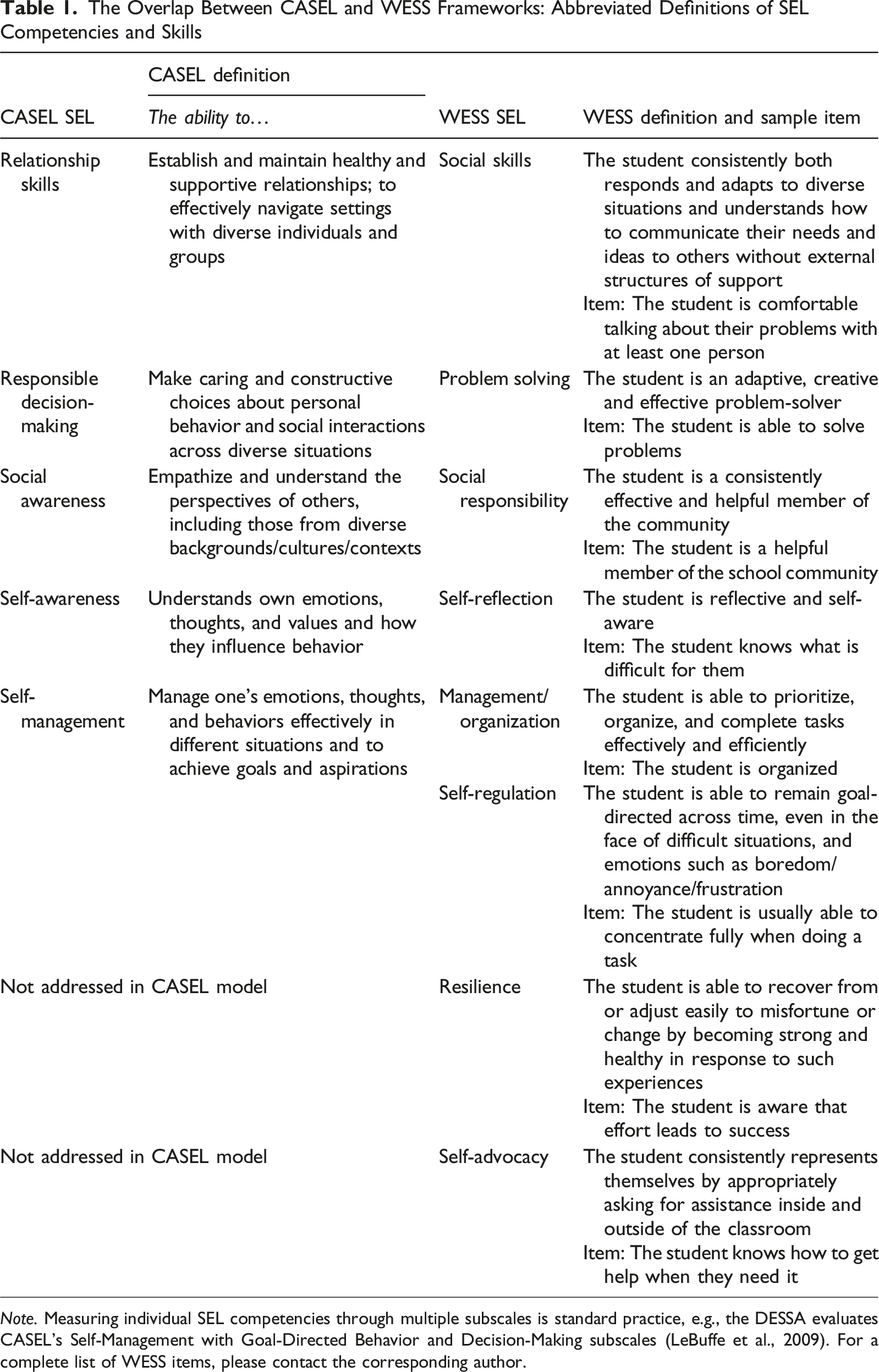
Note. Measuring individual SEL competencies through multiple subscales is standard practice, e.g., the DESSA evaluates CASEL’s Self-Management with Goal-Directed Behavior and Decision-Making subscales (LeBuffe et al., 2009). For a complete list of WESS items, please contact the corresponding author.
Despite the initial focus of many early social-emotional learning (SEL) improvement efforts on SwLD (Elias, 2004), few SEL frameworks address their social emotional needs. Although the CASEL model has demonstrated robustness across various grade levels and contexts (Ross & Tolan, 2018), it does not fully address the specific SEL competencies required for SwLD to succeed academically and socially. Because of SwLD’s unique challenges due to their disability, additional SEL skills and competencies are imperative for them to succeed (Cavioni et al., 2017). These challenges necessitate a more tailored approach to SEL addressing their specific needs.
Recent research indicates an alternative SEL model may better accommodate the unique SEL needs of SwLD, especially for SEL skills known to predict student success (DeBono et al., 2025). Developers of the Winston Essential Skills Survey (WESS) proposed a SEL model that overlaps with the CASEL model, while also addressing two critical SEL skills known to predict success for SwLD, particularly for educational and employment outcomes: resilience and self-advocacy. These skills are consistently associated with improved academic performance, persistence in education, and successful transitions to employment for SwLD (Daly-Cano et al., 2015; Lee et al., 2015; McNaught & Pope, 2022; Piers & Duquette, 2016; White et al., 2014).
Resilience and self-advocacy are critical factors in the educational persistence of SwLD. Research indicates that SwLD with higher resilience levels are more likely to overcome academic challenges and maintain their educational trajectories (Lee et al., 2015). Similarly, targeted self-advocacy training enhances skills necessary for success in higher education, empowering students to effectively communicate their needs and access appropriate accommodations (White et al., 2014).
A qualitative study by Piers and Duquette (2016) revealed that SwLD attribute their academic success to factors related to resilience and self-advocacy, including developing robust self-advocacy skills, setting ambitious yet attainable goals, maintaining perseverance, and proactively utilizing available resources. These findings underscore the importance of incorporating both resilience and self-advocacy into comprehensive SEL models to enable accurate assessment and targeted interventions for SwLD.
The impact of having strong resilience and self-advocacy skills extends beyond immediate academic achievement. Studies show that resilience and self-advocacy contribute to positive long-term developmental outcomes and may serve as protective factors against the potential negative effects of learning disabilities on academic progress, employment, and psychological well-being (Daly-Cano et al., 2015; Lee et al., 2015; McNaught & Pope, 2022; Piers & Duquette, 2016; White et al., 2014). Therefore, an SEL tool that assesses these skills may be a critical component for teachers’ toolboxes for promoting success in SwLD.
Current SEL Assessments
Because SEL assessments are based largely on frameworks that do not address the social-emotional needs of SwLD, a significant gap exists in reliable and valid SEL assessments for this population. A comprehensive review of 27 SEL assessments listed in the CASEL assessment guide revealed a concerning lack of inclusivity and specificity for SwLD (DeBono et al., 2025). This review highlighted that only a small number of the assessments included students with disabilities in their development or validation processes, which would include SwLD but also students with other disabilities, e.g., visual impairments. More critically, none of the 27 assessments had been specifically validated for use with SwLD. This oversight is particularly problematic given the unique social-emotional challenges commonly faced by SwLD, including: difficulties with peer relationships, decreased self-esteem, and impaired emotional regulation (Kopelman-Rubin et al., 2020; Musetti et al., 2019).
The lack of reliable and valid SEL assessments for SwLD has several significant implications. Existing assessments may not accurately capture the social-emotional competencies of SwLD, potentially leading to misinterpretation of their strengths and needs. This inaccuracy can result in ineffective or inappropriate interventions (Fuchs et al., 2004). Furthermore, the absence of validated assessments may result in these students being overlooked in school-wide SEL initiatives or receiving inadequate support, raising equity concerns. From a research perspective, the lack of validated measures hinders efforts to understand and improve SEL outcomes for SwLD, limiting the advancement of knowledge and evidence-based practices in special education. Without accurate SEL data on SwLD, policymakers are unable to make informed decisions about how to best allocate resources in special education. Collectively, these implications underscore the urgent need for developing and validating SEL assessments that are developed for and tested on SwLD, to ensure accuracy in assessing their needs.
Development of the Winston Essential Skills Survey (WESS)
Winston Preparatory School (WPS), a specialized, nonprofit, independent school with multiple campuses nationwide for SwLD, collaborated with the National School Climate Center to develop the WESS. Teachers, school leaders, and researchers developed the initial version of the WESS. The WESS expands upon the CASEL model by explicitly addressing those skills not clearly addressed in the CASEL framework (i.e., resilience and self-advocacy). In total, the WESS assesses eight SEL skills: resilience, self-advocacy, self-reflection, self-regulation, social skills, social responsibility, problem solving and management/organization (see Table 1 for definitions and sample items).
As an SEL assessment, the WESS provides an evaluation of students’ social-emotional skills from an educator's perspective. Assessing both intrapersonal (e.g., self-reflection) and interpersonal (e.g., social skills), initial evaluations of the WESS demonstrated promising validity and reliability, resulting in a 41-item survey (version 2.0; Thapa et al., 2014). The survey was further refined into a 26-item measure (DeBono et al., 2025) that had compelling evidence for its validity (e.g., construct and convergent validity) and reliability (e.g., internal consistency and test-retest reliability). However, this 26-item version of the WESS (version 3.0) was developed exclusively with WPS faculty, who evaluated their students with the WESS annually. To further demonstrate the WESS’s validity and reliability, the WESS 3.0 requires testing with educators outside of WPS. The objective of the following study was to further refine the WESS 3.0 into the WESS 4.0 using a sample of educational professionals outside of WPS. This study will determine if the WESS continues to demonstrate its eight factor structure and is reliable and valid in a general population of educators. This includes assessing the WESS 3.0’s internal consistency and its construct and convergent validity.
The convergent validity of the newly developed WESS 4.0 was assessed by examining the correlations between its subscales and those of another established SEL survey. Based on previous research, we anticipated that correlations between related subscales would fall within the moderate-to-strong range, with Pearson correlations ranging between .40 and .70, which is consistent with published evidence for convergent validity in SEL measurement (Anthony et al., 2022; Anvari et al., 2024). Correlations in this range are generally considered indicative of satisfactory convergent validity for measures assessing similar constructs (Anvari et al., 2024).
Method
Participants
Sample Demographics
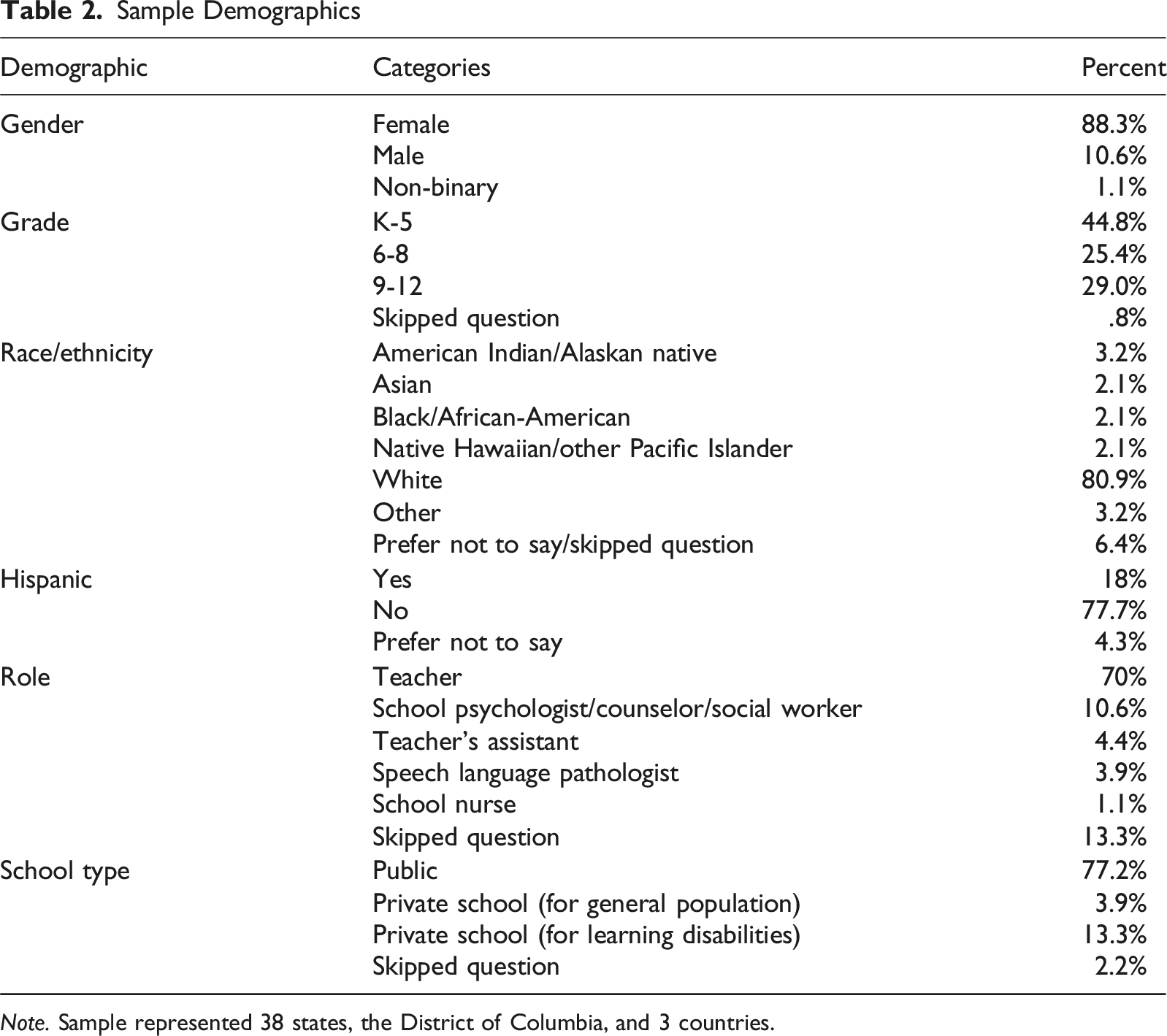
Note. Sample represented 38 states, the District of Columbia, and 3 countries.
This sample included educators across 38 states, the District of Columbia, and three countries. Participants evaluated up to three SwLD students (Modegrade = 8; ModeLD = Dyslexia - 30%), resulting in a total of 397 students evaluated. In addition to their specific learning disabilities, 51.1% of these students had Attention-Deficit/Hyperactivity Disorder.
Measures
WESS 4.0
The original WESS 3.0 (DeBono et al., 2025) was a 26-item, educator-response survey. To make the WESS 3.0 gender neutral, all references to gender in each item were replaced with they/them language. Expecting the WESS 3.0 might require additional items for this general sample, that included educators beyond teachers, 1-2 additional test items were added for each subscale to create the WESS 4.0 (e.g., “The student uses their skills to successfully navigate social situations.” to measure Social Skills). Consistent with the development process for the original WESS items, the new items were created based on the SEL definitions outlined in Table 1. Item development was a collaborative effort involving experts in learning disabilities, educational researchers, and school administrators to ensure both content validity and practical relevance. Several of these new items were pre-tested with Winston teachers during earlier iterations of the WESS, providing preliminary evidence of their clarity and appropriateness for the target population. Ratings for all items were on a 1 (strongly disagree) to 5 (strongly agree) scale. The WESS 3.0 has evidence for its validity (convergent, discriminant, divergent, and construct validity) and reliability (internal consistency, test-retest reliability, interrater reliability).
Devereux Student Strengths Assessment (DESSA)
McDonald’s Omegas, Cronbach’s alphas, Descriptive Statistics, and Correlations Between the WESS 4.0 (1-8) and DESSA (9-16) Subscales
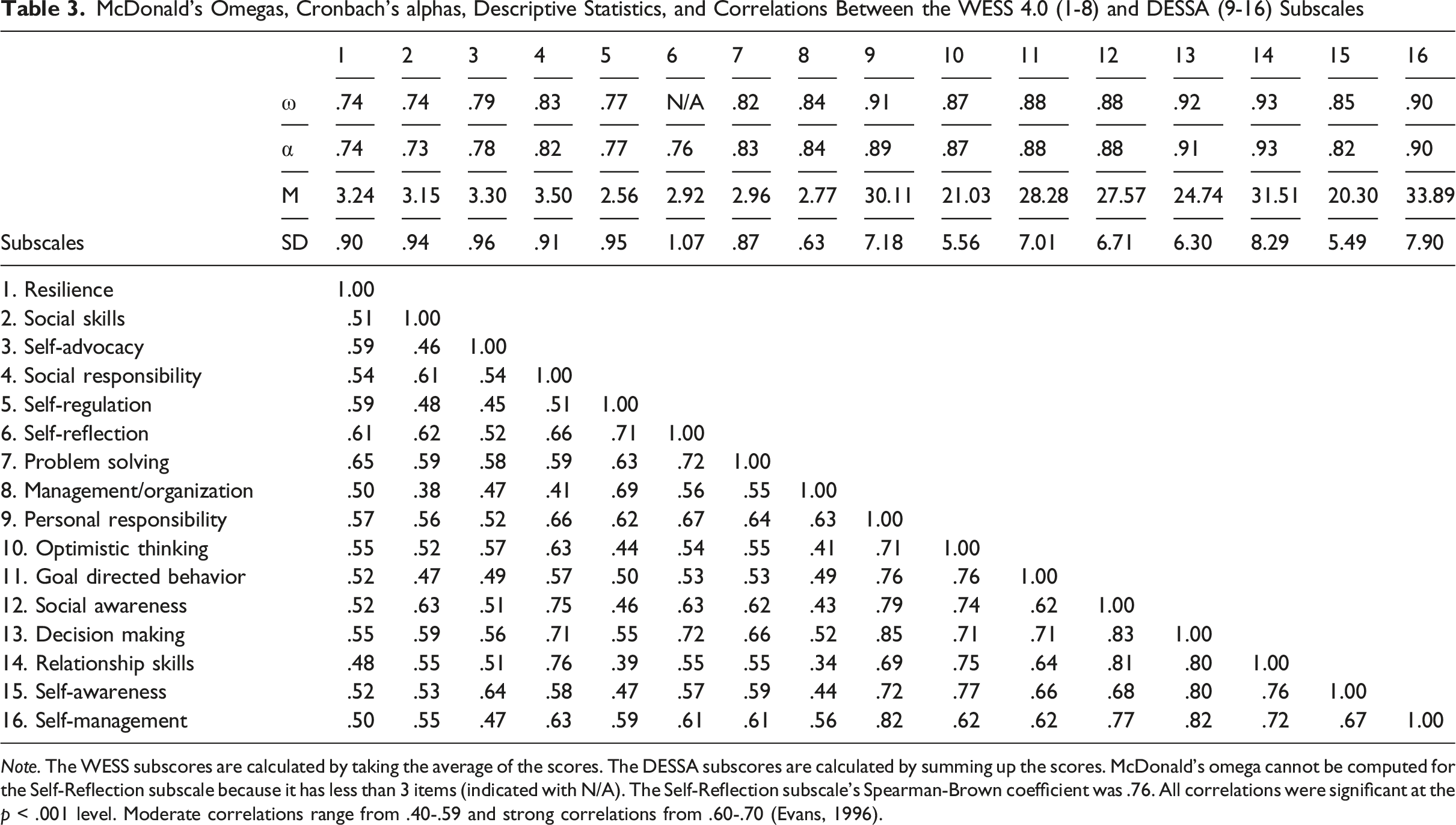
Note. The WESS subscores are calculated by taking the average of the scores. The DESSA subscores are calculated by summing up the scores. McDonald’s omega cannot be computed for the Self-Reflection subscale because it has less than 3 items (indicated with N/A). The Self-Reflection subscale’s Spearman-Brown coefficient was .76. All correlations were significant at the p < .001 level. Moderate correlations range from .40-.59 and strong correlations from .60-.70 (Evans, 1996).
Procedure
After providing informed consent and before completing the SEL assessments, participants received the following instructions: As you are considering your level of agreement to each statement please keep in mind a same-aged, mainstream peer as a comparison point - focus on your thoughts and feelings based on your own personal experiences. There are no right or wrong answers - we just want to know how you feel.
Participants were provided an opportunity to rate three students. After completing assessments for the desired number of students, participants were prompted to provide their email address in order to receive a gift card. Subsequently, participants were thanked for their time and participation.
Study and Data Analysis Procedures
Prior to data collection, Institutional Review Board (IRB) approval was provided by Sterling IRB. Participants completed the study in Qualtrics which included a consent form, a demographic questionnaire about themselves (e.g., age) and about each student they evaluated (e.g., grade, diagnoses), and evaluations of up to three SwLD with the WESS 4.0 and the DESSA. They received a $15 electronic gift card for each student they evaluated.
For the data analysis, subscale scores for the WESS and DESSA were calculated according to each survey’s instructions. To determine if the WESS 4.0 maintains its eight-factor structure, demonstrating its structural validity, a Confirmatory Factor Analysis (CFA) was performed using Analysis of Moment Structures (AMOS 28). Internal consistency was determined by calculating each subscale’s Cronbach’s alpha in the Statistical Package for the Social Sciences (SPSS) 29.0. Minor modifications to the WESS 3.0 were required to improve internal consistency and to improve the model fit in this sample, resulting in the final version of the WESS 4.0. Correlations between the subscales in the WESS 4.0 and the DESSA were calculated to establish the WESS 4.0’s convergent validity.
A post-hoc multivariate analysis of variance (MANOVA) was conducted to examine whether student grade level, used as a proxy for age (given that teachers may not reliably report exact ages), influenced WESS scores. For this analysis, students were categorized into three groups: elementary (K–5), middle school (6–8), and high school (9–12), with grade level serving as the single predictor and the WESS subscale scores as the outcome variables. This approach allowed us to assess whether younger students were rated lower than older students on SEL skills, with particular attention to higher-order competencies such as self-reflection and self-regulation—skills that are known to develop with age and can be challenging even for adults (Gage & Thomas, 2019).
Results
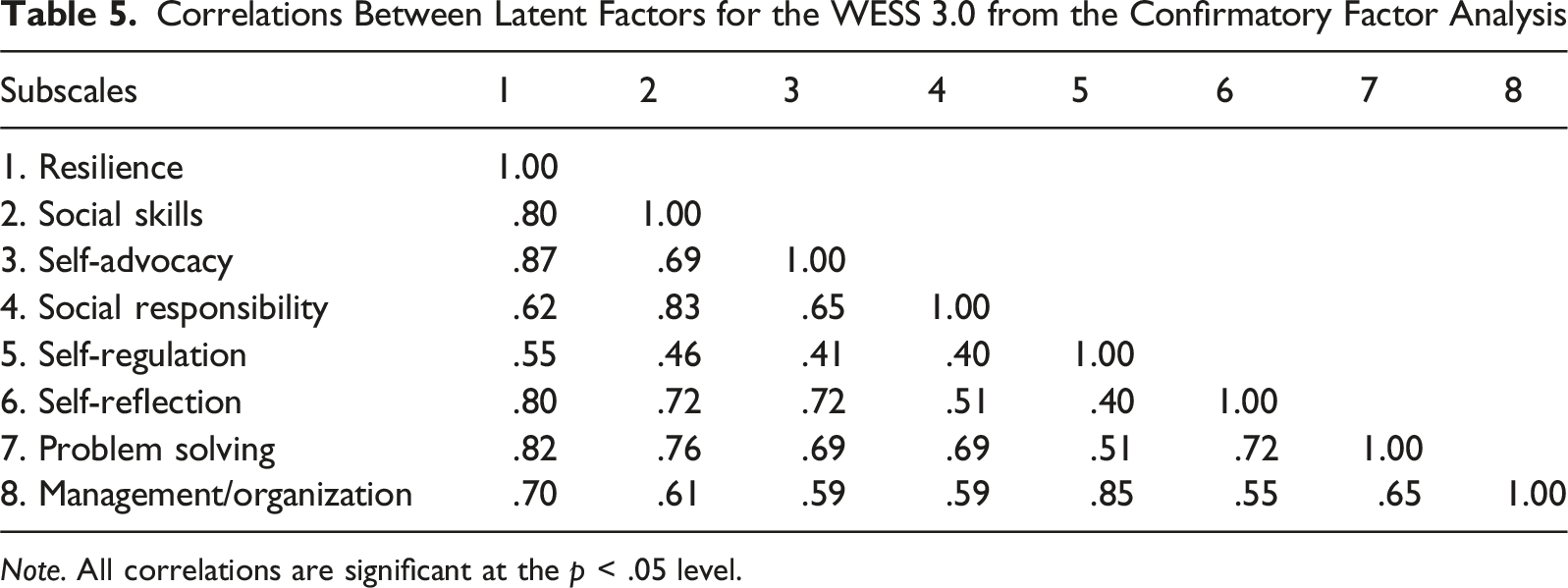
The CFA of the original WESS 3.0 provided evidence supporting the retention of its eight-factor structure (see Figure 1 and Table 4). Correlations between the latent variables ranged from moderate to strong (Table 5) and several goodness-of-fit indices met or exceeded generally accepted criteria, indicating an adequate model fit. The Root Mean Square Error of Approximation (RMSEA) and Standardized Root Mean Squared Residual (SRMR) both met established thresholds, suggesting a good absolute fit of the model to the data. Notably, the RMSEA, in addition to being a measure of absolute fit, also favors more parsimonious models (Hooper et al., 2008), further supporting the efficiency of the eight-factor structure. The Parsimony Normed Fixed Index (PNFI) also met acceptable criteria, indicating that the model achieved a satisfactory balance between fit and complexity (Mulaik et al., 1989). Two additional indices nearly met criteria: the Comparative Fit Index (CFI) and Incremental Fit Index (IFI). These findings combined indicated that the hypothesized eight factor structure fits the data adequately, but some adjustments may be needed to meet most criteria. Confirmatory Factor Analysis: WESS 3.0 - 26-Item Model. Note: All Items Were Entered as Manifest Variables With Error Terms Associated With Each of Them; all Subscales (Factors) Were Entered as Latent Variables With Error Terms Associated With Each of Them (Indicated to the Top Right of Each Latent Variable). All Subscales Were Allowed to Correlate With One Another. Covariances Between Subscales Ranged From .11 (Between Social Skills and Self-Regulation) to .49 (Between Self-Regulation and Management and Organization) and all Were Significant, ps < .001. Numbers to the Upper Right of the Eight Latent SEL Variables and to the Right of the Error Terms (e) Indicate Their Variances Goodness-of-Fit Indices for the WESS 3.0 and 4.0 in a General Population of Educators Note. Model A collapsed the self-regulation and self-reflection latent factors. Model B collapsed the self-regulation and management/organization latent factors. Model C additionally collapsed management/organization with the self-regulation and self-reflection factors. Bolded goodness-of-fit measurements meet criteria (Hu & Bentler, 1999). aIndicate goodness-of-fit measurements that were improved over the 3.0 version. Correlations Between Latent Factors for the WESS 3.0 from the Confirmatory Factor Analysis Note. All correlations are significant at the p < .05 level.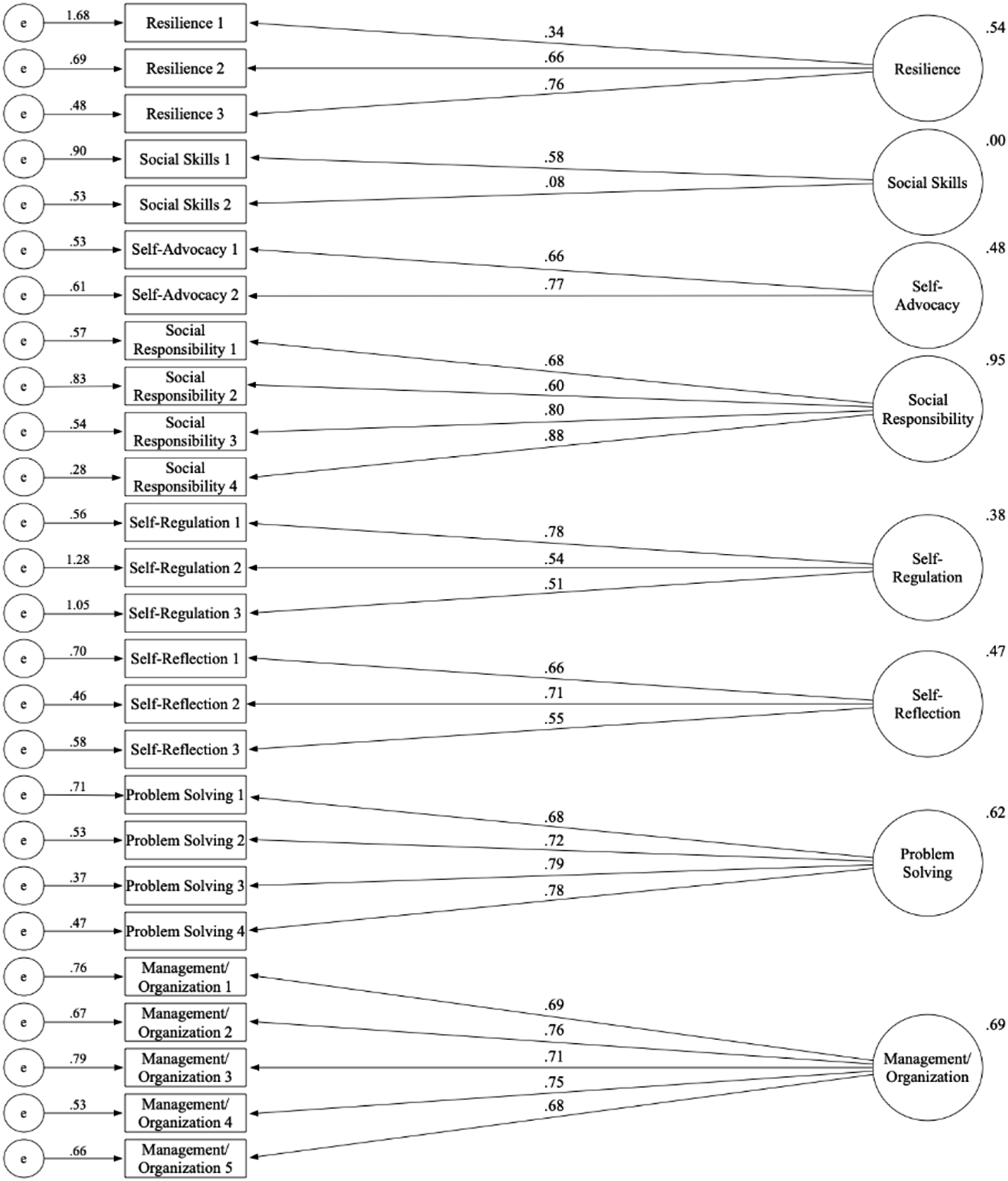
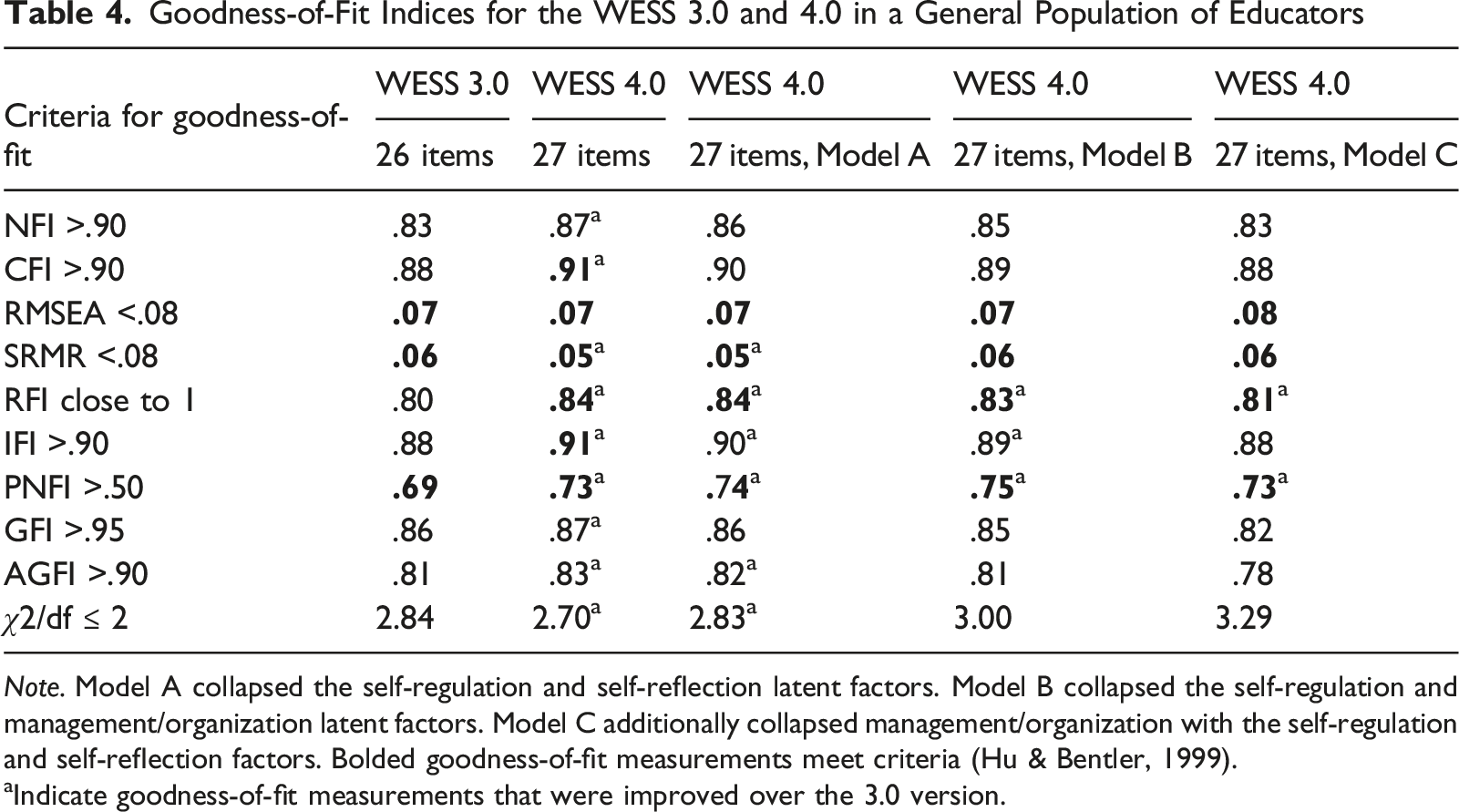
The analysis of the WESS 3.0 subscales demonstrated room for improvement (Table 4). Several WESS 3.0 subscales did not reach the criteria of Cronbach’s alpha >.70, indicating questionable internal consistency (Mallery & George, 2003) in the following subscales: resilience, self-advocacy, social skills, and self-reflection. Improving the internal consistency of these subscales is an appropriate next step, as it will reduce the amount of error in the survey and increase the power of the CFA (Costa & Sarmento, 2019; Shultz et al., 2020). To address the shortcomings in internal consistency, several minor adjustments to these subscales were required: the Resilience subscale was strengthened by item replacement, Social Skills and Self-Advocacy subscales were augmented with new items, and Self-Reflection was optimized by removing two items (e.g., The student is aware of their academic goals) and adding a new one (The student accepts responsibility for their actions). These modifications resulted in all subscales achieving Cronbach's alpha coefficients above .70. These new subscales were entered into the CFA and demonstrated that the model fit improved substantially (Table 4 and Figure 2). This finalized 27-item version of the WESS, version 4.0, met the same goodness-of-fit criteria as the 3.0 version, but also met the following criteria: CFI, RFI, IFI, and PNFI. Confirmatory Factor Analysis: WESS 4.0 - 27-Item Model. Note: All Items Were Entered as Manifest Variables With Error Terms Associated With Each of Them; all Subscales (Factors) Were Entered as Latent Variables With Error Terms Associated With Each of Them (Indicated to the Top Right of Each Latent Variable). All Subscales Were Allowed to Correlate With One Another. Covariances Between Subscales Ranged From .49 (Between Social Skills and Management/Organization) to .94 (Between Self-Regulation and Self-Reflection) and all Were Significant, ps < .001. Numbers to the Upper Right of the Eight Latent SEL Variables and to the Right of the Error Terms (e) Indicate Their Variances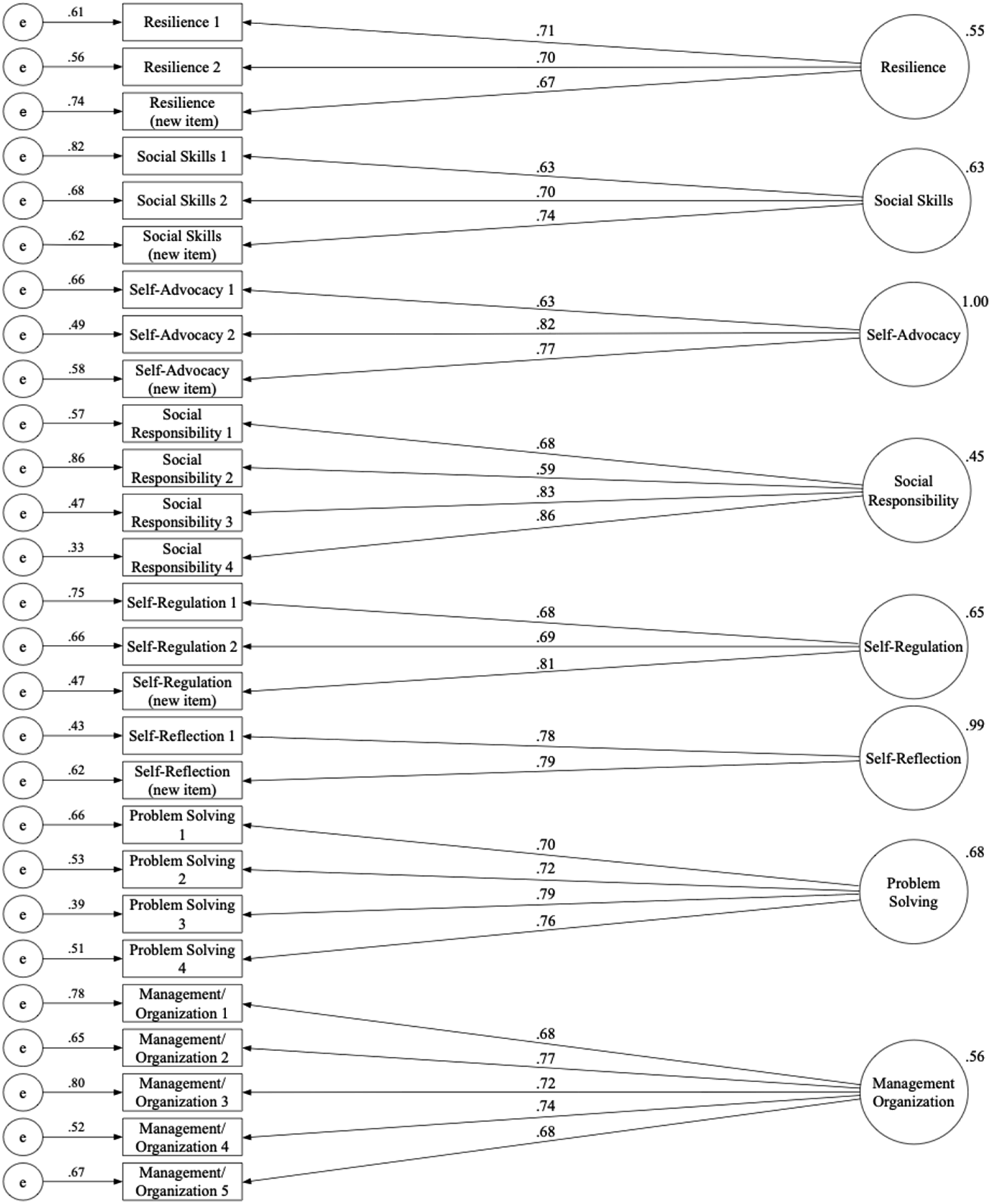
Correlations Between Latent Factors for the WESS 4.0 from the Confirmatory Factor Analysis
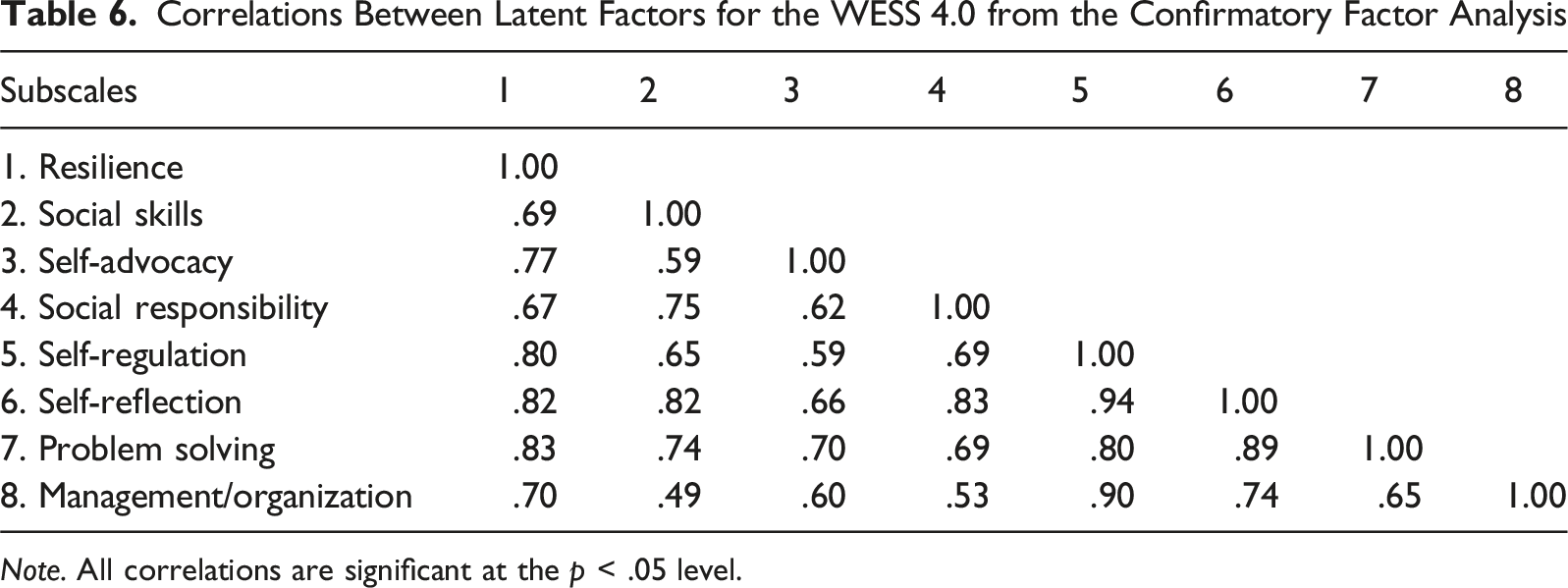
Note. All correlations are significant at the p < .05 level.
Additionally, a review of the CFA solutions for both the WESS 3.0 and 4.0 revealed no evidence of Heywood cases; that is, there were no standardized factor loadings exceeding 1.0 and no negative error variances. Thus, both models demonstrated proper solutions.
Convergent Validity
The revised WESS 4.0 exhibited positive and significant correlations with the DESSA subscales, with many showing moderate to strong associations (Table 3). The size of these correlations consistently fit within the .40 to .70 range that was expected between these surveys (Anthony et al., 2022). Notably, the WESS Social Responsibility subscale demonstrated particularly robust correlations (rs > .75) with DESSA's Social Awareness and Relationship Skills subscales, underscoring the instrument's convergent validity. The smallest correlation was between the WESS 4.0’s management/organization and DESSA’s relationship skills subscales, which indicates that they may be both measuring SEL — given the partial overlap in scores — but they are likely measuring different constructs.
Student Grade Level and SEL Scores
Multivariate ANOVA: Grade as a Predictor of SEL Scores From the WESS
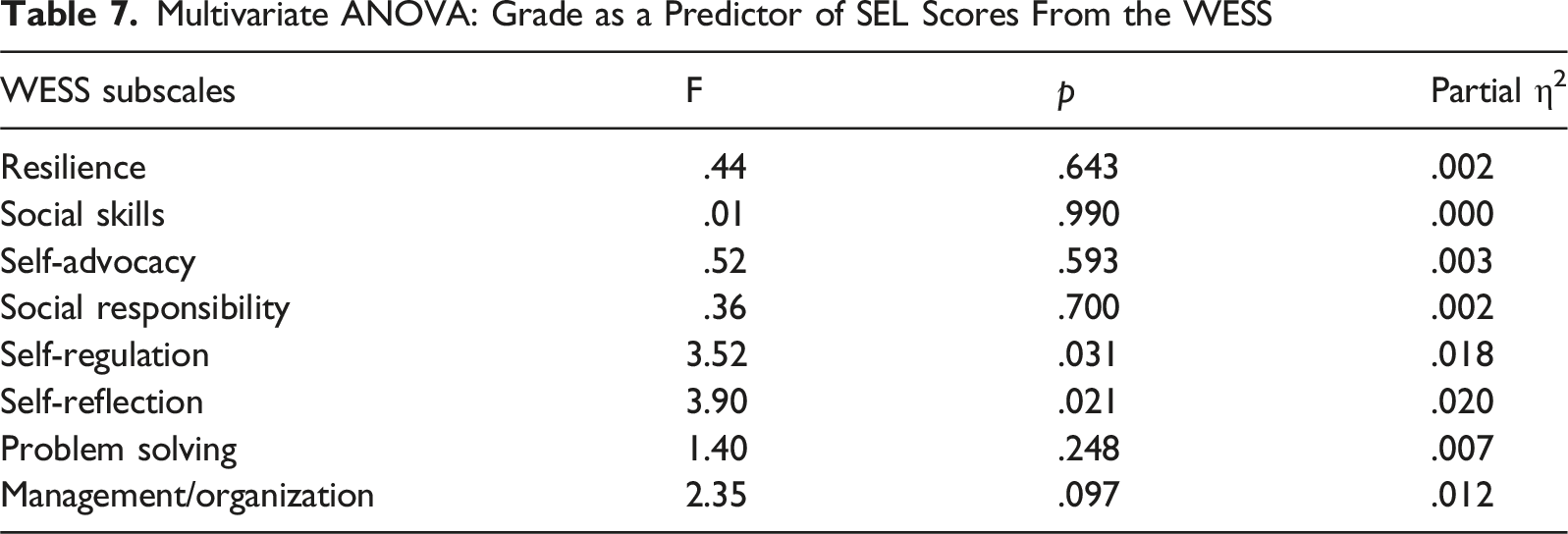
Specifically, SwLD in elementary grades scored significantly lower on self-reflection (M = 3.06, SD = 0.87) and self-regulation (M = 2.28, SD = 1.12) compared to their middle school (Self-Reflection: M = 3.21, SD = 0.86; Self-Regulation: M = 2.57, SD = 1.14) and high school peers (Self-Reflection: M = 3.33, SD = 0.79; Self-Regulation: M = 2.59, SD = 1.16). These findings are consistent with the literature indicating that self-regulation and self-reflection are developmental skills that typically improve with age and experience (Lyons & Zelazo, 2011).
Notably, while statistically significant, the observed differences were small in magnitude (partial η2 = .02 for both self-regulation and self-reflection). This suggests that although age and grade level contribute to the development of these SEL skills, other factors may also play a substantial role.
Discussion
The WESS 3.0 demonstrated acceptable fit and efficiency with an eight-factor structure (Hooper et al., 2008) in a general population of educators. However, the WESS 4.0, with minor refinements to the 3.0 version, improved the WESS’s psychometric properties, including internal consistency and convergent validity, supporting its use as a reliable and valid tool for assessing SEL in SwLD. The WESS 4.0 offers valuable information for educators to design programming addressing SwLD's strengths and weaknesses, and for researchers to assess the effectiveness of special education, particularly SEL, interventions.
The increasing recognition of SEL as a crucial component for SwLD necessitates targeted tools and interventions (Elias, 2004). Although broad SEL models exist, they often lack focus on resilience and self-advocacy, skills vital for SwLD (Schoon, 2021). The WESS 4.0 directly addresses this need, offering a reliable and valid SEL measure specifically designed and validated for this population, contributing to the call for more assessments providing greater equity for diverse learners (Jagers et al., 2019).
Addressing a Critical Gap
The WESS 4.0 fills a critical gap by providing an SEL assessment specifically designed and validated for SwLD, whereas most existing measures developed primarily with general student populations. Prior SEL assessments often excluded or statistically controlled for SwLD (DeBono et al., 2025), yet the WESS 4.0 reflects the unique strengths and challenges of this group (Fuchs et al., 2004). Its focus on resilience and self-advocacy—skills essential for SwLD success in secondary and postsecondary settings (Daly-Cano et al., 2015; Peddigrew et al., 2022)—sets it apart from established measures. For example, the Resiliency Scales for Children and Adolescents (Prince-Embury, 2008) assesses resilience through a self-report measure and executive functioning assessments such as the Behavior Rating Inventory of Executive Function (BRIEF; Gioia et al., 2000) target narrower cognitive and behavioral regulation domains like planning and organizing through teacher and parent ratings, which may be useful in targeted interventions. Several of the executive functioning skills assessed in the BRIEF (e.g., planning and organization) are captured in the WESS 4.0’s Management/Organization subscale, which incorporates them within a broader SEL framework tailored to SwLD. By integrating these domains into a cohesive SEL framework, the WESS 4.0 complements existing tools while advancing more equitable, population-specific assessment practices (Aronson & Laughter, 2016; Durlak et al., 2022; Li et al., 2024; Montenegro & Jankowski, 2017). Moreover, this integrated approach may help identify specific SEL skills that require further assessment and targeted intervention to effectively support SwLD’s needs.
Limitations and Future Research Directions
The WESS 4.0 development followed rigorous scale development procedures (Boateng et al., 2018; Hinkin, 1995). While these steps were carefully undertaken in the present investigation, further validation by independent researchers is encouraged to fully establish its reliability and validity (DeVellis & Thorpe, 2022).
Several substantial correlations emerged among factors in the CFA of the 8-factor model, with the most notable being those between self-reflection, management/organization, and self-regulation. The high correlation between self-reflection and self-regulation is theoretically understandable, as effective self-regulation inherently involves some degree of self-reflection (Lyons & Zelazo, 2011). However, attempts to collapse these factors into a single construct resulted in poorer model fit, suggesting that, despite their conceptual overlap, these constructs are empirically distinguishable within the WESS framework.
This finding aligns with recommendations in the literature (Geiser et al., 2015), which caution against collapsing factors that are grounded in established theoretical models. CFA is designed to test a priori frameworks (Kline, 2023; Liu et al., 2020), and collapsing factors post-hoc can distort the intended factor structure, complicating the interpretation of relationships between observed variables and latent constructs. Such an approach risks diminishing the depth and accuracy of the assessment, as important nuances between constructs may be lost (Kyriazos & Poga, 2023). Moreover, empirical evidence indicates that collapsing factors can introduce bias into parameter estimates, potentially leading to over or underestimation of factor loadings and misrepresentation of the true relationships in the data (Geiser et al., 2015).
Based on these considerations, it was determined that maintaining the original factor structure in the WESS 4.0 was most appropriate. Nonetheless, future research should continue to explore whether further refinement can enhance the distinctiveness of these factors or, alternatively, whether there are empirical or theoretical justifications for combining them in specific contexts.
This study, in line with previous research (DeBono et al., 2025) demonstrating convergent validity for the WESS 3.0 with the Mindsets, Skills, and Habits Survey (Transforming Education, 2016), shows evidence for the WESS 4.0 having convergent validity due to its correlations with the DESSA. Combined, these findings provide multiple sources of evidence supporting the convergent validity of the WESS. However, further evidence is warranted. In particular, the DESSA subscales in our sample showed high intercorrelations—exceeding .80 among Social Awareness, Decision Making, Relationship Skills, and Self-Awareness (see Table 3)—suggesting these subscales may not be well differentiated and could be assessing the same or overlapping constructs. This observation highlights the importance of comprehensive construct validation, which requires the evaluation of both convergent and discriminant validity (Cronbach & Meehl, 1955). Future studies should consider using SEL assessments with well-differentiated factors to further evaluate the convergent and discriminant validity of the WESS 4.0.
Additionally, the relationship between the evaluator and the student may influence the accuracy of WESS ratings. Variables such as the duration of the evaluator’s experience with the student and the frequency of their interactions could affect the reliability of the assessment. Future research should examine whether a minimum threshold of familiarity or number of interactions is necessary to ensure accurate evaluation of students’ SEL skills.
Our findings also suggest that grade level and developmental stage play important roles in SEL skill acquisition. As expected, younger students, particularly those with SwLD, were rated lower in self-regulation and self-reflection—skills that typically develop with age and experience (Butler & Schnellert, 2015; Lyons & Zelazo, 2011). Although these effects were statistically significant, they were small in magnitude. This small effect is likely attributable to the instructions, which asked participants to evaluate their students in comparison to a “same-aged, mainstream peer.” Nonetheless, these results underscore the need to consider age and developmental factors when developing and interpreting SEL assessments.
The design of a brief SEL survey for teachers assessing SwLD offers several practical advantages. Shorter measures reduce rater fatigue, improve data quality, and minimize disruptions to instructional time (Lane et al., 2014; Raver et al., 2011). Briefer assessments are also more feasible for teachers who must assess large numbers of students within limited time frames (McKown et al., 2009). However, the emphasis on brevity resulted in a two-item subscale for Self-Reflection in the WESS 4.0. Although the overall model fit was excellent and the Self-Reflection subscale was internally consistent with strong factor loadings (.78 and .79; see Figure 2), two-item subscales can pose challenges for stability and model specification (Knekta et al., 2019). To mitigate these risks, we employed a large sample, ensured careful model specification, and confirmed high reliability for the subscale (Knekta et al., 2019). Nevertheless, ongoing research should continue to monitor the stability of this subscale and consider adding items as needed to maintain both internal consistency and model fit.
To contribute greater equity in SEL assessments, a Spanish translation of the WESS is underway (Raisch et al., 2024). This addresses the demand for accessible assessments for non-English speakers. As the second most spoken native language globally (Instituto Cervantes, 2023), a Spanish version of the WESS will enable comprehensive assessment of SEL skills among SwLD in Spanish-speaking communities, potentially leading to more targeted interventions. This aligns with developing more inclusive SEL frameworks. Future research should explore SwLD’s unique SEL needs and trajectories worldwide, informing comprehensive and inclusive educational practices.
Implications for Practice and Policy
The WESS 4.0 may provide an important contribution to schools with Multi-Tiered Systems of Support (MTSS) by providing crucial data on SwLD's social and emotional needs (Arden, 2021). Incorporating the WESS 4.0 into assessment protocols allows schools to accurately identify and respond to the unique SEL challenges faced by SwLD. This facilitates targeted interventions, enabling educators to design individualized strategies based on specific SEL strengths and weaknesses (Cook et al., 2015). Regular WESS 4.0 administration would allow for tracking SEL development, enabling timely adjustments to support strategies (Fuchs & Fuchs, 2006), informing resource allocation (Eagle et al., 2015), and guiding professional development to enhance educators’ capacity to support SwLD's social-emotional needs (Desimone & Garet, 2015), ultimately improving outcomes for SwLD.
Accurate SEL assessment may demonstrate SEL's benefits, encouraging policymakers to integrate SEL into education standards and curricula. This could prompt a revision of assessment systems, inspiring more holistic methods incorporating social-emotional skills alongside academic achievements. These findings could catalyze cross-sector collaboration, fostering policies that promote partnerships between education, mental health, and social services sectors to provide comprehensive support for SwLD’s social and emotional needs and addressing unintended consequences of existing education policies. As SEL gains recognition globally, the WESS 4.0 and its translations could inform education policies internationally, potentially leading to collaborations and knowledge sharing worldwide. Utilizing the WESS in special education may shape education policies to improve student outcomes and well-being for SwLD.
Footnotes

Funding
The author(s) disclosed receipt of the following financial support for the research, authorship, and/or publication of this article: support has been received from the Learning Disabilities Foundation of America however, the opinions expressed are those of the authors and do not necessarily reflect the views of the Foundation.
Declaration of Conflicting Interests
The author(s) declared no potential conflicts of interest with respect to the research, authorship, and/or publication of this article.
Data Availability Statement
The data supporting this study’s findings are available from the corresponding author, Amber DeBono, upon reasonable request.
IRB Statement
The research reported in this manuscript was approved by an Institutional Review Board (IRB), Sterling IRB.