




Abstract
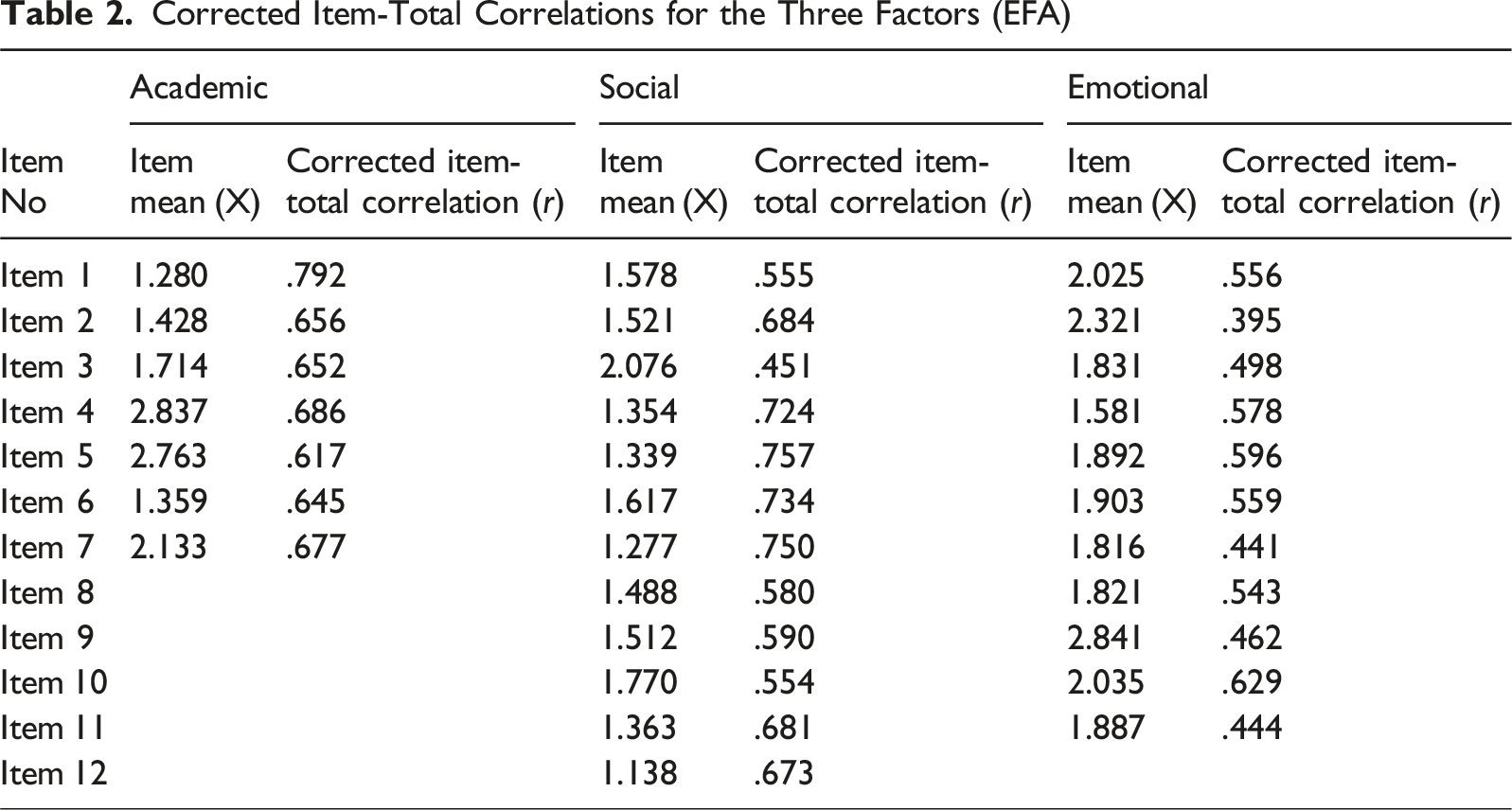
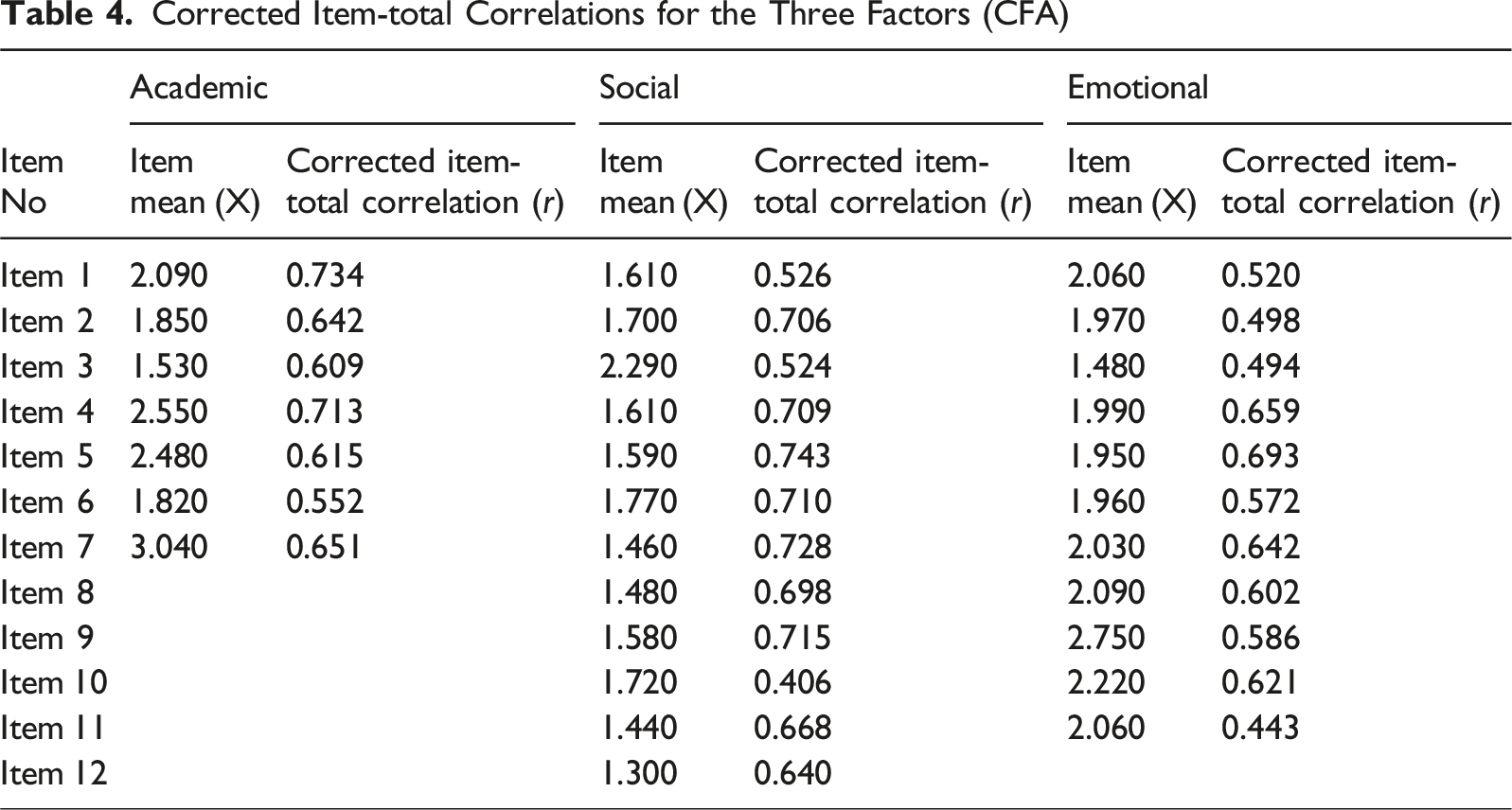
Early screening of primary school students’ social, emotional, and academic risks is critical to improving student achievement and preventing long-term problems and maladaptive outcomes. This study reports the development of the Student Risk Assessment Tool Parent Form (SRAT-PF), designed to assess academic, social, and emotional risk factors in primary school students between the ages of 6 and 10. The scale was administered to 505 parents in Ankara province, Türkiye, and tested using confirmatory factor analysis. The scale consists of 30 items: 7 in the academic risk dimension, 12 in the social risk dimension, and 11 in the emotional risk dimension. The analysis showed that the scale had acceptable values regarding model-data fit (RMSEA = 0.047; CFI = 0.971; TLI = 0.968; SRMR = 0.060). The Cronbach alpha coefficients of the scale sub-dimensions were .91, .97, and .97, respectively. Item-total correlations ranged from 0.617 to 0.792 for the academic factor, from 0.451 to 0.757 for the social factor, and from 0.395 to 0.629 for the emotional factor. These results support the validity and reliability of the SRAT-PF as a valid and reliable tool for assessing student risk.
Introduction
Academic, social, and emotional difficulties commonly observed in primary school students are critical risk factors that may negatively influence their long-term academic success and mental health. Such risks often stem from low educational achievement, grade repetition, behavioral problems, low socioeconomic status, and school environments where these challenges are concentrated (Carrasco, 2019). In this context risk factors refers to child, family, and environmental characteristics that may increase the likelihood of future academic, social, or emotional difficulties (Greenberg et al., 2017; National Research Council and Institute of Medicine, 2009). If these risks are not identified and addressed at an early stage, they increase the likelihood of academic failure, rejection by peers, substance abuse, and delinquency (Susas, 2024). Particularly in the post-pandemic period, academic, social, and emotional problems have increased significantly (Lever et al., 2023; UNICEF, 2021). This increase has led to difficulties in students’ ability to adjust, reduced learning motivation, and widespread behavioral problems (Spiteri, 2021).
Early academic, social, and emotional risk indicators are critical in identifying students needing intervention (Montague et al., 2005). Elliott et al. (2007) showed that universal early screening tools provide a practical approach to identifying student risk factors and enable faster and more targeted implementation of intervention strategies. Severson et al. (2007) emphasize that preventive and early screening approaches to identifying at-risk students have positive outcomes at both individual and general levels and that innovative methods are becoming increasingly important in professional practice. Lane, Kalberg, et al. (2010), in their study comparing the effectiveness of systematic screening tools for identifying emotional and behavioral disorders, emphasized that these tools enable early identification of students’ social and emotional needs and improve support processes in educational settings. However, researchers emphasize that difficulties in identifying students with emotional problems often delay the provision of necessary interventions (Eklund et al., 2009; Ringel & Sturm, 2001). Effective prevention of potential risks requires a systematic approach that includes family and school collaboration at the individual level (Lane et al., 2013).
It is essential for parents to carefully monitor their children’s academic, social, and emotional development and provide support when needed (Martinez-Yarza et al., 2024). In particular, parents play a crucial role in identifying risk factors that are difficult to detect in the school environment by closely observing their children’s attitudes and behaviors during play, homework, and social interactions with others in the home environment (Zhu et al., 2024). Gathering feedback from parents helps educators better understand children’s characteristics and sociocultural environment, enabling them to plan effective and individualized interventions (Park et al., 2011).
Among the risk assessment tools available, internationally widely used scales such as the Strengths and Difficulties Questionnaire (SDQ), the Behavior Assessment System for Children (BASC), and the Child Behavior Checklist (CBCL) stand out. The SDQ is a measure developed to assess children’s behavioral and emotional difficulties and is valid in different cultural contexts worldwide (Goodman, 1997). The BASC-3 provides a comprehensive system for assessing children’s academic performance, and social skills, conduct difficulties (Reynolds & Kamphaus, 2015). The CBCL aims to assess children’s behavioral and emotional problems from the parent’s perspective. Researchers and clinicians worldwide widely use this tool, which comes in two different forms for children aged 3–5 and 6–18 years (Achenbach & Rescorla, 2001). The success of these tools depends on their cultural adaptability and ease of use in different contexts. However, as Kohrt et al. (2014) note, without attention to local cultural concepts of distress and functioning, internationally developed tools may fail to address the specific needs of local cultural and educational systems. While several parenting risk assessment tools exist internationally, there is a need for a culturally responsive instrument developed specifically for the Turkish context. Research has shown that family dynamics, social expectations, and access to services differ considerably across cultural contexts (De Castella et al., 2013). Family structure, social support systems, parenting approaches, and societal perceptions toward children in Türkiye differ from other societies. For example, the role of the extended family in caregiving, the importance of kinship support, and the influence of religious and cultural values on child-rearing practices directly shape how risk is perceived (Uçar Çabuk et al., 2021) Certain indicators of risk, such as social isolation or signs of stress, may be expressed differently or interpreted in culturally distinct ways by families in Türkiye In addition, parents in Türkiye tend to take a more involved, protective, and directive role in their children’s education (Sad, 2012). Developing a risk assessment scale in Turkish can fill a critical gap by offering a culturally sensitive tool to evaluate children’s academic, social, and emotional needs at the national level while also reflecting the unique characteristics of Türkiye’s educational and family systems.
Such a tool allows for understanding the pupil’s individual needs and developing more effective intervention plans, considering the cultural context. In this context, developing a valid and reliable assessment tool to identify academic, social, and emotional risk factors is necessary to strengthen the effectiveness of early intervention and family-school collaboration. In this study, we aim to develop the Student Risk Assessment Tool Parent Form (SRAT-PF) to assess and monitor primary school students’ academic, social, and emotional risk levels. Thus, we ask the following research questions: RQ1. What is the evidence for the content validity of the SRAT-PF? RQ2. What is the evidence for the construct validity of the SRAT-PF?
Method
Participants
There are two different participant groups in the study. The first group is the participants from whom data were obtained for the pilot study to be used in the exploratory factor analysis, which is the first stage in identifying the factor structure of the newly developed items. The pilot study participants consisted of parents (n = 217) with students in primary schools. In the pilot study, when the education levels of the parents who completed the form were analyzed, 0.9% (n = 2) of the mothers were illiterate, 5.1% (n = 11) were primary school graduates, 7.8% (n = 17) were secondary school graduates, 31.8% (n = 69) were high school graduates and 54.4% (n = 118) were university graduates. The educational level of the fathers showed that 0.5% (n = 1) were illiterate, 5.1% (n = 11) were primary school graduates, 11.5% (n = 25) were secondary school graduates, 21.2% (n = 46) were high school graduates and 61.8% (n = 134) were university graduates. The mean age of the participants was M = 38.24 (SD = 5.67).
The second group is (a separate, independent sample from the pilot study) the participants from whom data were obtained for the final study to be used in the confirmatory factor analysis to validate the structure derived from exploratory factor analysis. In the final study, when the distribution of the participants who filled out the scale was analyzed, the majority of the participants were mothers. Of 288 participants, 227 (78.8%) completed the form as mothers. Fathers constituted 17.7% of the total, with 51 respondents. The number of participants in the other category (e.g., grandparents) was 10, and this rate was 3.5%. The mean age of the participants in the study was M = 36.03 (SD = 8.19). When the distribution of the educational level of the parents was analyzed, 4.2% (n = 12) of the mothers were illiterate, 14.6% (n = 42) were primary school graduates, 19.8% (n = 57) were secondary school graduates, 39.9% (n = 115) were high school graduates and 21.5% (n = 62) were university graduates. Regarding the educational level of the fathers, 1.0% (n = 3) were illiterate, 17.7% (n = 51) were primary school graduates, 21.2% (n = 61) were secondary school graduates, 37.8% (n = 109) were high school graduates and 22.2% (n = 64) were university graduates. Observations show that most mothers and fathers have a high school education.
Procedure
Development of the Scale
The research is a scale development study that aims to create a valid and reliable measurement tool. We applied the stages of theoretical framework determination, item pool construction, expert review, pre-application, primary application, validity and reliability analyses, item analysis, and reporting.
SRAT-PF screens and monitors primary school students who face academic, social, and emotional risks as perceived by their parents. Its development followed these steps: conducting a literature review, identifying key factors, generating items, consulting experts, collecting data, and analyzing results. In the first step, researchers reviewed existing scales for identifying students’ risky behaviors and confirmed the absence of a similar scale. In the process of item development, internationally recognized and psychometrically validated risk assessment tools were examined to guide the conceptualization of the SRAT-PF. Among these, BASC-3 (Reynolds & Kamphaus, 2015), Student Risk Screening Scale-Internalizing and Externalizing (Gregory et al., 2021), Turkish Form of Student Risk Screening Scale (Çetiner & Sucuoğlu, 2018) were particularly informative. Although no items were directly adapted from these instruments, the underlying domains, constructs, and item structures informed the development of the SRAT-PF’s item pool. In the second step, they examined the literature on risky behaviors and determined the scale’s dimensions. In the third step, they generated items for these specified dimensions.
Item generation for the SRAT-PF began with the researchers preparing an initial pool of 50 items (11 items, 20 items, and 19 items for academic, social, and emotional dimensions, respectively) based on theoretical considerations and observations. Three experts who have PhD degree in the field of special education reviewed these items for appropriateness, clarity, comprehensibility, and observability of the behaviors described, and they made suggestions for item revisions and additions. The experts evaluated each item in terms of its relevance, clarity, comprehensibility, and observability of the described behavior. Based on their feedback, some modifications were made in the initial item pool: four items from the academic dimension, three items from the social dimension, and three items from the emotional dimension were omitted from the item pool as they were considered not adequate for measuring their respective dimensions. Besides, one item from the social dimension was corrected for being only reverse-coded item and two items from the emotional dimension were reviewed for clarity. As a result of this expert opinion and item refinement process, 40 items (7 items for academic dimension, 17 items for social dimension and 16 items for emotional dimension) were retained for the pilot study. These retained items that were modified according to the experts’ recommendations were subjected to exploratory factor analysis in the pilot study to determine the underlying structure of the scale.
After completing the item writing process for the scale consisting of 40 items, we initiated the data collection phase with pilot sample to examine the scale’s psychometric properties. The researchers gathered data from parents. Parents marked how often they observed each behavior in their children using a five-point Likert scale (1 = “never,” 2 = “rarely,” 3 = “sometimes,” 4 = “often,” 5 = “always”). Following the exploratory factor analysis conducted with the pilot sample, a refined set of items (30 items in total: 7 items for the academic dimension, 11 items for social dimension and 12 items for the emotional dimension) was determined based on factor loadings, binary item correlations, item-total correlations. This final item pool was then subjected to confirmatory factor analysis using data collected from different parents who were totally independent from the pilot sample to see whether the contract proposed by EFA sounds statistically to the new sample.
Data Collection
As part of the research, teachers in Ankara contacted their students’ parents. The application involved a sample of 505 parents of first, second, third, and fourth-grade students, corresponding to an age range of 6 to 10 years. During data collection, teachers guided parents in completing the provided forms, and the final data were used for confirmatory factor analysis.
Data Analyses
Researchers carried out several procedures to collect validity and reliability evidence during the development of SRAT-PF. They first conducted exploratory factor analysis (EFA) to assess the scale’s construct validity. Before EFA, they performed the Kaiser–Meyer–Olkin (KMO) test and Bartlett’s sphericity test to determine the suitability of the data for factor analysis.
Researchers established criteria to determine the suitability of the data for factor analysis, requiring a KMO value of .50 or above and a statistically significant Bartlett’s test (Field, 2009). They considered eigenvalues, the Scree plot (Figure 1), expert opinions, and item content to determine the number of factors. They applied a factor load limit value of 0.40 to assess each item’s relationship with its respective factor (Tabachnick & Fidell, 2013). Using SPSS (version 25), they conducted exploratory factor analysis (EFA) and calculated Cronbach’s alpha coefficients for each factor to assess scale reliability. They also analyzed item-total score correlation coefficients to evaluate each item’s contribution to the scale’s overall structure. Scree Plot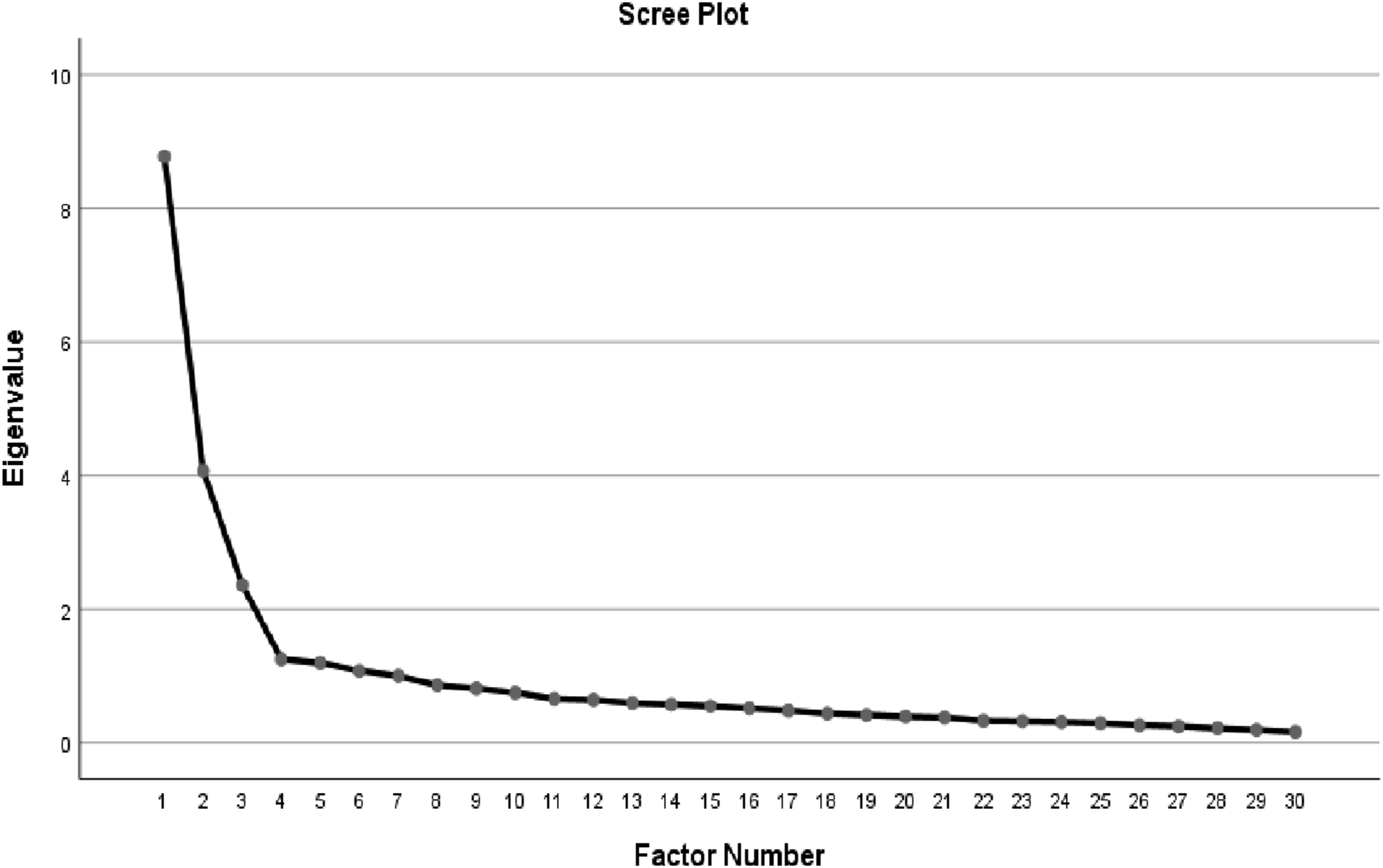
To examine the suitability of the three-dimensional structure (academic, social, and emotional) proposed for SRAT-PF, researchers conducted confirmatory factor analysis (CFA). This analysis tested whether the three-dimensional model aligned with the data. They performed all analyses using Mplus software and evaluated model fit based on the following criterion: a Root Mean Square Error of Approximation (RMSEA) value below 0.06 indicates a good fit (Hu & Bentler, 1999), Standardized Root Mean Square Error of Squaring (SRMR) < 0.05 indicates good fit and <0.10 indicates acceptable fit (Hu & Bentler, 1995), Comparative Fit Index (CFI) and Tucker-Lewis Index (TLI) values close to 1.00 indicate good fit (Hu & Bentler, 1998). They calculated Cronbach’s alpha McDonal’s omega coefficients and item-total score correlations to evaluate the scale’s reliability. The results supported the theoretical structure of the scale and indicated that the items are consistent with the intended academic, social, and emotional dimensions.
Results
Factor Loadings for the Academic, Social and Emotional Factors
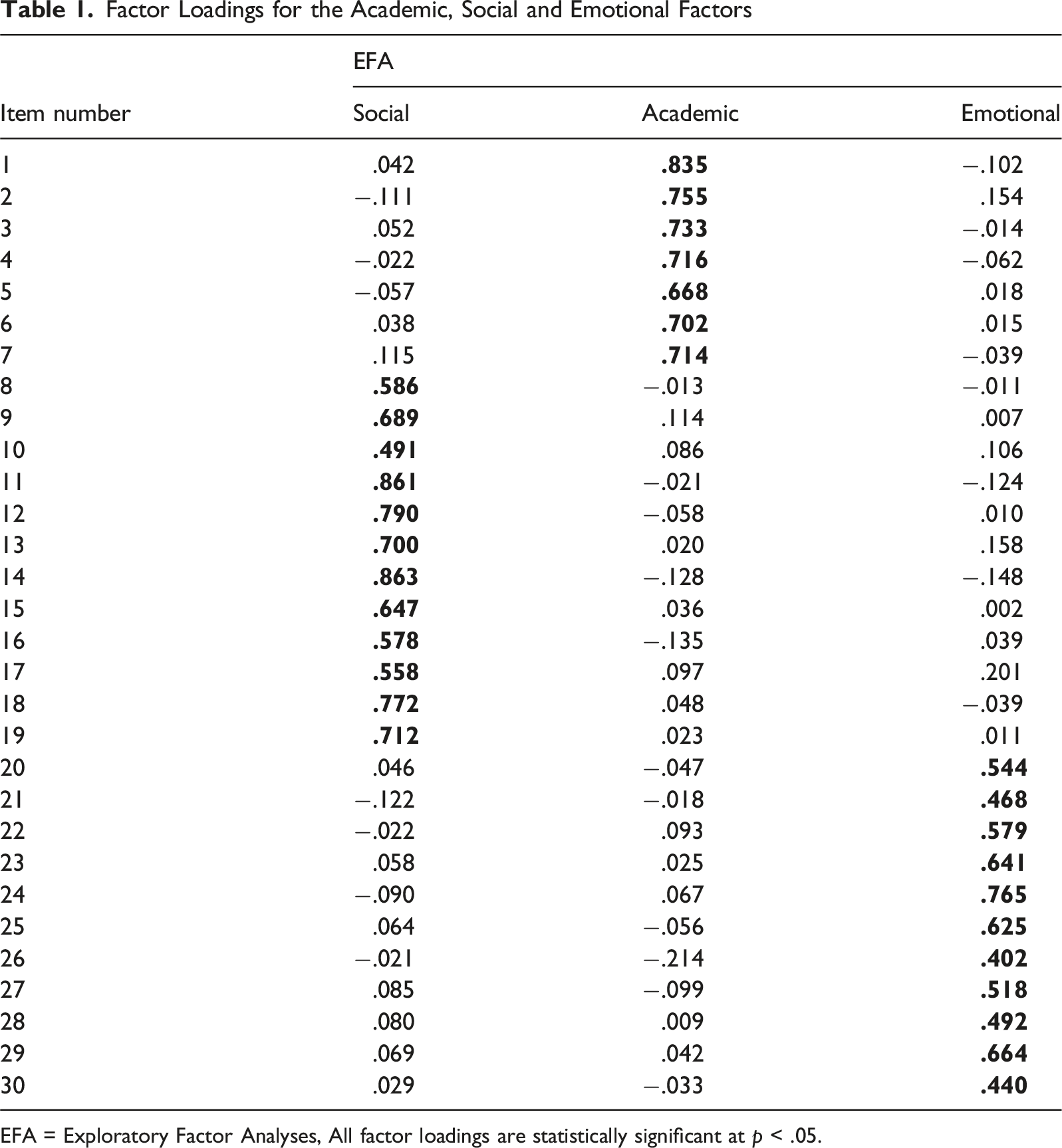
EFA = Exploratory Factor Analyses, All factor loadings are statistically significant at p < .05.
Corrected Item-Total Correlations for the Three Factors (EFA)
Standardized Factor Loadings and Standard Errors for the Academic, Social and Emotional Factors
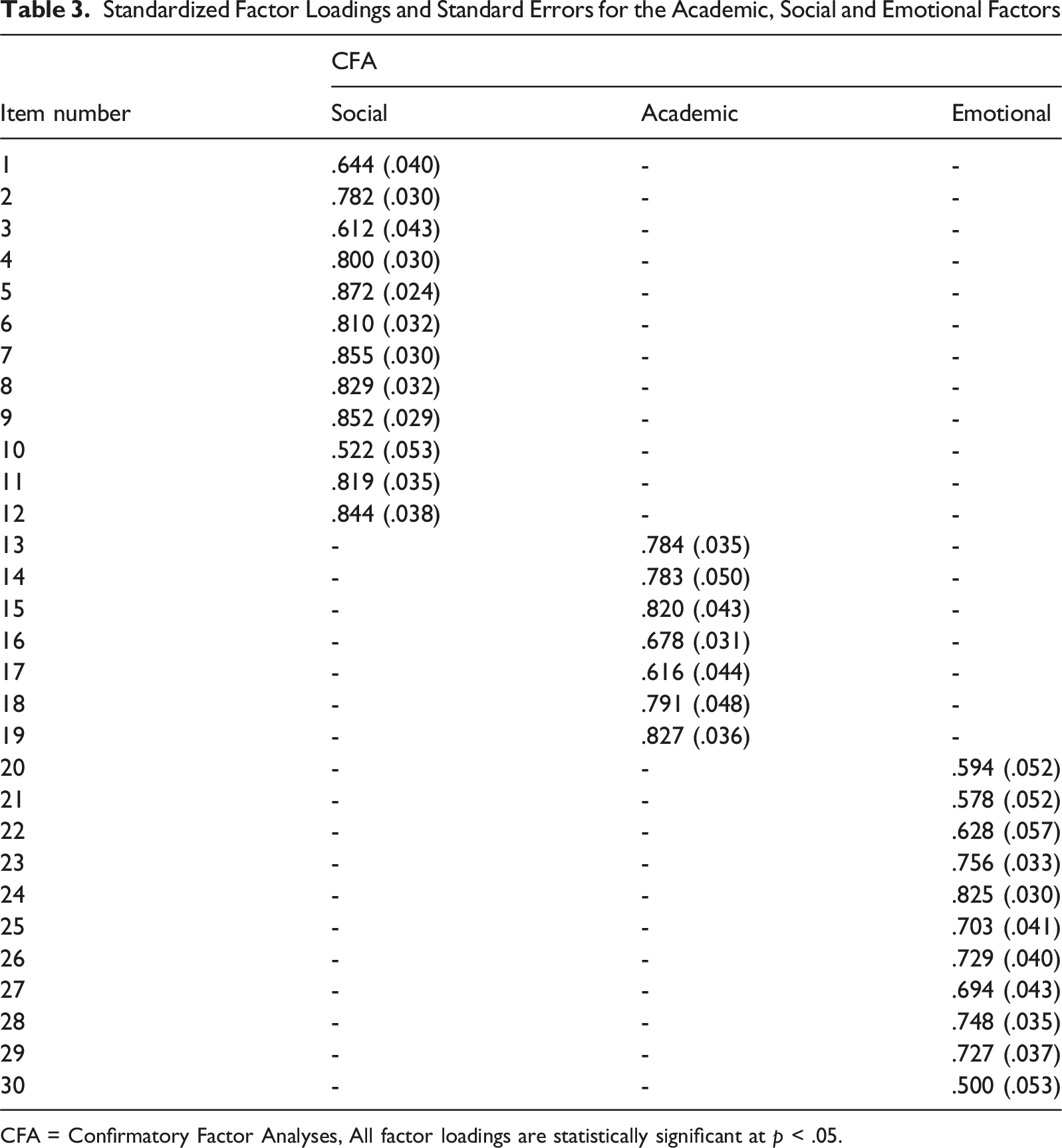
CFA = Confirmatory Factor Analyses, All factor loadings are statistically significant at p < .05.
Corrected Item-total Correlations for the Three Factors (CFA)
Discussion
Early screening and appropriate assessments allow for the development of individualized intervention strategies that support academic success and children’s social and emotional development (Filderman et al., 2023). For this reason, identifying students’ risks early is critical for creating effective intervention strategies and preventing adverse outcomes (Lane et al., 2013; Sugai & Horner, 2009). An easy-to-use tool is essential for observing changes over time, assessing children’s development, and evaluating the effectiveness of interventions by integrating multiple risk factors. In this study, we developed the SRAT-PF to assess primary school students’ academic, social, and emotional risk factors. Several scales, including the SDQ (Goodman, 1997) and the BASC-3 (Reynolds & Kamphaus, 2015), are widely used by researchers to assess risk in various contexts. The SRAT-PF initiative addresses Turkish primary school students’ educational and cultural needs.
It is possible to collect and analyze the observations of families regarding their children’s risk levels through the SRAT-PF to make data-based decisions regarding their children’s risk levels. In this way, it may be possible to identify early social and emotional risks that may be difficult for teachers to detect in the school setting. Including the family in data-driven decision-making may also strengthen the relationship between the school and the family. For students’ academic and social development, experts emphasize the importance of parents actively participating in their children’s development (Park et al., 2011). We developed the SRAT-PF to facilitate this process, which allows parents to provide feedback to the school.
Although the SRAT-PF does not directly assess clinical mental health symptoms, it shares conceptual foundations with universal mental health screening frameworks, particularly in its focus on parent-reported early identification of risk factors. The recent review by Brinley et al. (2024) highlights a global gap in the availability of culturally appropriate, parent-based screening tools—a gap the SRAT-PF seeks to address in the Turkish context through a broader focus on educational, developmental, and family-related risks.
It is crucial to have a short-form screening tool. Several studies highlight that lengthy assessment instruments often result in lower response rates and increased participant fatigue (DeVellis, 2016; Rolstad et al., 2011). The SRAT-PF’s concise structure supports its usability while maintaining strong psychometric properties. By integrating fewer but highly discriminative items, this tool enhances efficiency while preserving reliability and validity. Compared to other commonly used diagnostic and screening tools, the SRAT-PF may be effective for early-risk screening. Such screening tools save time and cost, are less labor-intensive, easy to interpret, and may assist in identifying students at risk for future academic, social, and emotional problems (Lane, Bruhn, et al., 2010; Severson et al., 2007).
Academic, social, and emotional risk factors are critical in determining students’ overall well-being and development. Academic risks, such as low achievement and learning difficulties, can lead to long-term educational disadvantages (Wang & Chen, 2025). Social risks, including peer rejection and isolation, can negatively impact a child’s interpersonal relationships and overall school experience (Lever et al., 2023). Emotional risks, such as anxiety and depression, influence psychological well-being and may require psychosocial support when identified early (Finning et al., 2020). The SRAT-PF allows for the systematic evaluation of observations made in the home environment, which helps identify risk factors that are not observable in the school setting. It facilitates the timely provision of psychosocial support services and parent education. This scale enables guidance services to monitor students with high-risk levels closely.
Limitations and Recommendations for Future
As the SRAT-PF has the potential to be an effective tool for identifying at-risk students, it could be beneficial to integrate it into early intervention programs. Information gathered through parent-reported screening can assist school counseling services in developing individualized support plans for at-risk students. Researchers should also conduct cultural adaptation studies to increase the applicability of the scale in different cultural contexts. This approach will enable international use of the scale and contribute to assessing student risk in various settings. The results of this study demonstrate that the SRAT-PF is a valid and reliable tool, but it has some limitations. First, the study relied on data collected from parents in only one region. To increase the generalizability of the scale, researchers should administer it to a more extensive and diverse sample. Future studies should monitor how this scale changes in different contexts and risk statuses over time. A longitudinal research model can help understand how risk levels evolve.
One of the essential steps of scale development is to determine cut-off scores. Determining cut-off scores for risk levels across academic, social, and emotional dimensions will be of great benefit to beneficiaries who would like to use this scale and evaluate their students in terms of these risks. Therefore, the calculation of cut-off scores using different methods, independent data set and external validity evidences will be important in accurately identifying the relevant risks.
Conclusion
The factor analysis results provided evidence for the construct validity of the academic, social, and emotional risk scales of the SRAT-PF. The analysis showed that each subscale grouped significantly under the identified factors and confirmed that the scale had an overall reliable structure. These findings support the validity and reliability of the SRAT-PF as a valid and reliable tool for assessing student risk. The research findings are consistent with studies in the literature that highlight the importance of early intervention and student risk assessment tools (Veerasamy et al., 2020; Zhang et al., 2014). This study fills an essential gap due to the limited number of risk assessment tools used at the primary school level in Türkiye. The SRAT-PF is a comprehensive tool to identify children’s academic, social, and emotional needs.
Footnotes
ORCID iDs

Ethical Considerations
This study involves human participants. Parents of underage participants explicitly consented to their participation. Every informant participated in the study voluntarily, after signing an informed consent document. Approval from the Gazi University Ethics Committee was obtained (number: 77082166-604.01.02) and the Türkiye Ministry of National Education (number: 14588481-605.99-84386098).
Consent to Participate
All participants consented participation for the purposes of this study.
Consent for Publication
All participants consented to the publication of this article.
Author Contributions
All authors contributed to the study conception and design. Material preparation and data collection were performed by Damla Isitan, Gamze Apaydin, Cihan Sert, and Banu Karaahmetoglu. Data analysis was conducted by Ergun Cihat Corbaci. Theoretical framework and methodological development were carried out by Cigil Aykut and Necdet Karasu. The manuscript was reviewed by Senol Demirtas. The first draft of the manuscript was written by Damla Isitan, and all authors commented on previous versions of the manuscript. All authors read and approved the final manuscript.
Funding
The authors disclosed receipt of the following financial support for the research, authorship, and/or publication of this article: This study was funded by Gazi University Scientific Research Projects (number: SHD-2023-8878).
Declaration of Conflicting Interests
The authors declared no potential conflicts of interest with respect to the research, authorship, and/or publication of this article.
Data Availability Statement
Data analyzed during the study are available from the corresponding author upon request. Although this study reports the development and validation process of the assessment tool in detail, the full version of the scale is not included in the manuscript. This decision was made to protect the integrity and intended use of the instrument. Researchers interested in using the scale for academic purposes may contact the corresponding author to request access under appropriate research agreements.