




Abstract
The subjective task value (STV) aspect of Expectancy-Value Theory has recently gained significance in achievement motivation research. It posits that students are motivated to engage in a particular task due to its intrinsic value, attainment value, utility value, and perceived cost. More recently, these components have been divided into more specific facets. This study aimed to adapt Gaspard et al. (2017) value beliefs scale for Portuguese vocational secondary school students in the subjects of Portuguese and Mathematics. The confirmatory factor analysis conducted with 1859 students (M age = 16.02) suggested that a hierarchical structure of STV fits the data adequately, with ten specific facets organized into four second-order components. Construct reliability, as well as convergent and discriminant validity, was also achieved. This instrument offers a useful tool for assessing students’ STV.
Introduction
The Expectancy-Value Theory (EVT; Eccles et al., 1983) has guided much research on student achievement motivation (Eccles & Wigfield, 2020). EVT suggests that students’ choices and engagement in academic tasks are driven by their expectations of success and the value they place on the task. While the expectancy aspect of EVT has been extensively studied, interest in the value aspect has grown more recently (Eccles & Wigfield, 2020; Fadda et al., 2020; Gaspard et al., 2017). Subjective task value (STV) reflects how a task’s qualities motivate students (Eccles et al., 1983). It consists of four components attributed to the task: intrinsic value (enjoyment), attainment value (personal significance), utility value (usefulness), and cost (negative consequences involved). Expanding on this framework, Gaspard and colleagues (2015, 2017) refined STV into ten facets. Figure 1 illustrates the proposed model and provides examples of how each facet is operationalized. Their studies, validating a scale assessing secondary school students’ value beliefs, confirmed the multidimensional structure across subjects, ages, and genders. However, Gaspard et al. (2017) found that emotional and effort costs were not distinct, and facets within attainment value were closely linked. Subjective task value components and facets and item examples of the value scale (adapted from Gaspard et al., 2017).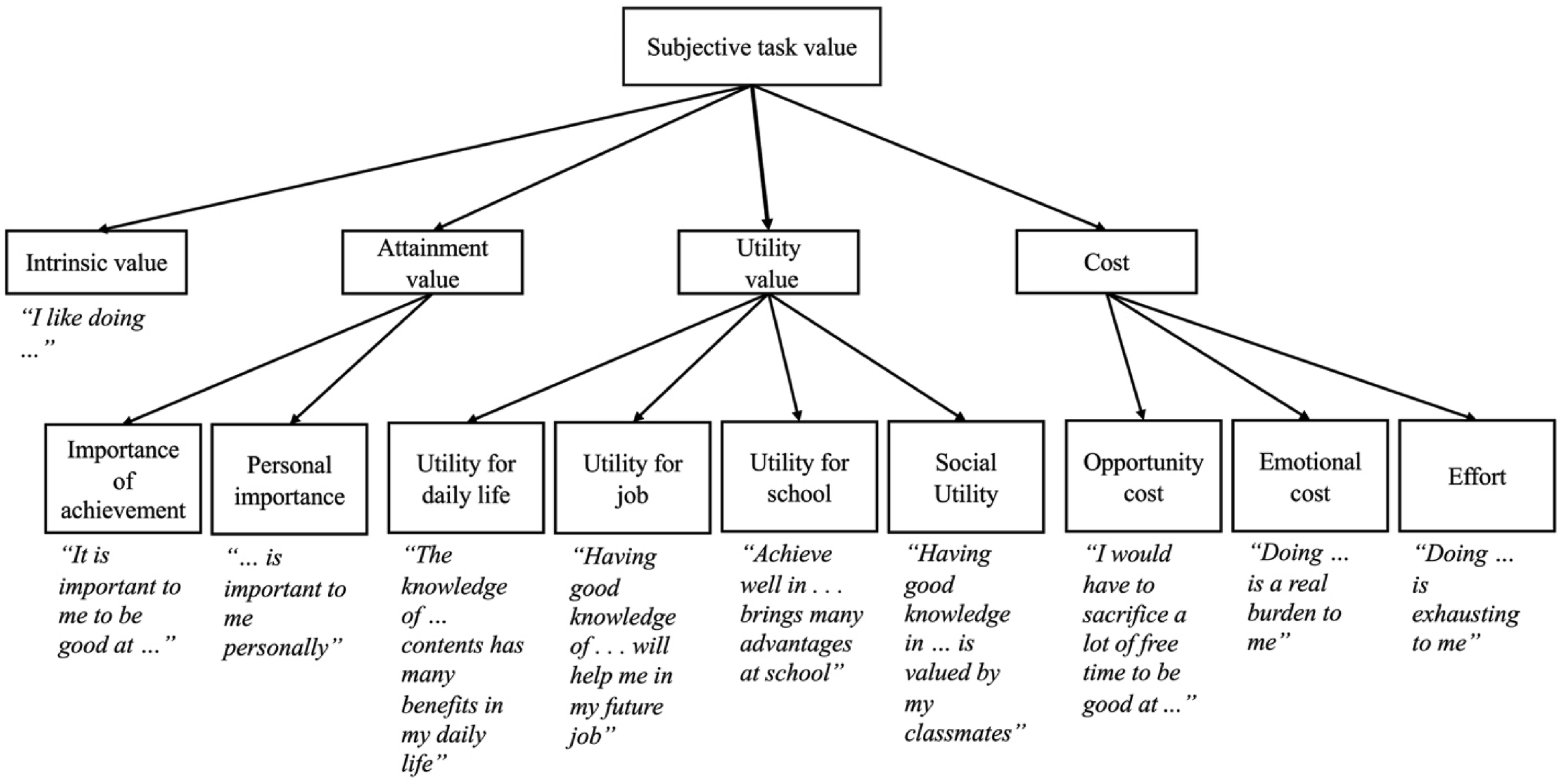
More recently, Fadda et al. (2020) further examined the structure of STV, drawing on the findings of Gaspard et al. (2015, 2017) and Guo et al. (2016), which supported a bifactor model that accounts for both specific value facets and a higher-order general task value. A key concern in these studies was the high correlations observed between several facets, both within and across the value components.
An often overlooked aspect in STV research is the role of cost. Recent studies suggest that the multiple dimensions of cost should be considered, with some proposing the existence of a higher-order general cost component (Muenks et al., 2023; Putwain et al., 2024).
Given these recent developments, it is suggested that students’ STV could be structured in more complex ways. Drawing from Eccles’s framework (Eccles et al., 1983; Eccles & Wigfield, 2020, 2023) and the work of Gaspard et al. (2017), STV can be organized hierarchically, with the 10 facets grouped into four higher-order components: intrinsic value, attainment value, utility value, and cost. This hierarchical organization may provide a clearer structure for understanding how students perceive and engage with academic tasks. Moreover, a third-order general task value component could also be considered (Eccles et al., 1983; Eccles & Wigfield, 2023). Additionally, the bifactor model proposed by Fadda et al. (2020) adds another layer of complexity to the traditional framework, suggesting that both specific value facets and a general task value dimension exist concurrently.
Thus, investigating more nuanced models could provide deeper insights into the structure of STV, while simplifying its assessment by using fewer indicators for each component. Testing these models across diverse student populations could further illuminate how these complex structures operate.
Current Study
This study aimed to evaluate the psychometric properties of the adapted Gaspard et al. (2017) value scale among vocational secondary school students in the domains of Portuguese Language and Mathematics. In addition, we sought to further investigate the factor structure of the scale, contributing to the existing body of knowledge (e.g., Fadda et al., 2020; Gaspard et al., 2015, 2017; Guo et al., 2016) by empirically validating the 10 proposed facets. Specifically, we aimed to explore the factor structure of the scale, testing both hierarchical and bifactor models to better understand how students’ STV is organized.
Method
Participants
Participants were 2055 secondary vocational school students (10th–12th grades). After excluding those with less than 25% responses, the final sample included 1967 students. Additionally, 108 students were excluded from the sample because they either failed to report their classroom or attended classes with fewer than five responses. The analytical sample consisted in 1859 students (Mage = 16.02, SD = 1.18), from 124 classes and 36 schools. About 50% of their parents had completed high school. Consent was obtained either from the guardians or directly from the students, depending on their age. Participation was voluntary.
Instrument and Procedures
We used a Portuguese version of the adapted value scale (Gaspard et al., 2017), that assesses students’ value beliefs across 4 components and 10 facets using 37 items (see Figure 1 for scale structure and examples). Responses were on a 4-point scale from “completely disagree” to “completely agree.” Two scales were administered: one for Portuguese Language and one for Mathematics. The original instrument was adapted to Portuguese using standard translation and back-translation procedures. Pre-testing showed no issues with item wording or scale structure. The final version was administered online during class, with scale order randomized across participants.
Data Analyses
The structural validity of the value beliefs scale was assessed using confirmatory factor analysis (CFA) in RStudio with the lavaan package (Rosseel, 2012) and a robust maximum likelihood estimator. Following Brown’s (2015) criteria, model fit was evaluated using Comparative Fit Index (CFI) and Tucker-Lewis Index (TLI) ≥ .90, and Root Mean Square Error of Approximation (RMSEA) with a 90% Confidence Interval (CI) ≤ .08 (Brown, 2015). Modification indices (MI) < 10 and item factor loadings λ > .5 indicated a good fit. Competing models were evaluated both theoretically and empirically. Specifically, model comparisons were based on Akaike’s Information Criterion (AIC) and Bayesian Information Criterion (BIC).
Reliability was assessed with Cronbach’s alpha (α), McDonald’s omega (ω), and Composite Reliability (CR). Construct validity was determined using Average Mean Extracted (AVE) > .50 for convergent validity and AVE comparisons with squared correlations and factor correlations <.70 for discriminant validity (Cheung & Wang, 2017). To account for the clustering structure of the data—students nested within classrooms—we specified the model with adjustments for clustering, ensuring the computation of robust cluster standard errors.
Results
Model Fit Statistics of the Tested Models for Portuguese Language.
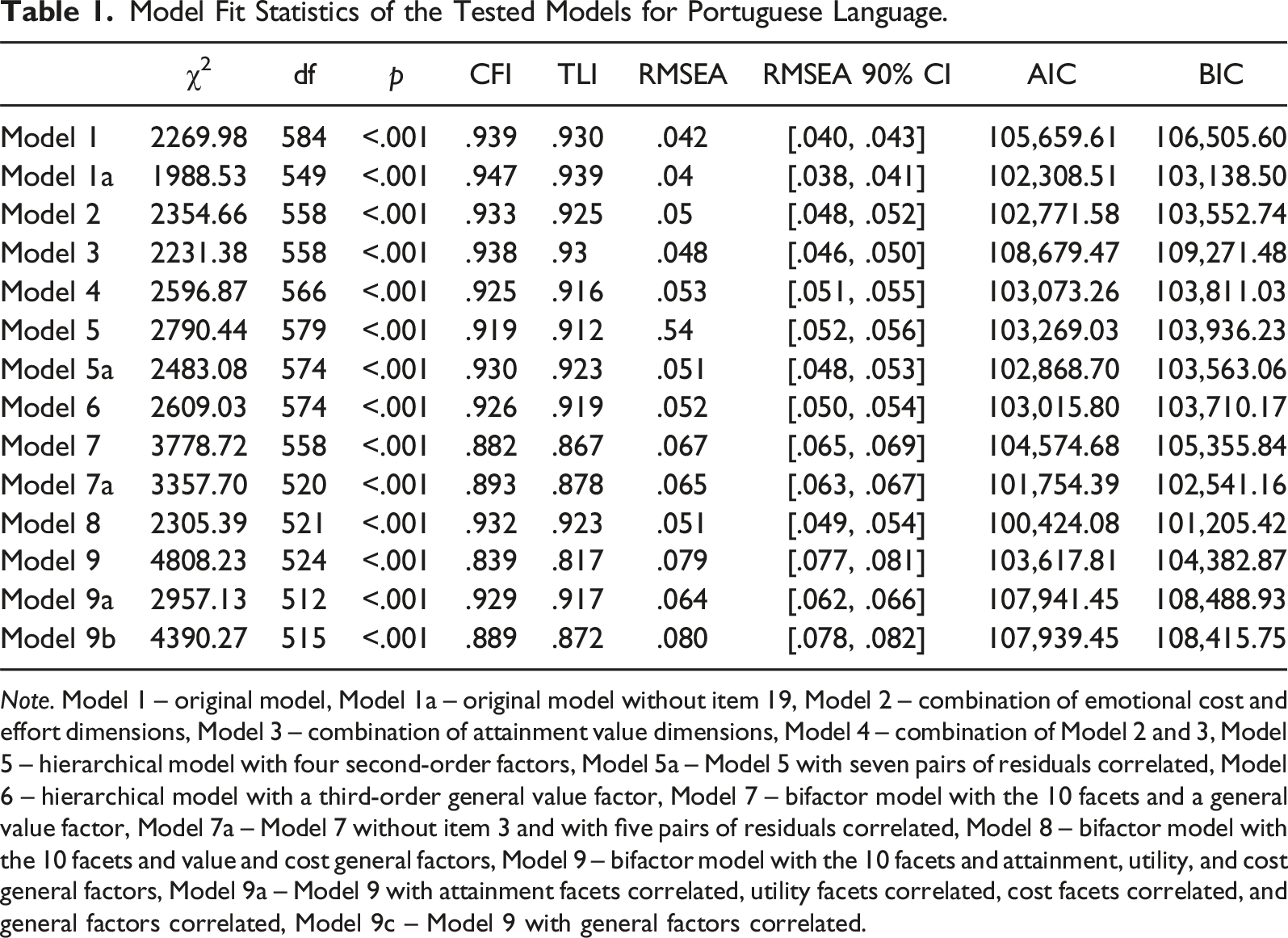
Note. Model 1 – original model, Model 1a – original model without item 19, Model 2 – combination of emotional cost and effort dimensions, Model 3 – combination of attainment value dimensions, Model 4 – combination of Model 2 and 3, Model 5 – hierarchical model with four second-order factors, Model 5a – Model 5 with seven pairs of residuals correlated, Model 6 – hierarchical model with a third-order general value factor, Model 7 – bifactor model with the 10 facets and a general value factor, Model 7a – Model 7 without item 3 and with five pairs of residuals correlated, Model 8 – bifactor model with the 10 facets and value and cost general factors, Model 9 – bifactor model with the 10 facets and attainment, utility, and cost general factors, Model 9a – Model 9 with attainment facets correlated, utility facets correlated, cost facets correlated, and general factors correlated, Model 9c – Model 9 with general factors correlated.
Model Fit Statistics of the Tested Models for Mathematics.
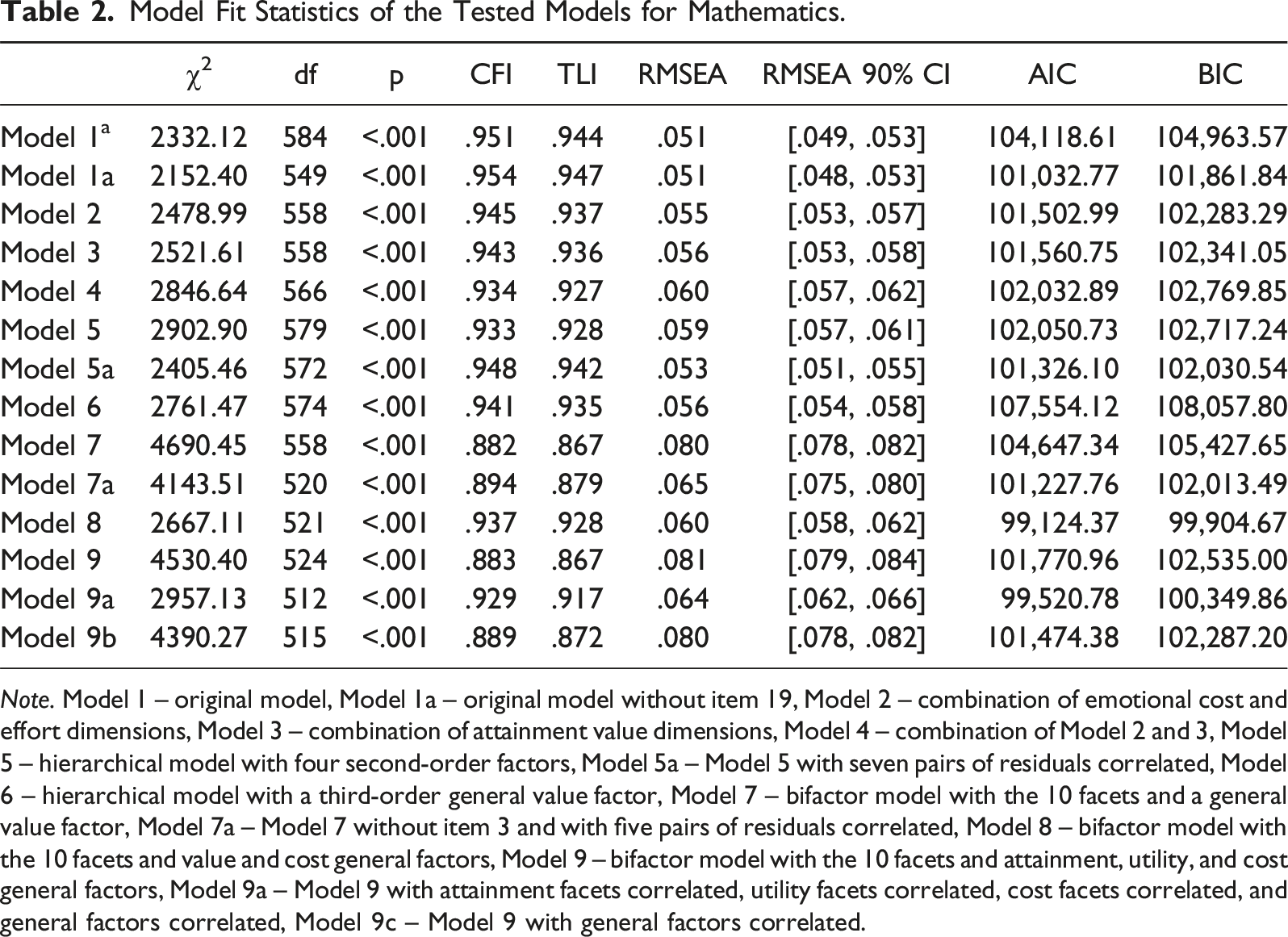
Note. Model 1 – original model, Model 1a – original model without item 19, Model 2 – combination of emotional cost and effort dimensions, Model 3 – combination of attainment value dimensions, Model 4 – combination of Model 2 and 3, Model 5 – hierarchical model with four second-order factors, Model 5a – Model 5 with seven pairs of residuals correlated, Model 6 – hierarchical model with a third-order general value factor, Model 7 – bifactor model with the 10 facets and a general value factor, Model 7a – Model 7 without item 3 and with five pairs of residuals correlated, Model 8 – bifactor model with the 10 facets and value and cost general factors, Model 9 – bifactor model with the 10 facets and attainment, utility, and cost general factors, Model 9a – Model 9 with attainment facets correlated, utility facets correlated, cost facets correlated, and general factors correlated, Model 9c – Model 9 with general factors correlated.
After confirming the original model’s fit, more parsimonious models (Models 2–4) were tested based on Gaspard et al. (2017) empirical findings. Combining the importance of achievement and personal importance facets (Model 2), merging emotional and effort facets (Model 3), and integrating both combinations (Model 4) all led to reduced fit.
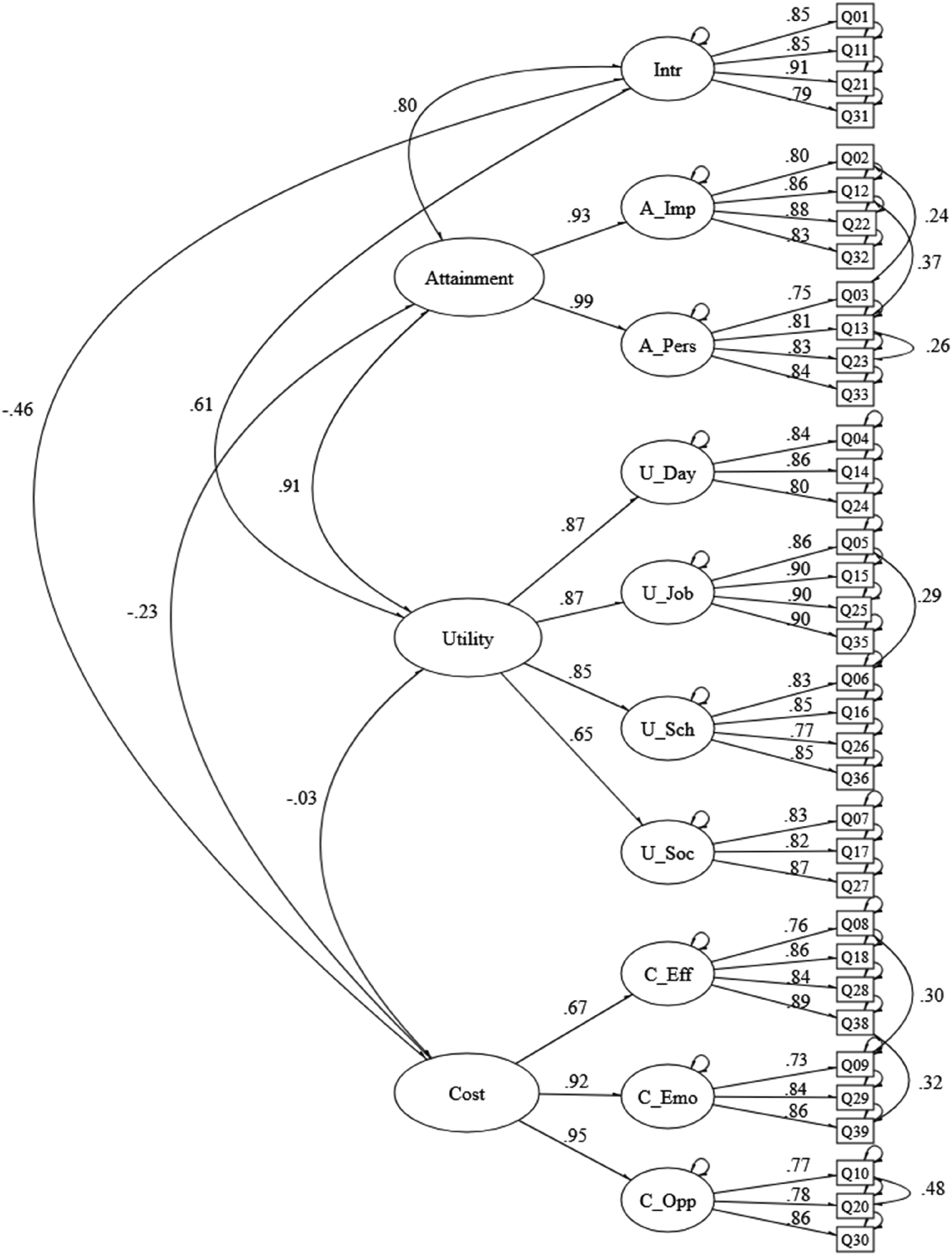
Next, we tested a hierarchical structure. Model 5 assessed second-order factors: attainment value, utility value, and cost, showing good fit. However, correlating seven pairs of residuals (Model 5a 1 ) improved the fit further. Adding a third-order factor (Model 6) reduced model fit and caused estimation issues.
We evaluated several bifactor models, based on Fadda et al. (2020) and Guo et al. (2016) studies. The initial bifactor model (Model 7), which considered the 10 facets as specific factors alongside a general value factor, exhibited poorer model fit. Model 7a, an extension of the previous model, removed item 3 (“I really care about remembering the Mathematics material”) and correlated five pairs of residuals. While this modification improved fit indices, it encountered convergence issues. The subsequent bifactor model (Model 8) incorporated two general factors—value and cost—alongside the 10 facets. This model showed improvements in fit. However, identification issues (non-definite variance-covariance matrix), along with low loadings and week reliability and construct validity emerged.
The final set of bifactor models (Models 9 to 9b) explored four general factors corresponding to higher-order value components: attainment, utility, and cost, while considering the 10 facets. These models varied in the correlation constraints applied but consistently encountered convergence issues concerning the attainment factor, and fit indices did not show significant improvements.
The persistent convergence issues observed in the bifactor models were primarily related to the attainment dimension, with particular difficulties arising from the personal importance facet. Additionally, problems were noted in the cost facets, especially concerning effort and emotional cost and in the Portuguese language subject. In Models 7 and 7a, the loadings of cost-related items on the general factor were found to be negligible, suggesting minimal contribution of these items to the overall factor. However, in the remaining bifactor models, the loadings for the corresponding specific cost facets were generally low, indicating that the items, in bifactor models, while still somewhat related to their respective facets, did not exhibit strong associations. Furthermore, in Models 9 through 9b, some negative variances were identified for both attainment and cost items. Therefore, given the instability of these models, we concluded that a bifactor model was not suitable for our data. Thus, the second-order hierarchical model (Model 5a) showed the best fit for both Portuguese Language (Figure 2) and Mathematics (Figure 3). Hierarchical model (Model 5a) of the value scale for Portuguese Language. Note. Intr = intrinsic value, A_Imp = importance of achievement, A_Pers = personal importance, U_Day = utility for daily life, U_Job = utility for job, U_Sch = utility for school, U_Soc = social utility. C_Eff = effort, C_Emo = emotional cost, C_Opp = opportunity cost. Figure drawn using SemDiag version 1.0 (Mai et al., 2023). Hierarchical model (Model 5a) of the value scale for Mathematics. Note. Intr = intrinsic value, A_Imp = importance of achievement, A_Pers = personal importance, U_Day = utility for daily life, U_Job = utility for job, U_Sch = utility for school, U_Soc = social utility. C_Eff = effort, C_Emo = emotional cost, C_Opp = opportunity cost. Figure drawn using SemDiag version 1.0 (Mai et al., 2023).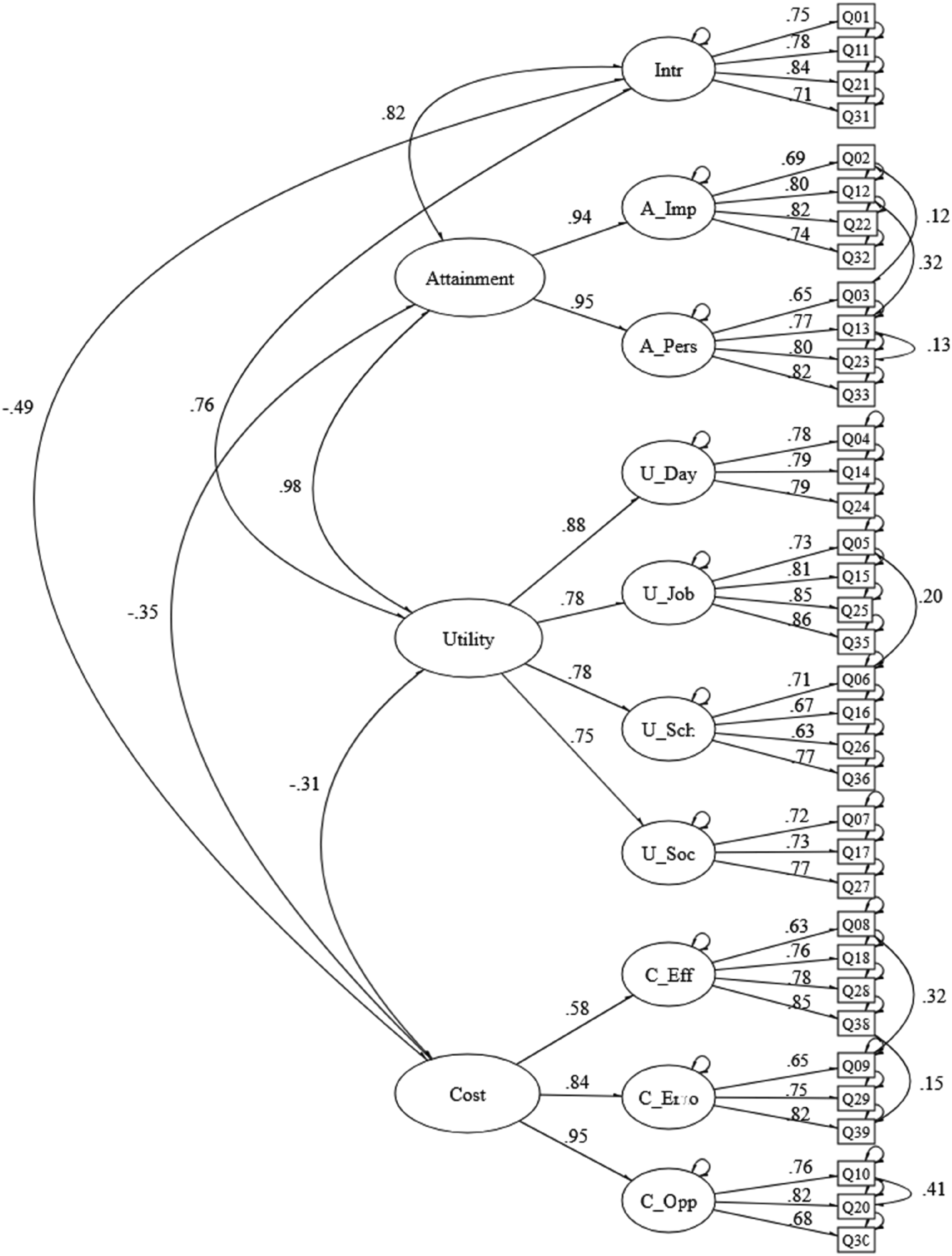
AVE, Reliability Measures and Correlations Between the Dimensions of the Value Scale for Portuguese Language.
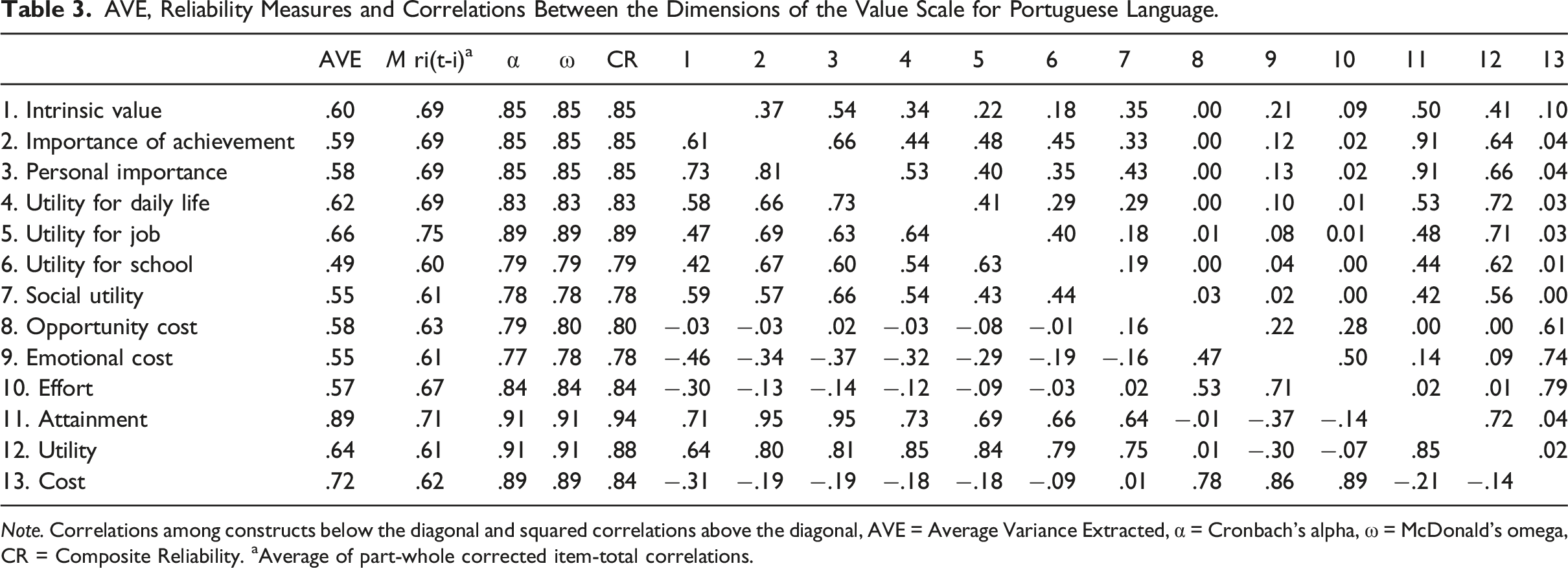
Note. Correlations among constructs below the diagonal and squared correlations above the diagonal, AVE = Average Variance Extracted, α = Cronbach’s alpha, ω = McDonald’s omega, CR = Composite Reliability. aAverage of part-whole corrected item-total correlations.
AVE, Reliability Measures, and Correlations Between the Dimensions of the Value Scale for Mathematics.
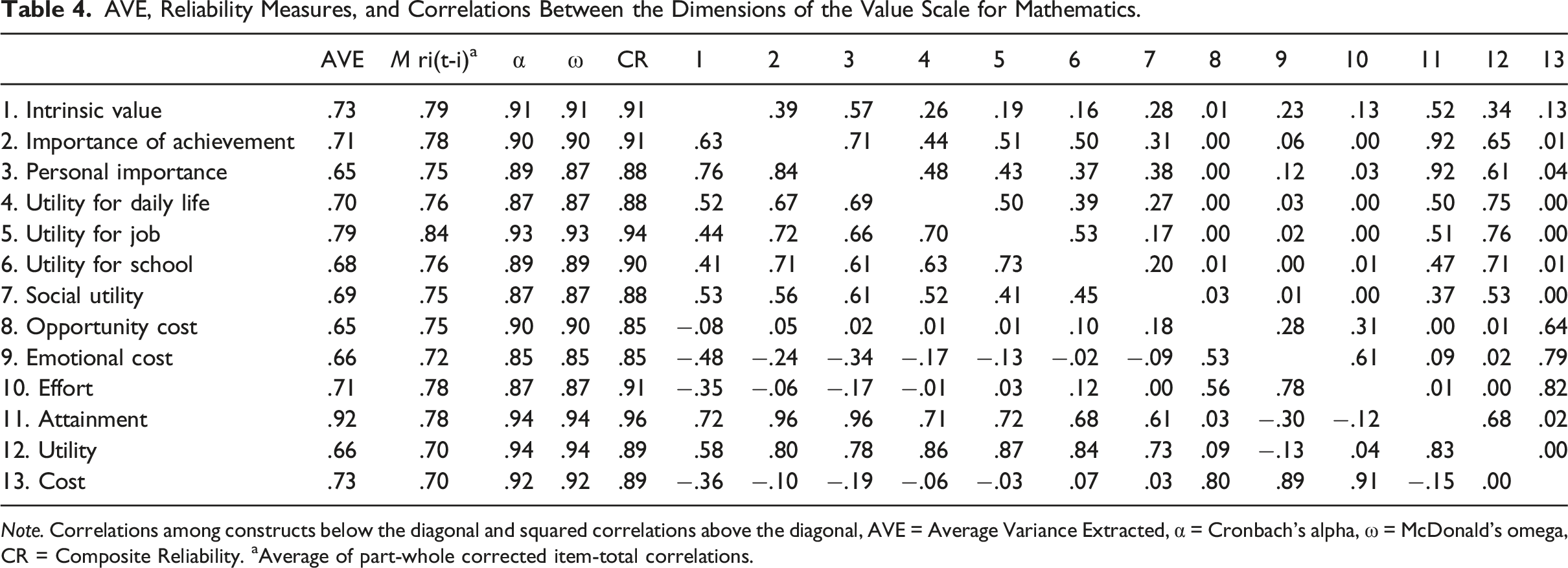
Note. Correlations among constructs below the diagonal and squared correlations above the diagonal, AVE = Average Variance Extracted, α = Cronbach’s alpha, ω = McDonald’s omega, CR = Composite Reliability. aAverage of part-whole corrected item-total correlations.
Construct validity was largely supported. AVE values exceeded 0.50 for most facets, except for the utility for school and opportunity cost facets in Portuguese Language (AVE = .49), indicating acceptable convergent validity (see Tables 2 and 3). Discriminant validity was also satisfactory, with correlations above 0.70 observed mainly within first-order facets and their related second-order components, except for attainment-utility components (r = .71).
Discussion
This study investigated the psychometric properties of the Portuguese version of the Gaspard et al. (2017) scale to evaluate secondary students’ STV. While previous research identified a 9-facet structure (Gaspard et al., 2017), our analysis with vocational students across Portuguese Language and Mathematics supported the original 10-facet model (Gaspard et al., 2015, 2017). Our analysis, in contrast to the findings of Gaspard et al. (2015, 2017), confirmed a hierarchical STV structure with four higher-order components. However, it did not support the bifactorial structure identified in Fadda et al. (2020). An important observation is the instability of certain models, particularly concerning the attainment dimension and in respect to bifactor models. These results may be attributed to our sample characteristics; students attended vocational schools, which, due to their practical and professional orientation, are often perceived by these students as highly personal, academic, and professional values. This perception might explain the high correlation between the attainment and utility components. Future studies are encouraged to further examine the suitability of bifactor models. In our study, Model 8 showed promising initial adequacy; however, weaknesses related to model identification and construct validity ultimately prevented us from establishing it as a viable solution.
In addition, estimation problems arose concerning the effort and emotional cost facets in the bifactor models, in particular for Portuguese language. These findings were not entirely unexpected, as Gaspard et al. (2017) had previously suggested a potential overlap between these two facets. However, when examining the multidimensional and hierarchical models, these facets exhibited adequate loadings, suggesting that their relationship may vary depending on the model type. This contrast in findings could be attributed to the interaction between the specificity of the sample and the Portuguese language subject. While Mathematics is often perceived as a more structured and skill-based subject, where students’ value perceptions may be more distinct and stable, language subjects involve more subjective and context-dependent elements, which can lead to greater complexity in modeling their value components. This difference might also be amplified in vocational education, where curricular organization and instructional approaches differ from general education. Therefore, future studies with more diverse samples may be needed to further explore and understand these controversial findings.
Our findings are significant as they address the issues noted by Gaspard et al. (2017) regarding the broad and unclear operationalization of STV components, reinforcing the value of the more specific 10-facet structure. Our study advances understanding of the cost facets in STV and their role within EVT. Although cost has often been debated as a separate construct due to its negative formulation (Eccles & Wigfield, 2020; Muenks et al., 2023), our findings support its integration into the value aspect of EVT, yet, considering its unique contribution as a distinct factor.
Additionally, our research supports the hierarchical STV structure, where first-order facets are effectively assessed by higher-order components (Eccles & Wigfield, 2020, 2023). This hierarchical model simplifies assessment compared to longer scales while maintaining accuracy. Although fit indices often penalize complex models like the hierarchical model (Vispoel, 1995), it still showed highly satisfactory fit. The hierarchical model also demonstrated superior reliability and construct validity compared to simpler models. Additionally, while the attainment and utility components were moderately associated, as observed by Peixoto et al. (2023), our study suggests they are distinguishable based on the tested models and estimates.
This study’s limitations include the use of a convenience sample with specific characteristics, and the lack of additional measures due to the data collection period, which limits further testing of construct validity and measurement invariance across students’ characteristics and contexts. We suggest future replication studies using more diverse samples to further test the different proposed models.
In essence, the Portuguese version of the value scale is a valid tool for assessing secondary students’ STV. It can aid research on EVT’s value aspect and help educators plan effective interventions.
Footnotes
Acknowledgments
The authors are grateful to the students, parents, teachers, and school administrators who made this research possible.
Declaration of Conflicting Interests
The author(s) declared no potential conflicts of interest with respect to the research, authorship, and/or publication of this article.
Funding
The author(s) disclosed receipt of the following financial support for the research, authorship, and/or publication of this article: This work was supported by Portuguese national funds via Fundação para a Ciência e Tecnologia (FCT): https://doi.org/10.54499/UIDB/04853/2020,  .
.
Ethical Statement
This study was authorized by the Portuguese Data Protection Commission and by the Ministry of Education and followed the guidelines expressed in the Code of Conduct and Ethics of Ispa – Instituto Universitário. Data were collected after obtaining permission from the schools, and active parental informed consent and confidentiality was assured to all informants and schools. Data was kept secure.