




Abstract
This paper follows an earlier report of young children’s object play activities investigated in a cross-sectional sample of 289 typically developing children. Thirty-minute videotaped observations were taken of children at 8, 12, 18, 24, 30, 36, 42, 48, 54, and 60 months of age in their homes. Forty-nine percent were boys. Children were identified as White (70%); mixed racial/cultural backgrounds (14%); Asian (7%); Black (6%); and Latinx (3%). This study reports patterns of cognitive development based on mastery scores derived from frequency and variety of activities in the 27 categories identified in the earlier study. Mastery scores afforded evaluation of the robustness of certain play categories, and the retention and reduction of others, yielding a final set of 14 to describe and assess developments in play. Discussion centers on the value of differentiated categories along with scores that yield a standard for an assessment of children’s play.
Play activities are critical for young children. Yet the assessment of play remains problematic. This paper is a follow-up and reanalysis of an earlier descriptive study of children’s object play (Lifter et al., 2022). The present study’s purpose was to generate an assessment of play in terms of scores based on the frequency and variety of play categories identified earlier.
Children’s play with objects (e.g., toys) provides a window into cognitive development and learning. In the earlier study, several limitations regarding the classic literature on the object play of typically developing children were addressed. These limitations included relatively narrow age spans of study (e.g., late infancy through the second year (Belsky & Most, 1981)); use of different approaches and purposes for studying play (e.g., gathering play observations to verify a previously constructed sequence (Nicolich, 1977) or an hypothesized sequence (Watson & Fischer, 1977)); and restricted measurements of play (e.g., counts of highest level of play behavior observed (Belsky & Most, 1981)).
Description of Participants According to Age, Gender, and Mean Total Scores on the BDI-2 ST.
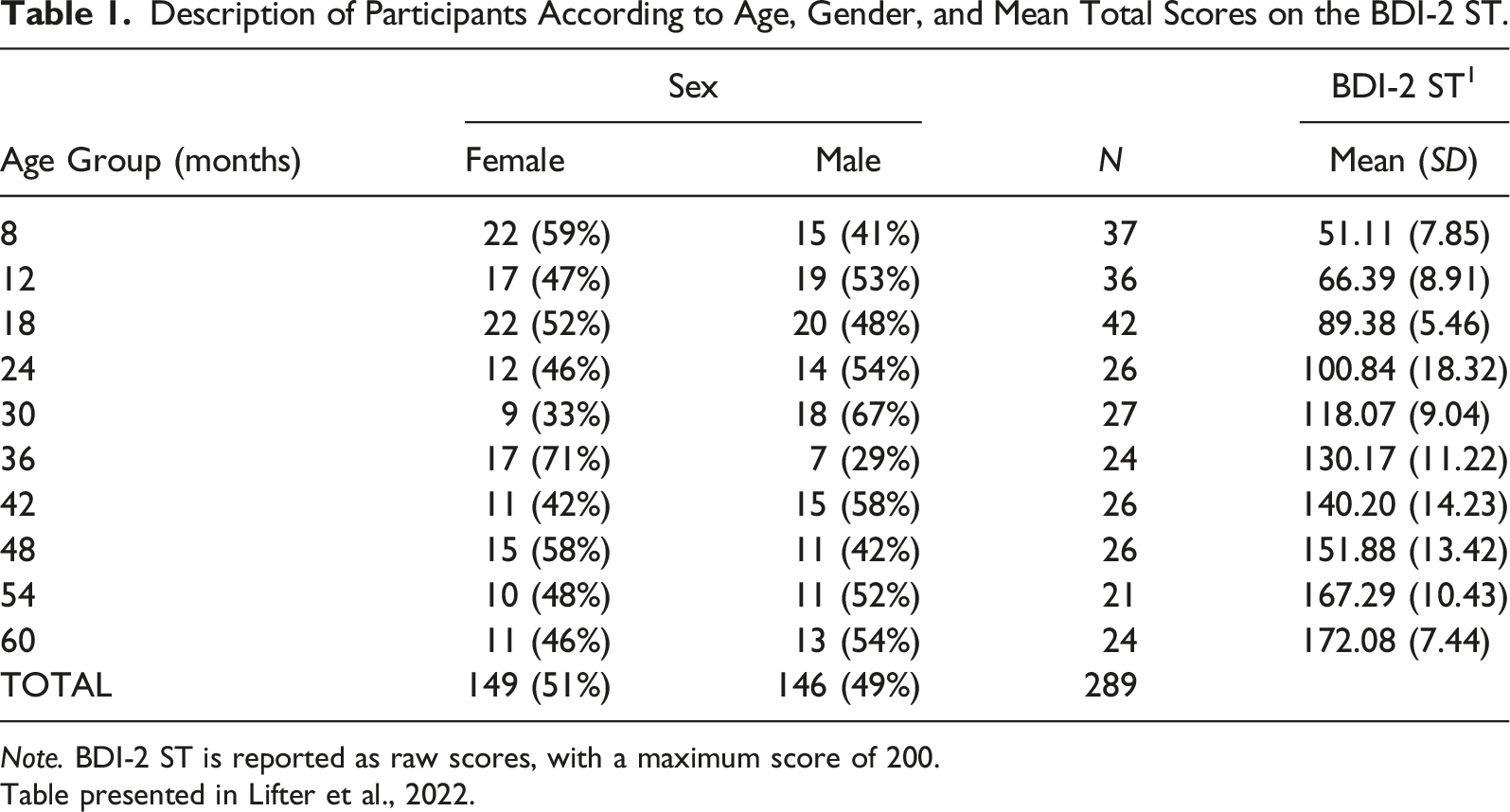
Note. BDI-2 ST is reported as raw scores, with a maximum score of 200.
Table presented in Lifter et al., 2022.
The Set of 27 Play Categories Coded for Analyses Including the Origins of the Categories.
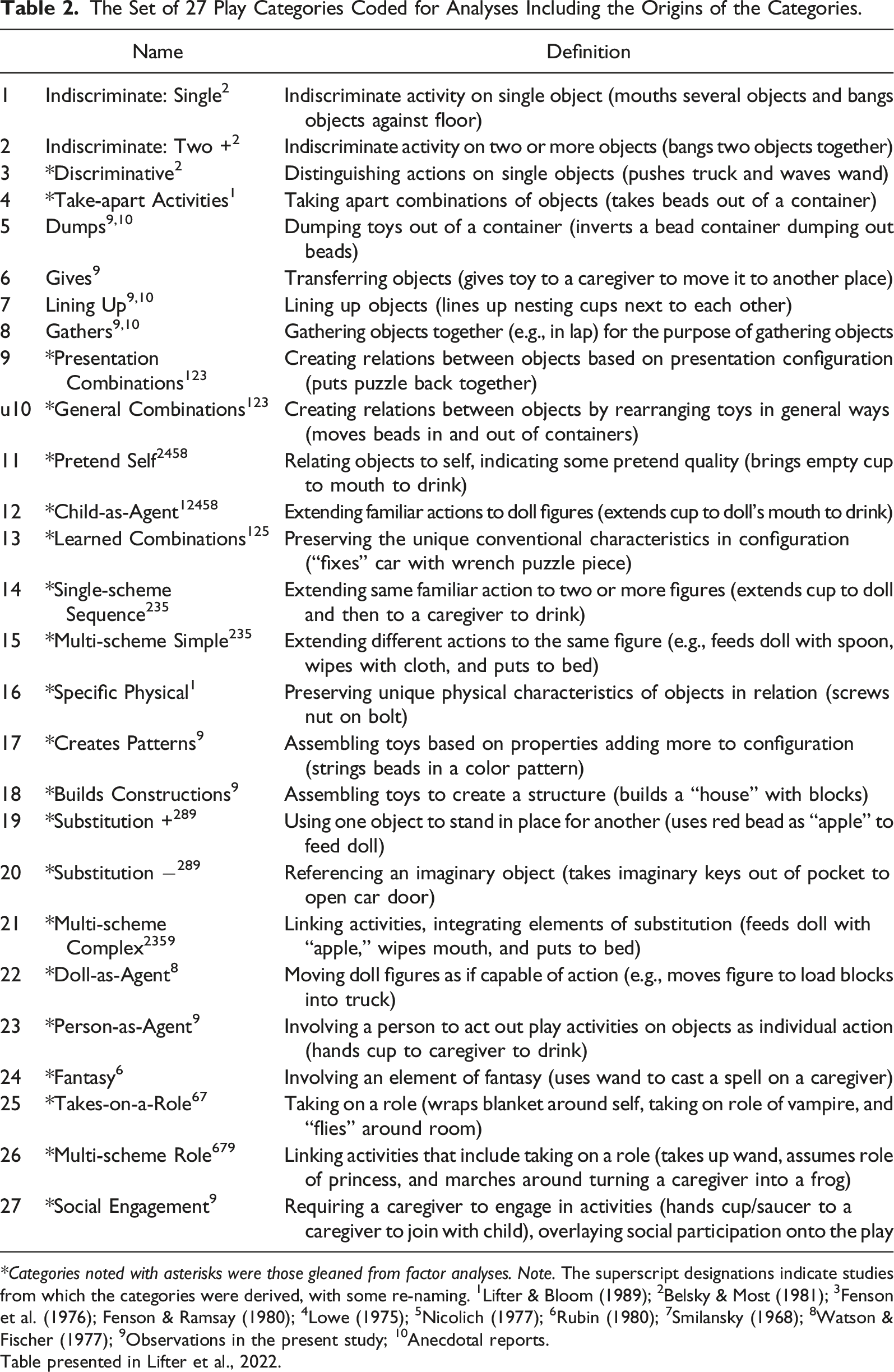
*Categories noted with asterisks were those gleaned from factor analyses. Note. The superscript designations indicate studies from which the categories were derived, with some re-naming. 1Lifter & Bloom (1989); 2Belsky & Most (1981); 3Fenson et al. (1976); Fenson & Ramsay (1980); 4Lowe (1975); 5Nicolich (1977); 6Rubin (1980); 7Smilansky (1968); 8Watson & Fischer (1977); 9Observations in the present study; 10Anecdotal reports.
Table presented in Lifter et al., 2022.
For the present study, it was determined analyses of response patterns could provide a basis for a more robust assessment of children’s progress—one that would yield a standard for systematic comparison of play categories for judging children’s mastery of a category. A score that combined frequency and variety would be a stronger assessment than either one separately. Further, it appeared behaviorally that children could demonstrate knowledge of a category by expressing it at different levels of acquisition. They could demonstrate some knowledge by expressing one or two examples of a category versus demonstrating a level of generalization of their knowledge with the expression of several examples of a category. Therefore, mastery was operationally defined as the expression of at least four different examples of a category.
Researchers have used scores or composites of measures to evaluate progress in children’s play and correlated scores with other measures of development (e.g., Farmer-Dougan & Kaszuba, 1999; Pierucci et al., 2015). The present study focused on a combination of frequency and variety of children’s play within age groups to determine a mastery standard for each play category. Frequency has been used for evaluating progress in play, but the combination of variety with frequency has not yet been investigated, with the exception of Lifter (2000).
The first purpose was a reanalysis of the spontaneous play of the 289 children described in the earlier study (Lifter et al., 2022) to generate scores for children’s progress in the categories. The second was to determine whether the number of play categories could be reduced. The third was to determine if scores summarizing progress in play (i.e., mastery scores) could be useful in an assessment of object play, providing a standard of play development for individual children.
Method
Participants
Observations of 289 typically developing children for the cross-sectional study were taken at 8, 12, 18, 24, 30, 36, 42, 48, 54, and 60 months of age, within two weeks on either side of these ages. Numbers and genders of children are presented in Table 1, along with means of children’s total scores on the Battelle Developmental Inventory Screening Test, second edition, (BDI-2 ST: Newborg, 2005). Forty-nine percent were boys. For backgrounds, 70% were White; 14 % from mixed racial/cultural backgrounds; 7% Asian; 6% Black; and 3% Latinx. Parents’ responses for household income suggested a little more than half the group (53.8%) had annual household incomes greater than $100,000; 33.2% were in the range of $50,000 to $99,999; and 13.0 % had incomes of less than $49,999.
Measures and Materials
The initial play categories were derived from Lifter (2000: Developmental Play Assessment (DPA)) and extended based on the observations. Methods and materials for collecting the play samples also were based on the DPA, presented in detail in Lifter et al., (2022). In brief, 30-minute observations of children’s natural play were videotaped across four groups of toys, in the children’s homes with a familiar caregiver, who was asked to respond to but not direct the play. Four toy sets were constructed containing a manageable number of toys children could attend to in 7- to 8-minute segments across 30 min. Different toy sets helped children maintain interest and afforded opportunities for different examples of play. Toys in each set were balanced across manipulative toys (e.g., beads and blocks) and toys traditionally regarded as supporting pretend play (e.g., cups, spoons, and blanket). Included were four sets of identical figures (2 adult figures; 2 children; 1 baby) and baby dolls (White, Black, Asian, and Latinx) inserted to represent the cultural backgrounds of the participants. Caregivers were queried in the intake questionnaire as to which cultural background they would characterize their child. Following their responses, we inserted the corresponding doll figures for the observations.
Procedures
The procedures for coding the observations, which yielded 27 qualitatively different categories (Table 2), are described in detail in Lifter et al., (2022). Analyses focused on object play, independent of social interaction. Object play was defined as children taking hold of a toy and then completing some action with it beyond looking at it or rotating it in their hands. Children’s activities were evaluated in terms of frequency and variety within each of the 27 play categories. Frequencies were tallied for each category and across categories. Variety, in contrast, represented the number of unique examples the child expressed within a category.
Inter-observer Reliability
Doctoral students were trained to 85% agreement with established expert standards for coding the play observations (described in Lifter et al., 2022). Several studies with trained coders yielded intraclass correlations (ICCs) above .85. In one example, four raters scored three 30-minute samples of children at different ages, which yielded an ICC range of 0.77–1.00.
Setting Standards for Scoring Play Observations
The values for frequency and variety were combined to determine a mastery score. The rationale focused on using quantitative criteria for determining a child’s knowledge of a category and to provide a standard for systematic comparison of play categories. It was determined through consensus that if a child expressed four or more different examples of a category, the child had generalized the category, at least at a minimal level, to different toy combinations.
Children’s performance for each category was scored as absent, basic, emerging, or mastered, as follows: • Absence (Score = 0): no evidence of category; • Basic (Score = 1): one instance of category; • Emergence (Score = 2): minimum variety of two different examples, and minimum frequency of two activities in category; • Mastery (Score = 3): minimum variety of four distinct examples, and minimum frequency of four activities in category.
Results
Interaction of Categories by Age
To explore the relation of age to play scores, the within-subjects analysis of variance from Lifter et al., (2022) was revisited. The power of the original ANOVA was extremely high due to the large number of participants and the high number of categories (see Faul et al., 2007). With high power, and using the Greenhouse–Geisser correction for sphericity, all independent elements of the model were statistically significant and yielded relatively large effects in terms of partial η2 for the analyses of both frequency and variety. Following Cohen’s (1992) recommendation that a modest effect size should be at least .02 (represented by partial eta squared (η2)), 18 categories demonstrated at least small effect sizes and nine categories did not. Those that did not were Lining Up, Giving, Gathers, Dumping, General Combinations, Pretend Self, Taking-on-a-Role, Multi-scheme Role, and Social Engagement. The first four categories listed did not factor in the five clusters of factor analysis. The developmental trends of the remaining five were variable.
The test of category by age interaction of scores for the within-subjects effects was significant, with a relatively high value for partial η2: F(134.53, 4170.46) = 16.65, p < .001, partial η2 = .349. Statistical analyses of scores suggested multiple significant trends among the category by age interactions. Statistically significant trends also were found for linear F(9, 279) = 36.73, p < .001, partial η2 = .542; quadratic F(9, 279) = 67.27, p < .001, partial η2 = .685; and cubic trends F(9, 279) = 17.14, p < .001, partial η2 = .356.
Score Patterns for Categories in the Five Clusters
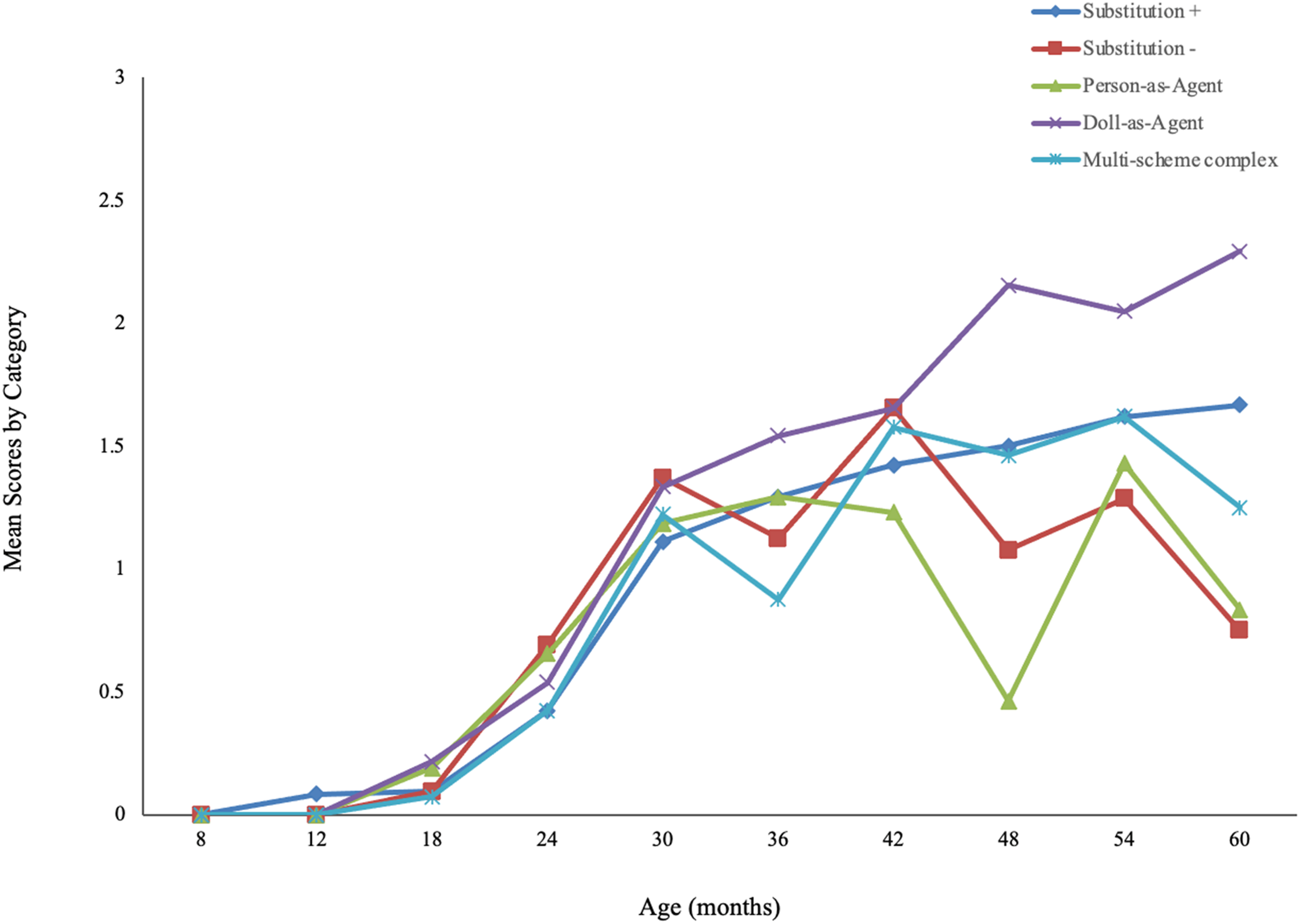
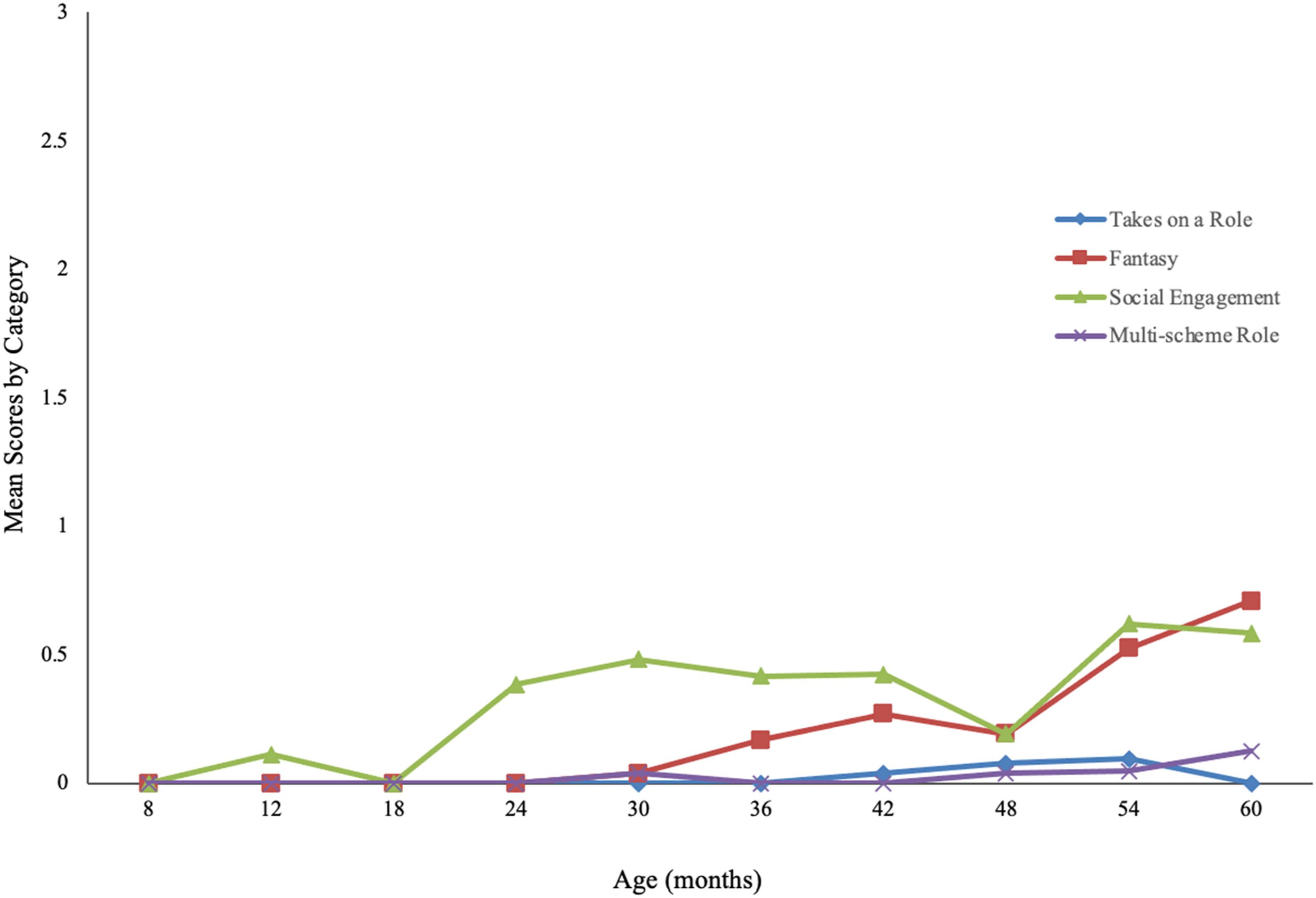
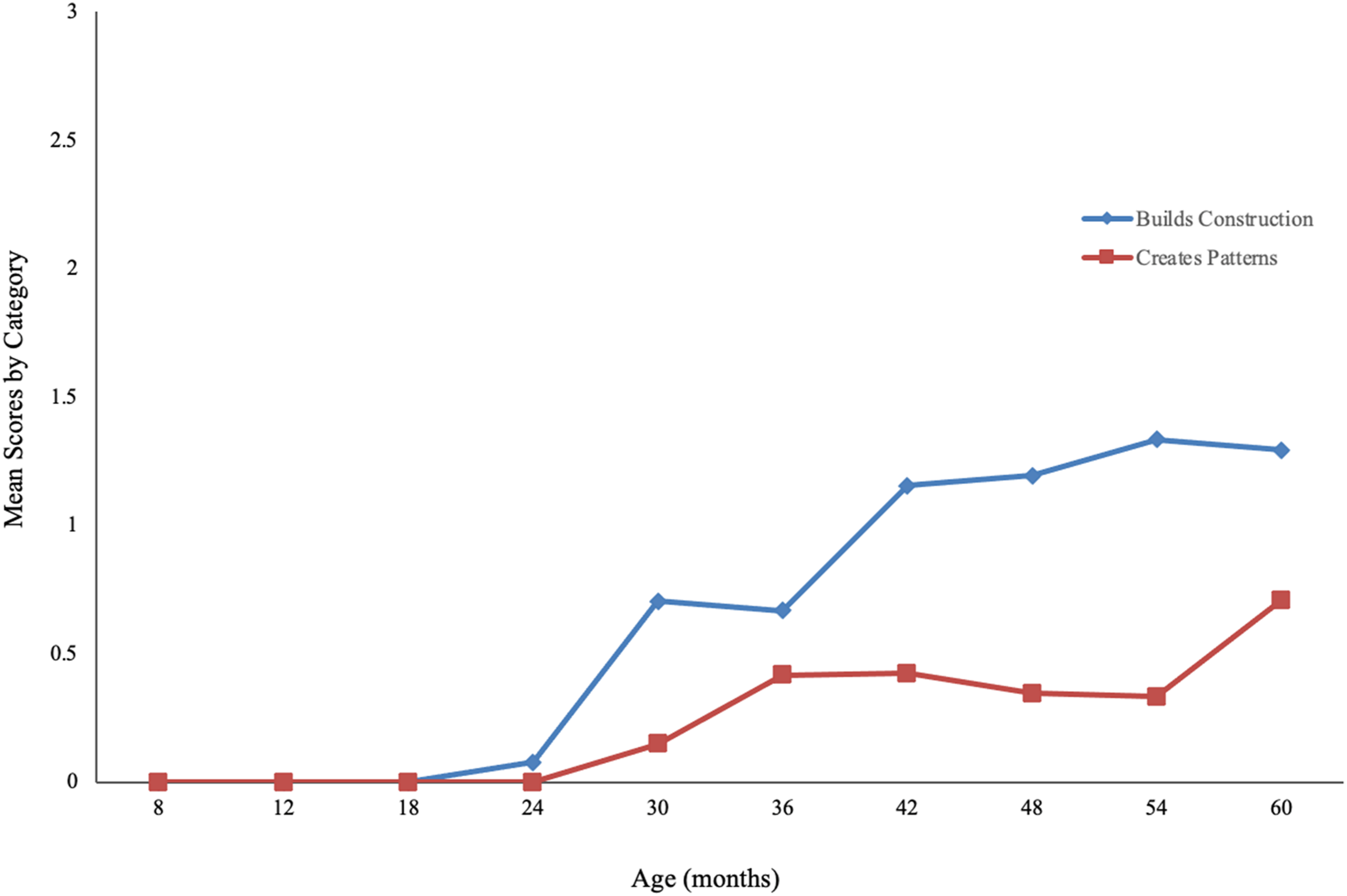
Patterns of mastery scores for play categories across the age groups are presented in Figures 1–5 for the 21 categories grouped according to the identified five clusters. Six of the original 27 categories were not included in the clusters: Lining Up, Giving, Gathers, Dumping, and the two Indiscriminate categories (Table 2), which dominated at the 8-month sample and decreased thereafter, but did demonstrate notable effect sizes, also were not included in the five clusters. Most of the 21 categories presented next demonstrated increasing patterns over the age groups. Several categories showed sharp increases at various age groups, while others revealed increases and then decreases across age groups. Score patterns for perceptually based categories. Score patterns for representationally based categories. Score patterns for pretense categories. Score patterns for role play categories. Score patterns for construction categories.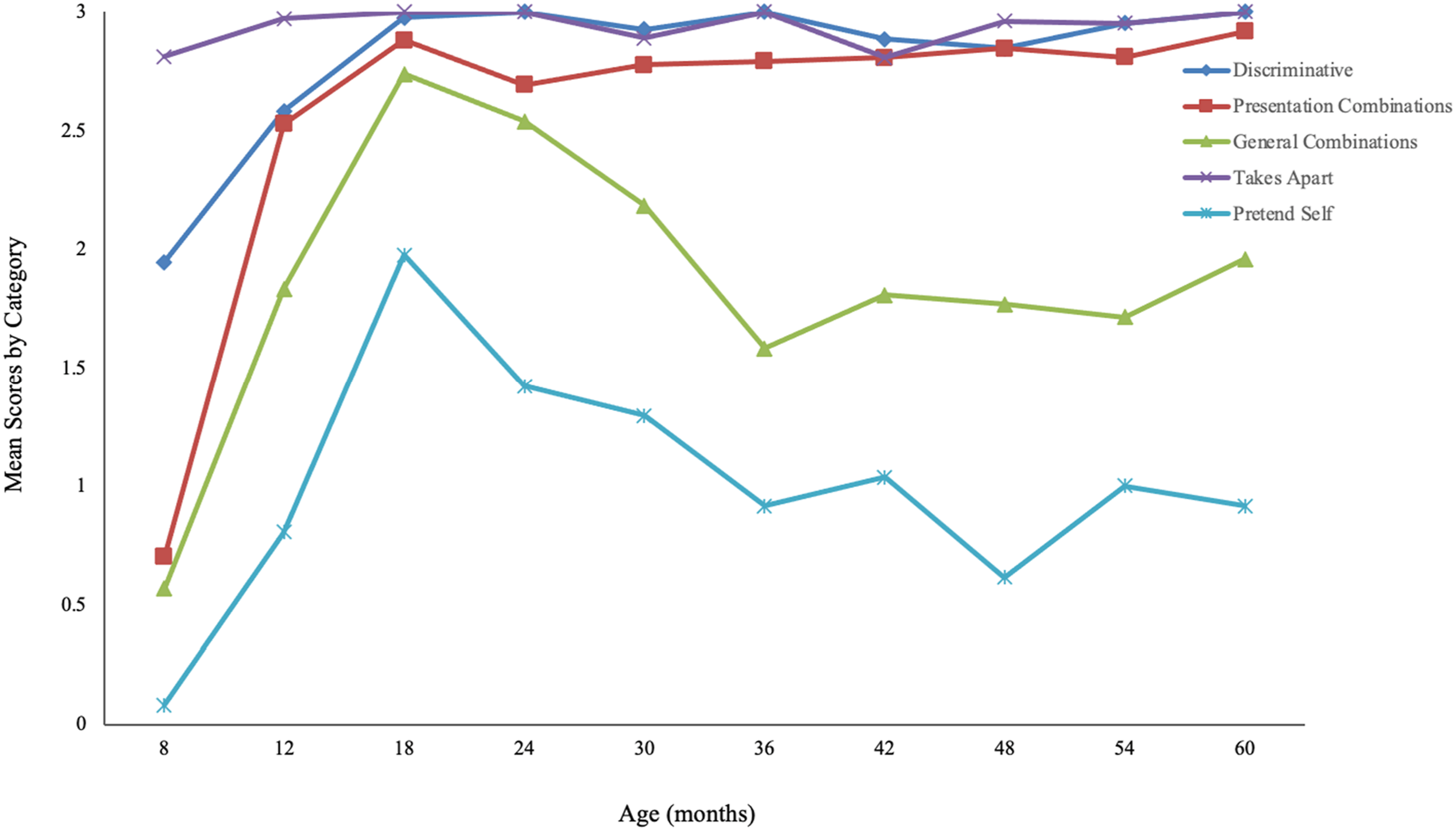
Perceptually Based Categories
Perceptually based categories (Figure 1) appeared earliest and clustered based on perceptual characteristics of the toys (e.g., early physical characteristics like moving objects in and out of containers (General Combinations and Take-apart Activities) and putting puzzles back together (Presentation Combinations)).
Most children reached the emergence criterion (2.0) in Discriminative and Take-apart Activities at the 8-month sample. These categories continued to increase and remain high. Children achieved emergence for Presentation Combinations in the 12-month sample, increasing their expression over time. For General Combinations, children’s mean score approached 2.0 in the 12-month sample, exceeded 2.5, similar to Presentation Combinations, in the 18-month sample, but then decreased. Children reached a mean score of 1.97 for Pretend Self at 18 months, but also decreased thereafter. Results suggest a similarity in trends for Discriminative, Presentation Combinations, and Take-apart Activities, which remained at the mastery level. Trends for General Combinations and Pretend Self appeared to differ and were used less frequently after 18 months.
Representationally Based Categories
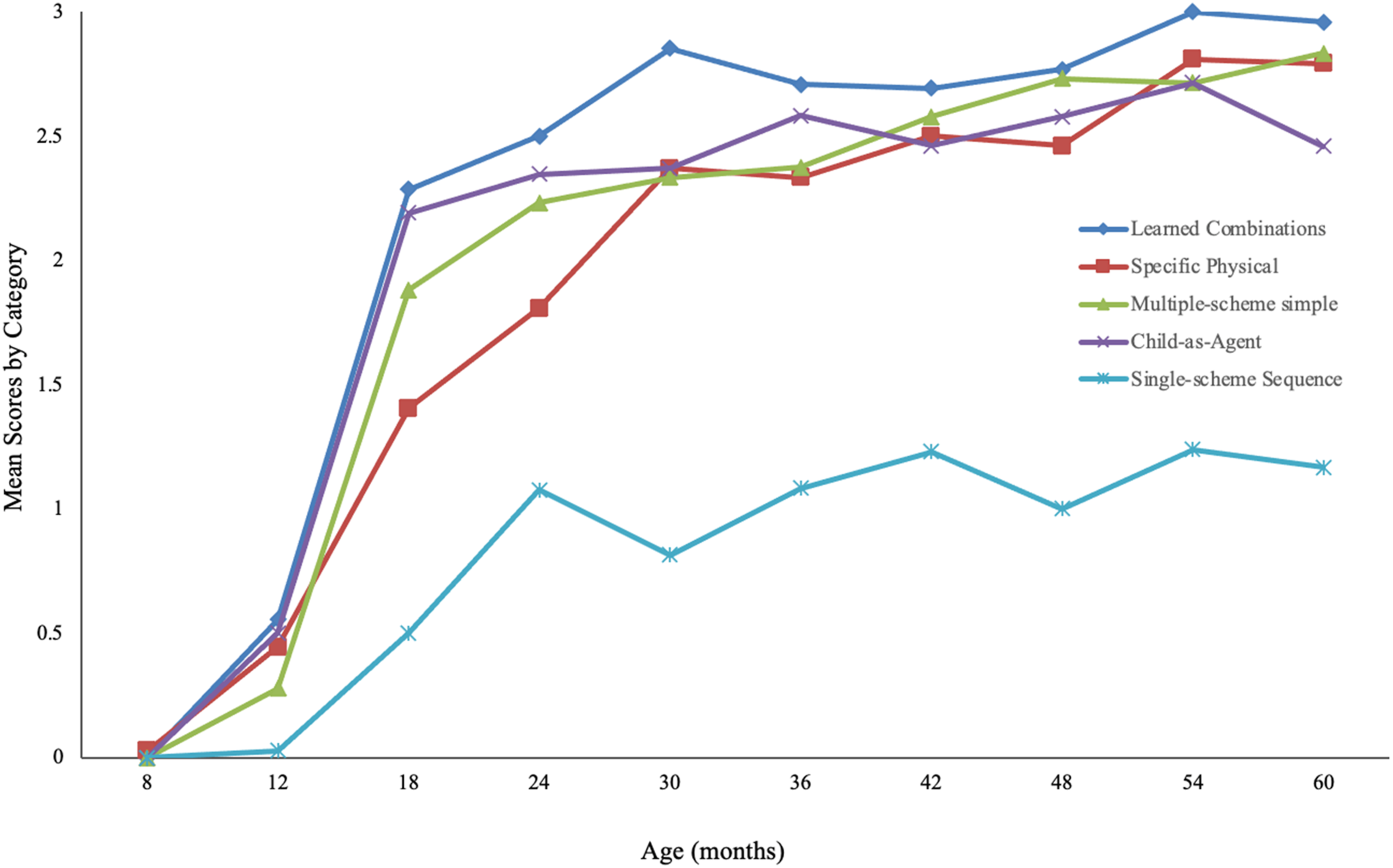
For the representationally based cluster (Figure 2), children appeared to be expressing their past experiences in their play. For example, in Learned Combinations, children were likely to have seen and remembered activities such as stirring a spoon in a cup and using a tool puzzle piece to fix the car.
Children’s performance in Learned Combinations and Child-as-Agent exceeded the emergence criterion of 2.0 by the 18-month sample and continued to increase. Multi-scheme Simple Sequences followed closely, exceeding the criterion of 2.0 by the 24-month sample. Children’s progress in Single-scheme Sequences followed a different developmental course, leveling off above the basic level. Specific Physical activities exceeded a score of 2.0 by the 30-month sample, continuing to increase.
Pretense Categories
Pretense categories (Figure 3) included activities that suggested some element of substitution and the attribution of animacy to doll figures or caregivers.
The highest value for Substitution
Role Play Categories
The Role Play cluster (Figure 4) included categories in which children took on a role or embedded it into a sequence, assuming some element of fantasy, and/or requiring the caregiver to participate.
Takes-on-a-Role and Multi-scheme Role essentially did not occur. Fantasy and Social Engagement occurred at minimal levels, reaching the basic level by the 60-month sample, appearing variable among the children.
Construction Categories
Construction categories (Figure 5) included Building Constructions and Creating Patterns. Children created configurations and added something more to them.
Building constructions appeared at the 30-month sample, with the highest mean score (1.33) occurring at 54 months. Creating Patterns appeared at 36 months, with the highest mean score (.70) occurring at 60 months. Results suggest these categories may be relevant for some but not all children and/or begin to appear at low frequencies in the fifth year.
Reduction of the Play Categories: 21 to 14
Although 21 categories appeared to represent qualitatively distinct categories and were used by at least some children, both 27 and 21 categories are unwieldy for describing children’s play. Further, it appeared that some of the categories contributed more important information than others. The reduction was based on empirical evidence for the categories (i.e., occurrence/non-occurrence; scores; and age of occurrence); conceptual analyses of similarities and differences; and literature on play. Some categories were re-named for increased clarity.
Perceptually Based Categories
Discriminative and Presentation Combinations were retained, based on early mastery and dominance. General Combinations was retained based on early mastery, although it waned over time. Pretend Self was retained, given its predominance in the literature (Nicolich, 1977) and relevance for some children. Take-apart was eliminated, given its focus on accessing toys.
Representationally Based Categories
Learned Combinations was retained given its dominance in children’s play following emergence. Child-as-Agent was combined with Learned Combinations, based on similar conceptual requirements and trends. Multi-scheme Simple was retained, given its dominance, and renamed to Varied Action Sequences. Single-scheme Sequences was retained, based on relevance for some children and predominance in literature (Nicolich, 1977), renamed to Same Action Sequences. Specific Physical was retained given its steady increase and predominance.
Pretense Cluster
Doll-as-Agent was retained; it emerged late, increased, and renamed to Doll-as-Actor. Person-as-Agent was retained, given its relevance for some children and re-named to Person-as-Actor. The two Substitution categories were merged, based on similar trends. Multi-scheme Complex was retained, emerged late with a steady increase, and renamed to Complex Sequences.
Role-Play Cluster
Fantasy was retained and included in the Pretense cluster; it emerged late, occurred minimally, but predominates in the literature (Rubin, 1980). Takes-on-a-Role and Multi-scheme Role were merged with Complex Sequences; they emerged late, occurred minimally, and are conceptually similar to Complex Sequences. Social Engagement was eliminated; it occurred minimally and focused more on social play as opposed to object play.
Construction Cluster
Creating Patterns was merged with Specific Physical, consisting of physical relationships that required experience. Building Constructions was merged with Complex Sequences, based on the element of substitutions in constructions.
Score Patterns for the Final 14 Categories
Perceptually Based Cluster
Score patterns (Figure 6) included Presentation Combinations and Discriminative Actions, which reached mastery early and dominated throughout. General Combinations and Pretend Self also were defined distinctly; their patterns suggest importance at early ages. Play scores for the perceptually based categories.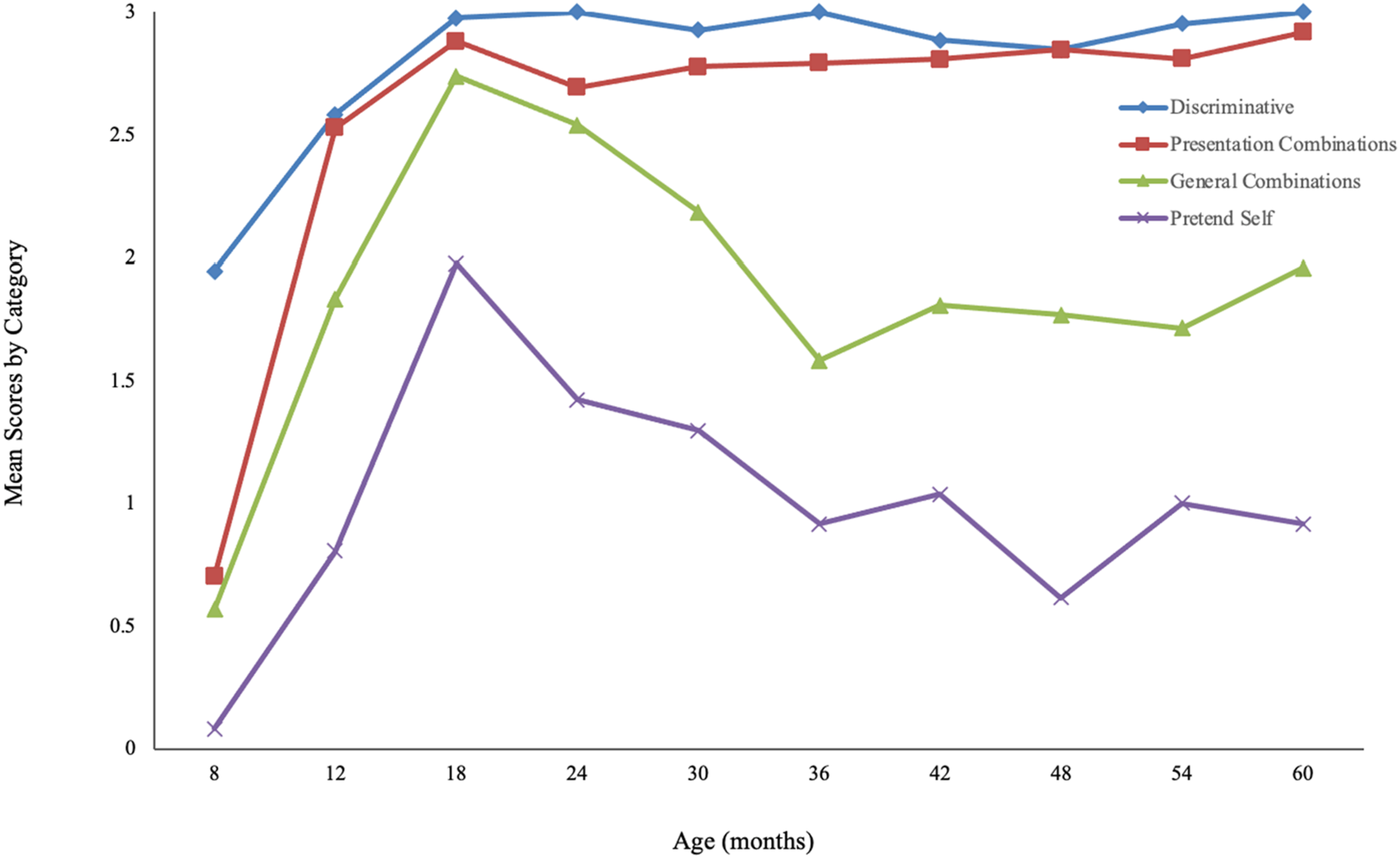
Representationally Based Cluster
Score patterns (Figure 7) for these categories also appeared to be distinctly different—by definition and trajectories. Learned Combinations, which demonstrated a precipitous increase between the 12- and 18-month groups, was followed closely in time by Varied Action Sequences. The trajectories illustrate as children express activities that they have seen and remembered, their expressions are often linked in time and manifest as sequences. Specific Physical activities demonstrated a steady increase in contrast to the more precipitous rise of Learned Combinations and Varied Action Sequences. Single Action Sequences reached a basic level at the 24-month sample and then plateaued. Play scores for the representationally based categories.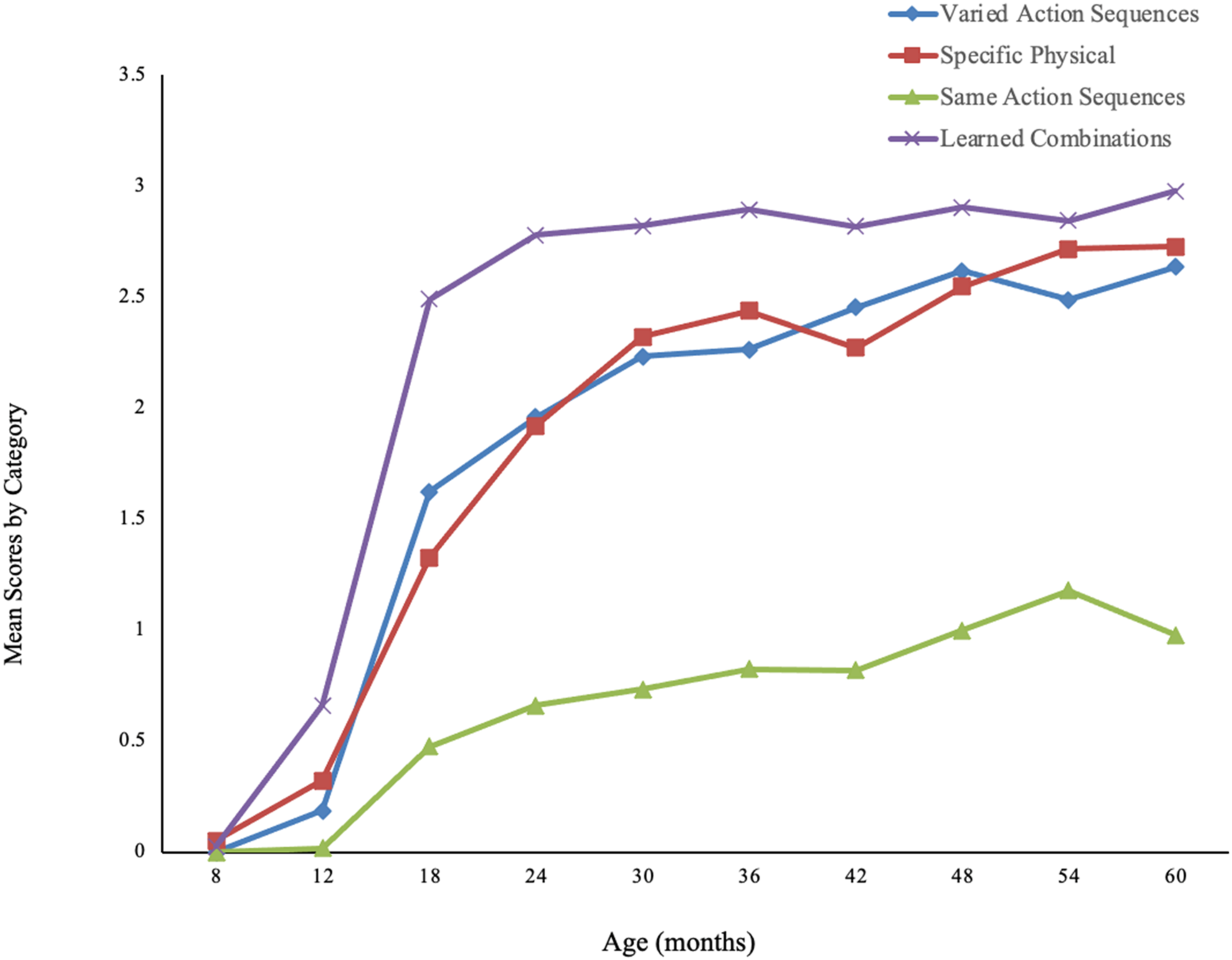
Pretense-Based Cluster
Score patterns (Figure 8) for these categories demonstrated similar levels of activity within the 18-month to 30-month window. Children reached emergence in Substitutions and Complex Sequences at the 30-month sample, approximately, remaining at the emergence level thereafter. Children reached emergence in Doll-as-Actor at the 48-month sample, expressing a similar trend in Person-as-Actor up to the 30-month sample, varying thereafter. Children’s expression of Fantasy Play remained low throughout and increased only in the 48- to 60-month period. Play scores for pretense categories.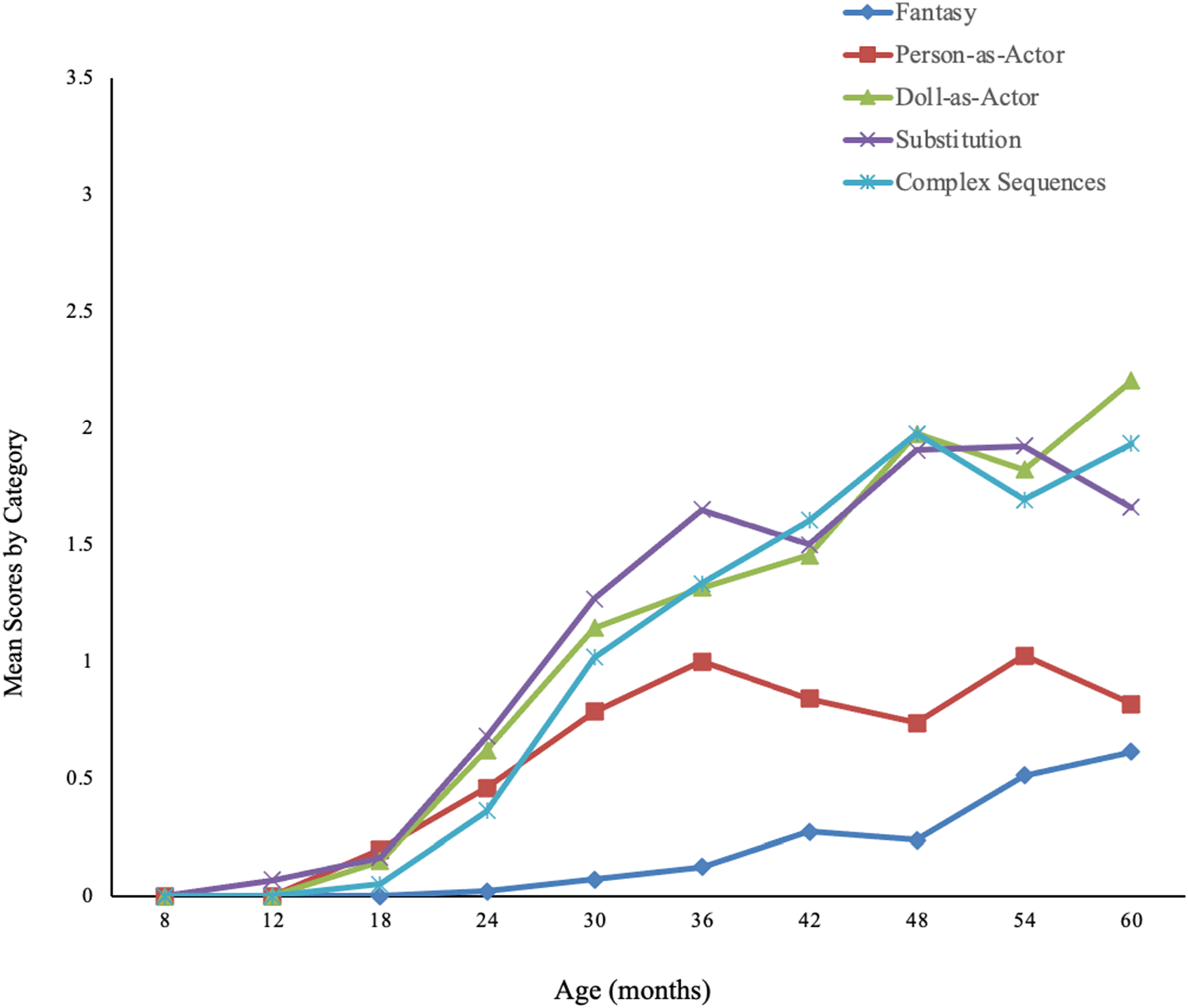
Relationship of 14 Play Categories to Developmental Assessment
Total play scores were computed for each child to investigate the relationship of children’s progress in play, based on 14 categories, to the BDI-2 ST. The Indiscriminate category was assigned a value of 1 if it occurred and 0 if it did not; the criteria for mastery did not apply to this category. Scores for the remaining 13 categories could range from 0 to 3. Thus, scores for each child could range from 0 to 40. None of the children reached a score of 40.
Children’s total play scores were correlated with their total scores on the BDI-2 ST and its five domain scores (i.e., Adaptive, Personal-Social, Communication, Motor, and Cognitive). Analyses were based on 285 children, due to some BDI-2 ST values missing for four children. Correlation of play scores with BDI-2 ST total scores was .82 (p < .001). Correlations of play scores with the five domains were moderate, ranging from .68 to .83 (p < .001).
Discussion
The identified score patterns complement and extend the results of the earlier study (Lifter et al., 2022). The final 14 play categories appeared to be functionally different across the age span, supporting their retention. Score patterns revealed categories that appeared to be dominant and universal in development and those that appeared to be variable. This discussion is organized in terms of utility of combining frequency and variety to create play assessment scores; value of differentiated categories; role of object play in development; implications for assessment and intervention; and limitations, future directions, and conclusions.
Combining Frequency and Variety
Combining frequency and variety to determine scores provided a means to include all instances of children’s object play in the analyses. It also allowed for evaluating children’s progress over the age span of study, offering a consistent method for comparing play categories to one another. This process afforded determination of which categories appeared most relevant in development. Computing mastery scores distinguished this study from other coding systems. Belsky and Most (1981) recorded counts of highest level of play behavior observed in 10-second blocks, similar to interval coding in other studies (e.g., Farmer-Dougan & Kaszuba, 1999). Instead, combining frequency and variety here included all play activities.
The analyses of trends for interactions of age and play categories yielded support for linear, quadratic and cubic trends, suggesting developments in play are more complex than continuous growth at the same rate. The category that appeared to be based mostly on experiences (Specific Physical) showed the most linear trend. The others intersected with developments in cognition, exhibiting precipitous increases at certain age periods.
Developmental changes over time were revealed, such as cognitive transitions, evaluated by precipitous increases in a category, with consolidation, as assessed by mastery; categories contributing to transitions or serving as prerequisites; categories appearing to develop simultaneously, suggesting similar cognitive requirements; and categories forming an increasing pattern, implying a greater contribution of experience to their expression.
To our knowledge, the present study is the first to generate a score based exclusively on naturally occurring observations of children’s object play across 8–60 months. Farmer-Dougan and Kaszuba (1999) provided a numerical play score of the relationship of play to cognitive and social developmental functioning, but they conflated object play with social play. Other studies evaluated play based on composites of various assessments (Pierucci et al., 2015) or used play assessment instruments (e.g., Lewis et al., 2000).
Finally, the computation of scores afforded the determination of the relationship of children’s play to a standard measure of development. The high and significant correlations of the children’s play scores to their BDI-2 ST values provided evidence that play develops during the early childhood period, with implications for the use of play scores as an index of development for individual children. Other studies have correlated play with independent measures of development but have used different measures of play (e.g., Farmer-Dougan & Kaszuba, 1999; Pierucci et al., 2015).
Value of Differentiated Play Categories
The value of differentiating categories of play and retaining 14 categories center on the cognitive structures/transitions distinct categories reveal along with contributions from experience. Increasing trends indicated with marked changes in mastery scores revealed cognitive transitions. The more gradually increasing trends suggest the contribution of experience, along with the slow and steady accumulation of knowledge through trial and error. Variable trends suggest different strategies children use to engage with objects in developing knowledge of objects, people, and events.
Evidence for Cognitive Transitions and Experience
Precipitous Trends
Discriminative activities, Presentation Combinations, and General Combinations formed a sharply increasing pattern during the 8- to 12-month period, although General Combinations eventually became variable. Belsky and Most (1981) identified a cognitive transition in children’s play at the 12-month age window. Similarly, Lifter and Bloom (1989) discussed play around 12 months in terms of general object knowledge. With the construction of relationships between objects (i.e., Presentation Combinations and General Combinations), in addition to Discriminative Activities, children appeared to regard objects as discrete entities. These activities suggest a knowledge of objects in general—that they exist and can be moved in relationship to other objects—which is a critical step in the development of object permanence.
The sharp transition represented by the Learned Combinations (with Child-as-Agent subsumed) and Varied Action Sequences emerging in the second year appeared dependent on the development of knowledge of objects as separate entities. This knowledge could then be integrated with the transition to mental representation and the symbolic function, supporting the expression of activities that the children had seen and remembered. Score patterns suggest Learned Combinations and Varied Action Sequences appear to be the dominant routes children take in expressing information they have learned about their socio-cultural worlds. Single Action Sequences suggest an alternate route for linking a series of activities.
The precipitous trends for Substitution, Complex Sequences, Doll-as-Actor, and Person-as-Actor activities during the 24- to 30-month window suggest another transition. Their emergence, specifically substitution, has been identified as the transition to pretense play (Leslie, 1987; Lillard, 1993). Although never reaching mastery for the children as a group, the combined mastery scores for the two forms of Substitution yielded a high score of 2.2 at the 42-month sample. This value coincided with a score of 2.2 for Complex Sequences at the same sample. The close correspondence in score values for these categories suggests children appear to integrate substitution into sequences as soon as Substitution emerges. Results suggest categories in the Pretense cluster appear to emerge (i.e., a score of 2.2) later in development (i.e., fourth year), as opposed to the third year reported by others (e.g., Wolf, 1982).
The results also revealed that Doll-as-Actor reached emergence by the 48-month sample, suggesting a later development than Substitutions and Complex Sequences, but not as late as Fantasy Play. Doll-as-Actor requires an understanding of agency—that other figures and people are capable of acting—providing evidence of a distinction of self from others. Watson and Fischer (1977) reported “use of object as an active agent” at 24 months, which the present results do not support.
Gradually Increasing Trends
Gradually increasing trends were exhibited largely by the Specific Physical and Fantasy categories, with the latter category being more limited in occurrence. Specific Physical activities suggest learning by trial and error, and distinct from Learned Combinations and Varied Action Sequences. Although children might have seen and remembered various Specific Physical activities (e.g., putting nuts and bolts together), these activities were different from the mental representation required for Learned Combinations. This category is unique to the present study, although it would be embedded into more global categories (e.g., functional play) in other studies (e.g., Thiemann-Borque, 2019; Wilson et al., 2017). Its value as a discrete category is borne out by its distinct trend line and requirements.
Fantasy Play also appeared to exhibit a gradually increasing trend line. Instances of Fantasy Play appeared in the 42-month sample but never reached the basic level even at 60 months. Understanding agency, as suggested with the emergence of Doll-as-Actor and Person-as-Actor that preceded Fantasy Play, possibly contributes to taking on a role in Fantasy Play. Although researchers have described Fantasy Play in preschool children (Rubin, 1980), it did not occur frequently in the present study.
Variable Trends
Some categories displayed variable trends: General Combinations, Pretend Self, and Same Action Sequences. Although initially exhibiting precipitously increasing trends, they decreased overtime. The score levels suggest they continued to be relevant for some children, indicating variation in development. General Combinations may be an early strategy for understanding how to create relationships between objects (Lifter & Bloom, 1989).
Person-as-Actor also demonstrated a variable trend line. Conceptually, it presents similarly to Doll-as-Actor. It also is unique to the categories presented here. Some children incorporated this strategy. Its use may be a function of cultural expectations and/or ways in which caregivers play with their children. Not including Person-as-Actor would have undervalued children’s emerging abilities in the attribution of animacy to others.
The Case for 14 Categories
Of the final 14 categories, the dominant categories were Discriminative, Presentation Combinations, Learned Combinations, Varied Action Sequences, Specific Physical, Substitutions, and Doll-as-Actor. The categories with variable trend lines were General Combinations, Pretend Self, Same Action Sequences, and Person-as-Actor. They were variable in the sense that not all children appeared to engage in them, as evaluated by mean mastery scores of 2.0 or less. Complex Sequences and Fantasy Play demonstrated linear trends, but their mastery scores did not reach 2.0. Indiscriminate activities was retained as it represented children’s earliest actions on objects.
Although 14 categories could still be regarded as a considerable number to manage in an evaluation of children’s play, the value of their differentiation, both for research and clinical purposes, is the developmental evidence supporting them. Although researchers have tended to use more global categories of play, others recently have used more differentiated categories to describe play (e.g., Thiemann-Borque et al., 2019).
Role of Object Play in Development
In the initial study (Lifter et al., 2022), the overall mean frequency of object-related activities recorded in the 30-minute observations was approximately 250. What appears to be the case here is that children are spending a lot of their time playing with objects, given the opportunity to do so. These levels of engagement with objects appear to provide opportunities for children to connect their experiences with developments in cognition.
Pretense play, although developing, does not appear to dominate in the preschool period. The traditional pretense categories of Substitutions and Complex Play did not constitute a large part of children’s play here. This observation provides support for Lillard et al.’s (2013) claim that pretend play is not causal to development but instead is an epiphenomenon of development. What appears to be central to development in play is object play, with pretense play reflected on the continuum of object play.
Implications for Assessment and Intervention
The 14 categories offer distinct information regarding the cognitive processes and experiences that children use to engage their worlds, which have implications for assessment and intervention. This differentiation, along with mastery scores, contribute to determining what children know in play, what they are ready to learn, and what is too difficult at that point in time. Activities at the mastery level could be used to support goals in other developmental domains (e.g., social goals). Conversely, activities evaluated at the emergence level would qualify as activities children are ready to learn for interventions in play. Although considerable research centers on teaching play activities to children with delays (see Barton et al., 2020), the selection of play goals often is based on what peers do in play or on conventional activities with toys. The results here suggest, instead, that a child’s developmental readiness to learn a play category should be determined to identify intervention goals. Pane et al., (2022) demonstrated young children with ASD acquired and generalized play activities that were developmentally matched for them, based on developmental assessment, but not for play activities that were age matched. Their results were based on more differentiated play categories than global categories (e.g., relational, functional, and pretense play). Continued support awaits further studies.
Limitations and Future Directions
This study was based on observations collected in a cross-sectional design. Longitudinal studies would contribute to clarifying the increase and then decrease of certain categories. The observation paradigm of children playing with a caregiver may have limited the expression of Fantasy Play and Role Play, which might require the presence of peers.
Future studies could include the use of a mastery score and age ranges for each play category, which would provide a standard of play development against which to evaluate individual children. The impact of toy selection on children’s play also could be analyzed. The cultural relevance of toys and their influence on what children express with them could be included. Contributions of cultural differences to how caregivers engage their children in play are important to study. Göncü and Gaskins (2011) argue that a sociocultural approach is necessary to understand children’s play. Such an approach could contribute to the role of Person-as-Actor regarding the attribution of animacy and perspective taking in children’s development.
Conclusions
We conclude that developments in play are more complex than continuous growth at the same rate. Focusing on object play activities across 14 categories provided a continuum of evaluation against which experiences and cognitive development intersected. Analyses of trends in the data suggest the long-held belief that learning is cumulative should be reconsidered in light of the cognitive changes that accompany progress in play. Frequency is not robust or sensitive enough for capturing developmental change in play across categories and across children. Mastery scores, as we approached them, provided a stronger means of evaluating children’s generalization of categories, and across qualitatively different categories.
The reduction of categories from 27 to 14 yielded a smaller number of categories to describe children’s play, without sacrificing the qualitative differences among them. The use of 14 categories provides a more precise index of play than a reliance on global categories. Mastery scores also provided a standard for systematic comparisons of categories against which to evaluate children’s progress in play, especially for children developing with delays. Criteria for mastery and for emergence allow for determining what a child knows and what a child is in the process of learning, respectively, providing standardized guidelines for assessment and intervention.
Footnotes
Declaration of Conflicting Interests
The author(s) declared no potential conflicts of interest with respect to the research, authorship, and/or publication of this article.
Funding
The author(s) disclosed receipt of the following financial support for the research, authorship, and/or publication of this article: This work was supported by the National Center for Special Education Research, Institute of Education Sciences (R324A100100).
