




Abstract
The current study sought to test hypotheses derived from the social cognitive model of career self-management (CSM; Lent & Brown, 2013) applied to the process of career exploration and decision-making. We examined how well personality traits, contextual factors, and social cognitive predictors, collectively, account for exploration behavior and career decision-making outcomes. Specifically, we determine the relationships between personality traits with career decision self-efficacy, career goals, and decisional criteria in a sample of 302 high school students. The participants completed domain-specific measures of four personality traits (conscientiousness, intellect/openness, extraversion, and neuroticism), social support, self-efficacy, outcome expectations, goals, level of career indecision, and decisional anxiety. The model fit the data well overall, though certain predictors were linked to the criterion variables only indirectly via mediated pathways. The structural equation model analysis suggested, consistent with previous studies, that the contribution of personality on career exploration and decision-making was mediated by sociocognitive mechanisms. Multiple group analysis suggests that neither sex nor the type of institution (state/private) that students attend determines the relationships among the variables of the proposed theoretical model. Limitations, further research, practical implications, and methodological implications for the CSM model are discussed.
Keywords
Introduction
In the past decades, much research has focused on the study and comprehension of career indecision during the career decision-making process (e.g., Brown & Rector, 2008; Crites, 1969; Gati et al., 1996; Rounds & Tinsley, 1984). Career indecision can be defined as the experience of difficulty in reaching career-related decisions. Brown and Rector (2008) identified four sources of career indecision (neuroticism/negative affectivity, decisional anxiety, lack of readiness, and interpersonal conflicts), among which decisional anxiety stands out for its particularly relevant role in individuals who are undecided about their career (Brown et al., 2012).
Decisional anxiety refers to the feelings of anxiety that are generated during the decision-making process and the consequent inability to commit to a particular choice, which may be due to a wide range of interests or the concern that interests may differ over time (Brown et al., 2012). The relationship between both variables (career indecision and decisional anxiety) has been examined in numerous studies (e.g., Lent & Brown, 2013; Lent et al., 2016; Miller & Rottinghaus, 2014; Weinstein et al., 2002).
In recent years, several important advances have been made in the study and understanding of personality traits in relation to career indecision (e.g., Ireland & Lent, 2018; Martincin & Stead, 2015; Penn & Lent, 2018). In a newly published study carried out by Penn and Lent (2018), the authors attempted to form a more theoretically coherent image of career indecision.
The social cognitive model of career self-management (CSM), developed by Lent & Brown, 2013, is one of the most recent models derived from the Social Cognitive Career Theory (SCCT). The CSM model provides a social cognitive perspective on professional decision-making. This model proposes a structure that integrates the effects of personality traits, cognitive abilities, and contextual factors, on the possible outcomes of the decision-making process (see Figure 1). Model of Career Self-Management as Applied to Career Exploration and Decision-Making Behavior. Note. Career Self-Management Model adapted from “Social cognitive model of career self-management: Toward a unifying view of adaptive career behavior across the life span” by R. W. Lent & S. D. Brown. 2013. Journal of Counseling Psychology, 60(4), p. 557. Copyright 2016. American Psychological Association (APA).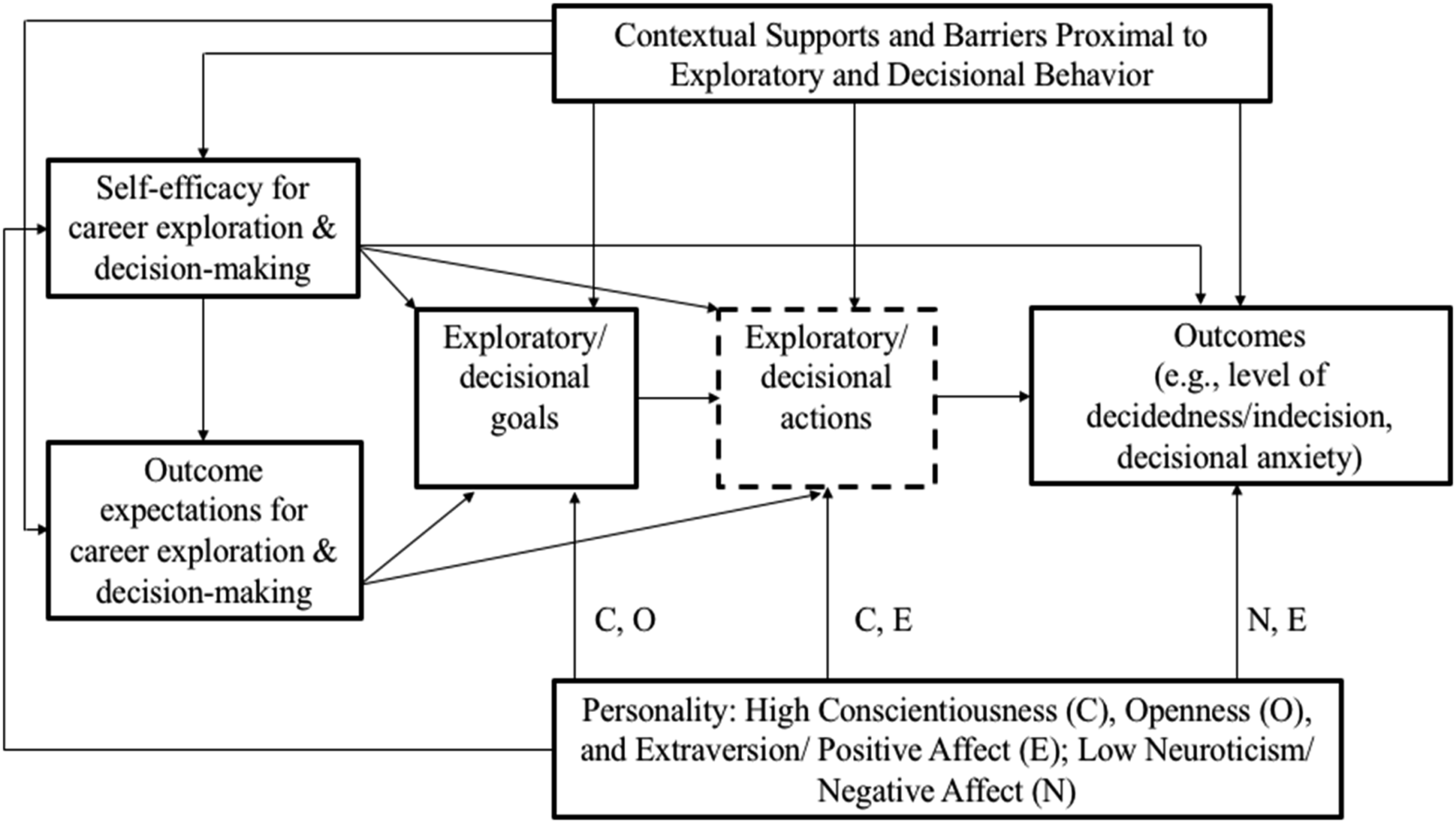
The CSM model suggests that personality and self-efficacy work together, meaning that self-efficacy can mediate, at least in part, the relationship between three of the Five Big Personality Traits—extraversion, neuroticism, and conscientiousness—with decisional anxiety and with the general level of career decision (see Figure 1). In a more recent study examining the relationship between multiple role balance intentions and career decision-making, Lent et al. (2019) found that the link between conscientiousness and level of decidedness/indecision and decisional anxiety is mediated by outcome expectations and/or self-efficacy beliefs.
In addition to the aforementioned research, multiple studies have been conducted on the relationships hypothesized in the CSM model. For example, Lent et al. (2016) found that self-efficacy, outcome expectations, and social support were related to career goals and that self-efficacy was strongly predictive of career decidedness and decisional anxiety. Self-efficacy was also found to mediate the relation of conscientiousness to career goals and the relationship between social support, career decidedness, and decisional anxiety. In another recent study, Lent et al. (2017) found that self-efficacy and outcome expectations jointly predicted career goals and that self-efficacy predicted career decidedness.
Although these studies have made a great contribution in terms of understanding the phenomenon of career indecision, not all the relationships proposed by the CSM model have been examined. In particular, those related to the influence of personality traits on career decision self-efficacy and career goals that favor career decisions.
Studies on vocational interests and career development from the SCCT perspective represent a growing area of research, accounting for 22% of the total number of studies conducted in Latin America (Moreno & Blanco, 2016). Although studies have provided evidence supporting the SCCT’s postulates (e.g., Cupani et al., 2017; Cupani, Zalazar Jaime, & Garrido, 2011), no study has yet explored the relationships proposed by the career self-management model in our particular context. Therefore, it is currently unknown how this model could explain career indecision and decisional anxiety among Argentinean adolescents. This is a relevant fact since many studies have emphasized that the processes of career exploration and career decision-making have different nuances depending on the ethnic and sociocultural variables (e.g., Brislin, 2000; Lindley, 2006). The studies carried out on the CSM model were mainly applied to a North American sample; therefore, the results obtained cannot be transferred to a Latin American context, nor to our local context.
On the other hand, most of the studies of the CSM model have been carried out in samples of college/university students. However, adolescence is a critical period where decisions about future careers develop (Hartung et al., 2005). During this phase, children develop knowledge about themselves, which fosters their decisions regarding their career options (Bandura et al., 2001; Gati & Saka, 2001). In other words, high school students are expected to look for information, explore their talents and interests and start a process of career planning. Creed, Fallon and Hood (2009) found that students who have good performance and are goal-oriented tend to achieve an optimal level of career decision.
To address this gap in career indecision literature, the purpose of this study was to examine the career decision-making process in Argentinian adolescents from the perspective of the SCCT career self-management model. Specifically, the study was designed to test the hypotheses derived from the CSM model in relation to personality traits, contextual factors and social cognitive predictors of decisional anxiety and career indecision. We sought to explore the nature of the relations among the predictors as well as how they, collectively, account for career decision-making intentions and career outcomes.
Predictors of Career Indecision and Decisional Anxiety: Personality Traits, Contextual Factors, and Cognitive Variables
Personality traits are thinking, feeling, or behaving general tendencies that are relatively stable across time and situations, shaped in part by biology (McCrae et al., 2000). Personal variables can allow or limit personal agency and co-determine the results of adaptive career behavior (Lent & Brown, 2013). Recent investigations on the association between personality traits and different aspects of career development, such as career indecision (Martincin & Stead, 2015; Page et al., 2008), worked under the theory of the Five-Factor Model: neuroticism, extraversion, intellect/openness, agreeableness, and conscientiousness. Neuroticism refers to the lack of positive adjustment and emotional stability; intellect/openness is linked to an information-seeking attitude, creativity, imagination, intellectual curiosity and, multiplicity of interests; extroversion is related with being active, energetic, gregarious, assertive, as well as with a tendency to experience a positive emotionality; conscientiousness is associated with goal-driven, self-disciplined, and organized behavior (Bozionelos et al., 2014; Brown & Hirschi, 2013).
Numerous studies found that when participants showed high levels of neuroticism and low levels of extraversion, they tend to report higher levels of career indecision (e.g., Di Fabio et al., 2015; Hirschi & Hermann, 2013). Tokar et al. (1998) hypothesized that those individuals with high scores in the personality traits extraversion and intellect/openness are expected to be involved in a higher number of actions related to career exploration and planning. Moreover, it is expected that people with high levels of conscientiousness adopt an organized and persistent approach for career exploration and decision-making, whereas those who generally experience high levels of negative affect or neuroticism are inclined to anxiety or indecision when they face the pressure of decision-making related to career choice.
In general, personality traits may influence career adaptation by either facilitating (or dissuading) the performance of certain career adaptive behaviors or activating coping strategies (Lent & Brown, 2013). As seen in Figure 1, due to their global nature and empirical evidence, personality traits are expected to establish modest associations with the possible outcomes of the decision-making process, such as decisional anxiety and the level of decidedness/indecision ((Kim et al., 2019); Lent & Brown, 2006; Penn & Lent, 2018). It is assumed that this relationship is mediated by the cognitive variables, such as career decision self-efficacy and exploratory/decisional goals.
Career decision self-efficacy refers to beliefs about the people’s capacity to perform adequately activities such as career planning, accurate self-appraisal, acquiring problem-solving abilities, gathering of relevant occupational information, and selecting appropriate goals (Taylor & Betz, 1983). A large number of studies reported an inverse relation between career decision self-efficacy and career indecision (e.g., Betz & Luzzo, 1996; Choi et al., 2012), which is theoretically consistent since having high levels of career decision self-efficacy helps people to develop decision-making skills, experience a lower level of anxiety and be persistent in career-decision tasks (Penn & Lent, 2018). As mentioned, several studies have highlighted the mediating role of career decision self-efficacy in this relationship (e.g., Jin et al., 2009; Lent et al., 2016; Penn & Lent, 2018; Rogers & Creed, 2011). However, there is insufficient empirical evidence in the CSM model to assume that cognitive variables, such as career decision self-efficacy and exploratory/decisional goals, mediate the relationship between personality traits and decisional outcomes (Penn & Lent, 2018). Exploratory/decisional goals are people’s intentions to develop adaptive career behaviors such as the involvement in the vocational/professional exploration.
The contextual factors are another group of antecedents proposed by the CSM model. Contextual factors such as the quality of education and socioeconomic resources provide a social learning context for individuals to acquire self-efficacy and outcome expectation beliefs (Lent & Brown, 2013). That is, people are more likely to set and achieve career goals when they feel environmental support and encounter fewer barriers. Moreover, contextual influences, such as the reactions of important others and access to environmental resources, can directly affect career outcomes (Lent & Brown, 2013).
Social Cognitive Model of CSM as Applied to Career Exploration and Decision-Making Behavior
The social cognitive CSM model (Lent & Brown, 2013) was recently developed to accomplish a deeper comprehension of the processes through which people guide and reach their own educational and working achievements. The CSM model offers a framework for integrating personality, contextual and social cognitive variables on decisional outcomes, such as career decision/indecision and decisional anxiety.
Figure 1 shows the general model of CSM, and Figure 2 shows the specific ways in which conscientiousness, intellect/openness, neuroticism, and extroversion are expected to relate to career decision self-efficacy, exploratory/decisional goals and decisional outcomes, such as level of indecision and decisional anxiety. Proposed Career Self-Management Model. Note. Adapted from “Social cognitive model of career self-management: Toward a unifying view of adaptive career behavior across the life span” by R. W. Lent & S. D. Brown. 2013. Journal of Counseling Psychology, 60(4), p. 557. Copyright 2016. American Psychological Association (APA).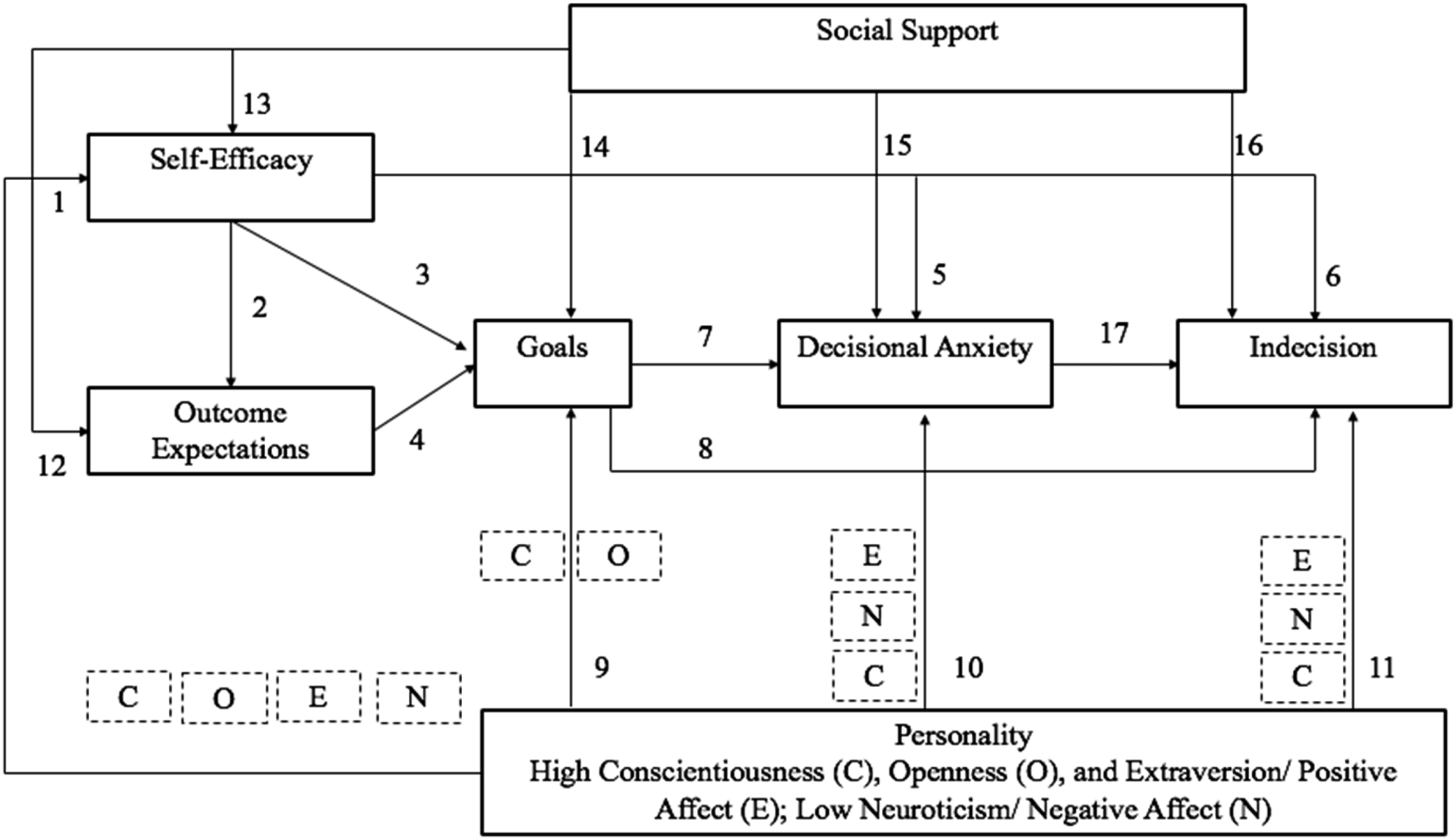
As general and distal influences, the personality traits help to develop and shape career decision self-efficacy beliefs, based on how people attend to, encode, and recall the efficacy-based learning experiences to which they have been exposed. Career decision self-efficacy determines the outcome expectations beliefs and contributes to accounting for decisional/exploratory goals, both directly and indirectly, through outcome expectations (Path 1–4). That is, those subjects with stronger career decision self-efficacy beliefs have more chances to develop positive expectations related to the set of certain goals (e.g., exploring possible professional pathways through readings, observations; formal or informal self-assessment of interests, abilities, and values). Besides, career decision self-efficacy has a direct impact on decisional anxiety and career indecision (Path 5-6).
The intentions to perform certain actions or adaptive career behaviors favor their execution, which leads to certain outcomes, such as a determined level of career decidedness/indecision and decisional anxiety (Path 7-8).
The SCCT postulates that decisional/exploratory goals and adaptive career behaviors, as well as their potential outcomes, are influenced by personality traits (Paths 9-11) and context-based supports (Paths 14,-16). Contextual supports and barriers operate through several pathways. Social supports have a direct influence on outcome expectations and career decision self-efficacy (Path 12-13). Research has suggested that supports and barriers may also relate indirectly to exploratory/decisional goals, via their linkages to career decision self-efficacy and outcome expectations (Sheu & Lent, 2015). That is, the presence of support (and the absence of barriers) may strengthen career decision self-efficacy and outcome expectations.
In the initial study of the CSM model, Lent et al. (2016) found that predictive variables explained substantial amounts of the variance of exploratory goals and obtained evidence about the adequate fit of the CSM model to the data on goal predictions, decisional anxiety, and career decision level. Specifically, career decision self-efficacy evidenced indirect relationships with goals, which was consistent with previous research (Betz & Voyten, 1997; Huang & Hsieh, 2011; Jantzer et al., 2009).
Since the first studies carried out based on Bandura’s self-efficacy expectation theory (1977), it is assumed that the variables involved in the career decision process may vary depending on sex, due to different gender roles. In a study investigating the concept of self-efficacy in women’s career development, Hackett and Betz (1981) found that self-efficacy beliefs were linked with women’s traditional gender role orientations. In other words, they posit that under the influence of traditional gender role orientations women could not evaluate themselves accurately, and are at a disadvantage in terms of gathering information about careers, making plans for the future and problem-solving (Bolat & Odaci, 2017). While there is existing literature that outlines differences in variables based on sex, some sources do not consistently describe the relationship between these variables (Lent et al., 2018; Sheu & Lent, 2015).
Additionally, although no specific studies have been carried out in this regard, some authors suggest that the associations between the variables proposed by the model may be influenced by the type of institution the students attend (Brown et al., 1999).
In sum, the present study was designed to examine how well personality traits, contextual factors and social cognitive predictors, collectively, account for exploration behavior and career decision-making outcomes in Argentinian adolescents. Specifically, we were interested in determining if personality traits may yield direct paths to career decision self-efficacy, exploratory/decisional goals and decisional criteria since these relationships proposed by the CSM model have not been previously examined. Thus, we carried out a multiple group analysis to determine if the associations between the variables proposed by the CSM model differ based on the sex of the participants and the type of school they attend.
Method
Participants
Based on the latest data provided by the (Subsecretaría de Planeamiento, Evaluación y Modernización, 2021)), the enrollment of sixth-year students in the city of Cordoba is 17,115, distributed across five specialties: Baccalaureates in Natural Sciences, Social Sciences, Economics and Administration, Humanities and Social Sciences, and Visual Arts. In order to estimate the population parameters with a 95% confidence level and a 5% margin of error, a sample size of approximately 377 subjects is required. Since specific statistics regarding the number of sixth-year students per specialty were not available, the sample size calculation was based on the total number of the population. Therefore, it was decided to proceed with the analysis under the assumption that the sample size of 302 adolescents will be representative of the four specialties covered by the collected data. In terms of the distribution of students, 10.6% were enrolled in the art orientation, 25.7% in social sciences, 38.7% in natural sciences, and 23.2% in social communication, in accordance with the orientations offered by our educational system. Among this sample, 162 (53.3%) were female and 141 (46.7%) were male, with ages ranging from 16 to 19 years (M = 17.07; SD = .50). The sample consisted of students from both the public sector (30.5%) and the private sector (69.5%) in schools located in the city of Cordoba, Argentina.
The socioeconomic status of the sample population showed that 8.3% of adolescents belonged to the medium-low socioeconomic bracket, while 51.3% belonged to a medium SES, and 40.7% to a medium-high SES. These findings were obtained through classification by the Facultad de Ciencias Sociales (2021) (https://tinyurl.com/2bbudj3r), which categorizes the city of Cordoba (Argentina) into five different socioeconomic levels: high SES, medium-high SES, medium SES, medium-low SES, and low SES. It is important to note that this estimation of SES based on geographical and demographic factors may not be as precise as directly measuring parental characteristics. However, encountered limitations in gathering information about the parents' activities, including occupation, educational background, and income.
Measures
Self-Efficacy (Azpilicueta et al., 2019)
A participant’s level of self-efficacy was assessed with the Career Exploration and Decision Self-Efficacy- Brief Decisional Scale (CEDSE-BD; Lent et al., 2016). This scale estimates the students’ degree of confidence with respect to certain activities related to the career decision-making process. It consists of eight items (e.g., Identify careers that best match your interests) that participants must respond to, indicating a confidence level between 1 (No confidence at all) to 5 (Complete confidence). The scale presents adequate psychometric properties of validity and reliability (α = .96). The studies to adapt this scale (Azpilicueta, 2019; Azpilicueta et al., 2019) indicated that the eight items presented adequate reliability values (.82), evidence of internal structure validity (EFA; exploratory factor analysis) and predictive validity.
Outcome Expectations and Goals (Azpilicueta, 2019)
We assessed participants’ outcome expectations and goals with the Career Outcome Expectations Scale (Betz & Voyten, 1997). The outcome expectations subscale consists of four items reflecting positive outcomes that may attend involvement in career exploration activities (e.g., If I know my interests and abilities, then I will be able to choose a good career for me). For participant’s level of goals, we use the 5-item Exploration Intentions Scale, also developed by (Betz & Voyten, 1997; e.g., I intend to spend more time learning about careers than I have been). Items on both measures are rated on a 5-point scale, from strongly disagree (1) to strongly agree (5). Betz and Voyten (1997) reported coefficient alpha of .79 and .73, respectively, for the outcome expectations and goals measures. The adaptation studies in both subscales (Azpilicueta, 2019) indicated that they have adequate psychometric properties of internal structure (EFA) and predictive validity as well as acceptable reliability indices (.71 for outcome expectations and .70 for goals).
Social Support (Azpilicueta, 2019)
This construct was assessed with the Influence of Others on Academic and Career Decisions Scale (Nauta & Kokaly, 2001). For the present study, we used the eight items corresponding to the subscale Support/Guidance (e.g., There is someone I can count on to be there if I need support when I make academic and career choices); this subscale was designed to determine help, encouragement, and advice received by individuals when they are in the process of decision-making. Participants should respond through a Likert-type scale with values between 1 (Strongly Disagree) and 5 (Strongly Agree). Nauta & Kokaly (2001) reported adequate internal consistency indices (α = .89 a .94). The adaptation studies indicated adequate psychometric properties of internal structure (EFA) and predictive validity. The reliability index was .90 (Azpilicueta, 2019).
Personality
The four traits included in the current study were assessed with IPIP Big-Five Factor Revised (Cupani & Lorenzo-Seva; 2016). The scale consists of 10 items for each one of the Big-Five personality traits: Extraversion, agreeableness, conscientiousness, neuroticism, and intellect/openness. The IPIP items are responded to through a five-point Lickert-type scale, ranging from 1 (very inaccurate) to 5 (very accurate). Cupani & Lorenzo-Seva (2016) conducted studies of internal structure (acquiescence bias, EFA, Confirmatory Factor Analysis) and predictive validity. The authors reported Cronbach’s alpha values between .86 and .91 for the IPIP scales.
Decisional Anxiety (Azpilicueta et al., 2019)
Participants’ feelings of anxiety that are generated during the decision-making process and the consequent inability to commit to a particular choice were assessed with the subscale Choice/Commitment Anxiety (CCA) from the Career Indecision Profile (CIP-65; Hacker et al., 2013). The CIP-65 consists of 65 items that allow assessing four aspects that influence the process of career choice: (1) neuroticism/negative affect (NNA), (2) lack of readiness (LR), (3) interpersonal conflicts (IC), and (4) choice/commitment anxiety (CCA). In the present study, the last subscale was used to determine the level of decisional anxiety through its 10 items (e.g., I’m concerned that my interests may change after I decide on a career). High scores in the CCA scale imply that the person needs to obtain more occupational information and information about him/herself; they also show an incapacity to commit and a high level of anxiety about career decision-making. Participants must respond to a Likert-type scale from 1 (Strongly Disagree) to 5 (Strongly Agree). Strong internal consistency reliability estimates have been reported for the CCA (α = .97; Hacker et al., 2013). Hacker et al. (2013) found evidence to support the factor structure of the CCA, which produced the largest correlation with a measure of career decidedness (r = .71). The adaptation studies of this scale indicated that the 10 items presented adequate reliability values (.88) and evidence of internal structure validity (EFA) and predictive validity (Azpilicueta et al., 2019).
Career Indecision (Azpilicueta et al., 2019)
Participants’ experience of difficulty in reaching career-related decisions was assessed with the Career Decision Scale (CDS; Osipow et al., 1987). This instrument consists of 19 items; the first two items indicate the participants’ level of decision in career choice, the next 16 items measure indecision in career choice (e.g., several careers have equal appeal to me. I´m having a difficult time deciding among them) and the last item is an open question for participants to describe they vocational situation if any of the previous items does not describe it. All the items, excluding the last one, are responded with a scale from 1 (Not at all like me) to 4 (Exactly like me). The authors reported adequate psychometric properties (α = .81; 18 items). In the adaptation process, we obtained evidence of internal structure through EFA and predictive validity. The reliability index was .91 (Azpilicueta et al., 2019).
Procedure
The instruments were administered collectively during the regular class schedule, with authorization and prior consent from the directors of the institutions and the teachers of each class, asking for each student’s collaboration and emphasizing the voluntary nature of their participation and the confidentiality of data. Scales were jointly administered in a 40-minute session.
The ethical code for research with human beings was respected (APA, 2002); informed consent forms were provided and measures were taken to guarantee the respect to human rights and environment care. Besides, there was a strict control to prevent any emergent risk and guarantee the good use and handling of information. The safeguards provided by both the Helsinki Declaration and the Personal Data Protection Law 25,326 were also considered.
Data Analysis
SPSS software was used to prepare the data. Patterns of missing values were analyzed firstly in order to estimate if the distribution was at random (Schafer, 1999; Tabachnick & Fidell, 2013). Second, we calculated standard scores for each one of the variables to assess the presence of atypical univariate cases. Univariate and multivariate atypical cases were identified by calculating the standard z-score for each variable (z-scores > 3.29 were considered atypical) and the Mahalanobis distance measure (p < .001), respectively. We considered atypical those cases with z-scores higher than 3.29 (two-tailed test, p < .01) and the ones that appeared identified as such in boxplots. Before being discarded, we performed the Mahalanobis distance test with p < .01 to estimate whether those cases were also multivariate atypical ones (Tabachnick & Fidell, 2013). To determine the elimination of cases, they had to fulfill at least two out of three criteria. The first criterion stated that the case had to be atypical univariate; the second one, that it had to be atypical multivariate, and the third one, that it had to follow a dysfunctional response pattern (e.g., acquiescence) or used regularly only one or two response options along with the instrument administration. No case fulfilled those criteria, and the final sample consisted of 302 cases.
To evaluate the normality of each variable’s distribution, asymmetry and kurtosis scores were inspected. Scores above ±1.00 were considered excellent, while scores less than ±2.00 were deemed adequate. Multivariate normality was evaluated using the Mardia’s coefficient (1970), which suggested that a value greater than 5.00 indicates a distribution that is close to normal (Bentler and Wu, 2005).
Structural equation modeling (SEM) was used to assess the relationships between variables, employing the AMOS 26 software. A two-phase modeling strategy was applied (Kline, 2011) to test the hypothesized model, which involved testing the measurement model and fitting the structural model to the covariance matrices. Additionally, a series of path analyses were generated using a statistical method to evaluate the variables of self-efficacy, outcome expectations, goals, social support, decisional anxiety, and career indecision.
Model fit should be assessed using several indices. In the present study the following indices were employed: the chi-square test of significance (x 2 ), the ratio of chi-square statistic to degrees of freedom (x 2 /df), the comparative fit index (CFI), the goodness-of-fit index (GFI), the standardized root-mean square residual (SRMR), and the root-mean-square error of approximation (RMSEA). A small, nonsignificant chi-square value is expected if a model provides adequate fit to the data. The chi-square test of significance, however, is sensitive to sample size and is difficult to interpret given its lack of standardization (Kline, 2011). Although the ratio of chi-square statistic to degrees of freedom is obviously based on the chi-square statistic, dividing this statistic by its degrees of freedom reduces its sensitivity to sample size. When this ratio is less than 3.0 a good model fit can be inferred (Kline, 2011). According to, indicate that CFI and GFI values between ≥ .90 and ≥ .95 indicate good fit. SRMR and RMSEA values of ≤ .10 and ≤ .06, respectively, are indicative of good model fit, whereas SRMR and RMSEA values of ≤ .08 and ≤ .05 indicate excellent or close fit, respectively. We examined the statistical significance of the direct, indirect and total effects through the bootstrap resampling method. This method carefully controls Type I error, and it is a better alternative than the Sobel test. Regarding determination coefficients, R2 values ranging from .04 to .24 are considered small effects, .25 to .63 as medium, and ≥ .64 as large (Rendón-Macías et al., 2021).
Results
Data Preparation and Treatment of Missing Data
In this study, missing data were identified as item nonresponse ((Schlomer et al., 2010)), with a range of .3% to 7.4%. Analyzing the missing values showed that no item presented a percentage higher than 10% (Hair et al., 2010). We decided to impute the missing data using a measure of central tendency (mode) calculated from the participants' complete answers on the same scale. This method offers conceptual simplicity and precision (Shrive, Estuardo, Quan, & Ghali, 2006). The asymmetry and kurtosis indices ranged from −.89 (goals) to .35 (career indecision) for asymmetry and from −.75 (decisional anxiety) to 1.31 (goals) for kurtosis. To assess the internal consistency of the scales, the Cronbach’s alpha coefficient was calculated, which will allow for comparison with other studies as it is the most commonly reported coefficient. Additionally, the Omega coefficient was calculated to provide greater stability in the scores by using factor loadings for its computation (Zinbarg et al., 2005; Zinbarg et al., 2006), independent of the number of items ((McDonald, 1999)).
Correlations, Means, Standard Deviations, and Reliability Indices.
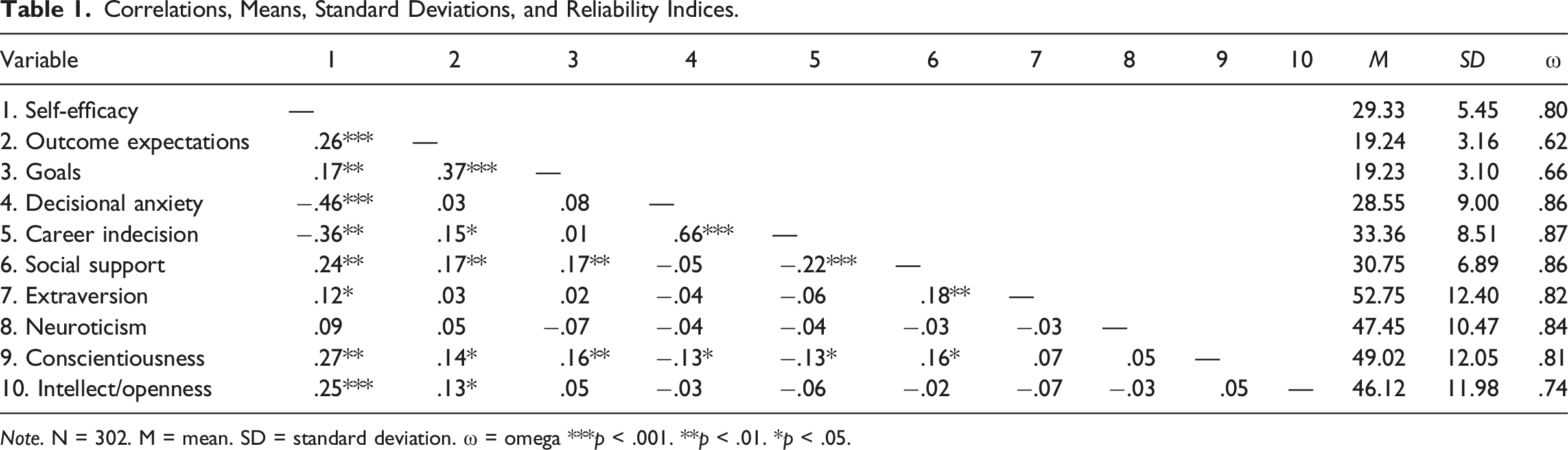
Note. N = 302. M = mean. SD = standard deviation. ω = omega ***p < .001. **p < .01. *p < .05.
Full Sample Analysis
Measurement Model
Six latent variables were included in the measurement model together with 16 indicators as observed variables. The quantity of indicators per factor ranged from two to three. The indices showed the model had an optimal fitness (see Table 2) and all factors significantly loaded onto latent variables. The standardized path (p ≤ .05) ranged from .69 to .80 for career decision self-efficacy; from .52 to .70 for outcome expectations; from .74 to .87 for social support; from .58 to .89 for decisional anxiety; from .66 to .77 for exploratory/decisional goals, and from .63 and .79 for career indecision.
Multiple Group Analysis
School Related Effects
Fit Indices for Model and the Multiple Group Analyses With Different Grouping Variables.
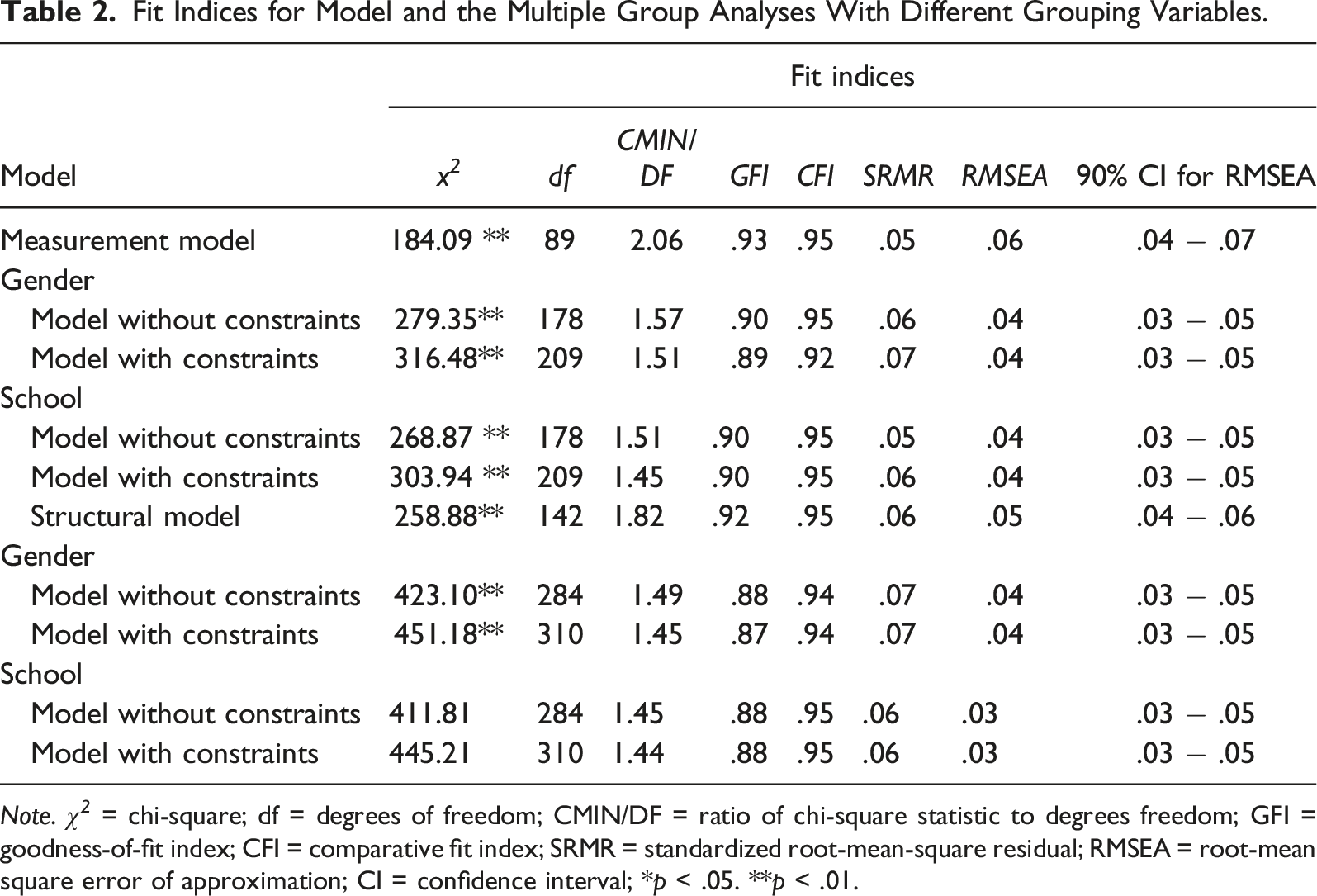
Note. χ 2 = chi-square; df = degrees of freedom; CMIN/DF = ratio of chi-square statistic to degrees freedom; GFI = goodness-of-fit index; CFI = comparative fit index; SRMR = standardized root-mean-square residual; RMSEA = root-mean square error of approximation; CI = confidence interval; *p < .05. **p < .01.
Sex Related Effects
After that, a multiple group analysis was conducted using separate covariance matrices for female (n = 161) and male (n = 141) students. We also proposed Unconstrained and Constrained measurement models and the difference between the x2 indices were not significant either (x2 = 37,130, df = 31, p ≥ .207). These results suggest that the variable sex does not moderate the association between the variables of the proposed model ≥.28). Sex related effects. After that, a multiple group analysis was conducted using separate covariance matrices for female (n = 161) and male (n = 141) students. We also proposed Unconstrained and Constrained measurement models and the difference between the x2 indices were not significant either (x2 = 37,130, df = 31, p ≥ .207). These results suggest that the variable sex does not moderate the association between the variables of the proposed model.
Structural Model
The proposed model demonstrated an adequate fit to the data (refer to Table 2). Figure 2 shows the standardized path coefficients and coefficient of determination (R2) for the model. The R2 values for career decision self-efficacy, outcome expectations, exploration/decisional goals, decisional anxiety, and career indecision were .22, .16, .39, .33, and .63, respectively.
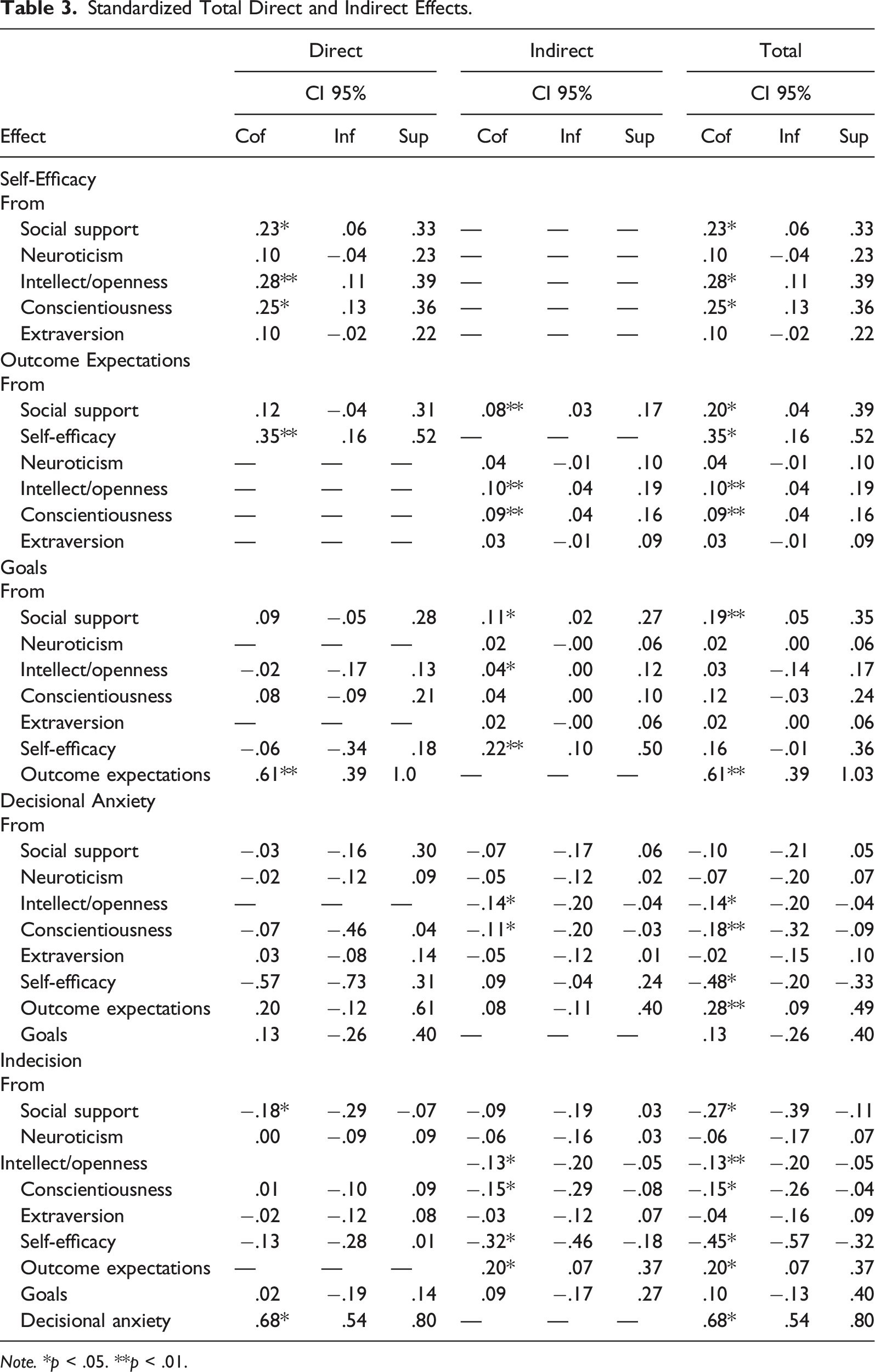
Standardized Total Direct and Indirect Effects.
Note. *p < .05. **p < .01.
We hypothesized that career decision self-efficacy, exploratory/decisional goals, personality, and social support would have a direct effect on decisional anxiety (paths 5, 7, 10, and 15). However, except for career decision self-efficacy, the direct effects of these variables were not significant. Nevertheless, we found that intellect/openness (indirect effect = −.14, p < .05) and conscientiousness (indirect effect = −.11, p < .05) had indirect effects on decisional anxiety, resulting in a total effect of −.14 and −.18, respectively. Additionally, we observed a significant total effect of career decision self-efficacy (total effect = −.48) and outcome expectations (total effect = .28) on decisional anxiety.
It is worth noting that the CSM model postulates that social support (path 14), career decision self-efficacy (path 3), outcome expectations (path 4), and personality (path 9) directly contribute to predicting exploratory/decisional goals. Moreover, career decision self-efficacy determines outcome expectations and contributes to goal attainment directly and indirectly through outcome expectations (path 2–4). Specifically, career decision self-efficacy significantly predicted outcome expectations (direct effect = .35, p < .01), which in turn had a direct and significant association with exploratory/decisional goals (direct effect = .61, p < .01). Consistent with this hypothesis, career decision self-efficacy (indirect effect = .22, p < .01), social support (indirect effect = .11, p < .01), and intellect/openness (indirect effect = .04, p < .05) were indirectly associated with exploratory/decisional goals. The total effects of social support and outcome expectations were .19 and .61 (p < .01), respectively. Notably, no direct effects were observed from social support, career decision self-efficacy, and personality on exploratory/decisional goals.
The SCCT proposes that social support influences outcome expectations (path 12), but no direct relationship was found between outcome expectations and exploratory/decisional goals. However, career decision self-efficacy was identified as a mediator between social support and outcome expectations (indirect effect = .08, p < .01). Additionally, career decision self-efficacy was also found to mediate the relationship between intellect/openness and conscientiousness with outcome expectations. Total effects were observed for career decision self-efficacy (total effect = .35, p < .01), social support (total effect = .20, p < .01), intellect/openness (total effect = .10, p < .01), and conscientiousness (total effect = .09, p < .01).
We hypothesized that personality and social support would be directly associated with career decision self-efficacy (paths 1 and 13). Results showed that conscientiousness (direct effect = .25, p < .05), intellect/openness (direct effect = .28, p < .01), and social support (direct effect = .23, p < .01) were directly related to career decision self-efficacy. The results also showed a significant total effect of intellect/openness (total effect = .28, p < .05), conscientiousness (total effect = .25, p < .05), and social support (total effect = .23, p < .05) on career decision self-efficacy. As illustrated in Figure 3, the proposed model accounted for 63% of the variance in career indecision and 33% of the variance in decisional anxiety. Path analysis model of Associations Between Personality traits, Cognitive Variables, and Decisional Outcomes. Note. **p < .01.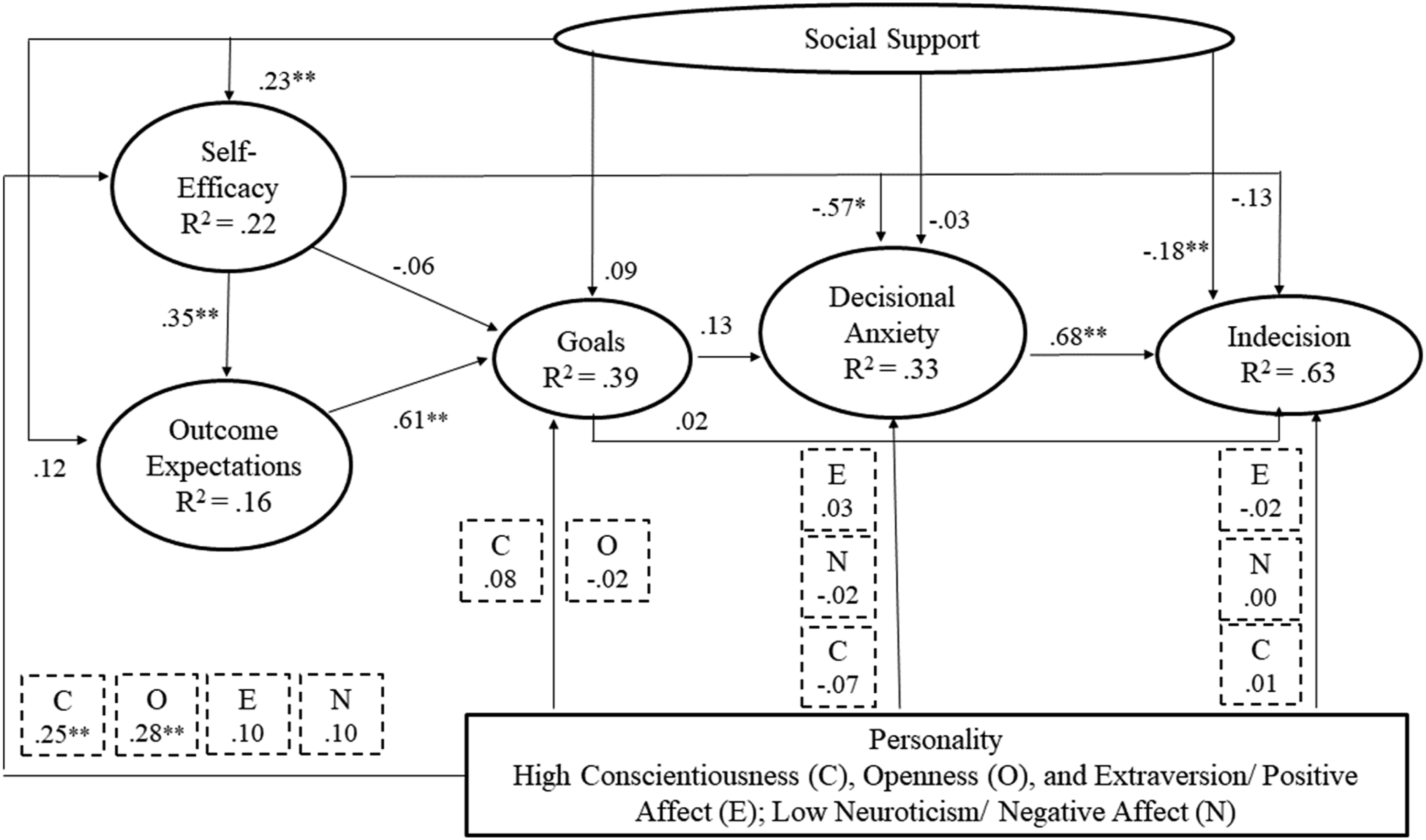
Multiple Group Analysis
Sex Related Effects
A multiple group analysis was conducted using separate covariance matrices for girls and boys. The difference between both models (Unconstrained and Constrained) was not significant (Dif. x 2 = 27.92, df = 26, p ≥ .36).
School Related Effects
The full sample was divided into students who attended school 1 and school 2 educational institutions. The difference between both models (Unconstrained and Constrained) was not significant (Dif. x 2 = 33.41, df = 26, p ≥ .15).
Discussion
The current study aimed to assess a CSM model applied to the process of career exploration and decision-making in students who are close to making such a choice. Specifically, we examined the relationships among variables of the CSM model that had not been previously assessed, such as the ones between personality traits, cognitive variables, and outcome variables.
The results indicated that the proposed model fits the data optimally and accounts for 63% of the variance in career indecision and 33% of the variance in decisional anxiety, supporting the viability of the CSM model in our particular context.
The results of the SEM analysis supported most of the hypotheses derived from the CSM model. Specifically, the study found a direct relationship between career decision self-efficacy and outcome expectations, while the relationship between career decision self-efficacy and exploratory/decisional goals was found to be indirect. This finding is consistent with previous studies, such as those by Betz and Voyten (1997), Huang and Hsieh (2011), Jantzer et al. (2009), and Lent et al. (2016). The mediated relationship between career decision self-efficacy and exploratory/decisional goals through outcome expectations suggests that students' intention to engage in career exploration and decision-making activities is determined by the positive outcomes they expect to achieve from those activities. Additionally, the study provided support for the direct relationship between outcome expectations and exploratory/decisional goals.
Moreover, exploratory/decisional goals showed a direct and significant relationship with decisional anxiety in a positive sense, suggesting that students who intend to explore different occupational pathways may feel more anxious than those who do not undergo this process. Likewise, we observed a significant relationship between decisional anxiety and career indecision. That is, individuals who have higher levels of anxiety are also those who are more undecided about the possible occupational pathways to pursue. Concerning career decision self-efficacy, we observed that it indirectly predicted career indecision, indicating that individuals with stronger self-efficacy beliefs have lower levels of indecision when choosing a certain career.
Regarding personality traits, the study found that conscientiousness and intellect/openness traits were positively associated with self-efficacy beliefs, while no significant relationship was found for extraversion and neuroticism traits. Additionally, these personality traits did not significantly contribute to decisional outcomes, which is in line with previous research suggesting that the relationship between personality traits and decisional outcomes is modest. However, the study did find an indirect relationship between conscientiousness and career indecision, supporting previous findings (Jin et al., 2009) that suggest conscientiousness may influence career indecision by strengthening self-efficacy beliefs.
In terms of social support, the study found that it directly contributed to career decision self-efficacy and indirectly influenced outcome expectations, consistent with previous research (Lent et al., 2016). However, social support did not significantly contribute to exploratory/decisional goals and decisional outcomes, which is consistent with the findings of Lent et al. (2016).
The results of the present study provide important insights into the career decision-making process, but there are some limitations that must be considered. Firstly, the sample used in this study was limited to students from certain socioeconomic levels and types of schools. Therefore, caution must be exercised when generalizing the findings to other populations. Future studies could include more diverse samples, such as students from different socioeconomic levels and racial/ethnic groups, as well as students from public universities. It would also be useful to include participants who have more experience in decision-making, such as those who have changed their career path.
Secondly, the use of fixed cutoffs to evaluate model fit has been criticized in recent methodological studies, as the interpretation of fit indices depends on various model characteristics. To address this issue, future studies could adopt a more tailored approach to evaluating model fit (McNeish & Wolf, 2023).
Thirdly, there was a percentage of unexplained variance in the dependent variables, which could be due to distal factors of the career decision-making process that were not considered in this study. Future research could assess the direct and indirect contributions of other relevant factors, such as parents' socioeconomic status and educational and working opportunities in the area of residence.
Fourthly, the cross-sectional design used in this study may have introduced bias. The problems associated with using cross-sectional designs to study mediational processes have been the subject of multiple studies (e.g., Maxwell & Cole, 2007; O' Laughlin, Martin, & Ferrer, 2018). Previous research found that under certain conditions, cross-sectional designs almost always fail to capture complete or partial mediation effects. To overcome this methodological difficulty, numerous authors propose to consider autoregressive models of change (e.g., Maxwell et al., 2011). In this particular case, this study could begin in the last semester of high school and continue during the first year of college to better capture the dynamic nature of the career decision-making process during late adolescence and the emergent adult age.
Lastly, it is important to note that while some paths had small but statistically significant effect sizes, such as the path from intellect/openness to decisional anxiety (.04, p < 0.05, [.00–.12]), the estimation of confidence intervals does not guarantee the stability of these results. Therefore, to strengthen the reliability of these findings, it is recommended that future studies replicate this model using a new sample and, preferably, with a different research design, such as a longitudinal study. This approach can help manage extraneous factors that may impact the associations between independent and dependent variables, thereby establishing more accurate and reliable relationships (Frees, 2004).
Overall, the findings of this study provide important contributions to the literature on the career decision-making process. However, further research is needed to address the limitations and expand our understanding of this complex process.
As for the practical implications of our findings for career counseling, they should be considered provisional because this study is part of the initial stage of research on the CSM model. In general, the results indicate that to achieve a certain level of career decidedness, students must have both a certain level of personal efficacy to regulate their decision-making process and a positive judgment regarding the likely outcomes of a particular choice behavior.
Therefore, it is essential to identify students with diminished self-efficacy for career exploration and decision-making and help them develop those beliefs through the exploration of past decision-making situations. This can be achieved by proposing fun, interesting, and innovative activities for career exploration and decision-making and/or improving high levels of decisional anxiety.
In addition to existing support sources, in vivo or virtual coping models may be used to provide support to students, transmit career exploration methods, and promote favorable outcome expectations. Activity-based interventions can also facilitate responsible and goal-oriented behaviors, reduce negative emotions, and create safe and cooperative interpersonal communications.
Regarding methodological aspects, we conducted an adaptation procedure for instruments to measure each of the constructs in the proposed theoretical model. Local scales and computer-assisted career guidance systems can be developed from these instruments to provide institutions and educators with measurement tools to identify students' differences and contribute to the decision-making process. Recognizing students with low self-efficacy beliefs would enable teachers or school counselors to implement strategies to develop or encourage a good level of career decidedness.
In summary, this study highlights the possibility of applying the Social Cognitive Model of Career Self-Management to career exploration and decision-making in the local context. We also found support for most of the hypothesized relationships, which were not previously assessed. Therefore, in line with the current trend of using theory to construct professional practice based on evidence, the results suggest that the CSM model provides a conceptual framework for understanding the career exploration and decision-making process among high school students in our context.
Footnotes
Declaration of Conflicting Interests
The author(s) declared no potential conflicts of interest with respect to the research, authorship, and/or publication of this article.
Funding
The author(s) disclosed receipt of the following financial support for the research, authorship, and/or publication of this article: This work was supported by Consejo Nacional de Investigaciones Científicas y Técnicas (CONICET).
