




Abstract
Examination of emotional intelligence (EI) of autistic individuals has gained popularity. These efforts have included the BarOn Emotional Quotient Inventory, Youth Version (BarOn EQ-i YV); however, this measure was not standardized with this population and so its utility and the accuracy of its factor structure for this population is questionable. This study examined how well the factor structure as represented by a sample of autistic children and youth aligns with that described in the measure’s technical manual to clarify considerations for use. Results indicate poor metrics of model fit. Some factors were significantly correlated, though this was attenuated somewhat upon correction for multiple analyses. Two items from the interpersonal factor were negatively loaded, suggesting they should be subtracted from other items in that factor (in contrast to the standardized model). Implications for EI construct validity, understanding of EI in autism, and use of EI measures for this population are discussed.
Emotional intelligence (EI) is a construct used to understand how individuals process, relay, conceptualize, and perceive emotions (Mayer & Salovey, 1997). EI components include the extent to which an individual can orient oneself interpersonally, connect with others, and cope with the dynamicity and difficulties of life (Bar-On, 2006). When EI is well developed, it is a strong predictor of an individual’s ability to develop healthy relationships and become successful, constructive, and empathetic adults in varying aspects of life (Rivers et al., 2008). EI is implicated in social functioning (Montgomery et al., 2018), well-being (Mavroveli et al., 2007; Petrides, Mikolajczak, et al., 2016), and mental health (Cejudo et al., 2018; Guerra-Bustamante et al., 2019). Further, Mayer et al. (2004) attributed EI to positive development and overall wellbeing across the lifespan. Conversely, building personal relationships and performing basic social skills are challenging for those with EI impairments (Hagarty & Morgan, 2020).
EI has undergone extensive development since its introduction (Mayer et al., 1990; Salovey & Mayer, 1990). Mayer et al. (2008) aimed to reconcile the varied and all-encompassing approaches of the EI literature; in doing so, they described that literature has primarily reflected a mixed model approach and that early works had delineated EI based on ability (Mayer & Salovey, 1997) or traits (Bar-On, 2004). Ability EI (AEI) embeds EI into the greater construct of intelligence as it relates to knowledge of and rationalization with emotions (Mayer et al., 2016). Alternatively, trait EI (TEI) encompasses individual personality traits, perceptions of oneself, and practical application of emotional knowledge and awareness (Petrides, Siegling, & Saklofske, 2016).
Although AEI does predict some important outcomes such as externalizing conditions (Brackett et al., 2004), evidence tends to favor the TEI framework due to issues of psychometrics (i.e., AEI has poorer validity and reliability; Siegling et al., 2014) and stronger predictability of important outcomes in comparison to measures of AEI (Di Fabio & Saklofske, 2014; Petrides, Siegling, & Saklofske, 2016). Others have identified the potential overlap of AEI with cognitive intelligence and the problematic scoring principles used in prominent measures of AEI (Petrides, 2011). TEI is typically measured via self-report and is theoretically distinct from the ability framework (Petrides & Furnham, 2003), with stronger predictive validity, reliability, and practical implications (Montgomery et al., 2018). The present study does not assert superiority of one framework over the other given that each is important for functioning. However, as TEI is implicated in practical social reasoning (e.g., Montgomery et al., 2010), the purpose of this study is to ascertain the applicability of a TEI measure to autistic youth.
EI in Autism
Autism 1 is characterized by impairments in social and communicative abilities in conjunction with restricted and/or repetitive interests or behaviors that present in early childhood, and that may evolve or change throughout one’s lifespan (APA, 2022). The social-emotional difficulties experienced by people on the spectrum are core characteristics of the diagnosis (APA, 2022) and so EI performance in this clinical group is particularly salient to understanding EI construct validity and measurement implications.
Although researchers have suggested theory of mind (Baron-Cohen, 1995) and executive functioning (Ozonoff, 1997) as underpinning the social impairments shown by those on the autism spectrum (McCrimmon et al., 2014), these constructs do not completely explain challenges for this population. Conversely, EI shows predictive value for these impairments and warrants further consideration, particularly considering its potential for use in interventions (Montgomery et al., 2010, 2012). While research on EI and autism is limited, TEI has been reported as intact in young children on the autism spectrum (McCrimmon et al., 2014, 2018) whereas both teens and adults show TEI impairments (Boily, 2017; Montgomery, 2010; Petrides et al., 2011). Further, autism characteristics are negatively correlated (Robinson et al., 2020) with TEI suggesting “difficulties with trait EI are a key characteristic of autism” (Robinson et al., 2020, p. 6). TEI limitations experienced by autistic individuals (Hill et al., 2004) suggest that autistic individuals struggle to regulate their emotions in response to varying stimuli (Samson et al., 2015). The impairments shown for TEI and the relation between TEI and autism characteristics suggest it may be particularly salient for (1) understanding and intervention for social-emotional challenges for autistic people and (2) providing information on the construct validity and measurement of TEI. However, differences in neuropsychological processing can impact the way that individuals process information (see Franzen, 2000), and thus there may be different relations between variables for groups with atypical neuropsychological function, such as those on the autism spectrum. For example, recent research has shown that measures designed and normed with allistic individuals may not have equal utility when used with those on the autism spectrum (Ross et al., 2023). Moreover, cognitive processes that correlate in allistic individuals may show distinct and diverse patterns from those with conditions that impact the way information is processed (Delis, 2001). Although information on EI in autism is emerging, measurement concerns related to lack of inclusion in norms is warranted to ensure that measures perform similarly in this unique population. As such, the purpose of this investigation was to examine the factor structure of one common measure of EI to determine if its factor structure is consistent within the population of autistic youth.
TEI Measures
With research indicating that autistic individuals present with persistent TEI challenges, it becomes important to determine if TEI measures have utility for this population. One common measure of TEI is the Bar-On Emotional Quotient Inventory (EQ-i; Bar-On, 1997). The EQ-i is considered reliable, valid, culturally sensitive, and rigorously investigated (Bar-On, 2006). It is a self-report scale yielding a five-factor structure consisting of interpersonal, intrapersonal, adaptability, general mood, and stress management that consists of items rated on a five-point Likert scale to evaluate an individual’s social and emotional functioning. The youth version (EQ-i: YV; Bar-On & Parker, 2000) and its related short-form (EQ-i: YVs; Bar-On & Parker, 2000) have been developed for use with individuals aged 7–18 years. The youth version is a minor adaptation of the original adult measure and the two are highly correlated (Bar-On & Parker, 2000).
To inform research supporting the development of autistic individuals, it is important to investigate the applicability of a measure that has been developed psychometrically based on typically developing adolescents to clinical populations, such as autism (Davis & Wigelsworth, 2018). As such, the present study examined the factor structure of the EQ-i: YVs with data from autistic youth to determine if it is consistent with that described in the normative manual to provide evidence in support of its continued use in the autistic population, or if a unique structure is needed for this population.
Methods
Participants
Participants included 165 adolescents between the ages of 8 and 18 years (M = 14.28, SD = 2.47, 136 males) with a self-disclosed prior diagnosis on the autism spectrum (including autism, autistic disorder, Asperger’s disorder, or pervasive developmental disorder—not otherwise specified) by a physician or psychologist not associated with the study. Participants were recruited through community-based agencies that support children and youth on the autism spectrum, educational organizations, and community-based medical offices. Participants were required to demonstrate verbal cognitive ability >70 (M = 101.33, SD = 15.27) to ensure capacity to complete the BarOn EQ-i:YVs. As data were collected from extant datasets, the number of excluded participants across the included studies is not known.
Measures
Wechsler Abbreviated Scale of Intelligence—Second Edition
The Wechsler Abbreviated Scale of Intelligence—Second Edition (WASI-II; Wechsler, 2011) is an individually administered brief measure of cognitive intelligence for individuals aged 6– 90 years. It has been normed on a large and representative sample and shows strong psychometric properties, reliability, and validity. It consists of two domains, Verbal Comprehension (VCI, consisting of the Similarities and Vocabulary subtests) and Perceptual Reasoning (PRI, consisting of the Block Design and Matrix Reasoning subtests), and provides a full-scale IQ (FSIQ). The VCI was used to determine each participant’s verbal cognitive ability.
BarOn EQ-i: YVs
The BarOn EQ-i: YVs (Bar-On & Parker, 2000) is a self-report measure of TEI for individuals aged 7–18 years. It consists of 30 items and takes approximately 10 minutes to complete. It employs a five-point Likert-type rating system (i.e., 1 = very seldom true, 5 = very often true) and generates a total Emotional Quotient (EQ) composite score and five EQ subscale scores: Intrapersonal (the ability to understand, process, evaluate, and express one’s feelings independently), Interpersonal (the ability to empathize with others, successfully respond to social situations, and maintain beneficial relationships), Stress Management (the ability to control one’s emotions and display fortitude toward stressful situations), Adaptability (the ability to validate emotions, adjust one’s thinking or feeling based on a given situation, and effectively problem-solve), and General Mood (the ability to be optimistic and happy/satisfied with life). A Positive Impression Index is also provided, but is used only to determine if the respondent is providing consistent and accurate responses. Only the first four indexes (and the Total EQ) were used in this study.
Procedure
The autistic youth completed the WASI-II and BarOn EQ-i: YVs as part of their involvement in prior studies; data for the current study were amalgamated from the extant data. Ethics approval to conduct the present study was provided by the authors’ respective academic institutions.
Results
Data Analysis
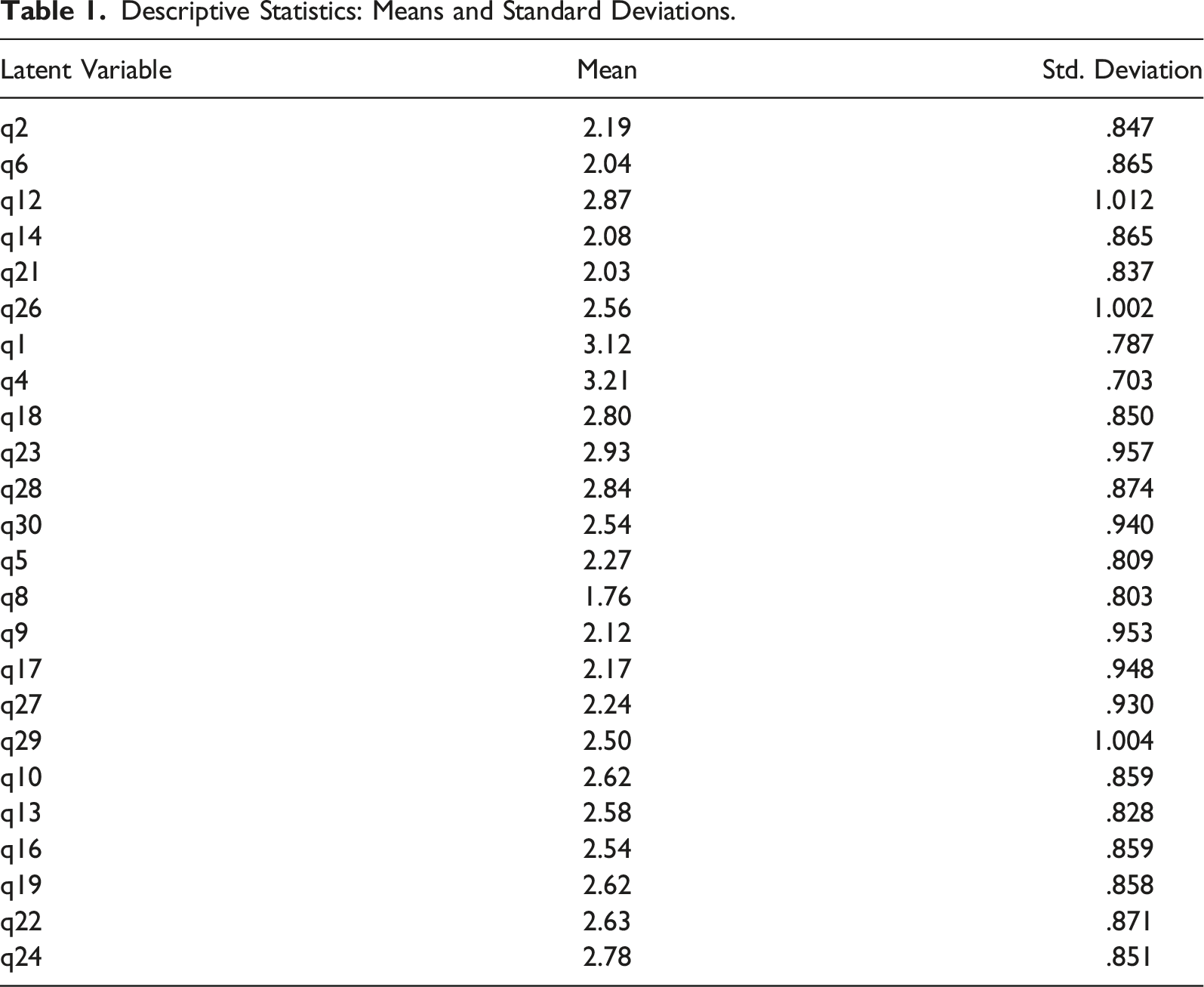
Descriptive Statistics: Means and Standard Deviations.
Latent Variable Intercorrelations.
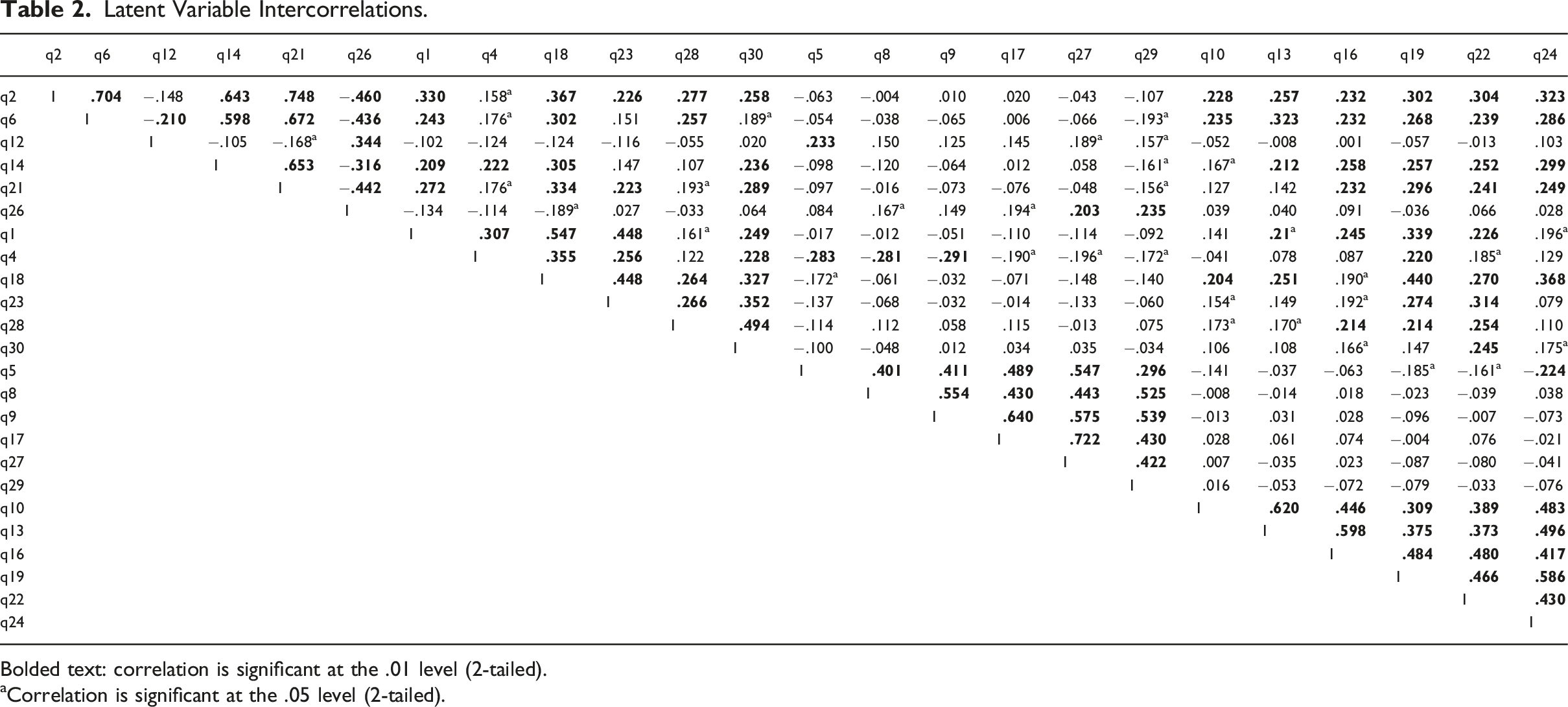
Bolded text: correlation is significant at the .01 level (2-tailed).
aCorrelation is significant at the .05 level (2-tailed).
Confirmatory Factor Analysis
The chi square was significant (X2 (396, N = 165) = 719.33, p = <.001); however, contention in the literature exists as to the usefulness of the chi-square metric as an indicator of model fit (Barrett, 2007). As such, the additional fit metrics were examined to determine the adequacy of the model. The CFI value was .82, the TLI was .80, and the RMSEA was .07, 90% CI [.063, .080]. Despite the RMSEA indicating a reasonably good fit, the overall fit indices indicate poor model fit.
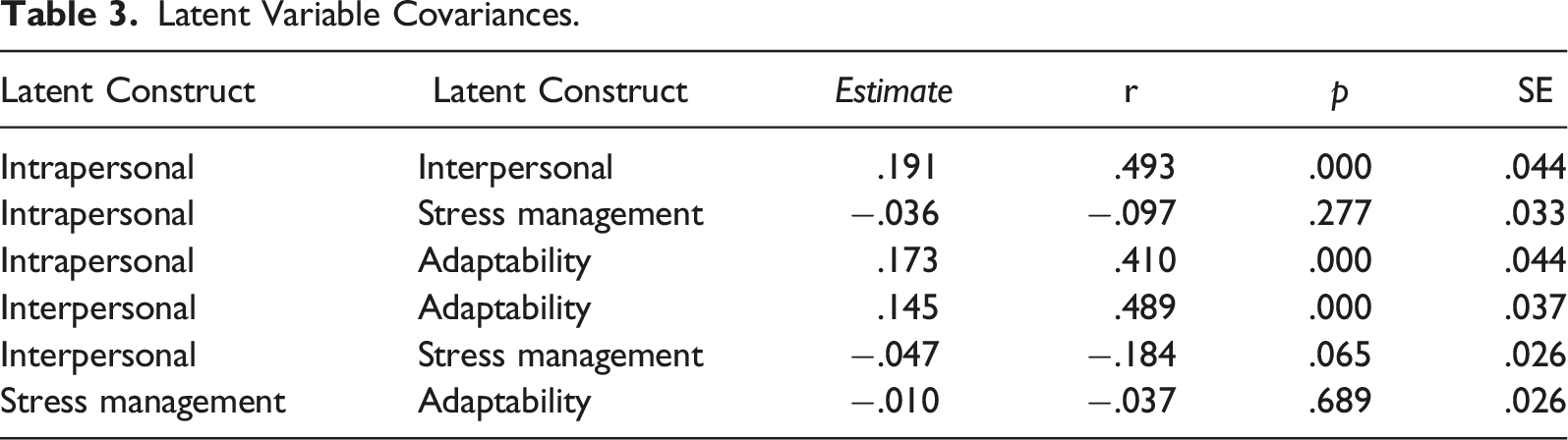
Latent Variable Covariances.
McDonald’s Coefficient Omega Values.
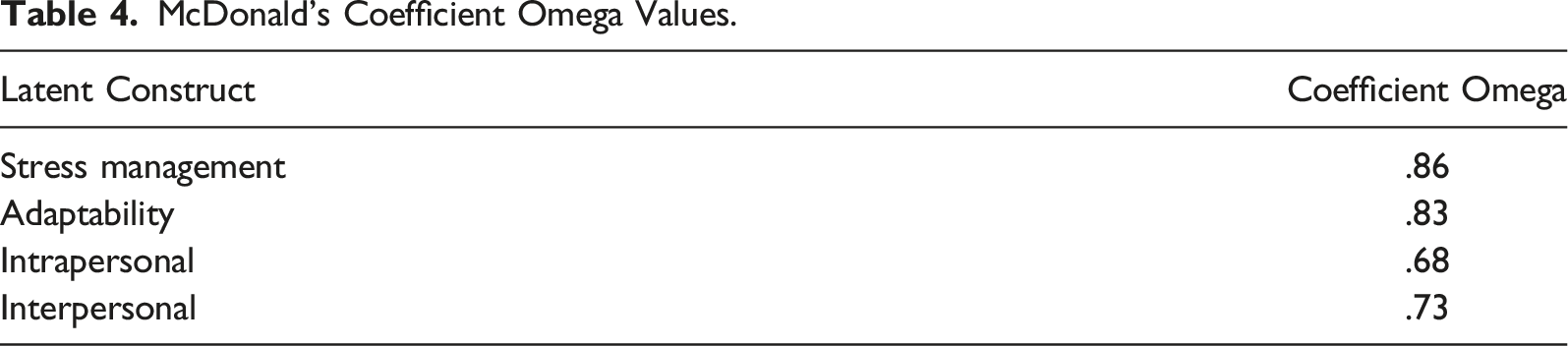
The coefficients for the model are shown in Figure 1. As can be seen, questions 12 and 26 showed a negative loading onto the Intrapersonal factor, suggesting these responses should not be used for scoring purposes or, possibly, reverse scored. Confirmatory factor analysis model.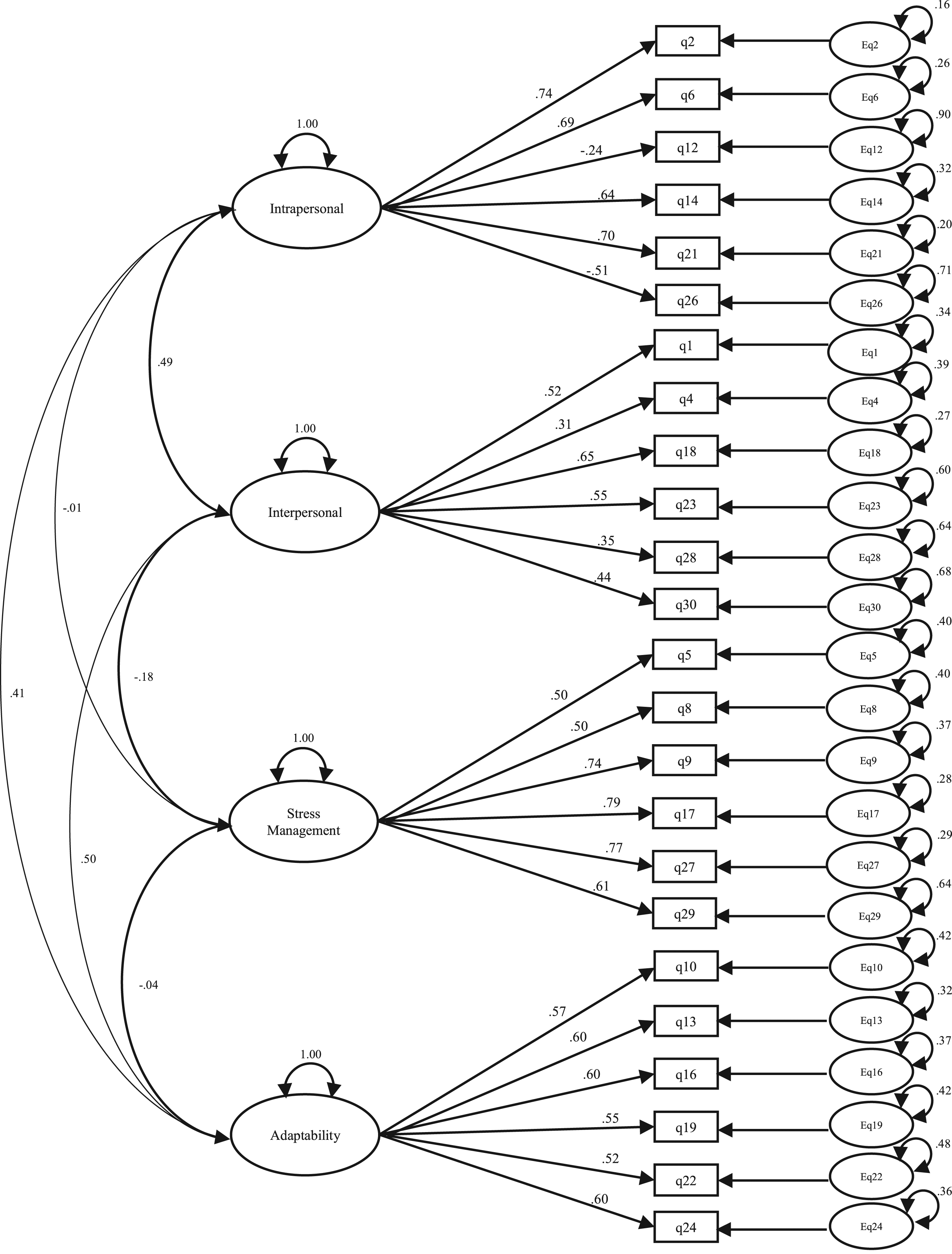
Inspection of the item loadings from the normative sample and current study were conducted. The Intrapersonal factor loadings varied quite considerably, especially given the negative loadings on items 12 and 26. Similarly, the loadings in the Interpersonal factor varied. The factor loadings for items within both Stress Management and Adaptability were more congruent to patterns indicated by the normative sample; however, the specific values still varied by a different of approximately .10 or more on some items. The intercorrelations between factors in the present study and normative data showed similar patterns of significance apart from Stress Management and Adaptability, which was not significantly correlated in this sample.
Discussion
To elucidate the findings of this study and its applicability, the following sections will outline the relevance of the findings to the existing literature before outlining the implications of the present study. First, the factor structure will be explored more deeply, including implications for the measure and EI as a construct. Subsequently, implications of the results for understanding of EI in autism will be presented, including potential use in assessment and intervention. Finally, limitations and suggestions for future research are outlined.
Relevance and Significance of the Factor Structure
This study examined the factor structure of the BarOn EQ-i: YVs among 165 autistic children and adolescents in comparison to the measure’s normative sample. Results indicate poor model fit, suggesting that the measure has limited utility for use with those on the autism spectrum, which is discouraging given the measure’s prior use with this population. Results also indicate two items within the interpersonal factor that should potentially be eliminated when scoring the measure for use with those on the autism spectrum; this process will require modification to enhance the fit of the model and subsequent use of such items.
CFA is useful for testing theories wherein the hypothesized structure is assessed by identifying the fit of its data with existing factors. Our results suggest that the BarOn EQ-i: YVs is problematic for examining TEI in autistic youth, which is significant for practice where TEI-related difficulties contribute to challenges in everyday living. Certainly, it is important to establish psychometric fidelity of an established measure for administration with various clinical populations. Therefore, this study’s findings have relevance for better serving autistic youth and further understanding their potential EI difficulties.
Several domains were significantly related to one another, suggesting that the factors are not completely unique. Further, items 12 (“It is hard to talk about my deep feelings”) and 26 (“I have trouble telling others about my feelings”) were negatively loaded on the intrapersonal factor suggesting that the items do not measure what they intend to measure in this population. Indeed, autistic individuals struggle with emotion recognition (Bird & Cook, 2013) and may not share similar perspectives on adhering to social conventions as allistic peers (Späth & Jongsma, 2019). Indeed, autistic individuals may selectively ignore or adhere to societal norms, and are more likely to adapt norms than allistic individuals who adapt their behavior to meet norms (Späth & Jongsma, 2019). Therefore, these two items may not represent the reality of how autistic individuals interact with their emotions or feel it necessary to share their emotions with others in a way that is societally accepted, in contrast to allistic individuals. Alternatively, our results may reflect the high rate of alexithymia traits in autism, where individuals with this co-occurring condition have significant difficulty distinguishing between and expressing emotions (Kinnaird et al., 2019). Overall, the negative loading of two items on the intrapersonal factor suggests modification (reverse scoring or elimination from the measure) to enhance measurement of that factor. Alternatively, the two items may benefit from being merged into one item given their similar wording.
Overall, the measure has limited utility for autistic youth and would benefit from adjustments to reduce test-item resemblance and distinguish between factor domains. Additional research investigating alternative modelling procedures could explore the reasons for the two intrapersonal items negative loading to further elucidate this issue, which was beyond the scope of this study.
Implications for Understanding EI in Autism
TEI impairments may contribute to difficulties experienced by autistic adolescents (Boily et al., 2017; Montgomery et al., 2010; Robinson et al., 2020) and consequently may help clinicians target interventions related to social outcomes. However, the present results suggest the BarOn EQ-i: YVs is problematic for examining EI-related behavior in autistic children and youth. This finding is important in light of previous research suggesting implications for support of autistic individuals based on the results of the BarOn EQ-i: YVs and other measures (e.g., Brady et al., 2014). For example, Brady et al. (2014) found that cognitive and emotional faculties at the neural level are dissociable for autistic individuals and suggested targeted interventions to bolster emotionally intelligent behaviors for autistic individuals transitioning to adulthood. Certainly, as described in a recent longitudinal study, TEI is implicated in successful transitioning to adulthood as well as establishing and maintaining meaningful interpersonal relationships (Parker et al., 2021). However, the extent to which similar trends can be feasibly identified in the autistic population via the BarOn EQ-i: YVs is questionable and clinicians should be hesitant to use this measure for similar purposes with children and youth on the autism spectrum.
Future Directions and Limitations
Future research should investigate the model fit when the two negatively loaded items are removed to determine if the measure continues to demonstrate good model fit. Additionally, future work could use additional statistical means (such as via an item response theory approach) to determine underlying mechanisms for why these two items appear to measure different constructs in autistic and non-autistic individuals.
Researchers should continue investigating the utility of measures used with autistic individuals, but normed on allistic samples. By establishing such evidence, practitioners can enhance their test selection, clinical reasoning, and intervention recommendations, and enhance the applicability of research with these measures. Further, research and clinical use of the broader autism phenotype (BAP), a term referring to the presentation of sub-clinical features of autism by individuals with close genetic relations to those in receipt of a formal diagnosis, acknowledges a clear genetic contribution to autism (Sasson et al., 2013). Consequently, future research would benefit not only from including measures of autism symptomology, such as the BAP, but also by extending research into family members to better understand the broad phenotype. In their systematic review, González et al. (2021) found that parental EI levels were associated with the psychological wellbeing outcomes of their children. Investigating EI of parents of autistic youth can inform whole family supports for continued benefit to autistic individuals.
Although the current results indicate poor model fit of the BarOn EQ-i: YVs for autistic children and youth, there is diversity among those on the autism spectrum that could not be completely accounted for by this study’s sample. Researchers should continue to investigate the psychometric properties of the BarOn EQ-i: YVs and its use with autistic individuals as well as those with other neurodevelopmental conditions.
Although the current sample size is considered smaller than ideal and broad generalization cannot be made based on these findings (Kyriazos, 2018), there are difficulties with recruiting large numbers of autistic youth (Kuhlthau et al., 2018) and so the sample is considered adequate. Next, the sample includes participants between the age of 8–18 years, which is a broad range; however, this range overlaps with the measure’s parameters of ages 7–18 (Bar-On & Parker, 2000). Indeed, given this age range and relatively small sample size, future research may consider investigating narrower developmental age-ranges to identify more specific implications of TEI difficulties among autistic youth.
Interpretation of this study’s results is limited to autistic children and youth. Although research suggests EI challenges in autistic adults (e.g., obtaining employment and independence; Anderson et al., 2018), the utility of the BarOn EQ-i for use with that population has yet to be established.
This study’s results were based on extant data prior to the COVID-19 pandemic. Research elucidates the role of TEI in emotional regulation and response during the COVID-19 pandemic (Moroń & Biolik-Moroń, 2021). Given the temporality of this study and the influence of COVID-19 on social-emotional functioning, researchers as well as clinicians should consider how the present results inform assessment, clinical reasoning, and intervention based on societal responses to the pandemic.
Concluding Remarks
This study investigated the utility of the BarOn EQ-i: YVs for autistic youth, which yielded poor fit of the normative model. Our findings provide a source of construct validity for the measure and the TEI framework. The present findings have implications for intervention planning, clinical reasoning, and test selection in clinical settings with autistic youth. Effective assessment of special populations often entails use of measures that did not include the population in the norming process. Indeed, it is important to consider the implications of using assessment measures that are not designed for various and heterogeneous clinical conditions. The present results provide additional interpretive considerations for assessing TEI in autistic youth. More specifically, results suggest that the measure not be used with autistic youth and caution should be used in interpreting the interpersonal factor given that individuals on the spectrum appear to show an atypical response pattern for some items. It is hoped that this work stimulates researchers to explore the utility of other measures with unique clinical populations.
Footnotes
Declaration of Conflicting Interests
The author(s) declared no potential conflicts of interest with respect to the research, authorship, and/or publication of this article.
Funding
The author(s) received no financial support for the research, authorship, and/or publication of this article.
