



Abstract
The generation of municipal solid waste (MSW) has risen sharply, posing increasingly complex environmental challenges, particularly in its final disposal in landfills. Among the various contaminants present in MSW, emerging pollutants such as silver nanoparticles (AgNPs) are of particular concern. In this context, this study investigated the influence of AgNPs at concentrations of 50, 150 and 450 mg·kg⁻¹ on MSW biodegradability and leachate characteristics using pilot-scale reactors (lysimeters) simulating landfill conditions. Four pilot reactors were monitored over 18 months for biogas generation, physicochemical parameters of the leachate and microbial community structure. The results showed that in the 18 months evaluated, AgNPs did not affect biogas production, with low methane generation observed in all reactors, consistent with early stages of anaerobic digestion. However, increasing AgNPs concentrations were associated with qualitative changes in the microbial community. Overall, the results highlight the relevance of AgNPs as emerging contaminants in landfill environments.
This is a visual representation of the abstract.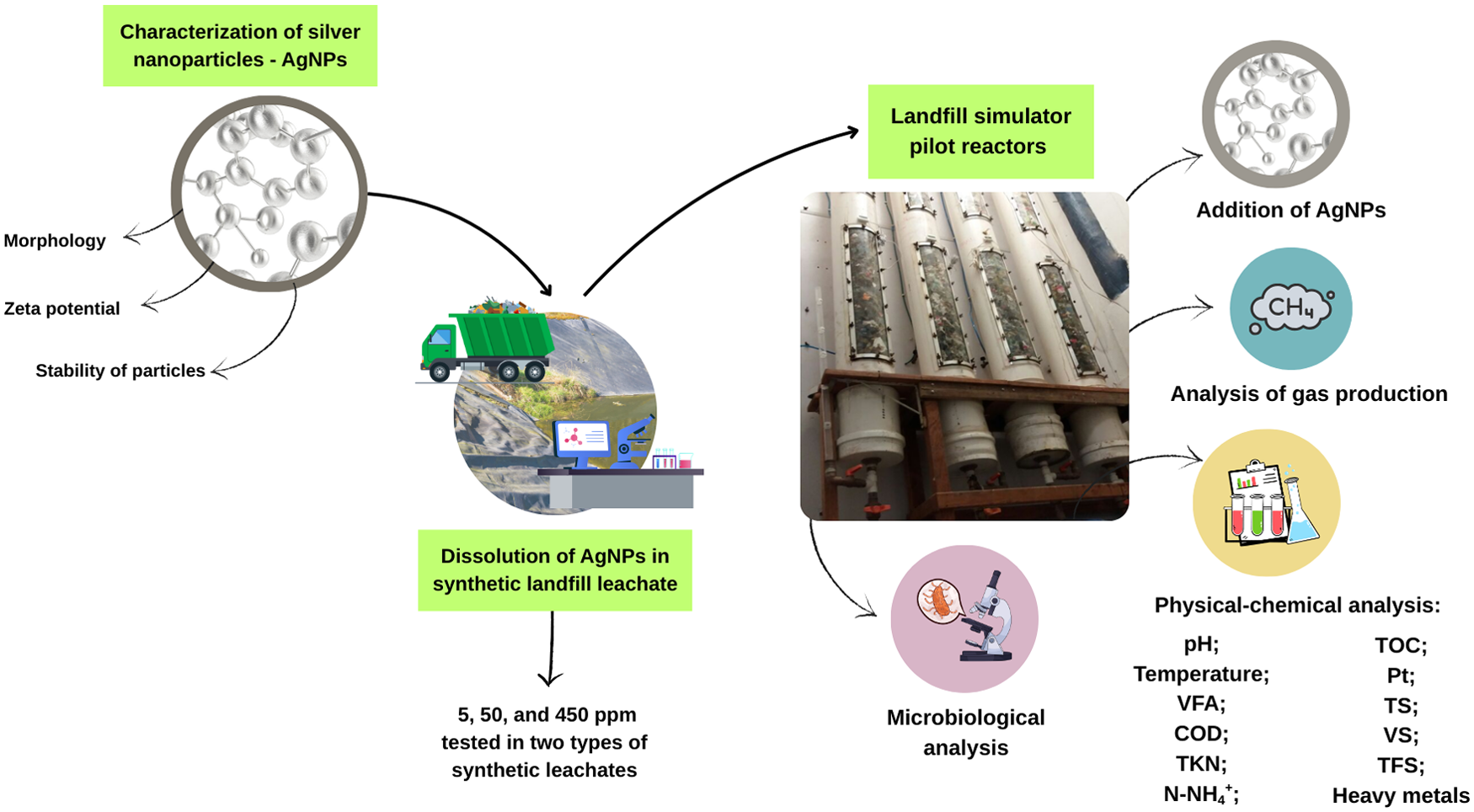
Get full access to this article
View all access options for this article.
References
Supplementary Material
Please find the following supplemental material available below.
For Open Access articles published under a Creative Commons License, all supplemental material carries the same license as the article it is associated with.
For non-Open Access articles published, all supplemental material carries a non-exclusive license, and permission requests for re-use of supplemental material or any part of supplemental material shall be sent directly to the copyright owner as specified in the copyright notice associated with the article.
