



Abstract
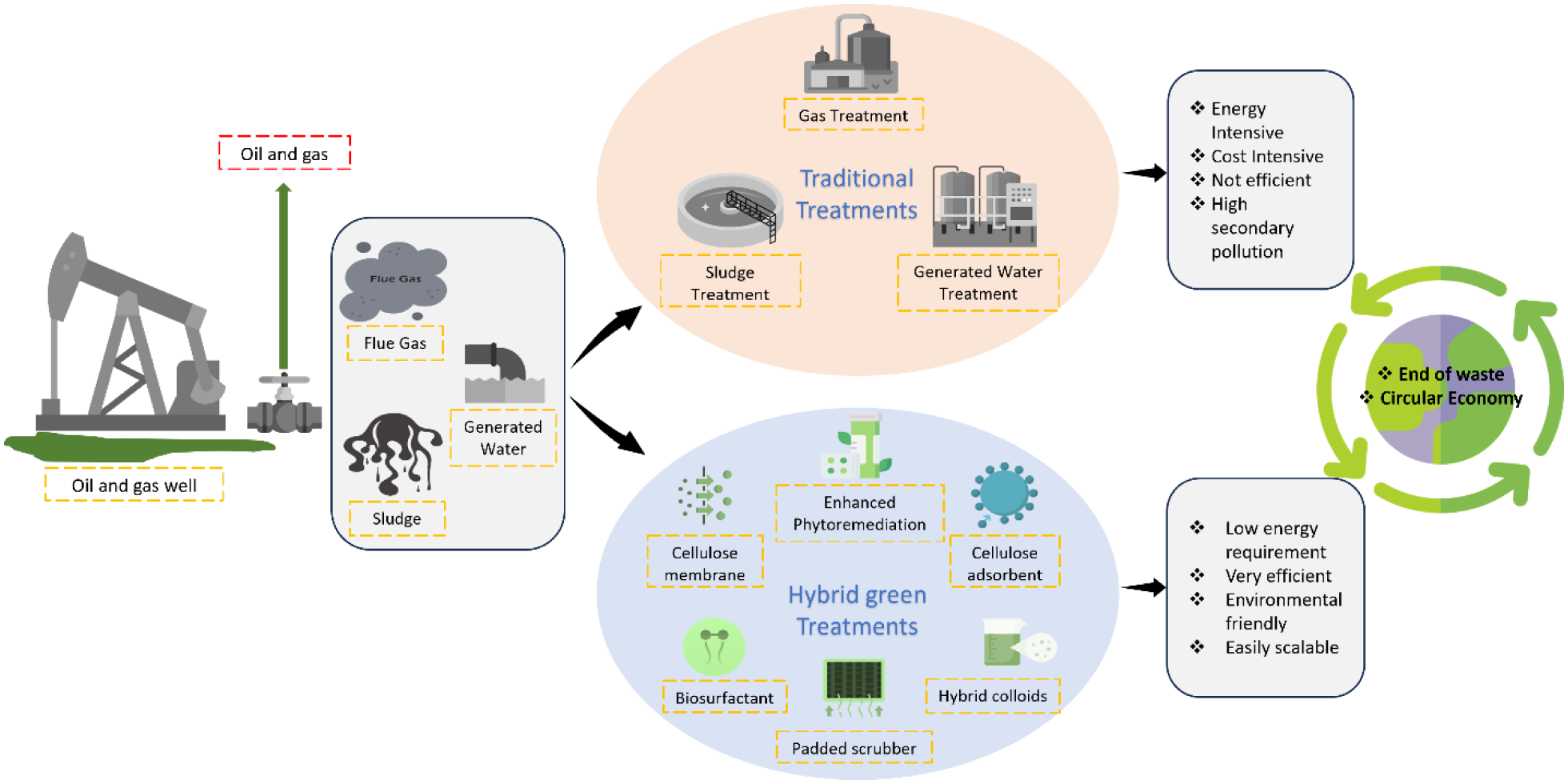
The oil and gas industries produce substantial waste globally, containing petroleum hydrocarbons and toxic heavy metals. These wastes provide significant and increasing risks to the environment, highlighting the critical necessity for efficient management and treatment strategies. This review offers an in-depth assessment of the treatment technologies for wastes produced during oil and gas exploration and production, utilizing comparative and systematic literature review to assess and outline current treatment technologies. Furthermore, critical data are generated, and a concise assessment of each technique is offered to aid readers to make informed decisions depending on operational situations. The subsequent summary and recommendations are given: (a) three primary waste categories from the oil and gas sector: oil sludge, generated water and flue gases are outlined; (b) analysis of different waste characterization, treatment approaches and treatment limitations; (c) enhancement of industry–academia collaboration should take place, and production of efficient, environmentally friendly drilling fluids is needed; (d) green hybrid sustainable technologies should be used to enhance overall effectiveness, outperforming conventional techniques; (e) defined and updated end-of-waste criteria need to be defined, considering concepts from the circular economy that promote careful utilization of resources and (f) future studies must demonstrate particular features of waste to enable the choosing of suitable green hybrid techniques for treatment of large volumes of waste depending on waste properties, making a valuable contribution to the progress of sustainable waste management.
Keywords
Get full access to this article
View all access options for this article.