



Abstract
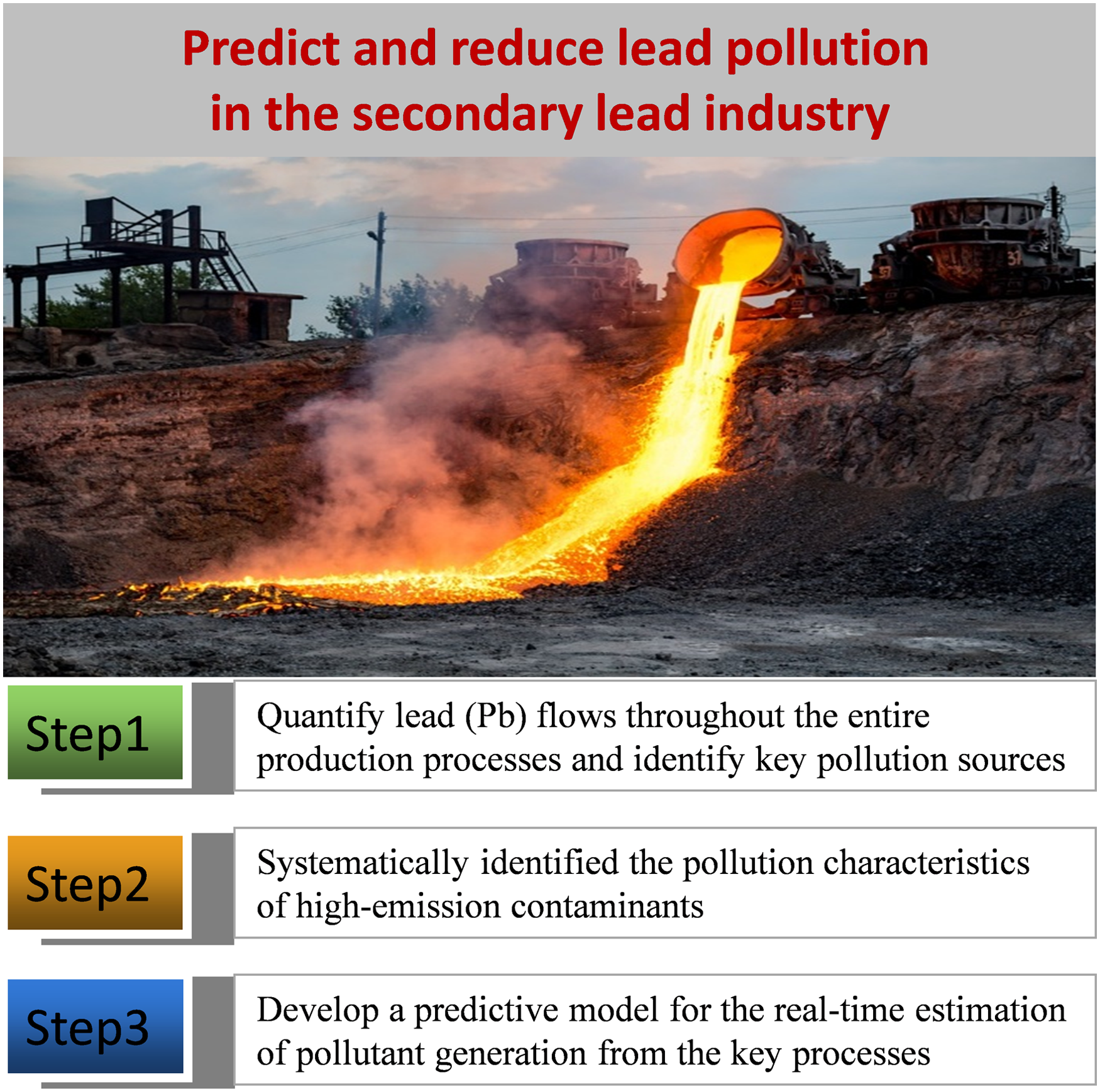
The recycling of spent lead-acid batteries has become increasingly crucial for lead (Pb) supply, yet it generates significant secondary pollutants including lead dust, water-quenched slag (WQS) and wastewater that threaten soil and groundwater quality. The amount of discharged pollutants is influenced by several key processes, including crushing, separation, pre-desulphurization, crude lead smelting, refining and slag production. Accurate identification and predictive monitoring of primary pollutant-generating processes allow for targeted process optimization and enhanced environmental control. In this study, the substance flow method was employed to quantify Pb flows throughout the entire production processes and identified WQS as the primary pathway for Pb release into the environment. Then, a genetic algorithm (GA) was used to optimize an artificial neural network (ANN) model for the real-time estimation of pollutant generation from the key processes (slag production). The developed GA-ANN model exhibited a high level of prediction accuracy (mean square error = 0.0003), enabling enterprise to estimate the Pb content in WQS by analysing key input parameters. This facilitates data-driven adjustments to process parameters for pollution mitigation, offering actionable insights within actual production.
Keywords
Get full access to this article
View all access options for this article.
References
Supplementary Material
Please find the following supplemental material available below.
For Open Access articles published under a Creative Commons License, all supplemental material carries the same license as the article it is associated with.
For non-Open Access articles published, all supplemental material carries a non-exclusive license, and permission requests for re-use of supplemental material or any part of supplemental material shall be sent directly to the copyright owner as specified in the copyright notice associated with the article.
