




Abstract
Biomining, or landfill mining, involves the excavation, processing and engineered disposal of legacy waste from unscientifically created landfills/dumpsites to reclaim valuable land and facilitates to recover resources. However, unrestricted reuse of recovered materials may cause adverse environmental impacts. Soil-Like Material (SLM) constitutes the major fraction of the biomined residues; hence, to achieve the major objective of Biomining, the reusability of SLM must be assessed. This study evaluates the potential of biomined SLM from Ariyamangalam dumpyard, Tiruchirappalli, for reuse as a soil amendment or bio-fertiliser. The phytotoxicity of SLM was assessed with the Seed Germination Test (SGT) using White mustard (Sinapis alba L.) seeds. The SGT was performed for five consecutive months and compared with the control red soil. The SGT was also performed in different combinations of SLM with red soil to obtain the suitable combination for disposal. The heavy metal accumulation in different bodily elements in plants were identified using bio-concentration factor and metal accumulation ratio. Results from the phytotoxicity assessment reveal that the SLM 40 (mixture of 40% SLM and 60% red soil) is optimal, which exhibits the highest germination index of 212%, relative seed germination of 132%, relative root elongation of 160%, and relatively lower heavy metal accumulations. The widespread application of SLM from the study area to agricultural land has proved to be a viable alternative for the reutilisation of residual resources with high-nutrient content and organic matter, making it favourable for growing non-edible plants.
Introduction
The global waste generation was around 20 billion tonnes in 2017 which is anticipated to grow to 46 billion tonnes by 2050 (Maalouf and Mavropoulos, 2023). According to the Ministry of Housing and Urban Affairs, about 0.15 million metric tonnes per day of solid waste are produced in metropolitan cities of India (SBM, 2020) because of urbanisation and industrialisation (Goli and Singh, 2024). In many middle and lower-income countries, the most prevailing method for the disposal of Municipal Solid Waste (MSW) is open dumping (Ferronato and Torretta, 2019) due to its ability to handle substantial waste volumes, coupled with low investment and operational cost (Vaverková et al., 2018). In India, 77% of the waste generated is disposed of in open dumps (Kaza et al., 2018). Improper disposal of MSW profoundly damages the environment, resulting in water, soil and air pollution (Sharma and Kumar, 2021). However, due to technological, financial and other constraints, most of the MSW ends up in landfills and dumpyards that lack proper liners and cover systems, which could be collectively termed as Unscientifically Created Landfills/Dumpsites (UCLDs) (Chandana et al., 2021). The environmental impact of existing UCLDs throughout the world cannot be ignored (Rong et al., 2017). The risks associated with UCLDs include contamination of adjacent water sources and soil, toxic leachate migration, greenhouse gases (GHG) emission, uncontrolled fires and intermittent slope failures, posing a serious threat to the geoenvironment (Goli et al., 2022). UCLDs contain extensive potentially toxic compounds, which might threaten the safety of the surrounding environment (Vaverková et al., 2018). The UCLDs place a socio-economic burden on the local government due to their massive land consumption in developing cities and unhygienic living conditions for the local population (Chandana et al., 2021). The reclamation of UCLDs can be effectively accomplished by the technique called biomining or landfill mining (LFM). LFM is one of the sustainable landfill reclamation options that aims to excavate and process legacy waste in the landfill over the years (Márquez et al., 2019).
LFM has received much attention globally owing to its tremendous possibilities for land reclamation, energy recovery, material recycling and pollution control, which have economic and environmental implications (Zhou et al., 2015). It permanently achieves near-zero leachate and GHG emissions, notably methane, hydrogen sulphide and ammonia (Maheshi et al., 2015). The legacy waste landfill is often insufficient to make economic recovery in some of the EU-funded projects but as evidenced in the different countries that carried out LFM projects, their advantages not only promote the adequate waste management but also include many other social and economic benefits (Márquez et al., 2019). The net climate impact of LFM can be highly positive, with an average net reduction of 81.1 kg CO2-e per Mg of excavated waste across scenarios. The environmental benefits are maximised when recovered materials are efficiently utilised. Under optimal conditions, LFM can save up to 1,550 kg CO2-e per Mg of waste but can also be a burden if materials are not properly managed (Laner et al., 2016). The biomining process comprises four steps (Central Pollution Control Board [CPCB], 2019): (i) Excavation: Excavation of legacy waste from the compacted solid mass and (ii) Stabilisation: The process in which the loosened legacy waste is spread in equal-sized windrows and turned on a regular basis by the addition of bioculture (the effective micro-organism solution). The bioculture enables the legacy waste to dry and shrink by 35–40% in volume by generating biological heat within it and accelerating the decomposition of waste into carbon dioxide and water vapour. The legacy waste is referred to have stabilised when no more heat, landfill gas or leachate is produced (Jain and Gupta, 2021). (iii) Sorting/screening: The stabilised waste is then sorted into various fractions based on respective size. Trommel screens or drum screens are used to separate the dried stabilised waste into the following size fractions – >100, 100–40, 40–20 and <20 mm (Saravanan and Dhinagaran, 2023). The fractions of legacy waste obtained after LFM are Soil-Like Material (SLM), Refuse-Derived Fuel (RDF), recyclables and inerts (Jain et al., 2023). RDF, which comes under combustibles, could be further segregated with the help of air density separators. LFM fractions represent an alternative source (Pitak et al., 2023) that satisfies a portion of the increasing demand for naturally available raw materials. (iv) Disposal: The recovered legacy waste fractions are subsequently transported and either safely disposed of or reused in an environmentally sound manner, as per the prescribed guidelines for legacy waste management.
Previous studies have indicated that the principal heterogeneous secondary resource obtained from LFM corresponds to fine fractions, often referred to as SLM (Burlakovs et al., 2017; Chandana et al., 2021; Hull et al., 2005; Kaartinen et al., 2013; Masi et al., 2014; Somani et al., 2018). SLM accounts for the majority of recovered legacy waste fractions from old MSW dumps, ranging from 40% to 80% of the overall biomined residues; hence, it is significant to enhance the understanding of the prospective utilisation of SLM as a valuable man-made resource. However, it would be prudent to assess its suitability by comprehensive analysis of the site-specific characteristics prior to its utilisation. The SLM could be utilised as a resource without adversely impacting the geo-environment if proper guidelines and protocols are developed and followed stringently (Chandana et al., 2021). SLM consists of degraded organic matter and weathered inert materials, along with small fragments of metals, plastics, glass and crushed construction and demolition waste (Parrodi et al., 2018, 2019). The utilisation of SLM as a filler material for the manufacturing of polymer composites was addressed by Goli and Singh (2024) along with the utilisation of landfill-mined plastic waste (Goli and Singh, 2023). SLM contains essential nutrients, including nitrogen (N), potassium (K), phosphorus (P) and required organic content, which facilitates plant growth. Additionally, SLM is known to contain heavy metals, including arsenic (As), lead (Pb), cadmium (Cd), chromium (Cr), copper (Cu), nickel (Ni), mercury (Hg) and zinc (Zn; Datta et al., 2021). Failure to eliminate high levels of heavy metals in soil may result in the mobilisation of heavy metal contaminations into the plant biomass (Ogundiran and Osibanjo, 2008), wildlife and ultimately into the food chain, having detrimental consequences on human health (Manwani et al., 2022). The bioavailability of heavy metals beyond the permissible limits as mentioned in FAO/WHO (1984) can pose critical issues in the agricultural and environmental sectors (Sharma et al., 2020). The presence of a considerable residual concentration of heavy metals in the SLM may result in the leaching of these elements, leading to their accumulation on the upper soil layer and also in the plant biomass (Adamcová and Vaverková, 2016). The presence and influence of contaminants function as a stress factor for plants and exert a negative impact on their growth (Šourková et al., 2020). A Seed Germination Test (SGT) can assess the correlation between the stress factors (salinity, organic content, heavy metals, nutrients) and seed germination parameters (seed growth, shoot length and root length).
The purpose of LFM can only be achieved if the recovered materials can be reused sustainably without adversely affecting the environment. Due to the lack of readily available conventional raw materials for compost, there is a growing interest in the application of compost obtained from MSW for agricultural purposes. The CPCB (2019) promotes the use of recovered SLM for the soil enricher to develop green areas, landscaping, gardening or by farmers in agricultural fields. Conversely, the presence of significant amounts of heavy metals in MSW poses a challenge to the growing interest in its application, as it often accumulates in plants and animals, leading to phytotoxicity, soil pollution and other problems (Adamcová and Vaverková, 2016). Earlier research revealed elevated levels of heavy metals, including Cr, Ni, Pb, Cu, As and Zn, in SLM, surpassing the local soil characteristics and the regulatory standards set by both the Indian government and the United States Environmental Protection Agency (Kurian et al., 2003; Quaghebeur et al., 2013; Somani et al., 2020). Ni present in the SLM poses a serious source of concern in terms of cumulative cancer risk assessment for both adults and children (Gurusamy and Thangam, 2023). Based on the statistical analysis on the characteristics of SLM, the heavy metals Cu and Zn have dominant characteristics showing higher correlation with other physicochemical parameters and acts as indicator elements (Saravanan and Ramesh, 2023). The application of SLM to extensive areas, even with low concentrations of contaminants, carries the potential for secondary pollution (Rong et al., 2017).
In response to these concerns, the SGT has gained much attention as a bioassay for assessing the cumulative effects of the hazardous constituents present in SLM. Recent research endeavours that have applied the SGT to determine the phytotoxicity of leachate (Balestri et al., 2019; Šourková et al., 2020; Vaverková et al., 2018), sludges (Rani et al., 2017), compost (Luo et al., 2018), MSW compost (Adamcová et al., 2016; Sharma and Kumar, 2021), soil near the landfills (Rong et al., 2017; Vaverková et al., 2017) and soils (Rongsayamanont et al., 2020). The bulk disposal of SLM is restricted due to the presence of heavy metals and other pollutants (Somani et al., 2023). To facilitate the safe bulk disposal of SLM in earth fills or its utilisation as compost/biofertiliser, it is necessary to assess the phytotoxicity of SLM by SGT.
The objective of the study is to assess the phytotoxicity of SLM obtained from the LFM process using SGT to provide valuable insights into the suitability and impact of SLM for soil amendment. Furthermore, the study aims to identify the extent of heavy metal accumulation in different parts of the plant biomass.
Materials and methods
Site description
The Ariyamangalam dumpyard (10°48′13.02″N, 78°43′33.02″E), located in the Tiruchirappalli district of Tamil Nadu, India, is owned by Tiruchirappalli City Municipal Corporation for the disposal of MSW. The site spreads over an area of 47.7 acres, fully designated for the disposal of MSW, with an average height of 5.6 m. The LFM project at the Ariyamangalam dumpyard was initiated in 2019 by the Tiruchirappalli City Municipal Corporation in compliance with the Municipal Solid Waste Management Rules (2016). The Ariyamangalam dumpyard is divided into four zones and equipped with three waste processing plants. The geographical location from google maps and the aerial view of the Ariyamangalam dumpyard are shown in Figure 1. The Ariyamangalam dumpyard is designated exclusively for the disposal of MSW. As a result, the legacy waste accumulated at the site primarily consists of MSW, with minimal to no inclusion of industrial or hazardous waste. The composition of incoming fresh waste is approximately 75% biodegradable materials, such as kitchen waste, yard waste and similar organic matter. Inert materials, including street sweepings and construction and demolition debris, make up around 15%. Combustible components, which include plastics, paper, wood, leather and tyres, account for 7.25%, whereas the remaining 2.75% comprises incombustibles like glass, metals and stainless-steel items (Saravanan et al., 2024).
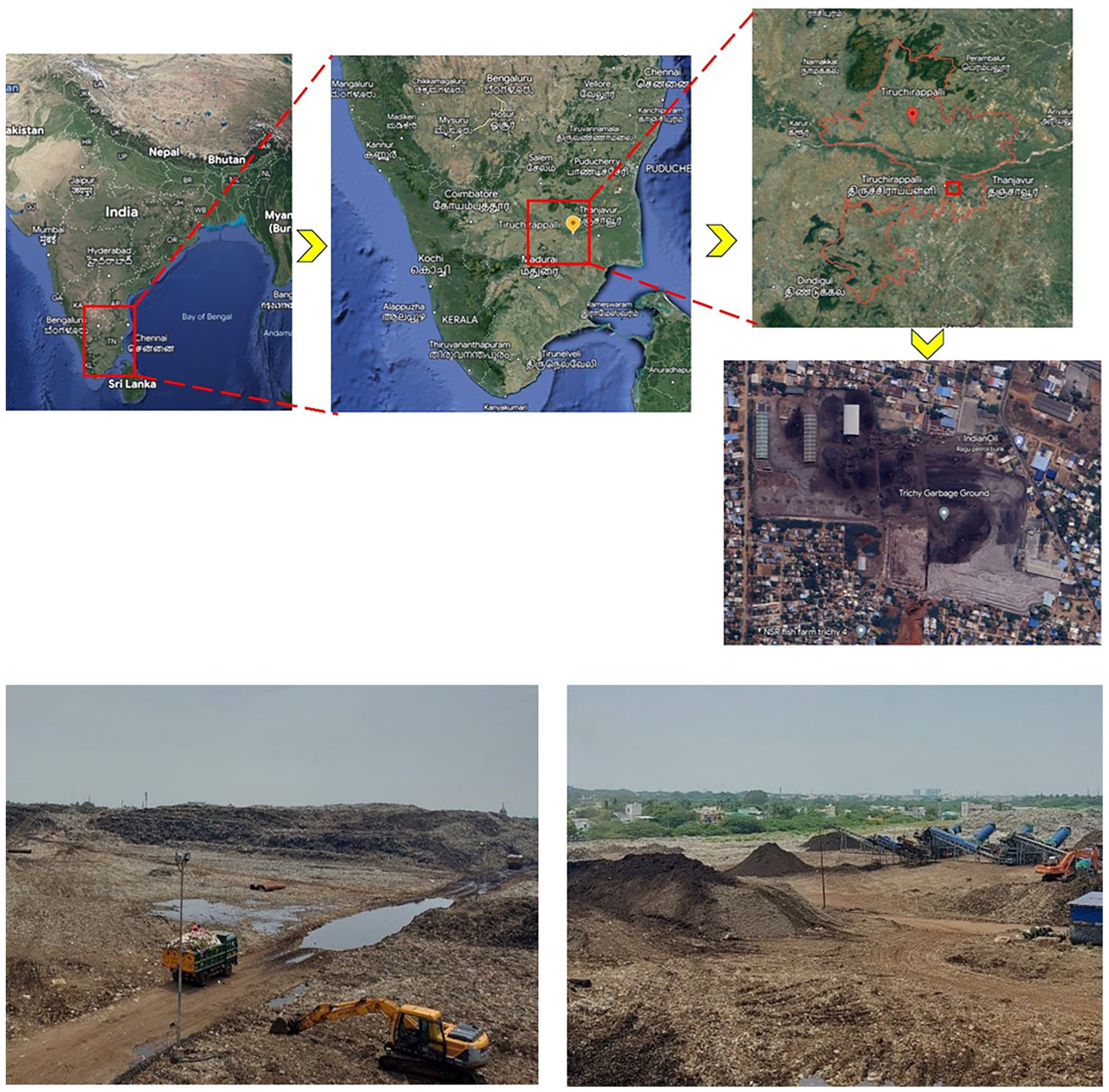
Geographical location and aerial view of Ariyamangalam dumpyard.
Sample collection and characterisation
The LFM process in Ariyamangalam dumpyard comprises of excavation of legacy waste and stabilisation with bio-culture (effective microorganism solution). The stabilised sun-dried legacy waste is then segregated into different fractions based on physical size separation by using trommel screens or drum screens. Various screen size used in the Ariyamangalam dumpyard are 100, 40 and 18 mm. Boulders and large-sized particles were manually removed before feeding the material into the screening unit. The fraction between 100 and 40 mm, consisting of inerts and RDF, was separated using an air classifier. A magnetic separator was then used to remove ferrous materials. RDF in the size range of 40–18 mm was shredded and transported to cement industries as an alternative fuel. The SLM sample of size smaller than 18 mm was further sieved to <4.75 mm and was collected from the Ariyamangalam Biomining site for five consecutive months from a specific plant (which is in operation). About 50 kg of a representative sample of SLM were taken every month through the coning and quartering method, sealed in bags and brought to the laboratory for analysis. Since the excavation of legacy waste was done in a vertical manner, the sample contains a mixture of SLM from different depths. The SLM sample was further sun-dried in the laboratory premises for 24 hours to remove moisture and to ensure uniform water content during the SGT. The physicochemical characteristics of the recovered SLM such as pH, Electrical Conductivity (EC), total nitrogen, phosphorous (P), potassium (K), Total Organic Carbon (TOC), carbon to nitrogen ratio (C/N) ratio and heavy metals was done as per Biofertilizers and Organic Fertilizers 1985, Fertilizer (Control) Order (FCO), 1985 (RA.2019) Schedule-IV (Parts C and D). The values were compared with the limits given in FCO, 1985 Schedule – IV (Part – A (1)). The Toxicity Characteristic Leaching Procedure (TCLP) heavy metals were also analysed for the SLM to understand the difference between total and leachable heavy metals (Gurusamy and Thangam, 2023). The extraction of leachable constituents is based on United States Environmental Protection Agency (1992) TCLP test method. The red soil (potting soil) collected from the uncontaminated site in Tiruchirappalli was taken as control. A similar analysis of the physicochemical characterisation was performed on red soil for comparative purposes. All experiments were conducted in triplicates to ensure data reliability, and the mean values of the measured parameters were reported for analysis and interpretation.
Phytotoxicity assessment of SLM
The SGT is one of the most sensitive and cost-effective bioassays for the assessment of phytotoxicity (Sharma and Kumar, 2021). It provides a rapid indication of the potential toxic effects of substances on plant growth and development.
Seed germination test
The SGT is performed based on Bureau of Indian Standards (2002) – Effects of Chemicals on the Emergence and Growth of Higher Plants standards. This phytotoxicity test is elicited from the response of different terrestrial plant species on the emergence and early growth for different chemical concentrations introduced to the test soil. Seeds of specific plants have been planted into the plastic container containing the control and testing samples (SLM). The SGT for evaluating the toxicity of different samples were reviewed and presented in Table 1.
Seed germination test for evaluating the toxicity of different samples.
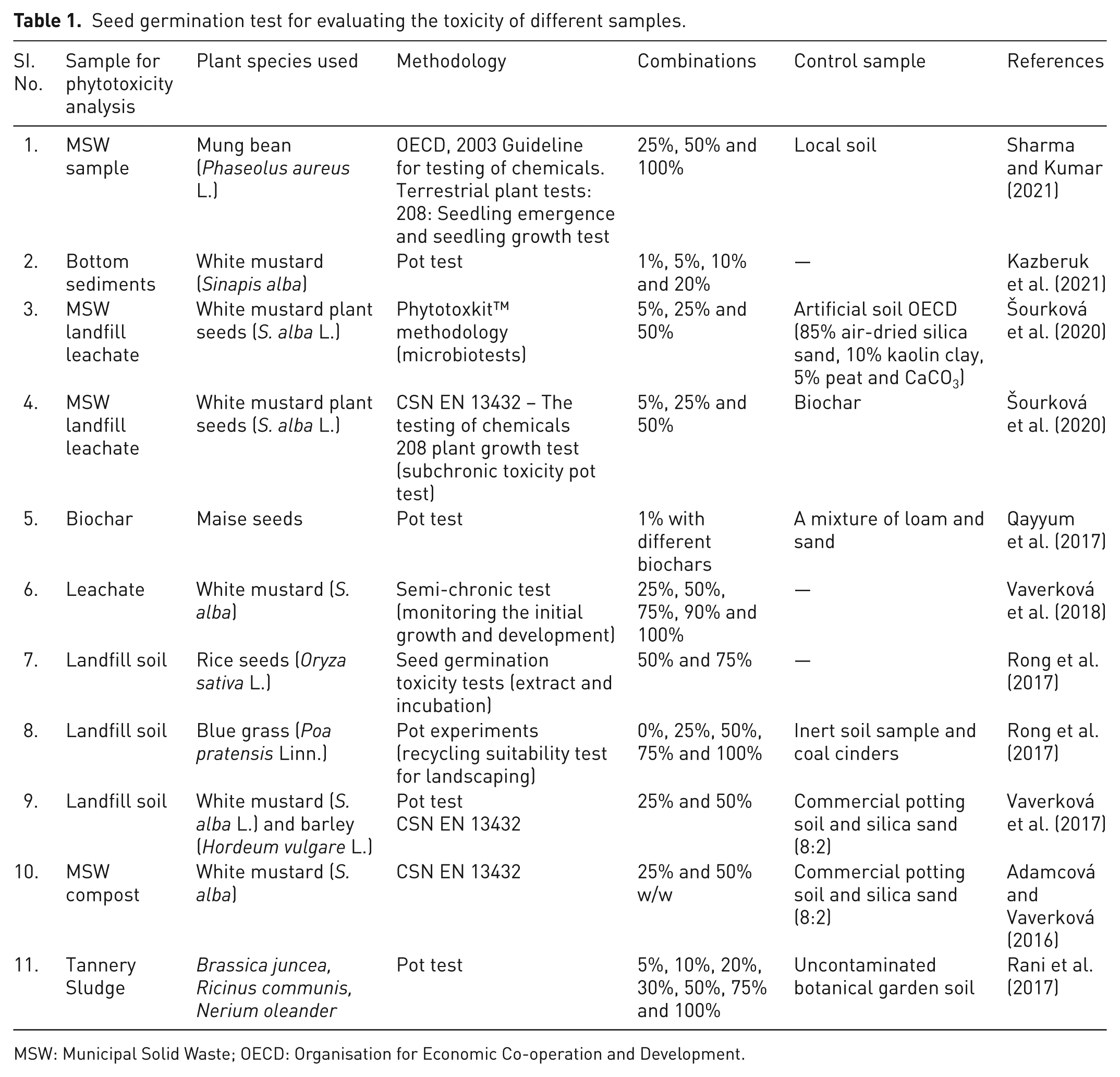
MSW: Municipal Solid Waste; OECD: Organisation for Economic Co-operation and Development.
There are no recognised seed species available for assessing the toxicity of compost (Luo et al., 2018), and the seed is often chosen based on local availability and agriculture patterns. Various monocotyledonous seeds suggested in IS 15109 (Part 2) (2002) are rye, ryegrass, rice, oat, wheat, barley, sorghum, sweetcorn and dicotyledonous seeds such as mustard, rape, radish and turnip. White mustard (Sinapis alba L.) is ideal for studying soils and soil extracts because of its sensitivity to a broad range of chemicals and contaminants (Vaverková et al., 2019). These seeds act as sensitive bioindicators of environmental stress, which can hinder seed development and growth (Šourková et al., 2020).
The first set of SGT was conducted for the SLM sample collected for the consecutive 5 months from different parts and depths at the Ariyamangalam dumpyard and compared with the control sample for 11 days to assess the potential for seed germination. The non-porous plastic containers (Trays) of 38 × 30 × 6 cm are filled with the control soil and SLM samples collected from the Ariyamangalam dumpyard. The air-dried sieved (<4.75 mm) SLM sample and control soil were placed in two different trays to a height of 3 cm. Surface sterilisation of white mustard seeds was accomplished by immersing them in a 2% commercial sodium hypochlorite solution, supplemented with a two- to three drops of Tween-20, for a duration of 2 minutes. Then, the seeds were soaked overnight to ensure their quality, and only those whose roots started to sprout were used for the test. Subsequently, the seeds were washed twice with sterile distilled water (Vaverková et al., 2017). Each tray is planted with 100 healthy white mustard seeds, ensuring they are placed 1 cm below the top surface and are uniformly spaced. Sufficient illumination with a light intensity suitable for photosynthesis was maintained by exposing the trays to natural sunlight for a duration of 16 hours each day. The setup was placed in ambient condition to maintain the atmospheric temperature throughout the test period. The test parameters are the number of seeds germinated and the average shoot length. Measurements were taken on daily basis from the date of sowing of seeds. The same procedure was repeated for five consecutive months, from November 2021 to March 2022 to assess the seed germination potential of SLM recovered from various locations of the Ariyamangalam dumpyard.
Mix proportion for SLM
The second set of SGT was conducted in different combinations of SLM and red soil to assess the suitability for disposal as a soil amendment. The same plant species, White mustard (S. alba L.), was used. Soil medium with varying concentrations of 0% (control), 10%, 20%, 30%, 40%, 50%, 60%, 70%, 80%, 90% and 100% SLM was prepared on a weight basis. SLM 10 represents the combination of 10% SLM and 90% red soil. The prepared soil medium was transferred to plastic trays, and the soil depth was maintained at 3 cm in each tray. Supplemental Figure S1 shows the soil medium with different proportions of SLM and red soil in plastic trays. The moisture content in the trays was maintained at its Water Holding Capacity (WHC) throughout the test period of 21 days. The trays were also exposed to sufficient sunlight and the optimum temperature for seed germination.
Water holding capacity
The WHC experiment was performed according to Bhadha et al. (2017) to maintain the moisture content in the trays. A laboratory-based experiment was conducted to study the WHC of different combinations of control and SLM samples at dry conditions. Twenty grams of samples were filled in the funnel fitted with the Whatman filter paper and placed over the measuring cylinder. A known volume of water (40 mL) was gently poured from the top of the funnel. The water filtered through the samples by gravity is collected in the measuring cylinder. The volume of water retained per gram of soil sample denotes the WHC. The experimental setup for the determination of WHC is shown in Supplemental Figure S2. The loss of water was sprinkled evenly over the trays on a daily basis to maintain 60–70% of the WHC throughout the experiment.
Monitoring parameters and analysis
Growth measurement
The number of seeds germinated and average shoot length (in cm) in each tray were monitored daily. At the end of the 21-day test period, root length (in cm) was measured for each plant. The shoot length of all the 100 seeds in each tray were measured separately and the average values were taken for analysis. Relative Seed Germination (RSG), Relative Root Elongation (RRE) and Germination Index (GI) were determined by following equations (1)–(3), respectively (Luo et al., 2018).



Heavy metal accumulation
The white mustard plants grown are retrieved from each tray such that the roots remain intact. Plant specimens collected from all the trays after 21 days were weighed and then packed in sealed airtight bags after ensuring that all the adhered soil particles had been removed by washing. The leaves and stems of the plants obtained from each SLM proportion were dissected and placed in separate beakers, as shown in Supplemental Figure S3, to oven-dry at 80°C for 7 hours. The powdered dried sample was digested with 10 mL of 2 M HNO3 in a hot plate. The solution was evaporated to near dryness, and the cooled residue was re-dissolved in 10 mL of 2 M HNO3. This process was repeated until the generation of brown fumes stops. The solution was diluted to 25 mL using distilled water and filtered through a 0.2-µm syringe filter into a centrifuge tube. The filtrate was then analysed for heavy metals such as As, Hg, Pb, Cd, Cr, Cu, Zn and Ni in leaves and stems of white mustard plants grown in different proportions of SLM by using the atomic absorption spectrophotometer (AAS; Perkin Elmer PinAAcle™ 900T).
The heavy metal accumulation in various parts of the white mustard plants from SLM was assessed through the Metal Accumulation Ratio (MAR) and Bio-Concentration Factor (BCF). The ability of plants to extract metal compounds from soil or substrate is shown by a parameter called the BCF. MAR is a parameter that represents the ratio of heavy metals accumulated in either leaves or stems with respect to the whole plant. The MAR and BCF were determined using the following equations (4) and (5), respectively.


Statistical analysis
To ensure the reliability of the data and the validity of the results, the mean concentration of number of seed germinated, mean shoot length, root length, heavy metals in stem and leaves were subjected for the statistical analyses by using the IBM SPSS Statistics 22 software.
Results and discussion
Seed germination test
The seed growth of SLM samples collected for five consecutive months is shown in Supplemental Figure S4. The variation in the number of seeds germinated, shoot length and mean values for control and SLM are shown in Figure 2(a)–(c) and (d)–(f), respectively. The number of seeds germinated in SLM is lower during the initial stages and gradually approaches the same count as control at the end of the 11th day. This indicates the toxicity symptoms for seed germination at the earlier stages, and the plant can adapt to the situation rapidly. The shoot length (cm) is also lower in SLM compared to control in both the initial and final stages. MSW contains a range of toxic organic and inorganic contaminants that can inhibit seed germination. Although the SLM has higher heavy metal content, it has higher nitrogen phosphorus potassium (NPK), TOC and optimum C/N ratio when compared to the control. The mean physicochemical parameters of both SLM and the red soil were compared with Yadav et al. (1985) in Table 2. The increased concentration of NPK and TOC compensated the adverse impacts of heavy metals, leading to nearly equivalent seed growth in both SLM and control. The EC value is significantly higher than the control. The MSW with higher total salt concentrations causes osmotic stress and reduces germination (Sharma and Kumar, 2021).
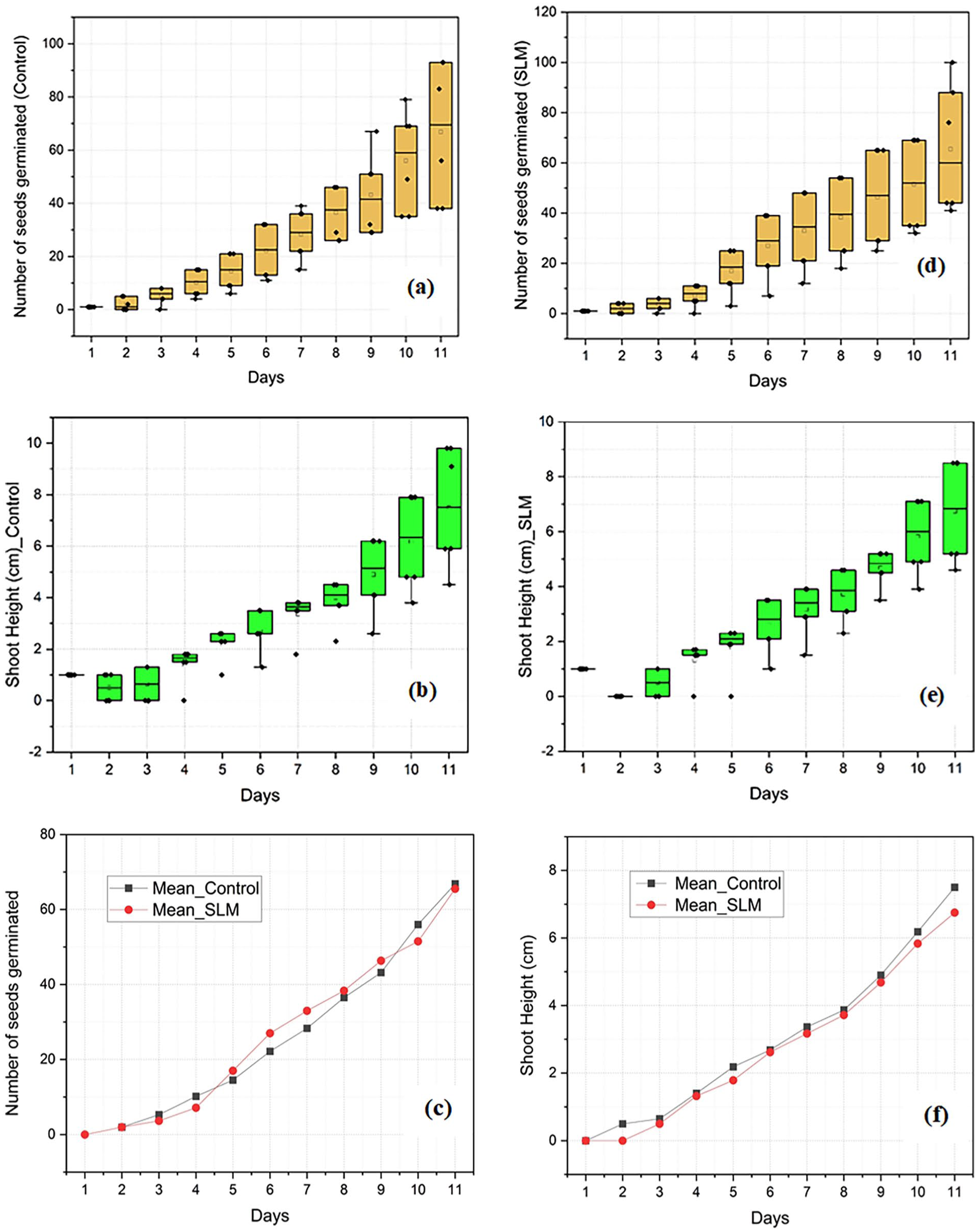
Variation in the number of seeds germinated, shoot length and mean for control (a, b, c) and SLM (d, e, f).
Physicochemical characteristics of SLM and control soil.
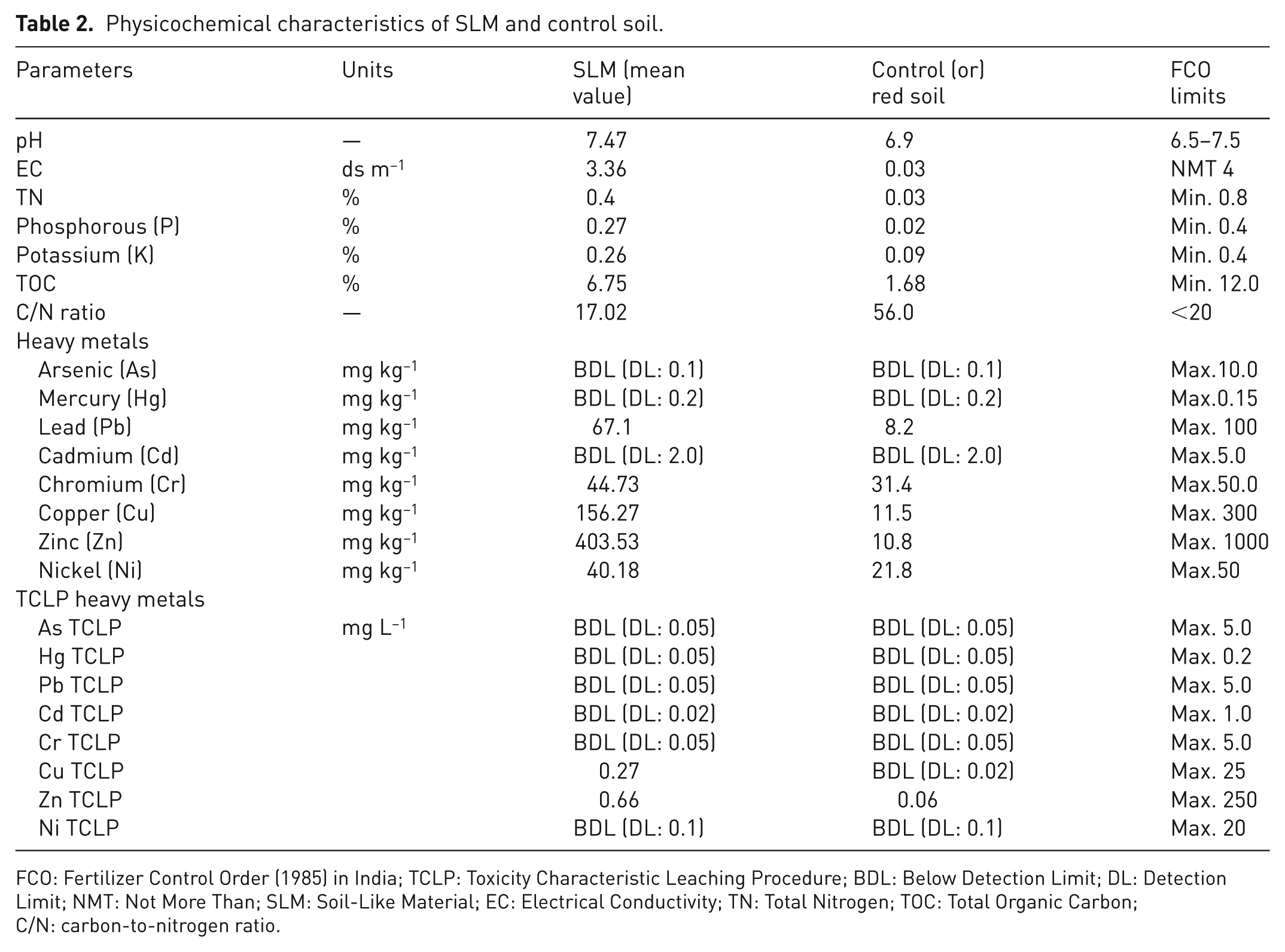
FCO: Fertilizer Control Order (1985) in India; TCLP: Toxicity Characteristic Leaching Procedure; BDL: Below Detection Limit; DL: Detection Limit; NMT: Not More Than; SLM: Soil-Like Material; EC: Electrical Conductivity; TN: Total Nitrogen; TOC: Total Organic Carbon; C/N: carbon-to-nitrogen ratio.
However, the pH value of 7.47 is optimum for seed growth based on the FCO limits. Most of the heavy metal concentrations are 10 times higher than the control soil but well within the FCO limits. The TCLP test was performed on both the SLM and the red soil to predict the potential mobility of leachable heavy metals and its subsequent accumulation in the plant body (Yutong et al., 2016). All the TCLP heavy metals in SLM are below detection limit (BDL) except Cu and Zn.
The WHC of SLM is higher than that of control because of the presence of organic matter in the form of humus. Humus is a stable, decomposed organic component that resists further degradation. Since SLM is derived from fully decomposed legacy waste, it predominantly contains humus along with inert materials. He et al. (2022) also reported the presence of protein-like and humus-like substances in SLM. Every 1% increase in organic matter can potentially lead to 20,000 gallons of available soil water per acre (Bhadha et al., 2017). Hence, using SLM as a soil amendment enhances the WHC of the agricultural soil, thereby promoting effective utilisation of available soil water for plants.
The RSG for different periods was plotted in Figure 3(a). The average RSG for SLM is 99.7%, with most of the values above 100% indicating that the plant growth in SLM is relatively the same as for control after the fifth day. The polynomial trendline for all the graphs reaches a maximum value on the sixth day. The average R2 value for the polynomial trendlines is 0.733, which is significant. The results imply that the plant species takes a minimum of 5 days to adapt to the contaminants in SLM, which is the reason for lesser seed germination in SLM during the initial stages of SGT.
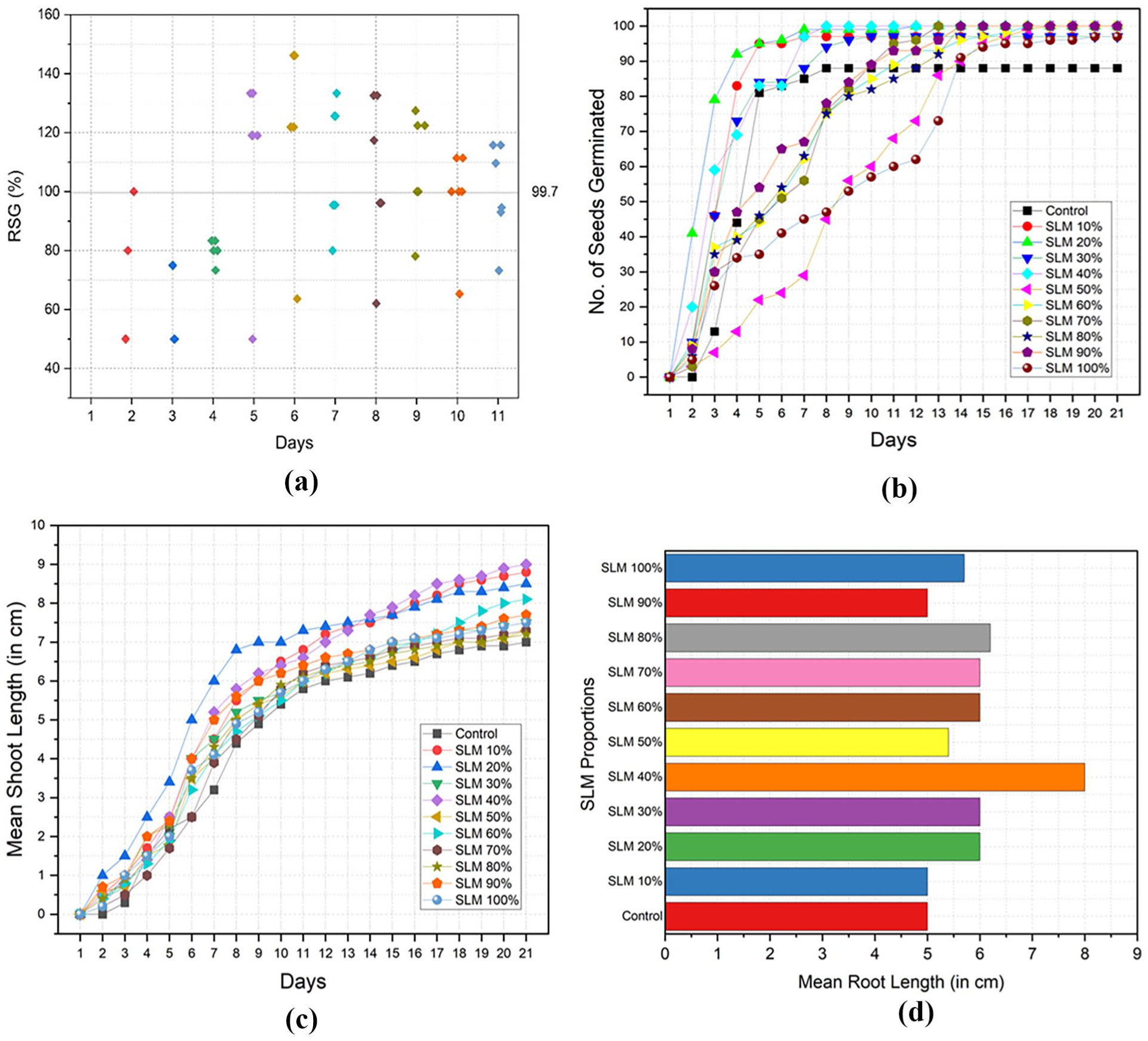
Relative seed germination (a), daily variation in the number of seeds germinated (b), mean shoot length (c), mean root length on the 21st day (d).
SGT in different composition
The seed growth in different combinations of SLM and control is shown in Supplemental Figure S5. The daily variation in the number of seeds germinated, mean shoot length and mean root length at the end of the 21st day for different combinations are shown in Figure 3(b)–(d), respectively. All the SLM combinations show more than 90% seed germination except the control.
The control attains saturation in the seed growth on the eighth day. Meanwhile, in SLM, the seed germination continues up to the 15th day. About 100% seed germination is achieved in SLM 20, SLM 40, SLM 50, SLM 60, SLM 70, SLM 80 and SLM 90 combinations. A proper increase in the shoot length was observed in all the combinations of SLM, with a maximum of 9 cm for SLM 40, which is 2 cm higher than the control. It could also be noted that 100% seed germination is attained first in the case of SLM 40, followed by SLM 20, SLM 70, SLM 80, SLM 90, SLM 60 and SLM 50, respectively. Germination represents a critical stage in the plant life cycle that is particularly vulnerable to the influence of soil contaminants (Vaverková et al., 2017).
Initially, the shoot growth rate was higher for SLM 20, but after the 14th day, the shoot growth rate increased for SLM 40 and SLM 10. The root length was measured at the end of the 21st day. The average root length was 6 cm, with a maximum of 8 cm for SLM 40. Although there was no significant variation observed in the average root length among the different SLM combinations, SLM 40 exhibited a higher value than the overall average. This result suggests that the addition of SLM have not much influence on the root growth. In fact, all samples containing SLM showed greater root lengths compared to the control.
The results of RSG, RRE and GI are shown in Figure 4(a)–(c), respectively. Mean RSG was found to be the highest in SLM 20, followed by SLM 40. Maximum RRE was attained in SLM 40. Finally, upon calculating the GI, SLM 40 attained the maximum value of 212%. Hence, it is concluded that the SLM 40 is the optimum proportion that exhibits the greatest potential for seed germination and growth.
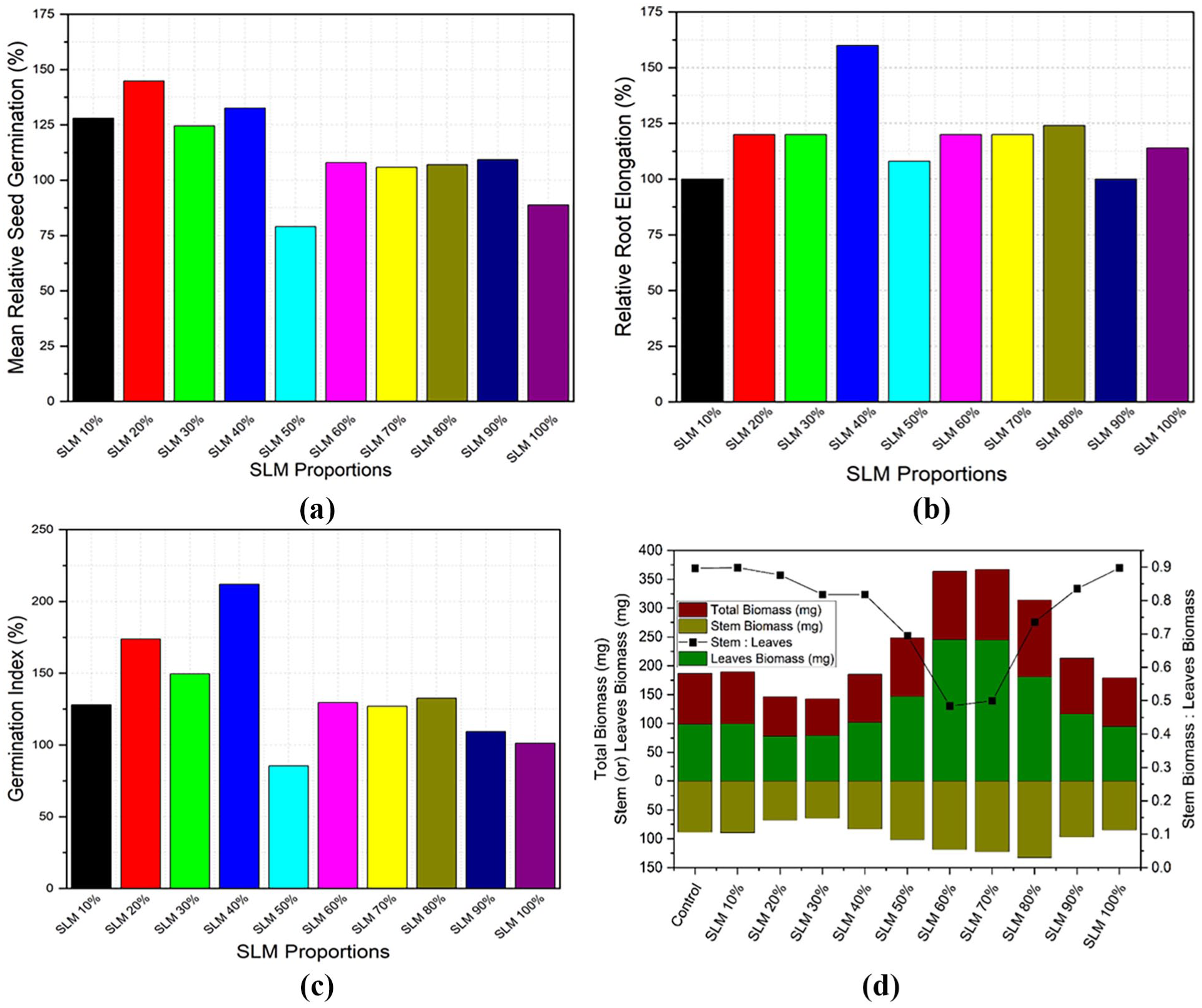
Mean RSG (a), RRE (b), GI (c), total plant biomass, stem and leaves biomass, and the ratio of stem and leaves biomass (d).
Heavy metal accumulation in plants
The heavy metals in different parts of plant species in each SLM proportion were analysed using AAS after acid digestion. The samples are tested for As, Hg, Pb, Cd, Cr, Cu, Zn and Ni, and the results are shown in Figure 5(a)–(e). The heavy metals, As, Hg and Cd, are not detected in any leaves and stem samples. Pb accumulation is found to be the highest in leaves and stems of white mustard plants grown in SLM 60 and SLM 50, respectively, as shown in Figure 5. Lead is accumulated in the leaves of plants grown in SLM 50, SLM 60 and SLM 70, in the order: SLM 60 > SLM 50 > SLM 70. It is observed that in the stems of plant samples grown in SLM 60 and SLM 70, Pb accumulation is below the detection limit, but in the stems of plant samples grown in SLM 50, a significant level of Pb concentration could be observed. Pb is accumulated in the stems of plants grown in SLM 10 and control. According to Gidlow (2015), Pb slows down seed germination and seedling growth, germination percentage, GI, root/shoot length and dry mass of roots and shoots.
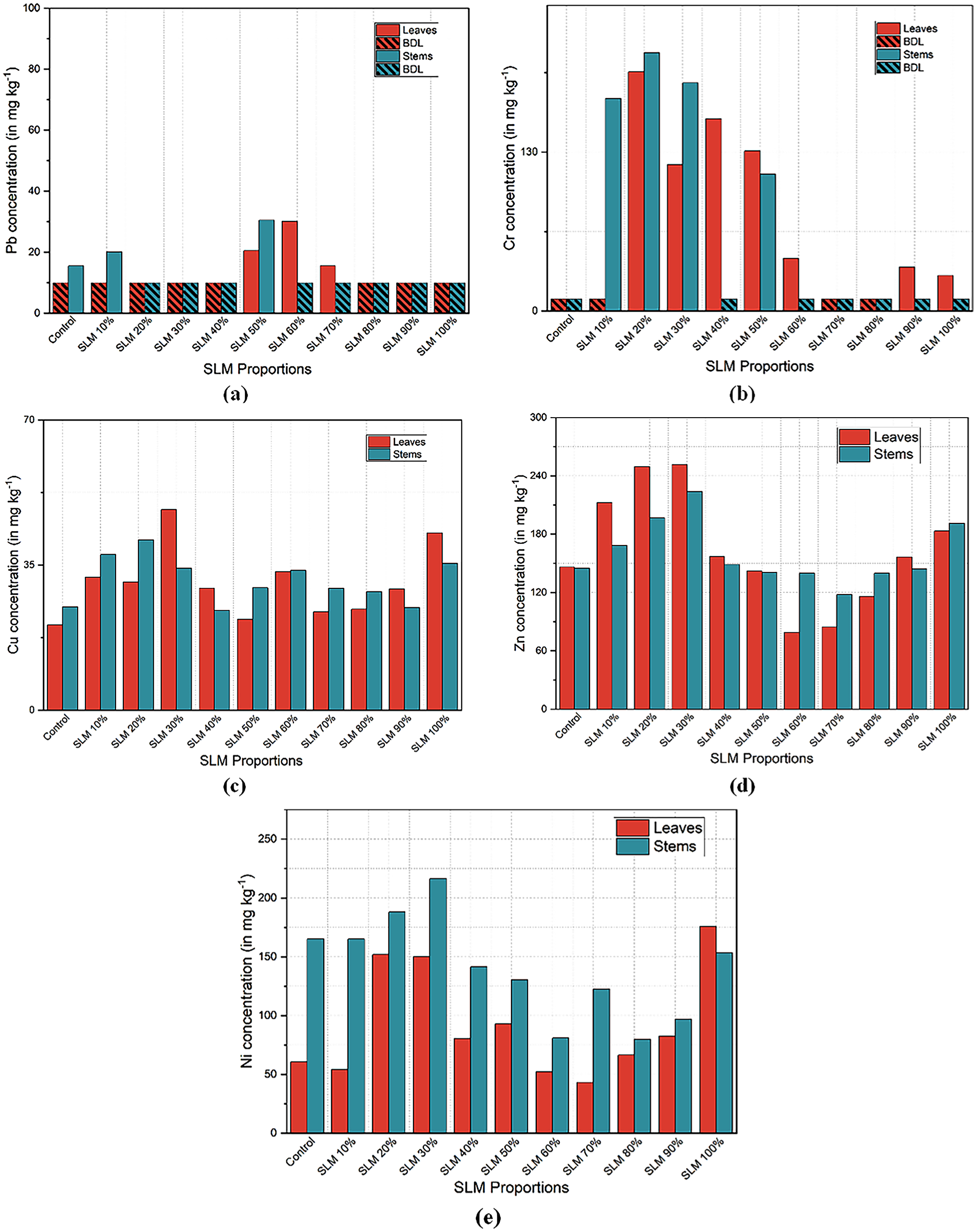
Pb, Cr, Cu, Zn and Ni concentration in leaves and stems of different SLM proportions (a, b, c, d, e).
The highest Cr accumulation is seen in the leaves and stems of white mustard plants grown in SLM 20. Cr accumulation order in leaves: SLM 20 > SLM 30 > SLM 40 > SLM 50 > SLM 60 > SLM 90 > SLM 100. Cr accumulation order in stems: SLM 20 > SLM 30 > SLM 10 > SLM 50. Cr has no recognised biological function in plant physiology (Reale et al., 2016). It is widely accepted that elevated levels of Cr in plant tissues can cause a range of morpho-physiological and biochemical responses (Kamran et al., 2017; Uddin et al., 2015), which can impair their growth and hinder vital metabolic activities (Shanker et al., 2009).
The heavy metals Cu, Zn and Ni are accumulated in the leaves and stems of white mustard plants grown in all SLM proportions, even in control at significant levels. The highest Cu accumulation in stems was observed in the plants of SLM 20. Cu accumulation starts increasing from control to SLM 20 then decreases with the further addition of SLM and attains a saturation from SLM 60 onwards. According to Wuana and Okieimen (2011), plant tissues typically require 5–30 mg kg−1 of Cu as it is essential for plant growth. Normal levels of Cu in uncontaminated soils ranged from 2 to 109 mg kg−1 globally (Kumar et al., 2021).
Zn accumulation is higher in white mustard leaves grown in SLM 30. The biomass yield decreases when leaves contain 300–1000 mg kg−1 (generally 500 mg kg−1 is considered a phytotoxic level; Chaney, 1993). It could be inferred that none of the leaf samples having a Zn concentration >300 mg kg−1, and there is no possibility of phytotoxicity in SLM due to Zn. Ni is necessary for most plants, with concentrations ranging between 0.05 and 10 mg kg−1 dry weight (Hassan et al., 2019). According to Kabata-Pendias and Mukherjee (2007), the average Ni content of grains is 0.34–14.6 mg kg−1, forest grass is 10–100 mg kg−1 and meadow grass is 13–75 mg kg−1. It could be observed that the Ni concentration exceeds 100 mg kg−1 in the leaves of white mustard plants grown in SLM 20, SLM 30 and SLM 100 and stems of plants grown in control, SLM 10, SLM 20, SLM 30, SLM 40, SLM 50, SLM 70 and SLM 100. Furthermore, batteries constitute the main contributor of heavy metals in MSW (Rong et al., 2017), which is further supported by the high concentration of Ni in all the samples. Batteries often end up in MSW landfills due to improper disposal by households and businesses, where they are discarded along with general waste instead of being directed to designated hazardous waste or e-waste collection systems. A study of battery waste in Iran for example noted that nearly all household batteries (nearly 9,800 tonnes of imports over a decade) were discarded into municipal landfills without separation or recycling, increasing environmental and health risks (Ferronato and Torretta, 2019). Zinc in MSW primarily originates from ash, plastic and paper. The notable rise in Cu and Pb concentrations in SLM is likely a result of their increased adsorption potential on the soil surface. Additionally, their capacity to form organometallic complexes with soluble, labile, or easily mineralizable compounds contributes to the favourable conditions that enhance the bioavailability of these metals (Rani et al., 2017). The similar trend has been observed for Cu, Zn and Ni concentrations in both leaves and stems of white mustard plants. They increased as the concentration of heavy metals increases up to SLM 30, then decreased, reaching their lowest levels at SLM 60, before rising again until SLM 100. The lowest levels of heavy metal concentration observed at SLM 60 and SLM 70 are responsible for the highest biomass yield in these combinations.
Different plant species and distinct plant sections have diverse capacities for heavy metal uptake and accumulation (Lone et al., 2008; Sharma et al., 2015). Sandy soil with low pH and organic matter promotes a higher uptake of heavy metals (Mensah et al., 2009). The strong affinity of heavy metals for binding with soil particles results in the formation of an insoluble and heterogeneous environment (Sharma et al., 2020). Metal toxicity in plants leads to pronounced inhibition of germination, substantial reductions in growth rate, alterations in photosynthetic efficiency, respiration and transpiration, as well as disruptions in nutrient homeostasis (Manwani et al., 2022). Although Cd is recognised as one of the most mobile and bioavailable heavy metals in soil, capable of causing human and ecotoxicological impacts even at low concentrations, it is found to be BDL in SLM (Mensah et al., 2009).
As per the heavy metal results of plant specimens, there is significant Ni contamination and slight Pb and Cr contamination upon growing plants in biomined SLM obtained from the Ariyamangalam dumpsite. Pb, Cr and Cu accumulation in the plants is higher in SLM 30. Based on the phytotoxicity assessment, it is evident that SLM 40 represents the most suitable proportion, as it achieved the highest GI and comparatively lower accumulations of heavy metals. Although other combinations of SLM such as SLM 60 and SLM 70 have comparatively lesser heavy metal accumulation, the initial growth, shoot and root lengths. It is recommended that the SLM from the Ariyamangalam dumpyard could be beneficial at 40% combination with local soil for mass application as a soil amendment. However, the biomined SLM is not suitable for cultivating edible plants intended for human consumption without implementing measures to mitigate the presence of heavy metals such as Pb, Cr and Ni prior to its application in agricultural fields.
Metal accumulation ratio and bio-concentration factor
The BCF of any plant is a crucial element for assessing human health risks (Chandra et al., 2018; Yoon et al., 2006). The MAR of leaves stems, and BCF are given in Table 3. Pb, Cr, Cu, Zn and Ni accumulation ratios in leaves are in the range 0.40–1.00, 0.39–1.00, 0.43–0.59, 0.36–0.56 and 0.25–0.53, respectively. Similarly, Pb, Cr, Cu, Zn and Ni accumulation ratios in stems are in the range 0.60–1.00, 0.46–1.00, 0.41–0.57, 0.44–0.64 and 0.47–0.75, respectively. In SLM 60 and SLM 70, the Pb accumulation ratio of leaves is 1, indicating that Pb absorbed by the white mustard plants grown in SLM 60 and SLM 70 is completely accumulated in the leaves. Similarly, the Cr accumulation ratio of leaves is 1 for plants grown in SLM 40, SLM 60, SLM 90 and SLM 100. The Pb accumulation ratio of white mustard stems grown in control and SLM 10 is also 1. The Cr accumulation ratio of stems grown in SLM 10 is also observed to be 1. BCF values of plants account for 0.31–1.89 for Pb, 1.10–11.95 for Cr, 0.38–3.95 for Cu, 0.71–26.93 for Zn and 4.00–13.42 for Ni, in different proportions of SLM. Most of the values of BCF are considered too high as they are >1.
Metal accumulation ratio of leaves, stems and bio-concentration factors.
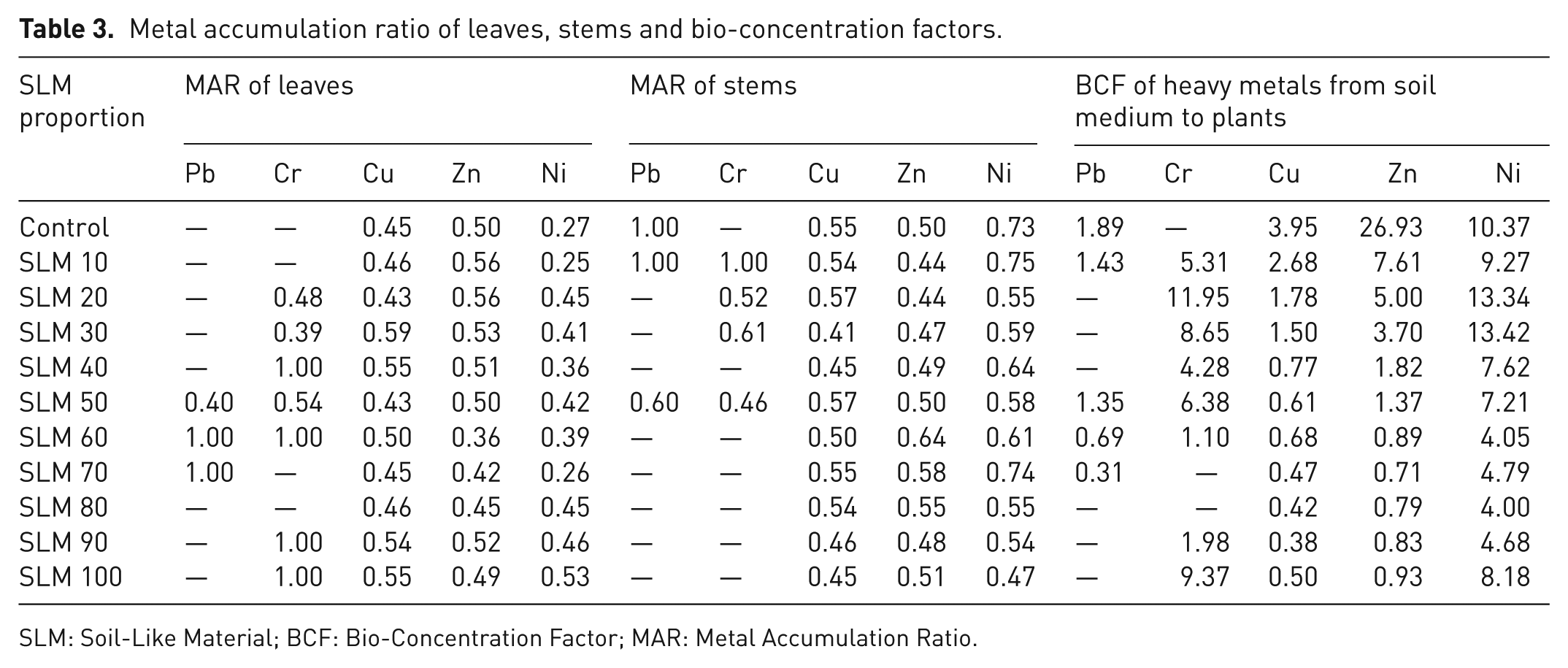
SLM: Soil-Like Material; BCF: Bio-Concentration Factor; MAR: Metal Accumulation Ratio.
There is some difference in the metal tolerance mechanism based on the two fundamental mechanisms, such as accumulation and exclusion, by which plants respond to high levels of heavy metals in soil. Heavy metal excluders have BCF <1, while BCF >1 are metal accumulators (Ogundiran and Osibanjo, 2008). A hyperaccumulator plant should have BCF >1 or Transfer Factor (TF) >1, in addition to total accumulation exceeding 1000 mg kg−1 of Cu, Co, Cr, Ni or Pb, or exceeding 10,000 mg kg−1 of Mn or Zn (Sharma et al., 2020).
The soil-plant Transfer Coefficient (TFSP) depending on the specific plant species under observation and the soil substrate and varies across wide ranges. The coefficients for individual metals also differ from one another. Plants absorb minimal amounts of elements like As, Pb, Cr and Hg from the soil due to their strong binding capacity, causing concern for entering into the food chain only when soil contamination reaches exceptionally high levels (Blume et al., 2010).
The MAR and BCF of the reference species, that is, white mustard (S. alba L.), indicate that Pb, Cu and Zn are highly bioaccumulated in the white mustard plants grown in SLM 10, Cr in SLM 20 and Ni in SLM 30. The metal accumulation and bio-concentration decrease with increase in the SLM concentration. At high concentration, the metal absorption in plants can decrease due to plant toxicity and protective mechanism. The reduction in absorption by plants can be due to damage in the root system or the plant’s effort to avoid further metal accumulation to protect itself from harmful effects (Jan and Parray, 2016). Since white mustard is an ideal plant and acts as a sensitive bioindicator of environmental stresses such as heavy metal accumulation, it could be concluded that the SLM is not suitable for the cultivation of edible plants due to the accumulation of heavy metals from the SLM to plant species.
Particle size of the SLM greatly impacts the distribution, availability and migration of the heavy metals. Fine particles generally exhibit higher carrying and transporting capacity for heavy metals (Huang et al., 2020). The fine fraction <4.75 mm from the segregation of legacy waste is known as bioearth, having mostly degraded humic substances. According to Borůvka and Drábek (2004), the heavy metals bound to insoluble humic substances are immobile, whereas binding to smaller organic molecules may enhance metal mobility and bioavailability. The presence of emerging contaminants such as microplastics, Poly-Chlorniated Biphenyls (PCBs), poly-aromatic hydrocarbons and other pollutants in SLM, which is recovered from a landfill, necessitates further investigation into their potential impact on seed germination.
Conclusion
The judgement on the suitability of SLM for seed growth is assessed with RSG, RRE and GI based on the number of seed germinated, shoot length and root length in various combinations of SLM with local soil. The phytotoxicity of SLM was also studied by analysing the heavy metal accumulation on different parts of the plant species. The research findings reveal that SLM had a notable impact on seed germination parameters. In particular, the combination of SLM with local soil significantly improved plant growth as the GI of SLM 40 peaked at 212% with RSG of 132%, RRE of 160% and relatively lower heavy metal accumulations. Notably, heavy metal accumulation due to Pb, Cr and Ni is observed in white mustard leaves and stems grown in different proportions of SLM. Upon calculating MAR and BCF, results indicate that Pb, Cr, Cu, Zn and Ni were subject to substantial bioaccumulation in the white mustard plants grown in different weighted proportions of SLM. However, the SLM from UCLDs is less toxic towards the reference species in terms of growth factors. Consequently, the use of SLM as a growth substrate or soil amendment in agricultural fields for non-edible plants appears to be a viable option. Moreover, the application of SLM in agricultural fields can yield additional benefits, including improved water retention, enhanced aeration properties and prevents soil compaction. The limitation of the study is the transfer of results to other species, and the physicochemical parameters such as organic matter, clay minerals, pH and grain size have a strong impact on the heavy metal availability. It is crucial to ensure the effective removal of impurities, such as stones, glass, metals and plastics, during the segregation process to maximise the efficacy of full-scale SLM application in agricultural fields.
Supplemental Material
sj-docx-1-wmr-10.1177_0734242X251364645 – Supplemental material for Assessment of phytotoxicity in soil-like material recovered from landfill mining of legacy waste in open dumpsites
Supplemental material, sj-docx-1-wmr-10.1177_0734242X251364645 for Assessment of phytotoxicity in soil-like material recovered from landfill mining of legacy waste in open dumpsites by Gurusamy Saravanan, Alayna Mariya and Srikrishnaperumal Thangam Ramesh in Waste Management & Research
Footnotes
Acknowledgements
The authors would like to acknowledge the Executing Agency, Ariyamangalam Biomining Site and Tiruchirappalli City Municipal Corporation for their valuable support during the site visits.
Author contributions
Data availability
No data was used for the research described in the article.
Declaration of conflicting interests
The authors declared no potential conflicts of interest with respect to the research, authorship, and/or publication of this article.
Funding
The authors disclosed receipt of the following financial support for the research, authorship, and/or publication of this article: This research was supported by the Prime Minister Research Fellowship (PMRF), Ministry of Education, Government of India (PMRF ID: 3502534).

Supplemental material
Supplemental material for this article is available online.
References
Supplementary Material
Please find the following supplemental material available below.
For Open Access articles published under a Creative Commons License, all supplemental material carries the same license as the article it is associated with.
For non-Open Access articles published, all supplemental material carries a non-exclusive license, and permission requests for re-use of supplemental material or any part of supplemental material shall be sent directly to the copyright owner as specified in the copyright notice associated with the article.
