



Abstract
Social innovation in waste management has gained momentum as a pivotal approach to address environmental sustainability challenges. RECICLOS, a pioneering project centred on augmenting public awareness and incentivising recycling behaviour, stands as an example of social innovation within the waste management domain. This article investigates the scalability potential of RECICLOS and its implications for widespread adoption and impact. It employs a multi-dimensional analysis to evaluate the scalability of the project, synthesising information from diverse sources, various demographics and geographical locations. The research framework takes on an interdisciplinary lens, integrating insights from sociology, environmental science, technology adoption and policy analysis. The findings underscore the pivotal role of RECICLOS as a scalable model for social innovation in waste management. Crucially, it illuminates key factors contributing to its scalability, including the efficacy of behavioural nudges, the design and implementation of incentivisation mechanisms, technological integration and community engagement strategies. Moreover, this article examines the transferability and adaptability of RECICLOS to different socio-cultural contexts, emphasising the project’s potential for global applicability. Insights gleaned from this analysis contribute to a nuanced understanding of how social innovation initiatives like RECICLOS can transcend local boundaries and evolve into scalable solutions with far-reaching impacts on waste management practices. This research serves as a foundational framework for policymakers, environmentalists and practitioners seeking to replicate, expand or adapt similar social innovation initiatives for sustainable waste management on a broader scale.
Introduction
Social innovation, broadly defined by Anderson et al. (2014: 28) as ‘new solutions to social challenges that have the intent and effect of equality, justice and empowerment’, is widely acknowledged for its potential to address growing and complex multifaceted social challenges (Murray et al., 2010; Nicholls et al., 2015) that conventional solutions fail to meet (Bolzan et al., 2019). Its true effectiveness hinges on its capacity to be scaled effectively. The ability to replicate, adapt and sustain social innovations across different contexts ensures that the benefits can be extended to larger populations and diverse communities. This ability, also known as the scalability of social innovation, is pivotal in ensuring that novel solutions designed to address societal challenges can extend their impact across broader contexts. Scalability is a critical dimension of social innovation that determines the extent to which an innovative solution can move beyond its initial implementation to generate a broader societal impact. The relevance of scalability is twofold. Firstly, because it aims for maximising impact. The primary aim of social innovation is not only to solve immediate problems, but also to create systemic change. As argued by Webb et al. (2010), the process of scalability allows for an innovation to reach its intended level of performance and then be extended to new regions or sectors. This expansion can help tackle widespread societal issues such as waste management, health disparities and educational gaps by leveraging proven solutions on a larger scale. And second, because scalability generates sustainability and long-term viability. Scaling social innovation contributes to its sustainability, ensuring that the solution remains relevant and impactful over time. Eichler and Schwarz (2019) noted that scalable social innovation must incorporate mechanisms that support long-term engagement and adaptability, thereby fostering continuous improvement and resilience.
Despite its recognised importance, scaling social innovation presents several challenges, in particular how to maintain the core principles and effectiveness of an innovation while adapting it to new contexts (Riddell and Moore, 2015). The complexity of scaling is compounded by the need to adjust to diverse social, economic and regulatory environments, where adaptation can dilute the original impact or result in inconsistent outcomes.
The literature reflects a notable gap in frameworks that detail how social innovations can be scaled effectively while preserving integrity and impact. Westley et al. (2017) emphasised the inherent complexities involved in scaling social innovation, suggesting that achieving scale requires more than replication to include strategic adjustments and collaboration with local stakeholders to ensure that core values are retained. Similarly, other authors argue that scaling social impact is a delicate balance of faithfulness to the original model and adaptations to fit distinct environments. The concept of supporting ‘protective spaces’, as explored by Smith and Raven (2012), underscores the importance of creating niches that can shelter innovations from market pressures as they scale, allowing them to maintain social missions without compromise. This aligns with the insights in Bocken et al. (2019a), who argued that nurturing supportive environments can foster impactful growth while adapting to new contexts.
Further recent studies highlight the relevance of sustainability and knowledge management in scaling social innovation across varied and complex environments. For example, Alola et al. (2023) explored how sustainability within complex economic structures challenges scalability in diverse regions, a vital consideration for implementing social innovations on a larger scale. Meanwhile, Ul-Durar et al. (2023) emphasised the importance of knowledge management as organisations transition to circular economies – an essential element in supporting sustainable scaling for social innovation. The alignment of innovation with sustainable practices is also examined in Bhutto et al. (2021) which highlights the critical role of inclusive leadership and environmental engagement in scaling efforts. Furthermore, Awan et al. (2021) explored how environmental investment and knowledge acquisition underpin resource scaling, offering valuable insights for growth and adaptability in social innovations.
Technological advancements, such as blockchain and decentralised systems, play an instrumental role in addressing scalability challenges by enhancing transparency and fostering trust, which are key elements for successful scaling. With its immutable ledger, blockchain technology provides transparency and security for collaborative scaling efforts, as noted by Zheng et al. (2018). Botsman (2017) defined trust as ‘confident engagement with uncertainty’, highlighting how transparent technologies like blockchain can bridge trust gaps that often arise during scaling. Further research, such as Benitez et al. (2018), demonstrates that digital ecosystems not only foster trust but also improve scalability by creating interconnected systems that adapt to local needs. Likewise, Katsamakas et al. (2022) showed that digital platforms act as mediators in the scaling process, balancing global consistency with local adaptability.
Together, these references create a comprehensive foundation that underscores the challenges of scaling social innovation, the inherent need for adaptable frameworks and the role of technology and sustainability practices in supporting effective and trustworthy scaling across diverse contexts. The integration of technology, especially advanced tools like blockchain and decentralised systems, is pivotal in overcoming some of these challenges. Blockchain provides an immutable and transparent record of transactions, which can be leveraged to build trust among stakeholders and enhance the scalability of social innovation projects (Bolzan et al., 2019). Decentralised systems facilitate a collaborative approach, allowing diverse participants to engage confidently with innovations and contribute to their expansion. By embedding these technologies, social innovations can ensure the collection of key data related to performance, impact and resource utilisation for scaling initiatives that depend on the participation and cooperation of multiple stakeholders, including policymakers, businesses and communities.
The continuous evolution of existing technologies, the emergence of new technological developments and the need to urgently and continuously address social and environmental challenges result in a call in the field of social innovation. Studies such as Avelino et al. (2019) emphasise community-driven approaches, but there is limited research on how these methods can be integrated with technology to create scalable, impactful solutions. While current research indicates that there are frameworks for technology adoption, their application to the specific domain of recycling and sustainability is underexplored. There is still a significant gap in the understanding of how social innovation can be scaled efficiently without compromising its essence. Consequently, this study aims to bridge this gap by exploring the practical and theoretical implications of integrating advanced technologies like blockchain into social innovation initiatives, focusing on recycling as a case study. Our research seeks to address these gaps by investigating the interplay between technological adoption, societal behaviours and sustainability practices. It builds on the premise that trust – defined as ‘confident engagement with uncertainty’ – is essential for successful scalability. Through the case study of RECICLOS, a Return and Reward System that incorporates blockchain, AI and mobile technology, we explore how digital innovations can enhance transparency, encourage citizen participation and align with the principles of a circular economy. This research aims to contribute to the ongoing debate on social innovation by providing empirical evidence and practical insights for scaling initiatives that foster both environmental and social benefits. An illustrative representation of the scope of the article is presented in Figure 1.
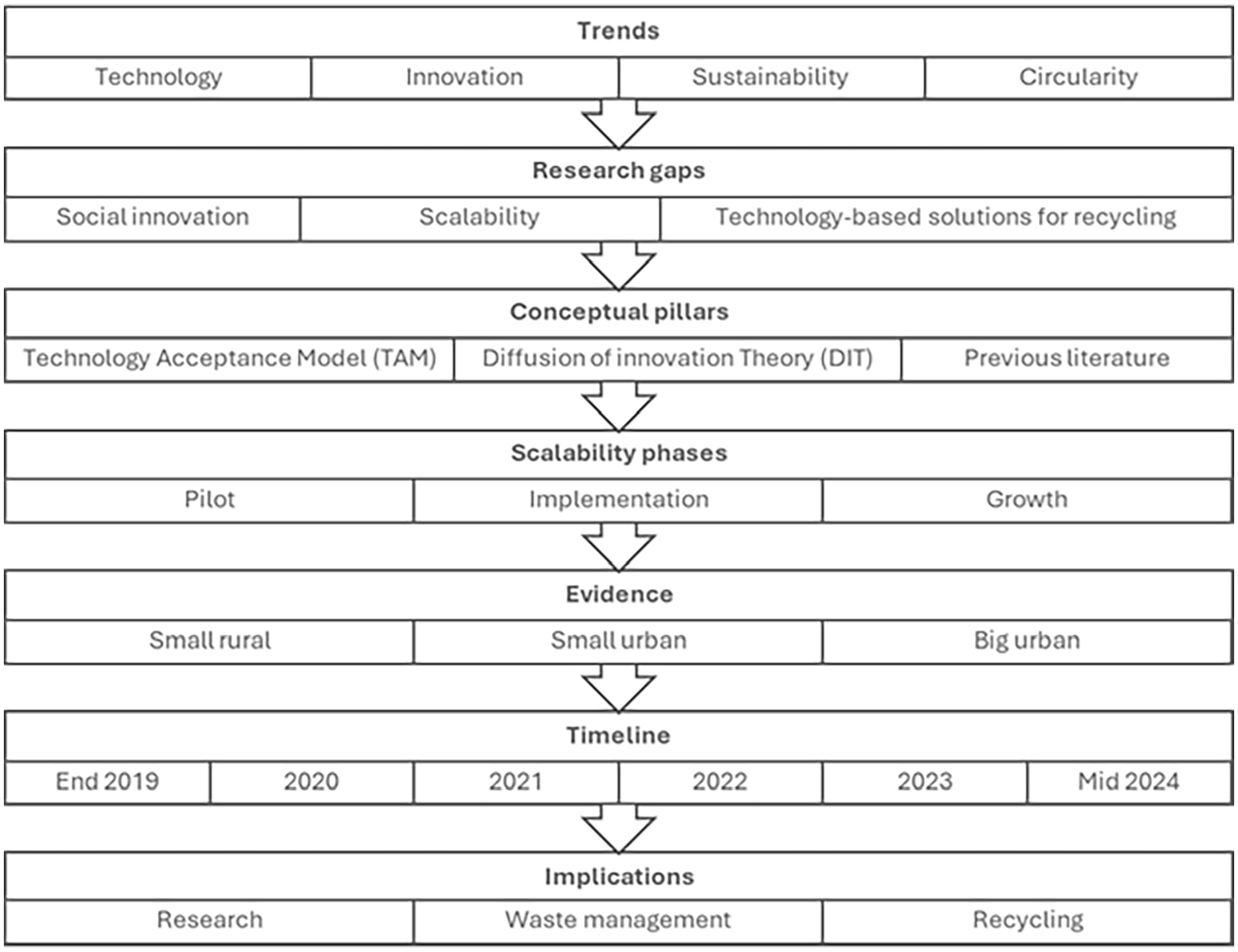
Scope of research – key elements.
Positioned in the global framework of Sustainable Development Goals (United Nations, 2025), this study aims to bridge critical gaps in understanding the scalability of social innovation by integrating insights from technology adoption models, behavioural science and sustainable transitions (Bühring et al., 2024). Through an in-depth examination of RECICLOS as a case study, this article explores how digital technologies, incentivisation mechanisms and community engagement strategies contribute to the successful scaling of waste management solutions. Our findings offer empirical evidence and theoretical insights on the essential conditions for scaling social innovation, including trust-building through transparency, adaptability to diverse socio-cultural contexts and alignment with circular economy principles. Our article contributes with research on an impactful recycling solution while offering fine-grained, essential determinants of scalability, a key success factor and, at the same time, a key performance indicator of any innovation. Its main originality is reflected by its positioning at the intersection of innovation management (Tidd and Bessant, 2020), technology management (Burgelman et al., 2009), project management (Project Management Institute, 2021) and sustainability management (Dyllick and Muff, 2016; Lichtenthaler, 2023) and circularity, expanding previous research with a nuanced case study of a multidisciplinary solution.
Literature review
Theoretical perspectives for understanding scalability of social innovation
Since our research analyses the scalability of a technology-based social innovation, two theoretical frameworks were selected as having major relevance to understand the phenomena, namely the technology acceptance model (TAM) and the diffusion of innovation theory (DIT).
The TAM, introduced by Davis et al. (1989), is one of the most influential and frequently applied frameworks for understanding individual technology acceptance. TAM highlights two primary factors shaping user attitudes: perceived usefulness, which is the belief that using a specific system will improve job performance, and perceived ease of use, defined as the belief that the system can be used with minimal effort. Within TAM, attitude reflects an individual’s favourable or unfavourable feelings towards adopting a technology (Kim, 2016), which subsequently influences their intention to use it and ultimately affects the adoption of the technology (Wang et al., 2012). Despite TAM’s extensive application in research, it has faced criticism for overlooking certain aspects crucial to the complex nature of technology adoption. To address these limitations, scholars have sought to expand and refine TAM, as noted by Granić and Marangunić (2019) and Lee et al. (2003). These efforts focus on identifying additional antecedents and determinants to enhance TAM’s explanatory power. TAM has been broadly adopted across various research fields, including sustainability studies.
Although previous research has frequently used TAM to explain users’ acceptance of technologies, its adequacy in accounting for the adoption of various types of technology remains uncertain. Numerous studies have suggested combining TAM with other theories, particularly the DIT, to enhance its explanation by incorporating aspects of diffusion. Consequently, and complementary to TAM, the DIT is a comprehensive social and psychological framework designed to help predict how individuals decide to adopt an innovation by examining their adoption patterns and understanding the structure of this process (Rogers, 1995; Rogers and Shoemaker, 1983). DIT identifies five key characteristics of innovations that influence adoption: (1) relative advantage, which refers to perceived benefits such as economic gains or convenience; (2) complexity, indicating ease of use or effort required; (3) compatibility, or alignment with adopters’ existing values, needs and experiences; (4) observability, which involves assessing the visible outcomes and (5) trialability, allowing potential users to experiment with the innovation before full adoption (Rogers, 1995: 212–251). Unlike TAM, DIT provides a more-detailed look at specific innovation attributes that help explain both the motivation and process behind adoption decisions (Rogers, 1995). These characteristics are often considered as antecedents to TAM, particularly for understanding consumer adoption of new technologies. Additionally, Rogers (2002) described diffusion as a social process, where innovation spreads through interpersonal discussions. Thus, understanding innovation adoption requires considering the broader social system in which it occurs. While these theoretical frameworks do provide meaningful knowledge to understand different facets of social innovation diffusion, understanding the scalability of social innovation presents several theoretical research gaps that warrant the need for further exploration. Such aspects refer to the blurred conceptual boundaries, fuzzy conceptual clarity and framework development (Niang et al., 2023), limited theoretical examination of how different types of networks (e.g. formal vs. informal) and their structures impact the scalability process (Bolzan et al., 2019), the influence of cultural and contextual variables on scalability (Bufali et al., 2023) or the lack of success measures and evaluation metrics (Islam, 2022). Our article brings evidence for some of these aspects, as far as RECICLOS is a clear example of social innovation spreading in different contexts using local networks, reaching success demonstrated by a growing user community showed by our results.
The interconnection between social innovation and sustainability
Social innovation is a multifaceted and dynamic concept that holds the promise of driving positive change across various dimensions of society. It encompasses the emergence of new social, organisational and institutional arrangements, as well as the development of innovative products and services (Nicholls et al., 2015). These innovations are purposefully designed to address aspirations, meet needs and provide solutions to pressing social challenges. At its core, social innovation aims to change existing social relations and has the potential to lead to significant social transformation. Bitencourt et al. (2016) defined social innovation as not merely the introduction of new ideas, but as something that goes beyond this by bringing about a tangible shift in social relations, norms and systems. It can lead to a fundamental change in how individuals, communities and institutions interact and collaborate to tackle social issues. The process can empower individuals and communities to play a more active role in shaping their futures. Murray et al. (2010) provide a comprehensive overview of social innovation, including real-world case studies to illustrate its practical applications and the transformative impact it can have on society.
Current literature highlights the increasing alignment between social innovation and sustainability. The integration of social innovation into sustainability initiatives has the potential to create synergies that address pressing global challenges. According to Westley and Antadze (2010), sustainability and social innovation are interconnected as both aim to transform the status quo and promote positive societal change. By leveraging social innovation, sustainability efforts can engage communities and individuals in new ways, fostering environmentally responsible behaviours and practices. In recent years, community-based social innovation has gained prominence as a powerful approach for advancing sustainability. Scholars such as Avelino et al. (2019) emphasise the role of communities in driving sustainability through social innovation processes. This approach involves active community participation in the development and implementation of solutions to local sustainability challenges. It not only empowers communities but also enhances the potential for sustainable practices to take root at the grassroots level.
The integration of social innovation into sustainable business models is a subject of growing interest. Researchers such as Bocken et al. (2019b) explore how organisations can leverage social innovation to develop and implement sustainable business models. This involves rethinking traditional profit-centric approaches and incorporating social and environmental values. By doing so, businesses can create positive social and environmental impacts while remaining economically viable. Measuring the impact of social innovation on sustainability is a crucial aspect in understanding its effectiveness. Scholars have recently devoted efforts to developing methodologies and frameworks for evaluating the social and environmental outcomes of social innovation initiatives. These evaluation tools enable organisations, policymakers and researchers to assess the contributions of social innovation to achieving sustainability goals and address areas where improvement is needed (Eichler and Schwarz, 2019). The role of policy and governance is pivotal in the integration of social innovation and sustainability. Scholars including Baglioni and Sinclair (2018) analyse how governments and institutions can create an enabling environment for social innovation to thrive and drive sustainability. This involves the design of supportive policies, incentives and regulations that encourage social innovation practices aligned with sustainability objectives.
The intersection of social innovation and sustainability is a burgeoning field, yet several research gaps persist that call for further exploration. While social innovation is recognised as a driver for sustainable development, there is a lack of comprehensive frameworks that effectively integrate social innovation into broader sustainability agendas. Developing such frameworks could enhance the alignment between social initiatives and sustainability goals (Bataglin and Kruglianskas, 2022) while in practice reducing barriers inherent to innovation and general, and social innovation for sustainability, in particular. Identifying and analysing social barriers that hinder sustainable innovation is crucial. Understanding these obstacles can inform strategies to overcome them and promote the adoption of sustainable practices (Singh and Maheswaran, 2023). Our proposal includes incentives (Gibovic and Bikfalvi, 2021) and contextual favouring factors contributing to the successful implementation and spreading of a social innovation for sustainability. One of the main gaps in this area refers to policy integration (Edler et al., 2024), to which we contribute with illustrative, powerful implication of municipalities and local administration, as well as national policy measures promoting and awarding public funds and public–private collaboration for innovations driving sustainability.
Scalability of social innovation: Expanding impact
The concept of scalability in social innovation is a crucial dimension that pertains to the ability of a project to attain its planned level of performance and then expand its implementation on a larger scale. The objective of scalability is to enhance the social impact of innovative solutions. As articulated by Webb et al. (2010), scalability is a process that can lead to significant changes in various aspects such as network, knowledge, experience and credibility. Network elements refer to the potential expansion of a network supporting a social innovation project and involving more stakeholders and partners, to ensure a wider reach and impact. Regarding knowledge, as a project scales, knowledge and insights accumulated from its implementation contribute to a growing body of experience and expertise. Through expansion, social innovation projects accrue valuable experience in addressing diverse challenges, allowing their approaches to be refined. Last, successful scaling enhances the credibility and reputation of a social innovation, making it more influential and trustworthy.
Scaling out, a specific model of scalability, involves replicating a social innovation in different geographical areas with the aim of increasing its impact. This process necessitates disseminating principles and adapting the innovation to different environments and contexts, which is often achieved through knowledge co-generation. Deiglmeier et al. (2008) provided insights into the essence of social innovation and discussed its scalability, emphasising the factors contributing to successful scaling. Mulgan (2006) offered a detailed examination of the process of social innovation, including how innovative ideas are developed and scaled to bring about meaningful social change, and Murray et al. (2010) explored the significance of social innovation and strategies for accelerating and scaling up innovative solutions. Social innovation therefore represents a dynamic force for societal progress, and its scalability plays a pivotal role in maximising its potential impact. By adapting and expanding innovative solutions, we can address complex social challenges and drive transformative change on a broader scale. Scaling out (expansion) occurs when, with the aim of increasing its impact, a social innovation is replicated in different geographical areas. It is about disseminating principles and adapting social innovation to different environments through knowledge cogeneration (Riddell and Moore, 2015).
While scaling of innovation is important and desirable for any innovation, knowing more about the specific determinants of impact in the case of this type of innovation is even more important, as far as societal benefits are concerned. The current literature is far focused on drivers of technological innovation, with less attention paid to impact maximisation measures for social innovation. Social innovations often struggle to bridge the ‘stagnation chasm’ due to insufficient resources, ecosystem support and specialised skills necessary for scaling. This gap highlights the need for research into effective resource mobilisation and ecosystem development strategies tailored to social innovation (Deiglmeier and Greco, 2018). Another important gap in this field refers to technology and its relation to social innovation, generating the so-called digital social innovation (Qureshi et al., 2021). In this direction, we actually show how a digital social innovation, in which a myriad of actors and positions manage to align, successfully overcomes the ‘stagnation chasm’, a critical point between the pilot and prototype stage and diffusion and scaling stage.
Social innovation in influencing citizens’ recycling behaviour
Social innovation plays a crucial role in influencing citizens’ behaviour and shaping the future of recycling. The different underlying mechanisms are described as follows.
Awareness and education
Social innovation initiatives often focus on raising awareness about environmental issues and the importance of recycling. Through educational campaigns, workshops and community outreach, citizens are informed about the environmental impact of waste and the benefits of recycling. This increased awareness can motivate individuals to change their behaviour and become more environmentally responsible.
Behaviour change campaigns
Social innovation projects often include behaviour change campaigns that aim to encourage recycling. These campaigns use various strategies such as nudging techniques, reward systems and social norms to motivate citizens to recycle more and reduce waste. By making recycling more accessible and appealing, citizens are more likely to adopt recycling habits.
Community engagement
Many social innovation projects involve community participation and collaboration. By fostering a sense of community responsibility, citizens are more likely to take ownership of recycling initiatives. They may take part in local clean-up events, neighbourhood recycling and even grassroots recycling initiatives, which can have a significant impact on overall recycling rates.
Peer influence
Social innovation leverages the power of peer influence and social networks. When individuals observe their peers and neighbours engaging in recycling practices, they are more likely to follow suit. This ‘social proof’ can lead to a snowball effect, with an increasing number of citizens adopting recycling behaviours, influenced by those around them.
Innovative technologies and platforms
Social innovation often incorporates technology to make recycling more convenient and appealing. Apps, smart bins and recycling kiosks can provide real-time feedback and rewards, making recycling a more engaging and interactive experience. This technology can shape the future of recycling by making it more accessible and enjoyable for citizens.
Policy advocacy
Social innovation initiatives may advocate for policy changes to promote recycling, such as implementing mandatory recycling programmes, offering incentives for recycling and enforcing penalties for non-compliance. These policy changes can significantly influence citizens’ behaviour and commitment to recycling.
Sustainable consumption
Social innovation encourages citizens to reconsider their consumption patterns. By promoting sustainable products and packaging, citizens may reduce their initial waste generation, making recycling less necessary. This shift towards sustainable consumption can have a profound impact on the future of recycling.
Circular economy initiatives
Social innovation often aligns with the concept of the circular economy, which focuses on reducing waste and maximising the use of resources. Citizens are encouraged to take part in circular economy practices like reusing, repurposing and upcycling, which can reduce the need for disposal and promote recycling.
Social innovation has the power to transform citizens’ behaviour and shape the future of recycling by increasing awareness, promoting behavioural change, fostering community engagement, leveraging technology, advocating for policy changes, encouraging sustainable consumption and promoting circular economy principles. These initiatives are essential for achieving a more sustainable and environmentally responsible future. Ultimately social innovation has the potential to change the society, at the heart of which we find individuals. There is a lack of detailed frameworks that guide the application of social innovation, specifically to enhance recycling behaviours. Existing studies often focus on general environmental actions without delving into targeted strategies for recycling (Bataglin and Kruglianskas, 2022). The RECICLOS case study clearly aims to fill such gap.
RECICLOS case study
The case of RECICLOS follows the scaling out (expansion) model mentioned previously. Evidence is provided based on the RECICLOS project, the aim of which was to increase public awareness and reward recycling. RECICLOS was created at the end of 2019 and piloted for the first time in December 2019 and January 2020 in Pla de l’Estany, a rural county in Catalonia with 32,000 inhabitants. During the 6-week pilot deployed in various small towns in the county, the project was able to observe how families can be encouraged to recycle plastic at home and the degree of attractiveness of each type of incentive offered, namely raffles, lotteries, discounts and donations (Gibovic and Bikfalvi, 2021). The second pilot was centred on the project’s expansion in larger metropolitan towns close to Barcelona, including Granollers, Sant Boi de Llobregat and Igualada, where the system was adapted, and several new communication and engagement campaigns implemented to prepare RECICLOS for the next expansion phases in 2020, 2021 and 2022 to 60 Spanish towns, with 101,935 registered users by the end of 2022. The initiative currently has more than 750,000 individual users, who are registered in the user management platform where data are stored and saved. This involves several steps using servers from Alastria and cloud services on Amazon AWS. The most relevant methodological details are as follows.
Data collection
Data were collected from user interactions and transactions.
Data processing
The collected data were processed to ensure accuracy, consistency and relevance.
Server infrastructure
The project used servers from Alastria, a blockchain infrastructure provider, to establish a secure and decentralised network for data storage.
Blockchain technology (Alastria)
Alastria blockchain technology was leveraged to create a tamper-proof and transparent ledger for storing certain types of data, for instance the smart contracts for automatised price assignation and management and RECICLOS token storage. Blockchain ensures data integrity and traceability.
Cloud storage (Amazon AWS)
Cloud services employed on Amazon AWS for scalable and flexible storage solutions.
Encryption and security
Encryption protocols applied to secure the stored data, ensuring confidentiality and protecting against unauthorised access.
Backup and redundancy
Backup mechanisms and redundancy strategies implemented to prevent data loss. This includes regular backups and the use of Amazon’s redundant storage options.
Monitoring and maintenance
Monitoring tools set up to track the health and performance of the storage infrastructure. Regular maintenance activities conducted to ensure optimal system functionality.
Compliance and governance
Ensuring compliance with data protection regulations and governance standards, implementing access controls and auditing mechanisms to monitor data usage.
Access control
Access controls and authentication mechanisms implemented to restrict data access to authorised personnel only.
The importance of implementing Smart Contracts lies in enhancing transparency and trust while reducing or eliminating the management of reward mechanisms. This, in turn, shortens reaction and mobilisation times towards recycling goals, establishing fast rewards when conditions and objectives designed for citizens are met. This paradigm enables the construction of an incentive management system with the best traceability and reward mechanisms in the market.
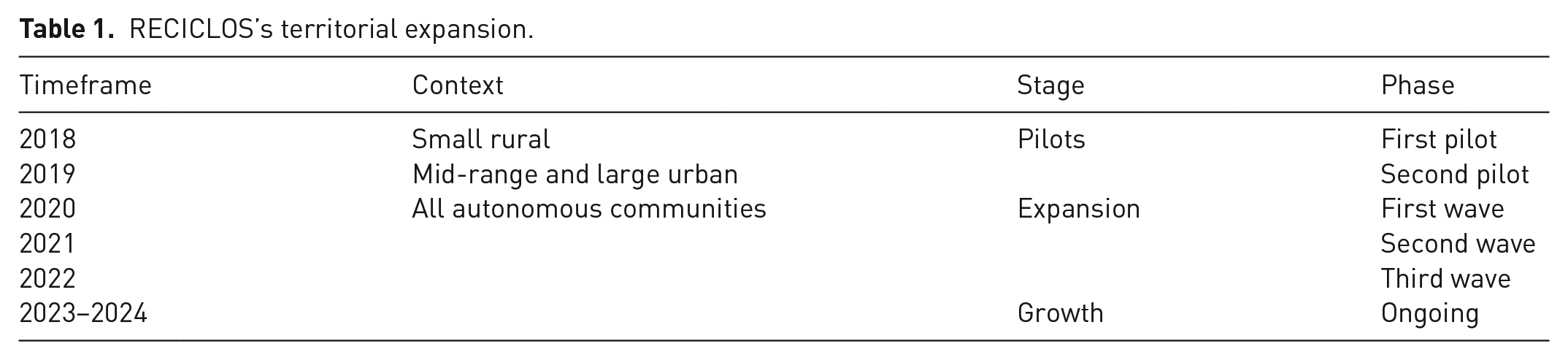
Table 1, RECICLOS’s territorial expansion, summarises the stages covered in the 5-year period of the project’s implementation.
RECICLOS’s territorial expansion.
RECICLOS provides illustrative case evidence gained from a plastic recycling incentivising solution with a multidisciplinary perspective that combines elements of technology (webAPP and blockchain), behaviour, social aspects (community of recyclers) and virtual tokens. The business model approach in an eco-system framework contributes to a better understanding and clarification of stakeholders and the configuration of the essential elements to successfully deploy initiatives like these. Further novel elements are linked to the solution itself, the purpose of which was to demonstrate how technology can help citizens to recycle more and better using incentives and gamification to achieve this goal, or in other words, to digitalise the recycling habit and reward system without changing the current recycling model. The system combines new digital technologies that recognise and reward those who perform the recycling task correctly, transparently, efficiently and effectively, using blockchain technology.
Results
Phases of scalability
The evolution of RECICLOS can be divided into distinct phases, each marked by strategic expansions, technological innovation and a growing emphasis on sustainability and scalability. Figure 1 shows the evolution of the number of towns where it was implemented, followed by the description of each phase.
Phase 1: Small town pilot phase (2019)
The phase was initiated with a pilot programme in 2019 in the Pla de l’Estany region, targeting a population of approximately 31,000 inhabitants. The RECICLOS system was tested and refined in this selected territory.
Phase 2: Midrange town expansion (2019–2020)
The pilot was expanded to midrange towns in the metropolitan area of Barcelona, including Sant Boi de Llobregat, Igualada, Granollers, Valls and a larger town in Valencia. Initial scalability is demonstrated by implementing the system in towns of varying sizes.
Phase 3: First wave of expansion (2020)
The first expansion wave started in 2020, encompassing a total of 87 towns across all 17 autonomous communities in Spain and showcasing the adaptability of RECICLOS on a national scale.
Phase 4: Continuous expansion (2021–2023)
The phase sustained expansion in 2021, reaching 111 towns, and further scaling up in 2022 and 2023, covering a total of 143 towns. This phase illustrates the continuous growth and acceptance of RECICLOS as a viable waste management solution.
Phase 5: User base growth (2023–2024)
By 2023, the total number of registered users exceeded 500,000, indicating a significant user adoption rate, and highlighting the success and appeal of RECICLOS among the target population.
Going beyond the number of towns, two additional indicators correspond to the process of scalability. Figure 2 shows the evolution of recycling points, and Figures 3 and 4 correspond to the number of points and individual users.
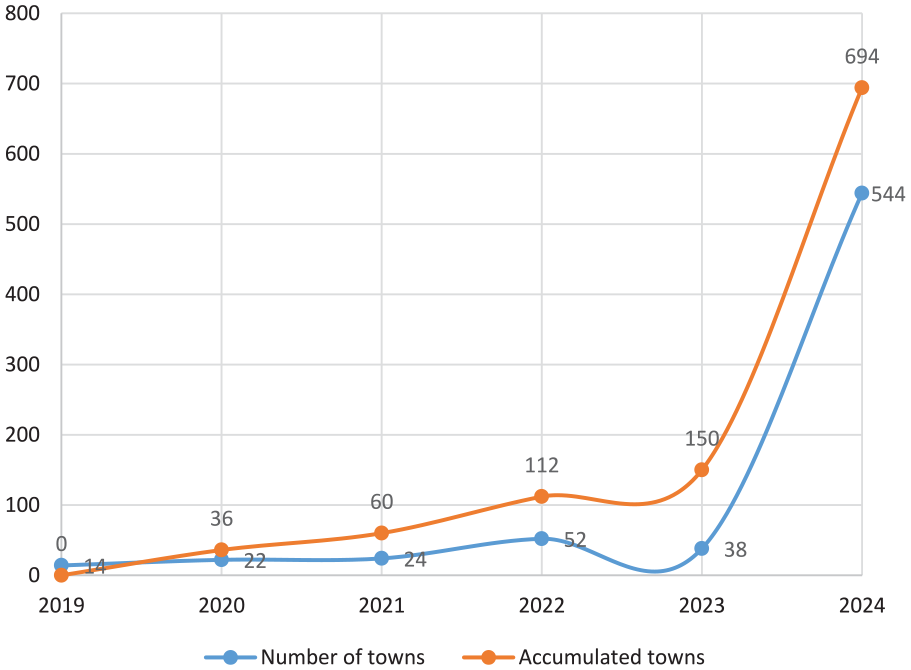
The diffusion of RECICLOS – number of towns.
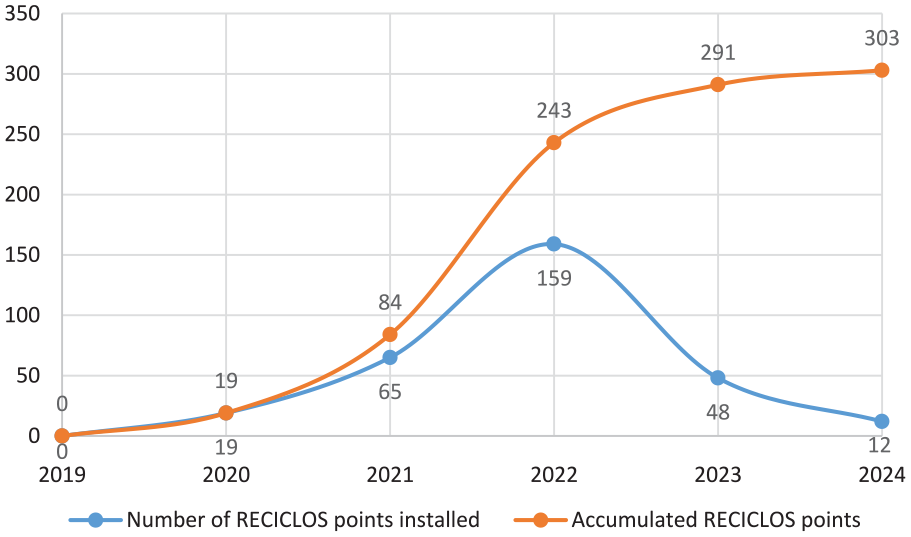
The diffusion of RECICLOS – number of points.
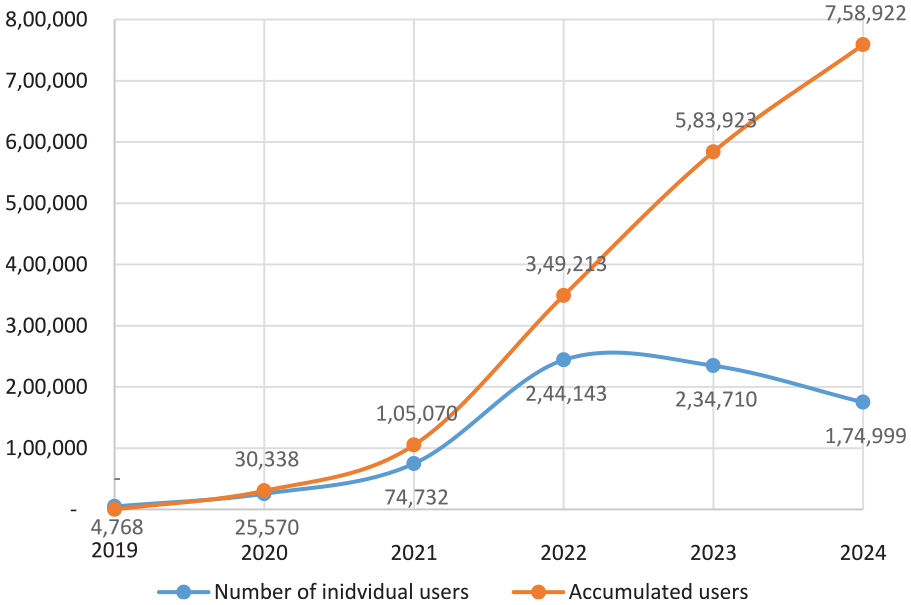
The diffusion of RECICLOS – number of individual users.
RECICLOS incorporated technological innovations throughout the different phases, ensuring the system remained effective and user-friendly. The model also emphasises the sustainability aspects of the initiative, promoting environmentally responsible waste management practices. The diverse roles within this model include technological developers, municipal partners, community stakeholders and end-users, each contributing to the success and expansion of RECICLOS in the realm of technological innovation, sustainability and scalability.
Key elements for scalability: Evidence from RECICLOS
Following Franz et al. (2012), the model presented on systems thinking is characterised by having definable factors and interactions. Below, we describe three key elements of Howard and co-author’s model, namely organisation, innovation and new contexts.
The first element, organisation, is situated at the core of this dynamic model that begins with leadership. It is envisioned that technological innovation is initiated with a decision to change an organisation. In the context of waste management and environmental responsibility, Ecoembes (L1) emerges as a strategic centrepiece, showcasing profound leadership in the field. Since 1997, Ecoembes has been recognised as a trailblazer in private sector initiatives for environmental stewardship, as documented by Garrido (2021). Its initiative-taking approach to matters of environmental responsibility aligns seamlessly with broader sustainability goals. Stakeholder engagement and collaboration play pivotal roles in the success of initiatives like RECICLOS. Ecoembes strategically integrates various stakeholders, acting as a catalyst for collaboration among private entities, towns and community stakeholders. This collaborative approach underscores a successful public–private partnership, emphasising shared responsibilities for sustainable waste management. Ecoembes assumes a centralised role in the positioning of the collaborative model, underscoring its influential status in orchestrating cooperative efforts among different entities. The recognition of multi-stakeholder dynamics is evident, with Ecoembes actively engaging with towns, technology developers and the public to ensure collective success. This approach reflects an ecosystem model, portraying Ecoembes as a linchpin connecting the various elements involved in the recycling initiative. The outcomes derived from Ecoembes’s leadership are marked by cost-efficiency and positive environmental and social impacts. Its ability to manage waste with cost-efficiency demonstrates effective leadership, translating into positive outcomes for both the public and the environment. The model emphasises how Ecoembes’s leadership contributes to outcomes that specifically benefit the public, highlighting the broader societal impact of effective waste management. As a central figure in the model, Ecoembes embodies leadership, support and collaborative engagement. Its initiative-taking approach to environmental responsibility, historical significance and ability to foster collaboration position Ecoembes as a key player driving RECICLOS’s success. The model illustrates how Ecoembes’s leadership influences positive outcomes, creating a sustainable and scalable initiative that addresses environmental concerns while benefiting the community at large.
The second component, innovation, is conceptualised as the expected or desired technology-related change. RECICLOS is a ground-breaking technology-based social innovation due to its mission, underlying technology and deployment. Key highlights refer to the aspects briefly described below. With regard to the first, digitising recycling, RECICLOS is a groundbreaking approach to digitising recycling through a Deposit and Reward (SDR) system. It merges incentives and technology to promote environmental and social improvements. Second, regarding implementation and scale, the initiative was launched as a pilot in 2019, later expanding to operate nationwide and implemented in all autonomous communities. It operates through a mobile application, providing a user-friendly interface for citizens. Third, the issue of incentivising recycling is present, with citizens recording their recycled cans and bottles via the mobile app, thereby earning sustainable points or ‘reciclos’. These points can be exchanged for various sustainable incentives, promoting a circular economy and community enhancement.
Other related key innovations refer to the additional initiatives briefly mentioned. The first is the Ecoembes Innova Programme, which showcases innovation through its Innova programme, established between 2016 and 2020. This programme integrates Research, Development and Innovation (RDI) efforts, fostering collaboration across the packaging waste value chain. The second is TheCircularLab, created in 2017 as Europe’s first circular economy laboratory, illustrating Ecoembes’s commitment to innovation and acting as a benchmark for project development and startup acceleration. And the third is Tools for Circular Economy, wherein notable tools like PackCD and digital solutions like SmartWaste are developed, demonstrating Ecoembes’s commitment to circularity. PackCD assesses packaging sustainability, whereas SmartWaste enhances efficiency, control, transparency and traceability in collaboration with public administrations.
The third component refers to new contexts, which mandatorily requires sustainability education and collaboration. Other programmes were launched in addition to the customary awareness and sensitisation activities, including LIBERA and NATURALIZA, with the aim of promoting citizen education, awareness, collaboration and scientific knowledge in the quest for the best solutions through social mobilisation, with a focus on promoting selective waste collection to contribute to the development of a society that recycles 100%. Regarding collaboration, RECICLOS is built upon transparency and active engagement with stakeholders. A notable highlight was the development of a bonding plan among the affiliated companies.
Conclusions
‘[. . .] Social innovation is intentional, meant to change something in what people do alone or together for the better, at least as they perceive it’ (Franz et al., 2012: 3). The RECICLOS initiative generated a series of lessons learned in the direction of this quote, which are relevant in terms of a comprehensive approach to social innovation, sustainability and scalability. This ground-breaking initiative provided invaluable insights into the realms of social innovation, sustainability and scalability, revolutionising citizens’ recycling behaviour. Its journey uncovered lessons that can serve as a guiding framework for future waste management initiatives. The main elements of relevance and impact areas are briefly summarised below.
Firstly, in terms of social innovation, the following elements were found to be important, contributing to the already existing body of knowledge on innovation, which is still highly focused on product innovation.
Education and awareness: RECICLOS revealed the importance of robust education and awareness campaigns. By disseminating information about the environmental impact of recycling, citizens were empowered to make informed and responsible choices.
Behavioural nudges: Applying principles of behavioural psychology, RECICLOS introduced subtle nudges through its gamification and rewards system. This innovative approach gently guided individuals towards more sustainable actions, creating a positive impact on recycling behaviours.
Community engagement: RECICLOS fostered a sense of community and shared responsibility, recognising that collective recycling efforts are more potent when supported by a united front. The initiative effectively united neighbours, local businesses and community groups towards a common goal.
Technology integration: Leveraging innovative technologies like mobile apps and smart bins, RECICLOS simplified the recycling process. Real-time feedback and increased participation were achieved by integrating user-friendly and accessible technologies.
Incentive programmes: RECICLOS introduced a reward-based system, demonstrating that tangible benefits, such as cash rewards, discounts and charitable contributions, serve as powerful motivators for individuals to actively take part in recycling initiatives.
Circular economy models: The inception of RECICLOS aligned with circular economy principles, encouraging citizens to support product and material reuse and recycling. This model promotes sustainable consumption and waste reduction.
Secondly, referring to sustainability, we highlight the following elements.
Holistic approach: RECICLOS exemplifies a comprehensive approach to sustainability, addressing environmental, economic and social aspects concurrently. This comprehensive strategy enhances the overall sustainability of recycling initiatives.
Long-term impact: The sustainability of RECICLOS is rooted in a long-term perspective. By investing in initiatives with enduring benefits and considering long-term environmental consequences, RECICLOS demonstrates a commitment to meaningful and lasting impact.
Adaptability and flexibility: RECICLOS underscores the importance of adaptability and flexibility in sustainable solutions. The ability of the initiative to adapt to changing circumstances and emerging challenges ensures its continued relevance and success.
Collaboration and partnerships: RECICLOS demonstrates that sustainable outcomes often result from collaborative efforts and partnerships. Strong collaborations with various stakeholders, including governments, businesses and communities, are integral to sustainable waste management.
Thirdly, regarding scalability, a crucial ingredient for the diffusion of innovation and a key aspect in innovation projects, our findings can be summarised in the following points.
Pilot testing: RECICLOS began as a pilot project in 2019, allowing for testing and refining before broader implementation. This phased approach ensured that challenges were identified and addressed, contributing to successful scalability.
Technology standardisation: RECICLOS showcased the importance of technology standardisation, facilitating seamless scalability. Adopting standardised technologies ensured compatibility and enabled the expansion of the initiative to new regions and communities.
Local context consideration: RECICLOS demonstrated the significance of considering diverse local contexts and community dynamics for scalability. Adapting strategies to fit specific needs and characteristics enhanced the success of the scalable interventions.
Community empowerment: RECICLOS empowered local communities by involving them in the decision-making process. This approach fostered ownership and facilitated the scalability of the initiative, as empowered communities became active advocates for the programme.
Further avenues of research relevant for scalability and a wider diffusion of recycling social innovations stem from the limitations of the present study. Both the pilot and the wider development and diffusion took place in the single context of Spain. Further scaling in different cultural, social and economic contexts could identify the context-specific and universal elements that contribute to the diffusion of social innovations. Moreover, working with a wider spectrum of incentives when willing to incentivise and reward a change in behaviour is a must.
A positive reading of the initiative and the scalability phase show that RECICLOS serves as a transformative case study, offering profound lessons for the integration of social innovation, sustainability and scalability in waste management initiatives. The success of RECICLOS lies not only in its technological advancements but also in its holistic and community-centric approach, paving the way for a more sustainable and scalable future in waste management practices. Informing scalability for social innovation is crucial in today’s academic and practical landscape due to the pressing need to address complex global challenges and ensure that impactful solutions can reach broader populations.
Footnotes
Declaration of conflicting interests
The authors declared no potential conflicts of interest with respect to the research, authorship, and/or publication of this article.
Funding
The authors disclosed receipt of the following financial support for the research, authorship, and/or publication of this article: the authors acknowledge the Agency for Management of University and Research Grants (AGAUR), Government of Catalonia, Spain, for financial support to cover the APC and Open Access modality (grant reference no.: 2021SGR01589).
