




Abstract
Source separation is a pivotal strategy for addressing rural domestic waste pollution, significantly influencing the efficacy of the Reduce, Reuse and Recycle principles in waste management. Information interventions should be valued to address the deficiencies in economic policies that encourage waste separation. What kind of information intervention can best improve farmers’ domestic waste separation intention? Eight random intervention experimental groups were designed, including three single information intervention groups on topics such as environmental, technical and health issues, four interactive information intervention groups and one control group. Based on 904 valid samples of farmers were collected in Taihu Lake Basin of China, ordered probit and difference-in-differences models were constructed to achieve the goals of this study. The main conclusions are as follows. The experimental effect of health information intervention was the best, which impacted positively on the intention of farmers to separate domestic waste by 17.94%. The effect of the environmental information intervention was 14.59%. However, the test failed in the technical information intervention. The interactive information interventions’ effect was only 60.18% of the single information intervention, arguably due to information overload. The findings of this study help find out how to choose the appropriate information intervention content and way to improve farmers’ domestic waste separation intention.
This is a visual representation of the abstract.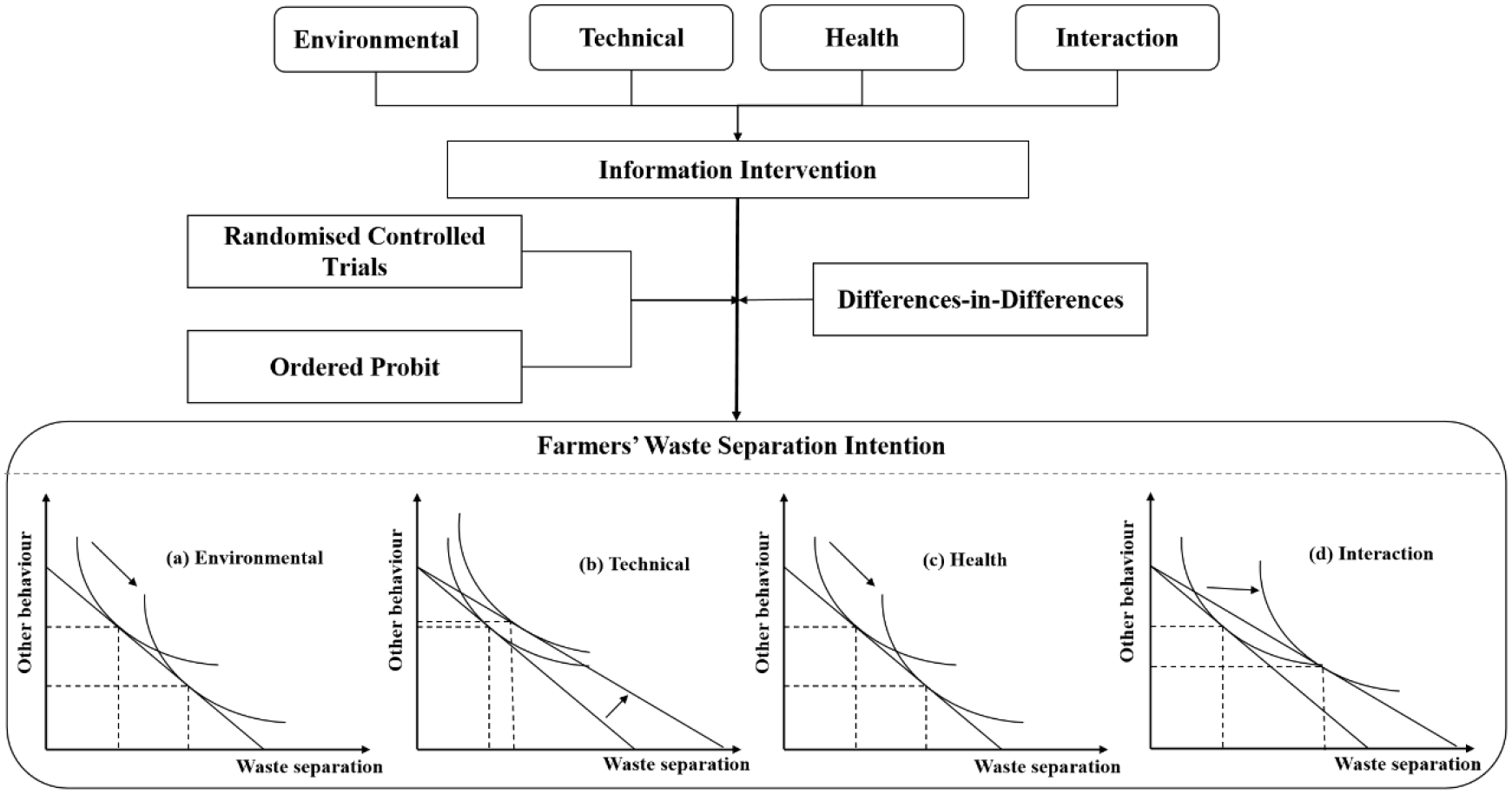
Keywords
Get full access to this article
View all access options for this article.