



Abstract
In this systematic review, advancements in plastic recycling technologies, including mechanical, thermolysis, chemical and biological methods, are examined. Comparisons among recycling technologies have identified current research trends, including a focus on pretreatment technologies for waste materials and the development of new organic chemistry or biological techniques that enable recycling with minimal energy consumption. Existing environmental and economic studies are also compared. The findings highlight differences in the environmental characteristics of various recycling methods, including their ability to recover plastic resins, carbon footprint, electricity consumption and gas emissions. The comparisons also reveal the challenges associated with these methods: mechanical recycling often encounters economic barriers due to contamination and inefficiencies in sorting and cleaning processes; thermolysis is constrained by high energy demands and operational costs, whereas chemical and biological recycling faces limitations related to scalability and material costs. Additionally, current challenges, emerging research areas and future directions in plastic recycling are discussed. For example, the role of innovative techniques, such as artificial intelligence, in refining recycling processes is emphasized. The importance of incorporating circular economy principles in the integrated sustainable analysis of recycling processes is also highlighted. The innovative contribution of this review is to address both technological developments and their environmental and economic implications. The focus is placed on literature from the past 10 years to ensure coverage of the most recent advancements. Overall, the insights of this review article aim to guide researchers, policymakers and industry stakeholders in improving sustainable management practices for plastic waste.
Keywords
Introduction
Reprocessing and recycling end-of-life plastic materials are vital to achieving a sustainable circular economy. It offers an effective solution to reduce the need for new plastics, conserve natural resources and minimize the environmental burden of waste materials (Borrelle et al., 2020; Lau et al., 2020).
Recent advancements in recycling technologies have addressed limitations in traditional mechanical methods. For example, chemical recycling based on material depolymerization have been developed to recover waste plastics into their liquid monomer forms (Lei et al., 2024; Thiounn and Smith, 2020; Vollmer et al., 2020; Yu et al., 2016). These techniques distinguish themselves from thermolysis by offering an effective solution for the primary recycling of plastics. Biological recycling (Ellis et al., 2021; Zhu et al., 2022) employs enzymes or microorganisms to degrade plastics into biodegradable compounds, which provides a sustainable room-temperature recycling method.
Although these newly developed recycling techniques enable the recycling of plastics once considered non-recyclable, they are primarily confined to experimental and academic research. A comprehensive comparison of these technologies within the framework of environmental and economic analysis is still lacking. Among the existing literature, methodologies such as lifecycle assessment (LCA) allow researchers to evaluate the environmental impacts of recycling processes (Alhazmi et al., 2021; Davidson et al., 2021; Jeswani et al., 2021), which provide information on energy consumption, carbon emissions and other environmental burdens compared to virgin plastic production. For economic analyses, the viability of recycling processes is typically assessed through cost–benefit analysis (CBA; Nikiema and Asiedu, 2022; Torkashvand et al., 2021), lifecycle cost analysis (LCCA) and the recently emerged techno-economic analysis (TEA; Larrain et al., 2021; Salahuddin et al., 2023). However, most existing review articles focus on well-established recycling techniques such as mechanical recycling, pyrolysis and gasification. The recently emerged methods of chemical depolymerization and biological recycling have not been comprehensively summarized due to their early stage of development. Furthermore, these existing review articles tend to focus on either the environmental or economic aspects of different recycling methods and rarely provide a comprehensive comparison from both perspectives.
This review builds on previous studies by providing a comprehensive comparison of recycling technologies, with a particular emphasis on their latest technological developments, environmental analyses and economic assessments. This holistic approach allows stakeholders to identify trade-offs among recycling methods, which enables informed decisions that balance economic growth with environmental sustainability.
Methodology
A systematic approach was used to identify and select relevant literature, with the primary literature search conducted using the Web of Science database. Figure 1(a) presents a summary of recent articles published since 2010 in the areas of recycling technology, environmental analysis and economic analysis. The number of articles in each category was determined by searching for the following keyword combinations: ‘plastic recycling’ + ‘recycling technology’, ‘plastic recycling’ + ‘environmental analysis’ and ‘plastic recycling’ + ‘economic analysis’. It was observed that the number of studies on plastic recycling has grown exponentially in recent years, indicating a rapidly developing research field. However, using these broad keywords yielded over 3000 articles, many of which were not directly relevant to the focus of this review article. For example, some studies covered the recycling of various engineering materials, including plastics, concrete and electronics. Some articles only provided generic discussions on the environmental and economic aspects of recycling without offering detailed methods.
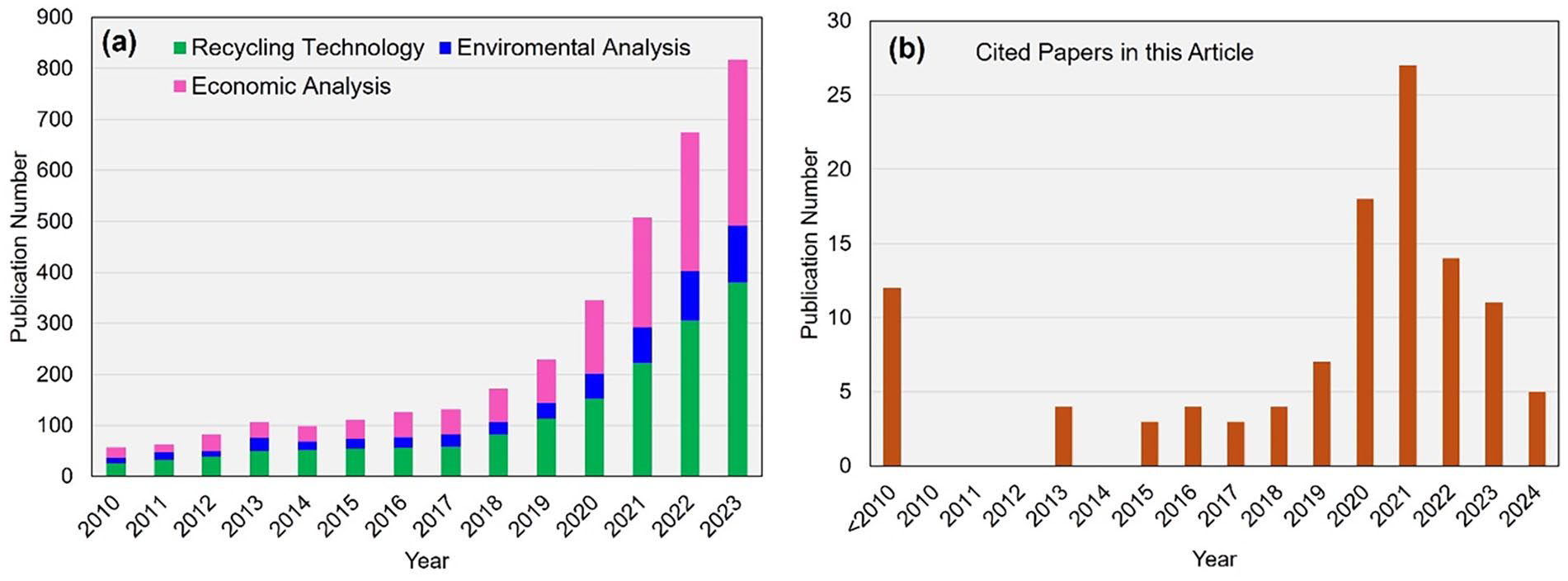
Summary of recent publications in the fields of plastic recycling and the publication years of articles cited in this review article. (a) Recent articles published in the fields of recycling technology, environmental analysis and economic analysis, with the number of articles in each category determined by keyword searches for ‘plastic recycling’ + ‘recycling technology,’ ‘plastic recycling’ + ‘environmental analysis’ and ‘plastic recycling’ + ‘economic analysis’. (b) Articles cited in this review article.
More specific keyword combinations were used to further refine the literature search. The search was organized into three categories: recycling technology, environmental analysis and economic analysis. In the first category, keywords included mechanical recycling, pyrolysis, gasification, chemical depolymerization and biological recycling. The second category focused on environmental analysis, with LCA being the primary keyword. The third category of economic analysis involved keywords of CBA, LCCA, TEA and circular economy. The literature search involved selecting one keyword from the first category and combining it with either a keyword from the second or the third category. For example, combining ‘Mechanical Recycling’ with ‘LCA’ yielded studies focused on the environmental analysis of this recycling method, while combining ‘Mechanical Recycling’ with ‘CBA’ returned literature on its economic analysis.
The search focused on articles published in the last decade (since 2013) to highlight recent progress. The initial search yielded over 400 articles. Afterward, a careful screening process was applied to ensure the quality and relevance of the literature. Only peer-reviewed journal articles were included. After reading their abstracts, introductions and conclusion sections, only articles that focus on using LCA, CBA, LCCA or TEA to report significant findings were selected. Non-English articles were excluded to avoid inconsistencies in interpretation. Additionally, studies unrelated to plastic recycling technologies were excluded were excluded to maintain the relevance and scope of the review. After this initial screening, full-text reviews of the remaining articles were conducted to ensure they met the inclusion criteria.
In addition to the systematic search, cross-referencing was performed by examining the references of the selected articles. This step was important to identify other relevant studies that may have been neglected in the initial search. Through this process, around 10 seminal articles published before 2010 were included, which further provide valuable background and key insights. In total, 119 articles were selected for detailed analysis in this review, as summarized in Figure 1(b).
Results and discussion
Technological advancements in plastic recycling
Figure 2 shows the typical steps involved in plastic recycling. In these steps, plastic waste is first collected and transferred to the recycling facility. Then, it is sorted and cleaned before entering the recycling process. Depending on the material composition, the recycling process generates different types of recyclates.
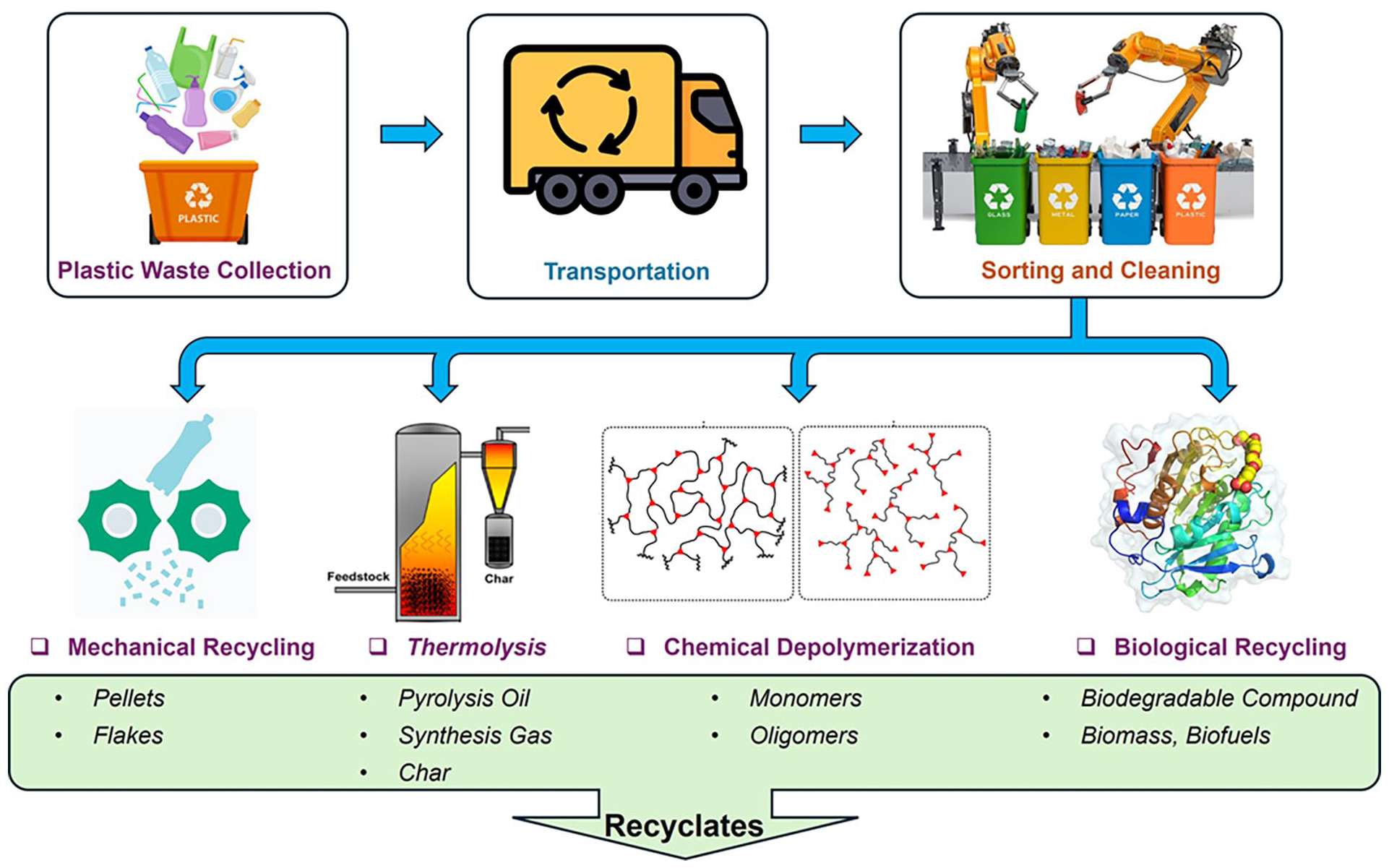
A schematic view of the steps involved in plastic recycling, and the recyclates associated with various recycling techniques. The information in this figure was synthesized from previous studies (Kazemi et al., 2021; Lamtai et al., 2023; Stieven Montagna et al., 2023).
Various recycling methods for plastic waste have been developed in recent years. This section highlights recent technological advances in the field, including mechanical recycling, thermolysis, chemical depolymerization and biological recycling. Table 1 provides a summary of the applicable plastics, definitions of their abbreviations, advantages and disadvantages of these recycling processes. The latest technological advancements and current research directions for each recycling method is summarized in Table 2. It is important to note that this section does not aim to include all recycling methods in detail due to space constraints. Instead, a few topics are selected that are at the forefront of current research, which aims to attract researchers new to the field and foster collaborations.
Comparisons of major plastic recycling methods, their applicable plastic wastes, advantages and disadvantages.
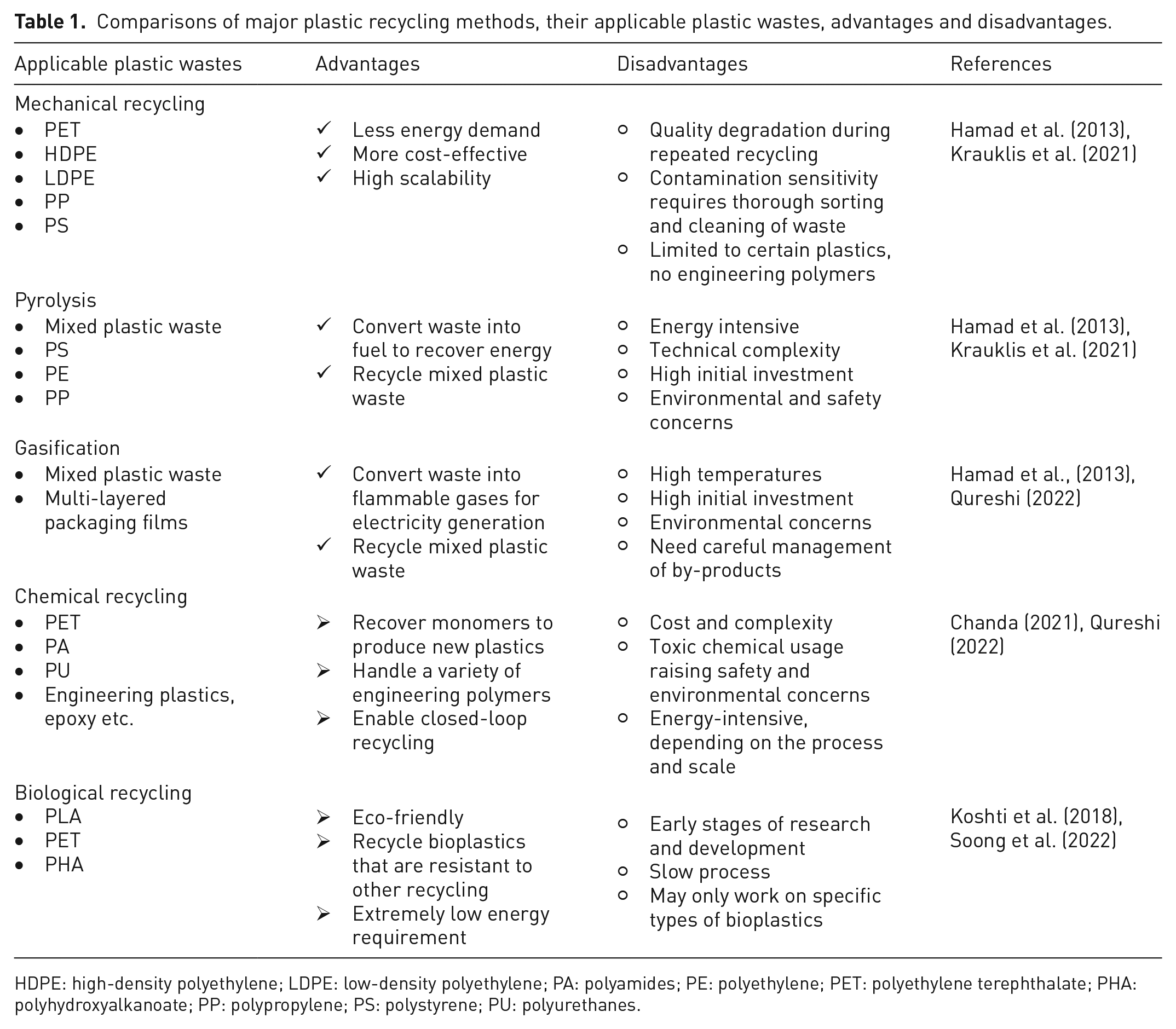
HDPE: high-density polyethylene; LDPE: low-density polyethylene; PA: polyamides; PE: polyethylene; PET: polyethylene terephthalate; PHA: polyhydroxyalkanoate; PP: polypropylene; PS: polystyrene; PU: polyurethanes.
The latest technological advancements and current research directions for each recycling method.
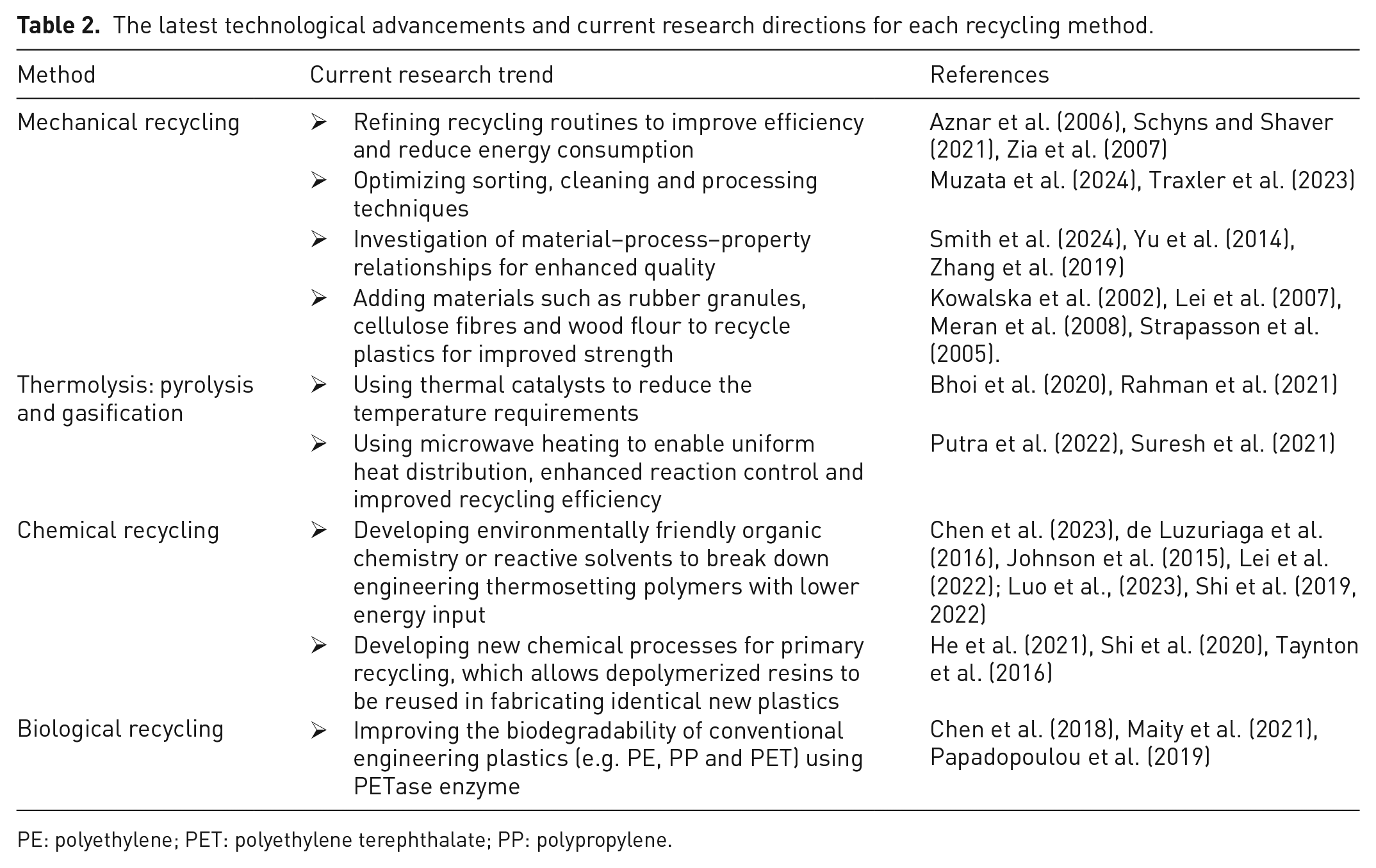
PE: polyethylene; PET: polyethylene terephthalate; PP: polypropylene.
Mechanical recycling
Mechanical recycling is a widely commercialized process for plastic waste management, particularly in developed countries such as Germany, Japan and the United States, where large-scale infrastructure and systems for selective waste collection have been in place for many years (Hundertmark et al., 2019; Patel et al., 2000). The procedure starts with collecting and sorting plastic waste based on its composition and colour. Subsequently, the sorted plastics are washed to remove contaminants, labels and adhesives and then shredded or ground into smaller pieces. These fragments are melted and extruded to form pellets or flakes, which serve as raw materials for new plastic products (Schyns and Shaver, 2021).
Mechanical recycling typically has very low energy consumption, which makes it environmentally advantageous (Aldosari et al., 2024; Li et al., 2016). However, it still faces substantial challenges. For example, the quality of plastic tends to degrade after multiple recycling cycles. The economic viability of mechanical recycling is also closely related to the quality of input materials. Contaminated or mixed plastics require additional sorting and cleaning, which increases energy use and reduces profitability (Titone et al., 2024).
Although the sorting process is crucial to the success of mechanical recycling, developing countries face major challenges in establishing automated sorting and collection systems due to financial constraints and lack of government support. Public awareness of waste separation is also insufficient, with most households lacking access to separate bins for different types of waste. In these regions, plastic waste collection and sorting largely depend on manual labour, which is both labour-intensive and inefficient. Without significant investments in infrastructure, public education and policy reforms, sorting will continue to be a major bottleneck in improving the efficiency of mechanical recycling in developing countries (Nkwachukwu et al., 2013; Otoo, 2023; Troschinetz, 2005).
Thermolysis: Pyrolysis and gasification
Pyrolysis recycling heats plastic waste to 300°C and 900°C without oxygen to decompose it into pyrolysis oil that be used as feedstocks for new plastic production (Sharuddin et al., 2016; Qureshi et al., 2020). In contrast, gasification uses controlled amounts of oxygen to heat the plastic waste. This process produces synthetic gases, such as hydrogen and carbon monoxide, which can be used for fuel and electricity generation (Lopez et al., 2018; Salaudeen et al., 2019). Overall, thermolysis methods are highly energy-intensive due to the need for high temperatures (Abbas and Daud, 2010; Guéret et al., 1997; Mong et al., 2022). This requirement not only leads to significant capital investment in equipment but also contributes to increased greenhouse gas emissions (Yuan et al., 2024). The environmental burdens are greater when non-renewable energy sources power the process.
Chemical depolymerization
Chemical depolymerization is a recently developed recycling technique. It can depolymerize plastic waste back to its monomer constituents through chemical reactions (Rahimi and García, 2017; Thiounn and Smith, 2020; Vollmer et al., 2020) at relatively low temperatures. This feature is fundamentally different and outperforms the thermolysis method, which generates complex liquid and gas mixtures and requires further separation. For example, polyethylene terephthalate (PET), commonly used in beverage bottles, can be depolymerized to its monomer ethylene glycol and terephthalic acid (Barnard et al., 2021). Similarly, polystyrene (PS) can be broken down into styrene monomers (Kumar et al., 2022). The recycling products from chemical depolymerization can be used to fabricate new polymers with nearly the same quality as virgin materials, which offers a promising pathway to a circular economy for plastics.
Although chemical recycling offers the environmental advantage of processing mixed and contaminated plastics, its applicability is usually restricted by the types of plastics suitable for this recycling method (Memon et al., 2022). Exposure to organic chemicals may also raise health risks to workers (Parsai and Kumar, 2016). Additionally, the economic success of chemical recycling is closely related to the market value of recovered materials. The significant material cost, particularly the catalyst needed for reversible chemical reactions, poses substantial barriers to the widespread adoption of this process (Jiang et al., 2023).
Biological recycling
Biological recycling presents an innovative approach that leverages enzymes and microorganisms to degrade plastics into biodegradable components (Alaerts et al., 2018; Tokiwa et al., 1992). This method uses microorganisms, including bacteria, fungi and algae or enzymes, to metabolize plastic polymers and then transform them into less harmful substances over time. These enzymes catalyse the hydrolysis of long-chain polymers into shorter, more manageable fragments, which the microorganisms can then further metabolize as a source of energy and carbon. Unlike physical and chemical recycling methods, which require significant energy input, biological recycling typically operates at room temperature, which offers a potentially more sustainable and environmentally friendly solution to plastic degradation.
Biological recycling has extremely low energy consumption, which positions them as a potentially cost-effective alternative in the future (Benninga et al., 2023; Martínez-Cutillas et al., 2022). The reduced operational costs and lower emissions associated with these processes could make them attractive for investment, especially as green technology incentives become more prevalent in circular economy frameworks. However, challenges related to process efficiency, scalability and the complete breakdown of plastics into environmentally harmless by-products require further research and development (Kumar et al., 2023).
Common observations and trends in plastic recycling methods
After reviewing the various recycling methods, two important observations emerge. Firstly, most plastic recycling processes require pretreatment of plastic wastes, including sorting, cleaning and size reduction. These processes remove contaminants and improve recycling efficiency, which ultimately enhances the environmental performance of recycling. In mechanical recycling, cleaner and uniform plastic inputs reduce the chance of producing lower-quality recycled material, which in turn reduces the need for extra energy-intensive processing (Muzata et al., 2024; Traxler et al., 2023). Similarly, for pyrolysis and gasification, pretreatment removes harmful substances and moisture that could interfere with the thermal process (Gao et al., 2023), which results in higher energy efficiency and reduced emissions. In chemical and biological recycling, pretreatment helps to isolate specific plastics, which allows for targeted depolymerization and chemical conversion into monomers, thereby enhancing the yield and quality of the output (Ciuffi et al., 2024).
Secondly, chemical and biological recycling methods show promise for addressing the limitations of mechanical recycling but remain in early research stages (Ortiz, 2023). Most advancements are occurring in laboratory settings, with a primary focus on enabling the recycling of plastics that were previously non-recyclable or processing them under milder conditions. Currently, the economic viability and long-term financial sustainability of these new recycling methods remain largely unknown (Luo et al., 2024). The high costs and complexity associated with chemical depolymerization processes may prevent the establishment of commercial-scale plants (Jiang et al., 2023). Without clear evidence of their economic feasibility, governments have been reluctant to create policy incentives or invest in the infrastructure needed to support their commercialization and integration into the broader recycling industry.
Environmental impact assessment of recycling technologies
Currently, LCA serves as a popular tool for understanding the environmental implications of recycling processes and identifying strategies to improve sustainability. As shown in Figure 3, the LCA framework assesses the environmental impacts of a product throughout its lifecycle. It typically includes recycling stages such as raw material acquisition, manufacturing, distribution, use, recycling and waste management. The system boundary may vary across different studies. Inputs such as electricity, natural gas, solvents, water and raw materials are transformed through these stages and then result in outputs such as recyclates, emissions and waste. Intensive articles have been published in this field in the past several decades. This section focuses on the most recent LCA studies published since 2020 to highlight the latest advances and emerging trends in plastic recycling sustainability.
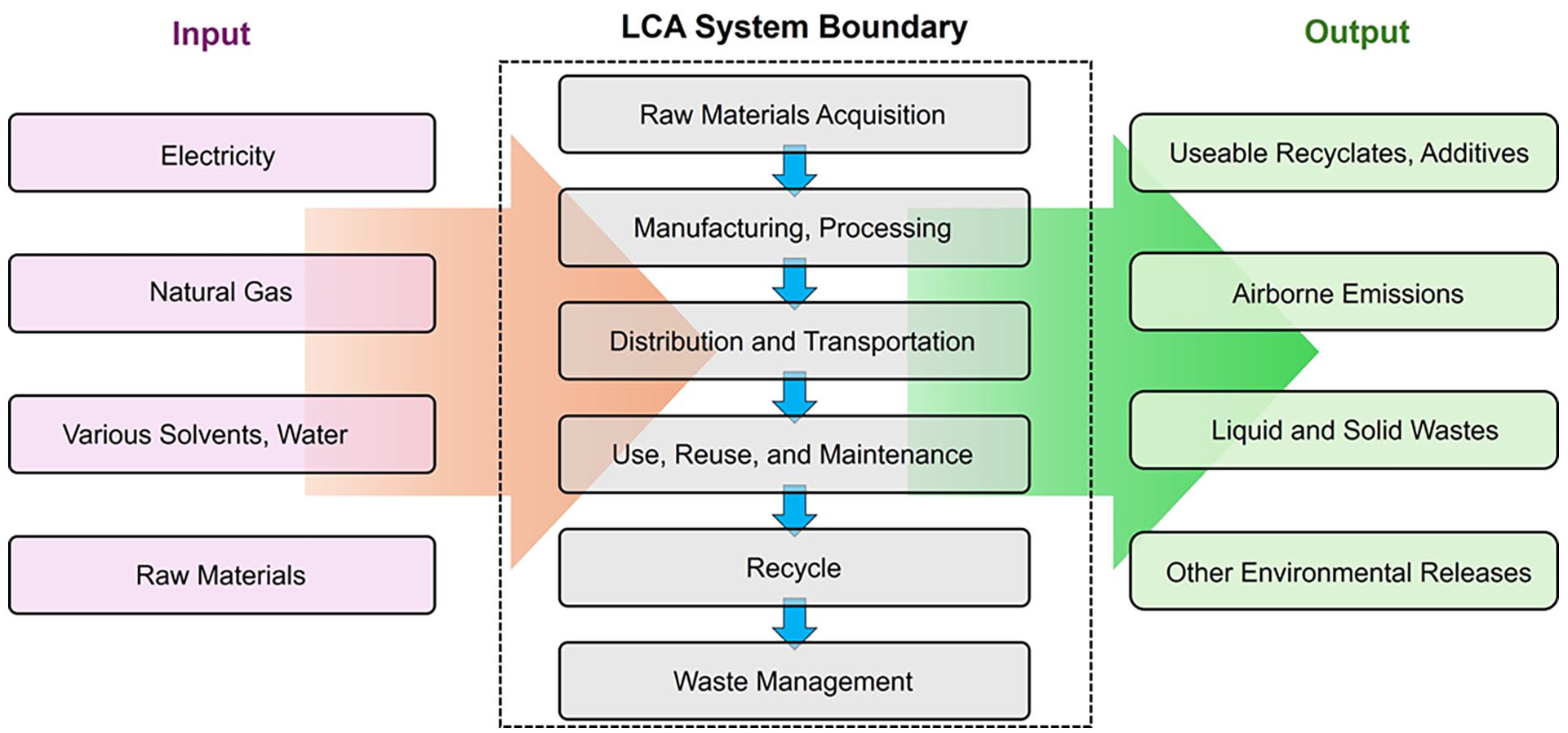
A typical LCA analysis framework and system boundary. The information in this figure is derived from previous review articles and relevant literature on the LCA of plastic recycling (Perić et al., 2016; Sharma et al., 2023).
Comparative LCA studies on different recycling methods
Recent LCA studies have highlighted the environmental benefits of mechanical recycling and identified processes that can be optimized. For example, Gandhi et al. (2021) conducted an LCA to compare the environmental impacts of various disposal methods for polyethylene (PE) plastic, including landfill, incineration and mechanical recycling. The analysis reveals that recycling could significantly reduce energy use and prevent emissions of carcinogens and greenhouse gases. Similarly, Martín-Lara et al. (2022) examined the environmental impact of mechanical recycling of PE using LCA. The findings show that the washing stage has the largest environmental impact due to electricity consumption, and human toxicity accounts for 93.4% of the total impact. Additionally, Luu et al. (2022) investigated the mechanical recycling of plastic bags. The study concludes that mechanical recycling can effectively keep materials in circulation and does not show significant statistical differences compared to incineration regarding the climate change indicator.
LCA has also been used to compare the environmental benefits of thermolysis, chemical and biological recycling methods. For example, Gahane et al. (2022) investigated the environmental impacts of pyrolysis for bio-plastics wastes. The study concludes that biomass pyrolysis is eco-friendly in terms of producing bioenergy products. The study also identifies the use of chemicals and electricity during the pretreatment process as reasons for negative environmental impacts, with electricity consumption being the highest contributor to greenhouse gas emissions. Ouedraogo et al. (2021) compared the environmental and health impacts of gasification methods and landfilling. They conclude that landfilling has greater negative impacts on global warming, ecotoxicity and cancer risks due to leachate and gas emissions, whereas gasification’s main environmental drawbacks are linked to the disposal of solid residues. Alcazar-Ruiz et al. (2022) compared the environmental impacts of gasification and pyrolysis. The study finds pyrolysis to be the most environmentally friendly method for generating bio-oil due to lower greenhouse gas emissions. Jiang et al. (2023) used LCA to compare the environmental impacts of chemical depolymerization against mechanical recycling, solvolysis and pyrolysis. The results indicate that despite the usage of toxic chemicals during chemical recycling, it offers greater benefits compared to other recycling methods in terms of abiotic resource depletion, global warming potential, human toxicity and ozone layer depletion.
It is worth noting that LCA is also utilized to identify new recycling techniques or recycling scenarios based on existing methods. Wang et al. (2021) investigated the environmental impacts of integrating biological recycling anaerobic digestion (AD) and pyrolysis recycling (Py). They compared the integrated recycling pathways (AD–Py and Py–AD) with standalone AD and Py processes. The study revealed that AD–Py significantly reduces the total environmental impact compared to other methods, which marks it as the most sustainable option.
Assessing specific impact categories: Carbon footprint and energy consumption
Recent research emphasizes specific impact categories such as carbon footprint and energy consumption in plastic recycling. This is driven by the current climate change crisis, government policy and regulations, economic considerations, etc.
Carbon footprint LCA quantifies greenhouse gas emissions of plastic recycling processes and evaluates their impact to climate change. Saleem et al. (2023) evaluated the carbon footprint of producing mechanically recycled pellets from PE and polypropylene (PP) plastics. They found that CO2 emissions during recycling are 22.6% lower compared to virgin material production. Similarly, Hidalgo-Crespo et al. (2022) observed a nearly 50% reduction in CO2 emissions in the mechanical recycling of PS compared to virgin resin and its disposal in landfill.
Beyond mechanical recycling, carbon footprint analysis using LCA has been extended to other recycling methods. Zhao et al. (2022) conducted a LCA to compare pyrolysis with incineration. The study reveals that applying mechanical and biological treatments prior to pyrolysis can significantly improve carbon footprint savings by producing refuse-derived fuels. Vora et al. (2021) compared the carbon footprints of virgin and recycled polydiketoenamines through chemical depolymerization. The study reveals that producing virgin resin generates 86 kg of CO2, whereas chemical recycling results in a significant lower emission of only 2 kg. Gadaleta et al. (2022) investigated biological recycling. They report that AD treatment of plastic waste can lead to notable carbon footprint benefits of up to 324.64 kg CO2 per tonne of waste.
For energy consumption analysis, LCA can be utilized to examine the energy input and efficiency of different plastic recycling processes. The analysis is particularly important when electricity comes from non-renewable sources. Recent studies (Björklund and Finnveden, 2005; Ghadge et al., 2022; Jeswani et al., 2021; Shan et al., 2023; Shuaib and Mativenga, 2016; Wollny et al., 2001) indicate that most recycling methods consume more energy than landfilling and incineration due to the requirement of heating. Pyrolysis and gasification require substantial amounts of electricity to process equivalent amounts of plastic waste because they operate at extremely high temperatures (300–900°C). Conversely, chemical depolymerization requires less energy due to its lower processing temperatures (100–300°C). Incineration emerges as a more energy-efficient option as it generates heat, which can be converted into electricity. However, this comparison does not necessarily favour incineration over recycling. Despite their lower net energy consumption, incineration produces significant gas emissions and imposes considerable environmental burdens.
On the other hand, energy consumption analysis can offer insights into optimizing recycling processes to minimize electricity use. For example, Zhang et al. (2020) investigated strategies to improve the energy efficiency of the pyrolysis recycling process. They examined the impact of heat carrier loading in a rotary pyrolysis kiln and found that increasing the heat carrier improves both energy and exergy efficiency. The study reveals that the pyrolysis process could achieve self-heating by combusting certain gas by-products, especially in the case of PE pyrolysis with a 15% heat carrier loading and mixed plastic pyrolysis with a 20% load.
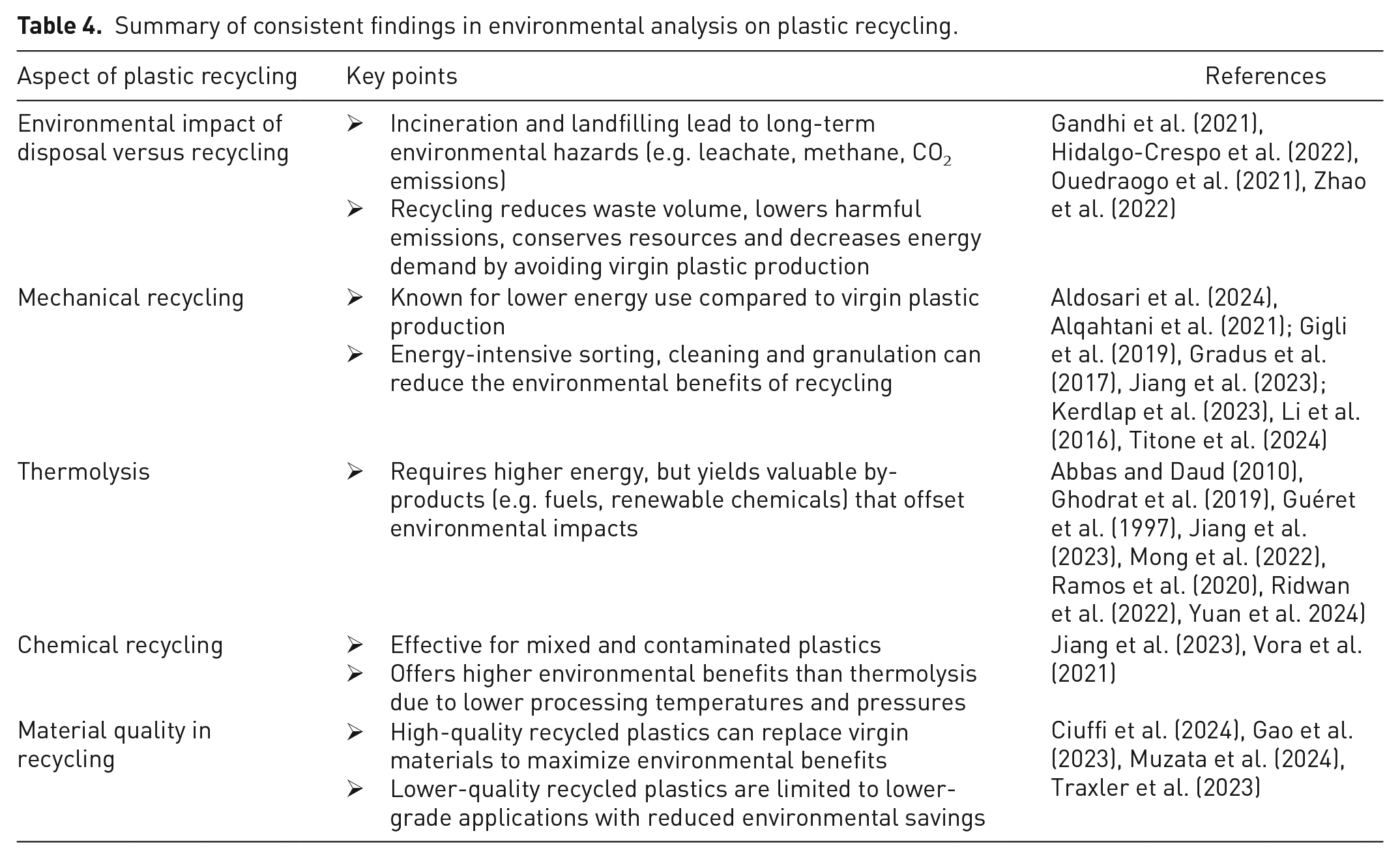
The following Table 3 summarizes recent studies on the environmental analysis of plastic waste processing and recycling methods, including the representative studies discussed above. The table highlights the impact categories examined in these analyses and lists the most important findings from each study. These studies highlight several consistent findings across different plastic recycling methods, which are listed in Table 4.
The recent studies on environmental analysis of plastic waste processing and recycling methods, the impact categories examined and most important findings.
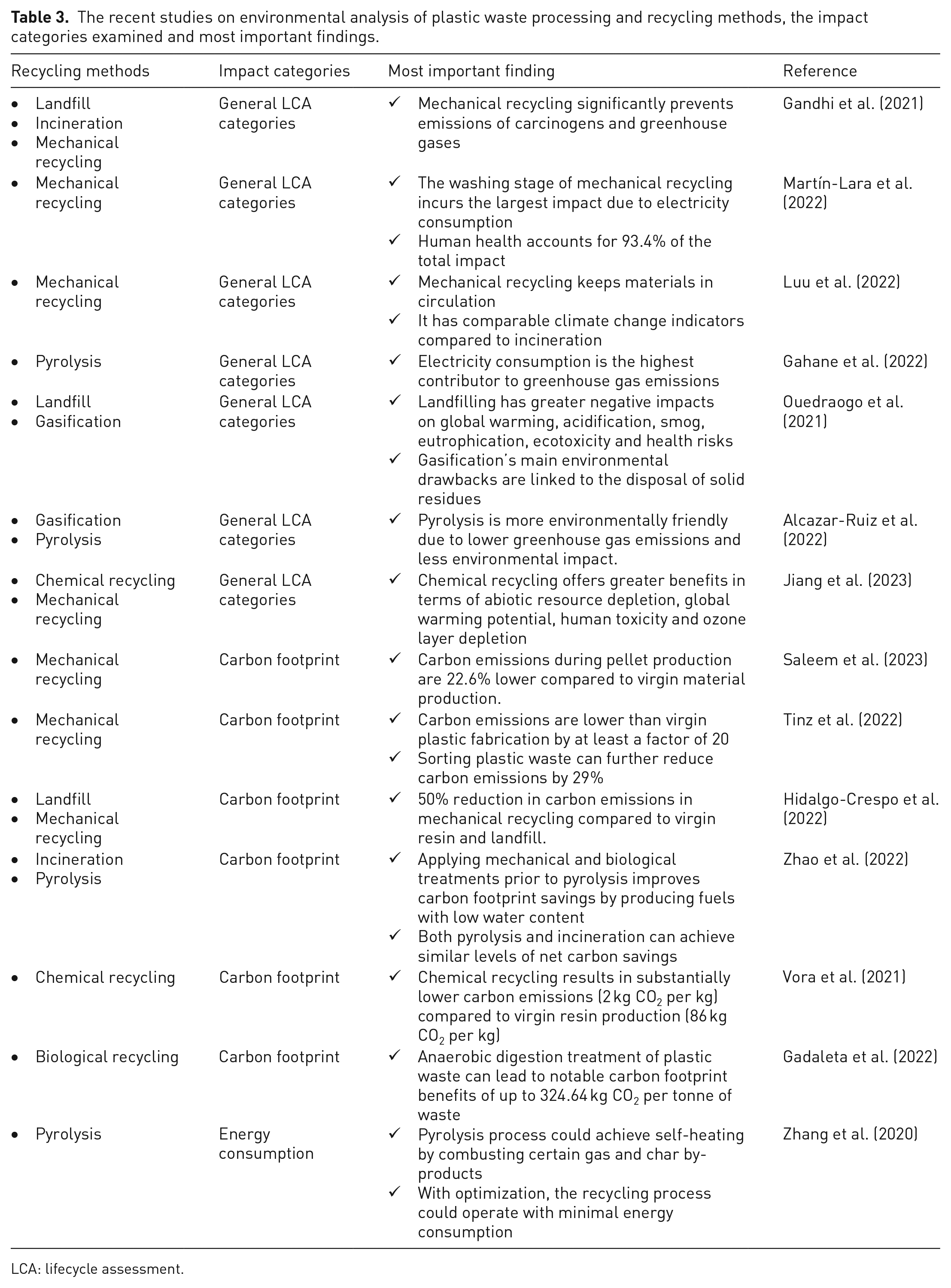
LCA: lifecycle assessment.
Summary of consistent findings in environmental analysis on plastic recycling.
Economic analysis of plastic recycling
Economic analysis is crucial for developing recycling technologies by highlighting waste management costs, job creation potential and market opportunities. This section focuses on recent studies of CBA, LCCA and TEA of plastic recycling. It is important to acknowledge that a thorough economic analysis of plastic recycling involves examining various other factors, including market dynamics, policy and regulatory impacts and social and employment considerations. Although these aspects are integral to a holistic economic analysis of plastic recycling, they will not be explored in detail within this review due to constraints on length and scope. Within the scope of this review, a typical economic analysis of plastic recycling includes major costs from capital investment, labour and administration and materials. Recycling generates revenue from recyclates, additives and energy recovery, as shown in Figure 4. Note that the detailed items involved in deferent studies may vary.
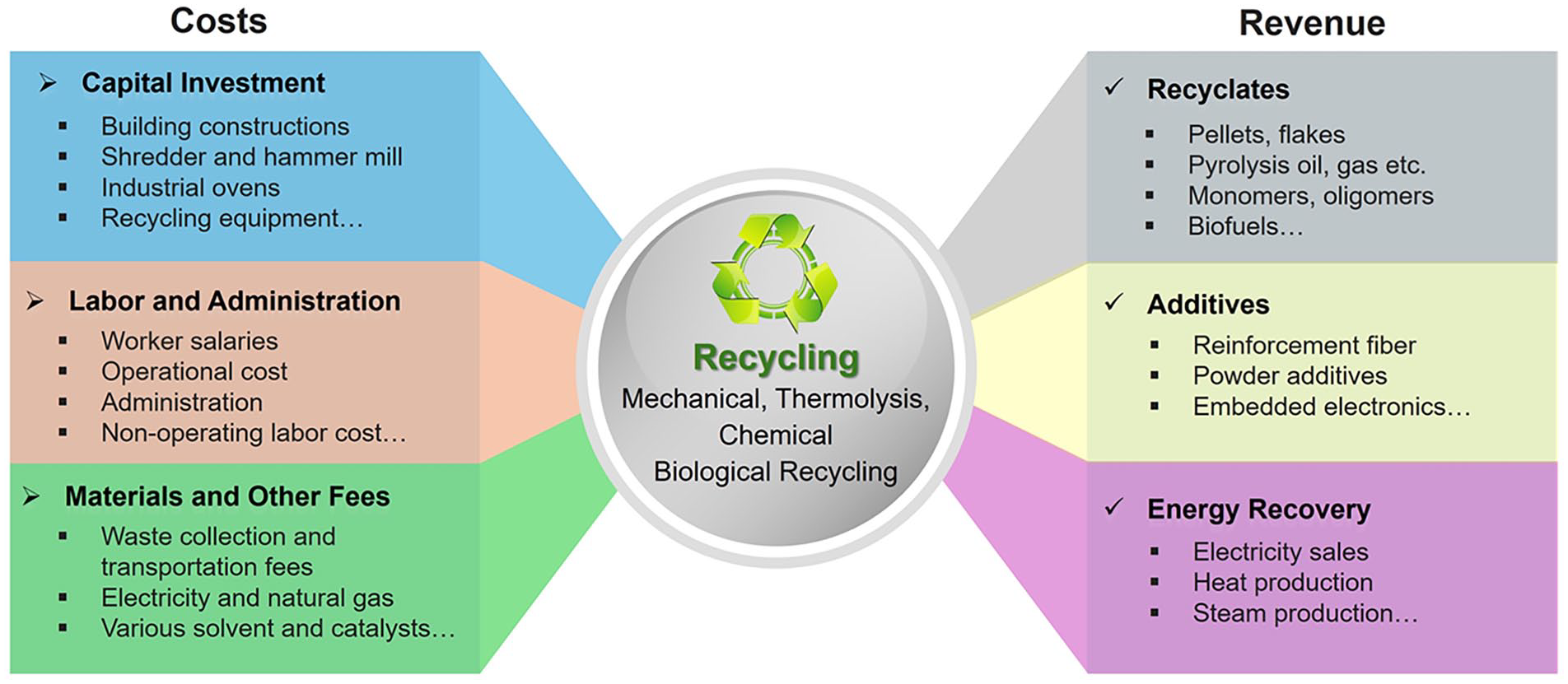
Typical cost and revenue items involved in the economic analysis of plastic recycling. The information in this figure is based on existing literature in the economic analysis of plastic recycling (Kang and Schoenung, 2006).
Cost–benefit analysis and lifecycle cost analysis
In economic analysis of recycling, both CBA (Ali et al., 2013; Farel et al., 2013; Karmperis et al., 2013; Leu and Lin, 1998; Morrissey and Browne, 2004) and LCCA (Alqahtani et al., 2021; Francini et al., 2019; Kerdlap et al., 2023; Kulkarni and Shastri, 2020; Ramos et al., 2020) are widely used. CBA evaluates the economic efficiency of a recycling project by comparing total expected costs with anticipated monetary benefits. On the other hand, LCCA assesses the total cost of a recycling project over its expected life. It includes all costs from initial investments to operation, maintenance and disposal costs.
Mechanical recycling
Gradus et al. (2017) compared the cost-effectiveness of mechanical recycling and incineration in the Netherlands. The study suggests that recycling incurs higher costs due to waste collection and sorting. When considering revenues from selling recycled plastic, the total costs are 677 € tonne−1 for recycling and 66 € tonne−1 for incineration. However, Gigli et al. (2019) demonstrated that despite the relatively higher costs, mechanical recycling can achieve economic viability. They conducted a CBA on a recycling project for vehicle tires. The results reveal that in the initial year, project costs exceed the benefits due to initial investment. However, in the long term, the project becomes economically profitable, with a benefit–cost ratio of 1.52. The high financial viability is attributed to the selling of recycled rubber powder and savings from not using cellulosic fibres. For LCCA, Kerdlap et al. (2023) evaluated the financial viability of miniaturized mechanical recycling facilities in Singapore. Their study reveals that, at current prices for recycled pellets, miniaturized recycling facilities are not financially viable due to higher operational costs, particularly labour expenses, and poorer fuel efficiency of smaller vehicles used for waste collection.
Thermolysis
Ghodrat et al. (2019) evaluated the economic feasibility of energy recovery from pyrolysis in Australia. The results suggest that if plastic is collected and delivered to the processing site without cost, pyrolysis can yield a 54% return on investment. However, the scenario may differ in a developing country. For example, Ridwan et al. (2022) conducted a CBA on pyrolysis in Indonesia. The study confirms that the recycling project requires significant investment and a large supply of waste. The project’s profitability strongly relies on the degree of support from the government, industry and community. In a separate study, Ramos et al. (2020) conducted LCCA to examine the economic viability of plasma-assisted gasification in Portugal. The study considered a 20-year recycling plant. It reveals that by selling both electricity and vitrified slag as recycling products, the net present value of recycling plants can amount to roughly 20 million euros, and the initial investment can be recovered after 18 years of operation.
Chemical depolymerization
Wei and Hadigheh (2022) conducted a comprehensive study on the cost–benefit of various recycling methods for plastic wastes. The research shows that solvolysis requires higher initial capital investment due to the harsh processing conditions. However, it emerges as the most profitable method when applied to recycling composites, where the reclaimed high-value fibre brings in notable revenues. Similarly, in a recent study by Jiang et al. (2023), the authors investigated chemical depolymerization recycling, where plastics are depolymerized using dynamic covalent reactions. The findings demonstrated the significant economic benefits of recovering valuable fibres. However, the recycling cost (~ 8.4 $ kg−1) was found to be the highest compared to other methods such as mechanical recycling (~0.3 $ kg−1), pyrolysis (~1 $ kg−1) and solvolysis (~4 $ kg−1). Through sensitivity analysis, the authors concluded that the major limiting factor is the high cost of the required catalysts for dynamic reactions.
Biological recycling
Recently, Francini et al. (2019) presented an economic analysis on the biological recycling using LCCA. Specifically, they focused on two biological recycling methods: the conventional co-digestion of plastics with sewage sludge, and a two-step process involving dark fermentation followed by AD. The financial analysis covered a time horizon of 20 years and included capital investment, operation and disposal costs. Although the authors did not compare these recycling methods to existing ones, the results demonstrate that both approaches are economically viable. In the case of co-fermentation and digestion, positive net present values were achieved in about 5 years, whereas the co-digestion method required 7 years to reach positive values.
Literature discussed in this section analyses the economic viability of recycling methods in both developed and developing regions, including Australia, France, China, Indonesia and Thailand. A common approach adopted in these studies is the use of sensitivity analyses to account for fluctuations in the prices of recycled materials. Additionally, some studies employ price scenario modelling, which simulates hypothetical prices to evaluate how recycling programmes might perform over the long term. For example, Kerdlap et al. (2023) utilized price scenarios and demonstrated that certain recycling systems only became financially feasible when the prices of recycled PET and PP pellets increased by 100% and 200%, respectively.
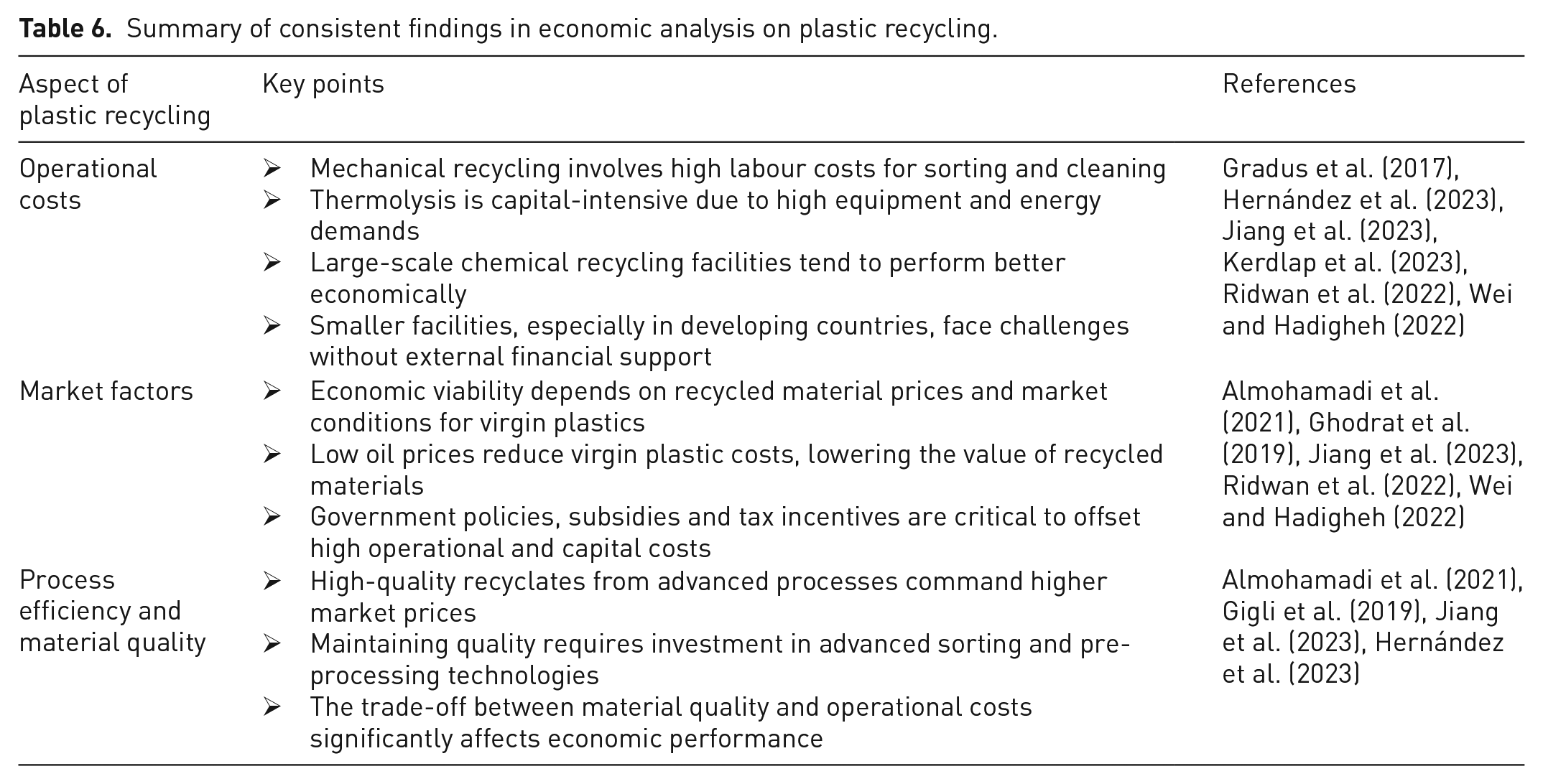
The economic viability of different recycling methods is typically assessed through a range of economic parameters, including net present value (Zhou et al., 2015), internal rate of return (Ghodrat et al., 2019; Wei and Hadigheh, 2022), payback period (Ramos et al., 2020)and benefit–cost ratio (Ridwan et al., 2022). A key finding across these analyses is the significant impact that the prices of recycled materials have on the immediate profitability and overall financial viability of recycling programmes. In many cases, when the prices of recycled materials are low, recycling programmes become less economically viable compared to alternative waste management options such as incineration (Gradus et al., 2017). In some cases, even minor fluctuations in the prices of recycled materials can substantially affect the return on investment for these projects (Ghodrat et al., 2019). Furthermore, several studies highlight that these economic challenges often necessitate government interventions, which can help stabilize the economic environment for recycling initiative (Gigli et al., 2019). Such interventions can mitigate the risks associated with price volatility and ensure the long-term sustainability of recycling systems by making them financially viable, even when market prices for recycled materials fluctuate.
Techno-economic analysis
TEA integrates technical performance with economic metrics to assess the efficiency and cost-effectiveness of recycling technologies. It represents a highly interdisciplinary area integrates engineering, science and economics. For detailed introductions on this topic, readers are suggested to recent review articles by Salahuddin et al. (2023), Tomić et al. (2024 and Thomassen et al. (2019).
TEA can be used to access the economic profitability of a newly developed recycling methods and offer strategies to optimize the recycling processes, as demonstrated in recent studies on mechanical recycling (Larrain et al., 2021), catalytic pyrolysis (Yadav et al., 2023), biological recycling and upcycling (Singh et al., 2021). More importantly, because the TEA contains technical components (e.g. energy efficiency, recycling yield), it provides unique capabilities to compare different recycling methods or drive the development of innovative recycling routines. For example, Westerhout et al. (1998) conducted a TEA to compare the economic viability of bubbling fluidized bed, circulating fluidized bed and rotating cone reactor (RCR). Research findings indicate that RCR exhibits the highest return on investment due to its lower temperatures and minimal requirements for fluidization gas. The study also suggests that the use of CaCO3 is technically feasible to remove chlorine and improve recycling yield rates. However, a large amount of sand with CaCl2 must be disposed of, which can lead to significant environmental and economic disadvantages. Larrain et al. (2020) studied the economic performance of open-loop and closed-loop pyrolysis using TEA. Their study suggests that open-loop recycling requires a minimum feedstock availability of 96 kilotonnes year−1 to achieve a positive net present value, whereas closed-loop recycling requires 120 kilotonnes year−1. This suggests that open-loop recycling is more robust.
In addition to pyrolysis, Hernández et al. (2023) conducted a TEA to compare various thermolysis methods and chemical depolymerization for LDPE waste. Their comparisons revealed that pyrolysis followed by conversion to lubricant oils emerged as the most profitable option. However, chemical depolymerization methods became competitive on larger scales. Hydrocracking was noted to be environmentally friendly but requires optimization of the supply chain. In a recent work by Briassoulis et al. (2021), the authors proposed TEA sustainability criteria and used them to compare mechanical recycling and biological recycling of biodegradable plastics. Interestingly, mechanical recycling outperformed as the primary recycling option for these materials. Emerging biological recycling is considered as a secondary option only when these materials are found to be non-recyclable by conventional mechanical methods.
Another uniqueness of TEA is its ability to design innovative recycling routines by integrating existing processing techniques. Volk et al. (2021) compared mechanical recycling, pyrolysis and their combined recycling routine for plastic waste in Germany. The study demonstrates that the combined mechanical and pyrolysis recycling exhibits the highest savings in product cost (0.29 € kg−1) compared to individual recycling (0.16 and 0.24 € kg−1). Moreover, from a technical perspective, this combined approach shows a significant recycling potential of 2.8 million metric tonnes year−1, which is sufficient to meet the recycling rate targets of both the European Union (EU) and German. Almohamadi et al. (2021) conducted a TEA to assess the feasibility of treating plastic waste through pyrolysis followed by hydrodeoxygenation to produce fuel. The integrated recycling process aims to eliminate the need for external heat supply for pyrolysis. Their TEA analysis demonstrates the technical feasibility of such a process, with mass and energy yields of 36% and 42%, respectively. With a capital investment of $118 million, the minimum selling price of the fuel should be $0.60 per gallon to enable economic profitability.
Table 5 summarizes recent studies on the economic analysis of plastic waste recycling methods, including the representative studies discussed above. This table provides a detailed overview of analysis methods in these studies. Several consistent economic considerations in plastic recycling are identified and summarized in Table 6.
The recent studies on economic analysis of plastic waste recycling methods, their employed analysis method and the most important findings.
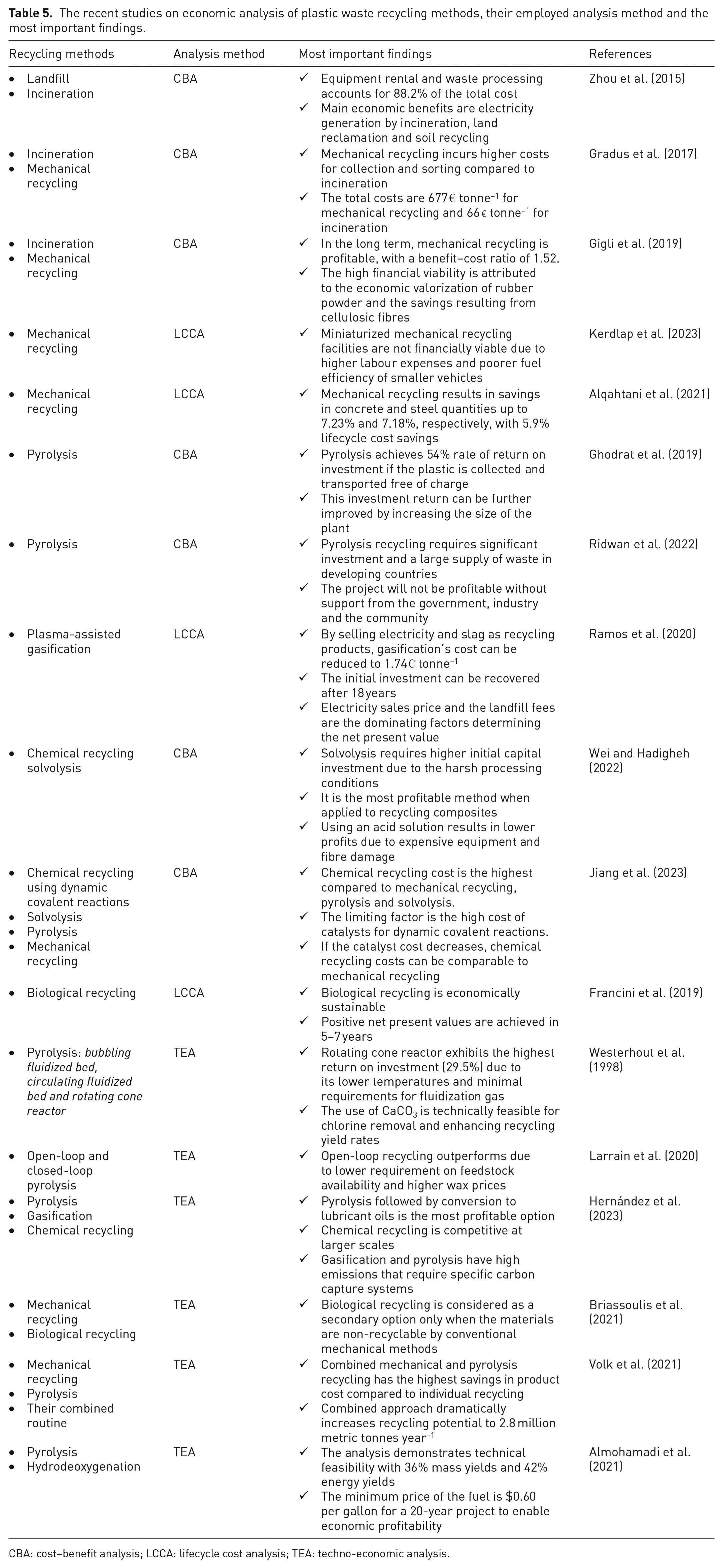
CBA: cost–benefit analysis; LCCA: lifecycle cost analysis; TEA: techno-economic analysis.
Summary of consistent findings in economic analysis on plastic recycling.
Emerging research areas of plastic recycling
After reviewing existing literature, it is found that researchers have proposed new methodologies and tools, such as artificial intelligence (AI) and big data analytics, to address challenges associated with current recycling methods. In addition, the importance of developing integrated frameworks to evaluate the environmental, economic and social impacts of recycling systems has gained recognition. Circular economy principles are increasingly used to address broader societal and lifecycle implications. These emerging strategies offer significant potential to enhance recycling processes and advance both environmental and economic sustainability. The following sections summarize these innovations and outline future research directions.
Integration of AI and big data analytics into recycling processes
The integration of AI and big data analytics is transforming recycling technologies. Currently, the applications of AI technologies, including machine learning (Carrera et al., 2023; Erkinay Ozdemir et al., 2021) and computer vision, are focused on enhancing the efficiency of waste sorting and segregation (Ahmed and Asadullah, 2020). By utilizing sophisticated algorithms, AI systems can accurately identify and categorize plastic waste based on various parameters such as type, colour and cleanliness (Chidepatil et al., 2020). This is achieved through the real-time analysis of images, which enables rapid and precise sorting of diverse plastic items. These capabilities not only improve the efficiency of recycling processes but also greatly reduce dependence on manual labour, which is often time-intensive and susceptible to errors. Furthermore, AI-driven sorting systems can evolve over time by leveraging vast datasets to enhance sorting accuracy and efficiency.
Integrating AI-powered vision systems with robotic arms further enhances the effectiveness of plastic recycling operations, which allows for remarkable levels of precision in grasping and sorting plastic waste (Aschenbrenner et al., 2023). A notable example is the commercial SamurAI® sorting system (Plessisville, QC, Canada) for plastic waste, as shown in Figure 5. Such AI-integrated systems leverage the computational speed and decision-making capabilities of AI alongside the physical capabilities of robotic arms, which enables the automation of tasks that were previously challenging for machines, such as distinguishing between closely similar plastics or picking up deformable objects (Kshirsagar et al., 2022; Yu et al., 2021).
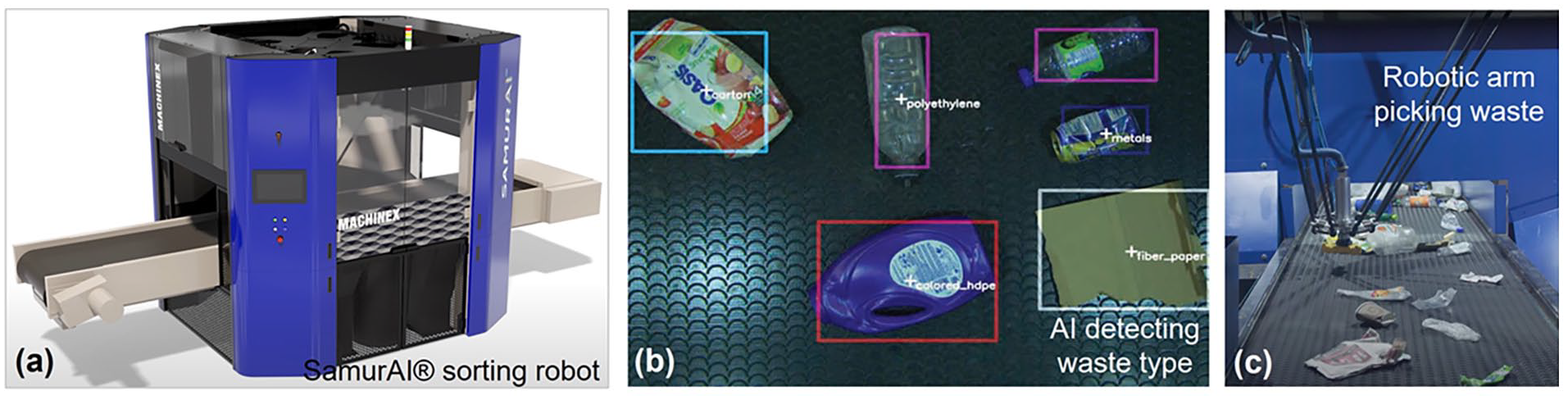
The SamurAI® sorting system for accurate identification and sorting of waste materials. (a) Appearance of the system. (b) AI technology to detect different types of waste materials. (c) An articulated robot to rapidly pick and sort the waste materials. This figure was created based on online information provided by Machinex, Inc. (Plessisville, QC, Canada; Machinex, 2001), the supplier of the sorting system.
Big data analytics also play a crucial role in streamlining recycling operations by analysing vast datasets collected throughout the recycling process and uncovering their hidden correlations. Its outstanding analytical, predictive and decision-making capabilities can be used for efficient waste sorting, segregation and supply chain optimization for plastic recycling (Sahni et al., 2018; Straka et al., 2020). It can also be integrated with AI and Internet of Things (IoT) to create smart systems for waste management and plastic recycling. For example, Das et al. (2022) proposed a smart waste bin management system incorporating big data analytics, the IoT and AI. This system ensures efficient recycling and waste collection by monitoring waste levels in smart bins and facilitating timely recycling actions.
Integration of circular economy principles in environmental analysis
The integration of circular economy principles with environmental analysis, such as LCA, has recently emerged as an exciting research field, which offers a transformative approach to promoting sustainable development and fostering innovation in recycling technologies.
As reviewed by Collias et al. (2021), it is important to distinguish between the recycling economy and the circular economy. Their differences are illustrated in Figure 6. Although several recycling methods, particularly mechanical recycling, are widely used, they often result in the degradation of material properties such as strength and quality. After being recycled multiple times, the material ultimately ends up in landfills. Recently, upcycling has gained attention as an innovative approach to converting waste materials into higher-quality products with enhanced environmental value. In most cases, upcycling involves chemical reactions designed based on the material composition. Plastic upcycling aligns well with the objectives of the circular economy because it allows for the maintenance of product quality and value in successive cycles of use.
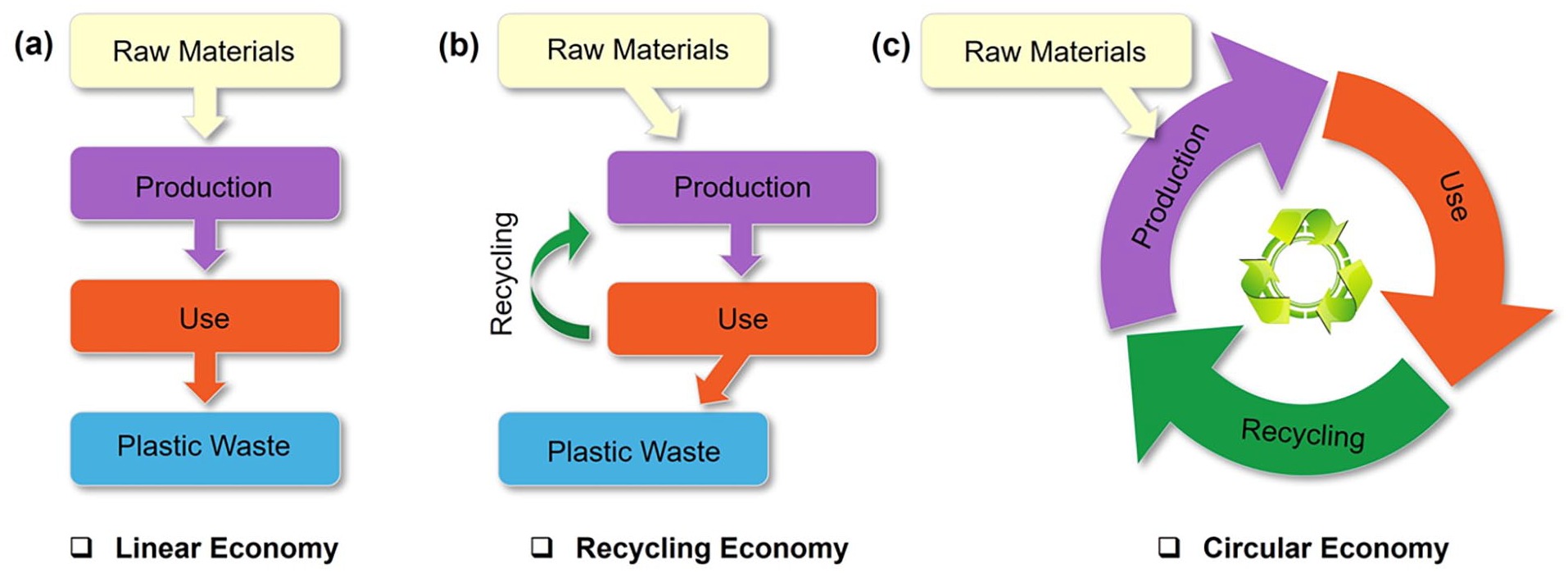
The lifecycle of plastics in (a) linear economy, (b) recycling economy and (c) circular economy. The figure was created based on online source from Euro Machinery (Phillips, 2021).
Meys et al. (2020) studied the environmental potential of 26 chemical recycling technologies in terms of global warming and fossil resource depletion. The comparisons show that the upcycling of PET into cyclohexane di-methanol using ruthenium catalysts offers the most environmental benefits and aligns with circular economy principles. Similarly, Horodytska et al. (2020) evaluated chemical upcycling methods using LCA. It shows that despite the higher initial environmental impacts, upcycling ultimately promotes material circularity and sustainability by producing high-quality pellets.
Recent studies emphasize the need to update conventional LCA methodologies to align with circular economy principles. This involves expanding the scope to include additional lifecycle stages such as refurbishment, remanufacturing and recycling, as well as developing new impact indicators. For example, in the study by Robaina et al. (2020), 26 European countries are compared in terms of their transitioning to a circular economy for plastics. Using a multidirectional efficiency score, the study shows that the most efficient countries not only minimize waste and emissions but also achieve economic growth through circular practices. In a different study, Reinales et al. (2020) conducted social LCA in the contexts of the circular economy. The study introduces both quantitative and qualitative indicators relevant to education, health and safety of workers. A special scoring system is proposed based on a five-point scale. The study emphasizes the critical role of stakeholder participation and reveals potential social benefits and risks associated with circular economy strategies for plastic recycling.
Recent research explores the integration of LCA with circular economy principles to evaluate and design sustainable strategies. For example, Spreafico (2022) assessed the environmental benefits of product design strategies for the circular economy. The study examined whether a hierarchy exists among circular economy options based on environmental sustainability and how it varies with design strategies. It highlights remanufacturing and recycling as the most beneficial strategies, while energy recovery from waste increases environmental impacts.
It is also important to recognize that LCA studies from the perspective of the circular economy are heavily influenced by local conditions and infrastructure. The environmental and economic performance of processes such as mechanical recycling, chemical recycling and pyrolysis can vary widely depending on factors such as energy sources, waste collection systems and transportation infrastructure. For example, regions with a higher share of renewable energy in their grid will show significantly better environmental outcomes for energy-intensive recycling technologies than those reliant on fossil fuels (Nordahl and Scown, 2024). Furthermore, the efficiency of waste sorting and collection systems plays a crucial role in the success of recycling efforts (Suttibak and Nitivattananon, 2008; Wang et al., 2010). Areas with well-developed infrastructure can process higher-quality recyclates at lower costs, whereas regions with limited waste management capabilities may struggle with higher contamination rates and reduced material recovery (Olawade et al., 2024; Wang et al., 2010).
In the context of a circular economy, local regulations and policy frameworks are also vital. Government incentives can promote the adoption of recycling technologies by increasing their economic feasibility (Bimonte et al., 2023; Lawal, 2024; Peng and Yi, 2024). Conversely, regions with weaker policy support may see reduced investment in these technologies, which limits their effectiveness in supporting a circular economy. These local variations highlight the need for region-specific LCA studies that consider the unique economic and environmental dynamics in each area within the circular economy framework.
Integrated environmental, economic and social impact assessments
Achieving sustainability in plastic recycling requires a comprehensive approach that not only reduces environmental pollution but also supports economic growth and community welfare. This requires integrated considerations of environmental benefits, economic performance and social equity when evaluating or developing plastic recycling technologies. As shown in Figure 7, future sustainable plastic recycling should develop through the convergence of these three critical dimensions: economic, social and environmental impacts. Various factors need to be considered, such as cost–benefit ratios, circular economy principles, market dynamics, job creation, quality of life, education, public health, climate change mitigation, efficient use of natural resources and pollution reduction.
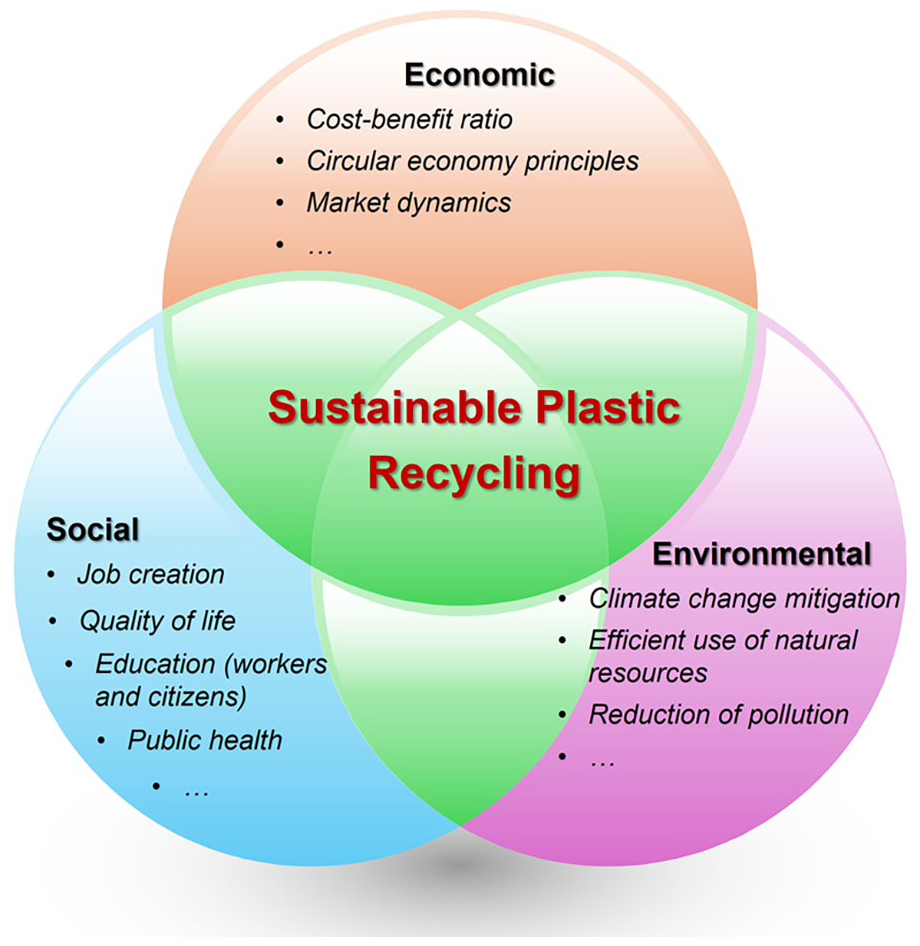
Integration of environmental, economic and social impact assessments for the sustainable plastic recycling developments. The information in this figure was compiled from previous literature on the sustainability of plastic recycling (Hestin et al., 2015; Milios et al., 2018; Mwanza and Mbohwa, 2017; Vélez and Vélez, 2017).
Firstly, the interplay between environmental sustainability and economic viability in plastic recycling has gained significant attention in recent studies. Faraca et al. (2019) showed that improved sorting technologies for mechanical recycling are the most efficient strategy to enhance environmental benefits and economic viability. Bora et al. (2020) compared various plastic recycling methods for PP waste. It finds that pyrolysis and gasification offer more advantages in reducing greenhouse gas emissions and have better economic performance in terms of net present value and internal rate of return. On the other hand, chemical recycling offers greater potential to support circular economy objectives and mitigate climate change. However, when Dong et al. (2018) compared these recycling methods for plastic composites, the findings reveal that no single recycling technique is superior in both cost and greenhouse gas emissions. This highlights the current challenges of achieving optimal recycling that balances both economic viability and environmental sustainability. A recent study by Basuhi et al. (2021) analysed the environmental and economic impacts of plastic waste management in the United States. The author concludes that simply increasing the collection and recycling rate is insufficient to mitigate greenhouse gas emissions or achieve financial viability. It is more important to emphasize upstream actions, such as designing plastics with improved recyclability.
Beyond environmental and economic factors, it is crucial to integrate social aspects into the evaluation of sustainable plastic recycling. Hestin et al. (2015) reported the increased environmental, economic and social benefits of increased plastic recycling in the EU. Specifically, the social impact is quantified by job creations that are calculated by considering average job intensity in each step of the plastic recycling value chain. The study highlights the significant benefit of increased plastic recycling in creating employment and contributing to community prosperity. By 2020, meeting the EU’s recycling targets could yield approximately 50,000 new direct jobs, with projections indicating an increase to nearly 80,000 by 2025, particularly in collection, sorting and recycling operations. Additionally, this could create an additional 120,000 indirect jobs. In another report by Esmailzadeh Davani (2018), various cases of plastic waste treatment in Sweden were compared. The study demonstrates that plastic recycling achieves the greatest reduction in greenhouse gas emissions and generates the highest number of jobs. However, this approach will lead to the highest net cost. The study informs policymakers that there is a demand for substantial investment in recycling infrastructure.
In general, in future studies, the close integration of environmental, economic and social impact assessments for plastic recycling will enable a holistic system thinking approach and a comprehensive understanding of the interconnections and potential trade-offs between different sustainability dimensions. By considering the full spectrum of impacts, such integrated studies will support more informed decision-making that aligns with the principles of sustainable development.
Conclusions
Recycling is essential for sustainable waste management, reducing landfill waste, conserving resources and mitigating pollution. In this systematic review, recent advancements in plastic recycling technologies are examined and synthesized. The review methodology involves detailed searches across multiple combinations of specific keywords across recycling technology, environmental analysis and economic analysis.
One of the innovative aspects of this review article is that literature from the last 10 years is focused on to ensure that the most recent advancements in the field are captured. In addition, it simultaneously focusses on technology developments and analysis of their environmental and economic implications, which provides a comprehensive comparison that is often missing in other reviews. Such information synthesis is particularly valuable as it bridges the gap between technological developments and their environmental and economic implications. By systematically comparing recycling methods, their strengths, limitations and areas requiring improvement are highlighted, which aids in designing more efficient recycling routines and developing future research and policy frameworks.
The findings provide new insights into recent advancements in recycling technologies. Significant progress in mechanical recycling and thermolysis has enhanced recycling efficiency, improved the quality and purity of recyclates and reduced energy consumption. Innovations in chemical recycling, particularly those based on dynamic covalent reactions, now allow for the recycling of plastics previously deemed non-recyclable. The emergence of biological recycling presents an eco-friendly alternative with minimal energy requirements for certain plastics.
From an environmental point of view, existing studies yield similar conclusions: chemical and biological recycling exhibit the highest environmental benefits because of the potential for primary recycling of plastics and the reduced demand for energy. The environmental impact of thermolysis varies and sometimes exceeds that of mechanical recycling, depending on the required temperature and recycling capabilities. Nonetheless, all recycling methods demonstrate substantial environmental benefits compared to landfilling and incineration.
Recent economic analyses have identified the limiting factors for the recycling costs of each method. Mechanical recycling often encounters economic barriers due to contamination and inefficiencies in sorting and cleaning processes. Thermolysis is often limited by the harsh processing conditions of high temperatures, which require higher initial capital investments and energy inputs. For chemical and biological recycling methods, the limiting factor typically is the expense of various chemicals or catalysts required for material degradation. A closer examination of recent articles also reveals a growing trend towards employing TEA to simultaneously evaluate technology feasibility and economic outcomes, as well as to refine the recycling process and design innovative recycling routines.
Emerging technologies, such as AI and big data analytics, can significantly enhance the separation and sorting efficiency of plastic recycling and reduce associated costs. Integrating circular economy principles and exploring novel upcycling processes represents a progressive direction for the field. Moreover, there is a growing demand to integrate environmental, economic and social impact assessments when studying recycling methods, which enables informed decision-making aligned with the principles of sustainable development.
One limitation of this review is the exclusion of non-peer-reviewed literature and non-English publications, which may have excluded important developments from certain regions or smaller research communities. Additionally, the review focuses predominantly on literature published in the past 10 years, which might potentially overlook older technologies or research that may still be relevant. These limitations suggest that further reviews could incorporate broader datasets to provide a more comprehensive global picture of plastic recycling advancements.
Future efforts in plastic recycling should enhance process efficiency and reduce energy consumption to maximize environmental benefits. Innovations in technology, such as further advancements in sorting systems and processing techniques, will be essential in enhancing recycling efficiency. Additionally, reducing operational costs remains a critical challenge, and future research should explore ways to optimize resource use and labour, including the integration of automation and data-driven technologies like AI. Beyond technical improvements, continuous evaluation of recycling systems through an integrated engineering, economic and environmental framework is crucial to ensure that these processes are both viable and sustainable in the long term. Government policies and regulations are equally important in promoting recycling practices. Policy interventions, such as subsidies, incentives for recycled material use and stricter mandates on waste management, will be needed to support the widespread adoption of advanced recycling technologies and drive the transition towards a circular economy.
Footnotes
Author contributions
All authors contributed to the study conception and design. The first draft of the manuscript was written by Xiaoli Jiang, and all authors commented on previous versions of the manuscript. All authors have read and approved the final manuscript. The authors sincerely appreciate the anonymous reviewer for his/her continued valuable feedback and insightful comments, which have greatly enhanced the quality and clarity of this article.
Declaration of conflicting interests
The authors declared no potential conflicts of interest with respect to the research, authorship, and/or publication of this article.
Funding
The authors disclosed receipt of the following financial support for the research, authorship, and/or publication of this article: The authors acknowledge support from Research Funds from Heilongjiang Province Art and Science Planning Project for the Year 2023 (2023D011) and from Heilongjiang Province Higher Education Science Planning Key Projects for the Year 2023 (GJB1423008).
Data availability
This is a review article. There is no experimental data or analytical data generated.
