



Abstract
This article investigates the pivotal role of non-hazardous waste landfills in achieving greenhouse gas (GHG) reduction objectives within the European Union (EU).1 This study leverages the experience of key stakeholders in the European landfilling, assesses the efficacy of ‘best-in-class’ landfill installations, evaluates their potential impact on GHG reduction, and offers concrete recommendations for operators and policymakers. ‘Best-in-class’ landfills exceed the commonly accepted best practices by implementing all the following practices: (1) an anticipated capture system during the operating phase, (2) prompt installation of the final cover and capture system, with use of an impermeable cover, (3) operated as bioreactor, keeping optimal humidity, (4) adequate maintenance and reporting, (5) recovery of captured gas and (6) treatment of residual methane emissions throughout the waste decomposition process. The main finding is that switching from the actual mix of practices to ‘best in class’ practices would reduce by ~21 MtCO2eq (−36%) the emissions due to the degradation of waste landfilled between 2024 and 2035, compared to the ‘business-as-usual scenario’, while also providing a renewable energy source, bringing potential avoided emissions and energy sovereignty. The findings underscore that in addition to implementing the organics diversion and waste reduction targets of the EU, adopting ‘best-in class’ landfill practices has the potential to bolster energy recovery, mitigate emissions and stimulate biomethane production, thereby advancing the EU environmental goals.
Keywords
Introduction
‘Methane is responsible for around 30% of the rise in global temperatures since the industrial revolution, and rapid and sustained reductions in methane emissions are key to limit near-term warming and improve air quality’ (IEA, 2023).
Achieving the Global Methane Pledge goal of cutting anthropogenic methane emissions at least 30% by 2030 from 2020 levels is the fastest way to reduce near-term warming and is essential to keep a temperature rise as close to the 1.5°C limit within reach.
In 2022, the IEA estimates that 12% of the 580 million tonnes (Mt) of total CH4 emissions will come from waste-related activities, and 20% from human activities alone (IEA, 2023). In the European Union (EU) in 2021, greenhouse gas (GHG) emissions from the management of waste (75,209 kt CO2eq) contribute to 2.3% of total EU GHG emissions (EEA, 2023). Landfills have been identified as the third largest sources of anthropogenic methane emissions (IPCC, 2021). Recent satellite surveys have highlighted anthropogenic methane emissions, pinpointing plumes of methane originating from significant emitters, which include various landfills across all continents (Carrington, 2024).
Landfills continue to be the primary choice for waste disposal in numerous regions worldwide (Kaza et al., 2018). The decomposition of organic matter in anaerobic conditions generates landfill gas (LFG) for long periods. If not properly managed, this gas can pose a significant threat to global climate. The diversion of organic matter from landfills is one of the main actions promoted, but even in the most ambitious scenarios, it will take time to reduce the amount of waste going to landfills over the next decade. Several European countries face massive challenges in implementing EU waste reduction, sorting and recovery policies 2 (Scharff et al., 2023).
In response to evolving waste management dynamics in Europe (council Directives on waste reduction) and worldwide, there is a pressing need to reassess landfilling strategies to meet ambitious GHG emission reduction targets. This article synthesises novel concepts and proven results from an extensive study, shedding light on the substantial potential of non-hazardous waste landfills to contribute to overarching EU environmental objectives and EU Targets for biomethane. 3
The European context on waste management presents important challenges regarding design and operation of non-hazardous waste landfill facilities, with:
The necessity to adapt to a strong decrease in the total volume of waste landfilled (reaching a maximum of 10% of Municipal Solid Waste landfilled by 2035) and to the changing nature of such waste (mainly due to the increasing diversion of biodegradable waste from landfills).
The requirement to better measure methane emissions (as strong uncertainties and technical challenges remain today) and to better control methane emissions, accompanying the reduction target.
An opportunity to significantly contribute to the Repower EU Targets for biomethane, as landfill biomethane is currently one of the most competitive biomethane production solutions, thus important to tackle both decarbonisation and energy sovereignty challenges.
In this context, three of the key players of the European landfilling sector 4 have performed the present study with the following objectives:
Analyse with a rigorous methodology, associated with the expertise of experienced market operators, the performance of ‘best-in-class’ landfill installations in terms of direct emissions and in terms of energy recovery, accounting for the evolving composition of waste in the coming years (assuming the target organics diversion rate is effectively implemented).
Estimate the potential contribution of the landfill sector to EU GHG emission reduction objectives and to the 35 billion cubic metre biomethane production target. In the context of the existing landfilling reduction targets, the authors assess the costs (or profits) to the community of proper economic tools and regulatory measures to effectively spread good practices in terms of biogas capture, measurement and energy recovery across European landfill installations.
Provide concrete recommendations to operators and public policymakers to achieve such results.
Materials and methods
The study (Veolia, Suez, Waga Energy, 2023) employs a robust methodology, amalgamating rigorous analysis with operational data sourced from major players in the French landfilling sector. Extrapolations are conducted at a European level, with an acknowledgement of the necessity for further refinement at each country level. Based on comprehensive literature reviews, this research presents a comprehensive analysis of existing waste management practices and policies.
The authors modelled the current average French waste mix reconstituted from MODECOM 2017 (ADEME, 2017) data, C&I regional data, ADEME data (ADEME, 2016) on waste entering landfills. This French mix is composed of ~24% of food waste, ~4% garden, ~20% of paper waste, ~11% of wood waste and 40% biologically inert others. Direct emissions were calculated using IPCC TIER2 model (IPCC, 2019) as GHG emissions generated by lost CH4 for 30 years postoperation and residual CH4 that will be lost in the following 50 years post-surveillance until reaching the total decomposition of waste.
This model provides CH4 emissions based on the waste mix and provides the conversion factors to CO2eq. The mix of practices in French landfills in 2023 was reconstituted on the basis of European Pollutant Release and Transfer Register (E PRTR) (EEA, 2023) 79 emissions data, the French register of polluting emissions listing data on the tonnes of waste entering landfill disposal each year, and the practices currently in place in the sites managed by Veolia and Suez. The E PRTR database provides information on the annual emissions of a major part of the French landfills. By combining this information with data on the tonnages entering each facility each year from the French register of polluting emissions, it is possible to calculate an annual emission factor for each facility.
However, as the dataset is uncomplete, these emission factors have been computed as the ratio of the average tonnage on the average emissions over 4 years, from 2014 to 2017 on ~150 landfills in France. Indirect emissions were calculated as GHG emissions generated during the construction and operation of the treatment installation, using the French assessment framework (ADEME, 2023). 5
Avoided emissions induced by utilisation of the recovered methane were calculated as the difference between the emissions generated by the production and use of 1 kWhour of energy by the facility and the emissions generated by the production and use of 1 kWhour of the relevant reference energy in the French context (ADEME, 2023).
The authors identified a list of good practices, with associated cost of implementation and impact on direct emissions. Knowing the current state of implementation of these practices on their sites, the impact of switching practices was then extrapolated at the national level.
The following hypotheses were taken for energy prices: long-term gas prices based on market futures up to 2026 then stagnating at ~€40 MWhour−1 in the longer term; EU-ETS 6 CO2 prices at €100 tCO2e−1 (corresponding to ~€18 MWhour−1 of natural gas) from 2025 up to €105 tCO2e−1 (€19 MWhour−1) in 2040 and raising to €180 tCO2e−1 (€33 MWhour−1) in 2050 corresponding to the EU Commission’s central scenario. Those price scenarios lead to a gas sourcing cost of ~€60 MWhour−1 over 10 or 15 years starting in 2024.
The extrapolation has been made assessing the volume of waste that would be landfilled at the European level from 2024 and 2035, if all European countries would decrease the volume of waste landfilled from now to 2035 in order to respect the target of 10% of MSW landfilled by 2035, as well as the organics diversion targets. The methane potential generated by a tonne of waste in France over this period has been extrapolated at a European level. The average waste mix composition at EU level was assumed to be similar to the French waste mix.
The ‘good practices’ depicted in this study corresponds to the good existing practices to limit emissions as much as technically possible, based on different performances on the eight operational and technical practices developed below, and illustrated in Figure 1:
An anticipated capture system is installed as soon as technically feasible during the operating phase.
The final cover and capture system are installed without delay when a landfill cell is closed.
The cover used is impermeable, enabling a theoretical capture rate of 90% of methane emissions.
The landfill is equipped as a bioreactor.
The bioreactor is keeping 60% of waste at an optimal humidity level.
Important maintenance and reporting operations are carried out.
Captured gas is recovered through cogeneration or injection instead of being flared.
Residual methane emissions are limited by the use of treatment processes (natural oxidation, biofilters, etc.) throughout the waste decomposition process.
Most of the proposed best practices are also promoted by international experts in the landfill sector contributing to the regulation improvement (California Air Resources Board, 2023; Frankiewicz, 2024; Scharff et al., 2023; Phillip, 2023).
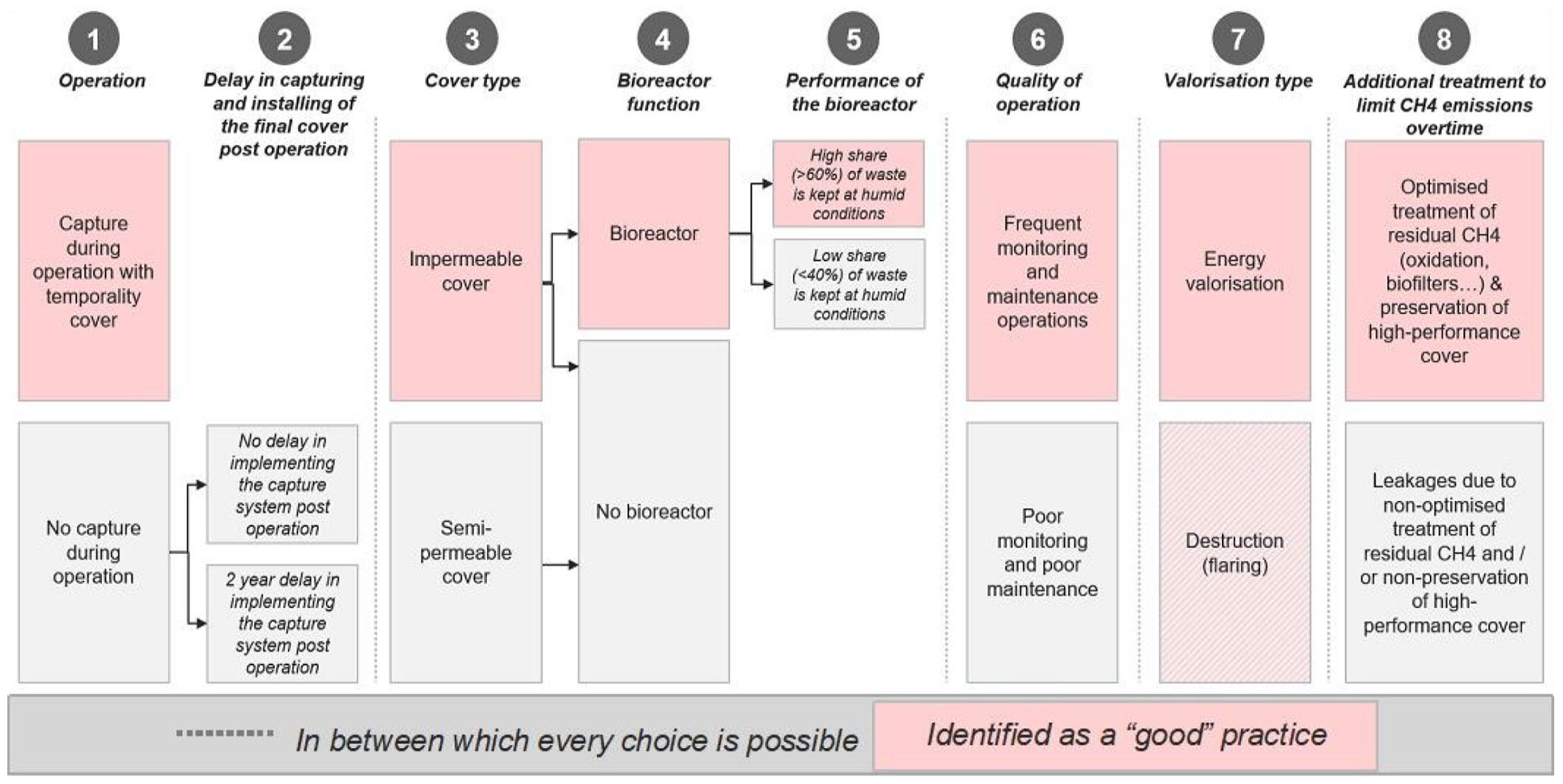
Description of ‘good practices’ in engineered landfills – Red boxes present good practices under each of the eight technical measures. The grey boxes present poor or average practices that do not lead to optimal landfill management.
The corresponding ‘good practices’ are realistic operating conditions today, effectively implemented in ~25%–30% of the French landfills operated by the authors. Each of these are further described below.
Early LFG capture
It is now currently agreed that the implementation of LFG collection system during operation, within 1 year after waste is placed at the earliest stage of methanogenesis, enables the capture of the methane produced by the rapid degradation of the residual organic fraction (Krause et al., 2023). Operating surfaces are identified as the most important ‘hot spots’ from several emission survey campaigns (Cusworth et al., 2020; Di Trapani et al., 2023; Shen et al., 2018; Wong et al., 2023). The experimental study implemented by Veolia (Figure 2) shows the attenuation of CH4 emissions produced by the installation of a progressive horizontal degassing: 20% of the total LFG captured over 9 years of monitoring and degassing have been captured during 3 years of early degassing during the operation period. Figure 3 shows the importance of methane emissions in the landfill cell under operation in comparison to completed landfill cells. An implementation cost of 59 k€ per cell is assumed to compute the results in the following section.
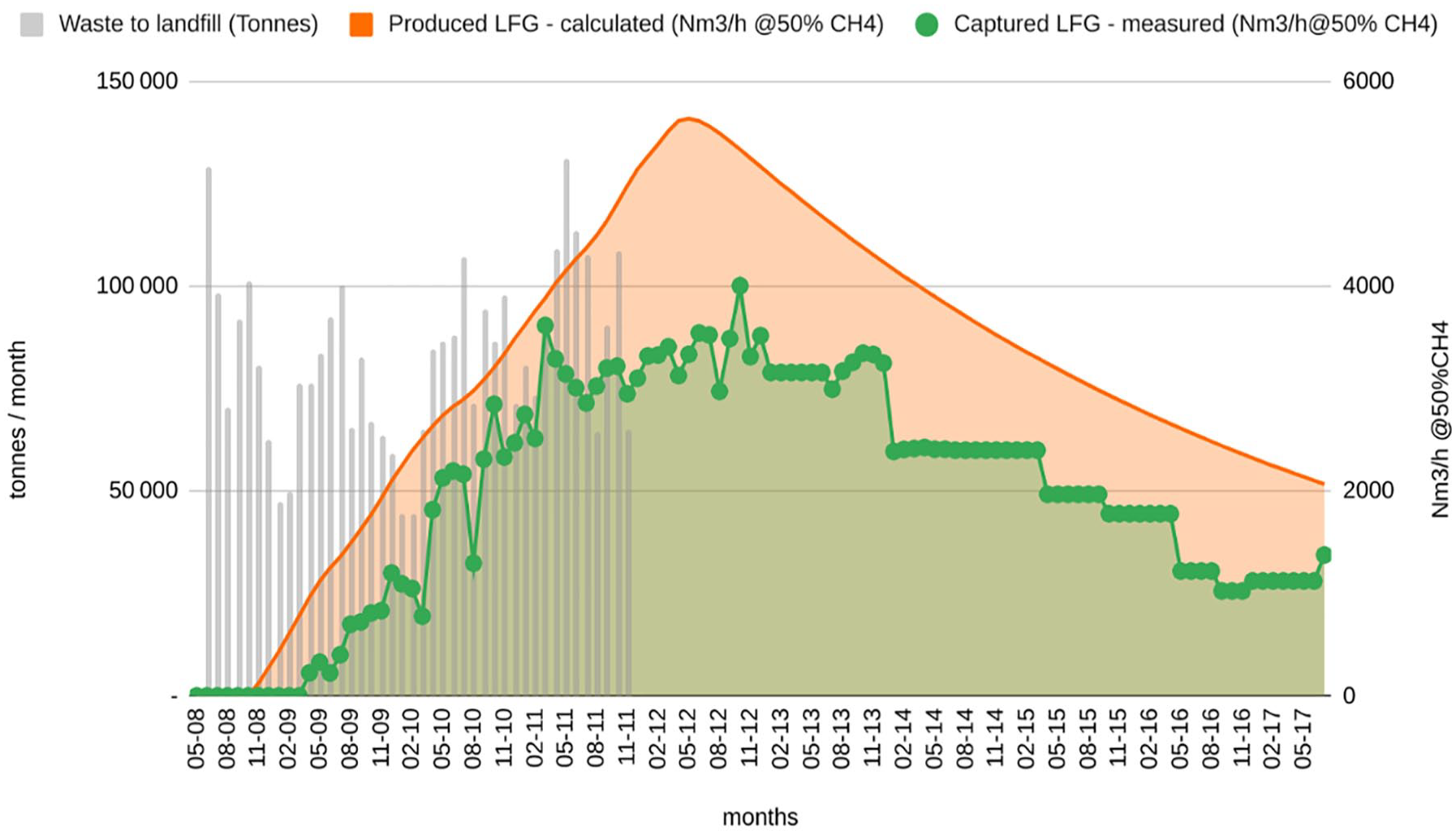
Progressive horizontal degassing on a French landfill cell (2008–2017).
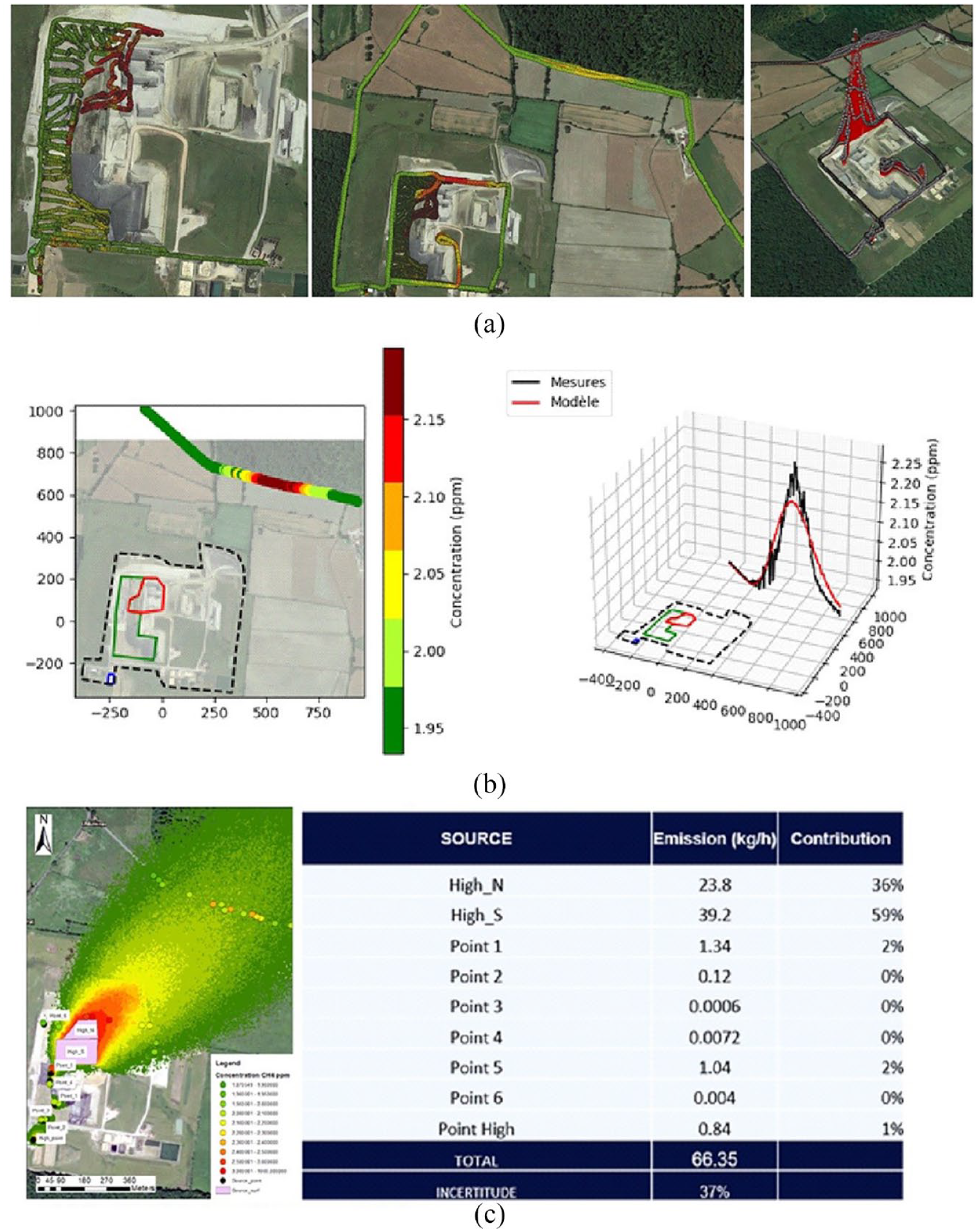
Spatial distribution of methane concentrations on a landfill site. Models backed-up by measurements confirm the high emissions associated to cells in operation. The emission quantification spatial distribution (a) are based on actual measurements and compared to two calculation models (b) Gaussian-based reverse modelling and (c) Lagrangian-based reverse modelling.
Prompt installation of an appropriate cover (good practices 2 and 3)
The reduction of the working area and the rapid implementation of intermediate and final cover are the key to promote an efficient LFG capture. The quality of the cover materials has an evident effect on the intensity of emissions. Research conducted by Cal Poly (Hanson and Yesiller, 2020) found that cover type was the most significant operational factor affecting surface methane emissions. The final cover systems with high fine soil content and use of geosynthetics resulted in the lowest fluxes. The use of a geosynthetic High Density Polyethylene (HDPE) liner is common in Europe to reduce both leachate production and methane emission as well as to improve LFG collection efficiency. An implementation cost of 109 k€ per cell is assumed to compute the results in the following section.
Bioreactor installation and operation (good practices 4 and 5)
Implementation of an impermeable final cover with a properly managed an anaerobic bioreactor system to maintain the correct humidity rate in the long term so as to optimise methanisation conditions and degradation until the waste and the landfill body are stabilised (no more subsidence or leachate production requiring intensive treatment). The interest of the bioreactor concept has been largely studied and confirmed (Pacey et al., 1999). The Environmental Protection Agency (EPA, 2018) is keeping research on landfill bioreactors active and considering whether to propose revisions to the criteria for Municipal Solid Waste Landfills to support advances in effective liquids management. To this end, EPA is seeking information relating to: Removing the prohibition on the addition of bulk liquids to Municipal Solid Waste Landfills.
The aim of the anaerobic bioreactor is to maintain the moisture content at around 35%–50% by circulating the leachate under an impermeable cover during the operating period and after closure. The composition and volume of the leachate are controlled and injected automatically to ensure maximum efficiency until the end of LFG production. The main advantage is the reduction in the stabilisation time for organic matter and the reduction in the post-closure monitoring period (Nanda and Berruti, 2021).
The other advantage is faster LFG production and greater interest in investing in energy recovery (Reinhart et al., 2002).
An implementation cost of 40.6 k€ per cell is assumed to compute the results in the following section, associated with an OPEX of 20 k€ (cell × year)−1.
Monitoring, operation tuning and maintenance (good practice 6)
It is considered that good monitoring and maintenance practices can prevent a significant proportion of methane losses to the atmosphere. This aspect is modelled by reducing the degradation of the capture rate due to leaks by 10%.
One promising avenue for research aimed at improving best practices in the monitoring and maintenance of LFG collection networks is the usage of big data from a LFG utilisation plant. An article (Barina et al., 2023) analyses field data from 10 LFG upgrading units and focuses on deviations in the LFG composition that occur during 1 year of operation. The real-time data collected by renewable natural gas (RNG) upgrading facilities (or others) installed on various landfill sites worldwide and correlated with other relevant data (weather, waste composition, landfill management techniques, ground-based and space-based emissions measurements, etc.) can allow for the development of intelligent models for managing LFG collection networks.
An operational cost of 26 k€ (cell × year)−1 is assumed to compute the results in the following section.
LFG utilisation for renewable energy production (good practice 7)
The capture and utilisation of LFG allows to offset part of the remaining GHG emissions associated with the operation of landfills, through avoided emissions that would otherwise occur when generating the same amounts of energy, as the amounts produced by the captured LFG. The energy can be heat, electricity, and /or RNG. The assumptions on the yield used for the calculation of cogeneration of heat and power (CHP) and for the upgrading of LFG to biomethane to meet RNG performances are presented below, along with the emissions factors, associated with each type of energy and used to calculate avoided emissions:
CHP (Heat): yield 35%, avoided emission factor 125 kg CO2eq MWhour−1
CHP (Power): yield 25%, avoided emission factor 57 kg CO2eq MWhour−1
Biomethane/RNG: yield 85%, avoided emission factor 244 kg CO2eq MWhour−1
The implementation cost assumed to compute the results in the following section are as follows: 1–2 M€ for a CHP facility and 3 M€ for a biomethane valorisation facility.
Residual oxidation (good practice 8)
Engineered systems such as biocovers are able to abate more than 50% of the residual methane in the aftercare period (15–30 years after landfill closure), provided that the residual flux is low and that such systems are well designed (Scheutz et al., 2009). An implementation cost of 174 k€ per cell- is assumed to compute the results in the following section.
The results presented in the following section are presented under three profiles of practices in landfills:
‘Best-in-class’ practices in landfills, which implies that all good practices presented in Figure 1 are implemented.
‘Average’ practices in landfills, which implies these practices are only partially implemented as follows: • No anticipated capture system is installed during the operational phase of a landfill. • The final cover and capture system are installed without delay when a landfill cell is closed. • The cover in place is impermeable, enabling a theoretical capture rate of 90% of methane emissions. • The landfill is not equipped with a bioreactor or is equipped with a bioreactor not or poorly exploited. • No waste is therefore kept at an optimal humidity level thanks to a bioreactor. • Moderate maintenance and reporting operations are carried out on the installation during surveillance period. • Captured gas is recovered through cogeneration or injection instead of being flared. • Leakage of residual methane emissions is partially limited by the use of treatments (natural oxidation, biofilters, etc.) until the total decomposition of the waste.
‘Bad’ practices in landfills, which implies the following practices being implemented as follows: • No anticipated capture system is installed during the operational phase of a landfill. • A delay of 2 year is taken between the final cover installation and an additional year of delay for the capture system installation. • The cover in place is semi-permeable, enabling a theoretical capture rate of 85% of methane emissions. • The landfill is not equipped with a bioreactor. • No waste is therefore kept at an optimal humidity level thanks to a bioreactor. • Poor maintenance and poor reporting operations are carried out on the installation during surveillance period. • Captured gas is flared. • Lack of treatment on the residual methane emissions, leading to significant leakage until the total decomposition of the waste.
The ‘business-as-usual’ scenario referred to in the following section is based on assuming current operating practices are continued in the next 10 years as they are today. It therefore assumes the existing distribution of practices is not changed: 38% of French landfilled waste is currently treated with good practices, 49% with average practices and 14% with bad practices.
Results and discussion
‘Best-in-class’ practices in landfills achieve a high level of methane capture (~80% lifetime collection efficiency) and energy recovery. They allow operators to reduce total direct emissions by ~50% compared to ‘average’ practices landfills and to increase biomethane production, thereby increasing avoided emissions by 50%.
Modelling for the current average French waste mix, the total direct GHG emissions generated by a landfill implementing ‘best-in-class’ operating practices are ~300–310 kg CO2eq t−1 of waste, compared to >600 kg CO2eq t−1 for a landfill operating with ‘average’ practices and almost 900 kg CO2eq t−1 for landfills operating with ‘bad’ practices (Figure 4).
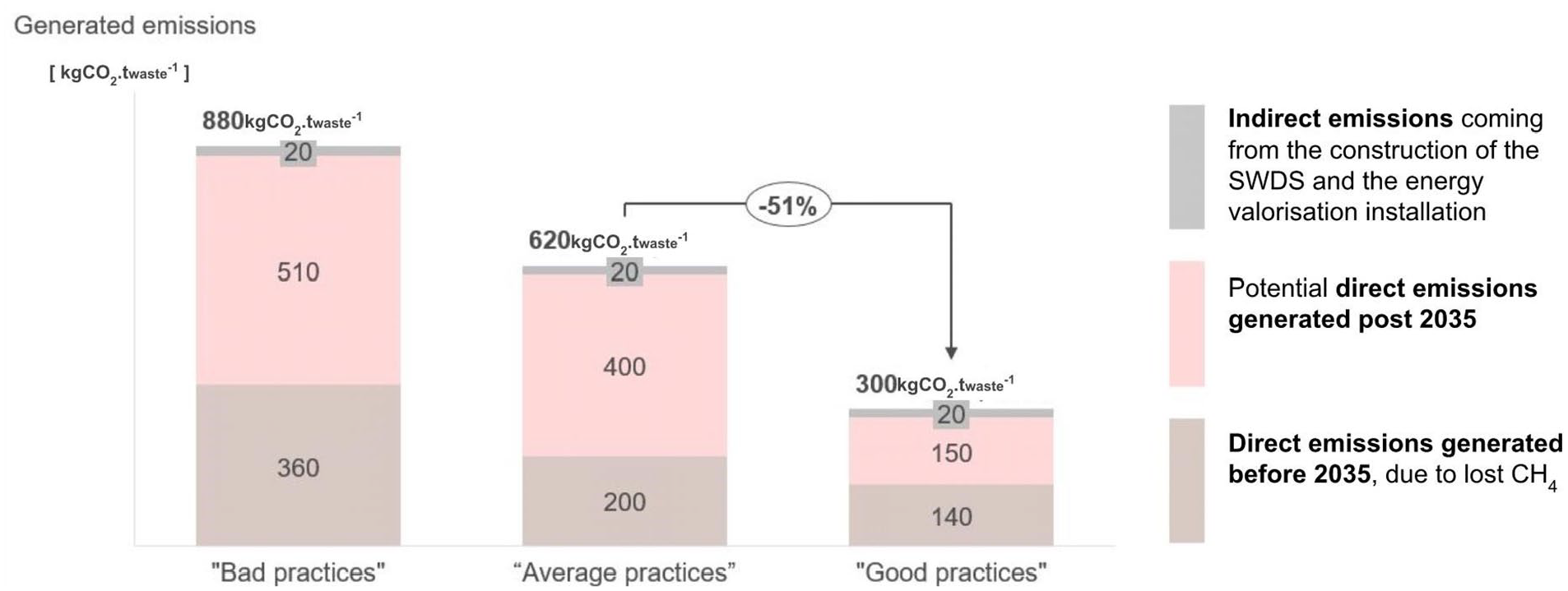
Comparative analysis illustrating emissions from landfills with ‘bad’, ‘average’ and ‘best-in-class’ operating practices production and capture modelled over a landfill cell lifecycle, average waste mix, France.
In addition to improving the methane capture rate, ‘best-in-class’ operating conditions allow for increased biogas recovery. Its injection into the gas network can generate ‘avoided emissions’ of up to ~110 kg CO2eq t−1 of waste by replacing fossil gas, while contributing to the national production of renewable gas (compared to ~80 kg CO2eq t−1 of waste for ‘average’ operating conditions).
In France, landfill biomethane could contribute to ~5%–10% of the 2030 biomethane injection targets (~2–3 TWhour depending on production practices); extrapolated at EU level, it could represent ~15–20 TWhour or ~5%–10% of the 2030 production target.
While pursuing the landfilled waste reduction target, the waste sector could reduce its emissions by an additional ~30% in 2030 (reduction of ~0.4 Mt CO2eq year−1 in France) at a reasonable average abatement cost of ~€20 tCO2eq−1, partly financed by additional energy recovery, by creating the conditions for better monitoring and control of fugitive emissions and supporting a general modernisation of landfill operations.
Existing and future landfilled waste will continue to be degradable 7 and therefore produce LFG. In the French perimeter, in a ‘business-as-usual’ scenario, assuming that operational practices are maintained as they are today over the next 10 years, all the waste landfilled between 2024 and 2035 has the potential to emit ~58 MtCO2eq to the atmosphere (cumulated over its entire degradation period), including ~1.5 MtCO2eq year−1 in 2030–2035.
If, at the same time as pursuing the objective of reducing landfilling, the conditions were created to support a general improvement in landfilling operations (corresponding to a widespread adoption of good practices), the corresponding fugitive emissions in France would be significantly reduced to the following (Figure 5):
~37 Mt cumulated over the whole degradation period (−21 MtCO2eq compared to the business as usual scenario).
~1.1 MtCO2eq year−1 in 2030–2035, corresponding to a ~28% reduction in landfill emissions due to fugitive methane from 2030 to 2035.
Such an improvement could be achieved at a reasonable cost to the community and partly financed by the resulting energy recovery:
Expressed in € per tonne of CO2eq avoided, the total cost of implementing the relevant measures results in a CO2eq abatement cost of approximately €20 tCO2eq−1, which is in the low range of publicly supported measures such as renewable electricity or renewable thermal energy supported by the Fonds Chaleur in France.
Expressed in € tonne−1 of waste landfilled: the corresponding cost would be a few euros per tonne of waste (~2–3€).
It should be noted that the capture of gas from closed landfills is considered a sustainable activity by the taxonomy.
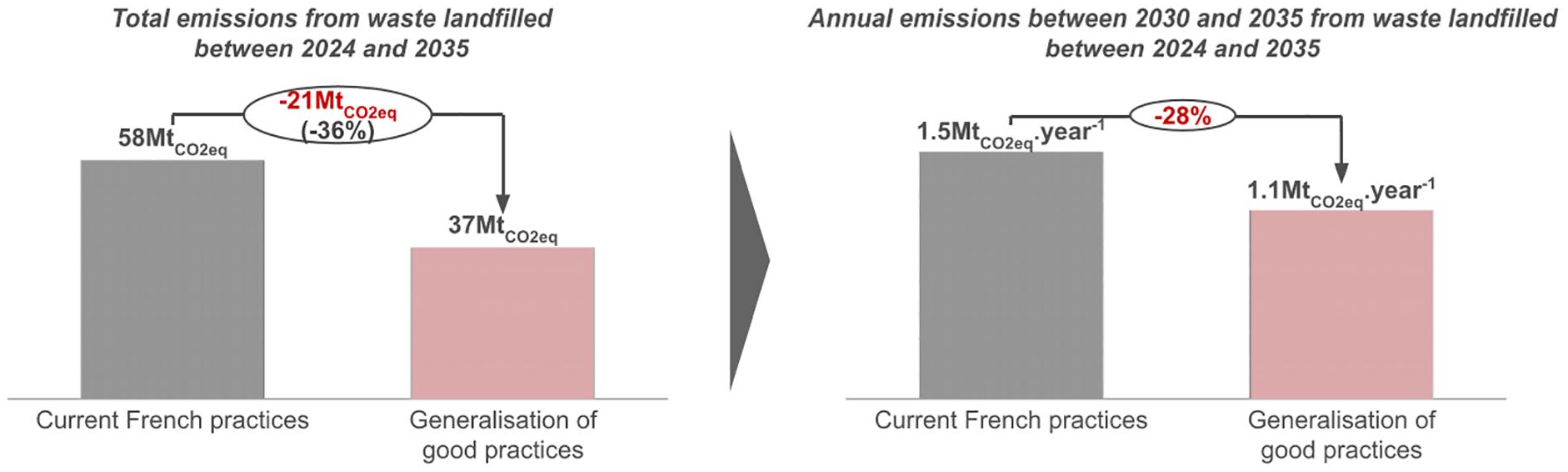
Projections delineating emissions reduction in France with and without the adoption of good practices.
The costs associated with the mainstreaming of ‘good practices’ could be financed by the revenues from energy recovery if the right investment conditions were in place.
In addition, the cost of energy recovery makes it one of the most competitive sources of renewable gas on the market and could cover the cost of upgrading without additional public funding if good conditions are in place to encourage investment. While the smallest plants will still need either public support or a high market price, most landfills producing more than 1,000 Nm3 hour−1 will be able to sign offtake agreements directly with consumers, as shown by the first European examples. 8 On average, landfill biomethane is the production source requiring the least public support in € MWhour−1.
Under ‘centralised’ gas and EU-ETS market conditions, which generate a ‘network’ gas mix at ~60 € MWhour−1, landfill biomethane production units with a minimum capacity of 1,500–2,000 Nm3 hour−1 (typically accessible on an ‘average’ landfill site with a capacity of 150,000–250,000 tonnes year−1) would produce competitive biomethane with a profitability level in line with the project financing ratio, including a revenue transfer to operators of 2–3 € tonne−1 of waste, able to cover the above-mentioned costs.
The RED II Directive 9 clearly identifies LFG as a renewable energy source and the ‘green value’ of landfill biomethane will undoubtedly be supported by the EU taxonomy. However, some ambiguities in the criteria to be met for landfill biogas recovery to be considered an eligible activity under the European taxonomy would need to be corrected, both in the French version and in the other EU versions of the taxonomy to avoid the risk of confusion, increase the appetite for landfill biomethane and send positive signals to operators and investors.
The authors of this study support the waste treatment hierarchy and thus the reduction of landfilling (disposal) in Europe and highlight the critical importance of ensuring that this reduction is adequately accompanied by the following measures across Europe, in order to enable the necessary economic incentives to reduce GHG emissions from landfills:
Control and measure fugitive methane emissions for the remaining volumes of landfilled waste.
Identify and optimise the available biomethane potential and other relevant forms of energy recovery.
The contributors to this study support the vision of a landfill landscape in 2030 that meets the EU targets (e.g. maximum of 10% of Municipal Solid Waste landfilled by 2035 and biowaste diversion), centred on large and high performing landfills, equipped with the appropriate methane measurement tools and operated to the highest quality standards, including full optimisation of their energy recovery potential.
In order to achieve this objective, this study makes several recommendations in terms of technical, regulatory and operational developments.
In order to achieve better practices and an average level of methane capture corresponding to widespread good practices, several types of challenges need to be overcome. These challenges are illustrated below mostly through the case of France, which is aiming for an 85% capture rate by 2030 10 :
A technical challenge to properly measure the actual level of fugitive methane emissions
Landfills are not equipped with continuous monitoring of methane emissions, an emerging technology that is being developed as a priority for the oil and gas industry. High seasonal and local variations make one-off measurements globally unreliable unless carried out on a regular basis.
The assessment of methane emissions from five landfills (Figure 6) based on measurements and predictive gas models comparison (Allegrini et al., 2023) has shown the importance to consider that direct comparison between the emissions results based on atmospheric measurements and those based on LFG prediction models is biased by the timescale. Indeed, LFG prediction models provide yearly averages of biogas production and potential emissions, while atmospheric measurements are representative of the time of the campaign. Landfill emission temporal variability is well known. Thus, regular, and ideally continuous measurements should be considered to provide a more robust comparison. Nevertheless, first measurements can already provide a qualitative comparison and initial understanding of the suitability of landfill models parameter.
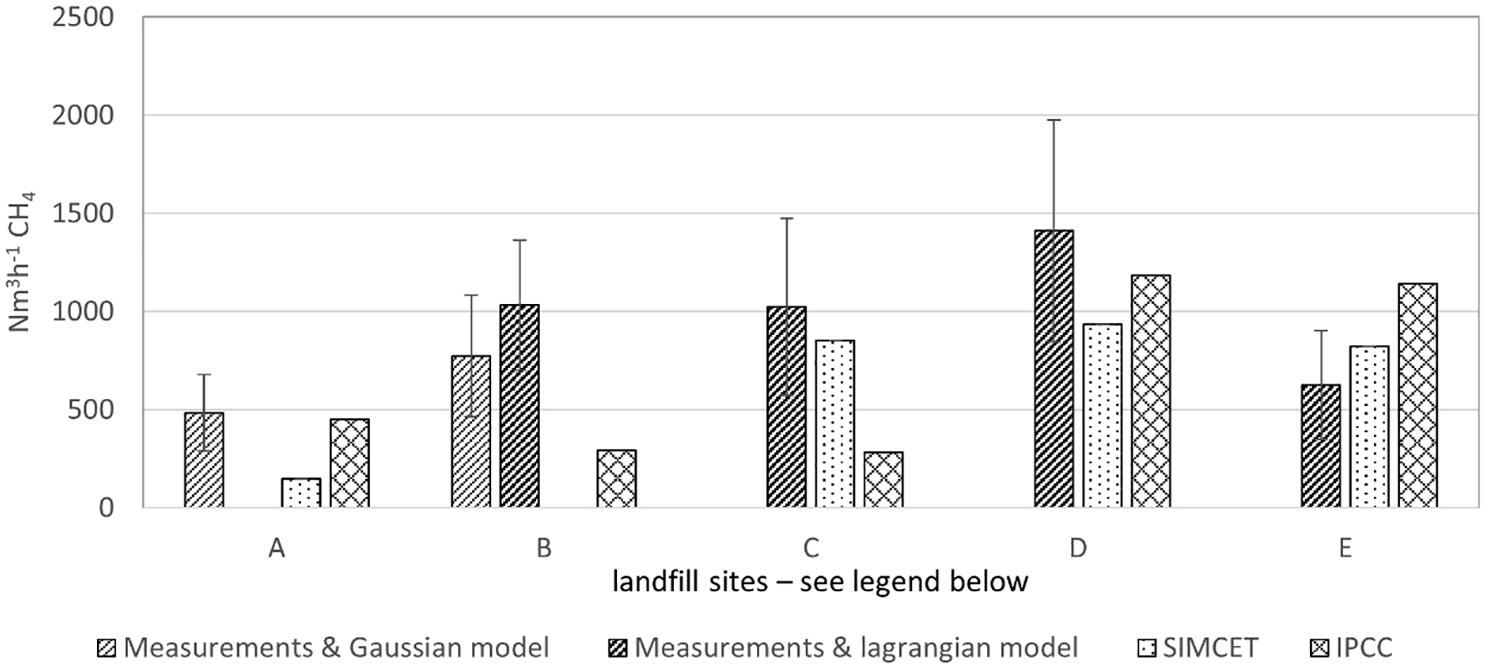
Measurements versus landfill predictive models.
Actual measurements on a bioreactor landfill with a high-precision methane sensor reveal the concentration levels spatial distribution, as shown in Figure 3. The main volume of methane (around 85%) comes from the open cell being filled (Allegrini et al., 2023).
Operators are currently reliant on theoretical modelling of LFG production and capture, which is an inadequate basis on which to build appropriate performance-based incentive mechanisms or reliable business plans for significant investments. In addition, rapidly changing climate conditions and waste mixes make current modelling tools such as the IPCC framework increasingly unreliable year on year.
Lack of recognition of best practices and incentives to improve methane capture and energy recovery performance, both in national reporting and in the fiscal framework
Based on the authors’ experience, the level of landfill emissions reported at national level is estimated using highly variable methodologies and high levels of uncertainty, not recognising best practices implemented by discrediting operators’ practices.
When comparing the measurements, the declarative calculation and modelling approaches, results are significantly different, even if the predictive model of potential production and the effective production measured on site reach the same total production volume (Figure 7).
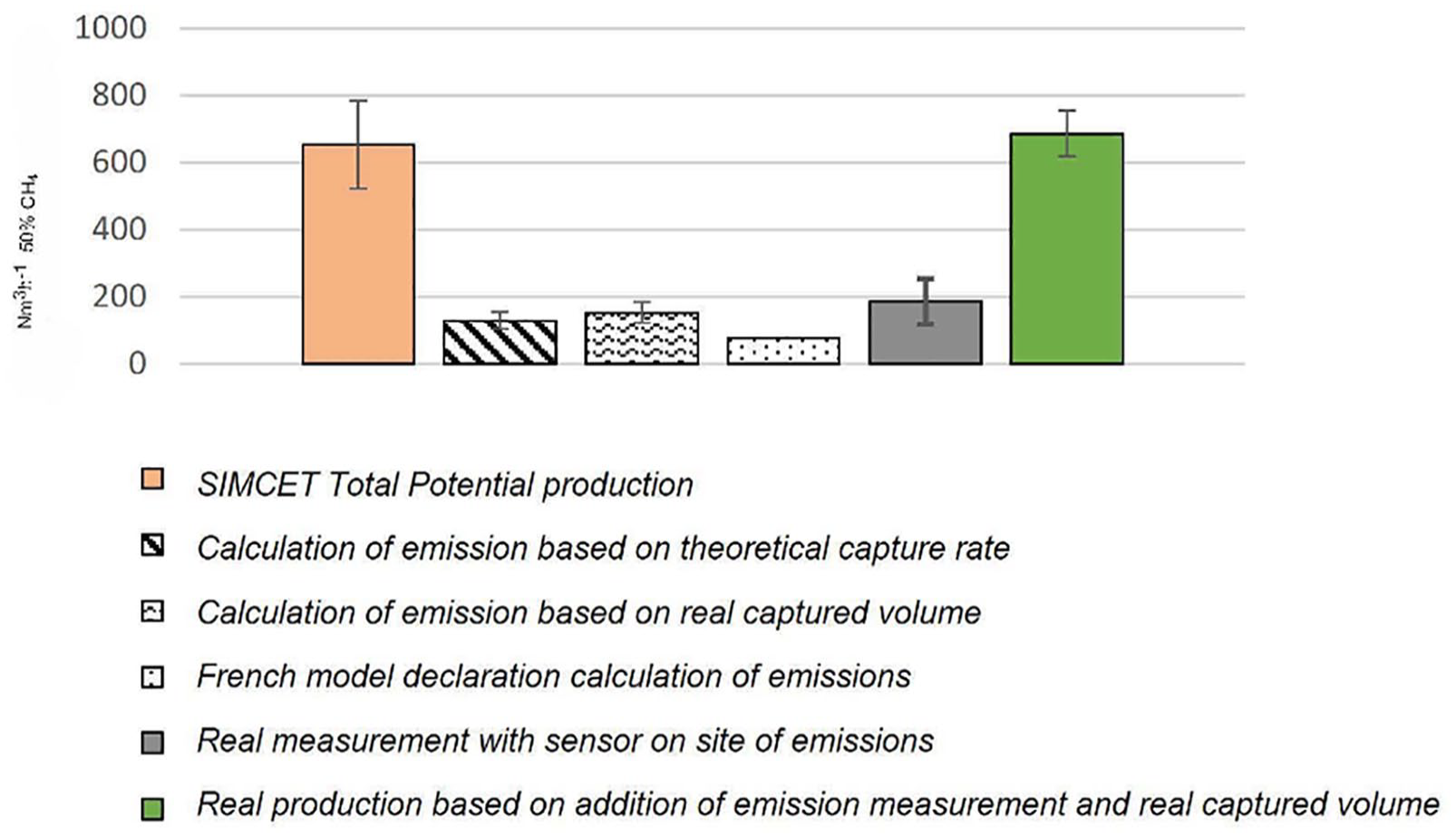
Comparison of modelled, measured and declared biogas production (Allegrini et al., 2023).
As a result of declarative calculations not acknowledging best practices, the fiscal incentives are not effective in encouraging improved operations.
Best practices implementation
Best practices refer to the design, build and operation as detailed in Figure 1. They are realistic operating conditions already in place in ~25%–30% of Suez and Veolia French landfills. Most of the proposed best practices are also promoted by international experts in the landfill sector. More details on these practices and their operational implementation challenges need to be made available to all landfill operators.
Taking these three types of challenges into account, a series of recommendations for policy makers and private and public market actors are proposed to transform the existing landfill sector in order to maximise its opportunities and reduce its environmental impacts:
Establish a Best Available Techniques Reference Document (BREF) dedicated to non-hazardous waste landfills to harmonise, disseminate and describe in details good operating practices.
Undertake a review of monitoring, reporting and verification (MRV) methodologies. Initial ideas include:
○ Reviewing national reporting methodologies and better aligning them with corporate reporting methodologies, which for many operators is done using sophisticated internal tools and expertise to achieve higher levels of confidence in estimates. ○ Review and standardise measurement methodologies, including, for the largest sites, some rules on the actual measurement of fugitive emissions (standardising the frequency and number of measurements) and propose a certification system. ○ Promote European harmonisation of MRV methodologies, for example by launching an EU programme involving several states and operators.
Revise the Landfill Directive to incorporate the above changes to (1) introduce a measurement system for fugitive emissions, and (2) introduce a target for methane capture rates (with an adapted timetable for reaching the target depending on the situation in each country). LFG is a nuisance when not captured, and an energy asset when captured and valorised.
Adapt some key regulations to operational needs – in particular: give operators more flexibility to maintain the appropriate humidity level of the waste masses by allowing reinjection to a greater extent than for bioreactors and by increasing the sources of water available for reinjection (leachate from other sites, industrial wastewater, etc.) according to the humidity and composition of the waste received.
While conforming to the EU biowaste diversion targets, encourage the production of landfill biomethane through appropriate support mechanisms, regulatory consistency and continuity over time, in order to produce significant quantities at market prices and without subsidies (except for the smallest installations), thus generating financial flows for operators to finance the above actions. Among other things, provide stability in the status of landfill biomethane and in the ability for consumers to recover it as decarbonised energy in regulatory systems such as the EU-ETS.
Rethink the fiscal and support framework to incentivise concrete improvements in operational and methane capture performance, tending to promote outcomes (where measurable) rather than means.
Harmonise EU taxonomy with RED II: While both the RED II Directive no. 2018/2001 and the Commission Delegated Regulation (EU) 2021/2139 on taxonomy clearly identify LFG as a renewable energy, the latter introduces some ambiguity that may jeopardise the strategy of better capture and recovery of LFG.
Include the landfill sector in the European projects to develop continuous measurement technologies for fugitive methane emissions (Copernicus Sentinel Programme, CoCO2 project) in order to prepare for the longer term, when continuous measurement at large landfill sites will allow the implementation of a proper emissions-based incentive system.
Conclusion
This research furnishes novel insights into the transformative potential of non-hazardous waste landfills in driving EU GHG reduction objectives. Although the organic waste diversion is the number one priority, there will remain a portion of biodegradable mixed waste that will have to end up in the landfill because it is too polluted or non-recyclable (e.g. mixed materials) and the incineration alternative is not available. This will result in lower but still significant LFG production until 2050, which needs to be captured and valorised to positively contribute to the climate and energy transition. The implementation of sound operating practices, including a high methane capture rate (~80%) and efficient energy recovery mechanisms, can yield a substantial reduction in total emissions (~50%). The captured methane will produce biogenic CO2 when burnt, whereas the fossil carbon imbedded in the non-recyclable plastics landfilled will be sequestered under the landfill cover. By advocating for the adoption of sustainable waste management practices, encompassing biowaste diversion, efficient energy recovery and biomethane production, this study provides insights for operators and policymakers to realise a future wherein landfills serve as catalysts for sustainable, low-carbon economic growth within Europe. Notably, landfill biomethane emerges as a competitive solution, contributing significantly to decarbonisation efforts and bolstering energy autonomy.
This research leads to the following findings and recommendations:
Emission Reduction Potential: Through the adoption of widespread good practices and the enhancement of landfilling operations, the European waste sector stands to achieve an additional ~30% reduction in emissions by 2030, 11 at a reasonable abatement cost (approximately €20 tCO2eq−1).
Financing through Energy Recovery: Our study suggests that the costs associated with implementing good practices in existing European landfills can be offset by revenues generated from energy recovery initiatives. Landfill biomethane is identified as one of the most viable sources of renewable gas, thereby offering potential financial sustainability.
Policy Recommendations: Concrete policy recommendations are proposed, spanning technical, regulatory and operational domains. The harmonisation and standardisation of methodologies, the promotion of biomethane production and other recovery of LFG to renewable energy, and the incentivisation of operational enhancements are deemed essential for fostering sustainable waste management practices in Europe.
Technical recommendation: The technical challenge of proper measurement to avoid operators relying solely on theoretical modelling of LFG production and capture needs to be addressed because it is an inadequate basis on which to build appropriate performance-based incentive mechanisms or reliable business plans for significant investment.
Footnotes
Acknowledgements
The authors would also like to thank Hipolito BILBAO INTXAURRAGA – Integrated Pollution Prevention and Control Unit Manager for the Basque government and Expert in working group for the review of the Document Best Available Techniques for Waste Treatment
Declaration of conflicting interests
The authors declared no potential conflicts of interest with respect to the research, authorship, and/or publication of this article.
Funding
The authors disclosed receipt of the following financial support for the research, authorship, and/or publication of this article: This study was funded by SUEZ, VEOLIA and WAGA ENERGY and coordinated by E-CUBE Strategy Consultants.
