



Abstract
A 12-year field study on municipal solid waste (MSW) stabilization in Northern climates was conducted at Ste. Sophie landfill in Québec, Canada. Temperature and settlement data were collected from 12 instrument bundles placed at varying depths in two vertical columns within the waste during the filling and post-closure phases. The data demonstrated a 12–18 month delay in temperature rise during the filling stages due to frozen or partially frozen MSW and highlighted ambient temperature effects at shallow depths. A thermal–mechanical–biological (TMB) model was developed and calibrated to simulate the impact of temperatures on MSW stabilization, particularly emphasizing landfills without leachate recirculation in Northern climates. The biological model related anaerobic heat generation from MSW with temperature and expended energy from biodegradation. The resultant heat was integrated into the thermal model, allowing for the simulation of heat transfer through conduction. The thermal parameters were expressed as a function of density, which was updated in the mechanical model that combined a Generalized Kelvin–Voigt model with a biodegradation-induced strain term. This term was represented as the ratio of expended energy over time to total potential expended energy of the waste. The TMB model effectively predicted MSW behaviour, considering temperature rise delays in cold and sharp rises in warm conditions. This is essential for optimizing landfill operations by promoting waste stabilization before applying the final cover.
Introduction
Landfills serve as Canada’s main method for municipal solid waste (MSW) disposal, with Ontario leading in waste disposal, followed by Québec, Alberta and British Columbia (Mohsen et al., 2019). The climate in Canada poses a challenge for the stabilization of MSW. In winter, frozen or partially frozen MSW may remain at low temperatures for several months or even years due to latent heat and the insulation caused by the placement of subsequent waste layers (Berquist and Van Geel, 2020; Bonany et al., 2013; Hanson et al., 2010). This affects MSW decomposition due to the inhibitory effect of cold temperatures on biological activity (Rowe and Islam, 2009). To evaluate the influence of temperature on MSW stabilization and settlement, it becomes essential to simulate heat generation from the biodegradation of MSW and heat transfer.
Existing literature features various numerical models to simulate MSW stabilization, with some of them focusing on heat generation from MSW biodegradation and incorporating thermal modelling for temperature variations within landfills (Bente, 2011; Bente et al., 2017; El-Fadel et al., 1996; Gholamifard et al., 2008; Hubert et al., 2016; Kumar and Reddy, 2021; Kumar et al., 2021; Li et al., 2021; Lu and Feng, 2022; White and Beaven, 2013; White et al., 2014). Some studies employed a three-stage anaerobic model (El-Fadel et al., 1996; White and Beaven, 2013; White et al., 2014), whereas others adopted a two-stage (Bente, 2011; Bente et al., 2017; Gholamifard et al., 2008; Hubert et al., 2016; Kumar and Reddy, 2021; Li et al., 2021; Lu and Feng, 2022; McDougall, 2007), or a first-order decay model (Chen et al., 2012; Hettiarachchi et al., 2009; Kumar et al., 2021; Reddy et al., 2018). Heat generation approaches varied: El-Fadel et al. (1996) linked it to acetic acid formation, Gholamifard et al. (2008) associated it with volatile fatty acids and methane production and Kumar and Reddy (2021) concentrated solely on methane generation. In contrast, White and Beaven (2013), White et al. (2014), Bente (2011), Bente et al. (2017), Li et al. (2021) and Lu and Feng (2022) utilized reaction enthalpies, Hubert et al. (2016) correlated heat with organic content and Kumar et al. (2021) as well as Berquist and Van Geel (2020) applied Hanson’s empirical functions (Hanson et al., 2013). Heat transfer methods exhibited variation, with some focusing on conduction (Berquist and Van Geel, 2020; Kumar and Reddy, 2021; Kumar et al., 2021), whereas others emphasizing both conduction and convection (Bente, 2011; Bente et al., 2017; El-Fadel et al., 1996; Gholamifard et al., 2008; Hubert et al., 2016; Li et al., 2021; Lu and Feng, 2022; White and Beaven, 2013; White et al., 2014).
The most influential factors affecting anaerobic biodegradation and the consequent biodegradation-induced settlement include temperature, moisture and pH. Various models investigated these factors either individually or in combination. Some models focused on temperature alone (Berquist and Van Geel, 2020; Kumar and Reddy, 2021) or moisture alone (Chen et al., 2012; Reddy et al., 2018). Others explored interactions between temperature and moisture (Kumar et al., 2021), moisture and pH (Hubert et al., 2016; McDougall, 2007), temperature and pH (El-Fadel et al., 1996) and temperature, moisture and pH (Bente, 2011; Bente et al., 2017; Gholamifard et al., 2008; Li et al., 2021; Lu and Feng, 2022; Mousavi and Eun, 2023; White and Beaven, 2013; White et al., 2014).
Among the various parameters controlling anaerobic biodegradation, temperature is an important factor that influences not only methanogenesis rates but also the physical, chemical and biological components of the ecosystem (El-Fadel, 1991). Cold temperatures are known to severely constrain cellular function by negatively impacting cell integrity, solute diffusion rates, water viscosity, macromolecular interactions and enzyme kinetics (Nie et al., 2021). The freezing of waste materials can lead to the formation of ice layers, restricting microorganisms’ access to organic components, causing a delay in the microbial breakdown of organic matter. Gupta et al. (2017) reported that at very low temperatures, some microbes lose viability due to ice crystal formation on their surfaces. Furthermore, models proposed in the literature that investigate the temperature effect on biodegradation have assumed that no biodegradation occurs at temperatures equal to or below 0°C (e.g. Bente, 2011; Hanson et al., 2013; Kumar and Reddy, 2021; Young, 1989).
The biodegradation of MSW results in additional settlement, prompting the exploration of various modelling methodologies in the literature. McDougall (2007) introduced a degradation-induced void change parameter. However, the model included a detailed biological framework that necessitates the establishment of multiple input parameters and did not consider heat generation and temperature effects. Lu and Feng (2022) and Kumar and Reddy (2021) similarly adopted this approach, extending McDougall’s model by incorporating heat generation from biodegradation and accounting for the influence of temperature. Hettiarachchi et al. (2009), Chen et al. (2012), Mousavi and Eun (2023) and Xie et al. (2023) employed a first-order decay equation to analyse biodegradation-induced settlement but did not simulate heat generation and transfer. Hubert et al. (2016) followed a similar approach, incorporating heat generation and transfer; however, temperature effects were not considered in the model. Reddy et al. (2018) adjusted the elastic stiffness parameters to simulate biodegradation-induced settlement, reducing stiffness with the increased degree of degradation but without considering temperature effects on biodegradation. Kumar et al. (2021) extended this model by incorporating temperature effects. However, they did not link heat generation, modelled via Hanson et al. (2013) function, with biodegradation and biogas production, modelled using the LandGEM model (Alexander et al., 2005). Berquist and Van Geel (2020) introduced a temperature-dependent biodegradation-induced settlement (TDBI) term. This terms was defined as the ratio of expended energy with time due to biodegradation, tracked through the model proposed by Hanson et al. (2013), to the total potential expended energy due to biodegradation, which is related to the organic fraction of the waste. Table 1 provides an overview of the aforementioned models.
Summary of models proposed in literature to simulate MSW stabilization.
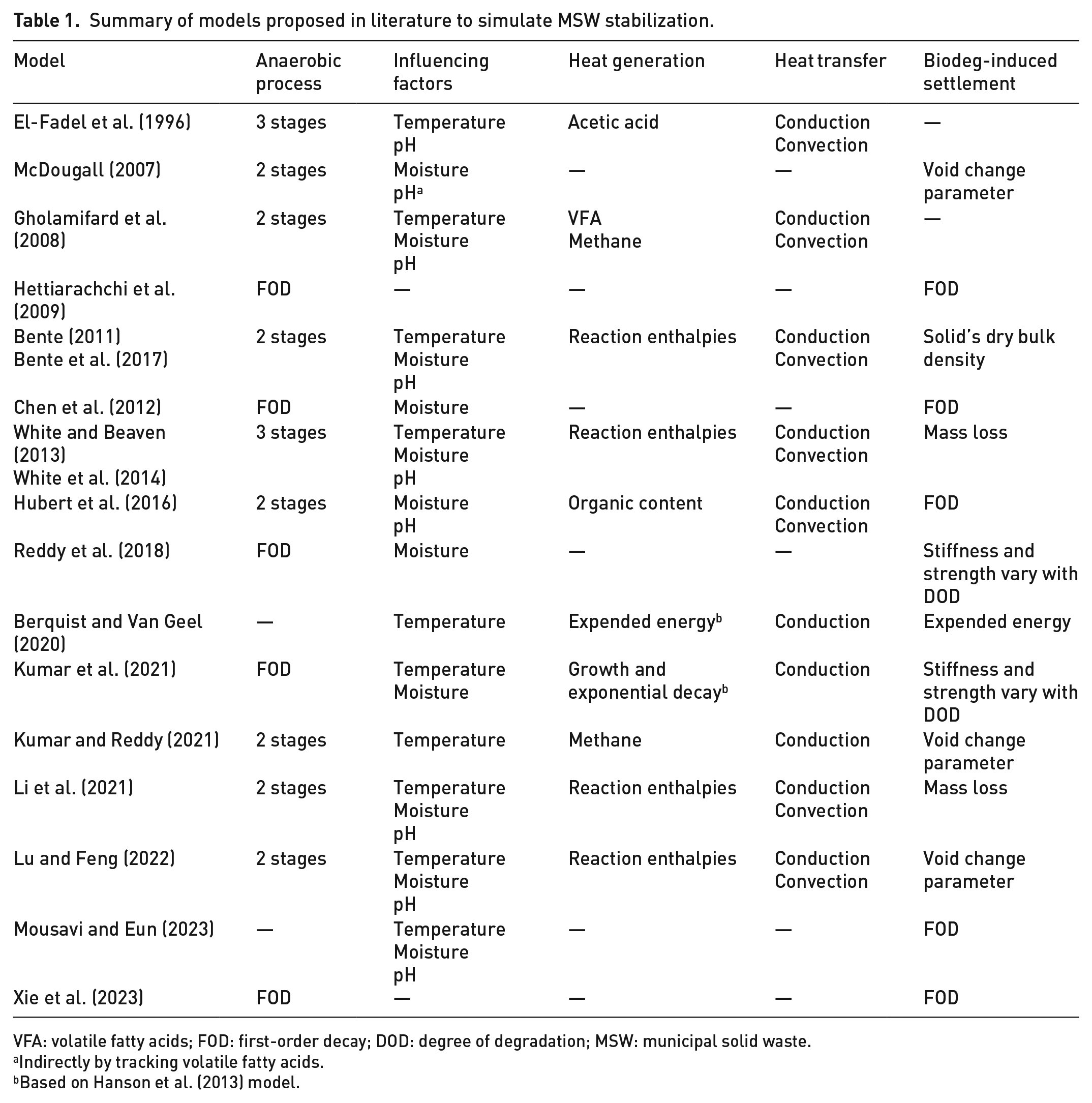
VFA: volatile fatty acids; FOD: first-order decay; DOD: degree of degradation; MSW: municipal solid waste.
Indirectly by tracking volatile fatty acids.
Based on Hanson et al. (2013) model.
With limited field temperature data available in the literature, numerous models relied on laboratory-derived measurements from shredded MSW samples to verify their models (Bente et al., 2017; Hubert et al., 2016; Kumar and Reddy, 2021; Li et al., 2021; Lu and Feng, 2022; Mousavi and Eun, 2023; White and Beaven, 2013). A few studies in literature verified their models with field data, often from limited depths and the post-closure phase. For instance, Gholamifard et al. (2008) used field temperature data of MSW at a depth of 3 m, but Yeşiller et al. (2005) and the current study found seasonal variations impacting shallow (6–8 m) MSW temperatures. Kumar et al. (2021) employed 5-year temperature data from a 13-m depth in a Michigan landfill (Hanson et al., 2013), yet post-closure data lack insights into MSW behaviour during the filling stages, essential for optimizing landfill operations to maximize waste stabilization before the application of the final cover.
Accordingly, this article conducts an in-depth analysis of 12 years of field temperature data collected at various depths within two vertical columns in the waste during the filling and post-closure phases of the Ste. Sophie landfill in Québec, Canada. The data are provided in Supplemental material. This study involves the collection of temperature and settlement data; however, this article focuses on the field and modelling of the temperature data as the field and modelling of the settlement data are presented in a separate paper (Alghazali et al., 2024). It is important to note that no similar detailed field data, collected during the filling stages, are available in the existing literature. Such data are essential for optimizing landfill operations to encourage waste stabilization prior to the placement of the final cover. The field dataset also plays a crucial role in numerical modelling, as it can be used to calibrate the input parameters of various existing numerical models. For instance, field temperatures, which have a direct impact on MSW stabilization, exhibit significant fluctuations during the filling stages before reaching a long-term stabilized level. Additionally, this article presents a framework for a thermal–mechanical–biological (TMB) model calibrated with 12-year temperature and settlement dataset. The model aims to simulate the temperature and settlement response of MSW, particularly in landfills without leachate recirculation in Northern climates.
Site description
This study focused on an engineered landfill with leachate and gas collection systems, but without leachate recirculation, located within Ste. Sophie in Québec, Canada. MSW was disposed in 3–4 m lifts placed as a series of waste layers 0.3–0.4 m in thickness and compacted with a sheepsfoot roller with a post-compaction density of 930 kg m−3. The exception was the first waste layer, placed above the leachate collection system, which was approximately 1.5 m thick and termed as the fluff layer herein. The disposed MSW included 53% residential waste, 8% commercial waste, 10% sludge and construction and demolition wastes, and 29% soil used as daily cover (Berquist and Van Geel, 2020).
Twelve instrument bundles (labelled as B1–B12) were installed in two columns during the filling stages, with each bundle included a liquid settlement system, a total earth pressure cell (TEPC), an oxygen sensor, a moisture and electrical conductivity sensor, and a vibrating wire piezometer (Megalla et al., 2016). Figure 1 presents a schematic of the lifts, illustrating the estimated original lift thicknesses at placement and the locations of the bundles. It should be noted that B11 and B12, placed 10–15 m closer to the landfill centre to mitigate side slope effects, are projected into the 2D plane shown in Figure 1 for representation.
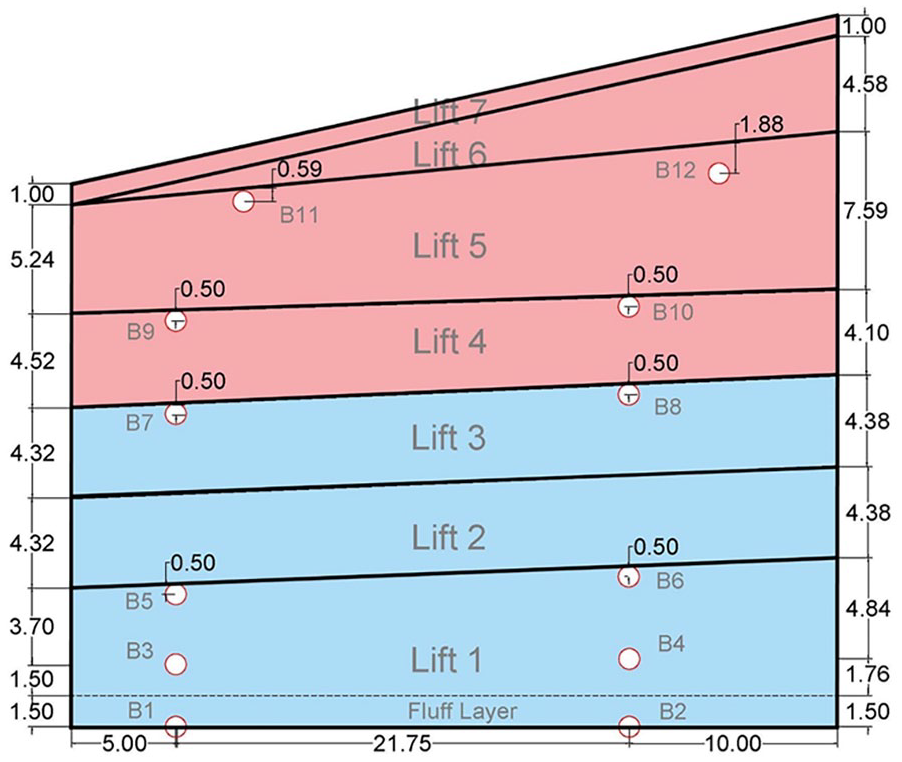
Lift heights and bundle locations; blue indicates lifts placed under freezing ambient conditions and red indicates lifts placed under warmer temperatures.
Field temperature data
The temperature was measured by different sensors within the bundle, including moisture and electrical conductivity sensor, settlement system, TEPC, piezometer (located in bundles B1–B4 only) and oxygen sensor. This temperature measurement was necessary for applying corrections to mitigate temperature effects on the raw instrument readings. The TEPC, settlement system and piezometers are all sealed stainless steel pressure transducers manufactured by RST Instruments. The moisture and electrical conductivity sensor is a 5TE soil moisture, temperature and electrical conductivity probe manufactured by Decagon Devices, and the oxygen sensor is a SO-200 sensor manufactured by Apogee Instruments Inc. Details regarding the specifications of the instrument bundles can be found in Vingerhoeds (2011).
The moisture and electrical sensors remained operational for only several months before they were malfunctioned; however, the temperatures recorded by the stainless-steel transducers continue to be monitored, except for some bundles that failed over time. Supplemental Table S2 illustrates the dates when the temperature data was lost from each transducer. The maximum difference between lowest and highest temperatures, excluding reading from the oxygen sensor that measured 0.5°C higher due to a condensation-preventing heater, never exceeded 0.5°C, reinforcing data reliability. The field temperatures presented in this study include readings from at least two sensors, except for B11, where temperatures after June 2015 were only measured using the oxygen sensor.
Figure 2 displays the temperature evolution at the 12 bundles, ambient temperature and waste lift placements. The location of each bundle, in terms of the lift in which it is installed, is indicated in brackets. For instance, B1 (Bot-L1) denotes that bundle B1 is located at the bottom of lift 1. Lifts 1–3 were placed in winter with recorded MSW temperatures ranging from −1.0 to −1.7°C at bundle installation. This resulted in the waste temperature of lift 1 remaining at temperatures close to zero for a duration of 12–18 months as indicated by readings from B3 and B4. The roughly 4 m of waste lift placed above the bundles, which provided insulation and when combined with the latent heat effect, prevented any temperature changes in response to the summer ambient temperatures during the summer of 2010. Therefore, the biological activity in the lower lifts was delayed causing the lower bundles to exhibit slower temperature increase patterns compared to the upper ones. Similar results were reported by Hanson et al. (2010) for cold and warm landfill regions. In their study, Alaska’s landfill exhibited delayed heat gain due to latent heat effects, requiring frozen MSW to thaw before biodegradation and heat generation could occur.
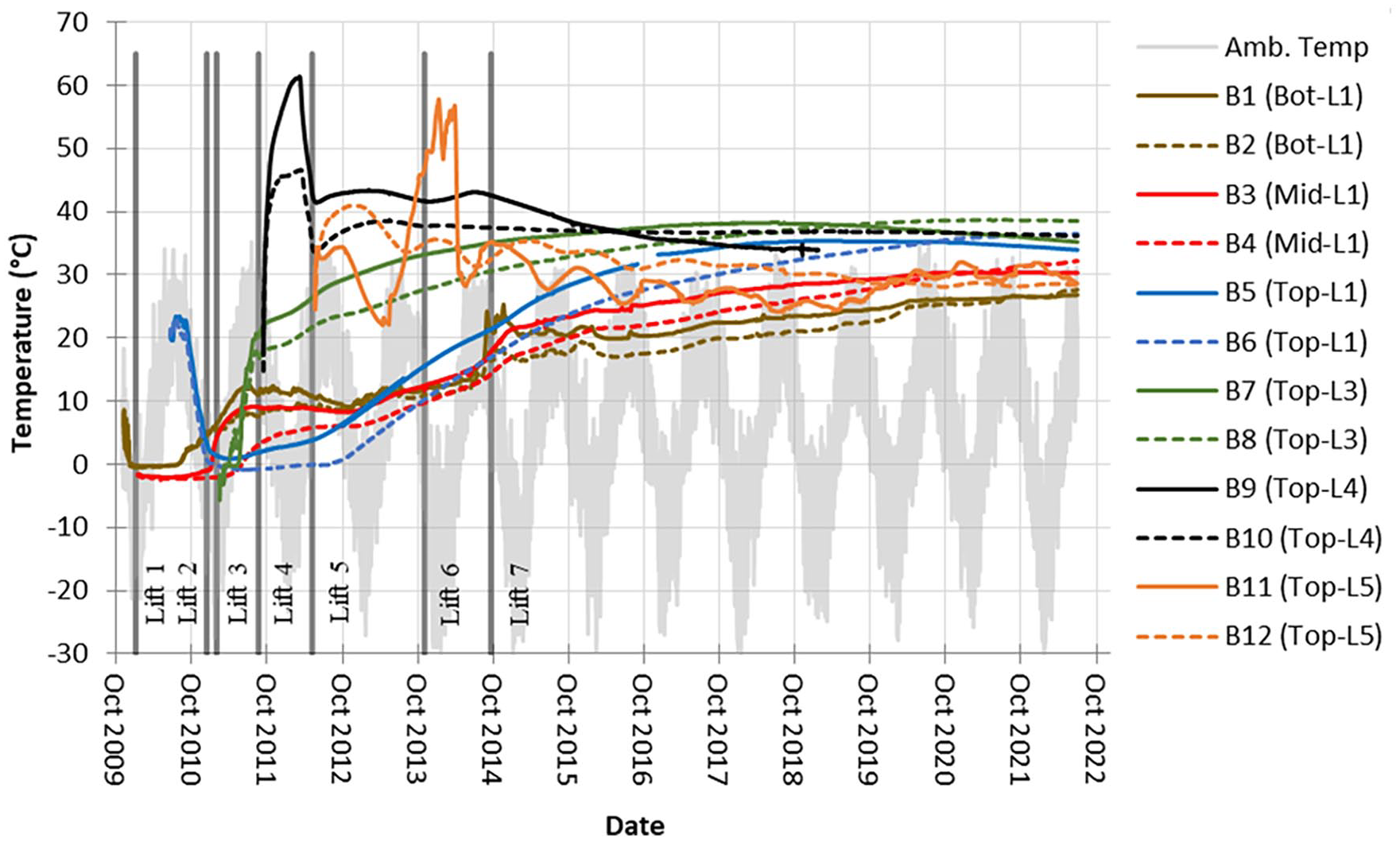
Field temperature trends at B1–B12 from October 2009 to June 2022; location of bundles is indicated in brackets.
Bundles B5 and B6, placed 0.5 m below the surface of lift 1, closely followed ambient temperatures with a slight phase lag, consistent with Yeşiller and Hanson (2003) findings on seasonal impacts on shallow waste temperatures. As the second waste lift was placed in December 2010 with near 0°C reported by B5 and B6, the bundles became insulated from the atmosphere and no longer followed ambient temperatures. Bundles B7 and B8 were placed 0.5 m below the surface of lift 3 when ambient temperatures were below freezing. They measured increasing temperatures, following the ambient temperatures with a slight phase lag, between January 2011 and August 2011. They were then insulated from the atmosphere when lift 4 was placed in August 2011. The initial temperature of the waste placed in lift 4 was 25.2°C. As a result, the temperatures at B7 and B8 gradually increased in response to the warmer lift above and the immediate heat generation from waste biodegradation in lift 4. Bundles B11 and B12, placed closer to the centre of the landfill, exhibited a similar response to ambient temperatures with a phase lag. This concurs with the findings in Yeşiller and Hanson (2003) and Yeşiller et al. (2005), indicating ambient temperature influence extends to 6–8 m depths.
Bundles B9 and B10, near the top of waste lift 4, exhibited elevated temperatures surpassing ambient levels, indicating notable surface heat. Oxygen concentrations at these bundles increased as well, signalling aerobic biodegradation, possibly due to air being drawn inward due to gas collection (Munasinghe, 1997). After the installation of lift 5 in May 2012, oxygen influx ceased, and temperatures rapidly decreased to 40°C. Bundle B11, situated in lift 5, displayed similar oxygen-related temperature increases, possibly influenced by regrading near the bundle reducing the thickness of material above the bundle. However, bundles situated near the surface of waste lifts 1 and 3, did not exhibit elevated temperatures or increased oxygen concentrations upon exposure to the atmosphere. This inconsistency was likely due to the freezing temperatures in the lower waste lifts and the absence of gas collection during the early stages.
TMB model framework
The mathematical framework of the TMB model, illustrated in Figure 3, outlines the coupling between thermal, biological and mechanical processes. The settlement of MSW increases its density, impacting the thermal parameters of MSW. The thermal conductivity (
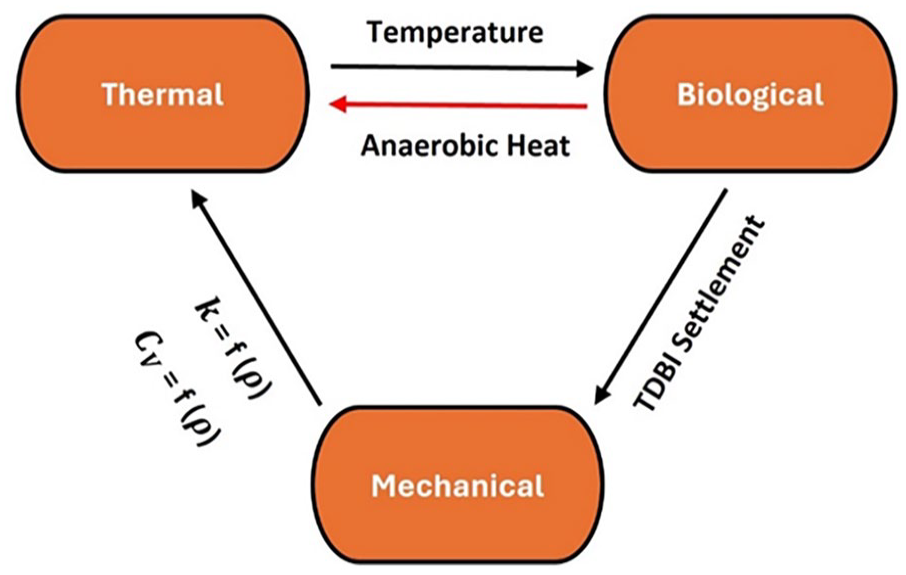
Framework of the TMB model.
The TMB model includes a thermal component to address the influence of temperature on MSW stabilization while disregarding the impact of hydraulic processes. This decision arises from the fact that engineered landfills typically incorporate leachate and landfill gas collection systems, which are designed to continually extract generated leachate and gas resulting from MSW biodegradation. From this particular standpoint, temperature can be considered as the dominant factor of influence on biodegradation (Liu et al., 2011).
It is important to note that the literature offers more robust models. However, these models often require a significant number of input parameters, which can be challenging to determine due to limited knowledge and data availability. In contrast, the proposed TMB model is relatively simple, featuring a reduced set of input parameters. Nonetheless, further research is required to calibrate and compare the modelling approach introduced here with other approaches found in the literature.
Thermal model
The TMB model considers the generation of anaerobic heat from MSW in lifts 1–5, which is tracked within the biological component, as will be discussed later. Furthermore, the field temperature data from the Ste. Sophie landfill reveal notable temperature elevations at B9 and B10 in lift 4 and B11 in lift 5, during specific time intervals when lifts 4 and 5 are exposed to the atmosphere. As noted earlier, these temperature increases are attributed to simultaneous increases in oxygen concentrations recorded by the bundles during the same time span. Existing literature points to the possibility of varying oxygen profiles within the cover materials, with surface levels typically containing 21% oxygen and concentrations gradually diminishing with depth up to approximately 0.4–1.0 m (Chetri et al., 2022; Feng et al., 2020; Reddy et al., 2021; Scheutz et al., 2009). Since an oxygen profile with depth is not available, a simplified aerobic heat generation term was included in the model and linked the oxygen concentration recorded at a bundle using equation (1). Additionally, the model describes heat flux at the surface of each lift when exposed to the atmosphere, which is controlled by the incoming solar radiation (equation 2), convection with the surrounding air (equation 3), and outgoing longwave radiation (equation 4).




where

A detailed approach to heat surface was adopted because a simplified thermal boundary at the surface was found to have a significant impact on the TMB model’s response, especially during the filling stages. Existing research (Kumar and Reddy, 2021; Kumar et al., 2021; Yeşiller et al., 2005) suggests that heat transfer in MSW is dominated by conduction over convection. Therefore, TMB primarily simulates heat transfer utilizing the conduction mechanism, as illustrated in equation 6. The Heat Transfer in Solids Module in COMSOL was employed to simulate heat transfer within the lifts (COMSOL 5.6, 2020a).

where
It is believed that the thermal properties of MSW are dependent on its density (Faitli et al., 2015; Hanson et al., 2008, 2013; Kavazanjian et al., 1995; Manjunatha et al., 2020; Nocko et al., 2020; Zekkos et al., 2006). In line with this perspective, TMB expresses the thermal conductivity of MSW (

where
Latent heat is also considered within the TMB model, integrated into the expression for the specific heat capacity (equation 8). Consequently, when the temperature of MSW falls within the range of −1.6 to −0.6°C, the specific heat capacity (

Mechanical model
The TMB model utilizes a Generalized Kelvin–Voigt (GKV) model, which requires two elastic parameters: the modulus of elasticity and Poisson’s ratio for the springs, and a relaxation time for the dashpot as input parameters. Unlike more advanced geomechanical models proposed in literature, such as the Modified Cam–Clay model (Chouksey and Sivakumar Babu, 2015; Mousavi and Eun, 2023; Sivakumar Babu et al., 2010), the GKV model presents a simpler approach with fewer input parameters. The description of the mechanical model can be found in Alghazali et al. (2024).
Biological model
Figure 4(a) illustrates a typical heat/gas generation rate with time at two different temperatures. Tracking heat generation rates with time becomes numerically challenging when temperature is incorporated, as moving from one curve to another will require the model to go back/forth in time to reach a higher/lower rate (e.g. from the cooler to the warmer curve). Hanson et al. (2013) expressed heat generation rate as a function of the expended energy; hence, if the expended energy is tracked with time in the model, the heat generation rate can be expressed as a function of the expended energy and temperature as shown in Figure 4(b). Hanson et al. (2013) plotted heat generation rate versus the expended energy for two waste cells, cell B and cell D, at a landfill in Michigan, USA. Cell D was predominantly composed of curbside waste and operated without a leachate recirculation system, similar to the conditions at the Ste. Sophie landfill. Therefore, heat generation rate as a function of expended energy for Cell D (
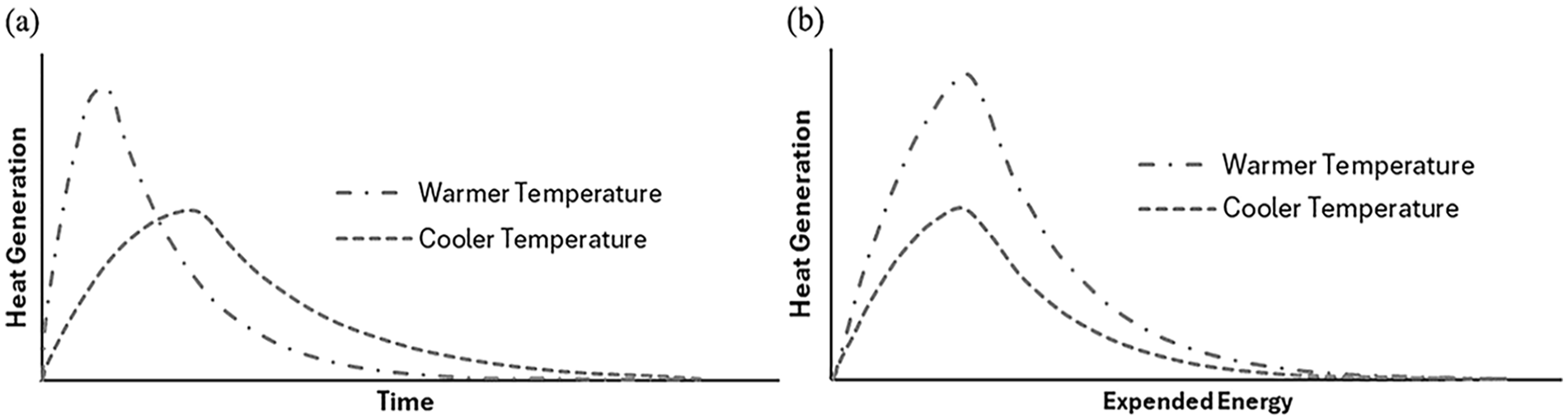
Typical heat generation curve expressed as a function of: (a) time; (b) expended energy as proposed by Hanson et al. (2013).
Furthermore, Hanson proposed a dual-ramped heat generation function (DRF) that served as a multiplier to account for the impact of temperature on biodegradation and corresponding heat generation rates. DRF linearly increased from 0.0 to 1.0 as the temperature increased from 0°C to 30°C, remained at 1.0 until 50°C before linearly decreasing to 0.0 at 80°C. The DRF was set up in COMSOL as a step function. Therefore, the anaerobic heat generation (

Model geometry and boundary conditions
A 2D model geometry (Figure 1) was built in COMSOL to replicate a cross-section through B1–B10 at the Ste. Sophie landfill. Data probes were defined at the estimated initial heights of the instrument bundles to monitor temperature, settlement, heat generation and expended energy with time. Additional insights regarding the placement dates of each lift, the initial temperatures and thermal and mechanical boundary conditions can be found in the Supplementary material.
TMB model response
The COMSOL optimization module and the COMSOL optimization study step were employed to optimize the thermal and mechanical input parameters within the TMB model. The objective function aimed to minimize the squared differences between simulated and field temperature data recorded at B3–B9, as well as the simulated and field settlement data occurring between every pair of consecutive bundles (e.g. B3–B1, B4–B2, B5–B3, B6–B4, etc.), all within a single computational run. The optimized thermal input parameters are summarized in Table 2.
TMB optimized input parameters.
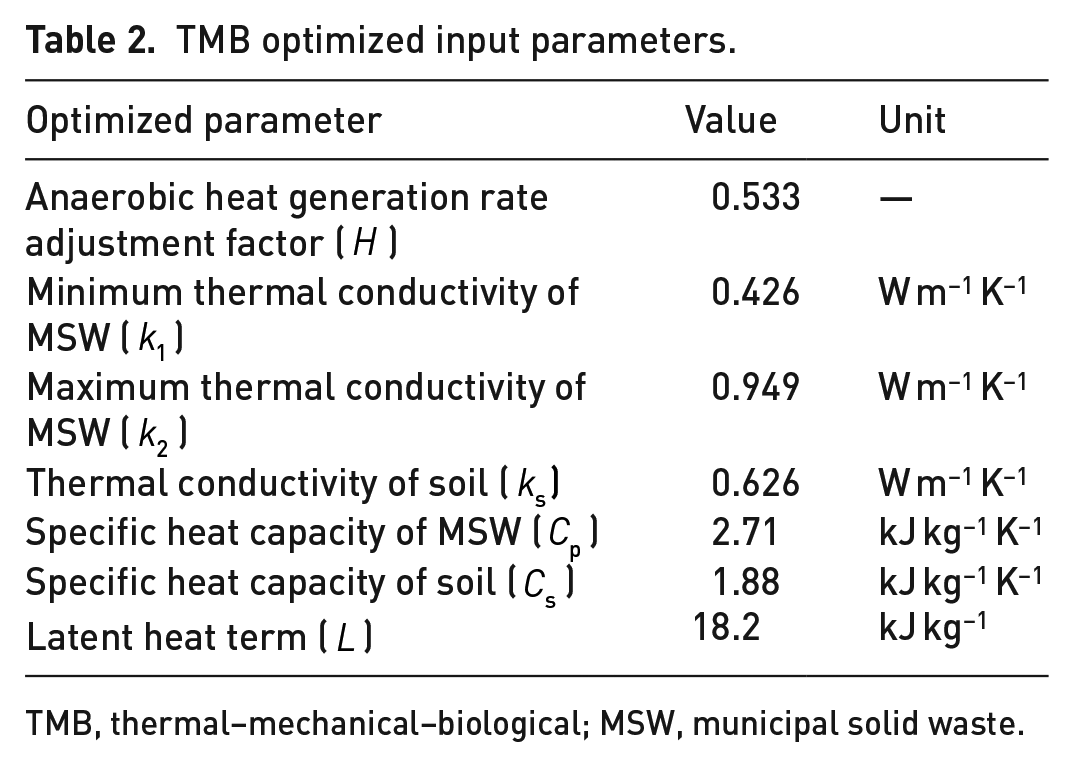
TMB, thermal–mechanical–biological; MSW, municipal solid waste.
As stated earlier, this paper focuses on the field and simulated temperatures of MSW. Therefore, the optimized thermal input parameters of the TMB model will be discussed, whereas the mechanical parameters are discussed with the settlement data in a separate paper (Alghazali et al., 2024). In the work conducted by Berquist (2017),
Figure 5, presenting the modelled and field temperatures for odd and even bundles, shows that the TMB model effectively captured the evolution of temperatures at varying depths. For instance, the model was able to capture the delay in temperature rise observed at the lower bundles (B3–B6) due to the placement of MSW under freezing conditions, while capturing sharp rise in temperature at the upper bundles when MSW was placed under warmer conditions. Furthermore, the TMB model demonstrated that bundles positioned near the surface of the lift (B5–B8) closely followed the ambient temperatures with a slight phase delay, up until the placement of the subsequent lift. These findings aligned with the field data, as well as with observations from other studies in the literature (Yeşiller and Hanson, 2003; Yeşiller et al., 2005, 2008).
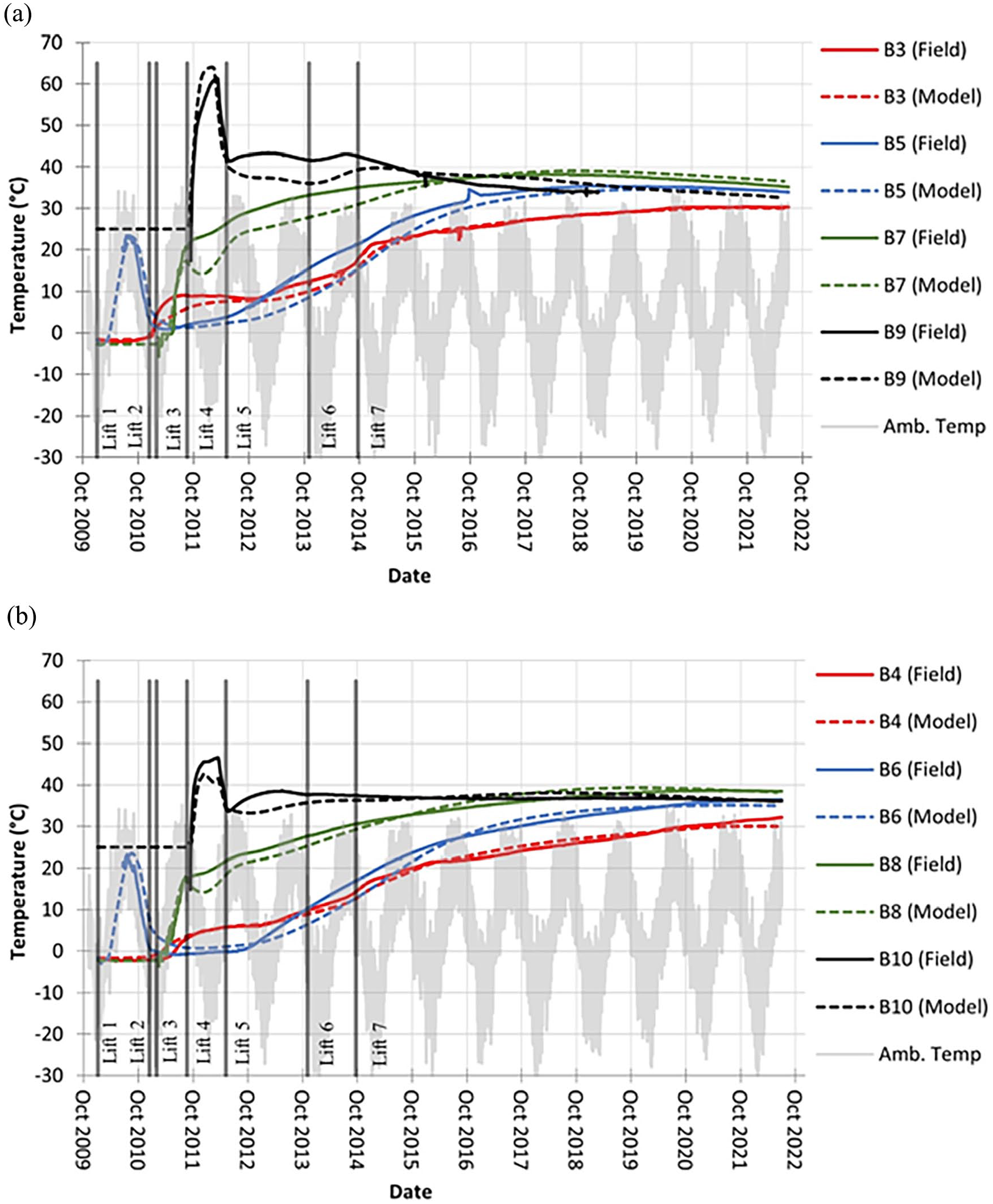
Simulated temperatures by the TMB model versus field temperatures at the: (a) odd bundles; (b) even bundles.
After the placement of lift 4, there was an initial decline in the simulated temperatures at bundles B7 and B8, located in lift 3, whereas the field data indicated a slight rise in temperatures. Upon reviewing the simulated vertical temperature profiles over this period, an initial sharp contrast in temperatures between lifts 3 and 4 exists when lift 4 is placed. The model then tended to smooth out this sharp contrast in temperature to establish a more uniform downward thermal gradient, leading to the slight initial decline in temperatures simulated at B7 and B8. Lift 3 was placed in the winter months, and during the placement of lift 4, the centre of lift 3 was still frozen based on the field temperatures measured by bundles B5 and B6, while the initial temperature of lift 4 was 25°C (Supplemental Table S1). To simulate the slight rise in temperatures at B7 and B8, greater heat transfer from lift 4 to lift 3 is needed. This may indicate that the thermal conductivity of the waste at its initial density (
Within the uppermost metre of lift 4, the model was able to predict the elevated temperatures at bundles B9 and B10 resulting from aerobic biodegradation, expressed in the model as a function of the oxygen concentration measured at these bundles. However, the model exhibited a tendency to initially underestimate their temperatures after the placement of lift 5. Similar to bundles B7 and B8, the model tried to adjust the sharp contrast between the initial temperature of lift 5, measured as 25.2°C (Supplemental Table S1), and the temperature at the top of lift 4.
Conclusions
The article involved the analysis of a 12-year temperature dataset, provided as Supplemental material, obtained from the Ste. Sophie landfill. This dataset included temperatures collected at varying depths during both the filling and post-closure phases of the landfill. The uniqueness of this data lies in its capacity to highlight the impact of low temperatures on waste stabilization during the filling stages. This is essential for optimizing landfill operations to encourage waste stabilization prior to the placement of the final cover with a goal to maintain the integrity of the cover and support future reclamation plans. The dataset included the placement of the first three waste lifts during freezing winter conditions, whereas subsequent lifts were set under warmer temperatures. Such comprehensive datasets are currently limited in the literature.
The article also introduced a TMB model framework to simulate the temperature and settlement of MSW, focusing on landfills without leachate recirculation in Northern climates. The model was calibrated with 12 years of temperature and settlement data collected from the Ste. Sophie landfill. The TMB model successfully simulated the temporal evolution of temperature at various depths and effectively captured the observed delay in temperature rise caused by the placement of the first three waste lifts under freezing conditions. Furthermore, the TMB model predicted the influence of ambient temperatures on MSW at shallow depths, consistently aligning with literature findings.
Supplemental Material
sj-docx-1-wmr-10.1177_0734242X241270938 – Supplemental material for A comprehensive study of temperature data during the filling and post-closure phases at a landfill in Québec, Canada: Application of a thermal–mechanical–biological model
Supplemental material, sj-docx-1-wmr-10.1177_0734242X241270938 for A comprehensive study of temperature data during the filling and post-closure phases at a landfill in Québec, Canada: Application of a thermal–mechanical–biological model by Wameed Alghazali, Simran Kaur, Paul J Van Geel and Shawn Kenny in Waste Management & Research
Research Data
sj-xlsx-2-wmr-10.1177_0734242X241270938 – for A comprehensive study of temperature data during the filling and post-closure phases at a landfill in Québec, Canada: Application of a thermal–mechanical–biological model
sj-xlsx-2-wmr-10.1177_0734242X241270938 for A comprehensive study of temperature data during the filling and post-closure phases at a landfill in Québec, Canada: Application of a thermal–mechanical–biological model by Wameed Alghazali, Simran Kaur, Paul J Van Geel and Shawn Kenny in Waste Management & Research
Footnotes
Appendix
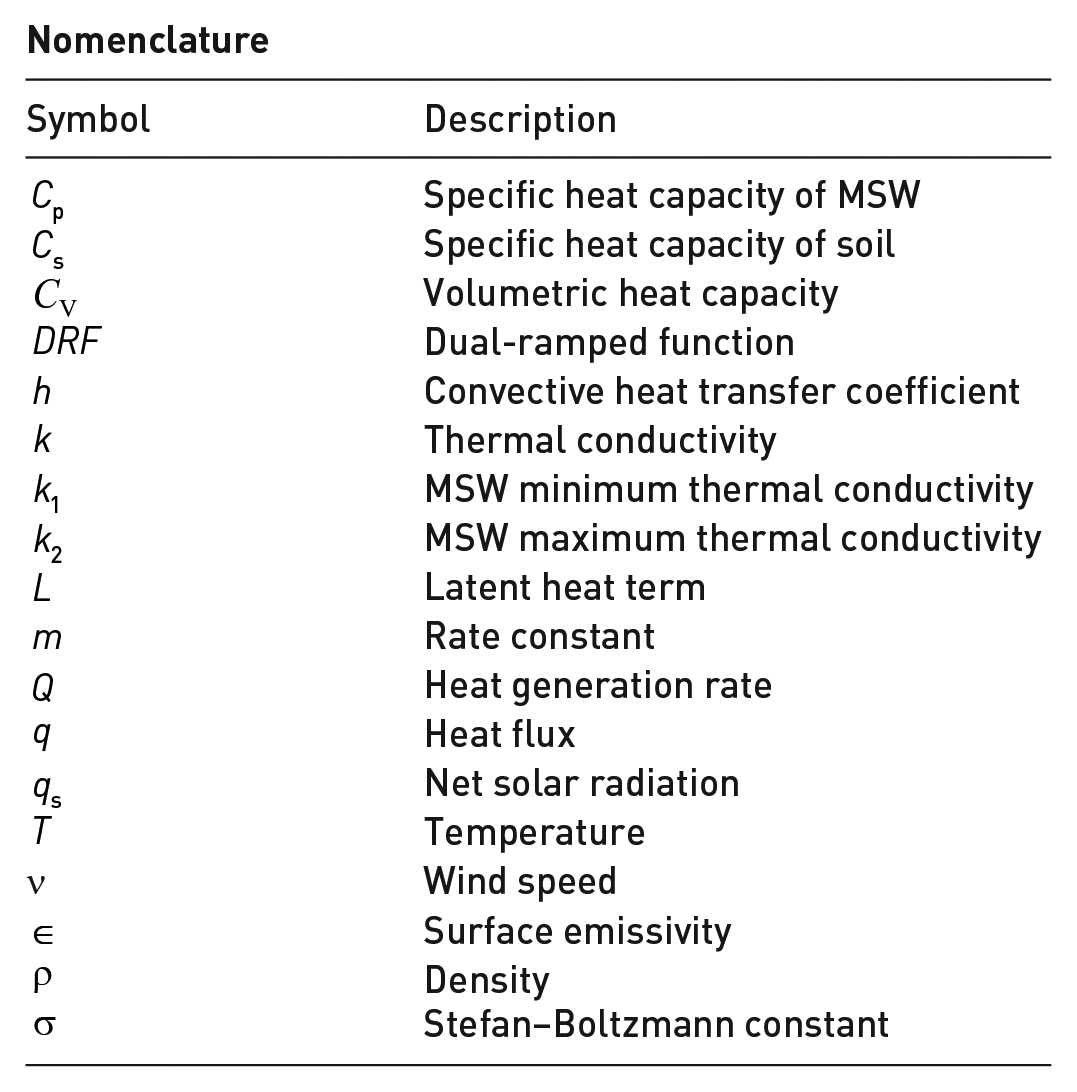
| Symbol | Description |
|---|---|
| Specific heat capacity of MSW | |
| Specific heat capacity of soil | |
| Volumetric heat capacity | |
| Dual-ramped function | |
| Convective heat transfer coefficient | |
| Thermal conductivity | |
| MSW minimum thermal conductivity | |
| MSW maximum thermal conductivity | |
| Latent heat term | |
| Rate constant | |
| Heat generation rate | |
| Heat flux | |
| Net solar radiation | |
| Temperature | |
| ν | Wind speed |
| ∈ | Surface emissivity |
| Density | |
| Stefan–Boltzmann constant |
Declaration of conflicting interests
The authors declared no potential conflicts of interest with respect to the research, authorship, and/or publication of this article.
Funding
The authors disclosed receipt of the following financial support for the research, authorship, and/or publication of this article: This study was financially supported by the Natural Sciences and Engineering Research Council (NSERC) Collaborative Research and Development (CRD) grant (CRDPJ 441761), Waste Management of Canada, Golder Associates, WSP Global and BluMetric Environmental.

Supplemental material
Supplemental material for this article is available online.
References
Supplementary Material
Please find the following supplemental material available below.
For Open Access articles published under a Creative Commons License, all supplemental material carries the same license as the article it is associated with.
For non-Open Access articles published, all supplemental material carries a non-exclusive license, and permission requests for re-use of supplemental material or any part of supplemental material shall be sent directly to the copyright owner as specified in the copyright notice associated with the article.
