



Abstract
Non-governmental organizations (NGOs) play a critical role in addressing solid waste management (SWM) challenges in remote mountain communities, including the ecologically fragile Himalayan region. This study evaluates the impact of Healing Himalayas, an NGO, in Rakchham village, Himachal Pradesh, India. The objectives were to evaluate the effectiveness of Healing Himalayas’ decentralized SWM model in promoting stakeholder engagement and resource recovery, assess the role of collaborations between local authorities and the NGO in financing waste management practices, investigate the influence of tourism and seasonal variations on solid waste generation patterns and waste management practices in Rakchham, and material recovery facilities, followed by glass (36.7%), paper/cardboard (18.4%) and metal (4.1%). A fee-based system involving the local village council funded waste operations. Waste generation exhibited significant seasonal fluctuations, with tourism influxes driving increased volumes. Healing Himalayas’ initiatives promoted community participation, with over 15 awareness workshops conducted. Key challenges included limited financial resources, inadequate infrastructure, lack of advanced treatment facilities and need for context-specific solutions like efficient wet waste management in cold climates. The study highlights Healing Himalayas’ decentralized model’s success in fostering stakeholder engagement, behavioural change and resource recovery. The findings inform effective strategies for NGO-led waste management initiatives tailored to remote Himalayan communities.
Introduction
Non-governmental organizations (NGOs) exhibit a multifaceted nature, engaging in a spectrum of socio-economic activities. They engage in both local and international activism, covering everything from healthcare and poverty reduction to environmental preservation and human rights advocacy. NGOs serve as a bridge between local communities, international organizations and political entities. They use their experience, flexibility and grassroots connections to address a wide range of social and economic issues (Martens, 2002; Werker and Ahmed, 2008). However, a significant issue these entities must address involves appropriately managing their financial resources (Tran, 2023).
Significant progress has been made on challenging issues, such as reducing gender inequities, protecting children’s rights, improving living conditions in rural regions and alleviating poverty, owing to the government’s support of NGOs (Sharma, 2018). NGOs are essential in supporting government initiatives, especially in developing nations with socioeconomic and environmental problems. These countries frequently struggle with problems including gender inequality, child labour, poverty and poor access to clean water. NGOs work directly with local communities, efficiently utilizing resources to carry out community-based projects that tackle these urgent issues and support sustainable development. Various NGOs have taken initiatives towards managing the solid waste management (SWM); however, Rajamanikam et al. (2014) mentioned that the role of such organiaations in India has not been well documented. One potential reason for this lack of documentation could be the decentralized nature of SWM efforts across different regions in India, making it challenging to understand the impact and effectiveness of NGOs in SWM domain. Nonetheless, understanding the roles and contributions of these organizations is crucial for making policy decisions and optimizing resource allocation in waste management initiatives. Along this line, Healing Himalayas is an NGO effectively operating in Himachal Pradesh state of India for SWM from last 8 years (Guardians of the Himalayas, n.d.). They work in the Himalayan region through planned campaigns for the protection of the native environment (flora-fauna), people and wildlife.
Healing Himalayas was founded by Mr. Pradeep Sangwan, motivated by the pressing issue of unmanaged solid waste accumulation across the Himalayas due to unsustainable tourism practices (Sharma, 2023). Since its inception, the organization has made significant progress in collecting, transporting, recycling and properly disposing waste from the mountainous terrain. The quantity of solid waste collected from various Himalayan villages and trekking routes is more than 2160 tonnes and major key factor behind is the tourists visits in a massive way since 2016 (Healing Himalayas, 2023). To promote sustainable processing of solid waste by recycling, Healing Himalayas, with the teams of local youth, has instituted decentralized material recovery facilities (MRFs) across four villages namely Rakchham, Mansari, Pooh and Tabo at a challenging height of 2750–3200 m above mean sea level (Healing Himalayas, 2022; Verma and Kapoor, 2013). These four centres had brought awareness of proper SWM over 250 households and 35 commercial establishments till 2022 (Healing Himalayas, 2022). The continued expansion of Healing Himalayas’ initiatives aims to develop localized, context-appropriate models for sustainable waste management across the Himalayas that balance community participation and ecological protection.
The overarching aim of this research is to analyse the effectiveness of the Healing Himalayas in SWM and environment conservation across the ecologically fragile Himalayan Mountain ‘Rakchham’ village. The specific objectives are: (1) to evaluate the effectiveness of Healing Himalayas’ decentralized waste management model in promoting stakeholder engagement and resource recovery, (2) to assess the role of collaborations between local authorities and the non-profit organization (Healing Himalayas) in financing waste management practices, (3) to investigate the influence of tourism and seasonal variations on solid waste generation patterns and waste management practices in the village of Rakchham and (4) to identify the challenges faced by Healing Himalayas in managing solid waste in the remote Himalayan region and discuss potential strategies to address these challenges. This study will help getting insights into NGO-based decentralized approaches towards managing escalating volumes of solid waste in the context of remote Himalayan villages confronted with the challenges of geographical inaccessibility and climate vulnerability.
This study adopts a mixed-methods research design, combining a case study approach with a convergent parallel design. The case study explores the effectiveness of Healing Himalayas’ initiatives in SWM in the village of Rakchham, whereas the convergent parallel design integrates quantitative data on waste composition and generation with qualitative insights from stakeholder interviews. This triangulation of multiple data sources and methods enhances the credibility and validity of the findings, providing a comprehensive understanding of the research problem.
Related work
Solid waste management
Solid waste generation and its management has become a pressing global issue, impacting both developed and developing countries. The increasing rates of waste generation are closely linked to population boom, economic growth, urbanization and changing consumption behaviour (Beigl et al., 2008; Khan et al., 2016). According to the World Bank, the global generation of solid waste is expected to reach 3.40 billion metric tonnes by 2050, nearly triple the amount generated in 2010 (Kaza et al., 2018). Developing nations such as China, Vietnam, Philippines and Thailand collectively produce a substantial amount of waste, with an estimated 40% of the world’s total solid waste originating from these regions (Kaza et al., 2018). Unsustainable SWM practices negatively impact public health and environmental sustainability, leading to air and water pollution, land degradation and climate change (Abubakar et al., 2022). Developing countries, including those in the Himalayan region, are major contributors to the global generation of plastic waste, electronic waste (e-waste), construction and demolition waste (Jambeck et al., 2015; Kaushik and Herat, 2020). This is accounting for a significant portion of the 2.01 billion metric tonnes produced in coastal countries worldwide. SWM includes recycling, incineration, waste-to-energy conversion, composting or landfilling, with landfill sites acting as ecological reactors where wastes undergo physical, chemical and biological transformations (Nanda and Berruti, 2020).
Himachal Pradesh’s status in SWM and challenges associated in mountains
The Indian Himalayan region, one of the major mountain ecosystems and the biggest hotspot for biodiversity, attracts millions of tourists and pilgrims annually to its dramatic landscapes and holy sites (Jambeck et al., 2015). Tourism has expanded rapidly, with projections of 7.9% annual growth up to 2025 (Wilson et al., 2006). However, this surge coupled with lack of infrastructure has led to alarming rise in solid waste generation which in turn has environmental and socio-economic risks (Thakur et al., 2021). Effective SWM is crucial yet challenged by increasing solid waste from urbanization, inadequate waste management infrastructure and gaps in compliance (Gupta et al., 2015). Integrated, context-specific strategies spanning infrastructure, policies, technologies and social aspects are imperative to address India’s mounting waste crisis across the ecologically fragile Himalayan region (Rybová et al., 2018). In light of the quickly expanding tourism industry, frameworks that facilitate localization and community involvement should reinforce sustainable waste management practices (Rajamanikam et al., 2014; Trimurni and Dayana, 2018).
The extensive use of social media platforms has led to a notable increase in tourism in numerous locations of which some are environmentally delicate (e.g., Himalayas). Many people have been drawn to and inspired to visit these tranquil locations by the magnetic charm of beautiful landscapes pictures posted by visitors and influencers on social media platform for, for example, Instagram (Tešin et al., 2022). Due to this, places like Rakchham in the Indian Himalayas have seen an unheard-of surge in tourists trying to photograph the breath-taking scenery. However, this boom in tourism has unintentionally brought about environmental problems for local people, such as a rise in the production of solid waste.
Research indicates that the ‘Instagram effect’ (referred to the influence on people by the Instagram pictures) has heightened interest in exploring lesser-known or unexplored locations which has consequential effect as a burden on the infrastructure and resources of the area. As local waste management systems are often unprepared for the environmental impact of their visits, the surge in visitors has led to incorrect garbage disposal practices (Tešin et al., 2022).
As a result of this, once-unspoiled scenic locations are now tarnished by trash and litter, which seriously jeopardizes the delicate ecosystems in these areas. In addition to highlighting the complex relationships that exist between social media, tourism and environmental sustainability, this phenomenon also invokes the necessity for efficient SWM techniques to lessen the negative consequences of rising solid waste output in environmentally sensitive places.
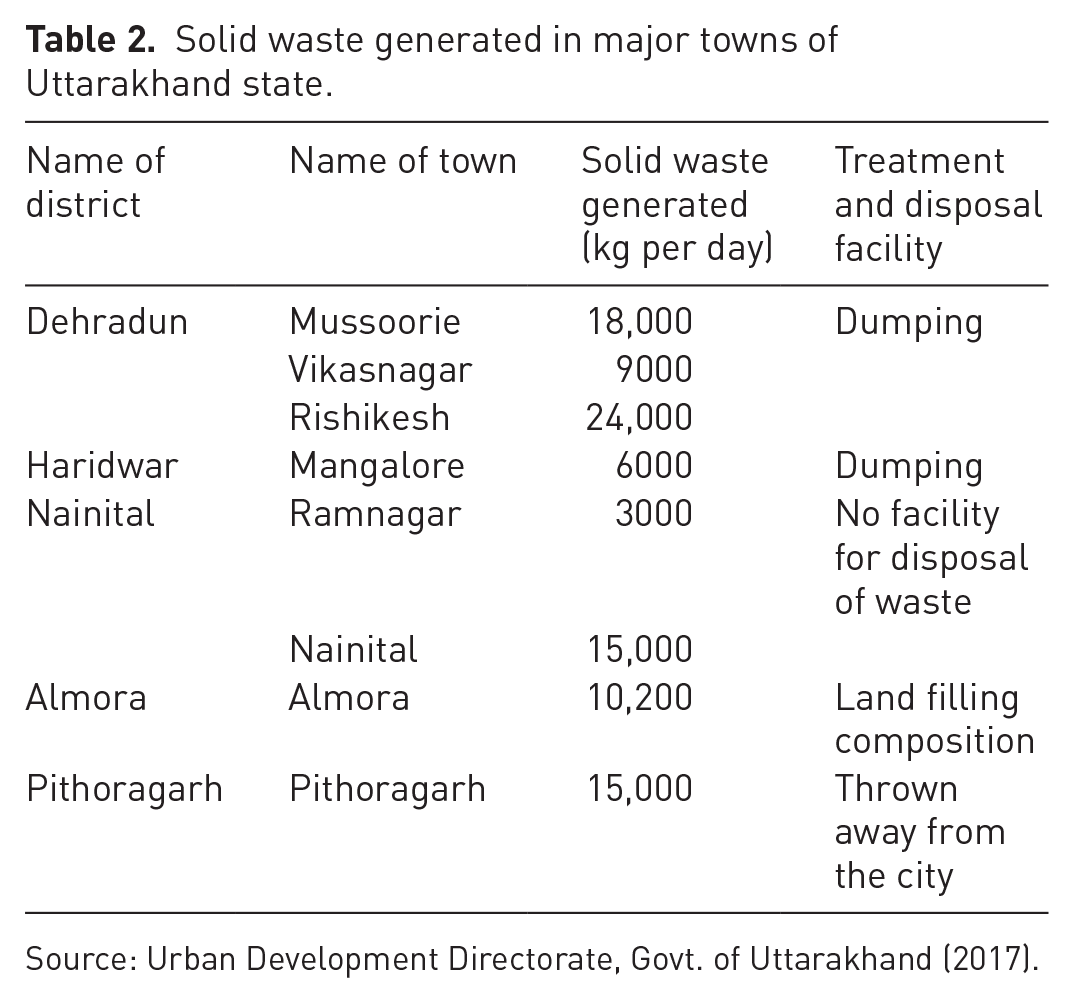
The state of Uttarakhand in India has seen a steady rise in domestic and foreign tourists as shown in Table 1, with over 35 million tourists in 2018 (Pandey et al., 2023). This has resulted in increased solid waste generation, especially in major Himalayan tourism destinations like Mussoorie, where waste generation has been increased from 12 to 20 tonnes day−1 during peak tourist season. For example, the key tourism hub of Mussoorie generated 18,000 kg of waste per day in 2017, much higher than smaller towns like Vikasnagar (9000 kg day−1) and Mangalore (6000 kg day−1), illustrating the link between tourist numbers and waste produced (Table 2). Implementing better waste management infrastructure and engaging tourists in proper disposal habits are crucial next steps for Uttarakhand.
Tourist’s arrivals in Uttarakhand state (in millions).
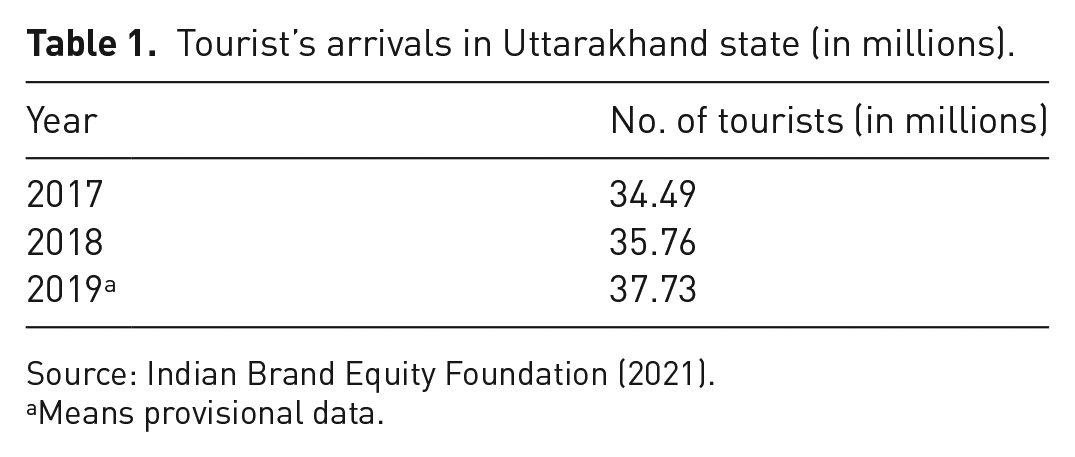
Means provisional data.
Solid waste generated in major towns of Uttarakhand state.
The remote and mountainous terrain of the Himalayan region poses inherent challenges for SWM due to lack of infrastructure (Thakur et al., 2021). Improper sanitation and waste management in the region has led to the soil, ecosystem, groundwater and surface water contamination creates a serious threat to human health, biodiversity and the fragile ecosystem (Giri, 2021). Improper waste disposal practices due to lack of proper knowledge about solid waste segregation and disposal have resulted in contamination of soil, water sources and ecosystems, creating health and environmental hazards (Jambeck et al., 2015). These issues highlight the urgent need for effective SWM strategies and awareness in the region. Unchecked waste generation has led to unsustainable practices such as open burning and dumping in water bodies (Gupta et al., 2015). This indicates the urgent need for SWM strategies suitable for the region, spanning technological solutions, infrastructure, policies and education (Rybová et al., 2018).
Various initiatives have been proposed to address this issue, which includes strengthening waste management through the introduction of appropriate technologies and promoting community participation in managing solid waste. Community participation should be promoted in developing context appropriate SWM systems, and partnerships forged between local groups, municipalities and government agencies (Rajamanikam et al., 2014). Increased engagement of NGOs in awareness building and capacity development can also foster sustainable waste practices, especially in remote mountain villages (Trimurni and Dayana, 2018). Integrated and locally adapted SWM strategies are vital for the Himalayan region to address waste challenges posed by its terrain and practices.
Material recovery facilities
MRFs serve as the backbone enabling efficient SWM across isolated regions devoid of transportation or human resources (Dangi et al., 2011). These decentralized sorting stations are designed to aggregate and segregate solid waste via automated or manual separation into recyclable categories such as paper, plastics, metals and glass. MRFs promote circular economic paradigms by diverting waste from landfills into recycling units through compacting and baling to optimize logistical efficiencies (Wilson et al., 2006). By providing accessible avenues for waste discharge and instituting localized processing, MRFs can drive behavioural shifts in waste practices across peripheral rural areas (Guerrero et al., 2013).
Healing Himalayas: An NGO
The Healing Himalayas takes a community-centred approach towards sustainable and efficient SWM in the fragile mountain ecosystems of the Indian Himalayan region. Their model focuses on community mobilization through awareness campaigns and capacity building of villagers on segregation, recycling and composting. They promote a decentralized model by installing locally managed SWM centres in remote mountain villages to transform waste into resources in a scientifically viable manner. The foundation follows an integrated model that addresses the entire value chain – from doorstep waste collection to disposal and reuse.
Study area
Rakchham, a picturesque village located in the Kinnaur district of Himachal Pradesh, India, lies within the Indian Himalayan region. Situated amidst towering mountains and lush green valleys, Rakchham is characterized by its unique geographical features. The village’s geographical coordinates are approximately 31.3790° N, 78.3643° E. Rakchham’s altitude is around 2900 m above sea level, contributing to its challenging and captivating terrain (Figure 1). The village of Rakchham is known for its vibrant mountain community and rich cultural heritage. As of the last available census data in 2011, the population of Rakchham is estimated to be approximately 597. The inhabitants primarily belong to the Kinnauri community, known for their distinct traditions and customs.
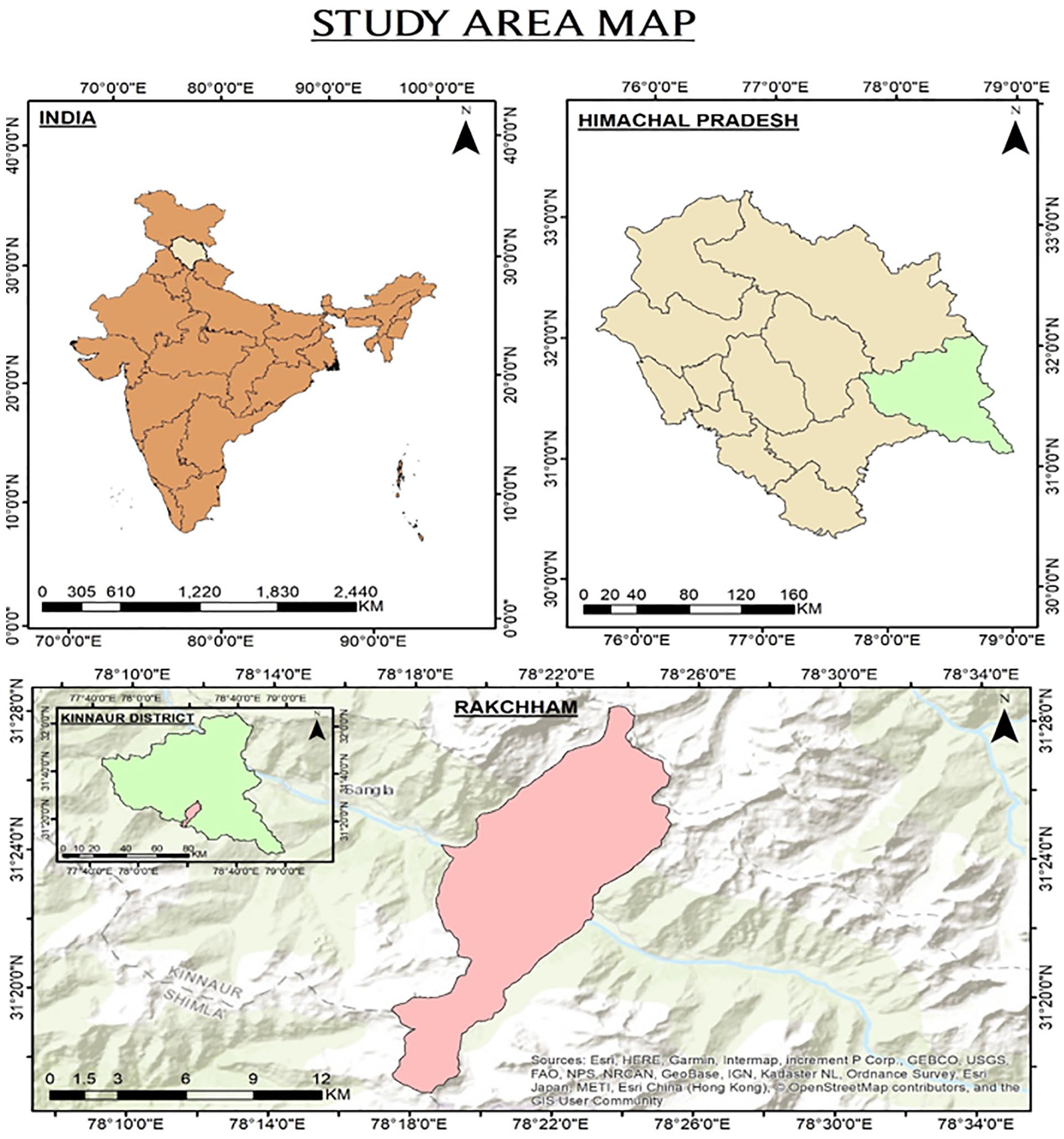
Study area map of Rakchham village, Himachal Pradesh, India.
Rakchham experiences a temperate to cold climate throughout the year due to its high-altitude setting. Summers are generally pleasant, with temperatures ranging from 3°C to 13°C. However, winters are harsh, with temperatures dropping to sub-zero levels, often reaching as low as −12°C. The village receives moderate to heavy snowfall during the winter months, adding to the enchanting beauty of its surroundings. Rakchham’s geographical location and cultural significance make it a captivating study area for investigating various aspects, including waste management practices and the impact of Healing Himalayas (NGOs) initiatives in SWM. The village’s unique terrain, coupled with its distinctive cultural practices, provides an interesting context for exploring how the community approaches waste management and environmental conservation in this Himalayan region.
Material and methods
The study collected both qualitative and quantitative data, which were gathered through structured phone call interviews with key stakeholders in Rakchham. A semi-structured interview guide was developed (Table 3 in Supplemental Information), focusing on key themes such as waste management practices, community participation, challenges faced and the role of Healing Himalayas.
Data collection tools included telephonic interviews. One telephonic interview was conducted with Mr. Pradeep Sangwan, the founder of Healing Himalayas, to understand the decentralized waste management model, the quantity of waste collected by Healing Himalayas, seasonal variations and the challenges faced by the NGO in managing solid waste in the difficult geographical terrain. To understand the effectiveness of Healing Himalayas’ decentralized waste management model in promoting stakeholder engagement and resource recovery and the finance system and the collaboration between locals and the NGO, semi-structured interviews were conducted with village locals, with a sample size capped at 75 using convenience sampling. The interviewees included individuals associated with Healing Himalayas’ waste management initiatives and local community members. These interviews provided both qualitative and quantitative insights into the local perspectives on waste management and the influence of the NGO.
A comprehensive review of secondary literature was conducted to gather additional insights and contextual information regarding waste management practices in the world and in the Indian Himalayan region. The literature review encompassed academic articles, government reports, NGOs publications and relevant studies related to waste management, environmental conservation and community engagement in the Himalayan region.
Quantitative data on waste generation, specifically the composition and quantities of different waste categories collected at the MRFs, were obtained through surveys and compiled in tabular form. No advanced statistical techniques were employed for analysing this quantitative data. The data was presented to derive key indicators and trends related to waste composition and quantities. Qualitative data from phone call interviews were transcribed and thematically analysed to identify common themes and patterns related to waste management practices, community involvement and the impact of Healing Himalayas. The study employed a mixed-methods approach, triangulating quantitative and qualitative data sources to ensure a comprehensive understanding of the research objectives. Specifically, a convergent parallel design was adopted, where quantitative data on waste composition and generation were collected and analysed concurrently with qualitative data obtained through interviews with key stakeholders. The quantitative and qualitative findings were then merged to provide a holistic interpretation of the results.
Ethical considerations were rigorously observed throughout the research process. Informed consent was obtained from all interviewees, ensuring their understanding of the study’s purpose and the intended use of their responses. Anonymity and confidentiality of the interviewees were maintained, and their identities were protected. The study adhered to ethical guidelines and principles of research integrity.
The research variables used in this study are:
a. Composition and quantification of generated waste: This can be achieved by quantifying the different types of waste generated.
b. Waste collection process and infrastructure: This includes reviewing the proper waste management infrastructure by the NGOs.
c. Financing waste management: This entails scrutinizing the financial aspect to ensure the efficient and effective utilization of funds. It is imperative for the NGOs to maintain a reliable funding stream.
d. Influence of tourism and seasonality: This can be done by evaluating the tourists count during a particular time and finding their effect on solid waste generation.
e. Community participation: This can be gauged by observing the extent of community involvement and interaction in both project planning and execution phases.
f. Challenges encountered by Healing Himalayas in SWM Initiatives in Rakchham: This can be done by conducting key informant interview with Mr. Pradeep Sangwan, the founder of Healing Himalayas.
Results
The decentralized waste management model implemented by Healing Himalayas leverages MRFs designed based on circular economy principles to promote stakeholder participation, behavioural change and resource recovery. The framework is guided through collaborations between village councils, regional boards and allied non-profits to provide context-appropriate infrastructure, build waste segregation capacities and ensure transparent monitoring. Organic waste undergoes aerobic composting at centralized stations, whereas non-biodegradables are aggregated, sorted and transported to authorized recyclers or processors. This synthesized approach integrates technological capabilities, administrative partnerships and community mobilization to foster localized circular waste economies aligned with sustainable development. Overall, the decentralized model prioritizes participation, capacity building and circularity to sustainably tackle waste challenges in remote mountain villages.
Composition and quantification of generated waste
The composition and quantities of solid waste generated in Rakchham village were determined through surveys of the MRFs. Table 4 summarizes the major categories of waste collected at the MRFs over the period of 1 week. Plastic waste constituted the largest proportion, accounting for 20 kg week−1 or 40.8% of the total waste. Glass waste, primarily from bottles, was the second largest component at 18 kg week−1 (36.7%). Cardboard and paper waste stood at 9 kg week−1 (18.4%), whereas metal waste was the lowest at 2 kg week−1 (4.1%).
Categories of waste collected at MRFs per week.
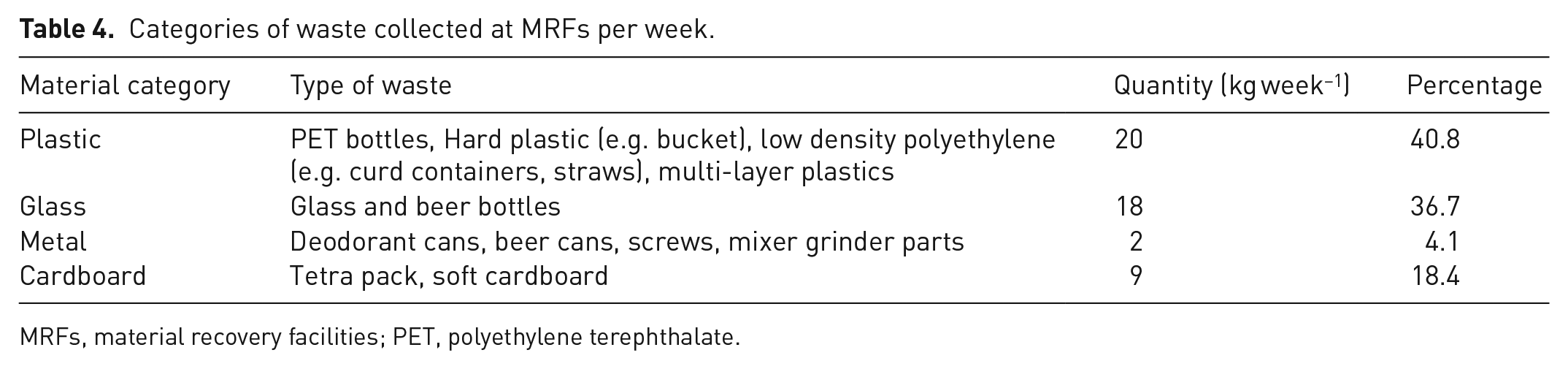
MRFs, material recovery facilities; PET, polyethylene terephthalate.
Plastic waste was primarily comprised of PET bottles, hard plastic items like buckets, along with multi-layered plastic pouches and personal protective equipment like straws and curd containers. Glass waste consisted largely of beer and other glass bottles. Cardboard waste included tetra packs and other paper products, whereas metal waste contained items like deodorant cans, beer cans and mixer grinder parts.
Waste collection process and infrastructure
According to interviews with key informants, Rakchham village predominantly relies on a self-disposal system for SWM. Individual households and establishments voluntarily deposit their waste at the MRFs daily. The MRFs are conveniently located and remain open from morning to evening at 5 pm. This provides a consistent and accessible avenue for community members to discard their solid waste.
Healing Himalayas has implemented a decentralized waste management concept that utilizes a closed-loop system (Figure 2) to address the growing issue of garbage generation in isolated Himalayan villages. Multiple sources contribute to waste production, including households, commercial establishments and seasonal influxes of adventure tourists and pilgrims. The setting up of MRFs in places like Rakchham, Mansari, Pooh and Tabo is essential because of the growing problem of inappropriate disposal of waste, which is mostly caused by hotels, homestays, tourists and trekkers. Waterway contamination is one of the main effects of the improper waste management methods in these places, which have been made worse by the influx of trekkers and tourists. Healing Himalayas hopes to address the issue of waste management brought on by tourism by constructing MRFs in these areas in a methodical and long-lasting way. By providing hotels, homestays, travellers and hikers with an easy way to properly dispose of their waste, these facilities help to lessen the negative effects that unregulated waste disposal has on the environment and public health. Individuals voluntarily deposit unattended waste at the MRFs, which remain openly accessible for significant durations daily. This is supplemented by aggregation of waste from nearby trails and water bodies during frequent environmental clean-up campaigns.
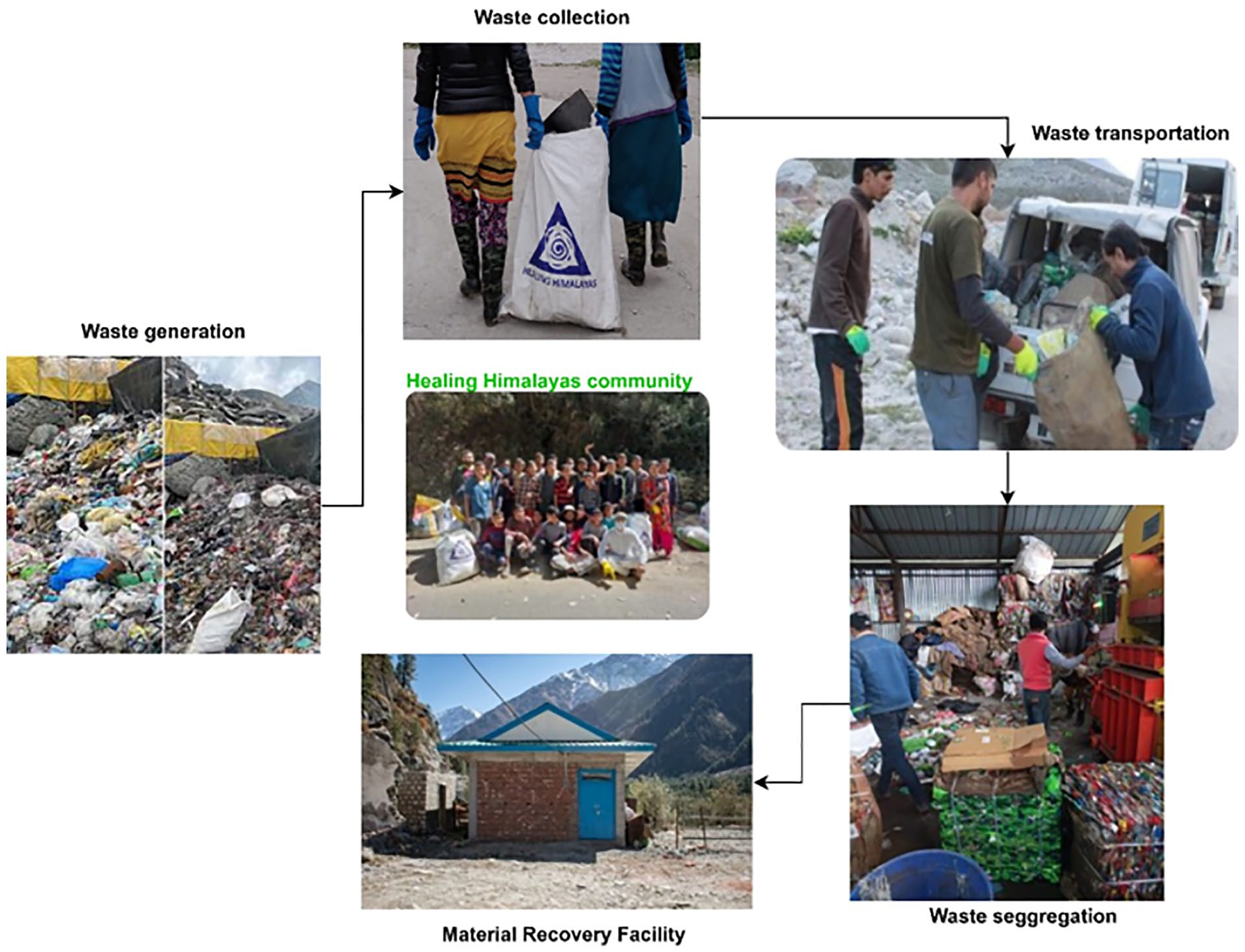
Solid waste management system by Healing Himalayas.
The key to improving SWM is the multi-tiered sorting procedure. Healing Himalayas’s persistent efforts to raise community understanding about waste consequences and management have made it possible for segregation to occur at the household level. This makes it easier for biodegradable and non-biodegradable portions to be mechanically sorted into groups at MRFs, such as metals, glass and plastics, whereas the latter is sent to approved recyclers, or printers when practical, the former is composted aerobically. If not, non-biodegradable residue is delivered to regional processing facilities authorized by the pollution control board after being baled and disposed of properly.
Financing waste management
The village council or panchayat (a panchayat is a locally elected body that serves as the grassroots level of governance in rural areas of India. It is responsible for administering local affairs, implementing government schemes, and addressing the needs of the community) in charge of the area sets fees that are used to fund these waste management operations. Monthly fees are applied on a variable basis depending on the capacity of hotels and homestays. The highest monthly fees are around 9.58 USD 1 (800 INR) for larger hotels, around 5.99 USD 1 (500 INR) for medium-sized companies, and around 2.40 USD 1 (200 INR) for tiny homestays (Table 5). An institutionalized framework for funding trash management in Rakchham hamlet is indicated by this financial model.
Monthly fee charged for different types of hotels to fund waste management operations.

Influence of tourism and seasonality
Interviews with key informants revealed that waste generation and collection patterns exhibit significant sensitivity to fluctuations in tourism and seasons. During peak tourist seasons, the amounts of waste generated increase considerably owing to the influx of visitors to the village. Correspondingly, the frequency of waste collection at the MRFs also rises to deal with the heightened volumes. The composition of waste also varies based on the consumption patterns of tourists versus local households.
Additionally, different types of waste dominate during off-peak seasons. For instance, increased plastic waste is generated during the winter months due to heightened usage of personal protective equipment and heating equipment. Agricultural organic waste rises post-harvest during summer and monsoon periods. Thus, tourism dynamics and seasonal variations emerge as key factors influencing municipal waste generation and collection patterns in Rakchham village.
Community participation
According to the self-disposal approach used by the Healing Himalayas, homes and businesses must actively separate their garbage and deposit it at MRFs. Furthermore, for the purpose of financing trash operations through fees, the village council or Gram Panchayat’s collaborative supervision is essential for smooth administration. However, in order to actually implement participation, non-profits like Healing Himalayas must raise knowledge about waste minimization, segregation and disposal through customized community involvement. Healing Himalayas has conducted over 15 orientation workshops and cleanliness drives across various villages, sensitizing over 2000 residents, hotel associations and students towards adopting eco-friendly disposal practices. Community engagement is essential to changing behaviour, openness and local ownership, all of which are necessary to ensure smooth decentralized waste management. However, focused group discussions and organized surveys can offer vital depth into the experiences, obstacles and motives underlying community participation.
Challenges encountered by Healing Himalayas in SWM initiatives in Rakchham
Healing Himalayas has faced numerous challenges in its initiatives to tackle the solid waste crisis in the remote village of Rakchham. The organization has described several key obstacles that have hindered the effectiveness and scalability of their waste management efforts in this region.
One of the primary challenges has been the limited financial resources available to the NGO. Operating in remote and isolated areas with limited infrastructure and logistics support requires significant financial investment, which has been a constraint for Healing Himalayas. Additionally, the lack of advanced waste treatment facilities in these areas has further compounded the problem, limiting their ability to process and treat certain types of waste effectively.
The inadequate infrastructure and logistical challenges posed by the difficult terrain and remote locations of Himalayan villages like Rakchham have been a significant hurdle. Transporting equipment, machinery and personnel to these areas is a daunting task, adding to the operational complexities and costs. Moreover, the lack of community awareness and participation in waste management practices has been a persistent challenge, as changing behaviours and mindsets is crucial for the long-term sustainability of these initiatives.
In the initial stages of establishing a MRF in Rakchham, Healing Himalayas faced several hurdles. Aligning with local panchayats (village councils) and the community to secure land and support for setting up the facility was a critical step. Procuring and transporting the necessary machinery and equipment to the high-altitude region posed logistical challenges. Reaching agreements with nearby panchayats to ensure a steady supply of waste to the MRF was also essential. Collaboration with travel-related commercial stakeholders, such as hotels, restaurants and shops, was required to implement a fee-based waste segregation and collection model. Additionally, providing local skill-building and training programmes for managing MRF operations was a crucial aspect.
Despite implementing strategies like seeking alternative funding sources (e.g. grants, corporate partnerships), collaborating with local authorities and implementing community education and awareness programmes, Healing Himalayas recognizes the need for additional support and resources. Increased financial support, access to advanced waste treatment technologies, collaboration with government agencies and policymakers, and capacity-building programmes for staff and volunteers are identified as critical areas requiring attention.
Interestingly, the organization has highlighted the need for cost-feasible technical solutions for wet waste management in the cold climate of Rakchham. Due to the low temperatures, traditional composting processes are slow, and more investment is required to develop context-specific solutions for efficient wet waste management at high altitudes.
Discussion
The findings of this case study on SWM practices in Rakchham village align with broader discourse on managing waste in remote Himalayan communities. The mountainous terrain poses inherent logistical challenges due to factors like difficult accessibility and lack of infrastructure (Thakur et al., 2021). However, the self-disposal system instituted in Rakchham demonstrates localized innovation tailored to the geographical context, similar to approaches implemented in other Himalayan towns (Wilson et al., 2006).
The impact of fluctuating tourism on waste generation patterns converges with Ahsan et al. (2012) analysis of tourist hotspots across the Indian Himalayas. However, the paper could delve deeper into how promotion on social media shapes unsustainable tourism practices (Mirzaalian and Halpenny, 2021). Comparative analyses by Rybová et al. (2018) and Hama et al. (2021) on waste composition and per capita generation could enrich the quantification of Rakchham’s waste profile.
The findings align with emerging research on managing waste across similar Himalayan villages and municipalities. Integrated waste management strategies spanning policy, infrastructure, technology and social aspects are imperative to tackle the mounting waste crisis across the region (Gupta et al., 2015). Comparative analyses can pave the way for devising context-appropriate regional policies (Jambeck et al., 2015). Assessments of scalability of decentralized models like Rakchham’s are warranted, given the successes of localized innovation.
Additionally, continued research is needed to explore nuances of community participation, NGO model effectiveness, and integrating local practices with regional strategies. Long-term, longitudinal studies as suggested by Wilson et al. (2006) can elucidate the evolution of norms, practices and participation. Overall, synthesizing findings across academic studies, government and NGOs initiatives can spur collaborative, holistic action towards sustainable waste management across the Himalayas. As mountain communities grapple with surging waste, localized case studies like Rakchham provide valuable insights to inform policymaking. Contextualized understanding and community-engaged solutions are vital to tackle the urgent crisis of unsustainable waste practices across the ecologically sensitive Himalayan landscape.
Finally, the study highlights the lack of research on NGOs-led waste management models in the Indian Himalayas. Assessing the strengths and limitations of NGOs approaches compared to government or private sector initiatives can inform policy and planning (Rajamanikam et al., 2014). The positive role of local community participation aligns with findings by Trimurni and Dayana (2018), points out the social dimensions that underpin sustainable waste management.
While this study provides valuable insights, it has some limitations that could be addressed through further research, such as more locations can be considered where Healing Himalayas have contributed to mountain regions and data availability with the associated works done by NGO for different regions. Additionally, small sample size of key informant interviews restricts the generalizability of the qualitative findings. Furthermore, the sole reliance on interviews presents the possibility of social desirability and recall bias. Future studies could implement larger sample sizes, multi-site comparisons and mixed methods using surveys, waste audits, and biochemical assays for a more insightful understanding of the contributions of NGOs in mountainous SWM.
Conclusion
This localized case study of Rakchham village provides valuable empirical insights into SWM practices in the ecologically fragile Himalayan region of India. The analysis indicates that while Rakchham has instituted a structured waste management system facilitated by MRF and overseen by the local panchayat, there are still challenges posed by fluctuating tourism levels and seasonal variations. The qualitative findings reveal the crucial role played by the NGO Healing Himalayas in enabling sustainable waste management in this remote mountain community through awareness, infrastructure and capacity building.
Supplemental Material
sj-docx-1-wmr-10.1177_0734242X241262000 – Supplemental material for Effectiveness of NGOs in mountainous solid waste management: A case study from Healing Himalayas in Rakchham, Himachal Pradesh, India
Supplemental material, sj-docx-1-wmr-10.1177_0734242X241262000 for Effectiveness of NGOs in mountainous solid waste management: A case study from Healing Himalayas in Rakchham, Himachal Pradesh, India by Sulagna Roy, Pankaj R. Kaushik, Pradeep Sangwan and Sunil Herat in Waste Management & Research
Footnotes
Acknowledgements
The authors acknowledge the support provided by the Rakchham village Gram Panchayat and the invaluable contributions of the individuals who participated in the interviews, which greatly aided the qualitative analysis of this study.
Declaration of conflicting interests
The authors declared no potential conflicts of interest with respect to the research, authorship, and/or publication of this article.
Funding
The authors received no financial support for the research, authorship, and/or publication of this article.

Supplemental material
Supplemental material for this article is available online.
Notes
References
Supplementary Material
Please find the following supplemental material available below.
For Open Access articles published under a Creative Commons License, all supplemental material carries the same license as the article it is associated with.
For non-Open Access articles published, all supplemental material carries a non-exclusive license, and permission requests for re-use of supplemental material or any part of supplemental material shall be sent directly to the copyright owner as specified in the copyright notice associated with the article.
